

Politics
Dozens Of Labour M Ps Urge Starmer To Quit

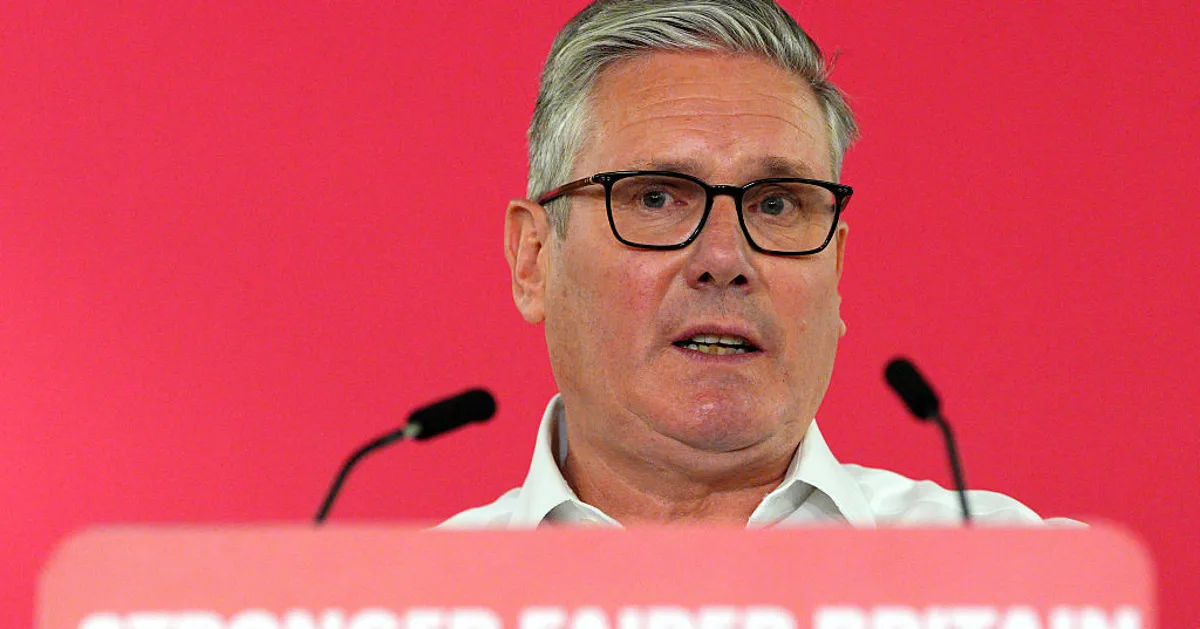
Keir Starmer is clinging on to power despite dozens of Labour MPs joined calls for him to quit as prime minister.
Nearly 60 backbenchers had called on him to quit by Monday evening after a steady stream of MPs joined the rebellion despite Starmer delivering a speech pledging to turn around the party’s fortunes.
In a further blow for the embattled PM, ministerial aides to health secretary Wes Streeting, home secretary Shabana Mahmood and environment secretary Emma Reynolds all quit their jobs calling on him to resign.
Starmer once again vowed not to “walk away” from No.10 and said he would prove the doubters wrong, despite Labour’s drubbing in last week’s elections at the hands of Reform UK and the Greens.
He said: “This is nothing less than a battle for the soul of our nation and I want to be crystal clear about how we will win it because we cannot win as a weaker version of Reform or the Greens.
“We can only win as a stronger version of Labour, a mainstream party of power, not protest.”
Starmer confirmed the government will nationalise British Steel and pledged to put the UK “at the heart of Europe” by agreeing closer ties with the EU.
But his speech was dismissed as “utterly inadequate” by one former minister, and was greeted by a fresh wave of demands from MPs for him to set out a timetable for when he will leave Downing Street.
They included Gower MP Tonia Antoniazzi, who said: “Keir Starmer is a man of great integrity who has led the Labour Party through difficult times.
“There will be those that disagree with me but I think it is genuinely time for him to step aside as PM in an orderly manner.”
Markus Campbell-Savours, the MP for Penrith and Solway, said:“I have listened carefully to the prime minister’s speech. Sir Keir Starmer is a decent, principled and kind man. But his leadership is not working, and it is with genuine regret that I say so.
“His position is now untenable. Colleagues should have the courage to say publicly what many have said privately for months.
“Loyalty matters. Loyalty to him, to the party and to each other. But today loyalty lies with our elected members across the country and with the 1,500 who lost their seats last week. It does not lie in maintaining a course that is not commanding confidence.
“What the party needs now is leadership with a credible vision for the country, a clear sense of direction, purpose and ambition. Those skills exist within our ranks, and I am confident we can find a leader who has them.”
Catherine West, the former Foreign Office minister who on Saturday threatened to challenge Starmer herself, instead wrote to all Labour MPs asking them to support her calls for a leadership contest by September.
Under Labour’s rules, 81 MPs would need to support a candidate to trigger a leadership election.
So far, no one has put their name forward, but the likes of Wes Streeting and Angela Rayner are thought to be weighing up their options.
Meanwhile, speculation is mounting that an MP will give up their seat in order to give Greater Manchester mayor Andy Burnham the chance to return to Westminster and mount his own bid to become PM.
Sharon Graham, the general secretary of Labour-backing union Unite, told HuffPost UK that Starmer’s speech had not “cut the mustard” and said he should quit.
She said: “I don’t think it’s going to happen tomorrow, but there isn’t a cat in hell’s chance that Keir Starmer’s going to lead us into the next election. It would be the death knell if that happened.”
Subscribe to Commons People, the podcast that makes politics easy. Every week, Kevin Schofield and Kate Nicholson unpack the week’s biggest stories to keep you informed. Join us for straightforward analysis of what’s going on at Westminster.

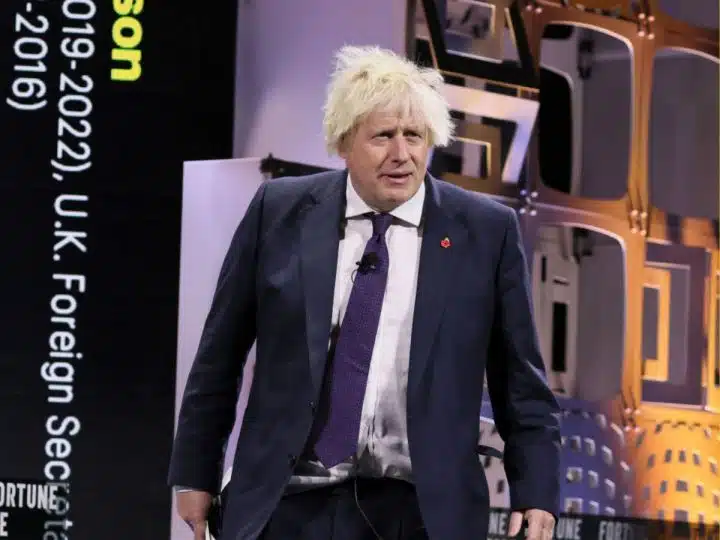
In a new BBC documentary, Boris Johnson revealed that David Cameron offered him a “top five job” during a tennis match to secure his support for remaining in the EU. Cameron, PM at the time, apparently wanted Boris to know that he:
valued his contribution, that he would be a major party of the government going forward.
Apparently, Cameron returned from the tennis match feeling “doubly good” after beating Johnson and believing he had appealed to his career ambitions.
Nevertheless, Cameron was quickly outmanoeuvred when the then-London Mayor announced — “after a huge amount of heartache” — that he would support leaving the EU. Johnson went on to help deliver victory in the referendum and later became PM, while the UK has since grappled with the consequences of the hard Brexit that followed.
The reality, in fact, was that Johnson saw himself as PM regardless of which side of the toxic debate he chose to back.
Brexit: It didn’t matter whether I backed Leave or Remain – I would have become PM anyway, Boris Johnson claims — dave lawrence
Former PM David Cameron says he doesn’t believe Boris Johnson thought Britain would vote to Leave the EU in new BBC documentary on Brexithttps://t.co/TzFfo1PmMD

 (@dave43law) June 2, 2026
10 years on from Brexit — and we can all feel its cost
This BBC two-part documentary airs on 8 June, marking a decade since the Brexit referendum, which exposed deep divisions across the country, split families, and emboldened nationalist sentiment across the UK. Both sides of the campaign deployed highly emotive and often inflammatory rhetoric in a calculated effort to secure victory, advance their positions, and protect or enhance their political and financial interests.
The realities since have seen a worsening quality of life, massively increased cost-of-living caused by the cost-of-greed crisis affecting the lives of millions of ordinary Brits.
In this documentary, however, we see how Cameron sought to instrumentalise that toxic ambition, appealing to Johnson’s career interests in an attempt to secure his support.
He then said: ‘Look, would you consider joining us on the remain campaign? It’d be much better if … I’d love to have you in the cabinet. You should have a top five job,’
And I wasn’t sure what the exact hierarchy was. I obviously thought about it out of pure curiosity – what was this job?
There’s prime minister, chancellor, home secretary, foreign secretary. That’s four. What is the fifth? A mystery.”
On the other hand, Boris Johnson told the BBC that he saw a route to the premiership regardless of which side he chose. Nonetheless, this documentary seems to be attempting to glorify the period, and it must not be used as a ploy to rehabilitate political monsters who have harmed the UK in countless ways.
No-deal Brexit only a win for political elite and their cronies
However, the Brexit that was delivered to the public took a hardline form, producing a pretty limited and contested agreement with the EU that delivered precious few clear benefits. Newly appointed officials later claimed this harsh outcome had always been likely, despite it never having been clearly set out to voters during the referendum campaign.
Raab, then foreign secretary in 2019, told Radio 4 that the government was “turbo charging” towards a no-deal Brexit. Host Mishal Husain pointed out that the British public did not anticipate a no-deal outcome at the referendum, pointing out that the government subsequently pursued a path that conflicted with the interests of those it supposedly represents.
Other than their own egos, of course, which western politicians show they will never forget to serve.
Raab said at the time:
The mandate certainly wasn’t to leave the EU if the EU let us. It was an ‘in / out’ referendum and we made clear… that we should strive for a good deal, but if that wasn’t available that we should go on and make a success of Brexit and so that was discussed…
adding:
I was questioned on it by the BBC almost every time I appeared and so was Michael Gove… There’s all sorts of interviews which said that of course we’d prefer a deal, but that there would be a risk.
This was then fact checked — and found to be a lie — by Channel 4 who stated:
Mr Raab appears to be wrong about his colleague Michael Gove warning about the risk of a no-deal Brexit during the EU referendum campaign…
We can’t find any evidence of Mr Raab talking about the dangers of leaving without a deal before the vote either.
Brexit failed the British public — Boris and politicians used it for their careers
This BBC documentary highlights how senior politicians prioritised political manoeuvring, personal ambition, and career advancement over and above the interests of the public they were meant to serve. Rather than focusing on the long-term consequences of their decisions, they appeared far more concerned with securing influence and strengthening their own positions.
Whether it was Cameron attempting to bring Johnson into his ‘camp’ and neutralise a political rival, or Johnson calculating which side of the debate would best serve his ambitions, neither man appears to have placed the interests of ordinary Britons at the centre of his decision-making. Instead, both seem to have viewed the political turmoil as an opportunity to advance their own objectives.
The consequences of those choices continue to shape the country today. Many people struggle with rising living costs, overstretched public services, and declining trust in political institutions, while the political class continues to avoid the hardships experienced by the wider population.
Ultimately, the clearest beneficiaries of this long and divisive saga were the political elites who exploited public frustration, deepened divisions, and fuelled political hysteria to secure their own advantage.
While the country absorbed the costs, many of those at the centre of the drama emerged with enhanced careers, greater influence, and lucrative opportunities.
Featured image via Jemal Countess/Getty Images for Fortune Media


On May 18th, Trump’s Justice Department announced a nearly $1.8 billion fund called the Anti-Weaponization Fund; however, on Tuesday, the acting Attorney General of the USA said that they were no longer moving forward with it amid a backlash from both Democrats and Republicans.
Acting Attorney General Todd Blanche said the Trump administration will drop plans for a $1.8 billion fund to pay victims of alleged government “weaponization” following a backlash from both Democratic and Republican lawmakers https://t.co/KinO8jVESL
— Bloomberg (@business) June 2, 2026
Trump said the purpose was to reimburse people who had been “horribly treated, horribly treated” by the government under the Biden administration.
However, lawsuits against the fund had piled up despite the relatively short time its been in place, including from police officers who had been on the receiving end of the January 6 rioters and were now suing Trump against the fund.
The total amount was set at exactly $1.776 billion, a symbolic nod to the nation’s founding year of 1776. This number has long been embraced by white nationalist circles as well as the Trump administration.
Trump’s Proud Boys and co
Forbes magazine published a list of the people who planned to apply for the money.
It included Enrique Tarrio, the former Proud Boys leader; George Santos, the disgraced former congressman; Michael Cohen, Trump’s former fixer; Roger Stone, the longtime Trump advisor; Mike Lindell, the MyPillow CEO; Tina Peters, the convicted Colorado election clerk; more than 1,500 January 6 defendants; anti-abortion activists; and Moms for Liberty.
Sorry, Proud Boys — your sugar daddy just closed his chequebook. But Trump is TACO, fellas. You should have known.
Featured image via David Dee Delgado/Getty Images
By The Canary
FIRST UP: Mayor Zohran Mamdani’s commitment to back Rep. Adriano Espaillat was initially so ironclad they shook hands on it last summer. But Mamdani broke that promise last week when he endorsed Espaillat’s primary opponent, democratic socialist Darializa Avila Chevalier — and the fallout is mounting. Rep. Nydia Velázquez, an early supporter of Mamdani’s 2025 mayoral run, said she’s not sure she can trust the mayor anymore after the Espaillat snub and won’t take just his word on anything going forward. “I will say I want it in writing,” Velázquez said.
Read more from POLITICO’s Chris Sommerfeldt and Madison Fernandez here.

MANNY ADDRESSES: Francesca Castellanos has run for state and city office in Upper Manhattan eight times, and lost every single time.
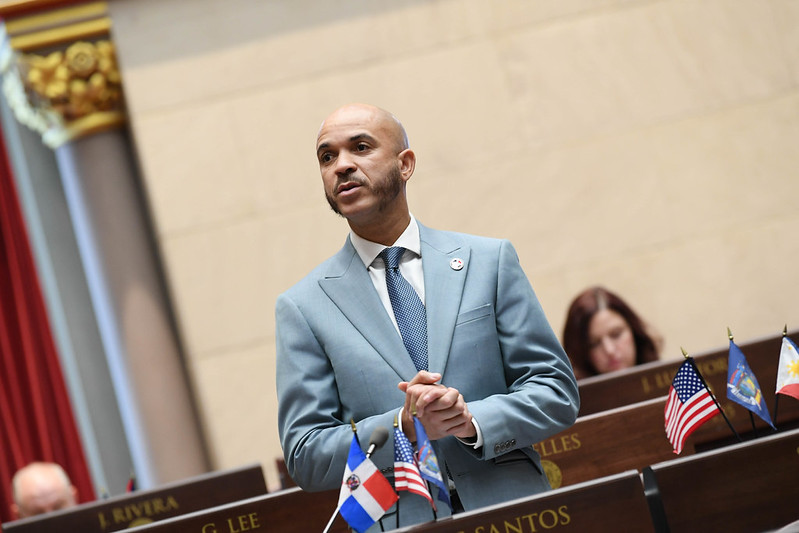
In her ninth bid for public office, she’s going to even greater lengths to oust her local assemblyman, Manny De Los Santos.
Castellanos has spent $8,000 of her own money on private investigators to surveil him at his wife’s Rockland County home and to stake out the Washington Heights apartment where De Los Santos says he lives, and she’s circulated thousands of flyers that question his residency and include a photo of his young child.
De Los Santos says Castellanos, a Spanish-language interpreter, is harassing him and his family. Castellanos says she’s applying well-intentioned scrutiny to a public official who, she claims, lives way outside the district he represents. And election law says the residency requirement for state legislative candidates actually isn’t that strict.
“I understand that public service comes with scrutiny. But this opponent has crossed a line,” De Los Santos said in a statement. “My opponent has spent thousands of dollars on private investigators to follow me and even my children.”
On Monday, Castellanos filed a complaint with Attorney General Letitia James alleging her opponent “moved out of Northern Manhattan, moved to the suburbs, cashed his taxpayer paycheck, and continues to hold a political seat he abandoned.”
“Mr. De Los Santos receives an annual salary of $142,000 as an Assemblymember. He has chosen suburban life for his own children, who attend well-funded Rockland County schools, while families in Northern Manhattan struggle with overcrowded classrooms and insufficient resources,” the complaint reads.
James’ office would not comment on the allegations but said they’ve received Castellanos’ letter.
Castellanos’ call for the state’s top prosecutor to investigate her opponent’s residency is the latest act from a perennial candidate and local politics junkie who has spent the last two decades trying to oust the army of elected officials allied with Rep. Adriano Espaillat. This time, her opponent says, she’s gone too far.
“That is not politics. It is wrong,” De Los Santos said. “I am an Assemblymember, but I am a father first. My children should not be dragged into a political campaign. This needs to stop.”
Castellanos’ complaint includes images from a grainy video recorded on April 12 by R.Q. Investigations outside a home owned by De Los Santos’ wife, Josenia Dominguez, who serves as the chief administrative officer for Public Advocate Jumaane Williams. The images show a man who appears to be De Los Santos entering a two-car garage home in the Hudson Valley. Other photographs from the following day show a man again identified as De Los Santos raking leaves at the property. A different private investigator hired by Castellanos stood watch inside the Washington Heights apartment building where De Los Santos says he lives on two April mornings. That private eye, Michael Cotto, said in a signed affidavit that he never spotted De Los Santos or anyone else enter or exit the unit.
“He’s a public figure, and he’s lying,” Castellanos claimed to Playbook, adding that her scrutiny of him is completely within bounds. “If he doesn’t want it, then he shouldn’t run for public office.”
She denied De Los Santos’ claim that she assigned an investigator to watch his children and said she only told the shamus to surveil the Assemblymember.
Dominguez told Playbook she and De Los Santos are separated and co-parent their children, and that De Los Santos has lived in his Manhattan apartment “literally his entire life — since he arrived from the Dominican Republic at the age of 12 years old.”
“I hope this clarifies whatever narrative that crazy woman wants to spread,” she said.
Castellanos’ complaint includes records showing that De Los Santos’ Washington Heights apartment was placed under receivership in 2024. She says building staff told her they weren’t aware of De Los Santos living there and pointed to a 2014 Daily News article describing allegations that his apartment was “warehousing” voters, with six different people registered to vote out of the unit, including two with the same name born a month apart.
“His relatives live there, but he does not live there,” she asserted.
In 2024, when Castellanos was mounting her second Assembly bid, she and an ally, Michael Hano, began gathering evidence to try to prove De Los Santos lived outside the city. Two years prior, Hano himself had launched a quixotic primary challenge against Espaillat.
According to Hano and Castellanos, the pair noticed that scholastic athletic records indicated at least one of De Los Santos’ children was enrolled in Rockland County public schools and that property records showed his wife owning a home in Clarkstown.
So Hano said he and Castellanos drove there in May 2024 and saw Dominguez and the couple’s kids from afar. A week or two later, Hano claims he “swung by” the house again around 11 p.m. because it was on the way home from a karaoke night he attended in Haverstraw.
“I just drove past to see for instance if a car was in the driveway, you know, and as I’m driving past, there he is in the window,” Hano said. “It’s not like I was sitting there, scoping the place out. In fact I had a friend with me, I was coming home from karaoke that night. These people, when they take public office, they’re giving up a little bit of privacy.”
That year, Castellanos says she mailed about 4,000 Spanish-language flyers telling residents De Los Santos “resides in the suburbs.” The flyer included a photo of one of De Los Santos’ children, which she pulled from his Instagram account, and the address of his wife’s Rockland County home. (Hano says he told Castellanos at the time he thought this was wrong, and stopped talking to her after this happened, though the two have resumed communication.)
By the time 2026 rolled around, Castellanos was again running for the De Los Santos seat after losing a City Council race to Carmen De La Rosa last year. In April, she sued to knock De Los Santos off the ballot on the grounds that he doesn’t live in the district, but she says the case was tossed out on a technicality when the judge asserted Castellanos didn’t serve her opponent before the deadline. De Los Santos, for his part, also sued unsuccessfully to knock Castellanos off the ballot, but Castellanos represented herself and won.
She’s also printing more flyers about his residency — this time up to 10,000. Last month, she says a city health inspector came to her door because someone filed a complaint that a foul odor was coming from her apartment, where she lives with six cats. Without evidence, Castellanos suspects De Los Santos was behind it, so she says she’s sending flyers to neighbors of the Rockland County home. De Los Santos says he has no idea what she’s talking about.
The state constitution says any state legislative candidate must reside in their district in the 12 months before their election. But a 2016 Court of Appeals decision reaffirmed previous rulings that a candidate can legally claim residence anywhere they have “legitimate, significant and continuing attachments,” as long as there’s no fraud, deception or “reason to assume that a residence has been asserted merely for the purposes of voting.”
De Los Santos said his Assembly district “has been my home for decades” and “remains my home today.”
“I am a proud resident of District 72,” he said. “I continue to live in and represent the community that raised me and that I have spent my life serving.”
From the Capitol

GO NEW YORK: The Uber-funded group that spent heavily on Gov. Kathy Hochul’s push to overhaul car insurance regulations is unveiling a final TV ad today with a Knicks theme.
The ad features delirious Knicks fans celebrating the team’s success while the “Hallelujah” chorus plays.
“Every once in a while New Yorkers stand united, celebrating as one, overcome with joy and reveling in an unexpected and remarkable achievement: Yeah, Governor Hochul’s lowered New York’s sky-high car insurance,” the ad’s narrator says.
That claim is an exaggeration: The governor herself has said New Yorkers won’t see a difference in car insurance premiums immediately.
Just in time for the NBA Finals, the basketball-themed spot will bring the advertising blitz full circle after it launched with a Buffalo Bills-centric ad at the start of the year. — Nick Reisman
HELPING NONTRADITIONAL STUDENTS: The State University of New York is launching two new initiatives aimed at boosting supports for adult learners and students with kids.
The university system intends to work with community colleges to increase the number of in-person courses offered on evenings and weekends. And the final state budget included $12 million in additional operating dollars for community colleges.
SUNY is also establishing a grant program to help campuses better support student parents, including the addition of child-friendly lounges and study areas.
“Because one in five college students across the country are parents, we’re boosting support for student-parents,” SUNY Chancellor John King said during his annual “State of the University” address in Albany today.
The state has also been taking steps to help college students with kids.
Earlier this year, Hochul moved to extend child care hours on community college campuses to align with the schedules of students enrolled in high-demand programs. SUNY has also used $10.4 million in state funding to open additional child care centers and increase the number of spots.
The state kicked off a program this school year that offers free tuition to older students seeking associate degrees in high-demand fields at SUNY and the City University of New York. — Madina Touré
FROM CITY HALL

HIGH HOPES: Mamdani offered a bold prediction this morning for the NBA Finals.
“Knicks in four — inshallah,” Mamdani said with a chuckle on Hot 97 radio.
For their first finals since 1999, the Knicks are playing the San Antonio Spurs tonight in Texas. The Knicks have been on a red-hot run in this year’s playoffs, winning 11 straight games, but it’d no doubt be a steep feat for the hometown team to sweep the Spurs as the mayor prophesies.
Mamdani’s office wouldn’t immediately say if the mayor will attend any of the games the Knicks are playing at Madison Square Garden (the first home game is Monday night).
“I’m going to be at a lot of different watch parties tonight — I can’t wait,” Mamdani told Playbook at City Hall this morning when asked if he planned on attending the watch party hosted inside MSG tonight for Game 1.
Mamdani spokesperson Sam Raskin declined to immediately provide more details on where the mayor will be. Raskin did tout that the mayor’s office played a role in securing a permit for a separate watch party to be held outside the Garden tonight. (The NYPD previously suggested no more such bashes would be permitted after one turned especially chaotic during the Eastern Conference Finals last month.)
“As a Knicks fan and a New Yorker, the mayor feels the energy and excitement this team has brought to the city,” Raskin said. “This is a special moment for all five boroughs, and we’re thrilled these celebrations are moving forward. Let’s go Knicks.”
Politics have already loomed heavy over the finals. On Sunday, Texas Gov. Greg Abbott posted an AI-generated image on X of himself dunking over a Knicks jersey-clad Hochul, as President Donald Trump can be seen sitting courtside laughing.
Speaking of Trump: The president, who’s widely reviled in his native New York, said last week he will likely attend one of the Knicks’ home games at the Garden after being invited by team owner James Dolan. — Chris Sommerfeldt
IN OTHER NEWS
— LONE STAR BACKING: A pro-Palestinian Texas businessman has poured major funding into American Prioirties, an anti-Israel super PAC that’s backing Brad Lander, Darializa Avila Chevalier and Claire Valdez’s congressional campaigns. (New York Post)
— SOUND THE ALARMS: Major fires have more than doubled in the Bronx and are being linked to deteriorating electrical infrastructure in older buildings. (Gothamist)
— ALL ABOARD: Mamdani has tapped former Transportation Commissioner Janette Sadik-Khan and former budget chief Melanie Hartzog to represent New York City on the Metropolitan Transportation Authority board. (New York Daily News)
Missed this morning’s New York Playbook? We forgive you. Read it here.
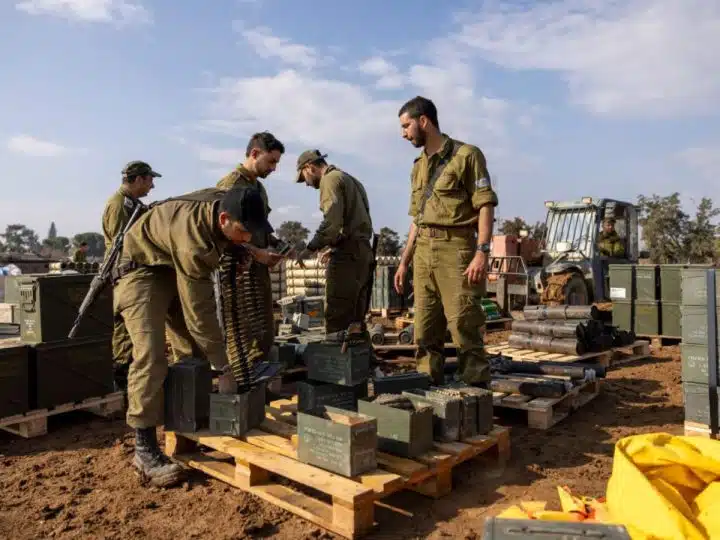

51 nations armed Israel during the settler-colonial state’s genocide against Palestinians. Some states gave the regime hundreds of millions of dollars in arms. Others just a few hundred dollars worth of equipment. All bear the mark of shame.
Al Jazeera reported on 24 May:
military-related goods originating from at least 51 countries and self-governing territories continued entering Israel after the ICJ’s warning of a plausible risk of genocide in Gaza.
The outlet used Israel tax authority data, customs records and freedom of information requests from “between 2022 and 2025” to trace:
military supply chains linked to countries across Europe, Asia, North America and South America.
Al Jazeera said:
All named countries are signatories to the Genocide Convention.
In some cases, the military-related goods originated from countries that had formally imposed arms embargoes on Israel or had partially suspended arms supplies to the country.
A large part of the equipment was lethal:
In fact, according to the ITA data, arms imports increased after the ICJ ruling, with the largest share falling under the category of munitions.
The five biggest countries of origin all increased arms shipments during the period:
The United States, India, Romania, Taiwan and the Czech Republic – all recorded increased shipments during the war.
Legal experts and NGOs condemned the nations involved for contributing to the generational horrors of Gaza.
Israel — Ample evidence of war crimes
Stephen Humphreys is a professor of international law at the London School of Economics (LSE). He told Al Jazeera that even prior to the ICC ruling that a plausible genocide was underway there was:
ample evidence that countries arming Israel may be complicit in international crimes, including war crimes and crimes against humanity.
Gerhard Kemp is a professor of criminal law at the University of the West of England (UWE). He told Al Jazeera:
Some states have a very narrow understanding of the duty to prevent genocide and are waiting for a judicial determination that there is a genocide in Gaza.
But warned that the obligation was triggered by the risk of genocide – not the final findings of an international court:
The better view is to look at domestic legal obligations … and international legal obligations and legal tools triggered by available evidence.
Action on Armed Violence (AOAV) director Iain Overton, executive director of AOAV, said:
This investigation reinforces growing concerns about the continued transfer of explosive weapons and military components into a conflict where civilians have borne the overwhelming burden of harm.
He said AOAV’s research:
has consistently shown that the use of explosive weapons in populated areas causes catastrophic civilian suffering, destroys vital infrastructure and leaves lasting humanitarian consequences long after the fighting ends.
The scale of imports identified by Al Jazeera raises urgent questions about international obligations, transparency and accountability in global arms transfers.
The US sent more than £368mn of arms to Israel in the period concerned, the Al Jazeera report claims. While Japan’s contribution was just $161. ‘Anti-imperialist’ China provided $19mn worth of arms to the genocide state. The UK sent over $1.8mn. All of these countries bear a mark of shame which will never be erased. And all should be held accountable.
Featured image via Maja Hitij/Getty Images
By Joe Glenton
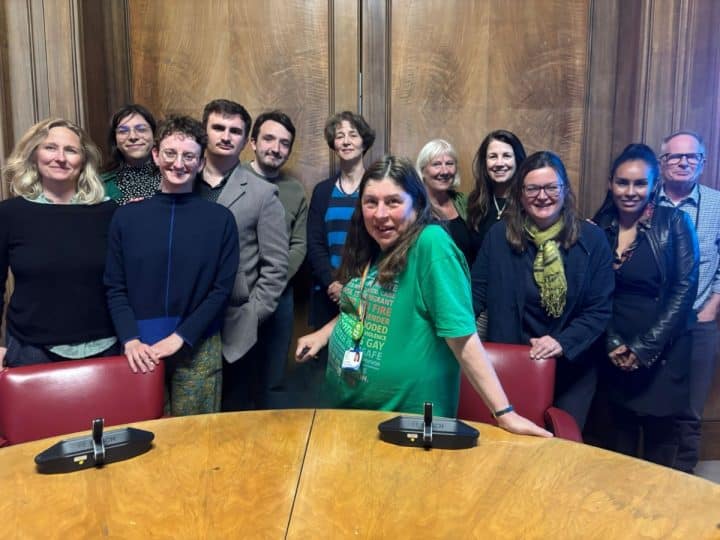
This is a statement from the Cambridge & South Cambridgeshire Green Party
The Green group on Cambridge city council has confirmed that it will not be entering a proposed rainbow coalition with Labour or the Liberal Democrats. Instead, it put forward and voted for its deputy leader Sefira Davison to lead the city council.
Sadly the Lib Dems chose to abstain on the vote, lending their tacit support to enable a continuation of the Labour run administration, rather than agreeing to collaborate with Green councillors to bring about the change that residents voted for.
Despite constructive efforts from the Green group, the demands put forward by the Lib Dems made a stable, collaborative agreement impossible.
For all their rhetoric of progressive collaborations, the Lib Dems failed to take our Green Group seriously, and instead demanded to take the leadership as well as finance, housing development & planning cabinet roles and rejected any discussion of compromise on this.
They speak publicly about collaboration and cooperation, but behind closed doors there is little to choose from between Lib Dems and Labour. Both seem to have failed to grasp the reality of residents’ increasing trust in Green councillors to deliver for their city.
Over recent years, Cambridge has seen the consequences of one‑party dominance and stitched‑up deals: poor transparency, weak opposition, lack of scrutiny, and decisions that have too often sidelined residents, from planning, to green space protection, to the future of public services.
Voters sent a clear message at the ballot box: they want change, independent voices, and real accountability.
Greens won the popular vote on Thursday 7 May with 33% of votes across Cambridge, but due to the current council model with elections happening in thirds, Greens did not win control of the council.
Sefira Davison, city Green croup deputy leader, said:
We heard from the Lib Dems today that Labour being in power wasn’t what they wanted, but it’s what they chose.
We’ve spent weeks offering fair, reasonable compromises, including a proportionate split of cabinet posts and balanced leadership arrangements, and they told us they wouldn’t accept any offer that didn’t give them immediate leadership of the council.
We look forward to holding this new Lib Dem-enabled Labour administration to account, and making sure the council delivers the best results for the city.
Naomi Bennett, Green group leader, said:
On housing, development, transport, climate action, inequality, and democratic reform, the Greens have consistently taken strong, principled positions.
My Green colleagues and I will spend this year working hard for residents across our city, and challenging Labour and the Lib Dems in the council chamber, and when the time comes for the next election, we will continue to challenge them at the polls and we will win.
Our priority is the people of Cambridge. We will work to ensure that council services run more smoothly, that marginalised voices are heard, and that communities across the city are supported.
As the official opposition, we will bring strong scrutiny, practical solutions, and a renewed commitment to democracy at the Guildhall, based on honesty, evidence, transparency, and genuine public involvement.
Featured image via Cambridge & South Cambridgeshire Green Party
By The Canary
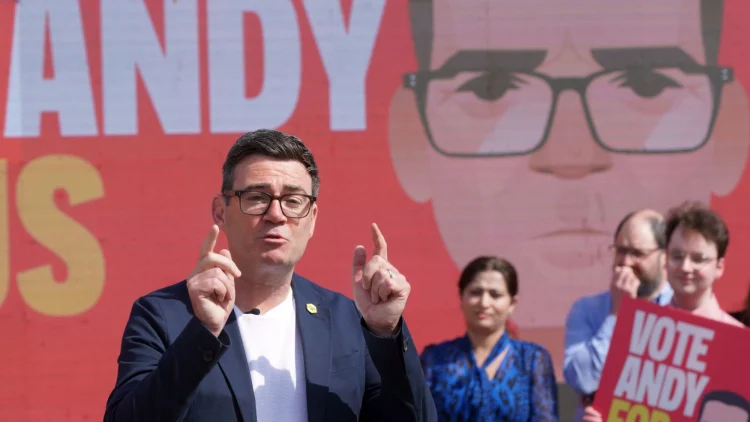

22 May 2026. Andy Burnham launches his campaign as Labour’s candidate for the Makerfield by-election. (Alamy)

3 min read
Exclusive: A number of Labour MPs who oppose replacing Keir Starmer are refusing to campaign for Andy Burnham in the Makerfield by-election.
Multiple Labour backbenchers who remain loyal to the Prime Minister have told PoliticsHome that they will defy instructions to visit the constituency in the northwest of England at least twice before polls close on 18 June.
A Labour MP who has decided not to campaign in Makerfield told PoliticsHome: “There’s great confusion about the by-election. People feel like they are being asked to take part in an act of self-harm and so aren’t happy about campaigning.
“There’s real upset that at a time when we need to be tackling some big national issues, we are creating an unnecessary diversion.”
The by-election is widely described as one of the most consequential in British political history.
Burnham, the Greater Manchester Mayor, is expected to launch a bid to replace Starmer in No 10 if he secures his return to the House of Commons later this month. Reform UK candidate Robert Kenyon is expected to be Burnham’s closest rival, with a Survation poll last week putting Burnham three per cent ahead of Kenyon (43 per cent to 40 per cent).
The by-election was triggered when Josh Simons resigned as the constituency’s MP as part of the wider Labour revolt against Starmer’s leadership following a disastrous set of local elections last month.
Labour MPs and campaigners “from every corner of the country and every corner of the party” are travelling to Makerfield to campaign for Burnham, a party source recently told The House magazine. Party chair Anna Turley has asked all Labour MPs to canvass in the by-election twice during the campaign, plus polling day.
However, Labour MPs who oppose a leadership contest are deeply unhappy about being asked to campaign for Burnham, with some refusing to travel to the constituency altogether.
Some backbenchers have agreed to make phone calls instead of campaigning on the ground in Makerfield. Some MPs are still deciding whether or not to go up, while others have told PoliticsHome they would “reluctantly” make a single visit to “show their face”.
Some Labour MPs who don’t plan to visit the constituency cite the practical difficulty of getting there, insisting the issue is “distance, not personalities”. But others were more candid, pointing to the awkwardness of effectively being asked to campaign against their own PM.
The Labour MP quoted above added: “We have to win the by-election, but does that mean we are coronating him (Burnham)? Most of us don’t even know the guy; he’s not the reason why we are here.
“If he wins, are we all then expected to have a much harder fight for the (Manchester) mayoralty, which will give us a bigger, bloodier nose than this.”
The Greater Manchester mayor is running his by-election campaign on a pledge to “Change Labour”, saying the party “needs to change if we are to regain people’s trust”.
Former health secretary Wes Streeting, who resigned from the government last month out of protest against Starmer’s leadership, has already gone up to Makerfield to campaign for Burnham, despite being expected to run in a future leadership contest.
A Labour source told PoliticsHome: “Thousands of party activists, supporters, councillors and MPs have been campaigning every day in Makerfield to make sure we win this by-election.
“The vast majority of the PLP will have been up by next week – everyone is pulling together to make sure we get Andy over the line on Thursday 18 June and win this for Labour. It’s vital that we send Reform packing.”
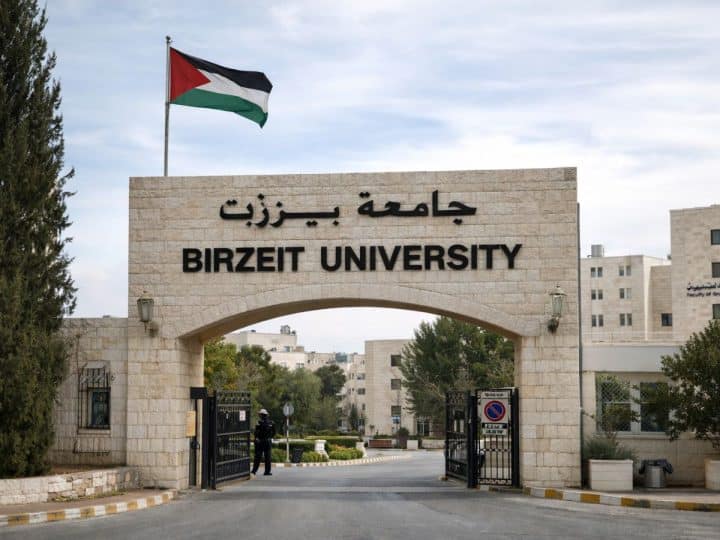

The Director of Bethlehem Institute for Peace and Justice and Evangelical Lutheran Pastor, Munther Isaac, has posted a statement from Bishop Dr. Imad Haddad on the abduction of a young member of their church community in Birzeit, located in the occupied West Bank.
As the Bishop of the Evangelical Lutheran Church of Jordan and the Holy Land, Haddad has demanded the immediate release of Natalie Abudayyeh as he joins the Birzeit and Beit Jala communities in:
earnest prayer for Natalie’s safety and freedom.
Moreover, the Christian leader has made a plea to “friends, partners and siblings in Christ” to:
demand an end to this unjust and unequal system of detainment and detention that paralyzes and destroys Palestinian communities.
Statement from Bishop Dr. Imad Haddad on the Israeli Detainment of Natalie Abudayyeh
This morning a beloved youth from our church community, Natalie Abuddayeh, was taken at gunpoint by Israeli forces from her student apartment in Birzeit alongside three other women. We are… pic.twitter.com/5JO51KXfk0
— Munther Isaac منذر اسحق (@MuntherIsaac) June 2, 2026
West Bank — Unjust and unequal system must end, says Christian church leader
The published letter written by Bishop Haddad expresses deep shock and horror at the abduction at gunpoint of a young female member of their community. Natalie is a student of media and journalism at Birzeit University near Ramallah in the increasingly occupied West Bank and was taken at the same time as three other women from the local community.
Palestinian journalists have paid an incredibly high price for their continued commitment to covering the flagrant illegal abuses inflicted by the Israeli occupation forces (IOF). Bringing the brutal realities of this genocide to the wider international community — who are banned access by Israel — has not come without great sacrifice and loss. Since 7 October 2023, at least 235 journalists and media workers have been murdered in targeted attacks and bombardments.
Given Natalie’s enrolment as a student of journalism, this strikes concern of yet another attempt to stifle the freedom of press. In turn, this threatens the ability for journalists and media organisations around the world to get a clear, factual and evidenced picture of what is happening to Palestinians at the hands of their oppressive, apartheid-enforcing occupier Zionist Israel.
The bishop stated in his letter:
This morning a beloved youth from our church community, Natalie Abudayyeh, was taken at gunpoint by Israeli forces from her student apartment in Birzeit alongside three other women. We are deeply shocked and horrified by this news, as well as by the news that her family does not yet know where she has been taken.
Natalie is a member of Evangelical Lutheran Church of the Reformation in Beit Jala, a graduate of Talitha Kumi Lutheran School, and a Media and Journalism student at Birzeit University.
As Bishop of the Evangelical Lutheran Church in Jordan and the Holy Land, I unequivocally call for Natalie’s immediate release. The entire ELCJHL stands in solidarity with the Abudayyeh family and the Beit Jala and Birzeit communities, and we join them in earnest prayer for Natalie’s safety and freedom.
He then expressed how disturbing he and the Christian community find the fact that she is joining thousands of Palestinians held without charge or trial, including women and children as young as 12. When trials are held in military courts, they see an almost 100% conviction rate. This surely goes to highlight how unjust the courts are in practice.
In fact, 37% of children illegally detained have seen no charges brought against them and have had all legal and family access denied by their oppressor and kidnapper Israel.
We are incredibly disturbed by the reality that Natalie now joins the thousands of Palestinians in Israeli detention without charge or trial. Palestinian civilians, including women and children, suffer deep injustice in Israeli military detention and are often held for months or years with no explanation.
We call on our friends, partners, and siblings in Christ around the world to advocate for Natalie’s freedom using whatever channels are available to them, and to demand an end to this unjust and unequal system of detainment and detention that paralyzes and destroys Palestinian communities.
Where is the West and its ‘Christian values’ now?
For centuries, the UK — and later the US after its colonialist ‘birth’ — claimed to uphold Christian values. Yet both countries repeatedly undermine those claims through sinister actions and policies that contradict the principles of compassion, justice, and human dignity at the very heart of Christianity.
Subsequently, the occupation and genocide in Palestine — coincidentally, the birthplace of Jesus Christ and home of St George — has exposed how vacuous these virtue signalling statements have always been.
The far right has long manipulated Christian teachings and symbolism for political gain, invoking Christ and religious identity to stir division, resentment, and hostility. However, when Christian leaders plead for an end to the decades of bloodshed and demand justice and accountability, Western leaders ignore those calls thus exposing the absence of the faith they so often claim to uphold.
Therefore, it is unlikely that this latest call from the Christian community — speaking directly from the Holy Land itself — will find anything but deaf ears in the UK government.
As a result, genuine Christians — and people of all faiths — must hold their leaders to account and challenge their continued support for actions that inflict painful suffering on civilians and deprive innocent people of their freedom.
Featured image via GlobalCampusofHumanRights

The post Why so many young women fall for trans ideology appeared first on spiked.
Politics
Security discussions intensify over potential challenges to the biggest World Cup in history


Security discussions are intensifying as the 2026 World Cup approaches, amid preparations to host the largest edition in the tournament’s history, featuring 48 teams and 104 matches spread across 16 cities in the United States, Canada and Mexico.
Although there are no official warnings regarding specific threats or intelligence suggesting imminent attacks, recent Western security reports and studies have highlighted the scale of the challenges the global event may face, with the tournament considered a potential target for a wide range of security risks, ranging from terrorism and violent extremism to cyberattacks and threats linked to drones.
World Cup security under the microscope
In a recent study entitled “The Terrorist Threat to the 2026 World Cup”, the Center for Strategic and International Studies (CSIS) considered that the tournament represents an attractive target for those seeking to achieve widespread media impact, given the global audience that World Cup matches attract.
The report noted that potential threats are not limited to any specific group, but encompass a wide spectrum of security risks, including transnational jihadist groups, local extremists, entities backed by hostile states, and criminal organisations.
In this context, the report listed ISIS and its affiliates among the groups that continue to attract the attention of security agencies, citing previous incidents linked to the targeting of major sporting events or attempts to exploit them to generate global media coverage.
Concerns are not confined to the stadiums
One of the key points highlighted by the study is that the most likely scenario does not involve targeting the stadiums themselves, but rather the potential for less fortified targets to be at risk, such as fan zones, transport, hotels and public gatherings surrounding the matches.
The report also noted that the threat posed by ‘lone wolves’ and individuals who espouse extremist ideas without direct organisational links remains one of the scenarios that most concerns security agencies during major sporting events.
The challenge goes beyond traditional security concerns
For its part, The Guardian argued that the security challenge surrounding the 2026 World Cup is not limited to traditional security concerns, but is also linked to the tournament’s expanded scope, the multiple host cities and the unprecedented logistical and security challenges that accompany this.
The report noted that having three countries host the tournament and the competition spanning almost an entire continent requires high levels of coordination between security and intelligence agencies, at a time when concerns are mounting regarding cyberattacks, drones and attempts to disrupt tournament-related infrastructure.
The newspaper noted that security experts view transport hubs, airports and fan zones as the most sensitive locations during the tournament, compared to the stadiums, which will be subject to strict, multi-layered security measures.
World Cup — Security capabilities in the face of threats
The assessments contained in the Centre for Strategic and International Studies (CSIS) study conclude that dealing with potential threats associated with the 2026 World Cup is based on the United States’ accumulated experience in managing major events, and advanced security capabilities that include counter-terrorism systems and the protection of large-scale events.
A report in The Guardian also concludes that the expanded scope of the tournament and the multiple host cities necessitate a higher level of security coordination between the three countries, and underscore the need for complex arrangements to address a wide range of risks, including terrorist threats, cyberattacks, drones and crowd control.
Featured image via Francisco Vega/Getty Images
By Alaa Shamali


Algeria — After years of ups and downs, marked by both successes and failures, the Algerian national team returns to the 2026 World Cup with a twofold ambition: to restore its standing amongst the African elite on the one hand, and to prove that the current generation is capable of writing a new chapter to match what the Desert Warriors achieved at the 2014 World Cup in Brazil on the other.
Algeria, which dazzled the world over a decade ago when it reached the quarter-finals and played a historic match against Germany, has since experienced contrasting phases. From winning the 2019 Africa Cup of Nations to the painful absence from the 2022 World Cup, and finally returning to the world stage for the 2026 edition.
Today, the Algerian national team enters the tournament knowing that mere qualification is no longer enough for fans accustomed to dreaming big, and that the real challenge lies in transforming immense individual potential into a collective achievement on the world’s biggest football stage.
A blend of European experience and Algerian identity
The Algerian national team boasts one of the most talent-rich squads in Africa. The core of the team consists of players competing at the highest levels in Europe, giving them considerable experience in handling big matches and high-pressure situations.
Riyad Mahrez leads the attack with his wealth of experience, whilst Amine Gouiri is one of the team’s key attacking weapons thanks to his ability to play in multiple positions. Nabil Bentaleb also provides the team with crucial balance in midfield, whilst Rayan Aït-Nouri stands out as one of the key players capable of making a difference on the flanks thanks to his attacking and defensive abilities.
However, Algeria’s strength lies not only in the names, but in the variety of options. The national team boasts a large number of players capable of playing in more than one position, which gives the coaching staff great flexibility in dealing with various scenarios throughout the tournament.
From individual skills to tactical balance
In recent years, the Algerian national team has evolved from a side that relied primarily on individual skills to a more tactically balanced unit. It has become capable of combining possession and build-up play on the one hand, with quick transitions and direct attacks on the other.
One of the team’s key strengths lies in its ability to exploit the flanks, whether through Mahrez, Aït Nouri or the attacking full-backs, which provides Algeria with a variety of attacking options. Furthermore, the presence of players with excellent passing ability and movement between the lines allows the team to dictate the tempo against opponents who prefer to sit back defensively.
Conversely, the main challenge remains maintaining focus and discipline during big matches, an issue that has cost the team dearly in some previous tournaments despite their clear technical superiority.
Algeria — From progressing past the group stage to the bigger dream
While Algeria’s realistic goal is to reach the knockout stages, the ambition within the squad appears to be greater than that. The current squad believes it can go far if it manages to progress from the group stage with confidence.
The Desert Warriors possess the qualities to compete against teams of varying styles, whether those relying on physical strength or those favouring possession. Moreover, the breadth of talent provides the coaching staff with important options for managing the long matches throughout the tournament.
However, the path to a new achievement will not be easy, as the differences between teams at the World Cup are often decided by small details, not just the quality of the players.
A chance to redefine the current generation in Algeria
The 2026 edition represents an exceptional opportunity for a number of Algerian stars to leave a historic mark on the nation’s footballing record. The 2014 generation remains firmly etched in the fans’ memories, whilst the 2019 Africa Cup of Nations title remains one of the most significant milestones in modern Algerian football.
As for the current generation, it has a rare opportunity to forge its own story, free from comparisons. If it succeeds in reaching the later stages, it will not only restore Algeria’s prestige on the world stage, but may also pave the way for one of the finest African performances in World Cup history.
Ultimately, the Algerian national team is not entering the 2026 World Cup as a guest or an underdog, but as a side possessing the talent, experience and ambition to make it one of the leading contenders to steal the limelight, and perhaps to rewrite a new chapter in the history that began in Brazil twelve years ago.
Featured image via Simone Arveda/Getty Images
By Alaa Shamali

Football violence is about ‘excitement’ and ‘proving one’s masculinity’, expert says
4 Common Problems With Catalytic Converters

$160,000 Of Weed Debt | Financial Audit



-

 Tech6 days ago
Waymo dominates autonomous vehicle registrations as Tesla trails behind
-

 News Videos5 days ago
This is BROKEN! INSANE 5x MONEY CAR WASH WEEK! The NEW GTA Online UPDATE Today! (GTA5 New Update)
-
 Tech4 days ago
SpaceX just won a second Golden Dome contract. This one is $4.16 billion.
-

 Business2 days ago
Jade Biosciences, Inc. (JBIO) Discusses Positive Interim Results From JADE101 Phase I Healthy Volunteer Study and Development Plans Transcript
-

 News Videos5 days ago
SHE IS KILLING XRP!!! WATCH URGENT AND ACT FAST
-
 NewsBeat5 days ago
FIRST NIGHT REVIEW: Take That bring the Circus back to life in spectacular sun-soaked style
-
 Crypto World5 days ago
CFTC Has Approved the First Regulated Bitcoin Perpetual Contract in the U.S.
-

 Business4 days ago
Is the Spurs Phenom Already Better Than Prime Diesel?
-
 NewsBeat5 days ago
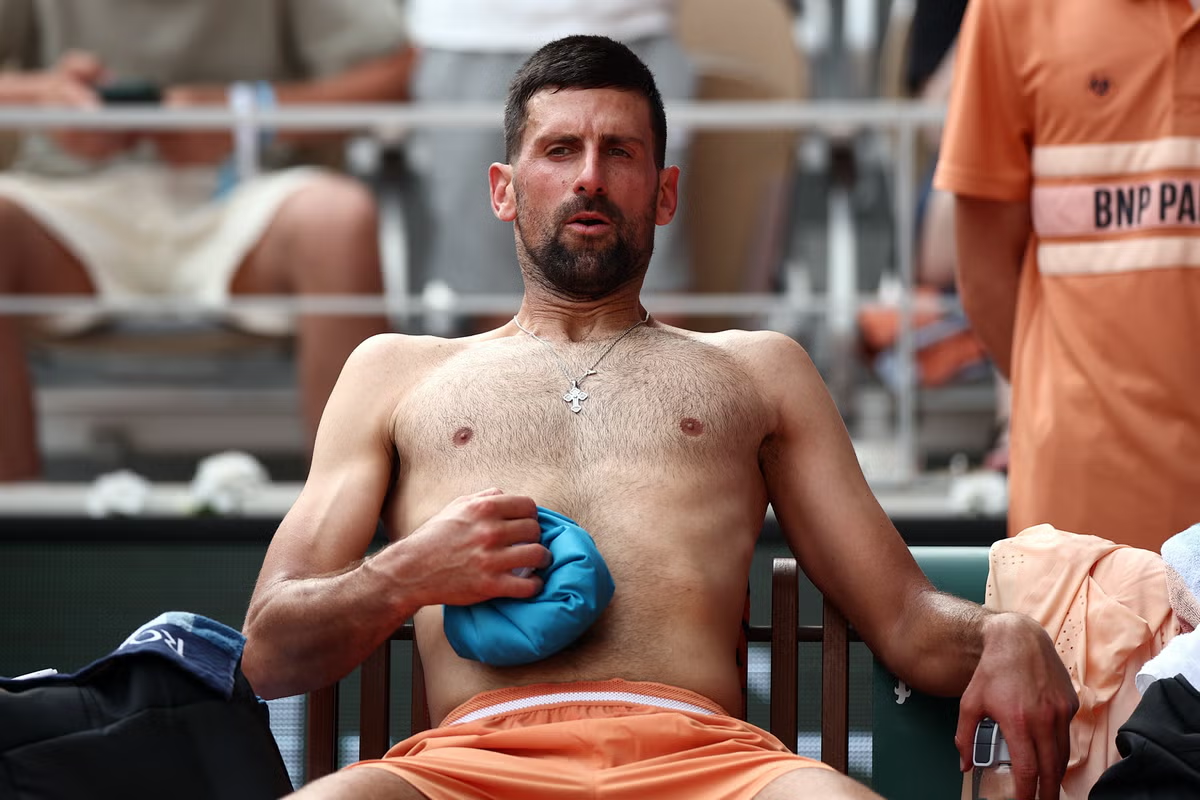
Novak Djokovic v Joao Fonseca LIVE: French Open latest scores and results after Jannik Sinner’s shocking collapse
-
 Crypto World5 days ago
Snowflake (SNOW) Stock Rallies on Strong Q1 Results and AI Product Growth
-
 Entertainment5 days ago
Weak ‘Supergirl’ Box Office Tracking Amid Milly Alcock Backlash
-

 Business5 days ago
Demand Conditions Improve In Chemicals Sector In April 2026
-
 Crypto World5 days ago
MicroStrategy Moves $30 Million in BTC to Coinbase Prime: Is the Bitcoin Sell-Off Already Here?
-

 Politics5 days ago
The House | Inside Andy Burnham’s Makerfield Campaign: “Nobody Thinks This Is In The Bag”
-

 Tech5 days ago
This Week In Security: Ubiquiti Fixes, And FreeBSD Joins The Club You Don’t Want To Join
-
 Entertainment4 days ago
One of the Greatest Sitcoms of All Time Shoots Up Apple TV’s Charts 11 Years Later
-

 Entertainment5 days ago
Maddox Jolie-Pitt Legally Requests to Drop Brad’s Surname
-
 Crypto World1 day ago
Seagate (STX) Stock Surges to Record High on AI Boom and Legal Settlement
-
 Entertainment5 days ago
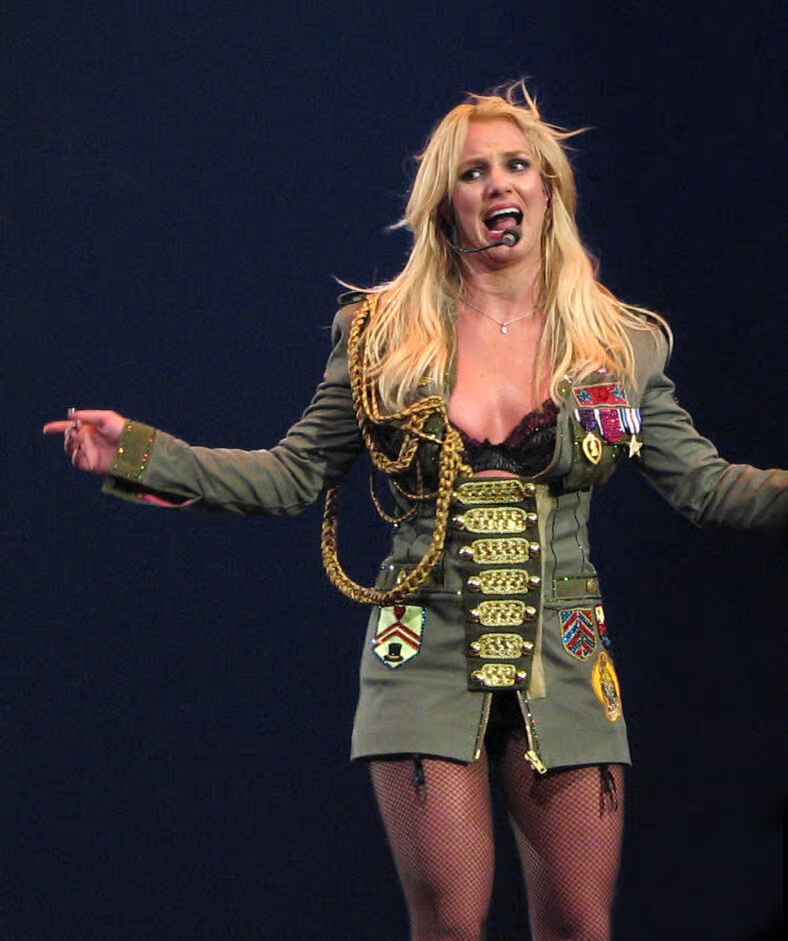
Britney Spears Shares Troubling Update After Hard Year
-
 Entertainment5 days ago
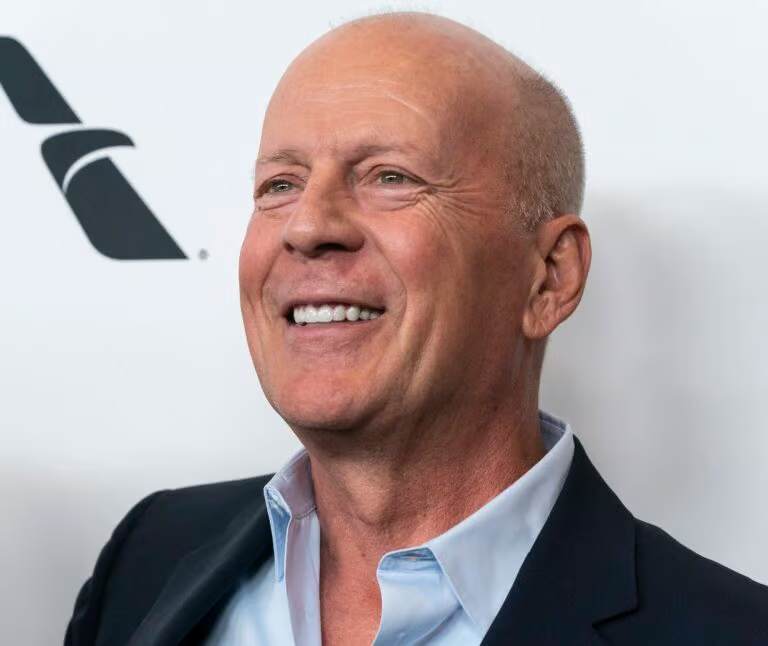
Bruce Willis’ Generosity Resurfaces Amid His Dementia
You must be logged in to post a comment Login