Connect with us
DAPA Banner

Business

Iran war squeezes Asia energy supply as India, Japan feel strain

Published

on

Iran war squeezes Asia energy supply as India, Japan feel strain

The latest phase of the Iran war is locked on the Strait of Hormuz and critical energy infrastructure. Already, its effects are rippling thousands of miles away in Asia.

Asia is at the front line of the energy crisis, ​with shortages hitting nearly every country. Roughly a fifth of the world’s oil flows through the Strait of Hormuz, with some 80% going to Asia, according to the International Energy Agency.

Advertisement

As Iran refuses to open the strait, Asia is scrambling to mitigate disruptions and is being forced to take measures reminiscent of COVID-era actions.

Asia is especially susceptible due to its heavy import dependence, weaker currencies and large populations. And the impact has hit households fast.

The conflict has disrupted sectors from air ‌travel ⁠and shipping to gas supplies. People are struggling to cook and businesses across the board are bearing the brunt as liquefied petroleum gas imports slow.

A STATE-BY-STATE LOOK AT GAS PRICES AS IRAN CONFLICT PUSHES OIL HIGHER

Advertisement
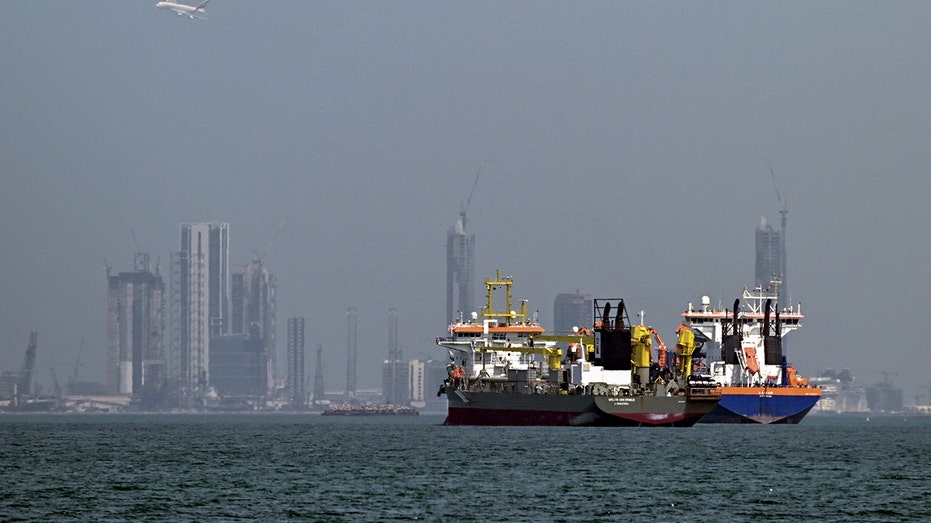
A cargo ship in the Strait of Hormuz

Commercial vessels are pictured offshore in Dubai on March 11, 2026. (AFP via Getty Images / Getty Images)

Widespread disruptions have hit South Asia in particular, which is extremely reliant on Middle Eastern oil. India, which imports nearly 90% of its crude and about half its natural gas from abroad and is the world’s third-biggest oil importer and consumer, has been left especially vulnerable.

Yesterday, President Donald Trump and Indian Prime Minister Narendra Modi spoke on the phone, their first call since the Feb. 28 war broke out. In a post on X, Prime Minister Modi stressed, “Ensuring that the Strait of Hormuz remains open, secure and ​accessible is essential for the whole world.”

The Strait of Hormuz serves as a conduit for more than 40% of India’s crude oil ​imports.

This week, two tankers bound for India sailed through the strait. Vessels with ties to China, Pakistan and Thailand have also transited successfully, while several other Asian governments are in talks with Tehran to secure passage.

Advertisement

But a lot of these imports are expected to be used for non-power, industrial purposes such as fertilizer production, leaving the public left in the lurch.

In a new move that shows the precariousness of the situation, India’s Reliance Industries, which operates the world’s biggest refining facility, reportedly bought 5 million barrels of Iranian oil. The deal marks India’s first such purchase since 2019 and comes days after the U.S. temporarily lifted sanctions.

“All our kitchens run on gas and so, they’ve all been hit,” Indian hospitality veteran AD Singh told FOX Business. “We have been forced to stop serving several items and shorten our menus, doing our best given what we have. But people are worried and livelihoods are at stake. It’s not a positive feeling,” the founder and managing director of the Olive Group of restaurants said.

KEVIN O’LEARY FORECASTS GLOBAL POWER SHIFT IN STRAIT OF HORMUZ AS IRAN CONFLICT RATTLES OIL MARKETS

Advertisement
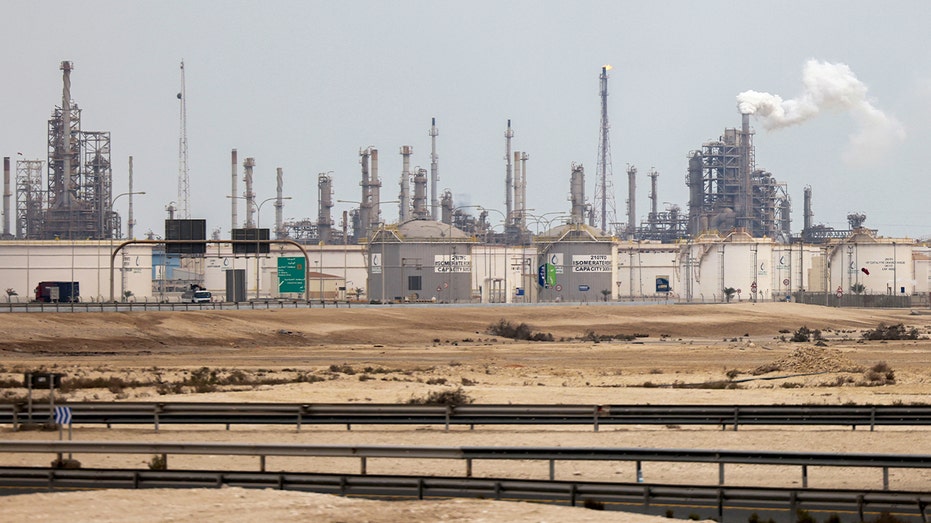
Industrial gas processing facilities and storage infrastructure at a major Qatari energy complex.

Qatar Energy facilities in Mesaieed Industrial City, south of Doha, on March 4, 2026, after the company announced a shutdown of LNG production following reported Iranian attacks. (Stringer/Getty / Getty Images)

It’s a similar story in much of the subcontinent. 

Two of Asia’s most advanced economies have also been hit hard. But while South Asia feels it more at the household level, Japan and South Korea are facing a different kind of strain.

The two east Asian nations are being rocked by surging import costs, forcing factories to scale back and governments to tap emergency reserves.

Japan, which imports more than 90% of its oil from the region, has begun tapping strategic reserves. South Korea is weighing reserve releases and emergency support measures.

Advertisement

Unlike India, both countries have larger financial buffers and energy stockpiles, allowing them to cushion the immediate impact even though structural risks remain high.

Strikes are hitting many nations, like India, Bangladesh and the Philippines as frustrations grow. Online rumors are deepening the chaos and prompting panic buying. In a few countries like India, police are being deployed at gas stations.

Japan

Mount Fuji and the Shinjuku skyline seen from an observation deck in Tokyo, Japan, on Dec. 26, 2023. (Akio Kon/Bloomberg via Getty Images / Getty Images)

As Asia grapples with this energy crisis, many countries are now turning back to coal and firewood to offset their gas needs. 

Induction cooking equipment is flying off the shelves in LPG-dependent India, and early warning signs are popping up elsewhere in the region. Energy shocks are now showing up on dinner tables as well.

Advertisement

 “It’s taking some time to get set on these new ways,” AD Singh told FOX Business.

AMERICAN DRONE COMPANY CHALLENGES CHINESE DOMINANCE WHILE PREPARING TROOPS FOR SWARM ATTACKS

Japan and South Korea are accelerating plans to boost nuclear energy.

Several Asian countries have also released petrol and diesel from domestic reserves, temporarily loosened fuel standards and stepped up domestic production.

Advertisement

Emergency regulatory steps are beginning to sweep the region, from severe austerity measures in Sri Lanka to strict fuel rationing in Bangladesh.

Bangladesh energy crisis

People refuel their motorbikes at a fuel station in Dhaka, Bangladesh, on March 17, 2026. (Mamunur Rashid/NurPhoto via Getty Images / Getty Images)

The Philippines just became the first country to declare a national energy emergency, warning of “an imminent danger of a critically low energy supply.” The island imports 98% of its oil from the gulf.

Meanwhile, China just dialed back on planned fuel price hikes in a bid to “reduce the burden” on the population.

Some governments are also weighing stimulus packages and energy-saving campaigns are flooding social media as record-high costs bite household budgets. 

Advertisement

GET FOX BUSINESS ON THE GO BY CLICKING HERE

“Any scarcity of essential fuels has a cascading effect across the continent,” Singh told FOX Business. “When it comes to food, ingredient prices rise, operation costs increase and business volumes are affected. And with the news all over the place, people are spooked.”

Continue Reading
Click to comment

You must be logged in to post a comment Login

Leave a Reply

Business

IAC buys MGM shares worth $37.2m

Published

on


IAC buys MGM shares worth $37.2m

Continue Reading

Business

Starbucks Stock Climbs Modestly on China Progress and U.S. Turnaround Hopes

Published

on

Dow Jones

Starbucks Corp. shares edged higher in early Wednesday trading, rising about 0.80% to around $92.72 as investors weighed ongoing U.S. traffic challenges against signs of stabilization in China and the company’s multi-year reset plan aimed at reclaiming its position as the “third place” between home and work.

Coffee giant Starbucks has been ordered to pay $50 million to a man who had hot tea spilled on his lap at a California drive-through
AFP

The stock traded in a range of roughly $92.04 to $93.29 after opening at $92.33, with volume exceeding 1.3 million shares by late morning. It closed Tuesday at $91.98, down 1.97% on the day amid broader market volatility, but remained well above its 52-week low of $75.50 and below the high of $104.82 reached in late January. Market capitalization stood near $105 billion.

Starbucks has faced persistent headwinds in its largest market, the United States, where comparable store sales have softened due to cautious consumer spending, competition from smaller chains and value-focused rivals, and lingering labor tensions. To counter this, the company has accelerated store redesigns, enhanced its rewards program and emphasized hospitality initiatives to rebuild customer loyalty and foot traffic.

A bright spot has emerged in China, Starbucks’ second-largest market. The company recently completed the sale of a 60% stake in its Chinese retail operations to private equity firm Boyu Capital in a deal valuing the business at approximately $4 billion, with the total enterprise value exceeding $13 billion when including Starbucks’ retained 40% interest and future licensing royalties. The transaction, expected to close in the second quarter of fiscal 2026, is intended to unlock capital for U.S. reinvestment while maintaining a meaningful presence in the fast-growing market.


Recent quarterly results showed China revenue rising 11% year-over-year to $823 million in the fourth quarter, with comparable store sales up 7% driven by higher transactions and average tickets. The joint venture structure is expected to provide greater operational flexibility and local expertise as Starbucks navigates a competitive landscape there.

Advertisement

Chief Executive Brian Niccol, who took the helm last year, has outlined an ambitious 2026 reset focused on global growth, menu innovation and elevating the in-store experience. Initiatives include refreshed store designs to enhance the “third place” atmosphere, new beverage platforms and targeted marketing campaigns. Analysts have noted early signs of progress in U.S. comparable sales trends, though full recovery is likely to take several quarters.

Wall Street sentiment remains mixed but leans cautiously optimistic. Consensus 12-month price targets hover around $94, implying modest upside from current levels. Ratings are predominantly “Hold” or “Buy,” with some firms trimming targets recently due to balanced risk/reward and lingering U.S. margin pressures. Guggenheim raised its target to $95 from $90 while maintaining a Hold rating, while RBC Capital downgraded the stock to Sector Perform.

The forward dividend of $2.48 per share yields approximately 2.70%, with the ex-dividend date having passed in mid-February. Starbucks has a long history of returning capital to shareholders, though the pace of dividend growth has moderated amid reinvestment needs.

Labor issues continue to draw attention. Ongoing unionization efforts and contract negotiations have occasionally disrupted operations and weighed on sentiment. The company has emphasized its commitment to fair bargaining while highlighting investments in partner (employee) benefits and training. A recent data breach incident affected some customer accounts but did not involve payment information, limiting its financial impact.

Advertisement

Starbucks operates more than 42,000 stores globally, with significant exposure to international markets that provide diversification from U.S. cyclicality. The company plans continued expansion, particularly in high-growth regions, while optimizing its domestic footprint through remodels and selective closures of underperforming locations.

For fiscal 2026, analysts forecast gradual improvement in comparable sales, with China expected to contribute meaningfully once the joint venture stabilizes. Earnings per share estimates for the year center around mid-single-digit growth, though execution on the U.S. turnaround remains critical. First-quarter results for fiscal 2026 are scheduled for late April, with investors watching closely for evidence of traffic recovery and margin expansion.

Broader consumer staples stocks have shown resilience amid economic uncertainty, but Starbucks trades at a premium valuation reflecting its brand strength and growth potential. The stock’s beta near 1.0 indicates market-like volatility, while its long-term track record has delivered solid total returns for patient investors despite recent cyclical pressures.

Retail investors have shown renewed interest as the stock pulled back from earlier 2026 highs. Some view current levels as an attractive entry point ahead of anticipated improvements in the second half of the year. Others remain cautious, citing competition from value-oriented coffee alternatives and slower premium beverage growth.

Advertisement

As trading progressed Wednesday, shares held modest gains, reflecting balanced views on near-term challenges and longer-term strategic repositioning. Starbucks rarely experiences sharp single-session moves, but sustained progress on U.S. traffic and successful integration of the China joint venture could catalyze a rebound toward analyst targets.

The company continues to invest heavily in digital tools, including its popular rewards program, which drives incremental visits and higher check averages. New menu items, seasonal promotions and enhanced mobile ordering aim to boost convenience and personalization in a post-pandemic environment where many customers prefer quick grab-and-go experiences.

Challenges in the U.S. market include competition from emerging chains and shifting preferences toward value. Starbucks has responded with targeted promotions and menu adjustments while protecting its premium positioning. International operations, particularly in Asia and Europe, provide a buffer and growth avenue.

Looking ahead, the success of Niccol’s turnaround strategy will likely determine the stock’s trajectory through 2026 and beyond. With a strong balance sheet, iconic brand and global footprint, Starbucks remains well-positioned to navigate near-term pressures and deliver long-term value for shareholders.

Advertisement

For now, the stock trades in a relatively tight range, reflecting investor patience as the company executes its reset plan. Modest early gains Wednesday suggest cautious optimism that hospitality-focused initiatives and China restructuring will eventually brew stronger results.

Continue Reading

Business

Perfect Snacks launches high-protein bar

Published

on

Perfect Snacks launches high-protein bar

The gluten-free bars are available in two flavors.

Continue Reading

Business

Dow Jones Rises Modestly as Markets Stabilize Amid Ongoing Middle East Tensions

Published

on

Coinbase Global

The Dow Jones Industrial Average climbed more than 290 points Wednesday, March 25, 2026, snapping a string of choppy sessions as investors weighed persistent geopolitical risks from the U.S.-Israel-Iran conflict against signs of tentative stabilization in oil markets and a modest rebound in equities.

Dow Jones
Dow Jones

The blue-chip index closed at 46,419.29, up 295.23 points, or 0.64 percent, according to market data. It had opened higher and traded in a range between 46,314.24 and 46,711.45 during the session, with volume reaching about 150 million shares.

Wednesday’s gain followed a mixed Tuesday, when the Dow slipped 84.41 points, or 0.18 percent, to close at 46,124.06. Broader indexes showed similar patterns: the S&P 500 rose nearly 1 percent to around 6,621, while the Nasdaq Composite also posted gains of about 1 percent.

Analysts attributed the modest recovery to a slight easing in oil prices after recent spikes tied to the ongoing war in the Middle East. Crude oil futures trimmed some of their earlier surge, though they remained elevated near $90 per barrel in recent trading. Reports that Washington was drafting a plan to halt fighting helped support a softer inflation outlook, even as Iran issued hawkish responses.

“Markets are breathing a bit after the volatility of the past week,” said one Wall Street strategist who spoke on condition of anonymity because they were not authorized to comment publicly. “Oil is still a wild card, but any de-escalation signals are being welcomed.”

Advertisement

The Dow has been under pressure throughout March 2026, buffeted by inflation concerns and the geopolitical fallout. Earlier in the month, the index tumbled more than 750 points on March 18 amid hotter-than-expected producer price data and Federal Reserve comments that stoked fears of delayed rate cuts. That session pushed the Dow to a new 2026 low at 46,225.15 before a partial recovery.

On March 20, the blue chips fell another 1 percent as oil prices climbed and hopes for near-term Fed easing faded. Year-to-date, the Dow is down roughly 3.7 percent to 5.5 percent depending on the exact closing reference, marking one of its weaker starts to a year in recent memory.

Investors have grown increasingly worried about stagflation risks — a toxic mix of slowing growth and rising prices — reminiscent of the 1970s. The producer price index for February surged 0.7 percent, far exceeding forecasts, while the Iran conflict has disrupted energy supplies and driven up costs across global markets.

The Federal Reserve held rates steady in its mid-March meeting and signaled caution on cuts, citing persistent inflationary pressures exacerbated by higher energy costs. Fed Chair Jerome Powell noted that while the economy remains resilient, upside risks to inflation could keep policy restrictive longer than anticipated.

Advertisement

Within the Dow’s 30 components, gains were broad but led by sectors less exposed to immediate tech volatility. Amazon rose more than 2.5 percent, Amgen advanced nearly 1.8 percent and Boeing gained about 1.8 percent in Wednesday trading. Laggards included Walt Disney, down 0.7 percent, Verizon and Home Depot, each off around 0.6 percent.

Energy-related names showed resilience as oil stabilized. Chevron posted gains earlier in the week, hitting 52-week highs in some sessions amid elevated crude prices. Financial stocks like Goldman Sachs and JPMorgan Chase also found support, reflecting hopes that higher interest rates could bolster bank margins if inflation moderates without tipping the economy into recession.

Technology shares, which have driven much of the market’s gains in recent years, remained volatile. Nvidia and Microsoft saw swings, with the Nasdaq’s performance closely tied to AI enthusiasm clashing against broader macro headwinds.

Looking ahead, traders are eyeing fresh economic data, including potential updates on consumer prices and employment, as well as any diplomatic developments in the Middle East. A ceasefire or de-escalation could provide significant relief to markets, while further escalation risks pushing oil toward $100 or higher and reigniting inflation fears.

Advertisement

Treasury yields rebounded modestly Wednesday as risk appetite improved slightly. The dollar held firm against major currencies.

Wall Street’s recent roller-coaster has highlighted the market’s sensitivity to energy costs and central bank policy. The Dow closed below its 200-day moving average multiple times in March, a technical level watched closely by investors for signs of longer-term weakness.

Some analysts remain cautiously optimistic. “The economy is still growing, unemployment is low, and corporate earnings have largely held up,” said another market observer. “But the wildcard is geopolitics. If oil prices peak and start to retreat, we could see a meaningful relief rally.”

Others warn that persistent inflation could force the Fed to keep rates higher for longer, pressuring stock valuations, especially in interest-rate-sensitive sectors like real estate and utilities.

Advertisement

Retail investors have shown mixed sentiment. Some have rotated into defensive plays such as consumer staples and health care, while others have doubled down on tech names betting on artificial intelligence’s long-term potential despite near-term turbulence.

Globally, European and Asian markets showed mixed performance overnight, with energy stocks generally outperforming amid the oil backdrop. China’s markets faced their own pressures from domestic economic data.

In corporate news, several Dow components reported or previewed earnings that could influence Thursday’s trading. Boeing has navigated supply chain issues amid higher fuel costs, while Amgen and other health care giants have benefited from steady demand.

The broader market context includes lingering effects from earlier 2026 highs. The Dow touched above 50,000 intraday in January before pulling back sharply on tariff concerns, inflation data and now the Middle East conflict. Its 52-week range spans from roughly 36,612 to 50,513.

Advertisement

Volume on Wednesday was lighter than some of the volatile sessions earlier in the month, suggesting some investors were waiting on the sidelines for clearer signals.

As trading wrapped up, Dow futures pointed to a potentially flat or slightly higher open Thursday, pending overnight news flow.

The modest rebound Wednesday offers a pause in what has been a bruising month for stocks. Whether it marks the start of sustained recovery or merely a dead-cat bounce will depend heavily on developments in energy markets and diplomacy in the coming days.

Advertisement
Continue Reading

Business

USPS reportedly plans its first-ever fuel surcharge on packages

Published

on

USPS reportedly plans its first-ever fuel surcharge on packages

The U.S. Postal Service is reportedly planning to impose a fuel surcharge on package deliveries for the first time in the agency’s history amid surging fuel costs.

The Wall Street Journal reported that the Post Service is planning an 8% surcharge beginning in April and that the agency plans to phase it out in January 2027, according to two people familiar with the matter.

Advertisement

According to the report, the fuel surcharge will only apply to packages and won’t affect letter mail.

The move comes as both FedEx and UPS have longstanding fuel surcharges that have been increased in recent weeks as oil prices surged due to the Iran war disrupting oil flows from the Middle East.

POSTAL SERVICE SAYS CASH COULD RUN OUT IN UNDER A YEAR WITHOUT CHANGES

USPS carrier

USPS is reportedly planning to implement a temporary 8% fuel surcharge amid surging oil costs. (Andrew Harrer/Bloomberg via Getty Images)

Diesel prices have surged to $5.366 a gallon as of Wednesday, up from $3.749 a month ago, an increase of more than 43% in that period.

Advertisement

The Postal Service has faced long-term financial challenges, and Postmaster General David Steiner told Congress earlier this month the agency is on pace to run out of cash in less than a year without significant reforms.

Steiner testified before a House Oversight subcommittee and told lawmakers that the USPS needs higher stamp prices and the ability to borrow more money.

He also called for other reforms, including changes to pension funding and liabilities calculations, workers’ compensation and retirement fund investment strategies.

POSTAL SERVICE CAN’T BE SUED FOR INTENTIONALLY NOT DELIVERING MAIL, SUPREME COURT RULES IN 5-4 SPLIT

Advertisement
USPS delivery truck

USPS plans for the fuel surcharge to be temporary and sunset early in 2027, according to the report. (Joe Raedle/Getty Images)

Steiner also put forward options for cutting costs, including ending six-day-a-week deliveries, closing post offices or raising first-class mail stamp prices from the current 78 cents to $1 or more.

He said that if USPS reduced deliveries to five days a week, it would save the agency about $3 billion per year, while closing small post offices in remote areas would save about $840 million.

However, he cautioned that those options “may not be palatable to Congress or the American public.”

US POSTAL SERVICE RECORDS WHOPPING $6.5 BILLION NET LOSS FOR 2023

Advertisement
A United States Postal Service (USPS) worker delivering packages.

USPS’ six-day-a-week delivery schedule is one reason the agency is facing financial struggles. (Bess Adler/Bloomberg via Getty Images)

Stamp prices have risen 46% since early 2019, when they were last 50 cents. Steiner argues those prices are still far lower than postage costs in other countries.

USPS has also reached its current borrowing cap of $15 billion, precluding the agency from taking out additional loans.

“In order to survive beyond the next year, we need to increase our borrowing capacity so that we don’t run out of cash,” Steiner said in prepared testimony. “The failure to do this could lead to the end of the Postal Service as we know it now.”

GET FOX BUSINESS ON THE GO BY CLICKING HERE

Advertisement

Since 2007, USPS has reported net losses of $118 billion as volumes of its most profitable product, first-class mail, fell to the lowest level since the late 1960s.

Continue Reading

Business

‘Shires’ authority plan to boost growth between Birmingham and Bristol

Published

on

Business Live

Leaders hope ‘significant growth corridor’ could be created across four authorities

Lynn Denham, leader of Worcester City Council, with the Transforming Worcestershire submission

Lynn Denham, leader of Worcester City Council, with the Transforming Worcestershire document(Image: Local Democracy Reporting Service)

Talks have been held between council leaders in Worcestershire, Herefordshire, Warwickshire and Gloucestershire about the creation of a new strategic authority.

Advertisement

The biggest shake-up of local government in a generation will see Worcestershire’s county council and six district councils replaced by either one or two unitary authorities in 2028.

Government devolution plans also encourage the formation of strategic authorities – regional bodies led by elected mayors with decision-making powers over transport, economy and infrastructure.

This could see Worcestershire link up with three bordering ‘Shire’ counties in a bid to form a “growth corridor” between Birmingham and Bristol.

Worcester City Council leader Lynn Denham and Malvern Hills District Council leader John Gallagher want their authorities to link up with Wychavon District Council to form a south Worcestershire unitary council with about 330,000 residents.

Advertisement

They say a north Worcestershire council made up of the Wyre Forest, Redditch and Bromsgrove Districts would be a similar size.

Alternative plans put forward by Worcestershire County Council and Wyre Forest would see the creation of a single unitary authority to cover the whole county.

But in a letter to the Worcester News, Councillors Denham and Gallagher said: “Two unitary councils would fit better with the government’s aim of devolving powers from Whitehall to a strategic authority, which is the second stage to follow on from the creation of the new unitary councils.

“The strategic authority stage already exists in some areas, the West Midlands and Greater Manchester for example.

Advertisement

“For us, your council leaders have been talking to our neighbours in Herefordshire, Warwickshire and Gloucestershire about the potential for forming a new strategic authority.

“This is an opportunity to develop a distinct shires identity that sits between Birmingham and Bristol, and which would form a significant growth corridor contributing positively to the need for national renewal.”

A government consultation on local government reorganisation ends on Thursday (March 26) and is described by the two councillors as “relatively easy to complete”.

You can have your say at

Advertisement

https://www.gov.uk/government/consultations/local-government-reorganisation-in-worcestershire

To find all the planning applications, traffic diversions, road layout changes, alcohol licence applications and more in your community, visit the Public Notices Portal.

Continue Reading

Business

Lok Sabha approves Finance Bill, tax rules eased

Published

on

Lok Sabha approves Finance Bill, tax rules eased
New Delhi: The Lok Sabha passed the Finance Bill on Wednesday, approving several key amendments, including enhanced powers for tax authorities, changes in taxation on share buybacks, capping the surcharge on such income to 12%, and an enhanced ₹300 crore turnover limit for startups to be eligible for a tax holiday from the existing ₹100 crore.

The bill introduced retrospective changes, allowing the tax department to reopen cases previously struck down on technical grounds. It also empowered tax officials to revalidate past orders set aside by courts.

Replying to the debate, finance minister Nirmala Sitharaman said the Finance Bill aims to reduce litigation and the compliance burden on small taxpayers and businesses, giving them the opportunity to make a greater contribution to the economy. She added that a simplified income tax law, which takes effect in April, will further ease compliance. The Rajya Sabha will discuss the Finance Bill on Friday.

The amendments also classify certain approvals by tax officials as administrative and provide that procedural defects in notices or orders-including the absence of a document identification number (DIN)-will no longer invalidate proceedings, ensuring that such lapses do not weaken enforcement actions. To balance enforcement, the bill mandates a minimum 30-day window for taxpayers to respond to reassessment notices, removes arrest provisions for non-payment of tax dues, and allows recovery to continue through attachment of assets. It also eliminates interest on penalties for misreporting under Section 270A and requires Income Tax Appellate Tribunal (ITAT) orders to be uploaded on the tax portal for faster implementation.

Reform with Conviction

Advertisement

The finance minister said the government is moving forward with reforms not out of compulsion but conviction and clarity, adding that it has taken various steps to empower small businesses, farmers and cooperatives because they are at the heart of employment creation and overall development of the country. “We are facilitating first, enforcing later if necessary,” Sitharaman said in her reply to the debate on the Finance Bill, highlighting a broader shift toward easing compliance and trust-based tax administration.
She dismissed opposition criticism of the tax provisions as pro-business and that there was nothing for the middle class in the budget. “This Finance Bill has so much more for the middle class,” Sitharaman said.
She listed reduced tax collected at source on overseas education remittances and tour packages, as well as customs duty exemptions on life-saving drugs as relief for households.
Sitharaman also highlighted provisions allowing taxpayers to revise returns after reassessment begins, calling it a reform that “makes lives easier for the taxpayer.”

She added that small taxpayers could disclose previously undeclared foreign assets without prosecution under a new scheme.

Defending the indirect tax policy, Sitharaman said recent GST rate cuts had boosted consumption, citing “the highest ever” rise in passenger vehicle sales in February at 26.1%, and strong rural demand.

She also backed tax breaks for data centres, saying this would drive domestic investment and job creation.

Tax experts said introduction of a flat 12% surcharge on buyback-related capital gains reduces the levy for high-income cases previously taxed at 15% but increases the liability for smaller shareholders.

Advertisement

“This would significantly raise their effective tax cost, especially since earlier there was no surcharge on taxable income up to ₹50 lakh and 10% on taxable income between ₹50 lakhs to ₹1 crore,” said Sandeepp Jhunjhunwala, M&A tax partner at Nangia Global Advisors.

Continue Reading

Business

Holding POET Into Q4 Earnings: The Numbers That Matter (NASDAQ:POET)

Published

on

Holding POET Into Q4 Earnings: The Numbers That Matter (NASDAQ:POET)

This article was written by

I’m a long-term investor focused on U.S. and European equities, with a dual emphasis on undervalued growth stocks and high-quality dividend growers. Through years of experience, I’ve learned that sustained profitability—evident in strong margins, stable and expanding free cash flow, and high returns on invested capital—is a more reliable driver of returns than valuation alone. I manage one of my portfolios publicly on eToro, where I qualified as a Popular Investor, allowing others to copy my real-time investment decisions. My background spans Economics, Classical Philology, Philosophy and Theology. This interdisciplinary foundation sharpens both my quantitative analysis and my ability to interpret market narratives through a broader, long-term lens. I started investing when I became a father. By managing wisely what I received and earn, I aim to ensure for me and my children that we don’t have so much that we don’t have to do anything, but that we have enough assets to be free to do what we want. The goal is not to free myself from work, but to make sure I can work in the place and in a way where I can fully express myself.

Analyst’s Disclosure: I/we have no stock, option or similar derivative position in any of the companies mentioned, and no plans to initiate any such positions within the next 72 hours. I wrote this article myself, and it expresses my own opinions. I am not receiving compensation for it (other than from Seeking Alpha). I have no business relationship with any company whose stock is mentioned in this article.

Seeking Alpha’s Disclosure: Past performance is no guarantee of future results. No recommendation or advice is being given as to whether any investment is suitable for a particular investor. Any views or opinions expressed above may not reflect those of Seeking Alpha as a whole. Seeking Alpha is not a licensed securities dealer, broker or US investment adviser or investment bank. Our analysts are third party authors that include both professional investors and individual investors who may not be licensed or certified by any institute or regulatory body.

Advertisement
Continue Reading

Business

India retains inflation target at 4% for next five years

Published

on

India retains inflation target at 4% for next five years
New Delhi: India has kept its retail inflation target for the central bank unchanged at 4% ( plus or minus 2 percentage points), opting for continuity and price stability as global shocks from geopolitical tensions threaten to stoke price pressures.

The finance ministry Wednesday notified inflation targeting framework for another five years through March 2031.

The decision followed deliberations between the government and the Reserve Bank of India (RBI), as per the notification by the Department of Economic Affairs.

While the target makes it obligatory for the RBI to use its monetary tools to keep price pressure within the proposed band, it also influences the government’s fiscal measures, as policies by both are crucial for maintaining price as well as macro-economic stability.

As per the framework, if the central bank fails to meet the target for any three consecutive quarters, it will have to send a report to the central government stating the reasons for the failure, and propose time-bound remedial measures to realise the target.

Advertisement

« Back to recommendation stories


The government had, in May 2016, amended the RBI Act to mandate the flexible inflation-targeting framework under which it would set a retail inflation target, with upper and lower price bands, every five years in consultation with the RBI. The targets have been maintained since the 2016 notification.
According to an RBI discussion paper floated in August last year, average consumer price index (CPI) inflation dropped from 6.8% during the four years before the adoption of the framework (2012-16) to 4.9% since its adoption, as per the old CPI series data. Retail inflation remained within the 2-6% range three-fourth of the time between 2016 and 2021 and two-third of the time subsequently.

CPI inflation hit a 10-month high of 3.21% in February, up from 2.74% in the previous month, according to the new series data.

Advertisement
Continue Reading

Business

Palo Alto Networks: AI Threat Is Real (NASDAQ:PANW)

Published

on

Palo Alto Networks: AI Threat Is Real (NASDAQ:PANW)

This article was written by

Stone Fox Capital is an RIA from Oklahoma. Mark Holder is a CPA with degrees in Accounting and Finance. He is also Series 65 licensed and has 30 years of investing experience, including 15 years as a portfolio manager. Mark leads the investing group Out Fox The Street where he shares stock picks and deep research to help readers uncover potential multibaggers while managing portfolio risk via diversification. Features include various model portfolios, stock picks with identifiable catalysts, daily updates, real-time alerts, and access to community chat and direct chat with Mark for questions. Learn more.

Analyst’s Disclosure: I/we have no stock, option or similar derivative position in any of the companies mentioned, and no plans to initiate any such positions within the next 72 hours. I wrote this article myself, and it expresses my own opinions. I am not receiving compensation for it (other than from Seeking Alpha). I have no business relationship with any company whose stock is mentioned in this article.

The information contained herein is for informational purposes only. Nothing in this article should be taken as a solicitation to purchase or sell securities. Before buying or selling any stock, you should do your own research and reach your own conclusion or consult a financial advisor. Investing includes risks, including loss of principal.

Advertisement

Seeking Alpha’s Disclosure: Past performance is no guarantee of future results. No recommendation or advice is being given as to whether any investment is suitable for a particular investor. Any views or opinions expressed above may not reflect those of Seeking Alpha as a whole. Seeking Alpha is not a licensed securities dealer, broker or US investment adviser or investment bank. Our analysts are third party authors that include both professional investors and individual investors who may not be licensed or certified by any institute or regulatory body.

Continue Reading

Trending

Copyright © 2025