
Crypto World
Turkey’s crypto community fights 40% gains levy



Turkey’s crypto community launched a mass #kriptodavergiyehayır campaign ahead of a vote on a draft bill imposing a 0.03% transaction levy and up to 40% tax on foreign-platform gains.
Summary
- Turkey’s parliament was set to vote on a draft crypto tax law on March 25 that would impose a 0.03% transaction fee on all trades and up to a 40% gains tax for those using foreign platforms.
- The hashtag #kriptodavergiyehayır — roughly translating to “No to crypto tax” — exploded across X on March 24, drawing 145,000 views, 3,700 likes, and 686 retweets on a single post by prominent Turkish crypto analyst Selçuk Ergin (@Selcoin).
- Turkey is the largest crypto market in the Middle East and North Africa region, recording nearly $200 billion in annual on-chain transactions — almost four times that of the UAE — making the proposed legislation one of the most consequential crypto tax moves in the region.
Turkey’s crypto community staged a sweeping online protest on March 24, one day before the Turkish Grand National Assembly was due to vote on a draft crypto tax bill that would introduce a 0.03% transaction levy on all digital asset trades plus a 10% withholding tax on profits for users of licensed domestic exchanges — and as much as 40% for those trading on foreign platforms, according to an explanatory breakdown by Istanbul-based tax advisor CPA Evren Özmen. The backlash was swift and broad, uniting retail traders, influencers, and analysts under the hashtag #kriptodavergiyehayır — “No to crypto tax” — which trended nationally in Turkey on March 24.
Selçuk Ergin, a widely-followed Turkish crypto analyst and educator known as @Selcoin, emerged as one of the leading voices against the bill. His post on March 24 accumulated 145,000 views, 686 retweets, and 3,700 likes on X within hours. “The community showed a tremendous solidarity on the crypto tax issue that will be put to vote tomorrow in parliament,” Ergin wrote. “It said #kriptodavergiyehayır. It stated that the draft is completely flawed. I believe that this mistake will be recognized tomorrow and the right step will be taken.” He added that despite investors on U.S.-listed stocks and the domestic Borsa Istanbul remaining largely quiet, “community solidarity is very high.”
The discontent stretched well beyond Ergin’s platform. Taner Yılmaz, a verified commenter on the thread @TanerYlmaz13, pointed out that “the 15–40% tax rates on crypto income are not a new situation for entrepreneurs and tradespeople who are already under a high tax burden of up to 40%,” arguing that applying the same framework to crypto would further stifle an already strained segment of the economy. Another user, @Temel_analiz1, took a competitive angle: “There is a war in the Gulf. Dubai is a critical place for crypto. Instead of dealing with taxes, we should turn this crisis into an opportunity. Now is the right time to make Istanbul the capital of crypto.”
At the core of the legislation’s controversy is what critics describe as a deliberately punitive structure. Under the draft, investors who keep their holdings on Turkish-regulated exchanges benefit from a flat 10% withholding tax handled automatically by the platform, with no need for individual tax filings. But those using foreign exchanges face a far steeper burden — their gains are classified as standard annual income under Turkey’s progressive tax system, potentially hitting 40%, with the full compliance burden falling on the individual. Critics say the 30-percentage-point gap is effectively designed to force capital out of international platforms and into the domestic financial system rather than to raise revenue fairly.
The stakes are particularly high given Turkey’s outsized position in global digital asset markets. According to a Chainalysis report cited by Istanbul Blockchain Week, Turkey is the MENA region’s largest crypto market with nearly $200 billion in annual on-chain transactions — roughly four times that of the UAE. Driven by persistent inflation and a weakened lira, cryptocurrency has served as a financial refuge for millions of Turkish citizens for years.
Turkey previously declined to impose a crypto profits tax in 2024 after an equity market downturn prompted the government to shelve the idea. The current draft marks a return to the question — and, judging by the volume of the community response, the answer from Turkish crypto holders remains the same.



Kalshi is facing a new legal challenge after Washington state sued the prediction market operator over its event-based contracts.
Summary
- Washington sued Kalshi, alleging its contracts broke gambling and consumer protection laws in the state.
- Kalshi moved the Washington case to federal court and said the state gave no warning.
- Nevada and Arizona also challenged Kalshi as pressure on prediction markets grew across several states.
The case adds to a growing list of state actions against the company as regulators question whether its products amount to unlicensed gambling.
Washington Attorney General Nick Brown filed the complaint on Friday, alleging that Kalshi violated state gambling rules through its website and app. The state said the platform offered consumers a way to place money on future events and receive payouts based on outcomes.
The complaint said Kalshi breached the Washington Consumer Protection Act, the Gambling Act, and the Recovery of Money Lost at Gambling Act. State officials pointed to Washington’s ban on online gambling and its tight control of the gaming market as the basis for the lawsuit.
Brown’s office said Kalshi’s platform worked like a sportsbook. In its statement, the office said,
”Kalshi’s website and app show consumers a range of events that they can bet on and the odds for those various events, which dictate how much the bettor will be paid out if the event occurs.”
Washington said the company’s products fall under the state’s definition of gambling. Under state law, gambling includes risking something of value on the outcome of a contest of chance or a future contingent event.
The attorney general’s office said each Kalshi contract involved money, chance, and a payout to winners. It also argued that calling the service a prediction market did not change how the products function under state law. The complaint said Kalshi let users ”bet on anything” while avoiding the gambling label.
Kalshi moved quickly to shift the case to federal court. In its filing, the company said the issues raised in Washington were already being fought in other federal courts and that there had been ”no warning or dialogue” from the state before the lawsuit.
Legal pressure grows across several US states
The Washington case follows other recent legal setbacks for Kalshi. Earlier this month, a Nevada judge temporarily blocked the company from operating in the state after finding that regulators were likely to succeed in their case.
Arizona also moved against the company days earlier. Attorney General Kris Mayes announced charges, alleging that Kalshi ran an illegal gambling business in the state without a license and offered illegal election wagering.
Kalshi has argued that the US Commodity Futures Trading Commission has exclusive authority over its event contracts. Even so, state regulators and lawmakers continue to challenge the platform as scrutiny around prediction markets grows across the United States.
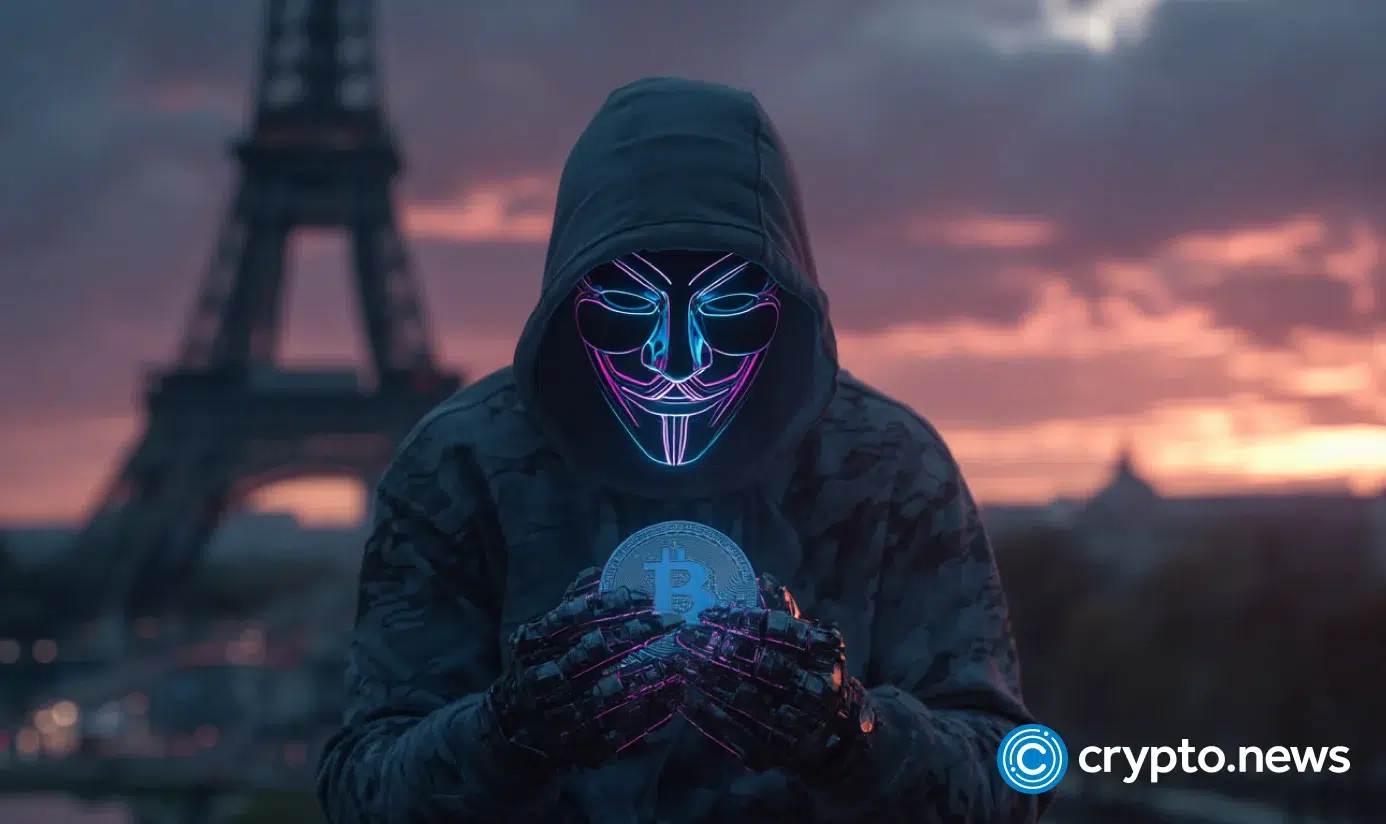
BNP Paribas is widening its digital asset offering in France by adding six crypto-linked exchange-traded notes for retail investors.
Summary
- BNP Paribas will launch six Bitcoin and Ether ETNs for clients in France on Monday.
- Clients can access crypto price exposure through securities accounts without buying or storing Bitcoin directly.
- The launch extends BNP Paribas’ digital asset push after tokenized fund and blockchain bond activity.
Meanwhile, the move gives clients access to Bitcoin and Ether through regulated market products without requiring direct crypto custody. The launch also adds to the bank’s wider blockchain and tokenization activity across Europe.
BNP Paribas will offer six crypto-linked ETNs to retail clients in France from Monday through standard securities accounts. The products track the price of Bitcoin and Ether and will be available to individual investors, entrepreneurs, private banking clients, and users of Hello bank!.
The bank may later extend access to wealth management clients outside France. This step places BNP Paribas among the large European banks expanding digital asset exposure through listed and regulated investment products rather than direct token trading.
The ETNs allow investors to follow the performance of Bitcoin and Ether without buying or storing the assets directly. This structure removes the need for private wallets or direct handling of crypto holdings through an exchange.
At the same time, the products carry credit risk because the investment depends on the issuer’s ability to meet its obligations. The offering gives clients a regulated route into crypto-linked exposure while keeping the investment within a traditional securities account framework.
In addition, the new offering follows BNP Paribas’ broader work in digital finance. In 2024, the bank arranged and placed Slovenia’s first digital sovereign bond, which marked the European Union’s first blockchain-based government bond issuance.
The bank has also expanded its role in institutional blockchain networks. In September last year, BNP Paribas and HSBC joined the Canton Foundation, which oversees the Canton Network, a blockchain system built for institutional finance and tokenized real-world assets.
European market shows wider crypto ETN growth
BNP Paribas’ move comes as more European institutions add crypto-linked products to their investment platforms. ING Germany recently expanded its range with crypto ETNs from Bitwise and VanEck, showing continued demand for listed digital asset exposure.
The market has also reopened in the United Kingdom. Crypto ETNs returned to UK retail trading in October 2025 after the Financial Conduct Authority reversed its earlier ban.
BNP Paribas’ launch adds France to that broader regional trend as banks test regulated crypto access through existing investment channels.

Gold price might just get a big push from Singapore, and the analysis for the metal is getting bullish. Singapore is making a calculated push to become the Asia-Pacific’s dominant gold trading hub, and the institutional machinery backing that move is significant.
The Monetary Authority of Singapore announced on March 27, 2026, that it would build out a full gold ecosystem, covering physical vaulting, capital market products, OTC clearing, and central bank storage services. Gold price has held elevated as institutional demand accelerates.
Singapore is planning to expand its gold storage capacity, positioning itself as a key custodian of bullion for foreign central banks. — Gold Telegraph
It’s also developing “gold-related capital market products to promote price discovery and build liquidity”
Big news…
 (@GoldTelegraph_) March 27, 2026
MAS Deputy Chairman Chee Hong Tat confirmed the initiative alongside the Singapore Bullion Market Association, framing it explicitly as a new pillar for Singapore’s wealth management sector.
“What we’re doing is to create an ecosystem that enables gold trading activities based out of Singapore,” Chee said, describing the effort as “planting trees in an ecosystem.”
The working group, formed in January 2026, includes heavyweights DBS, JPMorgan, UBS, UOB, ICBC Standard Bank, SGX, and the World Gold Council. The LionGlobal Singapore Physical Gold ETF debuted on SGX just one day prior, on March 26, offering fractional exposure in both SGD and USD through vault operators Brink’s, Loomis, and Malca-Amit.
The convergence of sovereign-level institutional infrastructure and a brand-new ETF launch positions Singapore’s gold market at an inflection point, one that increasingly intersects with blockchain-based settlement and tokenized real-world asset infrastructure.
Discover: The best pre-launch token sales
Gold Price Analysis: Can Singapore’s Gold Push Sustain Bullion’s Institutional Bid?
Gold’s macro setup remains structurally bullish. Central bank accumulation, persistent dollar uncertainty, and now Singapore’s formal vaulting ambitions for foreign sovereign entities are layering new demand floors beneath spot prices.
The MAS initiative targets four pillars: physical infrastructure for storage and transport, gold-related capital market products for price discovery, a clearing and settlement system for large bars (12.4kg, the London standard) and kilobars (1kg, the Asian standard), and vaulting services for foreign central banks potentially held within MAS’s own vault.
That last point deserves attention. Sovereign vaulting demand doesn’t fluctuate with retail sentiment, it anchors long-term institutional positioning. Industry analysts note Singapore is now positioning directly alongside Dubai, Shanghai, and Hong Kong as a primary Asian bullion hub. Job creation across vaulting, trading, and analysis is expected as the ecosystem matures through 2026.
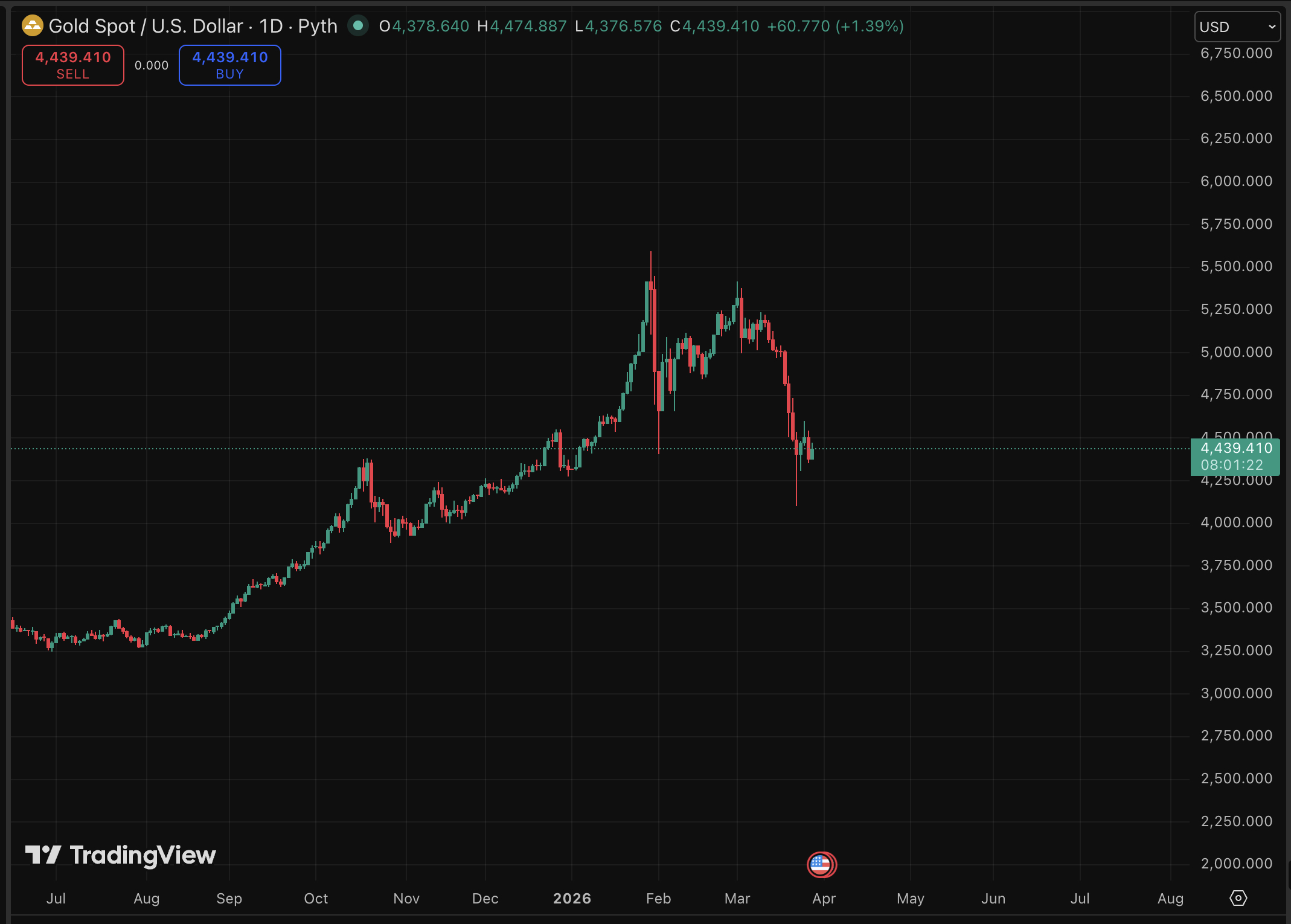
Gold price is falling right now, but Singapore might push it higher than the previous highs.
Discover: The best crypto to diversify your portfolio with
LiquidChain Targets Early Mover Upside as Gold’s Digital Infrastructure Layer Heats Up
Singapore’s gold push isn’t happening in isolation. The settlement infrastructure, clearing systems, and capital market products Chee described all point toward the same destination: programmable, verifiable asset settlement on-chain.
Institutional blockchain infrastructure is already moving in this direction, and tokenized real-world asset protocols are scaling fast. Spot gold, at current elevated prices, offers limited asymmetric upside for late-stage entries; the structural gains increasingly accrue at the infrastructure layer underneath it.
That’s the thesis behind LiquidChain ($LIQUID), an L3 infrastructure project currently in presale at $0.01435, with over $600K raised to date. LiquidChain fuses Bitcoin, Ethereum, and Solana liquidity into a single execution environment. Its Unified Liquidity Layer enables Single-Step Execution across all three ecosystems without bridging friction. Developers deploy once and access all.
A new layer emerges. Only a few see it first. — LiquidChain (@getliquidchain) March 24, 2026
The future is LiquidChain  ⟁https://t.co/vqvBcdSj94 pic.twitter.com/R7ZeZ0NPGl
Verifiable Settlement in Liquid Chain bakes auditability directly into the execution layer. As cross-chain interoperability becomes the backbone of institutional DeFi, early-stage L3 infrastructure plays carry the kind of asymmetric upside that spot gold simply can’t match at this market cap.
Research LiquidChain’s presale terms here.
This article is for informational purposes only and does not constitute financial advice. Crypto assets are highly volatile. Always conduct your own research before investing.
The post Gold Price Analysis: Singapore To Tap Gold Ecosystem appeared first on Cryptonews.

Key Takeaways
- Dogecoin currently hovers around $0.09106, residing in what historical cycles indicate as a prolonged consolidation period.
- Technical analysis from Bitcoinsensus reveals Cycle 3 displaying structural similarities to Cycles 1 and 2, which delivered returns of 5,800% and 21,000% respectively.
- Progressive higher lows characterize each DOGE cycle — Cycle 1 bottomed around $0.000020, Cycle 2 near $0.00070, and Cycle 3 maintaining support above $0.09.
- Trader sentiment on Binance leans bullish, with long-to-short ratios climbing across both account counts and trading volume.
- ETF activity shows no momentum, maintaining zero daily net inflow while total net assets hover near $9.12 million without institutional participation.
Dogecoin (DOGE) currently changes hands at approximately $0.09106. The popular meme cryptocurrency has captured renewed interest following a technical analysis shared by crypto analyst Bitcoinsensus, which examines three distinct DOGE market cycles in parallel.
The first cycle delivered explosive returns exceeding 5,800%. The second cycle surpassed expectations with staggering gains topping 21,000%. Both cycles exhibited identical structural characteristics: gradual accumulation, explosive upward momentum, followed by substantial retracement. The current Cycle 3 demonstrates striking similarities to this established framework.
DOGE achieved a cycle high approaching $0.70 before entering a correction phase. The asset has subsequently declined and currently finds equilibrium within the $0.09 to $0.10 trading corridor.
$DOGE Macro Cycles Overview 📈🔥#Dogecoin has historically followed repeating cycle patterns, often tracking alongside #Bitcoin
This current cycle seems a bit more prolonged compared to previous ones 🚀
While no outcome is guaranteed, this chart provides a possible roadmap… pic.twitter.com/7TOehiVyQq
— Bitcoinsensus (@Bitcoinsensus) March 27, 2026
A notable consistency spanning all three cycles involves progressively higher cyclical lows. The first cycle established its base near $0.000020. The second cycle formed support around $0.00070. The third cycle has successfully defended levels above $0.09 throughout its current retracement.
This ascending low structure indicates buyer conviction intensifying at progressively higher valuations with each successive cycle. The pattern demonstrates Dogecoin attracting an expanding participant base across time.
Binance Trading Activity Reveals Bullish Sentiment
Recent Binance metrics reveal a notable shift in trader positioning. The long-to-short ratio among experienced traders has expanded, evident in both participant count and capital allocation. This development indicates increasing numbers of traders establishing long positions on DOGE appreciation, with many expanding position sizes rather than reducing exposure.
Binance Top Trader’s $XRP long positions are increasing.
Long and short positions were similar, but now long positions are shifting to the upper hand. pic.twitter.com/kr5bNlEyHC
— CW (@CW8900) March 25, 2026
Such positioning typically reflects strengthening market conviction, though it simultaneously creates conditions for crowded trades. When trader sentiment becomes excessively one-directional, brief corrections frequently emerge.
Nevertheless, current positioning data confirms active accumulation at prevailing price levels, representing deliberate strategy rather than reactive trading to existing price movement.
Technical Indicators Suggest Market Coiling for Breakout
Examining technical metrics, the RSI registers near 42 — occupying neutral territory between overbought and oversold conditions. The MACD displays minimal momentum. The ADX reads approximately 15, validating the absence of directional trend strength currently.
Bollinger Bands have contracted significantly, establishing resistance around $0.10 and support near $0.09. Historical precedent shows compressed bands typically precede volatility expansion.
A decisive move above $0.10 could establish a trajectory toward $0.15. Conversely, if support at $0.09 fails, additional downside becomes probable.
Regarding ETF activity, daily net inflows register at zero. Total net assets remain around $9.12 million without expansion. Institutional capital flows through this vehicle have remained dormant.
$DOGE is sitting at generational buying zone (imho)!! There’s no reason why this thing can’t hit $10+ this cycle! #DOGE has done 100x before, it can do it again. pic.twitter.com/Kkox1VuG9i
— Vuori Trading (@VuoriTrading) March 26, 2026
Market analyst Vuori Trading shared on X that DOGE currently occupies what they characterized as a “generational buying zone,” asserting that “there is no reason why this thing can’t hit $10+ this cycle.”
ETF inflows continue showing zero activity on a daily basis, with total net assets stabilized around $9.12 million.

Key Highlights
- Solana has achieved the highest number of all-time unique developers at 10,864, overtaking Ethereum’s 9,017 total
- Current SOL price sits at approximately $82.70, representing a massive decline from the 2025 high-water mark, with technical analyst Wealthmanager forecasting a decline toward $60
- Three consecutive rejections at the $250 resistance zone demonstrate persistent selling pressure at that critical threshold
- The number of active DEX traders on Solana has collapsed to levels not seen in three years, indicating diminished on-chain engagement
- Technical analyst Crypto Patel identifies the present price zone near the 0.618 Fibonacci level as a possible long-term buying opportunity spanning $75 to $45
Solana (SOL) currently hovers around the $82.70 price point, maintaining a market capitalization exceeding $47 billion. The digital asset has experienced a dramatic pullback of more than 77% from its 2025 record high. Widespread cryptocurrency market turbulence has significantly impacted the token’s valuation despite impressive underlying network statistics.
Network performance metrics remain robust. Solana has overtaken Ethereum in cumulative unique developer participation, boasting 10,864 contributors versus Ethereum’s 9,017 count. Polkadot occupies third position with 8,995 developers. The blockchain consistently handles more than 3,000 transactions every second on an ongoing basis.
However, solid fundamental indicators have failed to drive upward price momentum. SOL has encountered rejection at the $250 resistance threshold on three separate occasions. This price level has established itself as a formidable barrier where selling pressure reliably materializes.
Futures trading volume has experienced a pronounced decline following the previous peak. Bubble map analytics reveal diminishing demand throughout the market, with the intense buying activity that previously fueled the surge now notably absent.
Bearish Outlook: $60 Target Emerges
Technical analyst Wealthmanager identifies a well-defined macro bearish trend extending from the 2025 apex. SOL continues forming successive lower peaks and troughs. Resistance spanning $100 to $120 has consistently repelled every upward correction effort.
Wealthmanager holds a short position outlook and anticipates a decline reaching the $60 threshold within a fortnight. Unconvincing bounce formations indicate that buyers currently lack sufficient strength to counteract prevailing downward pressure.
Should this support level fail, the $60–$65 demand area represents the subsequent critical zone for observation. This price range previously provided foundation during the 2024 uptrend.
$SOL 2D
Rising wedge + weakening momentum
Looks like breakdownDownside expansion likely
(Trend continuation) pic.twitter.com/bQwxdTrBSM— Crypto Patel (@CryptoPatel) March 26, 2026
Examining the two-day timeframe, price movements are developing what analyst Crypto Patel characterizes as a rising wedge configuration. This technical structure has emerged beneath the 200-week moving average. The pattern generally functions as a bearish continuation indicator when appearing following a substantial downturn.
The chart displays a rejection area positioned near the wedge’s upper boundary. A breakdown through the lower trendline would potentially trigger another downward wave.
On-Chain Metrics Show Deterioration
An additional chart published by analyst Sweep using Dune Analytics reveals DEX trader participation on Solana descending to approximately three-year lows. Wallet counts across Solana-based decentralized exchanges experienced substantial growth throughout 2024 but have subsequently undergone sharp reversal.
The metric monitors trader quantity rather than aggregate transaction value. Nevertheless, the retreat to multi-year minimums underscores a pronounced deceleration in speculative network activity.
Contrarian Long-Term Perspective Remains
Crypto Patel interprets the current trading zone through an alternative lens focused on extended timeframes. He observes Solana is positioned near the 0.618 Fibonacci retracement boundary, spanning $75 to $45. This region corresponds with historical support zones and previous consolidation phases.
Where Are All The Solana Maxis Now? 🤔
They Told Their Followers To Buy $SOL Above $250. Screamed “To The Moon” At ATH.
Now Price Is Below $80… And They’re Silent. Not A Single Tweet Saying “Buy Now.”
Funny How That Works Right?
Bullish At $250. Silent At $80. That Tells You… pic.twitter.com/SRiCYSIr5N— Crypto Patel (@CryptoPatel) March 28, 2026
He designates this as a prospective accumulation territory, projecting long-term price objectives between $500 and $1,000 across multiple market cycles. He maintains this technical framework remains valid provided price action avoids a definitive breach below $45.
Analyst Moonbag shares a comparable perspective, highlighting price consolidation between support around $80 and resistance approaching $200. He envisions a potential upside breakout targeting $400–$600 should broader market sentiment strengthen.
As of publication, SOL is valued at $82.70.
Key Takeaways
- Cardano is currently priced at $0.2449, resting on a crucial support zone dating back multiple years
- Futures market indicators reflect pessimism — declining open interest and negative funding rates
- Large wallet holders added 270 million ADA between midweek and Friday’s close
- The Cardano network continues to see daily active users below 900, significantly under previous peaks
- Technical analyst Ali Charts identifies $0.245 as the pivotal support threshold to monitor
As of this writing, Cardano (ADA) is changing hands at $0.2449, clinging to a support zone that has held significance since 2022. Over recent sessions, the token has shed close to 6%, effectively erasing gains that emerged earlier in the week.
Price movement has largely been range-bound throughout February. This week’s session saw selling pressure intensify, driving ADA back toward the bottom boundary of its established trading channel.
The cryptocurrency is presently positioned beneath both its 50-day and 100-day Exponential Moving Averages (EMAs). On the daily timeframe, the Relative Strength Index (RSI) registers approximately 43, dipping below the neutral 50 threshold and indicating subdued bullish momentum.
Meanwhile, the MACD indicator has crossed beneath its signal line around the zero mark. This technical development confirms the absence of robust buying interest and indicates ADA continues navigating through a prolonged correction.
Futures Open Interest has contracted to $402.94 million, experiencing a steady decline since the middle of March. This reduction reflects diminishing market participation and validates a conservative short-term perspective.
According to CoinGlass, the current long-to-short ratio stands at 0.83, marking its lowest reading in more than 30 days. When this metric falls below 1.0, it indicates that more market participants are betting on downward price movement rather than upward.
Additionally, funding rates have turned negative at -0.0015%. Under these conditions, short position holders compensate long position holders to maintain their trades, demonstrating that pessimistic sentiment prevails in the derivatives landscape.
Large Holders Increase Positions Near Support Zone
While derivatives markets flash warning signs, blockchain data reveals a more complex picture. Addresses containing 100,000 to 1 million ADA, alongside those holding 10 million to 100 million ADA, collectively acquired 270 million tokens from Wednesday through Friday.
Meanwhile, wallets managing 1 million to 10 million ADA reduced their holdings by approximately 20 million tokens over the same timeframe, suggesting this segment may have surrendered positions while bigger players purchased at lower levels.
According to CoinGlass metrics, there’s considerable buying support clustering around $0.24, with whale participants establishing $31 million in net long exposure through Binance and OKX perpetual contracts. Spot trading volumes, however, continue at modest levels, potentially signaling that major buyers await clearer trend direction before increasing exposure.
On-Chain Engagement Stays Muted
Throughout March, Cardano’s network engagement has displayed persistent weakness. Since mid-December, daily active users have consistently registered below 900, a stark contrast to the tens of thousands the platform routinely saw during more active periods.
Cardano address count has experienced modest growth, expanding from 4.3 million to 4.44 million, potentially signaling gradual accumulation at reduced price levels during this consolidation period.
Critical Support and Resistance Zones
Looking at downside risk, initial support is located at $0.24. Should ADA close below this threshold on a daily basis, it would expose the $0.23–$0.22 range. For upside potential, the nearest resistance barrier appears at $0.27, with a more substantial obstacle positioned around $0.30.
$0.245 is the key support level to watch for Cardano $ADA. pic.twitter.com/JlSk80SnNM
— Ali Charts (@alicharts) March 28, 2026
Technical analyst Ali Charts has highlighted $0.245 as the crucial support zone deserving attention for ADA, which corresponds closely with current trading levels.


French multinational universal bank BNP Paribas is expanding its investment offering to include six crypto-linked exchange-traded notes (ETNs), giving retail clients in France access to Bitcoin and Ether exposure through regulated products.
The new ETNs, indexed to the price of Bitcoin (BTC) and Ether (ETH), will be available from Monday via standard securities accounts, according to the company. The products are open to individual investors, entrepreneurs, private banking clients and users of the bank’s digital platform, Hello bank!. The rollout may later extend to wealth management clients outside France.
Unlike direct crypto purchases, ETNs allow investors to track the performance of digital assets without holding them. ETNs have credit risk (if the bank fails, you lose money), no tracking error and tax advantages.
The move builds on the French bank’s broader digital asset efforts. In 2024, BNP Paribas arranged and placed Slovenia’s first digital sovereign bond, marking the European Union’s debut issuance of a blockchain-based government bond.
Related: Trading 212 let UK retail trade crypto ETNs without FCA approval: FT
BNP Paribas join Canton Network
In September last year, BNP Paribas and HSBC joined the Canton Foundation, which governs the Canton Network, a blockchain focused on institutional finance and real-world asset tokenization.
Prior to this, BNP Paribas joined Goldman Sachs, Citadel and other major financial players in backing Digital Asset’s $135 million funding round. Digital Asset is the firm behind Canton.
Last month, BNP Paribas Asset Management also launched a tokenized share class of a money market fund on the Ethereum blockchain, expanding its push into fund tokenization using public infrastructure. The move builds on an earlier private blockchain issuance in Luxembourg.
Related: Germany‘s central bank president touts stablecoin and CBDC benefits for EU
Crypto ETN adoption grows in Europe
Adoption of crypto-linked ETNs is expanding across Europe, with ING Germany adding new products from Bitwise and VanEck to its investment offering.
Crypto ETNs also returned to the UK retail market in October 2025 after the Financial Conduct Authority (FCA) reversed a ban imposed in 2021.
Magazine: Bitcoin may take 7 years to upgrade to post-quantum — BIP-360 co-author
Key Highlights
- World Assets, operating under the World Foundation umbrella, executed $65M in OTC token transactions with four buyers beginning March 20.
- The sale price averaged approximately $0.2719 per token, representing about 239 million WLD in total volume.
- Tokens valued at $25M are restricted by a six-month lock-up arrangement.
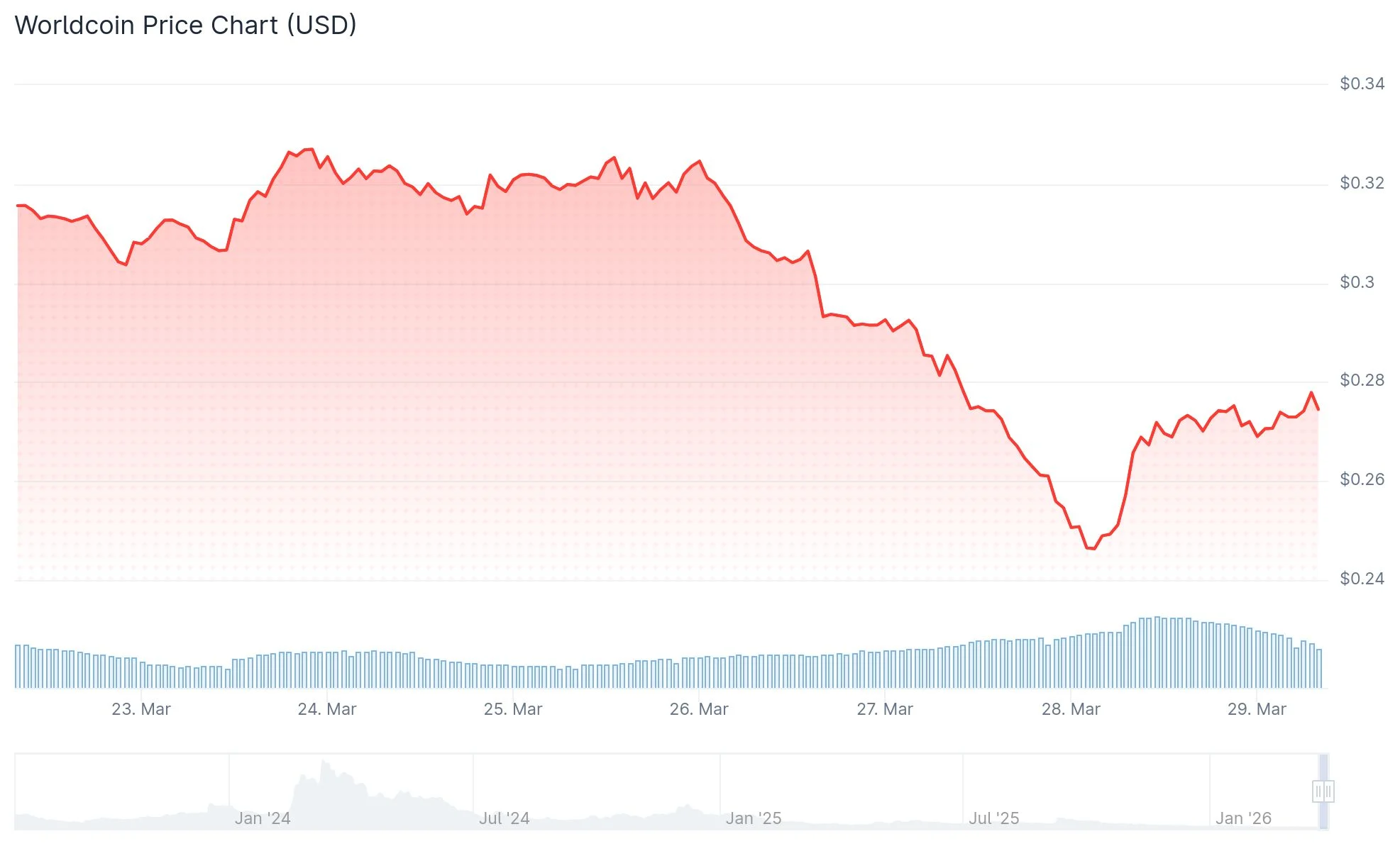
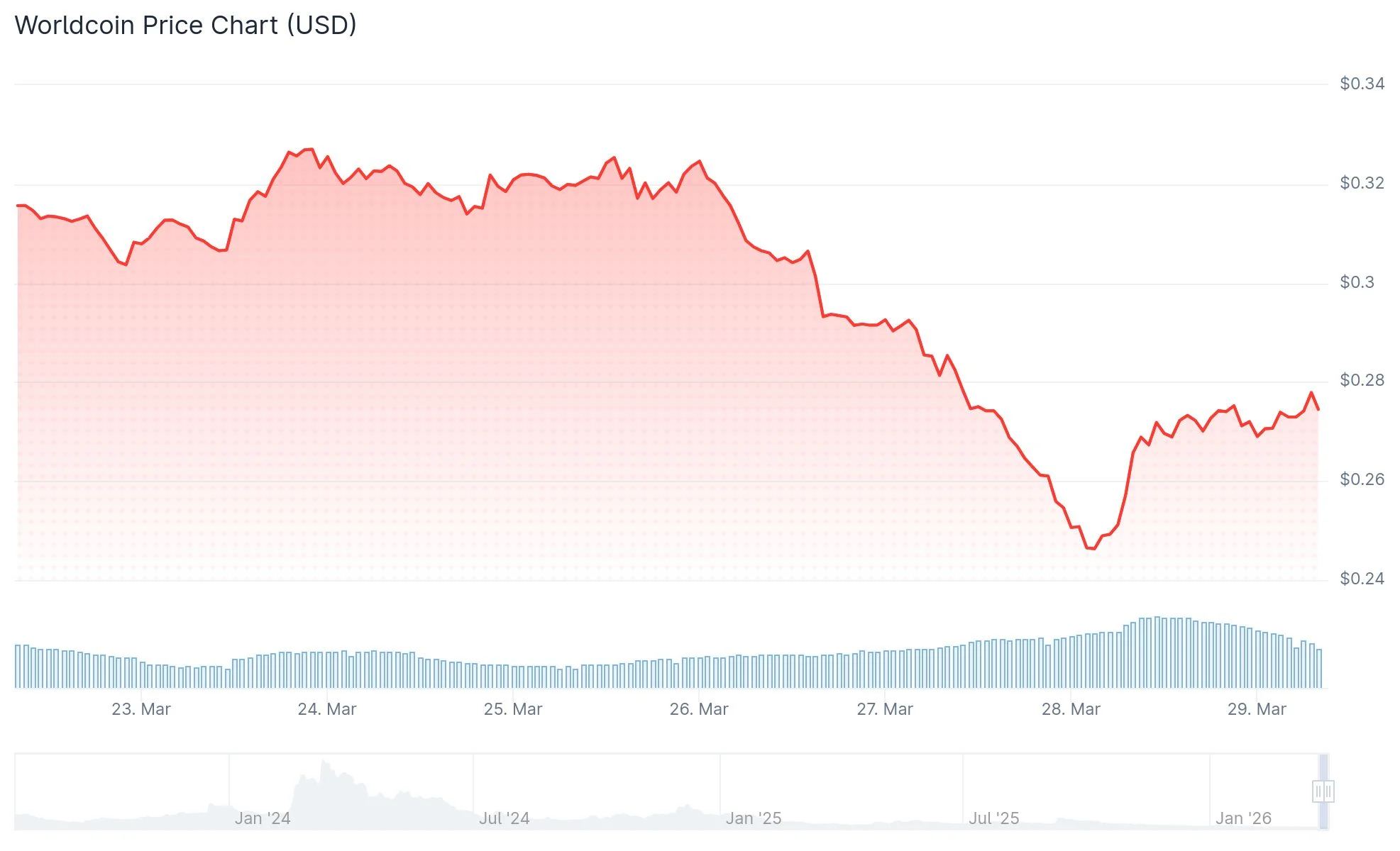
- The WLD token plunged to an unprecedented low of roughly $0.24 on Saturday, marking a ~97% decline from its $11.82 March 2024 high.
- An extensive unlock event affecting approximately 52.5% of the total token supply is slated for July 23, 2026.
The World Foundation’s operational arm, World Assets, has finalized over-the-counter sales totaling $65 million in WLD tokens across four separate counterparties during the past seven days. The initial settlement occurred on March 20, 2026.
Each token was sold at a mean price of roughly $0.2719, indicating a total transfer of approximately 239 million WLD tokens. All transactions were executed through World Assets’ designated multisignature wallet infrastructure.
From the $65 million proceeds, tokens representing $25 million are bound by a six-month restriction period. This mechanism prevents immediate resale of these holdings in secondary markets.
The capital raised will be allocated toward operational expenses, research initiatives, manufacturing of Orb verification devices, and comprehensive ecosystem expansion efforts.
Blockchain intelligence platform Lookonchain previously identified a movement of 117 million WLD tokens—valued at approximately $39 million—to Binance and FalconX on March 21. The organization received roughly $35 million in USDC as compensation, suggesting a per-token price around $0.30 during that transaction.
Coin Bureau’s analyst account on X highlighted the development, observing that World Foundation finalized OTC transactions worth $65M across four parties, with individual tokens priced at ~$0.2719 and $25M subject to a six-month restriction.
This transaction continues a recurring trend of WLD treasury liquidations. During April 2024, the organization—then operating as Worldcoin Foundation—outlined intentions to distribute between 0.5 million and 1.5 million WLD weekly to institutional purchasers. By May 2025, the initiative secured $135 million from investors including Andreessen Horowitz and Bain Capital Crypto.
The current OTC rate of $0.2719 represents a significant discount compared to previous funding rounds. WLD was valued at $1.13 during the May 2025 capital raise and $5.43 when the April 2024 distribution plan was announced.
WLD Token Reaches Historic Price Floor
WLD recorded an unprecedented low of approximately $0.2444 this past Saturday. Currently, the digital asset is trading near $0.27. The token has experienced roughly a 97% correction from its March 2024 zenith of nearly $11.82.
WLD presently maintains a market capitalization hovering around $850 million with a fully diluted valuation estimated at approximately $2.7 billion.
Substantial Token Unlock Event on Horizon
A significant community token release is programmed for July 23, 2026, according to DefiLlama information. This event encompasses approximately 52.5% of WLD’s aggregate 10 billion token allocation—representing about 169% of existing circulating supply—with tokens becoming available at a daily rate of roughly 4.79 million WLD.
Nasdaq-listed Eightco Holdings, which established a WLD treasury position in September 2025, maintains 277 million WLD tokens as of March 20, positioning it as the largest publicly traded institutional holder.
Crypto World
XRP Whale Accumulation Hits 30-Day High: Could Ripple (XRP) Be Gearing Up for a Breakout?
Key Takeaways
- On March 26, XRP’s Sharpe Ratio shifted into positive territory, indicating that current returns are outpacing associated risks
- Large holder inflows have maintained an average of $9 million daily over 30 days, marking the most sustained accumulation period since the April–July 2025 window
- Futures open interest jumped 14.8% within 24 hours on March 26, though recurring long position liquidations reveal derivatives market instability
- Following a breakdown from an ascending triangle formation, XRP has declined 13.63% across 10 days, with critical support zones at $1.27 and $1.11 under watch
- Price projections from various analysts and forecasting models span from $5.35 by 2030 to optimistic multi-year targets between $17 and $27
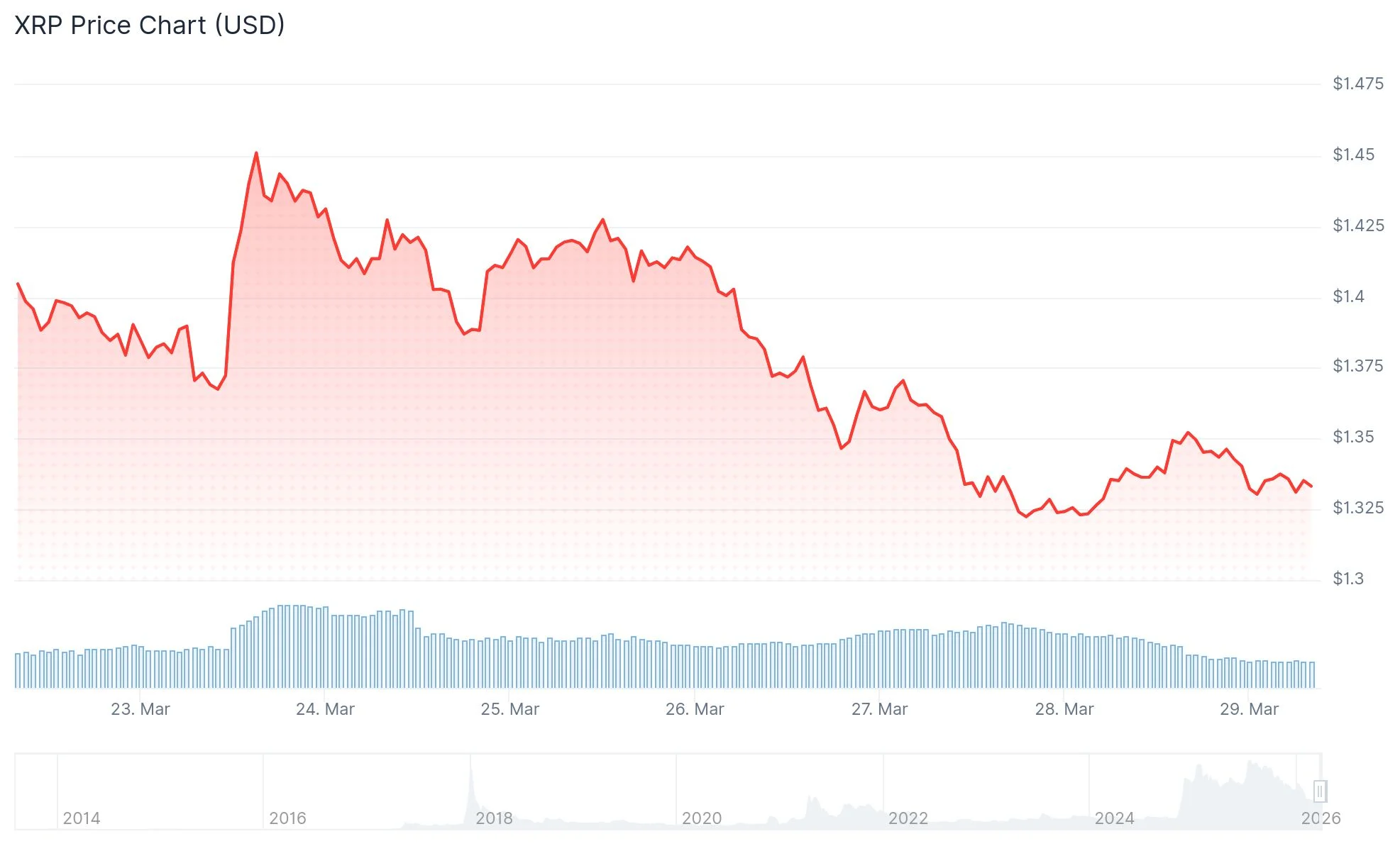
Ripple’s native token is currently changing hands between $1.33 and $1.40, hovering near recent lows following a challenging period of downward momentum. The digital asset has shed 13.63% of its value over the last 10 days after failing to hold support within a bullish ascending triangle formation.
Despite this bearish price movement, certain blockchain metrics are beginning to reveal encouraging trends developing under the hood.
The risk-adjusted return metric for XRP crossed into positive territory on March 26. With the 30-day average return registering at 0.00063 and a Sharpe Ratio of 0.0267, crypto analyst Arab Chain noted that this reading implies “current returns still exceed risk” and indicates a “gradual positive rebalancing” for the digital asset. The analyst cautioned that if this indicator reverses back into negative values, it could foreshadow renewed volatility.
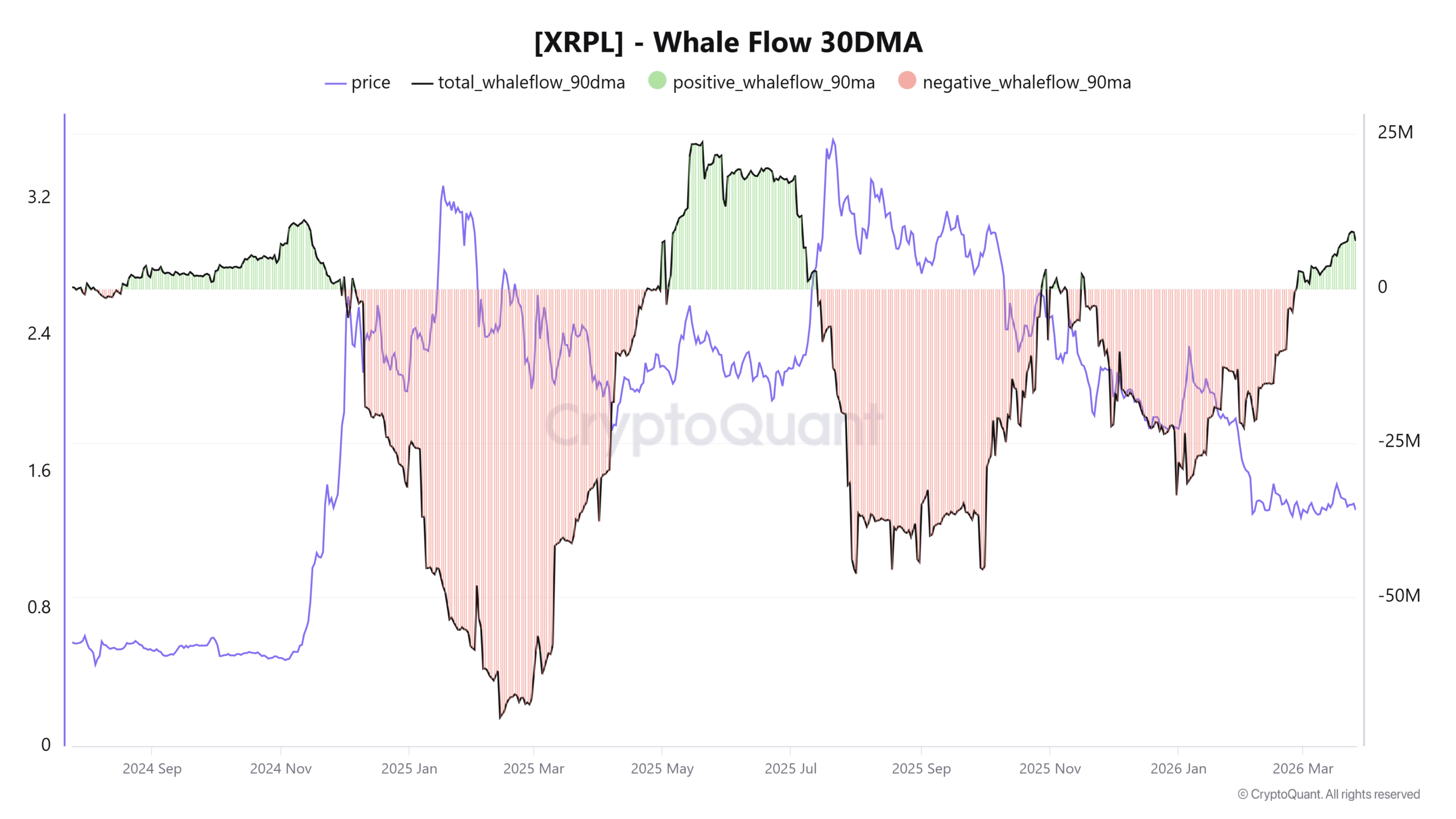
Large wallet activity has also intensified. The 30-day moving average for XRP whale-sized inflows now stands at $9 million daily. This accumulation trend has persisted since February 27 — representing the longest uninterrupted streak since the April through July 2025 timeframe. That previous accumulation cycle culminated with XRP reaching its all-time peak of $3.65 on July 18, 2025.
Derivatives Market Under Pressure
Crypto analyst Amr Taha highlighted that the 24-hour change in open interest reached 14.8% on March 26, representing the highest reading since March 4. This indicates fresh trader engagement in the market. However, the underlying data also reveals a pattern of heavy long positioning being systematically eliminated.
Liquidation events exceeding $2.5 million occurred on March 18, followed by $2.45 million on March 21 and another $2.15 million on March 26. These consecutive liquidation waves suggest a vulnerable futures environment, where speculative positions continue to be forced out during brief volatility spikes.
Should present market dynamics persist, market observers anticipate possible retests of the $1.27 support level and the yearly low around $1.11.
Extended Price Forecasts Show Wide Range
Analyst Egrag Crypto has identified a macro-scale ascending triangle pattern for XRP with Fibonacci-based targets at $8, $17, and $27, describing the ongoing pullback as a “retest phase” that represents “normal and necessary” price behavior. Fellow analyst Dark Defender projects XRP could potentially climb into the $5 territory.
CoinCodex algorithmic forecasts estimate XRP reaching $1.64 by the close of 2026, advancing to $5.35 by 2030, $8.06 by 2040, and ultimately $13.42 by 2050.
The potential passage of cryptocurrency regulatory clarity legislation is also mentioned as a possible price catalyst, considering XRP’s documented sensitivity to regulatory developments.
XRP whale-tier inflows have maintained positive territory for more than 30 days, with the rolling 30-day average positioned at $9 million per day as of late March 2026.
Key Points
- Orlando-based Goliath Ventures has initiated Chapter 11 bankruptcy proceedings in Florida’s Southern District
- Company founder Christopher Delgado faces federal wire fraud and money laundering accusations following his February 24 arrest
- Federal prosecutors claim the operation functioned as a $328 million Ponzi scheme targeting more than 2,000 victims
- Investigators say investor capital financed early participant payouts, high-end real estate purchases, and extravagant lifestyle expenses
- A civil class-action complaint targets JPMorgan Chase for allegedly facilitating questionable financial transactions
An Orlando-based cryptocurrency enterprise, Goliath Ventures, has formally submitted Chapter 11 bankruptcy documents to the U.S. Bankruptcy Court in Florida’s Southern District.
This legal action follows the February 24 detention of the company’s founder and chief executive, Christopher Delgado, who now confronts serious charges including wire fraud and money laundering.
The firm previously operated under the name Gen-Z Venture Firm prior to its corporate rebrand.
Federal investigators contend that Delgado orchestrated the enterprise as a fraudulent Ponzi operation spanning from January 2023 to January 2026.
Participants were promised that their investments would yield consistent monthly profits via cryptocurrency liquidity pool strategies. Prosecutors assert these representations were entirely false.
According to charging documents, the collected capital was actually diverted to satisfy obligations to earlier participants, reimburse select investors their original deposits, and bankroll expensive corporate events alongside luxury vacation expenses.
Federal authorities estimate Goliath secured no less than $328 million from victims through these deceptive assurances.
Delgado also allegedly acquired four high-end residential properties, with individual valuations ranging from $1.15 million to $8.5 million.
Should prosecutors secure convictions on all counts, Delgado could receive a maximum sentence of 30 years in federal custody.
Thousands of Victims Identified Nationwide
The purported fraudulent operation affected more than 2,000 investment participants throughout the United States.
Gregory Wilson appears among those suffering the most substantial financial harm, with documented losses totaling $8.74 million. John Euliano reportedly lost approximately $1.28 million, based on bankruptcy documentation.
Chapter 11 bankruptcy protection enables an organization to reorganize its financial structure while operating under judicial oversight. This process temporarily halts withdrawal requests and establishes a framework for creditors to potentially recover funds rather than forcing immediate asset liquidation.
Major Financial Institutions Face Civil Litigation
A distinct class-action legal complaint was lodged against JPMorgan Chase earlier this month.
The civil filing accuses the banking institution of overlooking suspicious financial activity connected to Goliath Ventures’ operations.
Plaintiffs further contend that JPMorgan’s commercial relationship with Coinbase, America’s predominant cryptocurrency trading platform, facilitated the scheme’s expansion to its alleged massive scale.
Neither JPMorgan nor Coinbase currently faces criminal prosecution. The lawsuit represents a civil action initiated by investors pursuing monetary compensation.
The bankruptcy case continues to advance through the Southern District of Florida judicial system.

Seaham car boot sale cancelled due to ‘high winds’
Judicial showdown looms as Supreme Court reviews Trump’s birthright ban

Canucks takeaways: Hoglander busts slump in loss to Flames


-
 NewsBeat4 days ago
Manchester United reach agreement with Casemiro over contract clause amid transfer speculation
-

 News Videos3 days ago
Parliament publishes latest register of MPs’ financial interests
-

 Sports6 days ago
Remo Stars and Kano Pillars Strengthen Survival Hopes in NPFL
-

 Sports6 days ago
Gary Kirsten Accuses Pakistan Cricket Board Of ‘Interference’, Mohsin Naqvi Responds
-

 Business7 days ago
No Winner in March 21 Drawing as Prize Rolls to $133 Million for Next
-

 Tech7 days ago
Give Your Phone a Huge (and Free) Upgrade by Switching to Another Keyboard
-

 Tech7 days ago
AI enters the chat: New Seattle dating app relies on tech to facilitate meaningful human connections
-

 Business3 days ago
Instagram, YouTube Found Responsible for Teen’s Mental Health Struggle in Historic Ruling
-

 News Videos6 days ago
Ch 9 Financial Management Part 1 | Detailed One Shot | Class 12 Business Studies Boards 2026
-

 NewsBeat2 days ago
The Story hosts event on Durham’s historic registers
-
 NewsBeat4 days ago
Tesco is selling new Cadbury Dairy Milk bar and people can’t wait to try it
-

 Sports6 days ago
2026 Kentucky Derby horses, odds, futures, preview, date: Expert who hit 12 Derby-Oaks Doubles enters picks
-
 Entertainment12 hours ago
Lana Del Rey Celebrates Her Husband’s 51st Birthday In New Post
-
 NewsBeat7 days ago
Update on Wisbech river crash as search for teenage boy enters fifth day
-

 Tech6 days ago
Samsung will soon let you control smart home devices from your car’s dashboard
-
 Entertainment6 days ago
Cynthia Bailey Dishes on ‘RHOA’ Season 17, Discusses Kandi
-

 Fashion5 days ago
Does It Matter What You Wear When You’re Laid Off and Looking?
-
 NewsBeat6 days ago
Colombian military plane with 110 soldiers onboard crashes following takeoff
-

 Business5 days ago
More women enter wealth management, but few in advisory roles: study
-

 Sports4 days ago
Fantasy Baseball Week 1 Preview: Top sleeper hitters for both five- and 12-day period led by Munetaka Murakami
You must be logged in to post a comment Login