

Business
Volkswagen’s biggest investor increases defence focus after earnings slump




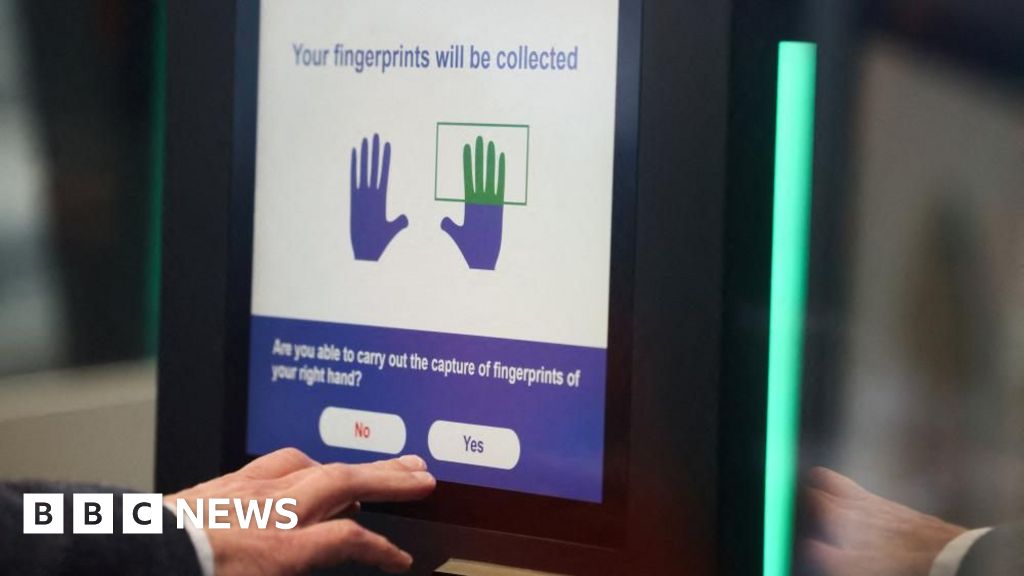
Olga Kefalogianni says the Greek government doesn’t want visitors to be “burdened” by biometric checks.
Brent crude futures climbed $3.18 or 3.14% to $104.47 a barrel by 2336 GMT, extending a 1.23% gain on Friday.
U.S. West Texas Intermediate was at $98.51 a barrel, up $3.09, or 3.24%, after settling 0.64% higher in the previous session.
Hopes for an imminent end to the 10-week-old U.S.-Iran conflict that would allow oil transit through the Strait of Hormuz were dashed after President Donald Trump on Sunday dismissed the Iranian response to a U.S. proposal for peace talks as “unacceptable”.
Trump is scheduled to arrive in Beijing on Wednesday and is expected to discuss Iran among other topics with Chinese President Xi Jinping, according to U.S. officials.

“Market attention now shifts squarely to President Trump’s visit to China this week,” IG market analyst Tony Sycamore said in a note.
“There is hope he can persuade Beijing to leverage its influence over Iran to push for a comprehensive ceasefire and a resolution to the ongoing disruption in the Strait of Hormuz.” The world has lost about 1 billion barrels of oil over the past two months and energy markets will take time to stabilise even if flows resume, Saudi Aramco CEO Amin Nasser said on Sunday.
Another two tankers laden with crude exited the Strait of Hormuz last week with trackers switched off to avoid Iranian attacks, Kpler shipping data showed, underscoring a rising trend to sustain Middle East oil exports.

It is perplexing for some as to why Indian equities are down 7.5% this year while South Korea, whose economy is projected by the International Monetary Fund (IMF) to grow at half of India’s – at 3.3% – has rallied 74% drawing global investors. The answer lies in corporate earnings and not economic growth.
Every few years, a fever grips the investing community and that drives a set of stocks to dizzying heights even while others in the same market languish. The current theme is that of Artificial Intelligence (AI) . While most of the companies like OpenAI and Anthropic that are driving the transformation are still in private markets, the desire to grab a share of that pie is driving the average investor to listed companies securing revenues from those pioneering AI.
Silicon chips are the foundation on which the AI revolution stands. Any company producing them is a winner. Nvidia Inc., a chip maker, is valued beyond $5 trillion, which is more than the GDP of India. This craze to own the future is spilling over to South Korea and Taiwan where a few companies such as Samsung Electronics are involved in producing the chips for AI.
The rush to own chip makers has pushed South Korea’s market value to $4 trillion, double that of its GDP. In contrast, India’s market capitalization is at around $4.9 trillion while the GDP is around $4.15 trillion.
What is making the difference? Samsung Electronics and SK Hynix, the chip makers!
The revenue and profit potential of companies developing Large Language Model AIs may still be on paper, but the earnings for those supplying chips are real.The unprecedented demand for chips is forcing analysts to forecast earnings growth of 220% for Korea and 58% for Taiwan. By contrast, India that doesn’t have a direct AI play is at 18%.
Some analysts project Samsung to earn a profit of $250 billion this year and SK Hynix $150 billion. Taiwan’s TSMC is projected at $100 billion. The entire Indian listed corporate system may earn around $200 billion. When Korean and Taiwan companies are growing, Indian companies are staring at a cut in their earnings estimates.
Even if the earnings are skewed with just a handful of companies, investors chase value where those assets are still cheap compared to Indian companies. While Korea is trading at around 9.5 times, Taiwan is at 19 times forward year earnings. In contrast, India is still at 19.5 times which makes the local market unattractive even to other peers – reflected in MSCI EM at 12.5 times.
“Global markets are pricing in 20-40% EPS growth, 12-18 times price-to-earnings, versus India’s 18% EPS growth,” says a strategist at Motilal Oswal Securities. “A sustainable earnings growth delivery is critical for reversing the underperformance.”
Apart from the relatively poor corporate earnings growth and steep valuations, India’s long-term dependence on capital flows for meeting its imports is translating into a weaker financial market.
The US-Iran war has not only pushed up energy prices by more than 40% steeply raising import bills, it is also threatening to disrupt supplies in the medium term if the war doesn’t end soon.
Indian rupee is trading at historic lows as foreign investors pull out record funds as they chase assets that are attractive in terms of valuations as well as earnings growth.
“The most exposed macro variable to the current shock is the balance of payment, followed by fiscal position,” says Aastha Gudwani, economist at Barclays. “Administered prices mute immediate inflation pass-through, but at the cost of growing fiscal strain if supply risks persist. Balance of Payments is likely to reel under the stress of shrinking capital inflows.”
This is a further blow to overseas investors who read their returns in US dollar terms. Looking through that prism, the Nifty is down about 8% since its January peak in Rupee terms, and 12% in USD.
To be sure, warnings have been sounded on Wall Street’s highly skewed AI investments.
The key to reversing India’s underperformance lies in boosting corporate earnings and easing macro pressures. Or, in the bursting of the AI bubble.
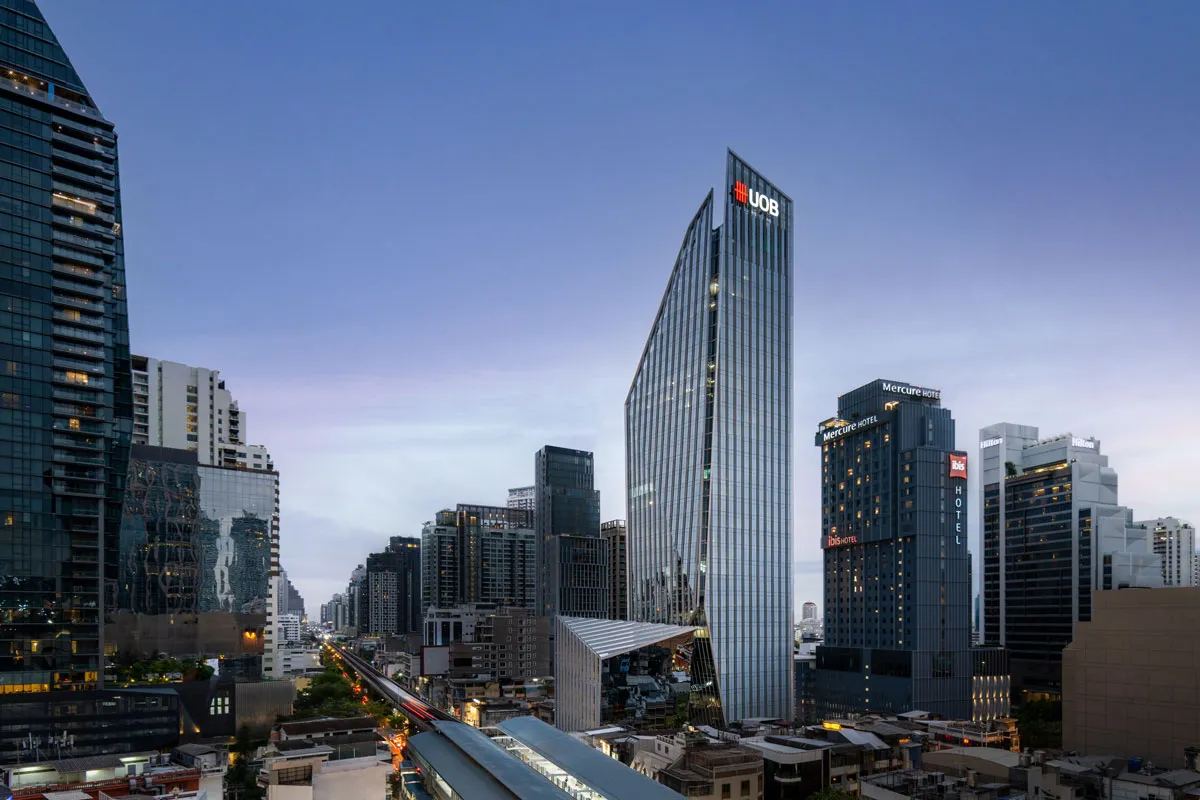
UOB reported SGD 1.4 billion Q1 2026 net profit, with NIM compression driving a shift toward fee-led growth. Following Citibank integration, the bank targets 8.5 million ASEAN customers for wealth, trade, and digital income diversification, aiming to double wealth revenue by 2030.
Key Points
• UOB reported SGD 1.4 billion in Q1 2026 net profit, with net interest margin compressing to 1.82%, prompting a strategic shift toward fee-driven income from wealth management, cards, trade, and treasury services.
• Following completion of its Citibank integration, UOB is focused on monetizing its 8.5 million ASEAN customers, targeting doubled wealth income by 2030 through improved investment penetration, digital distribution, and relationship banking.
• Balance sheet discipline remains intact with a 1.5% non-performing loan ratio and CET1 at 15.3%, while AI tools and regional connectivity initiatives support productivity and cross-border growth across ASEAN markets.
UOB’s Q1 2026 Results: Navigating Margin Pressure Through Fee-Led Growth
UOB reported SGD 1.4 billion ($1 billion) in net profit for Q1 2026, up 2% quarter-on-quarter but down 4% year-on-year. Declining benchmark rates compressed net interest margin (NIM) to 1.82%, pushing net interest income down 4% year-on-year to SGD 2.3 billion. In response, the bank is accelerating its shift toward fee-driven income streams. Net fee income rose 2% to SGD 637 million, supported by wealth management and loan-related fees, while trading and treasury income rebounded. With the Citibank regional consumer portfolio integration largely complete, UOB is now focused on monetising its enlarged 8.5 million ASEAN customer base through diversified, recurring revenue channels.
Wealth, CASA, and Digital Channels Drive the Fee Strategy
Assets under management grew 5% year-on-year to SGD 198 billion, with the invested AUM ratio improving to 42%, wealth income expanding 6%, and card billings rising 7%. CEO Wee Ee Cheong set an ambitious target of doubling wealth income by 2030, prioritising deeper investment penetration over new client acquisition. The CASA deposit ratio of 58%–60% provides both a funding buffer and a cross-selling foundation. Digitally, approximately 30,000 staff now use Microsoft Copilot, and UOB’s TMRW mobile app is being scaled to serve more customers efficiently. Wee described AI as “augmented intelligence,” reinforcing productivity and relationship-led service delivery across ASEAN markets.
Trade Growth and Balance Sheet Discipline Underpin the Strategy
Trade loans grew 19% year-on-year, while wholesale customer treasury income rose 11%, reflecting strong demand for hedging and cash management solutions amid market volatility. UOB’s involvement in the Johor-Singapore Special Economic Zone, facilitating over SGD 5.8 billion in foreign direct investment, demonstrates the commercial value of regional connectivity. Balance sheet discipline remains central, with the non-performing loan ratio stable at 1.5%, Common Equity Tier 1 at 15.3%, and full-year NIM guided at 1.75%–1.80%. While Greater China real estate remains a watchpoint, UOB’s strong capital position provides resilience. The key test ahead is translating platform and customer scale into durable, fee-driven earnings growth.
Other People are Reading

MEHUL KOTHARI
DVP – TECHNICAL RESEARCH, ANAND RATHI SHARE AND STOCK BROKERS
Where is Nifty headed?
Technically, the index confirmed a breakout above 24,300 and briefly crossed 24,400 before pulling back to retest the zone. A sustained move above 24,400 could drive the index towards 24,600 and 24,800; while a breach below 23,900 may negate the setup and trigger consolidation. Nifty Bank has also broken out of its falling trendline, signalling improving momentum. Resistance near 56,500 remains a key hurdle; unless crossed decisively, the index may face pressure at higher levels. On the downside, support at 55,000 and the previous swing low of 54,200 should provide a cushion in the week ahead. Trading Strategies: • Buy-on-dips: As long as Nifty holds above 23,900–24,000. • Nifty Futures: Go long only after the index closes above 24,400. Stop loss at 24,200; upside target 24,800. • Bank Nifty: Fresh longs above 56,500. A decisive breakout here could unlock further upside momentum.
TOP STOCKS FOR THE WEEK
Latent View Analytics
CMP Rs 315, Stop Loss at Rs 285, Target Rs 355.
The stock has stabilised after a sharp correction, forming a base around Rs 290–300, with accumulation signals and RSI above 55 pointing to rising buying interest and potential recovery towards higher resistance.
Protean eGov Technologies
CMP Rs 585, Stop Loss at Rs 520, Target Rs 680
Forming a base near Rs 520–500 after a prolonged correction, with price above the 20 EMA and RSI above 60, reflecting improving bullish momentum and a strengthening recovery structure.
 Agencies
RUPAK DE
SENIOR TECHNICAL ANALYST, LKP SECURITIES
Where is Nifty headed?
Nifty once again faced resistance near 20-week EMA, failing to reclaim the average for the third straight week, while the recent pullback lost steam near the 61.8% Fibonacci retracement of the decline from 26,373 to 22,182. The index remains below rising trendline resistance, with consolidation around 24,500 adding uncertainty. While a full reversal looks unlikely, failure to clear 24,750 in the next one to two weeks could open the door to a correction. A decisive breach below the crucial support of 24,000 could intensify weakness and trigger further pressure.
Trading Strategies: Sell Nifty 50 May Futures below 24,200, with a stop loss at 24,310 and a target of 24,000. The setup reflects weakening short-term momentum, and a breakdown below this support zone could trigger fresh selling pressure.
TOP STOCKS FOR THE WEEK
Sonata Software
Buy at Rs 297, Stop Loss at Rs 287, Target Rs 320
A swing high breakout is expected to propel the stock higher in the near term.
Mahindra & Mahindra Financial Services
Buy at Rs 339, Stop Loss at Rs 328, Target Rs 360
The stock has reclaimed its 50 EMA, confirming a positive trend and improving momentum.
SACCHITANAND UTTEKAR
VP- RESEARCH (TECHNICAL & DERIVATIVES), TRADEBULLS SECURITIES
Where is Nifty headed?
Nifty remains locked in a key range, with 24,600 as the upside hurdle and 23,800 as support. A breakout on either side will set the next meaningful trend; until then, the index is likely to stay range-bound. On the derivatives front, the highest Call OI at 24,500 signals strong resistance, while the highest Put OI at 24,000 points to solid support. Heavier call writing versus puts reflects caution, with participants hedging or anticipating limited upside.
Overall, traders may stick to stock-specific and range-bound strategies until Nifty moves decisively beyond the 24,600–23,800 zone.
Trading Strategies: Nifty: Fresh longs only on a sustained closing breakout above 25,600. Until then, a balanced long–short approach remains prudent. Bank Nifty: Initiate longs above 56,200 with targets of 56,800–57,300. Keep a strict stop loss at 55,800 to manage risk.
TOP STOCKS FOR THE WEEK
Firstsource Solutions
CMP Rs 274, Stop Loss at Rs 228, Target Rs 325.
FSL witnessed a strong volume-backed breakout from its `207–240 consolidation range. The stock closed above its 21-day and 50-day averages for the first time in 2026, signalling bullish momentum.
Poonawalla Fincorp
CMP Rs 462, Stop Loss at Rs 428, Target Rs 510.
Poonawala has broken out above the 430 neckline of an inverse head-and-shoulders pattern. Sustaining above breakout levels along with a bullish 21/50-day moving average crossover supports positive momentum.
The bond powerhouse’s CIO said surging energy prices tied to Iran’s closing of the Strait of Hormuz create a new challenge for US policymakers who have struggled to bring inflation down to the central bank’s 2% target, the FT reported, citing an interview.
The “US is further away from that, but you are going to see more tightening as it looks today in Europe, the UK and maybe even Japan, and I wouldn’t take it completely off the table for the US either,” Ivascyn told the FT. He said any reduction in rates would be counterproductive “given the inflation dynamic and the uncertainty around inflation,” saying any such move “very well could lead to higher intermediate long-term rates.”
Franklin Templeton CEO Jenny Johnson told the FT that “inflation is going to be harder to keep control of” for the Fed. Investors are showing an increased appetite for inflation-protected assets, Johnson was cited as saying.
The Fed kept rates steady in its past two meetings. Few market watchers expect rate hikes in the near term but there is uncertainty over what the central bank may do in coming meetings. Three regional Fed presidents dissented from the Fed policy statement in April saying the board had a bias toward easing policy.

Earnings call transcript: Evolus Inc Q1 2026 misses EPS forecast, stock rises


Six people found dead in boxcar in Laredo, Texas, police say
Business
Alta Equipment Group Inc. 2026 Q1 – Results – Earnings Call Presentation (NYSE:ALTG) 2026-05-10

Q1: 2026-05-07 Earnings Summary
EPS of -$0.43 beats by $0.03
| Revenue of $410.50M (-2.96% Y/Y) misses by $13.68M

Seeking Alpha’s transcripts team is responsible for the development of all of our transcript-related projects. We currently publish thousands of quarterly earnings calls per quarter on our site and are continuing to grow and expand our coverage. The purpose of this profile is to allow us to share with our readers new transcript-related developments. Thanks, SA Transcripts Team


Netanyahu wants to wean Israel off US military support, he tells CBS

Cardi B Wore a Brown Vivienne Westwood Knit Set to the Diggs Deep Foundation Wellness Event with Stefon Diggs

Cryptocurrency In 5 Minutes | Cryptocurrency Explained | What Is Cryptocurrency? | Simplilearn

No summer border delays for Brits, Greek tourism minister says

Manchester United reach agreement with Casemiro over contract clause amid transfer speculation

US brings back mandatory military draft registration

Steven Gerrard disagrees with Gary Neville over ‘shock’ Chelsea and Arsenal claim | Football


-
 Crypto World3 days ago
HarrisX Poll Found 52% of Registered Voters Support the CLARITY Act
-

 Crypto World4 days ago
Upbit adds B3 Korean won pair as Base token gains Korea access
-

 Fashion2 days ago
Weekend Open Thread: Marianne Dress
-

 Tech6 days ago
Image AI models now drive app growth, beating chatbot upgrades
-
 NewsBeat4 days ago
NCP car park operator enters administration putting 340 UK sites at risk of closure
-
 Business2 days ago
Ignore market noise, India’s long-term story intact, say D-Street bulls Ramesh Damani and Sunil Singhania
-

 Politics2 days ago
Politics Home Article | Starmer Enters The Danger Zone
-

 Entertainment7 days ago
Olivia Wilde Reacts To Viral ‘Corpse’ Comparison
-

 Sports7 days ago
Inter Milan Win Serie A Title After Victory Over Parma
-

 Sports7 days ago
La Liga: Vinicius Jr scores twice as Real Madrid win to keep Barcelona waiting for title
-
 Sports6 days ago
2026 NHL playoff picks: Second-round predictions, series odds, Stanley Cup bracket
-

 Crypto World6 days ago
UAE Free Zone Deploys Blockchain IDs to Verify Registered Firms
-
 Sports7 days ago
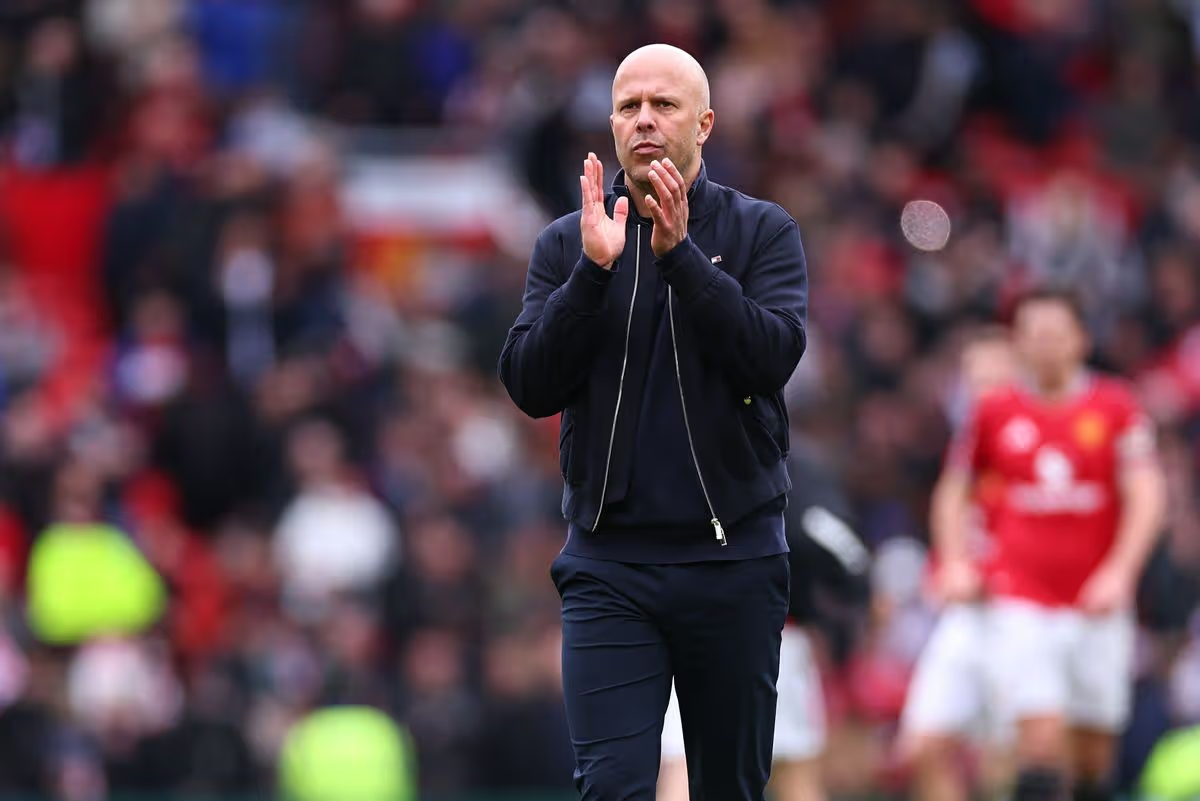
Every word of Arne Slot’s heated rant after Manchester United win vs Liverpool
-

 Crypto World4 days ago
BlackRock CEO Larry Fink Discusses a New Asset Class
-

 Sports7 days ago
Manchester United Return To Champions League After Dramatic Win Over Liverpool
-

 Entertainment7 days ago
Kylie Jenner and Timothee Chalamet Hold Hands in NYC Outing
-

 Crypto World4 days ago
Robinhood says Wall Street is building onchain
-
Entertainment6 days ago
Serena Williams hits Met Gala in metallic dress after GLP-1 reveal
-

 Fashion4 days ago
The Best Work Pants for Women in 2026
-
 Entertainment7 days ago
HBO’s Forgotten 3-Part Detective Series Has Quietly Become One of TV’s Funniest Crime Shows
You must be logged in to post a comment Login