
Business
Goldman Sachs sees higher inflation due to Iran war oil price shock


Check out what’s clicking on FoxBusiness.com.
The impact of the Iran war on global oil prices could push the rate of inflation facing U.S. consumers higher, which would leave Federal Reserve policymakers in a difficult spot as they weigh possible interest rate cuts.
An analysis by economists at Goldman Sachs projected that Brent crude oil prices, a common benchmark for the global oil market, are expected to remain elevated, averaging $105 a barrel in March and $115 in April before falling to $80 a barrel in the fourth quarter of 2026. That’s based on oil shipments through the Strait of Hormuz remaining very low for six weeks.
In an adverse scenario where oil flows are disrupted for 10 weeks, the firm estimates Brent oil would peak at $140 a barrel and decline to $100 a barrel in the fourth quarter of 2026. A severely adverse scenario that includes disruptions for 10 weeks and infrastructure damage is a persistent hit to oil production would yield a peak at $160 a barrel and put oil at $115 a barrel in the fourth quarter of 2026.
“Most of the impact of the war on U.S. inflation will come from higher oil prices,” the Goldman economists said, noting that their “rule of thumb is that a 10% increase in oil prices raises headline PCE inflation by 0.2pp and core inflation by 0.04pp,” with much of the rise coming from transportation costs.
IRAN WAR FUELS ASIA ENERGY CRUNCH AS INDIA, JAPAN, OTHERS FEEL STRAIN

Inflation is expected to be higher this year in Goldman Sachs’ updated forecast due to the oil price shock caused by the Iran war. (AFP via Getty Images)
Goldman Sachs’ analysis also included a look at other commodities like fertilizer that could have higher costs due to limits on exports from the Gulf. It estimated that higher fertilizer prices could boost food prices by about 1.5% this year, raising headline inflation by 0.1 percentage point.
Additionally, second-round effects stemming from higher inflation expectations could boost inflation by 0.1 of a percentage point by the end of 2026 under the baseline scenario, or 0.4 of a percentage point under the severely adverse scenario.
Those factors could push the Federal Reserve’s preferred inflation gauge higher. The personal consumption expenditures (PCE) index was up 2.8% on a headline basis in January, while core PCE, which excludes volatile measures of food and energy, was up 3.1% in January. Both figures were well above the Fed’s long-run target of 2% inflation, and policymakers opted against cutting rates at their last two meetings given the elevated readings.
MARKETS HANGING ON ‘EVERY WORD’ AS US-IRAN CONFLICT NEARS ONE MONTH, FORMER NEC DIRECTOR WARNS
The Goldman Sachs economists’ analysis finds that, given higher oil prices, the impact on food prices and the more mild impact of other commodities and inflation expectations, they raised their December 2026 PCE inflation estimate by 0.2pp to 3.1% in the baseline scenario.
In the adverse scenario, PCE inflation would be 3.6% in December after peaking at 4.6% this spring, while the severely adverse scenario would leave PCE inflation at 4% at the end of the year after peaking at 4.9%.
The firm also raised its core PCE inflation forecast to 2.5% at the end of the year in the baseline scenario, while it would be 2.6% in December under the adverse and severely adverse scenarios.
IRAN WAR UNLIKELY TO TRIGGER GLOBAL SUPPLY CHAIN CRISIS, GOLDMAN SACHS SAYS

The flow of oil tankers through the Strait of Hormuz has been constrained during the Iran war. (Giuseppe Cacace/AFP via Getty Images)
Goldman Sachs also lowered its forecast for economic growth, reducing 2026 gross domestic product (GDP) growth to 2.1% in the fourth quarter compared to the same period the prior year or 2.4% on a full-year basis under the baseline scenario. The GDP growth forecast would fall to 1.9% fourth quarter-to-fourth quarter in the adverse scenario and 1.8% in the severely adverse scenario.
The firm also raised its 12-month recession probability by 5 percentage points to 30%.
The economists didn’t alter their baseline forecast for Federal Reserve interest rate cuts, which featured two 25 basis point rate cuts in September and December. They explained that they expect the unemployment rate to rise to 4.6%, above the 4.4% median projection of Fed policymakers at their latest meeting.
GET FOX BUSINESS ON THE GO BY CLICKING HERE
However, they did raise the probability of the Fed staying on hold this year from 20% to 25%, while lowering the probability of insurance cuts from 15% to 10%, due to the relatively higher inflation readings they anticipate.


NEW YORK — As the cryptocurrency market navigates geopolitical tensions and macroeconomic uncertainty in March 2026, investors are eyeing established leaders and high-potential altcoins for the year ahead, with Bitcoin hovering near $70,000 and the total market capitalization recovering toward $2.5 trillion.
Bitcoin recently advanced to around $71,000 amid reports of productive Middle East talks, while Ethereum trades near $2,150 and Solana around $91–$94. Despite year-to-date declines for major assets, analysts highlight institutional adoption via ETFs, real-world asset tokenization and blockchain infrastructure as key drivers for 2026.

Here are 10 cryptocurrencies frequently cited by analysts for potential in 2026, spanning store-of-value plays, smart contract platforms, payments and infrastructure. Selections draw from recurring recommendations across sources such as CoinDCX, YouHodler, Forbes Advisor and Bitwise Investments, emphasizing fundamentals, adoption trends and ecosystem strength rather than short-term price speculation.
- Bitcoin (BTC) The original cryptocurrency remains the market’s anchor with a market capitalization exceeding $1.4 trillion and dominance around 58%. Spot Bitcoin ETFs continue to attract significant inflows, often purchasing more than new supply, reinforcing its role as “digital gold.” Analysts point to its scarcity, growing institutional participation and resilience during volatility as reasons for long-term allocation. Bitcoin is viewed as a core holding that typically leads broader market rallies.
- Ethereum (ETH) As the leading smart contract platform, Ethereum powers much of decentralized finance, non-fungible tokens and tokenization efforts. Its market cap stands in the hundreds of billions, supported by high staking participation and Layer-2 scaling solutions that improve efficiency. Ethereum benefits from a vast developer community and potential upgrades that could enhance throughput and reduce fees, positioning it for continued dominance in on-chain activity.
- Solana (SOL) Known for high throughput and low transaction costs, Solana has emerged as a strong contender in consumer applications, DeFi and decentralized physical infrastructure networks. Despite occasional network concerns in the past, its ecosystem shows robust DEX volumes and stablecoin activity. Analysts highlight its speed advantage and growing adoption as factors that could narrow the market-cap gap with Ethereum over time.
- XRP (Ripple) Designed for efficient cross-border payments, XRP has gained traction through partnerships with financial institutions and regulatory clarity progress. Its utility in bridging traditional finance and blockchain appeals to those seeking real-world use cases. With a sizable market cap and focus on liquidity and remittances, XRP often features in lists for its potential in global payments infrastructure.
- BNB (Binance Coin) The native token of the Binance ecosystem offers utility in reduced trading fees, staking and participation in the broader BNB Chain for decentralized applications. Its established exchange backing and diverse use cases provide a buffer, though it faces regulatory considerations common to centralized platforms. BNB frequently ranks among top holdings for its ecosystem integration.
- Chainlink (LINK) As a leading decentralized oracle network, Chainlink connects smart contracts with real-world data, serving the majority of DeFi protocols. Recent developments, including collaborations and the approval of a spot ETF, have strengthened its infrastructure position. Analysts see it as essential for expanding blockchain utility beyond isolated ecosystems.
- Cardano (ADA) Focused on research-driven development and scalability, Cardano targets sustainable blockchain solutions with emphasis on interoperability and governance. While its ecosystem has grown more gradually, proponents cite its strong fundamentals and potential upgrades for long-term value. It appeals to investors seeking a more deliberate approach to smart contract innovation.
- Avalanche (AVAX) Avalanche offers fast finality and subnets for customizable blockchains, attracting developers in gaming, DeFi and institutional applications. Its architecture supports high performance while maintaining security, positioning it for growth in specialized use cases and tokenized assets.
- Dogecoin (DOGE) The meme coin with strong community support has evolved into a cultural phenomenon with occasional utility expansions. Backed by high visibility and social momentum, it features in diversified portfolios for its liquidity and potential viral appeal, though it carries higher speculative risk compared with infrastructure-focused assets.
- Sui (SUI) or similar emerging Layer-1s Newer high-performance chains like Sui are gaining attention for innovative consensus mechanisms and developer-friendly environments. They represent higher-risk, higher-reward opportunities in the expanding Layer-1 landscape, particularly as institutional interest broadens beyond the largest names.
Market Context in Early 2026
The crypto sector has faced headwinds from Middle East developments and broader risk-off sentiment, with Bitcoin down from 2025 peaks but showing resilience above key support levels. Institutional products, including spot ETFs for Bitcoin, Ethereum and potentially others, are expected to drive inflows, with some forecasts suggesting ETFs could absorb more than new supply for major assets.
Trends such as real-world asset tokenization on Ethereum and Solana, stablecoin growth and artificial intelligence integration into blockchain applications could provide tailwinds. Regulatory developments, including potential clarity legislation, remain pivotal for broader adoption.
Risks and Considerations for Investors
Cryptocurrencies are highly volatile and influenced by macroeconomic factors, regulatory shifts and technological risks. Prices can swing dramatically, as seen in recent corrections. Investors should consider only capital they can afford to lose and diversify across assets rather than concentrating in a single coin.
Stablecoins such as Tether (USDT) and USD Coin (USDC) play a crucial liquidity role but are not growth assets in the same vein. Newer or smaller-cap projects carry additional execution and adoption risks.
Access has improved through regulated exchanges, ETFs and custodians, but security remains paramount — using hardware wallets and enabling two-factor authentication is standard practice. Tax implications vary by jurisdiction, and investors should consult professionals.
Outlook for 2026
Analysts remain constructive on the sector’s long-term trajectory, citing maturing infrastructure, institutional participation and expanding use cases. Bitcoin is often seen as the foundational asset, with Ethereum and Solana providing exposure to decentralized applications. Infrastructure tokens like Chainlink and high-performance chains could benefit from increased on-chain activity.
A balanced approach might allocate heavily to Bitcoin and Ethereum for stability while adding selective altcoins for growth potential. Monitoring ETF flows, network metrics such as active addresses and transaction volumes, and geopolitical developments will be key.
The year could bring further “ETF palooza” effects and advancements in tokenization, though volatility is likely to persist. Investors are advised to conduct thorough research, stay informed on regulatory news and avoid decisions driven by short-term hype.


Dollar rides haven demand as Middle East talks ring hollow

Check out what’s clicking on FoxBusiness.com.
Wagner Spray Tech is recalling about 700,000 power steamers in the U.S., plus roughly 8,000 sold in Canada, after reports the products can overheat and cause burn injuries, according to federal safety regulators.
The recall affects the company’s 905e Auto Steamer, 915e On-Demand Power Steamer and 925e Steam Machine Elite Steamer, which share the same base unit but come with different accessories, and were sold at major retailers including Home Depot, Lowe’s, Walmart, Target, HSN, QVC, Amazon and through Wagner’s website.
The steamers, manufactured in China and imported by Plymouth, Minnesota-based Wagner Spray Tech Corp., pose a burn hazard because the hose can become excessively hot and the nozzle or gun can expel hot water during use and after the trigger is engaged, the Consumer Product Safety Commission said in a March 19 recall notice.

The recalled Wagner power steamers were sold nationwide between 2018 and 2026, according to regulators. (CPSC)
TOYOTA RECALLS MORE THAN 144,000 LEXUS VEHICLES OVER REARVIEW CAMERA FAILURE RISK
The products feature a yellow-and-black boiler base labeled “Wagner,” along with a black steam hose and trigger-operated nozzle. Model numbers may appear on the side of the unit.
Wagner has received at least 156 reports of incidents involving hoses overheating or nozzles expelling hot water, including more than 50 burn injuries to consumers’ arms, hands, feet and face, some classified as first- or second-degree burns, according to the CPSC.

Wagner has received at least 156 reports of incidents involving hoses overheating or nozzles expelling hot water. (Getty Images)
The affected steamers were sold between November 2018 and March 2026 for between $130 and $200, regulators said.

Wagner has received reports of more than 50 burn injuries to consumers’ arms, hands, feet and face. (Getty Images)
Consumers are being urged to stop using the recalled steamers immediately and contact Wagner for a free repair kit, which includes a hose sleeve, nozzle cover and funnel designed to reduce the risk of burns.
CLICK HERE TO GET FOX BUSINESS ON THE GO
Consumers can contact Wagner toll-free at 800-962-6118 or visit the company’s website for instructions on how to obtain the repair kit.

The stock market was back in rally mode on Wednesday as Wall Street held out hope the U.S. and Iran could hash out a ceasefire.
The Dow Jones Industrial Average rose 581 points, or 1.3%. The S&P 500 was up 1%. The Nasdaq Composite was up 1.2%.
Brent crude oil futures were down 5% to $99.32 a barrel. WTI crude oil futures were down 4.9% to $87.81.
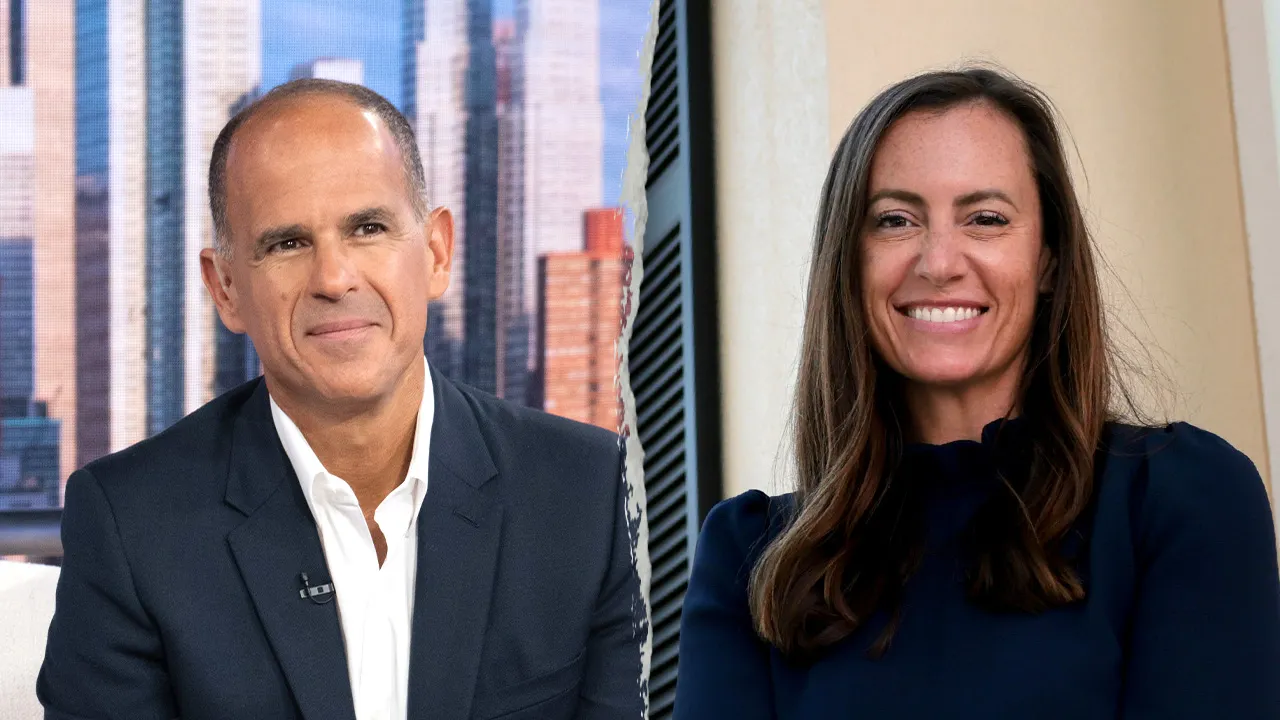
Fox News contributor Marcus Lemonis discusses Florida State Congresswoman-elect Emily Gregory’s claim that affordability was the winning issue in her recent Palm Beach election, how affordability should be addressed and more on ‘Varney & Co.’
Businessman Marcus Lemonis cast doubt on Florida Democrat Emily Gregory’s claim that President Donald Trump played no role in her recent election upset, saying it was unrealistic to suggest voters weren’t talking about the president.
“I didn’t appreciate the disingenuous nature of it,” Lemonis said during an appearance on “Varney & Co.,” reacting to remarks Gregory made on MS Now’s “Ana Cabrera Reports.”
Cabrera had asked the Florida Democrat, who flipped the deep-red Florida district that houses President Trump’s Mar-a-Lago estate, how much voters have talked to her about the president, prompting her to suggest the issue had been absent from conversations.
LIZ PEEK: TRUMP’S ECONOMIC WINS ARE REAL — NOW HE NEEDS TO CONVINCE THE COUNTRY
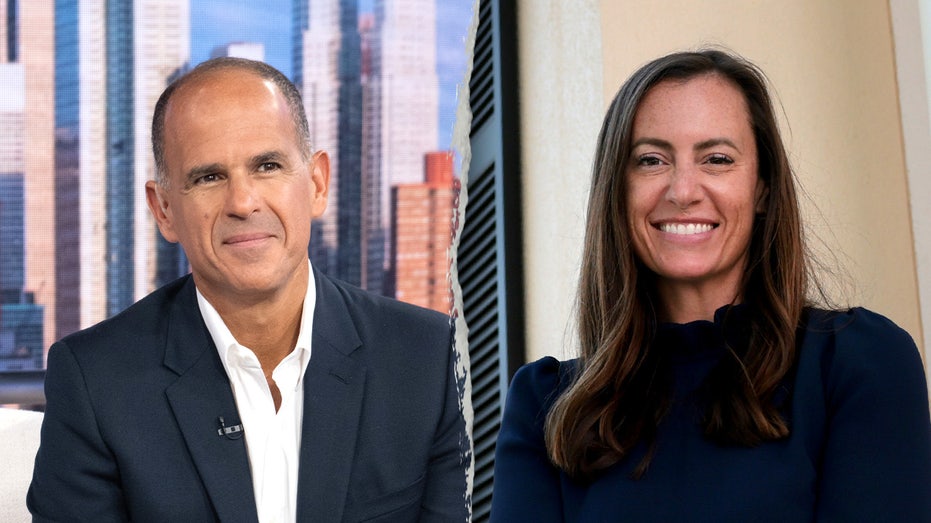
Marcus Lemonis and Emily Gregory (Noam Galai/Getty Images; Joe Raedle/Getty Images)
“I would say roughly zero… it really was not a factor for any of my voters, any of my now constituents,” Gregory replied, adding that affordability was her winning issue instead.
“They’re focused on their lives, they’re focused on the absolute crushing cost of goods, the squeeze they are feeling. That’s what I heard every single day at the door, not the most famous constituent down the road,” she said.
Lemonis reacted in disbelief, telling Stuart Varney that, while affordability is a major concern for many voters, it strains credibility to suggest Trump has not been part of her discussions.
FED’S POWELL SAYS IT’S ‘TOO SOON TO KNOW’ IRAN WAR’S IMPACT ON ECONOMY

President Donald Trump speaks during a press conference at Trump National Doral in Miami, Fla., on March 9. (Saul Loeb/AFP via Getty Images / Getty Images)
“Affordability is an issue… but to create this idea that nobody’s talking about the president of the United States, regardless of whose party, it just feels like she’s almost trying to make him a non-event,” he said.
At the same time, Lemonis warned Republicans will need a “very clear message” on the issue ahead of November’s midterms, saying his message to Trump would be to acknowledge that the issue is real.
GET FOX BUSINESS ON THE GO BY CLICKING HERE
Northern Trust Asset Management chief investment strategist Joseph Tanious unpacks market performance amid geopolitical uncertainty on ‘The Claman Countdown.’
“I would say to him, ‘Listen, we need to stop exaggerating that this is the greatest economy we’ve ever seen and that there [are] no problems out there.’ And we need to say to people. ‘Listen, there’s a lot of things that we’re doing right, and there are a number of things that are not happening as well as they should be, and here’s what I’m gonna do about it,’” he said.
“When you talk to Americans and tell them that everything is fine, they don’t like it, regardless of what side they’re on.”
Business
San Diego International Airport TSA Wait Time Improve After Long Lines at San Diego Airport

SAN DIEGO — Security wait times at San Diego International Airport have eased after chaotic scenes earlier this week, but travelers should still plan for variability as staffing shortages linked to the ongoing partial federal government shutdown continue to affect operations.

The airport issued a travel advisory urging passengers to arrive at least 2.5 hours before domestic flight departures to account for possible longer checkpoint waits. Officials noted that checkpoint times and flight schedules depend on federal partners, including the Transportation Security Administration, amid the shutdown.
On Monday, March 23, 2026, lines at Terminal 1 stretched outside the building to the curb, with some travelers reporting waits of up to 90 minutes or more during peak morning hours. Regular security lines extended significantly, and TSA PreCheck lanes faced delays or closures at times. Even expedited options like CLEAR experienced backups.
By Tuesday, March 24, conditions improved noticeably. A reporter timed a mid-morning passage through Terminal 1 security at about 23 minutes around 10:30 a.m. Terminal 2 also saw shorter lines, with some passengers clearing security with minimal or no wait after early morning rushes subsided. Airport staff had added rope lines as a precaution, but queues remained contained inside the terminals.
Historical and average data show typical TSA wait times at San Diego International (SAN) range from 15 to 30 minutes under normal conditions. Peak periods — early mornings from 5 a.m. to 9 a.m., midday around noon, and evenings from 5 p.m. to 7 p.m. — often see longer delays. Recent hourly averages included higher waits in the 5-8 a.m. window, sometimes exceeding 20-26 minutes, while mid-morning slots dropped to under 10-15 minutes.
### Current Conditions and Traveler Reports
As of late March 2026, real-time trackers reported fluctuating waits, with some midday periods showing averages as low as 7-11 minutes and others climbing higher during rushes. Live monitors at checkpoints have displayed short waits of 5 minutes or less at quieter times, but staffing issues have made predictions difficult.
Travelers shared mixed experiences on social media and in reports. Some described Monday morning chaos with lines snaking across bridges and sidewalks, while others noted that lines moved steadily despite their length. Wheelchair assistance or expedited lanes helped reduce times for certain passengers. By mid-week, many reported manageable experiences if arriving early.
The airport operates two main terminals. Terminal 1 serves several airlines with multiple checkpoints, while Terminal 2 handles others, including international flights. Some checkpoints may open or close based on volume and staffing. Passengers should check specific gate areas upon arrival.
### Factors Contributing to Delays
The partial government shutdown has led to TSA agents calling in sick or being absent due to lack of pay, creating nationwide ripple effects. San Diego, while not the worst hit, experienced noticeable impacts during peak travel periods. No ICE agents were reported at the airport in recent days, but broader federal operational constraints played a role.
Additional pressures include typical spring travel volume, business commuters, and leisure travelers heading to or from Southern California destinations. Enhanced security measures can also add time, particularly for those without expedited screening.
San Diego International Airport, one of the busiest in California, handles millions of passengers annually. Its single-runway layout and terminal design can amplify congestion when security backs up, affecting bag drop, ticketing and gate access.
### Tips for Smoother Travel Through SAN Security
Airport officials and TSA recommend several strategies to minimize delays:
– Arrive early: Plan for at least 2.5 hours before departure, especially for morning flights or during reported high-volume periods.
– Use the MyTSA app: Download the official app for real-time wait time reports from fellow travelers and historical data for your specific travel day and time.
– Enroll in TSA PreCheck or CLEAR+: Eligible travelers can keep shoes, belts and light jackets on, and leave laptops and liquids in bags. Add your Known Traveler Number to reservations. CLEAR+ offers biometric fast-track screening.
– Prepare your bag: Follow the 3-1-1 liquids rule and pack efficiently to speed screening.
– Check flight status and airport alerts: Visit flySAN.com or the SAN app before heading to the airport.
– Consider off-peak times: Mid-morning or later afternoon slots often see shorter lines compared with early mornings or evenings.
TSA PreCheck is available in both terminals, though lane availability can vary. CLEAR is offered at select checkpoints.
### Broader Context for San Diego Travelers
San Diego International Airport continues major terminal redevelopment projects aimed at improving passenger flow long-term, but current construction can influence movement through certain areas. The airport serves as a key gateway for tourism, business and military-related travel in the region.
Nationwide, TSA operations face challenges during the shutdown, with some airports reporting more severe delays. San Diego officials have emphasized appreciation for TSA and FAA staff working to maintain safety and reliability.
Travelers with disabilities, families or those needing assistance should contact their airline or the airport in advance for support services that can expedite parts of the process.
### Outlook and Recommendations
Wait times are expected to remain unpredictable in the near term until staffing stabilizes. The airport continues to monitor conditions and may adjust advisories as needed.
Frequent flyers and those with tight connections should build in extra buffer time. For international departures, arriving 3 hours early is often prudent.
Experts advise checking multiple sources for the latest information, including the official SAN website, MyTSA app and third-party trackers like AirlineAirport.com. Conditions can change rapidly based on flight schedules, weather or sudden staffing shifts.
While recent improvements provide some relief after Monday’s disruptions, caution remains the best approach. San Diego travelers who plan ahead and use available expedited options are more likely to navigate security smoothly and enjoy a stress-free start to their journey.
*Information reflects reports and data as of March 26, 2026. Wait times fluctuate; always verify current conditions via official sources before traveling. This article is for informational purposes only.*
Barclays head of U.S. Equity Strategy & Global Equity Linked Strategies Venu Krishna discusses earnings momentum on Making Money.
BlackRock CEO Larry Fink warned in his annual chairman’s letter that wealth inequality could worsen if more people don’t participate in financial markets to reap the benefits of investing.
Fink said that the vast majority of wealth has flowed to people who own assets, as opposed to those who earned most of their income from working, and warned that artificial intelligence (AI) could exacerbate that trend.
“Since 1989, a dollar in the U.S. stock market has grown more than 15 times the value of a dollar tied to median wages. Now AI threatens to repeat that pattern at an even larger scale – concentrating wealth among the companies and investors positioned to capture it,” Fink wrote.
He said that at the corporate level, the companies that have the “data, infrastructure, and capital to deploy AI at scale are positioned to benefit disproportionately.”
BLACKROCK CEO SAYS TRUMP ACCOUNTS COULD BE A ‘VERY SIGNIFICANT STEP’ FOR YOUNG AMERICANS
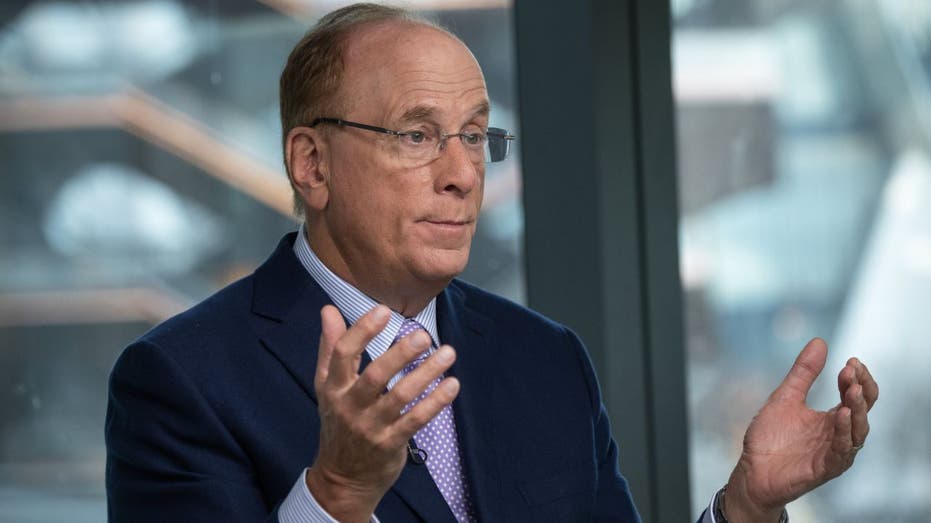
BlackRock CEO Larry Fink. (Victor J. Blue/Bloomberg via Getty Images)
“That is not unusual, and none of this is inherently problematic. Market leadership has always shifted with technological change,” Fink said. “The broader question is who participates in the gains. When market capitalization rises but ownership remains narrow, prosperity can feel increasingly distant to those on the outside.”
He noted that it’s unclear how the deployment of AI will impact the labor force, particularly for entry-level white-collar workers.
BLACKROCK: AS AMERICANS STRUGGLE TO SAVE FOR RETIREMENT, 71% BACK THIS TRUMP PROPOSAL
| Ticker | Security | Last | Change | Change % |
|---|---|---|---|---|
| BLK | BLACKROCK INC. | 968.14 | -13.21 | -1.35% |
Fink added that, historically, automation has boosted productivity and, over time, broadened the range of work available even as certain roles were displaced – though he cautioned that “new roles take time to emerge, and workers don’t always move seamlessly from old ones to new ones.”
“One thing is clear: AI will create significant economic value. Ensuring that participation in that growth expands alongside it is both the challenge and the opportunity,” he wrote.
Fink went on to discuss ways to broaden participation in financial markets to expand access to the market to a larger segment of Americans.
BLACKROCK’S LARRY FINK SAYS US STILL TOP DESTINATION FOR GLOBAL INVESTORS TO PARK MONEY
BlackRock CEO Larry Fink said expanding market participation is key to addressing inequality. (Angus Mordant/Bloomberg via Getty Images)
He said that the newly created Trump Accounts could be a “very significant step” in encouraging young people to put their money in the market.
Trump Accounts are savings accounts given to newborns and seeded with money from the government and philanthropic benefactors as well as parental contributions that are invested in a broad index of U.S. stocks. They may also be created for people under the age of 18, and are held in custody by a parent or guardian until the child turns 18.
GET FOX BUSINESS ON THE GO BY CLICKING HERE
Fink said market-based approaches like that could also be used for programs like Social Security to stabilize the safety net program, which is approaching insolvency in under a decade.

“If this were merely a contracting impasse, DoW would presumably have just stopped using Claude,” Judge Lin wrote, referencing the Department of War, a secondary name for the Department of Defense. “The challenged actions, however, far exceed the scope of what could reasonably address such a national security interest.”

Andrew and Nicola Forrest’s bootmaker RM Williams has signalled its desire to grow into western Europe and Japan after opening a flagship store in London to support its UK expansion.

To get a sense of where the pain may end, many equity traders look to a type of technical analysis credited with identifying the bottoms of big market declines, including two major routs since 2020. The bad news for bulls: It signals a long way down before the index finds major support.
It’s known as the 50% Fibonacci retracement level, a tool that chart watchers use to find potential entry points based on an 800-year-old mathematical principle. In this case, it represents a decline that would erase half of the S&P 500’s gains from last April’s low to its most recent record in January. It sits at 5,980 – or some 9% below Wednesday’s close.
“When you get a clear change in trend, there’s just certain levels that investors look at to kind of come back in, especially shorter-term traders,” said Matt Maley, chief market strategist at Miller Tabak + Co. “And that 50% retracement is one that people follow very closely.”
Technical analysis is just one tool to gauge stock-market trends and potential inflection points, and it’s far from a magic crystal ball. The S&P 500 briefly fell below 6,500 last week and it’s trading below its 200-day moving average, a trend line many hoped would act as support to halt the decline. Its failure to do so has pushed technical analysts to search for other potential levels where the bottom may be.

“It’s easy to see from a technical perspective that the worst isn’t over yet,” said Doug Peta, US investment strategist at BCA Research. “Until the Strait of Hormuz is open and crude oil, LNG, refined products and derivatives are moving through it at a normalised rate, there’s likely to be upward pressure on inflation and downward pressure on global growth.”
Should the S&P 500 extend losses this week, it would likely move toward 6,200, Maley said in a recent note to clients. The next potential support after that would come in at 5,980, which marks not only the 50% Fibonacci retracement but also the gauge’s mid-June low. The Fibonacci sequence, which was named after Italian mathematician Leonardo Pisano, known as Fibonacci, came in handy during the market turmoil trigged by President Donald Trump’s so-called Liberation Day tariff announcements last year. The S&P 500 found support at 4,982.77, a level that corresponded with the midpoint of a rally spanning three years from 2022.
Similarly, the 2022 bear market found its trough near the 50% retracement of the rally between March 2020 and early January 2022.
To Jonathan Krinsky, chief market technician at BTIG LLC, signs of stock-market weakness were present well before the conflict in the Middle East erupted. Issues with software and private credit had already taken their toll. In terms of how effective the 50% retracement level is when calling a bottom, Krinsky explains that it’s just “one piece of the puzzle.” Maley agrees, noting that there needs to be other influences on the market in order for it to be effective.
A resolution to the war in Iran and an end to the ensuing spike in energy prices would be one obvious catalyst to help the market rebound. Stocks rallied on Wednesday as traders weighed the viability of US-Iran ceasefire talks, with the S&P 500 closing up 0.5%. Still, uncertainty about the longer-term trajectory of US stocks remains.
“The war and what’s happening in it is a specific issue,” said Kim Forrest, chief investment officer at Bokeh Capital Partners. “What is the Fed going to do about interest rates given all the extremely changeable views people have on markets? And then there’s the price of oil, which fluctuates wildly. Pick your topic and you can own it.”

“DOUBLE WHAMMY!” Stefan Borson EXPLAINS the Financial DAMAGE if Spurs are RELEGATED!

Man in critical condition following fail-to-stop crash in Cambridge

10 Picks for Long-Term Growth

Smart energy pays enters the US market, targeting scalable financial infrastructure

Why Israel is blocking foreign journalists from entering

Bitcoin: We’re Entering The Most Dangerous Phase
“DOUBLE WHAMMY!” Stefan Borson EXPLAINS the Financial DAMAGE if Spurs are RELEGATED!

TGE on The Most Dangerous Supercars, The Decline of Jaguar & Buying a Porsche Carrera GT

Gold & Crypto Analysis – Live || 26 March || Trade Time with Pranjal – Pranjal Singh
-
 Crypto World6 days ago
NIO (NIO) Stock Plunges 6.5% as Shelf Registration Sparks Dilution Worries
-
 NewsBeat2 days ago
Manchester United reach agreement with Casemiro over contract clause amid transfer speculation
-

 Fashion6 days ago
Weekend Open Thread: Adidas – Corporette.com
-

 Politics6 days ago
Jenni Murray, Long-Serving Woman’s Hour Presenter, Dies Aged 75
-

 Crypto World5 days ago
Best Crypto to Buy Now: Strategy Just Spent $1.57 Billion on Bitcoin During Fear While Early Investors Quietly Enter Pepeto for 150x Potential
-

 Crypto World5 days ago
Bitcoin Price News: Bhutan Sells $72 Million in BTC Under Fiscal Pressure, but the Smart Money Entering Pepeto Sees What the Market Does Not
-

 Tech7 days ago
inKONBINI Lets You Spend Summer Days Behind the Register
-

 News Videos24 hours ago
Parliament publishes latest register of MPs’ financial interests
-

 Sports4 days ago
Remo Stars and Kano Pillars Strengthen Survival Hopes in NPFL
-

 Sports4 days ago
Gary Kirsten Accuses Pakistan Cricket Board Of ‘Interference’, Mohsin Naqvi Responds
-

 Tech4 days ago
Give Your Phone a Huge (and Free) Upgrade by Switching to Another Keyboard
-

 Business4 days ago
No Winner in March 21 Drawing as Prize Rolls to $133 Million for Next
-

 Sports6 days ago
2026 Kentucky Derby horses, odds, futures, preview, date: Expert who nailed 12 Derby-Oaks Doubles enters picks
-

 Tech4 days ago
AI enters the chat: New Seattle dating app relies on tech to facilitate meaningful human connections
-
Business6 days ago
Columbia Sportswear enters $500 million credit agreement with JPMorgan Chase
-

 Tech5 days ago
Today’s NYT Connections Hints, Answers for March 22 #1015
-

 News Videos4 days ago
Ch 9 Financial Management Part 1 | Detailed One Shot | Class 12 Business Studies Boards 2026
-

 Business5 days ago
Will Duke Basketball Win It All? Duke Basketball Enters Second Round as Third Favorite to Claim NCAA Title
-

 Business5 hours ago
Instagram, YouTube Found Responsible for Teen’s Mental Health Struggle in Historic Ruling
-
 Crypto World6 days ago
Small-cap Russell 2000 enters correction territory
You must be logged in to post a comment Login