

Politics
Congo qualify for the World Cup after a 52-year absence


The Democratic Republic of Congo national team has returned to the world’s biggest football tournament after a 52-year absence. Their only prior appearance was at the 1974 World Cup as Zaire.
A dramatic extra-time victory over Jamaica secured the Leopards’ qualification for the 2026 World Cup, writing a new chapter in Congolese football history.
Half a Century of Waiting
The Congolese team started the match strongly, applying constant pressure on the Jamaican goal from the opening whistle. Despite numerous attempts, the game ended in a goalless draw, forcing extra time.
In the 100th minute, the historic moment arrived when Axel Tuanzebe headed in a corner kick. The goal was confirmed by VAR, giving the Leopards the victory and qualification, and bringing Congolese football back onto the world stage after half a century of absence.
A National and Symbolic Achievement
This qualification is not just a victory in a single match, but a symbol of organized effort. It represents a source of national pride for the Congolese people and reflects years of dedicated effort in developing players and sporting infrastructure.
It also demonstrates the rise of unconventional African teams and their ability to compete on the world stage.
The Challenges of the Upcoming World Cup
The Congolese national team will participate in Group K of the 2026 World Cup, alongside Portugal, Colombia, and Uzbekistan, facing a tough test against diverse footballing styles.
Finally, after 52 years, the Congolese Leopards have returned to the world’s biggest stage. They are carrying the hopes and aspirations of an entire nation, proving that organized work and unwavering determination can rewrite footballing history and establish themselves on the international stage.
Featured image via the Canary



President Donald Trump’s failing war in Iran is grabbing most of the headlines. But Latin America is still central to current US colonial ambitions. American shadow war operations are popping up left, right and centre as the US seeks to dominate.
Trump’s 2025 national security strategy said as much. The US wants to ensure:
the Western Hemisphere remains reasonably stable and well-governed enough to prevent and discourage mass migration to the United States.
And that those pliable governments:
cooperate with us against narco-terrorists, cartels, and other transnational criminal organizations.
Trump and his cronies want:
a Hemisphere that remains free of hostile foreign incursion or ownership of key assets, and that supports critical supply chains.
Decoded, the US seeks to control the markets in the Americas, and:
we want to ensure our continued access to key strategic locations. In other words, we will assert and enforce a “Trump Corollary” to the Monroe Doctrine.
The Monroe Doctrine, many Canary readers will be aware, basically means US political and economic dominance of the continent. The ‘Donroe’ doctrine, as the new version has been called, is Trump’s typically egotistical update.
The US started 2026 with an attack on Venezuela and various threats against neighbours like Greenland, Canada and others. Since then, it was steered — with the help of Israel — into a war with Iran. And spent the last few months getting an arse-kicking in a dramatically failing conflict there.
But the Americas have not been forgotten in Trump’s vision. The US military and US intelligence have been busy while Iran took the headlines.
Trump — the Venezuela raid
The 3 January US attack on Venezuela was an opening salvo of sorts. The legally questionable at-sea airstrikes which accompanied it are still happening. The Americans say these are against ‘narco-terrorists’. The truth is much more complicated.
President Nicolas Maduro remains in US detention. His replacement Delcy Rodriguez, it seems clear, is a US stooge.
The Guardian was told by four anonymous sources in late January:
Before the US military snatched Venezuela’s president, Nicolás Maduro, earlier this month, Delcy Rodríguez and her powerful brother pledged to cooperate with the Trump administration once the strongman was gone.
Rodriguez has since started shipping oil to Israel. And on 27 May, CBC reported that cartel-related probes against her had been quietly dropped:
The Trump administration has quietly instructed federal prosecutors in Miami to avoid pursuing criminal investigations into Venezuela’s acting President Delcy Rodríguez, a longtime target of the U.S. Drug Enforcement Administration, according to current and former U.S. law enforcement officials.
The narrative of state collusion with cartels, wobbly as it is, was used to justify the January raid. And narcotic gang activity seems to be the main way Trump is justifying his bid for hemispheric control.
Joint strikes in Central America
The NYT reported on 28 May that Guatemala has agreed to carry out strikes with the US:
President Bernardo Arévalo of Guatemala agreed to both airstrikes and other military action in a call with Defense Secretary Pete Hegseth, two of those people said, with operations to start as early as next month.
Adding:
It was unclear what other military activities could be included in the agreement.
And in Panama, a defence and transit deal for the strategic cross-continental canal has been locked in with the US:
U.S. Defense Secretary Pete Hegseth and Panamanian President José Raúl Mulino signed memorandums of understanding that provide U.S. military vessels with toll-free, priority access through the Panama Canal.
The agreements also encompass expanded joint training exercises, cyber defense collaboration, and the potential reactivation of former U.S. military bases in Panama.
The US also designated two Brazilian gangs as terrorist organisations on 29 May:
The announcement, made by Marco Rubio, the secretary of state, on Thursday, is being widely seen in Brazil as a setback for Luiz Inácio Lula da Silva, the president who had strongly opposed the designation – and a boost for Lula’s main challenger in October’s presidential election, the far-right senator Flávio Bolsonaro.
Flavio Bolsonaro is the son of fascist former president Jair Bolsonaro. Both are far-right fellow travellers of the Trump administration. Flavio Bolsonaro visited the White House earlier in May 2026.
Homeland empire
The CIA reportedly killed a mid-level cartel boss with a car bomb in Mexico City in March. That followed a US-backed cartel shootout in Mexico, also in March. Two CIA officers were killed after a drug lab raid in April. Official denials followed those reports.
US-backed troops in Ecuador allegedly tortured dairy workers and blew up a farm in March. Cuba, naturally, is on the regime change list too. Immigration and Customs Enforcement (ICE) paramilitaries are carrying out a racist war on poor, maligned and undocumented workers on the home front.
El Pais revealed on 7 May that Trump, his Argentine ally Gabriel Milei and the Honduran government were:
conspiring to create a channel for disseminating fake news with the intention of spreading misinformation and destabilizing the governments of Brazil, Colombia, and Mexico.
El Salvador Trump-allied president Nayib Bukele is also deeply implicated in US fascistic deportation plans.
The list goes on as Trump seeks to remake the continent in his own image.
Trump’s modern settler empire
The new right-wing narratives of illegal migration and drug trafficking have merged with the climate of militarism, ‘counter-terrorism’ and colonial policing forged during the War on Terror. Trump has been able to tie these together to wage a war against the exploited, the racialised and the desperate.
Historian Nikhil Pal Singh warned in a recent piece for Equator:
familiar analytical frameworks which rely on the distinction between foreign and domestic realms, normality and legality, policing and war, cannot provide the ‘world picture’ we need to grasp what’s happening here.
Instead, Trump:
conflates immigrants, drugs and free trade as sources of weakness coming from outside, “poisoning the blood of our country”.
Trump has married:
the archaic geopolitics of a settler empire to the modern legal frameworks devised by his liberal predecessors.
Trump is losing in Iran. Few serious observers doubt it. But the other war which took off in 2026 is making inroads. The US administration is extending its violent reach across the Americas. The Americans seek to consolidate through backing fascist forces, through violence, and by using a racist narrative of narco-terrorism to justify their actions.
Keep eyes on Iran, but don’t forget the so-called ‘homeland empire’. The US-Israeli war will end at some point. In Latin America, US intervention may well accelerate when it does.
Featured image via Katelynn Jackson/U.S. Air Force via Getty Images
By Joe Glenton
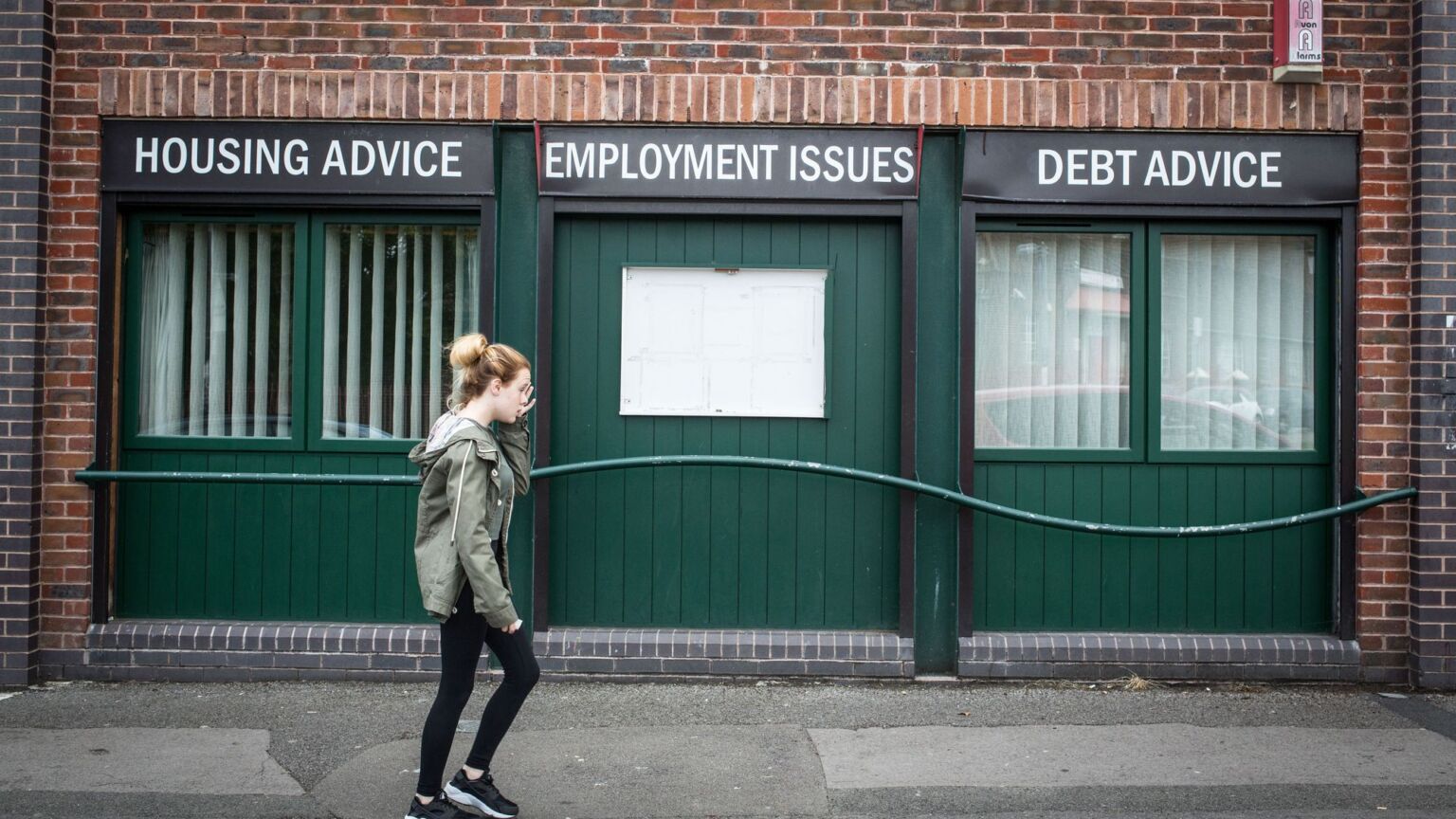
Virtually everyone who is concerned about the future of the United Kingdom is worried about the recent news that more than one million young people – around one in eight 16- to-24-year-olds – are not in education, employment or training (NEET). The number of NEETs has grown by 195,000 over the past two years.
According to a government-sponsored review of NEETs, 1.25million young people will not be in work or education within five years. Already, 530,000 are recipients of out-of-work benefits such as universal credit. Alan Milburn, a cabinet minister under Tony Blair and author of the report, said he had a ‘deep concern bordering on fear’ about the future of young people in the UK.
Milburn’s review has done a thorough job of conveying the bleak extent of what he rightly describes as a ‘moral’ crisis. Unfortunately, however, he and others charged with analysing this phenomenon have failed to apply the same thoroughness when it comes to its causes. A widely reported study published last week, Inside the Mind of a Young NEET, makes many of the same mistakes as Milburn’s review. Both reports are obsessed with dispelling the claim that the NEET generation is ‘lazy’.
Inside the Mind of a Young NEET, co-authored by educationalists Peter Hyman (also a former speechwriter for Blair) and Shuab Gamote, argues ‘that Britain must stop blaming the one million young people not in education, employment or training, known as NEETs, for a system that has let them down’. This sentiment was stridently echoed by Milburn during the interviews that he gave to the media on Thursday, the day his review was released.
Hyman and Gamote’s report praises today’s youth as a ‘resilient, talented generation’, failed by a system designed for a world that no longer exists. Its authors dedicated it to the ‘extraordinary young people who were willing to share their lives with us’.
The attribution of resilience and extraordinary qualities to young people, who in many cases are reluctant to leave their bedrooms, is a demonstration of the pandering tone that runs through both reports. They see young people largely as victims, devoid of any responsibility for the situation they find themselves in. Unsurprisingly, both reports repeat the popular myth that today’s youth are uniquely incapable of the demands of work, often because of some kind of mental illness.
Inside the Mind of a Young NEET tends to present young people as actual or potential mental-health patients who suffer from the trauma inflicted by their life experience. The report notes that:
‘We listened to many young people with traumatic stories to tell about their family life, school, attempts to work, mental health. We need to ask ourselves as a nation: What are we doing to the next generation? Why are so many growing up in pain? Why is the system failing them so badly?’
The Milburn Review is also strongly influenced by the mental-health narrative. Milburn states that: ‘For the first time, in perhaps two centuries, changes in health, especially mental health, are impeding economic growth and causing a contraction in the supply of labour.’ This belief appears to be based on the fact that, in 2025, 44 per cent of NEETs reported having a ‘work-limiting’ health condition – an increase from 26 per cent in 2015.
One of the most regrettable consequences of the medicalisation of the NEETs is that it treats young people’s accounts of their circumstances uncritically. Inside the Mind of a Young NEET notes that, ‘[m]any young people told us they wanted to work but felt they could not immediately cope with 35 or 40 hours a week’. It added that ‘part-time work, supported work, trial shifts and gradual increases in hours would help them build confidence and get used to the routines of work’.
The central point here – and the one that is missing – is that a significant number of young people believe that they cannot cope with full-time work because they have grown up being told that it is unreasonable to expect them to do so. The authors don’t seem interested in why generations of young people in the past regarded full-time work as an opportunity, rather than a challenge beyond their apparently low capabilities. If they had tried to address this question, they would have discovered that work was not perceived as something so exceptional that it required a prolonged phase of transition.
In its desire to avoid any criticism of the attitude of the NEETs, Inside the Mind of a Young NEET simply acquiesces to their attitude towards work. For example, it reports that ‘[s]ome young people have got into a habit of quitting fuelled by social media… Young people told us about the promotion online of instant success, which leads to a quitting culture if things take time.’ It adds that ‘some young people told us they enjoy the dopamine hit of a new job but then get bored very quickly and want to move on’.
Of course, there is nothing new about feeling bored in a job and wanting to quit. What is new is that supposed experts of young people’s lives represent this attitude as new, and one that didn’t exist prior to social media. Instead of analysing a culture that has relegated the importance of having strong work ethic, the authors of Inside the Mind of a Young NEET simply repeat the infantilising philosophy that has kept many otherwise capable youth on the sofa.
To his credit, Milburn has recognised that what is at stake is ‘more than an economic crisis, it is a moral one’. However, he is reluctant to draw out the logic of his insight, which is that no economic or health policy will deal with this problem unless the morality sustaining low expectations is challenged.
The NEET phenomenon is the outcome of a regime that systematically infantilises young people. From early childhood, young people are treated as ‘vulnerable’ and incapable of agency. Yet, at the same time, they have their egos inflated and are regularly told that they are ‘unique’ and ‘extraordinary’. The consequence has been perverse. The young are inevitably going to be disappointed when the world doesn’t treat them as unique and extraordinary. And, when that disappointment occurs, it is medicalised as a mental-health condition.
Every type of transition – from childhood to primary school, from primary to big school, from secondary to higher education to the workplace – has its challenges. God knows that mass immigration, deindustrialisation and welfarism haven’t helped younger Britons. But they can undoubtedly cope with holding down a job. It’s high time the government recognised this.
Frank Furedi’s In Defence Of Populism is out now.

William Clouston – leader of the Social Democratic Party – joins Tom Slater and Fraser Myers for the latest episode of the spiked podcast. They discuss the Reform-Restore rift, why Blair can’t fix broken Britain, and Peter Murrell’s confessions of a shopaholic.
Donate £40 or more to spiked’s summer appeal and receive a limited-edition ‘10 years of Brexit’ pint glass. Find out more and donate here.
Listen to Rod Liddle’s Times Radio show, Saturdays 10am to 1pm, on digital radio, your smart speaker or by downloading the free Times Radio app. Find out more here.
Brendan O’Neill will be hosting a live Q&A on Tuesday 9 June. This event is free and is exclusively for spiked supporters. Find out more here.
Join us for the spiked summit, our biggest ever live event, on Saturday 27 June in Westminster, featuring Konstantin Kisin, Lionel Shriver, Katharine Birbalsingh, Toby Young, Allison Pearson, Brendan O’Neill, Tom Slater and more speakers to be announced. Get tickets here.
spiked is funded by readers like you. Only 0.1% of regular readers currently support us. If just 1% did, we could grow our team and step up the fight for free speech and democracy.
Become a spiked supporter and enjoy unlimited, ad-free access, bonus content and exclusive events – while helping to keep independent journalism alive.
Kristian Niemietz, editorial director at the Institute of Economic Affairs, joins Chris Snowdon and Tom Slater for the latest episode of Last Orders. They discuss Labour’s call for supermarket price caps, the junk science about gambling, and Zack Polanski’s mysterious appeal.
Listen, share and give us a glowing review on your podcast app. Also, send your postbag questions, theories and ban suggestions to [email protected] and we’ll try to answer them in a future episode.
Listen to Rod Liddle’s Times Radio show, Saturdays 10am to 1pm, on digital radio, your smart speaker or by downloading the free Times Radio app. Find out more here.
Donate £40 or more to spiked’s summer appeal and receive a limited-edition ‘10 years of Brexit’ pint glass. Find out more and donate here.
Join us for the spiked summit, our biggest ever live event, on Saturday 27 June in Westminster. Featuring Lionel Shriver, Andrew Doyle, Katharine Birbalsingh, Toby Young, Allison Pearson, Paul Embery, Brendan O’Neill, Tom Slater and more. Get tickets here.
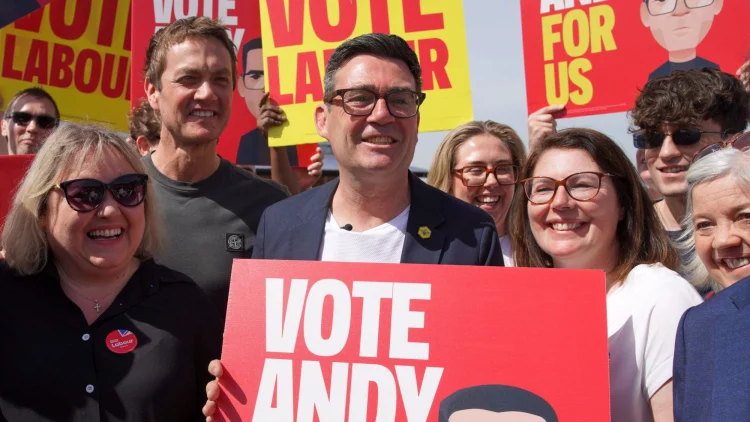

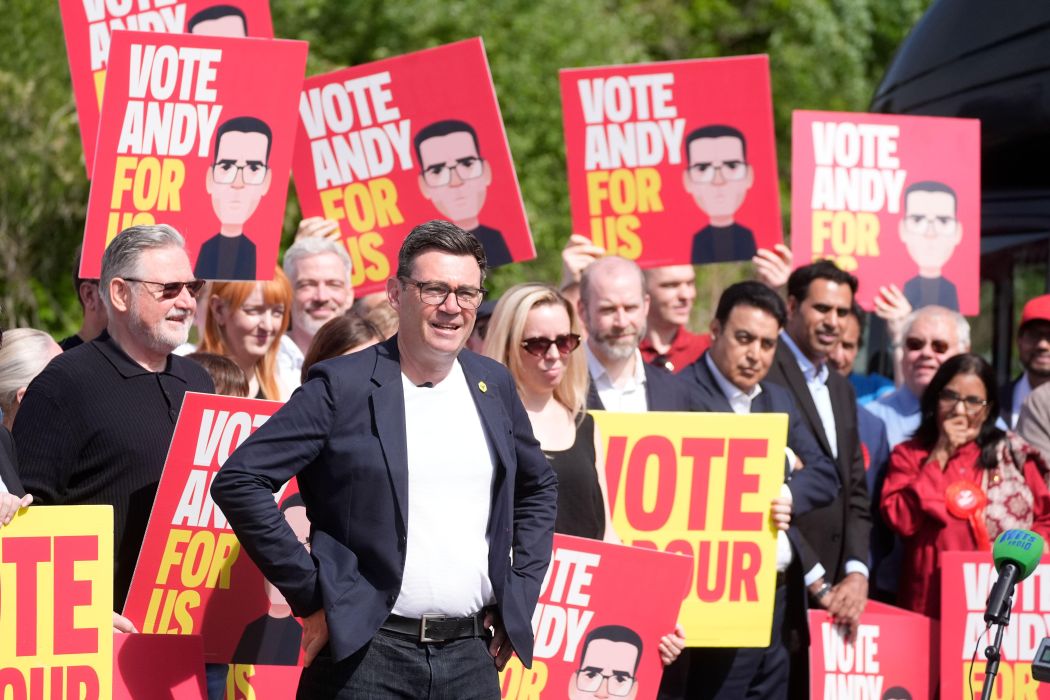
Andy Burnham’s campaign launch (AP Photo/Ian Hodgson/Alamy)

11 min read
Will Andy Burnham’s big by-election bet on Makerfield pay off? Sienna Rodgers talks to Labour MPs, insiders and activists who reveal the campaign strategy and what’s worrying them
Labour activists usually begin their doorstep conversations with the words, “Hello, I’m calling on behalf of your local Labour Party.” Not so in Makerfield, where Greater Manchester mayor Andy Burnham is relying heavily on his personal vote to return him to Westminster.
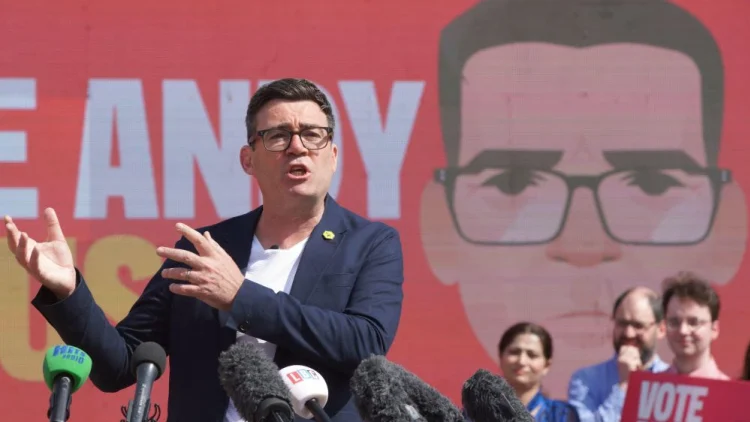
In the Wigan constituency, which has always been Labour-held but where Reform picked up 24 out of 25 seats in last month’s local elections, the governing party’s by-election message is focused squarely on Burnham. It is a cartoon of his face emblazoned across leaflets and Correx boards, along with the words “ANDY FOR US”. Labour branding is limited, pretty much, to what is legally required. Nobody in the party thinks Labour would have a chance of winning this contest with any other candidate.
Accordingly, Burnham has decided to prioritise his personal interactions with voters. Insiders say the campaign is cutting down on his media time in favour of door-knocking, meeting locals and having sit-downs – including with Reform voters. He won’t convince everyone in the room, they say, but he is determined to have “honest discussions”.
In that vein, Burnham has issued clear instructions that the campaign must aim to speak to every household in the constituency. Canvassing typically involves putting a targeting filter on voter data so that activists miss out the doors of those who have consistently opposed their party, in a bid to save time and concentrate resources where they are most useful. But Burnham wants every door knocked and to wait longer than usual before a more targeted approach is introduced in the run-up to polling day.
This approach means “difficult conversations” are frequent. Those who have been on the Makerfield doorsteps say they have been faced with a real mix of responses. “Not interested, mate” is the standard reply of Reform backers; “Can’t be bothered, I never vote” is that of the wholly disillusioned. But “I like Andy – I know what he’s done for the buses” is also heard.
Because while some voters are firmly Reform, others are desperate to block Nigel Farage’s party, and others still have voted Reform locally but say they will give Burnham their vote.
The Burnham factor is real, canvassers report – a finding backed by polling. The House is told that Josh Simons gave up his seat to make way for the mayor after hearing one too many times from voters that they were grateful for the work he was doing but could not vote for Labour – though they’d consider doing so if Burnham were leader.
Labour campaigners are emphasising that Burnham is a local man. “He grew up here, sent his kids to the local school and lives a stone’s throw away. He cares about the area, this is home, and he wants the change that the country needs to begin here – and look at his track record, he’s been a great mayor for Manchester.” These are the key lines. Burnham has lived with his family in the small town of Golborne, just outside the constituency, since his time as MP for neighbouring Leigh.
Fortunately for the Burnham campaign, given its level of ambition for seat coverage, it is not struggling for bodies: Labour people “from every corner of the country and every corner of the party” are joining the effort, as one source puts it. Party chair Anna Turley has asked all Labour MPs to canvass in the by-election twice during the campaign plus polling day.
High-profile figures close to Keir Starmer are not being discouraged from visiting, nor indeed are leadership rival Wes Streeting and his allies, who have been welcomed. (The former health secretary joined on the first weekend after Burnham had been confirmed as the candidate.) Turning out supporters is key and it’s “all hands on deck”.
North West Labour is a little tired, an insider points out, after being “stuck in a loop of by-elections for years”. Since the start of 2022, the region has been the site of more by-elections than any other (most recently Gorton and Denton, but previously Runcorn and Helsby, Blackpool South, Rochdale, Stretford and Urmston, and the then City of Chester). Many were easier in the sense that Morgan McSweeney had done the strategic work months or years prior – “you just had to execute it”, as the local Labour source puts it.
Still, Burnham has a bigger team around him than is typical for by-elections. There are not one but two ‘political leads’ – Anneliese Midgley, the trade union insider and Knowsley MP said to be highly trusted by Burnham, and Louise Haigh, the former Cabinet member who has championed Team Burnham in Parliament – as well as not one but two ‘campaign aides’ – David Baines and Sally Jameson, both 2024 intake MPs.
As ever, he also has his close political aide and friend, chief of staff Kevin Lee, who helps with messaging. Leigh MP Jo Platt, who acts as a liaison with the parliamentary party, is called upon for her local borough knowledge too. Simons, whose bold decision to vacate the seat triggered the by-election, is also involved and said to be “across everything”. And there is deputy leader Lucy Powell, who is focused on mobilising members, encouraging MPs to visit and fighting Reform in the ‘air war’.
Those dropping into the campaign from elsewhere are full of praise. “It was the first time I felt hopeful in months,” says one Labour MP. They would prefer to see Wes Streeting become the next prime minister, yet describe how refreshing they find “an election campaign with some energy” – one in which “you don’t have the albatross of Keir Starmer around your neck”.
“It felt like they really knew what they were doing in terms of the organisation. All the other by-election campaigns have also been really well-run, but the others have been well-run in spite of the national government,” they add.
“Within the Labour Party, everyone is knocking for the same purpose, and that purpose is getting rid of Keir Starmer. It’s been the cause that dare not speak its name for two years – ‘Keir’s a bit shit, isn’t he?’ – and now people are able to say it.”
Some of those closer to the Makerfield campaign are more critical. The House has heard complaints that there are “too many cooks” and it is unclear who exactly is holding the reins. These criticisms are aimed both at the local campaign and the parallel preparations for government. For the latter, Ed Miliband ally Miatta Fahnbulleh leads on policy, but there are lots of other voices vying for input.
Allies recognise the unfeasibility of running in a highly challenging by-election while preparing for No 10; of being attractive to Makerfield voters, the country and the party’s MPs and members all at the same time.
“There’s no signature policy. He’s appealing to Makerfield, he’s appealing to the country, and he’s appealing to the Labour Party. It’s impossible. He’s just got to pick one and it needs to be Makerfield,” says a pro-Burnham Labour MP.
It’s been the cause that dare not speak its name for two years – ‘Keir’s a bit shit, isn’t he?’ – and now people are able to say it
While the Labour mood is largely characterised by cautious optimism, there is a fear that voters’ minds could change quickly, even in such a short campaign, especially thanks to “the algorithms” shaping narratives. “Nobody thinks that this is in the bag, and you would be stupid to think that it is,” says a Labour MP close to the operation.
In the Greater Manchester constituency of ‘Makerfield’, there is no big town with that name. It is, in reality, a commuter area between Manchester and Liverpool that includes Ashton-in-Makerfield and Hindley, both with populations of around 25,000, and a number of villages. It is 97 per cent white and decidedly pro-Brexit; unemployment is low and home ownership is high. Flags are flown proudly and there is said to be a mix of views throughout the seat – far from the ‘constituency of two halves’ that is Gorton and Denton.
There are local issues: flooding, on which Simons is getting credit from locals after responsive casework when he was the MP; miners’ pensions, which have been boosted by the Labour government; Burnham’s help in getting an illegal waste site closed. But national, ‘big-ticket’ items are dominating, Labour sources say.
Reform’s campaign may be focused on local issues, but it is GB News and social media driving the narrative. And there is a worry that the government-prep side of Burnham’s mission could derail the contest.
This anxiety piles on top of many others, most notably that there is not much of a progressive vote to squeeze (the Lib Dems and Greens are largely non-events here) and that the locals showed there is a significant “shy Reform vote” in the area.
That Rupert Lowe’s Restore Britain is cutting through in the by-election – even bringing out activists on the ground who have been seen knocking on doors – offers Labour some reprieve in the short term, but little comfort beyond this battle.
One MP on the party’s left worries that, even if Burnham pulls off a victory, the story could be the combined Reform and Restore vote share. “If it were not for Restore, Reform would be ahead. That’s troubling,” they say. “The story will be that he came through, but with a split vote. That isn’t a narrative of victory – that’s a narrative of ‘you got lucky’.”
This Labour MP believes that Burnham should be making his distance from the Starmer premiership clearer – even going so far as to tell the Prime Minister not to visit Makerfield during the campaign, as he has promised (or threatened) to do.
“He needs to say, ‘I do not want you on my campaign’,” the MP urges. “Labour is dragging him down. Unless Andy is prepared to say, ‘I’m coming to take Starmer out’, it’s not cutting through,” they add. “Either you’re an insurgent or you’re not. He needs to come in going, ‘I won because I distanced myself from the shitshow that’s been the last two years’.”
But it is thought unlikely Burnham will make such feelings explicit or banish Starmer from the campaign. “It will be very carefully choreographed,” a different MP notes of the visit expected by the PM. “There will be a meeting where Keir is presented with some very trusted local Labour people, but let’s not fool ourselves – Keir is not going to go out knocking in Abram ward,” they add, referring to one of the more economically deprived bits of the seat.
The absurdity of a vote for Labour being a vote against the Labour Prime Minister in this by-election does not always arise, but these conversations sometimes happen organically. There is no official script to follow when they do, but some activists tell The House they reply with a wink-wink, nudge-nudge, ‘well-you-know-who-is-well-placed-to-kick-him-out’ answer.
If it were not for Restore, Reform would be ahead. That’s troubling
Conversations with Labour MPs and others about Makerfield all quickly turn to the impending leadership change. Ironically, those most keen on a coronation for Burnham have included some Starmer supporters: the less chaos, the better.
Streeting backers are fairly relaxed, while emphasising the need for a broad-church approach if Burnham gets in. “Everyone has accepted that anything’s better than the status quo,” one says. “There’s a really healthy respect between the Wes camp and the Andy camp. We looked at how the Tories did their changes and there was never any respect left. You always had a section who were eviscerated and left to go and lick their wounds until enough of their colleagues got pissed off again in six months’ time. I think we’re all aware that that can’t happen.”
Meanwhile, the Labour left MPs are clear that there must not be a coronation. “Not that I would support him, but I would hope that Streeting would say, ‘I am going to be contesting this’. You go to the party with two candidates – one a credible candidate of the centre left, one a credible candidate of the centre right – and they fight it out. That is the way the party should behave,” says one MP. “It didn’t work for Gordon,” says another, referring to Brown’s 2007 accession. “Andy would wipe the floor with any candidate, and he needs that, and the party needs to see that.”
Whatever comes next, everyone involved in Labour’s Makerfield campaign describes its outcome in apocalyptic terms. “It is existential,” says one. “If we can beat Reform in these circumstances, it’s a playbook for the country.” A Burnham-backing MP puts it more starkly: “If Andy does not win this, we’re all fucked.”

4 min read
Keir Starmer’s successor will face the same public pressure for instant results.
Pity Keir Starmer. Clinging on in Downing Street while a leadership contest in all but name rages around him. Forced to campaign for a man who hopes to oust him. Change is what he promised the British people, and a change seems to be what his colleagues now want. Whether that satisfies the electorate is another matter entirely.
The Prime Minister currently ‘enjoys’ the lowest satisfaction level of any PM since they started asking the question in the 1970s. Coupled with the disastrous results suffered by the Labour Party in recent elections, this has proved enough to bring simmering discontent with the Prime Minister to the boil. According to recent Stonehaven polling, only 47 per cent of 2024 Labour voters now think he should stay in No 10. The resignations of Wes Streeting and Jess Philips, plus a host of junior ministerial colleagues, coupled with the clear ambition of Andy Burnham to secure the top job, have piled the pressure on.
But would a change of leader help the party? The data here is mixed. Based on a simple question – how much more or less likely would you be to vote Labour if the party had a contest that elected a new leader – 35 per cent of 2024 Labour voters who have deserted the party declare they would not support the party even in this eventuality. 23 per cent say they would be slightly more likely to, 7 per cent much more likely, while 35 per cent want to wait and see who the winner is.
More sophisticated MRP modelling, which incorporates tactical voting, finds some 23 per cent of all voters are more likely to vote for the Labour Party under a leader other than Starmer (13 per cent slightly more likely and 9 per cent much more likely), while 12 per cent did not know. 42 per cent said they would not vote Labour irrespective of the leader.
On the surface at least, such shifts could have a significant impact. The Stonehaven MRP model projects the following seat distribution as its current base case: Reform UK 258 seats, Labour 154, the Conservatives 98, the Liberal Democrats 75, the SNP 32, the Greens 10 and Plaid Cymru 4.
Yet in a scenario in which voters who said they would be more likely to support Labour under a new leader switched their vote accordingly, that changes significantly. Under the most expansive scenario (whereby all those who said they would be “slightly” or “much” more likely to back Labour under a new leader do so), the equivalent numbers are: Labour 336 seats; Reform 151 seats, the Conservatives 45, the Liberal Democrats 70, the SNP 23, the Greens 3, and Plaid Cymru 4.
There’s a caveat. This modelling only captures voters who would be more likely to support Labour under a new leader. It does not account for those who might abandon Labour after a leadership contest. The figures should therefore be read as an indication of the ceiling of potential recovery rather than a forecast of Labour’s position under any specific alternative leader.
Now, on the one hand, these findings are significant enough to give some grounds for optimism that a leadership contest might lead to a polling recovery. On the other hand, they should be treated with caution.
It is remarkable how unpopular Starmer has become and how quickly. It is difficult to square what has clearly been a lacklustre premiership with the levels of dislike he has generated. 47 per cent of even Labour voters either dislike him or are neutral about him, which suggests that something more profound is going on.
And this is a longer-term malaise, a growing impatience on the part of the public with sustained failure to deliver prosperity. Britain is afflicted by a pervasive dissatisfaction driven by a long-term failure to generate economic growth. The current Prime Minister is carrying the can not only for his own mistakes but for those of his predecessors.
This suggests that the problem might not be specific to Starmer. Rather, we find ourselves trapped in a political economy doom loop. A stagnating economy has generated declining trust in politicians. This makes people less likely to tolerate short-term pain on the promise of longer-term progress. A consequent appetite for quick and easy solutions encourages short-termism that does little to address real structural problems. And on. And on.
There is little reason to suspect that Starmer’s successor will not be subject to the same pressures. Whatever polling bump they might enjoy will be fragile, and they risk falling victim to the same demand for instant results. Whether Labour sticks or twists, the need to deliver palpable improvements in living standards prior to their next appointment with the electorate will remain overwhelming.
Anand Menon is a Director at Public First and Director of UK in a Changing Europe
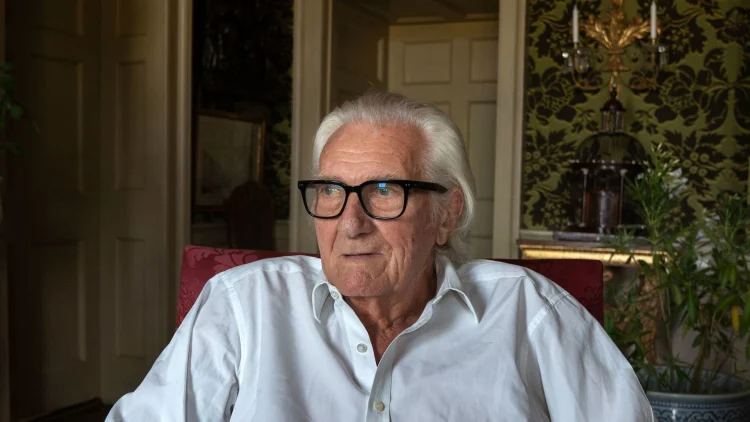

Lord Heseltine said Nigel Farage was ‘Donald Trump’s vicar in Britain’ (Photograph by Tom Pilston)

2 min read
Margaret Thatcher “would have hated” Nigel Farage and “would have had nothing to do with him” if she were alive today, her former cabinet colleague Lord Heseltine has claimed.
In an interview with The House magazine, the former minister in Thatcher’s Conservative government suggested that the late prime minister would have seen through the Reform UK leader’s “opportunism” and “prejudices”.
Farage, by contrast, said last year that there “isn’t any doubt” that Reform would have appealed to Thatcher. Following her death in 2013, he also declared that he was the only politician “keeping the flame of Thatcherism alive”.
The Reform leader, who was a Tory member in the 1980s while working as a commodities trader in the City, has said that Thatcher was a “great inspiration” to him.
But asked what opinion Thatcher might have had of Farage and his political project today, Heseltine told The House: “She’d have hated him.
“Nigel Farage will assimilate himself with anyone he thinks has got a resonance in public opinion. He is Donald Trump’s vicar in Britain…
“But the origins of ‘Nigel Trump’ are a guy with a beer tankard and a fag. Then the farmers get into trouble, and he turns up looking like a farmer – and this is all a communications process. Successful, but based on opportunism, based on a degree of prejudices which I find abhorrent. She would have had nothing to do with him.”
Speaking to The Spectator last year, Farage claimed that “it was made very clear” to him that Thatcher had voted for his previous political outfit, UKIP, in the 1999 European elections.
In a 2024 interview with The Telegraph, the Reform leader argued that both he and Thatcher were conviction politicians, praising her as “a fighter who stood up and fought for issues, not because focus groups told her she should, but because she believed it was the right direction to go in…
“So if there was a similarity, it’s being unafraid to fight for things that may not be trendy today but may well become so in the future.”
The House magazine’s full interview with Lord Heseltine will be published in print and online in June.
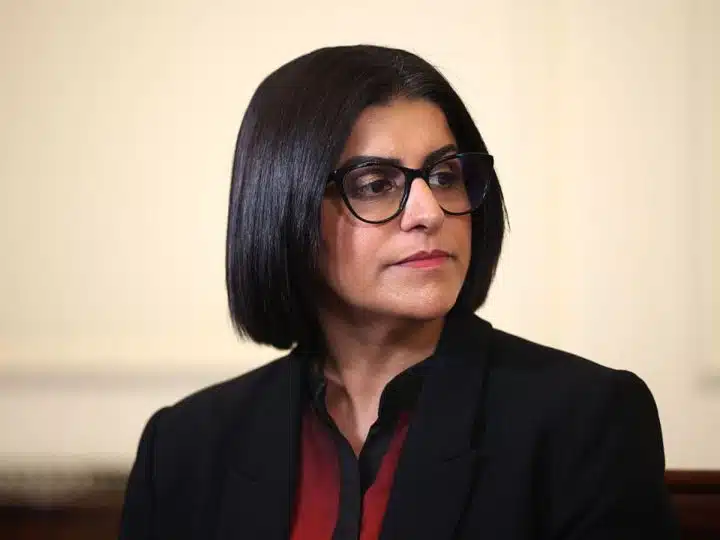

In a ruling handed down yesterday by the High Court, Home Secretary Shabana Mahmood’s cruel policy to force victims of torture to share rooms with strangers has been deemed unlawful.
Justifying this pretty damning ruling, the court judgement states that Mahmood’s:
failures amount to a serious breach of the Defendant’s public law duties, rendering the impugned policy changes unlawful.
These failures refer to the fact that Mahmood did not instruct any consultations before introducing such an impactful policy change and also gave little consideration for the impacts of this policy on victims of torture, trafficking and other serious violence.
Moreover, she didn’t even engage with “established evidence of clinical risk”, thus the court decided Mahmood has acted in breach of the Public Sector Equality Duty (PSED).
Finally, they also called out the Home Secretary failing to ‘properly inform herself’ of the subsequent impact of the Allocation of Asylum Accommodation policy on vulnerable survivors of torture, trafficking and serious violence, despite:
long standing, consistent evidence of the serious risks of harm faced by this cohort.
All in all, a pretty damning day for increasingly hostile Shabana Mahmood, but at least it’s a good day for justice in the UK.
UK Government acted unlawfully by forcing torture survivors to share rooms, the High Court rules
The judgment is a blow to Shabana Mahmood’s plans to send more asylum seekers to army barracks https://t.co/9vpqtRfTN2 — Socialist Voice (@SocialistVoice) May 29, 2026
Estimated 10k survivors of torture in shared accommodation, says charity
This ruling will undoubtedly have a stymieing impact on Mahmood’s plans to kowtow to far right influences. The government implemented this policy in an apparent attempt to win favour with right-wing tabloids and far-right voters by moving asylum seekers out of inadequate hotels and into disused army barracks — an even harsher and more hostile environment.
However, her plans to move vulnerable asylum seekers out of hotels entirely by the end of this parliament now lie in jeopardy — unless she works to find a solution which is actually legal and finds some semblance of compassion in her increasingly cold, cruel heart.
The charity Freedom From Torture (FTT) have provided estimates that potentially 10k asylum seekers housed in shared accommodation could be impacted by this ruling.
Furthermore, the associate director of advocacy for FTT, Natasha Tsangarides, has welcomed this “vital and resounding victory”, stating:
The judgment makes clear that the government acted unlawfully in changing its policy.
We have seen the consequences of those changes: survivors of torture have been placed in harm’s way.
The claimants in this case were FTT and the Helen Bamber Foundation (HBF), who both work with asylum seekers who have escaped physical and psychological abuse. Their argument detailed how, prior to the policy introduced in February 2024 under the last government, there had been a “protective presumption” that survivors would be safe from such cruelty.
Director at the HBF, Kamena Dorling, told the Guardian that the “terrible living conditions” in the UK asylum system has made helping survivors of torture and trafficking even harder, adding:
The decision to force more vulnerable people into large accommodation sites and shared hotel rooms was a political choice that ignored the evidence from those working with refugees every day.
Nevertheless, the Labour government have continued to force them to share rooms and did not consult either charity in its decision to continue with such an obviously harsh policy.
Shabana Mahmood — AI facial recognition now to commence
Mahmood doesn’t stop there with her cynical attempts to create a hostile atmosphere for asylum seekers. Awarding a £322k contract to a Harlow-based IT company Akhter Computers, Mahmood’s Home Office will now be using AI to determine the age of asylum seekers who say they are under 18.
Because unaccompanied children seeking asylum often receive different treatment when applying for safe haven — because most compassionate people would find it quite stomach-churning to turn vulnerable children away — but this now appears to be the next defenceless group facing political targeting.
A report last year found that staff in Dover carried out previous tests without adequate training, making it inevitable that officials might wrongly assess some children’s ages. Nevertheless, it is hard to understand how AI would be able to determine this more accurately.
Therefore, in practice, it’s likely to be yet another tool to make desperate people feel unwelcome, untrusted and unworthy to be in the UK.
Featured image via Dan Kitwood/Getty Images)
Politics
Epstein survivors fear reporting information about Andrew due to lack of faith in British police and media
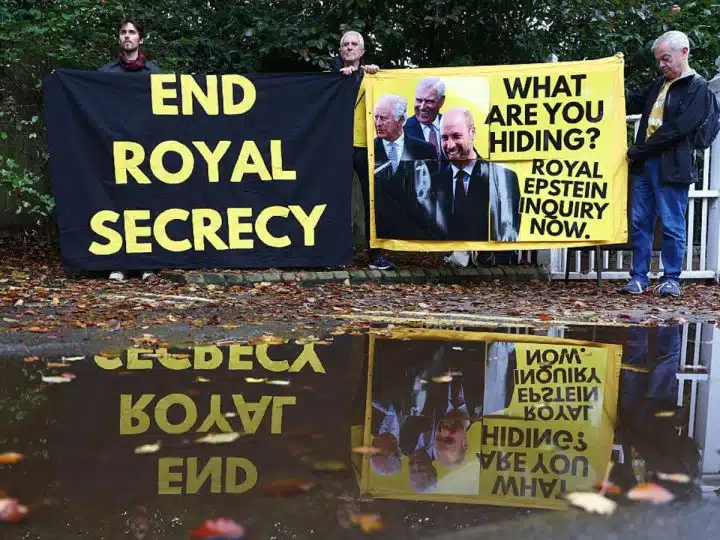

Citing the lack of action taken by police authorities when Epstein was alive and the harassment seen in the British press, an American lawyer representing “multiple clients” has said these Epstein survivors will not speak to the police in the UK.
Women who potentially have important information regarding disgraced paedo-prince Andrew Mountbatten Windsor appear to feel unsafe at the prospect of coming forward. This relatable fear stems from a lack of faith in how the British police and the UK mainstream media would handle the case.
Moreover, Brad Edwards highlighted the impact of subsequent press intrusion seen against a woman he represents — in which UK journalists chose to investigate the woman and her wider family, saying:
Other victims took notice.
Consequently, the multiple clients prepared to speak to that allegation have effectively been intimidated into silence.
This underscores further how the mainstream press and the British state continue to protect powerful men, whilst perpetuating the culture of silence around sexual abuse and Epstein survivors generally.
Onus on Epstein victims to expose themselves rather than on authorities to investigate
It is worth noting that Brad Edwards has long challenged this system of power and influence which prefers to ignore victims.
Spending over a decade fighting for justice and representing more than 30 Epstein survivors, Edwards said in 2020:
The government enabled this. They knew what he was doing and they let it continue.
Brad Edwards represented more than 30 Epstein survivors.
"The government enabled this. They knew what he was doing and they let it continue."
Edwards spent 11 years in court fighting for victims the system chose to ignore. pic.twitter.com/PFyfZbddVF
— Epstein File Search (@epsteinsearchin) April 8, 2026
It appears, due to the intimidating impact of an untrustworthy police force and our cruel, sensationalist media, that the state not only enabled the abuse in the first place — but continues to shield the very perpetrators by putting the responsibility on victims to give up their own right to privacy.
Frankly, these women have already had their right to privacy stolen from them by Epstein and his posh-paedo, pervy pals — yet the press and state seem more interested in upholding Andrew’s privacy instead.
As Edwards has underscored, he represents a woman who alleges that Epstein trafficked her in 2010 to the Royal Lodge — the then-prince Andrew’s official residence — for sex with him. However, she has not yet formally reported the allegation to the police, and she may never do so because an intimidating atmosphere leaves survivors vulnerable to further unwarranted abuse.
Thames Valley Police issued a statement last week, updating on the allegations raised originally in February:
Should she wish to report this to police it will be taken seriously and handled with care, sensitivity and respect for her privacy.
Since then, the police have also updated that they have contacted Edwards, confirmed by the lawyer to the BBC, but that:
her lawyer had said she would not communicate with police over fears regarding her privacy.
Consequently, this once again draws an even greater issue to the forefront of public debate — the way our system treats victims of abuse.
Epstein files — When will protecting women matter more than powerful men’s reputations?
Rape cases in the UK see pretty abysmal statistics, in which only a small minority make it to trial and a subsequent conviction. Instead, victims are made to relive their deep trauma, exposed and vulnerable, and more effort is made to understand why the offender did what he did rather than remotely centre the lifelong impact on victims.
However, rapes themselves have increased by 511% in just two decades — and that’s with a significant number of silent cases where 5 in 6 of women and 4 in 5 of men don’t report. This just reinforces the reality that people in the UK doubt that the system will give them the dignity and safety they are long overdue.
For instance, victims of rape and sexual abuse often suffer psychological abuse from the perpetrators. Thus, they face an uphill struggle to learn that there is nothing any woman — or girl — can do which justifies sexual abuse or violent behaviour against them.
They didn’t ‘bring it on themselves’ like our patriarchal system wishes to reframe it as — but our criminal justice system instead unwinds that healing process and drags victims back to square one.
Another US lawyer representing survivors, Sigrid McCawley, who also represented the former prince’s most renowned accuser Virginia Guiffre, has told BBC News that the Metropolitan Police have made no efforts to contact her.
McCawley has long fought for justice for survivors of Jeffrey Epstein and has played a prominent role in campaigning for the release of the Epstein Files:
— Harry Sisson (@harryjsisson) August 1, 2025
 WOW: Sigrid McCawley, who represented a number of Epstein victims, just revealed that Trump LIKELY saw Epstein with young girls and knew what he was doing “Anybody who was operating in that sphere, who was socializing with him, would have seen him with young individuals.” pic.twitter.com/urgixASAW9
Right to anonymity IF you go public — a sick contradiction
Since then, a spokesperson for the National Police Chiefs’ Council said:
As part of the UK policing response, efforts have been made to contact victim-survivors who have already chosen to share their experiences publicly.
In some cases, this has involved engagement with legal representatives; however, we recognise that we have not yet been able to reach everyone and our efforts continue.
We understand that coming forward can be incredibly difficult, and we want anyone affected to know they can do so in their own time, when they feel ready. Our door remains open.
Should any victim-survivors choose to contact UK policing, they will be treated with care, compassion and respect, with their wellbeing, privacy and right to anonymity at [the] centre of our response.
Needless to say, the NPCC’s comment regarding ‘right to anonymity’ is a bit redundant if they are only looking to victims who have gone public. It is entirely foreseeable, and understandable even, that victims of abuse will shy from publicly naming their abuse and its perpetrators due to the intimidating impact of our media and its trolls.
After all, survivors know that putting themselves through that process would likely compound their trauma, while offering only the thinnest possibility of finding justice in the UK.
This sinister status quo must end — women and girls deserve better
It is clear that survivors of abuse in the UK often feel they must protect themselves from the very institutions and people who are supposed to support them.
Media coverage of that reluctance only reinforces the widespread belief that reporting sexual abuse or rape in the UK is pointless, because the system so often places survivors under scrutiny while offenders escape meaningful accountability.
Once again, powerful institutions uphold the status quo by prioritising the reputation of influential men — and, in this case, the elite and privileged monarchy they belong to — over women’s pain and suffering.
Featured image via Peter Nicholls/Getty Images
Champions League final: Arrests in Budapest and investigation into fan brawl

I Wouldn't Want To Retire Without These 3 Investments

Spot Bitcoin ETFs See Record 10-Day Outflow Streak, Analyst Calls It ‘Contrarian Indicator’


-

 Business6 days ago
NYT Strands Answers May 24 2026 Revealed for Puzzle No. 812 Theme Summer Essentials
-

 NewsBeat3 days ago
Israel says it has killed new Hamas military leader in Gaza City airstrikes
-

 Politics5 days ago
Bridgerton Season 5: Cast, Release Date And Everything We Know So Far
-

 Business3 days ago
Selena Gomez Reportedly Upset Over Benny Blanco’s Comments on Her ‘Terrible’ Diet
-
 Crypto World4 days ago
Micron Crosses $1 Trillion Market Cap as AI Demand Reshapes Memory Sector
-

 Tech5 days ago
Microsoft’s quiet Claude Code retreat and the real cost of enterprise AI
-

 Business5 days ago
BTS Sells Out Four Las Vegas Shows at Allegiant Stadium for ARIRANG World Tour
-
 Tech4 days ago
China assigns ID codes to 28,000+ humanoid robots
-

 News Videos3 days ago
XRP *JUST* SUCCEEDED!!!! CLARITY ACT EXPOSED!!! (SHE EXPOSED IT)
-
Tech3 days ago
The Samsung pay deal is the moment Korean unions changed register
-

 Tech1 day ago
Waymo dominates autonomous vehicle registrations as Tesla trails behind
-

 Tech5 days ago
Westone Audio and Etymotic Acquired by Fidelity Collective in Major IEM Market Move
-

 Tech3 days ago
Millions of AI agents imperiled by critical vulnerability in open source package
-
Crypto World6 days ago
Brian Armstrong Outlines Crypto Vision for the Future Financial System
-
 Entertainment4 days ago
‘Breaking Bad’ Star’s Easy-to-Binge 6-Part Crime Series Spin-Off Is Finally Heading to Free Streaming
-
Crypto World3 days ago
SpaceX’s $2 Trillion IPO: Why Tech Giants Nvidia (NVDA), Apple (AAPL), and Microsoft (MSFT) May Face Pressure
-
 Crypto World5 days ago
Nvidia (NVDA) CEO Calls on Super Micro to Strengthen Export Controls Amid Smuggling Probe
-

 Tech3 days ago
NASA taps Blue Origin to deliver lunar rovers for Moon Base initiative
-
 NewsBeat5 days ago
Hottest May day ever as London hits 34.8C in 2C leap from previous records
-
 Entertainment4 days ago
Taylor Swift Fans Label Travis Kelce’s Beer-Chugging A ‘Red Flag
You must be logged in to post a comment Login