


The East India Company took its dividends in cotton, opium and tea. This one takes them, principally, in tokens generated, prompts served, models fine-tuned on someone else’s data. Behind the inference sits the older ledger – copper and cobalt out of Congo, genomic sequences signed away in Zambian clinics in exchange for tuberculosis drugs that may or may not arrive, aquifers drained to cool data centres.
From the Beverly Hilton, none of this is visible. From East India House on London’s Leadenhall Street, in 1770, the Bengal famine was not visible either. Blame it on the architecture.
Politics
Bridgerton Season 5: Cast, Release Date And Everything We Know So Far


Now that Luke Thompson and Yerin Ha’s characters have found their happily ever, we’re ready for some more Bridgerton.
Back in March, Netflix began teasing more information about what fans should expect from the hit period drama’s next chapter, with its fifth iteration set to mark a turning point for Bridgerton.
If you’re as excited as us to return to the Ton, here’s everything we can tell you so far about the upcoming season 5…
What will Bridgerton season 5 be about?
After months of speculation, Netflix finally announced that the first series will revolve around Hannah Dodd’s Francesca and Masali Baduza’s Michaela.
The official synopsis for season five reads: “The fifth season of Bridgerton spotlights introverted middle daughter Francesca. Two years after losing her beloved husband John, Fran decides to re-enter the marriage mart for practical reasons.
“But when John’s cousin Michaela returns to London to tend to the Kilmartin estate, Fran’s complicated feelings will have her questioning whether to stick to her pragmatic intentions or pursue her inner passions.”
The last time viewers saw Francesca and Michaela, they were still reeling from the sudden death of Lord John Stirling. This loss leaves Francesca widowed, and Michaela without her closest confidant, forcing the pair to grow closer in their time of grief.

“They grieve very differently,” Hannah previously told Netflix. “I don’t think grieving is something that you get over. John’s going to be with Fran, and the impact of John will be with Fran forever.”
Season five will be inspired by Julia Quinn’s novel When He Was Wicked, and showrunner Jess Brownell says fans should expect Bridgerton’s signature mix of romance, laughs and pathos as well as “big-time yearning”.
“It’s going to be a season about queer joy. It is not going to be a season about queer trauma. … We’re having so much fun!” she said.
Meanwhile, speaking to Tudum, Masali teased that the show would have a darker side, with the new episodes exploring her character’s struggle to show her vulnerability.
“She’s used to having all these walls up. I’m excited to tear down those walls and have her let Francesca in,” the actor explained.
“I’m excited for people to see her wanted so deeply and so badly…I’m excited for people to see Michaela yearn for Francesca.”
How will Bridgerton season 5 differ from the original novels?

Benedict Bridgerton has previously been shown having romantic encounters with men and women, but Bridgerton’s fifth season will be the first to have a queer love story as its central storyline.
This does mark a major departure from Julia Quinn’s Bridgerton novels, in which Francesca’s love interest was a male character named Michael, rather than a woman called Michaela.
Explaining this decision, Jess Brownell told Out Magazine: “I feel like Bridgerton made its name in many ways on being an inclusive universe, and for queer stories to be left out of that would not feel right.”
Speaking to Netflix, she described the choice as “groundbreaking”, enthusing: “To make an entire Bridgerton season about a sapphic relationship feels huge.”
Hannah and Masali are just as excited to lead this historical season of the streaming romance, with the latter claiming that queer love stories “have traditionally been excluded from things like period dramas – and queer people did exist, have always existed, and will always exist”.
Masali agreed: “It’s been really special to have Jess guide us on this journey, because she’s very excited about this story. What we really want to achieve is giving a realistic view of queer love onscreen and [giving them] a happily ever after.”

Who else will be in the cast of Bridgerton season 5?
As mentioned, Hannah Dodd and Masali Baduza will take centre stage as Francesca and Michaela.
Joining them in the upcoming series will be The Sandman’s Tega Alexander as Christopher, the Casanova son of Lord Anderson, Carnival Row actor Jacqueline Boastwain as Michaela’s mother, Helen, and Mobland’s Gemma Knight as Lady Elizabeth Ashworth, an old friend of Michaela’s, who serves as her confidante and London guide.
Netflix has not yet confirmed the full season five cast, although most of your favourite actors are expected to return, including Ruth Gemmell as Violet Bridgerton, Claudia Jessie as Eloise Bridgerton, Golda Rosheuvel’s Queen Charlotte, Adjoa Andoh as Lady Danbury, Polly Walker as Portia Featherington, Lorraine Ashbourne’s Mrs. Varley and Julie Andrews as the voice of Lady Whistledown.
Nicola Coughlan has confirmed her return, too, but explained it will be in a more limited capacity.
Speaking to the Dish from Waitrose podcast, the former Derry Girls star said: “Season five has started filming already, so I won’t be in it very much. But I’m always happy to come back.”
There’s also been no official word on whether Simone Ashley, Luke Thompson, Phoebe Dynevor or Jonathan Bailey will return for season five.
Is there a release date for Bridgerton season 5?
Netflix confirmed that production was underway in late March, and announced more recently that the series will premiere on the streaming service in 2027.
This marks a shorter hiatus than fans of the period romance are used to, with Bridgerton traditionally taking a break of two years between seasons.
Jess previously admitted that the production team was “trying to speed up” their usual process, telling The Hollywood Reporter last year: “We are working to try and put the seasons out more quickly, but they do take eight months to film and then they have to be edited, and then they have to be dubbed into every language.
“And the writing takes a very long time as well, so we’re kind of on a two-year pace.”
Is there more Bridgerton to come after season 5?
Yes! Netflix announced seasons five and six of Bridgerton earlier this year.
On the season four red carpet, Jess told Deadline that there are two sisters who will get their own love stories, hinting that Eloise will play the lead in season six.

Executive producer Shonda Rhimes has also made it clear she’s aiming for Bridgerton to run for a total of eight seasons, with one devoted to each of the show’s central siblings.
Until then, seasons one to four of Bridgerton – as well as spin-off series Queen Charlotte – are now streaming on Netflix.
Continue Reading
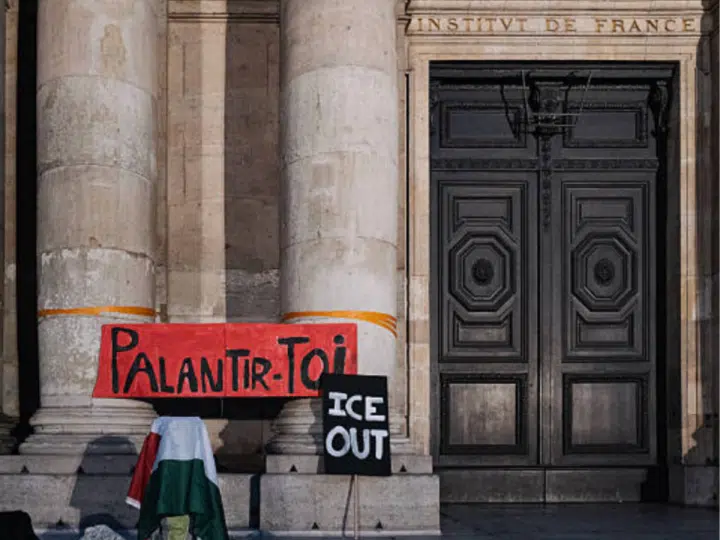
France’s internal security agency has ended its contract with AI war firm Palantir. Prime minister Sebastian Lecornu said French rival firm ChapVision would work with the General Directorate for Internal Security (DGSI) moving forward.
Palantir remains deeply embedded in UK state infrastructure despite the Commons technology select committee calling for the government to divest on 4 June.
Politico reported on 16 June:
Palantir has faced criticism in Europe for its close ties to the U.S. administration, as the bloc seeks to wean off U.S. technology for everything from sensitive cloud to AI, social media and public software services.
ChapsVision was already involved in a partnership launched in 2022 to support security services including intelligence, customs and law enforcement.
Politico also reported that Germany had chosen ChapsVision over Palantir.
However, Palantir said the DGSI deal “remains fully in force” and:
continues under the existing contractual commitments and in full compliance with the highest standards of security, data protection, regulatory compliance and transparency.
Palantir: UK must divest too
In their 4 June report, the UK Science, Innovation and Technology Committee urged the government to:
exercise the 2027 break clause in the NHS Federated Data Platform Contract with Palantir and either develop an in-house replacement or seek an alternative UK provider.
The UK military, police, NHS and, allegedly, the Telegraph newspaper have started to use Palantir technology. The firm is also involved in Israel’s genocide in Gaza, and maintains a permanent desk in southern Israel. Trump’s paramilitary immigration operations also use the firm’s gear.
The Canary reported on 2 June that UK officials are even using Palantir software to decide what Palantir technology to buy to fight future wars.
And as the Canary reported on 20 April, Palantir’s ‘manifesto’ is a collection of far-right tropes more suited to a far-right manosphere podcast than a multinational arms firm.
Green Party peer Natalie Bennett posted on X that the UK should follow the French example:
#PalantirOut – if the French can do it surely we can toohttps://t.co/2iY8fDjdP7
— Natalie Bennett (@natalieben) June 16, 2026
Entrepreneur Arnaud Bertrand warned:
ALL countries currently using Palantir should do the same: you are, quite simply, not a sovereign country if you let your national data infrastructure depend on the goodwill of a company with such a clear political agenda.
At this stage this isn’t even a sovereignty question, it’s a sanity test.
Wow, this is a huge and – rare for France these days – a genuinely good move: France's intelligence services (DGSI) are terminating their contract with Palantir in favor of a domestic alternative (source: https://t.co/TEoJxh1Z3h).
I posted about this multiple times. See post… https://t.co/J7vTbPQc8G pic.twitter.com/aAmMmHXphn
— Arnaud Bertrand (@RnaudBertrand) June 16, 2026
The current UK government has cosied up with Palantir despite numerous criticisms. France and Germany have now divested. Keir Starmer must be pressured to follow suit. A genocide-linked death firm should have no foothold whatsoever in the UK. And these European examples demonstrate there is no need to give it one.
Featured image via the Canary
By Joe Glenton
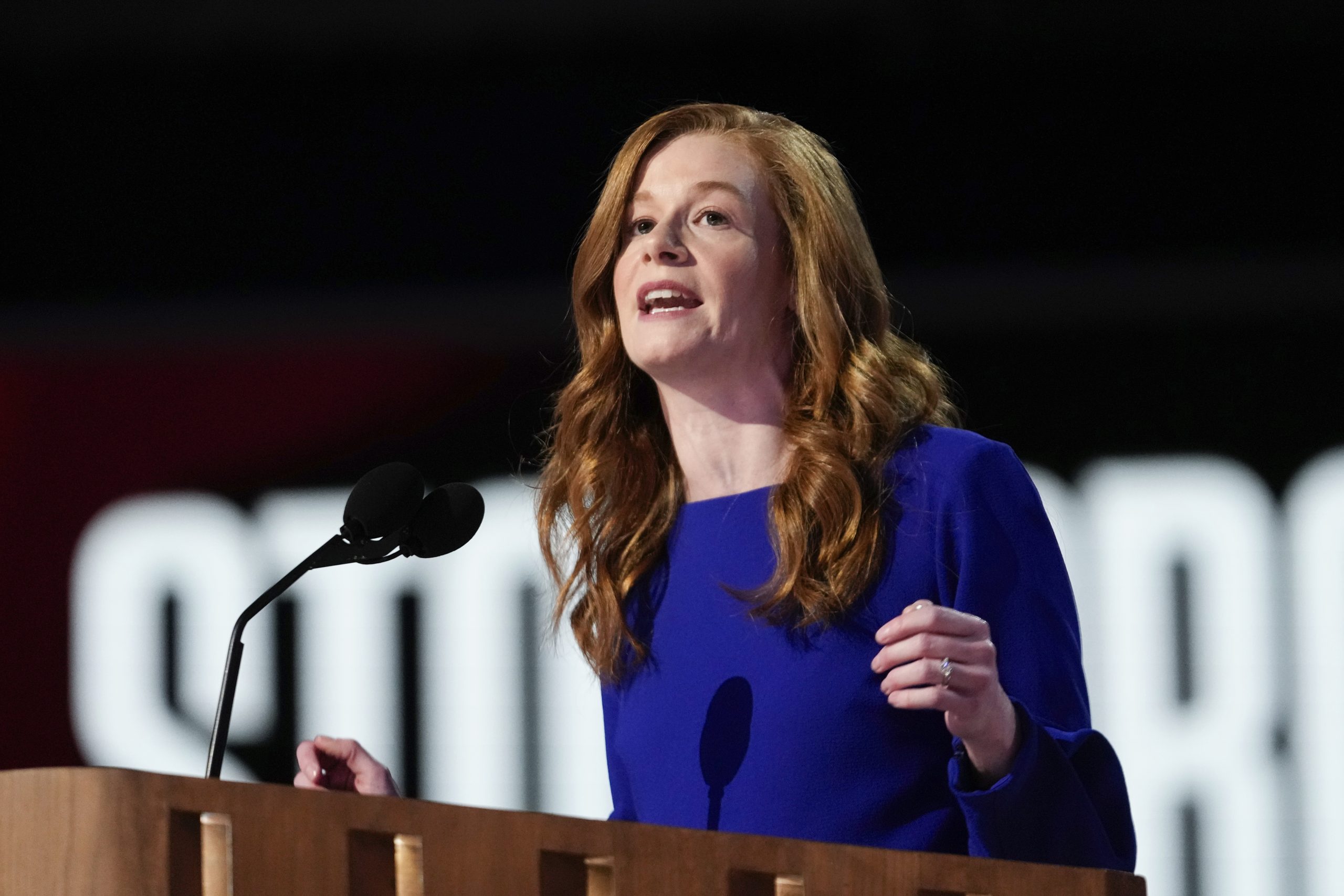

A prominent Michigan pollster is accusing state Sen. Mallory McMorrow’s Senate campaign of pressuring a state capitol news outlet into killing a survey of the heated Democratic primary.
The pollster, Steve Mitchell, told POLITICO the survey was conducted on behalf of Michigan Information & Research Service, an independent news outlet covering the state capitol that his firm regularly works with. But MIRS ultimately chose not to publish the survey after pushback from the McMorrow campaign.
The poll found McMorrow at just 6 percent ahead of the state’s pivotal Aug. 4 contest, far behind former public health official Abdul El-Sayed at 42 percent and Rep. Haley Stevens at 33 percent.
“The poll, in the eyes of the McMorrow campaign, understated their support,” Mitchell, whose firm Mitchell Research & Communications conducted and paid for the poll, told POLITICO. “And they put intense pressure on MIRS, and therefore MIRS decided that they weren’t going to run the survey. That’s their decision, and I support their decision.”
McMorrow has trailed the other two candidates in a number of recent public surveys, but 6 percent would mark a new low — a sign her campaign for the critical Michigan Senate seat may be mired in third place. McMorrow’s campaign told POLITICO the polling methodology was faulty and that its resulting memo was riddled with errors, including spelling her name wrong.
Kyle Melinn, a news editor with MIRS, said he killed the poll after speaking with the McMorrow campaign and other pollsters.
“I told Steve that the campaign did raise issues with the poll, and that they were pressuring me to not run the poll,” Melinn said in an interview. He added that after registering the McMorrow campaign’s concerns, he solicited the advice of other pollsters, and “didn’t run it because I didn’t feel comfortable with it.” The other unidentified pollsters shared his issues with the poll, according to Melinn.
McMorrow campaign spokesperson Jackson Boaz said in a statement that “Voicing concerns about a poll isn’t a pressure campaign. They chose not to publish a survey that is deeply flawed.” Asked whether the campaign had asked MIRS not to run the poll, Boaz said, “MIRS chose not to run the poll because they agreed the poll did not meet their standards.”
Boaz said the McMorrow campaign reached out to MIRS after “we noticed odd things about the data,” including that 0 percent of Black voters were undecided in the race; 0 or 1 percent of voters in Detroit and its metro area were undecided while other parts of the state had undecided voters at 25 percent, 48 percent, and even 54 percent; and that McMorrow was at just 5 percent support in her home base of Oakland County.
Their suspicion — which they said MIRS confirmed — was that the poll allowed anyone to take it through an open link, rather than having access controlled to ensure a random and representative sample of the state.
The poll was conducted through a methodology known as text-to-web, in which random voters are selected to receive a text message link to a survey to fill out. That allows pollsters to ensure they are reaching an appropriately wide-ranging group of voters. But the McMorrow campaign said all respondents received the same open-access link, which would allow anyone with the link to take the poll — potentially multiple times.
“The outlet that sponsored this poll declined to publish it because it didn’t meet their standards. It was conducted through an open SurveyMonkey link sent over text, meaning anyone who received this poll could vote multiple times or send the link to friends and supporters to impact the results,” Boaz said in a statement. “This is fundamental polling malpractice. We urge either of our opponents, or any reputable pollster, to stand by this shoddy methodology.”
In an interview, Mitchell admitted he got some of the polling memo wrong, saying for example that he meant to write El-Sayed supported Medicare for All, not “Social Security for All.” But he said he stood by the poll and its methodology.
“I have always had 100 percent confidence in all the polling I do,” Mitchell said. “I believe that we’ve been very strenuous in the methodology that we use. We’re very careful about it. We weighted it well, and more importantly, we have a track record that shows we are a strong and good pollster.”
“A poll is a poll,” Mitchell said when asked about the open link question, sharing a poll with POLITICO from GOP gubernatorial candidate John James that he said used a similar approach.
The controversy over the spiked poll underscores the importance of the Michigan Senate race. Democrats view defending the open seat as crucial to reclaiming the Senate majority, and the party establishment has mobilized hard against Bernie Sanders-backed El-Sayed, who they argue could pave the way to Republican Mike Rogers flipping the seat in November.
But recent pollssuggest McMorrow is falling behind El-Sayed, who is experiencing a surge in support, and Stevens, who is backed by Senate Minority Leader Chuck Schumer.
In the memo about the contested poll, Mitchell wrote there has been a “huge erosion in support for Mallory McMorrow.”
“One of the reasons for her seeming collapse is the fact El-Sayed had received a large amount of unpaid media because of the endorsements by Senator Bernie Sanders (I-Vermont) and Hasan Piker the anti-Semitic podcaster while Haley Stevens had an outside organization spend more than $6 million on her candidacy,” Mitchell wrote. However, he added: “Our poll was conducted June 11-13 which coincided with an ad buy of at least $5 million on behalf of McMorrow that started just the day before we began our polling. Therefore, McMorrow’s ads did not have enough time to impact our results.”
Politics
Albania ‘Flamingo Revolution’ protests against Trump-Kushner tourism developments gain pace
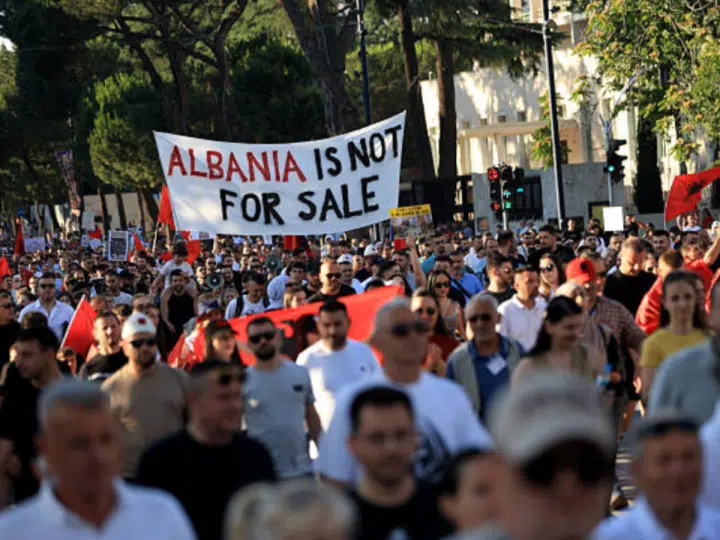
Protests against a luxury resort being built on vital wetlands in Albania are now well into their third week – and they’ve attracted the ire of Albanian PM Edi Rama. He denounced the opponents of the Trump-family-linked project as exhibiting a “fascist mentality”, and denied the building works’ massive environmental impacts.
On 3 June, the Canary reported on the anger against building works in the Vjosa-Narta protected landscape and the island of Sazan. At the time, the protests had lasted for three days. Now, however, the so-called ‘Flamingo Revolution’ has built momentum into a wider critique of Rama’s leadership.
Saturday 13 June alone saw between 100,000 and 200,000 protesters take to Albania’s streets. Politico described it as the largest event of the current spate of demonstrations thus far. For context, that’s just below a twelfth of the county’s 2.75 million-strong population.
Albania rages against neocolonial intrusion
The Vjosa-Narta protected landscape is the last remaining free-flowing river delta in the Mediterranean. It plays host to over 200 migratory bird species and 70 endangered species. These include monk seals, sea turtles, and the flamingos from which the protests take their name.
Now, however, a construction undertaking linked to Ivanka Trump and her husband Jared Kushner threatens that wetland. The $1.6bn luxury tourism project involves bulldozing the fragile ecosystem to make way for as many as 10,000 hotel rooms and villas. Forbes also explained that the hotels are just one piece of the puzzle:
Kushner’s planned developments in Albania are estimated at more than $5 billion combined, and the resorts mark only one part of Kushner’s broader effort to launch international development projects during his father-in-law President Donald Trump’s second term. (Previous reports link Kushner’s planned Albania resort with his private equity fund Affinity Partners, but a representative for the project told Forbes that Affinity is not involved.)
PM Edi Rama has strenuously denied that the development is destroying the fragile ecosystem. In doing so, he resorted to distinctly Trumpian claims of ‘fake news’, calling them:
one of the greatest falsehoods inflated beyond all imagination.
However, eyewitness accounts have confirmed otherwise. Ariel Brunner, the Europe and Central Asia Director of BirdLife International, wrote of attending an environmental preservation conference nearby:
We took our colleagues to the Vjosa delta, the last free-flowing river delta in the Mediterranean, and a refuge for more than 200 bird species, including flamingos and Dalmatian pelicans, nesting loggerhead sea turtles and the critically endangered Mediterranean monk seal. We thought we had come to inspect an airport built in open defiance of the law in the middle of the marshes.
To our horror, we walked straight into a vast new construction site in the very heart of the protected area. We saw excavators tearing up the beach. Lorries dumping gravel and cutting roads through ancient dunes and pine forest. A drill at work on the hillside. No licences posted, no companies named, no environmental permit of any kind.
‘Vile spectacle of gossip’
Albania’s government granted preliminary approval to the Trump-Kushner project back in December 2024. That date rings alarm bells – it was just one month after Donald Trump was elected for his second term. As such, the development attracted accusations of an attempt by Rama to strengthen ties with the Republican regime.
Whilst Rama has denied allegations of corruption and environmental vandalism since they first emerged, his recent rhetoric has taken on a different tone. Over the weekend of 13 June, the Albanian PM began to accuse to growing protest movement of exhibiting a “fascist mentality”.
On his podcast (translated by Euronews), Rama paid lip service to the “many” protesters “with good intentions”. However, he likened others to Nazi Germany, arguing that they exhibited a thought process:
that says: ‘Albania belongs to Albanians,’ meaning that everyone else is not welcome.
Rama also denied the demonstrators’ accusations that he was putting their country up for sale. He highlighted that the developments were taking place solely on government-owned or private lands. As such, the government will maintain ownership of Sazan Island and receive shares in the profits.
Likewise, the PM also turned his ire on “vile spectacle of gossip” in news reporting on the environmental destruction, writing that:
ANYONE WHO TRIES TO DRAG ALBANIA BACK DOWN WILL NEVER SUCCEED AGAIN.
‘It’s going to be a beautiful project’
However, it appears that it’s Rama’s own government that is in danger of ‘dragging Albania down’. Whilst the southeastern European country was well on its way to joining the EU in 2030, the Trump-Kushner project has thrown that hope into jeopardy.
Back in 2024, Albania changed its laws in order to make tourism developments easier on ecologically-protected lands. This opened the door for the current construction in the Vjosa-Narta.
On 9 June, European Commission spokesperson Guillaume Mercier warned that these changes – and the ensuing destruction of the Vjosa-Narta – could breach the environmental standards expected of any country joining the EU.
However, in spite of that warning and the ongoing protests, Rama remains hellbent on ploughing forwards. He told Reuters that:
It’s going to be a beautiful project and we’re going to do it and we’re going to be proud to contribute to Europe.
The Albanian prime minister claimed that he isn’t selling his country out, but that’s exactly what he’s done and more. For the sake of $5bn, he’s endangered a unique and precious ecosystem, public confidence in his government, and Albania’s bid to join the EU itself – and further enriched the Trump family to boot.
Featured image via the Canary
By Grace
Politics
Burnham’s pathetic ‘both sides’ attitude to Gaza matches his equivocation on everything else

Tomorrow, 18 June, the Makerfield by-election could open a path for Andy Burnham — current mayor of Greater Manchester — to make a bid for the leadership of the Labour Party.
However, given that Labour has lost most of its voters to left-wing, pro-Palestinian parties, it’s worth taking another look at Burnham’s stance on Gaza.
(Spoiler alert: it’s not great)
Labour losing votes on Palestine
Labour’s strategy whilst in government has lent heavily on tacking to the right in a vain attempt to appeal to Reform voters. However, the party actually lost four times as many voters to the Greens at the local elections. In fact, just 46% of Labour’s previous backers remained loyal at the ballot box.
Recent polling from Opinium revealed that a great deal of that shift was down to Labour’s political and material support for Israel, fuelling the genocide in Gaza.
Of the former Labour voters who switched to centrist or left-wing parties, 53% cited the PLP’s stance on Palestine as a factor. Likewise, a massive 74% said that their:
opinion of Labour would improve if the next leader were to adopt a strong position on Palestine, such as imposing sanctions on Israel.
As such, Burnham could potentially win back a not-insignificant voting bloc if he were to steer the Labour Party toward an anti-genocide stance. This would also have the added bonus of bringing the UK into compliance with its duty to prevent genocide, per the 1948 Genocide Convention.
Burnham — ‘Not a gift but a right’
Of course, it would be remiss of us not to mention the context of Burnham’s abysmal record in West Asia. Back in 2003, as Labour MP for Leigh, he voted for Blair’s illegal invasion of Iraq — in spite of his criticisms of the ‘War on Terror’. In the aftermath, he also voted consistently against launching investigations into the Iraq war.
Regarding Palestine, Burnham visited the occupied West Bank back in 2012, in the company of Labour Friends of Palestine and the Middle East. At the time, he called Palestinian statehood:
not a gift to be given but a right to be recognised.
In 2015, Burnham voiced his support for a two-state solution to the Israel-Palestine conflict. To this end, he also reiterated the call for recognition of the Palestinian state, telling the Palestine Solidarity Campaign that:
the appalling loss of life that occurred in Gaza last summer – with 2,131 Palestinians killed, the vast majority of them civilians, and seven Israeli civilians killed by rocket attacks from Gaza, makes the task of achieving a lasting and just peace all the more urgent.
Labour is clear that only a negotiated peace deal will bring the justice and security both sides deserve. That is why the international community must now take concrete steps to strengthen moderate Palestinian opinion. We are clear that Palestinian recognition at the UN would be such a step.
Gee, do we think maybe the lack of ‘moderate’ Palestinian opinion might be related to the 2,000+ mostly-civilian deaths?
Burnham: Friend of Israel
However, Burnham has also been a member of the Labour Friends of Israel since 2015, and called boycott campaigns against the occupying state “spiteful”. Al Jazeera also reported that Israel was at the top of Burnham’s list to visit, had he won his 2015 leadership bid. He described Israel as a:
democracy that has a long history of protecting minorities and promoting civil rights.
When Israel redoubled its war on Palestine in 2023, Burnham — alongside Sadiq Khan and Anas Sarwar — was one of the earlier senior Labour figures to call for a ceasefire “from all sides” (deeply equivocal language again there).
However, he also supported Israel’s ‘right’ to carry out “targeted action within international law”. This ‘targeted action’ was, of course, very clearly far from the actual genocidal actions of the occupying forces.
In July 2025, he issued a plea for Mancunians to donate to UKMed, a charity supporting medical access in Gaza. In a video address, he described the suffering of Palestinians as “beyond words”, adding:
We stand with people in times of need, it’s who we are.
And the genocide?
However, standing with the Palestinians apparently doesn’t extend to recognising the war crimes being carried out against them. In a 4 June Guardian interview, Burnham specifically declined to describe Israel’s actions as genocidal:
I can’t judge things of that enormity from where I am as mayor of Greater Manchester. But I do have concerns about the disproportionate nature of what has happened in terms of the destruction, and there has to be a full process of investigation and accountability.
The UN Independent International Commission of Inquiry on the Occupied Palestinian Territory had issued a report stating that Israel was committing genocide 9 months prior to Burnham’s statement.
In May 2026, Your Party’s Jeremy Corbyn wrote to Burnham, urging him to state publicly that he would back an inquiry. The Manchester mayor did not respond. Corbyn also later launched a petition to pressure Burnham into making a statement to that same effect.
Likewise, when the Palestine Solidarity Campaign asked the Makerfield candidates what they would do to “uphold the rights of Palestinian people”, Burnham stayed silent. Meanwhile, his Green Party counterpart, Sarah Wakefield, was quick to respond:
I unequivocally accept the findings of the UN Independent Commission of Inquiry and numerous other expert bodies that Israel has committed genocide in Gaza. I additionally accept the 2024 ICJ ruling that Israel is guilty of the crime of apartheid against Palestinians.
I fully support a total ban on trade with Israel’s illegal settlements and all other trade that aids or assists Israel’s unlawful presence in the occupied Palestinian territory. I also support comprehensive sanctions on Israel, including a full arms embargo. Without doubt, I support reversing the authoritarian use of public order and anti-terror legislation to suppress protest in support of Palestinian rights.
‘Both sides’ is the wrong side
As the Canary has repeatedly reported, Burnham has consistently failed to voice a credible plan or any real opinions in his Makerfield candidacy. Instead, he’s echoed a distinctly centrist, Starmerite call for non-specific “change”.
However, as we’ve seen quite clearly through Burnham’s pitiful equivocation on Palestine, paying lip-service to both sides too often boils down to tacit support for the wrong side.
If the Labour hopeful cannot learn that lesson, he’ll follow his predecessor into meaningless oblivion — and the UK’s complicity in Israel’s genocide will continue unabated.
Featured image via the Canary
By Grace
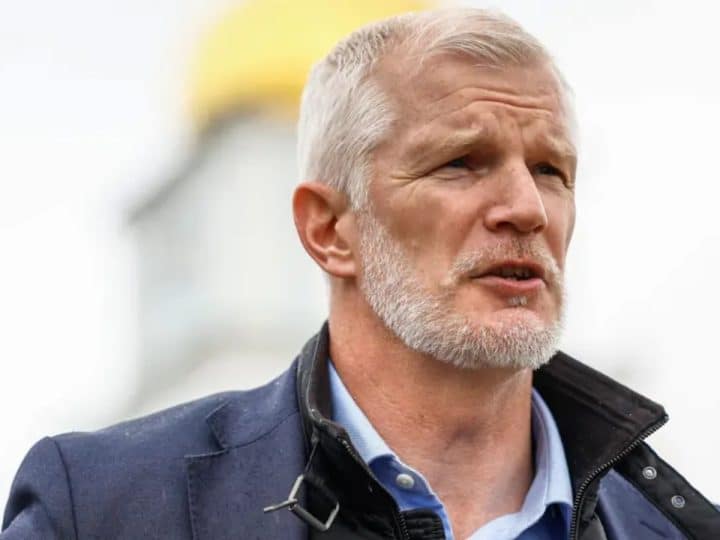
Ex-defence minister Al Carns has condemned the waste and inefficiency of the British war machine. The former commando wants more to be spent on war. He’s wrong, but his latest interview does expose certain grim truths about the UK war machine.
Carns resigned his cabinet post as a junior defence minister on 11 June, citing Starmer’s failings on the so-called Defence Investment Plan (DIP):
We owe those who serve the UK the kit to do the job and the loyalty to stand by them when it's done. We are failing on both.
I’ve spent my whole time in government making that case. Number 10 will not listen, so I am resigning as Minister for the Armed Forces. Letter to the PM… pic.twitter.com/HDCIOcVsA5
— Al Carns (@AlistairCarns) June 11, 2026
Al Carns resigned hours after his boss defence secretary John Healey threw in the towel. Both men were pro-war Starmer loyalists from the right-wing of the Labour Party.
Like many such people, Carns likes to externalise the UK’s problems onto, for example, Russia:
Moscow is probably rubbing its belly. I think it looks at the social division that we’re having in the UK and the amplification through social media as success for its propaganda campaign.
Carns, who has been touted to replace Starmer, is a militarist who wants more money for war. But hidden in his latest Guardian interview are some important truths about the racket we know as the military-industrial complex.
Carns told the Guardian how defence projects are deeply inefficient:
It is unbelievable. You turn a stone over and get another shock – how has that been allowed to go on?
And:
you turn another stone over, and it is just layers of bureaucracy which now cost us more than the product you’re getting itself. I can’t describe the level of inefficiency in the system that we’ve been left with and we’re trying to unpeel. But it’s actually exceptionally difficult to do.
Al Carns is half-right, we do need reform
This is a pretty typical rant about bureaucracy. These sentiments are hardly uncommon among conservative-minded ex-soldiers. And on waste in the war machine, Carns makes some good points:
Take tanks for example – 100 to 200 tanks isn’t the most useful way of spending our money. They were ordered ages ago, and if you cancel them now, that’s sunk cost … that’s cost us £700m.
Well, I think these are the difficult discussions we have to make – the cost of running them is in the hundreds of millions, and so I would rather take that chunk of money … and put it into those innovative systems that we need to buy.
Al Carns called for root and branch reform:
We have the fifth biggest defence budget in the world. Do you think we get a good bang for buck? We need to completely and utterly overhaul our procurement.
We need to make sure a large proportion of the resource and money is spent this side of 2030, to make sure that if we get caught in a geographical confrontation, we’re ready.
Carns is half-right. We do need a massive overhaul and reallocation of war spending. But Carns would allocate cash towards things like AI. In reality, we need to stop handing bags of cash to arms firms full stop, and build actual human security: jobs, healthcare, education, green technology and so on. Carns, a career military officer, might not be able to see that. But we can.
Featured image via the Canary
By Joe Glenton
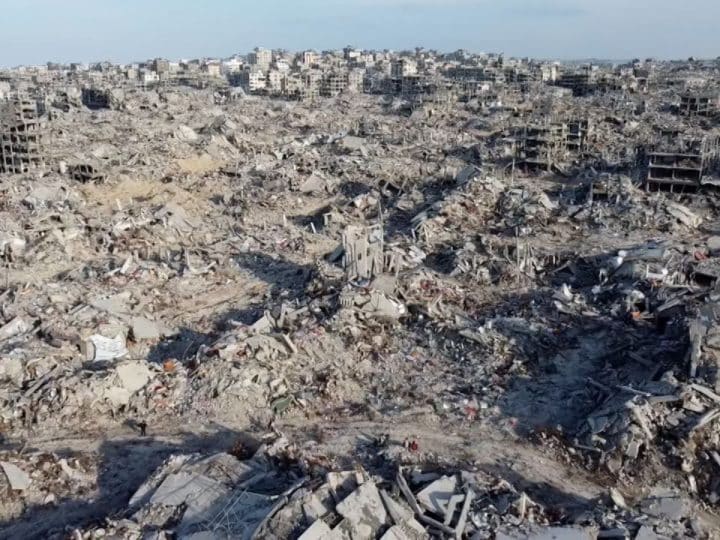
As the number of Palestinians killed in Gaza since the so-called “ceasefire” reaches more than 1,000 and Israel’s military bombardment intensifies, Medical Aid for Palestinians (MAP) warns that Palestinians continue to be killed, starved and driven into ever-shrinking pockets of land.
With the majority of aid crossings closed amid an ongoing malnutrition crisis, today’s grim milestone marks a catastrophic escalation of Israel’s genocide of Palestinians in Gaza.
Nine months after the ceasefire came into effect, Gaza still does not have a single fully functioning hospital, while doctors are increasingly forced to treat patients without access to basic diagnostic tools, equipment, and medicines.
Since the “ceasefire” came into effect on 10 October 2025, Israeli forces have committed more than 3,000 violations, killed at least 1,005 Palestinians and injured 3,157 others, according to the Palestinian Ministry of Heath in Gaza.
Meanwhile, the Israeli military has pushed the “Yellow Line” westward, consolidating control over an estimated 60% of Gaza, well beyond the agreed ceasefire boundaries.
On Friday 12 June, dozens of families in eastern Gaza City were forced to flee after Israeli forces marked a further expansion of the so-called “Yellow Line” by placing yellow cement blocks deeper into the area.
Ceasefire in name only
The failure to enforce the agreement, to hold Israel to account for these violations, has had a devastating human cost to the lives of over two million Palestinians.
Fikr Shalltoot, Gaza director at MAP, said
We mourn as Gaza reaches yet another tragic milestone – a thousand people killed since leaders announced an end to the violence in October. Thousands more people who were told the worst was over are still burying their loved ones.
Since October, what we have witnessed cannot in any way be called a ceasefire. As the bombs continued to fall and Gaza remained under a near-total siege, global leaders convinced themselves a piece of paper could substitute for accountability, for a lifted blockade, for medicine reaching the people who needed it.
And even now, as access into Gaza remains heavily restricted, and aid is weaponised against a starving population, their silence continues.
The “ceasefire” was supposed to offer an opportunity to begin rebuilding Gaza’s health system, which has been left in ruins following two years of systematic destruction. But only 20 of 37 hospitals remain partially functional, and there is not a single fully functioning hospital left.
More than 1,825 health facilities have been damaged or destroyed. 62% of primary healthcare medications were out of stock in April, and the World Health Organisation (WHO) recorded 22 attacks on healthcare facilities in the early months of 2026 alone.
Diagnostic services have also collapsed, with only around two functioning CT scanners serving Gaza’s entire population and many cancer screening and laboratory services no longer available. According to MAP’s team in Gaza, patients are increasingly dying from otherwise treatable conditions because of delays in diagnosis and the lack of essential medical infrastructure.
Sally Saleh, MAP’s head of emergency in Gaza, said:
The consequences of these shortages extend beyond oncology. Even routine conditions such as fractures or postpartum haemorrhage are becoming life-threatening due to delayed diagnosis, lack of imaging, and inadequate laboratory support.
Infections that could normally be diagnosed and treated appropriately are instead managed without proper identification, increasing complications and avoidable harm.
Overall mortality and morbidity rates are rising, including from conditions that would normally be treatable. Many patients are presenting too late or are unable to receive timely diagnosis or appropriate treatment due to the absence of essential medical infrastructure.
The toll on Gaza’s health workers continues to grow. On 15 June, Mohammed Mousa Al Habil, an emergency room nurse at Shifa Hospital, and his six-year-old son Mousa were killed in an Israeli strike while refilling water tanks on the roof of their home in Gaza City.
He is believed to be at least the fifth Palestinian healthcare worker killed since the “ceasefire” agreement came into effect. According to the World Health Organisation, at least 1,700 healthcare workers have been killed in Gaza since October 2023, while a recent UN/EU report found that around 14% of Gaza’s health workforce has been lost.
An overwhelmed healthcare system
Over 43,000 Palestinians are living with life-changing injuries, a quarter of them children, while more than 1,400 people have died waiting for medical evacuation that never came, according to the Palestinian Ministry of Health. And 18,500 critical patients, including 4,000 children, remain trapped inside Gaza with no way out.
The UN and World Bank estimate that rebuilding the health sector will require $10bn. That rebuilding cannot begin while attacks continue and restrictions on the entry of supplies and equipment remain.
Speaking from inside Shifa, once Gaza’s largest hospital, MAP’s medical supervisor, Alaa Al Shurafa, described how conditions have not improved since the ceasefire came into effect:
The current phase is still marked by severe shortages of essential medicines and medical supplies. Chemotherapy drugs in particular remain scarce, as do infection prevention and control materials and many basic medical tools.
We are also facing critical gaps in anaesthetics and antibiotics. As a result, doctors are often forced to work with whatever is available, rather than what is optimal or best for the patient.
While the situation may appear improved from a distance, the reality on the ground tells a very different story, a disheartening one, nothing has changed.
Throughout all of this, MAP’s teams and partners have continued to deliver lifesaving care across Gaza at scale. In the first three months of 2026 alone, they provided more than 540,000 vital healthcare and humanitarian services to a population under siege.
But while Israel’s military bombardment continues and crossings stay sealed, aid organisations cannot rebuild what is still being destroyed.
MAP says world leaders, including the UK government, must act urgently to:
- Demand a permanent ceasefire and an end to Israel’s genocide in Gaza.
- Guarantee full humanitarian access to restore Gaza’s health system, including the immediate release of detained healthcare workers, safe passage for patients and medical staff, and unrestricted entry of aid, fuel, and medical supplies.
- Suspend all arms sales to Israel immediately, including components for F-35 fighter jets, and end all military cooperation.
- Suspend the UK-Israel trade agreement until Israel’s widespread violations of international law are brought to an end.
- Support international accountability mechanisms, including the International Criminal Court, to investigate attacks on healthcare and other serious violations of international law.
Featured image via the Canary
By The Canary
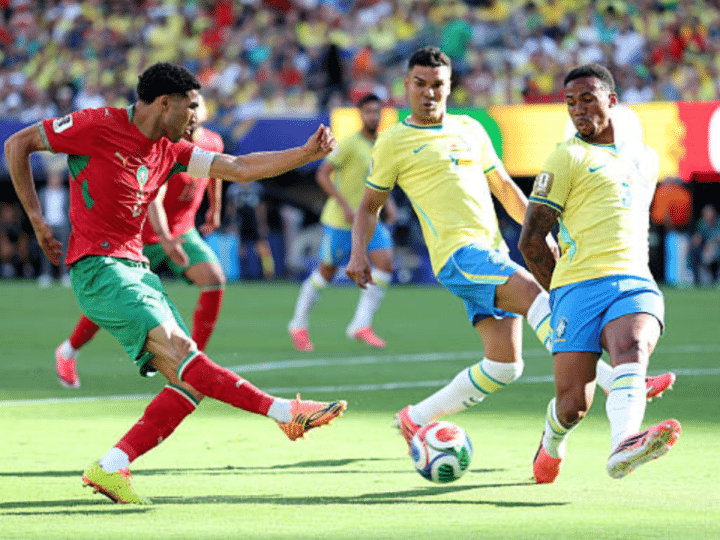
The first round of the 2026 World Cup revealed that Arab football is no longer merely a spectator when it comes to the major powers, but at the same time it showed that the gap with the world’s elite remains evident for some teams.
Amidst results that sparked optimism and others that called for urgent reassessment, the Arab teams presented a mixed picture that held many implications ahead of the tournament’s continuation.
World Cup: strong start
Morocco was the biggest Arab winner and perhaps one of the biggest beneficiaries of the entire opening round. The draw against Brazil was not merely a positive result, but a continuation of an upward trajectory that began at the Qatar World Cup in 2022. The Moroccan team played with the confidence of a side that believes in its ability to take on the big names, and succeeded in imposing its style against one of the most successful teams in history. The point earned by the Atlas Lions may seem ordinary on paper, but in practice it confirmed that Morocco is fast becoming a fixture on the world stage.
The Egyptian national team, for its part, put in a performance that reflected the experience of a side that knows full well how to handle major fixtures. The draw with Belgium did not come about through complete retreat or a purely defensive approach, but rather through a clear balance between tactical discipline and the ability to threaten the opposition. Egypt emerged from the first round with a clear message: they will not be mere passers-by in the tournament.
As for Saudi Arabia, they continued to cement their image as a team capable of surprising everyone at major tournaments. The draw with Uruguay gave the greens a huge morale boost and confirmed that the team possesses the organisation and character to compete with the big names. Most importantly, the result kept their fate in their own hands ahead of the next two matches.
Meanwhile, the Qatari national team succeeded in confirming the progress it has made in recent years. The draw against Switzerland earned Al-Anabi a valuable point and demonstrated a greater ability to cope with pressure compared to the previous edition. The performance was not perfect, but it was enough to confirm that Qatar is now better prepared to take its place on the world stage.
The disappointment of the opening match and the quest for redemption
Despite the 1–4 defeat to Norway, the Iraqi national team was perhaps the Arab side that came away with the greatest morale boost despite losing. The scoreline seemed harsh, but the details of the match told a very different story. Iraq showed attacking courage and clear character at various stages of the match, and managed to hold their own against a side featuring some of Europe’s top stars. Defensive errors cost them dearly, but the performance offered positive signs to build on, particularly as the team appeared capable of creating chances and refusing to give up despite falling behind.
As for Jordan, they faced their first-ever World Cup qualifier against Austria. Despite the defeat, the ‘Al-Nashama’ put in a creditable performance for a side embarking on a new experience at this level. The gap in experience was evident at crucial moments, but their fighting spirit and discipline have given the Jordanian side a foundation from which to build in the coming rounds.
Algeria faced one of the toughest possible tests against Argentina. The 3–0 defeat highlighted the gulf in class against a world champion of exceptional quality, but at the same time it left the Algerian side needing to quickly regain their composure, as the upcoming matches will be even more crucial in determining their fate.
Tunisia’s shock and the sacking of the manager
Meanwhile, Tunisia were the most worrying story of the first round. The heavy 5–1 defeat to Sweden was not merely a stumbling start, but a technical earthquake that prompted the Tunisian Football Federation to act swiftly and make a change to the coaching staff by appointing the Frenchman Hervé Renard.
The decision reflects the scale of the shock caused by the match, but it also reveals a clear desire to salvage the campaign before it is too late. All eyes will be on the reaction of the ‘Eagles of Carthage’ in the second round to see whether the change is capable of putting the team back on track.
With the first round now over, it is fair to say that Morocco has deservedly taken the lead in the Arab scene, whilst Egypt, Saudi Arabia and Qatar have strengthened their chances and demonstrated their ability to compete. Conversely, Tunisia, Algeria, Jordan and Iraq have entered a phase of real testing; the difference, however, is that some defeats have exposed a crisis, whilst others have revealed a project capable of rising to the challenge. Between these two extremes, the second round looks set to paint a clearer picture of the future of the Arab dream at the 2026 World Cup.
Featured image via the Canary
By Alaa Shamali

The world’s richest man’s new company — SpaceX — may have counted many a chicken before they hatched.
China’s chokehold on solar cells and equipment, tungsten, indium, yttrium, and other critical materials should cast doubt on the prowess of American industry, defence and SpaceX alike.
The Washington Post’s recent report on the stalled SpaceX-Suzhou Maxwell negotiations shows that all is not well behind the showmanship of American industrial power under Trump and Musk.
China is quietly expanding its export control regime against the U.S. and American allies, reaching beyond rare earth minerals to pinch choke points that affect key U.S. industries, according to investors, business leaders and supply chain analysts. https://t.co/sq1VJE8LUD
— The Washington Post (@washingtonpost) June 17, 2026
In March 2026, Chinese authorities told Suzhou Maxwell, one of the world’s most advanced producers of solar cell manufacturing equipment, to pause negotiations with Musk’s companies and not to sell them machinery according to the Post.
This is a spectacular roadblock for the company that wants to deploy 100 gigawatts of solar-powered artificial-intelligence data centers into orbit every 12 months by 2030.
Nevertheless, SpaceX’s valuation rose as high as $2.97tn on Tuesday, eclipsing the market value of Amazon and Microsoft of $2.64tn and $2.93tn, according to the Financial Times (FT).
The initial public offering (IPO) of the rocket and AI company has made Musk, who owns just over 40 per cent of it and has a large stake in Tesla, the world’s first trillionaire.
According to Bloomberg:
China dominates the large-scale manufacture of key technologies, including gallium and solar polysilicon, which could be a problem for SpaceX given its contracts with the US military and the strategic logic driving the rise of satellite mega-constellations.
Jim Chanos, the founder of the investment firm Chanos and Company, who predicted the 2001 collapse of Enron, said:
It really does feel very much a ‘don’t look at the man behind the curtain’ situation
It is, isn’t it? A $2.97 trillion valuation built on a supply chain that China controls — and a company that cannot admit it, because to do so would be to admit that the American space age rests on China’s permission.
SpaceX and the US military — Same story
One of the reasons that tungsten prices are soaring currently, according to Gracelin Baskaran, director of the Center for Strategic and International Studies (CSIS), a think tank funded by arms companies among others, is because of the US war on Iran.
She told the former UK intelligence chief Richard Dearlove, in an interview recently that there was a “crucial shortage” of tungsten in the USA, a key raw material for the US military following use of munitions during the war on Iran.
According to Reuters, China dominates the global tungsten market. It imposed new export restrictions on tungsten in 2025 and cut mining quotas for that year. In December 2025, China said only 15 firms would be allowed to export tungsten in 2026–2027.
The U.S. has fired more than 1,000 long-range Tomahawk missiles since the war with Iran began Feb. 28, as well as 1,500 to 2,000 air-defense missiles, including THAAD, Patriot and Standard Missile interceptors, according to U.S. officials cited by the Wall Street Journal.
Completely replacing those stockpiles could take up to six years, officials told the WSJ.
The same bottlenecks are affecting yttrium, which is needed for aircraft engines, and indium, which is needed for lasers and AI data centers.
US strategy mirrors the British Empire
The threat of China is bringing out the worst imperial tendencies of the United States.
Writing in Le Monde, Evgeny Morozov notes that without mentioning the Bengal famine or Plassey, Trump cronies are now boasting about modeling U.S. agencies on the British Empire.
George Kollitides II, the Pentagon’s principal advisor on economic competition, said the quiet part out loud at the Milken Institute conference in May 2026:
The British Empire really modelled it,” pointing to “privatised companies like the East India Company, which were really public-private, government-driven organisations largely built around commerce and economics.
Morozov documents U.S. activities that include:
-
The Pentagon taking equity stakes in private mining firms like MP Materials and Vulcan Elements
-
The Development Finance Corporation investing in Congolese copper and cobalt, and Angola’s Lobito rail corridor
-
The Export-Import Bank locking allied producers into U.S.-centered supply chains through guaranteed offtake contracts
-
Project Vault building a $12 billion strategic stockpile of 60 critical minerals with fixed purchase prices
-
Conditional loans and health aid used as leverage to extract mineral access from countries like Zambia
He says:
Writing in Phenomenal World, scholars Ilias Alami and Thea Riofrancos point to the same imperial logic playing out elsewhere. They note the U.S. invasion of Venezuela and abduction of President Maduro to control its oil industry, the blockade of Cuba, the threats against Greenland, and the war on Iran.
The U.S. is also clamping down on the ability of countries like Zambia to pursue polyalignment the strategy of courting investment from both US and China while refusing to align with either.
This “my way or the highway” strategy is not benign. Venezuela, which holds significant deposits of gold, bauxite, and coltan — all critical minerals, was invaded and its president abducted, with the explicit aim of controlling its oil industry for the benefit of U.S. fossil fuel corporations.
The message to any resource-rich country contemplating polyalignment is unmistakable: defiance invites regime change.
Arsonists playing as firefighters
Both Morozov and Alami and Riofrancos highlight a deeper rot: the people now running U.S. industrial policy are the same ones who profited from its decline.
Morozov traces that the Pentagon’s Economic Defense Unit is staffed by alumni of Cerberus, Apollo, and Cantor Fitzgerald, private equity firms that built empires on the ruins of American manufacturing. For instance, Cerberus ran Chrysler into the ground.
Cantor Fitzgerald, run by Commerce Secretary Lutnick’s sons, backed USA Rare Earths, a company with no proven track record. Donald Trump Jr.’s 1789 Capital invested in Vulcan Elements months before it secured a $620 million Pentagon loan.
Alami and Riofrancos add that this private equity mindset focuses on low-hanging fruit and quick wins, not the long-term planning necessary to rebuild industries in secular decline.
SpaceX cannot build its orbital data centers without Chinese solar equipment. The Pentagon cannot replenish its munitions without Chinese tungsten. The people trying to solve these problems are private equity hacks, boasting about being the East India Company, subjugating the global South again, and using the China bogeyman to justify it all.
Featured image via the Canary
By Nandita Lal
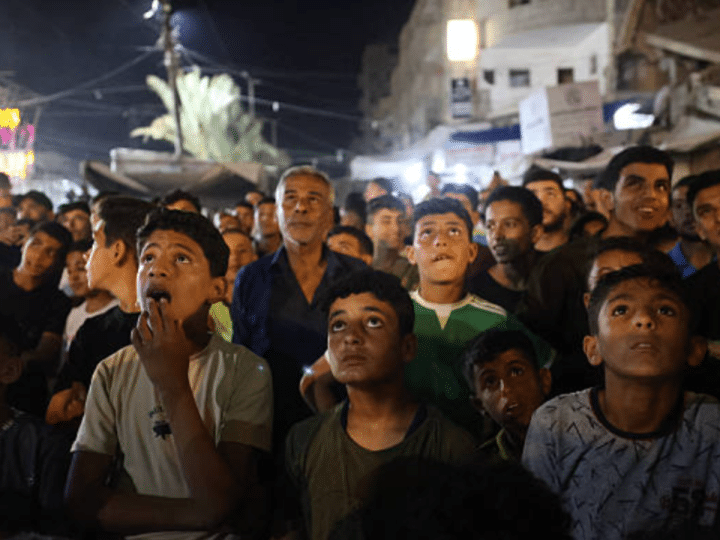
Whilst the world’s attention is focused on stadiums across the United States, Canada and Mexico to follow the 2026 World Cup, Palestinians in the Gaza Strip are experiencing a completely different way of watching the biggest football event on earth, amidst an ongoing war that has left widespread destruction and an unprecedented humanitarian crisis in its wake.
Despite mass displacement, power cuts and a lack of basic services, the World Cup atmosphere has not been absent from the Strip. With the start of the tournament – which features a record number of Arab teams – Palestinians have found various ways to follow the matches and engage with them, in an attempt to cling to some semblance of normal life amidst a reality dictated by the war in every detail.
More than two million Palestinians live within a narrow coastal strip, most of whom are currently residing in displacement tents or in homes and buildings damaged by the war. This has made following a global event on the scale of the World Cup a daily challenge dependent on the availability of electricity, communications and alternative power sources.
From tents to markets… A passion for football defies the war
In the displacement areas scattered across the south and centre of the Gaza Strip, the tents have been transformed into something resembling small stands. Dozens sit in front of modest television screens or simple projectors to watch the matches, whilst others take turns providing the power needed to run the equipment amid an almost complete power cut.
In refugee camps, World Cup matches have become a daily event eagerly awaited by young and old alike, with neighbours, friends, and families gathering around a single screen to support their favourite teams and discuss match results and the stars’ performances.
These scenes were not confined to tents alone; some local markets and cafés that are still open have also seen crowds gathering to watch the key matches. At the Al-Nuseirat market in the centre of the Strip, dozens of people gathered in front of a screen set up specifically to broadcast the matches, whilst video footage from Khan Younis captured scenes of collective celebration following the Egyptian team’s goal against Belgium, with cheers and applause filling the air in a scene that reflected the depth of the Palestinians’ connection to the Arab teams participating in the tournament.
The owners of some cafés also sought to overcome the electricity crisis by providing alternative solutions to ensure the matches could continue to be shown. Some cafés were equipped with backup power lines and extra batteries, allowing broadcasts to continue even after the fuel-powered generators were switched off during the night, so that fans could still follow the tournament’s matches.
The World Cup: a window of escape from the harsh reality in Gaza
For the people of Gaza, following the World Cup is not merely a sporting interest or a passing form of entertainment; rather, it provides a psychological respite amidst the immense pressures that the war has imposed on all aspects of life.
As daily suffering continues – from the loss of homes and loved ones to the difficulty of obtaining basic necessities – the World Cup matches offer Palestinians a few hours to focus on something else. For ninety minutes, conversations shift from news of bombardments and displacement to team line-ups, tactics, goals and results.
Many Palestinians rely on batteries, solar panels and small generators to power their televisions and set-top boxes, whilst others watch the matches on their mobile phones when internet and network conditions allow.
However, watching the matches is not without risk, as Palestinians are aware that being in public gathering places carries constant concerns given Israel’s bloodthirsty tactics. Despite this, many continue to head to cafés, squares and tents set up to screen the matches, clinging to their right to experience moments of normality, even if only for a few hours. For them, neither fear nor the circumstances around them can dampen their passion for football or prevent them from sharing the tournament’s atmosphere with others.
These scenes reflect sport’s ability to offer people a temporary escape from the harshness of reality. Amidst the rubble and tents, cheers still ring out with every Arab goal, and discussions of the game continue to fill displacement camps and shelters – a testament to the fact that the passion for life remains unbroken, despite all the suffering surrounding the Strip.
Whilst the war continues to impose its challenges on the minutiae of daily life, Palestinians carry on pursuing the joy of the 2026 World Cup in their own way, affirming that football is still capable of bringing people together around moments of hope and joy, even in the most suffering places on earth.
Featured image via the Canary
By Alaa Shamali
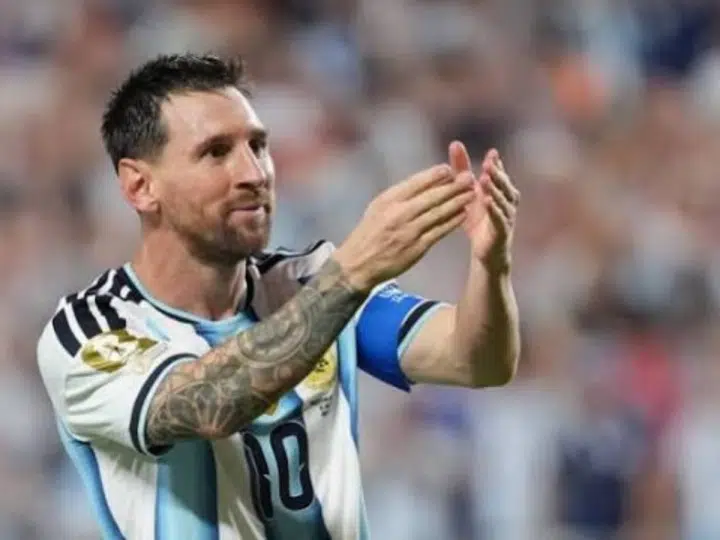
Lionel Messi has spent two decades bending World Cups to his will, but in Kansas he delivered something special even by his standards: a first World Cup hat-trick, a place alongside Miroslav Klose on 16 all‑time tournament goals, and a performance that felt like a personal highlight reel stitched into Argentina’s opening win. At 38, he is still untouchable. Argentina’s 3-0 victory over Algeria was dominant, but the night belonged entirely to their star No 10.
A masterclass from minute one
Argentina settled instantly, with Enzo Fernández, Alexis Mac Allister and Rodrigo De Paul snapping into midfield control. But everything revolved around Messi, who drifted, dictated and destroyed. His first goal arrived after 17 minutes, shaped beautifully beyond Luca Zidane after De Paul sliced Algeria open with a cutting pass. It was the kind of finish that looked inevitable the moment the ball reached him.
There was controversy soon after. Messi escaped punishment for a clumsy rake down Aïssa Mandi’s calf, a moment that could have changed the tone of the night. Referee Szymon Marciniak gave a foul but no card; VAR didn’t intervene. Algeria protested, but the game rolled on, and Messi rolled with it.
Second-half surge
Argentina tightened their grip after the break. Alexei Mac Allister’s low strike forced a parry, and Messi reacted first, steering home with his right foot, the weaker one, supposedly, to double the lead on 60 minutes. By then, Algeria were stretched, chasing shadows, and Messi was operating in full flow.
His third was the pick of the bunch: a curling, bending, low strike from the edge of the box that kissed the inside of the post. A hat-trick completed in style, a stadium on its feet, and a moment that felt like a closing chapter written by the greatest to ever do it.
He was substituted soon after to a standing ovation from a crowd overwhelmingly draped in sky blue and white. Even Algerian fans applauded. You don’t witness history every day.
The goals came exactly 20 years after Messi’s World Cup debut against Serbia and Montenegro, a match he also scored in. Two decades later, he is still rewriting the record books. He is now the oldest player to score multiple times in a World Cup match, surpassing Roger Milla’s long‑standing mark.
Should he have seen red?
The debate will linger. IFAB rules state a player should be sent off for a tackle that endangers an opponent. Messi’s challenge on Mandi was clumsy and high, but Marciniak judged it careless rather than reckless. VAR did not intervene. Messi stayed on, and the rest is history.
Argentina begin their title defence with authority. Messi begins his final World Cup with a statement. With three goals in game one, the race for the Golden Boot is officially on. The one major World Cup award he has never won.
Messi took six shots, had the joint-most touches in the Algerian box, and still found time to graft. Only De Paul and Fernández made more tackles. He won duels, threaded passes, and worked like a player half his age.
His 200th international cap became a celebration of longevity, brilliance and a footballer still capable of elevating a team and a tournament. If this is the last dance, he’s starting it with fireworks.
A perfect start
Argentina leave Kansas with three points, three goals, and a reminder that their captain remains the sport’s defining force. Algeria were game but outmatched. Messi was simply too much.
A hat-trick, a record equalled, a legend still expanding. The World Cup has its storylines, but it appears Messi is continuing to write his own.
Featured image via Al Jazeera
By Faz Ali
NewsBeat1 minute ago
What Thomas Tuchel shouted at Jordan Pickford in England row that TV cameras missed
Business2 minutes ago
Form 4 Pvh For: 17 June

Crypto World3 minutes ago
Crypto industry aghast at Illinois’ new tax on holding or transferring digital assets in state budget


-

 Business3 days ago
No Jackpot Winner as $257 Million Prize Rolls Over to $269 Million Monday Draw
-

 Fashion5 days ago
Weekend Open Thread: Tuckernuck – Corporette.com
-

 Crypto World6 days ago
Oppenheimer backs SpaceX as $70 billion retail frenzy builds
-

 Crypto World6 days ago
Markets Rally as SpaceX IPO Looms Amid Iran Tensions and Inflation Surge
-
 Crypto World3 days ago
Zimbabwe Requires Crypto Businesses to Register Annually Under New FIU Regulations
-

 Tech5 days ago
NanoClaw integrates JFrog registries to secure AI agent downloads
-

 Crypto World5 days ago
Bitget enters Argentina’s regulated crypto market through PSAV registration
-

 Tech5 days ago
This Week In Security: Microsoft On Microsoft, Register Your Domains, Linux On ARM, And FreeBSD Joins The File Cache Club
-

 NewsBeat6 days ago
El Nino has formed in the Pacific and could set records, forecasters say
-
 Tech6 days ago
Dutton Ranch star claims they ‘didn’t see any disruption’ on set following Chad Feehan’s exit from Yellowstone spinoff fueled by Taylor Sheridan clash rumors
-

 Politics6 days ago
Politics Home | Healey Resignation Is “Colossal Failure Of Government”, Says Former Labour Defence Secretary
-
 Entertainment6 days ago
Donnie Wahlberg & More Heat Up Las Vegas at Circa’s Barry’s Downtown Prime
-
 Tech6 days ago
Opendoor Ends India Operations, Fueling a Bigger Conversation About AI and Outsourcing
-

 Politics6 days ago
Belfast burns, while Met chief points finger at Iran and Russia
-

 Sports6 days ago
First Time Since 1971: Australia Register Historic Low In ODI Cricket
-

 NewsBeat5 days ago
FBI searches office of Ohio voter registration group
-

 Business6 days ago
AT&T: Verizon's 27% Outperformance Sets Up A Solid Entry Point
-
 Tech6 days ago
Anthropic is spending $150M to embed 1,000 AI fellows inside nonprofits. No degree required.
-

 Politics6 days ago
Modi thanks Trump for wishes as US attacks Indian seafarers
-
 Entertainment6 days ago
‘The Pitt’s Fan-Favorite Doctor Confirms Noah Wyle Gave His Blessing to Return [Exclusive]
You must be logged in to post a comment Login