
Business
Red Lobster weighing ‘Endless Shrimp’ return after bankruptcy: report

Check out what’s clicking on FoxBusiness.com.
Red Lobster is reportedly weighing the return of its popular “Endless Shrimp” promotion as part of a broader push to revive sales following its 2024 bankruptcy.
The all-you-can-eat deal – which previously contributed to millions in losses – could come back as a limited-time offer, possibly as soon as this month, Bloomberg reported, citing sources familiar with the plans.
A Red Lobster spokesperson told FOX Business the company doesn’t have “anything to announce at this time,” but emphasized that the promotion remains a longtime customer favorite and that the company is closely monitoring guest feedback.
“Endless Shrimp has long been a Red Lobster guest favorite and one of our most popular promotions for 20 years. We’re always paying attention to what our guests are asking for,” the spokesperson said. “We’re grateful for the enthusiasm and encourage guests to keep sharing their feedback with us. We’re listening.”
RED LOBSTER CONSIDERING MORE RESTAURANT CLOSURES, CEO SAYS
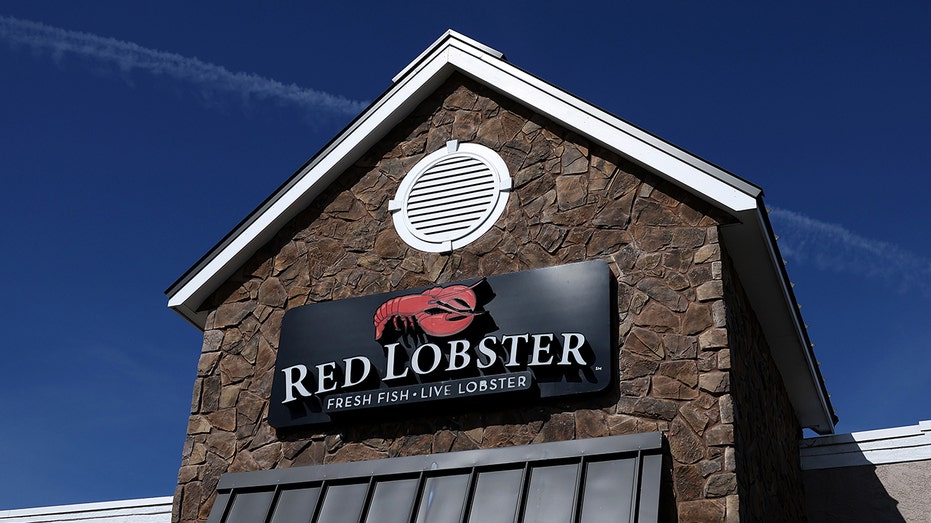
A sign is posted on the exterior of a Red Lobster restaurant on April 17, 2024, in Rohnert Park, California. (Justin Sullivan/Getty Images / Getty Images)
Red Lobster filed for Chapter 11 in May 2024 after mounting losses, including fallout from the $20 “Endless Shrimp” deal that was expanded to a permanent menu item in 2023.
The promotion was designed to drive traffic, but demand overwhelmed the offer and strained supply costs.
In one example, a diner claimed to have eaten 108 shrimp in a single four-hour sitting.
While it drove strong customer traffic, it also led to roughly $11 million in losses in a single quarter and strained supply costs. For roughly two decades prior, it succeeded as a limited-time offering, according to Bloomberg.
RED LOBSTER IS BACK; CEO PLOTS FUTURE FOR SEAFOOD CHAIN
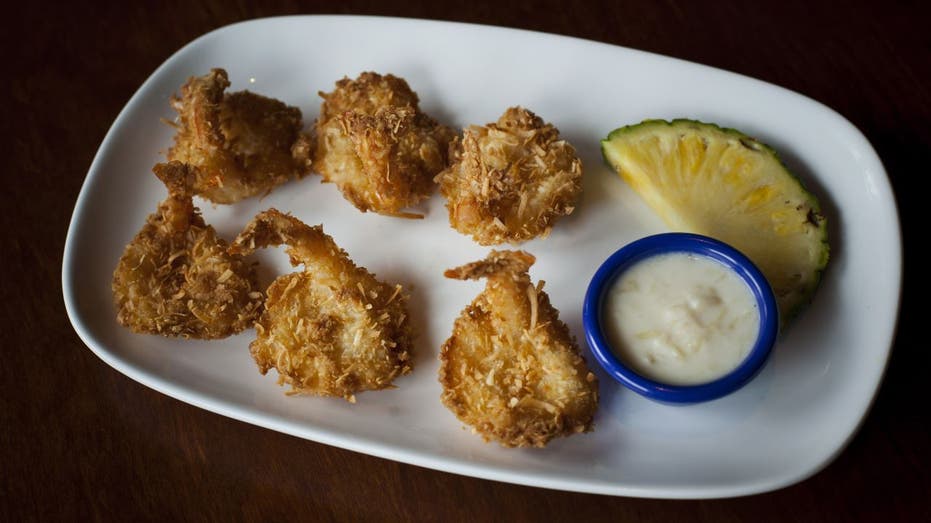
A coconut shrimp dish is displayed for a photograph at a Red Lobster restaurant in Yonkers, New York, on July 24, 2014. (Michael Nagle/Bloomberg via Getty Images / Getty Images)
The potential revival comes as Red Lobster works to rebuild momentum about 18 months after emerging from bankruptcy.
CEO Damola Adamolekun, the former P.F. Chang’s chief who took over in August 2024, is leading a turnaround strategy focused on increasing traffic and modernizing the brand.
Efforts include trimming the menu by about 20%, introducing new items like lobster bisque and seafood boils and rolling out a revamped in-restaurant experience, according to Bloomberg.
RED LOBSTER CLEARED TO EXIT CHAPTER 11 BANKRUPTCY PROTECTION
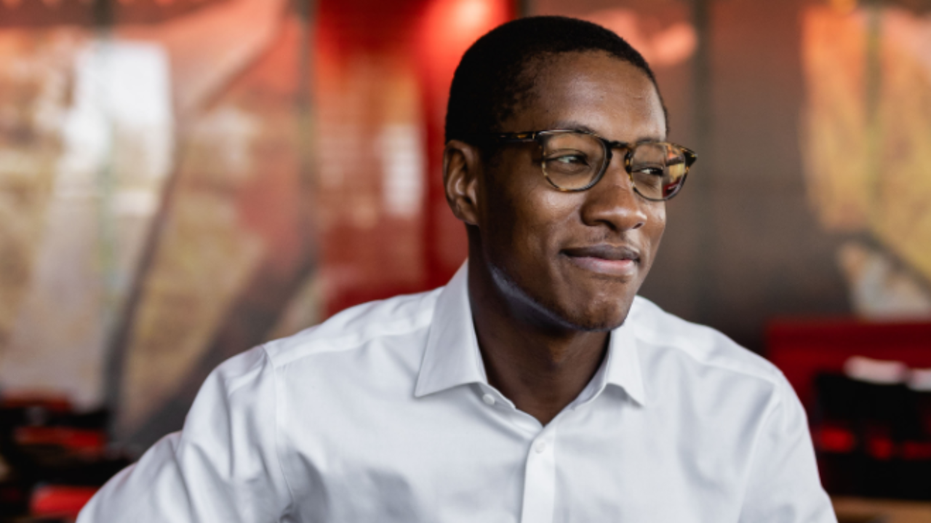
CEO Damola Adamolekun, the former P.F. Chang’s chief who took over in August 2024, is leading a turnaround strategy focused on increasing traffic and modernizing the brand. (Fortress Investment Group)
GET FOX BUSINESS ON THE GO BY CLICKING HERE
The company is also reassessing its footprint after closing about 130 locations during bankruptcy, with additional closures still under consideration, Adamolekun told The Wall Street Journal in a February interview.
“There’s a lot of positive signs, but we inherited a very damaged brand, so there’s still work to do to repair all of that,” Adamolekun told the Journal at the time.
FOX Business’ Eric Revell and Daniella Genovese contributed to this report.

Business
China Communications Services Corporation Limited 2025 Q4 – Results – Earnings Call Presentation (OTCMKTS:CUCSY) 2026-04-02


Seeking Alpha’s transcripts team is responsible for the development of all of our transcript-related projects. We currently publish thousands of quarterly earnings calls per quarter on our site and are continuing to grow and expand our coverage. The purpose of this profile is to allow us to share with our readers new transcript-related developments. Thanks, SA Transcripts Team

DENVER — Nikola Jokic continues his remarkable run as one of the most dominant and versatile centers in NBA history, prompting renewed debate whether the Denver Nuggets star has already surpassed Shaquille O’Neal in overall impact, skill and statistical brilliance — even as O’Neal’s four championships and three Finals MVPs keep him ahead in the championship pedigree that often defines legacies.

With the 2025-26 season winding down, Jokic, now 31, is posting numbers that rival or exceed O’Neal’s prime in several categories while redefining the center position with elite passing, shooting and basketball IQ. Yet the Serbian big man still trails O’Neal in hardware, with one NBA title to Shaq’s four, leaving the “better player” question as much about era, style and team success as raw talent.
Career averages tell part of the story. O’Neal, over 19 seasons and 1,207 games, posted 23.7 points, 10.9 rebounds, 2.5 assists, 0.6 steals and 2.3 blocks per game on 58.2% shooting. Jokic, in his 11th season through roughly 805 games as of early April 2026, sits at 22.2 points, 11.1 rebounds and a staggering 7.5 assists, with 1.3 steals and 0.7 blocks on efficient shooting that includes significant three-point range.
Jokic’s assist numbers alone set him apart. No traditional center has approached his playmaking. In the 2025-26 season, he has flirted with triple-double averages, leading the league in rebounds and assists at times while ranking among top scorers. Analysts have noted stretches where his scoring efficiency outpaced O’Neal’s best seasons, his rebounding topped Karl Malone’s peaks and his assists exceeded Jason Kidd’s career highs — all while shooting better from distance than Larry Bird in some comparisons.
Advanced metrics further favor Jokic in modern context. His career player efficiency rating and box plus/minus often rank among the highest ever for centers. In peak seasons, Jokic has led the NBA in value over replacement player while carrying the Nuggets to consistent contention. O’Neal dominated with brute force and interior presence, winning the 2000 MVP and three consecutive Finals MVPs from 2000-02 alongside Kobe Bryant in Los Angeles.
The championship disparity looms large. O’Neal captured four rings — three with the Lakers in a dynasty and one with the Miami Heat in 2006 — and earned three Finals MVPs. Jokic led Denver to its first title in 2023, earning Finals MVP with historic playoff averages, including leading all players in points, rebounds and assists in one postseason. But the Nuggets have not repeated, and as of April 2026, Denver sits in a competitive Western Conference without another championship.
Accolades also differ. O’Neal earned one regular-season MVP, 15 All-Star nods, 14 All-NBA selections and multiple scoring titles. Jokic has three MVPs (2021, 2022, 2024), with strong cases in other years, including multiple top-two finishes. He has earned All-Star honors and All-NBA nods consistently, transforming from a second-round draft pick into a perennial superstar.
In the current 2025-26 campaign, Jokic has battled injuries and team inconsistency, dropping him to third or fourth in some MVP ladders behind Shai Gilgeous-Alexander, Luka Doncic and Victor Wembanyama. Yet when healthy, he remains a triple-double machine, with analysts noting his on-court net rating impact often exceeds league leaders. Hall of Fame coach George Karl recently called Jokic the MVP of the past five years, citing his unmatched consistency.
Head-to-head statistical comparisons of their primes show nuances. From 2021-2026 for Jokic versus O’Neal’s 1999-2004 Lakers/Heat peak, Jokic edges in assists and efficiency from range, while Shaq posted higher scoring volume and blocks. Jokic’s ability to stretch the floor and facilitate makes him more adaptable to today’s spacing-oriented game, whereas O’Neal thrived in a physical, post-dominant era with fewer three-point attempts league-wide.
Debate rages among fans and analysts. Some argue Jokic is the more skilled and complete player, a “point center” who elevates teammates like Jamal Murray and Aaron Gordon. Others insist O’Neal’s physical dominance — at 7-foot-1 and over 300 pounds — made him unguardable in ways Jokic cannot match one-on-one. “Shaq could bully Jokic in the post,” one analyst noted, while crediting the Joker for superior versatility.
Recent rankings have stirred controversy. The Athletic placed Jokic fifth all-time in one list, ahead of O’Neal and Kevin Durant in some iterations, drawing backlash from Lakers fans who point to rings. Other outlets rank Jokic among the top centers ever, behind legends like Kareem Abdul-Jabbar, Bill Russell and Wilt Chamberlain but closing on O’Neal and Hakeem Olajuwon.
Jokic’s efficiency stands out. He shoots over 57% from the field career-wide, often higher in recent seasons, while adding 35-40% from three — areas where O’Neal rarely ventured. Free-throw shooting remains a contrast: Shaq’s career 52.7% plagued him in clutch moments, while Jokic converts at a solid 82% clip.
Playoff performances further the discussion. O’Neal averaged 24.3 points and 11.6 rebounds in 216 postseason games. Jokic has delivered in high-stakes series, including his 2023 championship run where he averaged near triple-doubles. Some seasons, Jokic has led the league in playoff advanced stats.
Off the court, both are larger-than-life figures. O’Neal became a cultural icon with movies, music and broadcasting. Jokic maintains a low-key persona, preferring horses in Serbia and avoiding spotlight, yet his on-court genius draws global praise.
As the 2026 playoffs approach, Jokic and the Nuggets seek another deep run. Another title would bolster his case significantly, potentially pushing him past O’Neal in many all-time center rankings. Without it, the debate persists: statistical and skill superiority versus championship dominance.
NBA history values winners, but evolving analytics and eye-test appreciation for playmaking have elevated Jokic. Advanced stats like VORP and BPM often rank his peaks higher. In an era of positionless basketball, his ability to run offenses from the high post or elbow makes him uniquely valuable.
Experts note context matters. O’Neal faced physical defenders in a slower, hand-checking allowed era. Jokic navigates switching defenses, zone schemes and three-point volume. Adjusted for pace and rules, some models suggest Jokic’s impact per possession rivals or exceeds Shaq’s.
Fan and media sentiment splits. Reddit and social media threads show passionate arguments: “Jokic clears Shaq statistically and as a teammate,” versus “Rings are rings — Shaq dominated his era.” YouTube breakdowns and podcasts fuel the fire, with some declaring Jokic already the best passing big ever.
For now, most agree Jokic has not fully surpassed O’Neal due to the championship gap and fewer seasons played. But at 31, with prime years ahead if health holds, Jokic could close that distance. His three MVPs already match or exceed many greats, and consistent top-tier production positions him for Hall of Fame entry on the first ballot.
The Nuggets’ supporting cast and Western Conference strength will influence outcomes. Injuries have occasionally slowed Jokic, as seen in 2025-26 when he missed time, affecting MVP positioning.
Ultimately, comparing across eras is imperfect. O’Neal changed games with his size; Jokic is changing it with skill and vision. Both rank among the greatest centers, with Jokic earning “best of his generation” status while chasing O’Neal’s hardware.
As April 2026 unfolds, the conversation intensifies. Jokic’s nightly masterclasses keep the question alive: Has he surpassed Shaq? In skill and versatility, many say yes. In legacy-defining titles, not yet. The coming playoffs may provide more clues.
Whether Jokic adds another ring or not, his place among basketball immortals is secure — a testament to how the center position has evolved from dominant force to orchestrator supreme.

Check out what’s clicking on FoxBusiness.com.
Nike Inc. delivered a disappointing outlook this week, sending its shares sharply lower and prompting CEO Elliott Hill to acknowledge growing internal frustration during a company-wide call.
Speaking at a Tuesday all-hands meeting, Hill told employees he is ready to move past efforts to “fix” the business and shift toward rebuilding momentum, according to Bloomberg.
“I’m so tired, and I know you are too, of talking about fixing this business,” Hill said. “I want to move to inspiring and driving growth and having fun.”
COSTCO’S SURPRISE NIKE COLLABORATION SENDS SNEAKER RESALE MARKET INTO COMPLETE FRENZY

Elliott Hill, CEO at Nike Inc., following a Bloomberg Television interview in Milan, Italy, on Feb. 11, 2026. (Francesca Volpi/Bloomberg via Getty Images / Getty Images)
The remarks came after Nike reported its fiscal 2026 third-quarter results, with net income falling 35% year over year.
The company also warned that revenue is expected to decline in the current quarter and continue falling through the rest of the year.
Shares dropped as much as 15% on Wednesday, hitting their lowest intraday level since 2014, Bloomberg reported.
NIKE PLANS TO CUT HUNDREDS OF JOBS AMID AUTOMATION PUSH

The logo of Nike is pictured in a store in Manhattan on March 30, 2026, in New York City. (Zamek/VIEWpress / Getty Images)
Chief Financial Officer Matthew Friend underscored the company’s cautious stance, urging employees to limit spending as Nike works to stabilize performance, according to Bloomberg.
“We’re going to be managing costs carefully as we have been doing,” Friend said. “I realize that that creates a tension inside, but I just need you to know that the reason why that tension is there is because our business is not moving in the right direction.”
Hill, who took over as CEO in October 2024 and has since reshaped parts of Nike’s strategy, also signaled the company needs to be more transparent with investors, Bloomberg reported.
NIKE ANNOUNCES CAITLIN CLARK AS ITS NEWEST SIGNATURE ATHLETE
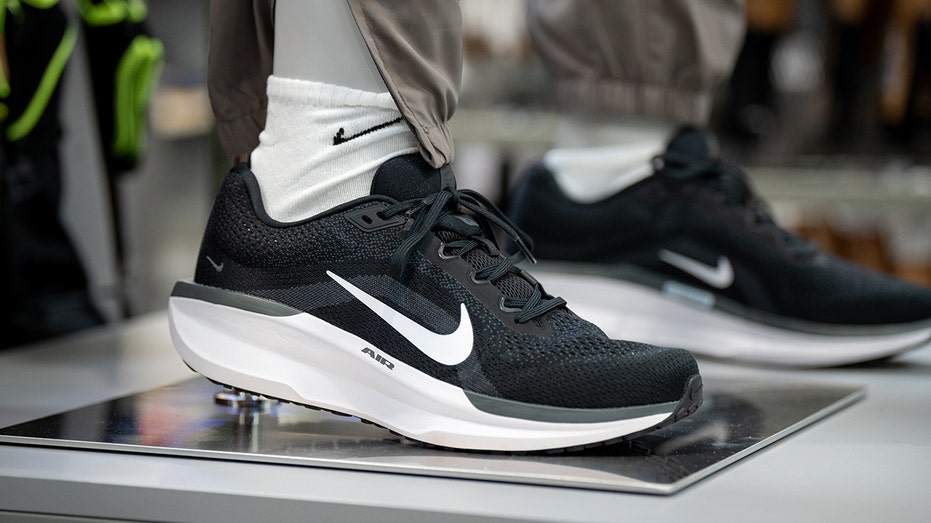
Nike shoes are on display at the Nike store during the Sport Expo in Krakow, Poland, on March 15, 2026. (Marcin Golba/NurPhoto via Getty Images / Getty Images)
“You can’t just sit there and say everything’s great,” Hill said. “Frankly, it needed to be different.”
GET FOX BUSINESS ON THE GO BY CLICKING HERE
A Nike spokesperson told the outlet that the company regularly holds post-earnings meetings with employees to review key messages shared with investors and to coordinate next steps.
Nike did not immediately respond to FOX Business’ request for comment.

Stitch Fix: A Compelling 'Buy' As Order Values Rise (Upgrade)

Microsoft Is 11% Of My NAV And I'm Targeting Monster Returns

Form 13D/A ON24 INC. For: 2 April

Federal Reserve Bank of New York President John Williams discusses market impacts of the Iran War, inflation outlook and more on ‘The Claman Countdown.’
Federal Reserve Bank of New York president John Williams warned that the effects of the Iran war on energy prices could spread across multiple sectors of the economy.
FOX Business host Liz Claman noted during her interview with Williams Thursday on “The Claman Countdown” that gasoline is used in far more than transportation, including clothing manufacturing, asphalt and packaging.
“There’s a pass-through of energy prices into a lot of things that we buy, including airfares… With higher fuel costs, airfares are going to go up,” William said.
“It will spread around. It typically takes us into other goods and services. That typically takes months or maybe a year to have that full effect.”
OIL, GAS PRICES JUMP AS TRUMP FLIRTS WITH STRIKING IRANIAN OIL INFRASTRUCTURE
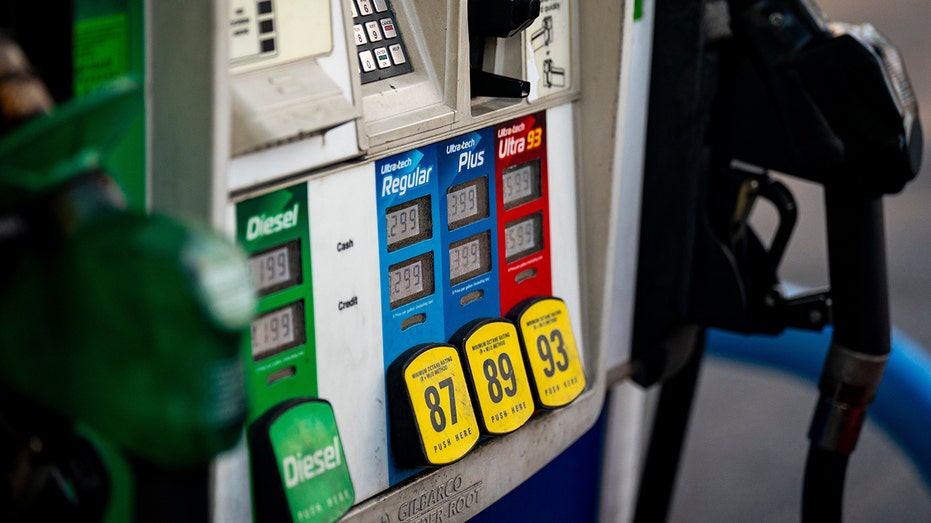
Gas prices at home have surged since President Donald Trump launched war on Iran Feb. 28, 2026. (Al Drago/Bloomberg via Getty Images / Getty Images)
Williams’ comments come as oil markets continue to roil amid conflict in Iran and the closure of the Strait of Hormuz, a critical global oil chokepoint where about 20% of the world’s oil supply passes through annually.
The national average for a regular gallon of gas is over $4, up more than $1 since the war began, according to AAA.
The Fed president addressed the gas price spike, saying it puts a strain on household budgets already pressured by inflation.
ONE LITTLE-KNOWN MEETING HELPS DECIDE WHAT AMERICANS CAN AFFORD — AND WHAT THEY CAN’T
“Higher energy prices affect inflation, it affects also the disposable income that families have, too,” he said. “So, it hits both inflation, but also it hits demand in the economy.”
Williams added that the NY Federal Reserve is well-positioned for potential risks.
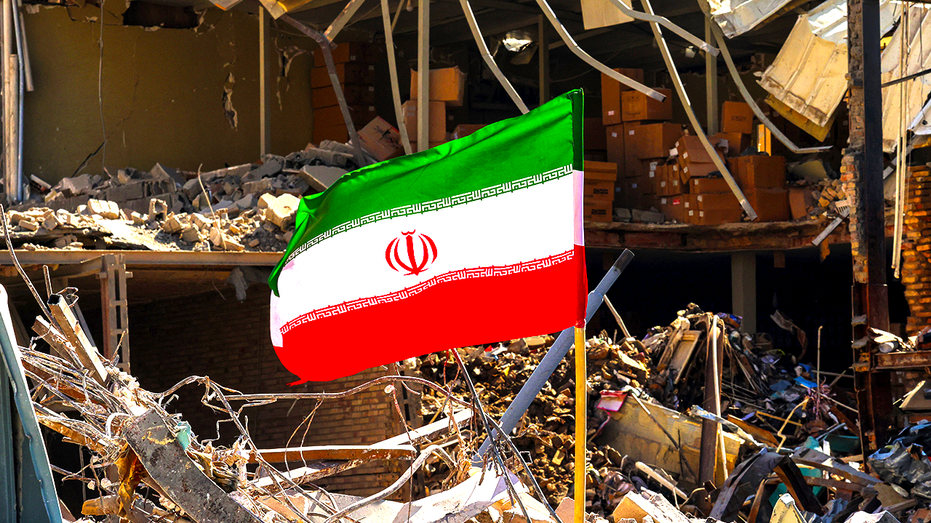
The Iranian flag in rubble and debris in Tehran, Iran. (Atta Kenare/AFP / Getty Images)
KEVIN O’LEARY SAYS REMOVING IRAN FROM STRAIT OF HORMUZ WOULD BE A GLOBAL ‘GAME CHANGER’
“I think monetary policy, with the actions we took last year and where we are today, is actually well-positioned to keep those risks in balance, and that’s what we need to do,” he told FOX Business.
However, President Donald Trump’s war on Iran was not a risk the bank could have anticipated, highlighting the limits of monetary policy in responding to sudden geopolitical shocks.
“We can’t control everything in terms of gas prices are changing, but what we can do is try to get monetary policy positioned so that those risks we achieve in our two goals are in balance,” Williams said.
Federal Reserve Bank of New York President John Williams discusses the Fed’s view of private credit on ‘The Claman Countdown.’
CLICK HERE TO DOWNLOAD THE FOX NEWS APP
Williams went on to discuss his decision-making process for cutting or hiking interest rates, emphasizing the importance of an anticipatory approach.
“We have to be forward-looking,” he stressed. “We have to be looking where the economy is likely to be in the next year or two, because monetary policy actions, they don’t take the full effect on the economy for at least a year.”
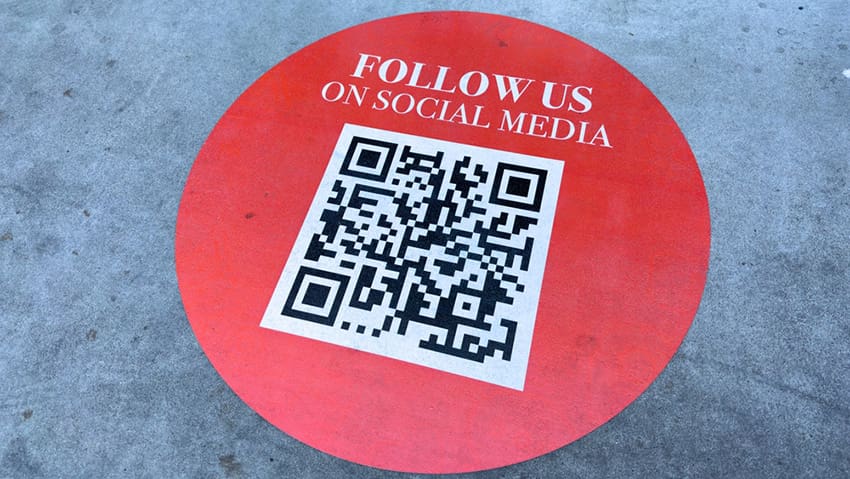
Most small businesses don’t have the luxury of wasting budget.
Every flyer, every print run, every campaign needs to work. And when something changes, which it usually does, the cost of updating materials can add up quickly.
That’s where small, practical changes can make a difference.
QR codes are one of those things that seem simple on the surface, but when used properly, they can remove a surprising amount of cost from everyday marketing.
The hidden cost of “fixed” campaigns
A common situation: you print a batch of flyers or brochures.
They include a link. Maybe to a product page, maybe to a campaign landing page. At the time, it makes sense.
A few weeks later, things change.
The offer is different. The page is updated. Or you realise the original link wasn’t performing as expected.
At that point, you have two options:
- leave it as it is and accept the inefficiency
- or reprint everything
For small businesses, neither option is ideal.
Why dynamic QR codes change the equation
This is where dynamic QR codes come in.
Instead of linking directly to a fixed destination, the code acts as a layer in between. That means the final URL can be changed without touching the printed material itself.
In practical terms, that gives you flexibility you don’t usually have with print.
With a dynamic QR code generator, small businesses can update where a QR code points at any time, without reprinting flyers, posters or packaging.
That might not sound like much, but over time it prevents a lot of wasted spend.
Reusing the same materials across campaigns
One of the simplest ways businesses use this is by reusing the same printed materials.
Instead of creating new flyers for every promotion, you can keep the design consistent and update the destination behind the QR code.
For example:
- a seasonal offer becomes a new promotion
- a general page becomes a specific product
- a campaign landing page evolves based on performance
The physical material stays the same, but the campaign doesn’t have to.
Testing without extra cost
Most small businesses don’t run formal A/B tests for offline campaigns. It’s usually too expensive or too complicated.
Dynamic QR codes make this easier.
You can test different destinations over time without changing anything physically. If one page performs better, you simply keep it. If not, you adjust.
It’s not perfect attribution, but it’s a lot more insight than traditional print gives you.
Reducing dependency on “perfect timing”
Another issue with print is timing.
Everything has to be right at the moment you go to print. If something changes shortly after, you’re stuck with outdated materials.
Dynamic QR codes reduce that pressure.
You can launch something quickly, even if the final details aren’t fully locked in, knowing you can adjust the destination later.
For small teams, that flexibility is often more valuable than getting everything perfect upfront.
Where this works best
Not every use case needs this level of flexibility, but some benefit more than others.
It tends to work well for:
- promotions and offers that change regularly
- events and time-sensitive campaigns
- product launches that evolve after release
- printed materials used over a longer period
In these cases, the ability to adapt without reprinting can save both time and money.
What to watch out for
Of course, it’s not a magic fix.
If the experience after scanning is poor, it doesn’t matter how flexible the code is. Slow pages, unclear messaging or too many steps will still reduce results.
The QR code is just the entry point. What happens after still matters most.
Final thought
Small businesses don’t need more tools. They need fewer inefficiencies.
Dynamic QR codes aren’t a big strategic shift. They’re just a practical way to avoid reprinting, adjust campaigns on the go, and make better use of existing materials.
Sometimes, cutting costs isn’t about doing less.
It’s about doing the same things in a slightly smarter way.
Dearborn, Wex COO, sells $532k in WEX stock

Gone are the days when, to enjoy a creamy cappuccino, you had to pick out an outfit, smooth out your morning hair, convince a friend to join you, then head to your neighbourhood café and wait for the barista to whip it up for you.
You can still do that if you want to, of course—but it seems like less and less of us do.
Cafés are what sparked our love for coffee, yet we eventually grew to adore our daily cup of joe so much that we’ve now gone ahead and moved it straight into our homes. How, and why, did this happen? How did coffee shift from something enjoyed strictly while out and about to a ritual so personal no barista can quite replicate it? Let’s try and trace the reasons behind this tranformation—and possibly grow to appreciate our familiar home brewing routines even more along the way.
Control and Comfort over Café Convenience
The growing preference that coffee drinkers show towards a home-brewed cuppa isn’t anecdotal; it’s statistical. In the U.S., for example, home coffee consumption is reported to have grown from 79% to 85% between 2017 and 2021. A similar trend is observed in Europe, and it doesn’t seem like it’s going to slow down anytime soon.
What’s the story behind the statistics? It’s, predictably, the pandemic. With access to our favourite coffee shops having suddenly been limited, the brewing ritual had nowhere else to go but home. We’ve built new routines around our daily cuppa; we’ve bought coffee makers, milk frothers, and grinders; we’ve had plenty of time to experiment and eventually find out that, with some practice, homemade cappuccinos can be just as good as those served at trendy cafés! There’s no rush, no queueing, no upcharge for almond milk… No wonder that, when the coffee shops reopened, some of us have lost the taste for the café experience already.
Growing demand for home brewing equipment has meant a growing supply of reliable, affordable, user-friendly gadgets. Armed with smart coffee machines, handy barista tools, electric milk frothers, and high-precision grinders, we’re now able to tailor homemade brews to our exact taste with ease. The quiet domestic ritual of making ourselves a cuppa is that much more customisable, putting nobody else but us behind the steering wheel—or rather the portafilter. To put it simply, with home brewing being much easier to master, there’s quite simply no reason not to!
From Social Spaces to Social Media
In addition to steering us back towards our homes, the pandemic guided us onto social media platforms. Clubs, pubs, restaurants and cafés were replaced by Instagram, TikTok, and YouTube. With our ability to connect physically being restricted, social media turned into a veritable social hub, a means to share our lives with others and see what they are up to—so, instead of chatting over a cup of coffee, we were now sending pictures of our home-brewed creations back and forth.
Coffee has retained its social aspect, but the ways in which we socialise have changed. Nowadays, the visual appeal of coffee is as important as its flavour. Sure, you can snap a photo of the latest concoction that Starbucks has come up with… But how much cooler is it to grace your Instagram wall with a picture of your very own, carefully curated home coffee corner, or a caramel latte you can proudly say you’ve whipped up yourself? Whether it’s dalgona coffee, matcha latte, or espresso tonic, home brewing is the latest trend, turning our kitchens into personalised coffee spaces that are meant to be shared, seen, and admired online.
Brew-It-Yourself: Coffee as a Craft
Not only has there been a shift in how we share our coffee experiences—the manner in which we craft them is now different too. While previous generations saw coffee primarily as a ready-made product sold at cafés, the young people of today tend to view it as a DIY project. This is part of a broader “do-it-yourself” trend: tired of mass-produced, standardised items, Gen Z and millennials alike have grown to value the custom-made and the authentic, as well as to appreciate the opportunity to gain a new skill offered by DIY undertakings.
More than just a caffeinated beverage, our daily cup of coffee is nowadays a chance to express ourselves. How we brew and consume it is part of our identity—and this identity is far more unique and original when it isn’t in the hands of a barista. Choosing to prepare coffee at home has turned into a statement, a mark of somebody who refuses to settle for the bare minimum, and instead is on the lookout for one-of-a-kind experiences that can only be forged in the comfort of a familiar kitchen. From graceful Chemex rituals to countertop milk frothers for that silky-smooth milk foam, the way in which we craft our coffee is now more than ever part of who we are.
Hooray for Home Brews!
Whether it’s a chatty cuppa at a corner café or an elaborate home brewing ritual, it’s clear that coffee isn’t going anywhere. In fact, by moving into our kitchens, it further cemented its role in our daily lives. All that’s left for us to do is go ahead and enjoy it: housemates this good are rare to come by, after all!

Coinbase’s x402 Payment Protocol Moves to Linux Foundation With Backing From Google, Stripe, and Visa

HBO’s ‘The Pitt’ Season 2 Put on Life Support by a Surprising Crime Thriller

“Just talking to the president”: Woods reportedly called Trump prior to DUI arrest


-

 NewsBeat6 days ago
The Story hosts event on Durham’s historic registers
-

 Sports6 days ago
Sweet Sixteen Game Thread: Tide vs Michigan
-

 NewsBeat5 hours ago
Steven Gerrard disagrees with Gary Neville over ‘shock’ Chelsea and Arsenal claim | Football
-
Entertainment3 days ago
Fans slam 'heartbreaking' Barbie Dream Fest convention debacle with 'cardboard cutout' experience
-
 Entertainment5 days ago
Lana Del Rey Celebrates Her Husband’s 51st Birthday In New Post
-
Crypto World2 days ago
Dems press CFTC, ethics board on prediction-market insider trades
-

 Crypto World1 day ago
Gold Price Prediction: Worst Month in 17 Years fo Save Haven Rock
-

 Tech4 days ago
The Pixel 10a doesn’t have a camera bump, and it’s great
-

 Sports2 days ago
Tallest college basketball player ever, standing at 7-foot-9, entering transfer portal
-

 Tech3 days ago
EE TV is using AI to help you find something to watch
-

 Fashion5 days ago
Amazon Sundays: Soft Spring Layers
-

 Tech3 days ago
Apple will hide your email address from apps and websites, but not cops
-

 Politics3 days ago
Should Trump Be Scared Strait?
-

 Tech3 days ago
How to back up your iPhone & iPad to your Mac before something goes wrong
-

 Crypto World3 days ago
U.S. rule change may open trillions in 401(k) funds to crypto
-

 Tech3 days ago
Flipsnack and the shift toward motion-first business content with living visuals
-

 Tech4 days ago
Elon Musk’s last co-founder reportedly leaves xAI
-

 Tech4 days ago
Avatar Legends: The Fighting Game comes out in July and it looks pretty slick
-

 Business7 days ago
Chinese universities with military links bought Super Micro servers with restricted AI chips
-

 Fashion6 days ago
Weekly News Update, 3.27.26 – Corporette.com
You must be logged in to post a comment Login