McDonald’s menu has changed a lot over the years (Picture: McDonald’s)
McDonald’s has been serving customers in the UK for 52 years, and during that time, the chain has changed substantially.
From its look, to its menu items, and even the way you order food – it’s come a long way.
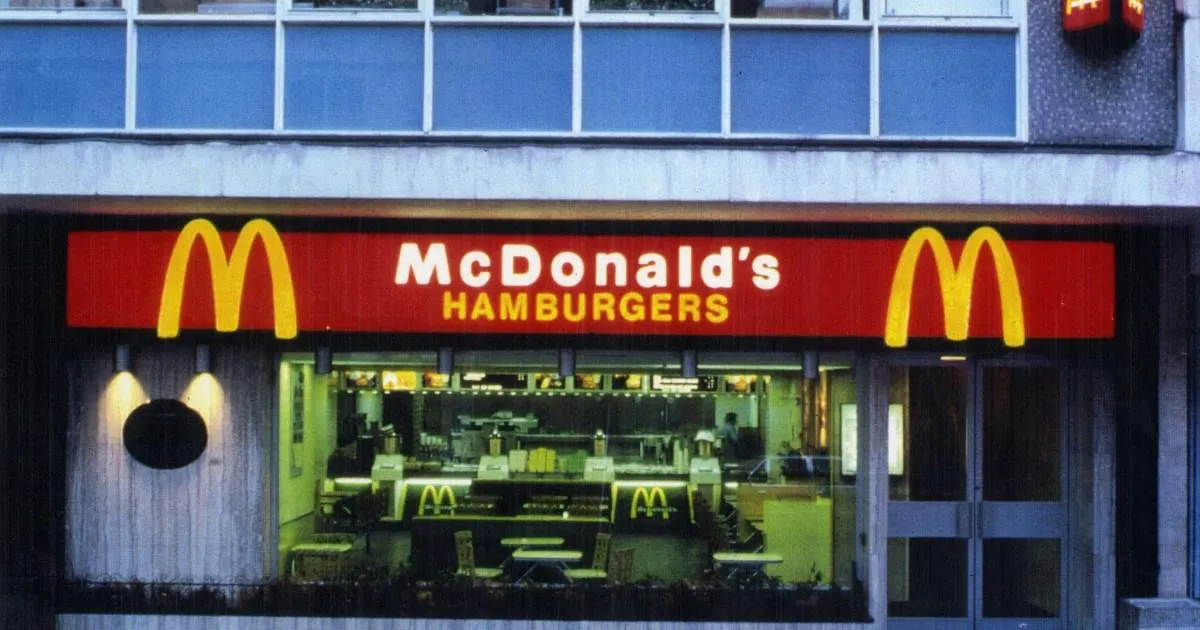
The very first McDonald’s in the UK launched on November 13, 1974, in Woolwich, and back then, a Big Mac cost just 45p, and a cheeseburger was 21p.
Now the food is more expensive, but there are also so many more options available. The Egg McMuffin arrived on the menu in 1982, while Chicken McNuggets weren’t launched until 1984. Believe it or not, these replaced Onion Nuggets as customer tastes evolved.
Advertisement
The Happy Meal followed in 1986, along with the UK’s very first drive-thru restaurant, but it was the 90s that saw something really interesting go on sale.
It’s a somewhat controversial product that many often think is fake or don’t believe really existed, as it wasn’t around for very long: McPizza.
What was the McPizza?
Yep, in the mid-1990s, McDonald’s trialled personal pizzas in the UK, which were an 8-inch pizza split into four slices. These came in three different flavours: Cheese, Cheese & Pepperoni, and the Deluxe (cheese, green pepper, onion, pepperoni, and more).
These were launched ahead of 1994, when the chain introduced the power/breakfast/working lunch, which allowed city workers to order food to their desks. Orders were placed by fax or telephone, and menu options included the personal pizzas.
Advertisement
According to McDonald’s website, the pizzas were sold for a ‘limited period in some restaurants’ in the mid-1990s as part of a ‘sales and product test’.
But they might want to consider it, as the pizzas still have a big fan base. On Reddit, people hailed the McPizza, or Pimma as some also call it, ‘amazing’, ‘delicious’, and ‘one of the best tasting pizzas’ they’ve ever had.
Fries are the most popular item on the McDonald’s UK menu (Picture: McDonald’s)
Others shared fond childhood memories of going to order a pizza at their local Maccies, with u/LochNessMansterLives saying: ‘I used to beg my mum to take me to get McDonald’s pizza. The last McD that had it was 25 min away, and I would crave it!!!’
While u/PassengerTop2805 said: ‘Haven’t had in 30 years, but I can still taste it. It was soooooo good.’
Hey, foodies! Add us as a Preferred Source
At Metro Food, we’re here to bring you all the latest foodie news, delicious recipes, restaurant reviews, and cooking tips. As a loyal reader and a part of our vibrant community, we want to make sure you never miss our articles when searching for stories
Advertisement
Click the button below and tick Metro.co.uk to ensure you see stories from us first in Google Search.
From the latest Walkers flavours to the secret McDonald’s menu, Metro Food has it all
u/DevoALMIGHTY shared: ‘This is one of my fondest food memories. My granddad took me to try it, and we went back every week til it was discontinued.’
Advertisement
And u/brown_boognish_pants wrote: ‘Honestly, the pizza was pretty great for what it was. The crust was totally delicious and kind of special, honestly. That’s what I remember the most. The crust was actually great. It’s still fast food, but it was something everyone liked where I lived. I’d have to say it was dramatically underrated if people think it was a flop. Better than lots of pizza chains. It was surprisingly great.’
The pizza was also sold in the US, launching there slightly earlier in the 80s. It was discontinued in almost all of the chain’s American restaurants, with two locations continuing to sell pizza for years afterwards. It’s thought you can still order pizza today at the world’s second-largest McDonald’s in Orlando, Florida – but it’s not the same as the one from the 90s.
Since pizzas were discontinued, we’ve been inundated with various other new menu items in the UK, including the McFlurry, which launched in 2000. More than 1.7 billion of them have been sold here over the last 24 years.
But it’s actually the fries that are the most popular item on the menu, taking the top spot with £12.5 billion in sales over the last 50 years. The Big Mac comes in second, with £1.9 billion in sales, and the Cheeseburger is third with £1.8 billion.
Advertisement
Mcdonald’s UK 50 year timeline:
1974. McDonald’s first UK restaurant opens on Woolwich High Street. It was the 3,000th McDonald’s to open in the world, and over 1,000 American guests flew in for the official opening.
1974. The price of a Big Mac was 45p, and a cheeseburger was 21p.
1976. The first TV advert is broadcast in the UK.
1978. First exclusively takeaway restaurant opens in Shepherd’s Bush, London.
Advertisement
1982. The iconic Egg McMuffin arrives on the menu.
1984. McDonald’s launches Chicken Nuggets to replace its Onion Nuggets, as customer tastes evolve.
1984. McDonald’s becomes the first restaurant group in the UK to introduce nutritional information onto its menu throughout the country to help customers make an informed choice about what to eat and drink in its restaurants.
1986. First Drive-Thru opened in Fallowfield, Manchester, providing a new way to order.
Advertisement
1986. Happy Meal launched: early toys included Penfriends, Play-Doh and Christmas baubles.
1986. First UK franchisee – John King – opens a restaurant in Hayes, Middlesex.
1989. Ronald McDonald House Charities (RMHC) becomes registered in the UK. Since its launch, it has raised over £100m and supported over 95,000 families across the UK.
Mid-90s. McDonald’s trials personal pizzas; an 8-inch pizza split into four and available in three flavours: Cheese, Cheese & Pepperoni and the Deluxe.
Advertisement
1994. McDonald’s launched the power breakfast/working lunch, which allowed city workers to order food to their desks. Orders were placed by fax or telephone, and menu options included the personal-sized pizza.
1998. McDonald’s starts cracking free-range eggs into its Breakfast Menu, sourcing from British and Irish farms, many of which are family-owned.
2000. McDonald’s opens its 1000th restaurant in the Millennium Dome, designed to maximise the use of recyclable and environmentally sound materials.
2000. The McFlurry launched.
Advertisement
2003. The fruit bag was introduced to the menu.
2004. McDonald’s launches Wifi in restaurants.
2017. McDelivery launches – increasing ways for customers to order and enjoy their McDonald’s favourites.
2021. McDonald’s opens its first net-zero restaurant in Market Drayton, Shropshire.
Advertisement
2021. Convenience of the Future rolls out – an investment of over £250 million over four years to support in redesigning McDonald’s restaurants to keep pace with customer expectations today and into the future.
2022. After three years of research and development, McDonald’s launches its first vegan plant-based burger option: the McPlant.
2022. McDonald’s launches the MyMcDonald’s App.
Today. McDonald’s now has 1,493 restaurants, serving almost 4 million customers a day, across the UK, with the support of 200 franchisees and 171,415 crew members.
Advertisement
Today. Through its supply chain, it has added £2.13 billion indirect gross value added to the economy in the UK, helping support around 15,775 jobs in farming communities and further afield.
Today. McDonald’s now offers 20 different apprenticeships across 9 providers, including 4 universities and has supported 21,000 people in gaining an apprenticeship.
Advertisement
Will pizza ever come back to McDonald’s UK?
The McDonald’s website says the chain doesn’t have plans to bring it back. But perhaps that’s for the best…
We previously discovered that bringing back an old classic doesn’t always go to plan, as fans spent almost a decade begging McDonald’s for the McRib, only to be disappointed when it made its comeback in October 2024.
Customers realised there had been a small change to the way the sandwich was made, with the barbecue sauce being squeezed onto the bun, instead of the pork patty being submerged in the smoky, sweet stuff. As such, people were quick to say Maccies had ‘ruined it’, and the new version was too ‘dry’ as a result.
And this isn’t the only change the chain has made that’s caused a stir with customers. Some noticed the ingredients in the popular sweet and sour sauce had been tweaked, with Apricot Puree being swapped for Apple Pulp, and soy sauce being removed.
Advertisement
A McDonald’s spokesperson told Metro at the time that the recipe had a ‘very minor variation’, because they used a ‘contingency supplier’, who created dips for McDonald’s in Germany.
This article was first published on November 13, 2024.
Jonathan Gill was remanded into custody at Cloverhill Prison, with the next court hearing for extradition to be held on April 21
A man has appeared before the High Court as he faces extradition over the murder of Robbie Lawlor in Belfast.
Advertisement
Jonathan Gill, 44, with an address at Malahide Road, Clontarf, appeared before Judge Barry O’Donnell on the foot of a warrant in Northern Ireland for him to be charged with the murder of Lawlor, which occurred in the Ardoyne area of Belfast on April 4, 2020.
He is also to be charged with possession of a 9mm pistol on a date unknown between April 2nd and April 5th 2020.
Det Sgt Lambe told the court that he arrested the man, whom he identified as the man sitting in court wearing a black top and shorts.
Advertisement
He said he introduced himself to Mr Gill by telling him his name and rank and informed him that he was aware of a trade and cooperation agreement calling for his arrest.
He told Mr. Gill that he would explain the details of this to him at the garda station. He then arrested Mr Gill on the foot of a UK warrant at 4:50pm.
Det Sgt Lambe said he cautioned Mr Gill and said he was not obliged to say anything but that anything he would say could be taken and used in evidence. Mr Gill made no reply, he said.
He then conveyed Mr Gill to Clontarf Garda Station where he was shown a copy of the arrest warrant. Mr Gill confirmed to Det Sgt Lambe that his name is Jonathan Gill, AKA Jack Gill and that his date of birth is the 29th of August 1981.
He informed Mr Gill of his rights to consent or not to surrender to the warrant and to avail of professional legal advice and representation.
Det Sgt Lambe said at the conclusion of reading over the summary he asked Mr Gill if he knew about the offences, to which he replied “No.”
The Judge informed Mr Gill in court again of his rights – that he can surrender to the UK, can avail of professional legal advice, the services of an interpreter, and to obtain legal advice in the UK. He asked Mr Gill if he understood those rights to which he responded in court: “Yeah.”
Advertisement
The Judge remanded Mr Gill into custody, with a date of April 21 set for the next hearing. Mr Gill can make a bail application, the court heard, of which the Minister for Justice is to be informed.
Mr Gill was remanded into custody at Cloverhill Prison, with the next court hearing for extradition to be held on April 21 before the same court.
DUBAI, United Arab Emirates (AP) — Iran fired on targets Friday across the Middle East, damaging a desalination plant and setting a refinery ablaze in Kuwait, while American and Israeli airstrikes hit the Islamic Republic as the war neared the end of its fifth week.
Tehran has kept the pressure on Israel and its Gulf Arab neighbors, despite U.S. and Israeli insistence that Iran’s military capabilities have been all but destroyed. In a sign that part of Iran’s theocracy could be willing to negotiate, the country’s former top diplomat published a proposal for ending the conflict in an influential American magazine.
Iran’s attacks on Gulf energy infrastructure and its tight grip on the Strait of Hormuz, through which a fifth of the world’s oil and natural gas transits in peacetime, have roiled stock markets, sent oil prices skyrocketing, and threatened to raise the cost of many basic goods, including food.
Iran’s ability to wreak havoc in the global economy has proved a major strategic advantage, and world leaders have struggled to figure out how to reopen the waterway. The U.N. Security Council was expected to look at a new proposal.
Advertisement
Iran’s former top diplomat suggests terms to end the war
Former Iranian Foreign Minister Mohammad Javad Zarif — a diplomat with long experience negotiating with the West who remains close to a pragmatic wing of Iran’s leadership — wrote on Friday that the time has come to end the suffering.
“Prolonged hostility will cause a greater loss of precious lives and irreplaceable resources without actually altering the existing stalemate,” Zarif, who helped negotiate Iran’s 2015 nuclear deal with world powers, wrote in Foreign Affairs magazine.
The U.S. has presented Iran with a 15-point plan for a ceasefire that includes reopening the Strait of Hormuz, dismantling Iran’s nuclear facilities and limiting its missile production in exchange for sanctions relief. But no signs of progress were apparent in the diplomatic effort.
Iran’s initial five-point counterproposal aired by hard-line state television included recognizing Iran’s sovereignty over the strait, the removal of U.S. bases from the region, compensation for war damage, and a guarantee against further aggression — all things likely unpalatable to the Trump administration.
Advertisement
Zarif’s proposal included elements of both of the plans.
Iran “should offer to place limits on its nuclear program and to reopen the Strait of Hormuz in exchange for an end to all sanctions — a deal Washington wouldn’t take before but might accept now,” he wrote.
Tehran and Washington were in talks about Iran’s nuclear program when the U.S. and Israel began bombing on Feb. 28 — the second time under President Donald Trump that the U.S. has attacked while in negotiations.
It’s not clear how much to read into Zarif’s proposal. While he has no official position in Iran’s government, he helped get reformist President Masoud Pezeshkian elected and would likely not have published such a piece without at least some authorization from senior leaders.
Advertisement
But it also remains clear who in Iran has the authority to negotiate since many leaders have been killed in the war. Immediately after the piece came out, Zarif wrote he had been “torn” about it — a sign he may already face pressure at home.
What’s more, it’s not clear how Trump will respond. He has vacillated between saying the U.S. is negotiating an end to the war and threatening to expand it. Thousands of U.S. Marines and paratroopers have been ordered to the region, raising speculation that there could be a ground offensive.
Iran targets a desalination plant and a refinery
Kuwait’s Mina al-Ahmadi oil refinery came under Iranian attack, and the state-run Kuwait Petroleum Corp. said firefighters were working to control several blazes.
Kuwait also said that an Iranian attack caused “material damage” to a desalination plant. Such plants are responsible for most of the drinking water for Gulf states, and they have become a major target in the war.
Advertisement
Sirens also sounded in Bahrain, Saudi Arabia said it had destroyed several Iranian drones, and Israel reported incoming missiles.
Authorities in the United Arab Emirates shut down a gas field after a missile interception reportedly rained debris on it and started a fire.
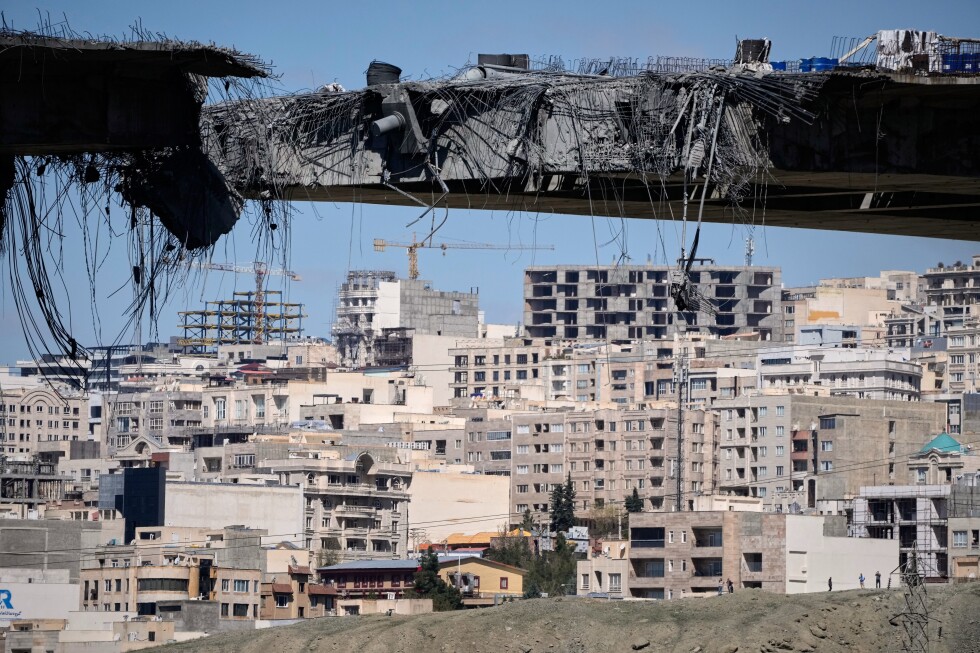
Activists reported strikes around Tehran and the central city of Isfahan, but it wasn’t immediately clear what was hit. A day earlier, Iran said the U.S. hit a major bridge, which was still under construction, killing eight people.
More than 1,900 people have been killed in Iran during the war. In a review released Friday, the Armed Conflict Location and Event Data, a U.S-based group, said they found that civilian casualties were clustered around strikes on security and state-linked sites “rather than indiscriminate bombardment” of urban areas.
Advertisement
More than two dozen people have died in Gulf states and the occupied West Bank, while 13 U.S. service members have been killed, while 19 have been reported dead in Israel.
More than 1,300 people have been killed and more than 1 million displaced in Lebanon, where Israel has launched a ground invasion in its fight with the pro-Iranian Hezbollah militant group. Ten Israeli soldiers have also died there.
UN Security Council to take up Strait of Hormuz security question
Spot prices of Brent crude, the international standard, were around $109 Friday, up more than 50% since the start of the war, when Iran began restricting traffic through the Strait of Hormuz.
The U.N. Security Council was expected to vote Saturday on a proposal from Bahrain that would authorize defensive action to ensure vessels can safely transit the waterway. Bahrain’s initial draft would have allowed countries to “use all necessary means” to secure the strait, but Russia, China and France — who have veto power on the Council — expressed opposition to approving the use of force.
Advertisement
Following meetings in Seoul between South Korean President Lee Jae Myung and French President Emmanuel Macron, the two leaders said they resolved to “cooperate to ensure safe passage” through the strait but did not offer specifics.
___
Rising reported from Bangkok. AP journalists Sylvie Corbet in Paris, Sarah El Deeb in Beirut, Tong-hyung Kim in Seoul, South Korea, and Edith M. Lederer at the United Nations contributed to this report.
We asked you to vote for your favourite chippy, so we headed out to give it a go!
11:20, 03 Apr 2026Updated 11:20, 03 Apr 2026
Mick Conlon’s Fish and Chip Shop Review
Nothing beats a good chippy, and with today being Good Friday, we asked our readers to let us know where their go-to spot is in Belfast for the best fish and chips.
We were inundated with suggestions and we whittled it down to the top 10 which we then put to a reader’s vote, and there was one chippy that came out on top and that was Mick Conlon Fish & Chips, on the Grosvenor Road, so we had to head in and give it a go.
Advertisement
One of the reasons I love this job is that it allows me to venture outside of my usual food catchment areas and try new spots that aren’t right on my doorstep.
When I arrived this spot looked like any traditional chippy which is what I absolutely love. For me, I can tell when somewhere is trying too hard that it won’t quite be the same.
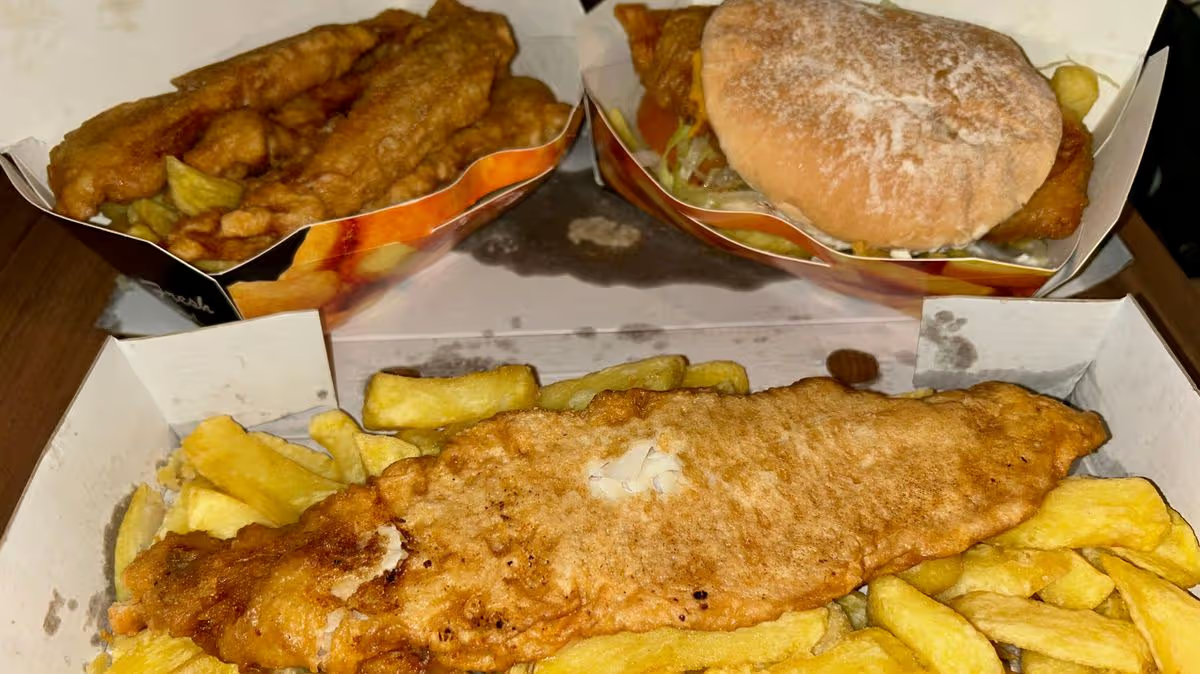
We got a bit of everything when I went in just to get a good idea of how it really was. We went for a fish supper, of course, a chicken goujon meal and a battered chicken burger meal, which I think really covers a lot of the classics, and I knew when I struggled to carry the bag that the portions were going to be pretty filling.
Advertisement
I couldn’t start anywhere else other than the fish supper with this one. The portion sizes were huge, and the fish was bigger than my head. It was cooked very well, and the taste was absolutely spot on. It was exactly what we wanted from a good fish supper.
The next on the list had to be the chicken burger that came with all the trimmings, and it was a struggle to even hold, which I won’t complain about. This was fantastic and was truly a classic chippy chicken burger in all regards.
Advertisement
The goujons were spot on and there were no changes with the portion sizes again. We loved these and they were definitely delicious.
You might have noticed I haven’t spoken about one of the main features of a chippy yet, the chips. That is simply because they deserve their own section. They were absolutely incredible, fluffy and crispy, I couldn’t get enough of them!
The price is something that we all have to consider when picking somewhere and this spot is really reasonable in that regards. So we had a fish supper, goujon meal and a chicken burger meal which came with 2 drinks. This came to a grand total of £21.17 and for the portion sizes this was quite a good price in my opinion.
Advertisement
This spot came with something extra, not quite in the bag, but with a side of personality thrown in for good measure. The staff in here were a proper laugh and kept me entertained to no end while I waited which I think I loved more than the food, and that’s saying something because this was a truly brilliant chippy.
So I can see why our readers love this spot. It was an all round great chippy with all the classics on offer, while also serving a community with more than food. The customers came in and left with a smile and good chat while they waited which shows that this seems to be more than a chippy for the people around it. It is absolutely not fine dining, but we can all get bored with that, can’t we?
So if you’re looking for your next chippy, think about trying this place and you won’t be disappointed.
If your mouth isn’t already watering have a look at our video from my visit:
Ireland won’t be at this summer’s World Cup, but the former USA goalkeeper remembers their 1994 appearance.
11:24, 03 Apr 2026Updated 11:27, 03 Apr 2026
Former USA goalkeeper Brad Friedel has described one of his old Irish teammates as “our Ryan Giggs.”
Friedel spent almost two decades in the Premier League, chalking up almost 500 appearances for Liverpool, Blackburn Rovers, Aston Villa and Tottenham.
During that time he lined out with a handful of Irish stars, including Richard Dunne, Jason McAteer, Phil Babb, Mark Kennedy, Jeff Kenna, Jonathan Douglas, Alan Kelly and Steven Reid.
Advertisement
But one player stood out above the rest. Friedel spent three seasons at Ewood Park with Damien Duff.
Speaking with Belfast Live via Gambling.com where users findtop-rated Irish casinos, the Ohio-born star said: “I played with a few, but the best Irish player I played with was Damien Duff. I thought he was our Ryan Giggs.
“He was incredible for Blackburn during my time there and his performances were up there with the best wingers in the Premier League at that time for sure. That is how good he was.”
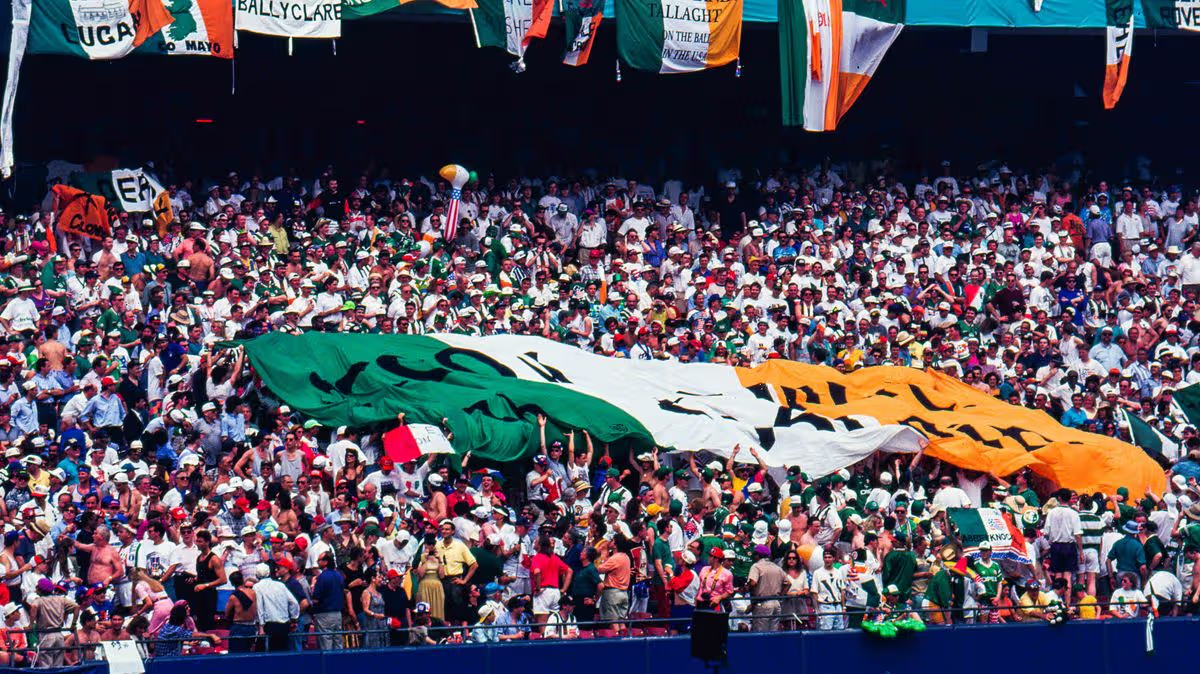
Friedel played three times against Ireland during his 82-cap USA career. He was involved in the US squad the last time the World Cup was held Stateside, when Jack Charlton’s Boys in Green made it to the last-16.
Advertisement
Ireland won’t be involved this time around. A penalty shootout defeat to Czechia in Prague ended their play-off hopes.
According to Friedel: “The fans more than the teams I think will be missed. The Irish fans are brilliant wherever they are and if they were to play in Boston or New York then the streets would be full of green.
“It would be a brilliant atmosphere and one the USA will miss out on as I know how great the Irish fans can be. They would have brought a fantastic fun environment to the States.”
Participants paid up to £49.95 to take part in the event which sold out in minutes
Lois McCarthy and Ava Hicks
11:54, 03 Apr 2026
A supermarket in Wales is set to host what is believed to be the UK’s first ever “supermarketathon” -– and it has already sold out.
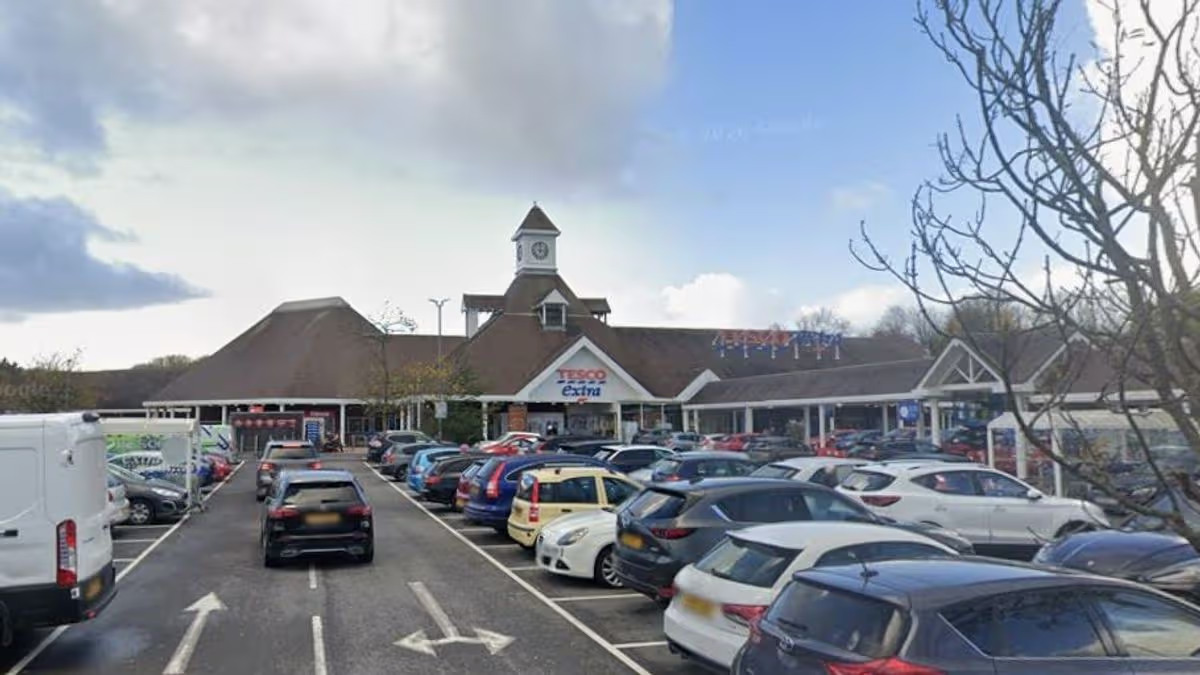
The event will take place at the Tesco Extra store in Bridgend, where 140 runners have signed up to take part in the unusual six-hour challenge organised by Phoenix Running.
Advertisement
Participants can complete anything from a 5km to a marathon or ultra distance by running repeated laps in and around the store.
The quirky course will start in the store foyer before heading outside to loop around the car park.
Runners will then head back inside and pass through the foyer and onto the travelator – although they’ll have to slow things down at that point as walking is mandatory for safety.
From there they will complete a lap of the first floor before heading back down and starting the whole process again.
Advertisement
Organisers say the final lap distance is still to be confirmed but is expected to be between 0.4 and 0.5 miles meaning competitors could find themselves repeating the same route dozens of times over the six-hour limit.
Runners will be free to complete as many or as few laps as they choose within the six-hour time limit. All participants will also receive a finisher’s medal regardless of distance completed. Stay informed on Bridgend news by signing up to our newsletter here
Tickets were priced at £47.95 for affiliated runners and £49.95 for unaffiliated entrants with all places now taken.
The event was met with a wave of excitement on social media with one person commenting: “That’s the stupidest thing I’ve ever heard, I’m definitely interested.”
Advertisement
A second said: “The two loves of my life. Running and supermarkets”, while a third wrote: “This has to be one of the daftest runs I’ve ever seen. I’m checking my diary and setting an alarm to enter.”
Officials from Tesco confirmed the Bridgend store will be hosting the event on June 28 to raise funds for the UK Armed Forces charity Help for Heroes. It will take place outside normal opening hours starting at 4.30pm.
A full risk assessment has been carried out prior to the event with staggered start times planned and safety measures in place including the requirement to walk on the travelator.
A Tesco spokesman said: “Our Bridgend Extra store is hosting this unique event to raise funds for our armed forces network partner charity Help for Heroes.
Advertisement
“It’s not every day that runners get to follow a course that goes through a supermarket so we are not surprised it has proved incredibly popular.”
The US-Israel war with Iran has sent shockwaves through the global economy and predictions of COVID‑era inflation are becoming hard to ignore. In many countries, these pressures are already being felt, as households struggle to afford essentials.
During and after the height of the pandemic, governments across the political spectrum experimented with price controls in a bid to protect people from soaring living costs. Spain and Mexico, for example, implemented such measures from the political left; Greece did so from the right.
They were a response to the pressures of inflation, weakened household finances and growing insecurity for large swathes of the population.
Among these examples, Greece’s “household basket” programme stands out as a detailed attempt to keep essential goods affordable. As consumers may once again be facing a cost-of-living price spiral, it is a case study worth examining.
Advertisement
Greece entered the inflationary period (2021-22) with some of the lowest wages in Europe. Its average pay is still just a third of that in Germany. When inflation hit 10%-12% in 2022, everyday necessities such as food, dairy products and basic household supplies quickly became more expensive.
In November 2022, the centre-right New Democracy government introduced the household basket, requiring major supermarket chains to keep prices low on more than 50 categories of essentials. These included bread, pasta, rice, dairy products, cleaning materials and baby food. Relevant items were highlighted clearly in stores, and the list was updated weekly.
Originally presented as a temporary tool, the programme has been extended repeatedly because of ongoing inflation – most recently due to concerns about conflict-related price spikes. It has become a central part of the country’s strategy to stabilise living costs, along with related measures including profit caps in the fuel sector.
A system based on transparency
What distinguishes the Greek model is how it combines regulation with consumer access to information via a digital platform. Large supermarket chains are obliged to publish the prices of their basket items online.
Advertisement
Once placed on the list, an item’s price cannot rise for seven days, though it may fall at any time. Retailers face fines of up to €5 million (£4.3 million) for violations. The scheme also requires supermarkets to submit supplier price lists, giving regulators insights into where mark‑ups occur.
The platform allows shoppers to compare prices across retailers and locate branches stocking specific items. All purchases must take place in person, maintaining the scheme’s focus on physical retail while improving transparency.
Beyond the basket itself, in 2025 the Greek ministry of development and retailers agreed price cuts of 8% on average for 2,000 goods – and profit margins on essential items were capped at their 2021 level. Inspectors conducted regular audits to enforce compliance.
The contents of the Greek household basket can be tweaked temporarily to reflect holidays or special occasions. vivooo/Shutterstock
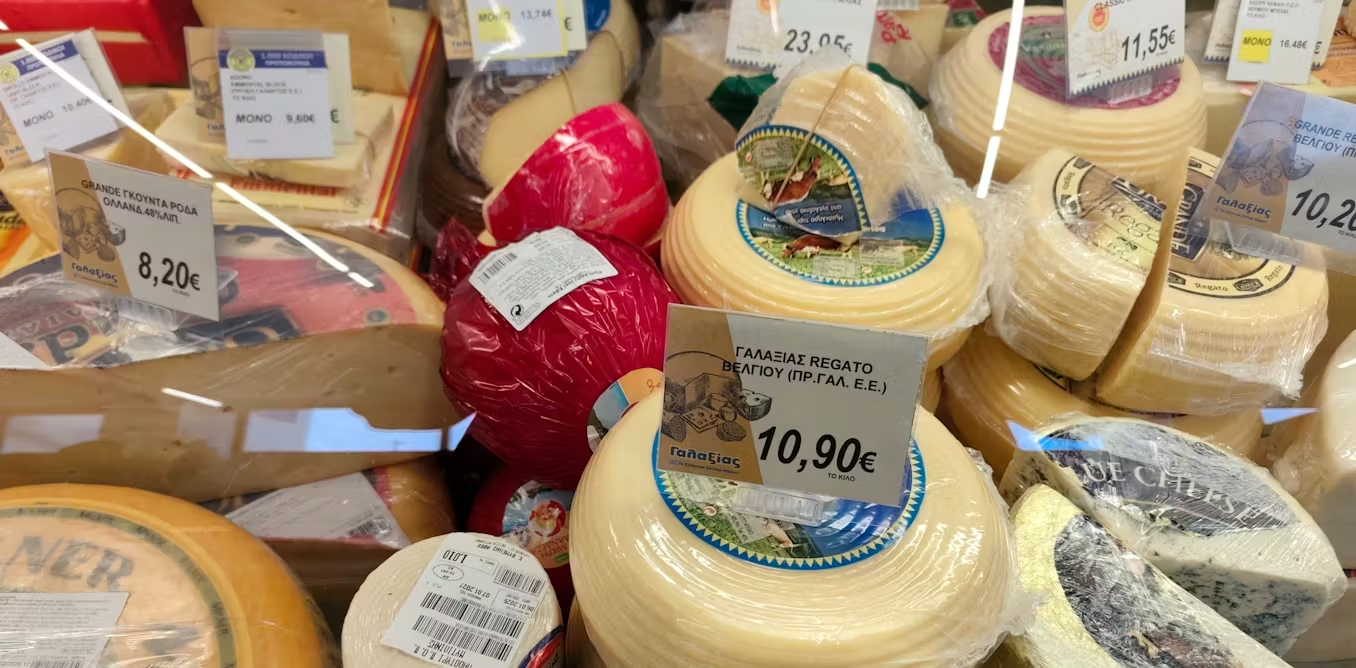
Across many product categories, there were notable price declines. Among 56 breakfast foods and cereals, there was a price fall of up to 23%; among 34 cheese products, the fall was 5%-35%; and for fresh meat, the drop was 5%-7% across three products. On top of these, oils and fats dropped in price by 5%-16%, pasta by 3%-5%, and sweets and chocolate by 3%-17%.
The basket has gradually expanded to include pulses, fresh poultry, meat cuts, milk and cheese. The Greek government has also introduced short‑term “themed baskets” during periods of high seasonal demand. So far, Christmas and Easter baskets have included lamb, goat meat, turkey and chocolate Easter eggs to keep a cap on holiday costs.
Price controls remain controversial for some. Retailers in Greece have argued the system is unfair, and that they are unable to absorb the costs.
However, in the Greek case, supermarkets did accept reduced profit margins for the price-capped product lines. They responded with price wars to attract custom and boost market share, and with competitively priced own-brands. One consequence of these measures is that Greece now has a relatively cheap food basket compared with other EU countries.
Advertisement
In the UK at the height of the COVID pandemic, some large retailers raised prices above inflation – doubling their profits between 2019 and 2021-22. Under such circumstances, many may feel it is only fair to ask them to contribute to combating a cost-of-living crisis.
So, while price controls may not always please retail and other sectors, they are becoming more common. Many countries have been experimenting with ways to contain the cost of living, as practical tools to stabilise inflation and support citizens during unpredictable economic shocks.
Greece’s experience shows that such measures can be structured, transparent and enforceable. It also demonstrates that price controls need not be limited to one political tradition. They have been deployed by governments across the ideological spectrum when faced with inflationary pressures.
As the UK braces for further economic turbulence, triggered by conflict and volatile energy markets, Greece’s family basket offers a model worth studying. It is not a full solution to high inflation – nothing so simple exists – but it shows how governments can intervene to reduce pressure on households while maintaining oversight of essential markets.
Advertisement
A political party ready to champion measures that deliver immediate relief to struggling households could resonate widely at a moment when many people have yet to recover from the last cost‑of‑living crisis.
King Charles and Queen Camilla distributed Maundy money to 154 recipients at St Asaph Cathedral in North Wales, hours after ‘Not Our King’ graffiti was cleaned from the cathedral grounds
Jennifer Newton Royal Features Writer
11:38, 03 Apr 2026
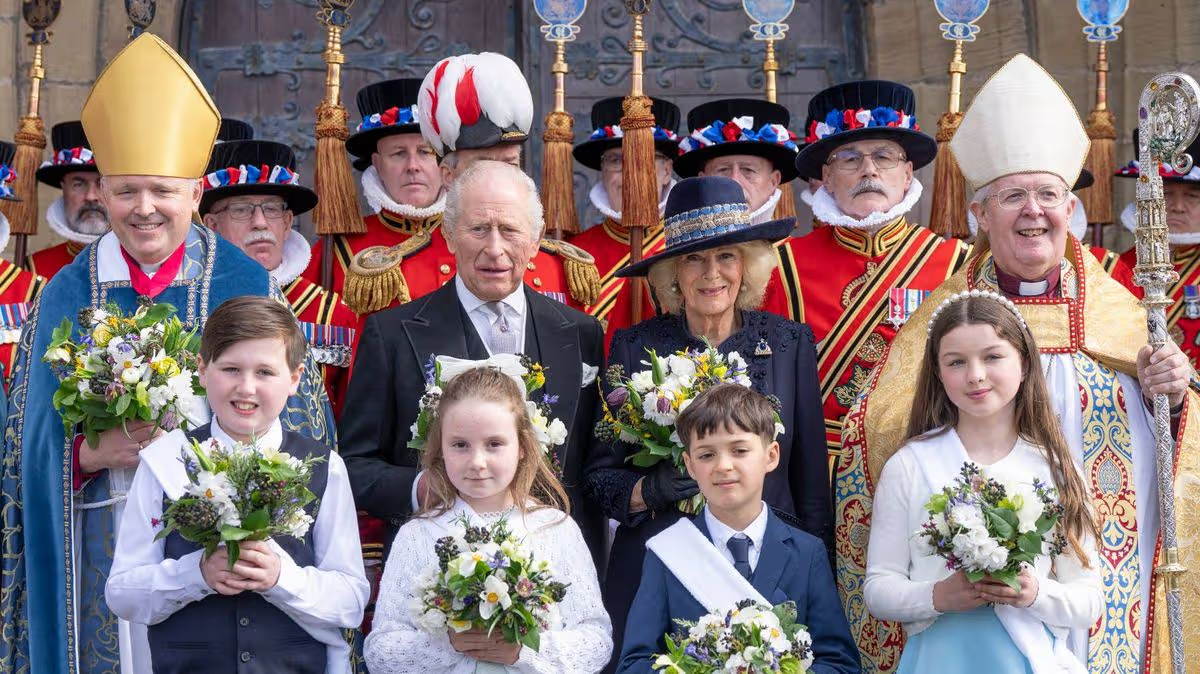
The King distributed Royal Maundy gifts at an annual Easter service – just hours after workers were called in to remove graffiti outside reading ‘Not Our King’. Charles, accompanied by Queen Camilla, attended the traditional ceremony at St Asaph Cathedral in North Wales, which was last held in the country in 1982.
He presented Royal Maundy gifts to 77 men and 77 women as part of the long-standing tradition, which takes place on the Thursday before Easter each year. It honours individuals who have demonstrated outstanding Christian service and made a meaningful difference to their local communities.
Advertisement
Recipients selected from dioceses in Wales or near the English border were each handed two leather purses. The white purse contained a set of specially minted silver Maundy coins totalling 77 pennies, reflecting the King’s age, while the red purse held a £5 coin commemorating 100 years since Queen Elizabeth II’s birth, along with a 50p coin marking the 50th anniversary of The King’s Trust.
Ahead of the service, well-wishers bearing Union flags and Welsh flags gathered along the street outside the cathedral to welcome the royal couple. Further along the road, separated from the main crowd by barriers, stood a group of protesters carrying yellow flags from Republic, an anti-monarchy campaign group.
They displayed a banner featuring photographs of Charles, his brother Andrew Mountbatten-Windsor and Prince William, alongside the slogan “What are you hiding? Royal Epstein inquiry now”.
In the hours before Charles and Camilla’s arrival, graffiti reading “Not our King” was scrubbed from a wall within the grounds of the building, which holds the distinction of being the UK’s smallest ancient cathedral, reports the Mirror.
Advertisement
The earliest recorded Royal Maundy service dates back to 1210 under King John. The ceremony commemorates the Last Supper of Jesus Christ, with the distribution of alms having since become a longstanding tradition.
Among those honoured with Maundy Money was Jean Carthy, 81, from Towyn. She revealed she had initially believed it to be a scam upon receiving a letter informing her of her nomination.
She said: “Even this morning I was wondering why I was there. It was just so, so special and especially because it was the first time it has been in North Wales. He gave me the purses and said ‘thank you for the work you do’ and that was really something.”
Fellow recipient Colin Pengelly, 77, from Castle Caereinion, near Welshpool, said: “It has been an amazing, humbling experience. The King put the purses in my hand and said ‘thank you for all you have done over the years’. I said to him ‘thank you too, keep doing it’.”
Advertisement
Speaking to recipients ahead of the King’s arrival, the Bishop of Norwich, the Right Rev Graham Usher, said: “It’s an act of humility on the part of the monarch in which a small representative group of people who have lived an exemplary life of service to their church and community is honoured. Enjoy this moment. It’s your moment.”
The bilingual ceremony, conducted in both English and Welsh, featured a specially written anthem, A Sacred Benediction, performed by soprano Rebecca Evans.
Charles and Camilla were welcomed by local schoolchildren as they left the cathedral. Many of the children had gathered bunches of flowers to hand to the royal couple, before the King and Queen paused to greet well-wishers who had been lining the High Street throughout the service.
For the occasion, Camilla chose a Philip Treacy hat, a navy blue silk crepe pleated dress and a navy blue wool crepe embroidered coat, both crafted by Christian Dior. She finished the ensemble with a sapphire and diamond brooch that had once belonged to the late Queen.
Speaking about his homeland, he told The Times: “The way people treat Scotland, you know, it’s very beautiful and all that, but what we’ve done intellectually — we created television, the telephone, advances in medicine — it’s extraordinary. But we’re so low-graded, and because of that we don’t get what we deserve.
The carnival is is set to be revived this summer after an almost 20-year absence, as local group Howfen Wakes seeks to bring back the popular tradition.
The carnival began many years ago as an agricultural show before blossoming into a full-scale event with floats, games, stalls, live performers, and a parade.
Westhoughton Carnival 2004 (Image: Danny Gifford)
Westhoughton councillor David Wilkinson said: “We were really pleased how our Christmas Markets went.
“The carnival coming back will be a big step forward for our community – it will be great.”
Advertisement
Cllr Arthur Price added: “Anything that brings the town together is a good thing.”
All councillors present agreed to approve Howfen Wakes’ £500 grant application to help organise the event.
Westhoughton Carnival 2004 (Image: Danny Gifford)
Howfen Wakes plans to start small in order to test public interest.
They have been granted the right to use the field in Westhoughton, where they will set up this summer.
Advertisement
The first carnival will be a party in the park – stalls, amusements, food, face painting and hair braiding for the kids.
One of the main issues with the original carnival was the cost of road closures and traffic management, so the plan is to keep that to a minimum this year.
Westhoughton Carnival 2004 (Image: Danny Gifford)
If the response is good and the carnival is popular, Howfen Wakes will expand it year on year until it begins to resemble its former pomp, with parades, floats, and performers.
‘Howfen’ is a slang term for a Westhoughtoner, so ‘Howfen Wakes’ refers to the reawakening of the Howfens as they revive their carnival.
Advertisement
As it stands, the carnival has been inactive for about 20 years.
Westhoughton Carnival 2004 (Image: Danny Gifford)
It’s folding was largely due to cost-related pressures, as the expanding carnival accrued expanding costs for policing, road closures, and performers.
This led to the first iteration of Westhoughton Carnival being cancelled in 2007, despite calls for support from local residents and councillors.
City of York Council says it is considering a new approach to the seasonal event, which would see the market close on Tuesdays each week to allow “business as usual” in the city centre.
It said that the rest day would ease access for residents who feel cut off by the market, with particular benefits intended for Blue Badge holders.
RECOMMENDED READING:
As reported by The Press in February, extra Blue Badge parking spaces, improving accessibility for buses, dedicated quiet and rest spaces, more cycle parking and benches are among proposals drawn up following a review of last year’s market.
Advertisement
Controversial restrictions were implemented last November following an Anti-Terror Traffic Regulation Order (ATTRO) requested by North Yorkshire Police which barred drivers from city centre streets during the market’s opening hours – restrictions the force said were needed to deter terrorist attacks.
However, campaigners have slammed the measures claiming they exclude some York residents from their own city centre – especially Blue Badge holders who are unable to drive into parts of the city.
Councillor Pete Kilbane, deputy leader of City of York Council, said: “York is the most Christmassy place to be which is why it’s enjoyed by residents and visitors from all around the world.
“At a special time of year with the winter lights and Christmas Market, it’s just a fantastic place to be.
Advertisement
“However, this isn’t the case for everyone. We know that some people can feel cut off from the city centre at this time of year and this can’t continue.
“This report looks to explore our options to improve access to the city centre in a way which also keeps the city safe.
“This includes looking at rest days for the market to support those who need to get into the city centre for everyday needs such as banking services, and for leisure such as enjoying York’s amazing retail and hospitality offer.”
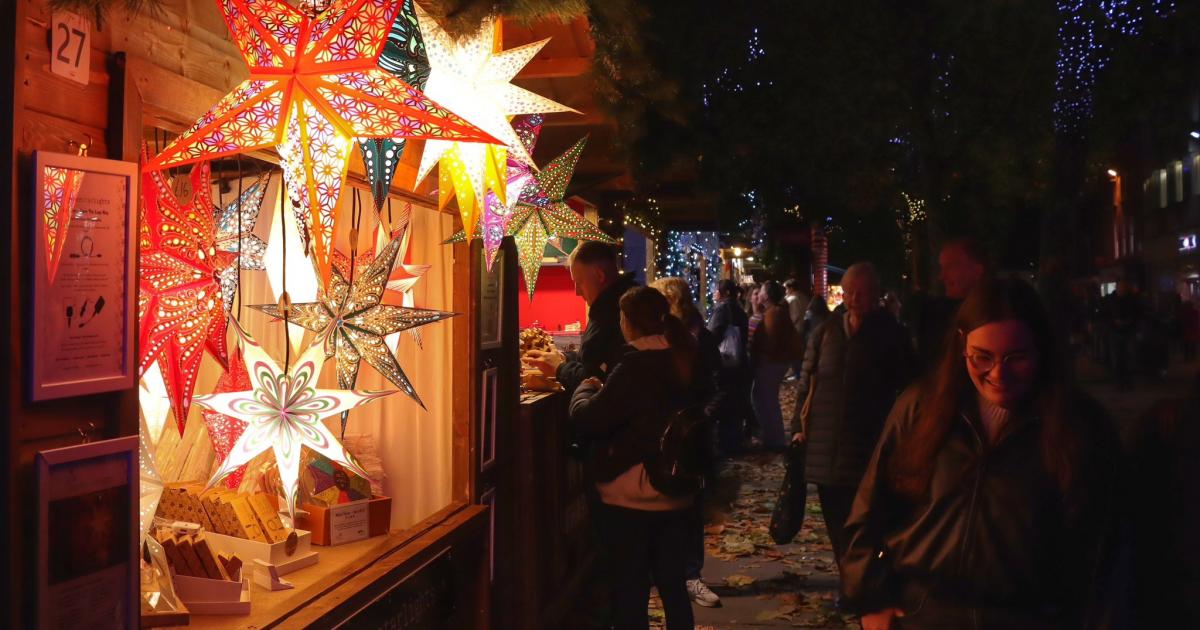
York Christmas Market could close one day a week under fresh plans (Image: Staff)
If approved, York’s Christmas market would close every Tuesday – traditionally the day when footfall for the market is quieter.
Advertisement
This would allow Blue Badge holder access through the hostile vehicle measures on those Tuesdays, unless exceptional circumstances such as a national security threat, specific intelligence or a VIP visit required retricted access.
On the remaining days of the week, vehicle restrictions would remain in place in line with anti-terrorism measures requested by the police.
The council says the change could give residents and visitors greater freedom to access shops, services, and leisure options without the usual constraints of the market operating.
If the six-day market option is backed, 2026 would serve as a trial year, with arrangements for 2027 and beyond being reviewed following an evaluation of that season.
Advertisement
The proposal will be discussed at the council’s executive meeting on Tuesday, April 14, with papers for the meeting available on the City of York Council’s website.
The meeting will also be available to watch live or on demand at www.york.gov.uk/webcasts.
















































You must be logged in to post a comment Login