



Related: Kim Zolciak-Biermann and Kroy Biermann‘s Relationship Timeline
Advertisement


The past decade has been incredibly fruitful when it comes to film; to translate it into meme language, “We are so back” when it comes to great cinema. New filmmakers emerged with incredibly creative ideas, while established names have seemingly achieved their collective magnum opus, delivering some of their strongest and most powerful works in recent years.
The last ten years (plus one) have been very exciting as cinematic boundaries were often moved, Oscar records were broken, and the landscape of cinema changed with the wider resurrection of 70mm film and the awakening of streaming. Without further ado, here are the eight most perfect movies of the last 11 years, ranked by their impact, general critical consensus, and perhaps a touch of personal preference.

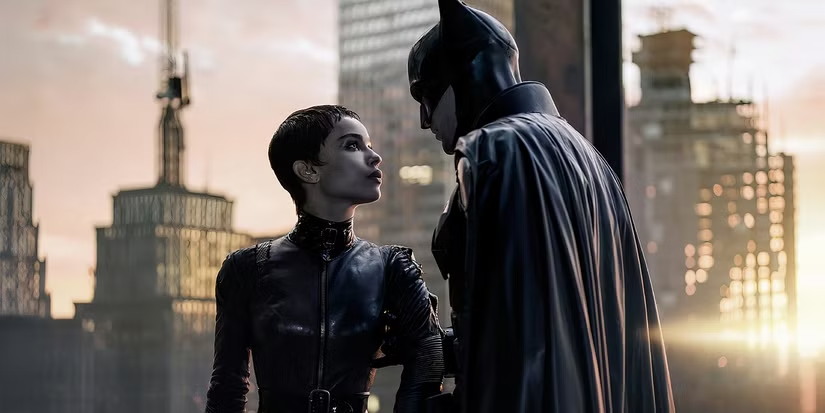
The Batman is an incredible neo-noir action film that has taken everyone by surprise. It’s only surpassed by the secrecy and magnitude of its still-in-production sequel, but we mustn’t forget it’s a film that carries its own weight. While the long runtime may have deferred some people from undertaking the feat of watching this DC Comics-based film, the runtime is barely felt throughout; there are true moments of filmmaking ingeniosity, including the stunning cinematography and skilled editing. The performances are strong, heavy, and felt throughout, with particular praise to Colin Farrell, who still manages to give Oz Cobb, aka The Penguin, a massive personality underneath a ton of prosthetics and makeup.
The Batman focuses on the vigilante’s detective side a lot more than his physical heroics; Bruce Wayne/Batman is portrayed by Robert Pattinson, and he finds himself at a crossroads in Gotham: protect the innocent or persecute the corrupt? The Riddler (Paul Dano) does him the service of the latter by targeting seemingly random officials and leaving messages for the Batman throughout. The film describes Gotham as a seedy urban landscape filled with reprehensible people—and at the same time, as a place full of innocent folks falling victim to the minority of those sitting greedily in their local government. Whether or not there is a sequel, The Batman is perfect as a standalone film, too; you don’t have to be a fan of comics or superhero stories to enjoy the film, which is probably the best part of all. It explains and introduces its characters with clarity, paving the way for how we see vigilante-themed cinema.

Many would deem Ari Aster‘s feature film debut, Hereditary, a better film, but Midsommar is a perfect sophomore feature for this horror director and one of the most perfect films of the decade. It’s been a wonderful decade for horror; one of the greatest directors of our time, Robert Eggers, has been especially dominant in the horror-fantasy landscape, and filmmakers like Coralie Fargeat, Danny and Michael Philippou, and Damian McCarthy have helped re-establish horror as a sentimental genre. Any true fan of horror understands that the scary stuff is rooted in trauma, social conditioning, and pain, and so presenting themes of loss and grief through horror isn’t anything new. Like a Newton’s cradle that stopped moving back and forth, Aster pulled the first ball and gave that sentimentally scary machine momentum to keep going once again.
Midsommar follows Dani (Florence Pugh), a young woman who loses her entire family in a tragic murder-suicide. Dani has been dating Christian (Jack Reynor) for a while, but their relationship has grown cold, and her grief seems to take them further apart. When their friend, a native Swede named Pelle (Vilhelm Blomgren), invites Dani, Christian, and their two friends Josh (William Jackson Harper) and Mark (Will Poulter) to a traditional week-long celebration of midsummer in his ancestral commune named Hårga, they all agree to go. Dani becomes the first to realize that the Hårga have different, pagan-like customs and feels compelled to run and give in at the same time. Many call Midsommar a breakup movie, and it technically is; however, it’s a cathartic release of grief in the same sense, and though it does get downright unsettling, it’s a folk horror that feels deeply human.

Joachim Trier has an interesting ability to depict life with a lightness behind its inherent heaviness. No matter how long you watch or what is on-screen, there’s a sense of final optimism in his stories; themes like depression, generational trauma, grief, and avoidance are quite common for the director, but while you watch his protagonists, you get the uncanny sense that despite all the tragedy, things can end up well. With every unspoken word or a spoken cry for help, you feel seen by Trier’s films, especially if you’ve ever felt like one of the people in them. Sentimental Value won the Oscar for Best International Feature at this year’s Oscars, but its running for Best Picture overall was a genuinely justified nomination. Sentimental Value feels like you are truly watching three generations of the same family trying to resolve their shared trauma.
Sentimental Value follows the eldest daughter in her family, actress Nora (Renate Reinsve), whose film director father Gustav (Stellan Skarsgård) reappears in her and her little sister Agnes’ (Inga Ibsdotter Lilleaas) lives after their mother’s death. Agnes lives with her husband and son in their childhood home, which has been in Gustav’s family for generations, and when they all find themselves under the same roof again, their memories intertwine with the trauma of each of their upbringings. It’s an incredibly moving film full of life; Reinsve brings to life a hurt woman who is still a little girl inside, while Skarsgård hits all the right notes as a father trying to mend his poor past. If you haven’t seen it, you simply must.
Speaking of father-daughter relationships, a film that must never be forgotten is Charlotte Wells‘ Aftersun. If there has ever been a feature capable of making you stop everything and have a good cry during the end credits, it is this one. While it celebrates the relationship of a teen girl and her young father, it also honors her memory of him that has undoubtedly grown into a trauma she can’t easily put behind her. Aftersun was apparently based on Wells’ life and relationship with her own father, allowing the director to resolve her trauma in some way; most of her work is based on some form of healing or opening of deep-seated grief. This film was Paul Mescal‘s breakthrough into the world and his first Oscar nomination; it was well-deserved because he is raw and vulnerable in it.
Aftersun follows 11-year-old Sophie (Frankie Corio) during the time she went on a holiday to Turkey with her 30-year-old father, Calum (Mescal). She records a big portion of the holiday on her camera, remembering how things really were in between; Calum seems loving but like a capacity to be fully present is missing. The film shows Sophie’s perspective and her making friends and being a child on holiday—as she should—but it often switches to Calum, who is pondering, changes his mind frequently, and wonders about life past thirty. Aftersun is a touching slow-burn that will undoubtedly make you emotional, at least; it’s beautifully made, obviously with lots of love and care for the protagonists, differentiating itself from a standard family drama in more ways than one.

Sinners is the new record-setting film, celebrating 16 Oscar nominations, which is the most of any film (14 had been the norm so far). Ryan Coogler‘s fifth film is also his fifth collaboration with Michael B. Jordan—ahem, Oscar winner Michael B. Jordan—and with composer Ludwig Göransson. The trio has always been good, but it seems their friendship has left the biggest impact on Sinners, which has slowly turned into a movie of a grand, symbolic, and beautiful relevance. The storyline feels reminiscent of From Dusk Till Dawn, which Coogler cited as an inspiration, but Sinners dedicates its entire runtime to understanding the context of the villains, making the protagonists people worth defending and cheering for, and weaving tradition, heritage, culture, and social history within the narrative.
Elevated from a simple vampire slasher, Sinners carries the symbol of a musician whose musical skill can bridge the gap between the spirit world and the world of the living; that musician is young Sammie (Miles Caton), the son of a preacher who deems his blues singing sinful. Sammie is cousins with the Smokestack twins (both played by Jordan), who return to their Mississippi hometown from Chicago, ready to open a juke joint for the locals. In a whole different place, sinister spirits gather as Irish vampire Remmick (Jack O’Connell) turns a pair of Klan members into vampires, hears Sammie’s song from afar, and takes his thralls to him, hoping to feed. Sinners is an encapsulating experience that will not leave you behind for a while, and you will feel compelled, even invited in, to rewatch the film again and again.

Arrival is, and I can’t say this enough, one of the most beautiful films ever made. Its use of science fiction to tell the story of fate and choice is an ingenious way to make the science feel closer and the fiction less fictional; Denis Villeneuve cements himself as a director to watch, although we already knew how brilliant he was thanks to Incendies, Prisoners, and Sicario. Arrival was based on the novella Story of Your Life by Ted Chiang, and it asks several questions throughout the film, one being is language or mathematics the universal language? and the other, more relevant one, if you knew how your life evolves from here on out, would you still make the same choices? It’s not just about those emotionally resonant themes either; Arrival is its own form of love letter to language, communication, and understanding.
Arrival is set in modern times, when twelve oval-shaped black alien ships appear across Earth, just hovering and neither making contact nor threats. Linguistics expert Louise Banks (Amy Adams) is hired by the US Military outpost in Montana, where a spaceship hovers, together with physicist Ian Donnelly (Jeremy Renner), and their task is to understand the spaceship. They enter it and find octopus-like creatures sending them signals like octopuses squirting ink, but the signals take the shapes of symbols and Louise and Ian realize it’s the aliens’ language. Arrival takes the hypothesis of linguistic relativity, which is the theory that language can affect a person’s worldview or cognition, placing it within the context of love and loss. I get emotional just writing about it because you can only imagine where the story can go; if you’re also a language enthusiast or a graduated linguist (ahem), Arrival will scratch a particular itch because it treats linguistics like the miracle that it is.

Mad Max: Fury Road is the greatest action film of the 21st century, and while this is highly subjective, critics and audiences haven’t shied away from giving George Miller‘s film this flattering title. Fury Road also still makes the cutaway, as it’s been exactly 11 years since it came out—I remember watching its premiere at the cinema so vividly that there’s no way a decade has passed. This is another testament to its enduring appeal—over ten years later, we still talk about and honor Fury Road as the best among the best. Achieved through mostly practical effects, location shoots, and an arduous editing process, Fury Road had actually been in the making since 1987, going through some seriously lengthy development hell. And yet, it seems like it came at the right time, providing Miller with enough technological and practical freedom in filmmaking to bring his vision to perfection.
Fury Road is set in the apocalyptic wasteland where water is a scarce commodity. One warlord, Immortan Joe (Hugh Keays-Byrne), holds monopoly over a massive water source, hoarding it for himself and his children; to avoid defective inheritors, Joe keeps a group of young, healthy women as his brides, forcing them to give birth to his successors. The War Rig driver, Furiosa (Charlize Theron), decides to escape Joe’s tyrannical hands and brings the brides along with her. She is aided by Max Rockatansky (Tom Hardy), Joe’s prisoner and a man with no land or home; what follows is a tireless, action-packed pursuit across the wasteland, showing us bravery in the face of danger. If you believe in freedom enough, you’ll understand it’s worth going through hell and back for it—Fury Road writes that message out like a line in the sand.

Parasite wasn’t just the first-ever Best Picture winner from South Korea, but also the first-ever non-English-speaking Best Picture winner, which was also accompanied by Best International Feature, Best Director, and Best Screenplay. That means that Parasite is literally the perfect package of a film, coming from the mind of a modern filmmaking genius, Bong Joon-ho. To some people, the Oscars aren’t the true measure of quality (which is understandable), but so many stacked accolades send a signal—a signal that this is a film to pay attention to; as director Bong said, to paraphrase, getting over the three-inch barrier of subtitles should be a priority if you truly wish to open your heart to cinema’s greats. Fun fact: the house that is heavily featured in Parasite isn’t real; it was built for the purpose of filming, and the levels it occupies were intentionally designed by Bong and production designer Lee Ha-jun to achieve a linear yet contrasting narrative structure.
Parasite follows the poor Kim family, who live in a subterranean apartment, mooch the neighbors’ Wi-Fi, and leave their windows open when a fumigator comes so they can “get free disinfection.” The Kims find themselves in a scheme where they infiltrate the lives of the wealthy Park family, mostly through their well-intentioned but snobbish and out-of-touch matriarch. The Kims and the Parks are depicted as a contrast between class structures in Korea, but also as a result of the imposed class structure; their behavior isn’t always inherent, with a lot of it coming from years of living within the system. Parasite will make you laugh, maybe even shed a short tear or two; it’s also terrifying in small doses, becoming a proper psychological thriller as it moves forward. A masterpiece that will not be so easily forgotten. In fact, let me go watch it again.

Some movies look like they were made to be judged twice. Mercy had a rougher time making its mark in theaters, but the setup was always solid enough to suggest it could hit differently at home. A near-future thriller about a man racing to prove his innocence inside an AI-driven justice system was always going to get a second look once it landed on streaming. And now that it’s on Prime Video, that second look is turning into a real breakout.
The movie has climbed to No. 1 on Prime Video in the United States, while FlixPatrol’s global snapshot also shows it leading in a number of markets. That has helped turn Mercy into one of the bigger streaming stories of the week, even after a theatrical run that didn’t really catch fire.
Directed by Timur Bekmambetov, the film stars Chris Pratt as detective Chris Raven and Rebecca Ferguson as Judge Maddox, the AI authority deciding his fate. The premise is easy to pitch, and it’s even easier to understand why it’s working on streaming: It’s fast, high-concept, and built around a ticking clock. Prime viewers clearly wanted a slick sci-fi thriller, and Mercy is getting the benefit of arriving at exactly the right time.

Remembering the Icons of Film — Collider Movie Quiz
We pay tribute to the talents who helped define Hollywood.
Collider’s review, written by Jeff Ewing, stated that Mercy was a surprisingly inventive evolution of the screenlife subgenre, even if its ambitious ideas occasionally outpaced its logic. The film built on Bekmambetov’s reputation as a pioneer of screen-centric storytelling while cleverly expanding the format through AI-driven crime-scene reconstructions that injected scale, action, and cinematic energy into what could have been a claustrophobic thriller.
“Pratt delivers a sufficiently admirable performance, while Ferguson is stellar as the AI judge. Some of the twists move a little too quickly; even watching on a big screen leads blink-and-you’ll-miss-them details flying by too quickly. There are also a few logical issues with various machinations and character plans, and the world only makes sense in the most superficial of ways. There are successful elements in the script, certainly, but there are also several frustrating moments that simply needed another draft to work the knots out. All that said, it’s a successful foray into sci-fi territory thanks to a willingness to stretch the subgenre’s established rules, making for a fun murder mystery that keeps audiences guessing.”
Mercy is streaming on Prime Video.

January 19, 2026
100 minutes
Timur Bekmambetov
Marco van Belle
Charles Roven, Majd Nassif, Robert Amidon, Timur Bekmambetov
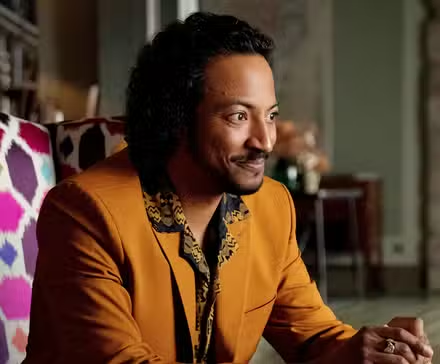
In 2024, Apple TV quietly launched one of its most ambitious and emotionally grounded sci-fi dramas in Constellation. The series had all the right ingredients: sharp writing, standout performances, and a great blend of cerebral sci-fi and intimate character drama. Known for giving its shows room to grow, many expected Apple to let Constellation find its footing as a show with clear potential to expand its world and deepen its characters.
Instead, the series was disappointingly cancelled after just one season. The decision was especially frustrating given how gripping and well-crafted the show was. It’s no surprise that Stephen King called it “just about perfect.” But with Apple pulling the plug so early, we’re left wondering why a series that earned both critical and audience praise ended so unceremoniously without the chance to finish what it started.
From its first episode, Constellation proved it was more than a typical space thriller. While it delivers all the chilling elements you’d expect, what makes it stand out is how deeply it is rooted in character. The series follows Jo Ericsson (Noomi Rapace), an astronaut trying to piece herself back together after a harrowing, potentially world-altering event. After returning to Earth following a catastrophic incident aboard the International Space Station, Jo finds that reality no longer feels right. Her young daughter doesn’t remember her the same way, objects are out of place, and even her own memories seem to shift.
The mystery only deepens from there, using its sci-fi elements to explore personal questions about memory, motherhood, and identity. Jonathan Banks (Breaking Bad) plays Henry Caldera (at least in one universe), a brilliant but unstable physicist tied to the strange phenomena unfolding in Jo’s life. The show builds tension not with jump scares or explosive action, but with the quiet terror of no longer recognizing the people you love or even yourself, and wondering if you’re losing your mind. Both Rapace and Banks deliver standout performances, supported by an excellent cast including James D’Arcy, William Catlett, and twins Davina and Rosie Coleman, who share the role of Jo’s daughter, Alice.
Visually stunning and technically ambitious, the series is created by writer Peter Harness (Jonathan Strange & Mr. Norrell) and executive produced by Michelle MacLaren, who also directs the first two episodes and establishes the show’s striking visual tone. Constellation constantly plays with the question: Is Jo experiencing space sickness, or has something fundamentally shifted in the universe? That uncertainty allows the show to move seamlessly between high-concept sci-fi and grounded emotional drama. Yet amid all its complexity and suspense, it never loses sight of its emotional core. The season’s shocking cliffhanger only deepens the intrigue, landing somewhere between heartbreak and horror, and leaving viewers wanting more.
What makes Constellation’s cancellation even more frustrating is how clearly it sets the stage for a second season. In a 2024 interview with Collider, showrunner Peter Harness, who also wrote all eight episodes, revealed there were big plans beyond the initial arc. With such a dense and ambitious story, Harness naturally developed ideas that didn’t fit into Season 1, especially around the dynamic between Henry and Bud. As he puts it, those ideas are “saved up for a rainy day in the future,” hinting at a deeper mythology that only begins to unfold.
Harness was also careful not to end the season on a total cliffhanger, aware of how unsatisfying that might feel. He made sure to tie up key threads, like Jo and Alice’s relationship, in a way that feels emotionally complete while still suggesting that there’s plenty more story to tell. Some viewers may have felt like the ending was still satisfying, but it’s hard not to imagine the possibilities left unexplored: what happens if timelines collide, or if the boundaries between realities fully break down? What if, as Noomi Rapace hoped for, both Jos met each other? It’s truly a shame we’ll never know.

Apple TV’s Stellar 9-Part Sci-Fi Series Has No Bad Episodes
Don’t let the slow-burn premise fool you; this show is filled with shocking surprises and jaw-dropping moments.
The kind of mystery Constellation builds isn’t meant to be rushed. Harness avoids over-explaining or accelerating major plot developments, allowing the emotionally resonant character work to breathe. A story like this needs time to peel back its layers, slowly drawing the audience in while keeping the focus on its characters. Season 1 does that with remarkable restraint. Even without all the answers, the experience remains captivating, helped by Apple’s weekly episode rollout, which gives viewers time to absorb each chapter.
That’s what makes the cancellation sting even more. Apple TV+ has a reputation for nurturing high-concept shows, which makes Constellation’s abrupt ending feel particularly disappointing. In a streaming landscape overloaded with content, this is a show that delivers for both die-hard sci-fi fans and for viewers who are looking for characters to connect with. For a platform that champions slow-burn storytelling like Severance and For All Mankind, cutting Constellation short feels premature. Stephen King wasn’t wrong when he called it “just about perfect.” And while it may never get the second season it clearly earned, Constellation will be remembered as one of the most daring, resonant sci-fi series in recent memory, and a reminder that storytelling this thoughtful deserves room to thrive.
Season 1 of Constellation is available to stream on Apple TV+.

2024 – 2024-00-00
Peter Harness
Michelle Maclaren
Peter Harness
:max_bytes(150000):strip_icc():format(jpeg)/josh-duggar-marraige-anna-duggar-main-121824-e5317e68f07b494da00c3bcc49b05e2a.jpg)
The 31-year-old former reality star faces child molestation charges related to an alleged 2020 incident in Florida.
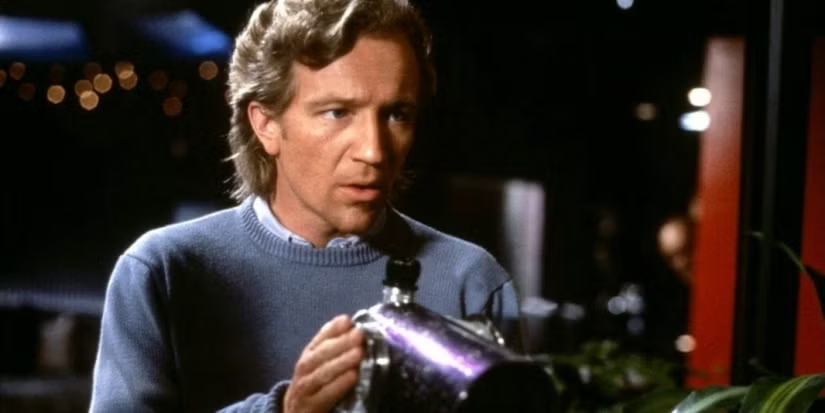
In many ways, the 1980s were one of the most formative decades in American history, with its art, culture, and style continuing to be a key influence in the world today. The decade was a golden age for thriller filmmakers, who pushed boundaries of storytelling and spectacle with gripping, psychosexually charged movies. However, not all of those experiments in subversiveness paid off, and quite a few of the thrillers of the time have not aged well.
With some of these movies, the fact that they’re dated and uncomfortable doesn’t necessarily take away from what they do get right in terms of storytelling and performances, even if their representations and ethics are questionable. But in some cases — the ones we’re looking at in this article — they really have aged in the worst ways possible, getting more and more unpalatable with the passage of time. Without further ado, here’s our selection of some ’80s thriller movies that have truly aged like milk.

A neo-noir erotic thriller directed and produced by Brian De Palma, Body Double follows Jake Scully, a struggling actor house-sitting for his wealthy friend, who becomes obsessed with a female neighbor and starts watching her constantly. His voyeuristic habits land Jake in deep trouble when he witnesses the woman’s murder and becomes the prime suspect in the case, taking him down the dark alleys of the entertainment industry. The film stars Craig Wasson as Jake Scully, with Gregg Henry, Melanie Griffith, Deborah Shelton, and Guy Boyd in notable roles.
Body Double clearly feels like a tribute to Alfred Hitchcock and his favorite psychosocial themes like obsession, voyeurism, claustrophobia, and anxiety, but it was never one of Brian De Palma’s best works. Though it earned Griffith praises for her performance and a Golden Globe nomination, it was simultaneously criticized for its vulgar and violent narrative. Not only did it age badly, but the film was also a commercial and critical failure even in its time, owing to its exploitative sexual politics and campy tone, all of which leave a bad taste for the viewer.

Written and directed by David Lynch and named after the 1951 song of the same name, Blue Velvet follows college student Jeffrey Beaumont, who returns to his hometown and finds a severed ear in a field. When he starts investigating, it leads him down a dangerous path of sexual obsession involving a troubled nightclub singer and a criminal conspiracy. Kyle MacLachlan stars as the protagonist, Jeffrey, with Isabella Rossellini as the singer, Dorothy Vallens, and Dennis Hopper and Laura Dern in other key roles.
When it was first released, Blue Velvet met with a divisive critical response from viewers and critics, and yet it is widely regarded as one of David Lynch’s best films and has achieved cult status over the years. On the one hand, the film’s surreal style, unsettling tone, and Hopper’s terrifying performance still hold power in terms of filmmaking. But four decades since its release, the film’s tropes and treatment now feel unduly exploitative, where sexual violence and voyeurism only dehumanize Dorothy’s situation and trivialize her trauma.

A crime thriller written and directed by William Friedkin, Cruising is based on the 1970 novel by Gerald Walker, a New York Times reporter. The film, like the book, follows a New York City detective, Steve Burns, who is on a hunt for a serial killer who only targets gay men, especially within the leather subculture. Al Pacino stars as Detective Burns with Paul Sorvino, Karen Allen, and Don Scardino in supporting roles.
Despite the grungy atmosphere and Pacino’s raw and intense performance, Cruising has always been a controversial film that has only gotten staler with time. Even at the time of its release, the film had mostly negative reviews and was heavily critiqued for sensationalizing gay subcultures and stigmatizing the representation of the same. While the film aims to be an abstract psychological exploration of identity and violence, the crime thriller elements often get overshadowed by the reductive narrative, unlike other films by William Friedkin, such as The Boys in the Band, which became a milestone of queer cinema.
.jpg?q=49&fit=crop&w=500&dpr=2)
Years before Damages, Glenn Close earned recognition for playing a lawyer in this neo-noir legal thriller film directed by Richard Marquand and written by Joe Eszterhas. Jagged Edge follows Teddy, a high-profile lawyer who reluctantly represents Jack Forrester, a charming publisher arrested on suspicion of murdering his rich heiress wife. While Teddy gets romantically involved with Jack, she remains uncertain if he is truly innocent or not. Close plays the role of Teddy Barnes with Jeff Bridges as Jack. Peter Coyote, Robert Loggia, and Karen Austin appear in supporting roles.
Genre fans might find Jagged Edge to be a satisfying, trendy potboiler that has enough suspense and thrills, but it cannot be called a well-crafted crime mystery thriller with an evergreen appeal. The legal thriller did not manage to age well owing to its formulaic, melodramatic courtroom scenes and outdated genre tropes. Even though the film remains mostly recognized for Glenn Close’s anchoring performance and the overall atmosphere, Jagged Edge is best seen as a relic of the past and fails to hold up to modern standards of storytelling.

A neo-noir action thriller directed by Ridley Scott, Black Rain follows two NYPD detectives, Nick Conklin and Charlie Vincent, who arrest a member of the yakuza and transport him back to Japan. When their prisoner escapes on the way, the two American police officers find themselves in uncharted territory, forced to traverse the dangerous underbelly of Japan’s criminal underworld. Michael Douglas stars as Nick and Andy Garcia as Charlie, with supporting performances by Ken Takakura, Kate Capshaw, and Yūsaku Matsuda in his final film role.
Black Rain was a box office success at the time of its release, but was not a critical favorite like most Ridley Scott films. The film scores plus points with Michael Douglas’s strong performance, Hans Zimmer‘s musical score, and good editing, but has been criticized for the screenwriting, clichéd storyline, and lack of character development. But most importantly, the frequent and offensive Asian stereotypes make Black Rain fall flat as a genre classic in retrospect, even though it has a cult following.

Written by Richard Price, directed by Harold Becker, and inspired by Price’s 1978 novel Ladies’ Man, Sea of Love tells the story of a troubled New York City police detective, Frank Keller, who investigates a serial killer known for finding victims through singles ads in newspapers and leaving the titular song playing at the crime scene. During his investigation, Frank gets into an intimate relationship with one of his main suspects, which puts his personal life and professional duties in jeopardy. Al Pacino stars as Detective Keller with John Goodman, Ellen Barkin, Michael Rooker, Richard Jenkins, and Michael O’Neill in various roles.
Sea of Love was a commercial success, mostly because it marked Pacino’s comeback after 1985’s Revolution, but it had a mixed reception in its time and even in the years since. While the film has been praised for Al Pacino’s excellent performance and the moody atmosphere, it has also garnered criticism for its writing and characterizations. Despite its suspenseful crime noir premise and good casting, Sea of Love gets weighed down by the formulaic dialogue, outdated gender dynamics, and character tropes that fail to make it memorable.

A psychological crime thriller film directed by Sidney Lumet, The Morning After follows Alex, a washed-up, alcoholic actress who wakes up hungover in an unknown loft beside a dead body, with no memory of the events from the night before. As Alex struggles to uncover the truth of what happened and get a grip on her reality, she seeks the help of Turner, a lone ex-cop whom she encounters while on the run. Jane Fonda stars as Alex and Jeff Bridges as Turner, with Raúl Julia, Diane Salinger, Geoffrey Scott, and Kathy Bates in supporting roles.
If The Morning After can be called a remotely good thriller film, it is mostly due to Jane Fonda’s committed performance as an amnesiac, anxiety-ridden victim and Lumet’s crisp direction. However, the film did not age well and feels stale against the modern cinematic landscape, where the depiction of alcoholism feels trivialized along with its implausible mechanics. Despite the strong performances and chemistry of Fonda and Bridges, The Morning After is best left buried in a 1980s time capsule.

Directed by Phillip Borson and written by Leon Piedmont (a pseudonym of Christopher Crowe), The Mean Season is based on the 1982 novel In the Heat of the Summer by John Katzenbach and follows Malcolm, a Miami reporter burned out from covering local crimes, who is suddenly contacted by a serial killer he once wrote about. When the killer informs Malcolm of his next kill, Malcolm finds himself unconsciously pulled into the murders, blurring the lines between reporting a crime and becoming a part of it. Kurt Russell stars as Malcolm, with Mariel Hemingway, Richard Jordan, Richard Masur, Joe Pantoliano, Luis Tamayo, and Andy García in supporting roles.
While the film intends to be a crime thriller with an underlying social commentary, The Mean Season loses its thematic sensibility along the way. Despite its strong cast and convincing performance by Kurt Russell, the film did not garner much acclaim or praise at the time of its release, nor did it evolve into an ’80s classic that is worth remembering. The trope of “reporter vs. killer” feels more topical and tense for its time, but is largely considered outdated and predictable today, as is its pacing and dialogue.

February 15, 1985
103 Minutes
Phillip Borsos


Mariel Hemingway
Christine Connelly
Richard Jordan
Alan Delour

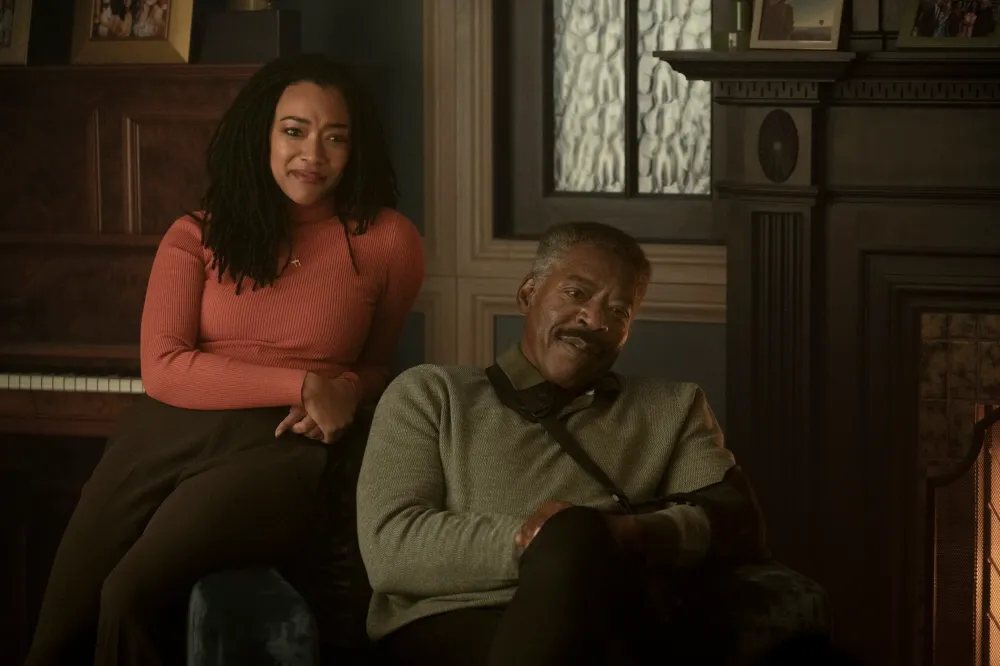
Blue Bloods spinoff Boston Blue returned with an episode full of highs and lows — including a cameo from Boston Celtics player Jaylen Brown and a shocking shooting involving a main character.
During the Friday, April 3, episode of the CBS series, Rev. Edwin Peters (Ernie Hudson) was shot outside of his church. He was taken to the hospital — and later discharged — but not before the entire Silver and Reagan family expressed their concern.
Danny (Donnie Wahlberg) and Lena (Sonequa Martin-Green) investigated the shooting, which they traced back to a complicated past of one of Rev. Peters’ associates. While working on the case, Danny was making himself a cup of coffee in the break room when Brown, 29, appeared to ask which of the pots was decaf.
Danny said it was the orange one, which is his “favorite color when it is combined with blue.” He wasn’t, however, a fan of green, and Brown quickly realized that Danny is a Knicks fan. The athlete jokingly apologized for Danny’s “loss” in basketball teams before sharing a sweet moment with Lena where viewers learned that the Boston police detective regularly hangs out with Brown.
Wahlberg, 56, previously teased the fun cameo in an exclusive interview with Us Weekly, saying, “I [also] had a call with Jaylen Brown and he said, ‘Get me on the show.’ I told our EPs, and they wrote a scene for him to film.”
At the time, Wahlberg reflected on how devoted he has been to the spinoff after making the move from CBS’ Blue Bloods.

“I had to go through the process of saying goodbye to our crew and the cast and reconciling the fact that [Blue Bloods] could now be in my rearview mirror,” he recalled in February. “I had to let go of Danny Reagan and Blue Bloods. So when this came along, I had to reevaluate. It wasn’t just a snap decision.”
Wahlberg shared what made him want to keep playing Danny.


“It became an easier decision as I got to work on the pilot script with the Brandons [creators Brandon Margolis and Brandon Sonnier],” he said. “I found ways to make it authentic to Danny, make it plausible that he would go to Boston, and find ways to really make Danny a fish out of water.”
He continued: “The challenges of playing Danny in a new world help me enjoy the character more. Yeah, Danny moves to Boston and they all have different accents and everyone will root against the Yankees. It’s not just a tough New York guy who moves to Boston and argues with everyone about what’s better. It’s [about] surrendering the driver’s seat and being in the passenger seat. He’s a guest at somebody else’s table.”
Boston Blue airs on CBS Fridays at 10 p.m. ET. New episodes stream the next day on Paramount+.

Some years ago, Steven Spielberg handed over the reins of the Indiana Jones franchise to James Mangold, who directed the series’ fifth installment, Indiana Jones and the Dial of Destiny. The film became the franchise’s first installment to underperform commercially, failing to hit its projected break-even point because of a bloated reported budget of around $400 million. With star Harrison Ford in his 80s, playing a swashbuckling adventurer is understandably a thing of the past. There was a time when Shia LaBeouf and Chris Pratt were said to be in the running to take over from Ford as the iconic character, and it seems like some of those conversations will begin again. Fans still have three memorable (and one so-so) Indiana Jones movies directed by Spielberg to fall back on. But did you know that the legendary filmmaker made another spiritually connected action-adventure film that remains slept-on to this day?
The movie in question was released in 2011, just three years after Indiana Jones and the Kingdom of the Crystal Skull — Spielberg’s fourth and final film in the series. The 2011 movie was based on a comic book series by Belgian writer-artist Hergé, whose work preceded the first Indiana Jones film. Spielberg was introduced to Hergé’s creation when he was promoting Raiders of the Lost Ark in Europe; the filmmaker was enamored. Hergé’s The Adventures of Tintin series revolves around a young reporter who, along with his colorful companions, gets involved in high-stakes adventures spanning genres such as geopolitical espionage, sci-fi, and whimsical comedy.

Can You Hold Your Own on the B-Ball Court? It’s Today’s Collider TV Quiz!
It’s the last day of March, and the Madness is almost behind us. Huddle up and see what you know about these depictions of basketball on television.
When James Cameron‘s Avatar introduced performance capture as a viable new format for filmmakers to play around with, Spielberg jumped at the chance to direct an adaptation of The Adventures of Tintin himself. The movie received positive reviews and now holds a “Certified Fresh” 75% score on the aggregator website Rotten Tomatoes, where the critics’ consensus reads, “Drawing deep from the classic Raiders of the Lost Ark playbook, Steven Spielberg has crafted another spirited, thrilling adventure in the form of Tintin.” Co-written by Steven Moffat, Edgar Wright, and Joe Cornish, the movie featured Jamie Bell, Daniel Craig, Simon Pegg, Nick Frost, and Andy Serkis in the cast. It was a solid box-office hit, especially in international markets, grossing $375 million worldwide against a reported budget of $135 million. A sequel, to be directed by Peter Jackson, has been stuck in development hell despite fan interest. The Adventures of Tintin is streaming on Paramount+ this month. Stay tuned to Collider for more updates.

October 25, 2011
107 minutes
Steven Moffat, Edgar Wright, Joe Cornish
UPDATE: 4/3/26 at 11.13pm ET
Kim Zolciak has clarified the role counseling sessions are playing in her custody battle with ex Kroy Biermann.
Posting a lengthy statement via her Instagram Stories on Friday, April 3, Zolciak insisted she has “not lost custody of my children, nor has there been any modification to the custody arrangement.”
“I signed a temporary custody order at the end of January. The order clearly states that both the mother and father are to participate in two counseling sessions per month for two months, followed by one session per month thereafter. I was out of the country from February 26 through March 28 due to contractual filming obligations on two separate productions,” she wrote.
She added, “During that time, I did not have a single day off, making it impossible to attend the required counseling sessions. Kroy as of today (I had KJ and Kash up until 5pm today) currently has the children for spring break, which is his designated parenting time under the existing agreement. I am scheduled to resume my parenting time when the children return on Friday. My counseling sessions are scheduled and will be completed next week.”
Zolciak concluded, “For the avoidance of any doubt, I have not lost custody of my children, nor has there been any modification to the custody arrangement outside the agreed upon temporary order.”

A match made in Georgia! Kim Zolciak-Biermann and her husband, Kroy Biermann, were together for more than a decade prior to when she filed for divorce in May 2023 and later dismissed the request. When Bravo fans first met the “House of Kim” podcast host in season 1 of The Real Housewives of Atlanta, she […]
Original story below:
Kim Zolciak won’t be allowed to see the kids she shares with estranged husband Kroy Biermann until she completes therapy.
According to court documents obtained by Us Weekly, a Georgia judge approved a temporary parenting plan where KJ, 14, Kash, 13, and 12-year-old twins Kaia and Kane will remain in Biermann’s physical custody from the time they are released from school on Friday, April 3, “until [Zolciak] completes four sessions of parent therapy …. But no earlier than April 13.”
The judge ruled that once Zolciak, 47, completes her four sessions as required, the parties shall “resume operation under the existing court-ordered parenting plan, which otherwise remains in full force and effect until further agreement and/or modification by this court.” (TMZ was first to report the news.)
Court documents revealed that during the week of March 30, KJ and Kash were in Zolciak’s custody, while Kaia and Kane were in Biermann’s custody. (Us has reached out to Biermann and Zolciak’s teams for comment.)
Zolciak is also mom to Brielle Biermann, 29, and Ariana Biermann, 24, from previous relationships. They are unaffected by the court order.
The ruling comes shortly after Kroy, 40, asked a Georgia state judge to immediately change the pair’s current joint custody arrangement.
According to court documents obtained by Us, the former football player is seeking primary custody of his and Zolciak’s four children. Kroy claimed in his filing that Zolciak had exhibited “blatant mismanagement of basic parenting responsibilities [that] would be practically unbelievable to anyone not familiar with the circumstances.”

Kim Zolciak, Kroy Biermann Wilford Harewood/Bravo/courtesy Everett Collection
Zolciak responded to her estranged husband’s latest legal filing in a statement to Us.
“These accusations are completely false and nothing more than a deliberate attempt by Kroy to defame my character,” she said. “I spent five weeks away working on two TV shows to support my family and make sure my children are cared for — something I will never apologize for. I refuse to be bullied or have lies twisted into a narrative about who I am. I will not stay silent; the truth is on my side, and it will come to light — no matter how hard anyone tries to bury it.”

From Tom Brady and Gisele Bündchen to Kroy Biermann and Kim Zolciak-Biermann, not every NFL love story has a happy ending. Brady — who retired from football for good in February 2023 — began dating the supermodel in 2006, two months before learning his ex-girlfriend Bridget Moynahan was pregnant with the pair’s first baby. Son Jack […]
The former couple split in the summer of 2023 after 11 years of marriage and are in the midst of a contentious divorce.
Before splitting, the couple documented their love story on The Real Housewives of Atlanta and a spinoff show titled Don’t Be Tardy.
“I don’t know if it’ll ever be over. I wish it would be over tomorrow,” Zolciak exclusively told Us while attending BravoCon in November 2025 about her ongoing divorce. “It’s just difficult. I’ve never not been able to coparent with my ex and things like that. … I want to be able to coparent and do what’s best for our children.”
:max_bytes(150000):strip_icc():format(jpeg)/Super-Mario-Galaxy-Movie-032626-1-a7031a0555204eb986f497367a6b9c24.jpg)
There was not one but two scenes at the end of the film, one of which introduced a new character.
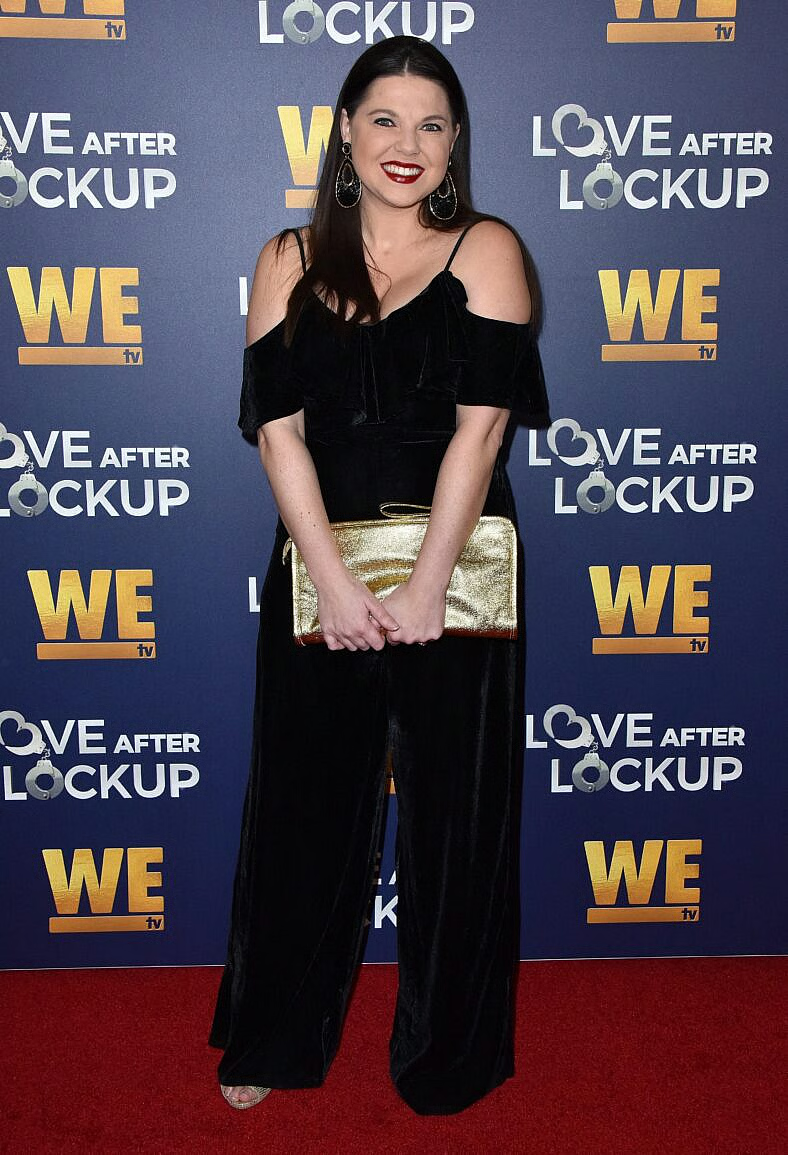
Amy Duggar is weighing in on the jailhouse phone calls between her cousin, Joseph Duggar, and his wife, Kendra. Joseph was arrested on March 18 and subsequently charged with two counts of lewd and lascivious behavior after he allegedly molested a 9-year-old girl in 2020.
Amy, who has been an outspoken critic of the Duggar family, is sharing her thoughts about what was said in the conversations between the husband and wife, deriding her cousin for complaining about sleep troubles.

On April 2, Amy took to TikTok to share a series of reaction posts to the jailhouse phone calls between Joseph and Kendra. In one post, she said, “Joe said he’s having trouble sleeping. Aww… Nobody cares.”
In a phone call Joseph made from the Washington County Sheriff’s Office in Arkansas, he told his wife that he had been having difficulty sleeping due to an inmate having a “tantrum” for a couple of hours and because people were “up all night, and it was really loud,” per Us Weekly.
“I bet the victim hasn’t slept in five years,” Amy said, referring to the now-14-year-old girl who claimed Joseph touched her inappropriately. “Trauma doesn’t clock out. It doesn’t take nights off. It follows you into sleep, into your dreams… into every minute of the day, Amy added, sympathizing with the victim.

In one of Amy’s Tiktok posts, she asked her followers, “Did you hear this? He called his wife ‘competent’… and she took it as a compliment.”
Amy was referring to a specific conversation in which Joseph told his wife he trusted her to make the right decisions in the legal battle. “I think that was really good that you thought I was competent,” Kendra said, to which Joseph responded, “Yeah, for sure. That’s only because I believe it.”
“Last time I checked, marriage isn’t a performance review, and she’s not your employee,” Amy noted, adding that she thinks that type of relationship is the result “when the bar is set so low.”
“It’s so sad that it seems like she will accept any breadcrumb that comes her way, and that probably means she’s been starving for a very, very long time,” the Duggar cousin stated.
Amy went on to say that real love exists, and she believes it’s the type of relationship wherein a partner is celebrated instead of just being acknowledged. “Toxic systems train women to shrink,” she added, referring to the Duggar children’s strict religious upbringing.

In another post, Amy issues an explanation for why Kendra seems so calm amid the accusations against her husband. “How in the hell can she not be so unbelievably distraught and mad and disgusted at him? Oh, just wait. I’ll tell you why,” Amy said.
According to Amy, women in “toxic systems” like the Duggar family are taught that it’s sinful to be angry. “You have to just keep it inside. Stay sweet, keep the peace, and don’t create waves,” she said.
Moreover, Amy said they are told to forgive “quickly” and “remember your husband loves you so much.” That, Amy said, doesn’t allow people to deal with trauma, and instead, they suppress their feelings. “The fact that she is not angry at all should deeply concern you,” she finished.

Many users commented on Amy’s series of TikTok videos, with many agreeing with her statements and praising her for speaking out. “You’ll always be my favorite Duggar,” one user wrote.
“How did you survive in this family? You are a really good person, Amy! thank you for always speaking your mind…” another added. “Amy, keep talking! So many people need you,” commented one user.
Amy was a recurring cast member on “19 Kids and Counting,” the reality series that focused on the lives of Jim Bob and Michelle Duggar, and their 19 children. The couple was deeply religious, insisting on strict rules of modesty and purity for their children.
Amy, who was raised in a more conventional religious environment, was known as “Crazy Cousin Amy” and the “OG Black Sheep” for her independence and disregard for the strict conventions her cousins lived by.

As previously reported by The Blast, Joseph was released from custody at the end of March. In a hearing, a judge set his bond at $600,000, and on the same day, he was released from jail. According to reports, there were conditions to his release, including no contact with his accuser and no unsupervised contact with minors, which includes his children.
“Daddy got him out for a minute, but I guarantee you he’s going back in, and he’s probably going to be locked away for a very long time,” Amy said.
Kendra Duggar reportedly put her family’s home up for rent and sold personal items to secure funds to pay for her husband Joseph Duggar’s bond.
People reported on Friday, April 3, that Kendra, 27, listed some of the family’s property for sale and was preparing to move out of their home to transform it into a rental property after Joseph, 31, was arrested last month.
Kendra and Joseph brainstormed ways to make money during a March 25 jail phone call, according to audio obtained by People.
The outlet reported that Kendra and Joseph discussed selling personal items such as most of their trailers, their four-wheeler, a pressure washer, a waterproof tarp and a wood splitter. Kendra also reportedly moved items out of their home in preparation for transforming it into a rental in order to earn rental income from the property.

New audio of Joseph Duggar and wife Kendra Duggar shows the couple discussing her whereabouts after their arrests. “It’s good to hear from you,” Kendra, 27, told Joseph, 31, according to a March 20 collect call he placed to her from Washington County Detention Center in Fayetteville, Arkansas, that was obtained by Entertainment Weekly. In […]
Us Weekly has reached out to a Duggar family representative for comment.
In another call that took place while Joseph was in custody at Arkansas’ Washington County Sheriff’s Office last month, Kendra asked her husband if he needed more funds after learning that phone calls from jail had a price.
“Oh, so [it] costs money for you to call me each time?” Kendra asked Joseph during a phone conversation, per audio obtained by Us Weekly. “Do you need more money?”

Joseph explained that he initially had $60 for phone and other privileges, which was determined based on the cash in his wallet when he was booked at Washington County. He added that he would only be using the funds for phone calls.
Joseph was arrested in Arkansas on March 19. He was charged with lewd and lascivious behavior involving molestation of a victim less than 12 years old and lewd and lascivious behavior conducted by a person 18 years or older after a 14-year-old girl came forward to police accusing Joseph of molesting her when she was 9 during a 2020 vacation to Panama City Beach, Florida.
Joseph was extradited to Florida earlier this week, where he pleaded not guilty. He was later released on $600,000 bail.
In addition to the molestation case, Joseph and Kendra were both charged with four counts of endangering the welfare of a minor and four counts of false imprisonment. These charges are unrelated to the molestation allegations
If you or someone you know has been sexually assaulted, contact the National Sexual Assault Hotline at 1-800-656-HOPE (4673). If you or someone you know is experiencing child abuse, call or text Child Help Hotline at 1-800-422-4453.




Steven Gerrard disagrees with Gary Neville over ‘shock’ Chelsea and Arsenal claim | Football


No Jackpot Winner and $194 Million Prize Rolls Over
Fans slam 'heartbreaking' Barbie Dream Fest convention debacle with 'cardboard cutout' experience


Weekend Open Thread: Spanx – Corporette.com


Gold Price Prediction: Worst Month in 17 Years fo Save Haven Rock


The Pixel 10a doesn’t have a camera bump, and it’s great

Lana Del Rey Celebrates Her Husband’s 51st Birthday In New Post
Dems press CFTC, ethics board on prediction-market insider trades


Avatar Legends: The Fighting Game comes out in July and it looks pretty slick


EE TV is using AI to help you find something to watch


Tallest college basketball player ever, standing at 7-foot-9, entering transfer portal


Login and Checkout Issues Spark Merchant Frustration


Amazon Sundays: Soft Spring Layers


Elon Musk’s last co-founder reportedly leaves xAI


How to back up your iPhone & iPad to your Mac before something goes wrong


The Best Spring Trends of 2026


Should Trump Be Scared Strait?


Apple will hide your email address from apps and websites, but not cops


U.S. rule change may open trillions in 401(k) funds to crypto


Flipsnack and the shift toward motion-first business content with living visuals
You must be logged in to post a comment Login