Connect with us
DAPA Banner

Business

Priest shortage meets Catholic revival: Why parishes are closing amid church return

Published

on

Priest shortage meets Catholic revival: Why parishes are closing amid church return

On paper, Catholicism looks like it’s having a moment.

The global Catholic population has surpassed 1.4 billion. Eucharistic processions are drawing record crowds. And last summer, more than 50,000 people packed into Indianapolis for the National Eucharistic Congress — the first of its kind in 83 years.

Advertisement

But on the ground, the picture looks very different.

Across the United States, dioceses are merging parishes, closing churches and asking fewer priests to cover more communities.

CATHOLIC CONFERENCE SHATTERS ATTENDANCE RECORDS AS 26,000 YOUNG PEOPLE FLOCK TO FAITH EVENT

Even as interest — especially among younger adults — begins to rebound, the Church keeps running into the same hard limit:

Advertisement

It needs priests. And there aren’t enough of them.

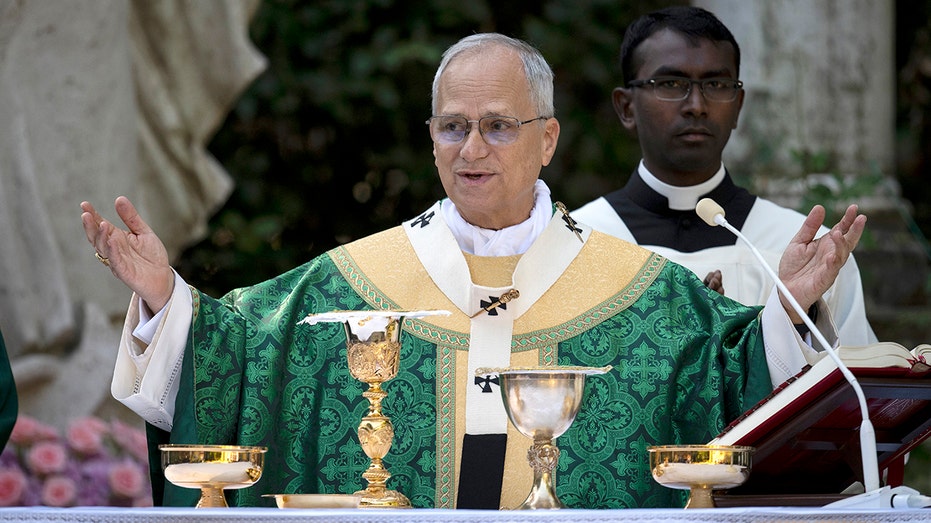
When asked about the priest shortage, Dan Monastra, a seminarian for the Archdiocese of Philadelphia, said, “One reason is the overall lack of desire in our culture to commit oneself to something permanent, especially among younger generations. We see this not only with the priesthood but with marriage as well. Another reason is that the priesthood is antithetical to what modern culture offers; namely, comfort.”

This is the paradox of the present moment: a renewed interest in Catholicism colliding with a severe priest shortage and the business of staffing, financing, and sustaining parish life. The Catholic population is growing with fewer priests to guide it.

The numbers

The priest shortage isn’t just a perception — it shows up clearly in the data.

According to the Church’s statistical yearbook, the number of priests worldwide fell to 406,996 in 2023 — down from the year before and continuing a multiyear decline.

The pipeline is shrinking, too.

Globally, the number of seminarians dropped from 108,481 in 2022 to 106,495 in 2023 — part of a steady slide that’s now lasted more than a decade.

Advertisement

That creates a long-term problem: fewer priests today means even fewer tomorrow.

“With fewer priests to staff parishes, many dioceses across our country have engaged in restructuring or consolidating of parishes to deal with this reality,” Rev. John Donia, pastor at St. Elizabeth Parish in Chester Springs, Pennsylvania, told Fox News Digital.

The result is a growing gap between demand and supply.

Older priests are retiring or dying, often in clusters. At the same time, the need for Mass, confession, hospital visits and pastoral care isn’t going away.

Advertisement

CATHOLIC CONVERSIONS RISE AS YOUNG ADULTS ‘HUNGRY FOR TRUTH’ TURN TO FAITH AND REJECT SECULARISM, BISHOP SAYS

In the United States, that gap is especially visible.

The Church still operates with a footprint built for a different era — one with far more priests. Now, many dioceses are being forced to rethink everything from parish boundaries to staffing models.

Cathedral Basilica of Saints Peter and Paul

The Cathedral Basilica of Saints Peter and Paul, head church of the Roman Catholic Archdiocese of Philadelphia. (Getty Images)

And it’s happening nationwide.

Advertisement

“We are entering into a different time with new challenges. The world is constantly changing, and it is up to the Church to find ways to bear witness to Christ in the midst of these changes while still upholding the ancient faith,” Monastra said, when asked why parishes are still closing even when interest in Catholicism is rising.

“This has been true throughout history, and it remains true today. My hope is that, rather than looking at parish closures in a negative light, we see them for what they really are: occasions to find new ways to bring Christ to others.”

Even where younger adults are more visible, the math still bites. A parish can be reviving spiritually while still being financially fragile or difficult to staff.

The business of priesthood: Formation pipelines, staffing models, and costs

The Catholic priesthood in the United States is at a critical juncture. 

Formation is expensive. The Center for Applied Research in the Apostolate (CARA) reported 2,920 seminarians in post-baccalaureate formation (pre-theology and theology) in 2023–2024. 

The direct educational costs are significant. CARA reports the average annual tuition of about $24,763 and room and board of about $15,254 for seminarians in theology programs.

Those numbers don’t include the broader costs of things like counseling, healthcare, and operational overhead.

Advertisement

As a result, dioceses are making tough investment decisions: fewer dollars, fewer candidates, and higher expectations for formation quality.

MARK WAHLBERG PARTNERS WITH HALLOW PRAYER APP FOR ‘PRAY 40’ LENT CHALLENGE INITIATIVE TO ENCOURAGE FAITH

But why are there fewer candidates if religion is seeing a resurgence?

Rev. Donia noted some contributing factors in his interview.

Advertisement

“There are a number of factors to consider: fewer large families with a natural pipeline to the priesthood… Clergy abuse scandals… Priesthood is counter cultural, especially in our instant-gratification culture,” he explained.

Catholic faith leaders gather for a mas

Catholic faith leaders gather for a mass at the Gesu Catholic Church before holding a procession. (Photo by Joe Raedle/Getty Images) (Getty Images)

As a result, the pipeline increasingly relies on international vocations.

CARA reported that 17% of graduate-level seminarians were born outside the U.S. in 2024-2025. 

‘ROSARY’ BEATS ROGAN: IS FAITH-BASED MEDIA BECOMING MAINSTREAM?

Advertisement

But relying on international priests comes with risks — visa issues, cultural challenges, and shifting global needs as many “sending” countries face their own growth and pastoral demands — forcing staffing to be redesigned in real time.

As priests cover more parishes, dioceses are expanding the roles of deacons and lay leaders for administration, catechesis, and pastoral work while also confronting a hard limit: only priests can celebrate Mass and absolve sins in confession.

This isn’t just a staffing problem.

It’s a sacramental one. 

Advertisement

When one priest covers multiple communities, it means fewer Masses, fewer confessions, less time for hospital visits — and less presence overall.

Why are parishes still closing even when interest is rising?

If more young people are showing up, why are churches still shutting down?

Because parish closures aren’t about one good Sunday.

They’re about whether a parish can survive long-term.

Advertisement

Several pressures are hitting at once:

  • Buildings: Aging churches, rising insurance costs and deferred maintenance can overwhelm even active parishes.
  • Geography: Catholics are moving — growing in the South and West, shrinking in some older urban areas — leaving behind infrastructure that no longer fits where people live.
  • Clergy: Fewer priests means fewer pastors, which forces mergers even when individual communities are still vibrant.
  • Finances: Donations tend to follow consistent attendance. A growing young-adult group often isn’t enough to offset decades of decline and fixed costs.

Put it together, and you get a paradox:

More spiritual energy — but less physical infrastructure.

Parishes can feel alive on Sunday and still be unsustainable on paper.

The revival

As the Church confronts these challenges, there is a noticeable rise in renewed Catholic energy, especially among committed younger adults.

There is a return to the core practices of Eucharistic adoration, confession, a disciplined spiritual life, and a desire for reverent liturgy.

The U.S. bishops emphasized Eucharistic renewal through the National Eucharistic Revival (2022–2025), culminating in the 2024 Congress. Their conclusion? If Catholicism is going to regenerate, it will do so because of what makes it distinct — especially faith in the Real Presence of Jesus Christ in the Eucharist.

And there is a proposed connection to vocations: a culture that treats the Eucharist as central — rather than symbolic — is more likely to foster priestly vocations.

Advertisement

“Traditional expressions, including reverent liturgy and clear teaching, resonate strongly with younger Catholics,” Rev. Donia told Fox News Digital. 

What’s driving spirituality in Gen Z and millennials?

Here’s the key shift: younger generations are less tied to institutions — but still searching for meaning.

Springtide Research, surveying ages 13–25, consistently finds that the dominant story (“young people don’t care about faith”) is incomplete; many still say they believe — even if they don’t attend regularly.

EXCLUSIVE: CARLO ACUTIS’ MOTHER ON HIS CANNONIZATION AND HOW THE FIRST MILLENNIAL SAINT CHANGED HER LIFE

Pew Research Center shows a similar trend: younger adults are less likely to identify as Christian than older cohorts, and religious switching is common — yet many still express some form of spiritual belief.

Pope Leo XIV has repeatedly acknowledged what he describes as a “crisis” in priestly vocations, warning of strain within the priesthood while urging young people to consider religious life.

Monastra, a Gen Z seminarian, said his call to the priesthood was driven by a desire for something “real and authentic.”

Advertisement

“I have found that ‘something,’ because there is nothing more true, more good, and more beautiful than Christ Jesus,” he said. “I have experienced great love from Him, and my desire to one day become a priest is simply a response to that love.”

There are several factors driving the recent resurgence in spirituality, including:

1) A mental health and meaning crisis:

Anxiety, loneliness, and “purpose fatigue” are widely reported across Gen Z. Barna’s Gen Z research emphasizes needs around meaningful relationships, hope, healthy digital habits and purpose — all of which faith communities can address when they’re strong and credible. 

Advertisement

In that environment, religion can reemerge as an answer to a basic question: What am I for? Catholicism, when presented in a serious and coherent way, offers identity, moral formation, community, and a transcendent framework.

Pope Leo XIV Ash Wednesday 2026

Pope Leo XIV sprinkles the head of a Cardinal with ashes during the celebration of Ash Wednesday on February 18, 2026. (Photo by Alberto PIZZOLI / AFP via Getty Images) (Getty Images)

2) Distrust of institutions and hunger for authenticity:

Gen Z and millennials are often skeptical of institutions. The Church has been affected by scandal and declining trust in some regions.

Yet that same skepticism can create openness to more intentional forms of faith. When young adults return, they often seek coherent teaching, serious spiritual practices, and authentic community.

Advertisement

3) Community as an antidote to fragmentation:

Younger adults live in an era of high connectivity and low belonging. A parish that offers genuine friendship, intergenerational support, and a shared mission can feel like a lifeline.

4) A search for embodied practice, not just opinions:

Many young adults are tired of spirituality that stays in the head. Catholicism is a whole-body faith: kneeling, fasting, feasting, pilgrimage, sacramental signs, daily prayer, moral discipline. For people shaped by screen life, embodied practices can be a form of recovery.

Advertisement

5) Social media makes subcultures possible, including Catholic ones:

Online life has clear downsides, but it also allows dispersed communities to connect and enables priests and creators to share teaching widely. This can accelerate “micro-revivals,” even if it does not immediately show up in national data.

MOST POPULAR PRIEST ON SOCIAL MEDIA REACTS TO VIRAL TIKTOKS ABOUT GOD, INTERPRETATIONS OF THE BIBLE

Rev. Donia pointed to Bishop Robert Barron, founder of Word on Fire, to summarize the contrasting effects of social media on today’s youth.

Advertisement

“Bishop Robert Barron noted that social media offer a ‘golden age’ for evangelization and apologetics,” Donia said. “Yet it exacerbates divisiveness and can turn committed Catholics against each other in ways that scandalize outsiders.”

Though he said social media “accelerates discovery and devotion for many,” he argued the overall effect depends on how “intentionally” people use it.

The collision ahead: Renewal requires priests, and priests require renewal

Without priests, the sacraments become harder to access — and renewal becomes harder to sustain.

Without renewal, fewer men may answer the call to the priesthood.

Advertisement

The practical side can’t be ignored. Seminaries must be funded, formation must be excellent, and dioceses must redesign staffing without hollowing out parish life.

WHAT’S THE WEIRDEST THING THAT EVER HAPPENED THAT MADE YOU THINK GOD WAS REAL?

At the same time, the spiritual side cannot be reduced to strategy. Even the most effective vocation plan will fall short if Catholics do not recover a lived sense that the Eucharist is central.

Pope Leo XIV celebrates Mass

Pope Leo XIV celebrates the first Mass for the Care of Creation at the Laudato Si’ Village of Castel Gandolfo on July 09, 2025 in Albano Laziale, Italy. (Photo by Cristian Gennari via Vatican Pool/Getty Images) (Getty Images)

Rev. Donia called that insight “profoundly true” and urged Catholics to take it seriously.

Advertisement

“It’s one of the most important insights into the current state of Catholic life, especially regarding vocations,” he said.

And that is what many younger Catholics appear to be signaling — sometimes quietly, sometimes visibly, as in Indianapolis in 2024 — a willingness to return not to a purely cultural Catholicism, but to a more demanding, sacramental, and Christ-centered faith.

The Church’s challenge is whether it can meet that desire with enough priests, sufficient formation, and the institutional capacity to rebuild — not just buildings, but belief.

Advertisement
Continue Reading
Click to comment

You must be logged in to post a comment Login

Leave a Reply

Business

Barclays to open new branches and revive bank manager role in high street comeback

Published

on

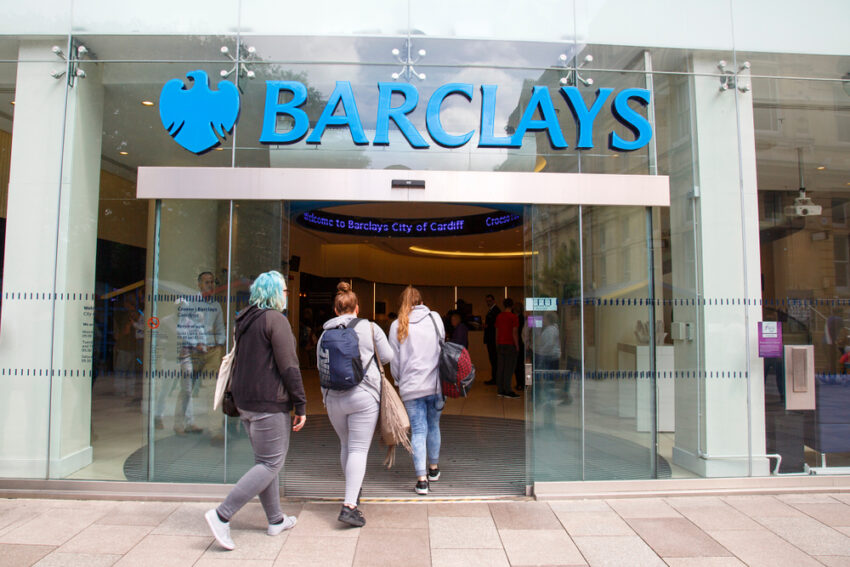
Barclays plans to launch a string of “banking pods” after recently announcing more branch closures.

Barclays is charting a decisive U-turn on the high street, with plans to open new branches across the country and reinstate the once-familiar “bank manager” job title, a move that signals a broader rethink of how Britain’s traditional lenders compete in an increasingly digital age.

Vim Maru, who has led Barclays UK since 2024, told Business Matters that the bank intended to grow its branch network beyond the current 206 outlets, having already paused a closure programme that saw roughly 80 per cent of its branches shut since 2019. One of his first acts after taking charge was to halt the cull, and he is now pressing ahead with expansion, though he declined to put a precise figure on how many new sites would open.

The shift comes as digital-only challengers such as Revolut and Wise make increasingly aggressive moves into the current-account market, threatening the established banks’ grip on everyday consumer banking. Rather than trying to outpace them on technology alone, Maru is placing his chips on a blend of slick digital services and genuine, in-person support, what he described as the winning formula for modern banking.

He was characteristically blunt about the shortcomings of purely automated customer service. Barclays customers, he insisted, would not find themselves trapped in an endless loop with a chatbot when they needed real help. The bank has also quietly reintroduced traditional role titles, so that customers walking through the door can once again ask to speak to the branch or bank manager.

Maru stopped short of conceding that Barclays had been too aggressive in its earlier round of closures, but acknowledged that the bank needed to reassess how it served its customers every few years. The new branches will sit alongside the shared banking hubs operated through the Post Office, rather than replace them.

Advertisement

Beyond the branch network, Barclays is pursuing growth on several fronts. The bank reported a record number of mortgage applications last year, with processing times slashed from 45 minutes to just 15 thanks to technology improvements that have proved popular with brokers. Its acquisition of the Tesco credit card business in 2024 and Kensington Mortgages, which has doubled in size since Barclays bought it in May 2023, have broadened the division’s reach considerably.

Artificial intelligence is also being deployed to streamline internal processes, though Maru was cautious about the workforce implications. He drew a parallel with the introduction of ATMs, noting that while the machines were expected to eliminate cashier roles, the subsequent rise in fraud and scams meant staff were redeployed rather than made redundant.

On the broader economy, Maru offered a measured reading from the bank’s unique vantage point. Consumer spending has shown resilience, with hospitality holding up well despite a period of heightened anxiety following the outbreak of the Iran conflict. In the opening days of the war, there was a noticeable surge in fuel purchases as motorists rushed to fill up ahead of expected price rises, though spending patterns quickly normalised.

With Barclays chief executive CS Venkatakrishnan having committed to investing £30 billion more in the UK between 2024 and this year, and despite persistent speculation about possible acquisitions of the likes of Santander UK or TSB, Maru said his priority remained organic growth. The bank, he maintained, already had strong momentum — and a renewed high street presence to match.

Advertisement

Amy Ingham

Amy is a newly qualified journalist specialising in business journalism at Business Matters with responsibility for news content for what is now the UK’s largest print and online source of current business news.

Advertisement
Continue Reading

Business

Hut 8: Why The River Bend Expansion Justifies A Buy Rating

Published

on

Bitfarms Rebrands To Keel Infrastructure, But Financial Engineering Still Weighs

Hut 8: Why The River Bend Expansion Justifies A Buy Rating

Continue Reading

Business

8 stocks surged over 50% in each of the last 3 fiscal years; rally up to 3,100%

Published

on

The Economic Times

Eight stocks have delivered over 50% returns in each of the last three fiscal years, defying broader market volatility. With gains ranging from 500% to over 3,100%, these consistent outperformers highlight strong underlying momentum despite fluctuating benchmark returns across FY24 to FY26.

Continue Reading

Business

Starwood Property Trust: The Market Is Handing You An 11% Yield At A Deep Discount

Published

on

HYMB: Solid High-Yield Muni Bond ETF, Above-Average Tax-Advantaged Income (NYSEARCA:HYMB)

Starwood Property Trust: The Market Is Handing You An 11% Yield At A Deep Discount

Continue Reading

Business

Bandhan Bank Q4 business update: Advances rise to Rs 1.54 lakh crore, deposits up 10%

Published

on

Bandhan Bank Q4 business update: Advances rise to Rs 1.54 lakh crore, deposits up 10%
Bandhan Bank posted healthy growth in advances along with steady deposit mobilisation for the quarter ended March 31, 2026, as per its provisional update released on Saturday. The bank’s loans and advances, including on-book and PTC, stood at Rs 1.54 lakh crore at the end of the March quarter, registering a 12.6% year-on-year increase and a 6.2% sequential rise.

Total deposits came in at Rs 1.66 lakh crore, up 10% from a year ago and 6.1% higher on a quarter-on-quarter basis. CASA deposits rose 2.8% year-on-year to Rs 48,751 crore, with the CASA ratio at 29.31% at the end of the quarter.

Retail term deposits saw strong growth, increasing 30.1% year-on-year to Rs 73,796 crore. Overall retail deposits, including CASA, rose 17.7% to Rs 1.22 lakh crore. Bulk deposits declined 6.9% year-on-year to Rs 43,797 crore. Meanwhile, the share of retail deposits in total deposits improved to 73.67% from 68.88% in the same period last year.

The bank reported a liquidity coverage ratio of about 131.76% as of March 31, 2026. Collection efficiency remained robust, with pan-bank efficiency, excluding NPAs, at 98.9% for March 2026, compared to 98.1% in December 2025.

Advertisement

Banking stocks have come under sharp pressure over the past three months, with most lenders underperforming the benchmark Nifty 50 amid a challenging macro backdrop marked by sustained foreign institutional investor (FII) outflows, escalating geopolitical tensions, and a surge in energy prices. Bandhan Bank is down 18% in the last 1 month.


The underperformance comes amid persistent FII selling, which has disproportionately impacted financials due to their heavy weightage in benchmark indices. At the same time, the escalation of the Iran-Israel conflict has triggered a spike in crude oil prices, raising concerns over inflation and delaying expectations of interest rate cuts by global central banks.
The lender has also been in the headlines after The Economic Times reported that Bandhan Financial Services is exploring exit options for its long-term investors, including GIC Ventures and International Finance Corporation.Also read: HDFC Bank Q4 business update: Lender reports 15% YoY growth in deposits, advances jump 12%

The report said the company has appointed Jefferies to assess investor interest, particularly from private equity funds. The move is also in line with regulatory requirements that mandate Bandhan Financial to reduce the promoter’s stake in the bank to 26% by 2030.

(Disclaimer: Recommendations, suggestions, views and opinions given by the experts are their own. These do not represent the views of The Economic Times)

Continue Reading

Business

5 Relatively Secure And Cheap Dividend Stocks, Yields Up To 8% (April 2026)

Published

on

5 Relatively Secure And Cheap Dividend Stocks, Yields Up To 8% (February 2026)

This article was written by

Financially Free Investor is a financial writer with 25 years investment experience. He focuses on investing in dividend-growing stocks with a long-term horizon. He applies a unique 3-basket investment approach that aims for 30% lower drawdowns, 6% current income, and market-beating growth on a long-term basis and he focuses on dividend-growing stocks with a long-term horizon.
He runs the investing group High Income DIY Portfolios which provides vital strategies for portfolio management and asset allocation to help create stable, long-term passive income with sustainable yields. The service includes a total of 10 model portfolios with a range of income targets for varying levels of risk, buy and sell alerts, and live chat. Learn more.

Analyst’s Disclosure: I/we have a beneficial long position in the shares of ABT, ABBV, CI, JNJ, PFE, NVS, NVO, AZN, UNH, CL, CLX, UL, NSRGY, PG, TSN, ADM, BTI, MO, PM, KO, PEP, EXC, D, DEA, DEO, ENB, MCD, BAC, PRU, UPS, WMT, WBA, CVS, LOW, AAPL, IBM, CSCO, MSFT, INTC, T, VZ, CVX, XOM, VLO, ABB, ITW, MMM, LMT, LYB, RIO, O, NNN, WPC, ARCC, ARDC, AWF, CII, TLT either through stock ownership, options, or other derivatives. I wrote this article myself, and it expresses my own opinions. I am not receiving compensation for it (other than from Seeking Alpha). I have no business relationship with any company whose stock is mentioned in this article.

Disclaimer: The information presented in this article is for informational purposes only and in no way should be construed as financial advice or a recommendation to buy or sell any stock. The author is not a financial advisor. Please always do further research and do your own due diligence before making any investments. Every effort has been made to present the data/information accurately; however, the author does not claim 100% accuracy. The stock portfolios presented here are model portfolios for demonstration purposes. For the complete list of our LONG positions, please see our profile on Seeking Alpha.

Advertisement

Seeking Alpha’s Disclosure: Past performance is no guarantee of future results. No recommendation or advice is being given as to whether any investment is suitable for a particular investor. Any views or opinions expressed above may not reflect those of Seeking Alpha as a whole. Seeking Alpha is not a licensed securities dealer, broker or US investment adviser or investment bank. Our analysts are third party authors that include both professional investors and individual investors who may not be licensed or certified by any institute or regulatory body.

Continue Reading

Business

Target Hospitality Stock Set To Benefit From String Of Contract Wins (NASDAQ:TH)

Published

on

Target Hospitality Stock Set To Benefit From String Of Contract Wins (NASDAQ:TH)

This article was written by

Value-oriented ideas and special situations, generally mid/small cap. Also, orphaned and unfashionable investment ideas, ideally with a catalyst and the prospect of asymmetric upside/downside payoffs. Contrarian tendencies. To some extent I’ll go anywhere if it’s cheap and I’m more influenced by momentum and quality than I used to be.

Analyst’s Disclosure: I/we have a beneficial long position in the shares of TH either through stock ownership, options, or other derivatives. I wrote this article myself, and it expresses my own opinions. I am not receiving compensation for it (other than from Seeking Alpha). I have no business relationship with any company whose stock is mentioned in this article.

Not intended as investment advice. Author’s opinion only. Article may contain errors/inaccuracies and will not be updated. Author’s holdings may change without notice. Any statements about the future are completely uncertain and should be interpreted as such. Seek professional investment and tax advice before any investment decision.

Advertisement

Seeking Alpha’s Disclosure: Past performance is no guarantee of future results. No recommendation or advice is being given as to whether any investment is suitable for a particular investor. Any views or opinions expressed above may not reflect those of Seeking Alpha as a whole. Seeking Alpha is not a licensed securities dealer, broker or US investment adviser or investment bank. Our analysts are third party authors that include both professional investors and individual investors who may not be licensed or certified by any institute or regulatory body.

Continue Reading

Business

AU Small Finance Bank Q4 business update: Deposits up 23% YoY at Rs 1.52 lk cr, advances rise 25%

Published

on

AU Small Finance Bank Q4 business update: Deposits up 23% YoY at Rs 1.52 lk cr, advances rise 25%
Private sector lender AU Small Finance Bank reported steady growth across key balance sheet items, its fourth-quarter business update on Saturday showed.

The bank’s total deposits stood at Rs 1.52 lakh crore as of March 31, 2026, registering a 22.8% year-on-year growth and a 10.3% increase sequentially from Rs 1.38 lakh crore as of December 31, 2025. CASA deposits came in at Rs 43,360 crore, up 19.6% year-on-year and 8.5% quarter-on-quarter. However, the CASA ratio stood at 28.4%, compared to 29.2% a year ago and 28.9% in the previous quarter.

On the advances front, gross advances stood at Rs 1.36 lakh crore, reflecting a 25.1% year-on-year growth and an 8.7% rise sequentially from Rs 1.26 lakh crore. The bank’s securitised and assigned portfolio was reported at Rs 4,290 crore, compared to Rs 6,926 crore in the year-ago period and Rs 4,689 crore in the previous quarter.

Overall, the gross loan portfolio (A+B) stood at Rs 1.40 lakh crore as of March 31, 2026, marking a 21.3% year-on-year growth and an 8% increase quarter-on-quarter from Rs 1.30 lakh crore.

Advertisement

Banking stocks have come under sharp pressure over the past three months, with most lenders underperforming the benchmark Nifty 50 amid a challenging macro backdrop marked by sustained foreign institutional investor (FII) outflows, escalating geopolitical tensions and a surge in energy prices. AU Small Finance Bank shares have declined 13% since the beginning of the year.


The underperformance comes amid persistent FII selling, which has disproportionately impacted financials due to their heavy weightage in benchmark indices. At the same time, the escalation of the Iran-Israel conflict has triggered a spike in crude oil prices, raising concerns over inflation and delaying expectations of interest rate cuts by global central banks.
In a separate development in February, the Haryana government de-empanelled the lender from government business after suspected fraudulent activities were disclosed.The company issued a clarification late Sunday, stating it initiated an internal review regarding two accounts in question. The bank further said that both these accounts were “duly opened after completion of all applicable KYC checks and requisite authorisations” and were in accordance with the bank’s internal policies and processes.

(Disclaimer: Recommendations, suggestions, views and opinions given by the experts are their own. These do not represent the views of The Economic Times)

Continue Reading

Business

Landmark’s regeneration ‘needs to start before uncertainty of big council shake-up’

Published

on

Business Live

Centenary House in Morecambe has been largely empty since 1990s

Centenary House, on Morecambe's Regent Street.

Centenary House, on Morecambe’s Regent Street(Image: Google Maps)

New calls have been made to regenerate a landmark Morecambe building, as a big shake-up of councils looms in 2028 with uncertainty about future support.

Advertisement

Centenary House, on Morecambe’s Regent Street, has been largely vacant since the mid-1990s except for a ground-floor Co-op shop. Some repairs were done in 2024 using government cash. Earlier in 2019, a plan was approved for offices, a café, work and event spaces but it did not progress.

Council talks have been held recently with an affordable homes organisation about it. But a lack of nearby car parking, and possibly other things, could be turning-off some developers, councillors were told at Lancaster City Council’s latest full meeting.

Labour’s David Whittaker asked Morecambe Bay Independent Martin Bottoms, a cabinet member, about the situation.

Coun Whittaker said: “Has there been any recent engagement with external funding sources to help Centenary House? What do you see as a realistic outcome for the future of the building? Car parking is another consideration. I know this is a long-term question but a lot of people are asking about it.”

Advertisement

Coun Bottoms, who has a remit for Morecambe regeneration and its local economy, said: “Brownfield regeneration money is available for developers to move this forward. Centenary House is bordered by roads and there is little car parking space. Whether it has community or commercial uses, there are going to be some parking issues.

“We are in talks with an affordable housing developer but they are aware that car parking needs have to be considered.”

Then Coun Whittaker added: “Will things progress before local government reorganisation?”

Coun Bottoms said: “It’s something we have all had concerns about since the council’s new administration was formed. We need to find a solution. It’s down to us to get it done. Or, at least, get it started before local government reorganisation. I will be pressing for that.”

Advertisement

The Lancaster City Council district including Morecambe could be merged with Preston and the Ribble Valley under the government’s push to reorganise all Lancashire councils in 2028. The government wants to end the two-tier system of district and county councils created in 1974.

New bigger unitary councils, with access to major funds and government contacts, will likely cover bigger areas and include a wider intake of councillors. So how projects like Centenary House will be viewed by future councillors is unknown.

To find all the planning applications, traffic diversions, road layout changes, alcohol licence applications and more in your community, visit the Public Notices Portal.

Advertisement
Continue Reading

Business

China box office isn’t Hollywood kingmaker it used to be. Here’s why

Published

on

China box office isn't Hollywood kingmaker it used to be. Here's why

Posters of films are on display at a cinema in Shanghai, Aug. 31, 2025.

Vcg | Visual China Group | Getty Images

Hollywood has lost one of its most lucrative theatrical markets. It’s unclear if it will ever win it back.

Advertisement

The Chinese box office was once a coveted space for American-made movies, so much so that studios produced films that would appeal directly to this international audience. But in the postpandemic cinema landscape, Hollywood hasn’t generated the strong ticket sales it once saw for its biggest blockbusters — and a waning relationship with Chinese cinemas is at least partly to blame.

The U.S.-China Film Agreement, struck in 2012 between the two governments, guaranteed 34 U.S. films would be released in China each year. That pact ended in 2017 and was never renewed or renegotiated. At the same time, China began expanding its local film production and instituting blackout dates to promote viewership of its homegrown titles. 

Add in strict censorship policies from the China Film Administration and recent political strains between the U.S. and China, and Hollywood films have faced several hurdles just to get distribution in the country post-Covid.

“I think that the kind of euphoria about the world’s largest market and thinking about China as a place that always creates a larger market for U.S. [intellectual property] is not accurate,” said Aynne Kokas, a professor at the University of Virginia and the author of “Hollywood Made in China.”

Advertisement

“[There are] constraints on the market in a couple of ways, first related to content control and not just content control in terms of censorship, but also in terms of control of distribution channels by the party,” Kokas said.

She said the film bureau will “turn on and off the levers of distribution based on the needs of the market.” If local Chinese films are doing well, the country will limit distribution access for foreign films. If there are gaps in film releases or releases aren’t selling as many tickets, it will open up the market.

In 2019, nine U.S. titles each generated more than $100 million at the Chinese box office, with Disney and Marvel Studio’s “Avengers: Endgame” collecting more than $600 million in the region, according to data from Comscore.

In the past five years combined, however, only 10 American films have generated more than $100 million in China, with only two topping $200 million.

Advertisement

The outlier is Disney’s “Zootopia 2,” which tallied a record-breaking $650 million in the country following its 2025 release.

Box office analysts tell CNBC that this feat is likely an anomaly and studios and Wall Street shouldn’t expect a sudden resurgence of ticket sales for American-made fare in the region even as major franchises launch ahead of the key summer movie season.

Market nuances

What performs well in the U.S. isn’t guaranteed to succeed in China, despite the massive audience potential.

“There’s not necessarily a one-to-one correlation between popular IP in the U.S. and popular IP in China,” Kokas said.

Advertisement

In some cases, it’s a lack of nostalgia on the part of Chinese audiences. Kokas noted that when Star Wars was introduced in the region with the sequel trilogy in 2015, it fell flat because the previous films from the original and prequel trilogies were never released in China, so the later installments didn’t have the boost of a built-in fanbase.

Distribution experts told CNBC that the Chinese film bureau and audience tend to gravitate toward features that are visual spectacles and apolitical.

Films that have performed well in the region since the pandemic include entries from the Fast & Furious saga, Jurassic World flicks and installments from the Godzilla and King Kong franchises.

Even with the recent lull in ticket sales from Chinese releases, studios aren’t deterred from launching titles in the region. One distribution expert told CNBC that China remains a major theatrical opportunity for American-made films.

Advertisement

China remains an essential component in any international strategy by U.S.-based studios because there are many hundreds of millions of dollars potentially to be earned there due to an undeniable appetite in the region for the big Hollywood movies,” said Paul Dergarabedian, head of marketplace trends at Comscore.

Universal’s “The Super Mario Galaxy Movie” is the next U.S. entrant into the country, due in theaters this weekend.

The franchise’s first film, “The Super Mario Bros. Movie,” tallied more than $1.3 billion globally in 2023, but only $25 million of that total came from China.

One distribution expert told CNBC that console games, like Nintendo’s Super Mario franchise, are not as prevalent in the region, meaning the nostalgia that drove $575 million in domestic ticket sales was not a major factor over in China.

Advertisement

Meanwhile, in Japan, where Super Mario is a cultural icon, the film generated $102 million.

Still, the Chinese market helps bolster the overall haul of a film and has the potential to cement a breakout hit. So studios are still willing to give titles a theatrical release in the region.

Also on the docket for distribution in China this year is Universal’s “Michael,” Warner Bros.’ “Mortal Kombat II” and Disney’s “The Devil Wears Prada 2.”

Because of China’s strict censorship policies, films must be completed and screened by the film bureau before they are considered for distribution. Therefore, the Hollywood slate in China is not set in stone in the same way the domestic movie slate is.

Advertisement

But box office analysts expect titles like Disney and Pixar’s “Toy Story 5” and Warner Bros.’ “Dune: Part Three,” as well as Disney and Marvel’s “Avengers: Doomsday” to also land in Chinese theaters this year.

Choose CNBC as your preferred source on Google and never miss a moment from the most trusted name in business news.
Continue Reading

Trending

Copyright © 2025