


Connect with us
DAPA Banner

Tech

Amazon meets FedEx Office: A seamless return and one very dumb question about stamps

Published

on

A microchip pet door awaits its fate at the FedEx Office on NW 46th Street in Seattle. (GeekWire Photo / Todd Bishop)

For a while now, since the closure of the Amazon Fresh Pickup in Seattle, I’ve been complaining about having to drive across the Ballard Bridge to Whole Foods to do my Amazon returns. 

So when news emerged that FedEx Office locations are now part of Amazon’s drop-off network, I jumped at the chance to try it. Turns out there’s a FedEx Office on the way to GeekWire HQ, near the PCC on NW 46th Street (across from the “Up” house in the Ballard Blocks complex).

I walked in with a microchip pet door (long story), showed the QR code on my phone, got it scanned, handed over the unpackaged item, and walked out with a receipt. No box, tape, or label required, just as with other drop-off locations. There was no line.

The refund hit my account the same day.

The one thing that made me scratch my head is that, unlike returning something at a Kohl’s or Whole Foods, there’s no real ancillary benefit for FedEx Office. I dropped off the package and there was nothing else to do in the store. I had no copies to make, nothing to ship, and no need for any of the miscellaneous supplies in their limited displays.

Advertisement

However, I was in need of traditional U.S. Postal Service stamps, so I asked if they sold them, and the guy looked at me like I was a complete idiot. Fair enough.

But for pure convenience, it seems like a win for Amazon customers. 

Amazon and FedEx severed their logistics relationship back in 2019 as Amazon built out its own delivery network. Now they’re patching things up, and more than 1,500 FedEx Office locations are accepting returns as part of a network of over 10,000 drop-off points nationwide. 

We discussed this (and much more) on this week’s GeekWire Podcast. Listen above, and subscribe to GeekWire in Apple PodcastsSpotify, or wherever you listen.

Advertisement

Source link

Continue Reading
Click to comment

You must be logged in to post a comment Login

Leave a Reply

Tech

Tech Moves: C-suite exec leaves Microsoft for Alaska Airlines; Amazon leaders depart; HashiCorp CTO resigns

Published

on

Lindsay-Rae McIntyre. (Alaska Airlines Photo)

Lindsay-Rae McIntyre is the new chief people officer at Seattle-based Alaska Airlines. She joins the airline from Microsoft, where she most recently served as chief diversity officer and corporate VP of Talent and Learning.

“There is a vast, complex world counting on Microsoft to help bend the arc of the future toward good,” McIntyre said in LinkedIn post framed as a two-part letter to the tech giant and her new employer.

“I am honored to have been part of this transformation for the past eight years,” she said of her time at Microsoft. “Please take good care of one another, and of our customers.”

Addressing the combined teams at Alaska and Hawaiian Airlines, McIntyre noted deep family ties to the industry: her grandfather and uncle were pilots for Air Canada, and her aunt was a flight attendant. “I grew up in awe of airplanes and of the extraordinary people who make air travel possible,” she said.

Prior to Microsoft, McIntyre was with IBM for more than 18 years serving in top leadership roles.

Advertisement
Armon Dadgar. (LinkedIn Photo)

Armon Dadgar, the Seattle-based co-founder and chief technology officer for HashiCorp, is leaving the infrastructure software company. Dadgar launched HashiCorp in 2012 with co-founder Mitchell Hashimoto after the two graduated from the University of Washington. IBM acquired the San Francisco company for $6.4 billion last year.

“For me, HashiCorp was always more than a job, and I’ve always felt a deep sense of responsibility for the people, products, customers, and community,” Dadgar said on LinkedIn. “The role I’ve played has always been rewarding, but equally it has been demanding.”

Dadgar, whose last day at HashiCorp is Friday, said he will take time to “pause and recharge” and will be moving from Seattle to New York City.

Omar Shahine. (LinkedIn Photo)

— After nearly three decades at Microsoft, Omar Shahine has taken on a new role leading a team developing personal assistants for Microsoft 365 customers. He previously served as corporate vice president for Microsoft Word.

“My goal is to help usher in a new generation of proactive assistants, ones that lighten your load by taking on tasks end-to-end, and that can also step in proactively when they can help,” Shahine said on LinkedIn.

His role includes partnering with the OpenClaw and Microsoft 365 communities. Shahine’s new assignment comes amid a steady stream of new releases in Microsoft’s Copilot tools for businesses in the competitive agentic AI landscape.

Advertisement
Damon Lanphear. (Artera Photo)

Damon Lanphear is the new chief technology officer at Artera, a company using agentic AI to help healthcare providers communicate with patients. Lanphear joins the company from Amazon, where he spent more than five years across two stints, most recently as a director of engineering. He previously held the same title at AWS.

A veteran of the Seattle health-tech scene, Lanphear was the CTO for pioneering telehealth startup 98point6 for nearly seven years, joining that company at its inception.

Lanphear will work in a hybrid role for the Santa Barbara, Calif.-based Artera.

Atul Deo. (LinkedIn Photo)

Atul Deo has joined SAP as senior VP and global head of AI Product Management and Partnerships, where he will lead work on the company’s AI assistant and broader AI platform. Based in Seattle, Deo will work in a hybrid role for the German-headquartered software giant.

Deo joins SAP from Amazon, where he spent nearly 12 years and was the founder and general manager for Amazon Bedrock, the flagship generative AI platform for Amazon Web Services (AWS).

“This next chapter is a deliberate shift. It brings together my experience with a deeper focus on how AI is applied to business processes and outcomes,” Deo said on LinkedIn. “The opportunity to make AI genuinely useful in real systems of record and decision-making is what drew me here.”

Advertisement
John He. (LinkedIn Photo)

John He is spearheading the launch of the first U.S. office for PixVerse, a Singapore-based video generation startup. Serving as U.S. general manager, builder and chief of staff, He is setting up the new office in Bellevue, Wash.

He spent more than a decade at Microsoft early in his career, departing in 2018, and most recently came to PixVerse from Salesforce. His background also includes co-founding MinMax AI and a tenure at Alibaba Group.

Truveta named Robin Damschroder, an executive VP and CFO at Henry Ford Health, as chair of its board of directors. She succeeds Dr. Rod Hochman. The Seattle-area health data company has made numerous changes to company leadership in recent months.

Abdurazak Mudesir is resigning from the T-Mobile board of directors, effective today. The Bellevue, Wash.-based wireless carrier disclosed the news in a recent SEC filing.

Starcloud, a startup building solar-powered, space-based data centers, added Benchmark general partner Chetan Puttagunta to its board of directors as part of a $170 million funding round announced Monday. The Redmond, Wash.-based company has achieved unicorn status with a $1.1 billion valuation.

Advertisement

Glynis Thakur is joining Inmedix as chief revenue officer. The Normandy Park, Wash.-based startup is developing medical diagnostic tools related to stress biology.

Nicholas Anderson, former chief technologist for Cool Amps, is now materials chemist for Seattle startup Emerald Battery Labs. Anderson’s past roles include director of R&D for BlueDot Photonics.

Source link

Advertisement
Continue Reading

Tech

NYT Connections hints and answers for Sunday, April 5 (game #1029)

Published

on

Looking for a different day?

A new NYT Connections puzzle appears at midnight each day for your time zone – which means that some people are always playing ‘today’s game’ while others are playing ‘yesterday’s’. If you’re looking for Saturday’s puzzle instead then click here: NYT Connections hints and answers for Saturday, April 4 (game #1028).

Good morning! Let’s play Connections, the NYT’s clever word game that challenges you to group answers in various categories. It can be tough, so read on if you need Connections hints.

Advertisement

Source link

Continue Reading

Tech

Quordle hints and answers for Sunday, April 5 (game #1532)

Published

on

Looking for a different day?

A new Quordle puzzle appears at midnight each day for your time zone – which means that some people are always playing ‘today’s game’ while others are playing ‘yesterday’s’. If you’re looking for Saturday’s puzzle instead then click here: Quordle hints and answers for Saturday, April 4 (game #1531).

Quordle was one of the original Wordle alternatives and is still going strong now more than 1,400 games later. It offers a genuine challenge, though, so read on if you need some Quordle hints today – or scroll down further for the answers.

Advertisement

Source link

Advertisement
Continue Reading

Tech

What do you need to know about a career in Ireland’s DevOps space?

Published

on

Ruadhri McGarry explores the DevOps career route and offers advice to professionals considering work in this sector.

IT Search banner.

“The DevOps space in 2026 is certainly busy but more selective,” according to Ruadhri McGarry, an associate director at IT Search and a DevOps, cloud and cybersecurity specialist recruiter. 

While hiring is active, companies are moving more slowly than in recent years, he explained, leading to an environment in which platform engineering teams are generally stable, despite ongoing expectations to continue to automate, and workplaces are subject to a more measured pace of hiring. 

“Overall, the market is stable with steady demand, with growth expected to remain consistent as organisations continue to invest in platform modernisation,” McGarry told SiliconRepublic.com. 

Advertisement

So, with that in mind, what should students and professionals aiming for a career in this space know about the current landscape?

In the know

Qualifications and certifications are, for many, the first step into the DevOps or platform engineering world. McGarry noted cloud certifications across AWS, Azure or GCP can enable candidates to demonstrate foundational knowledge and understanding of modern infrastructure environments. 

“However, for more senior positions a key differentiator is the ability to demonstrate experience working on production workloads building, scaling and operating systems. In practice, candidates who have ownership of infrastructure and clear exposure to automation and delivery pipelines will stand out.”

A major advantage in today’s STEM landscape, when building a career, is the improved access to roles and opportunities that may have previously required a third-level degree. DevOps is no different and there are multiple alternate routes, which McGarry said reflects the range of the discipline itself. 

Advertisement

“Many professionals transition from software engineering, infrastructure or systems administration backgrounds. Others move from networking or security roles, particularly as DevSecOps continues to grow in importance.

“It is also increasingly common to see candidates move into DevOps from adjacent areas such as data engineering, particularly where MLOps and real-time platforms are involved.”

When it comes to employment, he explained that opportunities remain strong, though there is specific demand in certain areas, namely in Kubernetes and cloud-native engineering, site reliability engineering (SRE), DevSecOps and cloud security automation

“There is also steady demand in observability and FinOps-related DevOps, alongside a growing increase in hybrid data/DevOps roles, particularly within MLOps and real-time platforms.”

Advertisement

Skills and challenges

While skills and abilities often evolve and change on the job, and experience is a teaching moment in itself, there are still a number of skills that McGarry believes experts and students should prioritise. 

He explained that the most critical skills combine technical depth with an operational mindset, adding that from a technical perspective, key capabilities include depth of cloud experience in AWS, Azure or GCP; Kubernetes and container orchestration; infrastructure as code using Terraform, CloudFormation or Helm; CI/CD pipeline ownership, particularly across GitHub or Jenkins; security fundamentals, including least-privilege IAM and secrets management.

“Beyond tooling, candidates who can demonstrate ownership of platforms and systems, rather than just execution of tasks, are consistently the most in demand.”

Experts also need to have a number of soft skills, one of them being the ability to adapt to emerging challenges: for example, the breadth of DevOps, which spans infrastructure, software delivery, security and operations. 

Advertisement

McGarry said, “This can make it difficult for individuals to develop sufficient depth. Another challenge is the pace of change. Tools, platforms and practices continue to evolve rapidly, requiring continuous learning and adaptation.

“These challenges are typically overcome by focusing on core principles of automation, scalability, reliability and security rather than individual tools, and by gaining hands-on experience in real-world environments. From an organisational perspective, success depends on embedding DevOps practices into engineering culture, rather than treating it purely as a tooling function.”

Ultimately, McGarry finds that the DevOps space is on an evolving trajectory, moving from simpler roles into a broader engineering discipline where the key focus is on building reliable, scalable and secure platforms.

Looking to the future, he expects there to be fewer senior generalist DevOps roles, and for more value to be placed on defined platform engineering, SRE and DevSecOps skillsets. 

Advertisement

“AIOps and automation will continue to expand, particularly within observability and incident management. In my opinion, engineers who can design systems, automate processes and build strong feedback loops will be best positioned for long-term success.”

Don’t miss out on the knowledge you need to succeed. Sign up for the Daily Brief, Silicon Republic’s digest of need-to-know sci-tech news.

Source link

Advertisement
Continue Reading

Tech

Today’s NYT Wordle Hints, Answer and Help for April 5 #1751

Published

on

Looking for the most recent Wordle answer? Click here for today’s Wordle hints, as well as our daily answers and hints for The New York Times Mini Crossword, Connections, Connections: Sports Edition and Strands puzzles.


Today’s Wordle puzzle is a tricky one, featuring one letter I almost never guess. If you need a new starter word, check out our list of which letters show up the most in English words. If you need hints and the answer, read on.

Read more: New Study Reveals Wordle’s Top 10 Toughest Words of 2025

Advertisement

Today’s Wordle hints

Before we show you today’s Wordle answer, we’ll give you some hints. If you don’t want a spoiler, look away now.

Wordle hint No. 1: Repeats

Today’s Wordle answer has no repeated letters.

Wordle hint No. 2: Vowels

Today’s Wordle answer has two vowels and one sometimes vowel.

Wordle hint No. 3: First letter

Today’s Wordle answer begins with E.

Advertisement

Wordle hint No. 4: Last letter

Today’s Wordle answer ends with Y.

Wordle hint No. 5: Meaning

Today’s Wordle answer can refer to a diplomatic representative.

TODAY’S WORDLE ANSWER

Today’s Wordle answer is ENVOY.

Yesterday’s Wordle answer

Advertisement

Yesterday’s Wordle answer, April 4, No. 1750, was SANDY.

Recent Wordle answers

March 31, No. 1746: SWAMP

April 1, No. 1747: FIZZY

April 2, No. 1748: SOBER

Advertisement

April 3, No. 1749: SINGE

Source link

Advertisement
Continue Reading

Tech

Why Drivers Give These Michelin All-Season Tires A Shockingly Low Rating

Published

on


All-season tires are meant to be driven year-round, so you’d expect them to last several seasons, especially on a commuter car that racks up miles. However, Michelin’s Primacy All-Season tires are not lasting as long as expected — not even close — causing a lot of backlash from drivers. “These tires lose tread quickly and will not last,” one customer wrote. “It only took 8,000 miles to consume over half of the tire’s tread. If your vehicle comes with these tires, do your best to get them changed.” 

This sentiment is shared by many customers on Michelin’s website, where the tires sit at a 2.5 star rating due to the large number of one-star reviews. At this point, there are more one-star reviews than five-star ones. A Lexus owner said the tire was punctured at 3,900 miles. Someone with a Mercedes-Benz GLC 300 4-Matic had their rear tire blow out at 7,500 miles. Another added, “These are the worst tires I have ever owned. They have only 18,000 miles and are already half worn.” 

Advertisement

On top of losing tread quite quickly, many drivers feel that Michelin’s Primacy All-Season tires are not meant for all seasons. One customer driving a Volvo EX30 said that the performance in icy and snowy conditions was “dangerously poor”. Another customer questioned how they can be all-season tires if they don’t work well in the rain or snow.

Advertisement

How long are all-season tires supposed to last?

The lifespan of your tires will depend on a lot of factors, but a (very extensive) test by Consumer Reports found that all-season tires can last 55,000 to 95,000 miles. This was the result after testing 44 tires over 352,000 miles, driving in 500-mile shifts at a time. Results can vary as you may be driving on different road conditions in a different kind of car. It’s safe to say, however, that the Michelin Primacy All-Season tires used by the one-star reviewers are not lasting anywhere near long enough. 

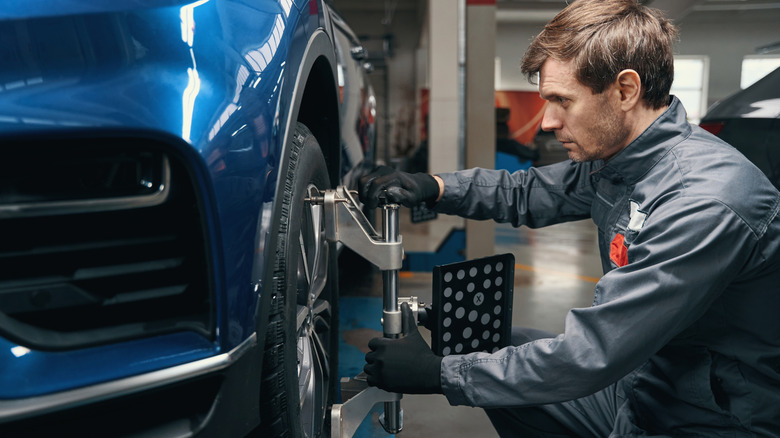
You can extend your tires’ lifespan by checking your tire pressure every 3,000 miles, rotating your tires every 6,000 to 8,000 miles, getting your alignment checked periodically (or when your vehicle starts pulling to one side), and checking the tires’ treadwear. Also, you should avoid using the wrong tires for the season or for your vehicle. If you’re looking for an alternative to Michelin Primacy All-Season tires, try the CrossClimate2 — a favorite Michelin tire


Advertisement

Source link

Continue Reading

Tech

Aiper IrriSense 2 Smart Irrigation System Review: Clever Yet Uneven

Published

on

To use Area mode, you first have to define the boundaries of the area. This is done in the app via a process similar to what I’ve encountered on some competing hardware devices. You fire up the mapping mode, and the sprinkler engages. Then, using a simple remote-control system, you dial the water pressure to the appropriate level, aiming at the edge of your yard but not the fence; once the water is where you want it, you drop a pin to mark the boundary of the watering area. You then rotate the nozzle on top of the sprinkler a few degrees and repeat, setting the strength of the flow to cover the desired area. Repeat again and again until you’ve gone through 360 degrees and have dropped pins to visually represent the entirety of your yard. The company says the maximum supported area is a vast 4,800 square feet, with spray reaching up to 39 feet.

Image may contain Text

ScreenshotAiper app via Chris Null

In the app, you can watch this area map being created in real time. The process is quite intuitive except for the final couple of points, where Aiper’s system makes it difficult to complete the 360-degree circuit. If you look at the completed map in the screenshot below, you’ll see a tiny sliver of yard that no amount of finagling could get Aiper to close up.

Watering runs can be initiated on demand or on a schedule, and you intriguingly define not an amount of time to run but a “water consumption limit,” measured in inches of water you want applied to the soil. While it’s nearly impossible to measure how accurate this is, qualitatively, those estimates felt about right in my testing.

In Area mode, the IrriSense 2 delivers water by spraying a jet in a single direction, rotating clockwise through its 360 degrees until it’s gone all the way around the map you’ve set before turning back and doing it again in a counter-clockwise direction, repeating this cycle until the desired irrigation depth has been reached.

Advertisement

While the IrriSense 2’s spray system is officially described as a gentle “mist,” it’s really more of a jet, particularly when it has to reach the far-away parts of the yard near the terminus of its range. That results in a lot more water being delivered to the edges of the yard than to the central portion of the mapped area, but that’s a common issue I’ve seen with rotary sprinklers like this. To account for this, the IrriSense 2 doesn’t just blast at full speed for the entirety of its run. Instead, repeated rotations reduce the pressure delivered bit by bit, until the final rotations are little more than a trickle of water hitting just a few inches away from the unit. (Note that canceling a run early means that only the outermost portions of the area will receive water.)

Aiper IrriSense 2 Smart Irrigation System Review Clever Yet Uneven

Photograph: Chris Null

Source link

Advertisement
Continue Reading

Tech

Best Ski Clothes (2026): Patagonia, Arc’teryx, Burton, and More

Published

on

Honorable Mentions

During the winter, a whole WIRED crew tests ski clothes almost constantly. Here are a few other items that we like.

Image may contain Clothing Glove Baseball Baseball Glove Sport Footwear and Shoe

Courtesy of REI

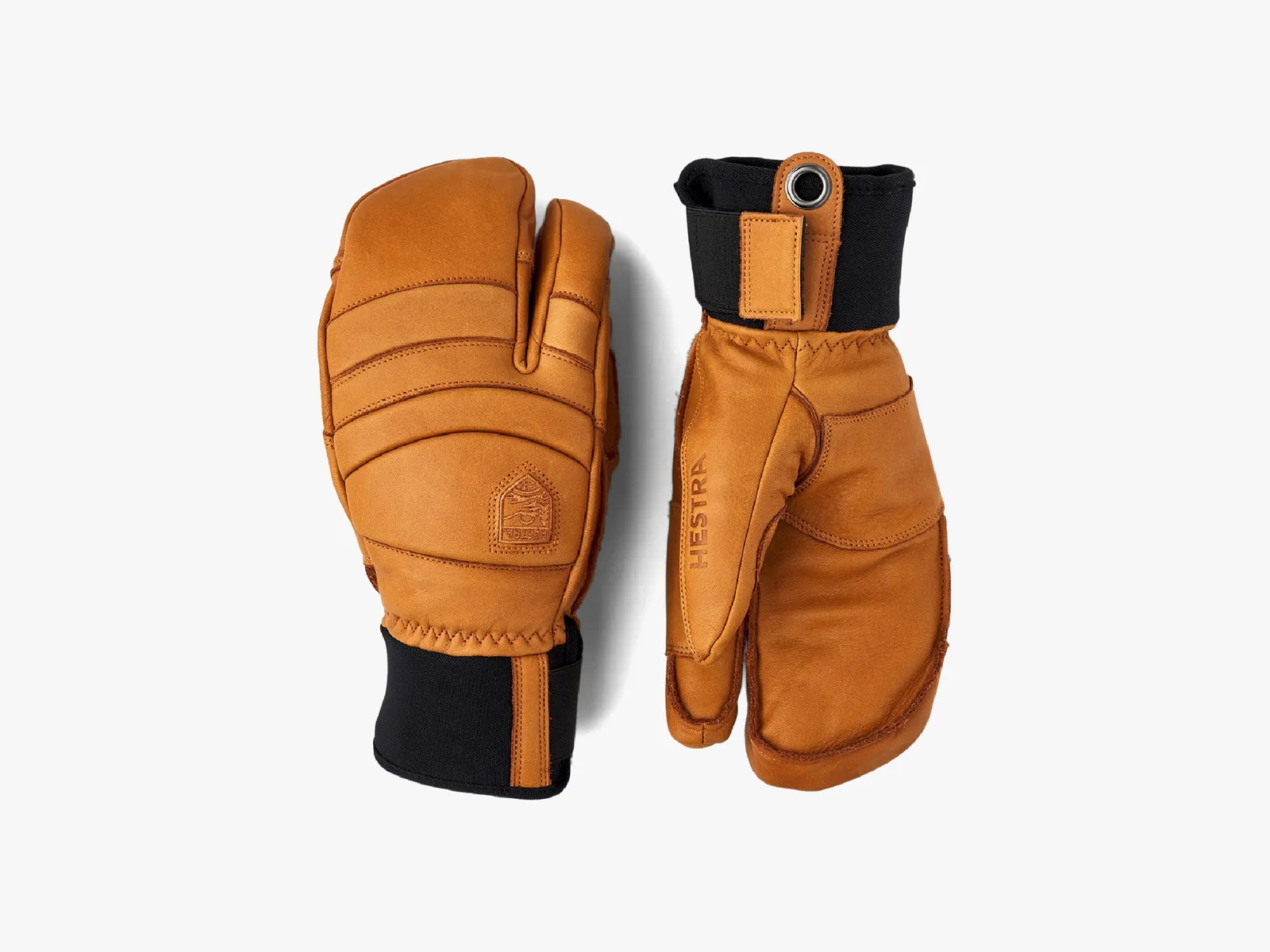
Hestra Fall Line 3-Finger Gloves for $152: I’ve long admired Hestra gloves from across the lift line, impressed by the Swedish company’s elegant stitchwork and thoughtful design touches. This was the year I finally got to try a pair for myself, and the Fall Line are exactly what they look like. There are six sizes available so you can get the perfect fit in this glove. The cowhide is buttery smooth and has already broken in a bit with five days’ use. The wrist strap means you never have to fret about dropping your glove from the lift when checking your phone, and they’re very warm without making me sweat. If you do sweat, the lining is removable so you can wash it without damaging the leather. —Martin Cizmar

Advertisement
Image may contain Helmet Clothing Pants Person Adult Car Transportation Vehicle Footwear Shoe and Accessories

Obermeyer Steibis Bibs for $281: These soft, three-layer shell bibs work just as well with or without a jacket, thanks to plenty of zippered pockets. You get two articulated chest options and two on the thighs. Adjustable straps and multi-way adjustable hems with zippers and snaps, a two-way zip drop seat that can dump heat when zipped open from the bottom, 30k/30k waterproofing and breathability, snow gaiters, reinforced insteps, a Recco reflector, and a mesh panel on the lower back for zoned breathability round out the top-notch features on these bibs. —Kristin Canning

Image may contain Clothing Glove Baseball Baseball Glove and Sport

Courtesy of Crab Grab

Crab Grab Snuggler Mitts for $62: These mini sleeping bags for your fingers are packed full of Primaloft insulation and benefitting from a sherpa fleece lining, they are toasty warm, and with a 15K membrane, impressively waterproof too. All-season mittens with durable construction for under $100? Yes Please!

Image may contain Clothing Long Sleeve Sleeve Knitwear Sweater and Coat

Courtesy of Mons Royale

Advertisement

Mons Royale Yotei Merino Classic Long Sleeve for $77: As I type this, I’m nowhere near a mountain, but I’m still wearing the Mons Royale Yotei long sleeve top. It is ridiculously comfortable, made from 190-gsm-weight, 100 percent merino wool, and has a mercifully relaxed cut, so I remain warm, but don’t feel like a sausage. On the mountain however, the merino wool works its magic, wicking away sweat—especially on a hike up to some fresh powder—and keeping me comfortable. Paired with a shell and the Patagonia R1 Thermal Hoodie, I’m warm during a bitter Arctic blast.

Person wearing an orange Seniq Powder Puff Down Jacket and bib while holding an orange snowboard upright with a snowy...

Seniq Powder Puff Down Jacket and Bib

Photograph: Kristin Canning

Seniq Powder Puff Down Jacket for $249: Seniq is another all-women’s outdoor brand that launched in 2024. It’s styled a little more Gen Z, leaning into fun color blocking over the monochromatic look. The Seniq Powder Puff Down Jacket has a dry-touch finish. It’s meant for drier days on the mountain, but a PFC-free DWR coating and YKK AquaGuard zippers do provide water resistance. The asymmetric front zipper helps you avoid chin rub when you have the jacket fully zipped. It also features cool asymmetrical quilting lines, side pockets-in-pockets that provide access to your bib (their bibs have a pocket on the front, so you can get in there without unzipping your jacket), an oversized removable hood, a forearm pass pocket, soft and stretchy wrist gaiters, and a large internal pocket that can absolutely handle a sandwich. This jacket was warm, pillowy, and comforting, like a super-soft hug. —Kristin Canning

Image may contain Nature Outdoors Snow Helmet Person and Adult

Photograph: Kristin Canning

Advertisement

Marmot Gore-Tex Orion Jacket for $385: This kit feels simple in the best way: It has the features you need, without any overkill. The super lightweight, three-layer Gore-Tex shell material is packable and durable. The bibs have two zippered, articulated thigh pockets (one contains a beacon harness), and one zippered chest pocket. Thigh zips help you dump heat, and clip-off adjustable suspenders help you go to the bathroom without stripping down, though they’re not as convenient as a drop seat. Reinforced insteps and snow gaiters protect your lower legs, where there’s also a Recco reflector. The jacket has four pockets and a pass pocket, a snow skirt, pit zips, a three-way adjustable hood, a Recco reflector, and Velcro adjustable wrist hems without gaiters, helping to cut down on bulk. The color blocking is flattering, with the lower half of the jacket matching the bibs, making your legs look longer despite the drop hem fit. “Affordable” is a bit of a misnomer when it comes to ski gear, but compared to many kits, this is a great option for the backcountry-curious. —Kristin Canning

Mammut Sender In Hooded Jacket for $259: This puffy hoodie is a great mid-layer for under a shell jacket. The insulation is made from recycled rope scraps, and the outer is coated in wind-resistant PFC-free DWR coating. The hem falls at the hips, and the high collar and tight hood keep most of the face covered. I like wearing this piece under shells for snowboarding, but I know it’ll pull double duty as a comfy hiking and camping jacket, too, so it’s a solid multipurpose investment. It’s exceptionally lightweight and warm, though from a volume standpoint, it is on the bulkier side for a mid-layer and isn’t the most packable piece. —Kristin Canning

Image may contain Amy Pieters Adult Person Clothing Footwear Shoe Car Transportation Vehicle Spandex and Helmet

Photograph: Kristin Canning

Wild Rye Bassett Lite Base Layer Raglan Top for $49 and Leggings for $49: These poly/wool- blend base layers from Wild Rye are incredibly soft and stretchy, and light as a feather. They’re perfect for warm spring ski days, and the mid-calf cut means you can pair them with ski socks without much—if any—overlap, helping you avoid overheating, bulk, and pressure points in your boots. —Kristin Canning

Advertisement

Helly Hansen Evolved Air Half Zip for $70: This grid fleece pullover traps heat and wicks moisture. With a high zippered collar and cinchable hem, you can adjust the fit to make it more air-tight or breathable. This mid-layer felt wonderfully lightweight while still keeping my toasty. It’s not bulky at all, only a little thicker than a base layer, laid comfortably under my jackets, and moved with me on the mountain. —Kristin Canning

Helly Hansen Lifa Base Layer Long-Sleeve Crew for $115 and Pants for $87: These base layers hit the weight sweet spot; they’re not too thick or thin, but just right. They’re slightly looser than other options on this list, so if you prefer something that isn’t so fitted, these are a great pick (but note that they run long too). These combine merino wool with Helly Hansen’s LIFA fibers, which add more moisture-wicking capabilities. They’re soft, lightweight, warm, and don’t hold onto smells. I love the cute designs and how well they regulate my temperature under insulated jackets and pants. The waist digs in a bit but doesn’t roll, and they stay in place and move well. —Kristin Canning

We have a full guide on how to layer, but here are your essentials.

Advertisement

Base layer: A good set of thermals is essential in the fight against cold, especially when you’re working hard. The best fabrics wick away sweat as you heat up, which helps regulate your temperature. Merino wool is the best at this, but also the most expensive. Synthetic fabrics are getting better, though, and please avoid cotton at all costs, as it gets wet and stays that way, making you cold and uncomfortable.

Mid-layer: Whether you choose a hooded fleece or puffer-style jacket, this layer does the bulk of the work in cold conditions. Combined with the base layer, it traps warm air in, while also allowing moisture to be expelled. Synthetic insulation such as Primaloft Gold is brilliant and doesn’t lose its properties if it gets wet. Down jackets offer the best warmth-to-weight ratio, but they don’t pack down as small, and should never get wet. A fleece with an insulated vest is a great option if you really feel the cold.

Jacket: While ski jackets with insulation offer bonus warmth in Arctic-like conditions, for most people a waterproof shell will be enough, as it offers protection from both the snow and the wind. A cold wind will chill you to your bones faster than a bit of wet snow. Ideally choose a jacket with a waterproof membrane such as Gore-Tex (make sure it is free from PFAS, or forever chemicals), but also check for taped seams for added waterproofing, plus plenty of pockets for snacks and lift passes, and wrist cuffs and ski skirts to help keep out the snow.

Socks: As with your base layer, socks keep you warm and maintain your temperature when you’re building up a sweat. Natural fabrics work well, but a blend of merino wool with synthetic stretchy fibers is the way to go, as they stay up better and can be used for more than a day. Avoid cotton again, and never wear two pairs, as you’ll almost certainly get colder feet.

Advertisement

Gloves: You’ll be surprised by how wet ski gloves get when it’s snowing, even if you don’t fall very often. As a result, waterproof options work best in most cases, although well-made leather designs can be almost as waterproof as a pair with Gore-Tex. Mittens are generally warmer than gloves, but what you gain in toasty fingers you lose in dexterity. Check out our Best Ski Gloves and Mittens guide for more information.

Waterproofing and breathability ratings: Waterproofing is measured with a hydrostatic head rating, or HH. That means if you put a 1-inch, endlessly long square tube on top of the fabric, you could pour 20,000 millimeters of water before it would seep through. Breathability is rated in how many grams of vapor per square meter can can pass through the fabric in 24 hours.

I’ve been reviewing winter sports gear for more than 15 years. In that time, I have worn an untold number of jackets, pants, mid-layers, thermals, gloves, and mittens. I called on industry experts and professional skiers, and solicited opinions from fellow winter sport enthusiasts on the WIRED team. While a basic fit check can be done in the office, nothing replaces on-mountain testing in variable conditions. We put in the time on various trips to the French Alps, as well as in resorts in Vermont, Colorado, Arizona, and Oregon.

Power up with unlimited access to WIRED. Get best-in-class reporting and exclusive subscriber content that’s too important to ignore. Subscribe Today.

Advertisement

Source link

Continue Reading

Tech

‘I don’t think anything will ever replace Rec Room’: Fans shocked by gaming platform shutdown

Published

on

(Rec Room Image)

The despair among Rec Room players is real.

Users of the popular social gaming platform expressed their disbelief and sadness over the demise of the Seattle-based company, which announced Monday that it is shutting down on June 1, and that some of its assets are being acquired by Snap.

Rec Room — ranked No. 49 on the GeekWire 200 ranked index of the Pacific Northwest’s top startups — surged in popularity during the pandemic and was once valued at $3.5 billion. It attracted 150 million lifetime players who have been creating and sharing games, virtual goods and experiences across phones, consoles, PCs and VR headsets for a decade.

In the Rec Room Discord server on Tuesday, thousands of posts illustrated the impact that the loss of the gaming app will have on players. Many questioned whether the news was a joke, what went wrong, and where they will go now for such entertainment and community. Similar conversations were taking place on Reddit.

We rounded up a number of reactions from a variety of threads:

Advertisement

“If it is true, I guess thats it. Ive had alot of great memories in rec room and its really sad to see it finally shut down. From 2018/2019 I started playing. Or during the lockdown era in other words, I will surely miss this game from the deepest parts of my heart.”

“its an experience that i dont think could ever be recreated, whether thatd be because of the charm of the style and theming rec room had from the beginning or rather just the cost and difficulty of running something of this scale.”

“I grew as a person on this game from 2017 to 2025 lol… Earned money on it learned to code learned to model learned alot.”

“My 17 y/o son who had been playing almost 6 years came in to tell me it was shutting down and even asked if he could come home early from school that day so he doesn’t miss the shut down…he is BUMMED!!! He was in a few bands that play regular “concerts” and he been part of habit live streams, room tours, costume builds and even whole band costumes. I HOPE something can be done to keep it!!!!!”

Advertisement

“Rec Room was a game where it was clear the devs really ‘got’ vr (at least, pre-2021, many newer updates felt more catered towards screenmode). Small things like weapons locking in your hands and being able to pick stuff up from a distance is done so well in rec room and i still havent found another vr game that genuinely feels like it understands how to make a vr game comfortable to play.”

“This is such a sad day for all of us… This is such sad news about the fact that Rec Room will shut down on June 1st, i’ve been an avid dedicated player of this game for the last 4 nearly 5 years. I have Autism, it is difficult for me to get out of the house and this has been a safe environment to play with my friends who are also autistic. To lose this will be like losing a friend, but definitely losing the connection that has been so important to me over the years.”

“my friend group literally only played rec and we bonded so much over the stuff we can do in this game. theres no other game like rec room and its really a shame its shutting down cuz i doubt there will be another game like it.”

“This all feels so bizarre. I heard the news last night, went “oh well they did this to themselves” and went to sleep. I woke up this morning super happy (since I actually managed to go to bed at a decent time), then I remembered the news and this day just doesn’t feel real. This shutdown probably hurts me the most as it was a VR game and I felt like time slowed down when I could put on a headset and be heavily immersed in a whole new atmosphere that I could never experience in real life.”

Advertisement

    “I started playing at a low in my life played for six years. I’ll never forget recroom I met my best friend on there who I will forever keep in contact with I learned how to build got good at it too.”

    “i dont think anything will ever replace recroom the people who played vr for recroom will probably stop playing vr in general when recrrom dies there was nothing to me that felt as fun as recroom.”

    “I think we should all just try and have fun with the game still being up right now and we should all just be happy that recroom was a fun experience yet it unfortunately has to go.”

    “its good to move on. its upsetting and sad but like we have the memories they were good.”

    Advertisement

    Related:

    Source link

    Continue Reading

    Tech

    Steam could soon show estimated FPS based on crowd-sourced player data

    Published

    on


    The feature would represent a significant step toward bridging the gap between official system requirements and actual in-game performance. Even as studios release recommended hardware specs, the experience on diverse PC setups often differs sharply from expectations.
    Read Entire Article
    Source link

    Continue Reading

    Trending

    Copyright © 2025