

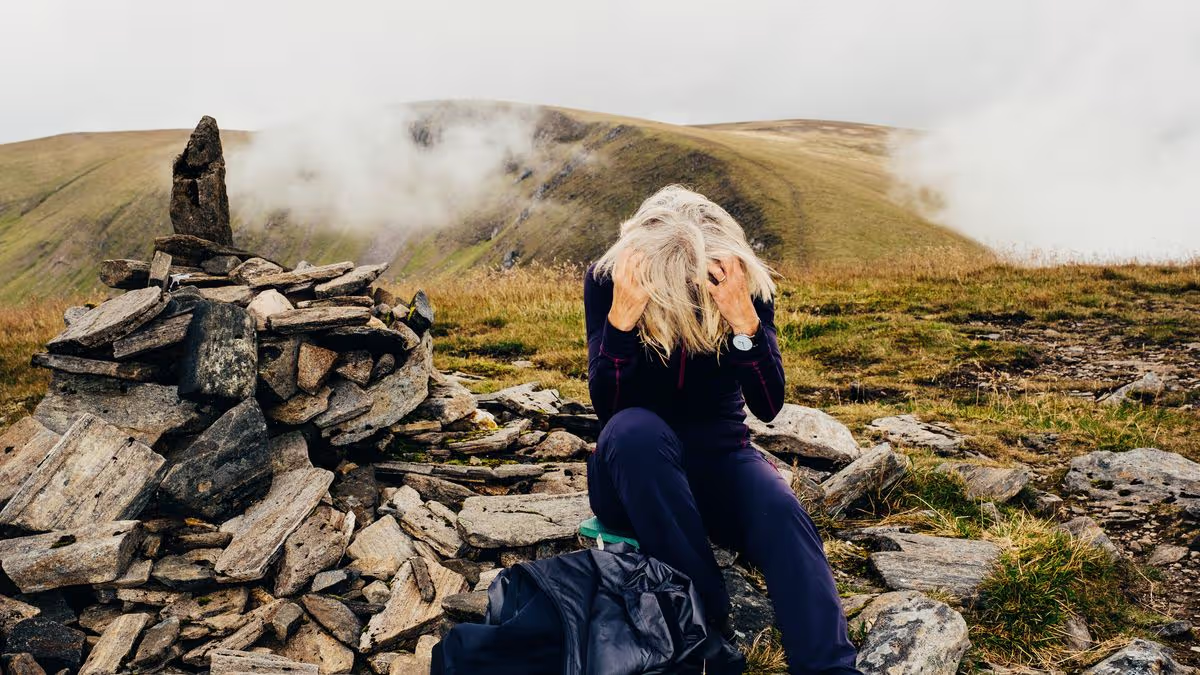
Some parts of the country are much worse for the bloodsuckers than others.
The “worst places in Scotland” for midges have been named ahead of the start of summer, with hikers being advised to avoid certain parts of the country if they don’t want to be set upon. Experts have also shared a list of locations around Scotland where hillwalkers and holidaymakers are less likely to encounter the biting beasts.
Midges, particularly the Culicoides impunctatus species, are biting flies that are usually very prevalent between late spring and late summer. The small flies are infamous for ruining hikes and camping trips in Scotland across the warmer months, with their bites leaving irritating and itchy lumps.
On Wednesday, April 3, travel experts at Two Scots Abroad shared a guide to midges in Scotland to help Scots and holidaymakers in the country alike minimise the impact of the blood-sucking insects. A total of nine destinations and regions across Scotland were singled out as especially bad for midges.
One of the areas in the country where midges are particularly prevalent according to the experts is the Northwest Highlands, which comprises Wester Ross, Assynt, and Sutherland, as well as part of Caithness. The region offers conditions very favourable for midges to breed, such as wet soil, damp moss, and sheltered glens with minimal wind.
In particular, Glen Coe, Fort William and the Great Glen, Torridon, and the Isle of Skye were named as top hotspots for midges that should be avoided if possible. Meanwhile, Argyll and Bute and parts of the North Coast 500 were named as locations with a lower risk but where midges are still common.
The Two Scots Abroad website states: “What all of these share: sheltered, boggy, wet highland terrain with limited wind exposure. If a place is famous for dramatic scenery and moody weather, it’s probably also famous for midges.”
On the other hand, there are certain parts of Scotland where you are far less likely to be bothered by midges during the spring and summer. According to Two Scots Abroad, these generally comprise open and coastal regions where strong winds prevent the insects from thriving.
Among the locations in Scotland where midges are unlikely to be as much of a nuisance are the Scottish Borders, Fife, Dumfries and Galloway, Edinburgh, Glasgow, and the Central Belt. Those in Orkney and Shetland may also have better luck when it comes to midges according to Two Scots Abroad.
Additionally, the experts shared tips that can help you avoid midge bites even if you head into areas such as the Northwest Highlands. According to Two Scots Abroad, using repellent such as Smidge, wearing head nets and brightly coloured clothes, and avoiding dusk and dawn can all minimise your chances of being bitten.
Scots keen to avoid the worst of the midges this spring and summer can also use The Scottish Midge Forecast to plan their trips. The forecast uses data from biting midge traps and mini-weather stations across the country to provide a regularly updated view of midge levels throughout Scotland.
Two Scots Abroad’s midge guide adds: “If you’re planning a trip to the Scottish Highlands, this is the one practical topic worth actually reading up on. Not because midges are dangerous, they’re not, but because they can genuinely ruin an otherwise brilliant day out if you’re in the wrong place at the wrong time.”
See below for the full list of the worst locations in Scotland for midges and the areas in the country where you can avoid the insects according to Two Scots Abroad. More information and the full guide can be found on the Two Scots Abroad website.
The worst locations in Scotland for midges
- Northwest Highlands
- Argyll and Bute
- Glen Coe
- Fort William and the Great Glen
- Torridon
- Isle of Skye
- Loch Lomond and The Trossachs National Park
- Cairngorms National Park
- Parts of the North Coast 500
Where in Scotland to avoid midges
- Edinburgh and the Central Belt
- Glasgow, Lanarkshire, and Ayrshire
- Dumfries and Galloway and the Scottish Borders
- Fife, Dundee, St Andrews, and the Northeast coast
- Orkney and Shetland
















































You must be logged in to post a comment Login