
Business
Ranked & Reviewed for Maximum Impact


In 2026, Australia’s PR landscape is more dynamic than ever. With digital transformation accelerating, crisis management in high demand amid economic shifts, and brands prioritizing authentic storytelling across social, media, and influencer channels, the right PR agency can skyrocket visibility, reputation, and ROI. From Sydney’s powerhouse networks to Melbourne’s creative hubs and Brisbane’s emerging innovators, top firms blend traditional media relations with digital PR, SEO-integrated strategies, and data-driven campaigns.
This comprehensive review ranks the 20 best PR agencies in Australia for 2026, based on recent industry rankings (Clutch.co February 2026, PRovoke Media Asia-Pacific 2025 insights extended, The Ardor, DesignRush, Goodfirms, and client feedback). Factors include client results, awards, innovation in digital/hybrid PR, sector expertise (corporate, consumer, tech, fashion/lifestyle, crisis), and national reach. Whether you’re a startup seeking buzz or a corporate needing reputation protection, these agencies lead the pack.
1. Edelman Australia – Best Overall & Global Powerhouse
Edelman Australia tops many 2026 lists for its unmatched scale and expertise. Part of the global Edelman network, it excels in corporate communications, crisis management, public affairs, and integrated campaigns. With offices in Sydney, Melbourne, and beyond, Edelman handles high-profile clients across tech, finance, and government. Strengths: Data-driven insights via Trust Barometer, strong media relationships, and award-winning work in sustainability and issues management.
Pros: Global resources, proven crisis handling, broad sector coverage. Cons: Higher fees for larger enterprises. Best for: Multinational brands and complex reputation challenges.
2. Ogilvy Australia – Creative Excellence & Integrated PR
Ogilvy stands out for blending PR with advertising and digital creativity. Recognized in PRovoke’s best agencies, it delivers storytelling that cuts through noise, with expertise in consumer brands, health, and tech. Sydney and Melbourne bases ensure national coverage.
Pros: Award-winning creative campaigns, strong influencer integration. Cons: More advertising-focused than pure PR. Best for: Brands wanting PR that feels like bold marketing.
3. Burson (Burson Australia) – Strategic Depth & Merger Strength
Post-merger evolution makes Burson a 2026 leader in strategic communications, public affairs, and corporate PR. Excellent in B2B, government relations, and crisis.
Pros: Deep policy expertise, robust analytics. Cons: Less boutique feel. Best for: Corporate and public sector clients.
4. Herd MSL – Consumer & Lifestyle Specialist
Herd MSL shines in consumer, lifestyle, and brand storytelling, with creative campaigns that drive earned media and social buzz.
Pros: Strong influencer and experiential focus. Cons: More niche in consumer sectors. Best for: Fashion, beauty, FMCG brands.
5. ICON Agency – Multi-City Award-Winner
With offices in Sydney, Melbourne, Brisbane, and Canberra, ICON is one of Australia’s most awarded PR firms. It excels in integrated PR, digital, and creative services across corporate, government, and consumer.
Pros: National footprint, award haul. Cons: Broad services may dilute pure PR focus. Best for: Brands needing cross-channel campaigns.
6. Thrive PR + Communications – Boutique Powerhouse
Family-owned and female-led, Thrive dominates in Sydney (with ANZ reach) for corporate, tech, finance, and crisis PR. Over 20 years of results-driven work.
Pros: Personalized service, crisis expertise. Cons: Smaller scale. Best for: Mid-sized businesses seeking high-touch PR.
7. Berkeley Communications Group – Dynamic & Reputation-Focused
Frequently ranked high on Clutch.co, Berkeley excels in media relations, brand reputation, and public affairs in Sydney.
Pros: Strong earned media results. Cons: Primarily Sydney-centric. Best for: Tech and professional services.
8. Sling & Stone – Digital PR Leader
Named ANZ PR Agency of the Year in recent awards, Sling & Stone blends digital PR, influencer, and content for modern brands.
Pros: Innovative digital strategies. Cons: Emerging vs. legacy giants. Best for: Tech startups and e-commerce.
9. AMPR Group – Impactful & Results-Driven
Sydney and Melbourne-based, AMPR delivers measurable campaigns in fashion, retail, beauty, and hospitality.
Pros: Creative, culture-aligned work. Cons: Sector-specific strengths. Best for: Lifestyle and consumer brands.
10. Reconnect PR – Rising Star on Clutch & Manifest
Surry Hills-based, Reconnect earns top reviews for strategic PR, media training, and brand storytelling.
Pros: High client satisfaction scores. Cons: Boutique size. Best for: SMEs and startups.
11. Eleven – Creative & Strategic
Part of PRovoke’s best, Eleven focuses on innovative campaigns across consumer and corporate.
Pros: Fresh ideas, strong execution. Cons: Competitive field. Best for: Disruptive brands.
12. History Will Be Kind – Boutique Innovator
Noted for thoughtful, narrative-driven PR in PRovoke rankings.
Pros: Deep storytelling. Cons: Niche appeal. Best for: Purpose-driven organizations.
13. Bench PR – Emerging Excellence
Recognized in Asia-Pacific best lists for agile, effective PR.
Pros: Nimble and responsive. Cons: Newer player. Best for: Fast-growing companies.
14. Adoni Media – Media Training & PR
Brisbane/Spring Hill focus, strong in public relations and media training.
Pros: Crisis and spokesperson prep. Cons: Regional emphasis. Best for: Executives and public figures.
15. The Atticism PR and Brand – Boutique Specialist
High ratings on Manifest for brand-focused PR.
Pros: Personalized, creative. Cons: Smaller team. Best for: Lifestyle and professional services.
16. Pure Public Relations – Results-Guaranteed
Sydney-based, guarantees outcomes for SMEs and NFPs.
Pros: Performance-based. Cons: Focused on smaller clients. Best for: Budget-conscious brands.
17. Sefiani – Strategic & Sustainability-Focused
Award-winning Sydney firm for corporate, investor relations, and sustainability PR.
Pros: Issues management strength. Cons: B2B lean. Best for: Corporate reputation.
18. Media Key – Melbourne Standout
Goodfirms-listed for dynamic publicity in arts, entertainment, and lifestyle.
Pros: Creative projects. Cons: Sector-specific. Best for: Entertainment brands.
19. Think HQ – Public Affairs Expert
Melbourne-based, excels in government relations and public affairs.
Pros: Policy influence. Cons: Less consumer-focused. Best for: Advocacy and public sector.
20. PRLab – International Reach with Local Expertise
Global network with strong Australian presence for tech and startup PR.
Pros: Cross-border capabilities. Cons: More digital-heavy. Best for: Tech and innovation sectors.
Key Trends Shaping PR in Australia 2026
- Digital Integration → Top agencies merge PR with SEO, social, and influencer for amplified reach.
- Crisis & Trust → Economic uncertainty boosts demand for reputation management.
- Sustainability & Purpose → Brands prioritize authentic ESG storytelling.
- Measurement → ROI via media value, sentiment analysis, and conversions.
- Regional Strength → Sydney leads in corporate, Melbourne in creative/lifestyle, Brisbane in emerging consumer.
How to Choose the Right PR Agency in 2026
- Define goals (brand awareness, crisis, launches?).
- Check portfolios and case studies.
- Prioritize Tier-1 regulators and ethics.
- Request references and metrics.
- Start with a pilot or retainer.
- Budget: Boutique $5k–$15k/month; global $20k+.
Australia’s PR scene offers options for every need—from global giants like Edelman to agile boutiques like Thrive. Partner with one of these top 20 to elevate your brand in 2026’s competitive market.


Rear Admiral Erica G. Schwartz.
U.S. Department of Health and Human Services
President Donald Trump on Thursday nominated Erica Schwartz to serve as director of the Centers for Disease Control and Prevention, concluding a monthslong effort to choose a permanent leader of the embattled health agency.
Schwartz will have to be confirmed by the Senate, and would take over the role as Health and Human Services Secretary Robert F. Kennedy Jr. oversees a string of controversial health policy changes at the agency, including an overhaul of childhood vaccine recommendations.
Schwartz served as deputy surgeon general during the first Trump administration, where she played a major role in the U.S. response to the Covid-19 pandemic. She spent more than 20 year in uniform, including as rear admiral and chief medical officer of the Coast Guard.
Dr. Jay Bhattacharya had been acting director of the CDC – a title that expired last month under federal law. That law, called the Vacancies Act, limits the amount of time an acting officer can serve in place of a Senate-confirmed official to 210 days.
Late last month marked 210 days since the most recent CDC director, Dr. Susan Monarez, was fired.
A sign sits outside of the Centers for Disease Control and Prevention (CDC) Roybal campus in Atlanta, Georgia, U.S. March 18, 2026.
Megan Varner | Reuters
She has so far been the only person to serve as a confirmed CDC director during Trump’s second term, holding the role for under a month last summer. In congressional testimony in September, Monarez said she was fired after refusing Health and Human Services Secretary Robert F. Kennedy Jr.’s demands to approve vaccine recommendations she believed lacked scientific support.
It is unclear how Schwartz’s views on vaccines or other key public health policies compare with Kennedy’s.
Also on Thursday, Trump said he chose Sean Slovenski as deputy CDC director and chief operating officer, and Jennifer Shuford as deputy CDC director and chief medical officer. Shuford, as head of the Texas Department of State Health Services, led the state’s response to a massive measles outbreak last year, and credited vaccination and testing in declaring it over.
Schwartz’s nomination comes after a tumultuous several months for the agency, which is reeling from the leadership upheaval, plummeting morale, significant staff turnover and controversial changes to U.S. vaccine policy. Ahead of leadership departures last summer, staff was shaken by a gunman’s attack on the CDC’s Atlanta headquarters on Aug. 8.
Last month, a judge blocked a critical vaccine panel’s efforts to overhaul U.S. immunization policy. That includes an effort to reduce the number of recommended childhood shots from 17 to 11.
Trust in federal health agencies has plummeted during Kennedy’s tenure as Health and Human Services secretary, according to a February poll from health policy research group KFF, with declines across the political spectrum.

Form 8K Aircastle LTD For: 16 April

OpenTheBooks CEO John Hart joins Varney & Co. to discuss long-term Social Security and Medicare deficits as fiscal pressures mount.
American retirees who are receiving Social Security will see an annual cost of living adjustment (COLA) next year, and a new report projects that next year’s benefit increase may be smaller than many retirees expect.
A new analysis by The Senior Citizens League (TSCL) predicts that Social Security’s 2027 COLA will be 2.8%, which would be the same benefit boost as the 2026 COLA.
That would amount to an increase in the average Social Security benefits check for retired workers of $56.69, raising the benefit from $2,024.77 to $2,081.46 per month.
“Americans are right to worry about our current COLA projection,” said TSCL executive director Shannon Benton. “The fact is that most senior households already get by on only about 58% as much income as their working-age counterparts, and you’d be hard-pressed to find a middle-class or working-class American who thinks the economy is doing well right now, especially as oil prices rise.”
NEW PROPOSAL WOULD CAP SOCIAL SECURITY BENEFITS AT $100K FOR WEALTHY COUPLES

The Social Security Administration’s 2027 COLA will be based on inflation data from July, August and September, with an announcement in October. (Saul Loeb/AFP via Getty Images)
The Social Security Administration (SSA) computes the annual Social Security COLA using a variant of inflation data from the consumer price index (CPI) based on the months of July, August and September. The agency announces the COLA each October, although last year’s announcement was delayed by a government shutdown.
TSCL’s estimate of a 2.8% COLA for 2027 was based on the year-over-year CPI-W reading coming in at 2.2% in both January and February, then rising to 3.3% in March.
Inflation jumped in March largely due to the energy supply shock caused by the Iran war disrupting the flow of oil from the Middle East, as tanker traffic through the Strait of Hormuz was at a standstill due to the conflict.
Economists have warned that inflation may rise further in the next few months and could remain elevated through the end of the year depending on how long the energy impact of the conflict goes on, though there is uncertainty around those projections related to the war’s duration and resolution.
Social Security’s main trust fund is being depleted due to the aging of America’s population and rising enrollment, causing expenses from benefit payments to rise beyond what the trust fund and incoming payroll tax receipts can cover.
Recent projections estimate it will reach insolvency in 2032, at which time benefits would be cut by an estimated 24% across the board to match incoming revenue.
IRAN WAR COULD PUSH INFLATION HIGHER THIS YEAR, GOLDMAN SACHS SAYS

Social Security’s main trust fund is projected to reach insolvency in 2032. (Mark Felix/The Washington Post)
TSCL also criticized a recent proposal to reform Social Security that would cap annual benefits for higher income Americans at $50,000 for an individual or $100,000 for couples.
The Six Figure Limit proposal put forward by the nonpartisan Committee for a Responsible Federal Budget (CRFB) would only affect a small fraction of Americans. The group notes that while it wouldn’t significantly delay the insolvency of Social Security trust funds on its own, it could “meaningfully delay insolvency in combination with other reforms.”
GET FOX BUSINESS ON THE GO BY CLICKING HERE
TSCL’s Benton said that, “Reforming Social Security needs to follow a two-pronged approach, strengthening revenues and benefits at the same time to ensure prosperity for all Americans, of all ages.”
Business
S&P 500 Climbs to Fresh Record High Near 7038 as Tech Earnings Optimism Overshadows Geopolitical Risks

NEW YORK — The S&P 500 edged higher Thursday, closing at another all-time high near 7,038 as investors brushed aside lingering concerns over the U.S.-Iran conflict and focused on the start of first-quarter earnings season, particularly from technology giants driving artificial intelligence spending.

The benchmark index finished the session at 7,038.24, up 15.29 points or 0.22 percent, marking its latest record close after surging more than 10 percent from late March lows. The modest gain followed Wednesday’s stronger advance when the index first closed above 7,000 for the first time, capping a remarkable recovery fueled by easing fears that the Middle East conflict would severely disrupt global energy supplies or derail economic growth.
The Nasdaq Composite, heavily weighted toward technology stocks, also pushed to fresh records, extending an 11-session winning streak in recent trading. The Dow Jones Industrial Average lagged slightly, reflecting mixed performance in more traditional industrial and financial names.
Analysts attributed the resilience to growing confidence that diplomatic efforts between the U.S. and Iran could prevent a worst-case escalation, including any prolonged blockade of the Strait of Hormuz that had earlier sent oil prices spiking. With oil stabilizing around recent levels, investors rotated back into risk assets, particularly those tied to the ongoing AI infrastructure boom.
Corporate earnings provided additional support. Netflix Inc. was among the most anticipated reports after the bell Thursday, with Wall Street expecting revenue growth exceeding 15 percent and continued subscriber momentum from password-sharing crackdowns and advertising tier expansion. Strong results from the streaming leader and other communication services names helped lift the broader market, as investors priced in resilient consumer spending despite higher interest rates.
Technology remained the clear outperformer. Companies benefiting from hyperscaler demand for GPUs, data centers and AI-related infrastructure continued to draw buying interest. The sector’s projected earnings growth for the first quarter hovered near 45 percent year-over-year in some estimates, far outpacing the S&P 500’s overall forecast of roughly 12.6 percent — marking what could be the sixth consecutive quarter of double-digit profit expansion for the index.
“Earnings momentum, especially in tech and AI-adjacent plays, is giving investors a reason to look past the headlines,” said one strategist at a major Wall Street firm. “The market has recovered all its war-related losses from March and is now testing new highs on the back of solid fundamentals rather than pure hope.”
The rally from late March lows has added trillions in market value, with the S&P 500 erasing earlier 2026 declines that at one point left the index down about 4 percent for the year amid heightened geopolitical tensions and uncertainty over Federal Reserve rate policy. Year-to-date, the benchmark now sits comfortably positive, though gains remain concentrated in a handful of mega-cap names.
Broader participation has improved modestly. While the “Magnificent Seven” stocks still dominate headlines, analysts note early signs of rotation into other sectors as Q1 results roll in. Financials, industrials and consumer discretionary names posted mixed results Thursday, reflecting varied exposure to higher borrowing costs and any potential slowdown in capital spending.
Bond yields remained relatively stable, with the 10-year Treasury yield hovering near recent levels as traders weighed the balance between resilient growth data and the Fed’s likely path. No rate cut is fully priced in for the near term, but markets continue to anticipate eventual easing if inflation pressures from energy markets subside.
International developments also played a role. Optimism around possible U.S.-Iran negotiations helped calm energy markets, though any breakdown in talks could quickly reignite volatility. European and Asian stocks showed mixed performance overnight, with some regional indices gaining on hopes of contained conflict spillover.
Looking ahead, investors face a packed earnings calendar. Major banks and industrial giants report in coming days, followed by more tech heavyweights. Consensus calls for continued strength in AI-related capital expenditures, with hyperscalers like Microsoft, Amazon, Meta and Google parent Alphabet guiding for hundreds of billions in combined spending this year alone.
Yet risks persist. Valuation concerns linger for high-flying AI stocks after years of rapid gains. Some strategists warn that if earnings growth fails to meet elevated expectations, the market could face a pullback. Geopolitical flare-ups, sticky inflation or slower-than-expected economic data could also test the recent optimism.
Smaller companies in the Russell 2000 lagged the large-cap benchmarks again Thursday, underscoring the narrow breadth that has characterized much of the rally. Value-oriented sectors have struggled to keep pace with growth names, prompting some fund managers to advocate for greater diversification.
For individual investors, the S&P 500’s climb to new highs reinforces its role as a core long-term holding. The index has historically delivered strong returns over multi-year periods despite periodic corrections, with many 401(k) plans heavily tied to broad market exposure.
Thursday’s trading volume was solid but not extreme, suggesting steady institutional participation rather than frantic retail buying. Options activity showed elevated interest in near-term protection, reflecting caution even amid the upbeat mood.
The S&P 500’s 52-week range now spans from roughly 5,100 earlier in the cycle to the current record territory above 7,000, illustrating both the depth of last year’s gains and the speed of the 2026 recovery. Market capitalization of U.S. equities has swelled, adding significant paper wealth to retirement accounts and institutional portfolios.
As the trading day wound down, futures pointed to a modestly higher open Friday, with focus shifting to any late-breaking news from Netflix’s earnings call and forward guidance. A beat on subscriber adds or advertising revenue could further embolden bulls, while cautious commentary on content spending or churn might temper enthusiasm.
Economists continue to monitor consumer resilience. Recent data showed steady spending despite higher prices in certain categories, supporting the soft-landing narrative that has underpinned much of Wall Street’s rebound.
In summary, Thursday’s modest advance to a fresh record capped a strong two-week stretch for the S&P 500, driven by de-escalation hopes in the Middle East, anticipation of robust corporate profits and the enduring appeal of technology and AI themes. Whether the momentum sustains will depend on the earnings deluge ahead and any fresh developments on the global stage.
The benchmark’s ability to push through 7,000 and keep climbing highlights the market’s capacity for rapid recovery when fear subsides and fundamentals reassert themselves. For now, bulls remain in control, though many participants stand ready to reassess at the first sign of disappointment.

WEC Energy Group declares quarterly dividend of 95.25 cents

The sector is already benefiting from stronger order pipelines and improving execution visibility, said Harsha Upadhyaya, chief investment officer at the $60 billion money manager. Industrials and financial stocks make up more than half of his Kotak Large and Midcap Fund, which has beaten 98% of peers in the last five years, according to data compiled by Bloomberg.
Recent global conflicts will drive further defense investments, he said in an interview last week. Evolving warfare trends, particularly the increasing use of electronic systems, are also driving sustained demand for domestic players, he added.
Indian defense firms have rallied in recent years on the back of policy support to boost domestic production and the government’s focus on local procurement and capability building. Upadhyaya said the geopolitical environment will likely accelerate that shift, strengthening the long-term investment case for the sector.
The fund added radar maker Astra Microwave Products Ltd. in March, the worst month for Indian equities since the pandemic. It also counts state-run peer Bharat Electronics Ltd. as a top holding. A defense sector measure representing companies from aerospace to missile makers has delivered more than 50% average returns over the last three years, outperforming most sectoral gauges in India.

 ETMarkets.com
Upadhyaya remains bullish on defense but has kept portfolios diversified in amid volatility, staying fully invested while selectively adding to preferred sectors.
Indian stocks have underperformed their regional peers since the start of 2025, mainly due to worries over slowing earnings growth while geopolitical challenges, including the Iran war, continues to hurt outlook. MSCI Inc.’s gauge of Indian shares is down more than 5% this year versus an 11% advance in its Asian measure.
Financial stocks also look attractive after the recent market drop, he said. The sector has come under pressure since early March, dragged by the central bank’s tighter currency trading rules and a sharp selloff in India’s biggest private-sector lender HDFC Bank Ltd. Still, steady credit growth and a stabilizing interest-rate outlook should aid shares, Upadhyaya said.
“Financials were available at reasonable valuations even before the fall,” he said. Recent additions in this space include beaten-down private lender IndusInd Bank Ltd., along with shadow lenders Shriram Finance Ltd. and Bajaj Finance Ltd., Bloomberg-compiled data show.

In a blog post on Zerodha’s website, Kamath said the absence of external investors and pressure to deliver on aggressive growth has enabled the company to stay true to its core principles.
These include not spamming users, not tracking behaviour, avoiding differential pricing, and steering clear of practices that may not be in customers’ best interests. He noted that while these ideas are easy to state, they are far more difficult to consistently follow, especially when compared with the approach taken by many listed peers.
Zerodha remains among the few brokers that offer zero brokerage on delivery trades. Kamath said the company does not send notifications aimed at increasing trading activity, does not push margin funding to encourage borrowing, and does not follow differential pricing across products. It also avoids cross-selling financial products, advertising, or using customer data to drive additional revenue streams.
He attributed this approach to Zerodha’s decision to remain bootstrapped. Without external capital, the company does not face the pressure to justify revenue targets or deliver rapid growth. Kamath said this flexibility is especially valuable in the broking business, which is inherently cyclical and closely linked to market conditions. He also highlighted the regulatory risks in the sector, noting that entire segments can be disrupted overnight by policy changes.
Despite not spending on advertising or incentives, Kamath said 25% to 30% of Zerodha’s new accounts come through referrals. He described this as one of the most meaningful indicators of customer trust and satisfaction.
Kamath acknowledged that the temptation to push users harder or extract more revenue always exists, but said the company has stayed committed to its founding philosophy of treating customers the way it would want to be treated. He added that avoiding customer acquisition costs has been key to maintaining this discipline, as heavy spending on marketing would inevitably require trade-offs in monetisation.This approach has allowed Zerodha to keep costs low for users, including zero brokerage on equity investing, free direct mutual fund investments, and low intraday charges. Kamath noted that brokerage rates have remained unchanged even as much of the industry has revised pricing. Adjusted for inflation, he said, Zerodha would have had to charge Rs 50 today.
Also read: Ola Electric vs Ather Energy: Which stock looks better after a stellar surge of up to 70% in April?
For the company, the priority remains building strong products and maintaining trust. Kamath said Zerodha would rather grow alongside its customers than at their expense.
(Disclaimer: Recommendations, suggestions, views and opinions given by the experts are their own. These do not represent the views of The Economic Times)

Piotr Swat | Lightrocket | Getty Images
As its high-margin compounded GLP-1 business evolves, Hims & Hers Health may be finding a new opportunity in peptides.
Shares of the telehealth company jumped Thursday after HHS Secretary Robert F. Kennedy Jr. announced Wednesday that the FDA plans to convene a Pharmacy Compounding Advisory Committee meeting to review peptides for potential inclusion on the 503A bulk list, a designation that allows drugs to be compounded on an individual prescribed basis rather than mass producing.
For Hims, the bigger story is how expanding compounding for peptides could unlock new revenue streams as it directs members toward branded rather than more profitable compounded GLP-1 drugs. The telehealth company has been building toward a peptide business for years.
Peptides are short chains of amino acids — think of them as small building blocks of proteins — that are being explored for a wide range of health and wellness uses. They’re controversial because scientific evidence on their long-term safety and effectiveness is limited, and their production remains largely unregulated.
Hims & Hers made a significant move into the space in February 2025 when it acquired a California-based peptide facility. At the time, CEO Andrew Dudum called peptide demand “future-facing innovation.”
“Many use cases have yet to be launched,” said Dudum. “Peptide innovation is at the forefront of so many categories we’re excited to start offering.”
Following Kennedy’s announcement on Wednesday, Hims Chief Medical Officer Dr. Patrick Carroll applauded the news as a move away from the “gray market,” saying the goal is to bring peptide therapy into regulated, physician-led care.
“Our medical team believes certain peptide therapies hold meaningful potential in helping Americans live healthier lives, and we are actively exploring how to expand access in a way that will be aligned with FDA guidance,” Carroll said.
Leerink Partners called the news that the FDA will review peptides for the compounding list a positive outcome that could give Hims a clearer regulatory path to scale peptide therapies. Even so, the firm said it will take time for peptides to boost the company’s bottom line.
“This would not immediately translate into revenue, but would seemingly be a growth avenue that HIMS would push hard on,” said Leerink analyst Michael Cherny, who has a hold-equivalent rating on the stock and a $25 price target. It was trading around $26 a share Thursday.
For now the opportunity is still early, and clinical evidence supporting many peptide therapies is still limited.
Of the dozen peptides listed by Kennedy for consideration on the compounding bulk list, one — MK-677 — is often treated as an illegal drug when sold for human consumption. The growth hormone has also been banned by the World Anti-Doping Agency.
Other peptides on the list, such as GHK-Cu and Semax, which are used for cosmetic or cognitive enhancement, are generally viewed as less controversial, but still lack robust scientific backing.
Kennedy — who has supported many medical treatments and food options outside of those backed by mainstream science — was asked about his plans for expanding peptide therapies during a House Ways and Means Committee hearing Thursday.
“Peptides were not supposed to be regulated,” Kennedy said, arguing the Biden administration restricted the use of peptides due to safety concerns that he considers unfounded.
The FDA process is just beginning, and the July meeting will be advisory only, so change is not expected to be immediate.
Even so, investors are already focusing on what replaces GLP-1 driven growth for Hims, and peptides are emerging as one of the clearest candidates so far.
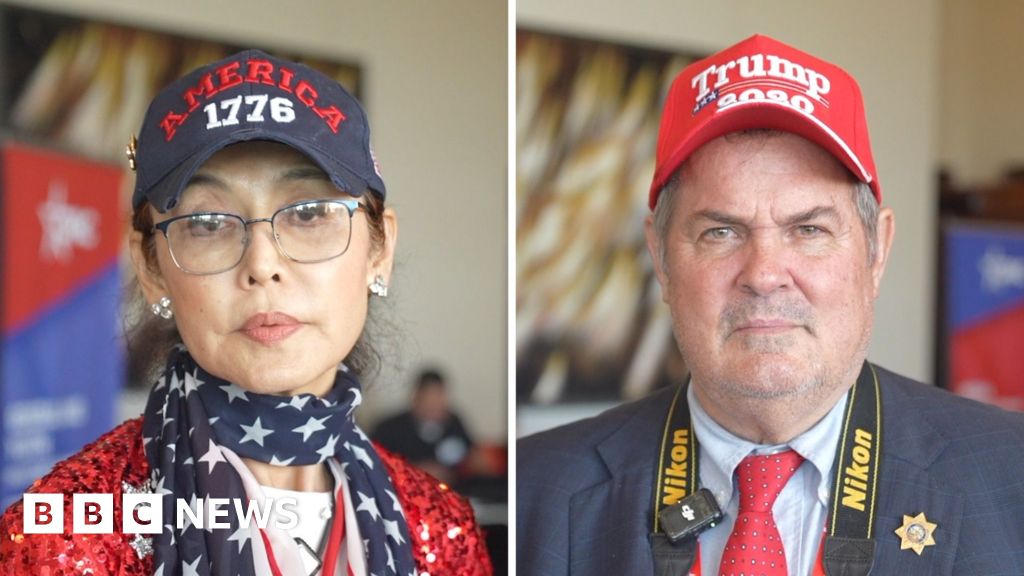
What are the top issues US conservatives care most about right now?
The BBC asked President Donald Trump’s supporters about Iran, the economy, immigration and the future of the Republican Party at the largest conservative gathering in the country.
The Conservative Political Action Conference took place in Texas in March.
Video by Meiying Wu

CAPE CANAVERAL, Fla. — Elon Musk’s SpaceX continues to dominate the billionaire space rivalry with Jeff Bezos’ Blue Origin as 2026 unfolds, launching far more often, expanding its Starlink constellation and advancing ambitious lunar base plans while Blue Origin ramps up its New Glenn rocket and Blue Moon lander efforts in a methodical bid to catch up.

SpaceX achieved a record 165 orbital launches in 2025 and has maintained a blistering pace into 2026, routinely sending Falcon 9 rockets skyward and testing Starship prototypes that could one day ferry humans and cargo to the moon and beyond. Musk has publicly redirected some focus toward building “Moonbase Alpha,” including concepts for a lunar launch device, as the United States races China toward sustained lunar presence by 2030.
Blue Origin, meanwhile, completed its second New Glenn mission in late 2025 and prepared a third flight as early as April 17 from Cape Canaveral, deploying satellites including one for AST SpaceMobile. The company also conducted its 38th New Shepard suborbital flight in January and announced plans to pause further New Shepard operations for at least two years to redirect resources toward lunar capabilities, including an uncrewed Blue Moon Mk1 cargo mission targeted for later in 2026.
The contest, once centered on reusable rocketry and low-Earth orbit dominance, has shifted squarely to the moon. Both companies submitted revised plans to NASA in late 2025 aimed at accelerating crewed lunar landings under the Artemis program. SpaceX holds the primary contract for the Human Landing System using a Starship-derived vehicle, while Blue Origin secured a separate $3.4 billion award for its Blue Moon Mk2 lander on the later Artemis V mission. NASA continues evaluating options to speed up the timeline amid delays in Starship’s complex orbital refueling requirements.
SpaceX’s edge remains stark in operational cadence. The company has launched thousands of Starlink satellites, surpassing major milestones including 10,000 in orbit and targeting terabit-class satellites deployable via Starship in 2026. Starlink added millions of subscribers globally, generating substantial revenue that funds further development. Blue Origin has yet to match that launch tempo or satellite scale, though Bezos-backed Project Kuiper pushes forward with its own broadband constellation, and Blue Origin recently proposed up to 51,600 satellites for orbital AI data centers — a move that prompted SpaceX to urge the FCC to apply consistent scrutiny.
Musk and Bezos have traded subtle barbs. Bezos posted an image of a tortoise on social media earlier in the year, widely interpreted as a nod to the fable of the tortoise and the hare, positioning Blue Origin as the steadier long-term player. Musk has responded dismissively at times, emphasizing SpaceX’s rapid iteration. In one exchange, Musk downplayed Blue Origin’s announced TeraWave satellite project by highlighting Starlink’s advancing space-to-ground laser links.
Public competition intensified in February when Reuters reported both billionaires accelerating lunar ambitions amid NASA’s push and China’s 2030 moon goals. Musk spoke of lunar base development in podcast appearances and internal meetings, even as SpaceX eyes a potential $1 trillion valuation ahead of an IPO. Blue Origin shifted resources from suborbital tourism to its Blue Moon lander, planning early 2026 cargo flights and integrated checkout tests for the Mk1 variant.
Analysts describe contrasting philosophies. SpaceX favors rapid prototyping, frequent testing and aggressive timelines, accepting failures as part of learning. Blue Origin emphasizes methodical engineering, safety and gradual scaling, drawing on Bezos’ long-term vision of millions living and working in space. That “slow and steady” approach has drawn criticism for delays but earned praise for reliability in suborbital flights.
In launch records, SpaceX repeatedly outpaced rivals. In late 2025 it broke Florida’s annual liftoff record, a mark that could have gone to Blue Origin had weather not scrubbed a New Glenn attempt. SpaceX’s reusable Falcon 9 boosters have flown dozens of times, dramatically lowering costs and enabling near-weekly missions. New Glenn, with its seven BE-4 engines and reusable first stage, aims to compete in the heavy-lift category but has completed only a handful of flights so far.
NASA remains central to the rivalry. The agency awarded SpaceX billions for Starship-based lunar landing systems and has paid out significant milestones, though concerns over refueling and schedule slips led to reopened bidding opportunities. Blue Origin received roughly $835 million for its lander work and a $190 million CLPS contract to deliver NASA’s VIPER rover. Both firms submitted acceleration proposals, keeping the competition alive for future Artemis landings.
Beyond government contracts, commercial markets offer another battleground. Starlink provides broadband to remote areas and has been credited with aiding disaster response. Kuiper seeks similar reach but trails in deployment. The emerging domain of orbital data centers for AI workloads has drawn filings from both sides, with SpaceX proposing up to one million satellites and Blue Origin/Amazon advancing its own plans. Regulators face complex decisions on spectrum, orbital debris and fair competition.
Challenges loom for both. SpaceX must prove Starship’s full reusability, reliable in-orbit refueling and crewed flight readiness without major setbacks. Regulatory hurdles, including environmental reviews and international coordination, add complexity. Blue Origin needs to scale New Glenn production, demonstrate consistent heavy-lift performance and integrate its lander systems on time. Funding remains robust for both — SpaceX through revenue and investor confidence, Blue Origin backed by Bezos’ personal fortune and Amazon ties — but execution will determine momentum.
The broader context includes a renewed U.S. commitment to beating China back to the moon. Artemis II, a crewed lunar flyby, recently achieved a record-breaking mission, keeping the program on track. Sustained presence requires reliable landers, habitats and logistics that private industry is now racing to supply.
Industry observers note that the “space war” benefits the entire sector. Competition drives innovation, lowers costs and attracts talent and investment. Yet tensions surface in regulatory filings and public commentary, with SpaceX once urging the FCC to reject aspects of Amazon-related applications while arguing for equal standards.
As April 2026 progresses, eyes turn to upcoming launches. Blue Origin’s NG-3 New Glenn mission could mark another step toward orbital reliability. SpaceX continues Starship testing and routine Starlink deployments. Musk has hinted at ambitious 2026 goals for Starship, including commercial readiness, while Blue Origin targets its first lunar cargo flight.
Neither billionaire is likely to “win” outright in a single year. SpaceX holds the current operational and market lead in launches and satellites. Blue Origin positions itself for longer-term lunar infrastructure and methodical progress. The real contest may extend into the 2030s as humans establish a permanent foothold on the moon and eye Mars.
For now, the rivalry captivates the public and fuels progress. Musk’s hare-like speed has delivered reusable rockets and global connectivity at unprecedented scale. Bezos’ tortoise approach promises careful, sustainable expansion. In the high-stakes arena of space, both strategies may prove essential as humanity pushes farther from Earth.
The coming months will test execution. Successful New Glenn flights and Blue Moon progress could narrow the gap for Blue Origin. Starship milestones and continued Starlink growth would reinforce SpaceX’s dominance. Either way, the billionaire space race shows no signs of slowing, with the moon as the next major prize in a contest that could reshape humanity’s future off-world.

Sis Vs Bro CHIP in Mini MONEY Hole
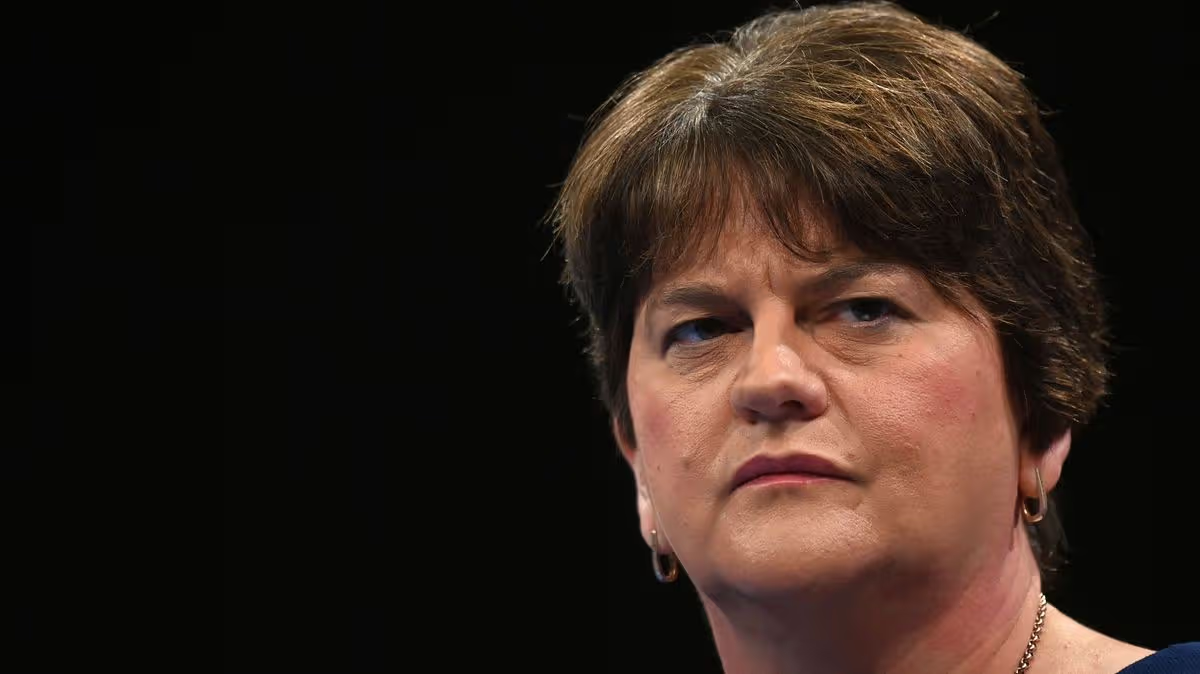
Arlene Foster tells peers she received online abuse about father’s shooting

Trump nominates Erica Schwartz as CDC director


-

 Politics6 days ago
US brings back mandatory military draft registration
-
 Sports6 days ago
Man United discover Nico Schlotterbeck transfer fee as defender reaches Dortmund agreement
-

 Fashion6 days ago
Weekend Open Thread: Veronica Beard
-

 Politics7 days ago
Malcolm In The Middle OG Turned Down ‘Buckets Of Money’ To Appear In Reboot
-

 Politics4 days ago
World Cup exit makes Italy enter crisis mode
-

 Business6 days ago
Tesla Model Y Tops China Auto Sales in March 2026 With 39,827 Registrations, Beating Cheaper EVs and Gas Cars
-

 Crypto World3 days ago
The SEC Conditionalises DeFi Platforms to Be Avoided for Broker Registration
-

 Crypto World3 days ago
SEC Signals Exemption for Crypto Interfaces From Broker Registration
-

 News Videos2 days ago
Secure crypto trading starts with an FIU-registered
-
 NewsBeat4 days ago
Pep Guardiola and Gary Neville agree over Arsenal title problem that benefits Man City
-

 Business5 days ago
Ireland Fuel Protests Enter Day 5 as Blockades Spark Shortages and Government Prepares Support Package
-

 Business6 days ago
OpenAI Halts Stargate UK Data Centre Project Over Energy Costs and Copyright Row
-

 Politics7 days ago
LBC Presenter Mocks Trump Over Iran War Failures
-

 Crypto World6 days ago
Federal judge blocks Arizona from bringing criminal charges against Kalshi
-

 NewsBeat2 days ago
Trump and Pope Leo: Behind their disagreement over Iran war
-

 Crypto World3 days ago
SEC Proposes Certain Crypto Interfaces Don’t Need to Register as Brokers
-
 NewsBeat5 days ago
JD Vance announces ‘no agreement’ with Iran over nuclear weapons fear
-

 Tech7 days ago
A version of Windows 10 released a decade ago is now eligible for additional security patches
-

 Business6 days ago
IMF retains floor for precautionary balances at SDR 20 billion
-

 Business6 days ago
Former Liverpool CEO eviscerates FIFA for World Cup ticket pricing
You must be logged in to post a comment Login