Austrian Audio didn’t appear out of nowhere. The company was formed in 2017 after AKG shut down its Vienna operations, and a significant portion of its engineering and design team decided not to follow the corporate roadmap. Instead, they stayed put and built something new, bringing with them experience tied to models like the K612, K702, and K812.
Since then, Austrian Audio has covered both ends of the market. The Hi-X series established its presence with studio focused, budget friendly designs, while The Composer proved the company could compete at the high-end if you’re willing to spend $2,699.
What’s been missing is the middle. That gap is now filled by The Arranger, a $1,299 open-back headphone that lands right in one of the most competitive segments in personal audio. It’s also where expectations get less forgiving. Up against established options like the HiFiMAN Arya Unveiled and Sendy Audio Egret, this isn’t about proving competence, it’s about proving relevance.
And that raises the real question: did Austrian Audio tune The Arranger for the studio, or for the Head-Fi crowd with very different expectations?
Custom Designed Drivers
Within each earcup of The Arranger sits a newly developed 44mm driver designed entirely in house. Austrian Audio has put real effort into the motor and diaphragm design, using a proprietary ring magnet system and a DLC coated diaphragm to improve rigidity and control.
On paper, the numbers are ambitious. Bass extension is rated down to 5Hz, which Austrian Audio claims is class leading. Distortion is kept below 0.1% at 1kHz, and driver excursion appears well managed for a driver of this size.
The electrical side looks just as approachable. With a 25 Ohm impedance and 94dB/mW sensitivity rating, The Arranger should be relatively easy to drive from a wide range of sources. Whether that holds up in real world use is something we will get into in the drivability section.
Design & Comfort
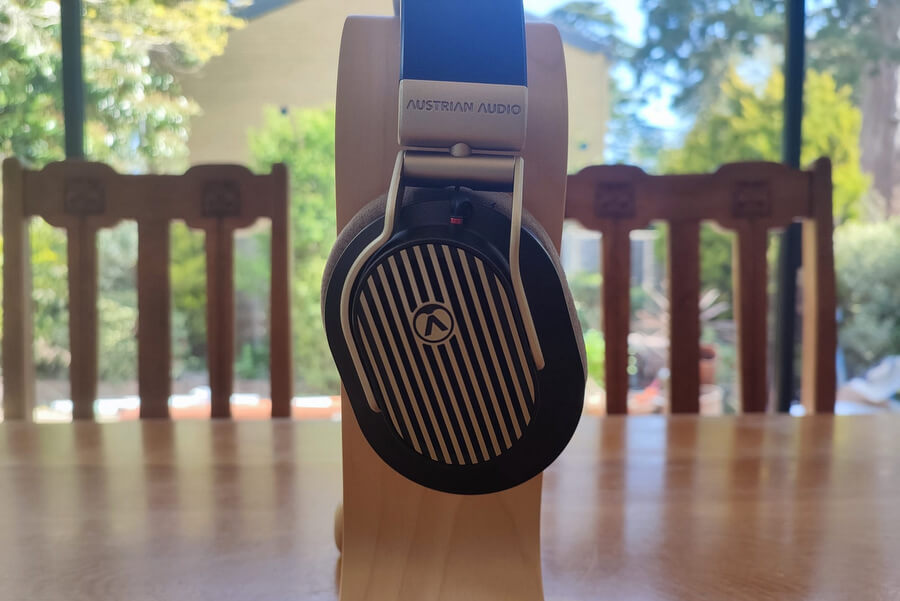
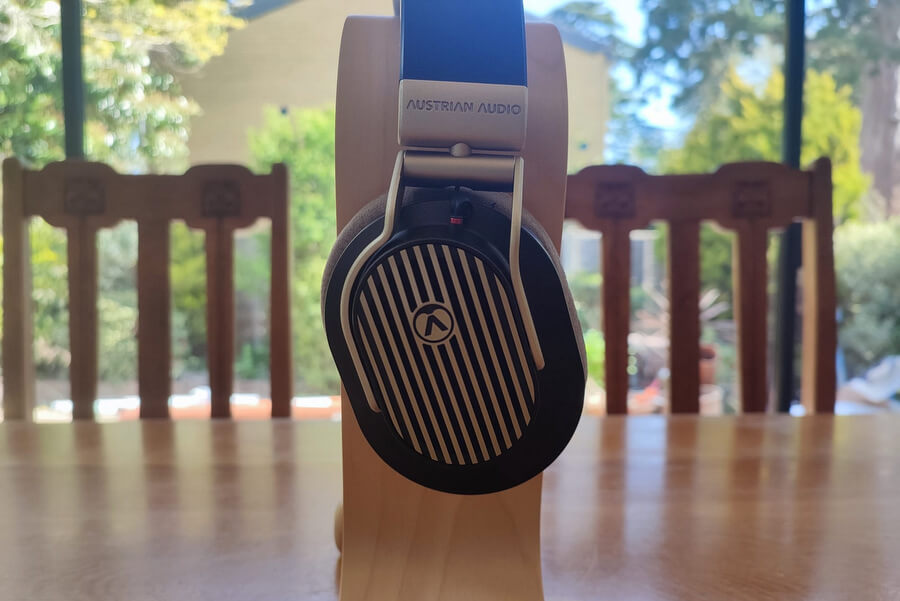
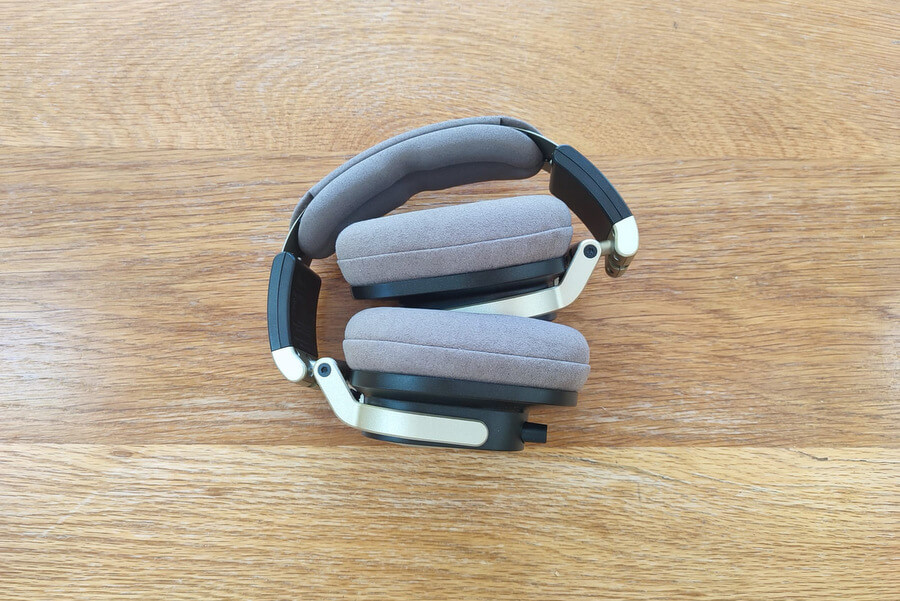
When it comes to design, The Arranger makes no attempt to hide what it is. This is a studio first headphone. It is not sculpted to impress and it is not chasing luxury cues. What you get instead is a build that feels like it was designed to survive actual use. Drops, knocks, and long days at a desk should not faze it. The foldable chassis also gives it an advantage over many open-back competitors when it comes to portability.
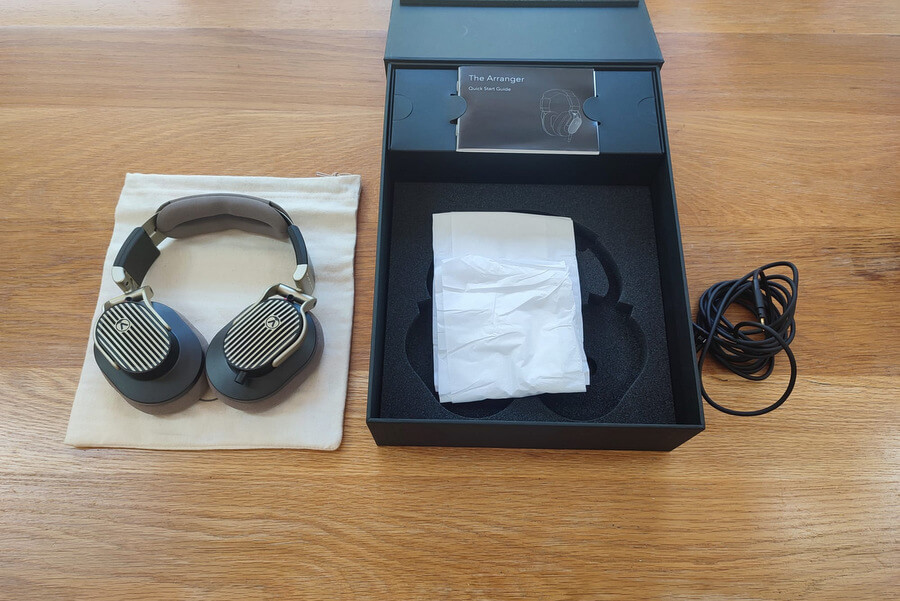
The aesthetic is functional. There is a lot of polymer in the construction, and the single sided cable terminates in a quarter inch plug, which tells you exactly where this is meant to live. The cable itself is a rubberized, high durability design that feels like it was built to be abused, rolled over by chairs, and kept working without complaint.
That said, it is not without character. The beige and gold finish gives it a distinctive look, and there is something appealing about how unapologetically utilitarian it is. If you do not like how it looks, it is largely irrelevant once it is on your head.
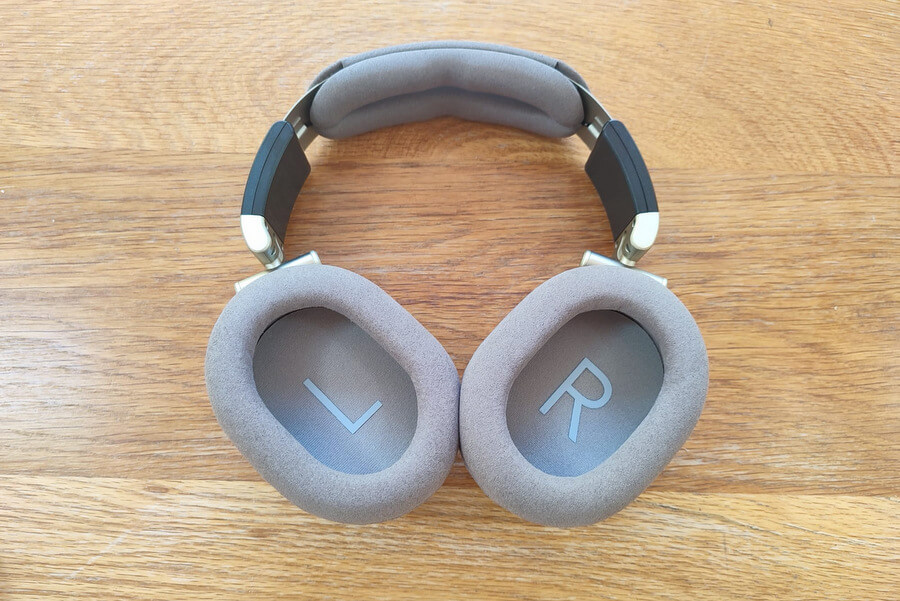
Comfort is a strong point. At 320 grams without the cable, The Arranger is relatively lightweight for its class, and that pays off over longer sessions. Six hour listening stretches are entirely manageable. The suede leatherette pads and headband padding are on the firmer side out of the box, but they do not create pressure hotspots.
Advertisement. Scroll to continue reading.
Long term usability has also been considered. The earpads and headband padding are user replaceable, which is not always a given in this category and should help extend the lifespan of the headphone.
The semi open acoustic design sits somewhere between fully open and closed-back. There is some attenuation of external noise, but passive isolation is limited and leakage is still present. Whether this is an issue for you or not will depend on your listening environment and personal preferences.
Listening
Austrian Audio positions The Arranger as a reference grade headphone for studio use. However, the tuning is not really what I or many others, for that matter, would consider to be neutral.
The overall presentation leans warm, prioritizing ease of listening over absolute clarity and detail. It is a smoother, more forgiving sound rather than a strictly analytical one. Depending on your preferences and what you listen to, that will either work in its favor or feel like a compromise.
For testing, The Arranger was paired with a range of DACs and amplifiers. That included smaller dongle options like the Campfire Audio Relay, as well as higher end desktop setups such as the Ferrum Audio WANDLA and Ferrum Audio OOR with the Ferrum Audio HYPSOS. Source material ranged from high resolution FLAC files to Spotify streams, mostly over USB.
The idea was simple. See how consistent The Arranger is across different setups, and whether it behaves more like a studio tool or something tuned for longer listening sessions.
Bass
The lower frequencies on The Arranger are clearly elevated, especially through the midbass region. This adds a welcome sense of weight and impact, giving music more drive and physicality. For harder hitting genres, it works well. Drum and bass tracks like “The Moment” by Nu:Tone and Lea Lea come across with strong dynamics and a presentation that leans toward that nightclub energy.
There is a downside. The midbass lift can introduce a bit of muddiness on certain tracks, masking finer details and slightly softening both male and female vocals. It is not overwhelming, but it is noticeable depending on the recording.
Whether that trade off is worth it for the added sense of impact will depend on your preferences.
Midrange
The Arranger has a V-shaped sound signature, which means the midrange takes a step back compared to more neutrally tuned headphones. It is not completely recessed, but it is not the focus either. As a result, vocals and instruments do not come across with the same presence or naturalness that you would expect from a true reference tuning.
Female vocals in particular sit a bit further back in the mix than expected, likely due to a dip in the upper midrange. This gives them a slightly muted quality at times. Even headphones like the HiFiMAN Arya Unveiled, which also show some recession in the 1 to 2kHz region, do not exhibit the same degree of restraint with female vocals.
Treble
Those who prefer a smoother, more effortless treble presentation will likely enjoy the upper frequencies on The Arranger. There are no noticeable peaks or troughs throughout, and combined with the bass elevation, the treble was pared back in a pleasant way that allowed for extended listening session with no fatigue.
Advertisement. Scroll to continue reading.
Despite this, you still get plenty of clarity and sparkle up top that can cut through the slightly bass-heavy nature of The Arranger and make things a little more exciting. For example, listening to “La lune” by L’Imperatrice, you are able to make out the faint triangle hits through the bass guitar, both of which feature heavily in the track.
Soundstaging & Imaging
The Arranger has quite a small soundstage, reminiscent of closed-back headphones despite having a semi-open design. However, the imaging precision within said stage is pinpoint accurate, making for a coherent, intimate yet multi-layered soundstage that is way more aurally pleasing than a wide soundstage with poor imaging accuracy. I enjoyed TOOL’s “Chocolate Chip Trip” through The Arranger, as I was able to follow the complex track without any of the layers getting jumbled into one.
An opposite example would be the AKG K702, which to my ears has a very wide but diffuse and confused spatial presentation with a murky centre image.
Drivability
With its relatively high sensitivity and low impedance, The Arranger is very easy to drive. In practice, it does not scale dramatically with more power or higher end source gear. Moving from the FiiO JM21 to the LAiV Crescendo VERSE resulted in only a small change in overall sound quality, and adding the Aune S17 Pro brought a slight improvement in bass texture rather than a wholesale upgrade.
That is not a criticism. If anything, it works in The Arranger’s favor. You do not need to invest heavily in a dedicated DAC or amplifier to get close to its full performance, which makes it a more practical option than many of its competitors.
The Bottom Line
The Arranger gets a lot right, but not always in the way Austrian Audio suggests. It delivers a smooth, engaging, and fatigue free presentation that makes long listening sessions easy. The elevated midbass and strong sense of dynamics give music real drive, especially with electronic, rock, and other harder hitting genres. Add in the lightweight build, solid durability, and very good comfort, and it is a headphone you can live with day to day without much effort.
The tradeoffs are just as clear. This is not a neutral or strictly reference tuned headphone. The V-shaped balance, midbass lift, and slightly recessed upper mids mean it does not excel at critical listening or vocal accuracy. Detail is there, but it is not pushed forward, and the overall presentation favors enjoyment over analysis.
So who is it for? Not the engineer looking for a microscope. Not the listener chasing absolute tonal accuracy. The Arranger is for someone who wants a well built, easy to drive headphone that sounds lively, forgiving, and musical across a wide range of gear.
Pros:
- Smooth, fatigue free tuning that works well for long listening sessions
- Strong dynamics with impactful midbass that suits electronic, rock, and other energetic genres
- Easy to drive with low impedance and good sensitivity; no need for expensive amplification
- Consistent performance across a wide range of sources with minimal scaling dependency
- Lightweight at 320g with very good long term comfort
- Durable, studio ready construction with a practical, foldable design
- User replaceable earpads and headband padding extend product lifespan
- Semi open design offers some awareness of surroundings without being fully exposed
Cons:
- Aesthetic is functional and may not appeal to those expecting a more premium look
- Not a neutral or true reference tuning despite studio positioning
- Elevated midbass can introduce slight muddiness and mask fine detail
- Recessed upper mids push vocals, especially female vocals, further back in the mix
- Midrange lacks presence and natural timbre compared to more balanced competitors
- Detail retrieval is good but not emphasized, limiting critical listening use
- Semi open design still leaks sound and offers limited isolation
Where to buy:






































































You must be logged in to post a comment Login