Connect with us
DAPA Banner

NewsBeat

How Artemis II’s Earthset photo compares with the iconic Earthrise image from 1968

Published

on

How Artemis II’s Earthset photo compares with the iconic Earthrise image from 1968

As Nasa’s Artemis II mission completed its lunar flyby, the astronauts sent back a stunning image of the colourful Earth setting behind the Moon. This breathtaking photo, called Earthset, draws inevitable comparisons with the original Earthrise photo from the Apollo 8 flight in 1968.

The Apollo-era photo showed our planet climbing above the lunar horizon. It revealed Earth as a bright blue oasis, standing out against the vast blackness of space and the barren Moon.

As I described in my book, Earthrise: a Short History of the Whole Earth, the effect of this image (actually part of a set) was profound. It caused a sensation on its release and helped inspire the burgeoning environmental movement.


À lire aussi :
Earthrise to Earthset: how the planet’s climate has changed since the photo that inspired the environmental movement

Advertisement

The polished image from Artemis II and the slightly askew picture from Apollo 8 are, however, the product of entirely different approaches to photography from space.

“I don’t want to see you guys looking out the window,” Apollo 8 commander Frank Borman warned his colleagues Jim Lovell and Bill Anders during the 1968 mission to orbit the Moon.

Astronauts back then were discouraged from wasting film on touristy snapshots of the Earth. The Apollo 8 mission plan listed Earth images as mere “targets of opportunity”, the lowest priority of all.

The way the two missions kicked off underline the differences between 1968 and 2026. The crew of Apollo 8 took no still photos of Earth on the way out, but had reluctantly agreed to take a black-and-white TV camera for live transmissions.

Advertisement

Photography is a high priority for the Artemis II crew, but things were different when the Earthrise image was taken in 1968.
Nasa

They were unable to fit the telephoto lens to the camera in time for the first transmission, so viewers saw only a fuzzy blob of light. Once the lens was fitted, the Moon bounced around the screen while mission control tried to issue “up a bit, down a bit” instructions with a 1.3-second delay.

Despite this more haphazard approach to photography during some of the Apollo missions, the imagery from that era looms large in the public imagination. Earthrise is one icon from that era; another is the whole-Earth image known as Blue Marble – taken in 1972 during the Apollo 17 mission.

One of the earliest images released by Nasa from the Artemis II flight was a crystal-clear image of our planet taken on a tablet computer by the mission’s commander, Reid Wiseman. The image of Earth’s full disk, initially dubbed “Hello, World” but later changed to “mother Earth”, clearly recalls the iconic Blue Marble photo.

Advertisement

Unlike that famous daytime image from 1972, it shows the Earth at night – but has been enhanced to look like daylight. In the new photo, auroras can be seen at the poles and a thin crescent of sunlight is visible, glowing through the atmosphere. Both photos show a predominance of southern ocean and cloud, with Europe just visible near the rim.

Left: Earth as captured by Artemis II astronaut Reid Wiseman in 2026; right: Earth captured aboard the Apollo 17 mission in 1972.
Nasa

The Earthrise image from 1968 came about largely due to the initiative of Anders. On the mission’s fourth orbit around the Moon, the three crew members were busy photographing it in black and white when Anders noticed some unexpected colour out of the corner of his eye. “Oh my God! Look at that picture over there! Here’s the Earth coming up,” he exclaimed.

After a brief tussle over cameras and colour film, he snapped Earthrise using a mechanical Hasselblad camera with no viewfinder. No-one would see any of their pictures until after they returned to Earth and the film could be developed and printed.

As well as its impact on environmentalists, the image also inspired a young David Bowie in London. Shortly afterwards, he wrote the song Space Oddity about a stranded astronaut gazing upon an Earth to which he can never return.

Advertisement


À lire aussi :
David Bowie and the birth of environmentalism: 50 years on, how Ziggy Stardust and the first UN climate summit changed our vision of the future


The Earthrise photo taken by Apollo 8 astronaut Bill Anders in 1968.
Nasa
Earthset

Earthset, taken on April 6 aboard Artemis II.
Nasa

As Artemis II swung round the Moon on April 6, anticipation grew for a modern counterpart to Apollo 8’s legendary image. Before the flyby, Nasa had released simulations of what the Artemis astronauts would see. The simulations showed a half-lit Moon with the distant crescent Earth at its side and clear black space between – like twin planets.

Earthset is different from Earthrise because the Moon is farther away, and because the Earth is only partially sunlit. While Artemis II swept round the Moon in a leisurely, gravity powered slingshot five thousand miles away, Apollo 8 orbited the Moon ten time from just 70 miles up. This gives us a small crescent Earth rising and setting behind an almost full lunar disc.

Nasa seems to have chosen to showcase the Earthset image because it feels more like the familiar 1968 Earthrise. The Artemis images of the Earth rising show a small crescent Earth with its back to the lunar horizon, like the new Moon as seen from Earth.

Advertisement

An Artemis II image of the Moon coming into view along the terminator, the boundary between lunar day and night, where low-angle sunlight casts long, dramatic shadows across the surface.
Nasa

Environmental awakening

Apollo 8’s Earthrise, released two days after splashdown, was not seen in colour until the weekly magazines appeared. Space enthusiasts had expected Earth to appear relatively insignificant in the vastness of space. The phrase “Earth is man’s cradle, but one cannot live in the cradle forever” was a familiar quote at the time.

But viewed from the vicinity of the barren lunar landscape, the Earth looked even more like home. Borman thought “this is what God sees”, while Anders mused: “We came all this way to the Moon … and yet the most significant thing we’re seeing is our own home planet, the Earth.”
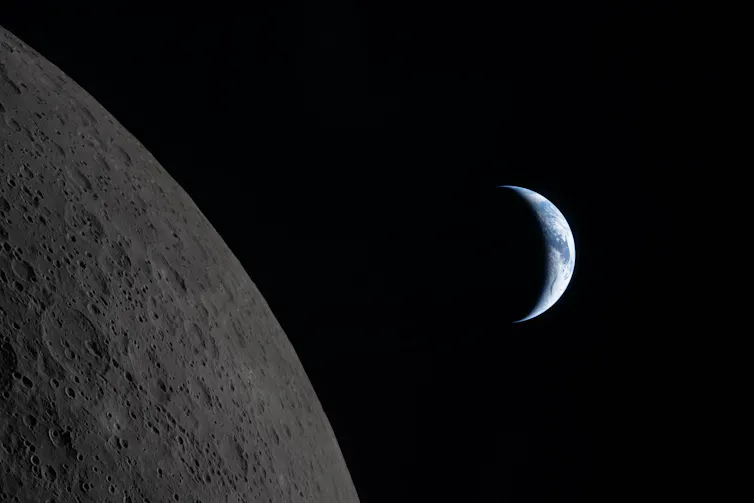
Our planet draws closer to passing behind the Moon in this image by the Artemis II crew.
Nasa

The image’s link to the environmental movement is unsurprising when viewed in this light. The Apollo 8 image was used in the logo for the first Earth Day in 1970 and, as the Apollo programme was ending, Earth sciences – the study of our home planet – began to take off.

The 1972 Blue Marble image also resonated among environmentalists. It was replicated by Nasa’s deep space telescope DSCOVR 50 years later. A side-by-side comparison between the 2022 DSCOVR image and the 1972 photo highlights the effects of environmental degradation.

In the intervening years, much of Madagascar had turned from tropical green to brown from deforestation, the Sahara had expanded, the Antarctic ice had retreated, and ancient snows had disappeared from the mountains of Iran.

Advertisement

Left: the 1972 Blue Marble image from Apollo 17; right: the 2022 image from DSCOVR. The comparison reveals the effects of deforestation in Madagascar and desertification in the Sahara.
Nasa

It remains to be seen whether the images from Artemis II will have a comparable impact on the global environmental consciousness. However, the title of Earthset is perhaps the perfect name in an era where societies are threatened by climate change.

The crew of Artemis II have made clear where the priorities still lie. “It is so great to hear from Earth again,” said mission specialist Christina Koch as the craft regained radio contact after a brief blackout as the spacecraft passed behind the Moon.

“We do not leave Earth but we choose it … We will inspire, but ultimately we will always choose Earth.”


Advertisement

Source link

Continue Reading
Click to comment

You must be logged in to post a comment Login

Leave a Reply

NewsBeat

Grand National 2026 drinks prices revealed including how much a pint costs at Aintree

Published

on

Daily Mirror

What horse racing fans can expect when they want refreshment at the Grand National meeting

The Randox Grand National Festival is about to get underway. From Thursday, April 9 to Saturday, April 11, thousands of racing enthusiasts will flock to Aintree Racecourse for three days of top-class horse racing, culminating in the main event.

As the finishing touches are put to the venue, we can reveal some of the beverage prices for the festival. There are numerous bars throughout the racecourse, so drink prices may differ depending on your choice of refreshment.

Below, we’ve outlined the typical prices for draught, bottled and canned drinks, wines, champagne and spirits. Some outlets vary by approximately 50p…

Advertisement

Spirits 25ml

  • Gin – £6.75
  • Pink Gin – £6.75
  • Tanqueray Gin (Various Flavours) – £7.25
  • Ketel One Vodka – £7.25
  • Ciroc Vodka – £8.00
  • Grey Goose Vodka – £8.00
  • Vodka – £6.75
  • White Rum – £6.75
  • Jack Daniels – £6.75
  • Southern Comfort – £6.75
  • Spiced Rum – £6.75

READ MORE: Grand National 2026 sweepstake kit: Print YOURS here ahead of Saturday’s big race at AintreeREAD MORE: Grand National 2026 pinstickers’ guide: All 34 runners rated, best chances and top 4 prediction

Champagne and Sparkling

  • Bernard Remy Brut (750ml) – £89.00
  • Canal Grando Prosecco Brut (750ml) – £46.00

Cocktails

  • Pornstar Frozini – £13.00
  • Strawberry Daiquiri – £13
  • Strawberry Woo Woo – £13.00
  • Gin N Juice – £13.00
  • Tropical Rum Ball – £13.00
  • Red Rum Dark N Stormy – £13.00
  • Paloma – £13.00

Wines (187.5ml)

  • House White – £9.50
  • House Red – £9.50
  • House Rosé – £9.50

Draught Beer

  • Madri Excepcional – £7.80
  • Rekorderlig Strawberry & Lime – £7.80
  • Aspall Suffolk Cyder – £7.80
  • Guinness –£7.80

Bottled / Canned Beer

  • Pravha (330ml) – £7.30
  • Madri Excepcional (330ml) – £7.30
  • Peroni Gluten Free (330ml) – £7.30
  • Doom Bar (330ml) – £7.30
  • Guinness Zero (500ml) – £6.00
  • Madri Excepcional 0.0% (538ml) – £4.40

Minerals & Mixers

  • London Essence Mixers (150ml) – £3.10
  • Fruit Juice (150ml) – £2.80
  • Coca Cola (200ml) – £2.80
  • Coke Zero / Diet Coke (330ml) – £3.50
  • Lemonade (330ml) – £3.20
  • Cordials (25ml) – £1.05

Grand National 2026 tickets

This article contains affiliate links, we will receive a commission on any sales we generate from it. Learn more
Content Image

from,£33.50

The Jockey Club

Get tickets here

The Grand National 2026 is just around the corner, with the world-famous Aintree racecourse set to host three days of racing across April 9-11.

Advertisement

Standard and hospitality tickets start at £33.50 at The Jockey Club, with VIP and hospitality packages also available from £249 at Seat Unique.

Source link

Continue Reading

NewsBeat

Badminton trials synthetic shuttlecocks amid feather shortage

Published

on

Badminton player serves a shuttlecock

Traditional shuttlecocks are made of 16 duck or goose feathers – each taken from the same wing to give the correct flight and spin as feathers from different wings curve differently.

China is the leading producer of shuttlecocks, but poultry production in the country has decreased in recent years because of outbreaks of bird flu and as people return to eating pork following an outbreak of African swine fever in 2018.

The sport has also grown in popularity in China, leading to increased demand.

Last year, the BWF played down its concerns about the shuttlecock market, while explaining its strategy to explore alternatives.

Advertisement

“We are aware of the global supply chain challenges and subsequent increases in feathered shuttlecock prices impacting badminton communities around the world,” BWF secretary general Thomas Lund said in a statement at the time.

“Our testing and trialling programmes for the production and introduction of competition and social-use synthetic shuttlecocks in collaboration with the manufacturers remains in place and is firmly part of our sustainability strategies for the future.”

Source link

Advertisement
Continue Reading

NewsBeat

Shopping channel QVC at risk of collapse after 32 years

Published

on

Shopping channel QVC at risk of collapse after 32 years

QVC, owned by the QVC Group, was founded in 1986 in the US and has since grown into a multinational corporation, specialising in televised home shopping.

Launching in the UK in October 1993, QVC became the UK’s first full-time home shopping channel.

Now, the channel is on the brink of collapse, with it now in discussions with creditors after reports suggest it missed a regulatory filing deadline.

Advertisement

What is the QVC channel?

QVC UK was originally 20% owned by Sky, before it became a wholly owned subsidiary of the US broadcaster in 2004.

In its early years, it turned over a net profit of more than £12 million and has sold various products from cooking supplies to clothing.

In 2008, QVC UK launched a multiscreen video service with three video streams available to Sky viewers via the red button:

  • QVC Live
  • QVC+1
  • Today’s Special Value presentation

QVC UK also operates three channels made up mostly of rerun segments from the live channel, QVC Beauty, QVC Extra and QVC Style.

The main channel broadcasts live 364 days a year from 9am to 1am, with rerun segments from the live channel shown during other hours and Christmas Day.

Shopping channel QVC at risk of collapse after 32 years

QVC Group is reportedly late with a regulatory filing deadline and is in discussions to voluntarily restructure its debt, according to Bloomberg.

Advertisement

In a filing with the US Securities and Exchange Commission, the parent company of QVC and HSN said it was unable to submit its annual financial report on time “without unreasonable effort or expense”.

QVC Group CFO Bill Wafford has confirmed that uncertainty linked to those negotiations has delayed the preparation of its financial statements.

The company has also warned about a “substantial doubt” about its ability to continue operating.

Advertisement

The QVC Group previously highlighted $2.9 billion (£2.2 billion) in debt due in October.

QVC Group intends to file its delayed results within 15 days, Broadband TV News reports.


Recommended reading:


It has also been rumoured that any potential bankruptcy filing is expected to be a Chapter 11 protection.

Advertisement

This would allow the company to restructure its debt while continuing operations, rather than liquidation.

Newsquest has contacted The QVC Group for comment.

Are you a fan of shopping channels like QVC? Let us know in the comments.

Advertisement

Source link

Continue Reading

NewsBeat

Plans for new homes refused due to ‘cramped living’ concerns

Published

on

Cambridgeshire Live

The council said the plans would provide ‘poor standards’ of homes for future occupiers

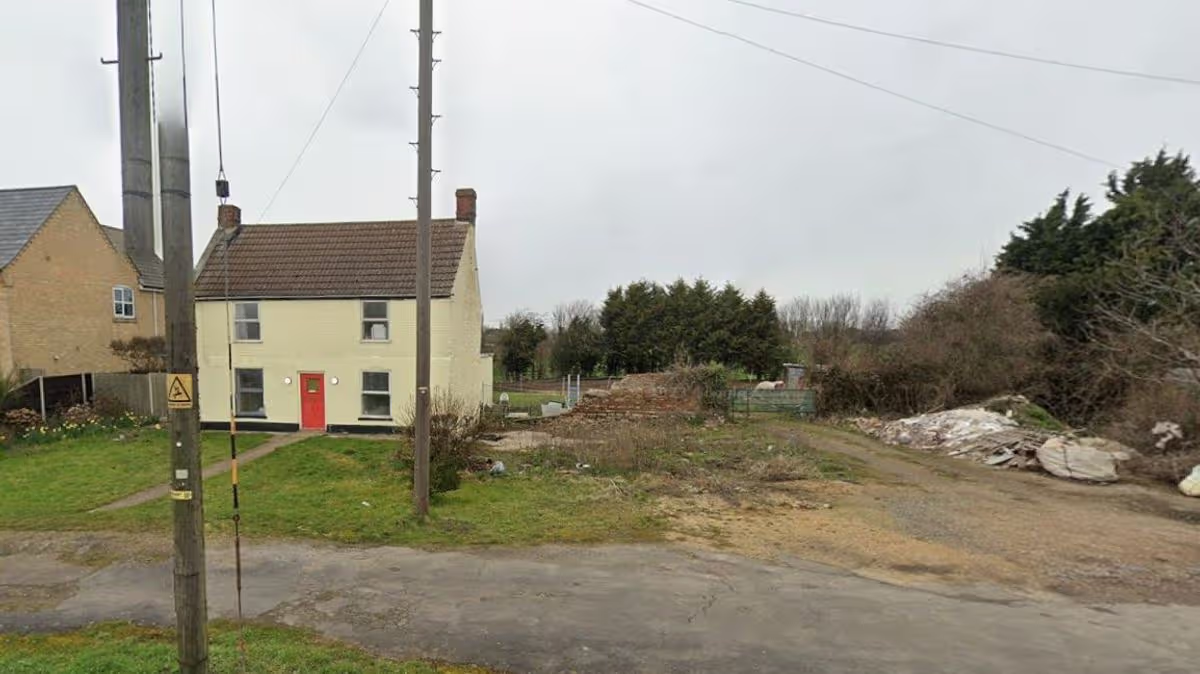
Plans to build four new homes have been refused due to “cramped living” conditions. Fern Homes proposed to build the homes at Gaul Tree Farm in High Road, Guyhirn, Wisbech.

Advertisement

The developers said the plans would provide “four good-sized dwellings for private use within the village assisting in community cohesion”. Off-road parking was also proposed, as well as landscaping.

Fenland District Council has refused the plans. FDC planning officers said it went against a development requirement to “deliver high quality environments by promoting high levels of residential amenity”.

It said the homes would provide a “poor standard of accommodation for future occupiers”. The council added: “The internal layout and floorspace of the dwellings would result in a cramped living arrangement, and the level of private amenity space provided is inadequate.

“These deficiencies would result in a substandard living environment, harmful to the residential amenity of future occupants.” The council also said the developers failed to provide a specific flood risk assessment.

Advertisement

The planning officer added the application “fails to demonstrate, through a robust and site-specific flood risk assessment and breach analysis, that the development would be safe for its lifetime, without increasing flood risk elsewhere.”

Without a report, the officer said it didn’t demonstrate that future occupiers would be “safe from flood hazards”. Plans have previously been refused on the same site.

In 2024, plans were submitted to build seven homes on the site. The council refused on the basis it would provide a “poor outlook” for future homeowners, proposed gardens weren’t big enough, and there would be “potential noise and disturbance given the lack of separation” between the homes.

Source link

Advertisement
Continue Reading

NewsBeat

Darlington residents warned weather is ‘serious risk’ to dogs

Published

on

Darlington residents warned weather is 'serious risk' to dogs

Dogs Trust Darlington has issued a warning that even mild temperatures pose a danger to dogs, with around 75 per cent of heatstroke cases linked to exercise and around two-thirds occurring after everyday walks.

Charlie Dobson, senior veterinary surgeon at Dogs Trust, said: “For many of us across the country, the arrival of warmer weather is a welcome change, but it is important to remember that this weather can bring real dangers for our dogs.

“Even the springtime sunshine expected over the next few weeks can cause serious issues, especially for flat-faced breeds or dogs with underlying health conditions.

Advertisement

“The best thing we can do for our pets is to avoid walking them during the hottest parts of the day, provide plenty of fresh water and shade, and always monitor them closely for early symptoms of heatstroke, even during indoor play when it’s warm outside.

“If you notice your dog is overheating, cooling first aid before transporting them to the vet can be lifesaving.

“Warmer weather can be wonderful for us and our four-legged friends, as long as we stay aware and take the right care to keep everyone safe.”

Dogs Trust warns that heatstroke can affect dogs at any time of year, not just during extreme summer heat.

Advertisement

Symptoms include heavy panting, lethargy, excessive drooling, uncoordinated movement, and vomiting or diarrhoea.

Certain breeds, especially flat-faced dogs like Pugs and French Bulldogs, are at greater risk, along with older dogs, overweight dogs, and those with thick coats or underlying health conditions.

If you suspect a dog is suffering from heatstroke, Dogs Trust advises stopping activity, moving the dog to a cool area, offering drinking water, and beginning urgent cooling with cold water before transporting to a vet.

Owners are also reminded never to leave dogs alone in cars, as temperatures can rise rapidly and become fatal.

Advertisement

On a 22°C day, the temperature inside a car could rise by 11°C in just 10 minutes.

If you see a dog in distress inside a vehicle, call 999 immediately.

Source link

Advertisement
Continue Reading

NewsBeat

Dublin airport travel warning as fuel protests lead to ‘five-hour’ trip from Belfast

Published

on

Belfast Live

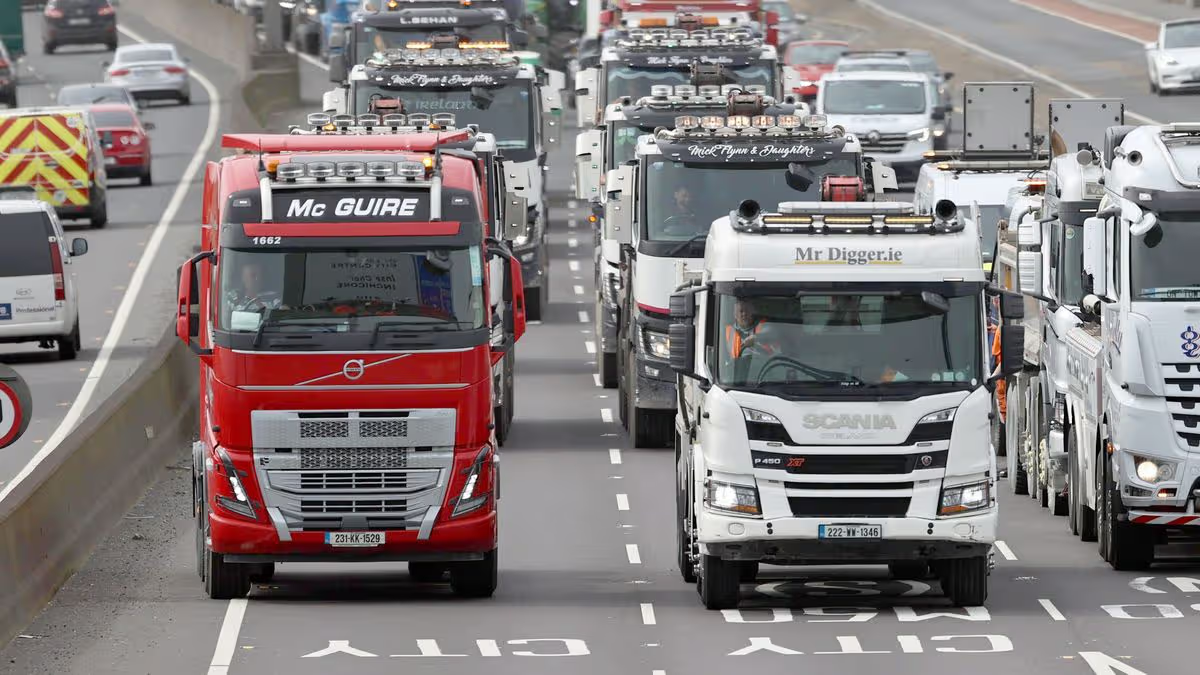
Drivers have taken to the streets in slow-moving convoys for a second day in protest at rising fuel prices

A number of public transport providers have warned passengers travelling on their services to Dublin Airport to allow extra time for their journeys, as one commuter from Northern Ireland told how it took five hours to travel from Belfast to the airport on Tuesday.

Slow-moving convoys have taken to the streets of Dublin for a second day in protest at rising fuel prices as a result of the US and Israel’s war in Iran.

Fuel prices in the Republic of Ireland have soared to around €1.91 (£1.66) per litre of petrol and €2.14 (£1.86) per litre of diesel.

Advertisement

Last month, the Irish Government announced that excise duty on diesel will be reduced by 20 cents per litre and petrol by 15 cents per litre.

As the protests continue, Gardaí have warned of possible road blocks to Dublin Airport and the Port Tunnel.

One commuter told Belfast Live how they endured a five-hour journey to the airport on Tuesday, April, amid ongoing protests blocking roads.

The person, who wished to remain anonymous, said: “It took five hours to get to the airport from Belfast, and we ended up missing our flight; it was a disaster.”

Advertisement

In a social media post, Dublin Airport said: “Passengers travelling to and from Dublin Airport today are advised to allow extra time for their journey due to the possibility of protest activity causing traffic disruption on roads around the airport.”

A spokesperson for Dublin Express said: “There are a number of delays and diversions to Dublin Express services due to the ongoing disruption in Dublin city centre. We are advising customers to allow significant extra time for their journeys and to check our social media channels @dublinexpress for the latest updates to services.”

A Translink spokesperson added: “Due to fuel price protests in the Dublin area, there has been some disruption to Translink coach services to Dublin / Dublin Airport today.

“Customers using these services should leave extra time for their journey and keep up to date with the latest travel alerts on the Translink website – https://www.translink.co.uk/service-incidents and via Socials.”

Advertisement

This comes as oil prices plummeted overnight after the US and Iran agreed to a two-week ceasefire deal that includes reopening the Strait of Hormuz.

Responding to the latest developments in the Middle East, Irish Foreign Affairs Minister Helen McEntee said: “I welcome events overnight which mark a potentially important turning point after what was a dangerous and unprecedented escalation across the Middle East in recent days. I also welcome the announcement that the United States and Iran have agreed to a two-week ceasefire and to enter negotiations. This offers a critical opportunity to reduce tensions and will bring relief to millions affected by conflict.

“I commend the efforts of Pakistan, alongside Türkiye and Egypt, in supporting dialogue. Ireland has consistently called for diplomacy and for all parties to uphold international law.

“Any ceasefire must be comprehensive and include Lebanon, and I call on Hezbollah and Israel to cease attacks and military operations.

Advertisement

“The Strait of Hormuz must open and remain safe to pass. The protection of civilians must remain paramount, and all parties must uphold their obligations under international law.

“I urge all parties to de-escalate and engage in negotiations towards a durable ceasefire and a lasting, peaceful resolution.”

For all the latest news, visit the Belfast Live homepage here and sign up to our daily newsletter here.

Source link

Advertisement
Continue Reading

NewsBeat

Bolton schools contract for PPS of York yields seven-figure deal

Published

on

Bolton schools contract for PPS of York yields seven-figure deal

The three-year agreement, which followed a competitive tendering process, will see cleaning and catering equipment supplier PPS responsible for supplying a comprehensive range of cleaning and hygiene products to approximately 90 schools across the borough.

As part of the contract, PPS will provide a consistent and reliable supply of essential products, supporting schools in maintaining high standards of cleanliness, hygiene, and safety.

The contract includes dedicated account management and responsive customer support, ensuring an efficient and dependable service across all locations.

RECOMMENDED READING:
PPS expands York headquarters with extra warehouse

Advertisement

With over 25 years of sector experience, PPS will bring its product expertise, sustainability credentials, and industry knowledge to support Bolton Council’s hygiene, compliance, and environmental objectives.

This contract, PPS says, represents a significant milestone in PPS’s continued growth within the public sector, further strengthening its presence in the education and local authority markets.

PS Sales Director Jenny McGuckin said: “We’re delighted to have been awarded this contract with Bolton Council. We look forward to building a strong, long-term partnership, supporting schools with reliable supply, expert guidance, and products that help maintain the highest standards of hygiene.”

A PPS van

Jon Dyson, Director of Place at Bolton Council, added: “We are pleased to partner with PPS to support our schools. Their expertise and commitment to quality will play an important role in ensuring our sites are well supplied and able to maintain safe and hygienic environments for staff and pupils.”

Advertisement

The contract caps off a strong period of growth for PPS, with the company also reporting continued success in securing new business and expanding its footprint across the public sector.

Source link

Advertisement
Continue Reading

NewsBeat

Trump meets NATO leader Rutte as he ponders quitting the alliance

Published

on

Trump meets NATO leader Rutte as he ponders quitting the alliance

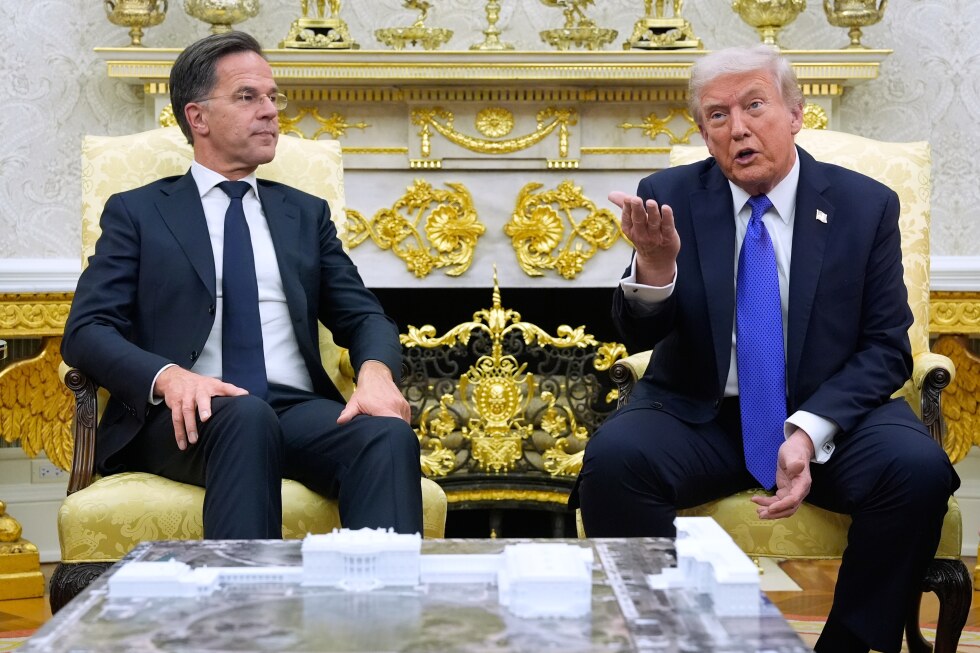
WASHINGTON (AP) — NATO Secretary-General Mark Rutte is expected to meet with President Donald Trump on Wednesday to try to smooth over the president’s anger with the military alliance over the Iran war.

Trump had suggested the U.S. may consider leaving the trans-Atlantic alliance after NATO member countries ignored his call to help reopen the Strait of Hormuz, a vital shipping waterway, as Iran effectively shut it and sent gas prices soaring.

The Republican president’s meeting with Rutte, with whom he had a warm relationship, comes as the U.S. and Iran late Tuesday agreed to a two-week ceasefire that includes the reopening of the strait. The nascent ceasefire was struck after Trump said he would strike Iran’s power plants and bridges, threatening that “a whole civilization will die tonight.”

The plan to reopen the strait is still cloudy and is expected to be a central focus of the Wednesday afternoon meeting with Rutte. The White House said the meeting was expected to be behind closed doors. In the Trump administration, though, that can change at the last minute, and meetings can be opened to the press.

Advertisement

Congress in 2023 passed a law that prevents any U.S. president from pulling out of NATO without its approval. Trump has been a longtime critic of NATO and in his first term had suggested he had the authority on his own to leave the alliance, which was founded in 1949 to counter the Cold War threat posed to European security by the Soviet Union.

The crux of the commitment its 32 member countries make is a mutual defense agreement in which an attack on one is considered an attack on them all. The only time it has been activated was in 2001, to support the United States in the wake of the Sept. 11 attacks on New York and Washington.

Despite that, Trump has complained during his war of choice with Iran that NATO has shown it will not be there for the U.S.

Ahead of the meeting, Sen. Mitch McConnell, a Kentucky Republican, issued a statement Tuesday night in support of the alliance, noting that, “Following the September 11th attacks, NATO allies sent their young servicemembers to fight and die alongside America’s own in Afghanistan and Iraq.” McConnell, who sits on a committee overseeing defense spending, urged Trump to be “clear and consistent” and said it’s not in America’s interest to “spend more time nursing grudges with allies who share our interests than deterring adversaries who threaten us.”

Advertisement

If Rutte’s meeting does not alleviate Trump’s frustrations, it’s unclear if the Trump administration would challenge the law barring a president from pulling out of NATO. When the law passed, it was championed by Trump’s current secretary of state, Marco Rubio, who at the time was a senator from Florida.

The alliance was already rattled over the past year as Trump returned to power and reduced U.S. military support for Ukraine in the war against Russia and threatened to seize Greenland from ally Denmark.

Advertisement

But Trump’s badgering of NATO intensified after the Iran war began at the end of February, with the president insisting that securing the Strait of Hormuz was not America’s job but the responsibility of countries that depend on the flow of oil through it.

“Go to the strait and just take it,” Trump said last week.

Trump was also angered as NATO allies Spain and France forbade or restricted use of their airspace or joint military facilities for the U.S. in the Iran war. They and other nations, however, agreed to help with an international coalition to open the Strait of Hormuz when the conflict ends.

British Prime Minister Keir Starmer, who has been a particular source of Trump’s frustration, was set to travel on Wednesday to the Gulf to support the ceasefire. The U.K. has been working on developing a post-conflict security plan for the strait, a narrow waterway between Iran and Oman through which about one-fifth of the world’s oil passes.

Advertisement

Trump has previously threatened to leave NATO and often said that he would abandon allies who don’t spend enough on their military budgets. Former NATO Secretary-General Jens Stoltenberg, in his recent memoir, said he feared that Trump might walk away from the alliance in 2018, during his first term as president.

___

Associated Press writer Lorne Cook in Brussels contributed to this report.

Advertisement

Source link

Continue Reading

NewsBeat

Kevin Bryan delivers his verdict on some interesting new CD releases

Published

on

Kevin Bryan delivers his verdict on some interesting new CD releases

Roswell Road,”Rebel Joy” (Self Released)- The debut album from London based multi-instrumentalists Jasmine Watkiss and Zoe Wren was five years in the making but I’m happy to inform potential listeners that their patience will be amply rewarded. The duo have paid their dues in no uncertain fashion via a globe trotting touring schedule that has included visits to such far flung locations as Spain, Canada and Germany., and the experiences that they’ve enjoyed along the way have informed the subtly crafted content of a beautifully harmonised collection which mines a rich vein of melodic Americana with a memorable blend of honesty, charm and grace. The subject matter of their material is nothing if not eclectic too, with songs which tackle a diverse array of topics including life on a Greenpeace ship, female emancipation and the delights of living an unconventional lifestyle.”Can’t Take My Soul” and “Holy Mountain” are musical highlights.

Various Artists,”Soul To Soul” (Wienerworld)- This energised live CD has been culled from the soundtrack of a 1971 documentary film which traced the exploits of a string of top notch American soul, rock, jazz and gospel performers as they travelled to the West African state of Ghana in an attempt to explore the ancestral roots of the vibrant music which had brought them fame and fortune. The list of participants who appeared on stage at Black Star Square in Accra included luminaries such as The Staple Singers, Ike and Tina Turner, Santana and the undoubted star of the show Wilson Pickett, who regaled his highly receptive audience with some rabble rousing gems from his illustrious back catalogue such as “In The Midnight Hour,” “Funky Broadway” and “Land of 1000 Dances.” A very good time was obviously had by all concerned in a unique cross cultural celebration of Ghana’s Independence Day.

Advertisement

Source link

Continue Reading

NewsBeat

Donald Trump threatens to slap those helping Iran with tariffs despite Supreme Court ban

Published

on

Daily Mirror

Trump wrote: “A Country supplying Military Weapons to Iran will be immediately tariffed, on any and all goods sold to the United States of America, 50%, effective immediately. There will be no exclusions or exemptions!”

Donald Trump has threatened any country supplying weapons to Iran with eye-watering tariffs – something he probably doesn’t have the power to do.

Posting on his Truth Social website, Trump wrote: “A Country supplying Military Weapons to Iran will be immediately tariffed, on any and all goods sold to the United States of America, 50%, effective immediately. There will be no exclusions or exemptions!”

But in February, the Supreme Court struck down his ability to impose tariffs immediately and unilaterally as unlawful.

Advertisement

He had been using an “emergency powers” law to circumvent congress in imposing blanket tariffs on countries across the world.

Iran, the United States and Israel last night agreed to a two-week ceasefire – an 11th-hour deal that headed off Trump’s threat to unleash a bombing campaign that would destroy Iranian civilisation.

But hours after the announcement, Iran and Gulf Arab countries reported new attacks Wednesday.

It was not clear if the strikes would scuttle the deal, which Vice President JD Vance called “fragile.”

Advertisement

Even before the new attacks, much about the agreement was unclear as the sides presented vastly different visions of the terms.

Both the US and Iran have painted the truce as a victory – with Tehran applying strict conditions to their agreement to re-open the Strait of Hermuz to tankers under their supervision.

Trump initially said Iran proposed a “workable” 10-point plan that could help end the war the US launched with Israel on Feb. 28. But when a version in Farsi emerged that indicated Iran would be allowed to continue enriching uranium – which is key to building a nuclear weapon – Trump called it fraudulent without elaborating.

Iran’s demands for ending the war, meanwhile, include a withdrawal of US combat forces from the region, the lifting of sanctions, and the release of its frozen assets.

Advertisement

In his post Wednesday, Trump said: “We are, and will be, talking Tariff and Sanctions relief with Iran.”

It’s not clear if other Western nations would agree to that – and the other points are likely nonstarters.

Pakistan said that talks to hammer out a permanent end to the war could begin in Islamabad as soon as Friday.

Israel backed the US ceasefire with Iran, but Prime Minister Benjamin Netanyahu said early Wednesday that the deal doesn’t cover fighting against Hezbollah. Israel’s military said later that fighting and ground operations continue.

Advertisement

Loud booms could be heard throughout Beirut on Wednesday, and smoke rose from several points. It was not immediately clear what was targeted.

Hezbollah has not confirmed if it will abide by the ceasefire, though the group has said it was open to giving mediators a chance to secure an agreement. An official, speaking on condition of anonymity because he was not authorized to comment publicly, said the group would not stop firing at Israel unless Israel agreed to do the same.

While Iran could not match the sophistication of US and Israeli weaponry or their dominance in the air, its ability to control the Strait of Hormuz since the war began proved a tremendous strategic advantage: Iranian attacks and threats deterred many commercial ships from passing through the waterway, through which 20% of all traded oil and natural gas passes in peacetime.

That has roiled the world economy and raised the pressure on Trump both at home and abroad to find a way out of the standoff.

Advertisement

The ceasefire may formalize a system of charging fees in the strait that Iran instituted — and give it a new source of revenue.

The plan allows for both Iran and Oman to charge ships, according to a regional official who spoke on condition of anonymity to discuss negotiations they were directly involved in. The official said Iran would use the money it raised for reconstruction.

That would upend decades of precedent treating the strait as an international waterway that was free to transit and will likely not be acceptable to the Gulf Arab states, which also need to rebuild after repeated Iranian attacks targeting their oil fields.

Iranian Foreign Minister Abbas Araghchi said passage through the strait would be allowed under Iranian military management — further clouding the picture of who would be allowed to transit the waterway.

Advertisement

Trump, meanwhile, suggested American warships would be “hangin’ around” the strait. That could be a potential flashpoint in days to come.

News of the ceasefire drove oil prices down Wednesday, but they were still higher than before the start of the Iran war, a sign that uncertainty still persists about the conflict.

US-Israeli strikes have battered Iran and its leadership, but they have not entirely eliminated the threats posed by Tehran’s nuclear program, its ballistic missiles or its support for regional proxies, like Hezbollah. The US and Israel said addressing those threats was a key justification for going to war.

Trump said Wednesday that the US would work with Iran to “dig up and remove” enriched uranium that was buried under joint US-Israeli strikes in June. He added that none of the material had been touched since. Any retrieval is expected to be an intensive undertaking.

Advertisement

There was no confirmation from Iran on that.

Tehran insisted for years that its nuclear program was peaceful, although it enriched uranium up to 60% purity, a short, technical step from weapons-grade levels.

Iran referred to its nuclear program differently in two versions of the ceasefire plan that it released. The version in Farsi included the phrase “acceptance of enrichment” for its nuclear program. That phrase was missing in English versions shared by Iranian diplomats with journalists.

A senior Israeli official said the United States had coordinated the ceasefire with Israel in advance and said Israel’s government credited “the massive crushing of the regime’s infrastructure” with securing the agreement.

Advertisement

Speaking on condition of anonymity because they were discussing private diplomatic conversations, the official said Washington had committed to pressing for the removal of nuclear material and dismantling of Iran’s ballistic missile program.

Airstrikes reported in the hours after the deal is announced

Shortly after the ceasefire announcement, Bahrain, Israel, Kuwait, Saudi Arabia and the United Arab Emirates all issued warnings about incoming missiles from Iran. That fire stopped for a time, then hostilities appeared to restart.

An oil refinery on Iran’s Lavan Island came under attack, according to Iranian state television. Its report said that firefighters were working to contain the blaze but no one had been hurt. It did not say who launched the attack.

Advertisement

The island is home to one of the terminals that Iran uses to export oil and gas.

Lt. Col. Nadav Shoshani says the army wasn’t involved in the Lavan attack. The US military’s Central Command did not respond to questions about the strike.

A short time later, the United Arab Emirates’ air defenses fired at an incoming Iranian missile barrage. Kuwait’s military forces, meanwhile, responded to an “extensive wave” of drone attacks.

More than 1,900 people had been killed in Iran as of late March, but the government has not updated the war’s toll for days.

Advertisement

In Lebanon, where Israel is fighting Iran-backed Hezbollah militants, more than 1,500 people have been killed. and 1 million people have been displaced. Eleven Israeli soldiers have died.

In Gulf Arab states and the occupied West Bank, more than two dozen people have died, while 23 have been reported dead in Israel, and 13 US service members have been killed.

Source link

Advertisement
Continue Reading

Trending

Copyright © 2025