A cascade of major cloud and server outages throughout 2025 exposed the fragility of the world’s digital infrastructure, with analysts estimating that unplanned IT downtime inflicted hundreds of billions of dollars in global economic losses as businesses, governments and consumers grew ever more reliant on always-on services.
AFP
While no single event matched the scale of the 2024 CrowdStrike incident — which alone caused an estimated $5 billion to $10 billion in damages — the cumulative toll from repeated disruptions at Amazon Web Services, Microsoft Azure, Cloudflare and other providers underscored a troubling trend: even routine configuration errors or regional failures can ripple worldwide, halting e-commerce, grounding flights, delaying financial transactions and disrupting healthcare operations.
The most disruptive outage of the year struck on Oct. 20 when an AWS DynamoDB failure originating in the US-EAST-1 region propagated globally due to dependencies in services like IAM and DynamoDB Global Tables. The incident, lasting up to 15 hours in some cases, generated more than 17 million reports on Downdetector and affected over 1,000 companies, including Slack, Atlassian and Snapchat. Early estimates placed direct losses from that single event between $38 million and $581 million, though broader productivity and revenue impacts likely pushed the figure far higher.
Just days later, on Oct. 29, a Microsoft Azure Front Door configuration change triggered worldwide HTTP 503 errors and connection timeouts. Additional outages hit Google Cloud, Cloudflare — which saw 3.3 million reports in a November incident lasting nearly five hours — and other providers. Between August 2024 and August 2025, the three largest cloud platforms experienced more than 100 service disruptions of varying durations.
Industry reports painted a sobering picture of the financial stakes. Unplanned downtime averaged $14,000 to $23,750 per minute depending on company size, with high-impact outages costing a median of $2 million per hour according to New Relic’s 2025 Observability Forecast. Organizations reported median annual exposure of $76 million from such incidents. Across the Global 2000, annual downtime costs have hovered around $400 billion in recent analyses, a figure that continued to climb as digital dependency deepened.
Advertisement
Government-imposed internet shutdowns added another layer of loss. In 2025, intentional outages in 28 countries lasting more than 120,000 hours cost the global economy an estimated $19.7 billion — a 156% increase from the previous year — highlighting how both technical failures and policy decisions can exact heavy economic tolls.
The human and operational costs extended beyond dollars. Airlines faced delayed flights and passenger disruptions, hospitals shifted to manual processes that strained staff and risked patient safety, and retailers lost sales during peak periods. E-commerce platforms, SaaS providers, gaming companies and media streamers reported lost revenue, refunds and SLA credits totaling hundreds of millions across incidents.
One analysis of 2025’s major cloud outages attributed roughly $581 million in combined losses to configuration-related failures at AWS, Azure and Cloudflare alone. Indirect costs — including engineering response time, surge staffing for customer support, legal fees and reputational damage — often multiplied the direct hit. Manufacturing firms idled production lines, with some sectors facing daily downtime costs exceeding $1.9 million.
Experts attributed the persistence of outages to several factors. Cloud providers now underpin an estimated 94% of enterprise services, with AWS, Azure and Google Cloud controlling more than 62% of the market. Complex interdependencies mean a single regional glitch can cascade globally. Configuration changes, automation errors and latent race conditions proved especially troublesome, as seen in the AWS and Azure incidents.
Advertisement
“These weren’t sophisticated cyberattacks but routine operational missteps with outsized consequences,” said one infrastructure analyst reviewing the year’s events. Businesses that relied on single-cloud architectures or lacked robust failover mechanisms suffered the most.
The New Relic study found that organizations with full-stack observability reduced high-impact outage costs by half, yet many firms still lacked comprehensive monitoring. Surveys showed 88% of executives expected another major global IT outage on the scale of recent events, underscoring a sense that such disruptions had become the new normal rather than rare anomalies.
Smaller businesses and mid-market companies were not immune. While Fortune 500 firms might absorb multimillion-dollar hourly losses, even brief outages could cripple smaller operations lacking redundancy. Some reports indicated that 51% of organizations experienced monthly losses exceeding $1 million from internet or network degradations, with one in eight facing over $10 million monthly.
In healthcare, where patient portals and electronic records systems went dark, the shift to paper-based workflows not only slowed care but raised safety concerns. Aviation and transportation sectors saw routing and booking systems fail, leading to operational backlogs that took days to clear.
Advertisement
Financial services faced particular scrutiny. Trading platforms, payment processors and banking apps experienced delays that could cascade into market volatility or missed opportunities. One October outage affected critical financial infrastructure, prompting calls for stricter oversight of cloud providers deemed systemically important.
Recovery efforts varied. Cloud giants typically restored services within hours, but downstream impacts lingered as companies restarted systems, reconciled transactions and reassured customers. Legal fallout included lawsuits over SLA breaches, though many contracts limited provider liability.
The year’s events accelerated discussions about multi-cloud strategies, edge computing and improved observability tools. Companies began investing more heavily in redundancy, automated failover and chaos engineering to simulate failures before they occur. Yet building true resilience carries significant upfront costs, creating tension for budget-conscious executives.
Analysts projected that without meaningful improvements in infrastructure resilience, annual global losses from server and cloud outages could continue escalating into the hundreds of billions. The Uptime Institute’s Annual Outage Analysis 2025 emphasized that preventing outages remains a strategic priority for data center operators, with human error and process failures still leading causes.
Advertisement
Broader economic context amplified the pain. With inflation pressures easing but growth uneven, businesses could ill afford unexpected revenue hits. Supply chains, already tested in recent years, faced additional friction when tracking and logistics platforms faltered.
Public reaction mixed frustration with resignation. Social media filled with memes about “the cloud going dark” again, while executives fielded questions from boards and shareholders about risk exposure. Consumer trust eroded in some cases, particularly when outages hit popular services during high-traffic periods.
Looking ahead, 2026 is expected to bring both challenges and innovations. Providers have pledged enhanced safeguards, including better change management and transparency. Regulators in Europe and the U.S. have signaled interest in greater accountability for critical digital infrastructure.
For now, the 2025 tally serves as a cautionary tale. As the world digitizes further — with artificial intelligence, Internet of Things devices and 24/7 online services becoming ubiquitous — the cost of even momentary server or network failures will likely keep rising.
Advertisement
Business leaders are urged to assess their dependency chains, test recovery plans rigorously and consider diversified architectures. For the average company, the message is clear: in an interconnected economy, no server outage is truly isolated.
Government-imposed shutdowns and technical failures together painted a picture of vulnerability that transcends any single provider or region. As one report summarized, “No industry was immune,” from technology and transportation to manufacturing and financial services.
The true global economic loss for 2025 remains difficult to pinpoint with precision, as many impacts — lost productivity, damaged customer relationships and deferred investments — resist easy quantification. Conservative estimates place direct and indirect costs well into the hundreds of billions when aggregating all major incidents and the pervasive drag of frequent smaller disruptions.
In an era when milliseconds can determine competitive advantage, the repeated outages of 2025 reinforced a hard truth: digital infrastructure has become the backbone of the global economy, and its occasional fractures carry consequences that reach far beyond the data center.
Coinbase chief legal officer Paul Grewal joins Mornings with Maria to discuss the race in Washington to finalize the Clarity Act, mounting pushback from big banks and how looming crypto regulations could reshape investing for Americans.
The FBI recently released its annual report on internet crime and found that cryptocurrency-related scams accounted for the most reported losses among all scam categories last year.
The Internet Crime Complaint Center (IC3) received 1,008,597 complaints in 2025, up from 859,532 in 2024, with Americans’ reported losses nearing $21 billion last year.
Advertisement
Crypto scams accounted for over half of the $20.877 billion total losses reported by IC3, with over $11.366 billion in losses described as being related to cryptocurrency. Additionally, there were 181,565 complaints described as being related to cryptocurrency out of the roughly 1 million complaints received last year.
The annual report showed that crypto investment fraud was the highest source of financial losses to Americans in 2025, with $7.2 billion in reported losses.
Crypto scams accounted for over half of Americans’ losses last year, the report detailed. (Getty Images)
Crypto investment scams typically begin via social media, text messages, advertisements or dating platforms, with scammers introducing the victims to investment groups purporting to be knowledgeable industry insiders.
Advertisement
Victims are then enticed to send cryptocurrency to fake investment scam platforms or apps and are shown fake profits or offered loans to encourage larger investments. When they try to withdraw their money, they will be charged taxes and fees as the scammers make a final attempt to exploit them before disappearing with the victims’ funds. Victims may also be targeted through recovery scams that claim to help them recover lost funds.
“These scams are often devastating because they can leave victims with significant loss and emotional distress,” the report explained.
The FBI is cracking down on crypto scams. (Graeme Sloan/Bloomberg via Getty Images)
In early 2024, the FBI launched Operation Level Up to proactively identify and inform people who are falling victim to cryptocurrency investment fraud. The initiative has notified over 8,000 victims since its inception and has reduced losses by over $500 million, according to the report.
Advertisement
In 2025, it notified 3,780 victims of crypto investment fraud and 78% of those victims were unaware they were being scammed. The estimated victim savings amounted to more than $225 million, while 38 people who were exploited by those scams were referred to a victim specialist for suicide intervention who maintained contact with them until local law enforcement arrived.
Some examples of prevented losses included stopping a victim from cashing out $750,000 from his 401(k) retirement plan, stopping a victim from selling her house to invest $500,000, and stopping a victim from obtaining a loan to send $400,000 to the scammer.
Crypto investment scams may take different forms. (iStock)
The report added that there were multiple instances in which the FBI intervened through the Financial Fraud Kill Chain (FFKC) to reverse wire transfers and return funds to victims.
Advertisement
The surge in losses related to crypto investment scams prompted the formation of the U.S. Attorney’s Office District of Columbia Scam Center Strike Force, which merged the resources of the U.S. Attorney’s Office with the Justice Department’s Criminal Division, the FBI and the Secret Service to track down and disrupt those scams.
The Scam Center Strike Force is investigating scam compounds located in Southeast Asia, identifying and pursuing key leaders, including Chinese organized crime affiliates that operate in Cambodia, Laos and Burma to bring them to justice.
It’s also working to seize and disable U.S.-based facilities and infrastructure that provide the manner and means to execute those scams, which includes internet service providers and social media accounts, to prevent them from being weaponized against Americans.
Southwest Airlines is rolling out stricter rules on portable chargers as concerns over lithium battery fires continue to rise on commercial flights.
In an internal message sent to employees Tuesday and reviewed by FOX Business, the Dallas-based carrier announced that beginning April 20, passengers will be limited to one lithium-powered portable charger per person.
Advertisement
Each device must have a capacity of 100 watt-hours or less.
Under the new policy, portable chargers must also be kept on the passenger or stored in a carry-on bag under the seat. They will no longer be permitted in overhead bins.
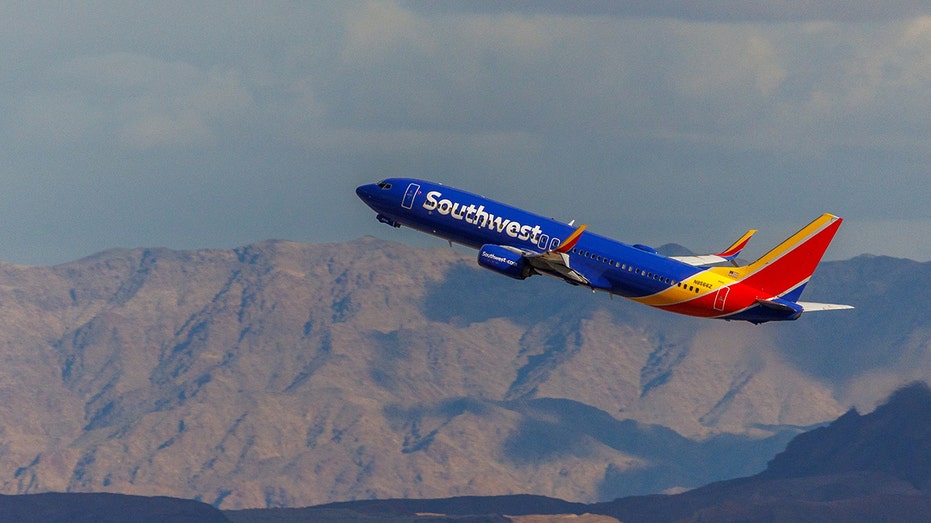
A Southwest commercial airliner takes off from Las Vegas International Airport in Las Vegas, Nevada, on Feb. 8, 2024. (REUTERS/Mike Blake)
Southwest is also banning the use of in-seat power outlets to recharge portable battery packs during flights. However, passengers may still use their chargers, as long as the devices remain visible at all times.
Advertisement
The airline said the changes are designed to improve its ability to “contain and mitigate lithium battery incidents,” including reducing the risk of onboard fires.
“To ensure a smooth and informed customer journey, Southwest will notify customers about this updated policy at key moments leading up to their trip — including pre-trip and check-in, so they have time to plan and prepare,” Dave Hunt, vice president of safety and security at Southwest, said in the message.
A person holds a smartphone connected to a portable power bank charger. (iStock)
The airline noted that onboard power access will continue to expand going forward.
Advertisement
“By mid-year 2027, our entire fleet will feature in-seat power, reducing reliance on portable chargers and supporting a more consistent, convenient inflight experience,” Hunt said.
The airline similarly introduced changes last year requiring passengers to keep portable charging devices visible while in use during flights, a spokesperson told Fox News Digital at the time.
“Using portable charging devices while stored in a bag or overhead bin will no longer be permitted,” the spokesperson said.
Southwest Airlines passengers settle in for an early nonstop flight to Seattle-Tacoma International Airport in Sea-Tac, Washington from Dallas Love Field on March 5, 2026. (Tom Fox/The Dallas Morning News via Getty Images)
The changes come as airlines and regulators intensify efforts to address the growing risk of onboard fires linked to lithium batteries.
Last year, there were 97 reported incidents involving smoke, fire, or extreme heat linked to batteries on flights, up from 89 the year before, Reuters reported, citing data from the Federal Aviation Administration.
Fox News Digital’s Ashley J. DiMella contributed to this report.
If you’re entering into a commercial lease in Sydney, understanding the terminology is critical. Lease agreements can be complex, and the fine print often has a significant impact on your total costs and long-term commitments.
Three of the most important areas to understand are rent, outgoings, and incentives. Here’s a straightforward breakdown to help you navigate the essentials.
What’s Rent in a Commercial Lease
Rent is the base amount you pay to occupy the space, but it’s not always as simple as a single figure.
Types of Rent
Gross Rent
Includes most property expenses within the rent
Easier to budget, as costs are more predictable
Net Rent
Lower base rent, but you pay additional outgoings
Common in Sydney commercial leases
Semi-Gross Rent
A mix of both, with some costs included and others charged separately
Always clarify which structure applies, as it affects your overall financial commitment.
How Rent Is Calculated
Commercial rent is typically quoted per square metre per year.
For example:
Advertisement
$600/m² for a 100m² office = $60,000 per year (plus GST and possibly outgoings)
Other factors influencing rent include:
Location (CBD vs fringe suburbs)
Building quality and amenities
Floor level and natural light
Market demand
Rent Reviews and Increases
Most commercial leases include rent review clauses.
Common Types:
Fixed increases (e.g. 3–5% annually)
CPI adjustments (linked to inflation)
Market reviews (adjusted to current market rates)
These reviews can significantly increase your rent over time, so it’s important to factor them into your budget.
What Are Outgoings?
Outgoings are the additional costs associated with maintaining and operating the property.
In many Sydney commercial lease agreements, tenants are responsible for paying these on top of rent.
Typical Outgoings Include:
Council rates
Water rates
Strata levies (if applicable)
Building insurance
Property management fees
Cleaning and maintenance of common areas
These costs can add a substantial amount to your total occupancy expenses.
How Outgoings Are Charged
Outgoings are usually calculated based on your proportion of the building.
For example:
Advertisement
If you occupy 10% of the building, you may pay 10% of total outgoings
They may be billed:
Monthly (estimated)
With annual reconciliation (adjusted to actual costs)
Always ask for a breakdown of estimated outgoings before signing.
Incentives: What Are They?
Incentives are benefits offered by landlords to attract tenants, especially in competitive markets like Sydney.
They can significantly reduce your effective cost.
Common Incentives:
Rent-Free Periods
A set number of months where no rent is charged
Fit-Out Contributions
Landlord contributes to the cost of setting up your space
Cash Incentives
Direct financial contributions or rebates
Reduced Rent Periods
Discounted rent for an initial period
Incentives are often negotiated and can vary depending on lease length and market conditions.
How Incentives Affect the Real Cost
While incentives can be attractive, they don’t always reduce long-term costs.
Advertisement
For example:
A rent-free period may be offset by higher rent later
Fit-out contributions may come with longer lease commitments
To understand the true cost, calculate the effective rent over the full lease term.
Lease Term and Options
The length of your lease also plays a role in rent, outgoings, and incentives.
Key Terms:
Initial term (e.g. 3 or 5 years)
Option periods (e.g. 3 + 3 years)
Longer leases often come with better incentives but also greater commitment.
Other Costs to Consider
Beyond rent and outgoings, there are additional expenses to factor in:
Legal fees for lease review
Fit-out costs
Utilities (electricity, internet)
Make-good obligations (restoring the space at the end of the lease)
These can add up, so it’s important to budget accordingly.
Final Thoughts
Understanding rent, outgoings, and incentives is essential when entering a commercial lease in Sydney. While the base rent is important, the additional costs and negotiated benefits can significantly affect the overall value of the deal.
Advertisement
By taking the time to understand these key terms and seeking expert advice where needed, you can secure a commercial lease that aligns with your business goals and budget.
DreamWorks SKG co-founder Jeffrey Katzenberg and WndrCo general partner Justin Wexler join ‘The Claman Countdown’ to discuss the AI revolution, rising cybersecurity risks and the surge of young innovators reshaping Silicon Valley.
Artificial intelligence is moving beyond incremental change and into something far more groundbreaking, DreamWorks SKG co-founder Jeffrey Katzenberg told FOX Business on Wednesday.
Katzenberg joined anchor Liz Claman on “The Claman Countdown” to discuss the acceleration of AI innovation and what it means for industries ranging from cybersecurity to entertainment. He said AI marks a fundamental turning point in how technology reshapes business and creativity.
Evercore ISI Senior Managing Director Mark Mahaney explains why he is bullish on AI and examines Amazon and Google stocks on ‘Varney & Co.’
Katzenberg pointed to a surge of activity across Silicon Valley, where startups and major companies alike are racing to harness the technology’s capabilities, describing an environment fueled by both optimism and urgency.
Jeffery Katzenberg discusses the rapid acceleration of AI innovation and what it means for industries. (Gilbert Flores/Variety; mikkelwilliam/Getty / Getty Images)
“Today there is still this incredible exuberance around all things AI. There is no question we’re not in an evolutionary moment, we’re in a revolutionary moment,” he said.
Katzenberg said the pace of development is being driven in part by a new generation of builders entering the space earlier than ever, alongside tools that are lowering barriers to entry.
Sierra co-founder and CEO Bret Taylor discusses the first level 1 PCI-compliant payment capability for AI agents on ‘The Claman Countdown.’
“The level of excitement right now about the impossible suddenly being possible is tangible, it’s real,” he added.
Advertisement
While the technology is advancing quickly, Katzenberg suggested its long-term impact will depend on how businesses and creators adapt to the shift underway.
Still, those reluctant to adapt should not fear AI — when asked whether animators in Hollywood should fear for their jobs, Katzenberg dismissed those worries.
“As much as I appreciate the innovation that’s going on, in my opinion, I still think the human touch is absolutely essential to great storytelling,” he said. “The analogy I would make is there’s a difference between prose and poetry, and I think when you see these sort of inputs and outputs that are coming, they’re sort of a common baseline in it, but they’re missing the poetry that comes with real creativity.”
Advertisement
“Now, these tools are actually phenomenal,” Katzenberg continued. “And I think there needs to be more openness to embracing them, as there was for me when we went from hand-drawn animation to computer animation, right?”
The brownfield site would be transformed under the proposals
A CGI of the Trinity Street development(Image: Yara Capital)
Hundreds of new homes could be built in Bristol city centre under new plans. Property developer Yara Capital is planning to transform an underutilised brownfield site south west of the Trinity Street and Waterloo Road junction within Old Market.
Under the scheme, the developer will deliver 275 co-living homes and employment space, which it says will also create jobs. An existing data centre sits on the eastern side of the site, whilst the remaining western area remains undeveloped and unused.
The current proposals include two buildings. Yara says the eastern building “presents an opportunity” to create around 2,600 sq m of flexible workspace for start-ups, creative studios, light industrial uses and life science laboratories. There is also a new co-working space proposed.
At the moment, the proposed height varies from three to six storeys, which has been designed to “complement the surrounding area and Old Market’s heritage”, according to Yara Capital.
Advertisement
The western building will contain co-living homes – a community model in which residents share living space and common facilities.
Alfie Yule, development manager at Yara Capital, said: “25 Trinity Street is currently underutilised and offers little to the local community.
“We now have a real opportunity to bring the site back to life and deliver meaningful benefits for Old Market and the wider city by providing high‑quality employment space for creative, life‑science and light‑industrial businesses, alongside new homes in a sustainable location.
“Central to the proposals is a landscape‑led design approach that reflects and celebrates the area’s culture and heritage.”
Advertisement
Yara Capital says its plans will be “refined” as it receives feedback and consultee responses.
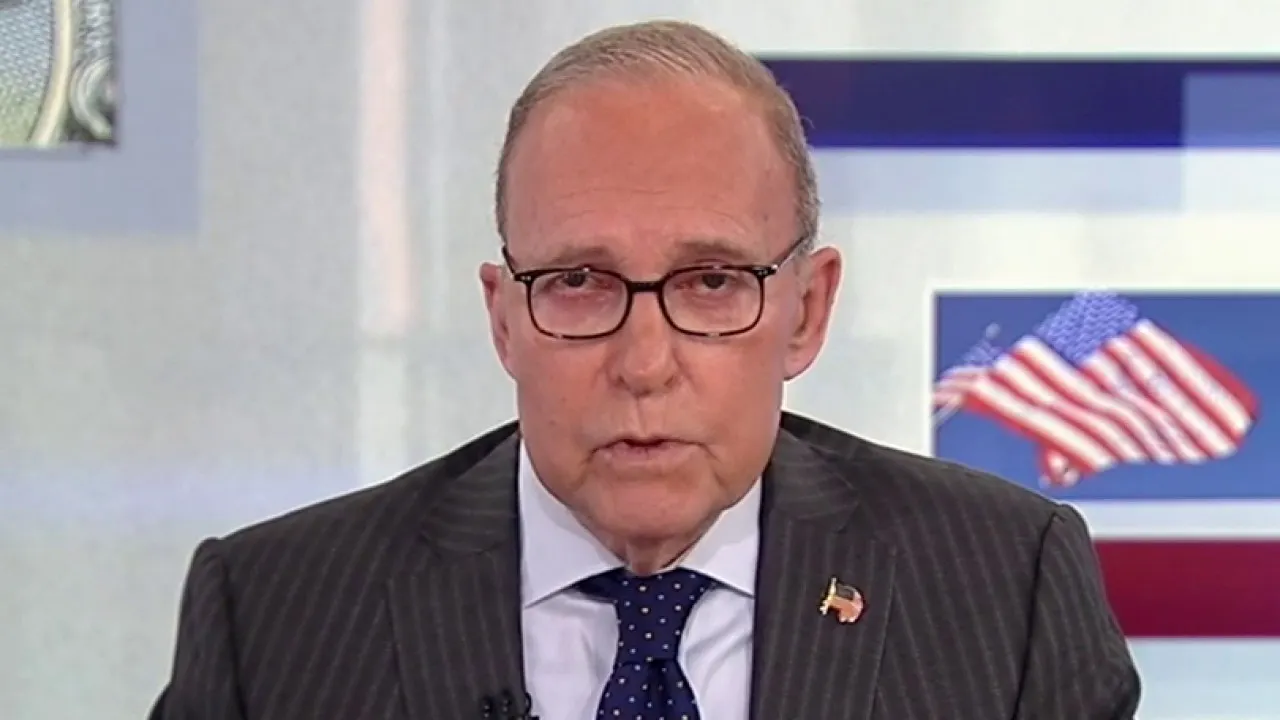
FOX Business host Larry Kudlow discusses Democrats’ response to Operation Epic Fury on ‘Kudlow.’
One of the many faults with today’s Democratic party is they don’t know how to win. They are defeatists. They find themselves on the wrong side of all kinds of 80-20 issues, like open borders, defending illegal criminals, waste, fraud, and abuse corruption, tax hikes, and men in women’s locker rooms. Now, here they go once again badmouthing President Trump’s tremendous victory in Operation Epic Fury, that absolutely crushed Iran in only 38 days. These defeatist Democrats now want to limit the commander in chief’s foreign policy powers, at almost exactly the moment where Mr. Trump, and our mighty military, and American patriots everywhere have scored a tremendous victory.
Is the war over? I think it basically is. There may be more hostilities, but we’re on the one-yard line. Let’s wait and see. Mr. Trump will never cut a bad deal. He has opened the Strait of Hormuz to take the pressure off energy prices. And he’s keeping all the American military forces in place in the Middle East, just to make sure a badly defeated Iran makes a peace deal. They may misbehave, and more bombing will occur. If they don’t agree to turning over the enriched uranium to America, then more bombing may be necessary. Ditto for their missile programs. Ditto if they keep bombing our Gulf allies.
Advertisement
Ret. Lt. Gen. Keith Kellogg breaks down the Iranian delegation that will meet the United States’ representatives in Islamabad on ‘Kudlow.’
Right now, Iran has a two-week peaceful window of opportunity to make a good deal. Essentially their navy, their airforce, their air defenses, their industrial base, have all been crushed. Even their ally Communist China needs their oil and has put diplomatic pressure on Iran to make a deal.
Whether Mr. Trump’s ceasefire is giving up some leverage for the final peace deal remains to be seen. Yet our military will remain in the region and can exercise their whip hand at a moment’s notice. Our negotiators know what’s worth discussing with Iran and what’s completely out of bounds. And if they don’t, then surely the president will know.
The Iranians like to delay and delay, and stall, but Mr. Trump is an action executive. I think we should all figure these next two weeks will be Iran’s last window before literally the roof totally caves in on them.
Advertisement
Meanwhile, the defeatist Democrats are once again on the wrong side of the political divide. And once again Mr. Trump using his own brand of tactical threats and then decisive actions to upend conventional wisdom, one way or another, Iran’s capabilities will be completely dismantled. One way or another, Mr. Trump will rewrite history and bring freedom and prosperity where no one thought it was possible. And one way or another, the Democrats are stumbling into their own self-made political trap.
Once again Mr. Trump outwits the defeatist Democrats.
New England Patriots head coach Mike Vrabel and prominent NFL reporter Dianna Russini pushed back Wednesday against swirling speculation of a romantic relationship, insisting photos of them embracing and holding hands at a luxury Arizona resort captured nothing more than an innocent group interaction.
Dianna Russini
The images, published Tuesday by Page Six of the New York Post, showed the pair in swimsuits relaxing poolside, lounging in a hot tub and appearing to dance with fingers interlocked on a private rooftop at the Ambiente Sedona resort. Both Vrabel, 50, and Russini, 43, are married to other people, fueling online chatter and tabloid headlines that quickly went viral.
Vrabel described the characterization of the photos as “laughable” in a statement to the Post.
“These photos show a completely innocent interaction and any suggestion otherwise is laughable,” he said. “This doesn’t deserve any further response.”
Russini, a senior NFL insider at The Athletic who previously anchored ESPN’s “SportsCenter,” offered a similar explanation.
Advertisement
“The photos don’t represent the group of six people who were hanging out during the day,” she told the outlet. “Like most journalists in the NFL, reporters interact with sources away from stadiums and other venues.”
According to Page Six, the encounter occurred on Saturday, March 28 — two weekends before the photos surfaced — at the boutique resort nestled against Sedona’s red rock formations. A witness reportedly observed the pair having breakfast on the restaurant patio around 10:30 a.m., followed by time at the pool and hot tub. They were later seen on the rooftop of one of the hotel’s bungalows with panoramic views.
Sources close to both parties told the outlet they were not alone. Russini was said to be on a hiking trip with two female friends, while Vrabel and his companions drove up from another hotel about two hours away for the day before returning.
The Patriots organization declined comment Wednesday. The Athletic, Russini’s employer and part of The New York Times, defended her work while addressing the images.
Advertisement
“Dianna is a premier journalist covering the NFL and we’re proud to have her at The Athletic,” a spokesperson said. The outlet called the photos misleading and lacking essential context of the larger group setting.
The story ignited widespread reaction across social media and NFL circles, with some fans drawing comparisons to other high-profile celebrity moments and questioning the optics for a head coach and a journalist who regularly covers the league. Discussions referenced past interactions between Vrabel and Russini, including an old interview clip where Vrabel made what some resurfaced as an “unacceptable” comment, though details remained vague amid the current frenzy.
Vrabel, a former NFL linebacker and two-time Super Bowl champion as a player, returned to the Patriots as head coach in early 2025 after a successful stint with the Tennessee Titans. Known for his no-nonsense leadership and defensive acumen, he has focused on rebuilding the franchise amid roster transitions and high expectations in the AFC East.
Russini has built a reputation as one of the NFL’s most plugged-in reporters, breaking news on personnel moves, coaching searches and league insider information. Her move from ESPN to The Athletic was seen as a significant step in sports journalism, where she continues to deliver in-depth coverage.
Advertisement
Both have families. Vrabel has been married for more than two decades, and Russini also maintains a private personal life outside her high-profile reporting role.
The incident highlights ongoing tensions in the relationship between NFL coaches and the media members who cover them. While professional interactions are common — including off-site conversations that can yield valuable insights — the visual nature of the photos and the fact both are married amplified public scrutiny.
NFL media experts noted that such encounters, even if purely professional or social, can appear compromising when captured out of context. Reporters frequently attend league events, owners’ meetings and informal gatherings where coaches and executives mingle.
The timing added fuel to the fire. The photos emerged shortly after the NFL annual meeting period, though the Sedona resort was not the primary venue for official league business. Sedona, known for its scenic beauty and wellness tourism, has become a popular getaway spot for those seeking respite from the pressures of professional sports.
Advertisement
Online platforms lit up with memes, speculation and debate. Some users defended the pair, arguing that assumptions based on still images ignore the full story of a group outing. Others expressed disappointment over the optics, particularly for a coach in a high-visibility role.
“This doesn’t look good,” one fan posted on social media, while another quipped about it being “worse than the Coldplay couple” in reference to a recent viral moment. Hashtags related to Vrabel, Russini and the Patriots trended briefly as the story spread.
Neither Vrabel nor Russini has faced formal league discipline or internal investigation based on publicly available information. The NFL’s personal conduct policy typically addresses more serious allegations, and both parties have firmly denied any impropriety.
The episode serves as a reminder of the intense public spotlight on NFL figures. Coaches like Vrabel manage billion-dollar franchises and locker rooms filled with million-dollar athletes, while top reporters like Russini wield influence through their access and scoops. Any perceived blurring of lines can spark questions about journalistic ethics and professional boundaries.
Advertisement
In past years, Russini has dealt with separate public scrutiny, including an old accusation from a former NFL executive’s spouse that was later apologized for. Those details resurfaced in some coverage Wednesday but were not directly tied to the current situation.
Vrabel’s coaching tenure with the Patriots has drawn attention for its intensity and emphasis on culture. He has spoken openly about leadership, family and the demands of the job in previous interviews.
For now, the focus remains on the field. The Patriots are preparing for the 2026 season with draft picks, free agency moves and organized team activities on the horizon. Russini continues her reporting duties, covering league-wide developments as the offseason unfolds.
Journalism organizations and sports leagues have long grappled with guidelines on reporter-source relationships. Many outlets maintain strict policies to avoid even the appearance of conflict, though casual social interactions at industry events are often unavoidable.
Advertisement
The Athletic emphasized Russini’s professional integrity in its statement, underscoring her value as a news-breaker in a competitive landscape.
As the story circulated Wednesday, some analysts suggested the rapid spread reflected broader fascination with celebrity crossovers in sports and media. Others warned against rushing to judgment without full facts, noting how cropped or selective images can distort reality.
Vrabel’s brief statement indicated he considers the matter closed. Russini’s comments highlighted the routine nature of off-the-record or informal conversations that journalists rely on for context and sourcing.
Sedona’s serene setting — with its hiking trails, vortex sites and luxury accommodations — provided a picturesque backdrop that contrasted sharply with the ensuing media storm. The Ambiente resort markets itself as an exclusive escape, featuring private bungalows and wellness experiences popular among high-profile guests.
Advertisement
No additional photos or evidence have emerged beyond the initial Page Six report. Independent verification of the group size or exact timeline remains limited to the statements provided.
The NFL and Patriots have navigated similar public distractions in the past, from coaching controversies to off-field stories. In each case, the organization has emphasized focus on performance and preparation.
Fans in New England, still adjusting to life after the Bill Belichick era, have expressed mixed reactions. Some worry about any potential distraction for Vrabel as he builds his program, while others view the attention as overblown tabloid fodder.
Russini’s colleagues in the press corps have largely stayed silent publicly, though private conversations in media circles likely centered on the challenges of maintaining boundaries in a tight-knit NFL world.
Advertisement
As of late Wednesday, April 8, 2026, neither party had issued further comments. The story continues to generate discussion online but shows signs of fading without new developments.
The situation underscores how quickly personal moments can become public fodder in the digital age. For Vrabel and Russini, the priority appears to be moving past the episode and returning to their respective roles — one leading a football team, the other covering it.
In professional sports, trust between coaches and reporters remains essential. Whether this incident affects that dynamic long-term will depend on how the league, teams and media organizations respond in the coming weeks.
For now, both have made clear their version of events: a casual group gathering captured in misleading snapshots. The public, as always, will draw its own conclusions.





















































You must be logged in to post a comment Login