Patrick Crehan buys fuel on behalf of a 3,500 member consortium, who are mainly agricultural farmers. Before the conflict, he was paying around 70p a litre. Just before the ceasefire, he was paying around 130p a litre, though that has fallen back a little since Wednesday.
Financial influencer Taylor Price joins ‘Varney & Co.’ to break down how shifting your mindset can help Americans grow wealth and achieve the American Dream.
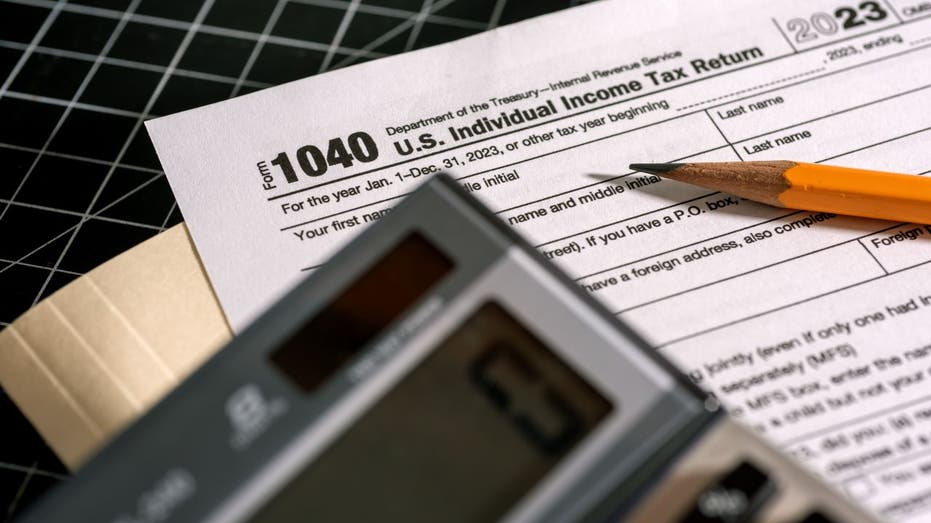
Tax season is closing in on the April 15 deadline to file your return or request an extension and a new report details some common mistakes that Americans are making throughout the year that are costing them money.
A report by GOBankingRates broke down five tax mistakes that could cost American taxpayers thousands of dollars every year.
Advertisement
Those common mistakes range from not claiming deductions that were available to the taxpayer or failing to track deductible expenses to misreporting income.
Here’s a look at the five tax mistakes outlined in the report.
Taxpayers may cost themselves money through smaller refunds or penalties by making mistakes in filing their taxes. (Michael Bocchieri/Getty Images)
Approaching taxes as a once a year event
Christina Taylor, vice president of tax development and delivery at tax technology platform April, told GOBankingRates that taxpayers who only think about their returns during the filing season “miss credits and optimizations they’re actually eligible for, which is how you end up giving part of your refund back to the IRS.”
Advertisement
She added that last year “Americans overpaid their federal taxes by about $3,200 on average, and spent billions of dollars and 6.5 billion hours on tax prep.”
The deadline for taxpayers to file their 2025 return or request a refund is April 15. (Kayla Bartkowski/Getty Images)
Not tracking deductions throughout the year
Taxpayers also tend to fail to keep track of their deductible expenses over the course of the year, which happens more frequently when filers are operating under the assumption that they will claim the standard deduction rather than itemizing their return.
Those situations can be avoided if taxpayers keep track of their charitable contributions, whether made with cash or through non-cash donations, along with medical expenses and any interest expenses that they may be able to deduct from their state tax bill.
Incorrectly reporting investment income or stock compensation
Taxpayers may overpay taxes on income from their investments or from stock compensation in the form of restricted stock options or nonqualified stock options that are sold.
Jennifer Kohlbacher, a CPA and director of wealth strategy at Mariner Wealth Advisors, told GOBankingRates that taxpayers often fail to calculate or report their tax basis correctly, which can increase the amount of capital gains taxes they owe.
The IRS may delay refunds for returns with errors or flag them for audits. (Jordan Vonderhaar/Bloomberg via Getty Images)
Missing estimated tax payments or not updating withholding
Taxpayers who operate a small business or are self-employed are required to make estimated tax payments to the IRS each quarter throughout the year, and failing to pay the appropriate amount can cause the taxpayer to face penalties for the amount underpaid as well as any related interest.
Advertisement
Life changes that affect a tax filer’s status, like getting married or having a child, are situations in which taxpayers should update their withholding information to account for the change, which can reduce the size of their refund by raising their take-home pay.
Taxpayers may make mathematical errors when filing or make typos in their tax return that could cause the IRS to flag a tax return for review or even an audit.
Reviews by the IRS can also cause taxpayers’ tax refunds to be delayed.
OMAHA, Neb. (AP) — Even after stepping down as CEO of Berkshire Hathaway at the end of 2025, Warren Buffett remains one of the most quoted voices in finance. His simple, folksy sayings on investing, patience and life continue to resonate as markets navigate high valuations, economic uncertainty and rapid technological change heading into 2026.
Buffett, 95, handed day-to-day leadership to Greg Abel but stays active as chairman, making occasional investment calls and sharing insights in rare interviews. In a March 31, 2026, CNBC appearance, he reiterated core principles while expressing a wish for the Federal Reserve to target zero inflation and cautioning about market levels that have left Berkshire sitting on record cash.
Here are 10 of Buffett’s most enduring quotes, drawn from decades of annual letters, shareholder meetings and interviews. Each remains strikingly relevant today, offering lessons for both novice investors and seasoned professionals amid 2026’s volatile environment.
“Rule No. 1: Never lose money. Rule No. 2: Never forget rule No. 1.”
This golden rule, repeated across Buffett’s writings, forms the bedrock of his philosophy. In an era of speculative bubbles and high valuations, preserving capital has never been more critical. Berkshire’s massive cash pile — exceeding $300 billion at times — reflects this caution, acting as dry powder for opportunities rather than chasing overpriced assets.
Advertisement
Buffett has long emphasized that avoiding big losses allows compounding to work its magic over time. As he noted in past letters, investors who focus first on not losing money position themselves to benefit when others panic.
“Be fearful when others are greedy, and greedy when others are fearful.”
One of Buffett’s most famous contrarian maxims, this line from his 1986 letter captures the emotional discipline required for success. In 2026, with stock indices near records and AI hype driving valuations, the quote serves as a reminder to resist herd mentality.
Buffett himself has signaled caution by building cash rather than deploying it aggressively, a move some analysts interpret as preparation for a potential correction. His approach: stay patient until fear creates bargains.
Advertisement
“Price is what you pay. Value is what you get.”
This distinction between market price and intrinsic value lies at the heart of value investing, a strategy Buffett learned from mentor Benjamin Graham. Whether buying socks on sale or stocks, he focuses on what the asset will deliver over time.
In today’s market, where growth stocks often trade at lofty multiples, the quote encourages investors to look beyond hype to earnings power and cash flows. Buffett has repeatedly said he prefers buying wonderful companies at fair prices over fair companies at wonderful prices.
“Someone’s sitting in the shade today because someone planted a tree a long time ago.”
Advertisement
Patience and long-term thinking define Buffett’s worldview. This quote underscores the power of compounding and early action. Young investors in 2026 who start early and stay disciplined can reap rewards decades later, much like Berkshire’s decades-long holdings in companies such as Coca-Cola and Apple (which he later trimmed but still praises).
Buffett often jokes that his favorite holding period is “forever,” advising against frequent trading that incurs taxes and transaction costs.
“It’s far better to buy a wonderful company at a fair price than a fair company at a wonderful price.”
Buffett evolved from strict Graham-style bargain hunting to recognizing the importance of quality businesses with durable competitive advantages — or “moats.” This shift helped Berkshire thrive.
Advertisement
In 2026, with many traditional value plays scarce, the principle pushes investors toward strong brands, efficient operators and companies with pricing power, even if they aren’t dirt cheap.
“Risk comes from not knowing what you’re doing.”
Buffett distinguishes between calculated risk and speculation. He avoids businesses he doesn’t understand, famously steering clear of most tech in earlier decades before selectively investing in Apple.
As artificial intelligence and emerging technologies dominate headlines, the quote warns against jumping into complex sectors without deep knowledge. Understanding the underlying economics remains key.
Advertisement
“The stock market is a device for transferring money from the impatient to the patient.”
This observation highlights how short-term traders often lose to long-term owners. In volatile 2026 markets influenced by interest rates, geopolitics and election cycles, patience has rewarded those who tune out daily noise.
Buffett’s own track record — turning Berkshire from a struggling textile firm into a conglomerate worth hundreds of billions — proves the point.
“The best investment you can make is in yourself.”
Advertisement
Beyond stocks, Buffett stresses continuous learning and self-improvement. He credits reading hundreds of pages daily and surrounding himself with high-integrity people.
In a fast-changing world, investing in skills, knowledge and reputation pays lifelong dividends. He has also spoken of the importance of unconditional love and an inner scorecard over external validation.
“Only when the tide goes out do you discover who’s been swimming naked.”
This colorful warning about leverage and hidden risks resurfaced during past crises. With elevated debt levels and stretched valuations in some sectors entering 2026, the quote reminds investors that true strength shows in downturns.
Advertisement
Buffett has long avoided excessive debt at Berkshire, preferring a fortress balance sheet.
“Our favorite holding period is forever.”
Paired with his tree-planting metaphor, this encapsulates Buffett’s buy-and-hold ethos. He rarely sells quality businesses, allowing them to compound internally.
Even after retirement from the CEO role, Buffett’s influence endures through Berkshire’s portfolio and the lessons he leaves behind. In his March 2026 interview, he continued emphasizing economic decisions over short-term moves.
Advertisement
Analysts say these quotes are more than catchy phrases — they form a coherent philosophy that has delivered market-beating returns for decades. As Buffett prepares for a quieter chapter, his words offer a roadmap for navigating uncertainty.
Investors in 2026 face inflation concerns, potential rate shifts and geopolitical tensions. Buffett’s advice remains straightforward: focus on value, maintain discipline, avoid debt-fueled speculation and think in decades, not days.
Berkshire’s 2025 annual letter and shareholder meeting quotes reinforced these themes, with Buffett praising Abel’s readiness while noting the conglomerate’s size limits some opportunities.
Financial educators and advisors continue sharing these lines in classrooms, books and social media, introducing new generations to Buffett’s wisdom. Whether markets rise or fall, his principles emphasize character, patience and rationality over intelligence alone.
Advertisement
As one longtime follower put it, Buffett doesn’t just teach how to invest — he teaches how to live thoughtfully. In an era of instant gratification and digital distractions, that message may be his greatest legacy.
For those seeking financial success or simply a steadier approach to life’s uncertainties, these 10 quotes from the Oracle of Omaha provide timeless guidance that transcends any single market cycle.
Neuberger Berman was founded in 1939 to do one thing: deliver compelling investment results for our clients over the long term. This remains our singular purpose today, driven by a culture rooted in deep fundamental research, the pursuit of investment insight and continuous innovation on behalf of clients, and facilitated by the free exchange of ideas across the organization. From offices in 39 cities across 26 countries, Neuberger Berman manages a range of equity, fixed income, private equity and hedge fund strategies on behalf of institutions, advisors and individual investors worldwide. With 763 investment professionals and 2,850 employees in total, Neuberger Berman has built a diverse team of individuals united in their commitment to client outcomes and investment excellence. Our culture has afforded us enviable retention rates among our senior investment staff, and has earned us citations as first or second (among those with 1,000 or more employees) in the Pensions & Investments “Best Places to Work in Money Management” survey each year since 2014. As a private, independent, employee-owned investment manager, Neuberger Berman is structurally aligned with the long-term interests of our clients. We have no external parent or public shareholders to serve, nor other lines of business to distract us from our core mission. And with our employees and their families invested alongside our clients—plus 100% of employee deferred cash compensation directly linked to team and firm strategies—we are truly in this together. The firm has $538 billion in assets under management as of June 30, 2025. For more information, please visit our website at www.nb.com.For important disclosures: https://www.nb.com/disclosure-global-communications
Michelle Suter has worn mostly big and baggy clothing for years. The 63-year-old retiree who lives in a suburb of St. Louis, Missouri gave away her favorite sundresses and other form-fitting outfits, thinking she’d never be those smaller sizes again.
Now, after losing about 28 pounds while taking GLP-1 drug Wegovy, she said she has started to dream of her new wardrobe.
“That’s part of the excitement — to wear things that are new and fit rather than old clothes that you can tie the drawstring tighter,” she said.
Michelle Suter, a retiree who lives near St. Louis, has been taking a GLP-1 drug and is halfway towards her weight loss goal. Yet already she said she has bought some smaller T-shirts and a pair of Hoka sneakers as her size dropped and she went on longer walks with her two dogs.
Advertisement
As more U.S. consumers take weight loss and diabetes drugs and shed significant pounds, fashion brands and retailers could have a fresh opportunity — selling to shoppers like Suter who plan to refresh their closets.
Sales of bigger bra sizes have fallen, market research firm Circana said, referring to that as a leading indicator that will likely carry over to other clothing categories. Some retailers, including personal styling service Stitch Fix, have already noticed a jump in the number of customers mentioning weight loss as a reason why they’re shopping for new outfits.
Some of the key barriers to the medications have begun to fade: the drugs are available in pill form, and prices have fallen for people without insurance coverage for them. This week, Eli Lilly‘s GLP-1 pill, Foundayo, started shipping from the company’s direct-to-consumer platform, and it will soon be available at pharmacies and on some telehealth services. Novo Nordisk launched its Wegovy pill in January, and more than 600,000 prescriptions were written for it by February.
As the drugs become more accessible, some analysts and market researchers anticipate demand for clothing will grow — though there are still questions about how many of those on GLP-1s will take them long-term.
Advertisement
“We can debate the magnitude of it, but what is clear is that there is going to be a tailwind to apparel spending in the U.S as a result of the uptake of these drugs,” said Aneesha Sherman, lead analyst covering U.S. apparel and specialty retail for equity research firm Bernstein. “Up until now, it was really small, and now is where we start to see an inflection.”
About one in every eight U.S. adults, or nearly 13%, is currently taking a GLP-1 drug like Ozempic or Zepbound, according to the KFF Health Tracking Poll conducted from Oct. 27 to Nov. 2. About 18% of respondents said they have taken a GLP-1 medication at some point.
Some estimates are even higher. GLP-1 adoption in the U.S. grew from 11% in November 2024 to 16% in November 2025, according to Bernstein’s annual survey of shoppers. Those surveys were both taken before pills hit the market.
By 2030, more than 30 million Americans could be on a GLP-1 treatment, up from 10 million in 2026, based on JPMorgan estimates.
Advertisement
A pharmacist displays a box of Wegovy pills at a pharmacy in Provo, Utah, Jan. 15, 2026.
George Frey | Bloomberg | Getty Images
More people losing weight could fuel a shopping spree. About 80% of GLP-1 users said they anticipate needing new clothing due to size changes, according to a survey in January by Circana. It found that 55% of active GLP-1 users have purchased new clothing or footwear, driven primarily by changing sizes, while about 25% updated their wardrobes to refresh their appearance.
If GLP-1 users each drop roughly three sizes and each person buys five to eight items per size they drop this year, that would translate to between 150 million and 700 million apparel items purchased, or a roughly 1% to 4% boost to the total unit volume of clothing sold in the U.S. per year, Bernstein estimated in a report in late March.
Advertisement
That could mean as much as $13 billion in additional apparel spending per year, the equity research firm found. It based its math on the average selling price of apparel items in the U.S., which is about $18, according to market researcher Euromonitor.
Yet that could be a conservative estimate, Bernstein said, since GLP-1 users have tended to skew higher income than the rest of the population and may opt for more expensive items or brands.
Bras for sale at a Victoria’s Secret store on Fifth Avenue in New York, US, on Thursday, Sept. 4, 2025.
Gabby Jones | Bloomberg | Getty Images
Advertisement
Early signs of clothing refreshes
GLP-1 drugs slow digestion and suppress appetite, which can help people lose weight along with addressing health conditions including obesity, diabetes and heart attack risk. Already, food and beverage brands and restaurants have taken note of the growing number of people taking the treatments and tried to get ahead of diet changes by emphasizing or adding ingredients like protein and fiber. For example, Starbucks debuted a protein cold foam.
Some beauty retailers have also added or promoted products that can help address potential side effects of the drugs, such as sagging skin. For example, L’Oreal-owned La Roche-Posay introduced a cream and serum, which it tested with GLP-1 users, to help skin look firmer.
But for apparel retailers, the GLP-1 impact on shopping is in the early innings.
So far, the intimate apparel category has seen sizing shifts, according to Circana. In bras, those band sizes of 42+ and cup sizes of D are losing market share, while mid‑range and smaller sizes including band size 40 and B and C cups are gaining share, the company found.
Advertisement
“Up until this point, we haven’t seen so big of a shift because there are a lot of categories where you can get away with going down a few sizes and not having to shift,” said Kristen Classi-Zummo, an apparel industry advisor for Circana. “Bras have to fit.”
Victoria’s Secret has seen similar trends, according to CEO Hillary Super. She said the intimates and pajama retailer has seen about a 3% swing downward in the bra band sizes and underwear sizes that are selling, which she attributed to GLP-1s in an interview with Fortune in February.
Over the last three months, there’s fresh evidence that sizing changes are spilling into other categories, Classi-Zummo said. Plus-sized clothing for women is losing market share to women’s apparel that’s around size 12 and under, a change from the prior months when plus-sized was growing faster, based on Circana data.
Classi-Zummo said she expects apparel demand from GLP-1 users to accelerate over the next six months.
Advertisement
Destination XL, a specialty retailer of big and tall men’s apparel, has seen “a lot of volatility” because of GLP-1s, too. On the company’s earnings call in mid-March, CEO Harvey Kanter estimated that as much as 25% of its customers are using the medications. He said GLP-1s are impacting the business more than expected.
Customers are shopping, but are “more needs-driven,” he said. For example, he said, some are buying shirts from its private label brand, Harbor Bay, that cost about $20 instead of shirts from Ralph Lauren that cost about $120 as they continue to lose weight. Others are sizing out of the items it sells. And still others have lost weight on the drugs, but have gone back up in size because they stopped treatment.
“Typically, weight loss of any kind — up or down — is a friend of ours,” he said on the earnings call. “But I think right now, we’re in a pattern where they’re losing weight and they’re on a journey and they’re trying to not to buy clothes until they’re done with that journey.”
Stitch Fix was early to recognize the opportunity of GLP-1 drugs. The company has a dedicated landing page for people who are on the weight loss medications.
Advertisement
Courtesy: Stitch Fix
A turn to Stitch Fix
Stitch Fix has seen perhaps the most noticeable impact of any apparel retailer so far. CEO Matt Baer said the company recognized the opportunity of weight loss drugs early. Since September 2024, it has run specific marketing campaigns, working with influencers who take the medications and creating a dedicated landing page on its website.
Baer said the company’s business model, which hand-picks items and styles for customers, can help shoppers going through a major life change. Customers pay $20 for a personal stylist to select clothing and accessories based on their sizes, tastes and price ranges, which is called a “Fix.” Then, consumers keep and pay for the items that they like and send back the rest.
“As people are experiencing a rapid physical transformation, they need support,” he said. “They’re looking for support when it comes to looking and feeling their best as their bodies change, and we’re uniquely positioned to meet them at this moment.”
Advertisement
Client mentions of weight loss in their Fix request notes has tripled over the last two years and shot up by 75% year over year in the most recent fiscal quarter, he said.
Plus, the company has noticed a pronounced shift in both customers adjusting the sizes listed in their online profiles and requesting smaller sizes, Baer added.
Still, he said, “there’s no one-size-fits-all approach to how people navigate their weight loss journey.” Some clients have paused their orders and waited to overhaul their closets until reaching a goal weight, while others have asked for core items to wear at each stage of sizing down.
Online resale company ThredUp has also noticed indicators that customers are looking to sell and buy clothing because of weight changes. Denim has been the top category for GLP-1 users, according to the company’s data, with the rate of users buying smaller waist sizes of jeans accelerating since early 2025.
Advertisement
On the other hand, the use of GLP-1s has increased ThredUp’s inventory and sales of plus-sized clothing as more people on the drugs put their old wardrobes up for sale. Purchase volume for large, extra large and plus-sized apparel combined grew by 6% in March 2026 compared to the year-ago period, even as the purchase volume of small-and medium-sized items dropped by 6% over the same time period.
CEO James Reinhart told CNBC that the resale platform tends to draw people at moments of transition, and GLP-1 users are “squarely in that camp.”
“It’s an opportunity for us to be successful both on the buy side and on the sell side, as people are rotating out of wardrobes that they no longer fit in,” he said. “We have opportunities to capture some share there.”
A wide swath of retailers could benefit from GLP-1 users shopping for clothing, including off-price retailers like T.J. Maxx and athletic apparel brands like Lululemon, said Aneesha Sherman, an apparel and specialty retail analyst at Bernstein.
Advertisement
Lechatnoir | E+ | Getty Images
The retailers that could benefit most
For retailers, the nudge for some customers to buy new outfits comes at a helpful time.
Sales in the apparel industry in the U.S. are projected to grow only modestly this year, with an expected increase of 0.4% year over year, driven by a 1% increase in average selling price, according to Circana. That’s better than the prior year, when apparel sales were roughly flat.
That slowdown has come from U.S. consumers watching their budgets, as they buy lower-priced items from discounters and prioritize categories with innovation, such as beauty, Circana’s Classi-Zummo said.
Advertisement
A wide swath of retailers could benefit from GLP-1 users shopping for clothing, Bernstein’s Sherman said. She said she expects the biggest winners to fall into several major categories. Off-price retailers like TJX-owned T.J. Maxx and Marshalls and big-box retailers including Walmart and Target could benefit as people losing weight look for value while dropping multiple sizes.
Athletic apparel brands, such as Nike, Adidas and Lululemon, may sell more clothing because their stretchier leggings and tops tend to be more adaptable to changing bodies and because weight loss may spark GLP-1 users to become more active than before. And bespoke clothing services, including Stitch Fix and rental services like Rent the Runway and Urban Outfitters-owned Nuuly, could gain customers seeking styling advice or outfits they can wear during a period of change.
Big-box retailers and warehouse clubs that include pharmacies, such as Costco, Target and Walmart, could benefit for another reason, too. Customers may toss an item of clothing in their basket while picking up their medication, Sherman said.
As more people take GLP-1 drugs, retailers could see a boost in the number of customers who are shopping for smaller sizes.
Advertisement
Yurii Klymko | Istock | Getty Images
To attract shoppers, brands and retailers “need to think about both the physical change and the emotional transformation that consumers are going through” and speak to them directly about how they can help, Circana’s Classi-Zummo said. For example, a secondhand retailer could emphasize the value of buying well-known brands for less while changing sizes or a store could offer help finding the right fit as people’s measurements change.
Suter said she’s about halfway toward her goal of losing nearly 60 pounds. Yet she said she already feels happier and dresses differently. She dusted off old pairs of jeans from her closet and bought a few smaller T-shirts on Amazon to tide her over as her weight continues to drop.
She bought a pair of Hoka sneakers to wear as she had the energy and stamina for longer neighborhood walks with her two dogs, Odie and Bentley.
Advertisement
When she hits her goal weight, she said she’ll splurge on fresh outfits to wear to her upcoming high school reunion. She said she will spring for some swimsuits, too.
“It’s going to be hard not to strut,” she said, with a laugh.
ANALYSIS: Recent research found that one-in-eight Indigenous households face unmet housing needs about twice the rate experienced by non-Indigenous households.
The estate agency division of property services group LSL has acquired a franchise operation based on England’s South Coast.
LSL Estate Agency Franchising has acquired Meyers Franchising Limited, based in Dorchester, which operates across Dorset. The undisclosed deal will see 10 franchise partners and six branches added to the LSL network, with the acquisition set to be earnings accretive this year.
Meyers was founded in 2011 by Mark Meyer out of his garage, and has gone on to become a franchise operation giving mainly home-based agents systems and branding to work with. LSL says that over the past 15 years, Meyers has become a trusted name in the region’s property market and pointed to the company as one of the leading sales agents across a large part of Dorset and the South Coast, with coverage extending from Christchurch and Bournemouth across to Weymouth and Poundbury, then up to Sherborne and Shaftesbury.
In becoming part of LSL, Meyers will benefit from investment support and access to the London Stock Exchange-listed group’s resources, infrastructure and strategic expertise. LSL says its strong lettings capability will come into play as an area of opportunity for the Meyers network.
Advertisement
Mark Meyer, founder of Meyers Estate Agents, said: “I am incredibly proud of what we have built at Meyers over the years. Our success is down to the dedication of our franchise partners and their commitment to delivering outstanding service. As we look to the future, partnering with LSL Estate Agency Franchising provides the perfect opportunity to take all the Meyers partners to the next level, while staying true to our core values.”
Paul Hardy, managing director of LSL Estate Agency Franchising, said: “Meyers Estate Agents is a fantastic business with a strong reputation, a proven franchise model, and a highly engaged network of partners. We are delighted to welcome Mark and the Meyers team into the LSL family. With our investment and particular strength in lettings, we see significant opportunities to support Meyers in accelerating its growth and further strengthening its position across the South Coast.”
The latest acquisition for LSL follows full year results for the Newcastle-registered group which saw underlying operating profit rise to to £32.6m in 2025, from £27.8m the year before. Group revenue was up 8% in the same year to nearly £183m as a £12m share buyback scheme was launched in January.
Chief executive Adam Castleton said it had been a strong year for the property services business with improved profitability across each of its divisions, record margins and strong cash generation. It follows a significant reorganisation of LSL in recent years which saw its estate agency network of more than 180 branches switch to a franchise model.
Two WA projects have been chosen by the government for a pilot program to build economic resilience and sovereign capability amid the crippling fuel crisis and critical minerals spotlight.
Lindsey Vonn is recovering from a crash that nearly cost the decorated alpine skier her leg, but Vonn said this week she’s not ruling out a return to the Olympics in 2030, when she’d be 45 years old.
In an interview with CNBC Sport, the Olympic gold medalist said she would consider making one final run at the 2030 Winter Olympics — if she can be competitive.
“It’s been done,” Vonn said. “If I were to do it, I would only do it if I could be fast. But, I don’t know, that’s a long ways off. I would be 45 [during] the next Olympics. That might be a little bit too much, but we’ll see.”
Vonn said she’s still using crutches following the crash during her first downhill run at the Milano Cortina Olympics in February. She said she expects to be walking unassisted by the end of April.
Advertisement
But she still needs one more surgery later this year, she said, to take metal out of her leg from previous surgeries during the last two months — she’s now had five — and to repair her ACL, which she tore in January, nine days before her Olympic run.
USA’s Lindsey Vonn takes part in the second official training for the women’s downhill event ahead of the Milano Cortina 2026 Winter Olympic Games at the Tofane Alpine Skiing Centre in Cortina d’Ampezzo on Feb. 6, 2026.
Francois-Xavier Marit | AFP | Getty Images
If Vonn were to compete again in 2030, she would be one of the oldest Olympic skiers in history.Forty-six-year-old alpine skier Sarah Schleper finished 26th in the women’s Olympic Super-G in February, competing for Mexico.
A winning effort at Cortina d’Ampezzo would have made Vonn the oldest female downhill gold medalist, at the age of 41. Instead, she crashed just 13 seconds into her run.
“I don’t want that to be the last run of my career,” Vonn said. “I just have to wait and see what my body does and how it responds.”
Get the CNBC Sport newsletter directly to your inbox
The CNBC Sport newsletter with Alex Sherman brings you the biggest news and exclusive interviews from the worlds of sports business and media, delivered weekly to your inbox.


























































You must be logged in to post a comment Login