

Connect with us
DAPA Banner

Business

TSMC’s Q1 revenue jumps 35% y/y, beats market forecast

Published

on

TSMC’s Q1 revenue jumps 35% y/y, beats market forecast
Continue Reading
Click to comment

You must be logged in to post a comment Login

Leave a Reply

Business

ASX has best week since 2022 despite ceasefire strain

Published

on

ASX has best week since 2022 despite ceasefire strain

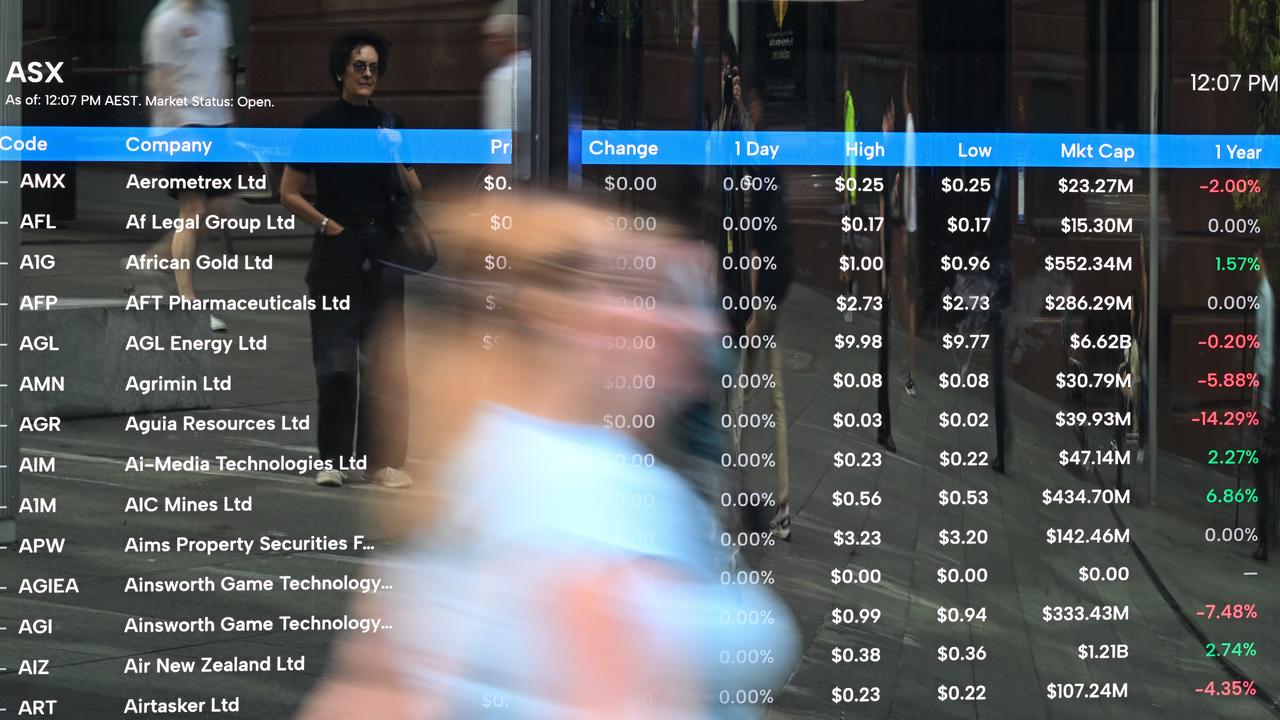
Australia’s share market has notched its best week since October 2022, despite slipping ahead of key US-Iran ceasefire talks and with little sign Iran’s Hormuz Strait blockade is easing.

Continue Reading

Business

RBI mandates payment of inward remittances on same business day

Published

on

RBI mandates payment of inward remittances on same business day
Mumbai: The Reserve Bank of India (RBI) Thursday issued a final circular outlining measures to accelerate cross-border inward remittances, mandating banks to credit payments received during foreign exchange market hours to beneficiary accounts on the same business day.

Currently, less than 8-10% of inward remittances in India are credited to beneficiary accounts within an hour, compared with around 75% in the United States.

Banks have been given six months to implement this requirement, while all other provisions will come into effect immediately.

RBI has also directed banks to reconcile and confirm credits in their nostro accounts on a near real-time basis or at intervals not exceeding 30 minutes.

Advertisement

Additionally, banks are required to notify customers immediately upon receipt of cross-border inward payment messages. Messages received after business hours must be communicated at the start of the next working day.


“It is observed that several banks rely on end-of-day statements of the nostro account for confirming and reconciling receipts, resulting in delays in crediting funds to beneficiaries’ accounts,” RBI said.
To address this, banks have been advised to carry out reconciliation and confirmation of credits in nostro accounts more frequently – either on a near real-time basis or at periodic intervals, which should generally not exceed one hour.

At more than $135 billion in 2025, India remained the world’s biggest receiver of remittances, which play a critical role in both managing external sector risks at the macro level and supporting individual consumption demand in several states. Remittances have steadily topped foreign direct investments (FDI) over the years, with four advanced economies – the US, the UK, Canada and Australia – together helping remittances double over the past decade, data by San Francisco-based nonprofit Indiaspora showed.

Continue Reading

Business

Senedd Election manifesto from the Tories far more pro-business than Labour

Published

on

Business Live

But the manifesto is clearer on what it wants to do than on how it would fund it.

Party leader in Wales Darren Millar at the launch of its Senedd Election manifesto.(Image: WalesOnline/Rob Browne)

On first reading the Welsh Conservative’s Senedd Election manifesto offers a much clearer economic pitch than that of Labour.

It is more openly pro-business, more willing to discuss tax cuts, more supportive of road construction, and far more explicit in arguing that Wales needs a stronger private-sector-led growth model.

It also vows to eliminate business rates for small firms, pubs, and post offices, reduce the basic rate of income tax by 1p, abolish Land Transaction Tax on primary residences, support sectors such as energy, defence, aerospace, tourism, and financial services, and deliver 125,000 apprenticeships over the next Senedd term.

READ MORE: Rise in the number of Welsh shoppers on the high streetREAD MORE: BCRS Business Loans secures £20m mandate to back small firms in Wales and the Midlands

Advertisement

That gives it an immediate political advantage over Labour, and it reads like a party that at least understands that economic growth requires more than warm words about fairness, partnership and strategy. Indeed, what the Conservatives are trying to offer something simpler and more direct including lower costs, better infrastructure, less bureaucracy, and a clearer effort to make Wales more attractive to investors and employers.

The strongest part of the manifesto is probably its willingness to say that the government has made it harder, not easier, for parts of the Welsh economy to grow, arguing that the Welsh Government have undermined confidence through rising costs, anti-motorist policies, poor infrastructure and hostility to sectors such as tourism and farming.

Their answer is to reverse the 20mph default, build the M4 relief road, upgrade the A55, scrap the tourism tax, reduce burdens on holiday lets, and replace the current farming scheme with one they say is more focused on food security and rural economic strength.

The promise to re-establish a Welsh Development Agency is also politically significant as, we will discuss later this month, they are not the only political party to conclude that Wales needs a stronger institution dedicated to attracting investment and supporting jobs. That stands in contrast to Labour’s First Minister, who has rejected such a move.

Advertisement

But that is where the harder questions begin because while the manifesto is stronger than Labour’s on rhetoric about growth, it is much less convincing on how all of this would be paid for, prioritised and delivered.

There is a long list of costly commitments, including tax cuts, abolition of business rates for small firms, road building, rail investment, airport support, tourism funds, more apprenticeships, and major health and education pledges. The document talks a lot about cutting waste, abolishing bodies and curbing what it sees as frivolous spending, but there is little sense that these savings would realistically cover the scale of what is being promised. In other words, the Conservative manifesto is clearer on what it wants to do than on how it would fund it.

There is also a second weakness as much of its economic thinking leans heavily on inward investment, infrastructure and tax reduction, which are important, but not enough on their own. Wales does not just need more investors coming in, but also more local firms scaling up, more innovative businesses, and more Welsh-owned companies growing to meaningful size.

On that question, the manifesto is thinner than it first appears, and whilst there are warm words about manufacturing, freeports and growth zones, there is little on what it will do to build and grow those local businesses that are critical to the future of every community in Wales.

Advertisement

That matters because if the Conservatives want to argue that Wales has underperformed economically for decades, then they also need to show they understand the modern drivers of growth. Yes, roads and rates matter, but so do business innovation, scale-up finance and retaining the best talent, and on those issues, this manifesto is less developed than its headline tone suggests.

The same applies to universities, and it is fair to say that the Conservatives do say more than Labour in some respects. They promise a £1,000 tuition fee discount for STEM subjects, support for intensive two-year degrees, more data on student outcomes and tuition fee refunds for key shortage professions who remain in Wales.

Those are all good ideas, but they are peripheral to the real financial problems currently facing the sector, and there is still no broad vision of universities as central economic institutions and no plan to turn the higher education sector into a stronger engine of innovation and productivity.

So, the Welsh Conservative offer is both more attractive than it first appears because it claims to be more unapologetically pro-growth, and more prepared to challenge the anti-business instincts that have crept into Welsh policymaking over the last five years. However, it is more vulnerable because it risks mistaking a more business-friendly tone for a fully worked economic strategy.

Advertisement

In many ways, the manifesto’s real strength is its political clarity as it says Wales should cut taxes, back roads, support tourism and farming, and restore a stronger development agency. However, its real weakness is that it still does not fully answer the deeper question of how Wales becomes a richer, more innovative, more productive economy over the long term and, most importantly, how to pay for it.

Therefore, the Welsh Conservative manifesto presents a sharper critique of the status quo in the Welsh economy than Labour’s and, in some areas, a clearer sense of what they think businesses want to hear. However, it remains more persuasive as an opposition document than as a fully credible plan for economic transformation and, more importantly, it knows what it is against but less certain what it is for and what a genuinely modern Welsh economy should look like.


Continue Reading

Business

After five-day surge, D-Street slips through ceasefire cracks

Published

on

After five-day surge, D-Street slips through ceasefire cracks
Mumbai: Cracks appearing in the US/Israel and Iran truce within a day of its announcement soured investor sentiment on both Dalal Street and the rest of Asia on Thursday, leading to participants booking gains made earlier. The Nifty 50 and Sensex both ended about 1% lower, breaking a 5-day upwards streak, in light of the recent geopolitical developments.

NSE’s Nifty fell 222.25 points, or 0.9%, to close at 23,775.1. BSE’s Sensex declined 931.25 points, or 1.2%, to end at 76,631.65. Both indices were up nearly 4% in the previous session.

“Following Wednesday’s sharp rally, markets witnessed profit booking amid renewed uncertainty around ceasefire developments, which triggered a spike in crude oil prices. This has led to cautious sentiment, with participants in a dilemma about how the conflict may pan out,” said Sunny Agrawal, head of research at SBI Securities.

Tensions have resurfaced in West Asia just a day after the US and Iran announced a ceasefire as Israel continues to attack Lebanon, and the Strait of Hormuz was reportedly shut again.

Advertisement
Screenshot 2026-04-10 052942Agencies

Brent Crude June Futures were trading close to $99 a barrel on Thursday evening, after making a low of $90.4 on Wednesday.


Technically, the Nifty 50 is likely to find support in the 23,300-23,400 range in the coming days, with resistance around 24,500, said Dharmesh Shah, head of technical research at ICICI Securities.
“While the recent swift retracement of losses are a positive signal, intermittent profit booking cannot be ruled out,” said Shah. “Volatility is expected to remain elevated amid uncertainty around the ceasefire.” The Indian Volatility Index or VIX – known as the fear gauge of the market, advanced 3.7% to 20.43 levels, suggesting participants continue to remain cautious in the near term.

Broader market indices bucked the trend, as Nifty Midcap 150 gained 0.3% and Nifty Small-cap 250 rose 0.1%. Out of 4,420 stocks traded on BSE, 2,121 advanced and 2,180 declined at close.

Despite the weakness in benchmark indices like the Nifty 50 and Sensex, mid and small cap indices ended higher, suggesting that continued foreign investor selling weighed on the headline indices while overall mood remained positive, said Agrawal.

“Looking ahead, markets are expected to stabilize over the next 2-3 months if oil prices remain in double digits,” he said. “Fourth quarter earnings across key sectors such as banking, IT, automobiles, FMCG, and consumer discretionary are anticipated to be positive.”

Elsewhere in Asia, Japan dropped 0.7%, China declined 0.7%, Hong Kong fell 0.5%, South Korea declined 1.6%, while Taiwan rose 0.3%.

Advertisement

The pan-Europe index Stoxx 600 was down 0.6% at the time of going to print.

Foreign portfolio investors net sold shares worth ₹1,711 crore. Domestic institutions were buyers worth ₹956 crore.

Continue Reading

Business

Amazing Thailand Grab Travel Pass launched to enhance seamless digital travel experiences across Thailand

Published

on

Amazing Thailand Grab Travel Pass launched to enhance seamless digital travel experiences across Thailand

The Tourism Authority of Thailand and Grab Thailand launched the Amazing Thailand Grab Travel Pass, offering integrated benefits for transport, dining, and shopping, enhancing tourism and cultural event access.

Launch of Amazing Thailand Grab Travel Pass

On 9 April 2026, the Tourism Authority of Thailand (TAT) teamed up with Grab Thailand to introduce the Amazing Thailand Grab Travel Pass. This digital package provides international visitors with integrated benefits in transportation, dining, and shopping, while enhancing access to cultural events across Thailand. It’s a strategic initiative aimed at boosting Thailand’s tourism sector.

Strategy and Vision

Ms. Thapanee Kiatphaibool, TAT Governor, emphasized how this collaboration aligns with TAT’s Amazing 5 Economy strategy. By leveraging digital platforms, they aim to promote tourism year-round and enhance the economic distribution within Thailand’s tourism ecosystem. This strategy focuses on creating seamless visitor experiences, reinforcing Thailand’s image as a premier global destination.

Affordable and Convenient Travel

Ms. Chantsuda Thananitayaudom, Grab Thailand’s Country Head, highlighted the strong demand for the Grab Travel Pass. Priced at 30 Baht with savings over 3,000 Baht, it offers discounts on ride-hailing, airport transfers, dining, and shopping. Additionally, special promotions, like a 15% ride discount for the Maha Songkran World Water Festival, enhance travel experiences. More details are available via the Grab app and TAT’s Travel Buddy.

Advertisement

Source : Amazing Thailand Grab Travel Pass launched to enhance seamless digital travel experiences across Thailand

Continue Reading

Business

Valuations turn attractive as markets look beyond uncertainty: A Balasubramanian

Published

on

Valuations turn attractive as markets look beyond uncertainty: A Balasubramanian
Amid heightened geopolitical tensions and the constant churn of global headlines, investors are grappling with one key question: is the market signalling a buying opportunity? According to A Balasubramanian, from MD & CEO, ABSL AMC, the answer may lie not in the daily noise but in underlying valuations and improving macro signals.

Speaking to ET Now, Balasubramanian pointed out that while uncertainty—ranging from geopolitical conflicts to unpredictable global leadership cues—continues to cloud sentiment, there are early signs that the worst may be nearing an end, at least in the near term.

“So, the way events are panning out, I think that itself tells that probably the worst should come to an end at least in the near term, short term I am saying. Though earlier the uncertainty was growing beyond our imaginations, at least some semblance is coming and hopefully we should expect in the next two-three weeks some agreement being reached between these two large nations and therefore bring some kind of uncertainty to a normalcy, then we will have to see some kind of stabilisations.”

He added that while a full resolution may take a few months—especially with oil prices and global trade dynamics needing time to normalise—the market may already be factoring in much of the bad news.

Advertisement

From a domestic perspective, Indian equities have undergone a prolonged phase of correction. This, according to Balasubramanian, has brought valuations to more reasonable levels, creating a potential opportunity for long-term investors.


“Today valuation-wise if you look at Nifty, if you take the valuations, it is now trading at below the long-term average PE multiples that is one.”
He also highlighted encouraging trends in the financial sector, particularly the revival in credit and deposit growth, which had been sluggish last year.”So, we are seeing clearly the credit growth now is coming back to normal. Last year the credit growth was missing. Deposit growth was also missing. Now, both are actually now catching up.”

While near-term disruptions—especially from elevated oil prices—remain a concern, Balasubramanian believes markets tend to price in such risks ahead of time.

“Correct. So, generally market discounts some of these expectations pretty in advance.”

He noted that while companies may report strong earnings for the March quarter, the real impact of higher oil prices is likely to show up in the June quarter results.

Advertisement

“But I would assume while the March quarter for most of the companies would report good numbers, there is high probability the assumption that we are saying that oil impact would get definitely felt in the June quarter.”

Even so, he suggested that much of this anticipated pressure is already reflected in stock prices, limiting downside surprises.

On the investor front, retail participation remains resilient despite market volatility. Flows into mutual funds have held steady, and there is a growing debate among investors on whether to stick with systematic investment plans (SIPs) or deploy lump sum investments at current valuations.

“In the month of March I would say more or less flows remain stable… I would say close to about the previous flows that continues.”

Advertisement

Balasubramanian indicated that periods of correction often present favourable entry points for lump sum investments, though discipline remains key.

“My own belief is as you rightly put it most of investors have come in the last say two years or three years or four years have not seen this kind of fall, for them it is a lesson, for them it is a learning because the market is always up and down.”

He emphasised that volatility is an inherent part of investing and serves as an important learning curve, especially for new entrants who may be experiencing their first meaningful market correction.

“Ultimately the people who remain invested in the long-term only they make money.”

Advertisement

As markets transition from uncertainty towards relative stability, it is time to focus on fundamentals, stay invested, and use volatility as an opportunity rather than a deterrent.

Continue Reading

Business

Building Vision from the Ground Up

Published

on

Building Vision from the Ground Up

Sujay Thakur is a New Mexico-based entrepreneur, investor, and educator whose career bridges global finance, real estate development, and education innovation.

A graduate of the University of California, Berkeley, with a degree in Chemical Engineering and Finance, he later completed the Owner/President Management Programme at Harvard Business School.

Thakur began his career on Wall Street, working with Union Bank of Switzerland, Investment Technology Group, Lehman Brothers, and BNP Paribas, where he managed international equity and derivatives trading teams across New York, London, Hong Kong, and Tokyo. These roles shaped his understanding of global markets, risk, and leadership at scale.

In 2004, he founded Raj Holdings and Thakur Enterprises, two interconnected companies focused on real estate development, acquisition, and management. Together, they have developed over 1.5 million square feet of industrial, retail, and residential property across the United States. Thakur also invests in education, hospitality, and childcare ventures, always emphasising sustainable and community-driven growth.

Now studying artificial intelligence at Harvard’s D³ Institute, Thakur is exploring how technology can enhance early childhood education. He supports institutions such as Manzano Day School and Bosque School, reflecting his long-term commitment to learning and innovation. A lifelong reader and self-described “iterative thinker,” Thakur believes in continuous improvement, curiosity, and leading with integrity.

Advertisement

Q&A with Sujay Thakur

You grew up in Gallup, New Mexico. How did those early years influence your work ethic?

Growing up in Gallup taught me to value hard work and humility. I had my first job at McDonald’s, and it turned out to be an important lesson in responsibility. I was proud that our drive-thru became the highest-grossing west of the Mississippi. That experience showed me that even small roles matter when you give them your all.

You studied Chemical Engineering and Finance at UC Berkeley — a unique mix. Why that combination?

I wanted to understand how things worked — both structurally and economically. Engineering gave me the ability to think systematically, while finance taught me how to apply that thinking in a real-world context. It’s a balance that’s guided every decision I’ve made in business.

What drew you to Wall Street after university?

The challenge. I started at Union Bank of Switzerland and later moved to Investment Technology Group. By the time I was at Lehman Brothers and BNP Paribas, I was managing international sales trading desks across four continents. It was fast-paced, competitive, and incredibly educational.

You managed large teams in New York, London, Hong Kong, and Tokyo. What did you learn from that global exposure?

Cultural awareness is critical. I learned that leadership isn’t about control; it’s about clarity and trust. Whether you’re in Tokyo or New York, people follow focus and consistency.

Advertisement

After such a high-profile finance career, what inspired your move into real estate?

It started with a desire to build something tangible. In 2004, I launched Raj Holdings and Thakur Enterprises. Over the years, we’ve developed more than 1.5 million square feet of industrial, retail, and residential property. I like projects that make a visible difference in communities.

You also invest in education and childcare. Why are those areas important to you?

Education is the foundation of everything. I’ve donated to schools like Manzano Day and Bosque because I believe early learning shapes lifelong success. I’m now studying how artificial intelligence can be used to enhance education for children as young as six months.

You mentioned AI — what interests you most about it?

I’m currently at Harvard’s D³ Institute learning about AI applications in education. I see AI as a tool that can personalise learning, close achievement gaps, and empower teachers. It’s not about replacing people; it’s about giving them better tools.

What challenges have you faced in your business journey?

The financial crisis tested me deeply. At one point, I had $25 million in loans during one of the toughest market downturns in history. But resilience and iteration — the willingness to adapt and refine — got me through it.

Advertisement

How would you describe your leadership philosophy today?

Focus and execution. I believe in setting clear goals, refining them, and executing with precision. As I often say, “Like a CEO, I’m constantly thinking about execution.” That mindset helps manage expectations and maintain momentum.

You’re known as a lifelong learner. What keeps you motivated?

Curiosity. I read six to eight books a month, mostly autobiographies. People like Franklin, Mandela, and Jobs inspire me. Every great achiever started by learning relentlessly.

What’s next for you?

Continuing to build — in business and in education. I want to see AI integrated meaningfully into classrooms and to keep expanding our developments responsibly. Success isn’t just profit; it’s impact.

To learn more about Sujay Thakur and his ongoing work in real estate and education, visit his professional profile.

Advertisement

Continue Reading

Business

Minimal Waits Across Terminals on April 10

Published

on

Planes resume flights following an FAA system outage at Laguardia Airport in New York

NEW YORK — Travelers at LaGuardia Airport enjoyed unusually swift security screenings Friday, with TSA wait times hovering at one minute or less across most terminals as staffing stabilized and passenger volume remained moderate on April 10, 2026.

Planes resume flights following an FAA system outage at Laguardia Airport in New York
LaGuardia Airport

Official real-time data from the LaGuardia Airport website showed minimal lines early in the day. Terminal A reported a one-minute general security wait and no wait for TSA PreCheck. Terminal B showed no wait for either general or PreCheck lanes. Terminal C listed a one-minute general wait and one minute for PreCheck. These figures represent some of the shortest waits recorded at the busy New York City airport in recent months.

Airport officials noted that while TSA staffing has begun to stabilize after earlier 2026 challenges, wait times can still fluctuate rapidly based on passenger surges. They urged travelers to arrive with extra time and monitor updates, especially during typical peak periods.

The light lines Friday contrasted sharply with occasional backups seen earlier in the year. In late March, some passengers at Terminal B reported waits exceeding 90 minutes to two hours during morning rushes, prompting complaints and flight changes. Staffing strains, including the temporary use of ICE and DHS agents for screening support, had contributed to longer delays at times.

LaGuardia, which serves more than 30 million passengers annually, operates three main terminals with dedicated security checkpoints. Terminal B, a hub for American Airlines, Delta and other carriers, often sees the heaviest traffic. Friday’s smooth operations allowed many travelers to move quickly from check-in to gates.

Advertisement

Aviation experts attributed the favorable conditions to a combination of factors: lighter mid-morning travel on a typical spring Friday, improved TSA staffing levels, and the benefits of programs like TSA PreCheck and CLEAR. Enrollment in expedited screening has grown significantly, helping divert frequent flyers from standard lines.

Historical patterns at LGA show clear peaks and valleys. Early mornings (4-7 a.m.) and late afternoons (4-7 p.m.) traditionally carry the longest waits, sometimes reaching 15-30 minutes or more during busy periods. Midday hours and evenings often provide shorter lines, as seen Friday.

Travelers praised the efficiency on social media and forums. Many noted breezing through security in under 10 minutes total, including document checks and bag screening. “LGA security was a breeze today — under 5 minutes door to door,” one passenger posted, reflecting widespread relief after past frustrations.

The airport continues investing in modernization. Completed renovations have improved layout and flow, reducing bottlenecks that plagued the facility for years. Digital signage provides real-time wait estimates, and the official LaGuardia website and apps like MyTSA offer travelers up-to-the-minute data before arrival.

Advertisement

TSA PreCheck remains a game-changer for eligible passengers. Members typically experience waits of one to three minutes, while standard lanes can vary widely. Friday’s data showed virtually no advantage gap, as both categories moved swiftly. CLEAR biometric lanes, available at select checkpoints, further accelerate the process for subscribers.

For international travelers and those with connecting flights, LaGuardia’s compact size helps minimize post-security walking times. The airport publishes gate walk estimates alongside security data, aiding tight connections. On a light day like Friday, passengers reached gates with ample buffer time.

Broader context includes national TSA trends. The agency has faced recruitment and retention challenges post-pandemic, occasionally leading to longer national averages. However, New York-area airports, including LaGuardia, have seen incremental improvements through seasonal hiring and operational adjustments.

Spring travel season brings its own dynamics. With school vacations winding down and business travel steady, April often delivers mixed conditions. Weather plays a role too — clear skies Friday supported on-time operations, reducing cascading delays that can swell security lines.

Advertisement

Passengers offered practical advice based on experience. Arrive two hours before domestic flights and three hours for international, even on good days. Pack liquids properly in quart-size bags to avoid secondary screening. Enroll in TSA PreCheck if flying frequently. Use the airport’s website or apps for live updates rather than relying on outdated estimates.

LaGuardia’s reputation has improved dramatically since its major redevelopment. Once mocked for outdated facilities, it now ranks among more passenger-friendly U.S. airports. Efficient security contributes heavily to that perception, especially when lines move as quickly as they did Friday.

Looking ahead, travelers should remain vigilant. Weekends, holidays and summer peaks can quickly reverse current trends. Major events in New York City often drive surges, as do weather disruptions. Monitoring official sources remains the best strategy.

For those departing Friday, the light security footprint translated to relaxed mornings and fewer missed flights. Families, business travelers and tourists alike benefited from the smooth experience at one of the nation’s busiest gateways.

Advertisement

As operations continue throughout the day, officials will adjust staffing to match demand. The message from LaGuardia remains consistent: check wait times in real time, build in a buffer, and prepare for variability even on seemingly ideal days.

Friday’s near-empty lines served as a welcome reminder that when conditions align — moderate crowds, stable staffing and clear weather — LaGuardia can deliver one of the more efficient big-city airport experiences in the country. Travelers passing through today likely appreciated the rare gift of time saved at security.

Continue Reading

Business

Financial services bear maximum brunt of late-March FPI sell-off

Published

on

Financial services bear maximum brunt of late-March FPI sell-off
Mumbai: Financial services were the hardest hit by the foreign investor selling in the second half of March, taking their outflow tally for the month from the sector to over ₹60,000 crore – the highest withdrawal since 2012. These investors dumped shares worth ₹28,824 crore in March 16-31 after withdrawing ₹31,831 crore in the first half of the month.

The selling in financials during the later part of March accounted for 43% of ₹67,081 crore pulled out across 21 sectors – their highest fortnightly selling since the second half of October 2024, when they dumped shares worth ₹71,502 crore. “Foreign holding is typically higher in banking stocks, and global investors could have pulled out money due to some valuation concerns after the rally in 2025,” said Sonam Srivastava, founder and CEO, Wright Research.

Financial Services Bear Maximum Brunt of Late-March FPI Sell-offsAgencies

Bank Nifty Plunges Nearly 17% in March War apart, corporate governance concerns at HDFC Bank too may have accounted for a portion of outflow

In March, Bank Nifty plunged nearly 17%, and benchmark Nifty dropped over 11% amid the global market sell-off sparked by the West Asia conflict.

HDFC Bank may have accounted for a portion of the outflow from financials.

Advertisement

“The governance concerns at HDFC Bank, following the unexpected resignation of chairman Atanu Chakraborty citing ethical differences, created a company-specific overhang on the entire banking pack,” said Bhavik Joshi, business head at INVasset PMS.


When the country’s largest private-sector lender is under a governance cloud, it gives foreign investors one more reason to head for the exit, he said.
Automobiles and construction witnessed foreign outflows worth ₹7,691 crore and ₹6,179 crore, respectively, in the second half of March. In February, both sectors had seen inflows worth ₹3,586 crore and ₹4,487 crore, respectively, but had seen outflows in the first half of the month. “Although sentiment is weak, the valuations are attractive; however, foreign investors have delayed allocation due to geopolitical uncertainty that sparked off a risk-off sentiment across emerging markets,” said Srivastava. “This wasn’t a sectoral rotation; it was a macro exit from India as a trade,” said Joshi. “Apart from the quantum of outflows, what stands out in H2 data is how broad-based the selling was – barely any sector was spared.”

Continue Reading

Business

February 2026 PCE: Fed’s favored inflation gauge remained stubbornly high

Published

on

February 2026 PCE: Fed's favored inflation gauge remained stubbornly high

This story about the February 2026 PCE inflation is developing and will be updated with more details.

The Federal Reserve’s preferred inflation gauge remained stubbornly high in February as consumers continued to face elevated price growth.

Advertisement

The Commerce Department on Thursday reported that the personal consumption expenditures (PCE) index rose 0.4% on a monthly basis in February and is up 2.8% from a year ago. Both figures were in-line with the expectations of economists polled by LSEG.

Core PCE, which excludes volatile measurements of food and energy prices, was up 0.4% from a month ago and increased 3% year over year. Both figures were in line with economists’ expectations from the LSEG poll.

FED OFFICIAL SAYS INTEREST RATE HIKE POSSIBLE AS GAS PRICES, INFLATION REMAIN ELEVATED

Federal Reserve policymakers are focusing on the PCE headline figure as they try to bring inflation back to their long-run target of 2%, though they view core data as a better indicator of inflation. Compared with January’s readings, headline PCE inflation held steady at 2.8%, while core PCE decreased slightly from 3.1%.

Advertisement

Prices for goods were up 1.2% in February on an annual basis, down from 1.3% in January. Goods price growth had slowed over the course of 2025, declining from an annual reading of 4.2% in January 2025 to 0.1% in December.

Services prices were up 3% from a year ago in February, an increase from the 2.6% reading in January. The index was last this high in January 2025, when prices for services were up 2.9% on an annual basis.

Shopper at a grocery store

The PCE inflation report showed the pace of price growth remained elevated in February. (Justin Sullivan/Getty Images)

IRAN WAR COULD PUSH INFLATION HIGHER THIS YEAR, GOLDMAN SACHS SAYS

The personal savings rate as a percentage of disposable income was 4% in February, a decline from the 4.5% reading in January that returned the figure closer to the 3.9% level reported in December.

Advertisement

Over the last year, the personal savings rate as a share of disposable income has declined from 5.2% last February and a peak of 5.5% in April 2025.

The February PCE report was delayed by the government shutdown and was originally scheduled for release late last month. The March edition of the PCE inflation report is scheduled for release on April 30.

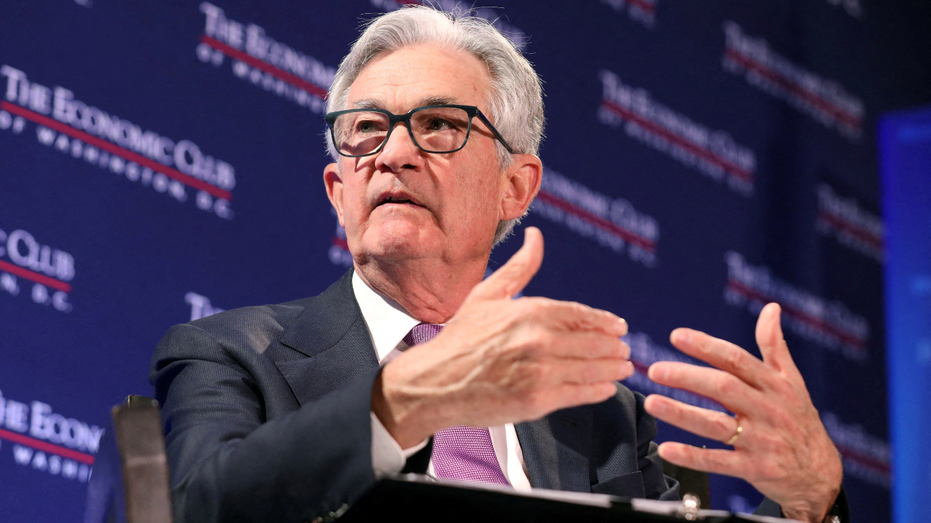
Jerome Powell speaks at an event in Washington, DC.

Federal Reserve Chair Jerome Powell and central bank policymakers are taking a cautious approach to interest rate moves based on economic data. (Amanda Andrade-Rhoades/Reuters / Reuters Photos)

POWELL WARNS OF NEW ENERGY SUPPLY SHOCK AS GAS PRICES SURGE: ‘NO ONE KNOWS HOW BIG IT WILL BE’

What experts are saying

Bret Kenwell, U.S. investment analyst at eToro, noted that the PCE report “doesn’t reflect the recent surge in energy prices, but tomorrow’s CPI update will begin to capture some of that impact. For that reason, both the Fed and investors will be paying close attention to the remaining inflation reports this month.”

Advertisement

“February’s PCE inflation report was in-line with expectations, and while core PCE cooled to its lowest level since November, it’s still hovering near a one-year high of about 3%. Headline PCE remains sticky as well, holding in the 2.8%, while goods inflation continues to act as a headwind – something the Fed has linked to tariffs,” Kenwell explained.

GET FOX BUSINESS ON THE GO BY CLICKING HERE

Raymond James chief economist Eugenio Aleman noted that the “strong 0.4% print for both the headline and core PCE price indices is not good news for the Federal Reserve and will definitely keep the Fed on the sidelines for almost the rest of the year.”

Advertisement
Continue Reading

Trending

Copyright © 2025