A man has appeared in court charged with causing serious injury by dangerous driving and driving whilst disqualified
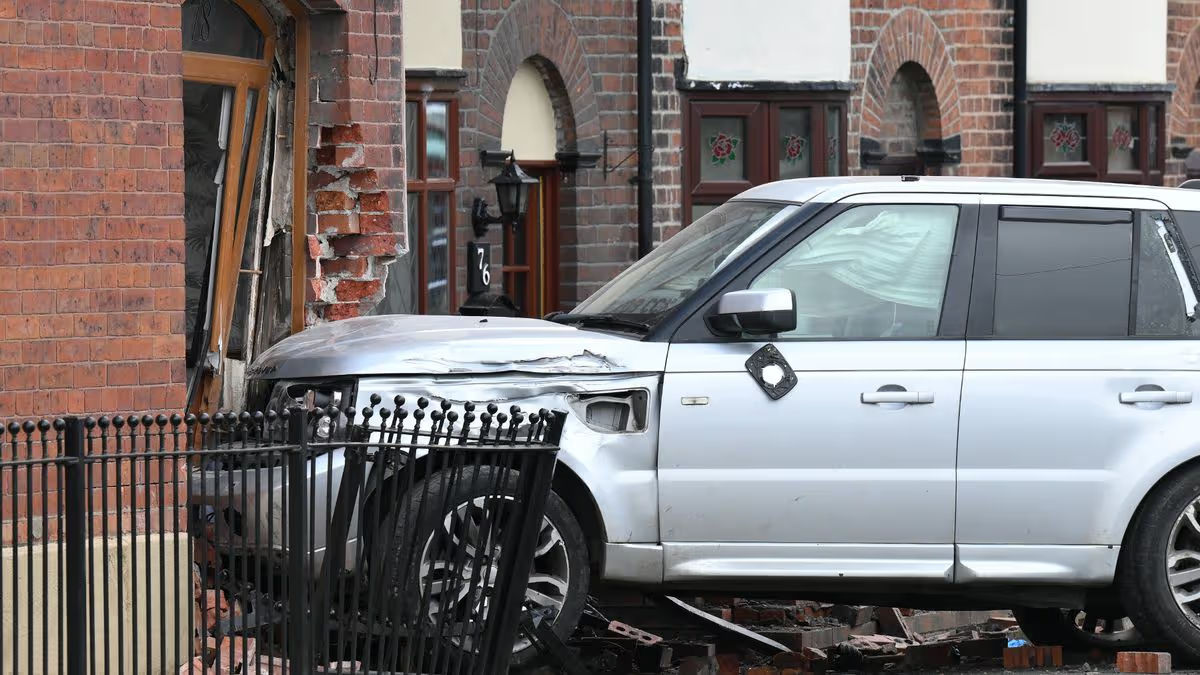
A man has been charged following a Range Rover crash. The incident happened on Market Street in Stoneclough at around 4.50am on March 28.
Advertisement
A Range Rover hit a man, before ploughing into a house, police said. The pedestrian, a 47-year-old man, was rushed to hospital from the scene with ‘severe injuries’. He remains in a critical condition.
Get MEN Premium now for just £1 HERE – or get involved in our WhatsApp group by clicking HERE. And don’t miss out on our brilliant selection of newsletters HERE.
Nicholas Partington, 42, of Barrett Court, Bury, has since been charged with causing serious injury by dangerous driving; and driving whilst disqualified, a Greater Manchester Police spokesperson said in an update issued today (April 11).
He appeared at Manchester and Magistrates’ Court on April 10. He has been remanded into custody to appear in court again later this year.
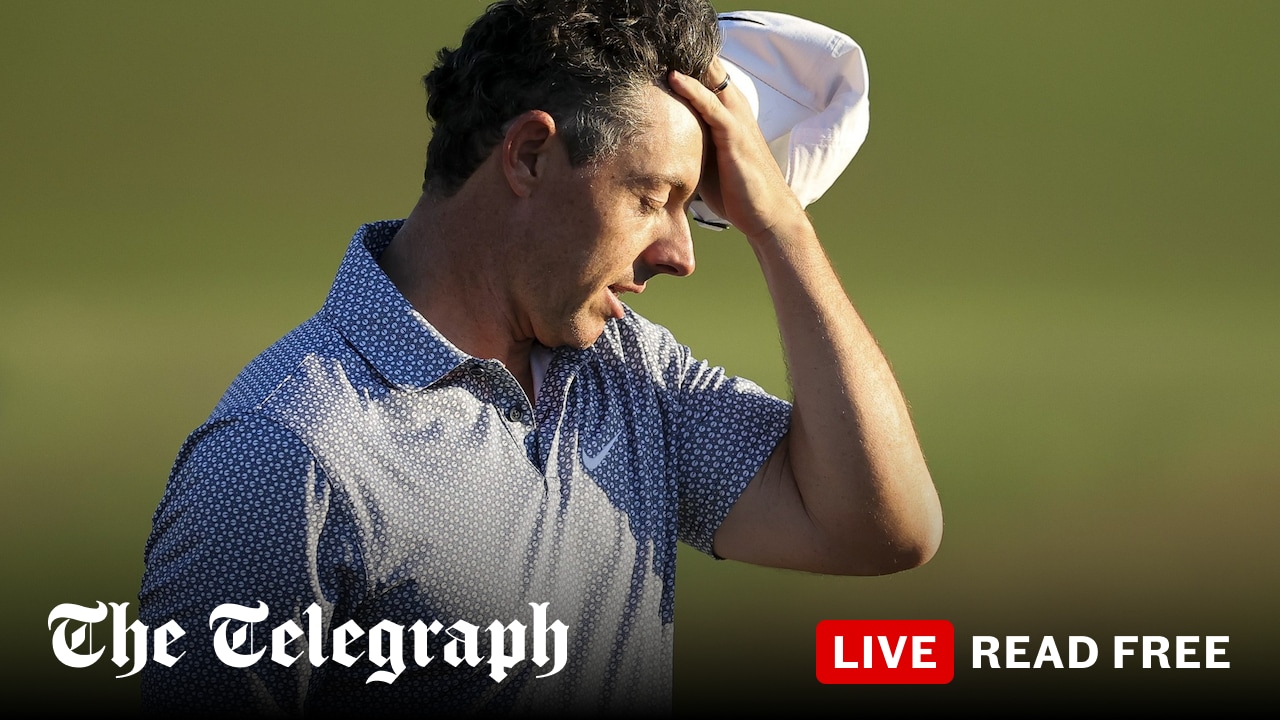
This moment was a central storyline in the theatre, but for so long for McIlroy it seemed – to adapt the Masters motto – a perdition like no other. This is not the first time that Augusta National has turned a procession into a recession for the pacesetter and into a cavalry chase for the rest. And it was not the first time that McIlroy had seen his lead gobbled up and spat back in his face.
McIlroy knows from his own experience that shots here can scatter like confetti on the breeze. And if he cannot remember 2011, when he fired that final-round 80 – and believe it, he can – then this Saturday roller coaster can serve as a timely reminder.
From the off, his record six-shot advantage became two in less than half an hour. Patrick Reed, his sometime nemesis, birdied the first three and with McIlroy bogeying the first and failing to birdie the par-five second, the yawning gap was suddenly tighter.
Advertisement
No matter. Reed began to fade away, with his putter being anything but obliging (the 2018 champion eventually finished with a 72 on seven under and is not yet out of it) and after McIlroy hit a rare good drive on to the green at the par-four third and made his first birdie of the day, his scoreboard superiority was back to four. Not what it was, but healthy enough.
The late Dr Michael Mosley warned about so-called ‘healthy’ foods that can sabotage weight loss goals
Kate Lally Content Editor
04:04, 12 Apr 2026
The late Dr Michael Mosley cautioned his many followers about so-called “healthy” foods that aren’t actually as beneficial for us as we might believe. Before his tragic death in 2024, the fitness and nutrition expert offered plenty of health guidance on his social media platforms, through his Just One Thing podcast and in his numerous books.
With supermarket aisles filled with products claiming to be the best choices for those watching their weight, it can be difficult to identify which are genuine. The health expert said many of these products don’t truly deliver the nutrition they promise and could do “more harm than good”.
Advertisement
In a 2023 post on the Fast 800 blog, Dr Mosley wrote: “In a world full of food manufacturers, with clever marketing and a lack of science behind their claims, it can often become confusing to know exactly which foods are healthy when you’re navigating the supermarket.
“With huge signs at the end of each aisle, telling you exactly why the latest products will turn your health around, it’s easy to fall into their well set traps and spend a fortune on “healthy” foods that are not so healthy.”
The late doctor provided an overview of four products marketed as healthy, but which he recommended against consuming.
Four ‘healthy’ foods to watch out for
Low-fat products
Advertisement
Low-fat snacks have traditionally been the first choice for anyone pursuing a healthier lifestyle. However, in recent years, scientific studies have delivered a wealth of fresh evidence highlighting the health advantages of full-fat products. Michael outlined several reasons why low-fat options might not be the wisest choice.
He explained that low fat items are frequently stripped of nutrients and packed with sugar and additives to compensate for the taste lost when removing fat. These high sugar, low fat products can trigger blood sugar spikes, which can fuel cravings and lead to energy slumps.
Furthermore, Michael pointed out that consuming foods high in mono and poly-unsaturated fats deliver rich flavour while keeping you fuller for longer, and they could even support weight loss efforts. He said: “A study, carried out by researchers at Stockholm’s Karolinska Institute, tracked the diets of 20,000 women over a period of 20 years.
“The study found links between the consumption of full-fat dairy products (milk and cheese) and weight loss. Over a ten year period, the women who regularly consumed full-fat milk saw a lower [Body Mass Index] BMI.”
Advertisement
Vegetable crisps
In recent years, veggie crisps have emerged as a fashionable alternative to traditional potato versions. Yet according to Mr Mosley, these thin vegetable slices aren’t substantial enough to deliver any meaningful nutritional benefit.
With most fried in sunflower oil to achieve their crunch and doused in salt for added taste, he suggested they may be no healthier than their potato-based counterparts. If you’re after something crunchy and savoury to keep hunger at bay before your evening meal, the health expert instead recommended reaching for raw vegetables, nuts, seeds, or gut-friendly fermented foods such as sauerkraut and kimchi.
Bottled salad dressings
Advertisement
Salads ought to be helping you reach your health goals, but Michael warned they could be the very thing holding back your progress, largely due to their dressings.
He explained: “Not only do commercial dressings have a significant amount of calories per serving (and not many of us actually stick to the recommended serving of one tablespoon), they’re also packed with additives, to extend their shelf life, thickeners, hidden and other nasties that simply don’t belong in your cupboard!”
Rather than reaching for shop-bought dressings, try whipping up your own using equal measures of olive oil and balsamic vinegar or lemon juice.
Flavoured porridge
Advertisement
A bowl of freshly made porridge using rolled oats and whole milk is a fantastic way to kick off the day, though the same certainly can’t be said for those convenient “just add water” sachets.
According to Michael, a single serving of instant oatmeal can contain up to three spoonfuls of sugar, with certain brands packing a whopping 16g per serving.
I Am Maximus became the first horse since Red Rum to win the Grand National twice as one punter landed £800,000 from a sensational £100,000 bet
One punter found themselves £800,000 wealthier after a remarkable wager on I Am Maximus to secure the Grand National title for a second time.
Advertisement
I Am Maximus made history by becoming the first horse since Red Rum to reclaim the Grand National title, with jockey Paul Townend guiding him to victory.
The winning horse was a popular choice throughout the day and was the 9/2 favourite for Townend, trainer Willie Mullins and owner JP McManus.
However, one punter had more reason than most to celebrate after placing an enormous bet on the 10 year old gelding.
Before the race, ITV Racing revealed that on-course bookmakers Fitzwilliam Sports accepted a £100,000 bet on I Am Maximus at 8/1.
Advertisement
Johnny Dineen, a professional gambler who has been working with Fitzwilliam Sports at Aintree this week, shared details of the bet with ITV Racing.
Dineen stated: “It’s the biggest bet we’ve ever taken, £100,000 at 8/1.
“It’s our biggest bet by a mile and we’ll have to try to trade some of it off in the ring.
“It goes without saying it would be a bad result for us!”
Advertisement
Indeed, it proved to be a disastrous outcome for Fitzwilliam Sport, run by Irishman Paul Byrne, the bookmaker and racehorse owner whose blue silks were donned by the triumphant Soldier In Milan in last weekend’s Irish Grand National.
The lucky punter walked away with a staggering £800,000 from their audacious bet on one of the sport’s most unpredictable races.
With Dineen having departed to catch a flight home, Kieran Stokes was left to recount Fitzwilliam’s unfortunate story.
“We did lay some of it off but not enough!” he said.
Advertisement
“It was the money that followed after which made it worse as he went off 9-2, it was just a steady stream of support for him in the final hour.
“Grangeclare West was very popular, but we also laid a few quid on Jordans as well so when he shot clear and the only hope we had of getting him beat was I Am Maximus we knew we were in trouble!
“It’s been a great week, our first time here and it’s not put us off, we’ll be back next year to have another go. It’s the hardest race of the year for a reason.
“You grew up on stories of how good trade was in betting rings and this has been a throwback to that I suppose.
Advertisement
“There was an almighty gamble on the winner of the Irish National on Easter Monday as well, but we were on the right end of that as the owner of the horse, Paul Byrne, also owns our company!”
Overall, the outcome proved costly for bookmakers throughout the sector. Nicola McGeady from Ladbrokes remarked: “Hats off to the punters who stayed loyal to I Am Maximus; there was a massive wave of support for him all week.
“It was a result we didn’t want to see, and we can safely say it was a ‘Punters’ Grand National’ through and through.”
A representative from Betfair commented: “It was a bruising result. Punters have had much the better of it, getting involved in what was a mammoth public gamble.
Advertisement
“The winner represented the worst result in our book and the places offered little comfort. Well done to the maestro, JP McManus.”
“My dad was always a big strong man, but he became so frail before he died,” said Amy
Rob Currell Live news reporter
21:22, 11 Apr 2026
The daughter of a man diagnosed with terminal cancer just days before Christmas has spoken about her devastation but how the family were helped through this heartbreaking time.
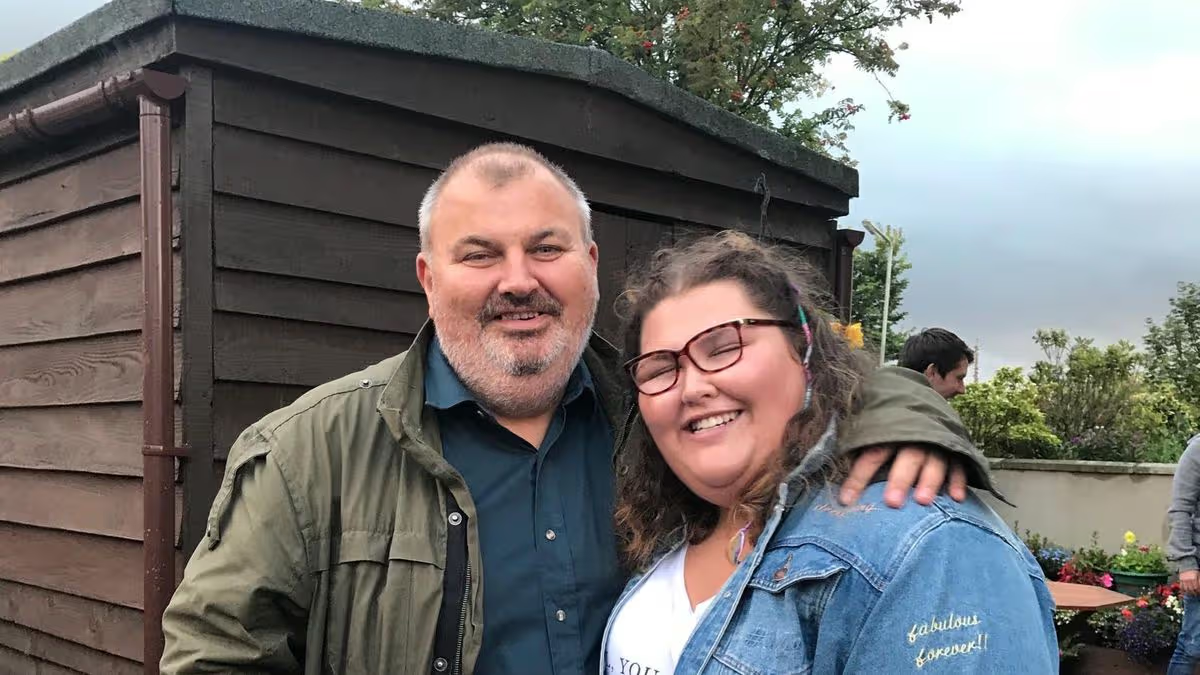
Just days before Christmas, Amy O’Neill’s family were left devastated when her father Ernie was diagnosed with terminal bowel cancer. According to Amy, her family could not have coped without Foyle Hospice, whose `incredible’ support helped bring comfort during the most difficult time of her life.
Advertisement
“I cannot stress enough how amazing this service is within our community,” said Amy, who is a former FUSE FM Ballymoney DJ and Co-owner of Causeway Bowls.
“Foyle Hospice allowed me to simply be a daughter to my dad again, taking away the stress of caring for him. It completely changed our experience, and I know his final days would have been very different if he had remained at home or in hospital.”
Before his diagnosis, Ernie worked as a self-employed IT Technician, and was well-known throughout the local community.
Advertisement
“My dad was always a big strong man, but he became so frail before he died,” said Amy. “However, he took everything in his stride and fought through it.“He was very settled and comfortable at Foyle Hospice. The staff were always so friendly and amazing. Unfortunately, my daddy couldn’t eat and I remember the chef telling him how they could take special requests and make him anything he wanted. Daddy really enjoyed the vanilla milkshakes.
“My daddy had spent a long time in hospital and hadn’t been outside for quite a while. One day, he asked the nurses if he could get some fresh air. Although he was bed bound, they didn’t hesitate — they opened the patio doors and wheeled his bed outside. He was able to enjoy the beautiful views and watch the horses in the field nearby. It’s a moment that will always stay with me.“However, the care was not only offered to my dad but extended to us as a family – the nurses were always helpful and lovely, even asking myself and my mum if we had eaten and would offer us tea and coffee. We felt like we were being supported just as much as my dad. It was very special and I will never forget that.”
Amy, from Limavady, explained that her family were offered access to an apartment at Foyle Hospice, enabling them to remain close to her father and avoid the stress of daily travel.She added: “The apartment was exactly what we needed. It had its own shower and kitchen, and it made everything more manageable for us. We used it during the day and were able to be with my dad in his room at night, allowing us to spend precious time together.
Advertisement
Following Ernie’s death, on August 2, 2024, Amy began to receive adult bereavement counselling, which is one of many services offered at Foyle Hospice, after the death of a loved one.
Amy said: “The counselling has really helped me. I didn’t cry for months after my dad died, but I’ve learned that it’s okay to feel and express those emotions. It’s reassuring to know I’m not alone, and having someone to talk to has made a big difference.
“I would just like to thank everyone at Foyle Hospice who cared for my father and supported my family. I have experienced first-hand what it is like and I would recommend it to anyone – the care is fantastic. We are so grateful to everyone involved and I know that my dad’s last days would have been so different without the care of the amazing Foyle Hospice.”
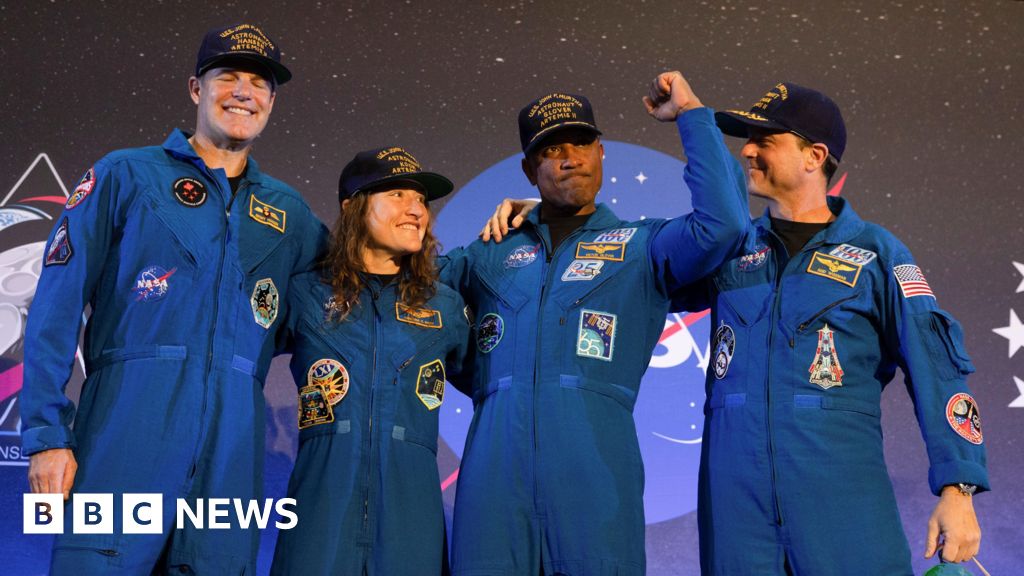
The four astronauts who flew in Nasa’s Artemis II mission around the Moon have been welcomed back to Planet Earth at an event in Houston, Texas.
Commander Reid Wiseman said the mission was “the most special thing I ever went through in my life”.
The astronauts – Wiseman, pilot Victor Glover, mission specialist Christina Koch and Canadian astronaut Jeremy Hansen – were all reunited with their families on Saturday.
Their nine-day voyage took them further from Earth than any humans in history.
If you have teenagers in your life, they’ll probably have heard of the PSL scale. Or at least the language associated with it. Chad. Stacy. Normie. Subhuman.
The PSL scale is a pseudoscientific attractiveness rating system used by looksmaxxers, men in a part of the manosphere who sometimes use extreme methods to change their appearance. The scale purports to rank people into different categories based on their physical appearance, with looksmaxxers deeming that the higher up the scale a man is, the more attractive he will be to women.
Advertisement
The roots of this rating system lie in misogynistic online forums used by incels or involuntarily celibates, but now it’s all over social media, where teenage boys post photos of themselves, asking to be ranked. PSL apps are also available which will rate a person’s photograph, and give them AI-powered advice, sometimes for a fee, on how to “move up” the scale.
So how did the language of incels, and this one way of quantifying attractiveness and beauty, become so mainstream?
In this episode of The Conversation Weekly podcast, we speak to Jordan Foster, an associate professor of sociology at MacEwan University in Alberta, Canada, who researches social media, beauty and masculinity. He explains the origins of the PSL scale, where it fits into the manosphere, and how some looksmaxxing influencers are making money off it.
PSL is an abbreviation of three, now defunct, online incel forums. Foster says that a precise dialogue emerged from discussions on these forums about what features constitute attractiveness and beauty, which turned into a pseudoscientific rating system. “So there might be notions, for example, that a strong brow bone or a stronger jawline is going to communicate a certain amount of testosterone and that this is going to suggest something about your virility or your fitness.”
Advertisement
Foster suggests the idea that beauty can be quantifiable in this way emerged as some men came to terms with “a topic that has historically been taboo and feminised”. He says looksmaxxers realised that if they wanted to have a discussion about beauty, they needed to communicate it in a language that is traditionally more palatable for men. “How do you do that? Wrap it in the guise of science.”
Listen to The Conversation Weekly via any of the apps listed above, download it directly via our RSS feed or find out how else to listen here. A transcript of this episode is available via the Apple Podcasts or Spotify apps.
HOUSTON (AP) — Still marveling over their moon mission, the Artemis II astronauts received a thunderous welcome home Saturday from hundreds who took part in NASA’s lunar comeback that set a record for deep space travel.
The crew of four arrived at Ellington Field near NASA’s Johnson Space Center and Mission Control, flying in from San Diego, where they splashed down just offshore the evening before.
After a quick reunion with their spouses and children, commander Reid Wiseman, pilot Victor Glover, Christina Koch and Canada’s Jeremy Hansen took the hangar stage, surrounded by space center workers and other invited guests. They were introduced by NASA Administrator Jared Isaacman, among the first to greet them aboard the recovery ship Friday.
“Ladies and gentlemen, your Artemis II crew,” Isaacman said to a standing ovation.
Advertisement
The jubilant crowd included flight directors and the launch director, Orion capsule and exploration system managers, high-ranking military officers, members of Congress, the space agency’s entire blue-suited astronaut corps and even retired ones, and more.
Their homecoming was poignant: They returned to NASA’s Houston base on the 56th anniversary of the launch of Apollo 13, whose “Houston, we’ve had a problem” refrain turned a near-disaster into triumph.
“This was not easy.” an emotional Wiseman said. “Before you launch, it feels like it’s the greatest dream on Earth. And when you’re out there, you just want to get back to your families and your friends. It’s a special thing to be a human, and it’s a special thing to be on planet Earth.”
Added Glover: “I have not processed what we just did and I’m afraid to start even trying.”
Advertisement
Hansen said the four of them embodied love “and extracting joy out of that” as the four joined together to stand in a row, embracing one another. “When you look up here, you’re not looking at us. We are a mirror reflecting you. And if you like what you see, then just look a little deeper. This is you.”
During Artemis II’s nearly 10-day mission, the astronauts voyaged deeper into space than the moon explorers of decades past and captured views of the lunar far side never witnessed before by human eyes. A total solar eclipse added to the cosmic wonder.
On their record-breaking flyby, the astronauts reached a maximum 252,756 miles (406,771 kilometers) from Earth before hanging a U-turn behind the moon, eclipsing Apollo’s 13 distance record.
The mission also revealed a new side of our planet with an Earthset photo, showing our Blue Marble setting behind the gray, pockmarked moon. The image echoed the famous Earthrise shot from 1968 taken by the world’s first lunar visitors, Apollo 8.
Advertisement
Sign up for Morning Wire:
Our flagship newsletter breaks down the biggest headlines of the day.
Advertisement
“Honestly, what struck me wasn’t necessarily just Earth, it was all the blackness around it. Earth was just this lifeboat hanging undisturbedly in the universe,” Koch said. “Planet Earth you are a crew.”
Despite the accomplishments, Artemis II astronauts had to contend with a more mundane problem — a malfunctioning space toilet. NASA promised a design fix before longer moon-landing missions.
Advertisement
Wiseman, Glover, Koch and Hansen were the first humans to fly to the moon since Apollo 17 closed out NASA’s first exploration era in 1972. Twenty-four astronauts flew to the moon during Apollo, including 12 moonwalkers.
Apollo 13 commander Jim Lovell — who also flew on Apollo 8 — cheered the Artemis II crew on in a wake-up message recorded before he died last summer.
It was crucial for NASA that Artemis II go well. The space agency is already preparing for next year’s Artemis III, which will see a new crew practice docking its capsule with a lunar lander in orbit around Earth. That will set the stage for the all-important Artemis IV moon landing in 2028, when two astronauts attempt a touchdown near the lunar south pole.
“The long wait is over. After a brief 53-year intermission, the show goes on,” Isaacman said.
Advertisement
___
The Associated Press Health and Science Department receives support from the Howard Hughes Medical Institute’s Department of Science Education and the Robert Wood Johnson Foundation. The AP is solely responsible for all content.
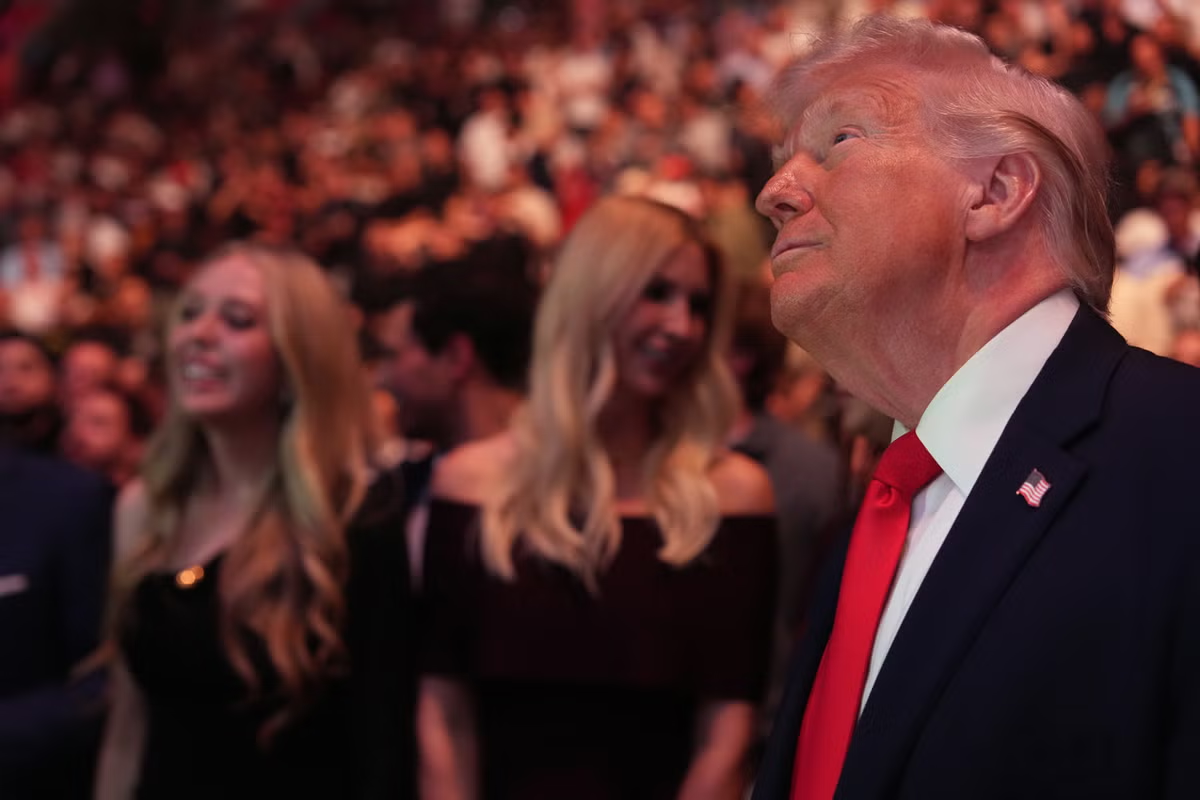
The main attraction early at UFC 327 on Saturday night wasn’t any of the fighters, but President Donald Trump.
Trump entered the Kaseya Center shortly after 9 p.m. to watch the light heavyweight fight between Jiri Prochazka and Carlos Ulberg. He was accompanied by Dana White, the president of Ultimate Fighting Championship, and several members of the Trump family.
As a Kid Rock song blasted from the speakers, Trump walked to his seat where Secretary of State Marco Rubio was waiting. Also nearby was Sergio Gor, the U.S. ambassador to India.
Trump shook hands with attendees on the floor and made a point of greeting Joe Rogan, the podcaster who also works as a UFC color commentator.
Advertisement
Trump gave several smiles to the cameras.
Earlier, on his way to the arena, Trump’s Truth Social account posted an advertisement that appeared to be for a UFC fight at the White House on June 14, on what would be Trump’s 80th birthday.
A crowd of onlookers could be seen filming the presidential motorcade upon arrival.
With former champion Alex Pereira vacating the belt to move up and challenge for the interim heavyweight crown at UFC Freedom 250 at the White House, Ulberg (14-1-0) earned his spot across Procházka (32-5-1) in the main event of Saturday’s card.
Advertisement
On the main undercard, fellow light heavyweights Azamat Murzakanov (16-0-0) and Paulo Costa (15-4-0) will battle in what might end up being a qualifier for the victor to meet the winner of Ulberg and Procházka.
Scientists have warned that even moderate consumption may accelerate the onset of dementia
Lauren Haughey Lifestyle and Money Reporter and Sophie Buchan Money and Lifestyle Writer
02:30, 12 Apr 2026
If you want to reduce your chances of developing dementia, there’s one habit worth giving up, or at least cutting back on.
Research from a study suggests that regular alcohol use may do more than just leave you with a hangover with increasing evidence indicating it could have a significant negative impact on your cognitive health.
According to the NHS, dementia affects more than 944,000 people in the UK. The study highlighted the link between the drink and the condition in a 2023 peer-reviewed journal by Atrium Health. Researchers used a ‘chronic drinking approach’ in which mice were given the option to drink water or alcohol across 10 weeks.
Advertisement
The US-based researchers were especially focused on exploring the link between alcohol consumption and the development of Alzheimer’s disease, which accounts for around 60% to 80% of all dementia cases. Their findings showed that even “moderate” drinking levels were sufficient to speed up brain atrophy.
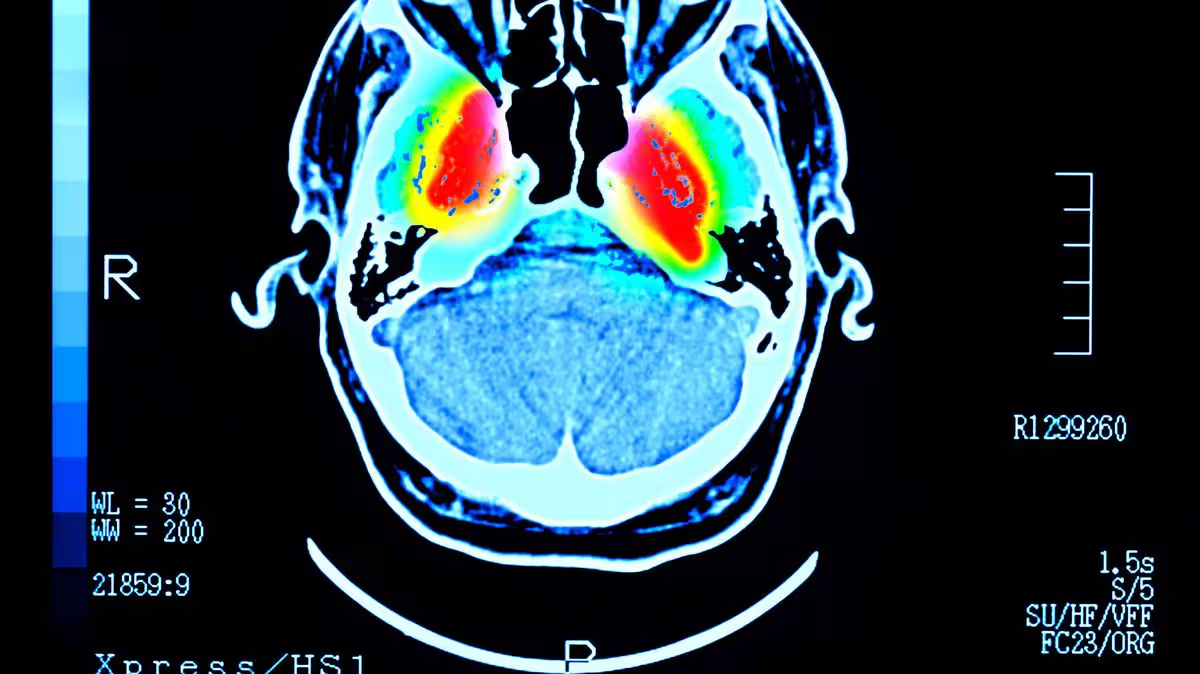
This refers to the shrinking and deterioration of brain tissue, coupled with a rise in ‘amyloid plaques’ – harmful proteins closely associated with Alzheimer’s. “These findings suggest alcohol might accelerate the pathological cascade of Alzheimer’s disease in its early stages,” said Associate Professor Shannon Macauley, of Wake Forest University School of Medicine, at the time.
“These preclinical findings suggest that even moderate consumption of alcohol can result in brain injury. Alcohol consumption may be a modifiable risk factor for Alzheimer’s disease and dementia”, reports Surrey Live.
Advertisement
Importantly, these results aren’t confined to studies on mice. In 2024, researchers at Oxford University identified alcohol as one of the most significant contributors to declining cognitive health, with the potential to increase the risk of Alzheimer’s.
The team analysed the brain scans of 40,000 individuals to determine this. Professor Gwenaëlle Douaud, who led the study, said: “We know that a constellation of brain regions degenerates earlier in ageing, and in this new study we have shown that these specific parts of the brain are most vulnerable to diabetes, traffic-related air pollution − increasingly a major player in dementia − and alcohol, of all the common risk factors for dementia.
“We have found that several variations in the genome influence this brain network, and they are implicated in cardiovascular deaths, schizophrenia, Alzheimer’s and Parkinson’s diseases, as well as with the two antigens of a little-known blood group, the elusive XG antigen system, which was an entirely new and unexpected finding.”
Current UK guidance from the NHS states that being aware of your units will help you stay in control of your drinking.
Advertisement
To keep health risks from alcohol to a low level if you drink most weeks, it suggests:
Men and women are advised not to drink more than 14 units a week on a regular basis
spread ySpreadinking over 3 or more days if you regularly drink as much as 14 units a week
If you want to cut down, try to have several drink-free days each week
It adds: “14 units is equivalent to 6 pints of average-strength beer or 10 small glasses of lower-strength wine.”
Accoridng to Dementia UK: “Dementia is an umbrella term for a range of conditions that affect the brain. There are many different types, subtypes and causes. It is a progressive condition, which means the symptoms always get worse over time.”
Advertisement
It added: “The most common symptoms of dementia include difficulties with remembering, thinking and speaking, which get worse over time. However, there are many other possible symptoms, and everyone has their own unique experience of the condition.”
The defeat means Arsenal are still nine points clear at the top of the Premier League but Manchester City now have two games in hand and also play the Gunners next Sunday.
Arteta, meanwhile, continues to face criticism over Arsenal’s playing style and their inability to create several clear-cut chances during games.
Advertisement
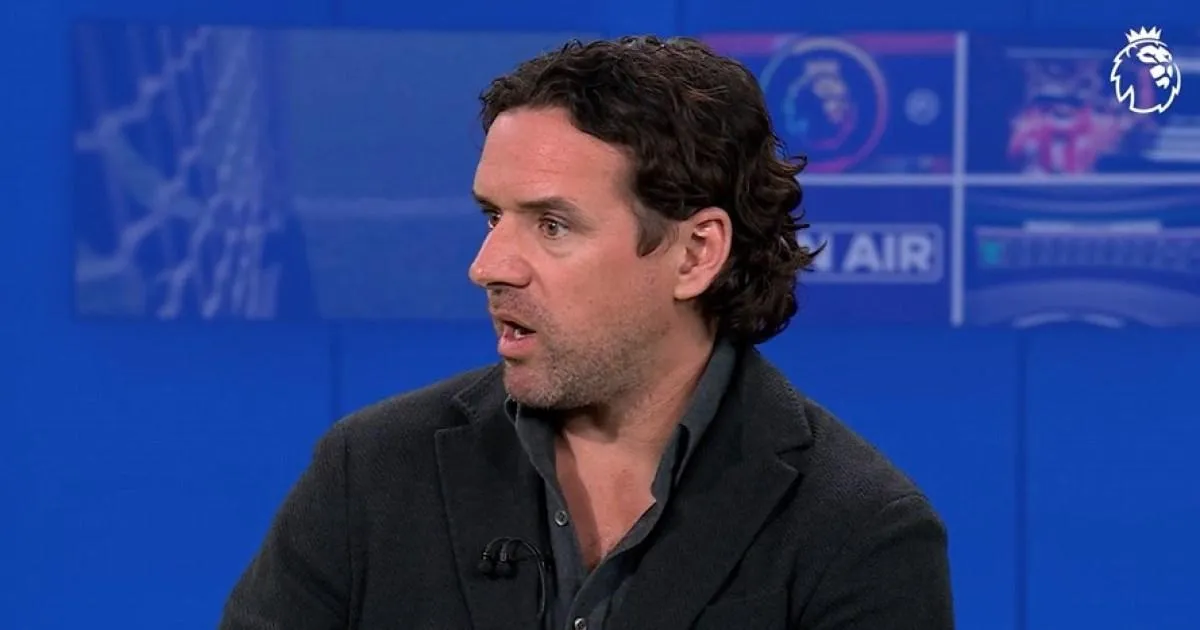
‘They [Arsenal] didn’t play confident,’ Hargreaves told Premier League Productions.
‘I was at the game and the crowd were super up for it at the beginning of the game, by the end of it they were not happy with what they saw.
Owen Hargreaves believes Declan Rice is one of the only Arsenal players who deserved credit after the defeat to Bournemouth (Getty)
‘The only ones who played properly were Declan Rice and Gabriel, the rest of them got thoroughly outplayed.
‘Bournemouth were brilliant by the way, they pressed the life out of Arsenal.
‘Arsenal could not keep the ball for the life of them, kept going long, they’d pass the ball back to the goalkeeper, I think it was 39 times in the game, David Raya had the second-most passes of an Arsenal player. They just really encouraged Bournemouth into that press and the press is probably one of the best in the Premier League but they just surprised Arsenal and they deserved to win the game.
Advertisement
Mikel Arteta is facing criticism over Arsenal’s struggles in attacking areas (Shutterstock)
‘I think the biggest problem is they’ve been outplayed in three of the last four games – City in the Carabao Cup final, Southampton in the FA Cup, and then today.
‘They had the win against Sporting but David Raya was one of their best players in that game and he made quite a few saves so there is a little bit of a trend there where they’re being outplayed.
‘They’ve worked so hard to get to this point but they have to finish the job. Today they lacked a little bit of courage, belief and a little bit of aggression in crucial moments, Bournemouth were more aggressive today.’

















































You must be logged in to post a comment Login