

Politics
Farage gives energy bill prize to his friends

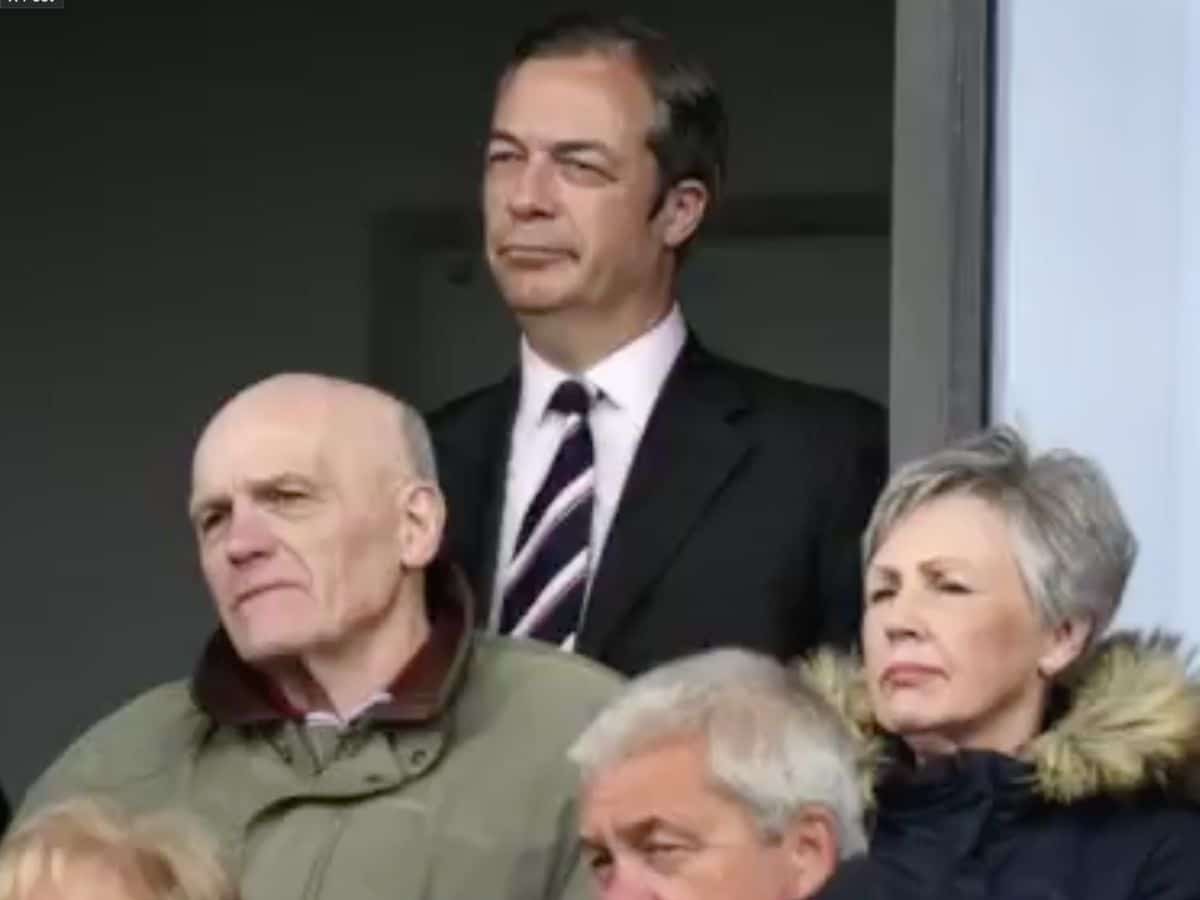
People on social media have noticed that the winners of Nigel Farage’s energy bill prize are the same people pictured with the Reform leader at a Brexit party rally in 2019:
Left: Nigel Farage and Robert Jenrick meet the winners of Reform UK’s competition to have your energy paid for the whole year
Right: Here are the two winners with Nigel Farage at a Brexit Party rally in Fylde on the 4th May 2019
Credits to @linfitlass @donmcgowan for putting… pic.twitter.com/k5gZblNK5U
— Farrukh (@implausibleblog) April 10, 2026
There’s more to it
While this is interesting, it may be a coincidence. There are other important points to consider. Reform have offered a lottery (where the winning household gets last years’ annual energy bill paid) that may amount to the electoral offences of ‘treating’ or a ‘bribe’, as pointed out by Karl Turner MP. Under the 1983 Representation of the People’s Act, it is an offence to offer money in order to influence someone’s vote.
On top of that, the gimmick shows that Reform have little to offer the country. Instead of dropping energy bills nationwide through public ownership, the party is giving everyone who enters the lottery false hope. That’s because only one household will actually win. And the winners turned out to be longterm Farage loyalists.
Such a lottery is a con job — like the whole gambling industry. That industry is only profitable because the odds are highly stacked against the player. Indeed, Farage has long spoken in favour of the gambling industry. In 2025, at Reform’s business conference, he said:
What I would say about the high street is that one of the things that does still survive is the bookmaker shop – which actually, for a lot of lonely people, is a place they can go in and meet people.
Farage’s current system is a gamble of birthright
It’s no wonder that Farage is pro-gambling because the addictive process is emblematic of the neoliberal capitalist system he supports. The system we live under is largely a lottery of birthright whereby, in the UK alone, 60% of private wealth is inherited.
And is it possible for most people to take ownership of their labour through their own business? No: 90% of bank lending goes to finance or inflating the price of pre-existing assets, rather than enabling small businesses to thrive. Also, 85% of start ups initially rely on personal capital, most of which is inherited, while 43% of 500 surveyed business founders have said they started their venture with family wealth.
Neoliberal capitalism is largely a gamble of birthright. And private-schooled Farage wants to uphold his position within it through pretending to be an anti-establishment counter offer.
Featured image via the Canary


This article contains major spoilers for the most recent episode of Euphoria.
Euphoria actor Jacob Elordi has shared his take on how things played out in the latest episode of the hit US drama.
The Australian star has played Nate Jacobs in all three seasons of the award-winning series, with his character taking centre stage in the latest instalment in a big way.
We’re heading into serious territory now, so if you’ve not watched the episode yet, don’t say we didn’t warn you, alright?
In Monday’s episode, viewers saw Nate dying in pretty grim circumstances, first being buried alive due to his mounting debts before being stung by a rattlesnake and eventually found by his wife and ex, Cassie and Maddy, played by Sydney Sweeney and Alexa Demie.
While plenty of viewers were disturbed at watching Nate’s final scenes, Jacob himself had a very different response to finding himself “tucked in this box with dust falling on me and a snake coming down the pipe” to shoot the film’s practical effects.

“That’s a cool way to go,” he enthused in a behind-the-scenes video posted after the episode aired.
“Nate is someone who’s made so many mistakes and made so many dark choices, it’s cool to see it all come to what it’s come to.”
He continued: “I had to go into this coffin, my shoulders were touching the sides and I couldn’t move my arms. And then they would drill the lid on, and it would get dark.
“It was really nice, actually, it was quite peaceful in there.”
Creator Sam Levinson then explained that he couldn’t use a real poisonous rattlesnake in the coffin with Jacob, so a boa constrictor was used for the sequence instead.
“The snakes were rattling, which was really alarming when you’re locked in a box,” the Oscar nominee recalled. “They had a boa constrictor that they put a fake rattler on the end of [in the coffin]. And Sam was like, ‘we’re just going to drop the snake on you’.
“[The snake] was super cute. He was, like, real cuddly. He kind of just saddled up next to me, and it was nice. But he was real sleepy – sleepy snake. I had to kind of nudge him to get him to come up [to my face].”
“And that was it,” he added of his character’s fate. “It’s a bittersweet thing. This show is a massive part of not just my career, but my life. It’s been amazing and I’m so proud being a part of this.”
Jacob isn’t the only member of Euphoria’s A-list cast to be put through his paces while shooting season three, though.
Earlier this month, Zendaya opened up about shooting one memorable sequence that meant she had to spend “about three days buried up to her neck on the side of this hill”.
The Euphoria season finale – widely believed to be the last ever episode of the show – will premiere on Sky and Now in the UK on Monday 1 June.
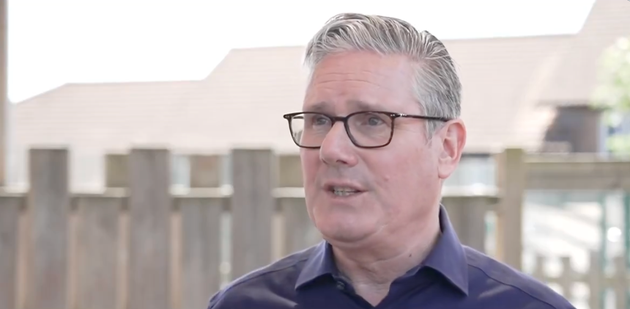
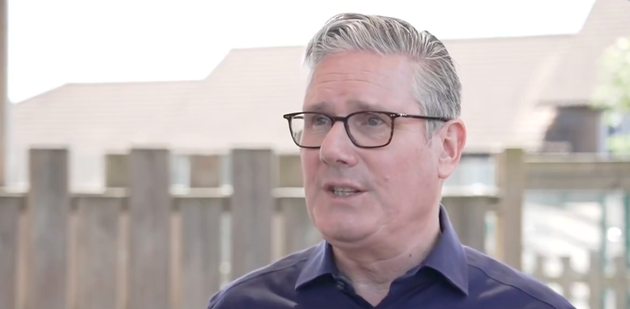 Keir Starmer speaking to Sky News
Keir Starmer has announced that a particularly “distressing” rape case sentencing has been referred to the Court of Appeal.
Three boys were sentenced to youth rehabilitation orders and put on intensive supervision and surveillance after raping two girls in 2024 and 2025.
Footage of the attacks were later shared on social media.
The victims spoke out in a heartbreaking interview with the BBC’sLaura Kuenssberg and called on the government to intervene over the leniency of the sentences.
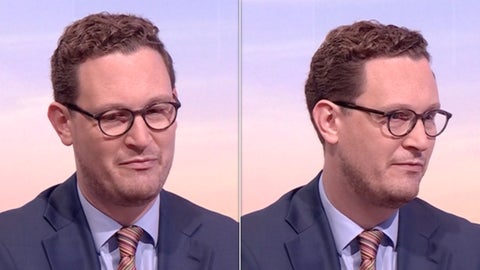
Chief secretary to the prime minister Darren Jones grew emotional watching the exchange at the weekend, telling the BBC: “No parent wants their daughter to be in those circumstances.”
Starmer confirmed on Tuesday morning that attorney general Lord Richard Hermer has now referred the case to the Court of Appeal.
The prime minister said: “It’s distressing for everybody to see, to hear about.
“The courage frankly of the girls to come forward is humbling. But it is distressing, I find it distressing as a politician, I find it distressing as a father.
“There are questions about the sentence. The Attorney General has power to refer a case to the Court of Appeal if the attorney general thinks the sentence was too lenient.”
He said it was “right” for the Court of Appeal to review the sentencing.
The Court can now change the sentence if it decides the judge in the case was too lenient, but it may also leave it, if it believes the sentence was reasonable.
The Attorney General Richard Hermer said: “There has understandably been a huge amount of public interest, and concern, at this horrific case.
“I directed my officials to work urgently, to allow me to consider this decision swiftly, and to begin to bring closure to the victims and their families.
“It is clear to me from their powerful personal statements, that these girls have displayed immense bravery in coming forward.
“There is an epidemic of violence against women and girls in this country, and this government will not hesitate in taking action to ensure all women and girls feel safe and have confidence in the justice system.”
'I can announce that the case will go to the Court of Appeal'
The sentences of teenagers who avoided jail for raping two girls have been referred to the Court of Appeal, the prime minister has said.https://t.co/kGTpgzBBtqpic.twitter.com/IX7Xte4q9t— Sky News (@SkyNews) May 26, 2026
Subscribe to Commons People, the podcast that makes politics easy. Every week, Kevin Schofield and Kate Nicholson unpack the week’s biggest stories to keep you informed. Join us for straightforward analysis of what’s going on at Westminster.
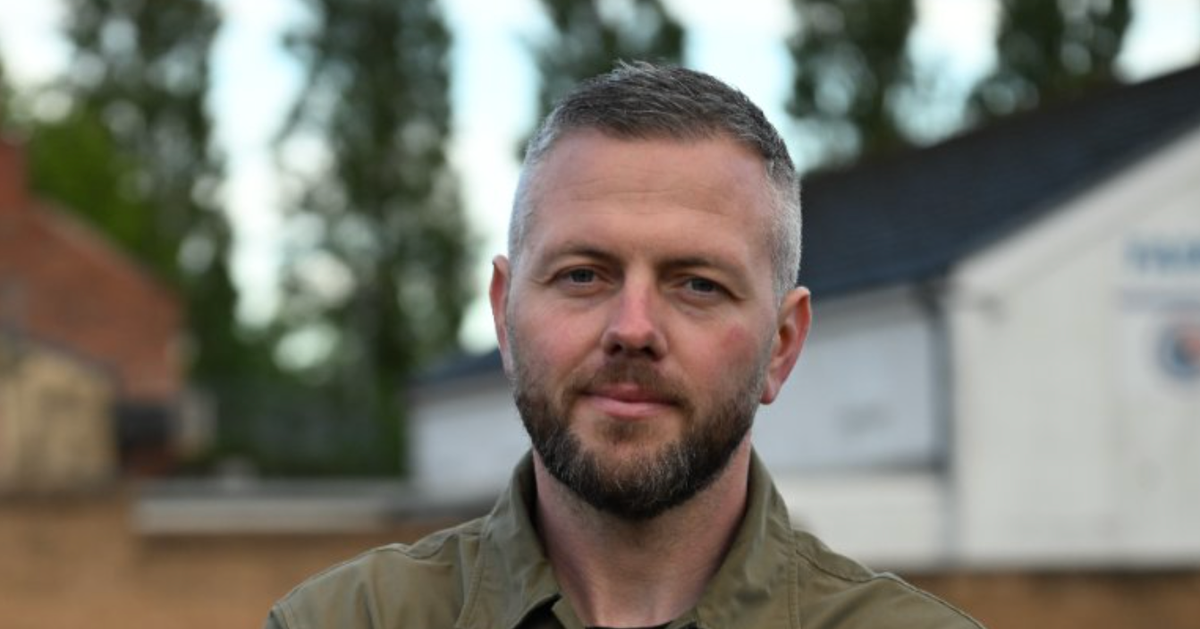
Reform UK has dismissed the sexism row around its Makerfield candidate as “locker room banter”.
Wigan councillor Robert Kenyon is standing against Labour’s Greater Manchester Andy Burnham, who is hoping to oust Keir Starmer as prime minister if he wins this by-election.
Kenyon has been repeatedly accused of misogynism in recent days after multiple outlets unearthed his controversial online comments.
An account linked to Kenyon wrote women can’t “ref, drive or give directions” on an online rugby fan forum in the 2010s, adding: “I’m sexist, sorry but I am.”
The same account also made disparaging remarks about women’s appearances.
A Reform spokesperson told the Independent: “These comments, which are little more than locker room banter, were made more than a decade ago – well before Rob was in politics.”
That response only worsened the backlash on social media.
Labour MP Luke Charters replied on X: ”‘Locker-room banter’ is a pathetic excuse for blatant misogyny from a grown man.
“Reform could have called out the overt sexism and condemned it. Instead, they framed it as an ‘establishment hit job’.
“Tells you everything you need to know about them,” he added, along with a dinosaur emoji.
Many other social media accounts hit out at Reform for dismissing misogyny as “banter” – and for using the American term for changing rooms.
When approached about the backlash, Reform’s spokesperson said: “We simply don’t care about establishment hit jobs. We fully back Rob and are confident he will be an excellent MP for Makerfield.”
It comes after campaign group Hope Not Hate published a series of messages it says were sent from Kenyon’s X account last week, which include sexual and sexist language, particularly around presenter Carol Vorderman.
The former Countdown host described Kenyon as a “cowardly misogynist” over the comments and has demanded an apology.
Reform MP Danny Kruger defended those remarks on the Today programme, telling the BBC: “What you’re seeing there is obviously a private comment.
“The great challenge for social media for private people is that they use it as if they are chatting to their friends in the pub.
“It was a clearly inappropriate thing to say. I’m not going to judge people for what was intended as private conversations. Clearly that is not the kind of comment you would want an elected politician to say.”
Subscribe to Commons People, the podcast that makes politics easy. Every week, Kevin Schofield and Kate Nicholson unpack the week’s biggest stories to keep you informed. Join us for straightforward analysis of what’s going on at Westminster.

Rivals actor Luca Pasqualino has revealed he came close to landing a major role in a very different British show that has also gone on to become a huge hit internationally.
During a recent interview with HuffPost UK to promote the new episodes of the Jilly Cooper bonkbuster, Luca was asked if there was an audition he missed out on earlier on in his career that still “haunts” him today, to which he admitted that there was “definitely” one that came immediately to mind for him.
“One that I got really, really close to that sort of sticks out was Ted Lasso,” he explained, before sharing that he’d tried out to play striker Jamie Tartt in the Apple TV+ series.
“I got down to [the last few], went and met Jason Sudeikis, had two tests for it, and I was so close. But my friend Phil Dunster, he got the part in the end. And he was so good.”
Luca continued: “If you watch [something that you’ve auditioned for] and the person who gets it is really awful or whatever, it makes you feel worse.
“But [Phil] was so good, it’s like, ‘OK, fine, I get it. This is going to be an easier pill to swallow’.”
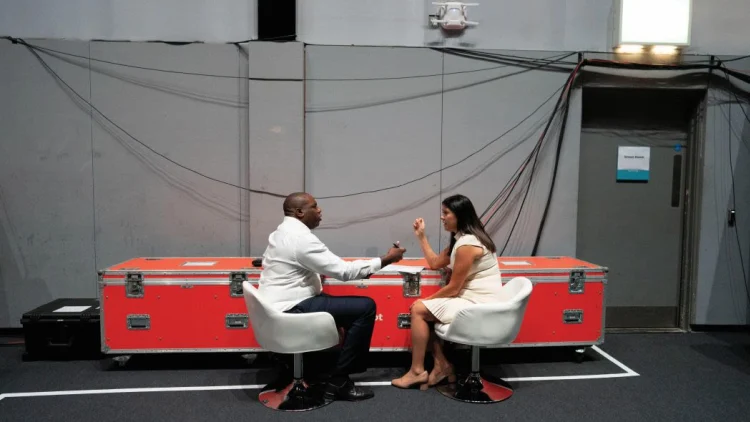

Foreign Secretary David Lammy and Culture Secretary Lisa Nandy ahead of the Labour Party Conference in 2023 (PA Images / Alamy)
6 min read
Launched with fanfare but sinking without trace, the Soft Power Council appears to be an object lesson in how the UK fails to leverage its cultural, sporting and educational assets, reports Ben Gartside
At a launch in central London at the start of last year, Lisa Nandy outlined her mission to create jobs and spread influence globally. Rather than cite the work of the Foreign Office or the use of international aid, she instead championed Peaky Blinders and Adele.
Joining her at the launch was the then-foreign secretary David Lammy – a true believer in the power of soft power, brought in to reinvigorate and reinvent the work of the Foreign Office – and 26 leaders in the arts, culture and sports sector.
It wasn’t quite ‘Cool Britannia’ but it seemed to those involved that this was a moment – like the early years of the Blair government – where the country’s leadership in those fields might be fully leveraged to national advantage.
But less than 18 months later, the so-called Soft Power Council is drifting towards oblivion, having not met in full for at least seven months and with many members believing it is doomed.
Why did it fail? Reshuffles both at ministerial and official level and spending cuts are part of the answer.
At its launch, Lammy outlined a manifesto to take advantage of the UK’s huge cultural pull, and the potential power of using it for Britain’s national interest.
“Soft power is fundamental to the UK’s impact and reputation around the world,” he said. “I am often struck by the enormous love and respect which our music, sport… and institutions generate on every continent. But we have not taken a sufficiently strategic approach to these huge assets as a country. Harnessing soft power effectively can help to build relationships, deepen trust, enhance our security and drive economic growth.”
To many, Lammy’s remarks were a signal for welcome change in the department. Allies of Lammy had continually voiced frustration in years previously about the quality of government work on soft power. Under the previous government, too often it was cobbled together at the last minute, or treated as an afterthought.
One founding member says: “I thought the council was a great idea. There was an urgency about it and a sense that the government gets that it is a new era. While the UK needs to build up its hard power, we also still need to make best use of everything we have.”
However, early cuts to international aid and funding trouble at the British Council meant that some believed that the goals were being undermined.
Baroness Chapman, a Foreign Office minister and supporter of soft power work, was simultaneously having to champion its promotion while also being the face of controversial international aid cuts.
Despite the rocky start, council members were still optimistic about the work. Lord Mendoza – the Conservative peer and former Boris Johnson appointee behind the controversial ‘retain and explain’ guidance for contentious statues, monuments and artefacts following the toppling of the Colston statue in 2020 – was very supportive upon the council’s creation.
A council member tells The House that the creation of the body was genuinely groundbreaking: “It is the first time we see a government properly co-ordinating expertise across a broad range of key sectors, like culture, creative, sports, education and science and technology to steer and advise on policy and action.”
Insiders point to the reshuffle of September 2025, and the move of Lammy to justice as the inflection point, which saw the council tip into inactivity.
Another council member says: “It was clearly an initiative that Lisa Nandy and David Lammy worked on, thought of and launched. Their personalities were very prominent at the start of the Soft Power Council; we haven’t had the same rhythm of meeting and engagement since the reshuffle.”
Foreign Secretary Yvette Cooper was scheduled to attend the latest meeting in Belfast in October but dropped out just before and was replaced by DCMS minister Ian Murray. Another meeting was organised but abruptly cancelled, meaning the full Soft Power Council has not met in seven months.
“We’re still waiting for a signal that they think this is worthwhile. We’ve had some great ministerial meetings but we haven’t had the same one twice – we’re showing up and we’d like the government to.”
It’s clearly a low priority
Another member says the council has been “neglected” since Cooper took over, and was “clearly a low priority for her”.
“There’s been a hell of a lot to deal with and it’s not at the top of [Cooper’s] priority list, but it would be good to retain the soft power we have.”
Shortly after the reshuffle, the senior civil servant responsible for soft power left the Civil Service, further robbing momentum from the initiative.
An outside contractor was also brought in to assess the success of a soft power strategy altogether. In the meantime, almost all work has ceased.
One member tells The House: “Where we are at is that it currently feels on hold.”
Much of the ire among council members is directed at Cooper. One council member says: “We would like the current Foreign Secretary to take more of an interest. If you’re involved in this field of work you can see a future where we are marginal.”
Another agrees: “I think [Cooper] hasn’t made a decision, but it’s clearly a low priority”.
While Cooper’s arrival has triggered criticism, Nandy’s inaction since its launch has caused some previously supportive members of the council to turn on her.
“She’s been a complete disappointment. She seems to have no interest in culture whatsoever.”
A government spokesman did not deny the senior departures from the FCDO, or the lack of meetings for over half a year, but claimed the group did contribute to recent cultural visits to China and India.
They said: “The soft power they deliver is creating growth and strengthening our reputation at home and abroad. We are committed to doing all we can to further their reach, as well as promoting the English language overseas.”
With the government on the rocks and political capital quickly waning, the likelihood of a reinvigoration for the council seems low – especially when discussions around hard power and the Defence Investment Plan have become so terse.
“It’s one of the few effective things created by this government,” one of the council members mused. “Which means they’ll probably kill it.”
An irony of the pause is that while the government has gone cold on the Soft Power Council, foreign nations are taking an increased interest. Members have met and worked with representatives of Saudi Arabia, Ukraine and Oman in recent months, all of whom have taken an interest in the work of the council and replicating it in their own nations.
Meanwhile, some members thought the work of the council could aid the government in one of the problems which led to its freeze: domestic politics.
Council member Vivienne Stern believes that its work should expand into the UK, rather than retract internationally: “This country is in a national funk – you look at the polls… people feel pessimistic. What the Soft Power Council does is bring together a list of reasons to be optimistic. We should lean on it domestically more.”

The UK just saw its hottest May day on record, and we’ve had some unusually hot “tropical nights” (over 20C) too.
That can ruin your sleep. One paper found that heatwaves are especially ruinous, causing us to lose crucial minutes of shut-eye.
But if you’ve been sleeping in the nip for a cooler night, Natalie Pennicotte-Collier, a resident sleep expert at MattressNextDay, says you might want to reconsider.
Why shouldn’t you sleep naked in a heatwave?
It has to do with how sweat, which needs to evaporate to cool us off, behaves.
You might think that water wicks away faster when we’re naked. But the sleep expert said that’s not always true,
The move “feels logical, but without breathable natural fibre bedding to wick sweat away, moisture simply sits on the skin and creates a clammy humid ‘microclimate’ that is more likely to wake you up in the middle of the night.” Pennicotte-Collier explained.
The same logic applies to your bedsheets – we “should replace [our duvet] with a lightweight breathable layer instead of sleeping completely uncovered,” she said.
Research has her (pyjamaed) back. One paper from the University of Birmingham found that linen bedding was linked to fewer wake-ups among younger participants in hot weather.
How can I get to sleep in a heatwave?
Sleeping on a lower level in your home might help, the Red Cross said, as heat rises.
And paradoxical as it might sound, taking a warm shower might help, too.
Speaking to HuffPost UK previously, Dr Seeta Shah from PANDA London said: “Many take a cold shower before bed in hot weather, but a shockingly cold shower can actually raise core body temperature as your body works to counteract the sudden cold.
“A lukewarm to slightly cool shower is better. It gently reduces body temperature and triggers the parasympathetic nervous system, helping your body wind down and enter a sleep-conducive state.”


With just weeks to go before the start of the 2026 World Cup, security and logistical concerns are mounting regarding the tournament, which will be held for the first time with 48 teams taking part across three countries – the United States, Canada and Mexico – in what is described as the largest and most complex World Cup in history.
As the tournament expands and the number of spectators and travel arrangements increases, concerns are no longer limited to organisational issues alone, but have extended to security threats and the possibility of disturbances that could affect the movement of spectators and the smooth running of the entire global event.
An unprecedented security test
The Guardian, however, went a step further, suggesting that the 2026 World Cup could turn into a “global security test” given the current political and international tensions, particularly the US-Iran conflict.
The report highlighted concerns about lone-wolf attacks and the targeting of so-called ‘soft targets’, such as hotels, transport hubs and areas where fans gather, as well as the potential for cyberattacks and the use of drones.
The report also noted that the tournament will take place at a time of growing political polarisation and protests linked to issues such as migration, war and human rights, which could prompt various groups to exploit the world’s biggest sporting event to convey political messages or stage large-scale protests.
Of course, 104 matches spread across three countries and 16 cities will place enormous pressure on security services, transport networks and infrastructure, in what may be the most complex challenge in the tournament’s history.
A representative from Human Rights Watch said:
This was supposed to be the first ever World Cup with a human rights framework: key protections for workers, fans, players and communities.
Instead the US administration’s brutal immigration crackdown, discriminatory policies and threats to press freedom mean the tournament risks being defined by exclusion and fear. I think we are here to say that the problem of sportswashing is alive and well and this World Cup will be a bonanza for sportswashing.
A sporting event or a global security challenge?
Although FIFA is promoting the 2026 tournament as a historic footballing celebration, a growing number of Western reports reflect genuine concern about the scale of the challenges that may accompany the tournament, whether in terms of security, transport or crowd management.
With stadiums spread across an entire continent and millions of fans expected to travel between cities, the upcoming World Cup faces a challenge that goes beyond football, amounting to an organisational and security challenge unprecedented in the history of the tournament.
Featured image via Getty/Dustin Satloff
By Alaa Shamali
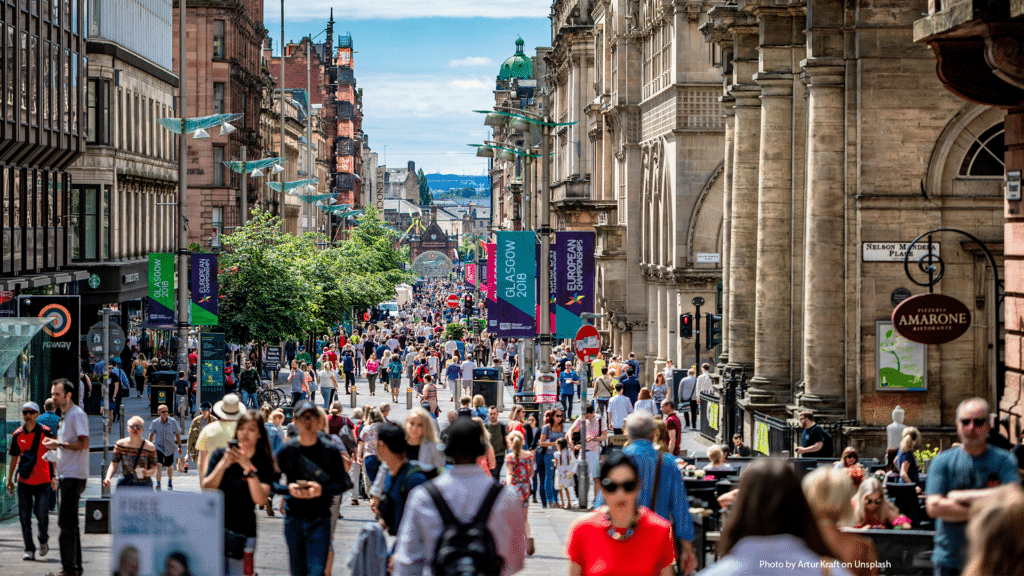
Jonathan Portes asks how useful a measure immigration statistics are and argues that they have served to legitimate politics of racialised grievance.
The BBC headline for last week’s immigration statistics was “UK migration drops to 171,000 – almost half 2024’s figure.” Of course, it referred to net migration – taking it for granted that that, above all, was the key statistic.
But net migration is not immigration. It is immigration minus emigration. It can fall because fewer people come to Britain, or because more people leave. These are very different things. A country in which young people, graduates, nurses, doctors, scientists or entrepreneurs are leaving in large numbers may not have solved a problem, but acquired one.
This is not a technical quibble. The latest figures make the point. Net migration has indeed fallen sharply: from a peak of 944,000 in the year to March 2023 to 171,000 in the year to December 2025. But this conceals large movements in both directions. The ONS estimates that net migration of British nationals was minus 136,000, and net migration of EU+ nationals was minus 42,000, while non-EU+ net migration remained positive at about 350,000.
So net migration is doing a lot of work here – arguably too much. If the concern is population growth, it is a reasonable, though incomplete, indicator. If the concern is “control”, it is less useful. And if the concern is that British people are leaving while non-white migrants are arriving, it is the wrong measure altogether.
That distinction matters because the British fixation on net migration – and it is British; most other countries, even those equally obsessed with immigration politics, pay relatively little attention to this particular number – was not inevitable. It was constructed, socially and politically. It emerged in its modern form in the mid-2000s, and was then institutionalised by the Conservative Party after 2010. The statistic became central not because it was the best way to understand migration, but because it was politically convenient.
The key political move was made by the anti-immigration lobby group Migration Watch, which shaped the Conservative Party’s approach. Its 2005 briefing, “UK population increase through migration”, framed the issue not primarily as one of race, ethnicity or culture, but as one of population pressure. Similarly, other briefings claimed that England was, after Malta, the most densely populated country in Europe.
This was effective because it was respectable. Britain was a “small crowded island”. The problem was not foreigners, still less non-white foreigners, but simply numbers: pressure on housing, congestion, public services, GP appointments, schools and transport.
There are legitimate policy questions here. Population change does affect housing demand and infrastructure. But that was not all that was going on. The “small crowded island” argument allowed anti-immigration politics to be presented as technocratic rather than ethnic. It translated anxieties about belonging and identity into a language of arithmetic.
David Cameron then turned this into a target. In January 2010 he said that he wanted net immigration reduced to the “tens of thousands” rather than the “hundreds of thousands”, and that net immigration of 200,000 a year was “too much”. The context was explicitly demographic: he also said he wanted to keep the UK population below 70 million. At a time when Cameron was emphasising the socially liberal turn of the Conservative Party, net migration offered a way of talking about immigration while avoiding more overtly racial or ethnonationalist language.
That mattered in the 2000s. Open racism was still largely taboo in mainstream politics. The BNP existed, but mainstream politicians did not want to sound like the BNP. So the language of race was displaced into the language of space, pressure and pace of change. Net migration was the perfect statistic for this purpose.
But the euphemism was always unstable. Some on the restrictionist side were more candid. Paul Collier wrote – falsely, under any definition other than an explicitly race-based one – that the 2011 census showed that “the indigenous British had become a minority in their own capital”, and later defended the phrase as “a perfectly meaningful statement”. David Goodhart’s argument about “Somewheres” and “Anywheres” was a more sophisticated version of the same move: not crudely racial, but clearly concerned with the cultural and demographic position of the majority population.
But these euphemisms are now no longer necessary; the masks are off. Migration Watch now warn that the “native [that is, white] British” are becoming a minority, while Goodhart asks if London can remain the capital of the UK if it isn’t white enough.
And, just as in the 2000s, politicians have followed. Robert Jenrick, while still a Conservative Shadow Cabinet member, said that he “didn’t see another white face” and that this was not the country he wanted to live in; he later insisted the issue was integration, not “the colour of your skin or your faith”. This is not exactly plausible deniability. His new Reform colleague Matt Goodwin is more straightforwardly racist, saying that the fall in net migration just means that white Britons are being “replaced” by Afghan goatherders.
This is where the fixation on net migration becomes contradictory. If the problem is net migration, then a fall should be welcome. That is the logic of the statistic. But if the problem is that British people are leaving while non-white migrants are arriving, net migration is not the right measure. Indeed, it conceals the thing that the new right wants to talk about. For those whose politics is increasingly about replacement, that is precisely the problem.
The old language of net migration remains. It is too embedded in the machinery of British politics to disappear quickly. Governments need targets. Newspapers need numbers. Opposition parties need simple attack lines. But the emotional centre of the debate has moved. The increasingly explicit concern is not just how many people come, but who comes, who leaves, and who counts as part of the nation.
This is also why falling net migration has not depoliticised immigration. British Future polling suggests that many voters still believe migration is rising, even after the sharp fall in the official figures. Public concern is being driven less by the headline statistic than by a broader sense of disorder, asylum politics, visible demographic change and distrust of government.
There is a lesson here for Labour as well as for the Conservatives. Chasing net migration targets does not defeat the politics of racialised grievance. It may legitimate it. The Cameron target did not create the far right, but it did help entrench the idea that lower net migration was the obvious test of political seriousness. Once that was accepted, every failure became evidence of betrayal.
By Professor Jonathan Portes, Professor of Economics and Public Policy, Department of Political Economy, King’s College London.
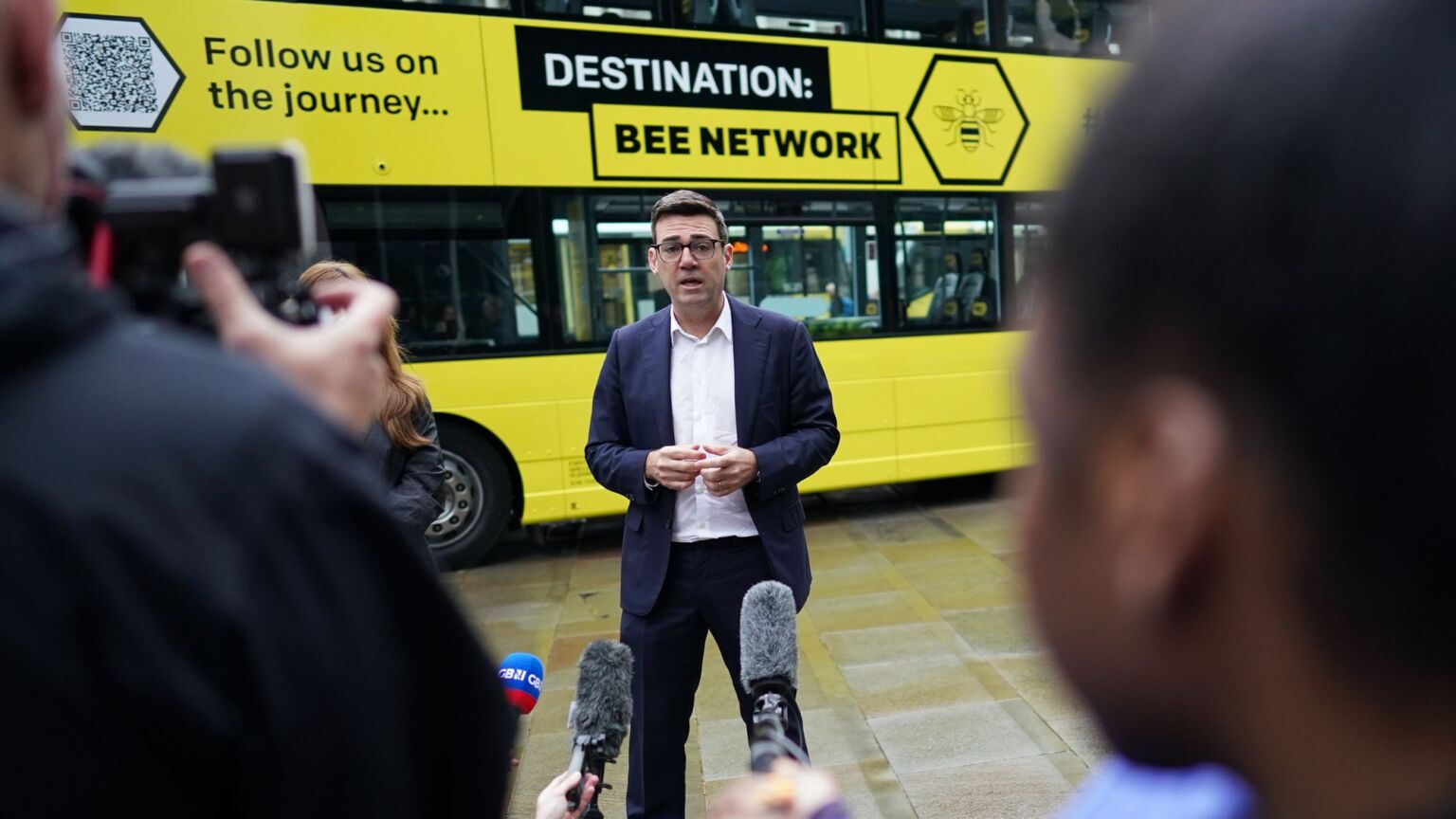
‘There’s no such thing as Starmerism and there never will be’, declared Keir Starmer in 2020, shortly after assuming the leadership of the Labour Party. ‘I have no ideology at all.’
With that statement, Starmer had tried to paint himself as a pragmatic, commonsensical leader. ‘Unburdened by doctrine’ is how he would convey the same message on the day he entered Downing Street in July 2024. Yet less than two years later, his lack of convictions and principles has proven to be his downfall. His time in government has been defined by indecision, drift and u-turns. Just about everyone now agrees, there is no substance beneath the spin, no programme to improve the country and no strategy to keep his party afloat.
Enter Andy Burnham, the mayor of Greater Manchester and Labour’s prince over the water. Burnham, like Starmer, also stands accused of being a serial flip-flopper. Over the years, he has presented himself as a Blairite, a Brownite, a Corbynite and a Starmerite, appealing to whichever tendency in Labour that seems in the ascendancy. Now, in the run-up to June’s Makerfield by-election, Burnham has performed at least six u-turns in just the past few days alone: on Brexit, on women’s spaces, on the government’s fiscal rules, and more – shedding policies that might go down poorly in this Leave-voting, Reform-curious constituency.
Nevertheless, Burnham insists that he does indeed have a guiding political philosophy that he has developed in his nine years as Greater Manchester mayor that he plans to bring to Downing Street. ‘Manchesterism’ has been defined by Burnham as ‘business-friendly socialism’. In his campaign for the Makerfield seat, he has declared that Manchesterism means ‘the end of neoliberalism’ and that Britain has been on the ‘wrong path’ for 40 years. In other words, Burnham is selling Manchesterism as nothing short of transformational, as a near-total overturning of the economic status quo. Yet there is nothing in Burnham’s tenure as Greater Manchester mayor to make such lofty claims stack up.
Burnham is fond of repeating that Greater Manchester has grown at a rate more than twice the national average, making it the fastest-growing region in the UK. The transformation is visible in the new tower blocks filling the city’s skyline, the thriving hospitality industry and its rapidly expanding population. In 1990, as few as 500 people lived in Manchester’s city centre, compared with an estimated 100,000 now, with some property developers expecting this to reach 250,000 by 2035.
Yet the seeds of this change long predate Burnham’s arrival in office in 2017. Indeed, most credit Manchester’s construction boom to Sir Richard Leese, Labour leader of the city council from 1996 to 2021, then Burnham’s deputy mayor until 2021, and the late Sir Howard Bernstein, former chief executive of the city council from 1998 to 2017. The pair successfully courted foreign investment, lobbied for more money and powers from Westminster, and took an unashamedly pro-growth approach to private development. They also expanded public transport and cleaned up the city’s image.
Some critics have argued that Manchester’s growth is largely illusory, buttressed by questionable statistics and the right ‘vibes’. Paul Swinney, economist at the Data City, has asked why Greater Manchester’s supposed productivity boom hasn’t translated into rising wages, as would usually be expected. Mancunians’ disposable income rose by just 0.2 per cent per year between 2013 and 2023, far less than comparable cities. In the same period, Manchester was beaten in jobs growth not only by London, but also by far less celebrated urban centres, including Luton, Basildon and Warrington. As Alistair Heath notes in the Telegraph, Liverpool – a city whose mayor has been charged on suspicion of bribery and misconduct – has enjoyed similar job-growth rates to the much-hailed Manchester.
So if Manchester isn’t the economic powerhouse its boosters claim it is, is it a ‘socialist’ city as Burnham likes to paint it? Again, the rhetoric fails to do justice to reality. Burnham’s favoured example of Greater Manchester’s municipal socialism is the Bee network of buses, which brought the region’s hodgepodge of bus services under one umbrella, with the mayor setting fares, routes, timetables and more. Here, the mayor is careful to speak of the buses being under ‘public control’ and not ‘public ownership’. Burnham may claim that his Manchester likes to ‘do things differently’ to down south, yet his buses are franchised out to private companies, just as they are in London. Whatever the merits of the integrated transport system, it is surely a stretch to describe this as anything approaching ‘socialism’. It is hard to imagine any self-respecting socialist manning the barricades for a northern equivalent of Transport for London.
What’s more, like most of the projects that are said to define Manchesterism, bus reform predates Burnham’s arrival. Indeed, it was a key plank of the devolution deal struck by Leese and Bernstein with then Conservative chancellor George Osborne in 2015.
As for Manchester’s development agenda, this has succeeded largely by ignoring the demands of the left, especially when it comes to providing affordable housing. As Leese explained in 2021: ‘If we’d done what our critics wanted us to do, it wouldn’t have delivered affordable housing, it would have delivered no housing at all, zero. If we’d tried to impose 20 per cent affordability on it, it wouldn’t have happened. We wouldn’t have got 20 per cent affordable housing, we would have got nothing.’ Would Burnham bring such a ruthless and clear-eyed pro-development approach to Westminster? I wouldn’t hold my breath.
The great irony here is that the Labour Party is going through great convulsions to replace its ideas-lite, ideology-free prime minister with a man who is just as lacking in convictions and principles. Whatever Andy Burnham says, ‘Manchesterism’ is more of a brand than an ideology. It offers no coherent programme for government and certainly poses no challenge to conventional economic thinking. Burnham’s nine years as mayor show that Labour’s emperor of the north has no clothes, but will party members notice before it is too late?
Fraser Myers is deputy editor at spiked and host of the spiked podcast. Follow him on X: @FraserMyers
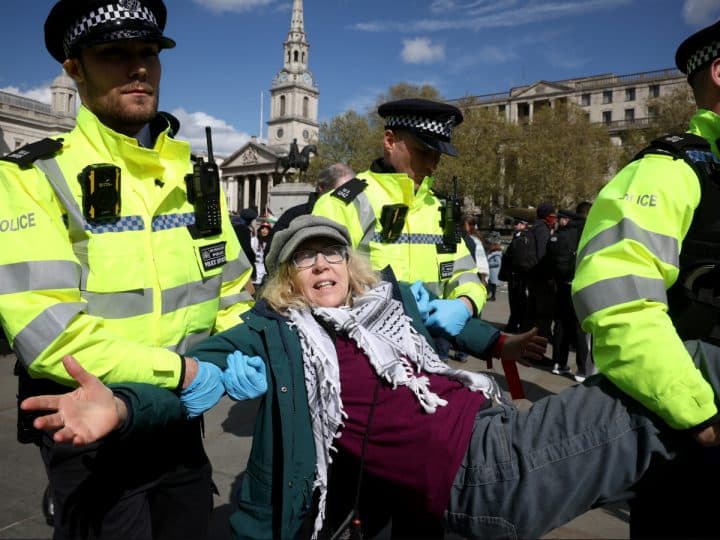

Repression of peaceful protest – whether through policing, new laws, trends in the courts, or the use of imprisonment – has become “routine” in the UK.
A new report examines this escalation and the forces behind it.
Excessive punishments for peaceful protest
Climate and Palestine solidarity protestors in the UK have between them spent 136 years in prison since 2019, according to a new report by researchers at Queen Mary University and the campaign group Defend Our Juries. Britain’s Political Prisoners documents nearly 300 cases and looks at how recent anti-protest laws and restrictions imposed by courts have contributed to them.
This report focuses on multiple responses to protest it describes as “grossly disproportionate”. This includes harsh sentences and “indiscriminate” use of remand – sending protestors to prison for many months before their cases are heard in court.
The longest prison sentences – up to five years – for nonviolent protest in the UK have been handed down to climate activists. To put these stretches in context, government statistics show that prison sentences imposed for common assault rarely exceed a few months, and for causing grievous bodily harm are usually less than three years.
Meanwhile, terrorism powers are increasingly being used against those attempting to intervene in a genocide. The direct action group Palestine Action, whose tactics have focussed on disrupting the flow of weapons from the UK to Israel, was proscribed as a terrorist organisation last year. Activists who took part in protests before the group was banned have been held in high-security prisons before trial, and are expected to serve dramatically increased sentences because of their alleged ‘terror connection’.
The normal time limit for prisoners to be held on remand is six months. However, this has regularly been exceeded in recent protest cases, with one activist currently approaching two years on remand. At trial, defendants are often acquitted or receive sentences shorter than the time they have already spent in custody. According to Tim Crosland of Defend Our Juries:
It would be dishonest to present this as anything other than punishment without trial.
Defendants gagged by the courts
Anti-protest laws and increasingly aggressive policing have made it more likely that a peaceful protest action will end up in court. But rather than safeguarding against it, courts are further contributing significantly to the repression of protest.
The report details how protestors’ access to legal defences has been progressively removed. This means that many defendants are no longer allowed to argue that their actions were justifiable in the circumstances. If they choose to defy judges orders not to speak about their motivations, they risk being in ‘contempt of court’, which can be punished by yet more time in prison.
Perversely, this has seen climate activists arrested at their own trials for presenting evidence about climate breakdown. Restrictions imposed by judges in Palestine Action cases have been even more extreme. Reflecting on a recent trial where four activists were convicted for smashing equipment at an arms factory, Professor David Whyte, who co-authored the report, summarised:
Justice Jeremy Johnson ordered that a very long list of basic facts about the case had to be kept secret from the jury. He held a barrister in contempt of court and then ignored the prosecution by denying bail to the defendants in the case. On top of all of this, the judge issued a gagging order that prevented anybody reporting his gagging orders!
Vested and misguided interests at play
Attempting to explain the lurch towards protecting “public order” at the expense of human rights, the report names corporate and political interests.
It details evidence that the UK ministers have been under pressure from both the Israeli government and arms company Elbit to treat Palestine-related protests harshly. It also points to the influence of fossil fuel industry funded think tanks in the crackdown on climate protests.
Corporations and agencies wealthy enough to afford the legal costs have been granted private injunctions to further “protect” themselves against protests. This has meant that activists would have risked imprisonment, large fines and seizure of assets even for non-disruptive, otherwise-legal demos at sites including Shell offices, Drax power station, or military supplier Moog’s factories.
Locking up protesters may seem convenient in the short term, but it might not even work to reduce disruption. In fact, it may ultimately force movements to avoid accountability by using more covert tactics. When it has never been more urgent to act against climate breakdown and genocide in Gaza, it is vital we build – rather than extinguish – momentum that protects lives now and in the future. From where I’m standing, that future looks much less frightening if we know our rights, defend them, and put them to good use.
Featured image via Dan Kitwood/Getty Images
By Abi Perrin

Jacob Elordi Addresses Euphoria Season 3’s Shocking Nate Twist

After 40-foot, playoff-winning eagle, Doc Redman’s emotions flowed
My Experience Using eSIM Plus in Turkey: Is It Worth Switching to eSIM?


-

 Crypto World5 days ago
Blockchain.com files with SEC for U.S. IPO
-

 Fashion4 days ago
Holiday Weekend Open Thread – Corporette.com
-

 Business4 days ago
Dell Technologies DELL Stock Surges 15% on AI Server Momentum and Analyst Upgrades in 2026
-

 Crypto World4 days ago
Bitcoin Accumulation Weakens as BTC Realized Losses Hit $600M
-

 Crypto World4 days ago
Space X IPO Is ‘Bad News’ for Tech Stocks: But What About Bitcoin?
-

 Politics4 days ago
Makerfield: a tale of two social-media histories
-

 Crypto World3 days ago
Robinhood crypto COO Tanya Denisova exits
-

 Business2 days ago
NYT Strands Answers May 24 2026 Revealed for Puzzle No. 812 Theme Summer Essentials
-

 Crypto World4 days ago
MicroStrategy’s Saylor Says Miners No Longer Set Bitcoin Price, Another Force Has Taken Over
-

 Crypto World4 days ago
AI infrastructure race heats up as IREN pitches full-stack strategy, WhiteFiber lands $160M deal
-
 Tech4 days ago
A 0.12% parameter add-on gives AI agents the working memory RAG can’t
-

 Tech4 days ago
WhatsApp ads could make Irish debut after discussions with DPC
-

 Tech4 days ago
You Can Now Add ChatGPT To PowerPoint
-

 Business4 days ago
Trump Invests $1M-$5M in Kura Sushi USA Chain With 27 California Locations
-
 NewsBeat5 days ago
Charity run by Reform leader Malcolm Offord accused of ‘law breaking’ over Scottish registration
-

 Sports4 days ago
2026 CJ Cup Byron Nelson leaderboard: Brooks Koepka finds putting stroke in Round 1
-

 Crypto World6 days ago
Exa Labs raises $250 million in funding led by a16z
-
Business4 days ago
Goldman Sachs reinstates Ageas stock coverage with neutral rating
-

 Crypto World4 days ago
Trump Media’s Bitcoin Stash Shrinks Again as 2,650 BTC Lands on Crypto.com
-

 Crypto World4 days ago
Verus Bridge Hacker Returns $8.5M ETH, Keeps $2.8M as Bounty
You must be logged in to post a comment Login