Connect with us
DAPA Banner

NewsBeat

Mikel Arteta told Arsenal star is ‘not good enough’ after Bournemouth defeat | Football

Published

on

Mikel Arteta told Arsenal star is 'not good enough' after Bournemouth defeat | Football
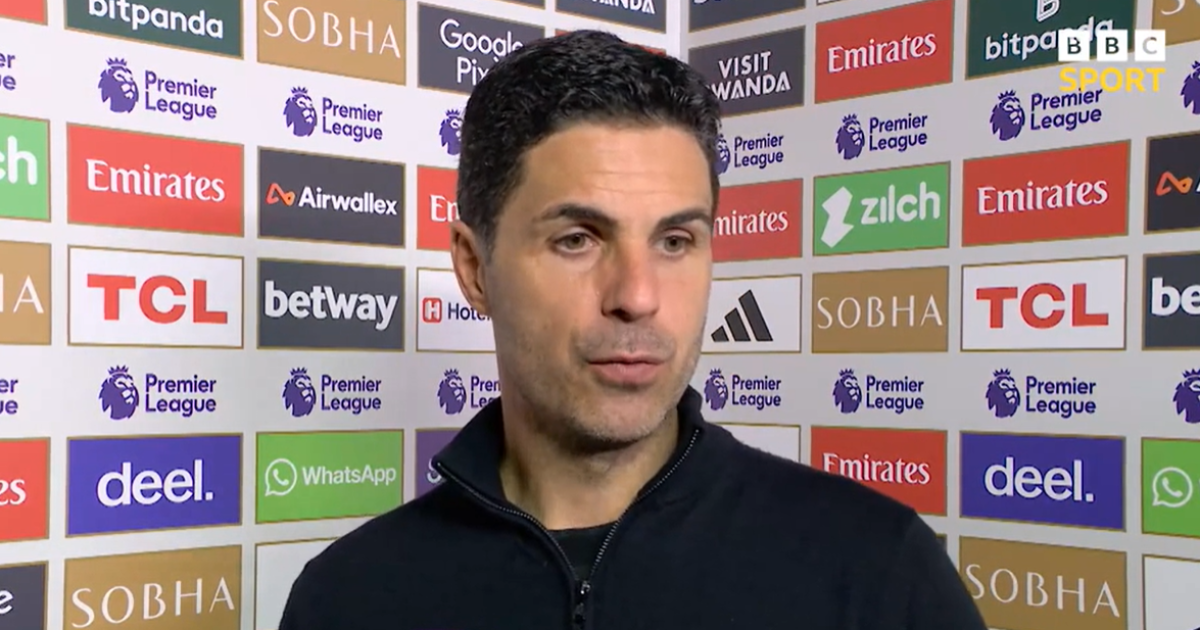
Mikel Arteta after Arsenal’s defeat to Bournemouth (Picture: BBC)

Former Premier League forward Jan Age Fjortoft criticised two Arsenal players after the Gunners suffered a disappointing Premier League defeat to Bournemouth.

Mikel Arteta’s side had the chance to extend their lead at the top of the Premier League to 12 points as they welcomed Bournemouth to the Emirates Stadium on Saturday.

The Gunners are chasing a first Premier League title since 2004 and beating Bournemouth would have put even more pressure on Manchester City ahead of their trip to Chelsea on Sunday.

But Arsenal fell to a 2-1 defeat to Bournemouth, meaning they have now lost three of their last four games and could see their lead in the title race cut to six points come the end of the weekend.

Advertisement

Man City will have another game in hand to potentially reduce the gap to three, while they can pull even closer to Arsenal when the two title rivals meet at the Etihad Stadium next weekend.

Viktor Gyokeres scored Arsenal’s goal against Bournemouth but also missed a number of chances and Norwegian football legend Fjortoft has questioned if the £64m striker’s form is ‘good enough’ to fire the Gunners to the title.

Gyokeres has been widely mocked in the aftermath of the Bournemouth setback after he said Arsenal were not helped by the ‘dry pitch’ at the Emirates Stadium.

Arsenal v Bournemouth - Premier League
Bournemouth stunned Arsenal at the Emirates Stadium (Picture: Getty)

‘I guess the best strikers in the world will score on dry pitches, wet pitches, snow, rain, wind, everything,’ Fjortoft said on ESPN.

‘I don’t want to re-open that debate over Arsenal lacking a top, top striker because Gyokeres just sent Sweden to the World Cup but he did miss some chances today.

Advertisement

‘If you see last season with [Erling] Haaland and [Mohamed] Salah, have there been any champions without that player who can save them on a bad day?

Arsenal v Bournemouth - Premier League
Viktor Gyokeres had another mixed afternoon for Arsenal (Picture: Getty)

‘Gyokeres scored today and his form is okay but it seems it’s not good enough to shoot you to a championship.’

Fjortoft also criticised Declan Rice’s performance against Bournemouth and said Arsenal are ‘desperately missing’ injured captain Martin Odegaard.

‘I want to mention another name: Declan Rice,’ Fjortoft added. ‘I see he gets the captain’s armband and I talk to English pundits and apparently he’s the biggest leader since Lord Nelson.

‘He was the captain today but I didn’t see that, I didn’t see him doing that. I’m not saying this because he’s Norwegian but I think they miss an in-form Martin Odegaard.

Advertisement

To view this video please enable JavaScript, and consider upgrading to a web
browser that
supports HTML5
video

‘Unfortunately he’s having some problems with injuries this season but they’re desperate to get him back because at the moment Declan Rice, the big hope for English football, isn’t producing either.’

Advertisement

Meanwhile, Arteta described Arsenal’s third defeat in four games as a ‘big punch in the face’.

‘It’s a big punch in the face and it’s about how we react now,’ Arteta said. ‘They are a team who haven’t lost for 11 games for a reason, they did a lot right.

‘We were far from efficient. The first chance they had to attack the box, it’s a deflection, a bad defending action and it’s a goal. That’s something we have to recover from.

‘The second half you expect a different game. We did a lot of strange things today. We have been very consistent. This can happen, this is football.’

Advertisement

Asked if his players were ‘hurting’ after losing to Bournemouth, Arteta added: ‘A lot. It has to hurt. They have to take it on the chin. You stand up and go for the fight or you’re out.

‘It’s a big week. A lot at stake. We’re still in a good position in both competitions.’

For more stories like this, check our sport page.

Follow Metro Sport for the latest news on
FacebookTwitter and Instagram
.

Advertisement

Advertisement

Source link

Continue Reading
Click to comment

You must be logged in to post a comment Login

Leave a Reply

NewsBeat

Sprinting sensation Gout Gout breaks new records with phenomenal time

Published

on

Daily Mirror

Gout Gout has looked like a star in the making for many months, but the teenage sprinting sensation has shattered another record on the track

Sprinting prodigy Gout Gout has added another breath-taking record to his ever-growing list of accolades. The Australian sensation, 18, took part in the Under-20s Australian Athletics Championship. in Sydney.

Advertisement

He set a new U20 world record and a new national record when he ran the 200m in a jaw-dropping 19.67 seconds. In doing so. he also became the first ever Australian to complete 200m in under 20 seconds.

Gout Gout struggled to hold back his emotions when he crossed the finish line, jumping up and down with joy and celebrating with his manager James Templeton. It was another astonishing display from a young athlete who has already captured the attention of Usain Bolt.

JOIN US ON FACEBOOK! All the best sports news and much more on our dedicated Facebook page

He was expected to be firmly challenged by Lachlan Kennedy, a 100m champion who has also overcome him in the 200m on two occasions, but the young sprinter pulled out of the event early. Calab Law was another prospect who was expected to push Gout Gout, but he was left in the 18-year-old’s wake.

Advertisement

Aidan Murphy, who was best known in Australia for making a critical error which resulted in the country’s relay team from being disqualified at last year’s World Athletics Championship, was the closest contender to the teenager.

It was only towards the end when Gout Gout’s stride seemed to elongate, eating up yards of the track like a lightning fast Great White Shark – Murphy would finish with a time of 20.11 seconds, around half a second slower than Gout Gout.

Content cannot be displayed without consent

Gout Gout had run the 200m at 19.84 seconds in the national championships last year, but it was deemed the tailwind at his back was too strong, rendering his then record breaking achievement as illegal. His 19.67s in Sydney shattered that and any time recorded by any other U20 athlete in the history of the sport.

At the same age, even Bolt, the fastest man to ever take to the track, did not reach that electrifying speed. Had Gout Gout recorded that time at the 2020 Olympic Games, he would’ve pipped American star Noah Lyles to the bronze medal.

Advertisement

Had he been involved 26 years ago when his country hosted the games in Sydney, he would have ended the day with a gold medal around his neck. The world appears to be at Gout Gout’s jet-heeled feet.

However, in an interview last year, Bolt warned his Australian prodigy to not look too far ahead. The eight-time Olympic gold medal winner said: “If he continues on this track it’s going to be good but it’s all about getting everything right. I mean, it’s never just easy.

“It’s always easier when you’re younger because I was there, I used to do great things when I was young but the transition to senior from junior is always tougher.

Advertisement

“It’s all about if you get the right coach, the right people around you, if you’re focused enough, so there will be a lot of factors to determine if he’s going to be great, and if he’s going to continue on the same trajectory to a championship or Olympics.”

Sky Sports, HBO Max, Netflix and Disney+ with Ultimate TV package

This article contains affiliate links, we will receive a commission on any sales we generate from it. Learn more
Content Image

Sky has upgraded its Ultimate TV and Sky Sports bundle to now include HBO Max, Netflix, Disney+, discovery+ and Hayu, as well as 135 channels and full Sky coverage of the Premier League and EFL.

Sky broadcasts more than 1,400 live matches across the Premier League, EFL and more with at least 215 live from the top flight alongside Formula 1, darts and golf.

Source link

Advertisement
Continue Reading

NewsBeat

China says it will resume some ties with Taiwan

Published

on

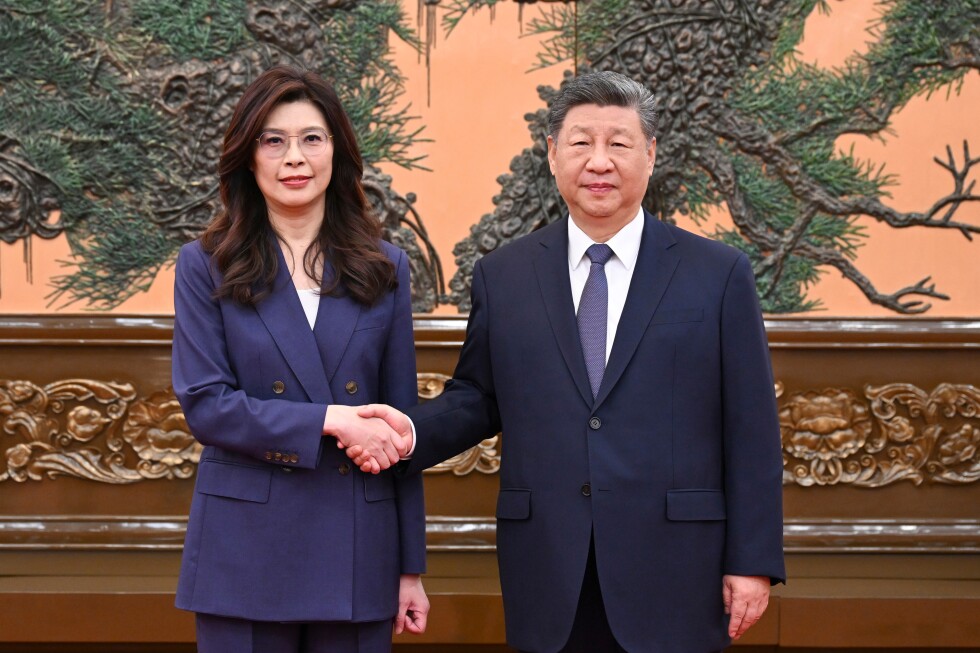
Taiwan's opposition leader meets Xi Jinping in Beijing

BANGKOK (AP) — China said Sunday it would resume some ties it had suspended with Taiwan such as direct flights and imports of Taiwanese aquaculture products following a visit by the Beijing-friendly opposition leader of the self-ruled island.

The Taiwan Work Office under China’s Communist Party issued a statement saying it would explore setting up a longstanding communication mechanism between the Communist Party and Taiwan’s Kuomingtang Party. It said it will facilitate the import of Taiwan’s aquaculture products that it had previously banned.

Cheng Li-wun, the head of the Kuomingtang, and China’s President Xi Jinping held a high-profile meeting Friday during which they called for peace, without offering specifics. China claims the island as part of its territory and hasn’t ruled out the use of force to annex it.

Taiwan’s Mainland Affairs Council, which oversees the relationship with China, said the measures that were announced, such as promoting a communication mechanism, were “political transactions” between the two parties that circumvented the government of Taiwan.

Advertisement

“The government’s position is clear: to ensure the interests of the nation and its people, all Cross-Strait affairs involving public power must be negotiated by both governments on an equal and dignified basis to be effective and truly protect the rights and well-being of the people,” the Mainland Affairs Council said in response to the Chinese announcement.

Relations between China and Taiwan, which remain split since 1949, have been tense since the election of pro-independence President Tsai Ing-wen from the Democratic Progressive Party in 2016. Beijing cut off most of its official dialogue with Taiwan’s government, and has started sending warships and fighter jets closer toward the island on a daily basis.

In the statement, China said it plans to resume direct flights between Taiwan and mainland cities like Xi’an or Urumqi, although it remained unclear how the measures will be implemented without the approval of the Taiwanese government.

China banned its citizens from individual trips to Taiwan in 2019. Taiwan’s rules now require Chinese visitors to hold a valid resident visa from another country, like the U.S. or the European Union, to apply for a visitor visa.

Advertisement

China also said it would work toward construction of a bridge that would connect the mainland to Matsu and Kinmen, Taiwanese islands that are closer geographically to China. The project is a longstanding proposal that Beijing has previously announced.

China banned the import of Taiwanese pineapples in 2021, and since then has extended it to other fruits and products including the grouper fish, squid and tuna.

After the initial ban on grouper, Taiwan’s Ministry of Agriculture said it approached China about making adjustments to ensure it met import requirements. China replied with a limited list of individual companies that were allowed to sell to China, but without explanation.

Advertisement

Source link

Continue Reading

NewsBeat

Airgun found by police after report of street brawl in Welsh city

Published

on

Wales Online

The discovery comes one day after three teens were left injured after being shot with air pellets

Police have found an air gun while investigating reports that a group of men had been fighting outside a block of flats in Newport. The discovery came a day after three teenagers were left injured after being attacked with an air gun by three men in woodland behind the same block of flats, but police say they do not believe the incidents are not connected.

Advertisement

At around 6pm on Saturday, Gwent Police received a report that a group of men had been fighting in Oliphant Circle, Newport. Officers attended and searched the area.

They did not locate anyone or find any reports of injury, but did find an airsoft gun which was seized.

Three cars were believed to be involved, all three cars have since been located and recovered, Gwent Police say.

The day before, on Friday, April 10, three teenagers had suffered injuries “consistent with being struck by air pellets.”

Advertisement

The teenagers, one girl aged 14 and two boys aged 14 and 15, were in the woodland behind Graham Bell Close and Oliphant Circle when they were approached by a group of three men. The 14-year-old boy was also physically assaulted and required hospital treatment, police said.

DCI Matthew Edwards, the senior investigating officer said on Sunday (April 12): “We understand that reports of this nature are deeply concerning for our communities.

“While we are keeping an open mind, at this stage in the investigation this incident does not appear to the be linked to the incident near Graham Bell Close the previous day.

Advertisement

“Enquiries are ongoing and we urge anyone with information about either incident to contact us in the usual way.”

Anyone with information is asked to contact 101, send a message via social media or via the force website.

Alternatively, you can report anonymously through Crimestoppers by calling 0800 555 111 or online.

A force spokesperson said: “Enquiries are ongoing and we’re asking for anyone with information, including CCTV and dashcam footage, to contact us quoting log reference 2600111121.”

Advertisement

Get daily breaking news updates on your phone by joining our WhatsApp community here. We occasionally treat members to special offers, promotions and ads from us and our partners. See our Privacy Notice

Source link

Continue Reading

NewsBeat

Eamonn Holmes’ son issues health update after presenter suffers stroke

Published

on

Belfast Live

The 66-year-old broadcaster is ‘responding well’ to treatment

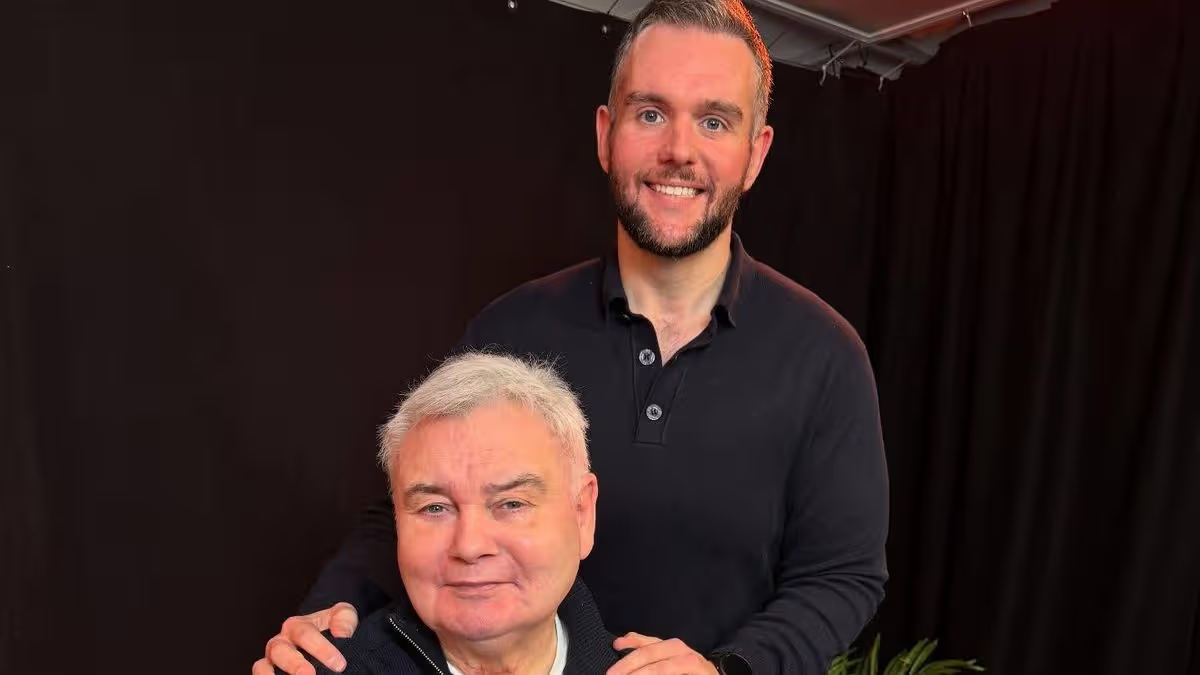
Eamonn Holmes’ son has provided an update on his father’s health following it was announced he had suffered a stroke.

The Belfast-born broadcaster, 66, is understood to be responding well to treatment after falling ill last week.

Advertisement

His son Declan Holmes has now issued a statement on the family’s behalf, expressing gratitude for the outpouring of support and providing reassurance regarding his father’s recovery, reports the Mirror.

READ MORE: Eamonn Holmes in hospital after suffering a strokeREAD MORE: Eamonn Holmes’ GB News co-star shares update as presenter recovers in hospital

In his message, Declan said: “I just wanted to share a quick message to say we hugely appreciate all the messages, it means a lot to us as a family.

“What happened came as a real shock, but dad is doing OK given the circumstances and we’re taking it one step at a time.

Advertisement

“For now, we’re focused on him and keeping things steady around him. We’d really value a bit of privacy as we navigate it, and what lies ahead, but thank you again for the support as it means so much to dad and the rest of the family.”

On Friday Eamonn’s girlfriend Katie Alexander gave fans an insight into how her life had been lately, just hours before news of the presenter’s stroke was made public.

Taking to Instagram, Katie looked back on her week without referencing Eamonn’s medical situation. She posted: “What a week. Prayer, a little visit to church to have a word with the good Lord himself, prayer each day.”

Advertisement

Yesterday, GB News confirmed that Eamonn had experienced a stroke and remains under hospital care.

In a statement, it said: “Eamonn was taken ill last week and it was later confirmed he had suffered a stroke. He is currently responding well to treatment.

“Eamonn has asked for privacy as he focuses on getting better.”

Eamonn had been scheduled to resume presenting GB News Breakfast next week, where he appears from Monday to Wednesday alongside Ellie Costello.

Advertisement

His presenting partner, Ellie Costello, said: “Thinking of you Eamonn and wishing you a speedy recovery.”

Alex Armstrong is set to cover for Eamonn during his time away. He commented: “Thinking of you Eamonn Holmes. Such a shock to all of us. You’re sorely missed. Get better soon.”

Angelos Frangopoulos, GB News CEO, stated: “Eamonn is a loved member of the GB News family, and we’re with him every step of the way as he recovers.”

For all the latest news, visit the Belfast Live homepage here and sign up to our daily newsletter here.

Advertisement

Source link

Continue Reading

NewsBeat

Virgil van Dijk backs Liverpool fans in protest against ticket prices

Published

on

Virgil van Dijk backs Liverpool fans in protest against ticket prices

Virgil van Dijk believes Liverpool fans have the right to protest against ticket price rises and urged the club to find a solution to a problem which he believes is benefiting no one.

Liverpool recently announced price rises for the next three years, with fans responding with a banner in Saturday’s 2-0 win over Fulham objecting to them and by removing their usual flags from the Kop.

Captain Van Dijk is concerned that it could harm the team but said he understood the supporters’ reaction.

“I think the fans are the heart and soul of the club,” said the defender. “If they feel like this, then protest is their fair right. Hopefully they come to a solution with the club. These things are far above my position as captain of the club.

Advertisement

“But my opinion is that our fans are the club. They always have been – before my time and after my time. It’s important that these things get solved because it benefits no one.”

Van Dijk also thinks teenager Rio Ngumoha would take it in his stride if he is selected to start against Paris Saint-Germain on Tuesday.

Rio Ngumoha drew praise after scoring against Fulham
Rio Ngumoha drew praise after scoring against Fulham (AFP/Getty)
And Virgil van Dijk believes Ngumoha would thrive if chosen to start against PSG
And Virgil van Dijk believes Ngumoha would thrive if chosen to start against PSG (Liverpool FC via Getty Images)

The winger became the youngest player to score for Liverpool in the Premier League when he struck against Fulham.

And Van Dijk added: “He’s taken the record from Raheem [Sterling] which is very nice for him and should motivate and push him even more. You shouldn’t take things like that for granted and he won’t. He has to keep going.

“He’s a humble kid who works hard and listens. He wants to improve constantly. He has big dreams. It’s down to him and the people around him to make sure that he stays like that. I’m not worried that anything will change on that front.”

Advertisement

Ngumoha pressed his case to begin the Champions League quarter-final second leg against PSG and Van Dijk said: “He would take it in his stride. It’s down to the manager to decide the team and the game plan for Tuesday. Whether you start or not, everyone has to feel part of something special. That’s the thing we need to try and beat PSG.”

Source link

Continue Reading

NewsBeat

Iran war diverts US military and attention from Asia

Published

on

Iran war diverts US military and attention from Asia

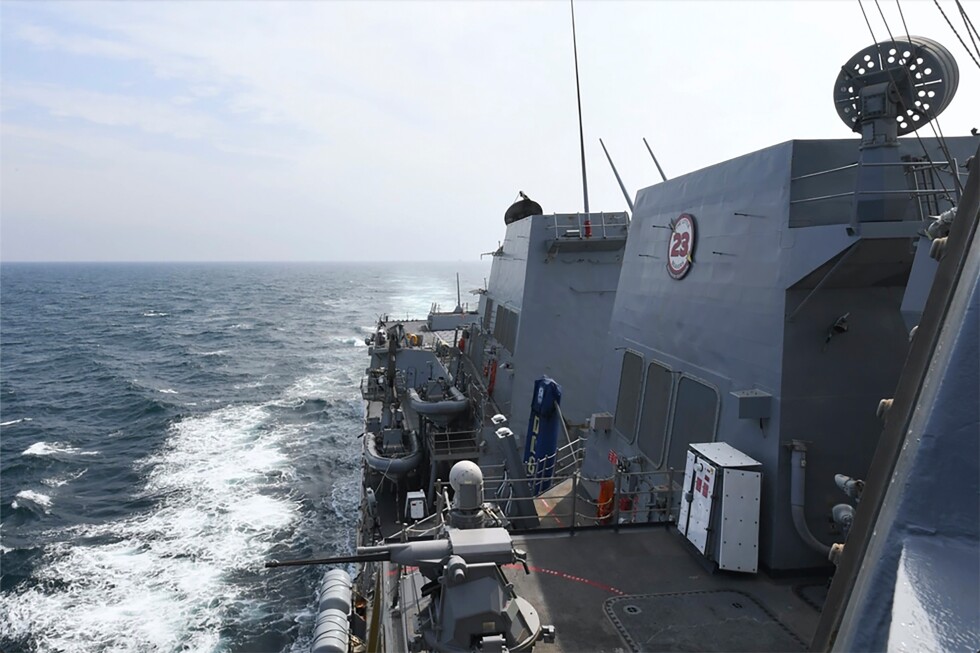
WASHINGTON (AP) — In 2011, President Barack Obama declared it was time for America to leave behind the wars in Iraq and Afghanistan and “pivot” to Asia to counter the rise of China. Fifteen years later, the U.S. finds itself still at war in the Middle East and has pulled military assets from the Asia-Pacific as it aims to eliminate the threat posed by Iran’s nuclear and missile programs.

The demands of the Iran war also caused President Donald Trump to delay by several weeks his highly anticipated trip to China, deepening worries that the U.S. is once again getting distracted at the cost of its strategic interests in Asia, where Beijing seeks to unseat the U.S. as the regional leader.

Those skeptical of the U.S. involvement in the Middle East say the war is preventing Trump from adequately preparing for his summit with Chinese leader Xi Jinping next month, when economic interests are on the line, and they warn that a failure to focus on Asia and maintain strong deterrence could lead to greater instability, if China should believe the time is ripe to seize the self-governed island of Taiwan.

“This is precisely the wrong time for the United States to turn away and be sucked into another intractable Middle East conflict,” said Danny Russel, a distinguished fellow at the Asia Society Policy Institute. “Rebalancing to Asia is highly relevant to America’s national interests, but it has been undercut by many bad decisions.”

Advertisement

Others defend the president’s approach, arguing that the forceful steps he is taking elsewhere, including in Venezuela and Iran, serve to counter China globally.

“Beijing is the chief sponsor for the adversaries that President Trump is dealing with sequentially, and it’s wise to do this sequentially,” Matt Pottinger, who served as a deputy national security adviser in the first Trump administration, said in a recent podcast.

NATO Secretary General Mark Rutte also said conflicts may not be confined to a single theater, suggesting that China could call upon its “junior partners” elsewhere to divert U.S. attention if it should move against Taiwan.

“Most likely it will not be limited, something in the Indo-Pacific to the Indo-Pacific,” Rutte said, speaking Thursday at the Ronald Reagan Institute in Washington. “It will be a multi-theater issue.”

Advertisement

Repercussions in Asia of the Iran war

Sen. Jeanne Shaheen, the top Democrat on the Senate Foreign Relations Committee, recently led a bipartisan group of senators to Taiwan, Japan and South Korea, where they heard concerns about the impact of the war on energy costs and about the departure of U.S. military assets, including missile defense systems from South Korea and a rapid-response Marine unit from Japan.

She sought to reassure them of the U.S. commitment to deterring conflicts in Asia and shoring up regional stability.

“Failure is not an option,” Shaheen told The Associated Press after returning from Asia. “We know China has already said they intend to take Taiwan by force if they need to, and they’re on an expedited time schedule. And we also know that what happened in Europe, in the war in Ukraine, in the Middle East is affecting those calculations.”

Kurt Campbell, who served as deputy secretary of state in the Biden administration, said he’s worried that the military capabilities that the U.S. had patiently accumulated in the Indo-Pacific region might not return in full even after the Iran war ends.

Advertisement

The longer the conflict goes on, the more it will pull resources and focus away from Asia, said Zack Cooper, a senior fellow at the American Enterprise Institute who studies the U.S. strategy in Asia. He added that future arms sales to the region also will be negatively affected.

“The United States has expended substantial numbers of munitions in the Middle East and will have to keep an increased force presence there, some of which has been redirected from Asia,” Cooper said. “Meanwhile, Xi Jinping’s wisdom in preparing a ‘war time’ economy by stockpiling and adding alternate energy sources has shown itself to be beneficial.”

Shaheen said the U.S. defense industry will struggle to meet the demand to replenish the weapons stockpile. “We’re working on a number of strategies to improve that, but at this point, timelines for weapons delivery are slipping,” she said.

The senator from New Hampshire said she’s encouraged that Taiwan, Japan and South Korea are stepping up their own defense.

Advertisement

After 15 years and 3 presidents, pivot to Asia remains elusive

Obama’s strategic rebalance to Asia reflected his understanding that the U.S. must be a player in the Pacific to harness the region’s growth and ensure continued U.S. leadership in the face of China’s rising influence.

“After a decade in which we fought two wars that cost us dearly, in blood and treasure, the United States is turning our attention to the vast potential of the Asia-Pacific region,” Obama said in a speech to the Australian Parliament. “So make no mistake, the tide of war is receding, and America is looking ahead to the future that we must build.”

But the strategy was set back when a proposed trade agreement known as the Trans-Pacific Partnership with key U.S. regional partners failed to get through the U.S. Senate. After Trump first took office in 2017, he withdrew the U.S. from the partnership and launched a tariff war with China.

His Democratic successor, Joe Biden, kept Trump’s tariffs on China and tightened export controls on advanced technology, while strengthening regional alliances to counter China.

Advertisement

Middle East again grabs US attention

By the time Trump rolled out his national security strategy in late 2025, the U.S. strategy in Asia had been narrowed to military deterrence in the Taiwan Strait and the First Island Chain, a string of U.S.-aligned islands off China’s coast that restrict its access to the Western Pacific.

The national security document says it’s in the economic interest of the U.S. to secure access to advanced chips, which are sourced primarily from Taiwan and are needed to power everything from computers to missiles, and to protect shipping lanes in the South China Sea.

“Hence deterring a conflict over Taiwan, ideally by preserving military overmatch, is a priority,” the document says. “We will build a military capable of denying aggression anywhere in the First Island Chain.”

The Middle East, it says, should be getting less attention: “As this administration rescinds or eases restrictive energy policies and American energy production ramps up, America’s historic reason for focusing on the Middle East will recede.”

Advertisement

Then came the Iran war.

___

AP writer Stephen Groves contributed to this report.

Advertisement

Source link

Continue Reading

NewsBeat

Lessons learned in ’70s have made US, world economies less vulnerable to oil shocks

Published

on

Iran formalizes its chokehold over the Strait of Hormuz

WASHINGTON (AP) — The world economy is experiencing a disorienting flashback to the 1970s.

Oil prices are once again surging in the wake of war in the Middle East, driving up the cost of gasoline, diesel and jet fuel and threatening a return to stagflation – the toxic mix of higher prices and slower growth that made economic life so miserable a half century ago.

But the U.S. and world economies are less vulnerable now than they were when Saudi Arabia and other Middle Eastern petroleum producers withheld oil supplies to punish countries that supported Israel in the 1973 Yom Kippur War.

In response to that shock – and another triggered six years later by the Iranian revolution — countries embarked on a new course to increase their energy efficiency, reduce their dependence on Middle Eastern oil, stockpile fuel against future threats, and find and develop alternative sources of energy.

Advertisement

“We have decades of experience now dealing with these kinds of oil shocks,’’ said Amy Myers Jaffe, research professor at New York University’s Center for Global Affairs.

Of course, the notion that the current Iran energy shock could have been worse is little comfort to frustrated American motorists paying $4 or more for a gallon of gasoline, to European farmers contending with skyrocketing fertilizer prices and to street vendors in India who can’t get enough gas to cook curries and samosas for their customers.

And the sheer scale is unprecedented. In response to attacks by the United States and Israel that began Feb. 28, Iran effectively shut off the Strait of Hormuz, through which 20 million barrels of oil — or one-fifth of global production — flowed daily.

Lutz Kilian, director of the Federal Reserve Bank of Dallas’ Center for Energy and the Economy, figures that 5 million daily barrels can either be rerouted from the Persian Gulf to the Red Sea or continue to transit through the Strait of Hormuz. But that still means that roughly 15 million barrels — or 15% — of daily global oil production is missing, compared with just 6% in the 1973 embargo and after Iraq’s invasion of Kuwait in 1990.

Advertisement

Cushioning the blow

Changes the U.S. and other countries made over the past five decades have limited the economic fallout from the war. In 1973, oil accounted for almost half — 46% — of world energy supplies. By 2023, oil’s share had fallen to 30%, according to the International Energy Agency.

The world still uses more oil than ever: Consumption topped 100 million barrels a day last year, up from fewer than 60 million barrels a day in 1973. But a much bigger share of global energy is coming from other sources — such as natural gas, nuclear, solar — compared to five decades ago.

The United States, in particular, has weaned itself away from dependence on foreign oil.

When the ’73 oil shock hit, America’s domestic energy production was in decline and its reliance on oil imports was growing alarmingly. But the rise of fracking — pumping high-pressure water deep underground to extract previously hard-to-get oil or gas from rock – rejuvenated U.S. energy production in the 21st century. By 2019, America had become a net petroleum exporter.

“The U.S. economy is much better positioned than it was in the 1970s,” when it was “particularly vulnerable to an oil price shock,” said Sam Ori, executive director of the University of Chicago’s Energy Policy Institute.

In the early ‘70s, for example, the United States got about 20% of its electricity from oil, Ori said. But a law enacted in 1978 prohibited the use of petroleum in power plants. Now the United States gets no electricity from oil — aside from a few generators in, say, the far reaches of Alaska.

Advertisement

Dimming the lights

The 1973 oil embargo was a wakeup call, creating shortages that led to long lines at U.S. gasoline stations.

On Nov. 25, 1973, President Richard Nixon went on television to ask the American people to make sacrifices. To conserve fuel, he urged gasoline stations to shut their pumps from Saturday night through Sunday, hoping to discourage long-distance weekend driving.

He asked Congress to lower the maximum speed limit to 50 miles an hour (lawmakers settled for 55 miles an hour) and to ban ornamental and most commercial lighting (they balked at that). Nixon himself promised to dim the White House Christmas lights.

But while those memories may have left a lasting imprint on some, Jaffe of New York University’s Center for Global Affairs says that today, “a repeat of long gasoline lines, fuel rationing, and outright fuel shortages in the U.S seems highly unlikely.”

Advertisement

Other countries took aggressive action following the 1973 oil embargo as well.

The United Kingdom, contending with a coal strike as well as the energy crisis, cut the work week to three days to slash electricity consumption. France ordered offices to turn off the lights at night.

Japan, almost entirely dependent on imported oil, passed a series of “sho-ene’’ laws — combining the Japanese words for “save’’ or “reduce’’ with “energy’’ — mandating energy efficiency in shipping, buildings, machinery, automobiles and homes.

Japan also encouraged the use of liquefied natural and gas and the rapid growth of nuclear power, an effort set back after a 2011 earthquake and tsunami damaged the Fukushima nuclear plant. Overall, Japan ranks No. 21 in the world in per-capita energy consumption, according to International Energy Agency data, as a result of its efficiency drive and widespread use of buses and trains. The United States is No. 9.

Advertisement

More fuel efficient cars, new oil fields

The U.S. government began imposing fuel economy standards in 1975. Fuel economy has risen from 13.1 miles per gallon for model year 1975 vehicles to 27.1 mpg in model year 2023, according to the Environmental Protection Agency. The World Bank, in fact, attributes most of the drop in the global economy’s dependence on oil to stricter fuel efficiency requirements for vehicles around the world.

The ’70s shocks also set off a search for oil outside the Middle East — Prudhoe Bay in Alaska, the North Sea fields off the coasts of the United Kingdom and Norway and Canada’s oil sands deposits.

As fracking boomed, U.S. oil production shot up from 5 million barrels a day in 2008 to 13.6 million barrels a day last year. Over the same period, U.S. natural gas production has more than doubled.

Countries also began stockpiling oil and set up the Paris-based International Energy Agency in 1975 to coordinate responses to energy shocks. Last month, the agency’s 32 member countries agreed to release 400 million barrels of oil in an effort to calm the oil market; included were 172 million barrels from the U.S. Strategic Petroleum Reserve, set up in 1975.

Advertisement

Central banks such as the Federal Reserve also learned lessons. In the ‘70s, they reduced interest rates to protect the economy from the oil shocks. In so doing, they overlooked the threat posed by higher energy costs — and inflation, already elevated, got worse.

In a Feb. 17 commentary – 11 days before the United States and Israel attacked Iran – the Dallas Fed’s Kilian wrote that the Fed erred in cutting rates to boost the economy when the 1970s oil shocks hit: “What we can learn from the 1970s is that a well-intentioned policy of stimulating the economy by lowering interest rates has the potential of inadvertently reigniting inflation.’’

Trump undoes efforts to reduce oil dependence

While much has changed, the University of Chicago’s Ori cautions: “Oil is still king, the No. 1 fuel in the U.S. economy.’’ Cars, planes, trucks and ships get about 90% of their delivered energy from petroleum. “The lifeblood of the economy – the transportation sector —is still overwhelmingly reliant on petroleum fuel, the price of which is set in a global market,’’ Ori said, “and a disruption anywhere affects the price everywhere.’’

He also notes that President Donald Trump is undoing many of the policies meant to reduce America’s dependence on petroleum and to encourage the use of electric vehicles.

Advertisement

Trump’s sweeping tax bill last year ended consumer credits of up to $7,500 for EV purchases. He has announced a proposal to weaken U.S. fuel economy standards and repealed fines on automakers that don’t meet those standards.

“You take all that together, and the fact is, the U.S. is going in the opposite direction of making big changes to further insulate the economy from oil shocks and oil price volatility,’’ Ori said.

_____

Kageyama reported from Tokyo.

Advertisement

Source link

Advertisement
Continue Reading

NewsBeat

DWP change lets some claimants try work without reassessment

Published

on

DWP change lets some claimants try work without reassessment

The measures, brought forward by the Department for Work and Pensions (DWP), are designed to remove what ministers say is one of the biggest barriers preventing people from entering employment.

The changes are due to come into force later this month.

What the new law changes

Under the new rules, starting a job will no longer automatically trigger a reassessment of benefits for some claimants.

Advertisement

This applies to people receiving:

  • Employment and Support Allowance
  • Personal Independence Payment
  • The health element of Universal Credit

Claimants will also be able to volunteer without fear of reassessment, a move aimed at helping people build confidence and move gradually towards work.

Why the change is being made

Government figures suggest more than a third of disabled people who want to work feel unable to do so because they fear losing financial support.

There are currently around 2.8 million people out of work due to long-term sickness in the UK.

Ministers say the reforms are intended to provide reassurance that trying a job will not immediately put benefits at risk.

Advertisement

Sir Stephen Timms, minister for social security and disability, said removing that fear is “vital” both for individuals and for the wider economy.

The legislation forms part of a wider package of welfare reforms aimed at increasing employment.

The government says it will invest £3.5 billion in tailored employment support by the end of the decade, alongside programmes designed to help people find and stay in work.

Charities have broadly welcomed the changes, saying they could help rebuild trust in the benefits system.

Advertisement

Mental Health UK said fear of reassessment has long been a major barrier for people considering a return to work.

Mind said the reforms could help people build confidence and skills, particularly with the inclusion of volunteering as a stepping stone into employment.

Meanwhile, Mencap said protecting benefits during the transition into work is “particularly important” for people with learning disabilities.


Recommended reading:

Advertisement

Part of wider welfare reform

The changes come alongside other adjustments to the benefits system, including reforms to the health-related element of Universal Credit.

Ministers say these are intended to reduce long-term dependency on welfare while encouraging more people into work.

However, the success of the latest measures may depend on whether they address long-standing concerns among claimants about financial risk and stability.

For many, the question will be whether the new “right to try” work provides enough confidence to take that first step.

Advertisement

Source link

Continue Reading

NewsBeat

Two boys arrested after ‘stolen’ car crash in Hartlepool

Published

on

Two boys arrested after 'stolen' car crash in Hartlepool

The incident took place when a red Ford Ka, which had been reported stolen overnight, collided with a Mercedes Vito taxi today (Sunday, April 12). 

The crash, at the junction of Winterbottom Avenue and Warren Road just before 5.25am, then saw both vehicles strike a pedestrian barrier. 

A 12-year-old boy and a 16-year-old boy in the Ka were injured in the crash, with the older boy losing consciousness and several teeth. 

Advertisement

The younger boy sustained cuts and bruises, and both were taken to the University Hospital of North Tees, in Stockton. 

They have each been arrested on suspicion of several driving offences and will be questioned.

The 49-year-old man driving the Mercedes sustained a head injury and he remains in the University Hospital of North Tees receiving treatment.

It is believed someone else ran from the Ka before officers arrived. 

Advertisement

Cleveland Police is now appealing for anyone with information or any relevant doorbell, dash cam or private CCTV footage who has not yet spoken to police to contact the force on the 101 number or via the website, quoting ref 068120.

If you don’t want to speak to police, please consider passing information anonymously to Crimestoppers online or by phoning them on 0800 555 111.

Source link

Advertisement
Continue Reading

NewsBeat

PSNI issue appeal for missing teenage girls who may have travelled to Dublin

Published

on

Belfast Live

The 14 and 13-year-olds are missing from the Bangor area

Police are seeking the public’s help to locate two missing teenagers who may have travelled to Dublin.

Advertisement

14-year-old Amber Pollock and 13-year-old Bay Giltrap, who are missing from the Bangor area, are believed to be together and were last seen on Saturday, 11th April.

A PSNI spokesperson said: “Amber is approximately 5ft 6, slim build with long dark hair that has a blonde streak. She has a septum piercing and is believed to be wearing a black hoodie, black tracksuit bottoms and black converse.

READ MORE: NIFRS update after ‘devastating’ Corries Meats fire brought under controlREAD MORE: Eamonn Holmes’ GB News co-star shares update as presenter recovers in hospital

“Amber is believed to be carrying a black backpack which has approximately 20 coloured badges on the main face of the backpack.

Advertisement

“Bay is approximately 5ft 7, slim build with long red/brown hair. They are believed to be wearing black jeans, black boots, black top and a black hat. Bay may also be carrying a Nike bag and a sleeping bag.”

Police enquiries have determined that Amber and Bay boarded an early-morning train on Saturday from Bangor to Grand Central Station in Belfast.

The spokesperson continued: “It is believed Amber and Bay may have travelled to Dublin.

“We are appealing to anyone who may have been on the 11:11am train from Bangor to Belfast and seen two young people matching Amber and Bay’s descriptions or where they may went to after they have disembarked, to get in touch with us.

Advertisement

“If you have any information in relation to their whereabouts, or you believe you may have seen them, please contact police on 101 quoting reference numbers 1309 11/04/25 and 1325 11/04/25.”

For all the latest news, visit the Belfast Live homepage here and sign up to our daily newsletter here.

Source link

Advertisement
Continue Reading

Trending

Copyright © 2025