
Business
Re-Engineered Raptors Fuel 2026 Launch Hype

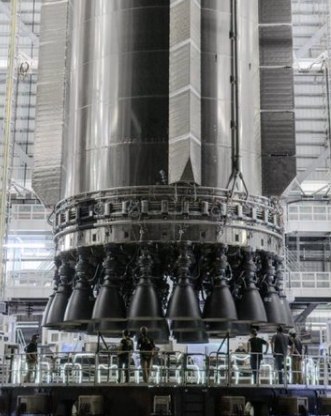
BOCA CHICA, Texas — Elon Musk on Sunday posted a striking image of SpaceX’s latest Starship Super Heavy booster, captioned simply “Starship,” that has already amassed more than 6.4 million views and ignited fresh excitement about the company’s push toward rapid reusability and eventual Mars missions in 2026.
The high-resolution photograph, taken inside a brightly lit assembly facility, shows the massive stainless-steel booster standing vertically with its base ring of 33 Raptor engines gleaming under industrial lights. Workers on elevated platforms provide dramatic scale, underscoring the vehicle’s enormous size — roughly 230 feet tall when stacked with the Starship upper stage. What stands out most is the strikingly clean appearance: pipes, wiring and external hardware have been dramatically decluttered compared with earlier prototypes, a visual testament to iterative engineering improvements.
Musk’s minimalist post, shared at 7:10 a.m. GMT on April 12, quickly drew enthusiastic responses from space enthusiasts, engineers and fans worldwide. Many highlighted the “V3” Raptor engines, which appear sleeker and more integrated than previous versions. One reply noted the “massively re-engineered and decluttered” design, while another praised the “clean look of Booster 19,” identifying the vehicle as the latest iteration in SpaceX’s flight-proven lineage.

The image arrives at a pivotal moment for the Starship program. SpaceX has conducted 11 integrated flight tests since April 2023, with the most recent successes in late 2025 demonstrating controlled landings, heat-shield performance and in-orbit refueling techniques critical for deep-space missions. According to a widely shared timeline in replies to Musk’s post, flights 3 through 6 and 10-11 achieved full or partial success, while earlier attempts provided essential data despite dramatic explosions that became internet memes.
SpaceX engineers have used each test to refine the Raptor engine family. The latest V3 variants feature simplified plumbing, improved thrust vectoring and higher reliability — changes that translate directly to the cleaner external appearance captured in Musk’s photo. Reducing complexity lowers manufacturing costs, shortens refurbishment times and moves the company closer to its goal of flying Starship as frequently as commercial airliners.
Industry analysts say the visual overhaul is more than cosmetic. “Every pipe and bracket removed from the booster reduces failure points and maintenance hours,” said one aerospace engineer commenting on the post. “This is the kind of iteration that turns a test vehicle into an operational system.” NASA has selected Starship as the lunar lander for the Artemis III mission, currently targeted for no earlier than September 2026, making these design refinements especially timely.
Musk has long described Starship as the vehicle that will make humanity multiplanetary. Fully reusable and capable of carrying more than 100 metric tons to low-Earth orbit, the system is designed to support crewed flights to the Moon, Mars and beyond. The booster’s 33 Raptor engines produce roughly 17 million pounds of thrust at liftoff — more than twice that of the Saturn V rocket that carried astronauts to the Moon in the 1960s and 1970s.
Saturday’s photo also reignited discussion about the next flight test. SpaceX has been preparing Starship 12 and Booster 19 for a potential launch window in May 2026, pending regulatory approval from the Federal Aviation Administration. Recent ground tests have focused on the new engine configuration and improved tile attachment on the upper stage. If successful, the flight would include attempts at both booster catch and ship landing — milestones Musk has called essential before attempting orbital refueling.
Public reaction on X mixed awe with practical questions. Some users posted side-by-side comparisons showing how much cleaner the current booster looks versus prototypes from 2023 and 2024. Others shared videos of past launches, reminding viewers of the dramatic progress. One reply captured the sentiment succinctly: “One day this picture is going to be in history books as ‘the moment everything changed.’”
Critics, however, remain focused on costs and timelines. Starship development has consumed billions of dollars, funded largely through SpaceX’s Starlink satellite internet revenue and NASA contracts. Skeptics question whether the pace can be sustained amid regulatory hurdles, supply-chain issues and the inherent risks of orbital rocketry. Musk has acknowledged the challenges but maintains that rapid iteration is the only path forward.
NASA Administrator Bill Nelson congratulated the team in a separate statement, noting that Starship’s evolution “brings us closer to returning astronauts to the lunar surface and, one day, to Mars.” The agency’s Artemis program depends on Starship for crewed lunar landings, with the vehicle also eyed for cargo delivery ahead of human missions.
SpaceX’s Texas Starbase facility, where the booster was photographed, continues to expand. New production bays, engine test stands and a second orbital launch tower are under construction to support higher flight cadence. The company aims to fly Starship multiple times per month by late 2026, a goal that hinges on the kind of design simplification visible in Musk’s image.
The post also served as a subtle recruitment tool. Musk has repeatedly invited engineers to join SpaceX to help “build the future.” The striking photo, with its industrial yet futuristic aesthetic, underscores the hands-on engineering culture that has produced reusable Falcon 9 rockets and is now scaling to Starship.
As of Sunday evening, the image continued to trend globally. Replies poured in from around the world, with many users setting the photo as their device wallpaper or creating AI-enhanced versions imagining the booster on the Martian surface. Memes comparing the clean design to luxury automobiles or sci-fi star cruisers proliferated, reflecting the blend of technical admiration and pop-culture fascination that surrounds SpaceX.
For SpaceX watchers, the photo represents more than a single vehicle snapshot. It encapsulates years of relentless testing, failure analysis and incremental victory. From the first explosive attempts that lit up South Texas skies to the controlled descents now routinely captured on camera, Starship has evolved in plain sight — a rare example of large-scale aerospace development conducted with unprecedented transparency.
Looking ahead, the coming months will test whether the cleaner, more refined booster can translate visual elegance into operational reliability. Regulatory reviews, static-fire tests and stacking operations are all expected before the next integrated flight. Success would clear the path for the Artemis III landing rehearsal and, eventually, uncrewed Mars missions Musk has targeted for the late 2020s.
Musk’s decision to share the image without fanfare or technical detail is characteristic. By letting the engineering speak for itself, he invites the public to share in the wonder while the team quietly continues its work. In an era of computer-generated hype, the raw authenticity of a real rocket in a hangar carries special power.
As the sun set over the Gulf Coast on Sunday, Starbase workers likely returned to their tasks with renewed energy. The booster in the photo — clean, powerful and ready — stands as a tangible symbol of ambition. For millions who viewed Musk’s post, it offered a momentary glimpse of humanity’s next giant leap, captured not in simulation but in polished stainless steel and flickering factory lights.
Whether Starship reaches orbit again in May or faces further refinements, one thing is clear: the vehicle Musk calls “the most powerful rocket ever built” continues to evolve in ways that capture the world’s imagination. Sunday’s viral image is only the latest chapter in a story that began with a simple question — how do we make life multiplanetary? — and is now measured in gleaming engines and cleaner boosters.


The equity market is a powerful mechanism as daily fluctuations in price get aggregated to incredible wealth creation or destruction over the long term. Pacifica Yield aims to pursue long-term wealth creation with a focus on undervalued yet high-growth companies, high-dividend tickers, REITs, and green energy firms.
Analyst’s Disclosure: I/we have no stock, option or similar derivative position in any of the companies mentioned, and no plans to initiate any such positions within the next 72 hours. I wrote this article myself, and it expresses my own opinions. I am not receiving compensation for it (other than from Seeking Alpha). I have no business relationship with any company whose stock is mentioned in this article.
Seeking Alpha’s Disclosure: Past performance is no guarantee of future results. No recommendation or advice is being given as to whether any investment is suitable for a particular investor. Any views or opinions expressed above may not reflect those of Seeking Alpha as a whole. Seeking Alpha is not a licensed securities dealer, broker or US investment adviser or investment bank. Our analysts are third party authors that include both professional investors and individual investors who may not be licensed or certified by any institute or regulatory body.


US earnings season set to test war-rattled stocks

Live Oak Bancshares gains 62% after InvestingPro Fair Value call

Australia and US boost support for critical minerals with $3.5 billion

Gambling.com: SEO Recovery Appears Underway
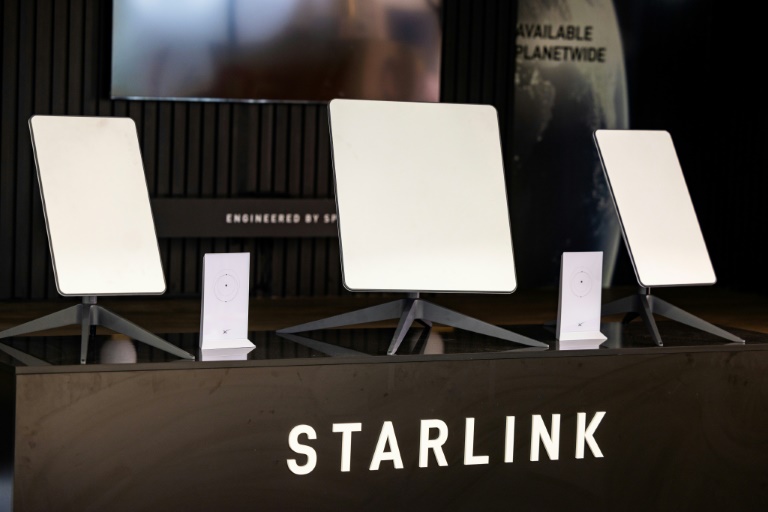
WASHINGTON — SpaceX’s Starlink constellation, with nearly 10,000 operational low-Earth orbit satellites and more than 9 million subscribers worldwide, continues to dominate the satellite broadband market in 2026. Yet growing competition is emerging from both legacy geostationary operators and ambitious new low-Earth orbit projects aiming to erode Starlink’s lead in speed, latency, pricing and global reach.
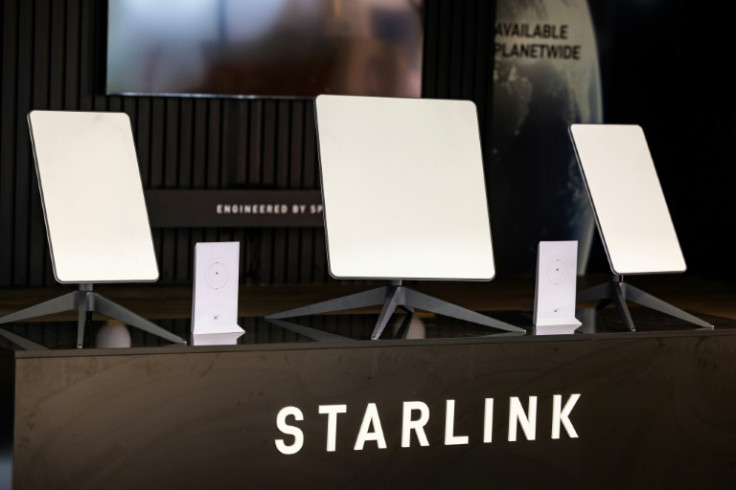
AFP
Industry analysts identify five primary competitors challenging Starlink this year: Amazon Leo (formerly Project Kuiper), Viasat, HughesNet, Eutelsat OneWeb and Telesat Lightspeed. While Starlink maintains advantages in scale and consumer accessibility, these rivals are carving niches through established infrastructure, enterprise focus, unlimited data plans and integration with major tech ecosystems.
1. Amazon Leo (Formerly Project Kuiper)
Amazon’s rebranded Leo satellite network stands as the most direct and formidable long-term threat to Starlink. Backed by billions in investment and Amazon’s vast logistics and cloud infrastructure, Leo targets high-speed, low-latency broadband with a planned 3,236-satellite LEO constellation, expandable to over 7,700.
As of April 2026, Amazon has deployed more than 240 satellites, with aggressive launch cadence continuing via United Launch Alliance Atlas V rockets and future New Glenn vehicles. CEO Andy Jassy announced commercial availability targeted for mid-2026, initially in select markets including the United States, Canada, the United Kingdom, France and Germany. Early private previews, including the Leo Ultra antenna touted for gigabit-class speeds, focus on enterprise and government users before broader residential rollout.
Leo promises download speeds up to 1 Gbps with tight integration to Amazon Web Services, appealing to businesses needing seamless cloud connectivity. Terminals are projected to cost under $400, undercutting Starlink’s hardware in some scenarios. However, deployment lags Starlink significantly, and Amazon faces FCC milestones that could risk its license if not met. Still, analysts view Leo as the only near-term LEO rival capable of scaling to challenge SpaceX’s consumer dominance.
2. Viasat
Viasat remains one of the strongest established alternatives, particularly for users seeking unlimited data without contracts. The company’s high-throughput GEO satellites, bolstered by its acquisition of Inmarsat, deliver download speeds up to 150 Mbps with generous or unlimited data plans starting around $70 monthly.
In 2026, Viasat has shifted toward hybrid multi-orbit strategies, partnering with Telesat’s upcoming Lightspeed LEO network to combine GEO reliability with lower latency. This approach suits maritime, aviation and rural residential customers who prioritize consistent performance over raw speed. Viasat’s no-contract flexibility and strong customer service reputation help it retain users in areas where Starlink faces congestion or higher costs.
The company’s ViaSat-3 satellites enhance capacity, addressing past complaints about data throttling. While latency remains higher than LEO services (typically 450-700 ms versus Starlink’s 20-60 ms), Viasat excels in coverage stability and enterprise solutions, making it a go-to for users wary of Starlink’s variable performance in dense areas.
3. HughesNet
Hughes Network Systems, a longtime player in rural broadband, continues to compete on affordability and reliability. Powered by its Jupiter-3 GEO satellite and partnerships, HughesNet offers plans starting as low as $50 monthly with speeds from 25-100 Mbps.
Known for near-universal U.S. coverage and soft data caps that rarely result in hard throttling, HughesNet appeals to budget-conscious households in remote locations. In 2026, the service emphasizes consistent speeds and straightforward pricing, contrasting with Starlink’s occasional deprioritization during peak usage.
Though lacking LEO’s low latency, HughesNet has modernized its network to support streaming and basic online activities more effectively than earlier generations. It remains a solid choice for users prioritizing low upfront costs and predictable billing over cutting-edge performance.
4. Eutelsat OneWeb
Eutelsat OneWeb operates a mature 648-satellite LEO constellation focused primarily on enterprise, government, maritime and aviation markets rather than direct-to-consumer residential service. With roughly 630 operational satellites, OneWeb delivers speeds around 200 Mbps and lower latency than traditional GEO systems.
The merged Eutelsat-OneWeb entity reported strong revenue growth in 2025-2026, leveraging partnerships with telecom operators and governments for backhaul and mobility services. OneWeb’s polar orbits provide excellent high-latitude coverage, benefiting users in Alaska, northern Canada, Europe and polar routes.
Unlike Starlink’s direct sales model, OneWeb sells capacity through resellers and integrators, making it less visible to individual consumers but highly valued in B2B segments where reliability and security take precedence. Its hybrid GEO-LEO approach with Eutelsat enhances flexibility for complex deployments.
5. Telesat Lightspeed
Canada’s Telesat is preparing its Lightspeed LEO constellation for initial service in 2027, with pathfinder satellites slated for December 2026 deployment. The reduced 198-satellite network, supported by Canadian government funding and SpaceX launch contracts, targets enterprise and rural broadband with emphasis on secure, low-latency connections.
Lightspeed satellites, manufactured by MDA, aim for high-capacity links optimized for government, defense and telecom backhaul. Telesat has secured multi-year deals, including with Viasat, and maintains a growing backlog that now exceeds its traditional GEO business.
While full global consumer service remains further out, Lightspeed’s focus on resilient infrastructure and partnerships positions it as a strategic player in sovereign connectivity and hybrid networks. Its delayed but deliberate rollout reflects a conservative approach to quality and funding stability.
Emerging Mentions and Market Dynamics
Other players, such as AST SpaceMobile for direct-to-cell connectivity and Chinese constellations like GuoWang, add pressure from different angles. Traditional resellers like EarthLink package Viasat or HughesNet services with competitive mid-tier pricing.
The broader satellite internet landscape in 2026 reflects rapid evolution. Starlink’s massive scale enables aggressive pricing and rapid iteration, but congestion in popular areas has prompted some users to explore alternatives. New LEO entrants promise to increase capacity and drive innovation in terminals, software and pricing.
Regulatory hurdles, launch availability and manufacturing scale remain key challenges for challengers. Amazon Leo’s integration with AWS, Viasat’s unlimited plans and OneWeb’s enterprise reliability highlight diverse strategies against Starlink’s all-in-one consumer appeal.
For rural and remote users, the competition translates to more choices: faster LEO options where available, more affordable GEO plans, or hybrid solutions blending strengths. Maritime and aviation sectors benefit from expanded mobility offerings across providers.
As deployments accelerate, 2026 could mark the beginning of genuine multi-player competition that benefits consumers through improved service, lower costs and broader coverage. Analysts predict continued consolidation and technological convergence, with multi-orbit networks becoming standard.
SpaceX shows no signs of slowing, with ongoing Starlink launches and Gen2 satellite improvements. Yet the entrance of well-resourced rivals like Amazon, combined with modernization by incumbents, signals a maturing market where monopoly concerns give way to dynamic rivalry.
For now, Starlink retains the lead in subscriber numbers and performance for most residential users. But with Amazon Leo’s mid-year target, Viasat’s flexibility and others filling specialized roles, the satellite broadband sector enters a more competitive era that could reshape connectivity for millions in underserved regions worldwide.

INDIO, Calif. — As the Coachella Valley Music and Arts Festival kicks off its 25th edition this weekend with sold-out crowds and desert heat, one metric stands out amid the buzz: Instagram follower counts among the more than 100 performing artists. Justin Bieber, headlining Saturday nights on April 11 and 18, commands the largest audience on the platform with approximately 293 million followers, dwarfing fellow headliners Sabrina Carpenter and Karol G.

Bieber’s dominance on social media reflects his enduring global appeal since bursting onto the scene as a teenager more than 15 years ago. The Canadian pop star, making his Coachella headlining debut, has maintained a massive Belieber fanbase that engages actively with his posts about music, family and personal milestones. His Saturday set at 11:25 p.m. is expected to draw huge crowds, with fans already camping out early at the main Coachella Stage.
Sabrina Carpenter, headlining Friday nights, follows as the second-most followed Coachella 2026 artist with around 49 million Instagram followers. The pop sensation, riding high from hits like “Espresso” and her “Man’s Best Friend” era, has seen explosive growth in recent years. Her Friday performance at 9:05 p.m., followed by a special midnight set from Anyma, is one of the most anticipated of the weekend. Carpenter first teased her headlining return after a memorable 2024 appearance, promising an ambitious production.
Karol G, the Sunday headliner and the first Latina artist to top the bill at Coachella, boasts roughly 71 million followers. The Colombian reggaeton and Latin trap star brings historic representation to the Empire Polo Club stage, closing out the festival at 9:55 p.m. Her set is expected to blend high-energy anthems with cultural pride, building on her strong 2022 Coachella performance.
Instagram follower data for Coachella performers varies by source and fluctuates daily, but Bieber’s lead is undisputed. Other notable acts trail far behind the headliners. Addison Rae, performing on Saturday, has built a substantial following from her TikTok roots and music career, estimated at over 34 million. Rising stars like Teddy Swims (around 9 million), Laufey (7.5 million) and KATSEYE (7.1 million) show strong growth but remain in the lower tiers compared to established superstars.
The disparity highlights how social media clout translates — or doesn’t always directly translate — to festival draw. While Bieber’s numbers dwarf others, artists like The Strokes, The xx, Armin van Buuren and Fatboy Slim bring dedicated niche followings that pack tents and stages regardless of raw Instagram metrics. Electronic acts such as Anyma, debuting his Æden project, and DJs like Afrojack draw passionate crowds through live energy rather than daily posts.
Coachella’s eclectic 2026 lineup spans genres, from pop and Latin to rock, indie, electronic and global sounds. First-time performers include Filipino girl group BINI and global act KATSEYE, both generating significant online buzz despite smaller follower bases. Japanese sensation Fujii Kaze is also making his debut, with fans sharing excitement across social platforms.
Industry observers note that Instagram remains a key driver for festival hype, ticket resales and sponsorships. Artists with massive followings like Bieber can amplify the event’s reach instantly with a single story or post. However, Coachella’s appeal has always extended beyond metrics — the experience of discovery, fashion moments and surprise collaborations often elevates lesser-known acts.
Bieber’s path to headliner status comes after years of personal and professional evolution. Recent stripped-down releases and a major comeback narrative have reignited interest, with fans eager to see how he translates his catalog to the desert main stage. Reports indicate high anticipation, with Beliebers traveling from around the world, including Brazil, to secure prime viewing spots.
Carpenter’s rise exemplifies Gen Z’s influence on pop culture. Her clever lyrics, viral marketing and theatrical performances have turned her into a streaming and social powerhouse. At Coachella, she is expected to deliver one of the most visually ambitious sets of the weekend, building on her promise from two years ago.
Karol G’s milestone as the first Latina headliner adds cultural weight. Her music resonates deeply across Latin America and beyond, and her Instagram presence mixes personal glimpses with high-production music content. The performance is poised to celebrate community and push boundaries in a space that has historically underrepresented Latin artists at the top.
Beyond the headliners, the festival features a mix of veterans and breakthroughs. The Strokes return with their signature rock energy, while The xx reunites for what many see as a pivotal live moment. Electronic favorite Armin van Buuren teams with Adam Beyer, promising high-octane sets. Soulful newcomer Teddy Swims and jazz-pop artist Laufey offer contrasting vibes across the sprawling grounds.
Social media engagement around Coachella 2026 has been intense since the lineup dropped in September 2025. Hashtags and fan edits flood feeds, with discussions often centering on set times, clashes and predictions for special guests. Livestream options on YouTube allow global audiences to follow along, further boosting artists’ visibility.
Analysts point out that follower counts provide only one snapshot. Engagement rates, demographic reach and platform algorithms play equal roles in influence. Younger acts like Addison Rae leverage cross-platform synergy from TikTok to Instagram, while legacy names maintain steady but less explosive growth.
For emerging artists, a Coachella slot can be transformative. Performances often lead to follower spikes, streaming surges and new opportunities. BINI’s historic set as the first Filipino group at the festival has already sparked pride and increased attention online. Similarly, KATSEYE’s global girl group concept draws international fans eager to witness their desert debut.
Coachella organizers emphasize community and discovery through the official app, where users can save favorites and build custom schedules. With two weekends — April 10-12 and 17-19 — the festival offers multiple chances to catch sets, though many fans attend both for varying lineups and experiences.
Weather, logistics and the iconic art installations add to the allure, but music remains the core. From late-night electronic showcases to daytime indie and pop performances, the bill caters to diverse tastes. Jack White’s added afternoon set on the Mojave Stage provides another rock highlight.
As the first weekend unfolds, real-time social media reactions will offer fresh insights into which performances resonate most. Bieber’s headlining slot, given his follower advantage, is likely to generate significant digital conversation, but Carpenter’s and Karol G’s sets could produce equally viral moments through creative staging and crowd energy.
The 2026 edition marks a milestone for the festival, blending established superstars with fresh global voices. While Justin Bieber leads in Instagram followers by a wide margin, the true measure of success at Coachella often lies in the live connection forged under the desert sky — moments that transcend follower counts and become festival lore.
Fans and critics alike will watch closely as the lineup delivers on its promise of unforgettable experiences. Whether through Bieber’s pop anthems, Carpenter’s clever pop spectacle or Karol G’s cultural celebration, Coachella 2026 underscores the power of music to unite across platforms, borders and metrics.

The state-run company had announced earlier last week that its board of directors will hold a meeting to consider and recommend its first-ever bonus issue of shares.
Bonus issue consists of free shares distributed by a company from its reserves and is often seen as a sign of strong financial health and growth prospects. While the issue of bonus shares increases the total number of outstanding shares, it does not change the company’s market capitalisation. However, it can improve liquidity and affordability, allowing more investors to add shares of the company to their portfolio.
Only those shareholders who own the shares of the company as on the record date will be eligible to receive the bonus shares. The record date for LIC’s prospective bonus issue is yet to be determined.
If declared, this will mark the first bonus issue announced by the PSU company. LIC has so far announced five interim dividends since its debut on the stock markets in May 2022.

LIC share price
LIC currently has a market capitalisation of more than Rs 5 lakh crore. The shares of the company have jumped 46% in three years, although they are down around 6% in 2026 so far. The shares of the insurance behemoth closed at Rs 798 apiece on Friday. Notably, the government holds 96.5% stake in the company, while only 3.5% is held by the public.
LIC in February reported a 17% YoY rise in its December quarter consolidated net profit at Rs 12,930 crore compared to Rs 11,008 crore reported in the year-ago period. The company’s net premium income stood at Rs 1.26 lakh crore in Q3FY26, up 17% over Rs 1.07 lakh crore posted in the corresponding period of the last financial year. The PSU is yet to announce when it will release its results for the January-March quarter of FY26.
(Disclaimer: Recommendations, suggestions, views and opinions given by the experts are their own. These do not represent the views of The Economic Times)
Business
FIIs sell Indian equities worth Rs 1.6 lakh cr since outbreak of Iran-US war. Where are they going and when will they come back?

Foreign investors net sold Indian equities worth Rs 1.6 lakh crore for 25 consecutive sessions between March 2 to April 9. In fact, the selling streak overall continued for 27 consecutive sessions, starting from the end of February. The sustained selloff was one of the major factors behind the massive bear attack on Dalal Street that wiped off massive sums of investor wealth in March, as Sensex and Nifty crashed over 11% during the month while oil prices soared following the effective closure of the Strait of Hormuz.
April began with new hopes as ceasefire talks uplifted sentiment on Dalal Street. Sensex and Nifty have gained over 6% each over the last week. Yet, foreign investors were cautious. In the first two sessions of April, they net sold Indian shares worth more than Rs 18,260 crore. Last week, they sold Indian equities worth over Rs 21,380 crore between Monday and Thursday.
However, foreign investors remained net buyers of Indian equities on Friday, breaking a 27-session-long selling streak and bringing much-needed relief. FII net bought Indian shares worth Rs 672 crore on April 10, according to data on NSE. Only time will now tell whether this reflects a long-term change in FII’s behavior or a brief U-turn.
Meanwhile, analysts have advised caution. “After the record Rs 1,22,182 crore selling in March, FPIs continued selling in April, too. Up to 11th April, total FPI selling through the exchanges stood at Rs 48,905 crores, taking the total FPI selling for 2026, till now, to Rs 1,90,046 crore,” said VK Vijayakumar, Chief Investment Strategist at Geojit Investments.
South Korea and Taiwan looking more attractive than Indian markets
The energy crisis triggered by the conflict in West Asia, the potential impact of the crisis on Indian economy and sustained depreciation of the rupee kept the FPIs on sell mode, the analysts noted. “Other markets like South Korea and Taiwan are considered more attractive from the FPI perspective since these markets are expected to deliver much superior earnings growth when compared to the modest earnings growth expected in India in FY27,” he added.The sharp correction in the market after the war began has made the valuations fair, but not compelling buys, yet, according to Vijayakumar.
“The surge in equity mutual flows to Rs 40450 crores and monthly SIP inflows to Rs 32087 crores in March bode well for the market. With such strong mutual fund flows into the market, FPI selling will not impact the market significantly,” he however noted.
What will turn foreign investors buyers again?
However, FPIs turning buyers in the market will depend on the situation in West Asia and crude prices, according to him. “If there is de-escalation in the conflict and crude declines significantly, India’s macros will not be impacted materially. If the conflict prolongs India’s macros will be impacted. It would be unrealistic to expect FPIs to turn buyers in such a scenario,” he concluded.
JM Financial noted that foreign investors were net sellers of Indian equities worth $13.6 billion in March. Over the last 12 months, Indian primary markets saw FII net inflows of Rs 70,800 crore whereas secondary markets logged FII net outflows of Rs 2,66,400 crore, it further said, adding that BFSI, auto, telecom, FMCG, realty, pharma and oil & gas saw the biggest FII outflows, while capital goods was the only sector that saw inflows in March.
(Disclaimer: Recommendations, suggestions, views and opinions given by the experts are their own. These do not represent the views of The Economic Times)
PriceSmart: Membership Income Momentum Is Valuable

Who is Cameron Young? Rory McIlroy Masters challenger’s huge net worth, wife and LIV offer

T1 Energy: Solar, AI, And Load Growth (NYSE:TE)

Robinhood (HOOD) Expands Prediction Markets While Eliminating Risky Contract Categories

Why Israel is blocking foreign journalists from entering

Bitcoin: We’re Entering The Most Dangerous Phase

Alan Cumming Brands Baftas Ceremony A ‘Triggering S**tshow’

Live Gold, Crypto Trading | 9 April | #goldtrading #cryptotrading #bitcoin – MANSI

#finance #commerce#money #car #motivation #rich #makemoney #royalenfield

XRP 1000X WARNING!??!? (THEY CONFIRMED THE TRAIN HAS LEFT THE STATION)
-

 Business7 days ago
Three Gulf funds agree to back Paramount’s $81 billion takeover of Warner, WSJ reports
-

 Politics2 days ago
US brings back mandatory military draft registration
-

 Fashion2 days ago
Weekend Open Thread: Veronica Beard
-

 Tech5 days ago
How Long Can You Drive With Expired Registration? What Florida Law Says
-

 Fashion6 days ago
Massimo Dutti Offers Inspiration for Your Summer Mood Board
-
 Sports2 days ago
Man United discover Nico Schlotterbeck transfer fee as defender reaches Dortmund agreement
-

 Crypto World3 days ago
Canary Capital Files SEC Registration for PEPE ETF
-

 Fashion5 days ago
Let’s Discuss: DEI in 2026
-

 Business2 days ago
Tesla Model Y Tops China Auto Sales in March 2026 With 39,827 Registrations, Beating Cheaper EVs and Gas Cars
-

 Crypto World4 days ago
Bitcoin recovers as US and Iran Agree a Ceasefire Deal
-

 Politics2 days ago
Malcolm In The Middle OG Turned Down ‘Buckets Of Money’ To Appear In Reboot
-

 Business2 days ago
OpenAI Halts Stargate UK Data Centre Project Over Energy Costs and Copyright Row
-

 Business21 hours ago
Ireland Fuel Protests Enter Day 5 as Blockades Spark Shortages and Government Prepares Support Package
-

 Tech6 days ago
Gamer Restores the Original PlayStation Portal From Two Decades Ago
-

 Tech6 days ago
Italian court says Netflix must refund customers up to $576 over price hikes
-

 Tech6 days ago
Samsung just gave up on its own Messages app
-

 Tech6 days ago
Haier is betting big that your next TV purchase will be one of these
-

 Tech6 days ago
The Xiaomi 17 Ultra has some impressive add-ons that make snapping photos really fun
-

 Politics2 days ago
LBC Presenter Mocks Trump Over Iran War Failures
-

 Tech6 days ago
Save $130 on the Samsung Galaxy Watch 8 Classic: rotating bezel, sleep coaching, and running coach for $369
You must be logged in to post a comment Login