
Business
Amazon Leo, Viasat, HughesNet Lead Challenge to SpaceX Dominance


WASHINGTON — SpaceX’s Starlink constellation, with nearly 10,000 operational low-Earth orbit satellites and more than 9 million subscribers worldwide, continues to dominate the satellite broadband market in 2026. Yet growing competition is emerging from both legacy geostationary operators and ambitious new low-Earth orbit projects aiming to erode Starlink’s lead in speed, latency, pricing and global reach.

AFP
Industry analysts identify five primary competitors challenging Starlink this year: Amazon Leo (formerly Project Kuiper), Viasat, HughesNet, Eutelsat OneWeb and Telesat Lightspeed. While Starlink maintains advantages in scale and consumer accessibility, these rivals are carving niches through established infrastructure, enterprise focus, unlimited data plans and integration with major tech ecosystems.
1. Amazon Leo (Formerly Project Kuiper)
Amazon’s rebranded Leo satellite network stands as the most direct and formidable long-term threat to Starlink. Backed by billions in investment and Amazon’s vast logistics and cloud infrastructure, Leo targets high-speed, low-latency broadband with a planned 3,236-satellite LEO constellation, expandable to over 7,700.
As of April 2026, Amazon has deployed more than 240 satellites, with aggressive launch cadence continuing via United Launch Alliance Atlas V rockets and future New Glenn vehicles. CEO Andy Jassy announced commercial availability targeted for mid-2026, initially in select markets including the United States, Canada, the United Kingdom, France and Germany. Early private previews, including the Leo Ultra antenna touted for gigabit-class speeds, focus on enterprise and government users before broader residential rollout.
Leo promises download speeds up to 1 Gbps with tight integration to Amazon Web Services, appealing to businesses needing seamless cloud connectivity. Terminals are projected to cost under $400, undercutting Starlink’s hardware in some scenarios. However, deployment lags Starlink significantly, and Amazon faces FCC milestones that could risk its license if not met. Still, analysts view Leo as the only near-term LEO rival capable of scaling to challenge SpaceX’s consumer dominance.
2. Viasat
Viasat remains one of the strongest established alternatives, particularly for users seeking unlimited data without contracts. The company’s high-throughput GEO satellites, bolstered by its acquisition of Inmarsat, deliver download speeds up to 150 Mbps with generous or unlimited data plans starting around $70 monthly.
In 2026, Viasat has shifted toward hybrid multi-orbit strategies, partnering with Telesat’s upcoming Lightspeed LEO network to combine GEO reliability with lower latency. This approach suits maritime, aviation and rural residential customers who prioritize consistent performance over raw speed. Viasat’s no-contract flexibility and strong customer service reputation help it retain users in areas where Starlink faces congestion or higher costs.
The company’s ViaSat-3 satellites enhance capacity, addressing past complaints about data throttling. While latency remains higher than LEO services (typically 450-700 ms versus Starlink’s 20-60 ms), Viasat excels in coverage stability and enterprise solutions, making it a go-to for users wary of Starlink’s variable performance in dense areas.
3. HughesNet
Hughes Network Systems, a longtime player in rural broadband, continues to compete on affordability and reliability. Powered by its Jupiter-3 GEO satellite and partnerships, HughesNet offers plans starting as low as $50 monthly with speeds from 25-100 Mbps.
Known for near-universal U.S. coverage and soft data caps that rarely result in hard throttling, HughesNet appeals to budget-conscious households in remote locations. In 2026, the service emphasizes consistent speeds and straightforward pricing, contrasting with Starlink’s occasional deprioritization during peak usage.
Though lacking LEO’s low latency, HughesNet has modernized its network to support streaming and basic online activities more effectively than earlier generations. It remains a solid choice for users prioritizing low upfront costs and predictable billing over cutting-edge performance.
4. Eutelsat OneWeb
Eutelsat OneWeb operates a mature 648-satellite LEO constellation focused primarily on enterprise, government, maritime and aviation markets rather than direct-to-consumer residential service. With roughly 630 operational satellites, OneWeb delivers speeds around 200 Mbps and lower latency than traditional GEO systems.
The merged Eutelsat-OneWeb entity reported strong revenue growth in 2025-2026, leveraging partnerships with telecom operators and governments for backhaul and mobility services. OneWeb’s polar orbits provide excellent high-latitude coverage, benefiting users in Alaska, northern Canada, Europe and polar routes.
Unlike Starlink’s direct sales model, OneWeb sells capacity through resellers and integrators, making it less visible to individual consumers but highly valued in B2B segments where reliability and security take precedence. Its hybrid GEO-LEO approach with Eutelsat enhances flexibility for complex deployments.
5. Telesat Lightspeed
Canada’s Telesat is preparing its Lightspeed LEO constellation for initial service in 2027, with pathfinder satellites slated for December 2026 deployment. The reduced 198-satellite network, supported by Canadian government funding and SpaceX launch contracts, targets enterprise and rural broadband with emphasis on secure, low-latency connections.
Lightspeed satellites, manufactured by MDA, aim for high-capacity links optimized for government, defense and telecom backhaul. Telesat has secured multi-year deals, including with Viasat, and maintains a growing backlog that now exceeds its traditional GEO business.
While full global consumer service remains further out, Lightspeed’s focus on resilient infrastructure and partnerships positions it as a strategic player in sovereign connectivity and hybrid networks. Its delayed but deliberate rollout reflects a conservative approach to quality and funding stability.
Emerging Mentions and Market Dynamics
Other players, such as AST SpaceMobile for direct-to-cell connectivity and Chinese constellations like GuoWang, add pressure from different angles. Traditional resellers like EarthLink package Viasat or HughesNet services with competitive mid-tier pricing.
The broader satellite internet landscape in 2026 reflects rapid evolution. Starlink’s massive scale enables aggressive pricing and rapid iteration, but congestion in popular areas has prompted some users to explore alternatives. New LEO entrants promise to increase capacity and drive innovation in terminals, software and pricing.
Regulatory hurdles, launch availability and manufacturing scale remain key challenges for challengers. Amazon Leo’s integration with AWS, Viasat’s unlimited plans and OneWeb’s enterprise reliability highlight diverse strategies against Starlink’s all-in-one consumer appeal.
For rural and remote users, the competition translates to more choices: faster LEO options where available, more affordable GEO plans, or hybrid solutions blending strengths. Maritime and aviation sectors benefit from expanded mobility offerings across providers.
As deployments accelerate, 2026 could mark the beginning of genuine multi-player competition that benefits consumers through improved service, lower costs and broader coverage. Analysts predict continued consolidation and technological convergence, with multi-orbit networks becoming standard.
SpaceX shows no signs of slowing, with ongoing Starlink launches and Gen2 satellite improvements. Yet the entrance of well-resourced rivals like Amazon, combined with modernization by incumbents, signals a maturing market where monopoly concerns give way to dynamic rivalry.
For now, Starlink retains the lead in subscriber numbers and performance for most residential users. But with Amazon Leo’s mid-year target, Viasat’s flexibility and others filling specialized roles, the satellite broadband sector enters a more competitive era that could reshape connectivity for millions in underserved regions worldwide.


Q1: 2026-04-30 Earnings Summary
EPS of $0.76 beats by $0.08
| Revenue of $305.32M (9.16% Y/Y) beats by $5.25M

Seeking Alpha’s transcripts team is responsible for the development of all of our transcript-related projects. We currently publish thousands of quarterly earnings calls per quarter on our site and are continuing to grow and expand our coverage. The purpose of this profile is to allow us to share with our readers new transcript-related developments. Thanks, SA Transcripts Team

Former New York Mayor Giuliani hospitalized in critical condition


Asia’s bond markets shake off war angst with record local issuance
Business
GameStop CEO Ryan Cohen makes unsolicited offer to buy eBay for about $56 billion, WSJ says

GameStop CEO Ryan Cohen makes unsolicited offer to buy eBay for about $56 billion, WSJ says

Amsterdam has become the world’s first capital city to ban public advertisements for both meat and fossil fuel products. Since 1 May, adverts for burgers, petrol cars and airlines have been stripped from billboards, tram shelters, and metro stations.
Q1: 2026-04-29 Earnings Summary
EPS of -$0.20 beats by $0.01
| Revenue of $862.20M (4.31% Y/Y) beats by $53.23M
Seeking Alpha’s transcripts team is responsible for the development of all of our transcript-related projects. We currently publish thousands of quarterly earnings calls per quarter on our site and are continuing to grow and expand our coverage. The purpose of this profile is to allow us to share with our readers new transcript-related developments. Thanks, SA Transcripts Team

Step on to the tarmac at any major airport around the world, and you’ll notice an unmistakable smell. A slightly sweet, oily scent, redolent of old workshops or antique paraffin lamps. It is as much part of the travelling experience as lukewarm coffee and queues at passport control. It is, of course, the pervasive smell of jet fuel.

United Airlines plane hits light pole on landing at Newark airport


Oil falls after Trump says US would help free ships stranded in Strait of Hormuz
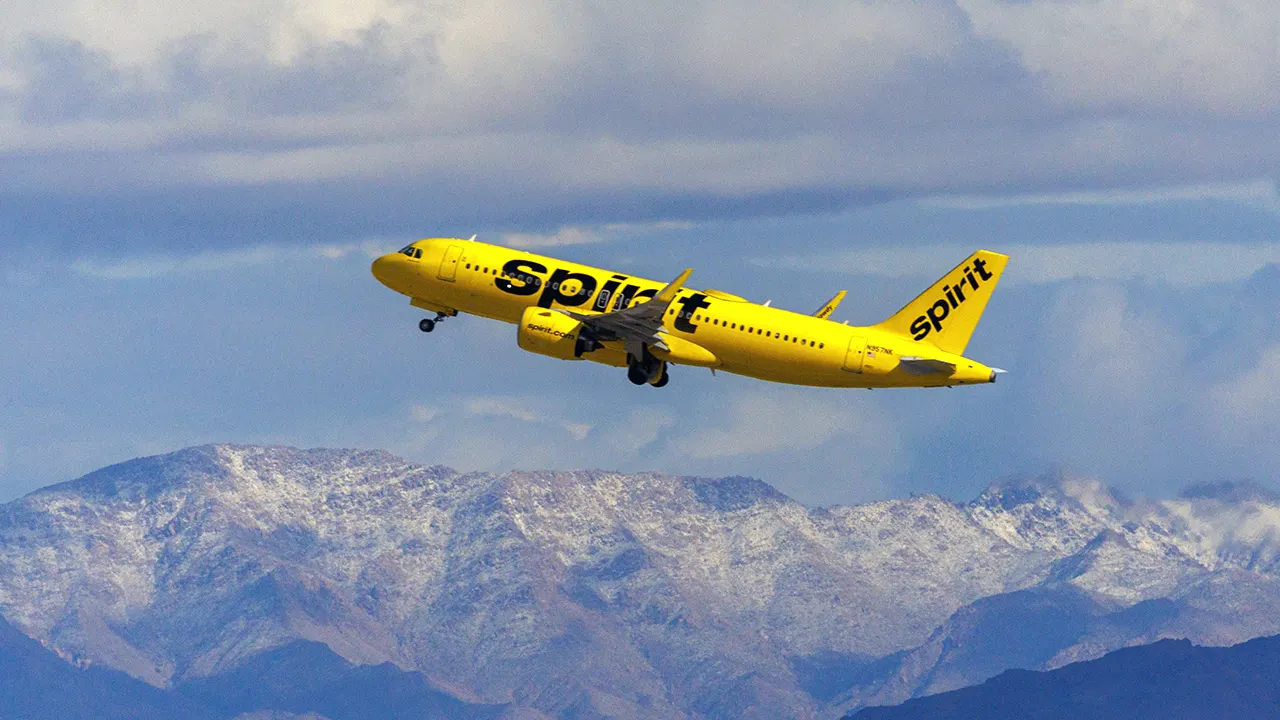
Fox News correspondent Madison Scarpino reports on Spirit Airlines shutting down, canceling all flights, causing travelers to rebook with other airlines, on ‘Fox Report.’
Spirit Airlines’ abrupt shutdown has left many travelers scrambling for answers, especially when it comes to getting their money back.
The budget carrier announced Saturday that it was canceling all flights as it started winding down operations “effective immediately.” Customers who booked directly with Spirit using a credit or debit card will be automatically refunded to their original form of payment, the airline said.
“All flights booked with credit and debit cards are in the process of being automatically refunded,” a spokesperson for Spirit told FOX Business. “The majority of guests who booked travel on a credit or debit card were refunded as of Saturday evening, with a small percentage continuing to process. Refunds may take time to appear in a guest’s account.”
Meanwhile, those who purchased tickets through third-party vendors — including travel agencies — will need to reach out to those providers to request refunds, according to the airline.
SPIRIT AIRLINES TO CEASE OPERATIONS AFTER FEDERAL GOVERNMENT BAILOUT FAILS TO MATERIALIZE
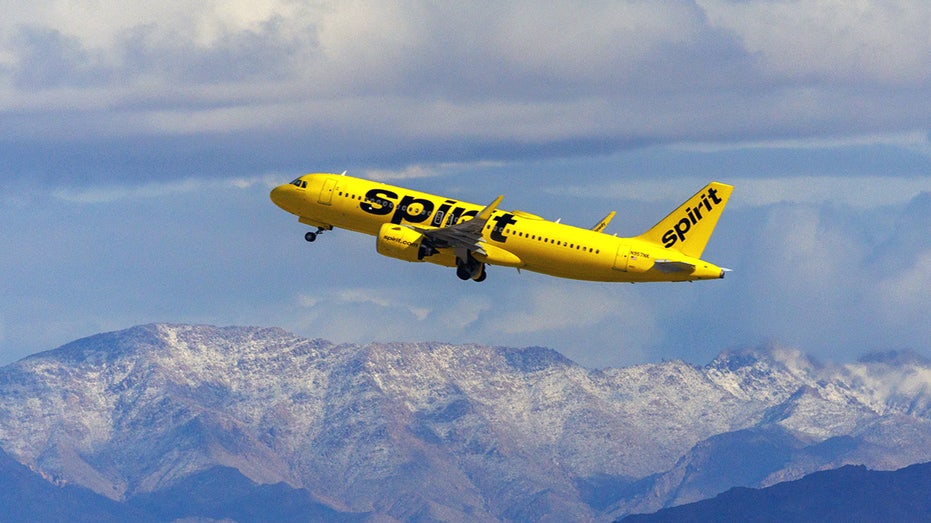
Spirit Airlines announced Saturday that it was canceling all flights. (Mike Blake/Reuters / Reuters)
Passengers who used vouchers, travel credits or loyalty points to book face more uncertainty.
Those claims will be handled through Spirit’s bankruptcy process. Customers can find more details on the airline’s restructuring website, the airline said.
The Department of Transportation (DOT) warns that refunds could become complicated as proceedings move forward, and outlines steps travelers can take to try to recover their money.
Options include contacting your credit card company to request a “chargeback,” checking traveling insurance coverage, or submitting a claim in bankruptcy court, according to DOT.
TRUMP TRANSPORTATION SECRETARY DUFFY ANNOUNCES RELIEF FOR SPIRIT AIRLINES FLYERS, EMPLOYEES

Passengers who used vouchers, travel credits or loyalty points to book their flights face more uncertainty. (Quinn Glabicki/Reuters / Reuters Photos)
Transportation Secretary Sean Duffy echoed that guidance during a Saturday press conference, while also pointing travelers to some rebooking options.
Major U.S. airlines — including United, Delta, JetBlue, and Southwest — are capping rebooking fares. Affected Spirit customers may be eligible for one-way tickets priced around $200, provided they can verify their original booking, according to Duffy.
“I would recommend that if you have a ticket with Spirit that you actually try to book with these airlines as soon as possible,” Duffy said. “These offers are not going to be open forever.”
American and Delta are also offering reduced fares on high-traffic Spirit routes, Allegiant has frozen prices on overlapping routes, and Frontier is offering up to 50% off base fares through May 10, Duffy wrote on X.
Spirit said the shutdown follows failed restructuring efforts, citing rising fuel costs and an inability to secure funding.
RETIRING SPIRIT PILOT WHOSE FINAL FLIGHT WAS CANCELED GETS TRIBUTE FROM COMPETITOR AIRLINE
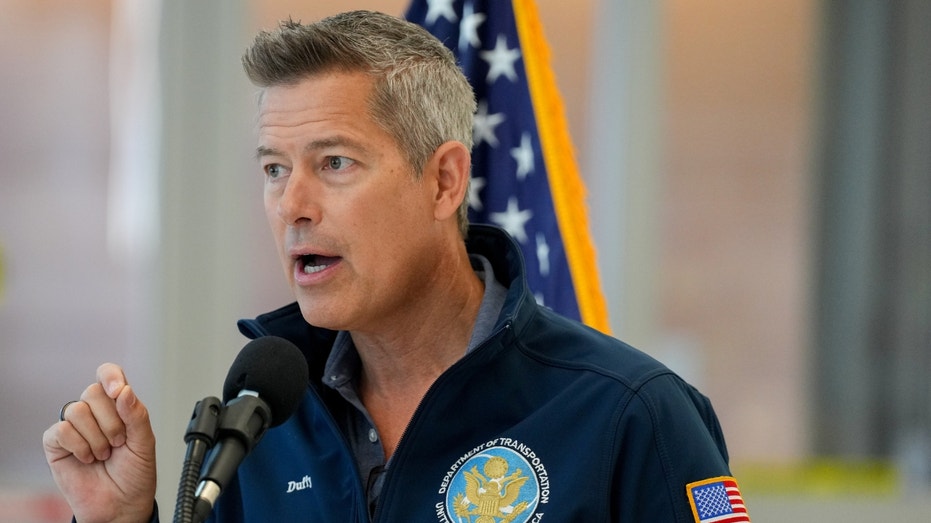
“I would recommend that if you have a ticket with Spirit that you actually try to book with these airlines as soon as possible,” Transportation Secretary Sean Duffy said. (Adam Gray/Bloomberg via Getty Images / Getty Images)
“For more than 30 years, Spirit Airlines has played a pioneering role in making travel more accessible and bringing people together while driving affordability across the industry,” Spirit’s President and CEO Dave Davis said in a statement.
“… Sustaining the business required hundreds of millions of additional dollars of liquidity that Spirit simply does not have and could not procure,” Davis added. “This is tremendously disappointing and not the outcome any of us wanted.”
GET FOX BUSINESS ON THE GO BY CLICKING HERE
The DOT did not immediately respond to FOX Business’ request for comment.
FOX Business’ Robert McGreevy contributed to this report.

Shubman Gill Explains Call To Back Washington Sundar In GT’s Tense Chase vs PBKS: ‘Best Batter’

‘This is fine’ creator says AI startup stole his art

Gary Neville names ‘horrible’ game that could cost Arsenal the title | Football

Manchester United reach agreement with Casemiro over contract clause amid transfer speculation

US brings back mandatory military draft registration

Steven Gerrard disagrees with Gary Neville over ‘shock’ Chelsea and Arsenal claim | Football


-

 Tech6 days ago
Register Renaming | Hackaday
-

 Politics6 days ago
Drax board avoid their own AGM, accused of greenwashing & environmental racism
-

 Fashion5 days ago
Kylie Jenner’s KHY Enters a New Era with ‘Born in LA’
-

 Tech7 days ago
Why Blue Badges Disappeared From Toyota Hybrids
-

 Tech6 days ago
Images of Samsung’s rumored smart glasses have leaked
-
 Tech2 days ago
Trump’s 25% EU auto tariff breaches Turnberry Agreement that also covers semiconductors and digital trade
-

 NewsBeat6 hours ago
Channel 5 – All Creatures Great and Small series 7 new post
-

 Business5 days ago
Most Commercial Energy Audits Miss the Real Losses
-

 Business6 days ago
(VIDEO) Charlize Theron Climbs Times Square Billboard to Promote New Netflix Thriller ‘Apex’
-

 Crypto World5 days ago
CFTC’s AI will review U.S. crypto registration applications, chairman tells CoinDesk
-
 Sports2 days ago
Paul Scholes issues Marcus Rashford reality check as agreement emerges over Man United star
-

 Business5 days ago
Barclay Brothers Avoid Bankruptcy: HSBC Drops High Court Petitions After IVA Deal
-
 Business4 days ago
Tesla Officially Registers Elon Musk’s Stock: What Investors Need to Know
-
 Entertainment6 days ago
Alicia Keys Calls Out Music Industry ‘Boys Club’
-

 Tech5 days ago
Get Ready for More Brain-Scanning Consumer Gadgets
-
 Crypto World6 days ago
Robinhood Phishing Scam Exploits Gmail Dot Feature to Bypass Security
-

 Entertainment6 days ago
Sister Wives: Janelle Posts New Scary Warning
-

 Crypto World6 days ago
Gmail Dot Trick Underpins Robinhood Phishing, Sending Real-Looking Emails
-

 Business3 days ago
Two Powerball Tickets Split $143 Million Jackpot in Indiana and Kansas
-

 Tech7 days ago
The next iPhone moment might come from an AI company, not Samsung or Apple
You must be logged in to post a comment Login