

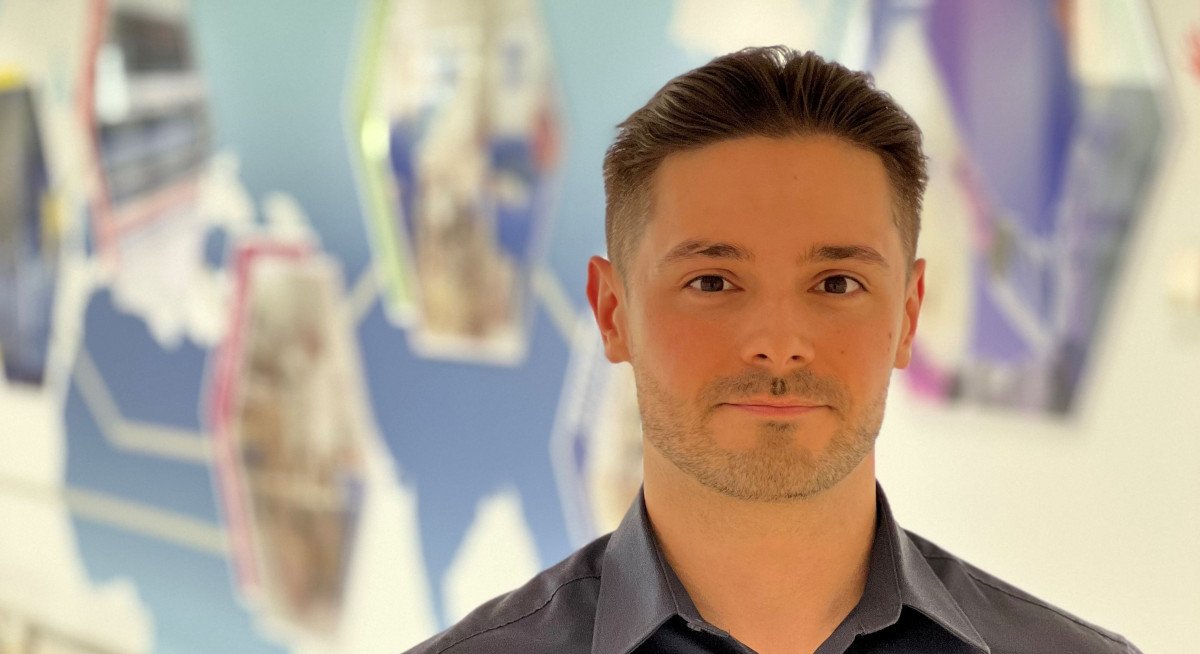

Amgen’s Luke Sheppard discusses Ireland’s biopharma space and how his career trajectory was powered by graduate opportunities.
“I was always interested in science at school, especially biology and physics. The turning point came when I spent two summers working with a mechanical engineer on the construction of a biopharmaceutical facility,” said Luke Sheppard, a senior associate for syringe manufacturing at Amgen.
“Seeing the facility take shape helped me to connect what I was learning in the classroom with the industry in real life. That experience ignited my passion and led me to study biotechnology at DCU.”
As part of his degree he completed an internship with Amgen during his undergraduate studies and moved on to Amgen’s FUEL graduate programme. He said, “Alongside this, I completed a master’s in pharma and biopharma engineering at UCC, which ties in closely with the work I do now.”
Can you describe Ireland’s biopharmaceutical space?
Ireland’s biopharmaceutical sector is dynamic and well-established. It is recognised as a centre of excellence for manufacturing. The sector is also highly connected, with a healthy sense of competition and a strong shared awareness of best practice. For anyone with a STEM background, it is an attractive industry because it offers real depth in the work as well as a wide range of potential career paths.
What is your day-to-day like if there is such a thing?
My role is quite diverse. My time is split between supporting and driving operations, contributing to projects and seeking solutions. Part of the day can involve reviewing data or meeting leadership to discuss strategy. Equally, I could be troubleshooting an issue on the production floor. The variety keeps things interesting. Collaboration is a big part of the job. You are constantly working with specialists and moving things forward together to achieve the same goal.
What skills do you utilise in your role and are any unexpected?
Technical knowledge is extremely important, but the skill that matters most is the ability to work as part of a team and to support colleagues. Clear, concise communication, relationship‑building and dedication take centre stage. There will always be new systems to learn, processes to improve and tools to adopt, but real progress ultimately depends on how well you work with others and how quickly you can build trust. The stronger your working relationships, the easier it is to ask questions, gain input and work efficiently when challenges arise. In a manufacturing environment, strong relationships truly make the difference.
You moved through the ranks via the FUEL programme, how was the experience?
The Amgen FUEL programme was an incredible experience as it gave me exposure to the highest levels of the business early on in my career. I completed three rotations across process development, quality assurance and utilities engineering. Each rotation lasted eight to nine months. In a relatively short time, I had to integrate into new teams, build relationships fast and learn new processes to contribute to meaningful work. Rotations teach resilience and determination, as well as creating visibility for participants. I had the opportunity to present my work to senior sites and European leaders, which accelerated my learning and professional development. The programme has allowed me to gain a strong understanding of operations and an insight into decisive leadership on the issues that matter most to our industry.
How can mentorship and internship opportunities positively impact a young person’s career in the long-term?
Mentorships and internships can have a long-lasting, positive impact. An internship allows graduates to experience the pace, teamwork and problem-solving involved in a working environment, which is difficult to replicate in a classroom. It can also help you understand what type of work suits you best. Mentorship adds another dimension, providing early-stage professionals with a broader perspective of industry and career development. Mentors can offer guidance, challenge thinking, and help you to spot career development opportunities that you may otherwise overlook. Over time, this support can make a meaningful difference in shaping long‑term career direction.
What do you enjoy most about your role?
I thrive on continued commitment, resilience and integrity on the issues that matter most to my team. I enjoy the variety of problem-solving, teamwork and planning to ensure multiple priorities are being achieved. I have grown personally and professionally by advancing my technical and analytical capabilities. I have also significantly broadened my range of soft skills.
Have you any predictions for how the biopharma space might evolve in 2026?
I expect regulation, automation and AI to shape the industry’s trajectory over the coming years. There is greater regulatory focus on reducing human interaction in manufacturing processes and tightening controls around unit operations. AI will play an increasingly central role, supporting research and process optimisation. By analysing real time data effectively, AI capabilities will identify anomalies and patterns, helping production line teams to work more efficiently.
Don’t miss out on the knowledge you need to succeed. Sign up for the Daily Brief, Silicon Republic’s digest of need-to-know sci-tech news.




























































You must be logged in to post a comment Login