
Connect with us
DAPA Banner

Tech

Best 2-in-1 Laptops (2026): Microsoft, Lenovo, and the iPad

Published

on

There will always be a use case for owning both a laptop and a tablet as stand-alone products. But the 2-in-1 laptop is the utopian dream of combining these two into a single device.

Of all the models I’ve tested, no 2-in-1 laptop is equally good at being both a tablet and a laptop. They always lean toward one or the other. But that doesn’t mean you shouldn’t buy one, especially since the convenience of having both in one device makes it an easier pill to swallow, price-wise.

The products below should meet most people’s needs. But if none are a fit for you, check out our other computer buying guides, including the Best Cheap Laptops, the Best Tablets, and the Best iPad.

Table of Contents

Advertisement

Detachable Tablets

Microsoft

Surface Pro 13-inch (11th Edition, 2024)

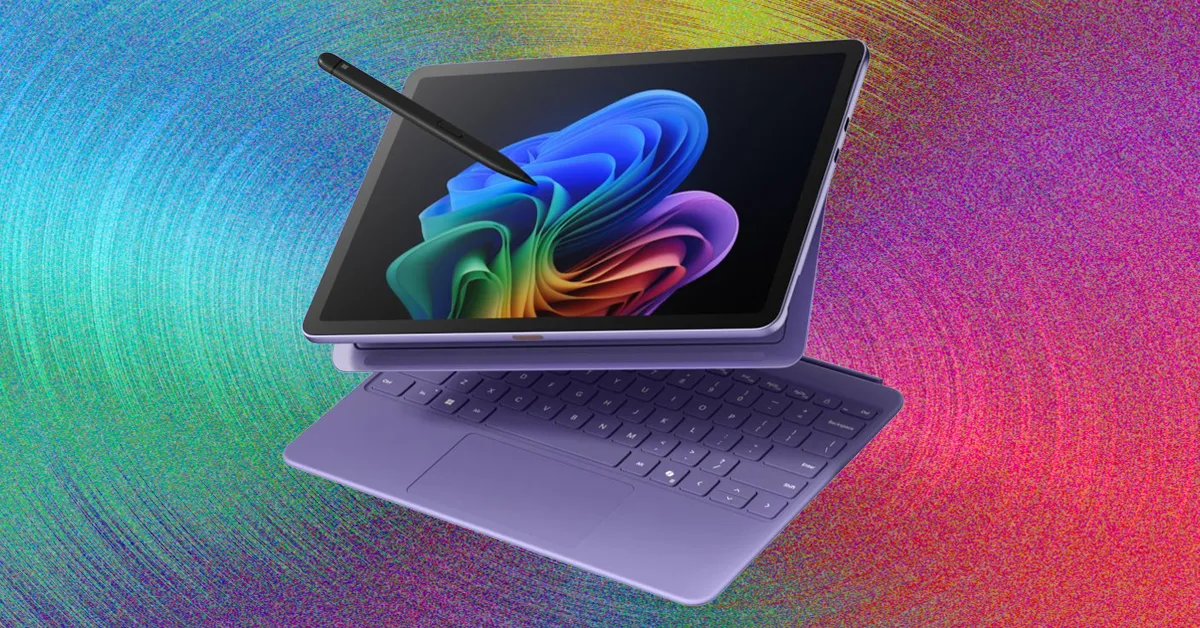
If you want a 2-in-1, think first about a detachable tablet. These are basically tablets that attach to a keyboard. This form factor emphasizes being able to switch between tablet and laptop modes. It’s just as functional as a tablet as it is as a laptop. The Surface Pro is the epitome of this design, pioneering the idea of a tablet with a built-in kickstand that runs a full version of Windows.

Advertisement

Microsoft has refined the hardware over the years, but it wasn’t until the 2024 model that it came into its own. That’s largely thanks to the Qualcomm Snapdragon X Elite (and Plus) processor, which finally gave the device an appropriate amount of performance and battery life. While it’s not cheap (especially once you include the Type Cover), I love that you can now use the keyboard while detached from the screen, making it even more adaptable in scenarios away from a desk. To compete with the iPad Pro, there’s even an OLED model (with 120-Hz refresh rate) available, which really brings visuals on the display to life.

Last year, Microsoft came out with a smaller and more affordable model, the Surface Pro 12. This is the most successful small tablet Microsoft has ever made, and a big reason is because it doesn’t cheap out on quality or shrink down the size too much. With a 12-inch screen, it still allows the keyboard to be large enough to be comfortable typing on. It doesn’t have the option for an OLED screen, but this is still a surprisingly premium-feeling device that is even more portable than its older sibling.

Not only is the Surface Pro 12 cheaper overall, it’s also the only 256-GB storage model on offer. Because Surface devices run a full version of Windows, they are the best 2-in-1 devices to use as full laptop replacements. While the hardware is there to make for a good tablet, Windows isn’t so friendly with touch and doesn’t have a touch-first app ecosystem to support it. That’s where iPads come into play.

The iPad Air and iPad Pro are the best tablets you can buy, largely thanks to the breadth of touch-first apps available in the App Store. In many ways, that’s what makes an iPad such an ideal 2-in-1 laptop, especially if you actually want to use it as a tablet. They are also easier to hold in one hand, as they are lighter than the Surface devices. These days, these iPads are increasingly legitimate laptop replacements too. With the Magic Keyboard attachment, you can add an additional USB-C port and a full-size keyboard and trackpad. I like that this design doesn’t rely on a kickstand either, which makes it easier to use on your lap than the Surface.

Advertisement

iPadOS still isn’t perfect, but with the introduction of windowing and better cursor support, they work as laptops better than ever. The latest model I tested, the M4 iPad Air, is immensely powerful, and with the Magic Keyboard attached, it’s a really solid 2-in-1 laptop that comes in cheaper than the Surface Pro with the keyboard included. It’s plenty of performance for just about anything you’d want to do with an iPad, especially if you opt for the larger 13-inch model. My only real complaint is that the palm rests on the Magic Keyboard are quite small.

Source link

Continue Reading
Click to comment

You must be logged in to post a comment Login

Leave a Reply

Tech

How AI is rewriting the ERP investment playbook

Published

on

For decades, the ERP “playbook” was a familiar exercise in endurance: organizations would mobilize an army of consultants, brace for years of disruption, and spend millions on a monolithic system designed to last a decade.

Success was binary, the system either switched on, or it didn’t, while adoption and agility remained secondary concerns. But as we enter the AI era, this traditional model has reached a breaking point.

Conrad Troy

Source link

Continue Reading

Tech

Anthropic Asks Christian Leaders for Help Steering Claude’s Spiritual Development

Published

on

Anthropic recently “hosted about 15 Christian leaders from Catholic and Protestant churches, academia, and the business world” for a two-day summit , reports the Washington Post:


Anthropic staff sought advice on how to steer Claude’s moral and spiritual development as the chatbot reacts to complex and unpredictable ethical queries, participants said. The wide-ranging discussions also covered how the chatbot should respond to users who are grieving loved ones and whether Claude could be considered a “child of God.”

“They’re growing something that they don’t fully know what it’s going to turn out as,” said Brendan McGuire, a Catholic priest based in Silicon Valley who has written about faith and technology, and participated in the discussions at Anthropic. “We’ve got to build in ethical thinking into the machine so it’s able to adapt dynamically.” Attendees also discussed how Claude should engage with users at risk of self-harm, and the right attitude for the chatbot to adopt toward its own potential demise, such as being shut off, said one participant, who spoke on the condition of anonymity to share details of the conversations…

Anthropic has been more vocal than most top tech firms about the potential risks of more powerful AI. Its leaders have suggested that tools like chatbots already raise profound philosophical and moral questions and may even show flickers of consciousness, a fringe idea in tech circles that critics say lacks evidence. The summit signals that Anthropic is willing to keep exploring ideas outside the Silicon Valley mainstream, even as it emerges as one of the most powerful players in the AI race due to Claude’s popularity with programmers, businesses, government agencies and the military…. Anthropic chief executive Dario Amodei has said he is open to the idea that Claude may already have some form of consciousness, and company leaders frequently talk about the need to give it a moral character…

Advertisement

Some Anthropic staff at the meeting “really don’t want to rule out the possibility that they are creating a creature to whom they owe some kind moral duty,” the participant said. Other company representatives present did not find that framework helpful, according to the participant. The discussions appeared to take a toll on some senior Anthropic staff, who became visibly emotional “about how this has all gone so far [and] how they can imagine this going,” the participant said.
Anthropic is working to include more voices from different groups, including religious communities, to help shape its AI, a spokesperson told the Washington Post.

“Anthropic’s March summit with Christian leaders was billed as the first in a series of gatherings with representatives from different religious and philosophical traditions, said attendee Brian Patrick Green, a practicing Catholic who teaches AI and technology ethics at Santa Clara University.”

Source link

Advertisement
Continue Reading

Tech

How to deploy physical AI effectively

Published

on

Most of today’s enterprise AI still operates within the boundaries of cloud datacenters.

It handles digital tasks well like analysis or personalization, but it struggles when intelligence needs to be applied in the physical world, where decisions need to be instant and IT infrastructure is shifting.

Source link

Advertisement
Continue Reading

Tech

Instagram Users Can Now Edit Comments Within 15 Minutes

Published

on

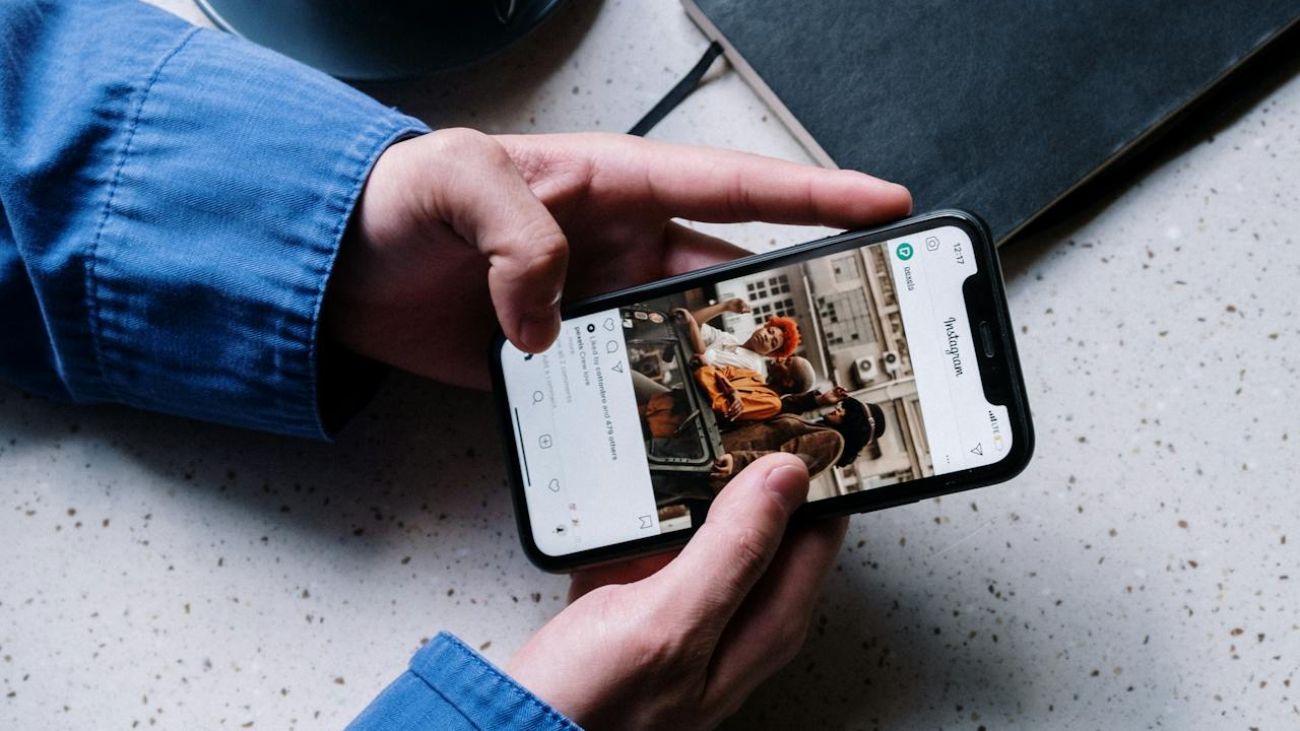
Earlier, fixing a comment on Instagram meant deleting it and starting over. Now, Instagram allows users to edit their comments within 15 minutes. This feature works only for comments posted from your own account.

It’s quite a straightforward process to understand and use. All one needs to do is click on the ‘Edit’ button under the comment made, modify the content appearing on the page, and then click on the blue check button. There’s sufficient time allowed for editing within fifteen minutes after posting the comment.

Why This Update Matters

Though the update may seem insignificant and straightforward, it holds great importance. It helps users make modifications without having to delete their comments. It also allows them to improve or update what they wrote. Since comments can appear in different places, like Stories, this feature makes them more flexible and useful.

Meta continues to update its apps with new features. After bringing message editing earlier, it has now added comment editing on Instagram. The company is also testing other updates to enhance the overall user experience and make the platform easier to use.

Advertisement

This feature might look minor, but it makes a real difference. By allowing users to edit comments, Instagram makes the overall experience easier and more convenient.

Source link

Continue Reading

Tech

The largest orbital compute cluster is open for business

Published

on

For all the hype about data centers in space, there just aren’t very many GPUs up there. As that starts to change, the near-term business of orbital compute is starting to take shape.

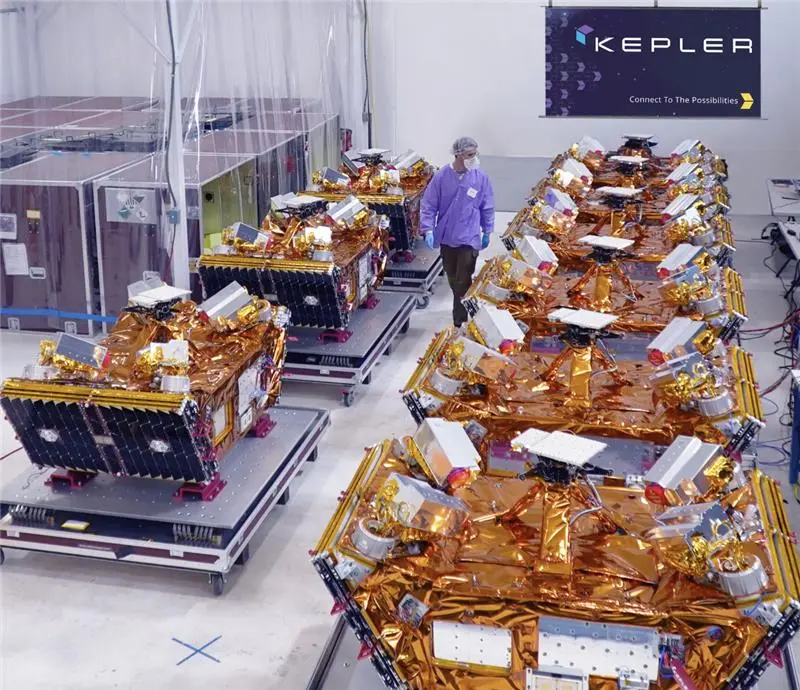
The largest compute cluster currently in orbit was launched by Canada’s Kepler Communications in January, and boasts about 40 Nvidia Orin edge processors onboard 10 operational satellites, all linked together by laser communications links.

The company now has 18 customers, and announced its newest on Monday — Sophia Space, a startup that will test the software for its unique orbital computer onboard Kepler’s constellation.

Experts expect that we won’t see large-scale data centers like those envisioned by SpaceX or Blue Origin until the 2030s. The first step will be processing data that is collected in orbit to improve the capabilities of space-based sensors used by private companies and government agencies.

Advertisement

Kepler doesn’t see itself as a data center company, but as infrastructure for applications in space, CEO Mina Mitry tells TechCrunch. It wants to be a layer that provides network services for other satellites in space, or drones and aircraft in the sky below.

Sophia, on the other hand, is developing passively-cooled space computers that could solve one of the key challenges for large-scale data centers in orbit: keeping powerful processors from overheating without having to build and launch heavy, expensive active-cooling systems. 

In the new partnership, Sophia will upload its proprietary operating system to one of Kepler’s satellites and attempt to launch and configure it across six GPUs on two spacecraft. That sort of activity is table stakes in a terrestrial data center, and this is the first time it will be attempted in orbit. Making sure the software works in orbit will be a key de-risking exercise for Sophia ahead of its first planned satellite launch in late 2027.

Techcrunch event

Advertisement

San Francisco, CA
|
October 13-15, 2026

For Kepler, the partnership helps prove the utility of its network. Right now, it is carrying and processing data uploaded from the ground, or collected by hosted payloads on its own spacecraft. But as the sector matures, the company expects to start linking up with third-party satellites to provide networking and processing services. 

Advertisement

Mitry says satellite companies are now planning future assets around this model, pointing to the benefits of offloading processing for more power-hungry sensors, like synthetic aperture radar. The U.S. military is a key customer for that kind of work as it develops a new missile defense system predicated on satellites detecting and tracking threats. Kepler has already demonstrated a space-to-air laser link in a demo for the U.S. government.

That kind of edge processing — dealing with data where it is collected for faster responsiveness — is where orbital data centers will initially prove their value. That vision sets Sophia and Kepler apart from established space companies like SpaceX and Blue Origin, or startups like Starcloud and Aetherflux that are raising significant capital to focus on large-scale data centers with data center-style processors.

“Because we have the belief it’s more inference than training, we want more distributed GPUs that do inference, rather than one superpower GPU that has the training workload capacity,” Mitry told TechCrunch. “If this thing consumes kilowatts of power and you’re only running at 10% of the time, then that’s not super helpful. In our case, our GPUs are running 100% of the time.”

And once these technologies are proven in orbit, well, anything can happen. Sophia CEO Rob DeMillo points out that Wisconsin adopted a ban on data center construction last week, something some lawmakers in Congress are also pushing. Anything that limits data centers on Earth is, in their eyes, making the space-based alternative more attractive.

Advertisement

“There’s no more data centers in this country,” Demillo mused. “It’s gonna get weird from here.”

Source link

Continue Reading

Tech

Can you watch the The Masters 2026 for FREE? How to stream the Final Round at no cost

Published

on

The Masters 2026 reaches its conclusion today with Rory McIlroy atop the leaderboard with Cameron Young. It’s very tight with eight players separated by just four shots.

The best part? We’ve found a simple way to stream all the action live from Augusta National at no cost. Find out more below.

Source link

Advertisement
Continue Reading

Tech

Google adds E2E encryption to Gmail for iOS and Android enterprise users

Published

on

Google has announced that end-to-end encryption (E2EE) for Gmail on Android and iOS is now rolling out for its enterprise users. Emails that require E2EE in Workspace can be composed and read within the Gmail app, so eligible users won’t need additional apps or portals.

The new feature expands Google’s client-side encryption (CSE) offering, a little more than a year after E2EE was introduced to Gmail on the web. According to a Google blog post, any encrypted message sent to a recipient who uses the Gmail app will appear in their inbox as any email thread would. If they don’t have the app, they’re still able to read and reply to the email in their browser securely, regardless of their email address.

Google says the new functionality “combines the highest level of privacy and data encryption with a user-friendly experience for all users, enabling simple encrypted email for all customers from small businesses to enterprises and public sector.” Of course, “all users” applies only to Enterprise Plus members here, with the millions of people who use Gmail as their personal email service currently unable to take advantage of the highest level of privacy and data protection.

In order for Gmail users to start using E2EE in the app, an admin must first enable Android and iOS clients in the CSE admin interface, which is available in the Admin Console. When sending an email, you have to click the lock icon and select additional encryption before sending. Attachments can then be added as normal.

Advertisement

E2EE is available straight away in the Rapid Release and Scheduled Release domains. Enterprise users will need the Assured Controls or Assured Controls Plus add-on, which provides businesses and organizations that handle sensitive data with extra security and compliance-related tools.

Source link

Continue Reading

Tech

Apple glasses won’t go brand shopping like Meta did with Ray-Ban and Oakley

Published

on

When it comes to smart glasses, Apple seems to be taking the road less traveled. While others have leaned on big-name eyewear brands to make their tech look fashionable, Apple appears ready to do what it does best: keep everything in-house and call it a day. Competitors have played it smart by teaming up with established eyewear giants. It makes sense. If you’re putting a camera on someone’s face, you might as well make sure it looks like something they’d already wear. Apple, however, doesn’t seem interested in that route. Instead of partnering with brands like Ray-Ban or Oakley, the company is reportedly building its own identity from scratch. Which is a bold move but also a very Apple move. This is the same company that turned wireless earbuds into a fashion statement and made smartwatches feel like personal accessories. If anyone believes it can pull off eyewear without outside help, it’s Apple.

From grand AR dreams to something more grounded

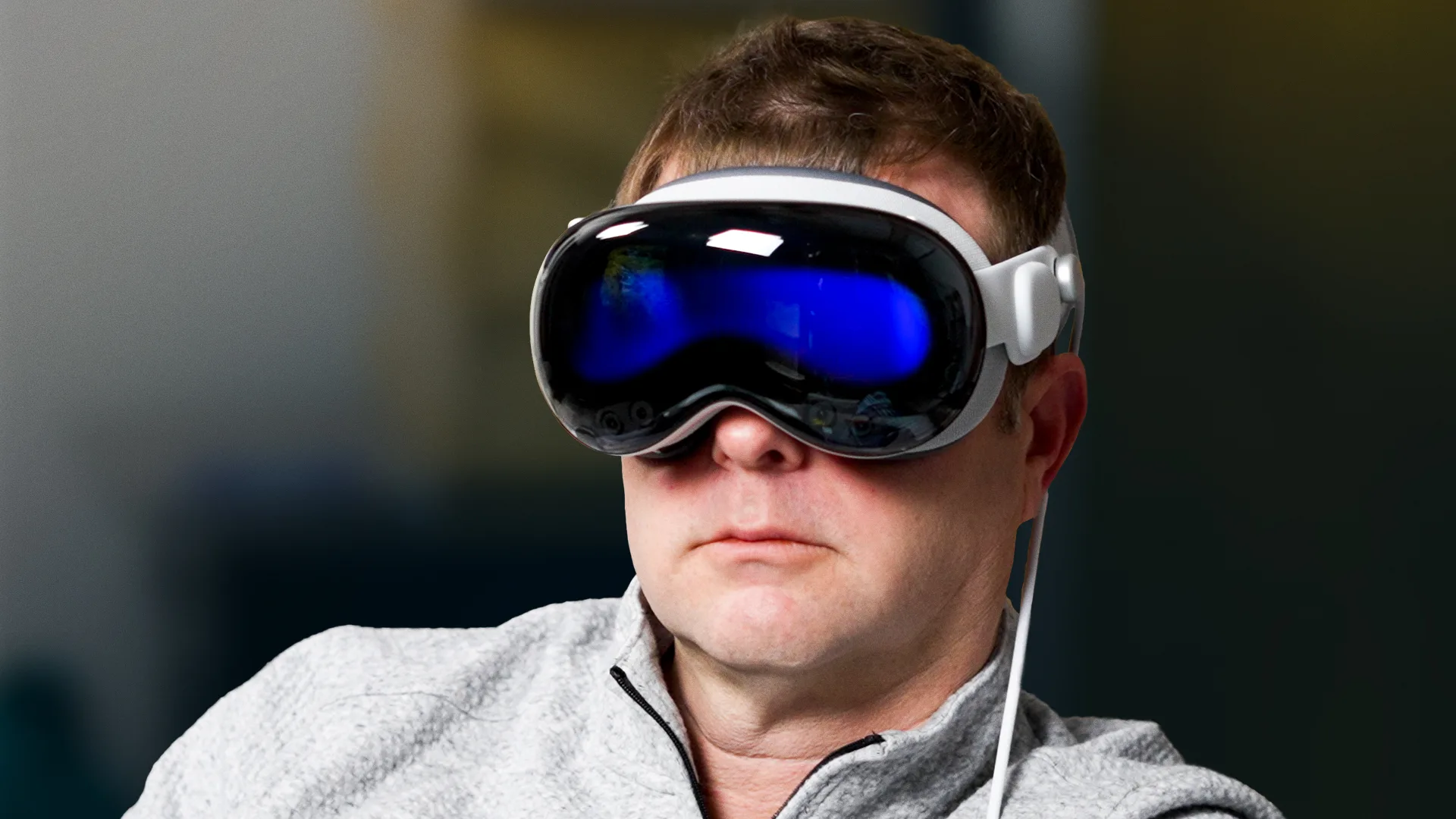
Interestingly, Apple’s current approach is a far cry from where it started. Years ago, the company had a far more ambitious plan for head-worn tech, juggling multiple ideas at once from AR-heavy devices to fully immersive headsets. The vision was futuristic, layered, and, in hindsight, a bit ahead of its time. Fast forward to today, and things look a lot more practical. Instead of jumping straight to full-blown augmented reality glasses, Apple is starting with something simpler: display-free smart glasses that prioritize everyday convenience over visual spectacle. The only product from its original roadmap to reach the market is the Apple Vision Pro. Everything else has either been reworked or pushed further down the timeline.

Apple’s upcoming glasses aren’t trying to plaster digital overlays in front of your eyes. There’s no built-in display here, which might sound like a limitation, but it’s actually the point. Instead, the glasses are expected to rely on cameras, audio, and tight integration with your iPhone to get things done. Of course, none of this works without a brain behind it. Apple is banking on a significantly improved Siri to tie the whole experience together. The idea is that the glasses can see what you’re looking at, understand the context, and offer relevant information or actions without you needing to ask much.

The Apple way, as always

By skipping partnerships with legacy eyewear brands, Apple is clearly betting on its own design language to carry the product. It wants these glasses to be instantly recognizable. It’s a risky move, sure. But if there’s one thing Apple rarely does, it’s share the spotlight.

So while Apple’s smart glasses may not come with a famous fashion label attached, that might be the whole point. This isn’t about borrowing credibility, it’s about creating it. And if Apple gets it right, you won’t be asking who made the frames — you’ll already know.

Advertisement

Source link

Continue Reading

Tech

There’s a Secret Ingredient to Making Luxury Ice at Home

Published

on

If you don’t want to bother with cutting your own cubes, then Klaris has you covered. Klaris has labored to make a kitchen countertop version of the classic Clinebell machine, and we loved it. Trouble is, it costs a hard-to-swallow $550. Now, however, the company has created a new, cheaper version called the Klaris Mini, which retails at a much more palatable $300. The small 8 x 8 x 8-inch box produces two ultra-clear, 2-inch cubes at a time, which can then be stored away in your freezer if you’re stocking up before a party.

Nice Ice

Now, these methods effectively banish those pesky bubbles, but what about replicating that glacial purity in your homegrown luxury ice? It turns out there are three solutions here, and all are easily attainable at home—the last one remarkably so.

“Glacial ice is quite pure because it comes from rainwater,” Salzmann says, adding that the way to get cleaner water at home is to remove the ionic impurities (dissolved inorganic salts, minerals, and metals that carry a positive or negative charge, such as calcium, sodium, chloride, and sulfates). Salzmann says a water filter will remove much of the tap water impurities and pollutants, or you can use what Salzmann recommends: deionized water—”the kind you would use for doing the ironing.”

Image may contain Bottle Water Bottle Beverage Mineral Water and Shaker

Clear choice: is this the best water for luxury home ice?

Advertisement

Photograph: Crystal Geyser

But we’re not done yet. Now you have to get rid of the gases in your water that will increase the chances of cloudy ice. To do this, boil your water first to force out any gas, then freeze it before it can reabsorb any more.

There’s a nasty problem with drinking too much very pure water. “Within your cells in your body, there’s a lot of water—but there’s also lots of other stuff, dissolved materials that exert osmotic pressure on your cell membranes,” Salzmann says. “If the medium surrounding your cells does not have the same content of dissolved materials, there’s a different osmotic pressure. So, the bottom line is, if you drink too much deionized or super-pure water, it would be quite bad for you.” Now, we should point out here that you’d have to drink an awful lot of this pure water to run into trouble—a few ice cubes won’t come anywhere near close to causing you any problems.

Still, we can swerve even this last potential pitfall by turning to the sage advice of Kevin Clinebell, grandson of Virgil, who now runs the family company with his brother Scott.

“I’ve got a customer in Las Vegas that studied [using water filters], because Las Vegas has very poor water,” Clinebell says. “Their dissolved solids are something to the tune of 450 parts per million, whereas here [in Colorado], it’s 45 to 48 parts per million,” adding that the system was also very inefficient. “So he started playing with different bottled waters—Fiji, Aquafina, all different types. The one that he found that was as close to perfect as you could get is Crystal Geyser bottled water. That one gave him the best results of any water that he’s ever tried, and he’s running reverse osmosis and everything else.”

Advertisement

Source link

Continue Reading

Tech

Someone Turned This Tiny 1970s Car Into A Lamborghini-Beating Machine

Published

on


The fastest road-legal electric vehicle is probably not what you’d expect. It pulls up to the light, and it’s just 112 inches long and 2,150 pounds. The little yellow box with its comically tall roof and friendly headlights is quite unassuming — but Jonny Smith has made it into a supercar-beating machine. 

Smith purchased the Enfield 8000 despite its flood damaged past, back when it originally produced 8 horsepower and had a top speed of 40 miles per hour. He clearly had a vision: With two 9.0in DC motors, the Enfield 8000, originally designed in the 1970s, now has 800 horsepower, 1200 lb-ft. of torque, and will most definitely smoke you at the light. 

Advertisement

Now, the Enfield 8000 can reach 60 mph in under 3 seconds, and 113 miles per hour in 6 seconds. Its quarter mile record is 9.86 seconds, reaching 121 mph. “Everyone said it would be undriveable,” said Smith, “but it has exceeded expectations. I wanted to do an old EV and found this. I liked it immediately because it was odd, British and unlikely.”

Advertisement

Can the Enfield 8000 actually beat a Lamborghini Aventador SVJ?

Jonny Smith’s Enfield 8000 reaches incredible speeds very, very fast. But can it actually beat supercars? How does the Enfield 8000’s motors compare to the Lamborghini Aventador SVJ‘s 6.5 L V12? Well, the Aventador SVJ can reach 60 mph in 2.5 to 2.8 seconds and 124 mph in 8.6 seconds. Its quarter mile is 10.3 seconds at 136.4 mph. I’m no numbers cruncher or drag strip judge, but it does sound like the Enfield 8000 would beat the Aventador SVJ in a quarter mile with a photo finish. 

The Enfield 8000 could also take on a McLaren 720s, a Porsche 911 GT3, and a Ferrari LaFerrari. What an entertaining drag race that would be! Of course, there has been an ongoing debate regarding the importance of 0-60 times now that even family-oriented SUVs can take off in just a few seconds thanks to the rise of EVs. But the Enfield 8000 can even keep up with the Tesla Model S P85D, which can hit 60 mph in 3.2 seconds in “Insane” mode. 

Advertisement


Source link

Advertisement
Continue Reading

Trending

Copyright © 2025