


Connect with us
DAPA Banner

Tech

Joyously arty App Store animations join Finder Guy in Apple's new social media push

Published

on

Apple Japan has launched a series of TV and social media videos with famous local artists and animators taking the App Store logo on creative journeys.

Yellow pot of creamy soup with floating vegetables arranged like a capital A, including carrot and celery sticks, onion slices, broccoli, and cabbage, on a bright yellow kitchen surface
One example of the many new interpretations of the App Store logo being used in Japan – image credit: Apple

There’s got to be someone new in Apple’s marketing team, because the company is suddenly playing around with its usually protected icons and images. It started with the cute Little Finder Guy on Instagram, it’s continued with an original Mac birthday cake, and now it’s the turn of the App Store.
As first spotted by advertising and marketing publication Creative Blog, Apple Japan has launched a new campaign to promote creative apps in the App Store. There are 16 pieces of artwork, made by 13 artists, and compiled into three videos.
Continue Reading on AppleInsider | Discuss on our Forums

Source link

Continue Reading
Click to comment

You must be logged in to post a comment Login

Leave a Reply

Tech

How can you make your memory work more effectively?

Published

on

Trinity College Dublin’s Elva Arulchelvan highlights five tips for improving both your working and long-term memory.

Click here to visit The Conversation.

A version of this article was originally published by The Conversation (CC BY-ND 4.0)

As a researcher investigating how electric brain stimulation can improve people’s powers of recollection, I’m often asked how memory works – and what we can do to use it more effectively. Happily, decades of research have given us some clear answers to both questions.

Memory essentially operates in three stages, with different brain regions contributing to each one.

Advertisement

Sensory memory, which can last only milliseconds, registers raw information such as sights, sounds and smells. These are first processed by the brain’s five primary sensory cortices (visual cortex for sights, auditory cortex for sounds and so on).

Working (short-term) memory holds and manipulates a small amount of information over several seconds or more. Think of this as your brain’s mental workspace: the system that lets you do mental arithmetic, follow instructions and comprehend what you’re reading. So it mainly involves the prefrontal cortex – the front part of your brain that supports attention, decision-making and reasoning.

Finally, long-term memory stores information more permanently, from minutes to a lifetime. This includes both ‘explicit’ memories (facts and life events) and ‘implicit’ ones (skills, habits and emotional associations).

For long-term memories, the hippocampus and temporal lobes – located deep within the brain, around the sides of your head near your temples – contribute largely to memories involving facts or life events, while the amygdala (near the hippocampus), cerebellum (at the back of the brain) and basal ganglia (deep in the brain) process emotional or procedural memories.

Advertisement

Working memory often acts as a conscious gateway to long-term memory – but it has its limits. In 1956, the American psychologist George Miller proposed that we can only hold about seven ‘chunks’ of information in our working memory at any time.

While the exact number is debated to this day, the principle holds: working memory is limited. And that limitation can shape how effectively we learn and remember things.

But you can also get your memory working more effectively. Here are five easy steps for improving both your working and long-term memory.

Put your phone away

Smartphones reduce your working memory capacity. Even just having a phone nearby – no matter if it’s face down and on silent – can reduce performance on memory and reasoning tasks.

Advertisement

The reason is that part of your brain is still subtly monitoring it. Even resisting the urge to check notifications consumes mental resources – which is why researchers sometimes call smartphones a “brain drain”. The solution is simple: put your phone in another room when you need to focus. Out of sight really does free up mental capacity.

Stop your mind racing

Stress and anxiety can take up valuable mental space. When you’re worrying about something or are distracted by racing thoughts, part of your working memory is already in use.

Relaxation training and mindfulness practices can improve both working memory and academic performance, probably by reducing stress levels. And if meditation feels intimidating, try breathing techniques such as ‘cyclic sighing’. Inhale deeply through your nose, take a second shorter inhale, then slowly exhale through your mouth. Repeating this for five minutes can calm the nervous system and create better conditions for learning.

Get chunking

Everyone can expand their working memory using the technique of chunking – grouping information into meaningful units. In fact, you probably already do it to remember some phone numbers or lists of words – breaking long sequences into bite-size chunks that your brain can recall as a mini-group.

Advertisement

The same principles apply if you’re delivering a presentation, to help your audience remember your key points more effectively. Chunking would involve grouping 10 case studies, say, into three or four themes, each with a short headline and single key takeaway.

Repeat this structure on each slide: one idea, a few supporting details, then move on. By organising information into meaningful patterns, you reduce cognitive load and make it more memorable.

Become a retriever

In the 19th century, German psychologist Hermann Ebbinghaus demonstrated how quickly we forget information after learning it. Within about 30 minutes, we lose roughly half of what we have learned, with much more fading over the next day. Ebbinghaus called this the forgetting curve. The light blue line on the chart below illustrates this.

The forgetting curve – and how to disrupt it

The forgetting curve. Image: Elva Arulchelvan (CC BY-SA 4.0)

Advertisement

However, there is a way of ensuring that more sinks in when you are trying to learn a lot of information in a short period of time: retrieval practice.

When preparing to give a talk or studying for an exam, rather than simply rereading your notes, keep testing how much you remember. Use flash cards, answer practice questions, or try explaining the material out loud without notes.

Memory works through associations. Each time you successfully retrieve information, you link the material to new prompts, examples and contexts. This builds more cues to accessing the information, and strengthens each memory pathway. Often when we ‘forget’, the memory isn’t gone – we just lack the right retrieval cue.

Give yourself a break

Research shows that memory is more effective when study or practice sessions are spread out, rather than massed together. If you are studying for an exam, build solid blocks of downtime into your revision schedule. The dark blue line on the chart above illustrates how spacing out your practice sessions can help you remember more information over time, by adjusting Ebbinghaus’s forgetting curve.

Advertisement

One study suggests leaving gaps between each revision session that equate to 10-20pc of the time left until your exam or presentation. So, if your deadline is five days away and you do hours of revision a day, you should still take between a half and full day off in between sessions. In other words, don’t overdo it – you probably won’t see the rewards!

If you only remember one thing from this article about improving memory, make it this. Memory isn’t just about intelligence, it’s about strategy. Small changes in how you study or work can make a real difference in how well, and how long, you remember crucial information.

The Conversation

By Elva Arulchelvan

Elva Arulchelvan is completing a PhD in psychology and neuroscience for the Lab for Clinical and Integrative Neuroscience in Trinity College Dublin (TCD), Ireland. She is also a lecturer in psychology for social work students in TCD. Arulchelvan’s PhD research focuses on memory and forgetting processes. In particular, her PhD research involves investigating peripheral nerve stimulation’s effect on memory and forgetting in both clinical and non-clinical groups. 

Advertisement

Don’t miss out on the knowledge you need to succeed. Sign up for the Daily Brief, Silicon Republic’s digest of need-to-know sci-tech news.

Source link

Advertisement
Continue Reading

Tech

Two suspects have been arrested for allegedly shooting at Sam Altman’s house

Published

on

OpenAI CEO Sam Altman’s house may have been the target of a second attack after San Francisco Police Department arrested two suspects for a reported shooting in the Russian Hill neighborhood. The SFPD said in a press release that police officers responded to a “suspicious occurrence of possible shots fired” at around 5:56 AM ET / 2:56 AM PT on Sunday, April 12.

SFPD’s Special Investigation Division took over the case and have since detained both 25-year-old Amanda Tom and 23-year-old Muhamad Tarik Hussein, seizing three firearms in the process with the help of a warrant. The two suspects were charged with negligent discharge.

According to the initial police report, as reported by The San Francisco Standard, two people inside a Honda sedan stopped in front of Altman’s property that spans from Chestnut Street to Lombard Street. The police report also noted that the passenger appeared to fire a round at the Lombard Street side of Altman’s property. The property’s security personnel reported hearing a gunshot and there was surveillance footage that recorded the incident, according to the report.

This could be the second instance of violence targeting Altman and his residence in a matter of days. On Friday, a 20-year-old man allegedly hurled a Molotov cocktail at Altman’s home, which caused a fire on one of the property’s exterior gates, according to SFPD. The San Francisco Standard reported that there were no injuries in either incident.

Advertisement

Source link

Continue Reading

Tech

The Rivian R1T Just Showed the Corvette Z06 What Heavy Torque Can Do

Published

on

Rivian R1T Corvette Z06 Drag Racing
Carwow’s Mat Watson crossed the Atlantic to organize this unusual showdown on a California ranch. Two vehicles lined up for a day of flat-out racing, with little in common other than a price tag of roughly $120,000. On one side, there’s the Corvette Z06 designed for cornering, while on the other is Rivian’s full-size electric truck, which has four motors and enough power to move a home. Despite the comparable price tag, their approach to speed could not have been more different.


At first glance, or rather, by looking at the spec sheets, it was evident that these two cars were not a good match. The Corvette Z06 features a 5.5-liter V8 engine that delivers 670 horsepower and 460 pound-feet of torque to the rear wheels via an 8-speed dual-clutch transmission. That’s a rather eye-watering setup for handling, but the real stats show the true difference: it weighs only 3,715 pounds, which is a significant benefit when attempting to travel fast. Meanwhile, the Rivian R1T Quad Motor produces an impressive 1,025 horsepower and 1,198 pound-feet of torque, but it all goes through a heavyweight 4-wheel drive system that weighs about 7,000 pounds. On paper, the truck should have been unstoppable from the outset, but the real world was a lot more unpredictable.

Sale


LEGO Technic Chevrolet Corvette Stingray Toy Car – Building Toy Set for Kids, Boys and Girls, Ages…
  • MUSCLE CAR MODEL – Let girls and boys race into an exciting building project with the LEGO Technic Chevrolet Corvette Stingray car model kit for…
  • CORVETTE CAR TOY – This set lets young builders assemble their own Corvette model before playing with the vehicle and exploring its functions
  • REALISTIC FEATURES – This Corvette model kit includes moving functions with steering, a moving 8-cylinder engine, differential and opening doors and…

Rivian R1T Corvette Z06 Drag Racing
The first test was a half-mile straight-line run, which began at roughly 30 mph in second gear to settle the engine and transmission before getting underway. The electric truck accelerated immediately away, thanks to its fast torque. It didn’t remain ahead for long; the Corvette soon came up and took the lead. Mat Watson later revealed that the truck had a bit of a limiting element, as it reached an electronically limited 112 mph early on. That means it couldn’t push as hard as the Corvette.

Rivian R1T Corvette Z06 Drag Racing
The bigger braking test came next, starting at 100 mph. Both vehicles approached the strip at full speed before the drivers slammed on the anchors. The Corvette stopped the quickest and remained rock solid thanks to its incredible carbon-ceramic brakes and small weight. The heavier Rivian took much longer to come to a stop and felt quite unstable when braking hard. That extra weight was certainly having a significant impact here.

Rivian R1T Corvette Z06 Drag Racing
The standing-start quarter-mile runs delivered the most drama. The Corvette edged over the Rivian by a hair in the first few runs, but the latter struggled to get moving under factory traction. Then Mat Watson came in and changed the settings to turn off traction control and enable full launch mode on the truck. Suddenly, everything changed. The Rivian caught up smoothly and sped down the track like a missile. In the last run, it crossed the line in 10.6 seconds at 130 mph. The Corvette clocked 11.3 seconds.

Advertisement

Source link

Continue Reading

Tech

You Should Be More Freaked Out by Shingles

Published

on

Like a lot of people, Ann Garner thought that shingles was a “mild” illness—until 2024, when she became sick with it herself. If she had known at the time that Norwegians call shingles helvetesild, literally meaning “hell’s fire,” or that the Arabic name for it translates to “belt of fire,” she might have been better prepared.

Shingles (herpes zoster) is a common viral infection that causes a painful skin rash and can trigger post-herpetic neuralgia (PHN), a form of long-term nerve pain that can last for years. The English name derives from the Latin for “girdle,” as the shingles rash most commonly occurs around the torso, although it can affect the face and eyes as well, as Garner discovered.

One in three people will get shingles in their lifetime, but the risk rises sharply after 50 or for anyone with a weakened immune system. The disease is triggered by the reactivation of the varicella zoster virus, the same one that causes chickenpox when it first enters the body. The virus can lie dormant in a person’s nervous system for years until it reactivates—often, but not always, when immunity starts to wane due to factors such as aging, immunosuppressant drugs, or acute stress.

Garner, a 73-year-old retired pharmacy administrator from Wales, in the UK, feels sure stress was a factor in her developing shingles. She had been under intense financial pressure over a large tax bill when, one July afternoon, she felt a strange tingling sensation along one side of her hairline above her forehead.

Advertisement

Within hours, the feeling had intensified—causing her severe pain—and began progressing down her face toward one eye. “It was like hundreds of invisible, tiny hot needles pricking my scalp and face,” she recalls.

Doctors recommended that Garner take acyclovir, an antiviral drug that can help reduce symptoms if taken within a 72-hour window of them appearing, and an acyclovir eye cream to protect her eye, as shingles can cause vision damage and lead to blindness if it affects the eye.

But even with treatment, Garner’s face and eyelid were soon covered in a hot red rash with angry blisters. “I couldn’t do anything to stop this sensation of being tortured by burning needles,” she says. “It was like my nerves were electrical wires that had been cut and they were fizzing and sparking.”

Despite shingles being common, it seems public perception has only recently started catching up with the severity of the condition. A 2025 study by researchers at the University of Bristol, UK, points to inadequate public health messaging and a lack of communication regarding patient experiences of the disease: “Limited literature about the experience and understanding of shingles suggests that people tend to think of it as minor until they experience it themselves,” researchers concluded.

Advertisement

Many people also fail to realize shingles can have a significant and long-lasting impact on their lives, says Martin Sollie, a consultant plastic surgeon at Oslo University Hospital in Norway. Sollie conducts research into the surgical management of chronic pain, including exploring whether grafting fat onto the skin could help reduce PHN. In 2022, he led a systematic review examining how shingles affects patients’ quality of life.

His meta-analysis of five studies, involving 2,519 patients in the US, Europe, and China, found those with an acute case of shingles had quality-of-life scores 15 percent below the norm for physical health and 13 percent below for mental health. “We were quite surprised that it did affect quality of life so much,” he says. “We know that if you have chronic pain, your quality of life is affected, but it’s very uncommon for a disease that is temporary—and not deadly—to have such an effect.”

Source link

Advertisement
Continue Reading

Tech

No, you don’t need a new turntable this Record Store Day, just use this cheap extra to clean your vinyl

Published

on

The act of choosing the best turntable — and the best stereo speakers, and amplifiers, and cables, and so on — is all part of the pursuit of the perfect analog sound. But you might be barking up the wrong tree in the pursuit of perfection.

As part of Record Store Day 2026 on April 16, audiophiles are going to be supporting their local music store, gushing over the new exclusive releases, and likely comparing all the new Hi-Fi kit upon which to listen to their new records.

Advertisement

Source link

Continue Reading

Tech

Whoops: Russia’s Attempt To Block VPNs Causes Major Banking Failure

Published

on

from the whoops-a-daisy dept

VPNs (when integrity is maintained and the owners aren’t sleazy scammers) have long been the mortal enemy of shitty, surveillance-happy governments.

And when shitty, surveillance-happy governments try to block or degrade the use of VPNs, bad things can happen. As Russia found out recently when a ham-fisted effort to block VPN users from accessing Telegram resulted in a massive outage for online banking across the entire country.

Last February Russia tried to delete WhatsApp and Telegram from its version of the internet in the hopes of driving Russians to Max, the country’s approved “everything app.” Max has no encryption or privacy protections, making it easier for Vladimir Putin’s government to engage in mass surveillance of the public’s online activities.

VPN use makes that harder. An estimated 50 million Russians still use VPNs to access Telegram, according to CEO Pavel Durov (happily posting away over at Elon Musk’s right wing propaganda website):

Advertisement

So last May, Russia’s Digital Minister Maksut Shadayev announced an effort to “reduce VPN ​usage.” But Durov says those efforts have been a broad failure, recently resulting in a massive outage (Bloomberg paywalled, Gizmodo alternative) for all online banking apps in Russia:

“But amid its effort to weaken VPNs on Friday, according to Bloomberg, accounts from “The Bell and other Russian media” banking apps were disrupted. This disruption might have been, “caused by an overload in the filtering systems run by Russia’s communications watchdog, according to the reports,” Bloomberg explained, “with experts warning that major restrictions risk undermining network stability.”

Something similar happened in 2018. Whoops. Apparently the Russian government was so eager to ban VPNs, they erroneously targeted IP addresses tied to banking infrastructure owned by Sberbank, VTB, and T-Bank, demonstrating the fragile nature of centralized financial infrastructure. The outage briefly made mobile payment apps unusable, making cash the only viable transaction option for part of a day.

Given that shitty autocratic governments (like our own) are incapable of learning anything useful from experience, you can expect the problem to repeat itself.

Filed Under: autocracy, banking, bans, freedom, outage, russia, spying, surveillance, vpns

Companies: telegram

Advertisement

Source link

Continue Reading

Tech

Slate Auto raises $650M to fund its affordable EV truck plans

Published

on

Jeff Bezos-backed electric vehicle startup Slate Auto has raised another $650 million as the company prepares to put its first affordable pickup trucks into production by the end of 2026.

The carmaker said Monday that the Series C funding round was led by TWG Global, a firm run by Guggenheim Partners chief executive (and Los Angeles Dodgers owner) Mark Walter and investor Thomas Tull. Slate Auto’s press release thanked “visionary investors” but the company did not name any others who were involved in the fundraise.

The new round means Slate Auto has raised roughly $1.4 billion to date. Previous investors have included General Catalyst, Jeff Bezos’ family office, VC firm Slauson & Co., and former Amazon executive Diego Piacentini, as TechCrunch first reported last year.

The company is also loaded with Amazon DNA. Beyond its investors, it was co-founded by Amazon’s former Consumer CEO Jeff Wilke. The heads of Slate’s mobility, user experience/user interface, e-commerce, fleet sales, and HR teams all used to work at Amazon. And, the company recently installed former Amazon Marketplace VP Peter Faricy as CEO. (Former CEO and Chrysler veteran Chris Barman moved to a new role as “President of Vehicles.”)

Advertisement

Slate Auto’s Series C comes at a turbulent moment for the electric vehicle market in the United States. Major automakers are pulling back plans to launch electric vehicles here, especially after the loss of the $7,500 federal tax credit last year. Tesla’s overall sales have declined two years in a row. Newcomers like Rivian and Lucid Motors have struggled to reach scale, though both of those companies are launching new, more affordable models this year.

Founded in 2022, Slate Auto is taking a different approach than pretty much any other automaker. The company is targeting the extreme low-end of the market with a bare-bones electric truck that is expected to start in the mid-$20,000s. Customers will be able to customize the truck in various ways for more money, including adding an SUV conversion kit for around $5,000.

The company originally planned to price the truck around $27,000, and shortly after it emerged from stealth in 2025 was promoting a starting price of “under $20,000” with the federal tax credit applied. Final pricing is now coming in June, according to the company.

Slate Auto has drawn a fair amount of interest even with the loss of the federal tax credit. The company has racked up more than 160,000 refundable reservations for its EV. The company recently said that it tapped Faricy as its new CEO in part to get working on converting these reservations into paid orders. Slate’s also spending a few hundred million dollars renovating a former printing factory in Indiana where it plans to build the EVs.

Advertisement

Source link

Continue Reading

Tech

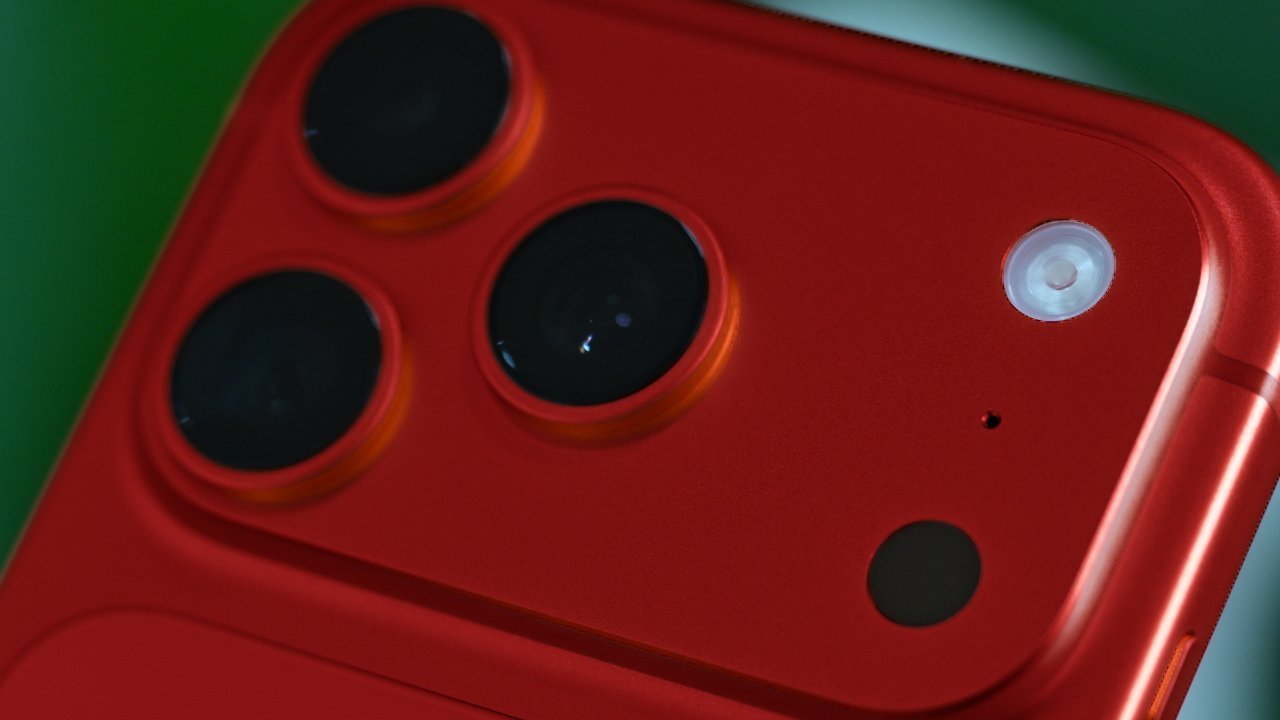
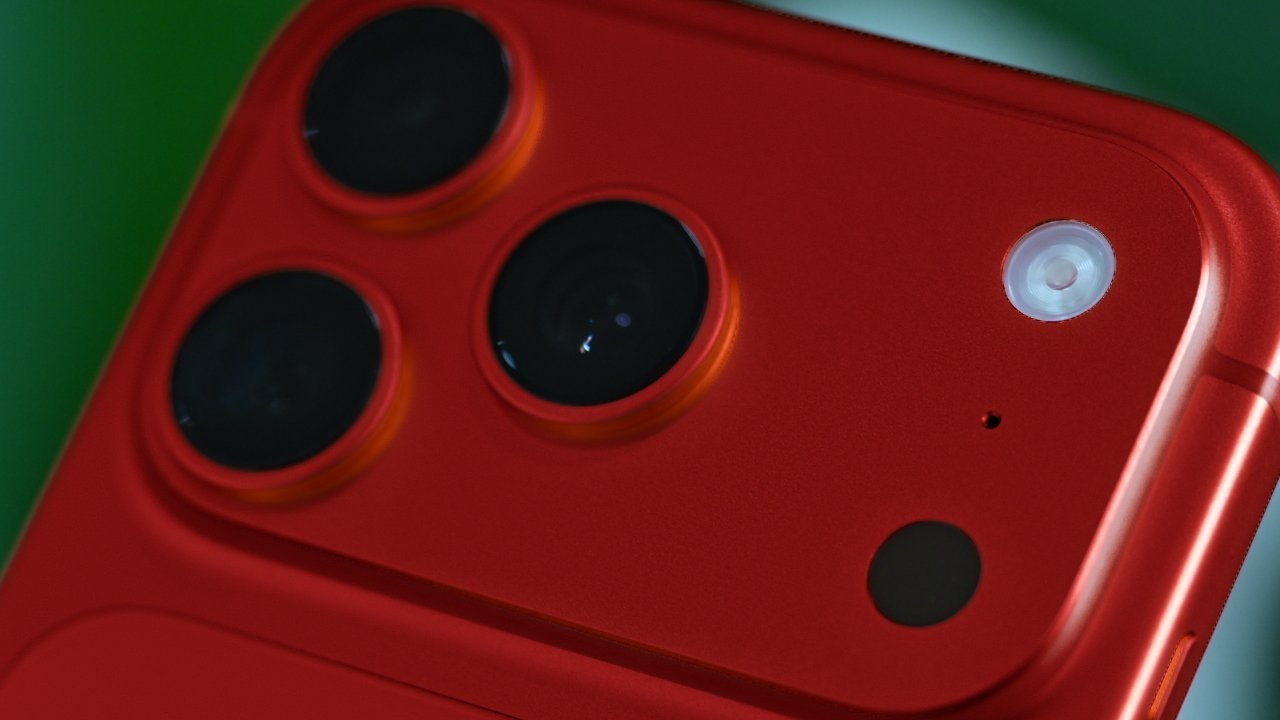
Seeing red: Another leaker jumps on the crimson iPhone 18 Pro bandwagon

Published

on

The next iPhone 18 Pro models will sport a deep red color, a frequent leaker claims. However, their source is apparently upcoming Android device launches.

Close-up of a red smartphone's back showing three large black camera lenses, a small black sensor, and a circular white flash against a softly blurred green background
Mockup of a deep red iPhone 18 Pro Max

On April 11, prominent leaker Digital Chat Station posted to Weibo about the iPhone 18 Pro. The machine-translated post claims that the iPhone 18 Pro “has a high probability of being crimson.”
Somewhat adding a little bit of confusion to the mix is the rest of the post. Apparently, the forecast is based on the leaker seeing “the next flagship of the Android camp proofing this color.”
Rumor Score: 🤔 Possible
Continue Reading on AppleInsider | Discuss on our Forums

Source link

Continue Reading

Tech

Cork Airport to get Ireland’s largest solar carport next year

Published

on

Around 3,700 solar panels and five invertors are expected to generate 1.5 GWh of renewable energy annually.

Cork Airport has announced a new solar-power-roofed car park that could generate up to 20pc of the airport’s electricity needs. Construction for the 1.7 MW ‘carport’ – Ireland’s largest-ever – is expected to conclude by August 2027.

The project is a part of the DAA Group’s €200m investment commitments across Cork Airport. The Irish government has backed the project with €2m in exchequer funding under the Regional State Airports Sustainability Programme.

The new carport is being built over the existing Holiday Blue car park, in collaboration with Greenvolt Next, a Lisbon-based renewable-energy solutions provider. The company’s Irish wing, based out of Waterford, has installed photovoltaic panels for the likes of pharma firm Temmler, AW Ennis, fintech Fexco and the Dublin Airport.

Advertisement

The first phase of the carport rollout is expected in early summer 2027. A second one is expected in October. Current plans envisage around 3,700 solar panels and five invertors generating 1.5 GWh of renewable energy each year for the airport. The installation is also expected to lower CO2 emissions by more than 350,000 kg.

The carport will be followed up by an extension to the existing Holiday Blue Car Park with an additional 669 parking spaces. 32 of these spots will be dedicated spaces for people with reduced mobility. The project comes just after Cork Airport experienced its busiest year in 2025 with 3.46m passengers.

“The project was supported with over €2m in exchequer funding under the Regional State Airports Sustainability Programme. This programme was developed in 2024 to support regional state airports to reach their carbon emission reduction targets and build resilience against climate change,” said Minister for Transport and Minister for Climate, Environment and Energy Darragh O’Brien, TD.

Niall MacCarthy, the managing director of Cork Airport, added: “We understand the need for more sustainable operations at airports, which is why Cork Airport is investing in Ireland’s largest solar carport today.”

Advertisement

Last September, Cork Airport was caught in a cyberattack that targeted a number of other European airports including Dublin, Brussels, Berlin and UK’s Heathrow. The attack disrupted the airports’ baggage tagging and handling systems.

Don’t miss out on the knowledge you need to succeed. Sign up for the Daily Brief, Silicon Republic’s digest of need-to-know sci-tech news.

Source link

Advertisement
Continue Reading

Tech

Mixue beat them to S’pore by 2 yrs. BingXue opened 12 outlets anyway.

Published

on

Being second to market doesn’t mean being too late

In Sept 2021, in the middle of a global pandemic, James Leong and Joyce Lim packed up their lives in Singapore and moved their young family, including their three-year-old child, to Shanghai.

James had been promoted into an APAC regional role at his chemical raw materials company, while Joyce, coincidentally, was offered a China Representative position when she informed her employer of the relocation.

For a while, everything seemed to fall into place. But two years later, that sense of stability was shaken.

Joyce lost her job due to a company restructuring in Oct 2023. Then, in Mar 2024, feeling increasingly disillusioned with corporate life and sensing the fragility of long-term career security, James made a difficult choice of his own, resigning from what he describes as a “high-paying job.”

Advertisement

I was sick of corporate life and knew deep inside that it was a matter of time before my career would be affected if I continued on the same path.

Now, with both of them no longer tied to the careers that had brought them to China, the couple began looking for something else: a business they could build on their own terms. In 2024, they founded NutriSmart Group to explore opportunities in the F&B industry.

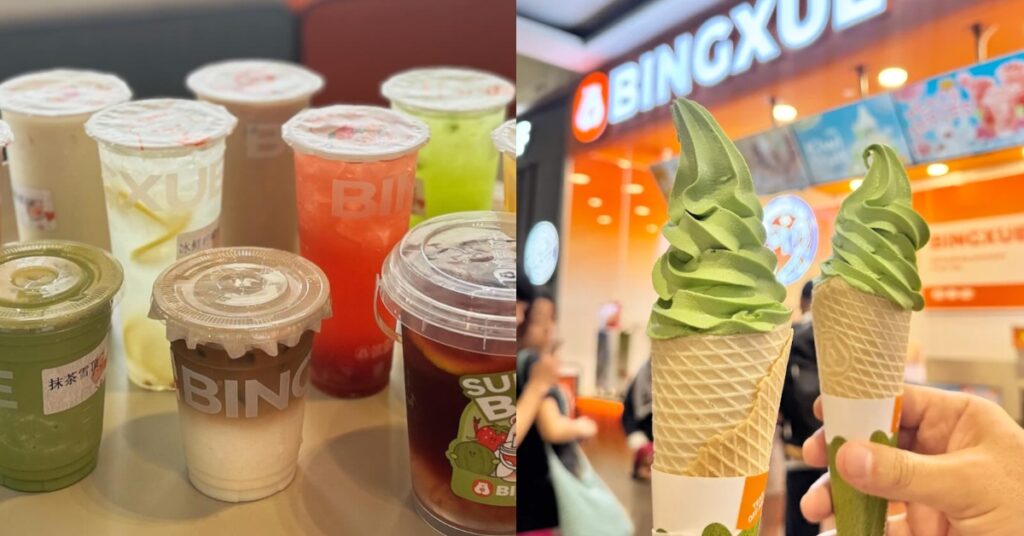
They didn’t have to look far. At a catering conference in Shanghai, the couple came across BingXue: a Chinese franchise built around fresh fruit teas and a signature S$1 ice cream cone. James was struck immediately, not just by the affordable price point, but by the quality behind it.

They began to seriously consider bringing the brand to Singapore, but there was just one problem: back home, a nearly identical brand, Mixue, had already become a fixture. The Chinese bubble tea and ice cream giant had arrived earlier, built strong brand recognition, and firmly captured the mass-market space: affordable, accessible, and quality-driven.

Still, James and Joyce went ahead anyway. Not out of naivety, but conviction—believing that being second to a market doesn’t always mean being too late for it.

Advertisement

There’s still room for another player

BingXue ice cream and drinksBingXue ice cream and drinks
Image Credit: BingXue/ Travel & Food via Google Reviews

Conviction alone isn’t enough to validate a business. Before making any commitments, James and Joyce did their homework.

On the surface, BingXue and Mixue offered very similar products: S$1 ice cream cones, milk tea, fruit teas, and a range of affordable desserts designed for the mass market. The main difference between the two was BingXue’s stronger emphasis on matcha-based offerings.

Even so, the couple still believed there was a gap in Singapore’s mass-market F&B space—it was not fully served.

While cheap drinks are widely available in Singapore, many lean heavily on artificial flavours and lower-quality formulations. BingXue’s use of fresh fruit in its teas stood out in contrast, offering a sense of quality that was often missing at that price point.

And although Mixue had the first-mover advantage, launching in 2022 and already establishing a local footprint of over 10 outlets by 2024, there was still room for another player.

Advertisement

Right place, right time for regional expansion

The opportunity to bring BingXue to Singapore came exactly at the right moment.

As it happened, the brand was already expanding aggressively across Southeast Asia, entering markets including Indonesia, Malaysia, Vietnam, and Cambodia between 2022 and 2024. Singapore was a logical next market.

“When we approached them, they were genuinely excited about the opportunity,” James recalled. “They invited us to visit their production facility and headquarters in Shandong Jinan… the rest, as they say, is history.”

BingXue ice creams BingXue ice creams
Image Credit: Dana, love ling via Google Reviews

After signing the Letter of Intent to become the master franchisee for Singapore, Joyce took on the role of market validator.

She returned to Singapore and spent full days stationed outside different Mixue locations—especially those in weaker locations—simply observing customer traffic and counting how many cups of drinks and ice cream cones were sold throughout the day.

Advertisement

Because BingXue and Mixue target the same mass-market segment, the goal was to understand how well this type of concept was already performing in Singapore.

The data they gathered, combined with their understanding of the BingXue business model, ultimately gave the couple the confidence to commit.

A six-figure investment to bring BingXue to Singapore

BingXue Haji Lane outletBingXue Haji Lane outlet
Image Credit: BingXue/ David Park via Google Reviews

Though the couple declined to share full negotiation details, they invested a significant sum in the “high six-figures” to bring BingXue to Singapore, drawn entirely from their personal savings.

A large portion of this investment went into building the supply chain, including setting up import routes for raw materials, equipment, and inventory needed to run the stores in Singapore.

But the biggest challenge wasn’t just financial. It was finding the right locations.

Advertisement

Singapore’s retail landscape proved difficult to break into, with landlords cautious about unfamiliar new brands. The couple faced multiple rejections during their search.

The scepticism was understandable. A new Chinese food brand with no local track record was a risky tenant for landlords accustomed to proven operators. But the couple’s persistence paid off: they successfully opened two outlets in Oct 2024, at Yishun Junction 9 and Changi City Point.

BingXue outletsBingXue outlets
BingXue’s outlets at Yishun Junction 9 (left) and Changi City Point (right)./ Image Credit: BingXue/ Muhammad Shaifullah via Google Reviews

Opening one outlet at Yishun and another at Changi might seem random, but it was a deliberate strategy by the couple.

Junction 9 allowed them to test the concept in a community setting—a neighbourhood mall with a regular customer base. Changi City Point, on the other hand, offered high footfall and broad visibility, particularly due to its proximity to Singapore Expo, which draws visitors from across the island.

“Together, these two locations would give us a well-rounded read on how different customer segments will respond to BingXue,” James explained.

Advertisement

Localising to Singaporean tastes

BingXue Bonsai Garden outletBingXue Bonsai Garden outlet
A BingXue outlet at Bonsai Garden./ Image Credit: BingXue

To better appeal to Singapore consumers, the couple didn’t bring everything over unchanged—they localised BingXue’s offerings.

One of the first adjustments James and Joyce made was reducing the default sugar level in drinks. Based on their observations, Singapore customers tend to be more health-conscious, so they set 50% sugar as the standard instead of the original formulation.

“It’s a subtle but important change, and customers notice it,” said James.

Beyond that adjustment, BingXue’s headquarters gave them flexibility with branding but maintained oversight on the menu and pricing. After all, the China team understood their product, but James and Joyce understood their market.

We work closely with BingXue HQ on menu and pricing decisions. On branding and marketing, we have considerable flexibility. They trust that we, as Singaporeans, understand our consumers better than they do.

The support from headquarters turned out to be far more hands-on than expected.

Advertisement

Despite Singapore being a relatively smaller market compared to Indonesia or Malaysia, the founder and CEO of BingXue visited with senior management twice in 2025 alone. Daily WeChat updates, strategic guidance, and problem-solving became an ongoing part of how they work together.

Expanding BingXue to 12 outlets

In the early days, when James and Joyce opened their first two BingXue shops, customer confusion with Mixue was inevitable. Some walked in expecting Mixue products, only to realise after ordering that the two brands were not the same.

Many even asked if the brands were related. The couple often had to explain the differences and clarify that while the concepts were similar, the two businesses were separate.

Mixue ice cream and bubble teaMixue ice cream and bubble tea
Image Credit: BingXue/ Void via Google Reviews

Over time, as awareness of the brand grew, so did interest from franchise partners. Since launching about a year and a half ago, BingXue has scaled to 12 outlets across Singapore.

Securing retail space has also become easier. “Today, mall leasing managers proactively approach us with suitable units,” James said. “That’s a meaningful reversal from our early days, and it reflects the growing recognition of BingXue.”

Advertisement

Most outlets have been able to break even within one to two months. But what the couple is most proud of is that many of their stores have been cash-flow positive from the “very first month” of operations.

In F&B, that’s rare—most businesses are bleeding cash in the early months just to keep the lights on. For our franchisees, that means from day one, the business is already covering its own costs and generating profit.

To support this, the team works closely with franchisees at every stage, from site selection and lease negotiations to renovations, licensing, and staff training.

Still, scaling hasn’t been without its challenges, especially in Singapore’s highly competitive F&B landscape.

Supply chain management has been critical, with the team needing to maintain healthy inventory levels without over-committing working capital, especially given the limited shelf life of key ingredients. Their logistics partners also had to scale in lockstep with the brand’s expansion.

Advertisement

“Many can sell ice cream for S$1, but not many can make money”

BingXue Bonsai Garden outletBingXue Bonsai Garden outlet
Image Credit: BingXue

Singapore’s F&B landscape is only becoming more competitive. Coupled with the current global uncertainty in the Middle East, James expects transportation and material costs to increase significantly in the coming weeks and months.

To survive, he believes brands need to be clear about where they compete.

For BingXue, that meant focusing squarely on the lower end of the mass market. While margins are healthy in percentage terms, the low price points mean the business relies heavily on volume to stay profitable.

This is where economies of scale matter. By tapping into BingXue’s production capabilities in China, the brand benefits from lower costs at higher volumes—making it possible to keep prices low while remaining sustainable.

Many brands can sell ice cream cones for S$1. But not many can make money from this S$1. Even fewer brands can sell a good quality ice cream cone at S$1 and still make money. 

From the opening of its first outlet in Oct 2024 to Mar 2026, BingXue has sold more than 1.2 million ice cream cones across all its Singapore outlets.

Advertisement

Looking ahead, James and Joyce plan to continue expanding the brand’s footprint locally. Interestingly, while their early franchisees had no F&B background, they are now seeing more experienced operators come on board, an indication of growing confidence in the brand.

The team is targeting at least 50 outlets within the next three years. “With LOIs already signed and strong inbound interest from experienced F&B operators, the path to 50 is already being paved,” added James.

As for NutriSmart, the couple intends to grow it beyond BingXue, bringing in more overseas franchise concepts and building a platform that helps aspiring entrepreneurs start their own businesses with a proven model.

  • Find out more about BingXue here.
  • Find out more about NutriSmart Group here.
  • Read other articles we’ve written on Singaporean businesses here.

Featured Image Credit: James Wong/ Quinn Lee via Google Reviews

Advertisement

Source link

Continue Reading

Trending

Copyright © 2025