LOS ANGELES — “The Super Mario Galaxy Movie” blasted past $629 million in global ticket sales Monday, cementing its status as Hollywood’s highest-grossing release of 2026 so far and proving that families still flock to theaters for colorful Nintendo adventures despite mixed critical reviews.
Super Mario Galaxy
The animated sequel from Universal Pictures and Illumination added an estimated $69 million in its second weekend from 4,284 North American theaters, bringing its domestic total to $308.1 million. International markets contributed roughly $84 million over the weekend, pushing the worldwide cumulative to $629 million after just 12 days in release, according to studio estimates Sunday.
Produced on a budget of about $110 million, the film has already become the second-highest grossing movie of the year behind China’s “Pegasus 3” and the top animated title of 2026. It ranks as the ninth-highest grossing Illumination film ever and the third-biggest video game adaptation worldwide, trailing only “The Super Mario Bros. Movie” ($1.36 billion) and “A Minecraft Movie.”
Directed by Aaron Horvath and Michael Jelenic with a screenplay by Matthew Fogel, the movie expands the Mushroom Kingdom into cosmic territory inspired by Nintendo’s 2007 “Super Mario Galaxy” game. Chris Pratt reprises his role as Mario, joined by Anya Taylor-Joy as Princess Peach, Charlie Day as Luigi, Jack Black as Bowser and Keegan-Michael Key as Toad. New voices include Brie Larson as Rosalina, Donald Glover as Yoshi, Benny Safdie as Bowser Jr. and Glen Powell as Fox McCloud from the “Star Fox” series.
The story follows Mario and friends as they venture through gravity-defying planets, battling Bowser’s latest scheme with help from cosmic allies and plenty of power-ups. Reviewers noted the film’s dazzling visuals, faithful Nintendo Easter eggs and breakneck pace, though some criticized a thin plot and reliance on nostalgia. Audience scores proved far stronger: families gave it perfect marks on PostTrak exit polls, while general viewers awarded an A- CinemaScore.
Advertisement
The film launched with explosive force over the Easter holiday. It earned $131.7 million over its three-day opening weekend and $190.8 million in five days domestically — the biggest opening of 2026 and the fourth-largest five-day debut ever in the U.S. and Canada. Globally, it opened to an estimated $372.5 million across 80-plus markets, setting records as the largest MPA animated opening since the first Mario movie and the only animated franchise with two films debuting above $350 million worldwide.
Mexico led international markets with $29.1 million, followed by the U.K. and Ireland. Strong turnout came from families taking advantage of spring break, with heavy play in premium large formats and IMAX screens that generated $15 million domestically in the opening frame alone.
In its second weekend, the movie held remarkably well with a 48% domestic drop — solid for a family film facing no major new competition. Overseas it added another $83 million to $84 million, showing resilience in key territories. Analysts project the film will comfortably surpass $700 million globally next weekend and could approach or exceed $1 billion with strong legs through the summer, especially as it rolls into Japan on April 24 and South Korea on April 29.
The success underscores Nintendo’s growing clout in Hollywood following the record-breaking 2023 original. That film, also from Illumination, became one of the highest-grossing animated features ever and helped fuel expansion of Super Nintendo World attractions at Universal theme parks in Hollywood and Orlando. Universal Products & Experiences launched fresh merchandise tied to “Galaxy,” while parks offered limited-time experiences including Yoshi meet-and-greets and themed food through mid-April.
Advertisement
Illumination CEO Chris Meledandri, who has overseen 16 consecutive hits for the studio, called the performance “extraordinary” in early comments. The company’s partnership with Nintendo continues to deliver crowd-pleasing spectacles that translate game worlds into cinematic joyrides.
Industry observers noted the film’s broad appeal. While critics landed at around 40% on Rotten Tomatoes, ticket buyers — especially parents with young children — embraced the colorful spectacle. The audience skewed 61% male overall but families showed near-even splits between moms and dads. Strong word-of-mouth and repeat viewings from kids powered the second-weekend hold.
Competitors felt the gravitational pull. Ryan Gosling’s sci-fi drama “Project Hail Mary” held second place with about $24.6 million in its third weekend, pushing its worldwide total above $500 million. A24’s “The Drama,” starring Zendaya and Robert Pattinson, opened in third with roughly $8.7 million to $14 million depending on final tallies.
The box office dominance arrives amid a strong 2026 start for theaters, up significantly from the same period last year. “The Super Mario Galaxy Movie” has provided a much-needed tentpole in early April, traditionally a softer month before summer blockbusters arrive.
Advertisement
Analysts credit several factors for the haul. Nostalgia for the Mario franchise remains potent, especially among millennials now raising families. The film’s PG rating and family-friendly tone make it an easy choice for group outings. Vibrant animation, catchy score by Brian Tyler and imaginative set pieces — including gravity-flipping planets and orchestral remixes of classic Mario tunes — deliver the spectacle audiences expect from Illumination.
Yet challenges loom for long-term legs. The second-weekend multiplier trails the original Mario movie, which benefited from fresher franchise novelty and stronger reviews. Some parents noted the story felt more like a greatest-hits compilation than a tightly plotted adventure. Still, the film’s modest budget relative to its earnings ensures robust profitability even if it falls short of the first film’s $1.36 billion benchmark.
Nintendo and Universal have signaled confidence in the franchise’s future. Shigeru Miyamoto, the legendary creator of Mario, remains closely involved as a producer. Plans for additional sequels or spin-offs could follow if “Galaxy” maintains momentum.
For theater chains, the movie provided a welcome boost. AMC Theatres CEO Adam Aron praised it as the “kind of broad, crowd-pleasing release that brings people into theatres.” Chains reported healthy concession sales tied to Mario-themed promotions.
Advertisement
Internationally, performance has been uneven but generally solid. Strong openings in Latin America contrast with more modest results in parts of Asia ahead of key market debuts. Japan, home to Nintendo’s headquarters, is expected to deliver a major surge later this month during Golden Week holidays.
As “The Super Mario Galaxy Movie” continues its theatrical run, it faces upcoming competition from tentpoles including “Spider-Man: Brand New Day,” Christopher Nolan’s “The Odyssey,” “Toy Story 5” and “Avengers: Doomsday.” Whether it can hold the crown as 2026’s top Hollywood earner will depend on sustained family turnout through May and June.
For now, the plumbers’ cosmic journey has delivered another financial supernova. What began as a beloved 2007 Wii game has become a box-office force that continues to defy gravity, pulling in audiences worldwide with its signature blend of whimsy, music and Italian-accented heroism.
The film’s rapid climb to $629 million in under two weeks reaffirms animation’s enduring power at the multiplex and Nintendo’s knack for turning pixels into profits. In an era of streaming fragmentation and superhero fatigue, simple joys — jumping on Goombas, collecting stars and saving the galaxy — still pack theaters.
Advertisement
With more markets yet to open and strong audience scores fueling repeat business, “The Super Mario Galaxy Movie” appears headed for a lengthy orbit. It’s-a me, Mario — and it’s-a big hit once again.
NEW YORK — Shares of Bitmine Immersion Technologies Inc. rose Monday to $21.57, up 28 cents or 1.32%, as the Ethereum-heavy treasury company continued to draw investor attention following its recent uplisting to the New York Stock Exchange and aggressive accumulation of digital assets.
Bitmine Immersion Technologies
The Las Vegas-based firm, which operates under the ticker BMNR, has transformed from a Bitcoin mining operation using advanced immersion cooling technology into what it calls the world’s leading Ethereum treasury company. As of its latest disclosure on April 13, Bitmine reported total crypto, cash and “moonshot” holdings of $11.8 billion, including 4.875 million ETH tokens — roughly 4% of Ethereum’s total supply.
The company’s stock has experienced extreme volatility in recent weeks, swinging on news of its massive ETH purchases, the NYSE move and an expanded $4 billion share repurchase program. Shares climbed as much as 13% on April 9 following the uplisting announcement but have pulled back from earlier 2026 highs near $161 amid broader crypto market fluctuations and concerns over valuation.
Bitmine’s strategy centers on what it terms “the alchemy of 5%,” an ambitious goal of accumulating up to 5% of Ethereum’s circulating supply as its primary treasury reserve asset. Executive Chairman Tom Lee, a prominent crypto commentator, has been vocal in defending the approach, framing market dips as buying opportunities and predicting strong long-term recovery for ETH.
The company has repeatedly updated investors on its growing ETH stack. Recent filings showed holdings climbing from 4.474 million tokens in early March to the current 4.875 million, acquired through disciplined purchases funded in part by its Bitcoin mining and hosting operations. At current Ethereum prices around $2,100-$2,300 per token, the treasury alone represents a multi-billion-dollar position that dwarfs many traditional corporate balance sheets.
Advertisement
On April 9, Bitmine officially uplisted from the NYSE American to the main New York Stock Exchange board, retaining the BMNR ticker. The move was accompanied by an expansion of its share repurchase authorization from $1 billion to $4 billion, one of the largest buyback programs announced by a crypto-related public company this year. Management signaled it would use the authority opportunistically if shares trade below intrinsic value tied to its ETH holdings.
Analysts have taken notice. B. Riley raised its price target to $33 from $30, while the consensus target hovers around $34.50, implying more than 60% upside from current levels. Some observers describe Bitmine as trading at a discount to its net asset value when factoring in the Ethereum treasury, cash reserves exceeding $700 million and smaller positions in Bitcoin and “moonshot” investments such as stakes in Beast Industries and Eightco Holdings.
Bitmine’s origins lie in immersion-cooled Bitcoin mining. The company deploys specialized hardware submerged in non-conductive dielectric fluid to improve energy efficiency, reduce heat and extend equipment life compared with traditional air-cooled setups. While it is winding down proprietary self-mining exposure and deferring new site builds, it continues to offer hosting, equipment sales and advisory services in the Bitcoin ecosystem.
A key growth initiative is the launch of MAVAN — the Made-in-America Validator Network — its proprietary Ethereum staking solution. The company has already staked more than 3 million ETH and aims to generate additional yield through native protocol participation and decentralized finance mechanisms. MAVAN is expected to contribute to operating revenue once fully operational, though accounting treatment of staking rewards remains a point of investor focus ahead of upcoming quarterly reports.
Advertisement
Financial results reflect the company’s pivot. For fiscal year 2025 ending August 31, Bitmine reported revenue of approximately $6.1 million, largely from mining and related services, with net income influenced heavily by unrealized gains or losses on its digital asset holdings. Recent quarters have shown significant swings in earnings per share due to crypto price volatility. The company maintains no net debt and emphasizes a fortress balance sheet to support its treasury strategy.
Investor sentiment has been mixed. Some praise the transparent, frequent disclosures on holdings as a model for public crypto companies, while critics point to potential overvaluation risks, dilution from past capital raises and the concentrated bet on Ethereum. A short-term pullback earlier in April followed questions about whether the $11.4 billion treasury figure adequately accounted for cost basis and market conditions.
Bitmine’s leadership, including CEO Chi Tsang and CFO/COO Young Kim, has highlighted institutional backing and the appeal to investors seeking indirect exposure to Ethereum without directly holding the volatile asset. The strategy positions the company as a hybrid play: infrastructure roots in efficient mining combined with a bold digital asset treasury.
Broader market context has played a role in the stock’s movement. Ethereum prices have faced pressure from macroeconomic factors, including interest rate expectations and regulatory developments, yet Bitmine has continued accumulating during dips. The company reported its largest single Ethereum purchase in months in early April, adding tens of thousands of tokens.
Advertisement
As a newly minted NYSE-listed name, Bitmine gains increased visibility, potential for higher trading volumes and eligibility for inclusion in broader indices over time. The uplisting also enhances credibility with traditional investors exploring crypto exposure through public equities.
Risks remain substantial. The value of Bitmine’s treasury is directly tied to Ethereum’s price, which can experience sharp swings. Regulatory changes affecting staking, custody or digital asset classification could impact operations. Competition in both mining and treasury strategies is intense, with larger players in the space also building crypto reserves.
Looking ahead, investors will watch for the next quarterly update and any further details on MAVAN’s revenue contribution. Full-year fiscal 2026 guidance has not been detailed extensively, but management continues to prioritize ETH accumulation per share and ecosystem participation.
Bitmine’s immersion cooling technology, originally developed for mining efficiency, has drawn parallel interest for potential applications in high-performance computing and AI data centers, where heat management is critical. While not yet a core revenue driver, the expertise could provide diversification opportunities.
Advertisement
The company’s frequent press releases on holdings have created a cadence of news flow that keeps it in the spotlight among retail and institutional crypto watchers. With roughly 455 million shares outstanding and a market capitalization near $9.7 billion, Bitmine trades as a mid-cap name with outsized crypto leverage.
As of mid-April 2026, the stock’s 52-week range spans from lows near $3.20 to highs above $160, underscoring the speculative nature of the name. Volume has spiked on announcement days, reflecting heightened trader interest.
Bitmine positions itself as more than a miner or a holding company — it aims to be an active participant in the Ethereum network through staking and infrastructure. Whether this “Ethereum treasury” model delivers sustainable shareholder value will depend on crypto market cycles, execution on MAVAN and prudent capital allocation via the buyback.
For now, with shares hovering around $21.57 and a massive treasury backing the story, Bitmine Immersion Technologies remains one of the most closely watched names at the intersection of traditional mining infrastructure and next-generation digital asset strategies.
NEW YORK — Snap Inc. shares climbed Monday to $4.98, up 16 cents or 3.42%, as the Snapchat parent company drew fresh investor interest from a deepened partnership with Qualcomm Technologies to power future generations of its augmented reality Specs, even as the stock trades near multi-year lows ahead of first-quarter earnings.
Snap Stock Jumps 3%+ to $4.98 as Qualcomm Specs Deal Sparks AR Hopes Amid Earnings Jitters
The Santa Monica, California-based social media company, which has struggled with profitability and user growth pressures in a competitive landscape dominated by Meta Platforms and TikTok, saw its shares react positively to the April 10 announcement of a multi-year strategic agreement. The deal brings Qualcomm’s Snapdragon XR system-on-chip solutions to upcoming Specs, aiming to deliver more intelligent computing experiences and strengthen the platform for developers and users.
Snap has positioned Specs — its AR smart glasses — as a cornerstone of its long-term strategy to move beyond ephemeral messaging into immersive hardware. The company first teased lightweight, immersive Specs for a 2026 launch, and the Qualcomm collaboration is expected to accelerate that roadmap with advanced processing power for on-device AI and richer AR interactions.
The stock’s modest rebound comes after a brutal start to 2026, with shares down more than 40% year-to-date and trading well below the 52-week high near $10.41. Market capitalization stands around $8.1 billion, reflecting ongoing skepticism about Snap’s ability to scale revenue while navigating regulatory scrutiny, activist investor pressure and slowing daily active user growth.
Snap is scheduled to report first-quarter 2026 results around April 28, with Wall Street expecting revenue of approximately $1.52 billion at the midpoint and a continued narrow adjusted EBITDA profit. For the full year, management has guided toward revenue growth in the mid-to-high single digits while targeting gross margins above 60% and disciplined operating expenses around $3 billion.
Advertisement
In the fourth quarter of 2025, Snap posted revenue of $1.72 billion, up 10% year-over-year, driven by strength in advertising and its Snapchat+ subscription service. The company generated a small GAAP net profit of $45 million, a marked improvement from prior periods, helped by operating leverage and high-margin revenue streams. Gross margin reached 59%, up sequentially.
Daily active users stood at 474 million in Q4 2025, down 3 million sequentially but still reflecting broader engagement among younger audiences. Monthly active users reached 946 million globally, up 6% year-over-year. Snapchat+ subscribers grew 71% to more than 24-25 million, providing a growing recurring revenue base with attractive margins.
Average revenue per user climbed to $3.62 in the quarter, with significant regional disparities: North America generated roughly $9.78 per user while the rest of the world lagged at about $1.15, underscoring Snap’s heavy reliance on U.S. advertisers.
The company has pushed new ad formats, including Total Snap Takeovers, integrated Offers in Snap Ads and dynamic product recommendations, as it seeks to capture more of the advertising funnel from awareness to conversion. Health and pharmaceutical advertising has emerged as a potential growth area, though investors have shown caution over its durability.
Advertisement
Regulatory and safety concerns continue to weigh on sentiment. Snap faces an EU probe into compliance with child protection rules, part of broader scrutiny on social media platforms regarding grooming and underage access. Similar pressures in the U.S. and other markets have raised compliance costs and potential legal risks.
Activist investor Irenic Capital disclosed a stake earlier in 2026 and argued Snap could be worth at least $26 per share with operational changes, including potential strategic alternatives. Management has signaled it is unlikely to pursue major shifts, emphasizing its focus on standalone execution under CEO Evan Spiegel. Wells Fargo analysts noted the company is unlikely to support activist recommendations.
On the product side, Snap continues to invest in AI features, including AI Clips in Lens Studio that turn photos into short videos, and deeper integration with partners like Perplexity for conversational search within Snapchat. The platform generated nearly 2 trillion Snaps in 2025 alone — roughly 63,000 per second — highlighting its cultural stickiness among Gen Z users.
Analyst views remain mixed, with a consensus “Hold” rating across roughly 29-35 firms. The average 12-month price target sits around $8, implying substantial upside from current levels, though targets range widely from as low as $4 to highs near $15. Wells Fargo recently lowered its target to $6 from $8 while maintaining Equal Weight, citing advertising budget concerns. Roth Capital has called the stock a positive tactical trade idea.
Advertisement
Snap’s balance sheet includes a $500 million stock repurchase authorization announced with Q4 results, providing some support for the shares. The company maintains significant cash reserves and has emphasized free cash flow generation as it seeks to turn consistent profitability.
Broader challenges include competition for teen attention, macroeconomic softness in digital ad spending and the high costs of scaling AR hardware ambitions. Speculation around a potential spin-off of the Specs business has surfaced in activist discussions but remains unconfirmed.
CEO Evan Spiegel has described his work schedule as “completely insane” while trying to protect Sundays for family time, underscoring the intense demands of steering the company through a turbulent period for social media.
Looking ahead, investors will scrutinize Q1 user metrics, ARPU trends, Snapchat+ subscriber momentum and any updates on the Specs timeline. Success in diversifying revenue beyond traditional ads — through subscriptions, creator tools and eventual hardware — could help re-rate the stock, but near-term execution risks remain elevated.
Advertisement
The Qualcomm deal provides a tangible boost to Snap’s AR narrative, positioning Specs as a potential differentiator in a market where Meta’s Ray-Ban smart glasses have gained traction. If Snap can deliver compelling consumer hardware in 2026 while stabilizing its core app, it may begin to close the valuation gap with larger peers.
For now, with shares hovering near $5 and earnings on the horizon, Snap remains a high-beta name that swings on product announcements, regulatory headlines and shifting advertising sentiment. The company’s path to sustainable profitability and renewed growth will hinge on monetizing its engaged young user base more effectively while navigating an increasingly scrutinized social media environment.
Monday’s gain, while modest, reflects hope that hardware innovation and diversified revenue can eventually outweigh the current pressures facing one of the original social media disruptors.
‘This expansion marks a defining moment for SEEDS, as we move from research excellence into full commercial deployment’
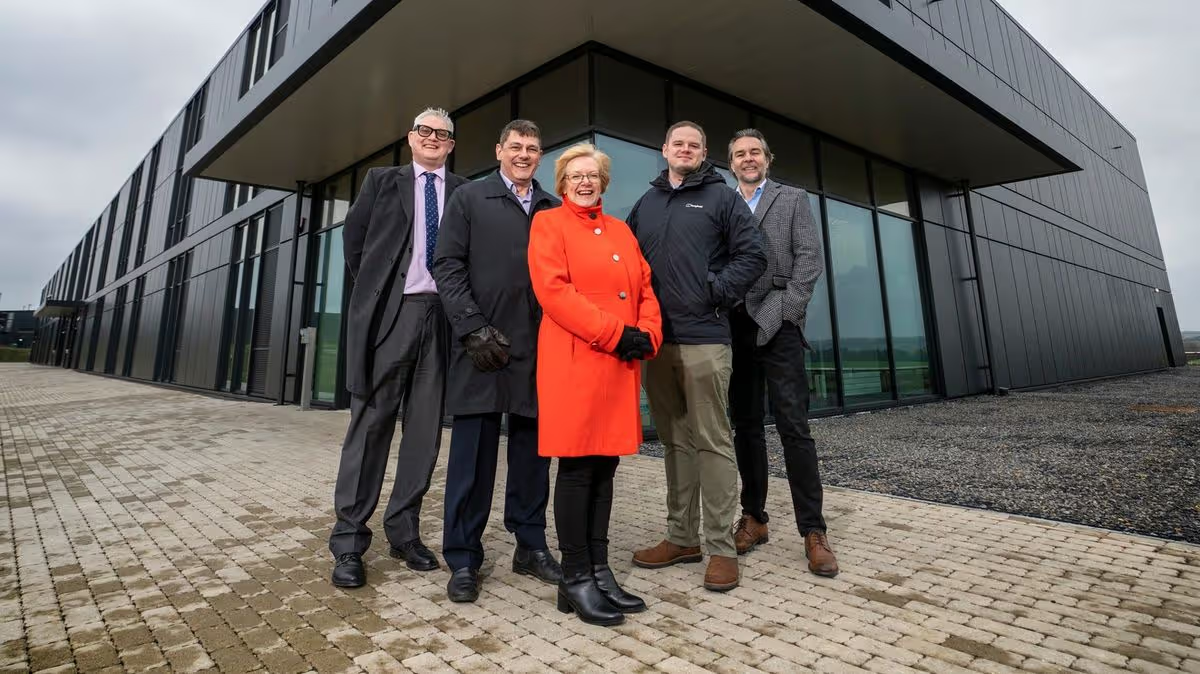
Torquil Gundlach, head of the Argonaut Programme at SEEDS; Peter Chalder-Wood, head of Strategic Partnerships at SEEDS; Sara Williams, NETPark manager; Cllr Joe Quinn, Durham County Council’s Cabinet member for planning, investment and assets; and Christian Pape, property director at Business Durham.(Image: Durham County Council)
A pioneering technology company has announced a major expansion in the North East. Engineered graphene technology firm SEEDS will be moving into a new dedicated facility at Sedgefield’s NETPark as part of the £100m expansion of the site. Taking on the new unit will allow the company to move from research and development to commercial production and enable it to supply its technology to major international manufacturers.
The company is targeting customers in the global aerospace, energy, semiconductors, and automotive sectors, with its development supported by the new phase at NETPark, which offers companies more than 285,000 square feet of high-spec laboratory and advanced manufacturing space.
It is hoped the expanded science park will create 1,250 skilled jobs on site and contribute £625m to the local economy over the next decade.
Jason Chehal, founder of SEEDS, said: “This expansion marks a defining moment for SEEDS, as we move from research excellence into full commercial deployment. Over the past decade, we’ve developed a way to engineer graphene not just as a material, but as a platform technology that can be tuned to solve real-world industrial challenges at scale.
Advertisement
Like this story? For more news from the tech sector, visit our dedicated page for the latest news and analysis here.
“Moving into our new facility at NETPark allows us to begin delivering customer specific systems across industries including microelectronics, energy storage, aerospace and advanced manufacturing.
“What’s particularly powerful is the ecosystem we’re part of here. Collaborations with CPI, Mitsui, and Pragmatic Semiconductor demonstrate how innovation in County Durham can translate directly into global industrial impact.
“We are now at the point where the technology is proven, the demand is established, and the pathways to market are clear. Each production system we deploy has the potential to support a major manufacturer anywhere in the world. That positions not only SEEDS, but the North East and the UK, at the forefront of next generation materials and electronics.”
Advertisement
Coun Joe Quinn, Durham County Council’s cabinet member for planning, investment and assets, said: “SEEDS’ expansion at NETPark reflects the critical role County Durham plays in the UK’s advanced manufacturing landscape.
“We are delighted to support SEEDS’ growth and would urge any expanding business looking for modern facilities to come and see the exceptional offer we have here at NETPark.”
NEW YORK — Shares of MARA Holdings Inc. jumped Monday to $10.02, up 48 cents or 4.98%, as the Bitcoin mining company continued to draw trader interest following its aggressive balance sheet cleanup, strategic shift toward artificial intelligence infrastructure and ongoing volatility tied to cryptocurrency prices.
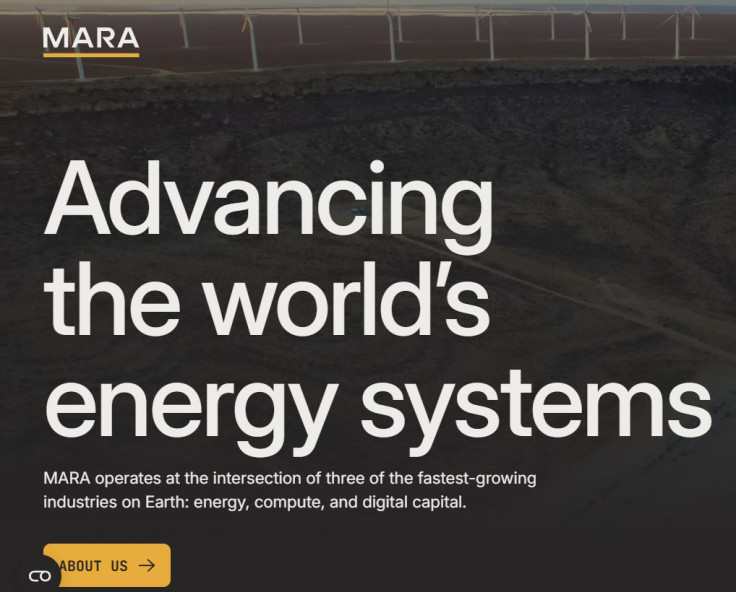
MARA Holdings, Inc
The Miami-based firm, formerly known as Marathon Digital Holdings, has been transforming from a pure-play Bitcoin miner into a broader digital energy and infrastructure player. Its latest moves include selling a significant portion of its Bitcoin treasury to retire convertible debt at a discount and forging partnerships aimed at repurposing mining sites for high-performance computing and AI data centers.
MARA’s stock has been highly volatile in 2026, trading in a 52-week range from about $6.66 to $23.45. Monday’s gain came on elevated volume as investors weighed the company’s reduced leverage against persistent challenges in its core mining operations and broader sector pressures.
On March 26, MARA announced it had sold 15,133 Bitcoin between March 4 and March 25 for approximately $1.1 billion. The company used the proceeds to fund the repurchase of roughly $1 billion in face value of its 0.00% convertible senior notes due in 2030 and 2031. The notes were bought back at a discount, allowing MARA to capture about $88 million in value while reducing potential future dilution from conversions.
CEO Fred Thiel described the transaction as a “strategic capital allocation move” designed to strengthen the balance sheet and position the company for long-term growth. After the sales, MARA held approximately 38,689 Bitcoin, down from 53,822 at the end of 2025. The company has signaled it may continue opportunistically monetizing Bitcoin holdings in 2026 to enhance liquidity and fund initiatives.
Advertisement
The debt reduction lowers outstanding convertible principal significantly, easing pressure on the equity base. Analysts noted the move as credit-positive, though some expressed concern that selling treasury Bitcoin signals a departure from the aggressive accumulation strategy that once defined the company.
MARA has also been pivoting toward AI and high-performance computing. In late February, the company announced a strategic partnership with Starwood Capital to develop, lease and market select U.S. Bitcoin mining data centers for hyperscale, enterprise and AI-capable infrastructure. The arrangement includes triggers for proceeding with development, such as securing leases with qualifying tenants, with a decision required within 24 months.
The pivot comes after MARA reported a massive $1.71 billion net loss for the fourth quarter of 2025, driven largely by impairment charges and unrealized losses on digital assets amid fluctuating Bitcoin prices. For the full year 2025, revenue rose to about $907 million from $656 million the prior year, but the company swung to a $1.31 billion net loss from prior profitability.
Bitcoin production in Q4 fell 19% year-over-year to 2,011 BTC, reflecting operational challenges including power constraints and efficiency efforts. Adjusted EBITDA turned negative, highlighting the impact of lower hash rates and higher costs in a competitive mining environment.
Advertisement
Despite the headline losses, shares rose sharply after the earnings release as investors focused on the AI infrastructure narrative and the Starwood deal. Management has emphasized that its energy assets and sites provide a foundation for diversification beyond mining, potentially generating stable leasing revenue from AI hyperscalers seeking power-hungry data centers.
Analyst reactions have been mixed. Cantor Fitzgerald maintained an Overweight rating but lowered its price target to $10 from $11 in early April. The consensus 12-month price target sits around $16.48, suggesting potential upside from current levels, though forecasts vary widely given the company’s sensitivity to Bitcoin prices and execution risks on the AI pivot.
MARA is scheduled to report first-quarter 2026 results around May 7. Wall Street expects continued focus on hash rate recovery, Bitcoin holdings updates, progress on the Starwood partnership and any further treasury transactions.
The company’s digital asset management strategy has included lending and pledging portions of its Bitcoin stack, generating interest income. At year-end 2025, about 28% of holdings were activated in such programs. While this provides yield, it also introduces counterparty and custody risks.
Advertisement
Broader market context has influenced MARA’s performance. Bitcoin prices have fluctuated in 2026 amid macroeconomic uncertainty, regulatory developments and institutional adoption trends. MARA’s valuation remains closely tied to crypto sentiment, even as it attempts to decouple through infrastructure diversification.
Insider activity has added to the narrative. In mid-March, CEO Fred Thiel sold 27,505 shares under a pre-arranged 10b5-1 trading plan at an average price of $9.18. Such sales are routine for executives but can sometimes weigh on sentiment in a volatile name.
MARA operates large-scale mining facilities across the United States, leveraging low-cost power agreements where possible. The company has highlighted improvements in energy efficiency and fleet upgrades, though production declines in recent quarters reflect industry-wide headwinds including the Bitcoin halving effects and rising competition.
The AI pivot introduces both opportunity and risk. Repurposing mining sites could generate higher-margin revenue from leasing, but it may divert power and resources from Bitcoin mining, potentially reducing output further. Operational disruptions during transitions could also pressure near-term results.
Advertisement
Critics argue MARA remains primarily a leveraged Bitcoin play, with its treasury and mining operations still dominating the story. Supporters point to the company’s substantial power capacity and site portfolio as undervalued assets in an era of surging AI demand for data center infrastructure.
As of mid-April 2026, MARA’s market capitalization hovers around $3.6 billion, with an enterprise value higher due to remaining debt. The stock carries a high beta, making it prone to sharp swings on crypto news, earnings or sector developments.
Looking ahead, key catalysts include Q1 production figures, updates on AI leasing progress, any additional Bitcoin sales or purchases, and macroeconomic factors affecting Bitcoin. Success in securing hyperscaler tenants for its data centers could mark a meaningful step in the strategic transformation.
Challenges persist, including regulatory scrutiny on crypto mining energy use, competition from larger players like Riot Platforms, and the inherent volatility of digital assets. Workforce reductions of about 15% announced earlier signal cost discipline amid the pivot.
Advertisement
MARA’s story reflects broader trends in the Bitcoin mining sector, where many operators are exploring diversification into AI, HPC or other energy-intensive applications to stabilize revenue. Whether the company can successfully execute this shift while managing its remaining Bitcoin exposure will determine if it can command a premium valuation beyond its crypto roots.
For now, with shares rebounding toward the $10 level on Monday and first-quarter earnings approaching, MARA remains one of the most actively traded names at the intersection of cryptocurrency, energy infrastructure and emerging AI data center demand. Investors continue to debate whether the balance sheet cleanup and AI ambitions provide a sustainable path forward or if the company will stay tethered to Bitcoin’s fortunes.









.webp?t=1738594923)












































You must be logged in to post a comment Login