
Crypto World
Aeluma (ALMU) Stock Rockets 46% on $4M Federal Quantum Tech Contracts


Key Highlights
- ALMU stock soars 46% following announcement of $4M federal contract awards
- Share price reaches $15.75 amid quantum photonics funding announcement
- Government support accelerates AI semiconductor and photonics initiatives
- Federal funding exceeding $4M drives quantum technology commercialization plans
- ALMU experiences major breakout as federal partnerships strengthen tech roadmap
Shares of Aeluma, Inc. (ALMU) experienced a significant rally following the announcement of new federal contract awards focused on quantum and photonics innovation. The stock climbed to $15.75, representing a 46.29% gain in a single trading session. This sharp movement came after the company revealed it had secured over $4 million in non-dilutive federal funding to advance semiconductor scaling technologies.
Federal Contracts Propel Stock Performance
The dramatic rise in Aeluma’s share price followed the company’s announcement of significant government contract wins supporting its commercialization strategy. These federal awards specifically target scalable semiconductor technology for quantum applications and high-speed data transmission platforms. The news boosted investor confidence in the company’s positioning within cutting-edge technology sectors.
These contract awards emphasize expanding wafer manufacturing and advanced fabrication capabilities through established industry partnerships. The company maintains ongoing collaborations with Tower Semiconductor and Sumitomo Chemical Advanced Technology. These strategic alliances are designed to enhance manufacturing capacity and create robust supply chain frameworks.
Aeluma positions these achievements to address growing demand in AI infrastructure, defense applications, and next-generation communications networks. The non-dilutive funding structure protects existing shareholders from equity dilution while enabling near-term operational objectives. Consequently, the company bolsters its operational foundation while pursuing strategic long-term expansion.
Advancing Quantum Dot Laser and Photonic Technologies
The company continues developing its quantum dot laser capabilities to meet the needs of emerging data center and telecommunications infrastructure. These advanced lasers deliver superior power efficiency, enhanced durability, and minimized signal degradation. Such characteristics prove critical for quantum computing architectures and AI-powered interconnect frameworks.
Aeluma employs metalorganic chemical vapor deposition techniques to facilitate mass production of quantum dot components. This manufacturing approach enables high-throughput fabrication while ensuring consistent performance specifications across diverse use cases. The company incorporates these laser systems into sophisticated multi-channel photonic arrays designed for advanced computational platforms.
The firm also progresses its aluminum gallium arsenide nonlinear photonics platform tailored for quantum technology deployments. This specialized material enables superior photon creation and control for communications and detection systems. Accordingly, the platform delivers enhanced capabilities versus conventional materials currently employed in photonic implementations.
Market Position in AI and Quantum Sectors
Aeluma solidifies its competitive standing by combining compound semiconductor advantages with conventional silicon fabrication methodologies. The organization previously validated successful material integration on CMOS-compatible 200mm silicon substrates. This technical achievement enables scalable manufacturing across both 200mm and 300mm production environments.
This integration capability ensures compatibility with silicon nitride waveguide technologies utilized in quantum photonic systems. Such an approach facilitates straightforward implementation within current semiconductor manufacturing infrastructure. Aeluma minimizes commercial deployment obstacles across high-growth market segments.
The newly awarded contracts fund specific demonstration projects and scaling operations at its California headquarters and partner manufacturing sites. These initiatives target accelerated preparation for volume manufacturing and commercial market penetration. Ultimately, Aeluma reinforces its leadership position in quantum technology, artificial intelligence, and high-performance communication solutions.


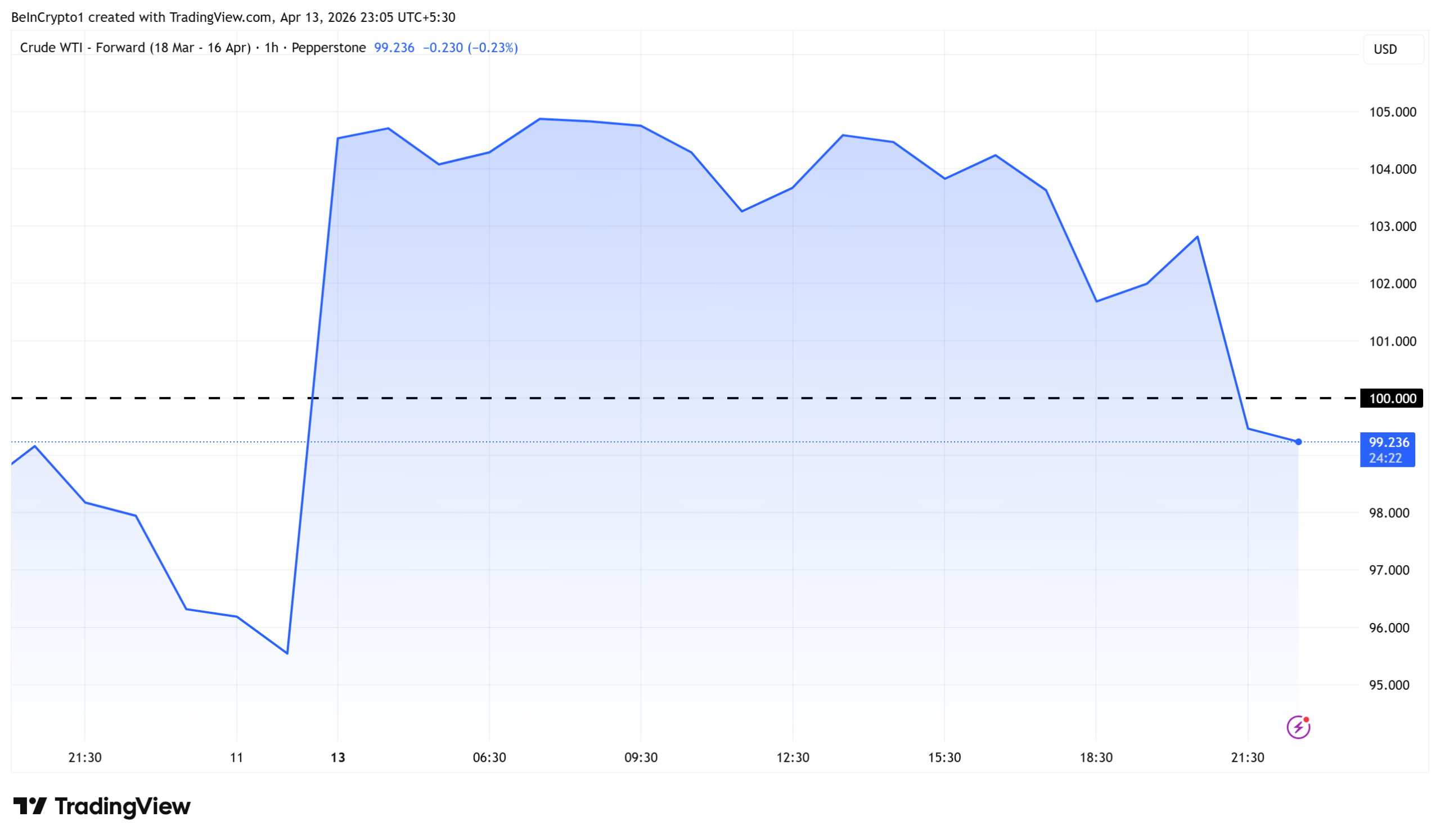
US oil prices fell back below $100 per barrel on Monday after a volatile session, reversing gains that pushed crude above $104 earlier in the day.
The sharp pullback came as China’s Defense Minister Admiral Dong Jun signaled that Chinese vessels would continue transiting the Strait of Hormuz under existing agreements with Iran.
China Challenges US Naval Blockade
Admiral Dong Jun delivered a pointed message to the Trump administration and the US Navy. He confirmed that Chinese ships are actively moving through the Strait of Hormuz and that Beijing will honor its trade and energy agreements with Tehran.
“Iran controls the Strait of Hormuz and it is open for us,” the Hormuz Letter reported, citing Admiral Dong Jun.
The statement reframes the standoff. What began as a bilateral US-Iran confrontation now involves a direct challenge from the world’s second-largest economy.
Analysts noted the repricing in oil markets reflects traders reassessing the blockade’s effectiveness now that China has entered the frame.
Notably, the US blockade of Iran affects China’s interests, as China is Iran’s largest oil export destination.
Trump Sets New April 27 Deadline
Speaking from the Oval Office, President Trump issued a fresh two-week ultimatum to Iran. He warned the situation “won’t be pleasant” if Tehran fails to reach a deal by April 27.
The deadline follows the collapse of US-Iran talks in Islamabad on April 12, which prompted Washington to declare a full naval blockade of the strait.
Brent crude had jumped more than 8% to above $103 following that announcement before reversing.
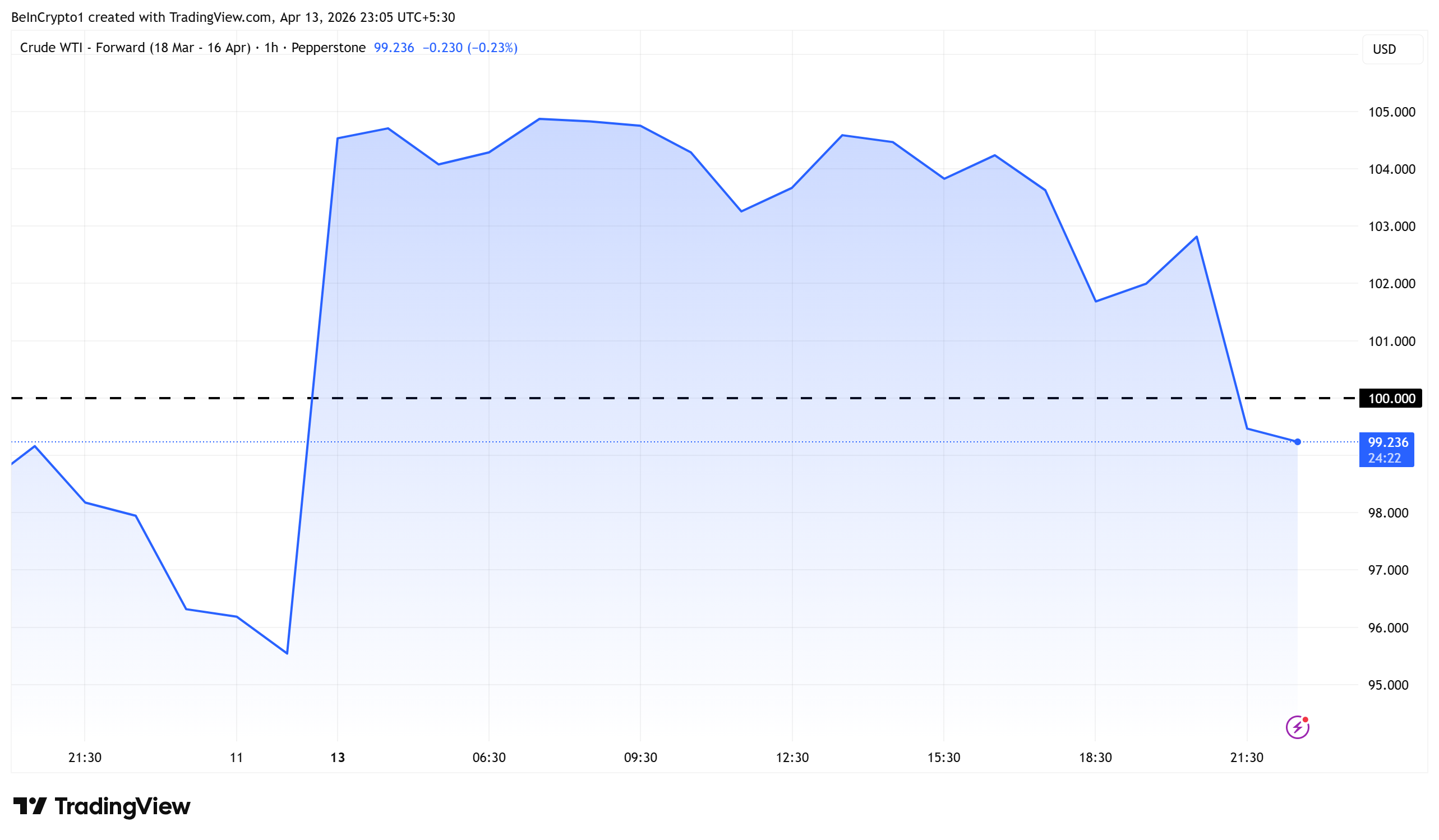
Markets now face a new variable. China’s willingness to test the blockade could determine whether oil stabilizes or enters another leg higher as the April 27 deadline approaches.
However, reports suggest that a tanker bound for China forced to turn back under the U.S. blockade.
“I believe the US intends to use this opportunity to pressure China to help urge Iran to reach an agreement, although this action is not specifically targeted at China,” one user commented.
The post Oil Price Slides Below $100 as China Defies US Hormuz Blockade appeared first on BeInCrypto.


The White House’s main crypto adviser, Patrick Witt, said that work is still being done to lock in the compromise that he thinks will move the Digital Asset Market Clarity Act forward in the U.S. Senate, though he said several other points are also being worked out behind the scenes.
In an interview on CoinDesk TV Monday, the executive director of the President’s Council of Advisors for Digital Assets suggested Monday that the common ground that key senators from both parties said they’d secured on stablecoin yield seems to be intact.”We’re hopeful that the compromise that has been reached will be durable and will hold,” Witt said. “Solving that was a must-have before we could get onto the other outstanding issues,” which he said he’s now pivoted to, though some of the issues have already been resolved.
Apart from the question of yield on stablecoins, over which bankers had successfully convinced some in the Senate that their deposit base could be in peril, the Clarity Act had a number of other potential hangups. Among those have been the illicit financial protections in the decentralized finance (DeFi) space, and a request from Democrats that senior government officials (most pointedly, President Donald Trump) be barred from profiting off of the crypto sector.
Though Witt wouldn’t identify the topics that have been settled in the ongoing talks, he said that the negotiations “made considerable progress in the background” while the yield argument between banks and crypto firms got most of the attention.
“We’re very close to closing them out,” he said. “All of these issues felt intractable and unsolvable at one point in time. So the fact that we’ve been able to close out a lot of them gives me confidence that we can close out these other ones, too.”
The Clarity Act would need a markup hearing in the Senate Banking Committee before it can be advanced toward a final Senate vote. It had been close to such a hearing at the beginning of the year, but the bank lobbyists raised objections to stablecoin yield that delayed the process.
Last week, White House economists issued a report that downplayed the threats the banking sector contended are posed by giving stablecoin holders a return that resembles interest from a bank account. On Monday, the American Bankers Association answered back, saying the White House argument was flawed. Witt said the view of bankers is wide-ranging, depending on how close they are to the technology.
“They’re grappling with it,” he said. “These are all important issues to their members.
And, you know, some of them are going to view stablecoins more positively. Some are going to be a little bit more threatened by them.”
Read More: Trump’s crypto adviser rejects Jamie Dimon on treating yield-bearing stablecoins like banks
Crypto World
Bitcoin Price Prediction: BTC Needs All Year for $120,000 but $750 in This Presale Could Return $225,000 From One Listing
The bitcoin price prediction just hit a turning point. BTC posted back to back quarterly losses for the first time since 2022, dropping 23% from its January price of $87,500, but April has closed green 9 out of 13 times since 2013 with a 69% win rate per 24/7 Wall St.
The pattern is clear: BTC falls hard then bounces harder. While that recovery builds over months from a $1.3 trillion cap, the wallets chasing the biggest return are not waiting on BTC.
They are filling Pepeto because a working exchange, a confirmed Binance listing, and $8.9 million in committed capital tell them the setup is already in place.
Bitcoin Price Prediction Shifts as April Win Rate Meets Quarterly Reset
BTC lost 23% in Q1 after falling from $87,500, and Q4 2025 also closed red, marking the first back to back quarterly losses since 2022 per 24/7 Wall St.
But April’s 69% win rate is one of BTC’s strongest months on record, and CME FedWatch shows 98% expect the Fed to hold at the April 28 meeting per 24/7 Wall St.
When BTC falls to levels that historically trigger rebounds and the Fed removes the threat of more rate hikes, the bitcoin price prediction shifts from fear to timing.
BTC at $71,140 and Pepeto at $8.9M: Where the Pattern Repeats
Pepeto: The Same Pattern That Made Every Early Crypto Fortune
What if you could go back and buy BTC at $100? Or catch BNB at $0.15? Or enter Pepe before $11 billion? Every one of those followed the same pattern: a real product, early fear, and a crowd that showed up late. Pepeto is following that exact pattern right now, except this time you are not late.
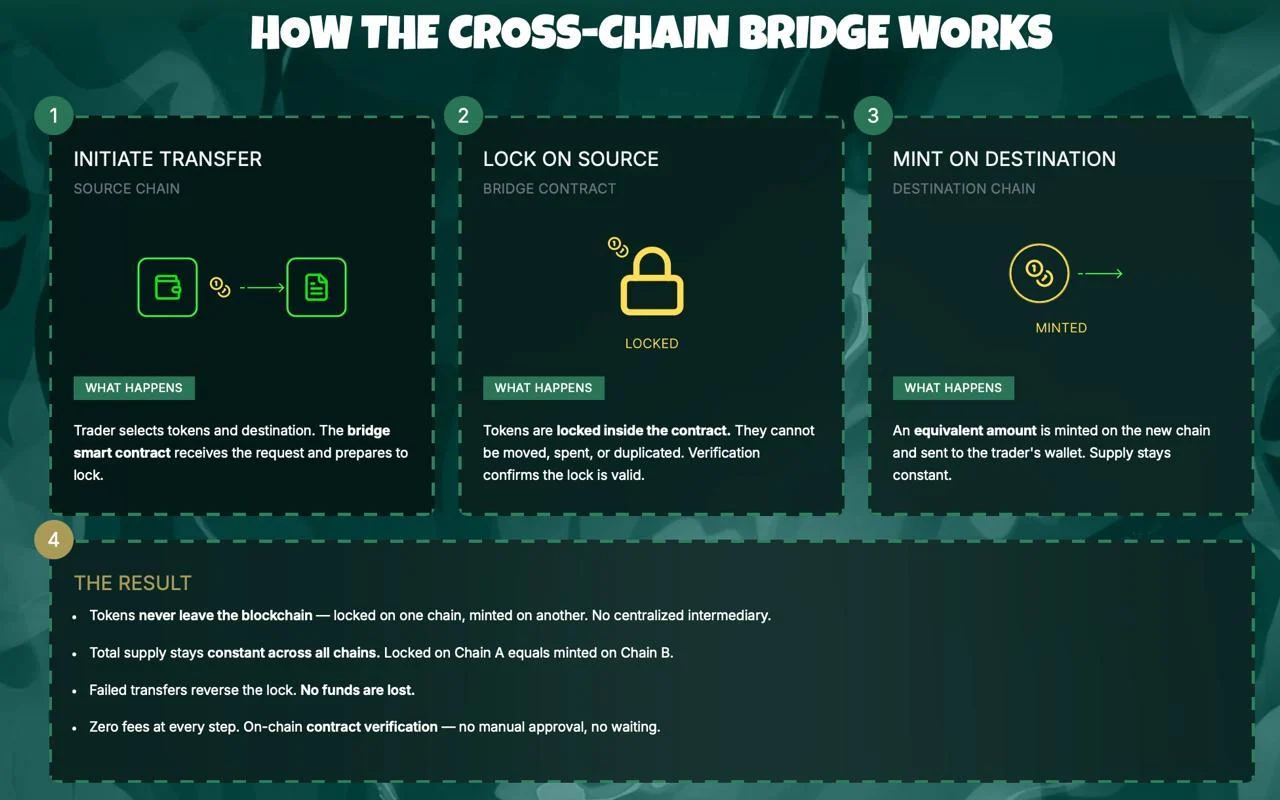
The exchange is already live. PepetoSwap handles every trade at zero cost so your gains stay whole, the bridge sends your assets between ETH, BNB, and Solana chains for free, and the scanner catches dangerous contracts before your money goes anywhere near them.
The mind behind the original Pepe, the meme token that hit $11 billion on nothing but hype and 420 trillion supply, built Pepeto with real tools and a Binance listing already confirmed. SolidProof audited every contract with results on chain for anyone to check. More than $8.9 million flowed in while the market sat in fear, and that is the tell. The people inside are not waiting and hoping. They already see where this goes. Staking pays 185% APY, growing your position every day before listing day arrives.
At $0.0000001862 per token, analysts project 100x to 300x once the Binance listing opens trading. Let those numbers sink in. $750 at 100x becomes $75,000. At 300x that same $750 becomes $225,000. How often does a setup like this land in front of you with a working exchange, a clean audit, and a confirmed listing all at less than a penny? The presale is filling fast and the listing will end this price for good.
Bitcoin Price Prediction: Levels, Targets, and What the Quarterly Reset Means
BTC trades near $71,140 with a $1.42 trillion cap, down 43% from its October 2025 all time high near $126,000 per CoinMarketCap.
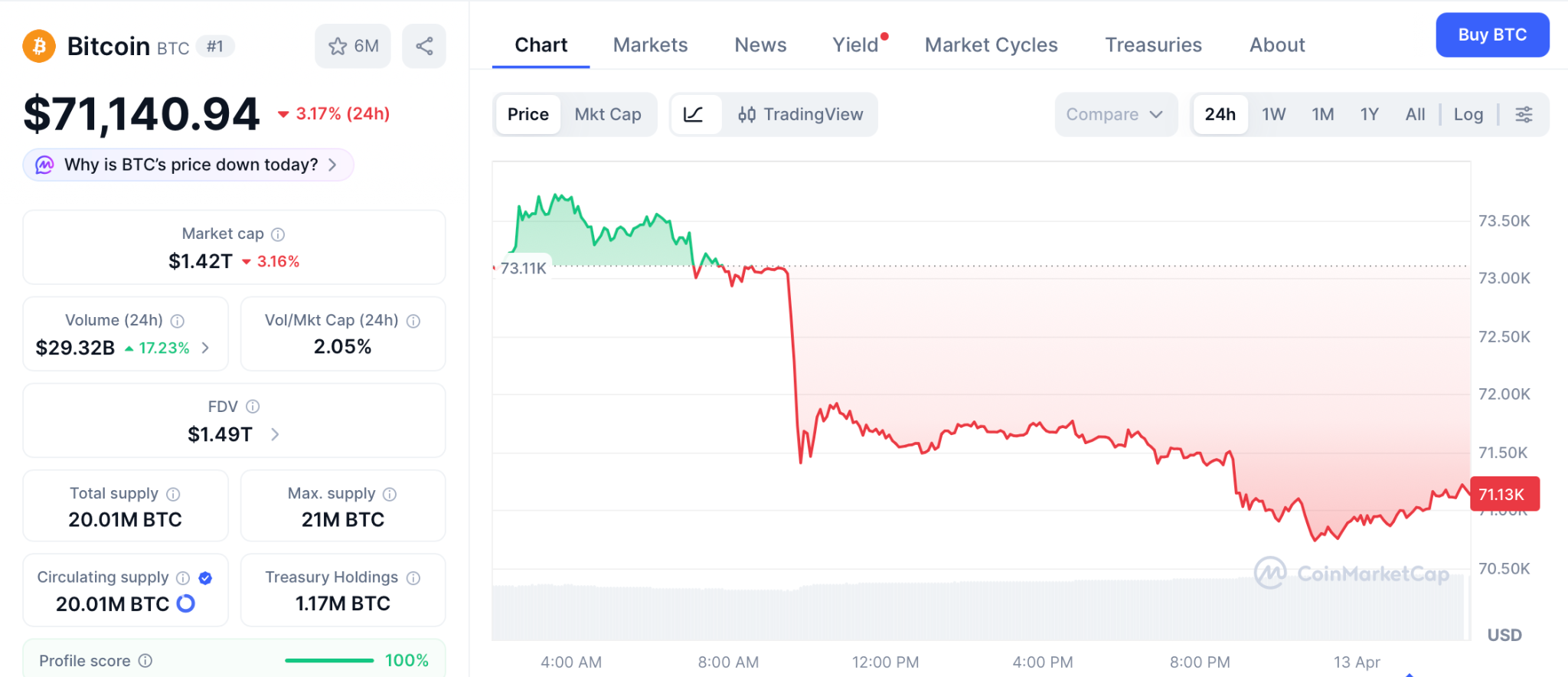
The $75,000 level is the key resistance, and a clean break with volume opens the path toward $85,000 by summer.
Standard Chartered targets $120,000 by year end, and the CLARITY Act markup in late April is the next catalyst. Even the bull case at $120,000 delivers 67% from current levels, strong for a $1.3 trillion asset but taking the rest of the year to play out.
Conclusion
BTC carries the store of value story and April’s 69% win rate says the bounce is likely coming. But here is what it comes down to. Do you want 67% over the rest of the year from a $1.3 trillion token? Or do you want to be the person who put $750 into a presale and watched it become $75,000 to $225,000 from one listing?
Every fortune built in crypto started with one moment where someone moved while everyone else was still reading about it. BTC at $100. BNB at $0.15. Pepe at zero. The same creator who built that last one is behind Pepeto, and the Binance listing is the event that turns this presale price into history. The wallets already inside are the ones who will tell this story next year. The only question left is whether your wallet is one of them.
Click To Visit Pepeto Website To Enter The Presale

FAQs
How do back to back quarterly losses change the bitcoin price prediction?
BTC’s first back to back quarterly losses since 2022 pushed prices lower, but April’s 69% win rate signals a bounce, while Pepeto at presale pricing delivers returns one listing can produce.
Can a presale outperform the bitcoin price prediction this cycle?
BTC at $71,140 targeting $120,000 delivers 67% over months, but $750 inside Pepeto at 100x becomes $75,000 from one Binance listing, making the presale at the Pepeto official website the faster path.
Disclaimer: This is a Press Release provided by a third party who is responsible for the content. Please conduct your own research before taking any action based on the content.
Scope of Interfaces to Be Covered
The Commission outlined covered user interfaces as websites, browser extensions, or applications associated with crypto wallets. These applications assist users to plan and start transactions on blockchain platforms or smart contracts. Also in the guidelines, there are platforms that provide routing information, pricing and cost estimates of transactions. Such interfaces provide support to users that make use of self-custodial wallets to conduct crypto asset securities trades. They might also contain aggregators and swap platforms that show execution paths. As a result, the SEC acknowledges their functions in operations but does not differentiate them from the traditional intermediaries.
The SEC, however, added that it will not object to some platforms functioning without registration of a broker-dealer in some circumstances. The platforms should enable users to customise the parameters of transactions and offer educational aids to make informed choices. In addition, they should not give instructions to the users on certain securities transactions. The Commission highlighted that platforms should be neutral when offering trading options. The interface providers can provide default execution facilities, but they are not able to rank or favor specific trades. Therefore, it requires compliance by ensuring that the user is in control and restricting access to the results of transactions.
Section 15 of the Exchange Act that regulates the registration of brokers is referred to as the guidance. Though certain interfaces might fit the definition of brokers, the SEC made it clear that there are situations in which the enforcement might not be applicable. Moreover, such a strategy is an indication of a loose reading of the law on securities. The research head of Galaxy Digital Alex Thorn claimed that the SEC is moving forward with market structure without legislation. He observed that the agency is developing rules that resemble the ones suggested in the CLARITY Act. Furthermore, he emphasised the fact that the guidance provided to the staff might change with time.
Also, the guidance can facilitate future exemption of innovation covered by the SEC leadership. This may go as far as tokenised securities trading via automated systems and decentralised applications. The agency therefore keeps on demarcating operational limits of new crypto services. The crypto regulation debate in the U.S. Senate is set to be reintroduced in the near future. The legislators can proceed with official reviews and amendments of the suggested bill. The schedule indicates that there will be ongoing liaison between regulatory and legislative action.
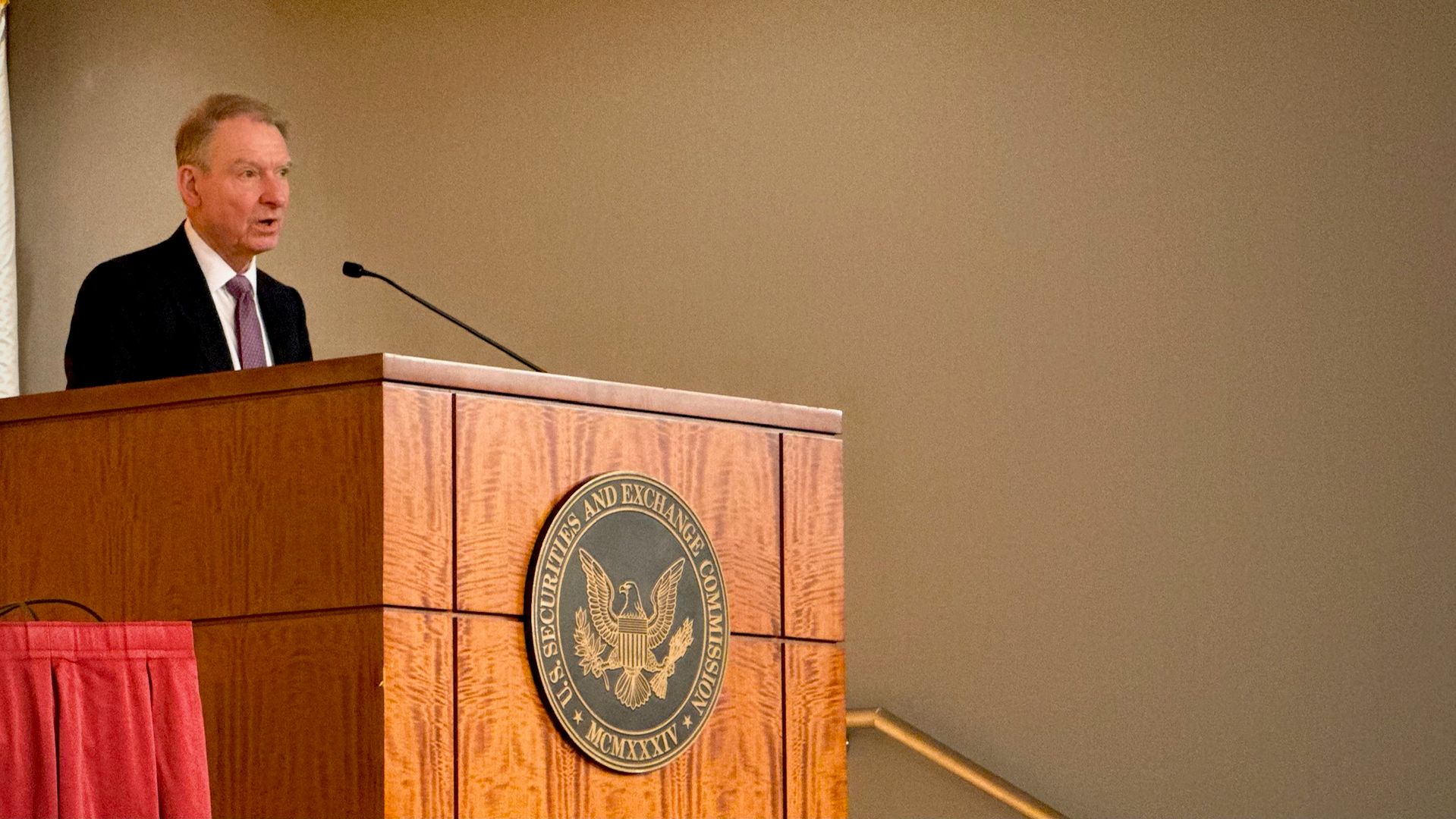
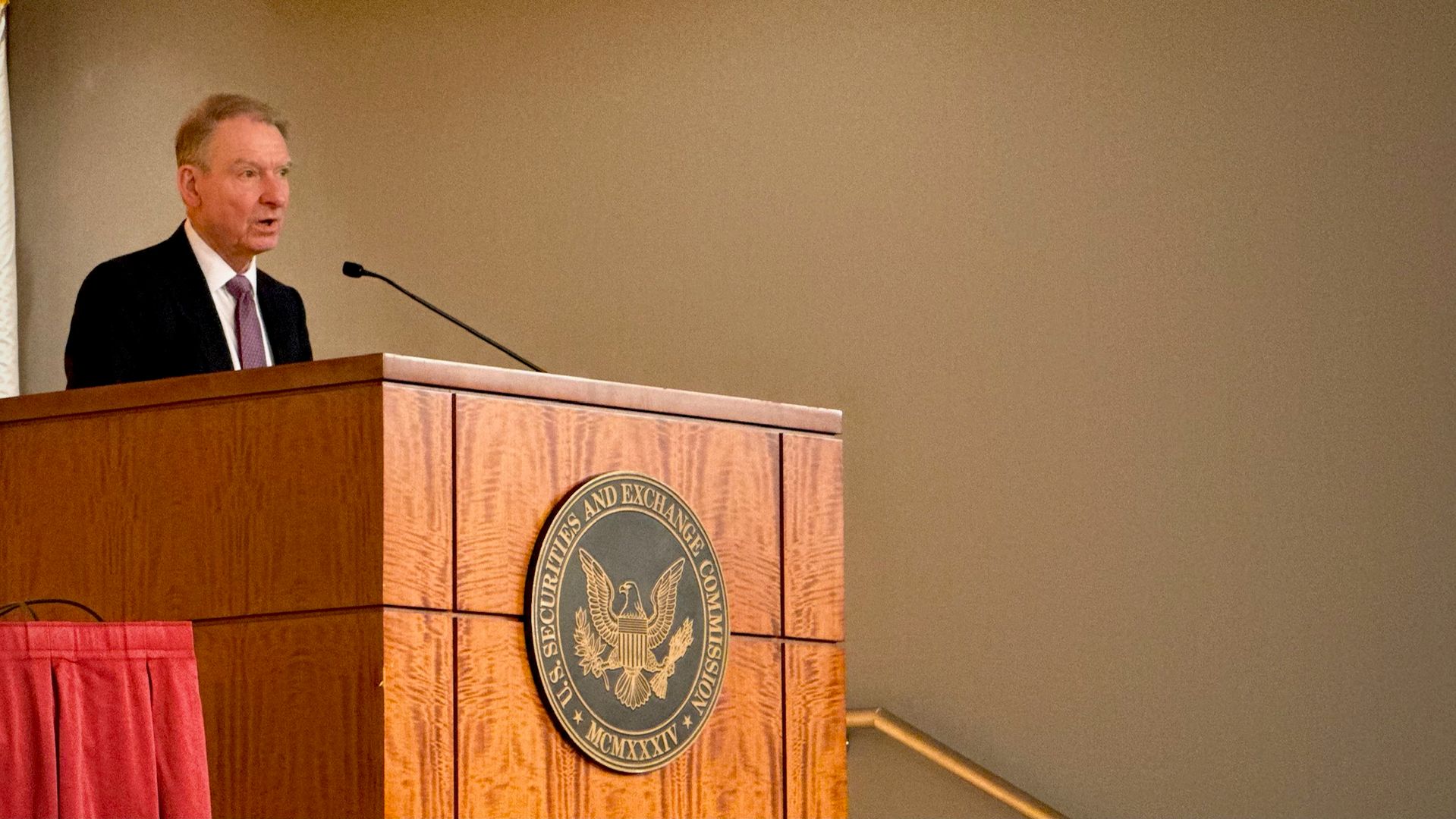
The U.S. Securities and Exchange Commission said that software that sets up user interfaces allowing crypto securities to be transacted through individuals’ wallets won’t need to be registered and regulated as a broker.
In the latest of the agency’s staff statements on crypto — now a wide-ranging list of views meant to allow the crypto industry to move forward in the absence of permanent rules — the SEC staff said on Monday that the websites or software used by people pursuing securities transactions with their self-hosted wallets won’t itself be considered as belonging to the broker-dealer category. That tracks with the agency’s recent stance that developers should be able to write software without triggering such regulations.
The agency provided a checklist of measures the creators of these interfaces can take to keep them out of the regulatory box, including that it “does not solicit investors to engage in any specific crypto asset securities transactions” and “does not provide commentary on any potential execution route(s) displayed to a user.”
If the interface offers financing, provides investment recommendations, handles user assets, takes orders or executes transactions, it’s no longer outside the agency’s regulatory reach.
“The staff is providing its views as an interim step while the commission continues to consider various regulatory issues relating to crypto asset securities activities and the feedback it has received,” the document said.
Under the administration of President Donald Trump, who has demanded that his executive branch clear an easier path for the rise of friendly crypto regulation, the leadership of the SEC has reversed previous resistance and embraced the technology. Even before the arrival of SEC Chairman Paul Atkins, a series of pro-crypto statements began emerging, clarifying the regulator’s new view that various assets wouldn’t be considered securities or wouldn’t trigger oversight requirements. But these statements don’t carry the weight and greater permanence of full-fledged rules.
In the meantime, Atkins’ agency is working on such rules. Wide-ranging SEC rules are close to the proposal stage at the agency, he’s said. Even as the Senate continues to work on the Clarity Act that would cement crypto regulations into law, the agency is working on interim measures to give the agency great certainty.
Read More: SEC makes quiet shift to brokers’ stablecoin holdings that may pack big results
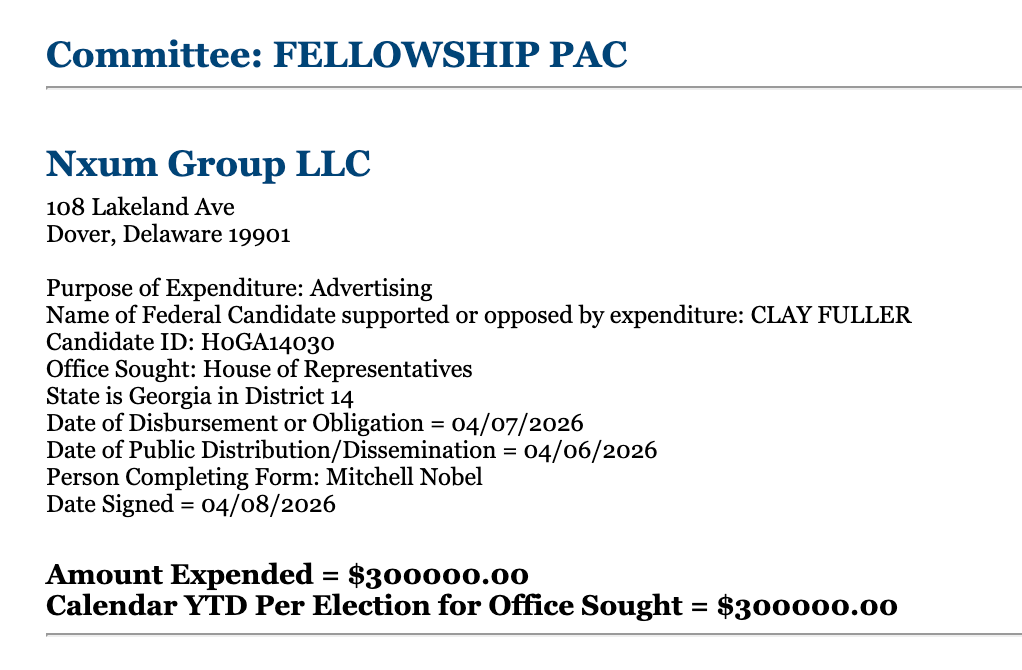
Fellowship, a super political action committee (PAC) that claims to have $100 million in its war chest from crypto-aligned parties ahead of the 2026 US midterms, has begun reporting spending and endorsements for the next election.
According to a filing with the Federal Election Commission (FEC), the Fellowship PAC reported spending $300,000 on advertising for Clay Fuller, a Republican who won a special election for Georgia’s 14th Congressional District to replace resigning congresswoman Marjorie Taylor Greene. The spending, reported disbursed on Tuesday, comes about a month before Georgia’s Republican primary on May 19.

Fellowship is just one of several crypto-backed or aligned PACs expected to pour money to support or oppose candidates in another critical US election season. In 2024, the Fairshake PAC spent more than $130 million in media buys in congressional races, possibly influencing the outcomes in key battlegrounds like the US Senate seat for Ohio.
According to the FEC, super PACs may “receive unlimited contributions from individuals, corporations, labor unions and other PACs for the purpose of financing independent expenditures and other independent political activity.”
In addition to its only reported expenditure since the Fellowship PAC’s statement of organization filed in 2025, Fellowship posted endorsements for candidates to its X account on Thursday, signaling support for Republicans in races across five states. The candidates included Alan Wilson for South Carolina governor, Blake Miguez for Louisiana’s 5th Congressional District, Mike Collins for the US Senate in Georgia, Julia Letlow for the US Senate in Louisiana, Pete Ricketts for the US Senate in Nebraska and Nate Morris for the US Senate in Kentucky.
Related: Chainlink and Anchorage Digital back launch of crypto-aligned PAC
Fellowship announced its launch in September, claiming to have “over $100 million” from undisclosed backers aligned with the crypto industry. On April 1, it said that Tether’s head of government affairs, Jesse Spiro, would chair the PAC, signaling support for candidates with pro-crypto views.
US lawmakers are still stalled on crypto market structure bill as midterms approach
The CLARITY Act, legislation passed by the US House of Representatives in July, has faced several delays in the Senate with no clear path forward on passing the legislation as of Monday.
Reports over the weekend signaled that the Senate Banking Committee, one of the two bodies needed to approve the bill in the chamber before a vote, was planning to hold a markup on the legislation, but the event was not on the committee’s calendar at the time of publication.
The bill, expected to be one of the most comprehensive pieces of legislation affecting the crypto and banking industries, has faced pushback from lawmakers to address ethics, stablecoin yield, tokenized equities and other potential issues.
Magazine: Should users be allowed to bet on war and death in prediction markets?
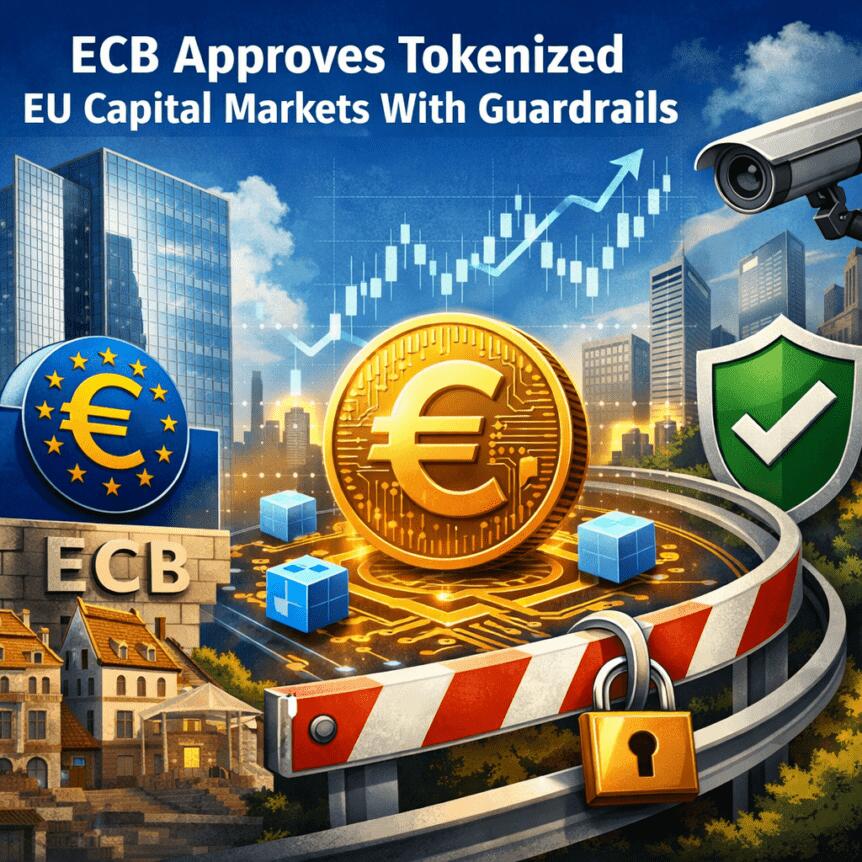
The European Central Bank is charting a cautious path toward tokenizing Europe’s capital markets, arguing that the gains from distributed ledger technology (DLT) hinge on anchoring transactions in central bank money, ensuring interoperable infrastructures, and maintaining a robust regulatory framework.
In its latest Macroprudential Bulletin, the ECB notes that tokenization could deepen the EU’s savings and investments union, but warns gains depend on policy action keeping pace with evolving risks. The stance signals a measured push to modernize market plumbing without compromising financial stability or monetary control.
Key takeaways
- Tokenization could streamline the issuance-to-settlement chain and boost liquidity, but true gains require interoperable platforms and central bank money for settlement, not just private or commercial instruments.
- Early evidence from tokenized bonds points to lower borrowing costs and tighter bid-ask spreads, yet these improvements depend on scale, risk controls, and market adoption.
- Tokenized money market funds and euro-denominated stablecoins are analyzed as experiments in on-chain cash-like instruments, bringing new operational vulnerabilities alongside familiar liquidity risks.
- MiCA-compliant euro stablecoins could influence sovereign-bond demand and market resilience, depending on how issuers meet deposit and reserve requirements.
- Across five Bulletin pieces, the ECB stresses that tokenization can support a more integrated capital market only if policy, prudential rules, and central-bank infrastructure evolve in tandem.
Tokenized capital markets: Conditions and expected benefits
The ECB’s analysis outlines how tokenized assets could rewire the issuance-to-settlement chain by moving both securities and cash onto compatible ledgers and by automating corporate actions. By doing so, the authors argue, operational frictions tied to multiple intermediaries and legacy systems could be reduced, potentially unlocking improved secondary liquidity. Yet the potential gains hinge on avoiding a patchwork of incompatible platforms and ensuring that central bank money—not merely commercial bank money or privately issued tokens—can be used for settlement in tokenized markets.
One article in the Bulletin highlights that tokenization and DLT are moving from concept to early-scale deployment, but the benefits will be realized safely only if European policy action keeps pace. This framing underscores the balance policymakers are seeking: enabling innovation while preserving financial stability and monetary integrity. For market participants, that means pilots and gradually expanded use cases rather than rapid, broad-based deployment.
The Bulletin also flags the need for robust interoperability standards and risk governance to prevent fragmentation as tokenized infrastructure expands. In practical terms, that could mean common settlement rails, standardized corporate-action workflows, and clear rules on settlement finality and collateral management across platforms.
Tokenized MMFs and euro stablecoins under the lens
The bulletin treats tokenized money market funds (MMFs) as a parallel set of experiments that largely mirror the liquidity and run-risk profile of traditional MMFs, but with added operational vulnerabilities inherent to on-chain structures. The analysis invites scrutiny of how such funds would behave under stress and how they interact with on-chain cash-like instruments during adverse conditions.
A separate piece examines euro-denominated, MiCA-compliant stablecoins and their potential impact on sovereign debt markets. Depending on whether issuers meet deposit and reserve requirements, these on-chain tokens could act as a liquidity buffer in turbulent times or, conversely, become a channel for bank contagion. The report emphasizes the regulatory hinge: the way deposits, reserves, and governance are structured will shape how these stablecoins influence demand for government bonds and overall market stability.
Broader implications and what to watch
Together, the five pieces in the Bulletin lay out a clear, conditional path for tokenization: it can support Europe’s goal of a more integrated and efficient capital market, but only if policy direction, prudential oversight, and central-bank infrastructure evolve in lockstep. The ECB’s nuanced stance reflects an intention to reap potential benefits while keeping a tight line on risk management, liquidity resilience, and monetary integrity as tokenized formats scale beyond flagship deals and select issuers.
For investors and market builders, the early signals are instructive. Tokenized bonds showing lower borrowing costs in initial deployments suggest real efficiency gains from streamlined settlement and enhanced transparency. Yet those advantages are not guaranteed to persist once activity broadens: scale, legal clarity, and robust liquidity mechanisms will determine whether the benefits are durable or merely episodic. The same tension applies to tokenized MMFs and stablecoins, where innovation can improve access to liquidity but must not outpace safeguards around reserve adequacy and systemic risk.
Policymakers appear determined to preserve a centralized architectural logic—anchoring settlements in central bank money and ensuring regulatory clarity—while allowing the market to experiment with tokenized formats. The coming months could bring pilot programs, shared standards, and possible adjustments to settlement infrastructures, as Europe weighs how best to harmonize technology, law, and prudential rules.
Readers should watch how the ECB formalizes these concepts in concrete policy and industry guidance, and how market participants respond to any push toward standardized cross-platform settlement rails. The balancing act between innovation and stability will continue to shape the pace and scope of tokenized instruments across Europe.
The ECB did not respond to Cointelegraph for comment by publication.
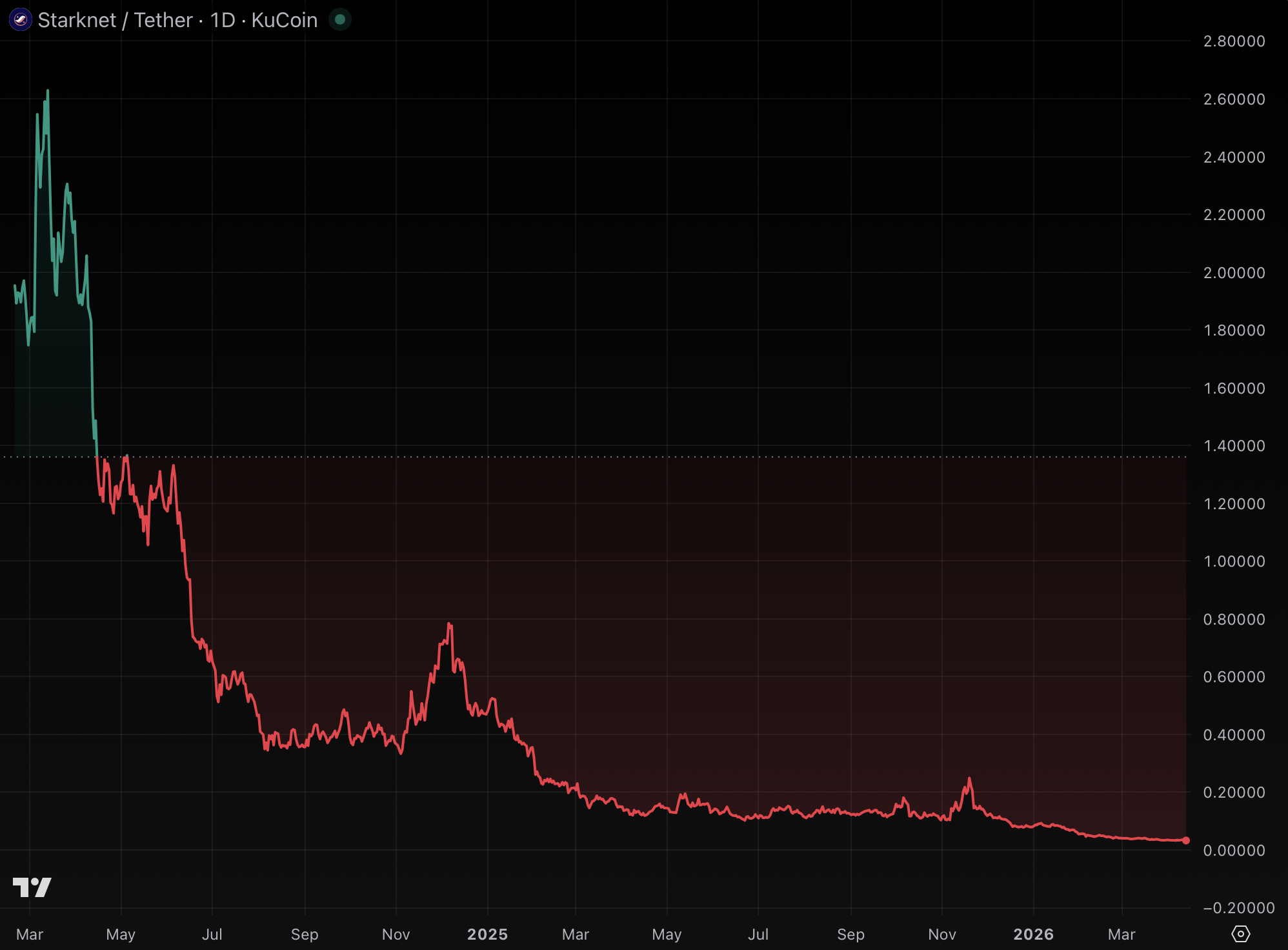
The CEO of StarkWare, the once-$8 billion Israeli company behind Ethereum-based blockchain Starknet, announced layoffs and a full corporate restructuring today. Monthly revenue on its flagship network has collapsed more than 98% from its peak.
In November 2023, Starknet’s on-chain revenue peaked near $5.8 million within a single month. This month, it is on track for approximately $100,000.
In other words, the network that once generated $187,000 in daily fees now generates about $3,500 per day. StarkWare declined to disclose the number of layoffs.
StarkWare, founded in Israel in 2018, develops Starknet, an Ethereum layer 2. For disambiguation, there is no StarkWave entity, a common misnomer that circulates online.
Starknet’s STRK token launched via airdrop in February 2024 and briefly traded to $4.41. It’s since fallen to $0.033, giving it a market capitalization of $187 million. That’s a 91% decline from its $2 billion market cap in March 2024.
StarkWare CEO: We are downsizing
CEO Eli Ben-Sasson posted his internal memo to X, telling staff the company had grown too large.
“Very sadly, as part of this process, we are downsizing,” he said as he fired staff. “Our new strategy requires that we move fast, and we’re too big and too inefficient for that.”
StarkWare raised $100 million at an $8 billion valuation in May 2022, quadrupling its size from $2 billion in a round six months prior. Although the company hasn’t updated its valuation in today’s downsizing announcement, it would probably be embarrassing relative to those 2022 figures.
GreenOaks Capital and Coatue were lead investors in the company. Earlier backers included Sequoia Capital, Paradigm, Founders Fund, as well as crypto dumpster fires Three Arrows Capital and Sam Bankman-Fried’s Alameda Research.
StarkWare raised more than $260 million over its lifetime — more than the current market cap of STRK.
COO Oren Katz has submitted his resignation and departs at the end of this month.
A split and a sunset
The restructuring splits StarkWare into two independent business units. An applications division, led by Chief Product Officer Avihu Levy, will chase revenue directly. A Starknet development unit, led by Product Head Tom Brand, will continue core protocol work.
Read more: Crypto Twitter upset by Starknet STRK airdrop
The revenue decline is mostly due to Starknet’s failure to attract usage of its blockchain as well as limited revenue across layer 2 blockchains.
Ethereum’s Dencun upgrade in March 2024 slashed data costs for all layer 2 networks, compressing fee revenue across the board. Layer 2 governance tokens like STRK posted average returns of negative 40% in 2025 in their second consecutive unprofitable year.
Starknet fared worse than most. Its total value locked sits around $241 million per DefiLlama, far behind Coinbase’s Base at roughly $4.3 billion and Arbitrum at $1.9 billion. Starknet’s all-time cumulative fees total just $45 million.
Ben-Sasson acknowledged as much. “Infrastructure alone does not win the game.”
Got a tip? Send us an email securely via Protos Leaks. For more informed news, follow us on X, Bluesky, and Google News, or subscribe to our YouTube channel.
Jito Foundation has signed a memorandum of understanding with Korean digital asset custodian KODA to explore institutional custody and staking support for JitoSOL in the local market.
According to Monday’s announcement, the agreement includes outreach to institutional investors and the development of compliant custody and staking pathways.
It comes as South Korea’s Financial Services Commission is expected to finalize a digital asset regulatory framework later this year.
In February, the foundation said it would work with Hanwha Asset Management to explore a JitoSOL exchange-traded fund in South Korea, pending regulatory approval. Marc Liew, head of APAC at Jito Foundation, told Cointelegraph:
We are seeing significant interest from two main camps: large financial firms looking to build the next generation of wealth management products, and institutional entities that are interested in the yield-bearing nature of JitoSOL for their corporate treasuries.
KODA provides custody infrastructure including cold storage, MPC-based key management and institutional staking, carrying $20 million in digital asset insurance coverage. The company is backed by KB Kookmin Bank and other ininvestors andolds a registered VASP license and ISMS certification.
“Through KODA’s institutional-grade vaulting system, the KODA interface will allow the client to mint JitoSOL directly from their SOL holdings,” Liew said.
Jito is a liquid staking protocol on the Solana (SOL) network where users stake SOL in exchange for JitoSOL, a token usable across decentralized finance applications. The Jito Foundation supports development, partnerships and institutional outreach.
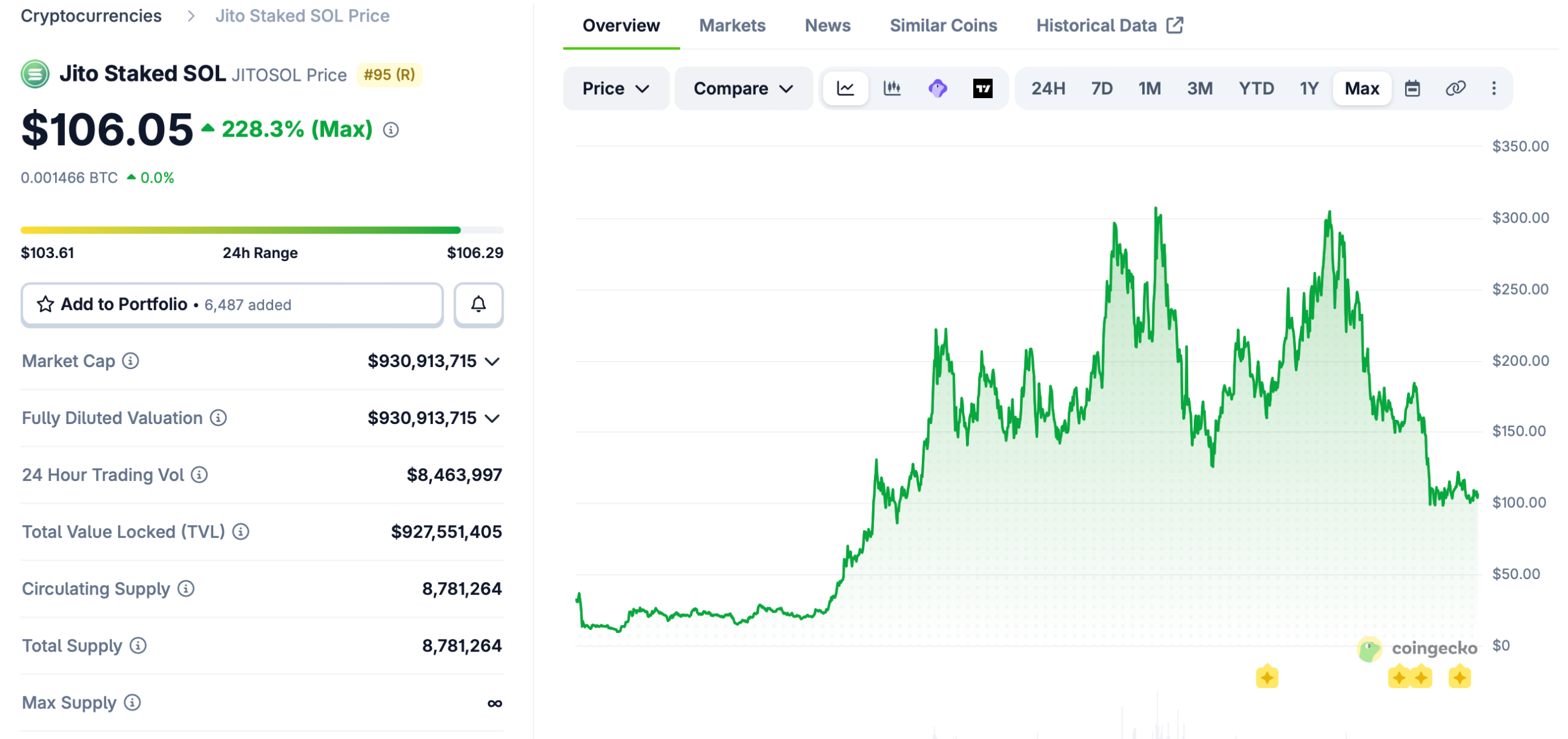
JitoSOL has a market capitalization of about $930 million, according to CoinGecko data. The token already has institutional exposure in Europe through a 21Shares exchange-traded product, while custodians including BitGo and Hex Trust support staking directly from custody accounts.

Related: Grayscale debuts Solana ETF, joining Bitwise in SOL staking ETF race
Seoul tightens crypto market controls
South Korean regulators and policymakers are pushing for tighter controls on the crypto sector as they move toward a more structured regulatory framework.
In January, the country approved changes to its crypto licensing regime, tightening requirements for virtual asset service providers and expanding oversight to include major shareholders. In March, policymakers followed with a proposal to cap ownership stakes in domestic exchanges at 20%, part of wider efforts to impose stricter controls on market structure.
The regulatory push accelerated after a payout error at crypto exchange Bithumb in early February, when users mistakenly received 620,000 Bitcoin (BTC) instead of 620,000 Korean won, triggering a sell-off and exposing weaknesses in exchange oversight.
Following the incident, the country’s Financial Services Commission introduced stricter reconciliation requirements between exchanges’ internal ledgers and onchain balances.
Earlier this month, lawmakers began drafting legislation that would classify stablecoins as foreign exchange payment instruments and require tokenized real-world assets to be backed by assets held in trust.
More recently, the Bank of Korea called for exchange-level “circuit breakers” and stronger internal controls, with the central bank warning that the industry lacks safeguards seen in traditional financial systems.
Magazine: Should users be allowed to bet on war and death in prediction markets?


The bitcoin price is range-bound between $68,000 support and $75,000 resistance heading into the most consequential two-week window of 2026, with three catalysts arriving back to back: the Iran ceasefire expiry on April 22, the CLARITY Act Senate markup targeted for late April, and the FOMC meeting on April 28 and 29.
Summary
- According to 24/7 Wall St. analysis, $68,000 is the key level to watch: bitcoin has held above it through both the Islamabad talks collapse and Monday’s blockade announcement, suggesting the market has already priced in the near-term bad news; if oil climbs past $110, however, analysts project bitcoin could fall to $65,000.
- If the ceasefire extends or new talks are announced before April 22, bitcoin could push back toward $75,000 to $80,000 on the same relief dynamic that drove the original ceasefire rally; a resumption of full hostilities with no diplomatic off-ramp is the scenario that breaks the $68,000 floor.
- The FOMC meeting on April 28 and 29 adds a second layer: with inflation running above 3 percent and oil still elevated above $100, Fed rate cut expectations have been effectively scrubbed from the near-term calendar, removing a key macro tailwind that historically supports bitcoin rallies.
Bitcoin (BTC) has spent 46 consecutive days in extreme fear territory, with the Crypto Fear and Greed Index reading between 8 and 12. Despite that, whale wallets accumulated 270,000 BTC over the past 30 days, the largest sustained buying spree since 2013, while exchange reserves hit their lowest level since December 2017 at 2.21 million BTC. Those on-chain signals suggest long-term holders are absorbing the selling from retail and tax-driven exits rather than liquidating.
One analyst described the level plainly: “$68,000: This is the line in the sand.”
The three catalysts between April 22 and April 29 interact with each other in ways that matter. If the ceasefire extends and oil drops toward $90, rate cut expectations improve going into the FOMC meeting and bitcoin gets a macro tailwind at the same time the CLARITY Act markup could add a crypto-specific catalyst. If all three resolve favorably in sequence, analysts at 24/7 Wall St project a move toward $75,000 to $80,000 by the end of April. That scenario requires a lot to go right simultaneously.
Why the Ceasefire Expiry Is the First Domino
The Islamabad talks ran 21 hours and ended without agreement on the two core issues: Iran’s nuclear program and control of the Strait of Hormuz. Iran’s parliament speaker returned home saying Iran would not bow to any threats. With the US Navy now blockading Iranian ports, the conditions for a ceasefire extension look harder to meet than they were before the weekend. 24/7 Wall St noted that “tax selling ahead of April 15 and uncertainty around the war will keep overriding Bitcoin’s rally attempts” in the near term.
What Happens to Bitcoin If $68,000 Breaks
As crypto.news has reported, the Fear and Greed Index has been in extreme fear for 46 consecutive days, and the market is structurally fragile with leveraged positions still present. As crypto.news has noted, a break below $68,000 would likely trigger liquidations from short-term holders who bought the ceasefire rally, with analysts projecting a move toward $65,000 if the war resumes and oil crosses $110.

Oil Price Slides Below $100 as China Defies US Hormuz Blockade
“The Prestige” ending explained: What's the secret of The Transported Man?

Out to Dinner? Spring Night Pieces to Wear Now


-

 Politics3 days ago
US brings back mandatory military draft registration
-

 Fashion3 days ago
Weekend Open Thread: Veronica Beard
-
 Sports3 days ago
Man United discover Nico Schlotterbeck transfer fee as defender reaches Dortmund agreement
-

 Tech6 days ago
How Long Can You Drive With Expired Registration? What Florida Law Says
-

 Politics1 day ago
World Cup exit makes Italy enter crisis mode
-

 Crypto World4 days ago
Canary Capital Files SEC Registration for PEPE ETF
-

 Business3 days ago
Tesla Model Y Tops China Auto Sales in March 2026 With 39,827 Registrations, Beating Cheaper EVs and Gas Cars
-

 Crypto World5 days ago
Bitcoin recovers as US and Iran Agree a Ceasefire Deal
-

 Politics4 days ago
Malcolm In The Middle OG Turned Down ‘Buckets Of Money’ To Appear In Reboot
-

 Fashion6 days ago
Let’s Discuss: DEI in 2026
-
 NewsBeat20 hours ago
Pep Guardiola and Gary Neville agree over Arsenal title problem that benefits Man City
-

 Business3 days ago
OpenAI Halts Stargate UK Data Centre Project Over Energy Costs and Copyright Row
-

 Business2 days ago
Ireland Fuel Protests Enter Day 5 as Blockades Spark Shortages and Government Prepares Support Package
-

 Politics4 days ago
LBC Presenter Mocks Trump Over Iran War Failures
-

 Crypto World3 days ago
Federal judge blocks Arizona from bringing criminal charges against Kalshi
-

 Tech4 days ago
A version of Windows 10 released a decade ago is now eligible for additional security patches
-
 NewsBeat1 day ago
JD Vance announces ‘no agreement’ with Iran over nuclear weapons fear
-

 Business3 days ago
IMF retains floor for precautionary balances at SDR 20 billion
-
 Entertainment5 days ago
Alfred Hitchcock’s 10 Most Suspenseful Masterpieces, Ranked
-
 Entertainment3 days ago
A ‘Bridgerton’ Star’s New Survival Thriller Is a Must-Watch on Netflix This Weekend
You must be logged in to post a comment Login