
Politics
Channel 5 Pundit Labels Trump As The Antichrist


A Channel 5 pundit didn’t mince her words on Monday when asked her reaction to the bizarre image Donald Trump posted that basically depicted himself as Jesus Christ.
Marina Purkiss described the president with a fairly harsh slur ― at least in religious circles ― saying he is the “Antichrist.”
During a segment on the Jeremy Vine Show, Purkiss admitted to being shocked by the image the president posted.
“I’m just gonna say this, right? I am a person that was raised a Catholic — I did all the sacraments, I read the book, you know,” she said, adding that while she has lost her “faith,” she still finds Trump’s post “deeply, deeply offensive.”
Then she went scorched earth on the president.
“How dare you? That is blasphemous. The picture is blasphemous, it’s a huge disrespect. That in itself is the breaking of a commandment,” Purkiss said.
After noting that Trump had, by her count, “broken eight of the 10 commandments,” Purkiss declared, “This guy, in my opinion, is the Antichrist.”
“No wonder he doesn’t like the Pope,” she added.
The image was removed from Trump’s account late on Monday morning. The president then told reporters he thought the picture showed him as a doctor.
Trump’s post came while his current war with Iran has been heavily criticised by Pope Leo XIV, the Catholic Church’s first American-born pontiff.
Although his team has previously posted images depicting Trump as Superman, on Mount Rushmore and even as the Pope, the Trump-as-Jesus post seemed to be a bridge too far with many people on social media who called it “blasphemous” and “deranged.”
In fact, Purkiss wasn’t the only prominent person to describe Trump with the “A-word” label.
Axios co-founder Jim VandeHei didn’t call Trump the “Antichrist” when he appeared on “Morning Joe” Monday, but he warned the president that posting memes suggesting he’s Christ could alienate his supporters.
“I think he is playing with fire with the base. And if you look at where his standing is, like, he should be worried,” VandeHei said. “I’m surprised his advisers didn’t say, ‘Come on, man. Like, at some point you’re pushing this too far. Your favorable ratings are already relatively low.’”
Subscribe to Commons People, the podcast that makes politics easy. Every week, Kevin Schofield and Kate Nicholson unpack the week’s biggest stories to keep you informed. Join us for straightforward analysis of what’s going on at Westminster.


It has been clear to most of the British population for some time that criticising Islam is a dangerous game. But one would still hope that the military would be allowed to talk more freely about the threats to our national security.
But apparently not. According to the Daily Mail, a Royal Air Force cadet has been suspended for describing Islam as ‘the greatest threat to the UK’ during a presentation at RAF Cranwell, shortly before Easter. An RAF spokesperson confirmed it was investigating an ‘alleged incident of inappropriate behaviour’, without providing any further information.
The cadet will no doubt be accused of failing to distinguish between Islam and Islamist terrorism. He failed, that is, to abide by the unwritten law of our age – to ‘respect’ the former, and at the same time insist that the latter has no connection whatsoever with the ‘religion of peace’. Either for failing to make this distinction, or for simply mentioning Islam at all, this young cadet will be hauled over the coals much the same way that Conservative MP Nick Timothy was last month, when he (correctly) characterised a mass Islamic prayer in Trafalgar Square as an act of ‘domination’.
The response to Timothy’s comments was ominous, not least as a demonstration of just how perilous it has become to criticise Islam in the UK. But it was also predictable – Labour, desperate to recapture Muslim voters after its loss at the Gorton and Denton by-election in February, was always going to leap at the opportunity to label a political opponent as ‘Islamophobic’.
The treatment of the RAF cadet is in some ways a cause for greater concern. It is increasingly difficult to see where the ‘mainstream’ Islam ends and radical Islam begins in the UK (more than half of Britain’s mosques are run by the fundamentalist Deobandi movement). And radical Islam is by far the greatest security threat the country faces. If this fact can’t be acknowledged in the armed forces, then they are not doing their job.
The statistics support the cadet, not his inquisitors. In the past 20 years, Islamic extremists have killed 95 people in the UK. The ‘far right’ that we endlessly hear of has killed three. In 2020, it was reported that of the 43,000 extremists monitored by MI5, more than 90 per cent were Islamists.
Recent events bear this out. Who attacked the Heaton Park synagogue in October? Who allegedly set fire to four Hatzola ambulances in Golders Green last month? Who was recently convicted for planning to gun down as many Jews as their ammunition allowed at a march against anti-Semitism in Manchester in 2024? It wasn’t the far right. It wasn’t someone who had been ‘radicalised’ by watching Tommy Robinson videos. It was Islamists or suspected Islamists in every case.
The inability to criticise Islam has had a chilling effect on freedom of speech in the UK and across the West. We can hardly be reminded enough that a British schoolteacher remains in hiding, under a new name, for showing pupils a drawing of Muhammad during a religious-studies class at Batley Grammar in 2021. Labour has even introduced a non-statutory definition of Islamophobia (rebranded as ‘anti-Muslim hostility’), which is effectively an Islamic blasphemy law in all but name.
Clearly, this timidity towards Islamism has now seeped deep into the nation’s institutions. The treatment of the RAF cadet is mirrored by the warped priorities of Prevent, the government body that is supposed to stop people becoming terrorists or supporting terrorism. In 2022, it was reported that just 16 per cent of referrals concerned Islamic extremism. Right-wing extremism, on the other hand, accounted for 20 per cent of its caseload.
The evasiveness around Islam must end. Every other country, it seems, is able to see that the UK has a problem with the nature of the Islam practised here. The United Arab Emirates now discourages students from studying in Britain because of the pervasive influence of the Muslim Brotherhood. That a Muslim country can identify a threat that the British authorities can’t, or won’t, hardly inspires optimism.
The Iran war may have exposed the decrepit state of the UK’s armed forces. But the treatment of the young cadet by the RAF suggests that the problem with the British Armed Forces runs deeper than a shortage of materiel. What is the good of having more warships or more troops, if a threat cannot be named?
The treatment of the Royal Air Force cadet is a scandal. The public has come to expect this kind of thought-policing in government bureaucracies, but it appears it’s now worked its way into the military, too. The price we might have to pay for this right-on censorship will be very high indeed.
Hugo Timms is a staff writer at spiked.
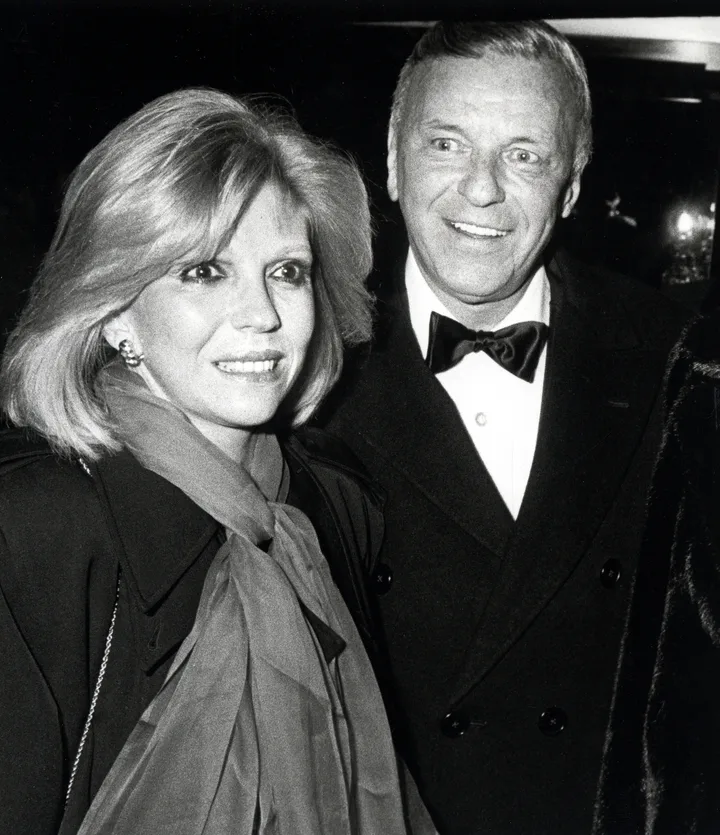
These Boots Are Made For Walkin’ singer Nancy Sinatra made it clear that Donald Trump was a heel, after the US president shared a video of her late father Frank Sinatra singing My Way.
Without explanation, Trump posted the vintage clip of the Chairman of the Board crooning the classic tune of a man looking back on his life without compromise on Saturday.
The posted prompted all kinds of speculation about the reasons behind it, but Nancy clearly wasn’t interested in the president’s motive.
She lamented: “This is a sacrilege.”
One person asked if Nancy could do anything about it, to which she replied, “Unfortunately no. The only people who can do something are the publishers.”
Even that route may not prove fruitful, according to Entertainment Weekly.
“There’s a big difference between Trump using music at rallies or in ads, where a license is required, and merely sharing a video on social media,” the show business outlet wrote.
My Way is one of Ol’ Blue Eyes’ signature hits, but he didn’t sing the original version, Comme D’Habitude, previously performed in French (and co-composed) by Jacques Revaux.

Ron Galella via Getty Images
Nancy has made it clear in plain English that her father was no fan of the two-time president – and nor is she.
Last year, she responded to a commenter on X who wrote that the singing legend would vote for Trump if he were still alive.
“Not a chance,” Nancy said of her dad, who died in 1998 at the age of 82.
“You obviously don’t know my father at all. Do some homework before you post about him.”

Ron Galella via Getty Images

The Secretary of State for Health and Social Care, the Rt Hon Wes Streeting MP, has presided over the opening of the University of East London’s (UEL) new Neighbourhood Health Hub in the London Borough of Newham – a pioneering partnership bringing healthcare closer to home through collaboration between the University, the NHS and local authorities.
The launch event at UEL’s Stratford Health Campus on 17 October brought together local leaders, health partners, students and residents to see how the Hub will transform access to health and wellbeing services in east London.
The Neighbourhood Health Hub plans to provide accessible, preventative, research-informed healthcare services for local residents, while offering hands-on training opportunities for students and professionals, both preparing to join and progressing further in the health and social care workforce. It combines clinical care, education and research under one roof – creating a model that supports healthier lives, reducing pressure on local GPs and hospitals, advancing digital innovation and offering students real-world experience in a prevention-first approach to healthcare.
Health and Social Care Secretary Wes Streeting said, “Where you live shouldn’t determine how long you live but that is the unjust reality in our capital today. A girl born in Newham will fall into ill health six years earlier than a girl born down the road in Kensington and Chelsea – this is a scandal which we are determined to end.”
“This groundbreaking neighbourhood health hub will bring healthcare closer to communities that need it most, providing a one-stop shop for health and care services on people’s doorsteps. It is a leading light of change we are making in the NHS, shifting its focus from hospital to community.
“By integrating care, education and innovation in one place, we’re not just treating illness – we’re preventing it, training the next generation of healthcare professionals, and bringing our analogue health service into the digital age.”
At the Hub, residents can access a wide range of practical, community-based health and wellbeing services, including:
- Physiotherapy, sports therapy and podiatry for injury recovery and mobility support
- Counselling and wellbeing sessions, including mindfulness and parenting support
- Health checks and screening for blood pressure, cholesterol and heart health
- Musculoskeletal therapy, a non-invasive technology that supports joint, muscle and bone health – with free sessions offered to eligible Newham residents as part of clinical trials
Professor Amanda Broderick, Vice-Chancellor & President, University of East London, said, “The Neighbourhood Health Hub is designed to be a ‘passport to good health’ for our community, reflecting three vital goals: helping families build healthy foundations from a young age; supporting people to stay active and in work; and reducing health inequalities for everyone in our community.
“The Neighbourhood Health Hub also gives our community access to free, high-quality services while offering students and practitioners transformative learning experiences that prepare them to make a difference from day one in the NHS.”
The Hub forms part of UEL’s expanding Stratford Health Campus, which also includes the University’s state-of-the-art Hospital and Primary Care Training Hub, opened by His Majesty King Charles III, and the forthcoming Academic Health Building. Together, these facilities are shaping a new model for healthcare education, research and service delivery in east London.
UEL is also developing a new, primary care-focused medical school, with its MBBS degree at the heart of the Stratford Health Campus. From 2027, and subject to General Medical Council (GMC) approval, the programme will train doctors for east London, from east London – widening access to medicine and strengthening the region’s healthcare workforce for generations to come.

Try as I might (and believe me, I’ve tried), I constantly manage to wake up hot and sweaty at 3am.
I’ve always attributed that to my insomnia. But hormone and sleep specialists have shared my issues might be partly down to my biology.
We know it’s crucial to keep bedrooms cool (experts recommend 16-18°C) to be able to sleep well – and this is perhaps even more important for women.
When a study found rising temperatures are impacting sleep globally, it also revealed women were impacted more than men. The Guardian noted “women’s bodies cool earlier in the evening than men’s when going to sleep, meaning higher night time temperatures may have a bigger impact on women”.
Women’s slightly higher core body temperatures can also make us “feel” external cold and warmth more intensely, Dr Karan Rajan previously shared.
Women appear to wake up overheated more often than men – but why?
Dr Renee Young, an endocrinologist and founder of the Young Naturopathic Centre For Wellness, told Pretty You London that “hormones like oestrogen and progesterone play a central role in how the brain regulates body temperature”.
She added: “Even slight fluctuations can confuse the body into thinking it needs to cool down. That often looks like a hot flush or a sudden sweat episode, especially at night.”
These are not exclusive to menopause or perimenopause, though both of these can lead to similar symptoms.
Clinical dietitian Dr Colleen Fogarty-Draper said it’s not just hormones, though.
“Women in midlife often have a lower stress threshold… Higher cortisol levels, especially when they don’t follow their normal rhythm, can interfere with sleep and make overheating worse,” she shared.
How can I stop overheating at night?
Though you might be tempted to take a cooling shower before settling down, NHS GP Dr Hana Patel said this may not be the answer.
“A cold shower can cause your body to generate more heat as a response,” she advised, while the cool-down period following a warm shower “tells your brain it’s time to sleep”.
Wearing thinner pyjamas, avoiding heavy bedding, and even keeping your partner out of your bed (if needed) may help, The Sleep Foundation said.
Whatever the cause, though, you should see your GP if your sleep is consistently interrupted.
“Menopause and hormonal changes don’t have to steal your sleep,” Dr Fogarty-Draper stressed. “When we understand the cause, we can take back control.”

Sydney Sweeney’s nude scenes in the new season of Euphoria were generating controversy before they’d even aired.
In the latest episodes of the award-winning US drama, Sydney’s character Cassie has turned to modelling on OnlyFans, as a way of paying for the flowers in her upcoming wedding to Nate (played by recent Oscar nominee Jacob Elordi).
Last week’s instalment saw Cassie posing in lingerie and dog accessories, which alarmed some viewers, as did a preview clip that included footage of the character posing in an “adult baby” outfit.

These latter shots were included in the latest episode of Euphoria, as part of a montage that saw Sydney’s character posing nude in a wet, see-through American flag, topless underneath American football gear and eating an ice cream which is dripping down her exposed breasts.
After episode two aired, many critics voiced their discomfort with the scenes, and the portrayal of Cassie in Euphoria’s latest outing.
“In season two, Cassie degraded herself for Nate,” one review in the New York Post said. “The show did seem to take too much pleasure in it. But, there was a larger point, as that story explored how a girl like Cassie can destroy herself for a toxic guy. That’s an experience that many viewers can relate to, or can recall witnessing.
“When Cassie dresses as a baby in season three, Euphoria isn’t saying anything thoughtful about a particular experience. It isn’t asking us to understand her behaviour. It’s making her a sordid punchline, to the point where it feels spiteful.”

Rolling Stone’s critic agreed: “Throughout the episode, it becomes clear that the narrative is mocking Cassie and other influencers-turned OnlyFans models […] But the show also leers at its women.
“There are close-up shots of coke on Angel’s breasts, melted ice cream on Cassie’s, and Katelyn spreading her legs out for the camera. I’m aware that depiction doesn’t equal endorsement. But one wonders what else writer-director Sam Levinson is doing this for, if not for shock value, because he seems confused about what he wants to say about sex work and women.”
Meanwhile, a piece in Slate with the headline “What Happened To Euphoria’s Cassie?” compared the character’s story arc to a “humiliation ritual for Sydney Sweeney”, claiming that the series’ “most pitiful character” has now “become the worst possible version of herself”.
Other outlets also included round-ups from viewers, calling the scenes “degrading” and “horrible”, while accusing the show of “going too far”.
Even the in-show voiceover provided by Zendaya, in character as Rue, describes Cassie as “beautiful, but directionless” and “so desperate for attention, she’s willing to humiliate herself”.
It’s worth stating, though, that not all of the press surrounding Sydney Sweeney and the latest episode of Euphoria has been negative.
A review in Variety described the Emmy nominee’s performance as “complicated and compelling”, while celebrating her “high-wire acting”.
In 2022, Sydney called out the “double standard” around the way male and female actors who have appeared nude on screen are treated.
She lamented to Cosmpopolitan: “I don’t think as many people took me seriously in Euphoria because I took my shirt off. There’s such a double standard. I really hope I can have a little part in changing that.”
Around this time she also told The Independent: “When a guy has a sex scene or shows his body, he still wins awards and gets praise. But the moment a girl does it, it’s completely different.”
During this interview, she also made it clear: “I’ve never felt like Sam [Levinson, Euphoria’s creator] has pushed it on me or was trying to get a nude scene into an HBO show. When I didn’t want to do it, he didn’t make me.”


A skateboarding charity has successfully reopened its much-loved skatepark in a new Derby location after being evicted from its former premises.
Flo Skatepark unveiled its 20,828 sq-ft indoor skatepark in Derby’s Derbion shopping centre earlier this month, transforming the former Eagle Market space.
Its opening day featured a packed skate jam, filled with upbeat energy that made attendees of all age groups feel alive.
Mark Deans, chairperson of Flo Charitable Trust, which was set up to stop the skatepark disappearing, summed up the mood.
It can only get better and better from here. The park is there to be used by a whole range of small wheels.
Flo Skatepark centres diversity and inclusion
Flo Skatepark had to leave its Nottingham home in 2024 when the site was repurposed for a new footbridge over the River Trent.
For the skaters who mastered their wheels under its roof, and for the charity behind it, the closure felt personal, not just practical.
However, the departure from the old location led to Flo landing in a new place, prompting potential for a bigger platform and a great future.
Its new space puts diversity and inclusion at the forefront. Alongside a dedicated beginner zone for first-timers, it offers substantial features for experienced riders, including a vert ramp and a bowl.
Deans says Flo has always facilitated growth throughout the entire skating journey, from that nervous first push to elite training.
In the past, we’ve taken someone from beginner to national champion. Whether you’re trying it for the first time or training for the Olympics, this park can support you — at any level in between.
That is of great importance in today’s skateboarding landscape as the sport now operates on the world’s biggest stage.
Since joining the Olympic programme at Tokyo 2020 and returning at Paris 2024, skateboarding has gained legitimacy, allowing an increased number of young people to pursue the sport professionally whilst preserving the culture and creativity that define it.
Why indoor spaces like Flo Skatepark matter
The most concrete message enunciated at the opening centred on safety and confidence, particularly for people who can feel excluded in outdoor spaces.
In the UK, indoor skateparks answer a straightforward challenge derived from the weather and its limitation to outdoor presence. Year-round access enables consistent practice and structured coaching for the sport, both crucial for helping young riders improve and stay engaged.
Flo’s expansion aligns with national aims from Sport England to keep people active by facilitating access to welcoming local amenities.
A city centre skatepark with real visibility
The Derbion’s location places skateboarding at the heart of the city, alongside shops, places to eat and other attractions. That visibility reshapes who encounters it, who gives skateboarding a go and who feels it’s truly a sport for them.
Beth McDonald, managing director of the Derbion, called it “world-class” and said it would “unite sport, culture and community”.
Derby City Council leader, Nadine Peatfield, framed it as part of a bigger city-centre plan.
She said:
This is a brilliant addition to our city centre, providing a world-class space where people of all ages can come together to stay active and inspired…
I can’t wait to see the positive impact it will have.
What does Flo’s move mean for British skateboarding?
Flo’s story reaches beyond a single building and demonstrates the resilience of a skating community that refused to fade away.
Nottingham was a defining chapter, proving a focus on nurturing talent, building confidence and creating a place to belong for its young community.
However, Derby is the next step: bigger, bolder and far easier to find. As Mark Deans put it, it’s a new era.
Featured image via Marketing Derby
By Faz Ali
The University of East London (UEL) has announced plans to open its first South Asia Careers Hub in Chennai, strengthening its long-term strategic commitment to India and the wider South Asia region.
Planned to open in Autumn 2026, the Hub will serve students, alumni, employers, researchers and entrepreneurs across South Asia. It will bring together international academic practice with regional industry and community expertise to create practical, career-focused learning opportunities.
The Hub will support:
- internships and live industry projects
- executive education and workforce development
- applied research partnerships
- support for start-ups and entrepreneurship
Focus areas aligned with regional priorities:
The Hub’s initial academic focus will include:
- Health and Behavioural Sciences
- Engineering
- Business Management
- Psychology
These areas closely align with Tamil Nadu’s priorities in healthcare, life sciences, advanced manufacturing and inclusive development.
Developed in partnership with the Tamil Nadu Industrial Development Corporation (TIDCO) and the Government of Tamil Nadu, the Hub will work directly with industry to provide hands-on experience while supporting fast-growing sectors such as advanced manufacturing, health technologies, digital innovation and the creative economy.
Announcement made at India International Higher Education Summit
The announcement was made at the India International Higher Education Summit (IGES), where Professor Amanda Broderick, Vice-Chancellor and President of UEL, is leading the University’s delegation.
Professor Amanda Broderick, Vice-Chancellor and President of the University of East London, said, “India is one of the most dynamic education and innovation markets in the world, and Chennai is at the heart of that momentum. The launch of our first South Asia Careers Hub represents a major step in UEL’s long-term commitment to India, bringing our careers-first, enterprise-led education model directly into partnership with government, industry and academia.”
“This collaboration with the Government of Tamil Nadu and TIDCO allows us to co-create globally relevant, industry-embedded education, applied research and workforce development that delivers real impact – for students, employers and society. Together, we are building new pathways for talent, innovation and inclusive growth that will shape the future workforce across India and South Asia.”
The Hub will also support alumni engagement across India and South Asia, strengthening links between education, employers and lifelong learning, while creating new opportunities for academic and research collaboration in the years ahead.
Government of Tamil Nadu statement
The Government of Tamil Nadu welcomed UEL’s decision to establish its first South Asia Careers Hub in Chennai, reinforcing the state’s position as India’s leading destination for global education, advanced skills and innovation-led growth.
Formalised through a Memorandum of Understanding with TIDCO, the initiative reflects international confidence in Tamil Nadu’s governance, talent ecosystem and policy stability, strengthening its reputation as the preferred destination for high-quality global universities.
Planned to open in 2026, the Hub will support high-value job creation, skills development and inclusive economic growth, aligned with the India–UK Vision 2035 and Tamil Nadu’s ambition to act as a global gateway for education, innovation and talent mobility.
Find out more about studying in the UK as an international student.
The University of East London (UEL) hosted a cross-sector symposium at the House of Commons on 9 February, bringing together parliamentarians, employers, practitioners and people with lived experience to examine how workplaces can better support colleagues affected by trauma, substance use and recovery.
Held in partnership with the International Consortium of Universities for Drug Demand Reduction (ICUDDR), the event focused on employers’ responsibilities in a changing landscape of work and health, and the role recovery-ready, trauma-informed practices can play in addressing long-term sickness and economic inactivity.
Discussions were framed in the context of the Government’s Keep Britain Working agenda and the growing recognition that good work can support long-term participation in the labour market.
Opening the symposium, UEL Vice-Chancellor and President Professor Amanda Broderick said: “East London is a place of extraordinary energy, resilience and creativity. But it is also where communities often experience the sharpest edges of health inequality, economic precarity, trauma and addiction-related harm.
These realities do not stop at the workplace door. They show up in absence, presenteeism, disciplinary processes, and too often, in people falling out of work altogether.
Our work is deliberately practice-based and grounded in a responsibility to deliver solutions that benefit learners, employers and communities alike. Developing recovery-ready, addiction-informed workplaces is, for us, a practical way of enacting that responsibility – translating evidence, values and lived experience into real organisational change.”
Through keynote contributions, panel discussions and facilitated roundtables, participants explored how organisations can move beyond basic policies to create workplace cultures that reduce stigma, support early intervention, and enable people to stay in or return to work safely and sustainably.
The symposium heard that around 2.8 million working-age adults are economically inactive due to ill health. Roughly one in five working-age people is out of work. The economic cost of this is estimated at over £200 billion a year.
Guests included House of Commons host the Rt Hon James Asser, MP for West Ham and Beckton, Deputy Mayor of London Mr Howard Dawber, the Rt Hon Sir Stephen Timms, MP for East Ham and Minister for Social Security and Disability, and Dr Laurie Krom, Executive Director, and Dr Carmel Clancy, Director, from ICUDDR.
Professor Fatima Annan-Diab, Executive Dean of the Royal Docks School of Business and Law, told guests, “We are committed to working with employers, policymakers, practitioners, and partners to translate evidence into capability – and intent into delivery. Through our interdisciplinary expertise and our Recovery-Ready and Trauma-Informed Professional Pathway, introduced today, we are building the infrastructure needed to support real and lasting organisational change.”
“This work does not begin and end with an event. It is ongoing, and it is designed to be collaborative.”
Over the next phase, the collaboration will focus on developing professional education and practical resources for employers, including continuing professional development (CPD) courses, employer toolkits and opportunities for applied research.
View all our short courses (CPD)
The Association of Former Members of Parliament has published the latest edition of its official journal Order! Order!


4 min read
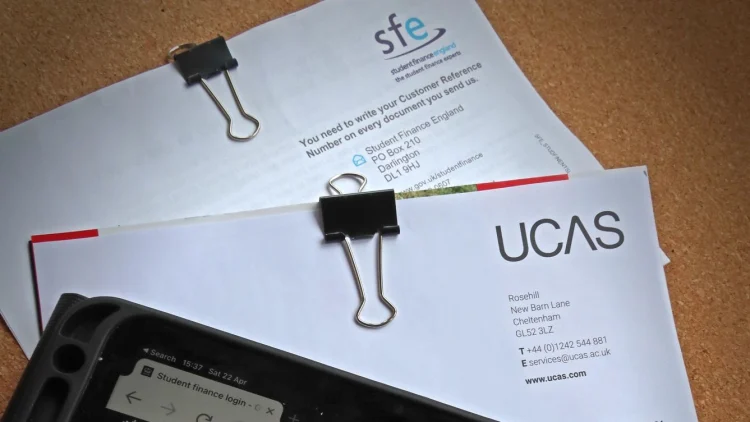
When I look at the structure of our student loan system in 2026, I don’t recognise it as a loan.
It is a retrospectively rewritten graduate tax that punishes aspiration, entrenches inequality, and falls hardest on women at every stage of their working lives.
An entire generation was told repayments would feel like “a phone contract” or “a few coffees a week.” That was a lie. Only a third of Plan 2 borrowers will ever clear the balance.
The rest pay 9 per cent of every pound above a frozen threshold for up to 40 years – a 51 per cent marginal rate when combined with income tax and National Insurance. A graduate on £50,000 will only keep 49p of each additional pound – how dare politicians continue to call it a loan.
Beneath these headline injustices sits a deeper one policymakers refuse to name: this system is gendered from the day it is signed to the day a woman retires.
Women make up 57 per cent of UK students. They leave with the same debts as men but a labour market that pays them 14 – 15 per cent less and expects them to take career breaks for caring but doesn’t give financial relief. In the student loan system they pay for longer, pay more in real terms, and rarely clear their balance.
Our research found Ms JD puts the arithmetic in words ministers should read: “Unless you are being paid over £66k annually, you do not even start to break even. To earn £66k as a female in a male-dominated industry will be almost impossible.” Seven and a half years of consistent repayment have taken her balance from £57,000 to £83,000. She finds it “near impossible to buy a house on my own.”
Then there is motherhood – if a woman can afford it. Interest does not pause for maternity leave.
Ms HS, 32 and child-free despite wanting to be a parent, says: “Knowing my student loan balance would still be growing during maternity leave adds an extra layer of financial pressure.” Ms HG and her husband pay £420 a month and have put off starting a family: “This is why the birth rate is so low, we can’t afford to do so.” Westminster wonders about falling birth rates. It has engineered one of them.
The unfairness begins before a woman has even taken out her own loan. Ms CM describes how the parental assessment for maintenance loans assumes a stepparent will fund an adult stepchild’s university costs – penalising single mothers who re-partner. Most single-parent households are headed by women. That is not a footnote. It is structural.
Then there is the pension pipeline. The part that should stop ministers in their tracks. Every pound deducted in a woman’s 20s, 30s and 40s is a pound not compounding in her pension. Women retire with 40 per cent less pension wealth than men. As Ms HS puts it: “Ultimately, it’s a 9 per cent additional tax for life.” The state that raids her payslip now will rescue her later. That is not social policy. It is a doom loop.
Layered on top is a retrospective rewriting of the deal. The repayment threshold was promised to rise with earnings; it has been frozen and re-frozen. Interest rate bands were tightened at the 2025 Budget without mention in the Treasury’s own Budget documents. The 6 per cent cap from September 2026 does not enable graduates to clear their debts, it merely slows the rate at which those debts become unrepayable. In any regulated consumer credit market, marketing debt on terms this misleading would be a clear breach of consumer protection law and bee deemed a scandal.
What I have described is, on its face, indirect sex discrimination under the Equality Act 2010. No gender impact assessment has been published for the threshold freeze or the hidden tightening of the interest bands, raising a serious question about whether ministers have discharged the Public Sector Equality Duty at all.
Fairness is not free; nor is unfairness. Proper reform, retrospective justice, a lifetime repayment cap, and a mandatory gender impact assessment on every future change – costs roughly 0.3–0.4 per cent of GDP. Reforming the triple lock releases savings that would address this intergenerational unfairness. A political choice, not about affordability.
The student loan system promised social mobility and has delivered a debt trap.
This government has committed to closing the gender pay gap, the gender pension gap and reversing birth rate decline, so cannot credibly defend a policy that measurably widens all three. Ms HG asks the question ministers must answer: “When did hard work mean only surviving?”
Gina Miller is founder of MoneyShe, and co-founder of SCM Direct. You can read her TSC submission here and policy white paper here.

Why is the RAF suspending cadets for criticising Islam?
Patrick Muldoon's final Instagram post hints that his death was sudden

A job that people with money do. #money #education



-

 Crypto World7 days ago
The SEC Conditionalises DeFi Platforms to Be Avoided for Broker Registration
-

 NewsBeat6 days ago
Trump and Pope Leo: Behind their disagreement over Iran war
-

 Fashion3 days ago
Weekend Open Thread: Theodora Dress
-

 Crypto World7 days ago
SEC Signals Exemption for Crypto Interfaces From Broker Registration
-

 News Videos5 days ago
Secure crypto trading starts with an FIU-registered
-

 Sports3 days ago
NWFL Suspends Two Players Over Post-Match Clash in Ado-Ekiti
-

 Crypto World6 days ago
SEC Proposes Certain Crypto Interfaces Don’t Need to Register as Brokers
-

 Business1 day ago
Powerball Result April 18, 2026: No Jackpot Winner in Powerball Draw: $75 Million Rolls Over
-

 Crypto World3 days ago
Russia Pushes Bill to Criminalize Unregistered Crypto Services
-

 Politics3 days ago
Palestine barred from entering Canada for FIFA Congress
-
 Business4 days ago
Creo Medical agree sale of its manufacturing operation
-

 Politics1 day ago
Zack Polanski demands ‘council homes not luxury flats for foreign investors’
-
 Entertainment7 days ago
Brand New Day’ Footage Reveals the Devastating Impact of ‘Now Way Home’
-

 Crypto World3 days ago
Russia Introduces Bill To Criminalize Unregistered Crypto Services
-

 Tech6 days ago
Microsoft adds Windows protections for malicious Remote Desktop files
-
 Entertainment7 days ago
Karol G’s ‘Ultra Raunchy’ Coachella Set Gave ‘Satanic Vibes’
-
 Crypto World7 days ago
Senate Bill Faces Delay Over Stablecoin Yield Debate
-
 Entertainment7 days ago
How Babylon 5 Turned Brief Side Story Into Emotional Masterpiece
-

 Tech7 days ago
What was the first ransomware attack to demand payment in Bitcoin?
-

 Tech5 days ago
‘Avatar: Aang, The Last Airbender’ Leaked Online. Some Fans Say Paramount Deserves the Fallout
You must be logged in to post a comment Login