
Business
Alignment healthcare CEO Kao sells $6.16 million in stock




Nearly 5 million people celebrated Songkran in Bangkok this year — a 93.4% increase from 2025 — with Siam Square, Iconsiam, and Silom Road being the top venues, while motorcycle accidents accounted for 85% of the 20 road fatalities.
Key Details
- Attendance surged to 4,958,965 across 94 venues, up from 2,564,663 in 2025.
- Siam Square led with 1.5 million visitors, followed by Iconsiam (1.47 million) and Silom Road (652,974).
- 20 people died in 18 road accidents; 17 fatalities involved motorcyclists, 9 of whom weren’t wearing helmets.
- Thung Khru and Prawet districts recorded the most deaths (3 and 2, respectively).
- Waste generation hit 336 tonnes, up from 250.5 tonnes last year, with Khao San Road producing the most (102.46 tonnes).
Despite the festive atmosphere, the data underscores persistent road safety risks and environmental strain during Thailand’s largest annual celebration.
The 93.4% surge in Bangkok Songkran attendance this year — reaching nearly 5 million people — reflects broader national trends of increased domestic and international tourism, improved event coordination, and the festival’s growing global appeal as a cultural and economic driver.
Enhanced planning, clearer zoning, and stronger inter-agency cooperation in Bangkok also contributed to the record turnout. Additionally, flagship events like the Maha Songkran World Water Festival at Benjakitti Park drew over 108,000 visitors, including more than 52,000 foreign tourists, signaling strong international interest.
The Tourism Authority of Thailand (TAT) expects the Songkran 2026 festival to generate more than 30.35 billion baht in tourism revenue, marking a 6% increase from the previous year.
Governor Thapanee Kiatphaibool stated that this growth is driven by approximately 500,000 foreign visitors contributing 8.1 billion baht and 5.96 million domestic trips adding 22.25 billion baht. While the TAT remains confident in these figures, the University of the Thai Chamber of Commerce (UTCC) lowered its overall festival spending forecast to 120–125 billion baht due to rising diesel prices and economic caution. Despite these varied projections, major hotspots like Siam Square, Iconsiam, and Silom Road saw millions of participants, reflecting a vibrant atmosphere across the country.
What was the total waste collected during Bangkok’s Songkran 2026?
Bangkok’s Songkran 2026 celebrations resulted in a total of 336 tonnes of waste collected at major celebration sites between April 11 and 15. This figure marks a significant increase from the 250.5 tonnes recorded during the same period in 2025.
According to the Bangkok Metropolitan Administration (BMA), Khao San Road was the primary contributor to this total, producing 102.46 tonnes of waste. Other high-volume areas included Silom Road, which generated 86.17 tonnes, and ICONSIAM, which produced 58.7 tonnes. On the first day of major water-splashing activities alone, the city collected 86.32 tonnes, of which approximately 82% was general waste, while the remainder consisted of recyclable and food waste.
To address environmental concerns, the city implemented a recycling initiative for plastic water guns, encouraging revellers to donate unwanted items at nine locations, including Siam Square and CentralWorld. These collected weapons are intended to be processed into naphtha for the production of plastic pellets, which can then be molded into new products like chairs and containers.
Other People are Reading
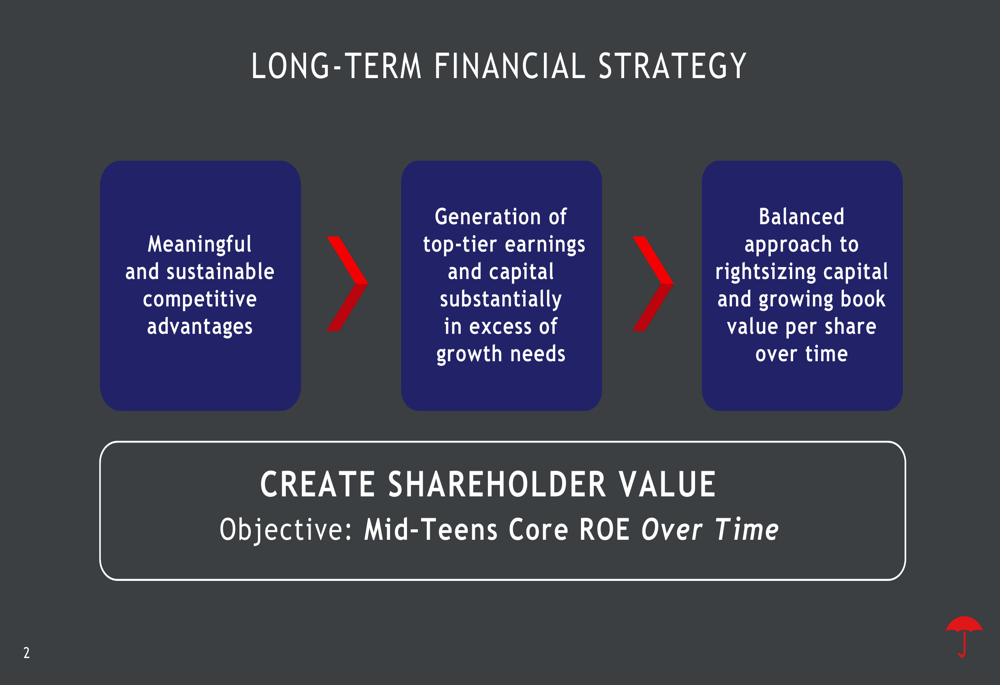
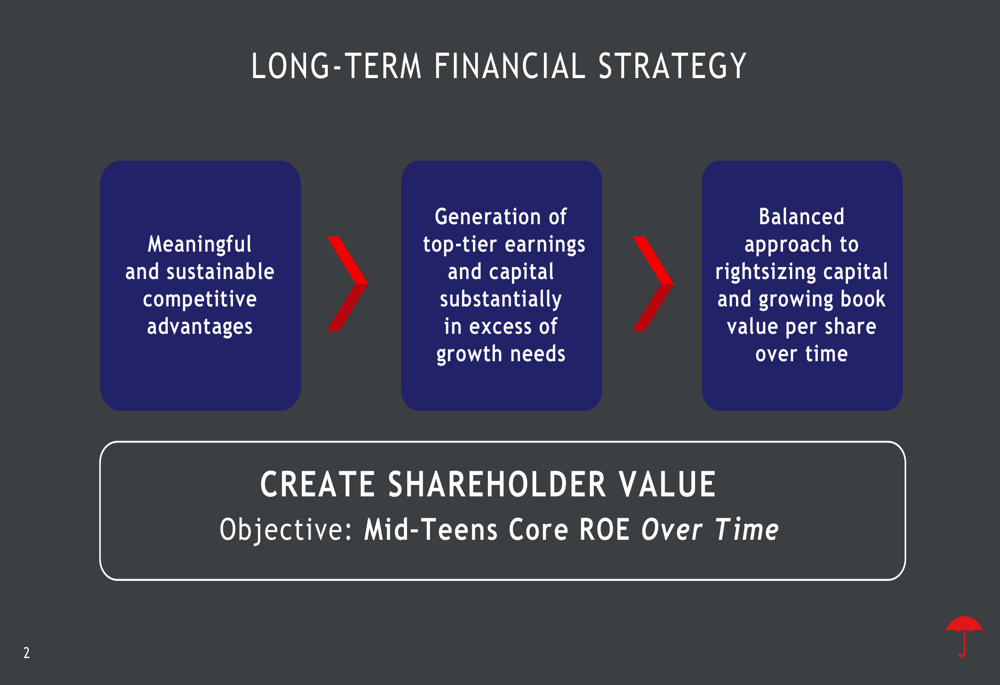
Travelers Q1 2026 slides: core ROE hits 19.7% on strong underwriting
Business
Suzlon Energy shares rally 20% in one month: Here’s why it is an ‘unintended beneficiary’ of Iran-US war

Shares of the company have surged more than 20% in one month, and 10% in the past five days as temperatures continue to rise across India, increasing hopes for peak power demand. JM Financial, in its latest report, noted that peak power demand during hot and humid evenings is similar to solar hour demand in an El Nino year, hence there is more stress on supply at night when 80 GW of solar generation is not available.
Why wind energy will become crucial this summer
“When peak demand rises during non-solar hours, variable generation from gas, hydro and partially flexible coal substitutes the loss of solar generation. But due to the Middle East crisis, gas-based generation has fallen from 8-12GW to just 2GW, it said. Also, there is a high probability of a shortfall in hydro energy this summer due to a deficit in winter rainfall and snow cover in the first four months of 2026, it further said, adding that all these factors put India at the risk of evening peak power deficit.In this background, wind energy has a strong diurnal (daily) complementarity with solar energy and is available in the evening hours as well, JM Financial noted. It explained that wind speed often increases in the late afternoon, evening, and early morning, when solar generation is low or zero. Also, wind energy is highly seasonal and complements solar power, particularly in India, where 80% of annual wind generation occurs during the South-West monsoon (May-September). “Currently, wind contributes approximately 10GW during evenings and up to 20-25GW during August-September. Hence, incremental wind addition during H1 FY27 can add to evening supply during El Niño-affected months,” it added.

Also read: Ola Electric vs Ather Energy: Which stock looks better after a stellar surge of up to 70% in April?
JM Financial expects India to achieve its highest-ever capacity addition in FY27, surpassing the peak of 6.1GW recorded in FY26. It noted that Suzlon has been struggling with an increasing gap between deliveries and installations. “As of 31st Mar’25, it had 371MW of sets erected and ready for commissioning (10% > installations), which increased to 776MW on 31st Dec’25 (76% > installations), creating apprehensions on execution and new order inflows,” it said, adding that it now expects Suzlon to sharply improve its commissioning in the first half of the ongoing financial year 2027, which may result in cash flow improvement and a new stream of orders.
Should you buy Suzlon Energy shares?
The domestic brokerage kept a ‘Buy’ call on the stock, with a target price of Rs 64 apiece. This implies an upside potential of more than 30% from the stock’s previous closing price of Rs 49.13 apiece. Notably, Suzlon has the highest upside potential among all the power stocks under JM Financial’s coverage.
Also read: HDB Financial Services zooms 12% on strong Q4 results and FY26 dividend
Suzlon Energy shares were trading with marginal gains at around Rs 49.41, as seen at 10.45 am on Thursday. Although the stock has declined nearly 6% in 2026 so far, in the longer term, the multibagger stock rallied more than 510% in five years and over 1,030% in five years.
(Disclaimer: Recommendations, suggestions, views and opinions given by the experts are their own. These do not represent the views of The Economic Times)

The snack giant cut some of its prices by up to 15% ahead of the Super Bowl in February.


Companies sign five-year agreement.

Institutional investors increased stakes across major NSE large-cap stocks in March 2026, signaling confidence in fundamentals and future growth. Companies like Adani Power, Axis Bank, NTPC, and Coal India saw modest rises, supporting improved governance, liquidity, and price stability trends.

UBS raises J.B. Hunt stock price target on strong volume growth

Flights could soon be cancelled if supplies from the Gulf remain blocked, says the International Energy Agency.

FREMONT, Calif. — Aehr Test Systems shares surged more than 16 percent Thursday as the semiconductor test equipment maker announced a record $41 million follow-on production order from its lead hyperscale customer for package-level burn-in of custom artificial intelligence processor ASICs.

The stock was quoted at $85.64, up 16.96 percent or $12.42, in morning trading on April 16. Volume was heavy as investors cheered the latest evidence of booming demand tied to the AI infrastructure buildout. The move pushed shares well above the previous session’s close near $73 and toward fresh highs after the company has already skyrocketed more than 200 percent year to date in 2026.
Aehr Test Systems, a specialist in test and burn-in solutions for semiconductors used in AI, data centers, automotive and industrial applications, said the new order underscores confidence from one of the world’s largest cloud and AI operators. Deliveries are scheduled to begin in fiscal 2027, starting June 27, 2026. The announcement pushed second-half fiscal 2026 bookings above $92 million with six weeks still left in the fourth quarter and a robust pipeline of additional orders anticipated.
“This $41 million follow-on order from our lead hyperscale package-level burn-in customer brings our bookings in the second half of our fiscal year to more than $92 million to date,” said Gayn Erickson, president and chief executive officer of Aehr Test Systems. “We continue to see strong demand for our solutions across both wafer-level and package-level burn-in applications driven by AI and data center infrastructure needs.”
The news caps a remarkable run for the small-cap company. Shares began 2026 trading near $20, climbed steadily through March, then accelerated sharply after a series of positive developments including strong quarterly bookings and new customer wins in silicon photonics. By early April the stock had more than doubled from late March levels, briefly touching above $74 before pulling back slightly and now exploding higher again on today’s order.
Just last week, following fiscal third-quarter results for the period ended Feb. 27, 2026, shares jumped more than 25 percent in a single session despite mixed financial numbers. Revenue came in at $10.3 million, down 44 percent from the year-ago quarter, and the company posted an adjusted loss of 5 cents per share. However, bookings reached a robust $37.2 million, producing a book-to-bill ratio above 3.5 times and lifting the effective backlog to a record $50.9 million.
Management used the April 7 earnings release to raise expectations, targeting the high end of its prior fiscal 2026 revenue guidance of $45 million to $50 million. The company also signaled a return to adjusted profitability in the current quarter and maintained optimism for the second half, which is now heavily backloaded with the latest hyperscale order.
Aehr’s technology plays a critical role in ensuring the reliability of advanced semiconductors before they reach data centers or AI training clusters. Its FOX family of systems supports wafer-level burn-in, while package-level solutions handle high-power AI processors that generate significant heat and require rigorous testing to meet stringent quality standards demanded by hyperscalers.
Demand for such equipment has intensified as major tech companies pour billions into AI infrastructure. Custom ASICs designed specifically for AI workloads require specialized burn-in processes that Aehr’s platforms are well-positioned to deliver at scale. The latest order represents the largest single production commitment in the company’s history for package-level burn-in systems.
Analysts have taken notice of the momentum. Several firms have raised price targets in recent weeks, though consensus figures still trail the current share price after the explosive rally. One recent adjustment lifted a target to $61, citing strong bookings and long-term AI tailwinds. Broader Wall Street coverage remains generally positive, with many highlighting Aehr’s niche leadership in high-power test solutions even as some caution about valuation after the rapid run-up.
The company has also expanded its addressable market through silicon photonics applications. In March, Aehr announced a major new customer win for its high-power FOX-XP wafer-level burn-in system. The client, described as a global leader in networking products and a key supplier to the data center optical transceiver market, is developing next-generation optical interconnects essential for efficient AI cluster scaling. That deal, along with follow-on orders for similar technology, has further fueled investor enthusiasm.
Aehr’s shift toward AI-related revenue has transformed its growth profile. While automotive and industrial segments remain part of the business, the hyperscale AI and data center opportunities now dominate the narrative. Executives have highlighted that burn-in requirements for AI processors are more demanding than traditional chips, creating a structural tailwind for specialized test equipment providers.
Challenges persist, however. Quarterly revenue has been lumpy as large orders shift between periods, and the company reported a year-over-year sales decline in the fiscal third quarter amid a transitional period. Operating expenses remain elevated as Aehr invests in scaling production capacity to meet anticipated demand. The firm also maintains an at-the-market equity program that could provide additional capital but carries potential dilution risk for shareholders.
Looking ahead, investors will watch for updates on the conversion of backlog into shipments and any incremental order announcements. The company expects significant follow-on production activity from its lead hyperscale customer and continues to engage with other potential clients in the AI ecosystem. Second-half fiscal 2026, ending May 29, now appears poised for substantial revenue recognition from the accumulated bookings.
Broader market context has also supported the rally. Optimism around AI spending has lifted many semiconductor and infrastructure-related stocks, even as macroeconomic uncertainties linger. Aehr’s performance stands out, however, placing it among the top performers in the Russell 3000 Index for 2026 with gains exceeding 200 percent through mid-April.
For customers, Aehr’s solutions help reduce failure rates in high-value AI hardware, where even small defect rates can prove costly at scale. The company’s proprietary systems allow parallel testing of thousands of devices under controlled thermal and electrical stress, accelerating time-to-market while improving long-term reliability.
Aehr Test Systems traces its roots to providing test equipment for the memory and logic semiconductor markets but has successfully pivoted toward emerging high-growth segments. Its Fremont, California headquarters supports engineering, manufacturing and customer collaboration for global deployments.
Thursday’s surge extends a multi-week winning streak punctuated by sharp daily moves on positive news flow. Options activity has reflected heightened interest, with implied volatility rising as traders position for continued momentum or potential pullbacks after such steep gains.
Analysts caution that sustaining the current valuation will require flawless execution on the growing backlog and continued order wins. Some models still see fair value significantly below current levels, citing risks of order delays or shifts in customer capital spending. Others argue the AI opportunity is large enough to justify premium multiples for a company with proven technology and expanding relationships with tier-one hyperscalers.
As the trading day progressed, Aehr shares extended gains, briefly approaching session highs above 20 percent before settling around the 17 percent mark. The move came on significantly elevated volume, signaling broad market participation in the rally.
Company leadership has expressed confidence in the long-term outlook. Erickson has repeatedly pointed to the structural demand drivers in AI, noting that as models grow more complex and clusters expand, the need for reliable, high-performance semiconductors—and the testing infrastructure to support them—will only increase.
With fiscal 2026 drawing to a close in May, attention will soon turn to guidance for fiscal 2027. The $41 million order provides an early anchor, but investors will seek visibility into the full pipeline, including potential wafer-level burn-in expansions and additional silicon photonics wins.
Aehr’s story remains closely tied to the AI megatrend. While competitors exist in the broader semiconductor test space, the company’s focus on high-power, high-volume burn-in for cutting-edge applications has carved out a defensible position. Whether this momentum translates into sustained profitability and cash flow growth in the coming quarters will determine if the stock can hold its lofty gains or faces a correction.
For now, shareholders are celebrating another breakout moment driven by concrete evidence of AI demand translating into major orders. The small Fremont-based firm has emerged as one of the more compelling pure-play beneficiaries of the hyperscale buildout, even as larger semiconductor equipment names also ride the wave.
As markets digest the news, Aehr Test Systems finds itself at the center of the artificial intelligence equipment supply chain narrative. With a record backlog, expanding customer relationships and a technology platform aligned with industry needs, the company appears well-positioned to capitalize on what many view as a multi-year investment cycle in AI infrastructure.

Bitcoin has no headquarters, no board of directors, and no founder willing to take credit. In the eighteen years since the white paper appeared under the name Satoshi Nakamoto, the question of who actually wrote it has attracted reporters, cryptographers, amateur sleuths, and seasoned investigators, all of whom have come up empty or close enough to it. That streak may be over.
Finding Satoshi is a feature documentary built around a four-year forensic investigation into Bitcoin’s origins and the identity of its creator. The documentary is directed by Matthew Miele and Tucker Tooley while the investigative reporting is led by William D. Cohan and Tyler Maroney. Cohan is a New York Times bestselling author and longtime Wall Street Journal contributor and Maroney is a private investigator at Quest Research & Investigations whose background spans some of the most complex cases in recent American legal history.
The film draws on original reporting, forensic analysis, and previously unseen evidence. More than twenty subjects spoke on record. The biggest differentiator, the investigation reaches a conclusion and the film confidently presents it.
Prior investigations into Satoshi’s identity have simply missed the mark. Finding Satoshi operates on different terms, framing the question not as lore or legend, but as a serious unanswered question with global cultural and financial consequences. As such, it demands a rigorous, evidence-based approach, which the film delivers on.
The stakes underlying that question are worth understanding. Bitcoin’s market capitalization has, at times, surpassed a trillion dollars, reshaping global conversations about money, power, and trust. The wallets widely attributed to Satoshi Nakamoto are estimated to hold over a million Bitcoin, placing whoever controls them among the wealthiest individuals in the world. Those early holdings have remained inactive, and Satoshi has not communicated publicly since 2011. The person behind it built something that transformed the financial landscape, then disappeared.
Understanding that person requires understanding what they built and why. Finding Satoshi traces Bitcoin not as a technology event, but as an intellectual and philosophical one. The film follows the full lineage of ideas that produced the Bitcoin white paper: the cypherpunk movement, the early development of digital privacy cryptography, the work of Phil Zimmermann on PGP encryption, and the predecessor technologies, including Hashcash and Bit Gold, that laid the conceptual groundwork. Bitcoin emerged from this specific tradition of belief, holding that individuals should be able to transact without interference, without surveillance, without an institution standing between them. That belief guided every choice Satoshi ever made, even the choice to vanish.
Through rare access to early builders, architects, and influential voices across the crypto ecosystem, Finding Satoshi emphasizes the human ideals behind the code as much as the history and science of it all. Simply put, Bitcoin is, rightfully, presented as an expression of philosophy and conviction rather than merely a technical artifact.
The range of voices interviewed reflects the film’s ambition and scope. Interviewees include Michael Saylor, chairman and co-founder of MicroStrategy, Fred Ehrsam, co-founder of Coinbase, Joseph Lubin, co-founder of Ethereum, Bill Gates, Gary Gensler, former chair of the Securities and Exchange Commission, Kara Swisher, Gillian Tett of the Financial Times, Kathleen Puckett, the former FBI behavioral analyst who helped identify the Unabomber, and Bjarne Stroustrup, creator of C++.
Finding Satoshi does not leave the question open. At the end of the investigation, the film answers the question, identifying the person behind Bitcoin while respecting the gravity and implications of that claim. The resolution is treated as the culmination of evidence, earned through four years of sustained work rather than provocation or spectacle. Watch the film to find out.
Brian Armstrong, CEO of Coinbase, called it the most thoughtful treatment of the subject he had encountered and said he believed the film had reached the right answer. Jameson Lopp, a professional cypherpunk and Bitcoin security engineer, described it as the most expertly produced Bitcoin documentary to date. Nic Carter said most investigations into Satoshi’s identity had been careless or dismissive of the subject matter. This one, he said, is not.
The film is not only told by real investigative journalists, it is produced by real filmmakers: Tucker Tooley for Tucker Tooley Entertainment and Jordan Fried for Fried Films and Happy Walters. Tucker Tooley Entertainment’s projects have collectively earned more than $2.61 billion at the worldwide box office, spanning prestige dramas, major studio franchises, and global streaming hits. Recent productions include Lee Daniels’ The Deliverance, which debuted at number one on Netflix, and Den of Thieves 2: Pantera, which opened at number one at the U.S. box office in January 2025.
Finding Satoshi releases exclusively at FindingSatoshi.com. Coinbase users receive 24-hour early access beginning April 21, 2026. General release follows on April 22. There is no streaming platform, no theatrical window, and no alternative distribution point. The release model mirrors Bitcoin’s own architecture: direct from creator to audience, with no intermediaries standing between them.

Live service games are in decline as gamers crave more traditional gaming

Bangkok’s Songkran 2026 Attracts Nearly 5 Million Amid Safety and Waste Challenges

Wolfe Research Highlights Meta (META), Uber (UBER), DoorDash (DASH), and Shopify (SHOP) as Prime Internet Stock Opportunities


-

 Politics6 days ago
US brings back mandatory military draft registration
-
 Sports6 days ago
Man United discover Nico Schlotterbeck transfer fee as defender reaches Dortmund agreement
-

 Fashion6 days ago
Weekend Open Thread: Veronica Beard
-

 Politics6 days ago
Malcolm In The Middle OG Turned Down ‘Buckets Of Money’ To Appear In Reboot
-

 Politics4 days ago
World Cup exit makes Italy enter crisis mode
-

 Business6 days ago
Tesla Model Y Tops China Auto Sales in March 2026 With 39,827 Registrations, Beating Cheaper EVs and Gas Cars
-

 Crypto World3 days ago
The SEC Conditionalises DeFi Platforms to Be Avoided for Broker Registration
-

 Crypto World3 days ago
SEC Signals Exemption for Crypto Interfaces From Broker Registration
-

 News Videos1 day ago
Secure crypto trading starts with an FIU-registered
-
 NewsBeat4 days ago
Pep Guardiola and Gary Neville agree over Arsenal title problem that benefits Man City
-

 Business5 days ago
Ireland Fuel Protests Enter Day 5 as Blockades Spark Shortages and Government Prepares Support Package
-

 Business6 days ago
OpenAI Halts Stargate UK Data Centre Project Over Energy Costs and Copyright Row
-

 Politics6 days ago
LBC Presenter Mocks Trump Over Iran War Failures
-

 Crypto World6 days ago
Federal judge blocks Arizona from bringing criminal charges against Kalshi
-

 NewsBeat2 days ago
Trump and Pope Leo: Behind their disagreement over Iran war
-

 Crypto World2 days ago
SEC Proposes Certain Crypto Interfaces Don’t Need to Register as Brokers
-
 NewsBeat4 days ago
JD Vance announces ‘no agreement’ with Iran over nuclear weapons fear
-

 Tech7 days ago
A version of Windows 10 released a decade ago is now eligible for additional security patches
-

 Business6 days ago
IMF retains floor for precautionary balances at SDR 20 billion
-

 Business6 days ago
Former Liverpool CEO eviscerates FIFA for World Cup ticket pricing
You must be logged in to post a comment Login