
In 1964, science fiction writer Arthur C. Clarke predicted that computers would overtake human evolution.“Present-day electronic brains are complete morons, but this will not be true in another generation,” he told the BBC. “They will start to think, and eventually, they will completely out-think their makers.”
Tech
AI is not the end of the world


Daniel Roher opens his new documentary The AI Doc: Or How I Became An Apocaloptimist (2026) with this cheerful prophecy. And in the hundred-some minutes that follow, he tries to make sense of a technology that, by his own admission, he does not understand — and a world that is rapidly being changed by it. Explaining that he conceives of AI as a “magic box floating in space,” he enlists the help of experts to provide him with a crash course in what, exactly, AI is.
Roher’s real concern, however, isn’t so much about the workings of AI — though some of his subjects do attempt to explain them for him — but whether it might displace us, as Clarke’s prediction suggests it will.
While making the film, Roher learns that his wife Caroline is pregnant with their first child. He tracks his wife’s pregnancy and the birth of his son in parallel with the advent of AI. It’s a smart choice that builds on a fear all parents share: What sort of world are we making for our children? And behind that question is another, vibrating in anxious silence: What happens after our offspring replace us? This twinned existential angst drives his efforts to hear from the doomers, the techno-optimists, and the in-between “apocaloptimists” whose ranks he ultimately joins.
The AI Doc, as its sweeping title suggests, wants to shape and lead the narrative around AI. It’s certainly set up to do that — Roher is fresh off an Oscar win for his documentary Navalny, and the film opened in nearly 800 theaters, which counts as wide-release for a nonfiction title. The final product is indicative of the ways that public attitudes around AI are in massive flux. Roher hopes to reach people of my grandmother’s generation who conflate AI with smartphones and spellcheck, as well as people who don’t seem to care whether a video was AI-generated.
But I think that this documentary has come too late to steer the conversation, something the film itself acknowledges. For all its transformative potential, AI isn’t actually unique among emerging technologies yet — it has not been cataclysmic or ushered in a golden age of prosperity — but Roher and many of those he interviews tend to treat it as a radical break with all that has come before. As a result, they tend to fixate on the binary extremes of doom or salvation. It’s an approach that reinforces our own helplessness in the face of AI-driven change, while also muddying our understanding of what we might yet be able to do as we seek to adapt, mitigate harm, and shape the world that AI could otherwise truly start remaking.
Roher, contemplating his child’s future, opts to hear the bad news first. Tristan Harris, the cofounder of the Center for Humane Technology, doesn’t mince words: “I know people who work on AI risk who don’t expect their children to make it to high school.”
Many of the film’s other interviewees are similarly gloomy. Geoffrey Hinton, the “godfather of AI,” for example, argues that as AI becomes smarter, it will become better at manipulating humanity. But no one is more pessimistic than Eliezer Yudkowsky, the well-known AI doomer and co-author of the controversial book If Anyone Builds It, Everyone Dies. As the title suggests, Yudkowsky believes that superintelligent AI would wipe out humanity — a position that he stands by and lays out for Roher.
Turning his back on these storm clouds — and taking the advice of his wife, Caroline, who tells him that he needs to find hope for the future — Roher tunes into the chorus of AI optimists. They tell him, variously, that there are more potential benefits than downsides to AI; that technology has made the world better in every way; that this will be the tool that helps us solve all our greatest problems. Not to mention: AI will bring the best health care on the planet to the poorest people on Earth, extend our healthspan by decades, and enable us to live in a postscarcity utopia free of drudgery. Oh, and: We will become an interplanetary species, all thanks to AI.
These promises initially reassure Roher, perhaps because he seems easily led by whomever he’s spoken to most recently. It is Harris who ultimately convinces him that we can’t separate the promise of AI from the peril it presents. The conclusions that result will be obvious to anyone who’s thought about these issues for more than a moment or two: If AI automates work, for example, how will people make a living?
It doesn’t help that many of the most invested players reflect on these questions superficially, if at all. OpenAI CEO Sam Altman tells Roher that he’s worried about how authoritarian governments will use AI — a claim that is followed in the film by a cut to images of Altman posing with authoritarian leaders. Other tech CEOs fall back on PR pleasantries in response to the filmmaker’s questions, and Roher too often goes easy on them, never diving deeper when they admit that even they aren’t confident that everything will go well. That these are the leaders of AI companies racing against each other to make the technology more and more advanced does little to inspire confidence.
(Some of the techno-pessimistic people interviewed for the documentary have expressed their strong displeasure with the final result.)
“Why can’t we just stop?” Roher asks these tech CEOs. He’s told that a moratorium is a pipe dream: Many groups around the world are building advanced AI, all with different motivations. Legislation lags far behind the rate of technological progress. Even if we could pass laws in the US and EU that would stop or slow things down, says Anthropic CEO Dario Amodei, we’d have to convince the Chinese government to follow suit.
If we don’t create it, the thinking goes, our enemies will. It’s best to get ahead of them.
This is, of course, the logic of nuclear deterrence: If we don’t mitigate the risk of ending the world through mutually assured destruction, there’s nothing stopping someone else from pressing the button first.
An apocalypse in every generation
The atomic comparison is apt, if only because Roher sees the stakes in similarly stark terms. “Will my son live in a utopia, or will we go extinct in 10 years?” he wonders aloud. It’s a question that’s central to the film. But he never really sits with the more likely scenario that AI will neither lead to human extinction nor end all disease and drudgery. Every generation faces the specter of its own annihilation — and yet the ends of days keep accumulating, no matter how close the doomsday clock gets to apocalypse.
The point, then, isn’t that AI won’t be bad for us, but that by framing the question in strictly utopian or dystopian terms, we miss the messy reality that lies between hell on earth and heaven in the stars. Although The AI Doc tries to chart an “apocaloptimist” course between two extremes, it doesn’t grasp the real stakes. AI doesn’t really create new risks as such — it’s a force multiplier for existing ones like the threat of nuclear warfare and the development and use of biological weapons. The chief existential risks of AI are human-made and human-driven. And that means, as Caroline says in the film’s ending narration, “We get to decide how this goes.” She’s right, but her husband never seems to understand how she’s right.
Like too many Big Issue Documentaries, Roher’s film is heavy on problems and light on solutions. It does offer some, calling for international cooperation, transparency, legal liabilities for companies if something goes wrong, testing before release, and adaptive rules to match the speed of progress. But just as this is a strictly introductory course in AI — one that will probably irritate those who’ve already moved on to AI 102 — these recommendations are only a starting point. For Roher, they offer reason to be hopeful. For the rest of us, they’re just the beginning of an opportunity to meaningfully steer the course of our future.

Continue Reading

Sony is removing some features from its TV guide and program guide displays for channels received by an over the air TV antenna on select models of Bravia televisions from 2023-2025. Cord Cutters News reported on the changes, which will take effect in late May.
Channel logos and thumbnail images in program descriptions are going away from the built-in TV Guide for antenna TV channels. Only programs from recently watched channels will be shown in the guide, and depending on the channel, program information may not be displayed. Change is also coming for set top box users, with the dedicated Set Top Box TV menu being removed and replaced by a Control menu. This setup will also not show program thumbnail images any longer.
This is an admittedly narrow use case in the age of both streaming and cable TV, but Sony didn’t provide any reason for making the change. And for those people who are impacted, this could be an unpleasant surprise next month that makes the TV guide and program guide much less helpful.
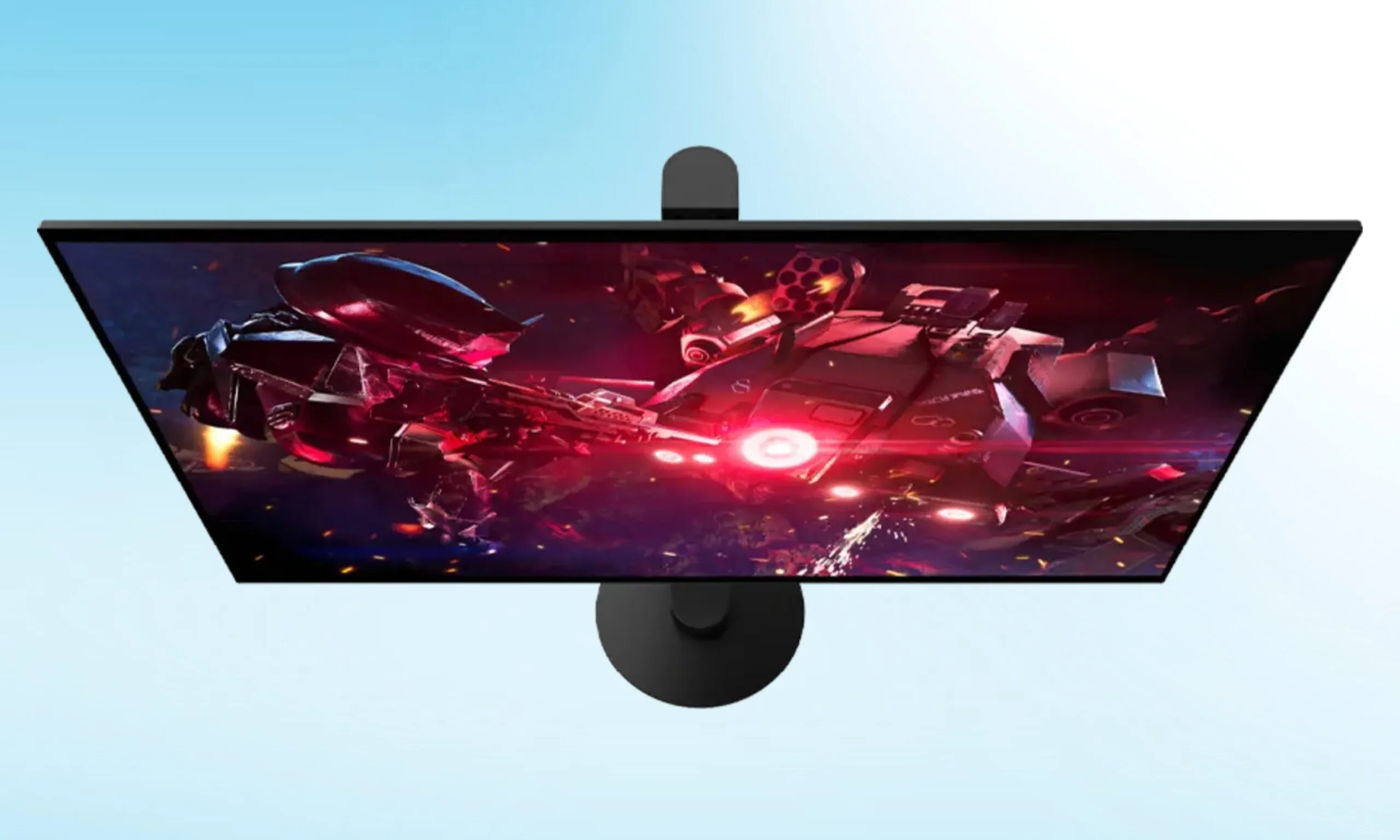
Sony just joined the ultra-fast gaming monitor party, and though it was a bit late, it could potentially turn a lot of heads there. On April 14, the company announced the INZONE M10S II, a 27-inch QHD OLED gaming monitor featuring a tandem OLED panel sourced from LG.
Like other ultra-fast gaming monitors, the Sony gaming monitor pulls double duty between two modes: 540Hz at QHD, and a staggering 720Hz at HD. Developed in collaboration with esports powerhouse Fnatic, the monitor is a successor of the M10S.
Sony has priced the M10S II gaming monitor at $1,099.99. Availability, however, is expected later this year.

But what does 720Hz actually do for you?
For everyday users, the monitor should offer razor-sharp visuals in QHD resolution at a 540Hz refresh rate with virtually no motion blur and the visual richness of an OLED panel. At this setting, the monitor offers 0.02 ms response time, which is exceptionally good.
However, the 720Hz HD mode is reserved for hardcore, professional, competitive gamers, who’d rather sacrifice the resolution for pure speed. While I personally don’t know anyone who can make use of such speed, tournament-level FPS gamers, whose fate is determined at the last possible millisecond, could surely put it to good use.
The monitor also features a new Motion Blur Reduction algorithm that unlocks extra brightness during frames. So, instead of going dark, fast on-screen movements remain vivid.

What else did Sony launch with the monitor?
Sony didn’t stop at the INZONE MS10S II monitor; the company also launched INZONE H6 Air, an open-back wired gaming headphone, which is priced at $199.99, inspired by the studio-grade MDR-MV1 headphones and weighing just 199 grams.
Rounding up the launch are new Fnatic Edition accessories, which include Mouse-A, Mat-F, and Mat-D, along with a new translucent Glass Purple finish of the INZONE Buds wireless earbuds, which are all available now.
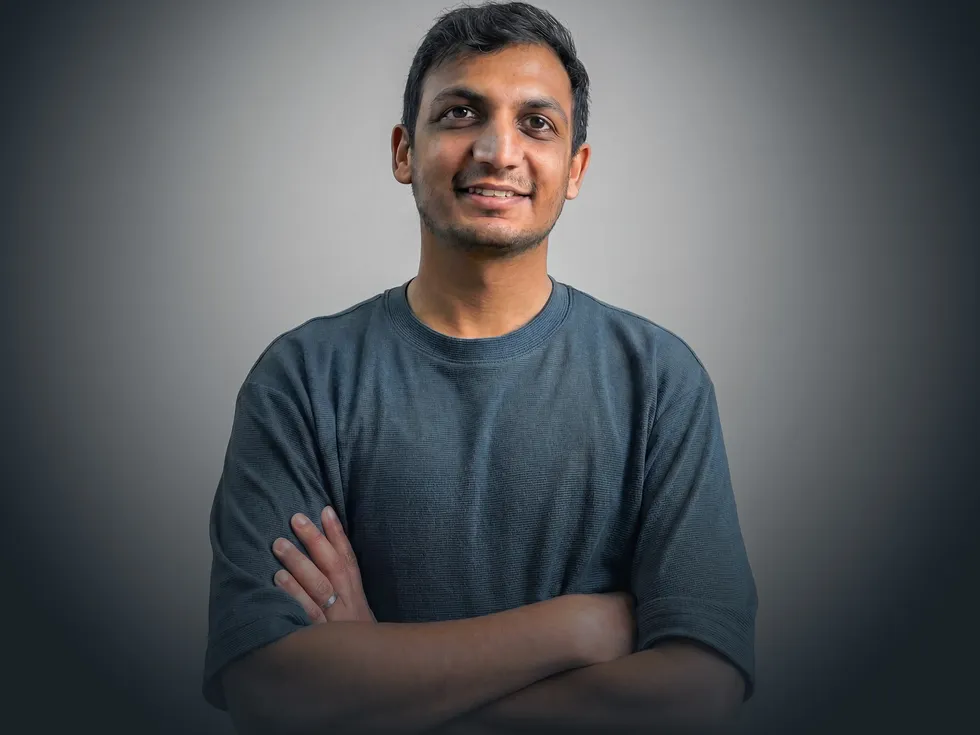

Like many engineers, Sarang Gupta spent his childhood tinkering with everyday items around the house. From a young age he gravitated to projects that could make a difference in someone’s everyday life.
When the family’s microwave plug broke, Gupta and his father figured out how to fix it. When a drawer handle started jiggling annoyingly, the youngster made sure it didn’t do so for long.
Sarang Gupta
Employer
OpenAI in San Francisco
Job
Data science staff member
Member grade
Senior member
Alma maters
The Hong Kong University of Science and Technology; Columbia
By age 11, his interest expanded from nuts and bolts to software. He learned programming languages such as Basic and Logo and designed simple programs including one that helped a local restaurant automate online ordering and billing.
Gupta, an IEEE senior member, brings his mix of curiosity, hands-on problem-solving, and a desire to make things work better to his role as member of the data science staff at OpenAI in San Francisco. He works with the go-to-market (GTM) team to help businesses adopt ChatGPT and other products. He builds data-driven models and systems that support the sales and marketing divisions.
Gupta says he tries to ensure his work has an impact. When making decisions about his career, he says, he thinks about what AI solutions he can unlock to improve people’s lives.
“If I were to sum up my overall goal in one sentence,” he says, “it’s that I want AI’s benefits to reach as many people as possible.”
Pursuing engineering through a business lens
Gupta’s early interest in tinkering and programming led him to choose physics, chemistry, and math as his higher-level subjects at Chinmaya International Residential School, in Tamil Nadu, India. As part of the high school’s International Baccalaureate chapter, students select three subjects in which to specialize.
“I was interested in engineering, including the theoretical part of it,” Gupta says, “But I was always more interested in the applications: how to sell that technology or how it ties to the real world.”
After graduating in 2012, he moved overseas to attend the Hong Kong University of Science and Technology. The university offered a dual bachelor’s program that allowed him to earn one degree in industrial engineering and another in business management in just four years.
In his spare time, Gupta built a smartphone app that let students upload their class schedules and find classmates to eat lunch with. The app didn’t take off, he says, but he enjoyed developing it. He also launched Pulp Ads, a business that printed advertisements for student groups on tissues and paper napkins, which were distributed in the school’s cafeterias. He made some money, he says, but shuttered the business after about a year.
After graduating from the university in 2016, he decided to work in Hong Kong’s financial hub and joined Goldman Sachs as an analyst in the bank’s operations division.
From finance to process optimization at scale
After two parties agree on securities transactions, the bank’s operations division ensures that the trade details are recorded correctly, the securities and payments are ready to transfer, and the transaction settles accurately and on time.
As an analyst, Gupta’s task was to find bottlenecks in the bank’s workflows and fix them. He identified an opportunity to automate trade reconciliation: when analysts would manually compare data across spreadsheets and systems to make sure a transaction’s details were consistent. The process helped ensure financial transactions were recorded accurately and settled correctly.
Gupta built internal automation tools that pulled trade data from different systems, ran validation checks, and generated reports highlighting any discrepancies.
“Instead of analysts manually checking large datasets, the tools automatically flagged only the cases that required investigation,” he says. “This helped the team spend less time on repetitive verification tasks and more time resolving complex issues. It was also my first real exposure to how software and data systems could dramatically improve operational workflows.”
“Whether it’s helping a person improve a trait like that or driving efficiencies at a business, AI just has so much potential to help. I’m excited to be a little part of that.”
The experience made him realize he wanted to work more deeply in technology and data-driven systems, he says. He decided to return to school in 2018 to study data science and AI, when the fields were just beginning to surge into broader awareness.
He discovered that Columbia offered a dedicated master’s degree program in data science with a focus on AI. After being accepted in 2019, he moved to New York City.
Throughout the program, he gravitated to the applied side of machine learning, taking courses in applied deep learning and neural networks.
One of his major academic highlights, he says, was a project he did in 2019 with the Brown Institute, a joint research lab between Columbia and Stanford focused on using technology to improve journalism. The team worked with The Philadelphia Inquirer to help the newsroom staff better understand their coverage from a geographic and social standpoint. The project highlighted “news deserts”—underserved communities for which the newspaper was not providing much coverage—so the publication could redirect its reporting resources.
To identify those areas, Gupta and his team built tools that extracted locations such as street names and neighborhoods from news articles and mapped them to visualize where most of the coverage was concentrated. The Inquirer implemented the tool in several ways including a new web page that aggregated stories about COVID-19 by county.
“Journalism was an interesting problem set for me, because I really like to read the news every day,” Gupta says. “It was an opportunity to work with a real newsroom on a problem that felt really impactful for both the business and the local community.”
The GenAI inflection point
After earning his master’s degree in 2020, Gupta moved to San Francisco to join Asana, the company that developed the work management platform by the same name. He was drawn to the opportunity to work for a relatively small company where he could have end-to-end ownership of projects. He joined the organization as a product data scientist, focusing on A/B testing for new platform features.
Two years later, a new opportunity emerged: He was asked to lead the launch of Asana Intelligence, an internal machine learning team building AI-powered features into the company’s products.
“I felt I didn’t have enough experience to be the founding data scientist,” he says. “But I was also really interested in the space, and spinning up a whole machine learning program was an opportunity I couldn’t turn down.”
The Asana Intelligence team was given six months to build several machine learning–powered features to help customers work more efficiently. They included automatic summaries of project updates, insights about potential risks or delays, and recommendations for next steps.
The team met that goal and launched several other features including Smart Status, an AI tool that analyzes a project’s tasks, deadlines, and activity, then generates a status update.
“When you finally launch the thing you’ve been working on, and you see the usage go up, it’s exhilarating,” he says. “You feel like that’s what you were building toward: users actually seeing and benefiting from what you made.”
Gupta and his team also translated that first wave of work into reusable frameworks and documentation to make it easier to create machine learning features at Asana. He and his colleagues filed several U.S. patents.
At the time he took on that role, OpenAI launched ChatGPT. The mainstreaming of generative AI and large language models shifted much of his work at Asana from model development to assessing LLMs.
OpenAI captured the attention of people around the world, including Gupta. In September 2025 he left Asana to join OpenAI’s data science team.
The transition has been both energizing and humbling, he says. At OpenAI, he works closely with the marketing team to help guide strategic decisions. His work focuses on developing models to understand the efficiency of different marketing channels, to measure what’s driving impact, and to help the company better reach and serve its customers.
“The pace is very different from my previous work. Things move quickly,” he says. “The industry is extremely competitive, and there’s a strong expectation to deliver fast. It’s been a great learning experience.”
Gupta says he plans to stay in the AI space. With technology evolving so rapidly, he says, he sees enormous potential for task automation across industries. AI has already transformed his core software engineering work, he says, and it’s helped him enhance areas that aren’t natural strengths.
“I’m not a good writer, and AI has been huge in helping me frame my words better and present my work more clearly,” he says. “Whether it’s helping a person improve a trait like that or driving efficiencies at a business, AI just has so much potential to help. I’m excited to be a little part of that.”
Gupta has been an IEEE member since 2024, and he values the organization as both a technical resource and a professional network.
He regularly turns to IEEE publications and the IEEE Xplore Digital Library to read articles that keep him abreast of the evolution of AI, data science, and the engineering profession.
IEEE’s member directory tools are another valuable resource that he uses often, he says.
“It’s been a great way to connect with other engineers in the same or similar fields,” he says. “I love sharing and hearing about what folks are working on. It brings me outside of what I’m doing day to day.
“It inspires me, and it’s something I really enjoy and cherish.”
From Your Site Articles
Related Articles Around the Web

from the do-not-pass-go,-do-not-collect-$200 dept
A few years ago agricultural equipment giant John Deere found itself on the receiving end of multiple state, federal, and class action lawsuits for its efforts to monopolize tractor repair. The lawsuits noted that the company consistently purchased competing repair centers in order to consolidate the sector and force customers into using the company’s own repair facilities, driving up costs and logistical hurdles dramatically for farmers.
John Deere executives have repeatedly promised to do better, then just ignored those promises. Early last year, the FTC and numerous states filed an antitrust lawsuit against the company for its efforts to monopolize repair. Though, with MAGA corruption purging any remaining antitrust enforcers from its ranks, it’s unclear if the FTC action will ever actually result in anything meaningful.
John Deere did however just have to pay $99 million to settle a different class action lawsuit brought by its customers. Under the settlement John Deere doesn’t admit to any wrongdoing, but will deposit the money into a fund to pay more than 200,000 John Deere owners for expensive dealership repairs since 2018.
In an announcement by the company, John Deere pretends they’re a consumer-focused enterprise:
“As we continue to innovate industry leading equipment and technology solutions supported by our world-class dealer network, we are equally committed to providing customers and other service providers with access to repair resources,” said Denver Caldwell, vice president, Aftermarket & Customer Support. “We’re pleased that this resolution allows us to move forward and remain focused on what matters most – serving our customers.”
Except if John Deere had cared about customer service, they wouldn’t be in this predicament.
In addition to intentionally acquiring repair alternatives to monopolize repair and drive up consumer costs, John Deere also routinely makes repair difficult and costly through the act of software locks, obnoxious DRM restrictions, and “parts pairing” — which involves only allowing the installation of company-certified replacement parts — or mandatory collections of company-blessed components.
More recently, the company had been striking meaningless “memorandums of understanding” with key trade groups, pinky swearing to stop their bad behavior if the groups agree to not support state or federal right to repair legislation. Several such groups backed off their criticism, only to have John Deere continue its monopolistic behavior, the FTC’s complaint notes.
The annoyance at John Deere’s behavior has driven a broad, bipartisan movement that’s in very vocal support for state and federal guidelines enshrining “right to repair” protections into law. Unfortunately, while all fifty states have at least flirted with the idea of a state law, only Massachusetts, New York, Texas, Minnesota, Colorado, California, Oregon, and Washington have actually passed laws.
And among those, not one has taken any substantive action to actually enforce the new law, something that needs to change if the movement is to obtain and retain meaningful policy momentum.
Filed Under: agriculture, class action, dealership, ftc, lawsuits, repairs, right to repair, tractors
Companies: john deere
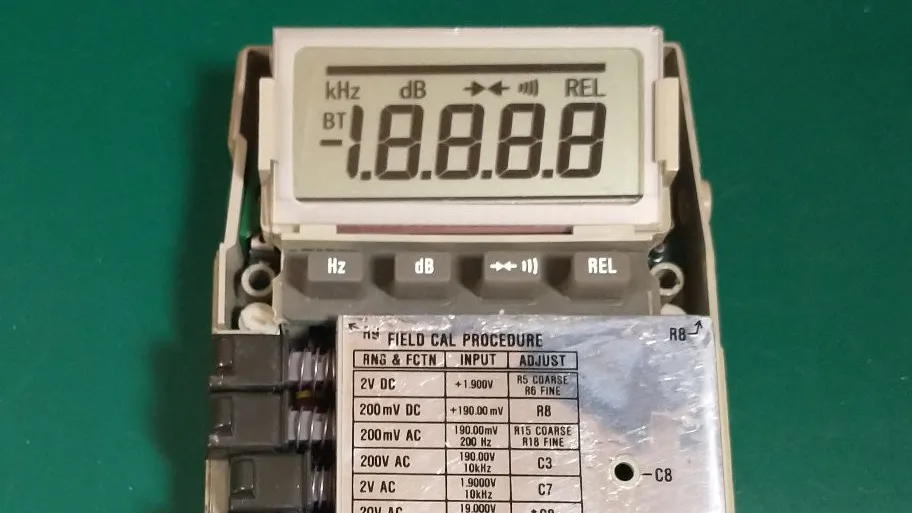
As a company, Fluke has been making electronic test equipment longer than the bipolar junction transistor has been around for. In that time they’ve developed a fairly stellar reputation for quality and consistency, but like any company they don’t support their products indefinitely. [ogdento] owns a Fluke meter that isn’t nearly as old as the BJT but still has an age well outside of the support window, and since the main problem was the broken LCD display they set about building a replacement for this retro multimeter.
Initially, [ogdento] had plans to retrofit this classic multimeter with a modern OLED, but could not find enough space for the display or a way to drive it easily. The next attempt to get something working was to build a custom one-off LCD using a drill press as an end mill, which didn’t work either. But after seeing a Charlieplexed display from [bobricius] as well as this video from EEVblog about designing custom LCDs, [ogdento] was able to not only design a custom PCB and LCD display to match the original meter, but was able to get a manufacturer in China to build them.
The new displays have a few improvements over the old; mostly they are more stylistically inspired by later Fluke models and have a few modern improvements to the LCD itself. There were are few issues during prototyping but nothing that was too hard to sort out, such as ordering the wrong size elastomeric strips initially. For anyone who needs to replace a custom LCD and can’t find replacement parts anymore, this project would be a great starting point for figuring out the process from the ground up.
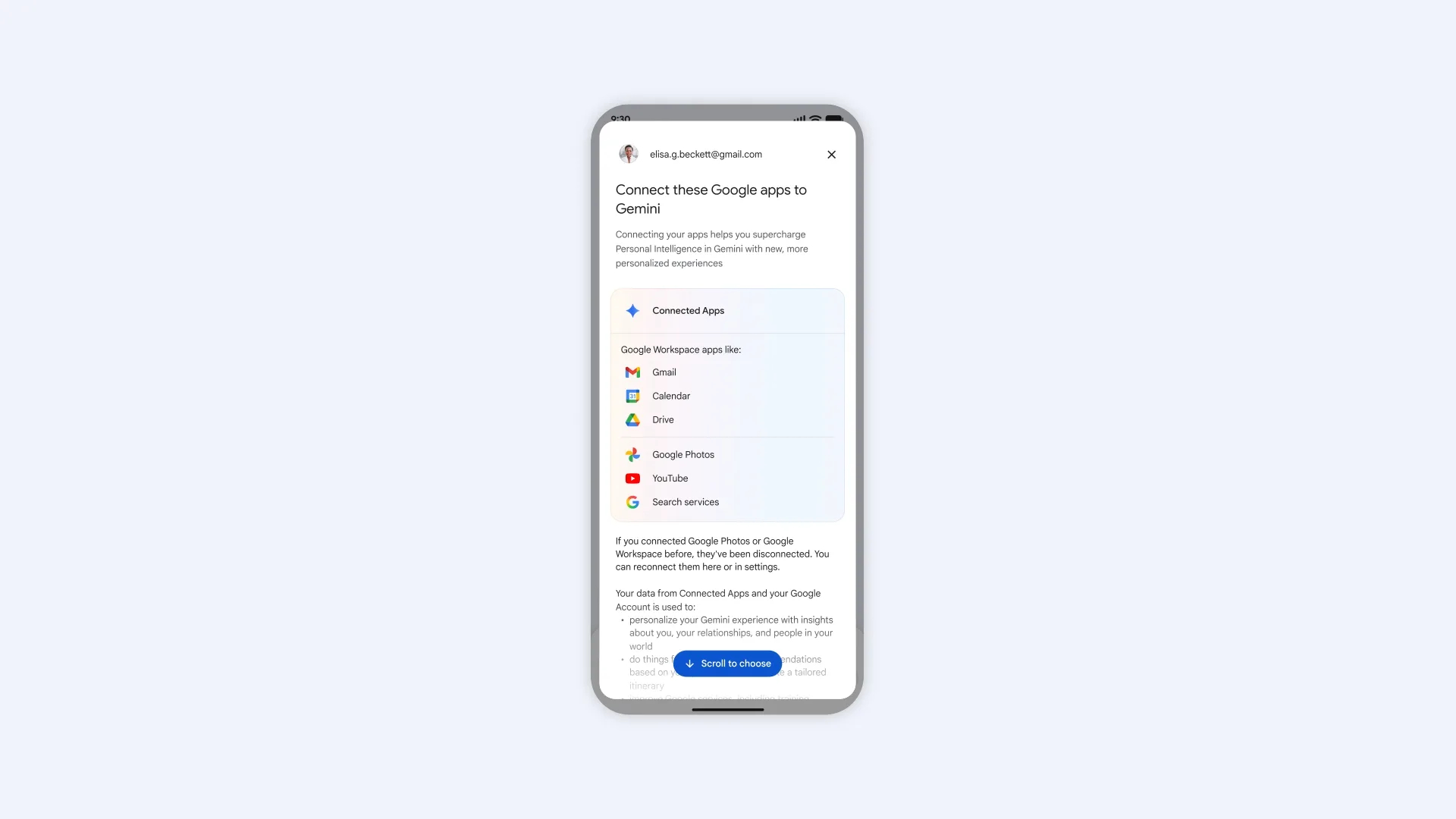
If you have been waiting for Gemini to actually feel like it knows you, your wait is almost over. Google’s Personal Intelligence, which launched earlier this year for paid US subscribers, is now rolling out globally.
What is Gemini Personal Intelligence and what can it do?

Personal Intelligence connects Gemini to your Google apps. Think Gmail, Google Photos, YouTube, Search, Maps, Calendar, Drive, and more. It uses your existing data to give smarter, more tailored responses without requiring you to explain everything each time.
The use cases are genuinely impressive. Ask Gemini for shopping recommendations, and it will factor in your recent purchases and style preferences. Stuck troubleshooting a device you do not remember buying? It can pull the exact model from your purchase receipts in Gmail.

If you are planning a trip with a tight layover, Gemini can use Personal Intelligence to check your gates, walking time, and meal preferences all at once. It can even suggest a new hobby based on patterns it notices across your activity.
Google says this is an opt-in feature, so you choose which apps to connect. Importantly, Gemini does not train directly on your Gmail or Photos data. It references them to answer your questions, but keeps the underlying personal content separate from model training.
Who can use Gemini’s Personal Intelligence feature?
Personal Intelligence works across desktop, Android, and iOS with languages supported by Gemini. The global rollout is now live for Google AI Plus, Pro, and Ultra subscribers everywhere except the European Economic Area, Switzerland, and the UK. Free Gemini users globally will get access within the next few weeks.
Why does this matter?

Personal Intelligence is probably the most significant thing Google has done with Gemini so far. Gemini is slowly becoming the kind of AI assistant that actually understands your life, not just the internet.
With access to Gmail, Photos, Maps, and more, Gemini will no longer feel like a generic chatbot and behave like a genuine personal assistant. No other AI assistant comes close to having this kind of data advantage baked in from the start.
Apple Intelligence is still finding its feet and Microsoft’s Copilot lives mostly inside productivity tools. Meanwhile OpenAI’s ChatGPT has no first-party data ecosystem of its own.
Google, on the other hand, already has your entire digital life across billions of users. In an AI race where rival companies are all building toward personalization, Google, with its unmatched ecosystem, is uniquely positioned to win it.
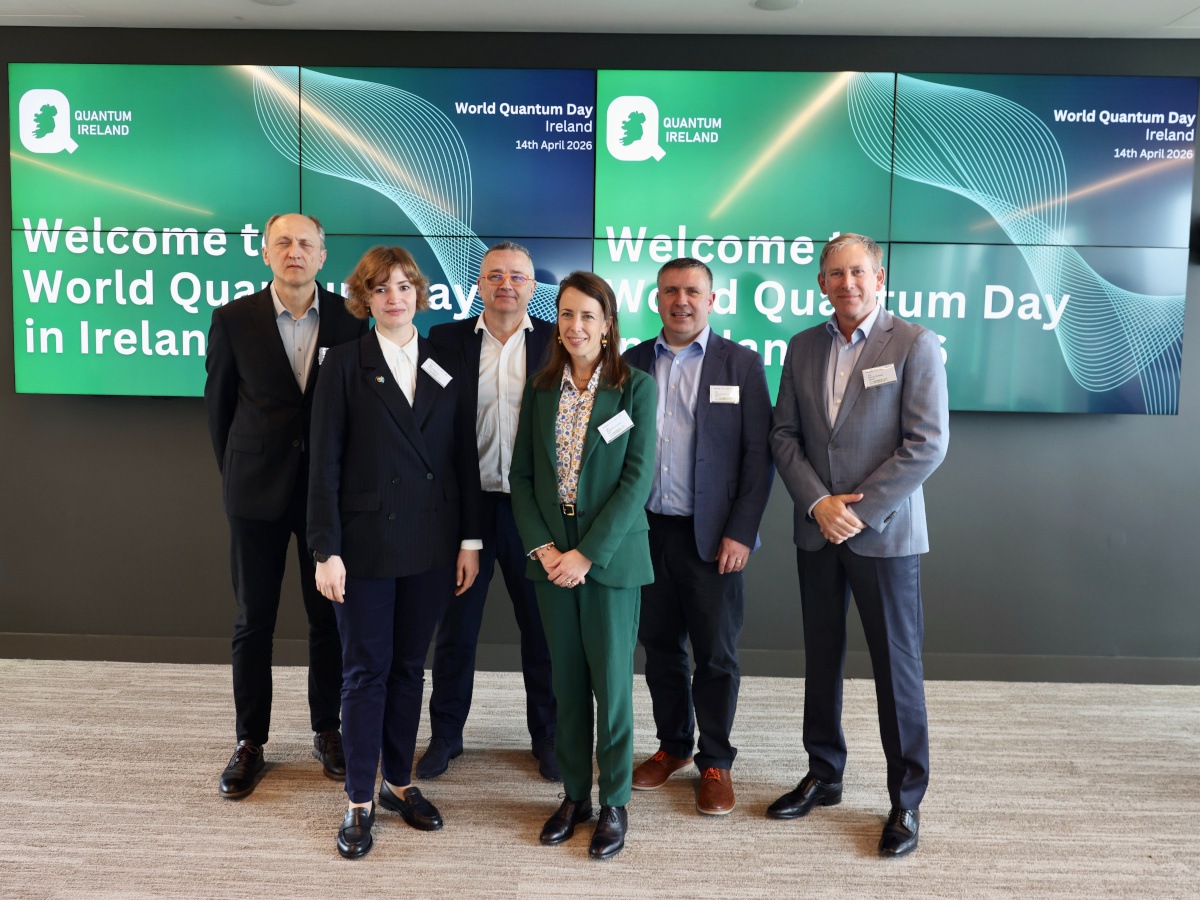

The partnership will bring together Bull’s supercomputing infrastructure and Equal1’s ‘breakthrough’ silicon-spin quantum computers.
Bull, a Paris-based high-performance computing (HPC), artificial intelligence and quantum technology company, is to partner with Dublin start-up Equal1, a silicon-powered quantum computing technology provider.
Equal1 and Bull stated that their deal will “advance the next generation of hybrid quantum-classical technologies with European solutions”, at a time when quantum computing is beginning to transition from promise to practical reality.
The pair said the partnership will combine Bull’s supercomputing infrastructure and quantum emulation expertise with Equal1’s breakthrough silicon-spin quantum computers, as agreed in a memorandum of understanding.
The collaboration will focus on three core pillars – technical integration, joint research and development to advance innovation, and a focus on sovereign European projects whereby both companies will collaborate on EU-led quantum initiatives amid the global quantum race.
Commenting on the announcement, Bruno Lecointe, the senior vice-president and global head of HPC, AI and quantum at Bull, said: “The convergence of high-performance computing and quantum technologies is redefining how we address the world’s most complex challenges.
“10 years after launching the first quantum emulator of the market, innovation has always been part of Bull’s DNA and we remain committed to designing hybrid architectures that help translate emerging technologies into operational capability.
“By integrating Equal1’s silicon-spin quantum servers into our Qaptiva ecosystem, we are enabling a seamless bridge between HPC, quantum emulation and quantum execution. This alliance ensures our customers can leverage quantum-centric supercomputing to achieve real-world outcomes with unprecedented efficiency and performance.”
Jason Lynch, the CEO of Equal1, added: “By building quantum processors on standard silicon, we are turning quantum from bespoke laboratory hardware into deployable infrastructure. This collaboration with Bull is a vital step in bridging the gap between breakthrough hardware innovation and industrial workloads.
“Together, we are positioning our joint solutions as the standard for high-performance computing, enabling seamless integration into existing data centres and driving a more sustainable digital future.”
Earlier this year, Equal1 announced it had raised $60m in a funding round led by Ireland Strategic Investment Fund, with participation from Atlantic Bridge, the European Innovation Council Fund, Matterwave Ventures, Enterprise Ireland, Elkstone and TNO Ventures.
At the time, Equal1 said that the investment would enable deployment to HPC centres – including to the European Space Agency’s Phi-lab in Italy – advance the roadmap towards “millions” of on-chip qubits, scale manufacturing and grow its team.
Last week, the Dublin-based start-up said it would partner with Californian quantum infrastructure software maker Q-Ctrl for the deployment of rack-mounted quantum computers in enterprise data centres.
Don’t miss out on the knowledge you need to succeed. Sign up for the Daily Brief, Silicon Republic’s digest of need-to-know sci-tech news.
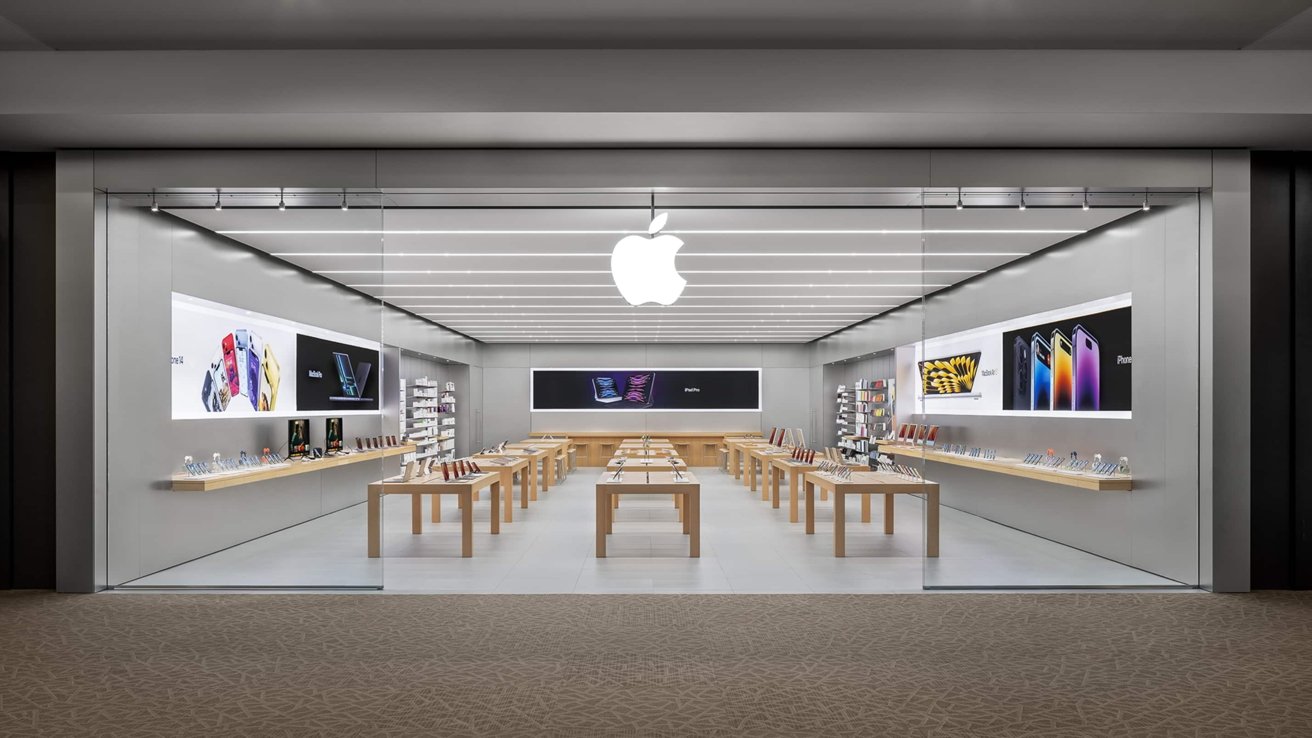
Apple sometimes closes retail stores. The company always has private and public reasons why, but the communities and workers that are impacted don’t care much about what they are.
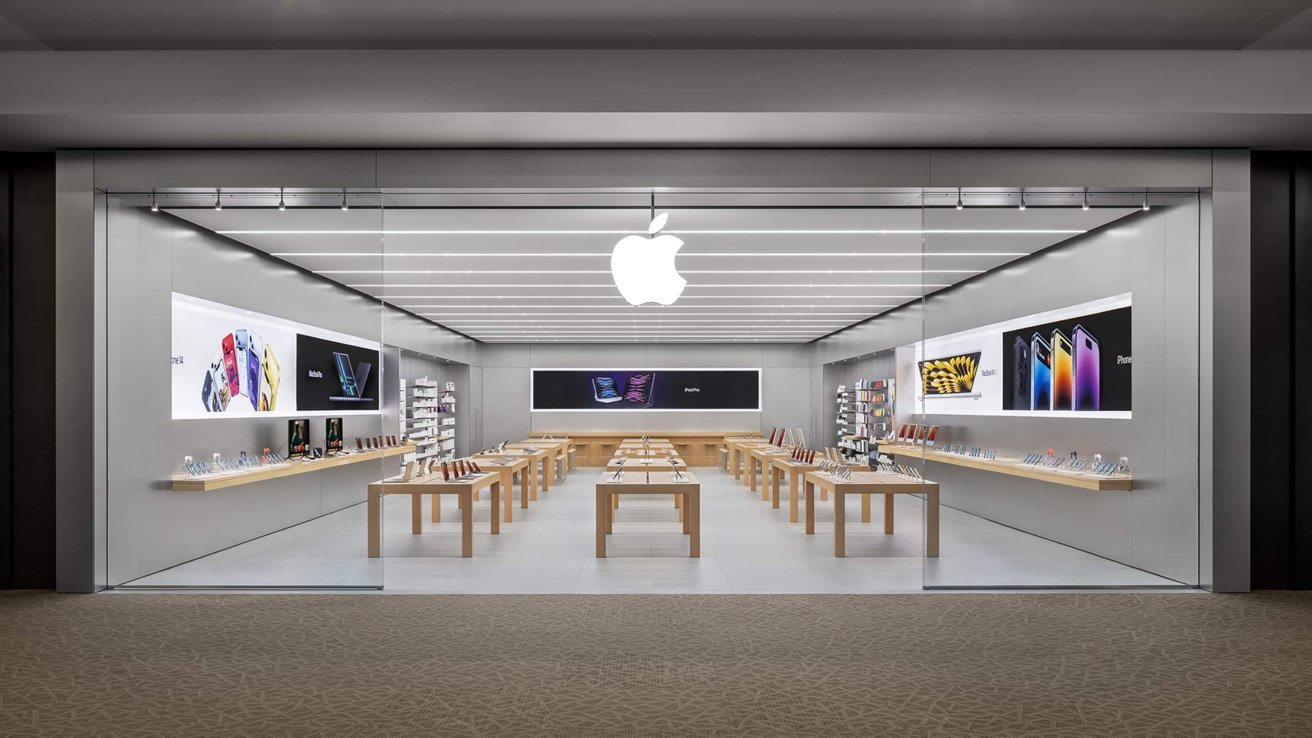
Apple Trumbull – Image Credit: Apple
On April 9, it was revealed that Apple was preparing to close three of its stores in the United States in June. The group consists of Apple North County in Escondido, California, Apple Towson Town Center in Towson, Maryland, and Apple Trumbull in Trumbull, Connecticut.
After the initial shock of the closures, people are still expressing their feelings about the store closures. However, as usual, nothing is straightforward in the court of public opinion.
Continue Reading on AppleInsider | Discuss on our Forums
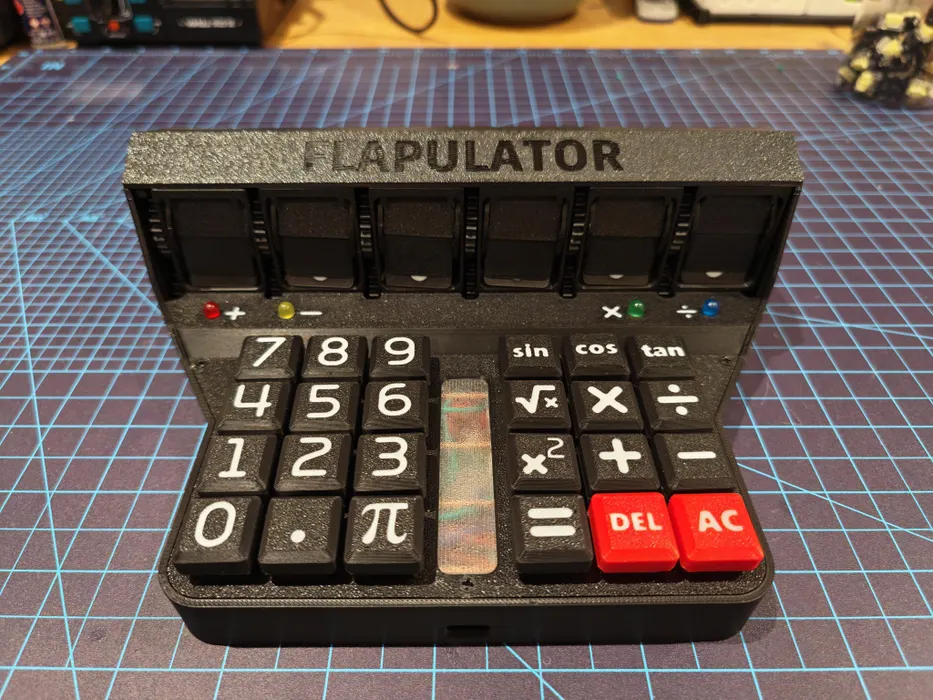
Oh sure, you’ve got calculators. There’s that phone program of course, and the one that comes with your OS, and the TI-86 and possibly RPN numbers you’ve had since high school.
But what you don’t have is a Flapulator, at least not until you build one. Possibly the be-all, end-all of physical calculating devices, the Flapulator does its calculating live on a split-flap display. It’s kind of slow and the accuracy is questionable, but the tactility is oh, so good.
This baby boasts a 6-digit display, where the decimal point and negative sign each require one digit. Inside is a Raspberry Pi Pico, which can calculate for around 4 hours on a full charge. But the coolest part (aside from the split-flap display, naturally) has got to be the 24-key, hand-wired mechanical keyboard. There’s also a couple of LEDs that light up to keep track of the current mathematical operation.
The story behind this one is kind of interesting. [Applepie1928] found out that one of their favorite mathematician-comedian-pi-lovers who is known for signing calculators was coming to town. With four weeks to whip something up, this was, amazingly, the result. Check it out in action after the break.
Need something that’s a whole other kind of fancy? Here’s an open-source graphing calculator.
Tech
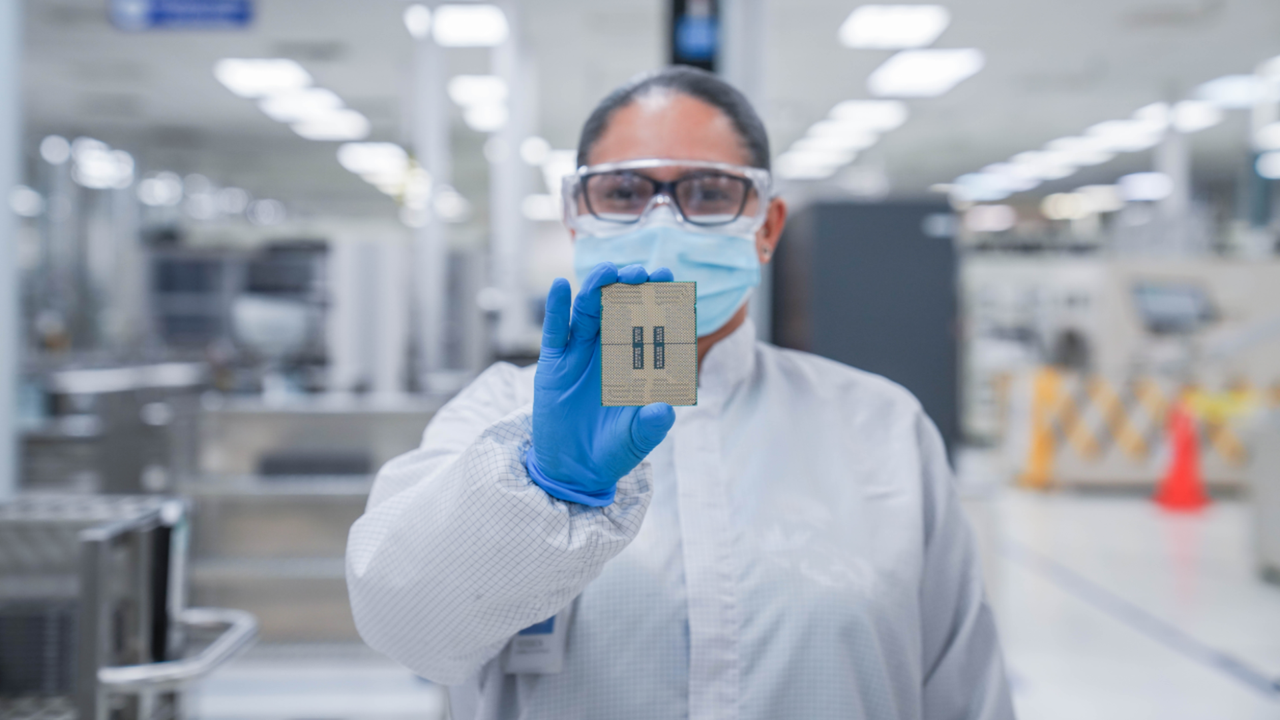
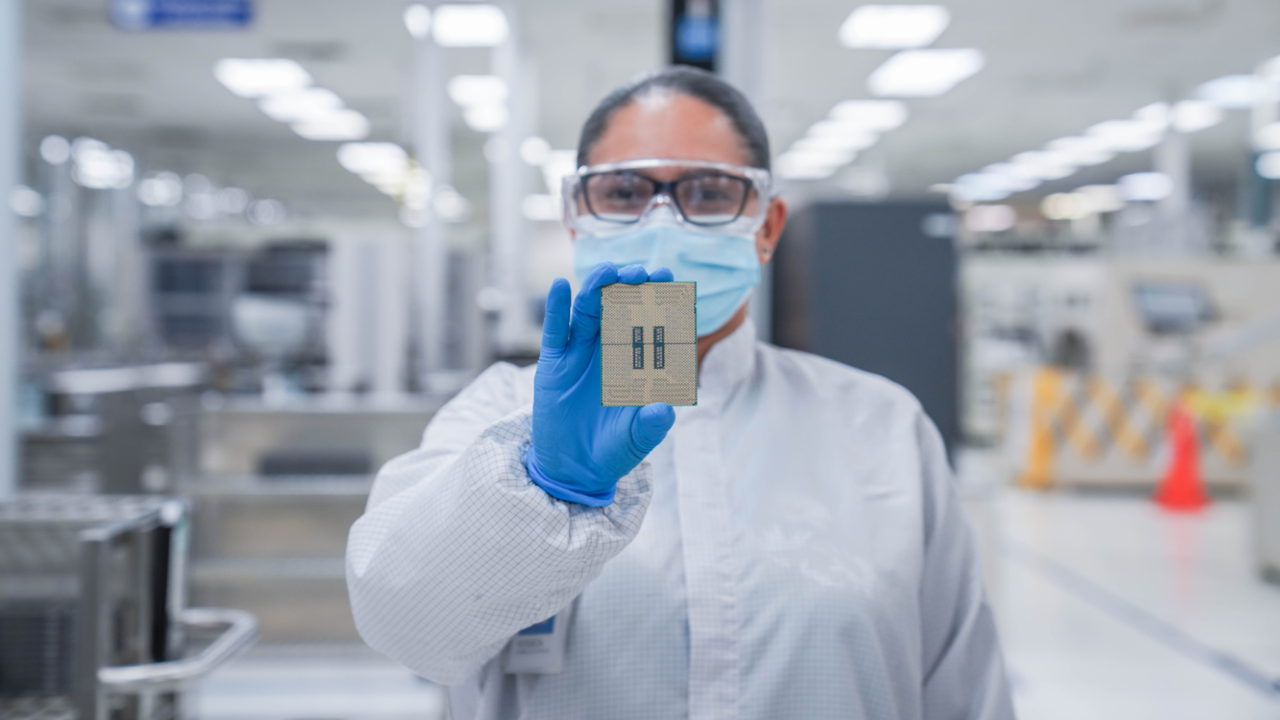
Intel and Google lock in massive Xeon deal as AI workloads reshape cloud infrastructure across global hyperscale data centers
- Intel and Google signed a multi-year deal to keep Xeon in cloud infrastructure
- Google Cloud instances C4 and N4 already run on Xeon 6 processors
- Intel and Google are co-developing custom IPUs for networking and storage
Intel and Google have announced a multi-year collaboration that will keep Intel Xeon processors at the heart of Google Cloud infrastructure for the foreseeable future.
The agreement spans multiple generations of Xeon chips and includes systems used for AI workloads, inference tasks, and general-purpose computing across Google’s global data centers.
Google Cloud instances such as C4 and N4 already rely on Xeon 6 processors, and this deal ensures that pattern continues.
Article continues below
Why CPUs still matter in an era of specialized AI hardware
“AI is reshaping how infrastructure is built and scaled,” said Lip-Bu Tan, CEO of Intel.
“Scaling AI requires more than accelerators — it requires balanced systems. CPUs and IPUs are central to delivering the performance, efficiency, and flexibility modern AI workloads demand.”
The announcement comes at a time when many hyperscalers are accelerating adoption of custom Arm-based processors for AI tasks.
Counterpoint Research recently claimed 90% of AI servers running custom silicon will rely on the Arm instruction set architecture, leaving x86 with only a small share of new deployments.
To ensure Xeon remains relevant, Intel and Google are also jointly developing custom infrastructure processing units designed to handle networking, storage, and security workloads.
These IPUs operate as ASIC-based accelerators that move infrastructure tasks away from host CPUs, freeing Xeon processors to focus on application execution.
This separation improves system efficiency and resource allocation across large cloud deployments running AI tools, AI agents, and large language models.
CPUs and infrastructure acceleration remain a cornerstone of AI systems — from training orchestration to inference and deployment,” said Amin Vahdat, SVP and Chief Technologist for AI Infrastructure at Google.
Google currently uses both Xeon 5 and Xeon 6 processors across multiple service layers alongside its own custom Arm-based Axion processors.
These deployments continue alongside Google’s own custom processors used in other parts of its infrastructure stack.
Intel and Google state that collaboration across CPUs and IPUs will continue across future system generations, covering ongoing integration efforts across cloud infrastructure layers.
They maintain that CPUs and infrastructure accelerators remain part of current cloud design patterns across distributed systems.
Many workloads running in Google’s data centers require backward compatibility with x86 architecture, while others need maximum single-thread performance that Xeon CPUs deliver.
These requirements are expected to persist for years, which explains why Intel and Google signed this multi-year agreement.
Follow TechRadar on Google News and add us as a preferred source to get our expert news, reviews, and opinion in your feeds. Make sure to click the Follow button!
And of course you can also follow TechRadar on TikTok for news, reviews, unboxings in video form, and get regular updates from us on WhatsApp too.

Crypto World53 seconds ago
Bitcoin Halving 2028 Is Now 50% Complete
Sports3 minutes ago
Why Emmett Johnson Feels Like the Vikings’ Next Young RB

Tech4 minutes ago
Sony is nerfing its Bravia TVs’ program guide


-

 Politics4 days ago
US brings back mandatory military draft registration
-
 Sports4 days ago
Man United discover Nico Schlotterbeck transfer fee as defender reaches Dortmund agreement
-

 Fashion4 days ago
Weekend Open Thread: Veronica Beard
-

 Politics5 days ago
Malcolm In The Middle OG Turned Down ‘Buckets Of Money’ To Appear In Reboot
-

 Politics2 days ago
World Cup exit makes Italy enter crisis mode
-

 Crypto World6 days ago
Canary Capital Files SEC Registration for PEPE ETF
-

 Business4 days ago
Tesla Model Y Tops China Auto Sales in March 2026 With 39,827 Registrations, Beating Cheaper EVs and Gas Cars
-

 Crypto World1 day ago
The SEC Conditionalises DeFi Platforms to Be Avoided for Broker Registration
-

 Crypto World1 day ago
SEC Signals Exemption for Crypto Interfaces From Broker Registration
-

 Crypto World6 days ago
Bitcoin recovers as US and Iran Agree a Ceasefire Deal
-
 NewsBeat2 days ago
Pep Guardiola and Gary Neville agree over Arsenal title problem that benefits Man City
-

 Business5 days ago
OpenAI Halts Stargate UK Data Centre Project Over Energy Costs and Copyright Row
-

 Business3 days ago
Ireland Fuel Protests Enter Day 5 as Blockades Spark Shortages and Government Prepares Support Package
-

 Politics5 days ago
LBC Presenter Mocks Trump Over Iran War Failures
-

 Crypto World4 days ago
Federal judge blocks Arizona from bringing criminal charges against Kalshi
-
 NewsBeat3 days ago
JD Vance announces ‘no agreement’ with Iran over nuclear weapons fear
-

 Tech5 days ago
A version of Windows 10 released a decade ago is now eligible for additional security patches
-

 Business4 days ago
IMF retains floor for precautionary balances at SDR 20 billion
-

 Crypto World19 hours ago
SEC Proposes Certain Crypto Interfaces Don’t Need to Register as Brokers
-

 NewsBeat15 hours ago
Trump and Pope Leo: Behind their disagreement over Iran war
You must be logged in to post a comment Login