They started by mixing sour plum vodka at home, now they produce 1,800 bottles every month
At every party, people would pull Alexander Cheong aside and ask the same question: can I get a bottle of that?
The “that” was his homemade Sour Plum Vodka. Sick of alcohol brands that felt serious and disconnected from the actual experience of drinking, Alexander started mixing his own at social gatherings, rooted in the Southeast Asian flavours he grew up with.
“Alcohol is a social lubricant,” he said. “It’s about making the worries and stress clear up. We want to embody not taking anything too seriously.”
That philosophy became the foundation of Clumzy—a spirits brand he built with two friends, Kenneth Tan and Daniel Lim, on one simple idea: bottling Southeast Asian flavours with a bit of a kick. Five years later, with just three flavours and no outside investment, the brand has crossed S$1 million in cumulative revenue.
Advertisement
We spoke to the founders to find out how a kitchen experiment became a million-dollar business.
Starting a spirits brand from scratch
Clumzy is known for its signature Sour Plum Vodka./ Image Credit: Clumzy
The origins of Clumzy trace back to 34-year-old Alexander’s natural flair for mixology. Always the life of the party, he rarely enjoyed what he called “cold, hard, and serious” alcohol.
At social gatherings, to save money, he would mix his own cocktails, making his own flavourings from whatever he could imagine. Eventually, Alexander became known for his experimental jungle juices and punches, but one creation in particular stood out: a Sour Plum Vodka that became an instant crowd favourite at every party.
When COVID-19 hit, and social gatherings were restricted, demand for Alexander’s creations didn’t disappear—instead, it intensified. Friends and even friends of friends wouldn’t stop asking him to bottle his drinks for family occasions and casual nights in.
So, Alexander roped in his friend Kenneth to launch Clumzy in early 2021, taking orders via Instagram DMs only. Without any real push, word of mouth spread faster than they could keep up with.
Advertisement
Clumzy’s early “medicine bottle” look (left) vs its revamped packaging (right) after Daniel came on board./ Image Credit: Clumzy
But there was one clear problem: branding.
The product started with a simple label and packaging that wasn’t particularly eye-catching. About a month in, they brought in Daniel, an experienced marketer and close friend, as the third co-founder to help turn the product into a proper brand.
Daniel’s entry laid down Clumzy’s branding foundations. He redesigned the labels and packaging—joking that the original bottle looked like a “medicine bottle”—along with new photography, the website, and the e-commerce platform, shaping the brand identity Clumzy is known for today.
From there, while Daniel handled brand and marketing, Alexander and Kenneth focused on the business, trade relationships, and operations.
“If it didn’t work out, we had nothing to fall back on”
Clumzy started out with one sole offering: the Sour Plum Vodka. The product is marketed for its versatility—being great for shots, served on the rocks or as a cocktail. Each bottle retails at S$58 with an alcohol by volume of under 20%.
Advertisement
In the beginning, the spirit was made by the trio in Kenneth’s kitchen, which was stocked with giant Cambro containers and bottles. Supplies were stored in a small rented warehouse at S$200 per month, meaning they had to physically lug stock back and forth for every production run to Kenneth’s home.
At the time, they were making around 180 bottles a month—a capacity they quickly outgrew as demand surged beyond what a home setup could sustain.
Image Credit: Clumzy
Within just a few months, Clumzy became a legitimate side hustle generating real extra income on top of their day jobs. That created a genuine decision point for the co-founders: were they to stay comfortable with some pocket money, or risk everything to grow it into a real business?
Operating from a home kitchen came with clear limitations. They could only sell directly to consumers, with B2B opportunities completely off the table without a licensed commercial facility.
But upgrading wasn’t a small leap. Setting up a proper production space required tens of thousands of dollars—essentially their entire annual revenue at the time.
Advertisement
If it didn’t work out, we had nothing to fall back on.
Daniel Lim, co-founder of Clumzy
Still, they chose to take the risk. The trio secured a liquor licence and set up a dedicated production facility, moving from manual preparation to automated mixing and bottling processes.
They hosted pop up booths almost every weekend
From the start, the founders have been prudent with their spending, purchasing only what was necessary. They bootstrapped the venture with “a couple of thousand dollars,” which generated revenue and paid for itself, breaking even within a year.
(Left): Alexander and Daniel at Loky’s and the Crew in 2025; (Right): Clumzy also dispenses slushies of its offerings at some events./ Image Credit: Clumzy
Early on, they also committed to building Clumzy through direct consumer engagement.
They signed up for pop-ups and hosted booths “almost every weekend,” becoming familiar faces at curated events like ArtBox 2023, Boutiques Singapore 2024, and Christmas Atelier 2025, amongst smaller pop-ups at bars and cafes since 2021.
Advertisement
“Demand has been very strong,” Daniel noted. “We sold out on the first day of our first Boutiques Singapore back in 2022, which lasted two weeks. We made in one day what we normally would make over three to four days at other events.”
As Clumzy’s presence at weekend pop-ups grew, restaurants and eateries began taking notice, often after seeing strong customer demand at events or encountering the brand through word of mouth and social media.
At the same time, another key growth driver was how the founders expanded the ways customers could experience the product. They diversified into events, offering on-tap services for weddings and house parties, and experimented with more flexible formats, including slushie versions of their drinks at events.
“Diversifying into slushies made sense for us to create an option to make drinks that are fun for people who may not want to drink alcohol that tastes like alcohol,” Daniel shared.
Advertisement
He added that 65% of their customers are women, reflecting how Clumzy has resonated with a demographic that traditional spirits brands have historically underserved.
Hitting the S$1M milestone
(Left): Clumzy’s booth at Boutiques Singapore 2025; (Right): Clumzy stocks at various partners like The Liquor Store./ Image Credit: Clumzy
Today, Clumzy produces around 1,800 bottles of spirits each month and has expanded to a team of eight. Its offerings are stocked at 11 retail partners, including Pat’s Music Pub and The Liquor Shop.
The business model currently sees revenue split roughly into 70% B2C and 30% B2B. After four years of operation, Clumzy crossed S$1 million in cumulative revenue in 2025, a significant milestone for a bootstrapped local spirits brand.
Clumzy launched with its Sour Plum Vodka, before the Chrysanthemum Lychee Gin and finally its Coconut Pandan Rum./ Image Credit: Clumzy
The brand has also since expanded its product line to three spirits, with customer feedback playing a crucial role in shaping its development.
While the Sour Plum Vodka developed a devoted following, it became clear that the polarising flavour was an acquired taste—some loved it instantly, while others needed time to warm up to it. This insight led to the development of the brand’s second flavour: the Chrysanthemum Lychee Gin, designed for those who find the sour plum variety too intense.
After persistent calls from customers for a third offering, the trio released Coconut Pandan Rum recently, a creation they felt was important to Clumzy’s identity as a business inspired by Southeast Asian flavours.
Advertisement
Protecting what they’ve built
The trio believe strongly in what they’ve built and is looking to grow it organically./ Image Credit: Clumzy
Around the time Clumzy turned one, several parties approached the founders with offers: investment for equity stakes, rebranding under a larger umbrella, or outright acquisition.
At the time, all three founders still had day jobs. These offers initially felt genuinely attractive—a chance to take the brand one step up without carrying all the risk alone.
But Alex had the foresight to see what they’d be giving up: undervaluing everything that they stood for as a small founder-led brand. As such, they turned the offers down.
“In hindsight, some of those offers really shortchanged us,” Alex said. “I’m glad we trusted our gut in those decisions, and I’m glad we saw it all pay off eventually through our hard work.”
Clumzy at CellarFiesta 2025 and Artbox 2023./ Image Credit: Clumzy
Today, Clumzy is run by Alexander and Daniel, with Kenneth having taken a backseat in 2024.
The next chapter for the brand involves significantly expanded distribution. After months of negotiations with NTUC FairPrice, the brand’s spirits are set to hit its supermarket shelves soon, marking its entry into mainstream retail.
Advertisement
Encouraged by strong demand in Singapore, international expansion is also on the horizon. The founders plan to bring Clumzy to Thailand and Australia, driven by interest from Singaporeans abroad who have discovered the brand and want access in their new home countries.
That said, the team has also observed a broader shift in drinking culture, with more consumers becoming intentional about their alcohol consumption. While nightlife has seen a decline, overall alcohol consumption remains relatively steady, as more people drink at home or during daytime social occasions.
Daniel noted that it’s all about a healthier relationship with socialising.
“People aren’t drinking less. They’re bored with sameness. Alcohol offerings have felt largely unchanged for decades. What people are genuinely hungry for is novelty and a sense of connection to something familiar,” Daniel explained.
Advertisement
That sense of novelty and familiarity is what Clumzy aims to deliver.
A new NYT Strands puzzle appears at midnight each day for your time zone – which means that some people are always playing ‘today’s game’ while others are playing ‘yesterday’s’. If you’re looking for Monday’s puzzle instead then click here: NYT Strands hints and answers for Monday, May 4 (game #792).
Strands is the NYT’s latest word game after the likes of Wordle, Spelling Bee and Connections – and it’s great fun. It can be difficult, though, so read on for my Strands hints.
Want more word-based fun? Then check out my NYT Connections today and Quordle today pages for hints and answers for those games, and Marc’s Wordle today page for the original viral word game.
Advertisement
SPOILER WARNING: Information about NYT Strands today is below, so don’t read on if you don’t want to know the answers.
Article continues below
NYT Strands today (game #793) – hint #1 – today’s theme
What is the theme of today’s NYT Strands?
• Today’s NYT Strands theme is… Get up!
NYT Strands today (game #793) – hint #2 – clue words
Play any of these words to unlock the in-game hints system.
Advertisement
CLAM
MEAL
SPIRE
TONE
ZOOT
SOON
NYT Strands today (game #793) – hint #3 – spangram letters
How many letters are in today’s spangram?
• Spangram has 12 letters
NYT Strands today (game #793) – hint #4 – spangram position
What are two sides of the board that today’s spangram touches?
First side: left, 2nd row
Last side: right, 8th row
Advertisement
Right, the answers are below, so DO NOT SCROLL ANY FURTHER IF YOU DON’T WANT TO SEE THEM.
Advertisement
NYT Strands today (game #793) – the answers
(Image credit: New York Times)
The answers to today’s Strands, game #793, are…
ALARM
SNOOZE
TIME
RADIO
DATE
DISPLAY
TUNER
SPANGRAM: DIGITALCLOCK
My rating: Easy
My score: Perfect
Does anyone still use a DIGITALCLOCK? I know they do in TV shows and movies — especially when the storyline needs to indicate the drudgery of the daily grind. But in real life?
Sign up for breaking news, reviews, opinion, top tech deals, and more.
My memory was instantly jogged by today’s search, back to simpler times and this piece of tech’s most-used feature: the SNOOZE button.
Today, I use my phone as an alarm clock and set three alarms to nag me awake. The first is the ideal waking time if I was a properly functioning adult, the second is the “you need to wake up now” alarm, and the third is the “if you have not cancelled this alarm you are going to be late” alarm.
Advertisement
Yesterday’s NYT Strands answers (Monday, May 4, game #792)
CEDAR
ASPEN
DOGWOOD
BIRCH
CYPRESS
EUCALYPTUS
SPANGRAM: BRANCHOUT
What is NYT Strands?
Strands is the NYT’s not-so-new-any-more word game, following Wordle and Connections. It’s now a fully fledged member of the NYT’s games stable that has been running for a year and which can be played on the NYT Games site on desktop or mobile.
I’ve got a full guide to how to play NYT Strands, complete with tips for solving it, so check that out if you’re struggling to beat it each day.
When life gives you lemons, you make lemonade. What if life gives you a pile of old e-book readers? Well, when [spiritplumber] got box of old Nook Simple Touch devices, he decided to design solar-powered cases to help boost the old batteries. It makes perfect sense to us: sunlight readable screen, sunlight chargeable battery.
It looks like he’s got a pair of panels built into the 3D printed case. He recommends using any TP4056-based charger, and tying into the battery test points, not the 5 V supply. It won’t hurt anything if you do, apparently, but the device will think it’s plugged in an refuse to turn off the WiFi. That’s no big deal when you’ve got a continental power grid on the other end of the cable, but charging from a small panel on the back of the case doesn’t always give you enough juice to waste on unneeded radio activity. Especially indoors — these panels are apparently big enough to trickle-charge the device under artificial light, which is a nice, if doubtless slow feature.
The design is open source, and includes SketchUp design files as well as the exported .STL, so if you’ve got a hankering to edit this to fit a different e-book reader, you can. He also provides a handy-dandy guide to root this model of Nook, and if you’re on Hackaday we probably don’t need to explain why you might want to.
Advertisement
We’ve seen the Nook Simple Touch go some interesting places — like into the clouds as a glider computer — but solar power is a new hack for this device, at least on this site. We don’t know if [spiritplumber] has a green thumb, but he’s evidently got some environmental bones in his body: his last featured project was about improving quadcopter efficiency with a wing and a prayer.
American Express (Amex) is building a system that lets AI agents shop and pay on behalf of users — but right now it’s only within its own payment network, and still involves a black box that could hinder trust and auditability.
Amex already participates in agentic commerce protocol projects, especially Google’s Agent Pay Protocol (AP2), which focuses on interoperability. Amex’s Agentic Commerce Experiences (ACE) developer kit, on the other hand, touches on something most protocols currently lack: Full transaction control in the payment layer.
But it still isn’t completely transparent in how it handles validation. ACE uses a closed-loop system — serving as both the card issuer and the payment network — to validate agent-led transactions.
Luke Gebb, Amex’s EVP and global head of innovation, told VentureBeat that the company believes this model is the missing piece in agentic commerce.
Advertisement
“Some of what is missing so far is the perspective of a company like ours: We feel that trust and security are critical to advancing this space,” Gebb said. “This is really the first time that an issuer is coming to the table.”
Amex sits in that interesting space: Unlike other financial institutions or card providers like Chase or Bank of America, Amex can route transactions through its American Express Network. Visa and Mastercard are two of the most well-known payment networks, but these companies don’t issue cards themselves and must work with a bank.
The continued black box of agentic commerce
The ACE kit is just one approach to addressing some of agentic commerce’s biggest problems: trust, control, accountability, validation, and security.
Consumers generally don’t want rogue agents to run away with their bank accounts and start buying things. Merchants don’t want to be stuck with unpaid items. Banks don’t want to deal with an influx of chargebacks and the potential for fraud.
Advertisement
Projects like the ACE kit aim to build trust and accountability by verifying an agent’s identity and goals. This can build the trust agentic commerce desperately needs.
Amex claims it offers validation, too, although the process behind that is unclear. It is abstracting how it performs validation, even though it explains at which layer it does it. More traditional systems feature a mix of deterministic checks and a flexible, semantic evaluation that helps match intent and outcome for validation. Amex said agents built with ACE can submit user shopping carts and check them against the agent’s original intent. However, they did not disclose how this works.
Practitioners building to the agentic commerce ecosystem lament that, despite strides in creating a trust layer, many black boxes remain that could hinder widespread adoption.
Raj Ananthanpillai, founder and CEO of identity and verification system provider Trua, told VentureBeat that payment protocols and software kits like Agentic Commerce Suite from Stripe, Google’s Verifiable Intent proof chain, and the ACE developer kit “excel at handling proofs, verifiable authorizations and the mechanics of fund movement, but leave upstream human validation opaque and underdeveloped.”
Advertisement
Ananthanpillai continued: “Without a clear, high-assurance cryptographic link proving that an agent is acting under the explicit authority of a verified human owner, merchants, issuers, and networks face heightened risks of repudiation, massive chargebacks, sanctioned people conducting financial transactions, and fraud.”
The ACE kit
The ACE developer kit solves several running issues with agentic commerce, Gebb said, and gives developers access to integrated services:
Agent registration
Account enablement
Intent intelligence
Payment credentials
Cart context
First, it deals with agent registration, establishing identity and trust with both the consumer and company agents. When a transaction begins, the agent acting on behalf of the customer and the merchant’s agent can verify each other’s identities and trust that they are dealing with the correct entity.
Next comes account enablement, which links the user’s Amex account to their agent and grants the agent permission to act, or, in the case of agentic commerce, buy something.
Advertisement
Intent intelligence creates what Amex calls an intent contract, where the user defines what they want the agent to do. Once the intent is defined, the ACE system generates an Intent ID and a Proof of Intent Token that definitively proves authorization in the event of a dispute.
Amex handles the actual transaction part, where the user pays for the product through a single-use token. ACE establishes payment credentials used for the transaction, bound to intent and constraints.
“Once the agent has found the item that the customer has asked for, like red shoes, they’ll make a call for the payment credentials, which is a token that has the boundaries that the card member has provided,” Gebb said. “So, for instance, if they said they only wanted to spend $500, that token won’t allow for a purchase of $600 because it has controls built in.”
The last piece is cart context and validation, which Gebb said helps banks and brands compare a user’s cart that their agent submitted to their intent.
Advertisement
Amex’s approach shows that for agentic commerce to really soar, providers must understand what systems will allow agents to do and who is ultimately accountable if something goes wrong.
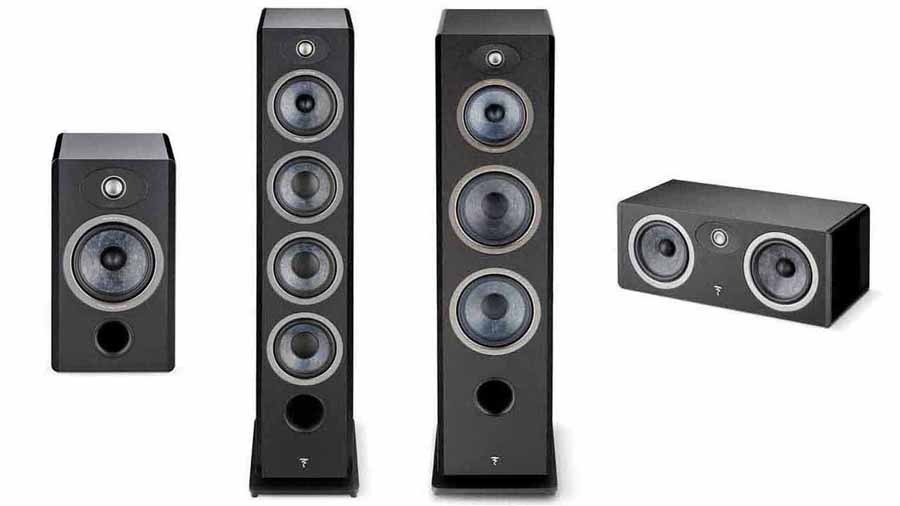
Focal’s Omada speaker line just became a lot more interesting for anyone building a serious stereo or home theater system at a more attainable price. Four models in the series are now on sale for up to 35% off, with the promotion running through June 21, 2026, while supplies last. That last part matters. The best speaker deals rarely hang around long enough for endless spreadsheet therapy.
What Are Focal Omada Speakers?
Focal’s Omada series is an exclusive loudspeaker line for ProSource members that has been available since November 2025. The lineup sits between Focal’s Theva and Vestia series, giving buyers a mid tier option for both two channel listening and home theater systems without jumping into the brand’s more expensive models.
What’s on Sale?
Omada N1 (Bookshelf Speaker) – $1,399$898/pair at Crutchfield or Amazon (save $500)
Omada N3 (Floorstanding Speaker) – $3,798$2,598/pair at Crutchfield or Amazon (save $1,200)
Omada N4 (Floorstanding Speaker) – $4,598$2,998/pair at Crutchfield or Amazon (save $1,600)
Omada Center (Center Channel Speaker) – $699$499 at Crutchfield or Amazon (save $200)
Focal Omada Core Features:
The Omada series uses Focal’s TAM tweeter and Slatefiber cone technology, both of which first appeared higher up in the company’s lineup. That matters because Omada is not just a pretty cabinet with a familiar badge on the front. The goal is to deliver natural, detailed sound for both two channel listening and home theater systems, using proven Focal driver technology without pushing buyers into the brand’s more expensive loudspeakers.
Design: Omada speakers come in a high gloss black finish with a subtly curved front baffle and a leather like texture on the front panel. It gives the line a cleaner, more refined look without turning the room into a hi-fi showroom crime scene. The finish, cabinet shape, and front panel detail should help the speakers fit into a wide range of rooms, which matters if the system has to share space with actual furniture and people.
TAM Tweeter: Focal’s M-shaped dome TAM tweeter is designed to deliver clean, controlled treble with wide dispersion and low distortion. Originally developed for Focal’s car audio products and later adapted for home loudspeakers, it gives the Omada series a proven high frequency platform that fits neatly into Focal’s broader loudspeaker ecosystem.
Advertisement
Slatefiber Cone: The Omada series also uses Focal’s Slatefiber cone technology, first introduced in the Chora line in 2019. Made from recycled carbon fibers, Slatefiber was developed to deliver a useful mix of rigidity, damping, and tonal balance. Focal has continued to refine the material since its debut, and it has since appeared across other parts of the catalog, including Alpha Evo studio monitors and Slatefiber automotive kits.
Bass Reflex: Every Omada model uses a bass reflex design to improve low frequency extension and output. The N1, N3, and N4 feature a front firing port, while the Center speaker uses two smaller rear ports. The port directs air pressure generated inside the cabinet into the room, reinforcing bass response without requiring more amplifier power. The result is fuller, more impactful low end while helping the Omada lineup maintain useful efficiency across the range.
10 1/8 x 14 3/4 x 44 1/8 in . 25.6 x 37.5 x 112.2 cm
12 x 16 7/8 x 44 3/8 in
30.4 x 43 x 112.6 cm
21 1/8 x 10 1/4 x 8 1/2 in
Advertisement
53.7 x 25.9 x 21.6 cm
Net weight (with grille)
15.4 lbs (7 kg)
58.4 lbs (26.5 kg)
69.45 lbs (31.5 kg
22 lbs (10 kg)
The Bottom Line
The Focal Omada series is for listeners who want proven Focal driver technology, clean styling, and a practical speaker lineup for both music and movies without paying for features they may not need. With the TAM tweeter, Slatefiber cones, and a focused range of models, Omada makes the most sense for buyers building a solid two channel or home theater system who want Focal performance at a more accessible price.
Sale Pricing
The Focal Omada Speaker sale runs through June 21, 2026.
Omada N1 (Bookshelf Speaker) – $1,399 $898/pair at Crutchfield or Amazon (save $500)
Omada N3 (Floorstanding Speaker) – $3,798 $2,598/pair at Crutchfield or Amazon (save $1,200)
Omada N4 (Floorstanding Speaker) – $4,598 $2,998/pair at Crutchfield or Amazon (save $1,600)
Omada Center (Center Channel Speaker) – $699 $499 at Crutchfield or Amazon (save $200)
To round out an Omada system, the speakers can be combined with the SUB 600P subwoofer for deeper and encompassing bass for $1,399 at Amazon. Meanwhile, the speaker stands for the N1, which is available for $269/pair at Crutchfield.
The latest test version of iOS 26.5 includes a changelog about bringing some new protections to texts. The smartphone operating system will be rolling out end-to-end encryption for RCS messages between Apple and Android devices. “End-to-end encrypted RCS messaging (beta) in Messages is available with supported carriers and will roll out over time,” is Apple’s official wording about the addition. The setting will be on by default, but Apple device owners can confirm it in Settings under the RCS Messaging menu of the Messages section once they are running iOS 26.5.
According to 9to5Google, a lock icon will appear in an iPhone user’s Messages app when chats to an Android device are taking advantage of the encryption. On the Android side, the Google Messages chats to iOS devices will look the same way they do when messaging another user (or users) with encrypted RCS.
Advertisement
Apple added the option for RCS messaging as part of iOS 18. The GSM Association, which operates the RCS protocol, added support for E2EE between the operating systems last year. At the time, Apple said it would bring the added security layer “in future software updates” that seem to have finally arrived. The tech company began testing this tech back in February as part of iOS 26.4, although Apple specified that it did not plan to officially roll out the encryption feature with that launch. More protections to keep communications private is pretty much always a good thing to see, so that’s a welcome addition to what might otherwise be a more incremental iOS 26.5 update.
Geothermal startup Fervo Energy said Monday it hopes to raise up to $1.3 billion in its initial public offering.
The company would be valued at up to $6.5 billion if shares sell at the top of its $21 to $24 price target. That’s more than twice what Fervo had reportedly been seeking earlier this year when it confidentially filed paperwork with the SEC to start the IPO process.
The stock will trade on Nasdaq under the ticker FRVO.
Fervo’s price target comes on the heels of X-energy’s successful IPO. The nuclear power startup raised $1 billion in an upsized IPO. When the company set its price target for the IPO, it sought a valuation of around $7 billion. Today, X-energy’s market capitalization i over $8 billion.
Advertisement
Both Fervo and X-energy have been boosted by surging electricity demand from tech companies, which have been racing to secure supplies to feed their AI data centers. The scramble has driven prices for new natural gas power plants up 66% in the last two years.
Fervo says it’s Cape Station power plant — its first large-scale project — will generate electricity at $7,000 per kilowatt of installed capacity. The company’s goal is to reduce that to $3,000 per kilowatt of capacity, at which point it will start being cost competitive with natural gas.
I don’t think I’ve ever seen a floor-standing speaker that wasn’t beautiful or exotic in some way, and Audiovector has just proven my point by unveiling the new R 5 Arreté.
You’ve already seen this speaker in the above image, so you already know how good it looks. Each unit is hand-made in Denmark, and you can pick it up in a range of finishes. Above, you’re looking at African Mahogany, but there’s also Italian Walnut, White Silk, and Black Piano.
Audiovector is a family business, as we discovered at the launch of the Trapeze Ri, and so it makes sense that care goes into the speakers. The cabinets are designed ot be narrow, to “minimise edge diffraction for a more precise and transparent soundstage” according to the brand.
Article continues below
Advertisement
This attention extends to the plinth, with that staggered design achieving “a perfectly controlled coupling to the surface beneath”. As you can see from the quotes from the brand, we haven’t actually tested the R 5 Arreté yet.
You can, if you’d like, because it’s on sale now. But you’ll have to pay £17,500 (about $23,600, AU$32,860) for the pleasure of doing so.
Advertisement
Have you forgotten about the sound?
Okay, okay, the R 5 Arreté isn’t just a lovely piece of furniture, but a loudspeaker. So what’s it packing under the hood?
The three drivers are all 6.5-inch carbon speakers that use the brand’s Accelerated Force Concept to reduce driver inertia. One’s a mid driver, one’s a lower-mid driver, and another’s a bass driver aimed at the lowest frequencies. There’s also a tweeter to handle the higher frequencies.
Sign up for breaking news, reviews, opinion, top tech deals, and more.
According to Audiovector, the frequency response is 23Hz-53Hz, with an average impedance of 8 ohms and a sensitivity of 90 decibels.
Advertisement
Another selling point of the Arreté is that it’s designed to work well with amplifiers, due to its “unique three-position damping adjustment”. So you can use your extra accessories to really eke the most out of the speaker.
If you’re worried about whether you can fit these things, they’re 11cm tall, 22cm wide, and 41cm deep with a weight of 32kg.
And of course, you can also follow TechRadar on YouTube and TikTok for news, reviews, unboxings in video form, and get regular updates from us on WhatsApp too.
The Trump administration is reportedly considering an executive order to create a working group that could review advanced AI models before public release. The shift follows concerns over Anthropic’s powerful Mythos model and its cyber capabilities, with officials weighing whether the government should get early access to frontier models without necessarily blocking their release. The New York Times reports: In meetings last week, White House officials told executives from Anthropic, Google and OpenAI about some of those plans, people briefed on the conversations said. The working group is likely to consider a number of oversight approaches, officials said. But a review process could be similar to one being developed in Britain, which has assigned several government bodies to ensure that A.I. models meet certain safety standards, people in the tech industry and the administration said.
The discussions signal a stark reversal in the Trump administration’s approach to A.I. Since returning to office last year, Mr. Trump has been a major booster of the technology, which he has said is vital to winning the geopolitical contest against China. Among other moves, he swiftly rolled back a Biden administration regulatory process that asked A.I. developers to perform safety evaluations and report on A.I. models with potential military applications. “We’re going to make this industry absolutely the top, because right now it’s a beautiful baby that’s born,” Mr. Trump said of A.I. at an event in July. “We have to grow that baby and let that baby thrive. We can’t stop it. We can’t stop it with politics. We can’t stop it with foolish rules and even stupid rules.” Mr. Trump left room for some rules, but he added that “they have to be more brilliant than even the technology itself.”
The White House wants to avoid any political repercussions if a devastating A.I.-enabled cyberattack were to occur, people in the tech industry and the administration said. The administration is also evaluating whether new A.I. models could yield cyber-capabilities that could be useful to the Pentagon and U.S. intelligence agencies, they said. To get ahead of models like Mythos, some officials are pushing for a review system that would give the government first access to A.I. models, but that would not block their release, people briefed on the talks said.
If you want to overthrow Big Tech, you’ll need Section 230. The paradigm shift being built with the Open Social Web can put communities back in control of social media infrastructure, and finally end our dependency on enshittified corporate giants. But while these incumbents can overcome multimillion-dollar lawsuits, the small host revolution could be picked off one by one without the protections offered by 230.
The internet as we know it is built on Section 230, a law from the 90s that generally says internet users are legally responsible for their own speech — not the services hosting their speech. The purpose of 230 was to enable diverse forums for speech online, which defined the early internet. These scattered online communities have since been largely captured by a handful of multi-billion dollar companies that found profit in controlling your voice online. While critics are rightly concerned about this new corporate influence and surveillance, some look to diminishing Section 230 as the nuclear option to regain control.
The thing is, that would be a huge gift to Big Tech, and detrimental to our best shot at actually undermining corporate and state control of speech online.
Dethroning Big Tech
We’re fed up with legacy social media trapping us in walled gardens, where the world’s biggest companies like Google and Meta call the shots. Our communities, and our voices, are being held hostage as billionaires’ platforms surveil, betray, and censor us. We’re not alone in this frustration, and fortunately, people are collaborating globally to build another way forward: the Open Social Web.
Advertisement
This new infrastructure puts the public’s interest first by reclaiming the principles of interoperability and decentralization from the early internet. In short, it puts protocols over platforms and lets people own their connections with others. Whether you choose a Fediverse app like Mastodon or an ATmosphere app like Bluesky, your audience and community stay within reach. It’s a vision of social media akin to our lives offline: you decide who to be in touch with and how, and no central authority can threaten to snuff out those connections. It’s social media for humans, not advertisers and authoritarians.
Behind that vision is a beautiful mess of protocols bringing the open social media web to life. Each protocol is a unique language for applications, determining how and where messages are sent. While this means there is great variety to these projects, it also means everyone who spins up a server, develops an app, or otherwise hosts others’ speech has skin in the game when it comes to defending Section 230.
What exactly is Section 230?
Section 230 protects freedom of expression online by protecting US intermediaries that make the internet work. Passed in 1996 to preserve the new bubbling communities online, 230 enshrined important protections for free expression and the ability to block or filter speech you don’t want on your site. One portion is credited as the “26 words that created the internet”:
“No provider or user of an interactive computer service shall be treated as the publisher or speaker of any information provided by another information content provider.”
In other words, this bipartisan law recognizes that speech online relies on intermediaries — services that deliver messages between users — and holding them potentially liable for any message they deliver would only stifle that speech. Intuitively, when harmful speech occurs, the speaker should be the one held accountable. The effect is that most civil suits against users and services based on others’ speech can quickly be dismissed, avoiding the most expensive parts of civil litigation.
Advertisement
Section 230 was never a license to host anything online, however. It does not protect companies that create illegal or harmful content. Nor does Section 230 protect companies from intellectual property claims.
What Section 230 has enabled, however, is the freedom and flexibility for online communities to self-organize. Without the specter of one bad actor exposing the host(s) to serious legal threats, intermediaries can moderate how they see fit or even defer to volunteers within these communities.
Why the Open Social Web Needs Section 230
The superpower of decentralized systems like the Fediverse is the ability for thousands of small hosts to each shoulder some of the burdens of hosting. No single site can assert itself as a necessary intermediary for everyone; instead, all must collaborate to ensure messages reach the intended audience. The result is something superior to any one design or mandate. It is an ecosystem that is greater than the sum of its parts, resilient to disruptions, and free to experiment with different approaches to community governance.
The open social web’s kryptonite though, is the liability participants can face as intermediaries. The greater the potential liability, the more interference from powerful interests in the form of legal threats, more monetary costs, and less space for nuance in moderation. And in practice, participants may simply stop hosting to avoid those risks. The end result is only the biggest and most resourced options can survive.
Advertisement
This isn’t just about the hosts in the Open Social Web, like Mastodon instances or Bluesky PDSes. In the U.S., Section 230’s protections extend to internet users when they distribute another person’s speech. For example, Section 230 protects a user who forwards an email with a defamatory statement. On the open social web, that means when you pass along a message to others through sharing, boosting, and quoting, you’re not liable for the other user’s speech. The alternative would be a web where one misclick could open you up to a defamation lawsuit.
Section 230 also applies to the infrastructure stack, too, like Internet service providers, content delivery networks, domain, and hosting providers. Protections even extend to the new experimental infrastructures of decentralized mesh networks.
Beyond the existential risks to the feasibility of indie decentralized projects in the United States, weakening 230 protections would also make services worse. Being able to customize your social media experience from highly curated to totally laissez-faire in the open social web is only possible when the law allows space for private experiments in moderation approaches. The algorithmically driven firehose forced on users by antiquated social media giants is driven by the financial interests of advertisers, and would only be more tightly controlled in a post-230 world.
Defending 230
Laws aimed at changing 230 protections put decentralized projects like the open social web in a uniquely precarious position. That is why we urge lawmakers to take careful consideration of these impacts. It is also why the proponents and builders of a better web must be vigilant defenders of the legal tools that make their work possible.
Advertisement
The open social web embodies what we are protecting with Section 230. It’s our best chance at building a truly democratic public interest internet, where communities are in control.




























































You must be logged in to post a comment Login