
Business
Mark Mobius, pioneer of emerging markets investing, dies at 89


He died today, according to a post on his LinkedIn page attributed to his spokeswoman, Kylie Wong. John Ninia, a partner at Mobius Investments, said he died in Singapore.
In more than 30 years with Franklin Templeton Investments, officially Franklin Resources Inc., Mobius became an evangelist for money-making opportunities in Africa, Asia, Eastern Europe and Latin America. In a crowd of investing advisers, he was distinctive in part for his impeccably shaved head, which inspired the nickname Bald Eagle.
Hired in 1987 by John Templeton, a pioneer in leading American investors to companies abroad, Mobius started one of the first mutual funds dedicated to rapidly developing new markets. He oversaw the Templeton Emerging Markets Group until 2016, was lead manager of its flagship Templeton Emerging Markets Investment Trust until 2015 and retired in January 2018.
From 1989 until his retirement, the closed-end fund returned 13.4% a year on average, according to Morningstar Direct. From 2001, when the MSCI Emerging Markets Index was introduced, the Templeton fund beat that benchmark by 1.9% a year on average, according to Morningstar.

“Mark Mobius is to emerging market investing what Colonel Sanders is to fried chicken,” Peter Douglas, a principal at the Singapore chapter of the Chartered Alternative Investment Analyst Association, said when Mobius stepped aside as portfolio manager. “He is the icon of the industry and has been the global cheerleader of emerging markets.”
Partly based in Singapore, Mobius traveled 250 to 300 days a year in a Gulfstream IV private jet, visiting factories and distributors in remote corners of the globe to identify investment opportunities. He correctly predicted the start of a bull market that began in 2009, snapped up bargains during the Asian financial crisis after Thailand floated its currency in 1997 and bought Russian stocks as panic selling took hold in Russia in 1998. He was also one of the first institutional investors to identify Africa as a promising frontier market, setting up the Templeton Africa Fund in 2012.
‘Kicking the Tires’
“I believe in getting out and kicking the tires,” he wrote in 2015. “I would rather see with my own eyes what’s happening in a company or country. Lies can be as revealing as truth, if you know what the cues are.”
Just last month, via his Substack column, he shared his thoughts on the war in Iran and its impact on equity markets.
Mobius founded London-based Mobius Capital Partners in 2018 and oversaw actively managed funds investing in emerging market equities. He left there in late 2023 but continued to seek out investing opportunities, setting up a new venture in Dubai, where he had lived for three years.
Franklin Resources Inc. was founded in 1947 and is based in San-Mateo, California. It acquired John Templeton’s investment firm — Templeton, Galbraith & Hansberger Ltd. — in 1992 to create Franklin Templeton Investments.
Joseph Bernhard Mark Mobius was born on Aug. 17, 1936, in Bellmore, on New York’s Long Island. His German father, Paul Mobius, was a ship’s cook and baker. His mother, the former Maria Louisa Colon, was Puerto Rican. With his two brothers, Hans and Paul, Mobius grew up with German and Spanish spoken at home.
In 1955, Mobius received a scholarship to study dramatic arts at Boston University and worked as a pianist in a nightclub to help pay for his education. He earned a bachelor’s degree in fine arts and a master’s in communications.
Studied in Kyoto
He successfully applied for a scholarship to learn Japanese culture and the Japanese language in Kyoto, triggering his desire to live and work in Asia. After earning a Ph.D. in political science and economics from Massachusetts Institute of Technology, in 1964, he took a job with International Research Associates, conducting surveys and other consumer research in Thailand and Korea for a year each.
He ended up in Hong Kong, where he started his own industrial research consulting firm. One project — a report on the Hong Kong stock market — was his entre into securities analysis. His Yul Brynner hairstyle, as he described it, was conceived at this time after a fire in his apartment damaged his hair and he shaved the rest off, according to his 1997 memoir.
He was hired by Vickers Da Costa, a UK stock brokerage, to start a Taiwanese fund management company, International Investment Trust. He traveled to the Bahamas to present investment opportunities to Templeton, who in 1986 asked if he would be interested in running an emerging markets fund. The following year they raised $100 million in capital, listed their fund on the New York Stock Exchange and opened a small office in Hong Kong for Mobius and two Chinese analysts. They began investing in six places: Hong Kong, Philippines, Singapore, Malaysia, Mexico and Thailand.
“You must remember, in those days, most countries did not welcome foreign investment,” Mobius recalled in a 2022 interview with Barry Ritholz for Bloomberg’s Masters in Business podcast series. “They were also either socialist or communist like China and Russia. Eastern Europe was out of the question, of course. So we had only six markets in which to invest, and then we started expanding. Gradually, markets opened up. And eventually we were investing in something like 70 different countries around the world.”
1987 Crash
After losing a third of his fund’s value in the October 1987 stock market crash during his first year with Templeton, Mobius diversified to other markets including Argentina, Mexico, Indonesia and Russia.
Mobius wrote more than a dozen books on investing and economics, including The Investor’s Guide to Emerging Markets (1994) and Passport to Profits (1999). He shared rules and aphorisms including, “If you see the light at the and of the tunnel, it’s too late to buy.”
In 1999, he was tapped to serve on the World Bank’s Global Corporate Governance Forum as a co-chairman of a task force on investor responsibility.
Mobius never married. In Passport to Profits, he wrote that there were costs and benefits to being a “full-time nomad — an endangered species I’ve long admired for their fierce independence, their refusal to abide by conventional norms, their desperate desire for freedom.”
“Though some people probably pity me for having no home, no family, no domestic life to speak of,” he wrote, “my somewhat eccentric lifestyle offers untold opportunities for variety, stimulation and creativity.”


The scheme is designed to support firms that are high energy users in sectors such as automotive and aerospace, steel producers, metal fabricators, pharmaceutical and medical supplies companies, recycling businesses, plastic producers, nuclear fuel processors, and cooling and ventilation equipment manufacturers, the government said.
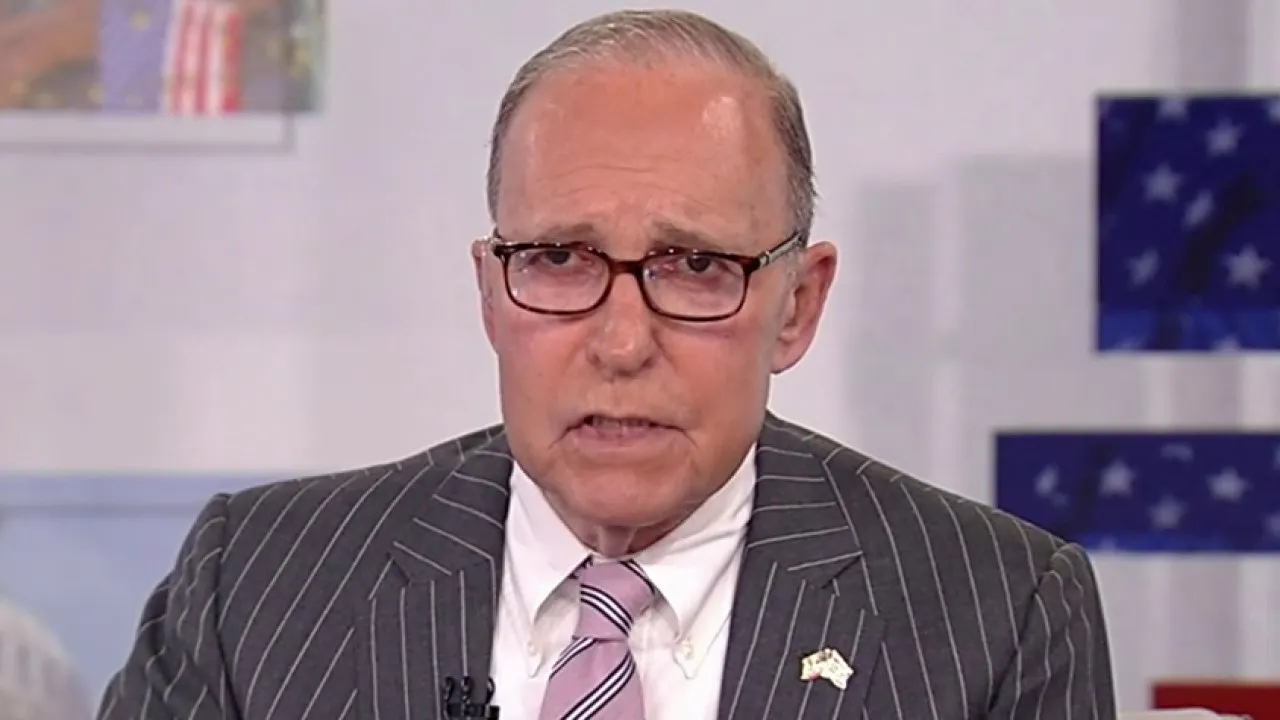
FOX Business host Larry Kudlow discusses President Donald Trump and the GOP delivering on the tax cut promise on ‘Kudlow.’
Today is April 15, tax day, and it should be a day of celebration for nearly all taxpayers because of President Trump’s one, big, beautiful bill that was signed last July 4. It not only avoided a $4.5 trillion tax hike proposed by Democrats, but it also provided substantial pro-growth tax cuts for the vast majority of American taxpayers. And 53 million people claimed one of Mr. Trump’s new deductions. And some 51 million seniors will pay no tax on their Social Security under the law. No taxes on tips and overtime will boost take-home pay by about $1,400 per person.
And here are some more factoids: more than 6 million people have filed for no tax on tips. The average deduction is higher than $7,100. More than 25 million people have filed for no tax on overtime. The average deduction is more than $3,100. And more than 30 million senior citizens have filed for no tax on Social Security. The average deduction there is more than $7,500.
Small business tax deductions remain in place. 100 percent immediate cost expensing for business and factory building is financing millions of new jobs at higher wages to boost kitchen table middle class family incomes. It’s all there. But for some reason, most Americans don’t seem to know about it.
White House senior counselor for trade and manufacturing Peter Navarro discusses the major boost in tax refunds from President Donald Trump’s ‘big, beautiful bill’ on ‘Kudlow.’
The highly regarded accurate TIPP poll shows that 40 percent of Americans think their taxes are going up, and only about 10 percent think they’re going down. Thirty-seven percent think there’s been no change.
So the Republican party has itself a marketing problem. When I sat down with Mr. Trump last February and raised this issue, he acknowledged that he and his team had to do a better job of getting the message out. The TIPP poll, just completed, shows that the message is still not getting out. And other polls may agree with that one.
I know the president is a busy guy, obliterating Iran and winning the war, which is terribly important, but he and his team and congressional leaders have just got to do a better selling job on tax cuts. Republicans should put together another economic growth plan. There’s plenty of time to do it through reconciliation which requires 50 votes plus the vice president. And I’m not interested in a small plan.
Sen. Ted Cruz, R-Texas, breaks down worries over a potential ‘skinny’ reconciliation bill to fund DHS on ‘Kudlow.’
I’m not interested in an anorexic plan, I’m advocating a wide-bodied plan with tax cuts, especially inflation-adjusted capital gains.Huge savings from waste, fraud, and abuse, we need funding for real voter ID, and the Pentagon’s wartime supplemental. It should all be in there. And I am hopeful this growth plan can come to pass. I had a colloquy about this with the majority leader, Senator John Thune, yesterday.
“You’re talking about a very skinny anorexic, I love that, anorexic, very skinny, anorexic reconciliation bill,” I said, but “Mr. Thune, you’re not an anorexic kind of leader.” Mr. Thune replied: “If we want to do a budget resolution and do a more comprehensive approach and use reconciliation in the way that you described, there will be an opportunity to do that.” I asked: “This year?” Mr. Thune replied: “Obviously, it depends.” I repeated: “This year, sir? Big, beautiful.” “Big and beautiful,” Mr. Thune responded. “Big, Beautiful 2.0 bill,” I said. “It depends on getting the votes,” Mr. Thune said. When I asked if he was open to such a measure, Mr. Thune replied: “Yeah, absolutely. I’m for doing more, not less.”
Hopefully Speaker Mike Johnson will be as open to a wide-bodied growth plan as Mr. Thune appears to be. And hopefully the whole Republican Party will just get behind it. Yes, today is tax day. Let’s make it a pro-growth tax cut day. Mr. Trump will win the war in Iran. Yet he and the GOP have to win the domestic economic war, in other words, the midterm elections.

Boston Consulting Group global chair Rich Lesser discusses a new survey showing A.I. is becoming a major source of stress for CEOs on The Claman Countdown.
Snap on Wednesday announced plans to lay off roughly 1,000 employees, as the tech company adopts artificial intelligence (AI) and looks to streamline its operations.
The parent company of Snapchat will also close over 300 open roles as part of its workforce restructuring, which comes after Irenic Capital Management pushed Snap to optimize its portfolio and performance. The firm is an activist investor with an economic interest of roughly 2.5% in the company.
Snap explained that advancements in AI are helping it streamline operations and function with smaller teams as AI generates over 65% of new code, while the company assigns more critical work to focused teams and AI agents.
The tech company had about 5,261 full-time employees as of December, and the layoffs will impact about 16% of the company’s full-time staff.
ORACLE LYING OFF THOUSANDS OF WORKERS TO CUT COSTS AMID AI PUSH: REPORT

Snapchat is laying off about 16% of its full-time employees as it restructures its workforce. (Frederic J. Brown/AFP via Getty Images)
Snap’s stock rose nearly 8% on Wednesday amid the news, leaving shares down about 25.7% year to date despite a 29% increase over the last month.
The company expects to cut more than $500 million in annualized expenses by the second half of the year, driven significantly by the recently announced layoffs, as well as broader efforts to reduce operating costs and stock-based compensation, CEO Evan Spiegel said. He asked employees in North America to work from home on Wednesday.
AMAZON CUTS JOBS IN ROBOTICS UNIT AS LAYOFFS CONTINUE: REPORT
| Ticker | Security | Last | Change | Change % |
|---|---|---|---|---|
| SNAP | SNAP INC. | 6.04 | +0.44 | +7.86% |
Snap anticipates $95 million to $130 million in layoff-related charges, most of which will fall in the second quarter, according to a regulatory filing.
Snap’s layoffs come after the company invested heavily in its augmented reality glasses unit, known as Specs, and is planning to launch the product this year.
META’S BAY AREA LAYOFFS AFFECT ROUGHLY 200 WORKERS AS COMPANY POURS BILLIONS INTO AI INFRASTRUCTURE

Snapchat has invested heavily in augmented reality glasses. (Alisha Jucevic/Bloomberg via Getty Images)
Irenic Capital has urged Snap to either spin off or shut down the business unit, which has received $3.5 billion in investment, as a means of conserving cash while the company pursues broader cost cuts.
“Cutting costs may appease an activist in the near term, and give long-suffering shareholders some relief, but whether it really leaves the company with a defensible business model and competitive position that it can defend, develop and turn into profits and cash flow is still unclear,” said Russ Mould, investment director at AJ Bell.
GET FOX BUSINESS ON THE GO BY CLICKING HERE
Reuters contributed to this report.

Algernon Health to rebrand as Grey Matters Health, consolidate shares


I focus on a rigorous fundamentals-foremost equity and credit research. I currently work as a financial advisor/planner, and do analysis in my free time. I have an undergrad in business administration, an MBA in finance, and currently am a doctoral candidate (a DBA with a concentration in Finance and Investment Management). My research style typically involves process-driven research, followed by blending several valuation models together to get a blended, 12 month price target. I enjoy utilizing full DCF analysis in conjunction with SOTP, peer/multiples analysis, and risk-adjusted approaches. I thoroughly enjoy reading filings, technical documentation relevant to the sector, and then translating that data into conclusions with actionable insights. I enjoy learning about the various sectors and companies I find myself researching, and always feel like there is something to learn. As a curious individual, equity and credit research is very fulfilling, and even fun!I always try to find 2-4 variables that drive value or hinder growth, stress test them, and then let fundamental evidence incorporated with book-value set my viewpoint for the research project. I enjoy the energy sector, commodities, tech, and financial sectors the most. I joined Seeking Alpha to share my thoughts with a wide audience. I originally started with sharing my analysis with a few of my friends who are also advisors and/or analysts. I am always open to a myriad of viewpoints, as I feel the most accurate viewpoints and research is made through a collection of great minds working together to figure something out. If you appreciate thorough research, and want to learn more about a company beyond just what is inside of their books, then I believe you will enjoy the research that I work on.
Analyst’s Disclosure: I/we have no stock, option or similar derivative position in any of the companies mentioned, and no plans to initiate any such positions within the next 72 hours. I wrote this article myself, and it expresses my own opinions. I am not receiving compensation for it (other than from Seeking Alpha). I have no business relationship with any company whose stock is mentioned in this article.
The views expressed in this article are solely the author’s own and do not represent the opinions or recommendations of an SRO or broker-dealer. This article is for informational purposes only and does not constitute investment advice, a solicitation, or a recommendation to buy or sell any security. Readers should consult their own financial advisor before making investment decisions. As a reminder, investment products: Are NOT FDIC insured. Not deposits of, or obligations of a bank, and may be subject to investment risk, including a possible loss of principal. /////
Emerging markets investments carry additional risks including currency fluctuation, political and economic instability, less developed regulatory environments, and potentially lower liquidity than developed market securities. Concentration in specific countries (notably Taiwan and South Korea) and sectors (notably semiconductors and technology hardware) exposes investors to amplified idiosyncratic risk. Past performance is not indicative of future results.
Seeking Alpha’s Disclosure: Past performance is no guarantee of future results. No recommendation or advice is being given as to whether any investment is suitable for a particular investor. Any views or opinions expressed above may not reflect those of Seeking Alpha as a whole. Seeking Alpha is not a licensed securities dealer, broker or US investment adviser or investment bank. Our analysts are third party authors that include both professional investors and individual investors who may not be licensed or certified by any institute or regulatory body.
Southern First Bancshares launches public stock offering


Dhierin-Perkash Bechai is an aerospace, defense and airline analyst.
Dhierin runs the investing group The Aerospace Forum, whose goal is to discover investment opportunities in the aerospace, defense and airline industry. With a background in aerospace engineering, he provides analysis of a complex industry with significant growth prospects, and offers context to developments as they occur, describing how they might affect investment theses. His investing ideas are driven by data informed analysis. The investing group also provides direct access to data analytics monitors.
Learn more.
Analyst’s Disclosure: I/we have no stock, option or similar derivative position in any of the companies mentioned, and no plans to initiate any such positions within the next 72 hours. I wrote this article myself, and it expresses my own opinions. I am not receiving compensation for it (other than from Seeking Alpha). I have no business relationship with any company whose stock is mentioned in this article.
Seeking Alpha’s Disclosure: Past performance is no guarantee of future results. No recommendation or advice is being given as to whether any investment is suitable for a particular investor. Any views or opinions expressed above may not reflect those of Seeking Alpha as a whole. Seeking Alpha is not a licensed securities dealer, broker or US investment adviser or investment bank. Our analysts are third party authors that include both professional investors and individual investors who may not be licensed or certified by any institute or regulatory body.

Financial influencer Taylor Price joins ‘Varney & Co.’ to break down how shifting your mindset can help Americans grow wealth and achieve the American Dream.
Outstanding mortgage payments reached a new high at the end of last year when the typical mortgage holder’s monthly payment exceeded $2,000 for the first time.
While the average monthly payment for new homebuyers crossed the $2,000 threshold in September 2022, the rise in the average monthly payment for all outstanding mortgages to $2,005 in the fourth quarter of 2025 for the first time underscores the affordability challenges facing buyers, according to Realtor.com data.
The uptick covers the full portfolio of mortgages in the U.S., including a large group of borrowers who took out loans before 2022 and have mortgage rates of 4% or lower – whereas new buyers face significantly higher payments given the elevated mortgage rates.

Average mortgage payments rose to the highest level on record at the end of last year. (Getty Images)
“New borrowers entering the market today face substantially higher payments than the existing portfolio average implies, which is keeping many potential sellers locked in place,” wrote Hannah Jones, senior economic research analyst for Realtor.com.
THESE 8 HOUSING MARKETS FAVOR BUYERS
The report noted that the average payment was $1,255 in early 2013 and increased gradually to $1,456 by early 2020, before it accelerated sharply amid surging home prices and new mortgage originations.
The average mortgage payment increased by more than $600 in just the last several years, rising from $1,390 in early 2021 to $2,005 at the end of 2025 – which amounts to a 44% increase in roughly four years.
NEW JERSEY OUTPACES US HOUSING MARKET, TOPS NATION IN PRICE GROWTH
The report found that a little more than half of all outstanding mortgages, or 50.6%, still carry interest rates of 4% or lower. More than three quarters of all mortgages, or about 78%, have a rate below 6%.
The share of mortgages with a 6% or higher share now stands at 21.9%, an increase of 3.9 percentage points from the 18% reading at the end of 2024, which shows a meaningful year-over-year acceleration that was driven by sustained buyer activity even amid high borrowing costs.
HOUSING MARKET GAINING MOMENTUM AS SPRING SEASON BEGINS

Life events are helping drive activity by sellers despite high mortgage rates and home values. (Elijah Nouvelage/Bloomberg via Getty Images)
“Even in today’s high-price, high-rate market, homebuying activity around major life events, such as having kids, a job change, or a divorce, keeps the market in motion,” Jones wrote.
“Easing inflation and mortgage rates will be key drivers of seller activity as well, which will relieve some of the price pressure and competition in today’s undersupplied market,” she added.
The Realtor.com report also noted that while rate lock-in “remains substantial” with about 78% of mortgages carrying rates below 6%, the steady erosion of the cohort of mortgage holders with rates below 4% and the acceleration in the growth of the population with mortgage rates at or above 6% suggests the “market’s center of gravity is gradually shifting.”
GET FOX BUSINESS ON THE GO BY CLICKING HERE
“The question for 2026, now complicated by renewed rate volatility tied to geopolitical uncertainty, is whether relief arrives fast enough to unlock reluctant sellers before another spring slips by,” Jones said.

SAN FRANCISCO — Travelers heading through San Francisco International Airport on Thursday should plan for moderate TSA security lines with average waits of 15 to 25 minutes during peak morning and evening hours, according to real-time tracking data as passenger volumes build with spring travel season in full swing.
As of mid-morning on April 16, 2026, security checkpoints at SFO reported standard lane waits hovering around 18 minutes on average, with some hourly slots dipping as low as 8 to 10 minutes in off-peak periods and climbing toward 19 minutes during busier afternoon windows. TSA PreCheck lanes remained significantly faster, often clearing in under 5 minutes when available across open checkpoints.
SFO, one of the busiest airports on the West Coast, handles millions of passengers monthly through its four terminals and multiple security checkpoints. Unlike many U.S. airports staffed directly by federal TSA employees, San Francisco International relies on a private contractor model for screening, which has historically helped insulate it from some nationwide staffing shortages and federal disruptions. This setup frequently results in more predictable wait times compared to peers like Los Angeles International or New York-area hubs.
Current conditions show most checkpoints operating smoothly. In Terminal 1, Boarding Areas B and C stood open. Terminal 2’s Boarding Area D remained active. Terminal 3 had Boarding Area F1 open while F3 stayed closed. In the International Terminal, Boarding Areas A and G were operational. Travelers should double-check their assigned terminal and boarding area, as closures or consolidations can shift lines unexpectedly.
Hourly breakdowns from monitoring sites indicated lighter overnight traffic with waits as short as 4 to 8 minutes between midnight and 2 a.m. Early morning ramps up to 14-18 minutes around 3 to 6 a.m. Midday periods trended toward 10-15 minutes, while late afternoon and early evening slots — particularly 4 p.m. to 7 p.m. — represented the daily peaks with forecasts nearing 19 minutes. These figures blend data from airport reports, traveler submissions and third-party aggregators updated every 10 minutes or so.
Spring break crowds have largely passed, but April still brings steady domestic and international traffic fueled by business trips, family visits and leisure getaways to Asia and Europe. United Airlines, SFO’s largest carrier, operates extensive hubs here with flights to dozens of domestic cities and key Pacific routes. Delta, American, Alaska and numerous international airlines add to the mix, pushing total daily passengers into the six-figure range on busy days.
Airport officials recommend arriving at least two hours before domestic flights and three hours for international departures to account for check-in, security and potential gate changes. Those with TSA PreCheck, CLEAR or airline status enjoy dedicated lanes that shave significant time off the process. The MyTSA mobile app provides real-time crowd-sourced updates and historical patterns, helping passengers time their arrival.
SFO’s security experience includes standard TSA protocols: removal of liquids in 3-1-1 compliant bags, laptops and large electronics out of carry-ons, and shoes off in regular lanes. PreCheck members keep shoes and light jackets on while sending fewer items through scanners. The airport also participates heavily in the TSA’s Screening Partnership Program, using private screeners trained to federal standards.
Recent traveler reports on forums and social media described mixed but generally manageable lines. Early morning fliers often cleared in 10-15 minutes, while midday arrivals reported under 20 minutes even without expedited access. Occasional spikes occur when multiple wide-body international flights disgorge passengers simultaneously or when a checkpoint temporarily closes for maintenance.
Factors influencing today’s waits include typical Thursday patterns, with business travelers peaking in the morning and leisure passengers filling afternoon slots. Weather in the Bay Area remained mild with temperatures in the low 60s Fahrenheit, reducing any weather-related flight delays that could bunch passengers. No major alerts for construction or staffing issues appeared on the airport’s official site as of early Thursday.
For international arrivals, separate CBP processing adds another layer after landing. Passport control wait times vary but generally run shorter at SFO than at some East Coast gateways, though connecting passengers should factor in AirTrain transfers between terminals.
SFO continues investing in technology to speed screening. Automated lanes, CT scanners that allow liquids and laptops to stay in bags, and biometric options are expanding where feasible. These upgrades aim to reduce average processing time while maintaining security standards amid growing passenger numbers projected through the decade.
Travelers can check live conditions through several reliable sources. The official flysfo.com site links to normal wait time pages, though it often directs to general advisories. Third-party trackers like OnAirParking, Takeoff Timer and airlineairport.com aggregate data from TSA feeds and user reports for more granular hourly views. United Airlines has previously tested its own wait-time tools for SFO passengers.
Tips for smoother passage include packing efficiently to avoid secondary screening, enrolling in TSA PreCheck if frequent travel justifies the cost, and using mobile boarding passes to bypass paper document issues. Families with small children or passengers needing assistance should factor extra time and consider requesting escort help from airline staff.
Broader context shows U.S. airport security wait times remaining relatively stable in 2026 after post-pandemic normalization. While some hubs experience occasional 45-minute-plus backups during holiday peaks, SFO’s contractor model and proactive lane management have kept averages in the low-to-mid 20s even on heavier days.
As the day progresses, waits could ease after the morning rush and before evening peaks. Late-night departures after 8 p.m. often see the shortest lines. Passengers departing on red-eye flights benefit most from arriving closer to the recommended window without excessive buffer.
SFO’s convenient location south of San Francisco and direct BART connection from the city make ground access straightforward, though parking and rideshare drop-off zones can add minutes during busy periods. The AirTrain circulates between terminals efficiently for connections.
For those monitoring from afar, the MyTSA app remains the most official channel for crowd-sourced delay reports alongside TSA’s national wait-time resources. Historical data suggests Thursdays at SFO trend slightly busier than midweek but far calmer than Friday or Sunday peaks.
Airline customers facing tight connections should contact carriers directly for rebooking options if security delays risk missed flights. Most major operators at SFO maintain flexible policies during routine operational windows.
Overall, conditions at San Francisco International Airport today point to a typical mid-spring Thursday — manageable for prepared travelers but requiring standard planning. With average security waits in the 15-25 minute range and PreCheck options cutting that dramatically, most passengers should clear checkpoints comfortably if they build in a reasonable buffer.
The airport continues balancing growing demand with efficient operations. As international travel rebounds and domestic routes expand, SFO’s security teams and private screeners play a critical role in keeping the travel experience smooth. Travelers are encouraged to stay updated via official channels and apps right up until arrival to catch any last-minute shifts in lane status or processing times.
Whether catching an early United flight to New York, a midday hop to Los Angeles or a long-haul to Tokyo, today’s TSA picture at SFO supports on-time departures for those who arrive prepared. The Bay Area’s gateway stands ready, with lines moving steadily under mostly clear skies and routine passenger flow.

Marzetti: Volume Growth Nascent, Clear Underweight

Scheme to support energy-intensive firms to be expanded

Tax Day Relief Skips Bitcoin Users Buried in Capital Gains Paperwork
RFK Jr.'s kids with Mary Richardson were 'swept up by' Cheryl Hines, book claims

Why Israel is blocking foreign journalists from entering

Bitcoin: We’re Entering The Most Dangerous Phase

Alan Cumming Brands Baftas Ceremony A ‘Triggering S**tshow’
![Ripple Executives Are Aware XRP Will Be Valuable... But They LEGALLY Can't Say Anything! [MUST SEE]](https://wordupnews.com/wp-content/uploads/2026/04/1776291322_maxresdefault-80x80.jpg)
Ripple Executives Are Aware XRP Will Be Valuable… But They LEGALLY Can’t Say Anything! [MUST SEE]

HDB Financial Services Q4 results 2026 | HDB Financial results today | HDB Financial Services Share

Why Bitcoin’s Supply Shock is ALREADY Here
-

 Politics5 days ago
US brings back mandatory military draft registration
-
 Sports5 days ago
Man United discover Nico Schlotterbeck transfer fee as defender reaches Dortmund agreement
-

 Fashion5 days ago
Weekend Open Thread: Veronica Beard
-

 Politics6 days ago
Malcolm In The Middle OG Turned Down ‘Buckets Of Money’ To Appear In Reboot
-

 Politics3 days ago
World Cup exit makes Italy enter crisis mode
-

 Crypto World6 days ago
Canary Capital Files SEC Registration for PEPE ETF
-

 Business5 days ago
Tesla Model Y Tops China Auto Sales in March 2026 With 39,827 Registrations, Beating Cheaper EVs and Gas Cars
-

 Crypto World2 days ago
The SEC Conditionalises DeFi Platforms to Be Avoided for Broker Registration
-

 Crypto World2 days ago
SEC Signals Exemption for Crypto Interfaces From Broker Registration
-

 News Videos14 hours ago
Secure crypto trading starts with an FIU-registered
-
 NewsBeat3 days ago
Pep Guardiola and Gary Neville agree over Arsenal title problem that benefits Man City
-

 Business5 days ago
OpenAI Halts Stargate UK Data Centre Project Over Energy Costs and Copyright Row
-

 Business4 days ago
Ireland Fuel Protests Enter Day 5 as Blockades Spark Shortages and Government Prepares Support Package
-

 Politics6 days ago
LBC Presenter Mocks Trump Over Iran War Failures
-

 Crypto World5 days ago
Federal judge blocks Arizona from bringing criminal charges against Kalshi
-
 NewsBeat4 days ago
JD Vance announces ‘no agreement’ with Iran over nuclear weapons fear
-

 NewsBeat2 days ago
Trump and Pope Leo: Behind their disagreement over Iran war
-

 Crypto World2 days ago
SEC Proposes Certain Crypto Interfaces Don’t Need to Register as Brokers
-

 Tech6 days ago
A version of Windows 10 released a decade ago is now eligible for additional security patches
-

 Business5 days ago
IMF retains floor for precautionary balances at SDR 20 billion
You must be logged in to post a comment Login