FOX Business’ Madison Alworth joins ‘The Big Money Show’ to report on New York Gov. Kathy Hochul’s proposed NYC second-home tax.
A new tax proposal targeting high-end second homes in New York City is drawing renewed attention to the growing financial pressures facing the state as leaders look for new revenue streams to close persistent budget gaps.
FOX Business’ Madison Alworth joined “The Big Money Show” to report on the proposal, which would apply to second homes in New York City valued above $5 million, imposing an annual surcharge on properties that are not used as primary residences.
Advertisement
The Lonski Group President John Lonski discusses the cost of regulation and breaks down the March PPI report on ‘Varney & Co.’
The measure comes as state leaders grapple with an estimated $2.2 billion budget deficit in New York state, while also confronting a shrinking tax base tied to the out-migration of high-income residents.
Policymakers have increasingly pointed to wealthy taxpayers as a key source of revenue to sustain public spending commitments.
Advertisement
Governor Kathy Hochul speaking during the 2026 State of the State (Steve Pfost/Newsday RM / Getty Images)
“I need people who are high-net-worth to support the generous social programs that we want to have in our state,” New York Gov. Kathy Hochul told Politico in March.
“If you want to be supportive … the first step should be go down to Palm Beach and see who you can bring back home because our tax base has been eroded.”
FOX Business’ Gerri Willis joins ‘Varney & Co.’ to report on South Hadley, Massachusetts, residents voting on a 50% property tax hike as retirees warn of being priced out and a broader tax revolt grows nationwide.
Advertisement
The proposal aims to generate roughly $500 million annually, though industry groups argue the broader economic impact could extend beyond targeted homeowners, potentially affecting construction activity, property values and overall costs.
The debate underscores a wider tension playing out across high-tax states, where efforts to raise revenue are increasingly intersecting with concerns about competitiveness, investment and long-term economic growth.
New York gubernatorial candidate Bruce Blakeman discusses how he plans to defeat Kathy Hochul and addresses New York tax and regulatory issues on ‘Mornings with Maria.’
March’s Producer Price Index (PPI) data offered a significant reprieve for inflation watchers, as wholesale price growth came in broadly softer than expected.
Final demand increased by just 0.5% for the month, well below the anticipated
Rachel Reeves has pledged to slash electricity bills by up to a quarter for more than 10,000 British manufacturers, in a move Whitehall hopes will shore up the country’s battered industrial base and blunt criticism that ministers have been slow to tackle the highest energy costs in the developed world.
Speaking from Washington, where she is attending the spring meetings of the International Monetary Fund, the Chancellor confirmed on Thursday that the British Industrial Competitiveness Scheme (BICS) will be widened by 40 per cent, bringing an additional 3,000 firms under its umbrella. The scheme, first trailed in last year’s Modern Industrial Strategy, will exempt qualifying businesses from the indirect costs of three legacy green levies: the Renewables Obligation, Feed-in Tariffs and the Capacity Market.
Treasury officials put the value of the relief at roughly £35 to £40 per megawatt hour, or up to £600 million a year once the scheme takes effect in April 2027. Crucially, ministers insist that neither households nor businesses outside the scheme will see their bills rise as a consequence, with the cost being met through a mixture of changes within the energy system and Exchequer funding. Full details are to be set out in next year’s Budget.
In a concession to firms that have been lobbying hard for immediate relief, the Chancellor has also agreed to a one-off backdated payment in 2027, replicating the support manufacturers would have received had BICS been operational from April 2026. Exemptions on the Renewables Obligation and Feed-in Tariff levies will kick in from April 2027, with Capacity Market exemptions following that October.
Eligibility will run the length of the industrial spectrum, from sprawling steelworks and automotive plants to smaller recyclers, plastics producers, metal fabricators and pharmaceutical manufacturers. Aerospace companies, nuclear fuel processors and makers of cooling and ventilation equipment are also expected to qualify. Relief will be calculated site by site, based on the proportion of electricity used to manufacture eligible goods. Sites where less than 25 per cent of power is used for qualifying production will receive nothing; those between 25 and 50 per cent will get a half exemption, and any site above 50 per cent will benefit in full. Notably, the scheme draws no distinction between large corporates and SMEs, a point likely to be welcomed by smaller firms in the supply chain who have often found themselves shut out of previous industrial aid programmes.
Advertisement
Ms Reeves said the measure was part of the Government’s broader push to deliver “stability, keeping costs down, and boosting competitiveness” at a time when the Middle East crisis is once again rattling global energy markets. “This Government has the right plan for the economy: backing British industry, cutting electricity costs, and building a stronger, more resilient future,” she said, adding that the announcement would help manufacturers “compete, win and create good jobs across the country”.
The Business Secretary, Peter Kyle, framed the move as a response to the number one complaint he hears on factory visits. “When global instability puts businesses under pressure we’ll always do what’s needed to support them,” he said. “By extending the reach of BICS by 40 per cent, we’re acting decisively to tackle the number one issue that businesses face head-on.”
Business lobbies offered a qualified welcome. Rain Newton-Smith, chief executive of the CBI, said the Chancellor had shown she was “listening to firms grappling with volatility in global energy markets”, though she stressed that BICS should be viewed as “an important step” rather than “job done”. Lasting reform, she argued, would require stripping policy costs from electricity bills altogether, scaling up energy efficiency support and accelerating the rollout of renewables.
Mike Hawes, chief executive of the Society of Motor Manufacturers and Traders, described the final design of BICS as “a major win” for the car industry, saying it sent “a clear and immediate signal that we are open for business and a prime destination for investment”. Shevaun Haviland, director general of the British Chambers of Commerce, welcomed the backdating in particular, which the BCC had lobbied for.
Advertisement
Not everyone was satisfied, however. Stephen Phipson, chief executive of Make UK, delivered the sharpest riposte, warning that relief coming in 2027 was cold comfort to manufacturers renegotiating their contracts now. “Manufacturers are staring down the barrel of huge increases in their energy bills this month,” he said. “Many simply can’t wait until 2027 for relief.” The UK still labours under the highest industrial electricity costs in the developed world, he noted, and failing to act immediately risked “substantial job losses and further deindustrialisation of a sector vital for our national security and resilience”, a sector that supports 2.6 million skilled jobs.
Thursday’s announcement follows the £420 million boost delivered on 1 April through the British Industry Supercharger, which lifted the discount on electricity network charges for around 500 of the most energy-intensive firms from 60 to 90 per cent. Together with BICS, ministers argue the two schemes represent the most significant intervention in industrial energy pricing in a generation.
A second consultation on the regulatory changes needed to bring the scheme to life closes on 14 May, with legislation expected on the statute book by the autumn. A full review of BICS is pencilled in for 2030. The full list of eligible SIC and HS codes is due to be published on gov.uk later today.
Whether the package is enough to arrest the slow erosion of Britain’s industrial base, or whether, as Make UK fears, it simply arrives too late for firms already on the brink, will now become the defining question of the Chancellor’s industrial policy in the run-up to the Budget.
Advertisement
Amy Ingham
Amy is a newly qualified journalist specialising in business journalism at Business Matters with responsibility for news content for what is now the UK’s largest print and online source of current business news.
NEW YORK — Allbirds Inc. shares skyrocketed more than 400 percent in morning trading Wednesday after the once-trendy sustainable footwear company announced a stunning pivot from making eco-friendly sneakers to building AI compute infrastructure, complete with a $50 million financing deal and plans to rebrand as NewBird AI.
Allbirds Stock Explodes 400% on Wild Pivot From Wool Sneakers to AI Compute Infrastructure
At around midday on April 15, 2026, BIRD stock had surged as high as $13 or more from Tuesday’s close near $2.49, representing gains exceeding 400 percent in some intraday peaks before settling around 300 to 350 percent higher on massive volume that shattered recent averages. The company’s market capitalization, which had dwindled to roughly $21 million earlier in the week, ballooned dramatically on the news, though it remained far below the $4 billion valuation the brand commanded shortly after its 2021 initial public offering.
The dramatic move comes just weeks after Allbirds struck a deal to sell its core footwear brand, intellectual property and related assets to American Exchange Group for $39 million — a fire-sale price that underscored the depths of its struggles in the competitive sneaker market. That transaction, expected to close in the second quarter, left the public company shell intact and free to pursue an entirely new direction.
In a statement released Wednesday, Allbirds said it executed a definitive agreement with an institutional investor for a $50 million convertible financing facility. The funding, anticipated to close in the second quarter subject to stockholder approval, will enable the company to acquire high-performance GPU assets and launch operations in AI compute infrastructure. Its long-term vision is to become a fully integrated GPU-as-a-Service (GPUaaS) and AI-native cloud solutions provider, targeting customers seeking dedicated, reliable access to computing power that spot markets and hyperscalers sometimes struggle to deliver consistently.
Executives framed the pivot as a strategic evolution following the asset sale. With the Allbirds footwear brand transferring to new ownership, the remaining public entity will rebrand as NewBird AI to better reflect its new focus. The announcement also referenced plans for a special dividend to shareholders of record around mid-May, with distribution targeted for the third quarter.
Advertisement
Wall Street reacted with a mix of astonishment and opportunistic enthusiasm. The surge echoed past meme-stock frenzies and dot-com era pivots where struggling companies rebranded around hot technologies to capture investor imagination. Analysts noted the move carries significant execution risk — the company has no prior experience in data centers, GPU procurement or cloud services — yet the AI infrastructure boom has rewarded even tangential plays with massive valuation resets.
Some observers drew parallels to other distressed names that attempted tech makeovers, cautioning that converting a sneaker company into a credible GPUaaS provider will require rapid hiring of specialized talent, partnerships with chip suppliers and heavy capital expenditure beyond the initial $50 million. NVIDIA’s dominance in the GPU space and intense competition from established cloud providers add layers of challenge.
Still, the timing aligns with surging demand for AI compute. Enterprises and developers face bottlenecks in securing reliable GPU capacity for training and inference workloads. A niche player offering dedicated long-term leases could appeal to mid-sized customers unwilling or unable to commit to hyperscaler contracts. Allbirds/NewBird AI indicated it will initially focus on acquiring hardware for leasing arrangements rather than building massive data centers from scratch.
The company’s history makes the pivot especially striking. Founded in 2016 by Tim Brown, a former professional soccer player, and Joey Zwillinger, an industrial engineer, Allbirds gained cult status with its comfortable, sustainable wool sneakers. The Tree Runner and Wool Runner models became favorites among Silicon Valley executives, celebrities and environmentally conscious consumers. The company went public in November 2021 at a valuation exceeding $4 billion, fueled by direct-to-consumer hype and a narrative blending comfort, sustainability and style.
Advertisement
Growth proved unsustainable. Allbirds expanded aggressively into apparel, new shoe lines and physical retail stores, but faced intensifying competition from brands like On Running, Hoka and traditional giants. Inventory issues, shifting consumer preferences away from its core aesthetic and broader economic pressures on discretionary spending led to declining sales and mounting losses. Revenue growth stalled, margins compressed and the stock lost more than 99 percent of its peak value.
By early 2026 the company had closed most stores, streamlined operations and explored strategic alternatives. The March 30 announcement of the $39 million asset sale to American Exchange Group — whose portfolio includes Ed Hardy and Aerosoles — marked what many viewed as the effective end of Allbirds as an independent footwear powerhouse. Net proceeds were slated for distribution to shareholders after liabilities.
Wednesday’s pivot injected fresh life into the ticker. Trading volume exploded to tens of millions of shares, far above the typical low-six-figure daily averages of recent months. Social media lit up with a blend of memes, skepticism and FOMO-driven commentary. Some users joked about trading their old Allbirds sneakers for GPU access, while others questioned whether a shoe company could realistically compete in the cutthroat AI hardware leasing space.
For long-term shareholders who endured the brutal decline, the surge offered a rare lifeline. Those who held through the 99 percent wipeout saw dramatic paper gains, though profit-taking and volatility remained high. Short interest, which had built up amid the prolonged downtrend, likely contributed to the squeeze as covering accelerated on the positive news.
Advertisement
Analysts remain divided on sustainability. Bullish voices argue the public company structure provides a ready vehicle for AI exposure with minimal legacy baggage post-asset sale. The convertible facility offers non-dilutive initial capital, and a successful GPUaaS model could tap into multi-billion-dollar demand. Skeptics highlight the steep learning curve, potential dilution upon conversion of the facility, and the risk that the announcement represents more hype than substance in a market flooded with AI-related claims.
Next steps include stockholder approval at a special meeting anticipated for May 18. The company must also navigate regulatory filings, secure GPU supply amid global shortages and demonstrate early traction with customers. Execution milestones in the coming quarters will determine whether the pivot delivers lasting value or fades as another short-lived rebrand story.
Broader market context amplified the reaction. AI infrastructure stocks have commanded premium valuations throughout 2026 as hyperscalers and enterprises pour capital into data centers. Even peripheral or unexpected entrants have occasionally enjoyed sharp rallies when tied to GPUs or cloud computing.
Allbirds’ move fits a pattern of shell or distressed companies attempting to ride the AI wave. Whether NewBird AI can build credible operations remains an open question. The initial $50 million provides runway to acquire hardware and begin leasing, but scaling to compete with larger players will require additional capital and expertise.
Advertisement
For retail investors, the episode serves as a reminder of market irrationality and the power of narrative. A company famous for comfortable wool shoes is now promising AI cloud solutions, and the ticker responded accordingly. Long-term success will depend on delivery rather than announcement.
As trading continued Wednesday, attention turned to whether gains would hold or give back some of the explosive move. Profit-taking appeared in waves, yet buying interest persisted on the AI pivot narrative. The stock’s 52-week range, once anchored near $2, now reflected intraday extremes from under $3 to over $20 in some reports.
Allbirds built its original brand on innovation, sustainability and comfort. Its new chapter bets on a different kind of innovation — technological infrastructure for the AI era. Investors will watch closely as the company transitions from selling sneakers to renting computing power. The golden arches of wool may be gone, but the quest for growth has taken a decidedly high-tech turn.
Whether NewBird AI soars like the best AI infrastructure names or stumbles like many speculative pivots will unfold in the months ahead. For now, the market has delivered a resounding initial verdict: in 2026, even a fading sneaker stock can fly when it whispers the magic letters A and I.
Without such measures, younger children from richer families, whose parents are more likely to be able to help them understand how to use AI tools, will gain an advantage creating a “digital divide”, warns Prof Linnéa Stenliden, at Linköping University’s Department of Behavioral Sciences.
University of Gloucestershire, Oxstalls Campus(Image: Clint Randall – pixel pr photography)
A group of workers at the University of Gloucestershire are going on strike in a dispute over pay. Library assistants, administrators, IT workers and other support staff who are part of trade union Unison will walk out on Thursday (April 16).
The industrial action comes after employees rejected a pay offer from the university of 1.4 per cent, according to Unison, who said more than nine in ten (92 per cent) of staff voted in favour of the strikes.
Unison South West regional secretary Tim Roberts said: “Staff at the University of Gloucestershire don’t want to be on strike, but they feel they’ve been left with no choice.
“This offer is far below what workers need to keep up with the cost of living. It’s even harder to accept when significant sums are being invested elsewhere, while the workforce is expected to take another real-terms pay cut.
Advertisement
“Universities can’t hide behind national bargaining when staff are struggling. They should be using their voice to push for a fair deal.”
Unison said the proposed increase “fails to reflect” the rising cost of living and “follows years of pay deals that have lagged behind inflation”.
“The offer is the lowest pay uplift for university staff in several years and comes after sustained pressure on household budgets due to rising prices for essentials such as food, housing and energy,” the union added.
Further strike action is planned for Tuesday (April 21) and Wednesday (April 22).
Advertisement
It is understood that the national university employers’ body UCEA made the 1.4 per cent offer in May to cover the 2025-26 academic year. According to Unison, it is the lowest pay offer from UCEA since 2020.
A University of Gloucestershire spokesperson said: “The higher education sector is going through a period of unprecedented financial pressure, and this is reflected in the nationally negotiated pay award offered via the Universities and Colleges Employers Association.
“While we do not yet know how many staff will take part in the strike action because staff are not required to advise us in advance, we believe that most of our staff understand the need to balance pay increases with ensuring the continued financial sustainability of the institution. As such, we expect any disruption to students will be minimal. However, we will keep students informed if anything changes.”
Chili’s is escalating its fight for value-focused diners, taking direct aim at McDonald’s with a new lineup of chicken sandwiches.
The restaurant chain announced Tuesday it is expanding its lineup of Big Crispy chicken sandwiches, which are now included in its $10.99 “3 For Me” bundle — a combo that features an entrée, fries, bottomless chips and salsa, and an unlimited fountain drink.
Advertisement
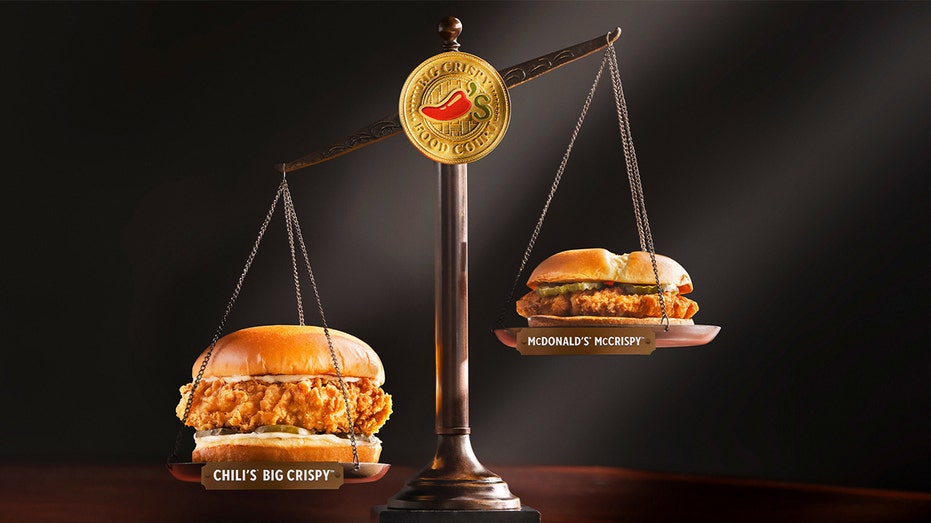
“With an expanded, full lineup of six Big Crispy chicken sandwiches – all hand-battered and WAY bigger than McDonald’s McCrispy – Chili’s is giving guests the abundance and quality they actually deserve,” the company said in a statement.
The restaurant chain announced Tuesday that its Big Crispy chicken sandwich is now included in its $10.99 “3 For Me” bundle. (Chili’s Grill & Bar)
Chili’s is leaning heavily into size and value comparisons as part of its marketing push.
The company says internal research found its chicken filet is, on average, more than 80% larger than McDonald’s McCrispy filet — underscoring its critique of what it calls “shrinkflation” across the fast-food industry.
The company says internal research found its chicken filet is, on average, more than 80% larger than McDonald’s McCrispy. (Chili’s Grill & Bar)
“Over the past few years, we’ve exposed the fast food shrinkflation by serving our massive burgers in the industry-leading $10.99 ‘3 For Me’ meal for a value that can’t be found in the drive-thru,” Chili’s Chief Marketing Officer George Felix said in a statement. “… This is a shakeup to the chicken sandwich category that is long overdue, and one that our guests are going to love.”
The new lineup features six variations, including classic and spicy options, as well as flavors like honey chipotle, Nashville hot, buffalo, and a deluxe version topped with bacon and Swiss cheese.
The new lineup features six variations, including classic and spicy options, as well as flavors like honey-chipotle, Nashville hot, buffalo, and a deluxe version topped with bacon and Swiss cheese. (Chili’s Grill & Bar)


























































You must be logged in to post a comment Login