
Business
Expect 15-25 Minutes at Airport

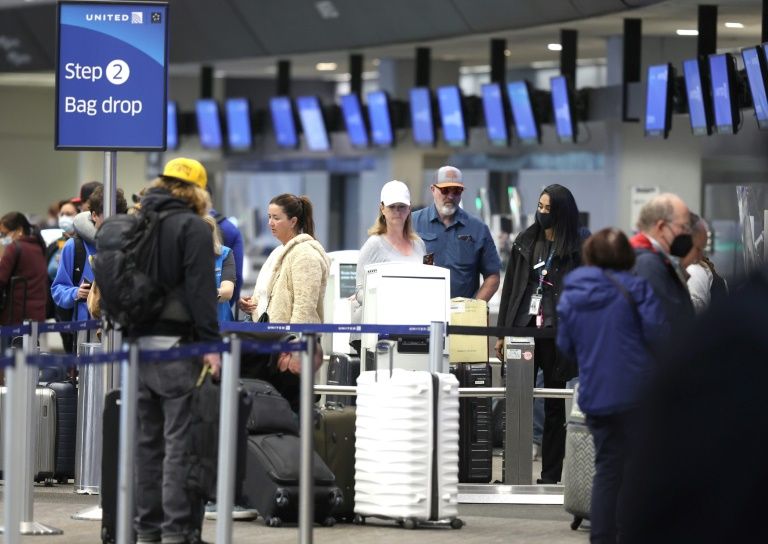
SAN FRANCISCO — Travelers heading through San Francisco International Airport on Thursday should plan for moderate TSA security lines with average waits of 15 to 25 minutes during peak morning and evening hours, according to real-time tracking data as passenger volumes build with spring travel season in full swing.
As of mid-morning on April 16, 2026, security checkpoints at SFO reported standard lane waits hovering around 18 minutes on average, with some hourly slots dipping as low as 8 to 10 minutes in off-peak periods and climbing toward 19 minutes during busier afternoon windows. TSA PreCheck lanes remained significantly faster, often clearing in under 5 minutes when available across open checkpoints.
SFO, one of the busiest airports on the West Coast, handles millions of passengers monthly through its four terminals and multiple security checkpoints. Unlike many U.S. airports staffed directly by federal TSA employees, San Francisco International relies on a private contractor model for screening, which has historically helped insulate it from some nationwide staffing shortages and federal disruptions. This setup frequently results in more predictable wait times compared to peers like Los Angeles International or New York-area hubs.
Current conditions show most checkpoints operating smoothly. In Terminal 1, Boarding Areas B and C stood open. Terminal 2’s Boarding Area D remained active. Terminal 3 had Boarding Area F1 open while F3 stayed closed. In the International Terminal, Boarding Areas A and G were operational. Travelers should double-check their assigned terminal and boarding area, as closures or consolidations can shift lines unexpectedly.
Hourly breakdowns from monitoring sites indicated lighter overnight traffic with waits as short as 4 to 8 minutes between midnight and 2 a.m. Early morning ramps up to 14-18 minutes around 3 to 6 a.m. Midday periods trended toward 10-15 minutes, while late afternoon and early evening slots — particularly 4 p.m. to 7 p.m. — represented the daily peaks with forecasts nearing 19 minutes. These figures blend data from airport reports, traveler submissions and third-party aggregators updated every 10 minutes or so.
Spring break crowds have largely passed, but April still brings steady domestic and international traffic fueled by business trips, family visits and leisure getaways to Asia and Europe. United Airlines, SFO’s largest carrier, operates extensive hubs here with flights to dozens of domestic cities and key Pacific routes. Delta, American, Alaska and numerous international airlines add to the mix, pushing total daily passengers into the six-figure range on busy days.
Airport officials recommend arriving at least two hours before domestic flights and three hours for international departures to account for check-in, security and potential gate changes. Those with TSA PreCheck, CLEAR or airline status enjoy dedicated lanes that shave significant time off the process. The MyTSA mobile app provides real-time crowd-sourced updates and historical patterns, helping passengers time their arrival.
SFO’s security experience includes standard TSA protocols: removal of liquids in 3-1-1 compliant bags, laptops and large electronics out of carry-ons, and shoes off in regular lanes. PreCheck members keep shoes and light jackets on while sending fewer items through scanners. The airport also participates heavily in the TSA’s Screening Partnership Program, using private screeners trained to federal standards.
Recent traveler reports on forums and social media described mixed but generally manageable lines. Early morning fliers often cleared in 10-15 minutes, while midday arrivals reported under 20 minutes even without expedited access. Occasional spikes occur when multiple wide-body international flights disgorge passengers simultaneously or when a checkpoint temporarily closes for maintenance.
Factors influencing today’s waits include typical Thursday patterns, with business travelers peaking in the morning and leisure passengers filling afternoon slots. Weather in the Bay Area remained mild with temperatures in the low 60s Fahrenheit, reducing any weather-related flight delays that could bunch passengers. No major alerts for construction or staffing issues appeared on the airport’s official site as of early Thursday.
For international arrivals, separate CBP processing adds another layer after landing. Passport control wait times vary but generally run shorter at SFO than at some East Coast gateways, though connecting passengers should factor in AirTrain transfers between terminals.
SFO continues investing in technology to speed screening. Automated lanes, CT scanners that allow liquids and laptops to stay in bags, and biometric options are expanding where feasible. These upgrades aim to reduce average processing time while maintaining security standards amid growing passenger numbers projected through the decade.
Travelers can check live conditions through several reliable sources. The official flysfo.com site links to normal wait time pages, though it often directs to general advisories. Third-party trackers like OnAirParking, Takeoff Timer and airlineairport.com aggregate data from TSA feeds and user reports for more granular hourly views. United Airlines has previously tested its own wait-time tools for SFO passengers.
Tips for smoother passage include packing efficiently to avoid secondary screening, enrolling in TSA PreCheck if frequent travel justifies the cost, and using mobile boarding passes to bypass paper document issues. Families with small children or passengers needing assistance should factor extra time and consider requesting escort help from airline staff.
Broader context shows U.S. airport security wait times remaining relatively stable in 2026 after post-pandemic normalization. While some hubs experience occasional 45-minute-plus backups during holiday peaks, SFO’s contractor model and proactive lane management have kept averages in the low-to-mid 20s even on heavier days.
As the day progresses, waits could ease after the morning rush and before evening peaks. Late-night departures after 8 p.m. often see the shortest lines. Passengers departing on red-eye flights benefit most from arriving closer to the recommended window without excessive buffer.
SFO’s convenient location south of San Francisco and direct BART connection from the city make ground access straightforward, though parking and rideshare drop-off zones can add minutes during busy periods. The AirTrain circulates between terminals efficiently for connections.
For those monitoring from afar, the MyTSA app remains the most official channel for crowd-sourced delay reports alongside TSA’s national wait-time resources. Historical data suggests Thursdays at SFO trend slightly busier than midweek but far calmer than Friday or Sunday peaks.
Airline customers facing tight connections should contact carriers directly for rebooking options if security delays risk missed flights. Most major operators at SFO maintain flexible policies during routine operational windows.
Overall, conditions at San Francisco International Airport today point to a typical mid-spring Thursday — manageable for prepared travelers but requiring standard planning. With average security waits in the 15-25 minute range and PreCheck options cutting that dramatically, most passengers should clear checkpoints comfortably if they build in a reasonable buffer.
The airport continues balancing growing demand with efficient operations. As international travel rebounds and domestic routes expand, SFO’s security teams and private screeners play a critical role in keeping the travel experience smooth. Travelers are encouraged to stay updated via official channels and apps right up until arrival to catch any last-minute shifts in lane status or processing times.
Whether catching an early United flight to New York, a midday hop to Los Angeles or a long-haul to Tokyo, today’s TSA picture at SFO supports on-time departures for those who arrive prepared. The Bay Area’s gateway stands ready, with lines moving steadily under mostly clear skies and routine passenger flow.

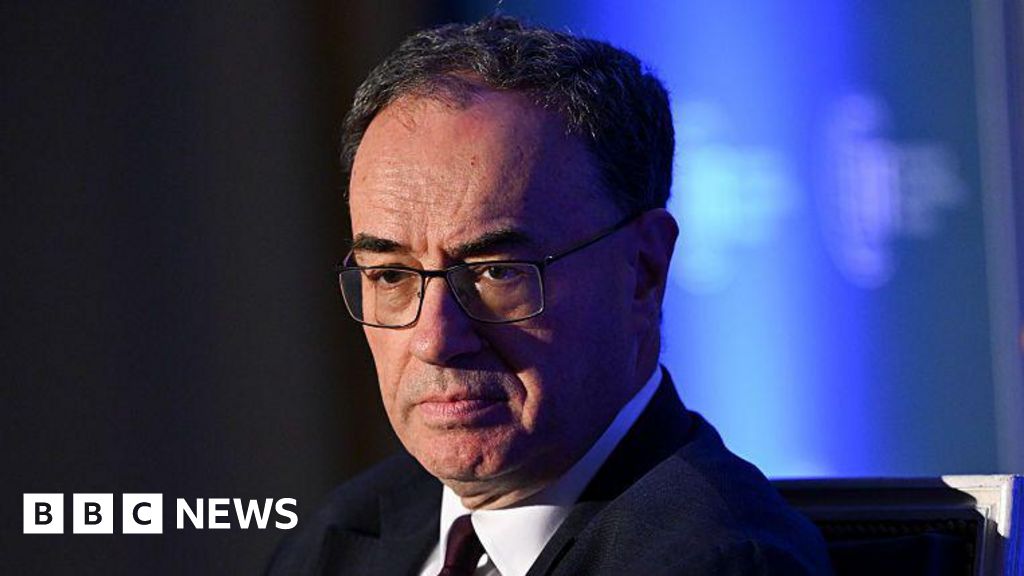
Bank of England governor says the Iran war energy shock makes the next rate decision “very very difficult”.
Business
Carrier Global Stock Drops 8% on Residential HVAC Weakness as Data Center Boom Offers 2026 Hope

NEW YORK — Carrier Global Corp. shares tumbled more than 8 percent in morning trading Wednesday, falling to around $59.48 as investors weighed persistent softness in the residential heating and cooling market ahead of the company’s first-quarter earnings report later this month.
At approximately 11:43 a.m. EDT on April 15, 2026, CARR stock had declined $5.19, or 8.02 percent, extending recent pressure on the climate and energy solutions provider. The company’s market capitalization stood near $54 billion after the drop. Shares have traded in a 52-week range of roughly $50.20 to $81.10, reflecting a challenging stretch for the former United Technologies spin-off amid mixed demand signals across its segments.
The sell-off comes less than two weeks before Carrier is set to release first-quarter 2026 results on April 30, with a conference call scheduled for 7:30 a.m. ET. Analysts and investors will scrutinize any early signs of stabilization in residential and light commercial HVAC, where weakness has weighed on results, while watching for continued strength in high-growth areas such as commercial systems and data center cooling.
Full-year 2025 results released in early February painted a tale of two businesses. Net sales fell 3 percent to $21.75 billion, with organic sales down 1 percent. Adjusted earnings per share reached $2.59. Global commercial HVAC and aftermarket businesses delivered double-digit growth, but this was more than offset by sharp declines in residential and light commercial segments, particularly in the Americas and China.
Fourth-quarter 2025 figures underscored the pressure. Sales dropped 6 percent to $4.84 billion, missing estimates, while adjusted EPS of $0.34 also fell short of consensus. Residential volumes plunged nearly 38 percent year-over-year in some regions, hurt by cautious consumer spending, higher financing costs and elevated dealer inventory levels following pandemic-era surges.
Carrier’s 2026 guidance, issued alongside the full-year results, called for reported sales of approximately $22 billion, incorporating a roughly $350 million headwind from the planned divestiture of its Riello business. Organic growth is expected to be flat to low-single-digit, with adjusted operating profit around $3.4 billion and adjusted EPS near $2.80 — representing high-single-digit earnings growth but falling slightly below some Wall Street forecasts. Free cash flow is projected at about $2 billion, supporting continued share repurchases of roughly $1.5 billion.
Wall Street’s consensus remains constructive despite near-term concerns. Across roughly two dozen analysts, the rating tilts toward Moderate Buy or Outperform, with an average 12-month price target near $70 to $72 — implying potential upside of 18 to 21 percent from current levels. Targets range from a low near $55 to highs of $90, reflecting divergent views on the speed of residential recovery versus the durability of commercial and data center momentum.
Bulls emphasize Carrier’s positioning in secular growth drivers. Data center cooling orders surged nearly 50 percent in the fourth quarter of 2025, fueled by artificial intelligence infrastructure buildout. Management has highlighted expectations for continued double-digit expansion in global commercial HVAC and aftermarket services in 2026, with data center-related revenue potentially contributing $1.5 billion or more as backlog converts to shipments, particularly in the second half.
The company has introduced next-generation HVAC solutions featuring higher efficiency, smart controls and improved comfort, debuted at industry events such as the AHR Expo and International Builders’ Show. These innovations, combined with a strong aftermarket playbook, are designed to drive recurring revenue and margin stability even as new residential construction and replacement demand remain muted.
Carrier also benefits from a survey showing more than half of U.S. homeowners planning home improvements in 2026, with heating and cooling upgrades ranking among the top projects. Yet executives have cautioned that meaningful recovery in North American residential markets may not materialize until later in the year or into 2027, assuming interest rates ease and consumer confidence improves.
Challenges extend beyond cyclical demand. Higher interest rates have delayed commercial and residential projects, while destocking at distributors has pressured shipments. Tariff exposure and supply chain dynamics add further uncertainty, though Carrier has focused on cost control, discretionary spending reductions and backlog building in longer-cycle businesses.
The stock’s valuation reflects these tensions. Trading at a forward price-to-earnings multiple in the mid- to high-20s based on 2026 estimates, CARR offers a dividend yield of approximately 1.6 percent with a quarterly payout of $0.24. The company has returned substantial capital to shareholders, including nearly $3.7 billion in 2025 through dividends and buybacks.
For investors debating buy or sell decisions in 2026, Carrier represents a play on both cyclical recovery and structural AI-driven demand. Optimists argue that any stabilization in residential sell-through, combined with accelerating data center deployments, could spark multiple expansion and support a rebound toward the $70 consensus zone. The current depressed price relative to street targets creates what some view as an attractive entry for patient capital.
Skeptics counter that prolonged weakness in residential and light commercial — which together represent a sizable portion of revenue — could keep earnings growth subdued and pressure margins further. Execution on cost initiatives and successful integration of new product launches will be critical. Broader economic factors, including housing starts, commercial construction activity and energy prices, will also influence performance.
Next earnings on April 30 will offer fresh insight into first-quarter trends, with particular attention to order rates, backlog conversion and any updated commentary on full-year guidance. Q1 revenue is expected near $5 billion, with adjusted EPS around $0.50.
Carrier’s diversified portfolio spans climate solutions for homes, commercial buildings, transportation refrigeration and industrial applications. Its legacy as a pioneer in air conditioning provides brand strength, while investments in intelligent controls and energy-efficient systems position it for decarbonization trends and stricter efficiency standards.
As spring advances and cooling season approaches, retail and wholesale traffic in HVAC products will serve as key barometers. Dealer inventory normalization and early reception to 2026 product lines could provide tailwinds if consumer sentiment improves.
At current levels near $59.48, Carrier stock offers a defensive quality in the industrials sector with upside tied to both macro recovery and AI infrastructure spending. Dividend-focused investors may find the yield appealing, while growth-oriented participants will watch data center momentum as a potential offset to residential softness.
The coming quarters will test whether commercial and aftermarket strength can sufficiently counterbalance near-term residential headwinds. If data center orders continue converting and residential markets show even modest stabilization, Carrier could deliver on its earnings growth targets and reward shareholders.
Carrier has guided for its sixth consecutive year of double-digit growth in commercial HVAC. That track record, paired with innovation in smart and efficient solutions, underpins the longer-term bullish case even as 2026 begins with caution.
Whether the stock rebounds from recent lows or faces further pressure will hinge on April 30 results and the trajectory of key end markets. For now, the market appears to be pricing in extended weakness in residential demand while assigning optionality to the company’s high-growth commercial exposure.
As one of the world’s leading providers of intelligent climate and energy solutions, Carrier remains well-positioned for eventual recovery in its core markets and sustained expansion in data center cooling. Investors will soon receive updated signals on execution as the company navigates a transitional year in a dynamic economic environment.

Data from Cbonds, a financial data provider, showed offshore bond fundraising fell to $8.1 billion in FY26, down from $13.9 billion a year earlier, a nearly 40% decline. In contrast, domestic bond issuances held steady at ₹12.32 lakh crore during April-February FY26, compared with ₹12.97 lakh crore in FY25.
“Offshore borrowing has come down largely due to geopolitical uncertainty and volatility,” said Utsav Johri, partner, JSA Advocates & Solicitors. “While the recent relaxations in ECB guidelines make the market look promising and could drive a pickup later in the year once conditions stabilise, issuers are currently holding back. Hedging costs are elevated and expose borrowers to currency risk, and with ample liquidity available in the domestic market, companies are not keen to tap offshore markets at this stage.”
The Reserve Bank of India (RBI) recently relaxed norms for external commercial borrowings (ECB), raising limits to $1 billion, easing maturity requirements and removing caps on borrowing costs. The changes are aimed at making offshore funding more accessible and cost-effective.
 ETMarkets.com

Last fiscal, abundant liquidity in the domestic market and relatively attractive borrowing costs encouraged companies to stay onshore. “Rates in the local market were in the 7-8% range, and there was ample liquidity. That reduced the need to tap offshore markets,” a senior banker said.
The trend was also due to currency pressures. The rupee weakened amid global uncertainties, including tariff-related disruptions, making unhedged foreign currency exposure riskier. As a result, several corporates opted to refinance existing dollar liabilities through rupee bonds.Large issuers such as Greenko and Vedanta have already tapped domestic markets to refinance foreign currency debt, showing a shift toward local borrowing.
This trend is likely to persist in the near term.
“There is not a very active offshore pipeline right now. Companies are holding back on large commitments and closely watching global developments, including geopolitical risks and their impact on costs and growth,” another banker said.
Issuance activity in offshore markets has also become more selective, largely confined to investment-grade borrowers, while high-yield issuers face tighter conditions. Some diversification into alternative markets has emerged, with companies exploring currencies such as yen, though such issuances are limited.
If global conditions stabilise, issuers with upcoming maturities, particularly large public sector borrowers, could return to overseas markets to refinance debt, bankers said.

Morgan Harper, a director at the non-profit economic advocacy organisation American Economic Liberties Project, called the verdict against Live Nation “a historic victory for fans, artists, concert promoters and venue owners who have suffered for decades under the thumb of Ticketmaster’s monopoly”.

Petrol production has been disrupted at one of Australia’s two oil refineries while a “ferocious” fire continues to burn out of control at the plant.

The better-than-expected GDP data comes as Asian countries have been hit hard by the impact of the conflict.

Australia’s unemployment rate has held steady at 4.3 per cent despite the Iran war raising fears of a global recession and mass job lay-offs.


The Value Investor has a Master of Science with specialization in financial markets and a decade of experience tracking companies via catalytic company events. As the leader of the investing group Value In Corporate Events they provide members with opportunities to capitalize on IPOs, mergers & acquisitions, earnings reports and changes in corporate capital allocation. Coverage includes 10 major events a month with an eye towards finding the best opportunities. Learn more.
Analyst’s Disclosure: I/we have no stock, option or similar derivative position in any of the companies mentioned, and no plans to initiate any such positions within the next 72 hours. I wrote this article myself, and it expresses my own opinions. I am not receiving compensation for it (other than from Seeking Alpha). I have no business relationship with any company whose stock is mentioned in this article.
Seeking Alpha’s Disclosure: Past performance is no guarantee of future results. No recommendation or advice is being given as to whether any investment is suitable for a particular investor. Any views or opinions expressed above may not reflect those of Seeking Alpha as a whole. Seeking Alpha is not a licensed securities dealer, broker or US investment adviser or investment bank. Our analysts are third party authors that include both professional investors and individual investors who may not be licensed or certified by any institute or regulatory body.

The oil crisis has improved the prospects of Santos’ long-delayed Dorado oil project off the WA coast, according to management at the Adelaide-headquartered producer.

The company is selling off its shoe brand as it plans to shift to providing technology infrastructure.

This Intense 97% Rotten Tomatoes Thriller Is a Near-Perfect 2-Part Weekend Binge

Bank boss tells BBC he won't rush interest rate rises

Goldman Sachs Targets Income-Focused Bitcoin Exposure


-

 Politics5 days ago
US brings back mandatory military draft registration
-
 Sports5 days ago
Man United discover Nico Schlotterbeck transfer fee as defender reaches Dortmund agreement
-

 Fashion5 days ago
Weekend Open Thread: Veronica Beard
-

 Politics6 days ago
Malcolm In The Middle OG Turned Down ‘Buckets Of Money’ To Appear In Reboot
-

 Politics4 days ago
World Cup exit makes Italy enter crisis mode
-

 Crypto World7 days ago
Canary Capital Files SEC Registration for PEPE ETF
-

 Business5 days ago
Tesla Model Y Tops China Auto Sales in March 2026 With 39,827 Registrations, Beating Cheaper EVs and Gas Cars
-

 Crypto World2 days ago
The SEC Conditionalises DeFi Platforms to Be Avoided for Broker Registration
-

 Crypto World2 days ago
SEC Signals Exemption for Crypto Interfaces From Broker Registration
-

 News Videos19 hours ago
Secure crypto trading starts with an FIU-registered
-
 NewsBeat3 days ago
Pep Guardiola and Gary Neville agree over Arsenal title problem that benefits Man City
-

 Business6 days ago
OpenAI Halts Stargate UK Data Centre Project Over Energy Costs and Copyright Row
-

 Business4 days ago
Ireland Fuel Protests Enter Day 5 as Blockades Spark Shortages and Government Prepares Support Package
-

 Crypto World5 days ago
Federal judge blocks Arizona from bringing criminal charges against Kalshi
-

 Politics6 days ago
LBC Presenter Mocks Trump Over Iran War Failures
-
 NewsBeat4 days ago
JD Vance announces ‘no agreement’ with Iran over nuclear weapons fear
-

 Crypto World2 days ago
SEC Proposes Certain Crypto Interfaces Don’t Need to Register as Brokers
-

 NewsBeat2 days ago
Trump and Pope Leo: Behind their disagreement over Iran war
-

 Tech6 days ago
A version of Windows 10 released a decade ago is now eligible for additional security patches
-

 Business5 days ago
IMF retains floor for precautionary balances at SDR 20 billion
You must be logged in to post a comment Login