
Crypto World
Cardano Founder Charles Hoskinson Challenges Bitcoin Quantum Plan


TLDR
- Charles Hoskinson questioned Bitcoin’s ability to protect legacy coins from future quantum threats.
- Adam Back defended ongoing post-quantum research and dismissed criticism as financially motivated.
- The debate focused on exposed public keys in early Bitcoin wallet addresses.
- Hoskinson said securing legacy coins may require a hard fork.
- Back described current quantum computers as theoretical and limited to laboratory experiments.
Charles Hoskinson challenged Bitcoin’s post-quantum roadmap after Adam Back defended current research efforts. Back rejected claims that developers ignore quantum threats and called such warnings financially driven. The exchange unfolded on X and centered on how Bitcoin would secure exposed legacy coins.
Back, who leads Blockstream, responded to rising concerns about quantum computing risks. He argued that critics spread fear to promote post-quantum startups and related stocks. He stated, “Mostly people with investments in PQ startups and stocks are those falsely claiming Bitcoin is doing nothing.”
Bitcoin Post-Quantum Strategy Faces Scrutiny
Back said current Cryptographically Relevant Quantum Computers remain theoretical and limited to laboratory settings. He described them as “blue sky research” still trapped in experiments. He contrasted that view with what he called the “actual fast pace of bitcoin PQ work.”
He maintained that developers continue to research quantum-resistant cryptography for Bitcoin. He argued that public criticism ignores ongoing technical discussions within the community. However, he did not outline a detailed timeline for deployment in his posts.
He also pushed back against claims that the network lacks preparation. He said critics become upset when confronted with technical realities. Therefore, he framed the debate as driven by misinformation rather than engineering gaps.
Hoskinson responded directly to Back’s comments on X. He focused on legacy wallet structures that expose public keys on-chain. He questioned how developers would secure those coins without a hard fork.
Cardano Founder Raises Legacy Coin Concerns
Hoskinson pointed to early Pay-to-PubKey and reused P2PKH addresses. These addresses reveal public keys directly on the blockchain. A powerful quantum computer could use Shor’s algorithm to derive private keys from those public keys.
He warned that attackers could target dormant holdings, including coins linked to Satoshi Nakamoto.
He wrote, “Not sure how you address the legacy coins without a hard fork.” He added, “But best of luck. We are all watching.”
His comments highlighted the complexity of altering Bitcoin’s base rules. A hard fork would require broad network agreement and coordinated upgrades. Such changes often create debate within decentralized communities.
Back did not directly address the hard fork scenario in his initial response. Instead, he reiterated that practical quantum threats remain distant. He maintained that Bitcoin research continues at a steady pace.
The discussion reflects ongoing technical disagreement between prominent industry figures. Both executives used X to state their positions publicly. As of the latest exchange, neither side announced new protocol changes or formal proposals.


Goldman Sachs Targets Income-Focused Bitcoin Exposure
Goldman Sachs has filed for a Bitcoin Premium Income ETF with the U.S. Securities and Exchange Commission. The product focuses on income generation while offering controlled exposure to Bitcoin price movements. It reflects growing demand for structured crypto products among traditional market participants.
The fund will not hold Bitcoin directly, and it avoids direct spot ownership. Instead, it will invest in shares of existing spot Bitcoin exchange-traded products. This approach allows the bank to offer exposure while managing operational and custody risks.
Additionally, the ETF will use an options overwrite strategy to generate income. This method involves selling options against held positions to collect premiums regularly. As a result, the fund aims to deliver steady income with moderated exposure to price swings.
The strategy limits potential upside, but it also reduces downside risk during market declines. This design suits clients seeking stability and predictable returns over aggressive growth. Therefore, the product aligns with demand for lower-volatility crypto exposure.
Structured Strategy Reflects Shifting Institutional Approach
The ETF introduces a structured format that blends traditional finance techniques with digital asset exposure. Goldman Sachs has adapted familiar income strategies to fit the evolving cryptocurrency market. This move signals deeper integration between legacy finance and digital assets.
Market analysts describe the strategy as tailored for conservative portfolios seeking alternative income streams. The fund sacrifices some price gains in exchange for regular yield generation. Consequently, it positions itself differently from standard spot Bitcoin ETFs.
Moreover, the indirect exposure through existing ETPs adds another layer of diversification. It reduces reliance on a single asset structure while maintaining exposure to Bitcoin trends. This structure also aligns with regulatory and operational preferences.
The filing highlights how banks continue to refine crypto offerings beyond simple price tracking. Institutions now focus on customization, risk control, and income strategies. This shift indicates a broader evolution in how financial firms approach digital assets.
Competition Intensifies After Morgan Stanley ETF Success
The filing follows a strong debut from Morgan Stanley’s recently launched spot Bitcoin ETF. The product introduced aggressive pricing and triggered competition among major asset managers. It set a new benchmark for cost efficiency in Bitcoin ETF offerings.
Morgan Stanley priced its ETF at a low expense ratio, undercutting key competitors in the market. This pricing strategy pressured other firms to adjust their fee structures. As a result, competition has increased across the Bitcoin ETF segment.
Other major players have also entered the space with varying strategies and pricing models. These include funds focusing on direct exposure and others offering hybrid approaches. Goldman Sachs now adds a structured-income-focused option to the mix.
The growing range of products reflects rising institutional interest in Bitcoin-linked investments. Banks continue to expand offerings to capture different segments of market demand. This trend suggests continued innovation and competition in crypto financial products.

EToro said Wednesday it agreed to acquire self-custodial crypto wallet provider Zengo, deepening the trading platform’s push into onchain products as digital assets remain central to its business.
The deal will let eToro add Zengo’s wallet technology and broaden its offering in areas such as tokenized assets, prediction markets, perpetuals and yield products, according to the company. Terms were not disclosed. Bloomberg reported the transaction is worth about $70 million, mostly in cash, citing a person familiar with the matter.
CEO Yoni Assia said at Paris Blockchain Week during a fireside chat that the acquisition fits eToro’s effort to attract a more crypto native user base while expanding beyond regulated brokerage products into self-custody infrastructure.
Crypto activities have become an important revenue source for the platform. eToro reported total revenue and income of $13.8 billion in 2025, of which $12.98 billion was revenue from crypto assets.

Assia keeps $250,000 Bitcoin target
At Paris Blockchain Week, Assia said he expects the current market slowdown to last another quarter before Bitcoin (BTC) returns to an accumulation phase, eventually pushing the token above $250,000.
“Bitcoin is on the path eventually to $250,000, $500,000 and beyond.”
EToro’s CEO is the latest industry figure to call for a $250,000 Bitcoin price target, following BitMEX co-founder Arthur Hayes and “Rich Dad Poor Dad” author Robert Kiyosaki.
Related: Deutsche Börse invests $200 million in Kraken parent Payward
However, other large companies remain divided on Bitcoin’s trajectory for the rest of the year, with some questioning the relevance of the four-year cycle theory.
Galaxy Digital urged investor caution and described the year ahead as “too chaotic to predict,” citing looming uncertainties such as the US midterm elections and shifting monetary policy.

Regardless of the timeline, a Bitcoin rally to $250,000 would require Bitcoin’s price to increase by about 3.3-fold and implies a $5 trillion market capitalization. This would make BTC the world’s second-largest asset after gold, up from the 12th spot, according to CompaniesMarketCap data.
Magazine: Can Robinhood or Kraken’s tokenized stocks ever be truly decentralized?
Bitcoin’s defense against a future of quantum threats is moving from theoretical caution to concrete planning, according to Adam Back, the CEO of Blockstream and a veteran figure in the Bitcoin space. Speaking at Paris Blockchain Week, Back urged the ecosystem to begin building quantum-resistant options now, even as the current threat remains largely in the realm of long-term speculation.
Back argued that quantum computing has a long way to go before posing a real, practical danger to Bitcoin’s cryptography. “Quantum computing still has a lot to prove. Current systems are essentially lab experiments. I’ve followed the field for over 25 years, and progress has been incremental,” he said. Yet, he emphasized that Bitcoin should prepare with a cautious, staged approach—favoring optional upgrades that enable a migration to quantum-resistant cryptography if and when needed.
While many in the industry still view the threat as decades away, the discussion has intensified as researchers reexamine how quickly quantum capabilities could evolve. The conversation sits alongside ongoing debates about how to safeguard wallets and networks should quantum computers become capable of breaking current cryptographic protections. Back’s remarks come with a broader push across the industry to consider a measured, upgrade-ready path rather than waiting for a crisis to force change.
Back’s stance on readiness is complemented by his ongoing work at Blockstream, which has a dedicated quantum-focused team investigating potential threat vectors to Bitcoin. As part of that research, Back highlighted efforts to deploy hash-based signatures on Blockstream’s Bitcoin layer-2 Liquid Network, describing it as a practical step toward resilience while preserving compatibility with existing Bitcoin users.
Preparation is key. Making changes in a controlled way is far safer than reacting in a crisis.
He also noted that the Taproot upgrade could accommodate alternative signature schemes on the Bitcoin network without disrupting current users, suggesting a pathway for gradual adoption rather than disruptive overhauls.
Key takeaways
- Quantum risk is not imminent in the eyes of all observers, but proactive preparedness is gaining ground. Back reiterates a decades-long horizon, yet urges a structured upgrade plan rather than waiting for a crisis.
- Concrete steps are being explored at the protocol and layer-2 level, including hash-based signatures on Liquid and potential signature-scheme diversification under Taproot, to diversify risk without breaking existing wallets.
- Analysts and researchers are racing to quantify risk, with recent comments tying the pace of quantum advancement to broader industry readiness. The conversation weighs the balance between early action and avoiding unnecessary disruption.
- The discussion around how to treat quantum-vulnerable coins has sparked heated debate within the community, highlighting tensions between safety measures and user rights in governance decisions.
- Developers acknowledge the possibility that, if quantum capabilities materialize sooner than expected, the Bitcoin community would act quickly to adapt, drawing on past experience where urgent bug fixes spurred rapid consensus.
Quantum risk and Bitcoin’s evolving blueprint
The quantum threat has reemerged in public discourse as researchers revisit the speed at which cryptographic protections could be undermined. Last month, Google and California Institute of Technology researchers suggested that functional quantum computers could arrive sooner than previously anticipated and that far less computational power might be required to break cryptography than once thought. Google even raised the prospect that quantum machines could potentially break Bitcoin’s cryptography within minutes, enabling an “on-spend” attack if wallets were exposed to quantum-enabled fraud.
In response, Back signaled that Bitcoin developers would pivot quickly if the risk materialized. “We’ve seen that before — bugs have been identified and fixed within hours. When something becomes urgent, it focuses attention and drives consensus,” he said. This sentiment underscores a broader industry pattern: readiness is valuable not because a threat is immediate, but because it concentrates efforts and accelerates cooperative problem-solving.
Beyond the research community, the discussion has a practical roadmap dimension. At the protocol level, Taproot’s design is seen as offering flexibility for introducing alternative cryptographic schemes without forcing a hard fork or disrupting current users. On the layer-2 front, Liquid Network has begun to test hash-based signatures to diversify post-quantum risk vectors without removing the option for existing Bitcoin transactions to operate as they do today.
Contested ideas: freezing quantum-vulnerable coins
The quantum risk debate recently intensified with a proposal from Bitcoin developer Jameson Lopp and five other security researchers to freeze quantum-vulnerable Bitcoin — including holdings associated with Satoshi Nakamoto’s estimated stash — to prevent theft once quantum computers become functional. The proposal, known as BIP-361, aims to preemptively shield funds by halting transferability of coins deemed at risk from quantum exploitation.
Reaction within the community was swift and critical. Critics described the idea as authoritarian and confiscatory, arguing it would amount to stealing property to avert potential future losses. Others voiced concern that such a mechanism could set dangerous precedents for governance over personal holdings, complicating trust and property rights within a decentralized system. Supporters, however, contended that a well-designed framework could avert catastrophic losses should quantum-era theft become feasible, highlighting the trade-off between security and autonomy.
The broader takeaway is that even technical debates on upgrading cryptographic primitives can quickly unfold into governance questions. As the community weighs options—ranging from soft-fork migrations to controlled asset freezes—participants emphasize the need for transparent, consensus-driven processes that align with Bitcoin’s long-term security goals.
What lies ahead for investors and builders
The unfolding discussions around quantum preparedness carry practical implications for miners, developers, and users alike. For investors, the cadence of progress toward quantum-resilient primitives can affect risk management and discount rates applied to long-horizon cash flows tied to network security. For developers, the emphasis on optional upgrades suggests a preference for modular, non-disruptive paths that preserve user experience while expanding the cryptographic toolkit. For users, the core message is that upgrades should be deployable in a manner that minimizes the need to resecure funds or alter behavior dramatically.
Market participants are watching whether Bitcoin’s governance mechanism can reach broad agreement on a path that balances resilience with decentralization. As Back and others advocate, the most robust strategy may be to embed migration options within existing constructs, allowing the network to evolve gradually without forcing abrupt changes on holders who may be unaffected by early-stage testing.
Looking ahead, the key questions are clear: How quickly will quantum research translate into practical defense mechanisms? Will Taproot’s flexibility prove sufficient for a seamless upgrade path, or will new cryptographic approaches require more substantial protocol changes? And how will the community reconcile urgent risk mitigation with the core ethos of permissionless innovation?
Readers should keep an eye on progress in post-quantum cryptography research, ongoing experiments on Layer-2 solutions, and any governance milestones that define how and when Bitcoin could adopt quantum-resistant technologies. While the threat remains uncertain in its timing, the consensus-building process around upgrades is already shaping the next phase of Bitcoin’s security architecture.
World Liberty Financial (WLFI) published a governance proposal that would lock 62.2 billion tokens under new vesting schedules and burn up to 4.5 billion WLFI permanently.
The proposal targets every insider and early supporter allocation, replacing indefinite locks with structured cliff-and-vest timelines that stretch up to five years.
How the WLFI Token Lock Would Work
According to the proposal, 45.2 billion WLFI held by founders, team members, advisors, and institutional partners would move to a two-year cliff followed by a three-year linear vest.
Those holders must also accept a mandatory 10% token burn upon opting in. That mechanism alone could permanently destroy up to 4.5 billion WLFI, reducing the 100 billion total supply.
Early supporters holding 17 billion WLFI receive slightly better terms. Their tokens shift to a two-year cliff with a two-year linear vest, retaining the full allocation with zero burn.
However, many of these holders have already waited roughly 550 days since the project’s October 2024 launch and now face four more years before full access.
Holders who do not opt in within a 10-day acceptance window stay locked indefinitely under their original terms.
World Liberty Financial stated that 77% of currently locked supply belongs to inactive, non-voting holders, framing the ultimatum as a filter for genuine governance participants.
“…we believe it represents one of the strongest long-term governance alignment signals in DeFi,” they said.
Community Pushback and Market Context
The proposal arrives during a turbulent stretch for the Trump-family-associated DeFi project. Earlier this month, WLFI’s treasury drew criticism for pledging roughly 5 billion tokens as collateral on the Dolomite lending protocol and borrowing approximately $75 million in stablecoins.
That position consumed over half of Dolomite’s total value locked, squeezing other depositors’ liquidity.
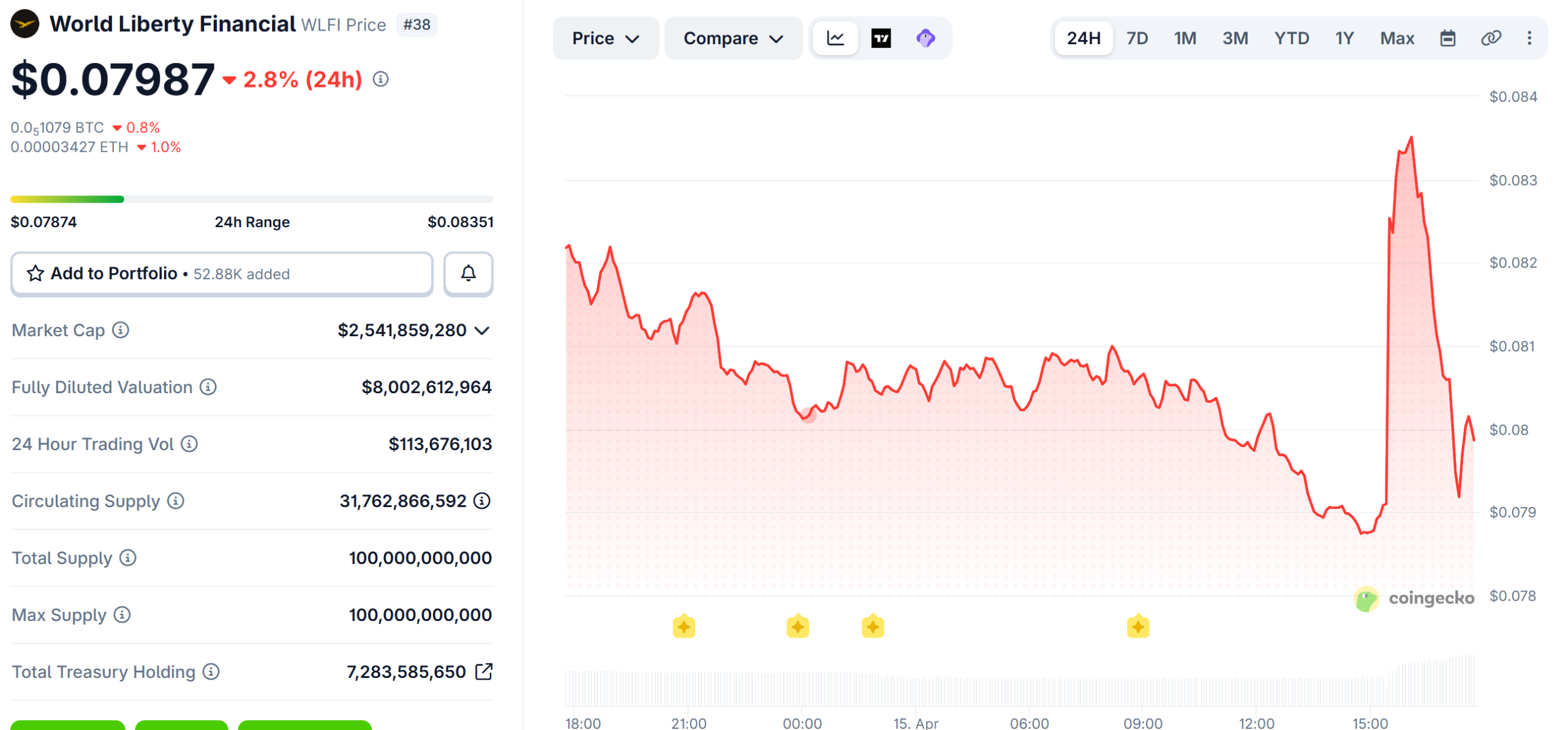
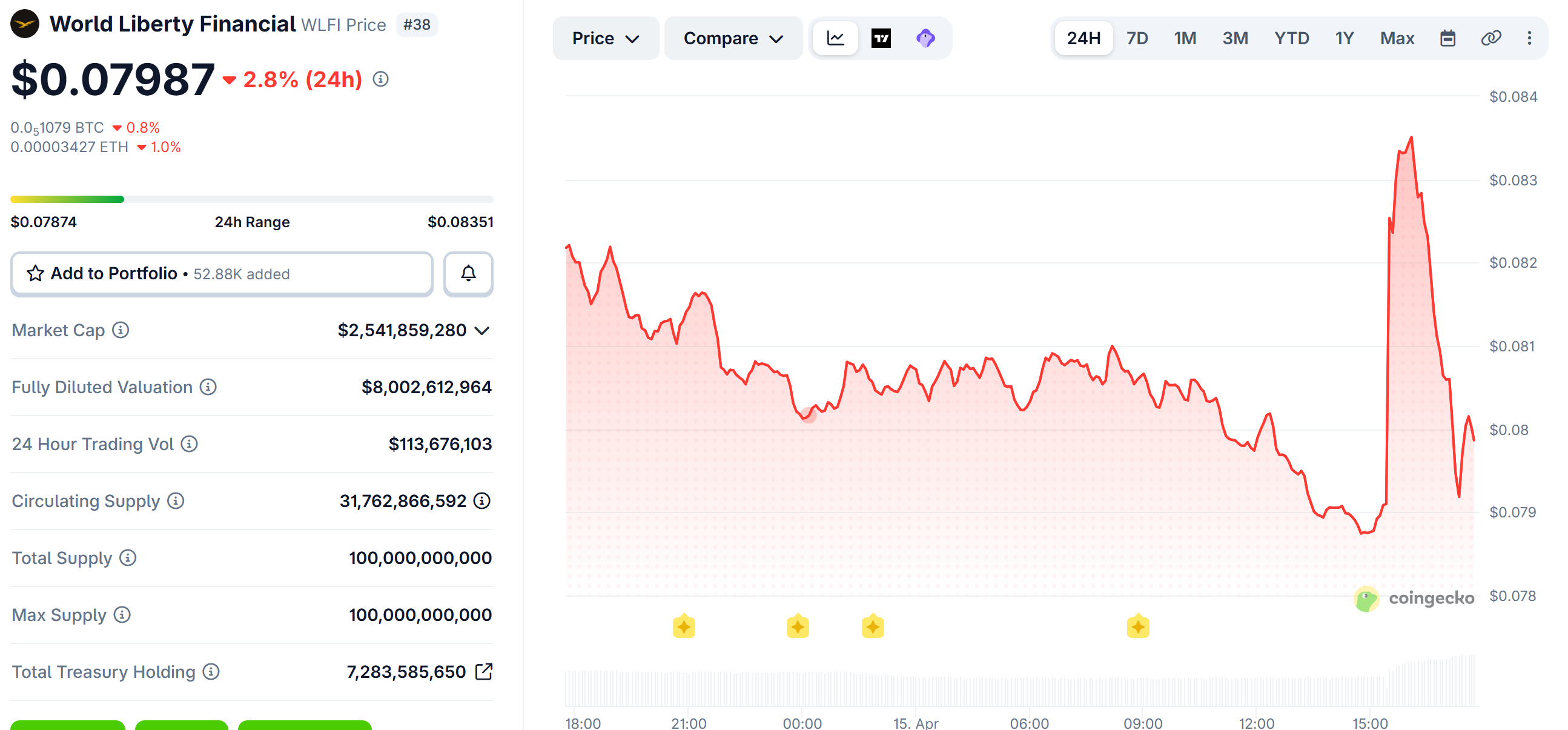
WLFI traded for $0.07987 as of this writing, down almost 3% in the last 24 hours and roughly 82% from its September 2025 all-time high of $0.46.
Reaction on the governance forum and social media has been split. Supporters praised the burn and extended locks as proof the team has skin in the game.
Critics called the terms punitive for early buyers who now face years of additional waiting or permanent lockout.
“No matter what decisions are made regarding WLFI at this stage, the financial damage to thousands of investors has already been done…there is no real reversal for those losses. Announcements like these do little to rebuild trust…they appear less about transparency or accountability and more about sustaining interest and attracting fresh capital,” one user commented.
The proposal still requires a seven-day community vote with a one billion WLFI quorum before taking effect.
The post World Liberty Financial Pushes Aggressive Token Lock and Burn Plan for WLFI appeared first on BeInCrypto.
Sponsored Content
Sandwich attacks cost Ethereum users an estimated $60 million per year. Transactions broadcast to the public mempool are publicly visible before inclusion, which gives MEV bots the ability to affect the order of transactions and insert their own for profit. This problem has persisted on some level in spite of years of discussion and various out-of-protocol mitigation attempts.
Encrypting mempool transactions would be one of the most compelling solutions to prevent MEV. While this idea has been actively discussed for years, it has not yet been implemented at the protocol level. In our earlier research, we examined several proposals based on threshold-encryption, including Shutter, Batched Threshold Encryption, and Flash Freezing Flash Boys. In this article, we turn to a meta proposal titled “Universal Enshrined Encrypted Mempool (EIP-8105)“.
How EIP-8105 approaches mempool encryption
Universal Enshrined Encrypted Mempool, also known as EIP-8105, is a scheme-agnostic encrypted mempool design, which means it can support a wide range of encryption methods, including threshold encryption, MPC committees, TEEs, delay encryption, and fully homomorphic encryption. A new system contract on the execution layer, called the key provider registry, is planned to facilitate this flexible design. It would allow any account to register as a key provider that holds and reveals decryption keys using their own preferred encryption technology.
How transactions are executed in Universal Enshrined Encrypted Mempool
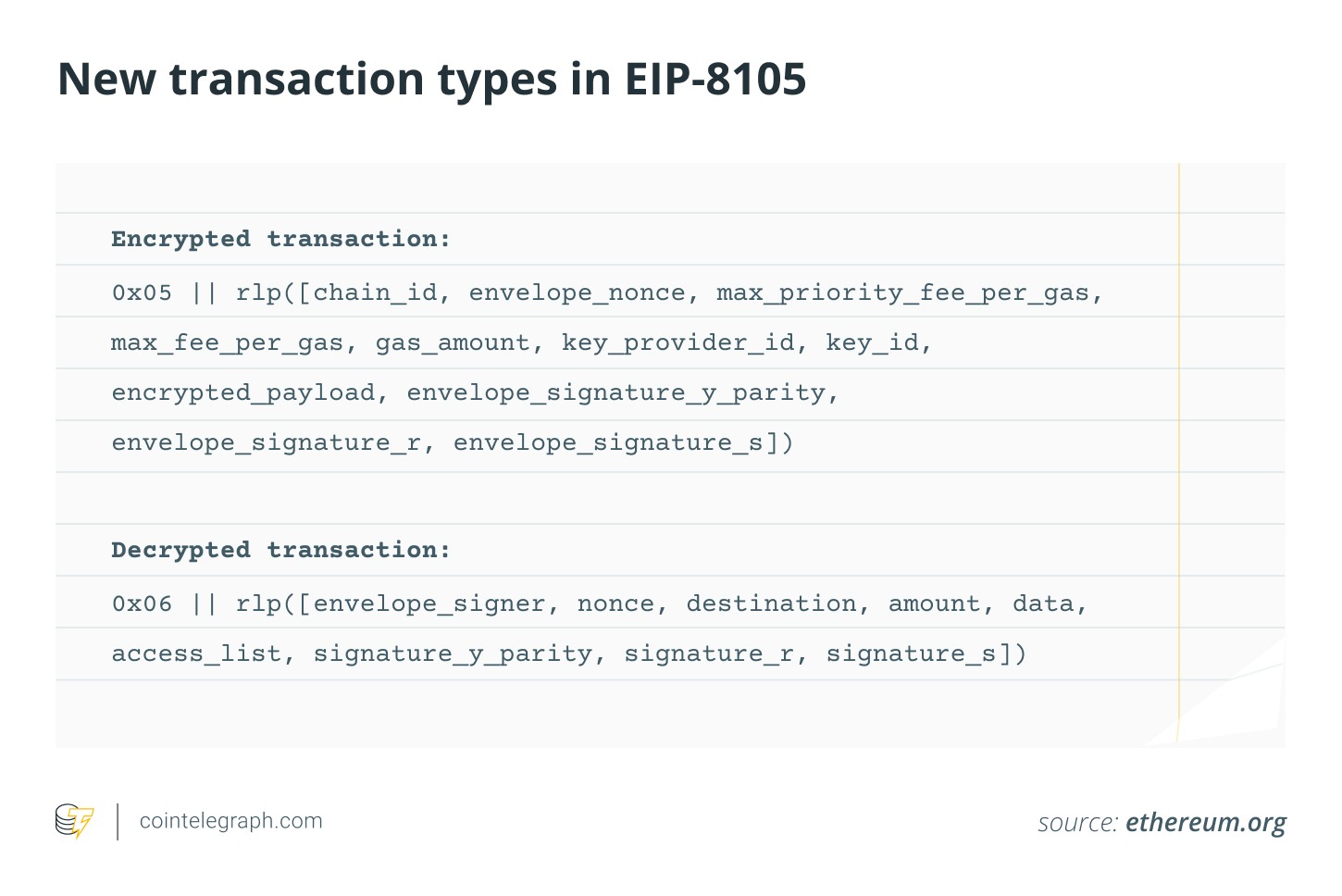
Universal Enshrined Encrypted Mempool introduces two new transaction types under the EIP-2718 framework: 0x05 for encrypted transactions and 0x06 for decrypted transactions. An encrypted transaction is an envelope with an encrypted payload and a public payload, which contains the envelope nonce, gas amount, gas price parameters, key provider ID, key ID, and a signature. This structure is required to associate the transaction with the chosen key provider, assign a nonce and ensure gas fees for the blockspace are covered.

EIP-8105 follows a two-step execution flow. In the first step, the encrypted transaction envelope is included in a block even though the payload itself remains hidden. Key providers monitor transactions with encrypted payloads, collect the relevant transaction key IDs, and publish either the corresponding decryption keys or a withhold notice once the block builder publishes the data.
Once the block builder has published the execution payload, the relevant key provider reveals either the decryption key or a withhold notice. A Payload Timeliness Committee (PTC) monitors whether the decryption keys referenced by encrypted transactions are published on time, validates them, and attests to whether a valid key was present or missing. If the key is available and decryption succeeds, the resulting decrypted transaction is executed in the following block. If the key is missing, withheld, or decryption fails, the decrypted payload is skipped, while the envelope remains included, and the transaction fee is still paid.
The EIP also enforces a block structure that prevents MEV-extracting transactions from being inserted in the window between decryption and execution. Decrypted transactions must appear at the beginning of a block, plaintext transactions remain in the middle, and encrypted transactions are placed at the end. This ordering allows encrypted payloads to be revealed and executed only after inclusion, while preventing secondary MEV.

While EIP-8105 significantly limits MEV exposure, earlier providers in the block retain a limited ability to extract MEV from later transactions by selectively revealing or withholding their decryption keys. The proposal attempts to mitigate this by letting key providers designate other trusted providers and ordering transactions according to the resulting key provider trust graph.
Encrypted Mempools and Ethereum’s Roadmap
Encrypted mempools are becoming an increasingly important part of Ethereum’s roadmap, as the ecosystem looks for protocol-level ways to reduce harmful MEV. While EIP-8105 is no longer being positioned as one of the headliners for the first 2027 hard fork, it remains an open draft, and its ideas continue to inform the broader effort to prepare a leading encrypted-mempool proposal for the upgrade.
This article is for general informational purposes only and does not constitute legal, tax, financial, investment, or other advice. The views expressed are the author’s own and do not necessarily reflect those of Cointelegraph, which does not endorse this content or any products mentioned herein. All investments carry risk — readers should conduct their own research and bear full responsibility for their decisions. Cointelegraph strives for accuracy but makes no guarantees regarding the completeness or reliability of the information presented, including any forward-looking statements, and accepts no liability for any loss or damage arising from reliance on this content.
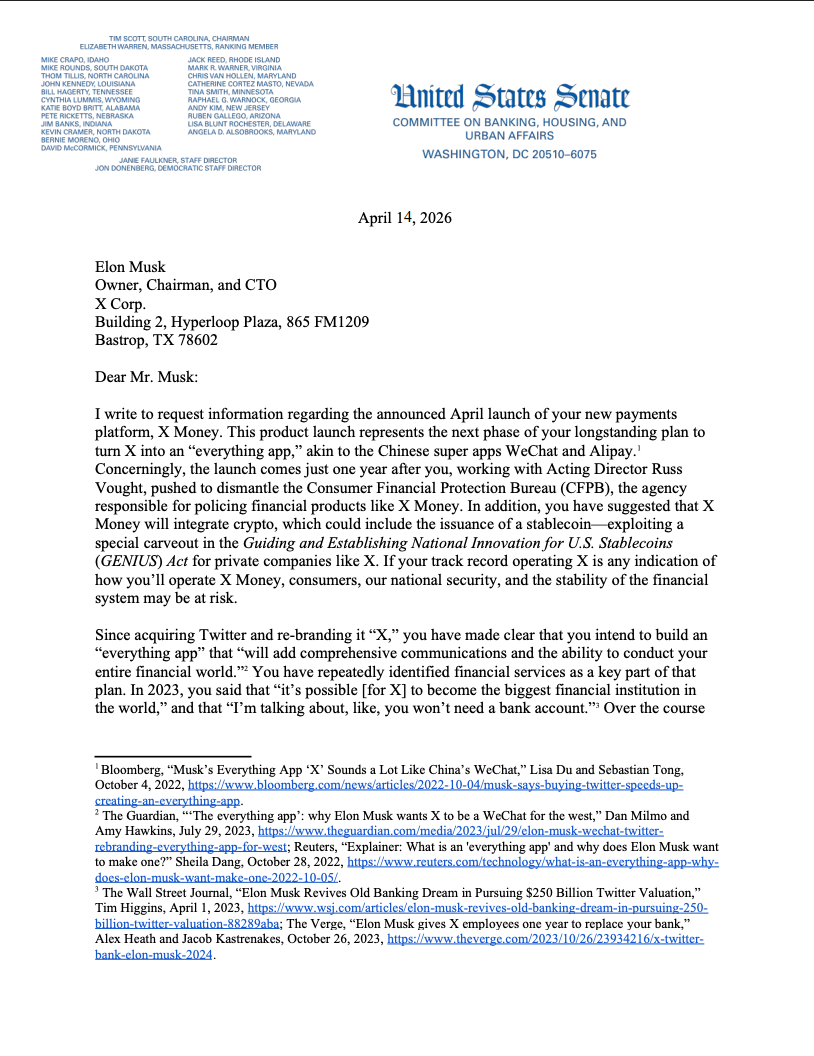
US Senator Elizabeth Warren has asked Elon Musk for information on X Money, a payments feature that is expected to be integrated into the X social media platform in the near future.
Warren, who is a longtime critic of Musk and the cryptocurrency industry, wrote in a letter on Tuesday that X Money’s potential stablecoin and crypto integrations could pose risks to the financial system and US national security.
She questioned whether the platform would also issue its own stablecoin, under a legal “carveout” in the Guiding and Establishing National Innovation for US Stablecoins (GENIUS) Act, which allows private companies to issue their own stablecoins.

Warren said X Money’s limited beta preview suggests it will offer 6% interest on deposits and partner with Cross River Bank, which was subject to enforcement action by the Federal Deposit Insurance Corporation (FDIC), a banking regulator. She said:
“It is unclear what risky investments, intrusive data monetization activities or gimmicks either X Money or Cross River may intend to engage in to pay that yield when the target Federal Funds Rate is 3.5-3.75%.”
Warren’s letter could signal pushback from US lawmakers against private companies issuing stablecoins under the GENIUS stablecoin regulatory framework, which opens the door for the tech sector and non-banks to issue US dollar-pegged tokens.
Related: X rolls out smart cashtags in US, Canada in step toward ‘everything app’
Questions on FDIC insurance for stablecoin deposits
Warren asked whether potential X Money customers were aware that FDIC insurance would not protect them if the platform failed.

In March, FDIC Chair Travis Hill said that stablecoin user deposits are not protected by FDIC insurance under the GENIUS Act.
“The GENIUS Act makes clear that payment stablecoins are not ‘subject to deposit insurance’ or guaranteed by the US government,” Hill said.
However, the legislation did not expressly prohibit stablecoin deposits from receiving pass-through insurance, which extends FDIC insurance to each customer of an eligible financial institution up to $250,000 in the event of a company failure, he added.
Hill said that even though the GENIUS Act lacks a hard prohibition on stablecoin companies extending pass-through FDIC insurance to end users, allowing this would be “inconsistent” with the broader points of the regulatory framework.
Magazine: Elon Musk’s plan to run government on blockchain faces uphill battle


Circle CEO Jeremy Allaire lands on the 2026 TIME100 list as USDC’s compliant stablecoin rail goes mainstream with banks, fintechs and regulators worldwide.
Summary
- TIME named Circle CEO Jeremy Allaire to its 2026 “100 most influential people” list.
- The recognition highlights USDC’s role as a compliant, institution‑friendly stablecoin rail.
- Circle processed $9.6t in USDC on‑chain volume in 2025 and $217b in redemptions.
Circle CEO Jeremy Allaire has been named to the 2026 TIME100 list of the world’s most influential people, underscoring how USDC has evolved from a crypto stablecoin into core payment infrastructure for banks, fintechs and on‑chain capital markets.
In its profile, TIME wrote that Allaire “understood something most people in crypto missed,” arguing that the internet’s power came from “a new underlying financial system, not just any single app,” positioning Circle as a key architect of that system.
According to CoinDesk, the selection reflects “Circle’s role in building USDC as a compliant, institution‑friendly stablecoin” that is increasingly embedded in global payments, remittances and tokenized asset rails.
Circle’s own 2026 Internet Financial System report shows USDC processed $9.6t in on‑chain volume in 2025 and handled nearly $217b in redemptions over the year, figures more reminiscent of a mid‑tier clearing network than a speculative crypto token.
The report also highlights that USDC reserves consist of cash and short‑term U.S. Treasuries, a conservative mix regulators in the U.S. and Europe increasingly treat as a benchmark for “high‑quality” stablecoin backing, following Circle’s 2021 commitment to move reserves into cash and Treasuries only.
In a recent company vision blog, Circle said it is “building the internet financial system,” describing regulated stablecoins like USDC as “public‑private money” that can be embedded in everything from consumer apps to tokenized treasuries.
As detailed in a previous crypto.news story on Circle’s stock rally, public markets have begun to price this thesis, with Circle’s shares jumping more than 120% off early‑February lows as investors treat USDC not as a niche crypto product but as a “core stablecoin rail” for future settlement
Allaire has argued on his Money Movement show that “regulation and institutional adoption are converging,” and that compliant, attested stablecoins will sit “alongside bank money and central bank money” as part of a new monetary stack.
U.S. policymakers have already moved in that direction: as reported in a crypto.news story on Circle’s conditional national bank charter, the OCC’s decision to grant the firm access to Fed payment rails under the GENIUS Act effectively treats USDC as settlement‑grade infrastructure.
Circle has also started using its own USDC rails for internal treasury operations, settling $68m across eight entities in under 30 minutes, a live demonstration of why TIME‑level recognition now pushes the company firmly into the “too big to ignore” category for regulators and banks.


CLARITY Act gridlock is mounting on Capitol Hill as House Republicans remain split over FISA surveillance reauthorization and budget reconciliation, burning the limited legislative bandwidth that crypto’s most important bill in a generation needs before midterm politics consume the calendar entirely.
Summary
- House Republicans are divided over FISA Section 702 reauthorization, which expires April 19, with some members demanding the SAVE America Act be attached as a condition of their vote.
- Senate Republicans are deadlocked on budget reconciliation for ICE and CBP funding, adding legislative pressure at the exact moment the CLARITY Act needs Senate Banking Committee attention.
- The CLARITY Act must clear the Senate Banking Committee by late April to avoid being buried by the midterm calendar, with Senator Lummis warning this is “our last chance” until at least 2030.
CLARITY Act gridlock is not a crypto story in isolation. The backlog of Republican infighting across FISA, budget reconciliation, and Iran war powers resolutions is consuming the precise legislative oxygen that the most consequential digital asset bill in US history requires in the next two weeks. None of those fights are about crypto. All of them determine whether crypto legislation moves or dies.
The Senate returned from Easter recess this week with roughly 14 days of working time before midterm politics absorb the calendar. Senate Banking Committee Chair Tim Scott has not yet announced a markup date for the CLARITY Act as of April 15.
FISA Section 702, which authorizes surveillance of foreign nationals abroad, expires April 19. Speaker Mike Johnson is pushing a clean reauthorization, but a faction of House Republicans is withholding votes unless unrelated voting reform measures including the SAVE America Act are attached. That standoff may require Democratic votes, stretching floor time and management attention that Senate leadership cannot spare.
Budget reconciliation is equally knotted. The Senate Budget Committee is drafting a second reconciliation bill to fund ICE and Border Patrol, after Senate Democrats blocked standard appropriations. Some House Republicans insist they will not consider the Senate’s partial DHS funding bill until the reconciliation piece is finalized. That back-and-forth has already consumed weeks.
The CLARITY Act Math and Why It Matters Now
Even if Tim Scott schedules a Banking Committee markup this week, the bill still faces five sequential steps: a committee vote, a full Senate floor vote requiring 60 votes, reconciliation between the Banking and Agriculture Committee versions, reconciliation with the House-passed version, and a presidential signature. Paradigm’s Justin Slaughter has stated Senate floor procedures alone require two to three weeks.
If the bill clears Banking by late April, the arithmetic gets tight. If it misses that window, the Senate schedule goes dark from August 10, then again from October 5 through the November 3 midterms. A House flip in November could kill the CLARITY Act’s prospects until the end of the decade, as TD Cowen analysts and Senator Lummis have both warned.
What Is at Stake for Digital Assets
The CLARITY Act would resolve the SEC-CFTC jurisdictional ambiguity that has kept institutional crypto infrastructure in regulatory limbo. JPMorgan analysts have called midyear passage a positive catalyst for digital assets. Polymarket currently prices passage odds at 55%. That number gets less favorable with every legislative day that FISA and reconciliation absorb before Tim Scott announces a date.
“This is our last chance to pass the Clarity Act until at least 2030,” Senator Cynthia Lummis wrote on X this month. Republican gridlock may be the thing that proves her right.
Ether looks poised to gain a price advantage over BTC as the ETH/BTC ratio soars to a 10-week high.
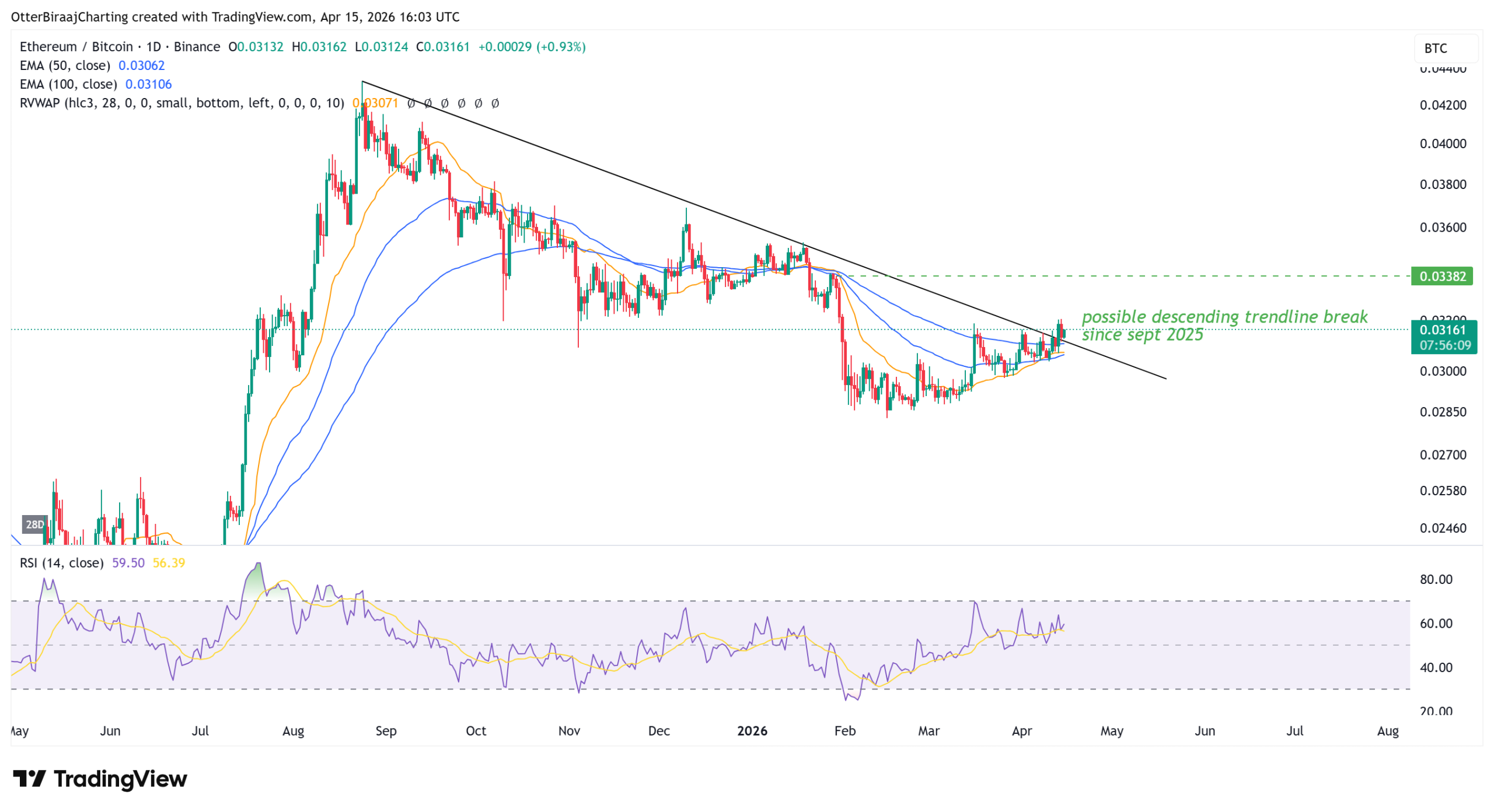
The ETH/BTC ratio has climbed to a 10-week high, suggesting that Ether (ETH) is gaining momentum against Bitcoin (BTC) in the charts.
Ether’s footing has improved as clearer DeFi regulations from the US Securities and Exchange Commission (SEC) were applauded by the crypto community. At the same time, Bitmine has added 71,524 ETH to its Ether treasury on April 13.
The ETH/BTC ratio broke through a descending trendline resistance that had been in place since August 2025. A daily close above this trend line marks the first breakout in months.
The pair trades above the 50-day and 100-day exponential moving averages at 0.0310, both of which are now acting as dynamic support. The compression between these averages points to a possible bullish crossover if the trend continues.

XWIN Research noted that a stronger underlying shift in Ether is driven by an April 13 SEC staff statement that explained how DeFi front-ends and wallet interfaces can operate without broker-dealer registration under defined conditions, such as no custody and neutral fee structures. XWIN Research added,
“On-chain data supports this shift. Active addresses are trending upward, indicating renewed network usage. Meanwhile, the Coinbase Premium Gap is improving, suggesting a recovery in U.S.-driven demand, often linked to institutional flows.”
As the ETH/BTC pair shows strength, corporate-level accumulation continues to accelerate. Bitmine now holds 4.87 million ETH, accounting for over 4% of the circulating supply, after adding 279,296 ETH over the past 30-days.
Related: Tom Lee says ‘mini crypto winter’ is over, sees Ether above $60K
Will an Ether bull market resume?
Crypto analyst GugaOnChain noted a sharp divide in ETH futures positioning. The global open interest reached $16.37 billion on April 14, sitting well above its 14-day average. Funding rates across exchanges remain negative at -0.0013%, indicating a short positioning against the rally.
However, open interest climbed to $6.04 billion, a 10.47% daily increase on Binance. Funding rates on the exchange turned positive at 0.015%, signaling rising long positioning.
This creates a split between global shorts and Binance-based longs. The analyst added,
“We face an extreme imbalance. With 40% of global ETH Open Interest on Binance, the fuel for a violent move is ready.”

Related: Ether holders back in profit as ETH price aims for rally to $3K
This article is produced in accordance with Cointelegraph’s Editorial Policy and is intended for informational purposes only. It does not constitute investment advice or recommendations. All investments and trades carry risk; readers are encouraged to conduct independent research before making any decisions. Cointelegraph makes no guarantees regarding the accuracy or completeness of the information presented, including forward-looking statements, and will not be liable for any loss or damage arising from reliance on this content.
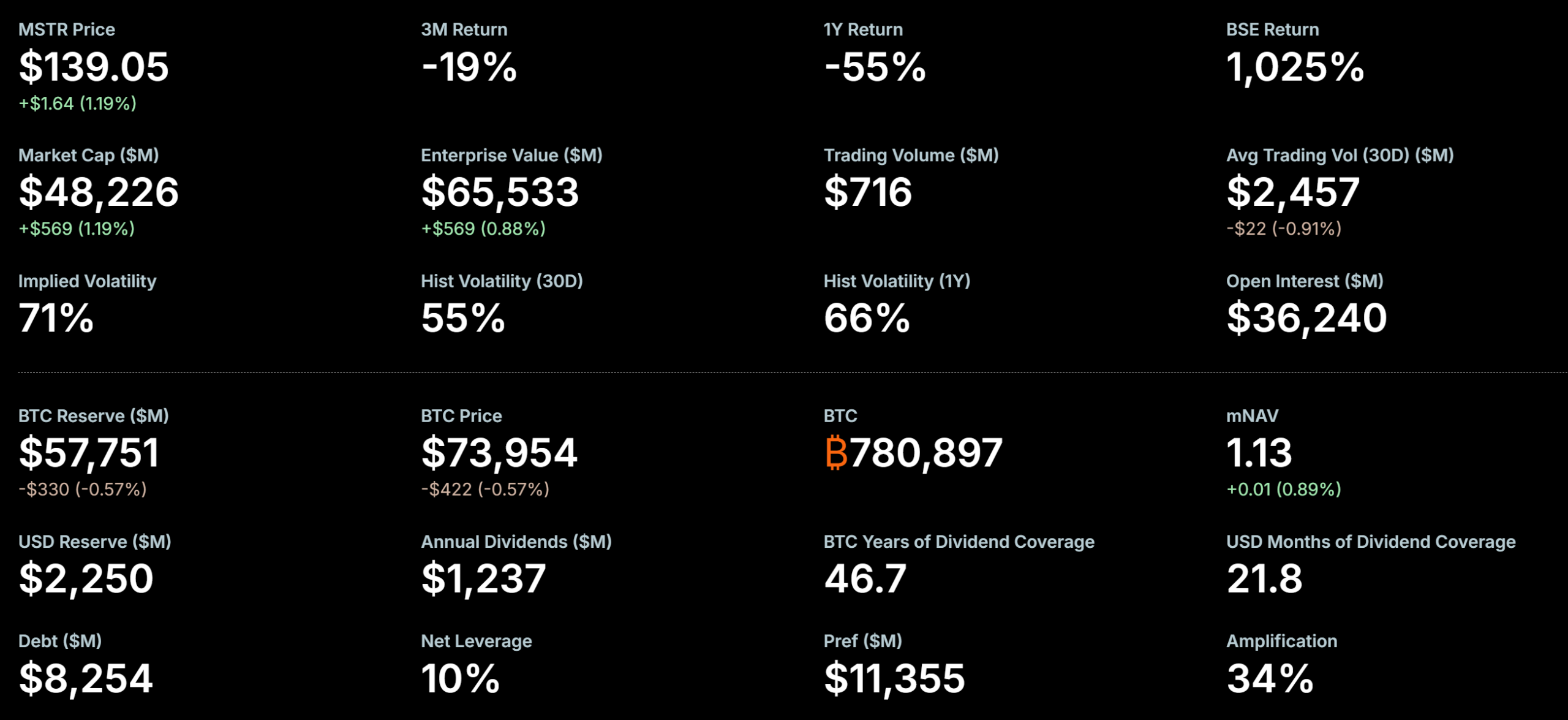
MicroStrategy Executive Chairman Michael Saylor said the firm generated 17,585 BTC Gain during the first two weeks of April, a figure he valued at roughly $1.3 billion.
The announcement places quarter-to-date BTC Yield at 2.3% and year-to-date yield at 5.6%, or 37,339 BTC worth approximately $2.8 billion.
What BTC Gain Actually Measures
BTC Gain is a proprietary, non-GAAP metric that tracks the net increase in Bitcoin per diluted share. It factors in new purchases minus the dilutive effect of issuing equity to fund those buys.
Saylor called it “the closest analog to Net Income on the Bitcoin Standard.”
Follow us on X to get the latest news as it happens
That framing omits significant context. Under GAAP fair-value accounting, MicroStrategy reported a $14.46 billion unrealized loss on its Bitcoin holdings for Q1 2026 and missed analyst estimates by a wide margin.
How the Gain Was Generated
Strategy acquired roughly 18,798 BTC in the first two weeks of April through at-the-market common stock sales and its STRC preferred share program.
The lower BTC Gain figure of 17,585 reflects the dilution adjustment after new shares entered circulation.
Total holdings now sit at approximately 780,897 BTC, purchased for $59 billion at an average cost of roughly $75,580 per coin.
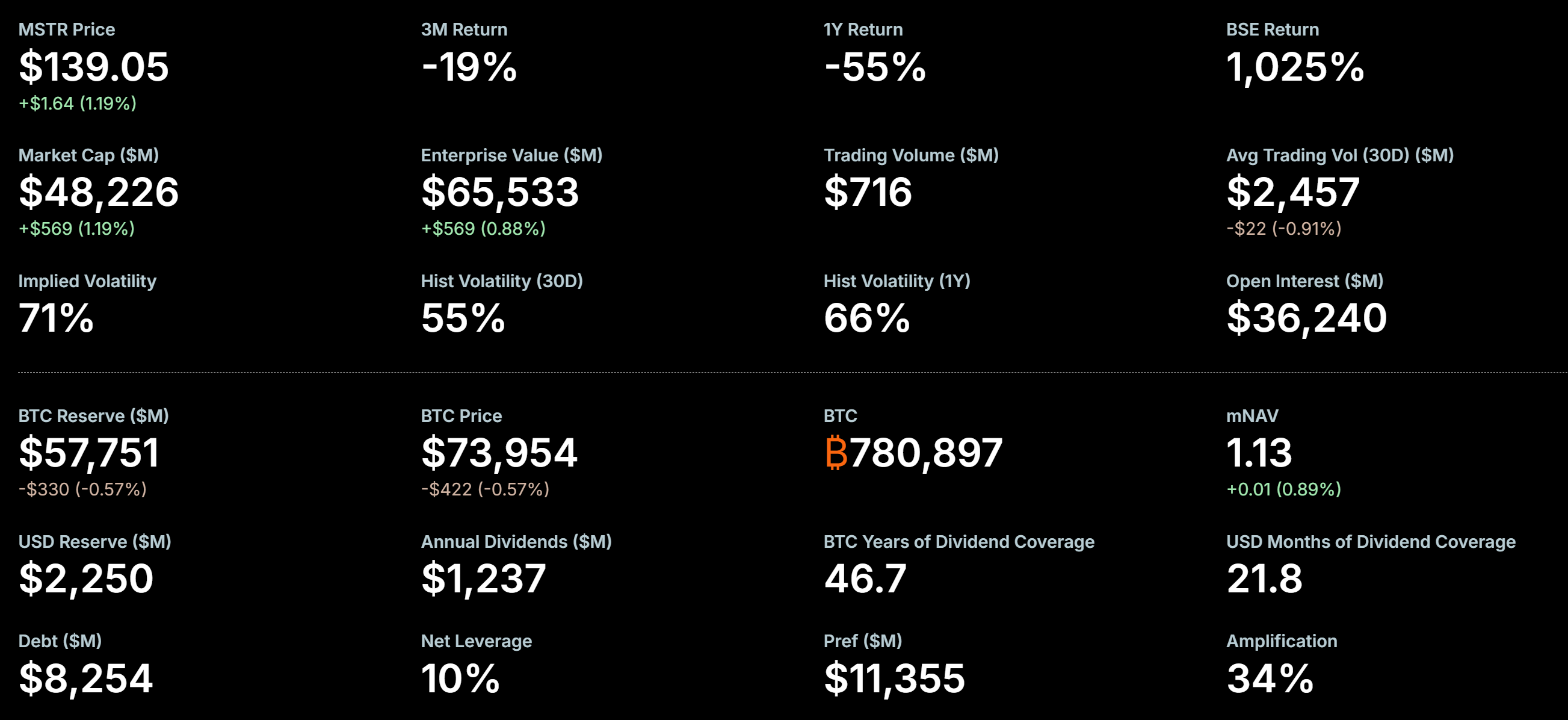
With BTC trading near $73,954, the portfolio remains slightly underwater on a cost-basis measure. Positive BTC Yield does not guarantee positive returns for shareholders.
It measures Bitcoin accumulation efficiency, not cash flow, earnings quality, or the rising dividend obligations on preferred stock.
Whether the market continues to reward that trade depends on sustained capital market access and BTC price appreciation.
Meanwhile, MicroStrategy co-CEO Phong Le, says that STRC, the firm’s perpetual preferred stock, has seen its liquidity double every month.
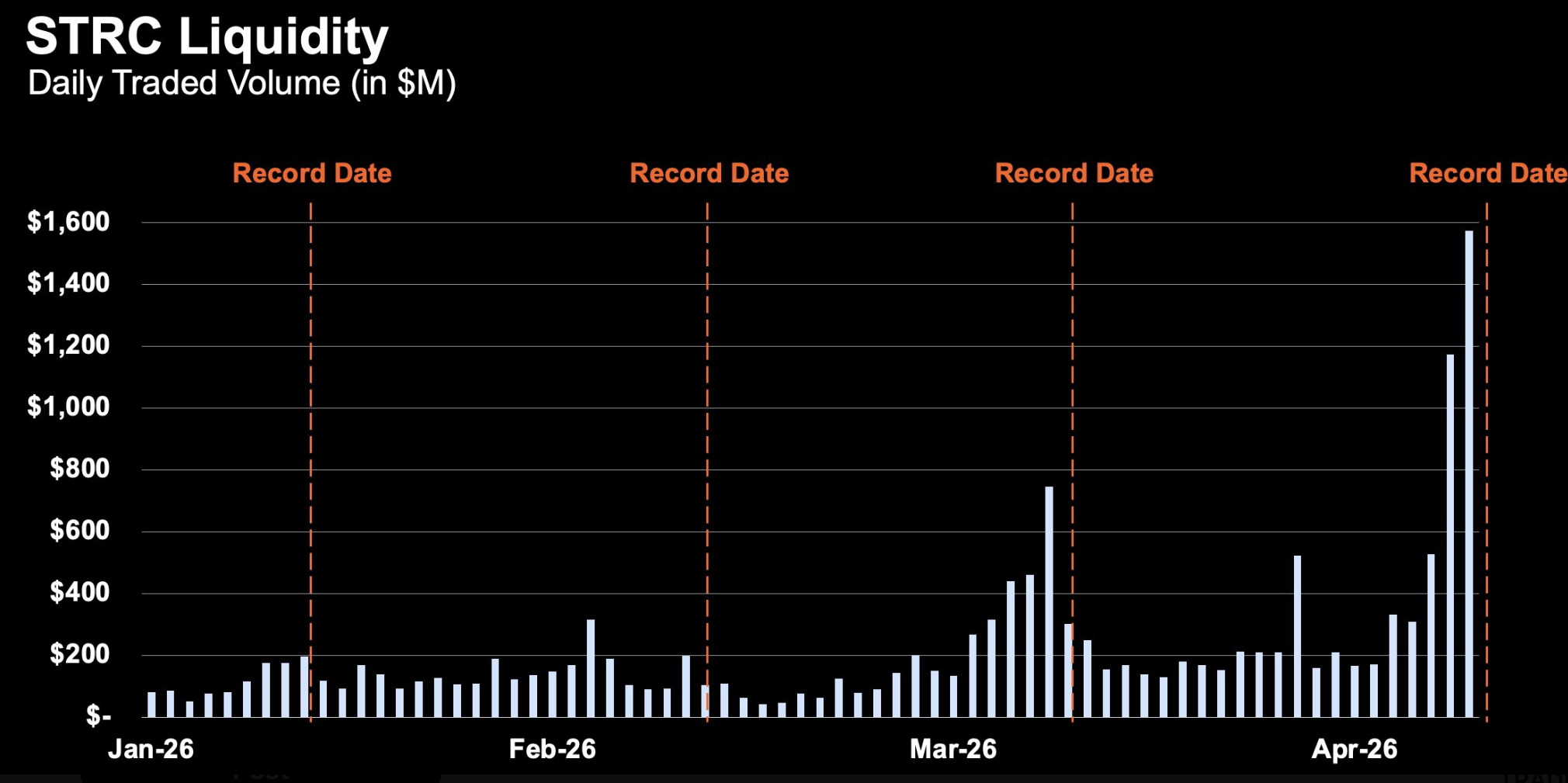
“Record date dynamics are interesting,” he stated.
The surging liquidity and retail interest in this yield-focused Bitcoin exposure vehicle. However, it is worth noting that STRC holders will never capture a Bitcoin moonshot as the price is engineered to stay near $100.
The post MicroStrategy Reports $1.3 Billion ‘Bitcoin Gain’ in April, But is It Actual Profit? appeared first on BeInCrypto.

Biggest CRASH In HISTORY Is Here BUT It’ll Make XRP MILLIONAIRES | Lockdowns Begin & WW3 Escalation

Man United will unleash partnership of the future vs Chelsea and it should send transfer reminder

This Intense 97% Rotten Tomatoes Thriller Is a Near-Perfect 2-Part Weekend Binge

Why Israel is blocking foreign journalists from entering

Bitcoin: We’re Entering The Most Dangerous Phase

Alan Cumming Brands Baftas Ceremony A ‘Triggering S**tshow’
Biggest CRASH In HISTORY Is Here BUT It’ll Make XRP MILLIONAIRES | Lockdowns Begin & WW3 Escalation

Ripple XRP: IRAN IS ALL BS! They’re Distracting You From The $300 Trillion Crypto Reset!

Week 3 Special Teams Player of the Week presented by Dynasty Financial Partners
-

 Politics5 days ago
US brings back mandatory military draft registration
-
 Sports5 days ago
Man United discover Nico Schlotterbeck transfer fee as defender reaches Dortmund agreement
-

 Fashion5 days ago
Weekend Open Thread: Veronica Beard
-

 Politics6 days ago
Malcolm In The Middle OG Turned Down ‘Buckets Of Money’ To Appear In Reboot
-

 Politics4 days ago
World Cup exit makes Italy enter crisis mode
-

 Crypto World7 days ago
Canary Capital Files SEC Registration for PEPE ETF
-

 Business5 days ago
Tesla Model Y Tops China Auto Sales in March 2026 With 39,827 Registrations, Beating Cheaper EVs and Gas Cars
-

 Crypto World2 days ago
The SEC Conditionalises DeFi Platforms to Be Avoided for Broker Registration
-

 Crypto World2 days ago
SEC Signals Exemption for Crypto Interfaces From Broker Registration
-

 News Videos19 hours ago
Secure crypto trading starts with an FIU-registered
-
 NewsBeat3 days ago
Pep Guardiola and Gary Neville agree over Arsenal title problem that benefits Man City
-

 Business6 days ago
OpenAI Halts Stargate UK Data Centre Project Over Energy Costs and Copyright Row
-

 Business4 days ago
Ireland Fuel Protests Enter Day 5 as Blockades Spark Shortages and Government Prepares Support Package
-

 Crypto World5 days ago
Federal judge blocks Arizona from bringing criminal charges against Kalshi
-

 Politics6 days ago
LBC Presenter Mocks Trump Over Iran War Failures
-
 NewsBeat4 days ago
JD Vance announces ‘no agreement’ with Iran over nuclear weapons fear
-

 Crypto World2 days ago
SEC Proposes Certain Crypto Interfaces Don’t Need to Register as Brokers
-

 NewsBeat2 days ago
Trump and Pope Leo: Behind their disagreement over Iran war
-

 Tech6 days ago
A version of Windows 10 released a decade ago is now eligible for additional security patches
-

 Business5 days ago
IMF retains floor for precautionary balances at SDR 20 billion
You must be logged in to post a comment Login