from the domestic-surveillance-is-fine-if-we-do-it dept
It wasn’t all that long ago that GOP legislators were collectively stonewalling a clean reauthorization of Section 702. Three years ago, these legislators were seeking to end the FBI (and other IC components’) access to Americans’ communications via “backdoor” searches of the NSA’s supposedly “foreign facing” collections.
It wasn’t that the Republicans cared that Joe Public was being subjected to warrantless domestic surveillance. It was that they were being subjected to warrantless searches of their communications — something that came to light as the result of multiple investigations pertaining to Trump’s first administration.
Now that the GOP has control of the White House again, Republicans are back to not caring about the warrantless searches of US persons’ communications enabled by FISA loopholes very few congressional reps seriously want to see closed.
Another Section 702 reauthorization attempt is only weeks away. Reps who want more of the same thing we’ve been subjected to for decades have until the end of April to push a clean reauthorization through. Unfortunately for them, the FISA Court — while allowing the program to continue whether or not Congress can pass an extension — has made it clear the program needs to be overhauled because it’s still being routinely abused to perform warrantless searches targeting Americans’ communications.
Advertisement
The annual recertification, issued last month in a classified ruling, means that the program can continue to collect phone calls and emails through March 2027 — even if Congress fails later this month to renew the statute that underlies it.
But the judge who issued the March 17 ruling also objected to tools that agencies with access to the raw data — like the C.I.A., F.B.I. and National Security Agency — have created to allow analysts to process messages, according to unclassified talking points the administration sent to lawmakers in recent days.
The main issue is the filtering tool utilized by agencies with access to the NSA’s collections. The filter allows analysts to drill down the data to only return results pertaining to specific people who have communicated with a foreign person. It would appear agencies like the FBI are using this filter to search for US persons — something that’s supposed to be subjected to additional limitations.
From the talking points detailed by the New York Times, it seems that isn’t the case, which is why the FISA Court is ordering the government to “re-engineer the filter” to force analysts to comply with restrictions pertaining to access of US persons’ communications.
The Trump administration is allegedly “weighing” whether or not to comply with this FISA court order. The only thing that could make it comply would be to codify the order during the reauthorization process. This administration simply isn’t willing to do that.
Advertisement
The Trump administration wants Congress to extend the statute without changes.
“The compliance problems are bad enough, but, incredibly, rather than fix them, the Trump Administration is considering appealing the court ruling so that they never have to. This is a highly aggressive and unusual move indicative of an administration that would exploit every angle to expand its surveillance at the expense of Americans’ rights.
“Instead of addressing these problems, opponents of reform are going to try to jam a straight reauthorization of section 702 through Congress next week, while the American people are still in the dark. That’s unacceptable. This court ruling needs to be declassified so that Americans can understand what the Trump administration is actually up to. And Congress must vote for real reforms to protect Americans’ rights.”
I won’t even factor in Trump’s opinion here, because it doesn’t really matter. He doesn’t know enough about anything to be considered qualified to engage in this discussion. Further, this isn’t even necessarily a Trump thing. Pretty much every presidential administration has been unwilling to upset this particular apple cart, even when plenty of evidence of extensive rot has been made public.
But this one’s particularly problematic for the GOP, which spent most of the Biden years claiming Section 702 abuse was evidence of a “deep state” conspiracy against Trump and his congressional supporters. Now, they’re arguing the opposite: that the “deep state” it so recently opposed should be allowed to do what it wants for as long as it wants to… so long as it’s not sweeping up their communications.
Advertisement
Status quo seems likely to prevail yet again, especially with the Trump Administration clearly interested in increasing the amount of domestic surveillance perpetrated by Intelligence Community components. After all, without it, the “worst of worst” day laborers and factory workers can’t be kidnapped by federal officers and members of the fearsome, centrally organized terrorist group known as “antifa” can’t get caught in dragnets that are supposed to be targeting foreign adversaries. It’s going to be more abuse for the stupidest imaginable reasons because that’s just how things are going to go as long as this iteration of the GOP remains in power.
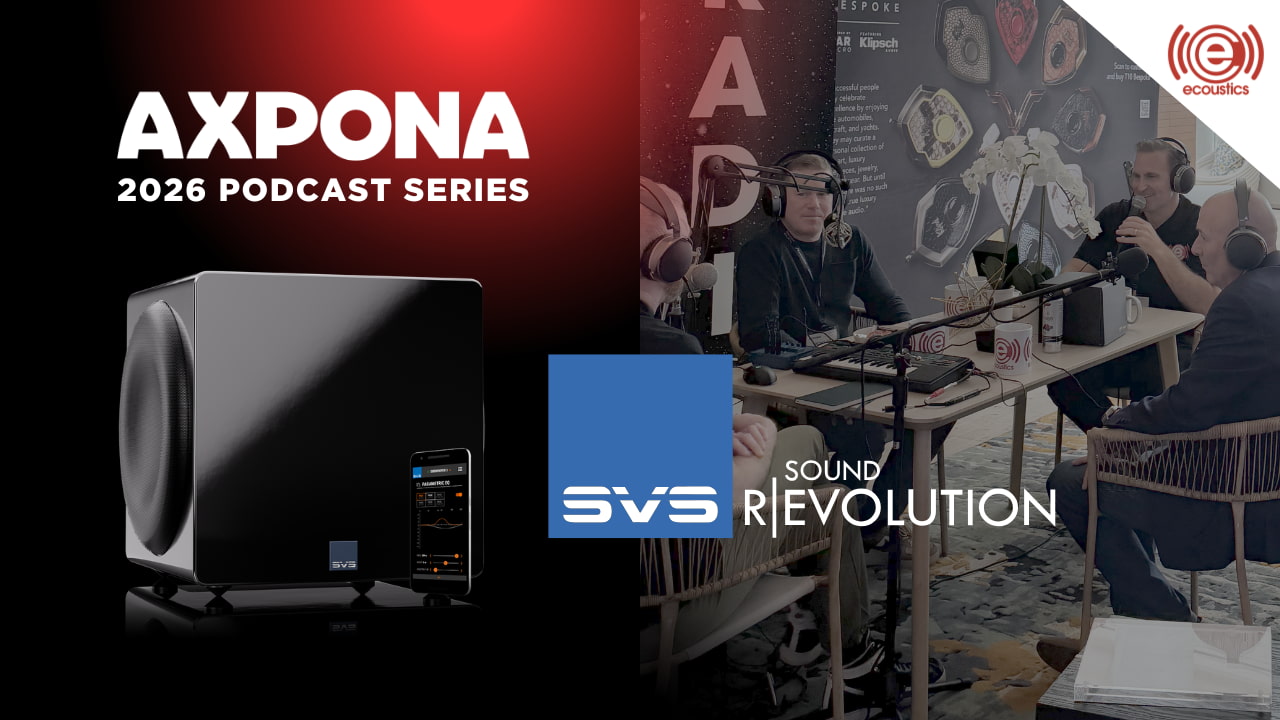
Recorded from the show floor at AXPONA 2026, the team from SVS breaks down their latest powered subwoofer, the SVS 3000 Micro R|Evolution, and why this compact design hits harder than it has any right to. We dig into the engineering behind the output, the tradeoffs of going small without sacrificing performance, and the bigger question hanging over it all is whether SVS is quietly undercutting its own lineup with each new release that raises the bar and resets expectations.
This episode was recorded on April 10, 2026 (the first day of AXPONA 2026).
STC-15 is the world’s first RNA-modifying enzyme inhibitor to reach human trials. Phase 1 showed durable tumour regression across multiple sarcoma subtypes. The $56M Series C is backed entirely by existing investors including Pfizer Ventures and M Ventures.
STORM Therapeutics, a Cambridge-based clinical-stage biotech targeting RNA modifications to treat cancer, has raised $56 million in a Series C round and dosed the first patient in a Phase 2 clinical trial of its lead drug, STC-15, in selected sarcoma indications.
The round was funded entirely by existing investors: M Ventures, Pfizer Ventures, Taiho Ventures LLC, IP Group plc, the UTokyo Innovation Platform Co., Ltd. (UTokyo IPC), and Fast Track Initiative (FTI).
STC-15 is a first-in-class, oral small-molecule inhibitor of METTL3 – an enzyme that methylates messenger RNA and plays a central role in cancer stem cell differentiation. It is the first RNA-modifying enzyme inhibitor ever to enter human clinical trials, having commenced its Phase 1 study in November 2022.
Advertisement
The 💜 of EU tech
The latest rumblings from the EU tech scene, a story from our wise ol’ founder Boris, and some questionable AI art. It’s free, every week, in your inbox. Sign up now!
METTL3 adds a chemical tag called m6A to mRNA, influencing how cells read genetic instructions; in certain cancers, this process is hijacked to keep malignant progenitor cells locked in a proliferative, undifferentiated state. Inhibiting METTL3 disrupts this process, pushing cancer cells towards cycle arrest and programmed death.
Sarcomas, cancers arising from bone or soft tissue including muscle, fat, cartilage, and blood vessels, account for 1% of adult cancers and 15% of paediatric cancers.
Advertisement
They are notoriously difficult to treat because they frequently lack the driver mutations or immunogenic features that make most solid tumours amenable to targeted therapy or immunotherapy.
STORM’s thesis is that sarcomas are particularly dependent on METTL3-driven mRNA methylation for their growth and survival, making them a biologically compelling target for STC-15. In Phase 1, the drug demonstrated durable tumour regression across multiple sarcoma subtypes across dose levels between 60mg and 200mg taken three times weekly.
Full Phase 1 results are expected to be presented at a medical conference in 2026.
The Phase 2 monotherapy trial is designed to support a potential accelerated regulatory approval pathway for STC-15, and to build a foundation for expanding clinical development into additional oncology indications. The first patient has now been successfully dosed. The trial’s ClinicalTrials.gov identifier is NCT06975293.
Advertisement
STC-15 is simultaneously being evaluated in a Phase 1b/2 combination study with LOQTORZI (toripalimab), a PD-1 inhibitor from Coherus BioSciences, across non-small cell lung cancer, head and neck squamous cell carcinoma, melanoma, and endometrial cancer, a collaboration announced in May 2025.
Jonathan Trent, MD of the University of Miami’s Sylvester Comprehensive Cancer Center and a clinical investigator on the trial, said STC-15’s mechanism “targets sarcomas at their vulnerability, reprogramming malignant cells toward cell cycle arrest and apoptosis.”
STORM CEO Jerry McMahon described the Phase 2 dosing as “a pivotal breakthrough in tackling cancers characterised by aberrant cell differentiation,” pointing to the unmet need in sarcoma where existing options remain limited.
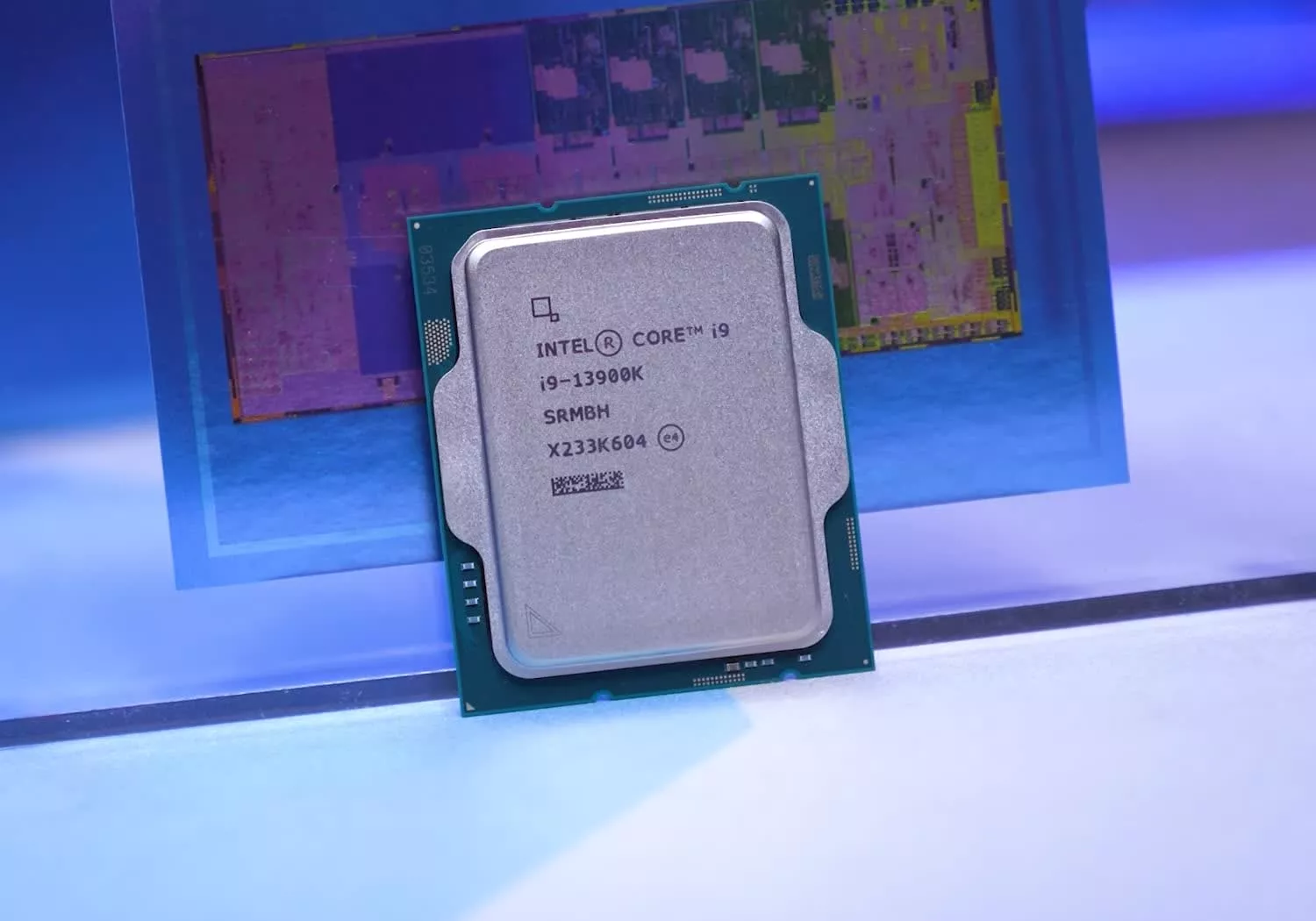
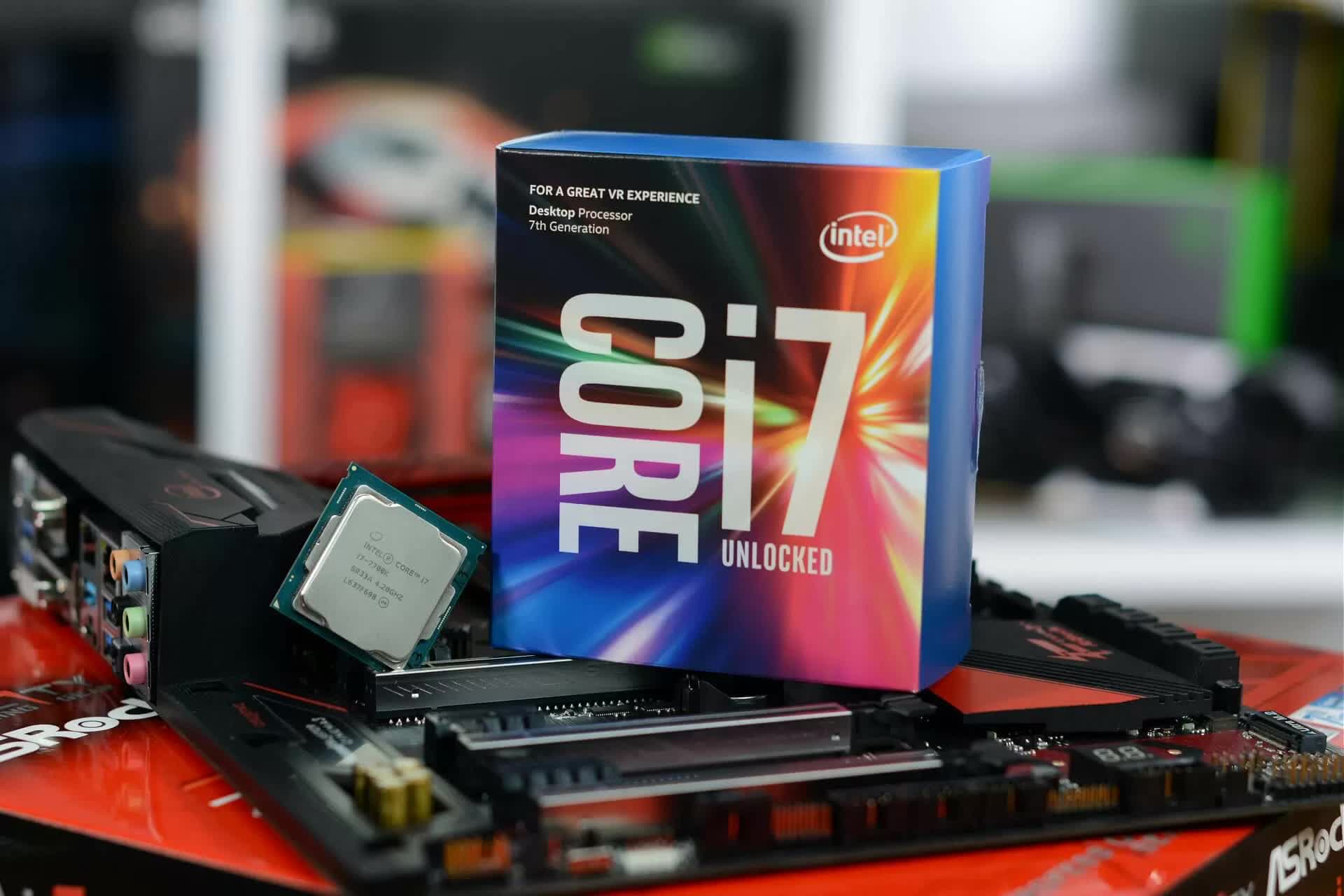
From Kaby Lake to Core Ultra, we revisit Intel’s flagship CPUs to see how a decade of design choices shaped performance, power, and ultimately, how the company lost its lead.
Spigen OM104 MagSafe Phone Grip: The OM104 is a phone/grip combo accessory for MagSafe and Qi2 devices that comes with a flexible nylon strap to slide your finger through while holding your phone. Dual magnets and a robust metal construction make the OM104 feel like money well spent, and even after hours of sliding my finger in and out of the strap, it still feels soft, flexible, and most importantly, comfortable. It has one annoying design oversight. As you slide your phone in and out of your pocket, the nylon strap will start to droop down. The strap is longer than the grip itself, so when you close the kickstand, it’ll get pinched inside and won’t allow the stand to fully close. It’s comfortable to use, but that quibble knocks it down.
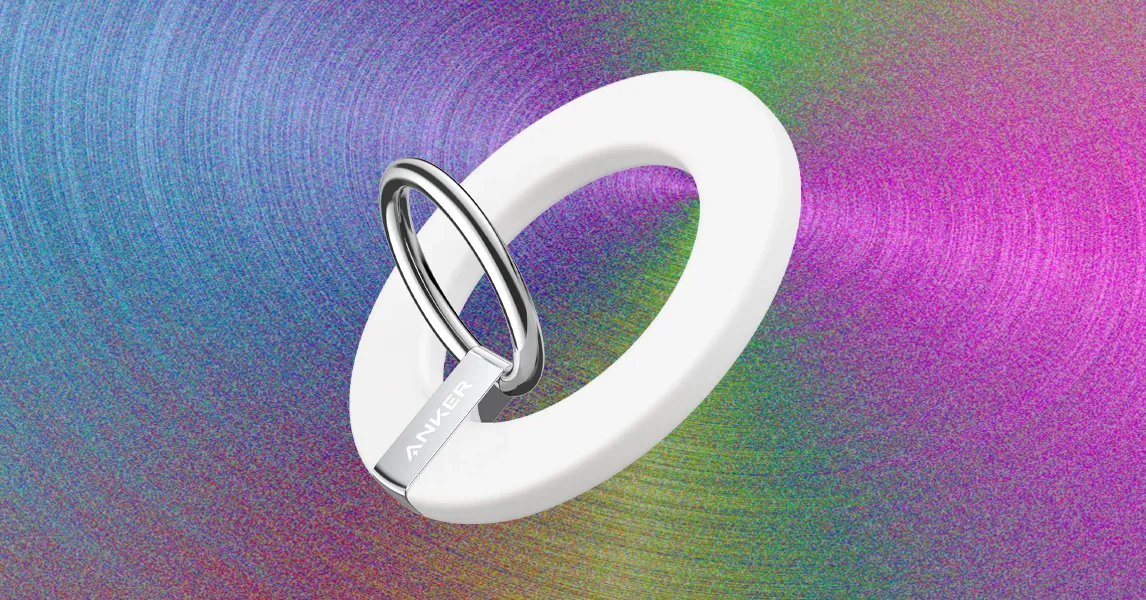
Casely MagRing: Unlike other metal grips we’ve tested, Casely’s MagRing is made of soft silicone. We find it more comfortable on the fingers. It also has a 360-degree swivel, so you can position the grip at virtually any angle. This is strictly a grip, so you can’t use it as a kickstand. Since the grip doesn’t fold in, your phone won’t lie fully flat on a surface. We also tested the MagRing+, which comes with a ring clip for attaching your keys. That comes in handy for quick trips to the grocery store or when you go to the gym and need a place to put your car keys and key fob. But Jacob prefers the standard MagRing, since he typically carries his keys in his pocket or bag. Casely has a few variations of the MagRing and MagRing+ in stock, but it appears to be on its last legs.
Smartish Wallflower: It isn’t perfect, but we still love it. The Smartish Wallflower comes with seven small suction cups that look like a flower, allowing you to attach your phone to a wall (or any other surface) and leave it be. It mostly works, but it largely depends on how heavy your phone is and what surface you’re attaching it to. We didn’t have issues with an iPhone 17 and drywall, but the iPhone 15 Pro Max attached to a particleboard cabinet was too heavy for the grip to manage.
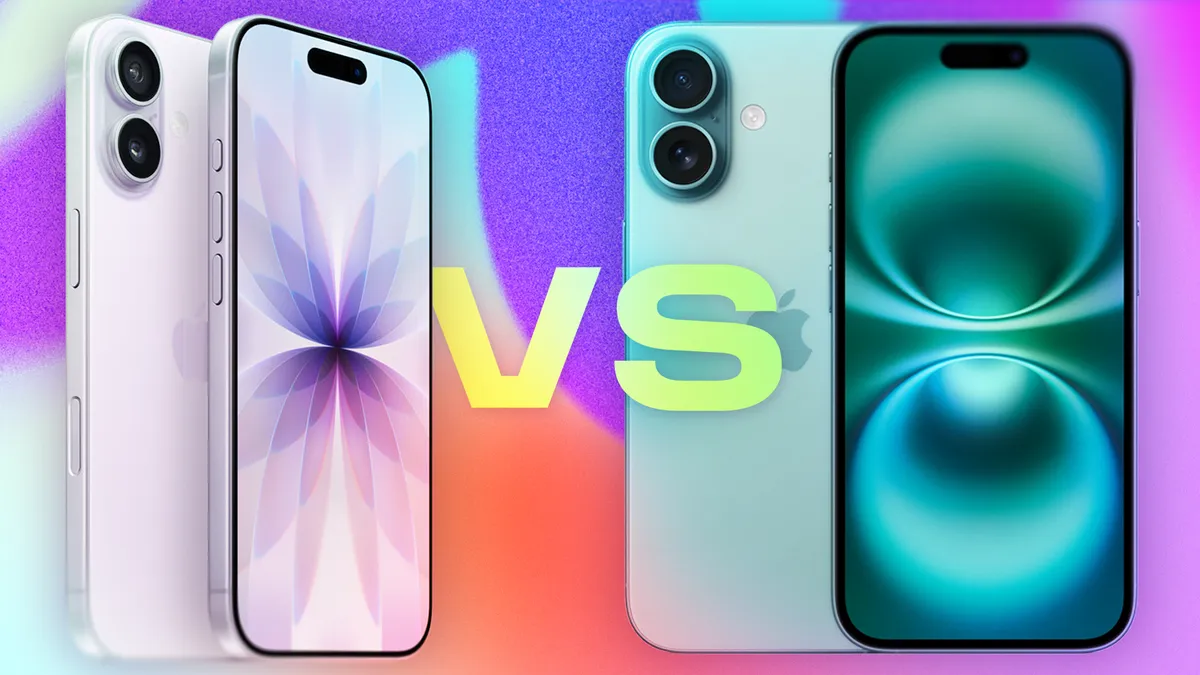
If you’re looking to buy a new iPhone, you may be wondering whether to get the iPhone 17 or score a discount on last year’s iPhone 16. To help with that decision, here’s a breakdown of how the two phones compare.
The iPhone 17 starts at $829 — or $799 with carrier activation — the same price as the iPhone 16 when it debuted. But there’s a key difference: The iPhone 17 starts with 256GB of storage, double the 128GB base on the iPhone 16.
The iPhone 16 is now available at a $100 discount. So, is it worth saving some money or should you splurge on the newer phone?
Advertisement
Here’s what to know about each device, from the cameras to the displays to the batteries. (If you’re looking for a slightly more affordable option, check out the iPhone 17E.)
Watch this: iPhone Air Review: A Joy to Hold, at a Cost
Screen differences
Some of the biggest changes between the iPhone 16 and 17 have to do with the display.
Apple says it shrunk the borders around the screen on the iPhone 17, expanding the display from 6.1 inches on the iPhone 16 to 6.3 inches on the iPhone 17 without expanding its dimensions. The new Ceramic Shield 2 cover on the iPhone 17 offers three-times better scratch resistance, according to the company.
Advertisement
The baseline iPhone 17 gets a display with a 120Hz refresh rate, as opposed to the 60Hz display on the iPhone 16. That means the iPhone 17 finally supports an always-on display, so you can glance at the time, your notifications and Live Activities without waking the screen.
The iPhone 17 also gains an anti-reflective coating and a 3,000-nit peak brightness, compared to 2,000 nits on the iPhone 16. That should make it easier to see your phone in bright sunlight.
Camera differences
Both the iPhone 16 and 17 have a 48-megapixel wide-angle camera. But the iPhone 17 upgrades the ultra-wide camera from 12 megapixels to 48 megapixels.
The front-facing camera also gets an upgrade, going from 12 megapixels on the iPhone 16 to 18 megapixels on the iPhone 17. There’s a new Center Stage feature for the selfie camera that can automatically adjust from a portrait orientation to landscape to make sure everyone is in the shot. That means you don’t have to manually rotate your phone to its side anymore when there are more people to fit in the frame.
Advertisement
Both the iPhone 16 and 17 have a Camera Control button on the side to quickly launch the camera, snap some shots and use Apple’s Visual Intelligence tool to learn more about what’s around you.
Processor and RAM
The iPhone 17 packs an A19 chip, an upgrade from the A18 chip in the iPhone 16. One key difference is that the iPhone 17 starts at 256GB, while the iPhone 16 started at 128GB for the same $829 price when it debuted.
Both phones also support the Apple Intelligence suite of AI capabilities, which includes writing tools, image generators and notification summaries.
Battery life
Apple doesn’t share specific battery specs, but it does measure longevity via video playback hours. The iPhone 16 supports up to 22 hours of video playback, according to Apple, while the iPhone 17 bumps that up to 30 hours.
Advertisement
In CNET’s 45-minute endurance test, which includes streaming, scrolling through social media, joining a video call and playing games, the iPhone 17’s battery went from full to 98%. That’s just over the 97% the iPhone 16 scored last year.
And in a three-hour streaming test over Wi-Fi, which involves watching a YouTube video in full-screen mode at full brightness, the iPhone 17’s battery went from full to 89%. In comparison, the iPhone 16 dropped to 86%.
Anecdotally, the iPhone 17’s battery lasts over a day, even after taking photos, scrolling through social media, watching videos, texting, sending emails and more. The same can be said about the iPhone 16, so you likely won’t feel a huge difference between the two when it comes to day-to-day activities.
A new AI-powered Adaptive Power feature arriving with iOS 26 can help conserve the battery by making “small performance adjustments,” like “allowing some activities to take a little longer,” according to Apple.
Advertisement
The iPhone 17 arrives with the upcoming operating system onboard, but you’ll also be able to download iOS 26 on the iPhone 16, as well as some older iPhones, once it becomes available publicly. That should help to stretch your battery life on either device.
Color options and design
What’s on the inside may be most important, but people also care what their phone looks like. Like the iPhone 16, the iPhone 17 comes in a range of fun colors: black, white, mist blue, sage (a light green) and lavender.
For comparison, the iPhone 16 is available in black, white, pink, teal and ultramarine. Both phones have an aluminum frame. Check out the spec chart below for a breakdown of each phone.
6.1-inch OLED; 2,556 x 1,179 pixel resolution; 60Hz refresh rate
Pixel density
460ppi
460 ppi
Dimensions (inches)
5.89 x 2.81 x 0.31 in
5.81 x 2.82 x 0.31 in
Dimensions (millimeters)
149.6 x 71.5 x 7.95 mm
147.6 x 71.6 x 7.8 mm
Weight (grams, ounces)
177 g (6.24 oz)
170 g (6 oz.)
Mobile software
iOS 26
iOS 18
Camera
48-megapixel (wide) 48-megapixel (ultrawide)
48-megapixel (wide), 12-megapixel (ultrawide)
Front-facing camera
18-megapixel
12-megapixel
Video capture
4K
4K
Processor
Apple A19
Apple A18
RAM + storage
RAM N/A + 256GB, 512GB
RAM N/A + 128GB, 256GB, 512GB
Expandable storage
None
None (Face ID)
Battery
Up to 30 hours video playback; up to 27 hours video playback (streamed). Fast charge up to 50% in 20 minutes using 40W adapter or higher via charging cable. Fast charge up to 50% in 30 minutes using 30W adapter or higher via MagSafe Charger.
Up to 22 hours video playback; up to 18 hours video playback (streamed). 20W wired charging. MagSafe wireless charging up to 25W with 30W adapter or higher; Qi2 up to 15W
Fingerprint sensor
None (Face ID)
None (Face ID)
Connector
USB-C
USB-C
Headphone jack
None
None
Special features
Apple N1 wireless networking chip (Wi-Fi 7 (802.11be) with 2×2 MIMO), Bluetooth 6, Thread. Action button. Camera Control button. Dynamic Island. Apple Intelligence. Visual Intelligence. Dual eSIM. 1 to 3000 nits brightness display range. IP68 resistance. Colors: black, white, mist blue, sage, lavender.
Apple Intelligence, Action button, Camera Control button, Dynamic Island, 1 to 2,000 nits display brightness range, IP68 resistance. Colors: black, white, pink, teal, ultramarine.
Apple will add at least four new iPhone Apple Intelligence features to Safari, Wallet, and more when it announces iOS 27 this June.
New Apple Intelligence features are rumored for iOS 27
That’s according to a new report, which cites code discovered on Apple’s backend servers. The new features are yet to be confirmed by Apple, but could bring additional functionality to a beleaguered Apple Intelligence feature set. Apple isn’t expected to announce the iOS 27 update until its June 2026 WWDC event. Rumor Score: 🤔 Possible Continue Reading on AppleInsider | Discuss on our Forums
Usually, you think of bird decoys as being a tool to lure birds to an untimely encounter with a hunter. However, [Interesting Engineering] has a story about robotic bird decoys in Grand Teton National Park that are helping restore the dwindling number of sage grouse in the park.
While some decoys are static, others are motorized to replicate mating rituals. The goal: lure real birds to safer areas to breed. Particularly, they want the birds to avoid areas around the Jackson Hole Airport. The robots are built with help from local students and robotics teams. While some of the construction is made of fabric and foam, actual bird feathers are also used.
The robots mimic lekking behavior, a courtship ritual where male grouse do repetitive motions combined with recorded mating calls. This attracts other grouse and, of course, results in chicks who will be raised nearby.
Advertisement
Assuming the effort is successful, the same technique could help other areas where restored areas are difficult to repopulate. You can find more pictures on the Park’s Instagram, and the title picture is from that collection.
Usually, when we see something like this, the robot is trying to remove something dangerous to the endangered plant or animal, not attract them.
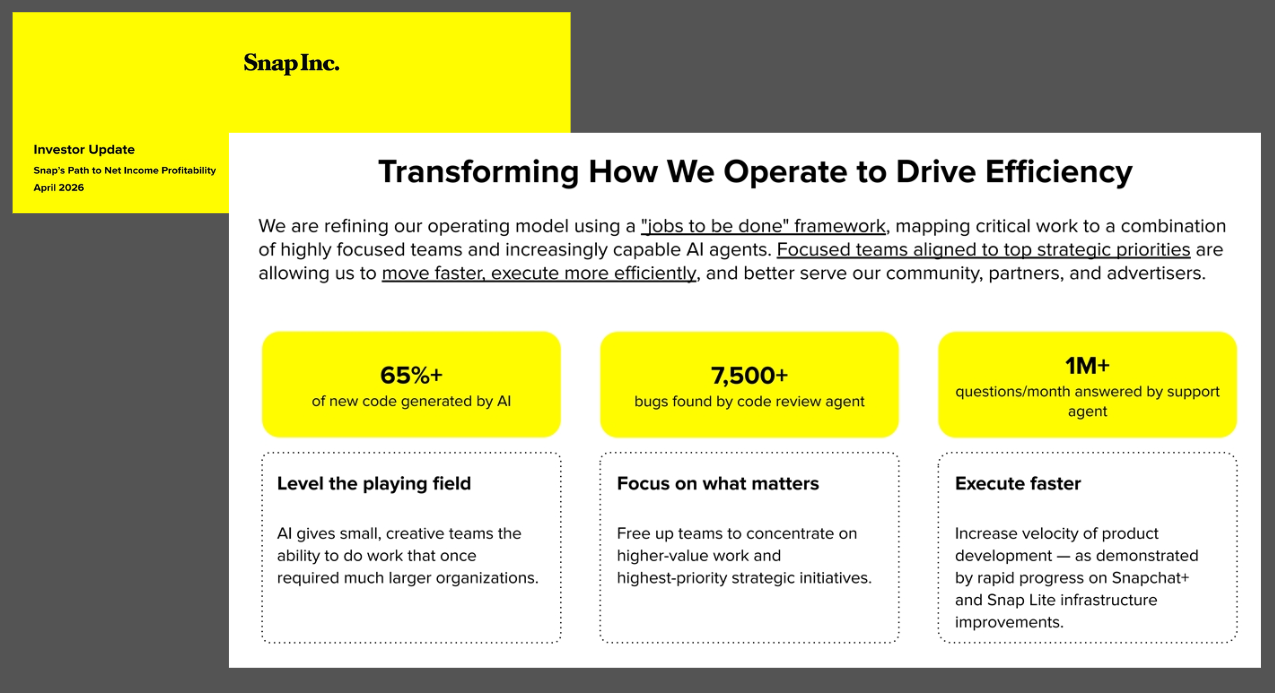
A slide from Snap’s investor update on highlights AI-driven efficiency gains, saying more than 65% of new code is generated by AI.
Snap is cutting 95 jobs in Washington state as part of a broader restructuring that will eliminate about 1,000 positions, or 16% of the company’s full-time workforce.
The Snapchat parent company filed a WARN Act notice with Washington’s Employment Security Department on Wednesday, showing layoffs across its offices in Bellevue, Seattle, and Vancouver, Wash. The cuts take effect between April 16 and June 16, according to the filing.
A filing with the state shows that the affected roles are heavily technical: predominantly software engineers, along with machine learning engineers, data scientists, product managers, and recruiting staff. Senior roles including a director of engineering for Snap’s AI platform and a distinguished software engineer are also on the list of people being laid off.
Rec Room employees who joined Snap were slated to work at Specs Inc., its hardware subsidiary focused on augmented reality glasses. It’s unclear whether any of those newly hired employees are among the 95 cut in Washington.
In addition to the planned job cuts, CEO Evan Spiegel told employees in a memo Wednesday that Snap is also eliminating more than 300 open roles it had planned to fill, and aims to reduce costs by more than $500 million by the second half of the year.
In the memo, Spiegel framed the cuts partly as an embrace of AI, saying advances in the technology allow smaller teams to do what once required larger organizations.
Advertisement
In an investor update, Snap described the situation as a “crucible moment,” saying it is “squeezed between giants with enormous resources and nimble startups moving fast.” The company said more than 65% of its new code is now generated by AI, and that AI agents are answering more than 1 million support questions per month.
The restructuring follows pressure from activist investor Irenic Capital Management, which owns about 2.5 percent of Snap and pushed the company last month to cut costs and sharpen its strategy. Irenic also criticized Snap’s $3.5 billion investment in its Specs glasses, which has yet to deliver strong returns.
Snap’s stock closed up nearly 8% in trading Wednesday on the news, though it remains down about 25% since the start of the year. The company expects to incur $95 million to $130 million in restructuring charges, mostly tied to severance.
Yeah, we know, there’s a camera on your phone that does this and that. But these days its become trendy to turn towards older digital cameras in place of smartphones, and we can tell you from experience, that the joys of having a dedicated photographing contraption are many.
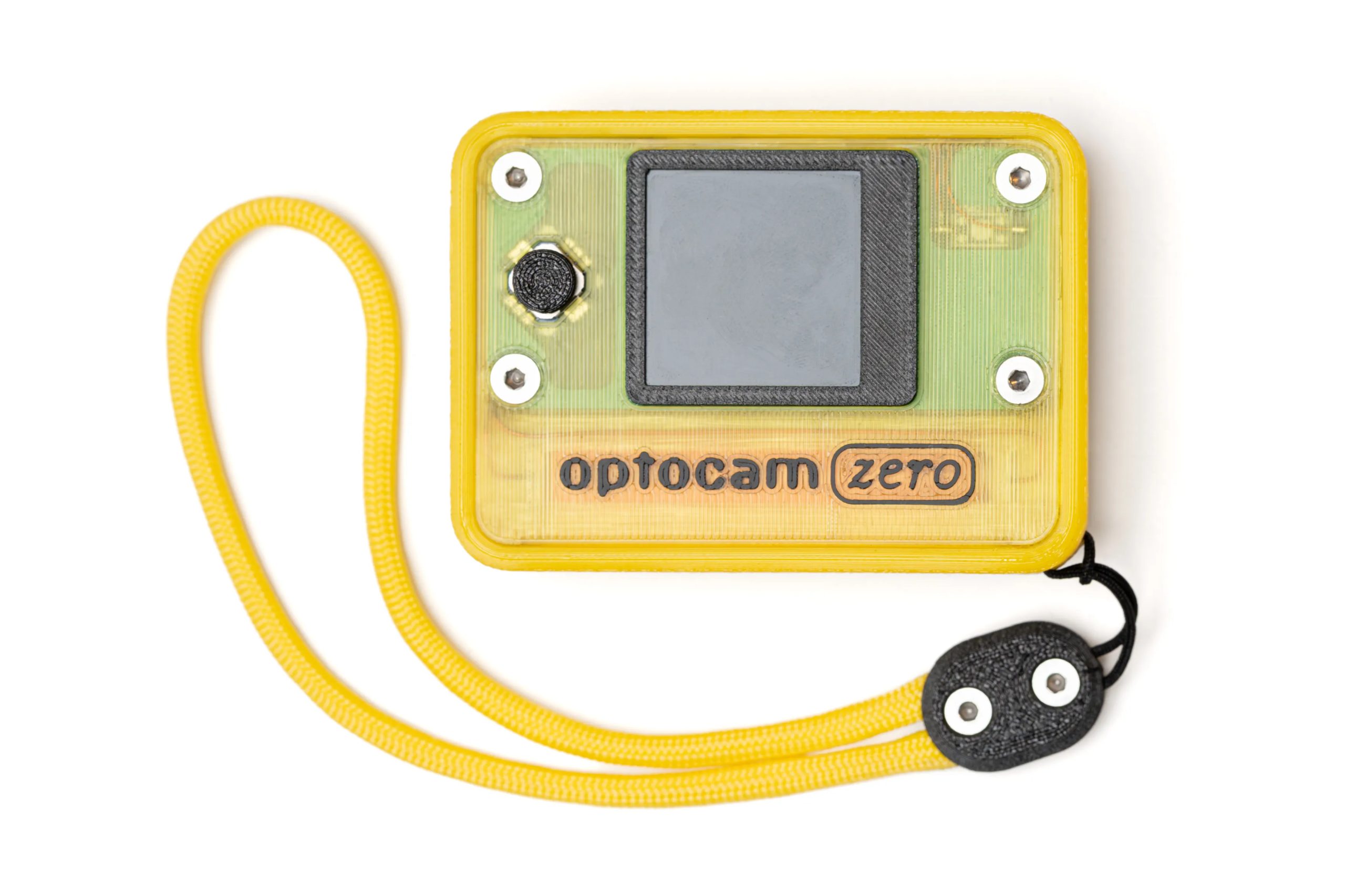
There’s plenty of cheap digital cameras on the secondhand market, but instead of fending off the clothes bros and other reseller types at the thrift store, stay home and build [Doruk Kumkumoğlu]’s Optocam Zero. Inspired by the Kodak Charmera and the like, [Doruk] aimed for something that’s playful, enjoyable, and intuitive to use.
Optocam Zero uses an auto-focus camera module and features eight photo filters. The screen dims when inactive to preserve battery life, but it can be charged back up with USB-C, and you can use it for the duration. And unlike my young adult camera, you don’t have to take out the SD card to see the pictures, just use the custom hotspot interface to transfer them.
Advertisement
If you need to capture a cat yawning real fast, you might want to just use your phone instead, because takes 22 seconds for Optocam Zero to get camera-ready. But when you have a less spontaneous subject in mind, this thing looks like a great choice. Be sure to check out the excellent build guide (PDF) whether you build one or not.
We think the images from the Optocam Zero look pretty crispy. But if you want to go lo-fi, we have that, too.
A federal jury found Wednesday that Live Nation has been operating as an illegal monopoly — a verdict that could lead to the breakup of the entertainment giant and its ticketing subsidiary, Ticketmaster, and bring relief to concertgoers who are sick of dynamic pricing and inexplicable service fees.
The ruling came as internal Slack messages surfaced during the trial showing Live Nation employees joking about taking advantage of customers — including one conversation about parking prices that prosecutors argued revealed the company’s true attitude toward its customers.
The verdict is the latest development in a web of litigation that began when the Department of Justice and 40 state attorneys general sued Live Nation in 2024 for alleged monopolistic practices. The two companies had merged in 2010 to form an entertainment giant that came to control the majority of ticket sales and venue bookings in the country, which made it more difficult for other companies to compete, according to the lawsuit. Without meaningful competition, customers had no choice but to accept Live Nation’s dubious pricing models, which critics say benefit the company’s bottom line, rather than artists.
Last month, the DOJ tentatively settled with Live Nation, while a separate state-level trial was already underway. But 34 of the attorneys general pressed forward — and on Wednesday, the jury delivered its verdict.
Advertisement
During the widely followed trial, the Slack messages surfaced between two Live Nation employees: Ben Baker, now head of ticketing for Venue Nation, and Jeff Weinhold, now a senior director in the ticketing department.
“These people are so stupid,” Baker said in a conversation about raising prices on parking. “I almost feel bad taking advantage of them BAHAHAHAHAHA.”
In a later conversation, also about parking prices, Baker said, “Robbing them blind baby.”
Techcrunch event
Advertisement
San Francisco, CA | October 13-15, 2026
Live Nation argued that these remarks represented “off-the-cuff banter, not policy, decision-making, or facts of consequence.”
Advertisement
As part of the DOJ settlement, Live Nation is supposed to pay a $280 million fine and divest at least 13 of its venues, requiring those venues to accept bookings from competing promoters. But given the jury’s finding that Live Nation operated as an illegal monopoly, the consequences might end up being more severe.
What happens next isn’t clear. Judge Arun Subramanian still has to determine remedies at a later date. But the possibility of breaking up Live Nation and Ticketmaster remains on the table.
















































You must be logged in to post a comment Login