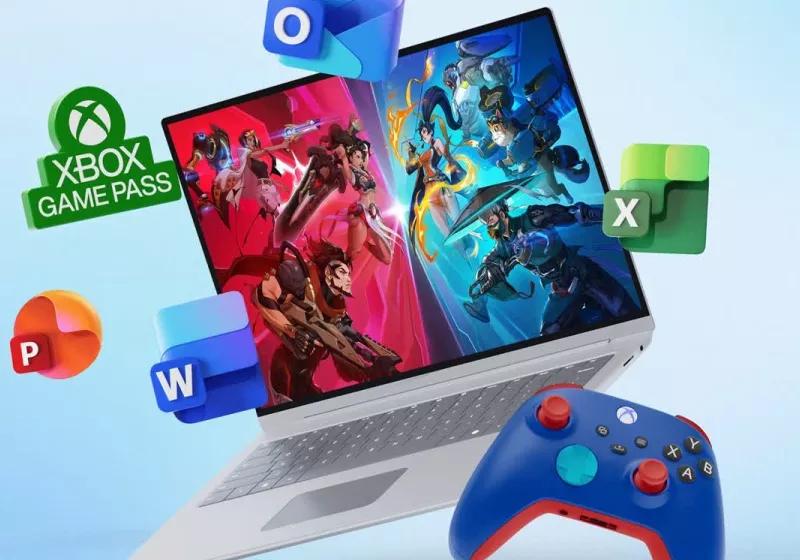
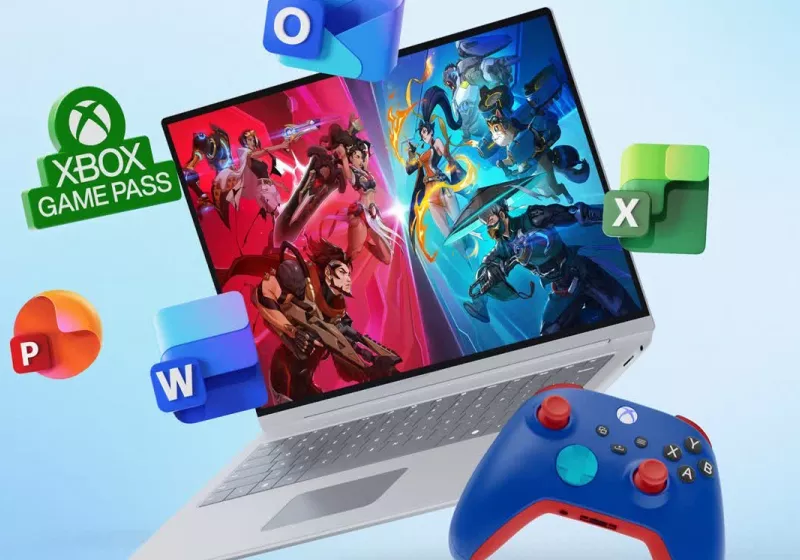
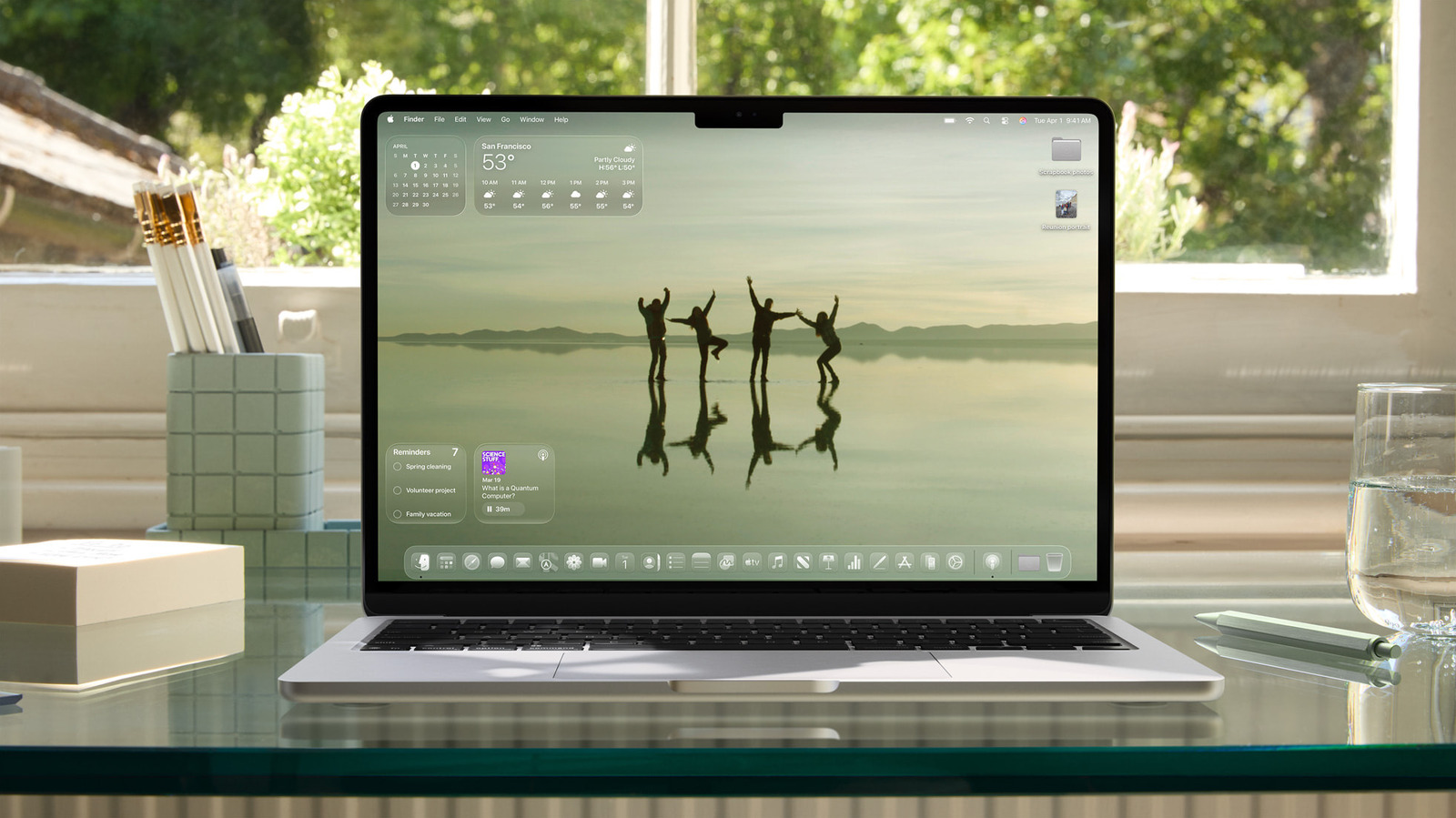
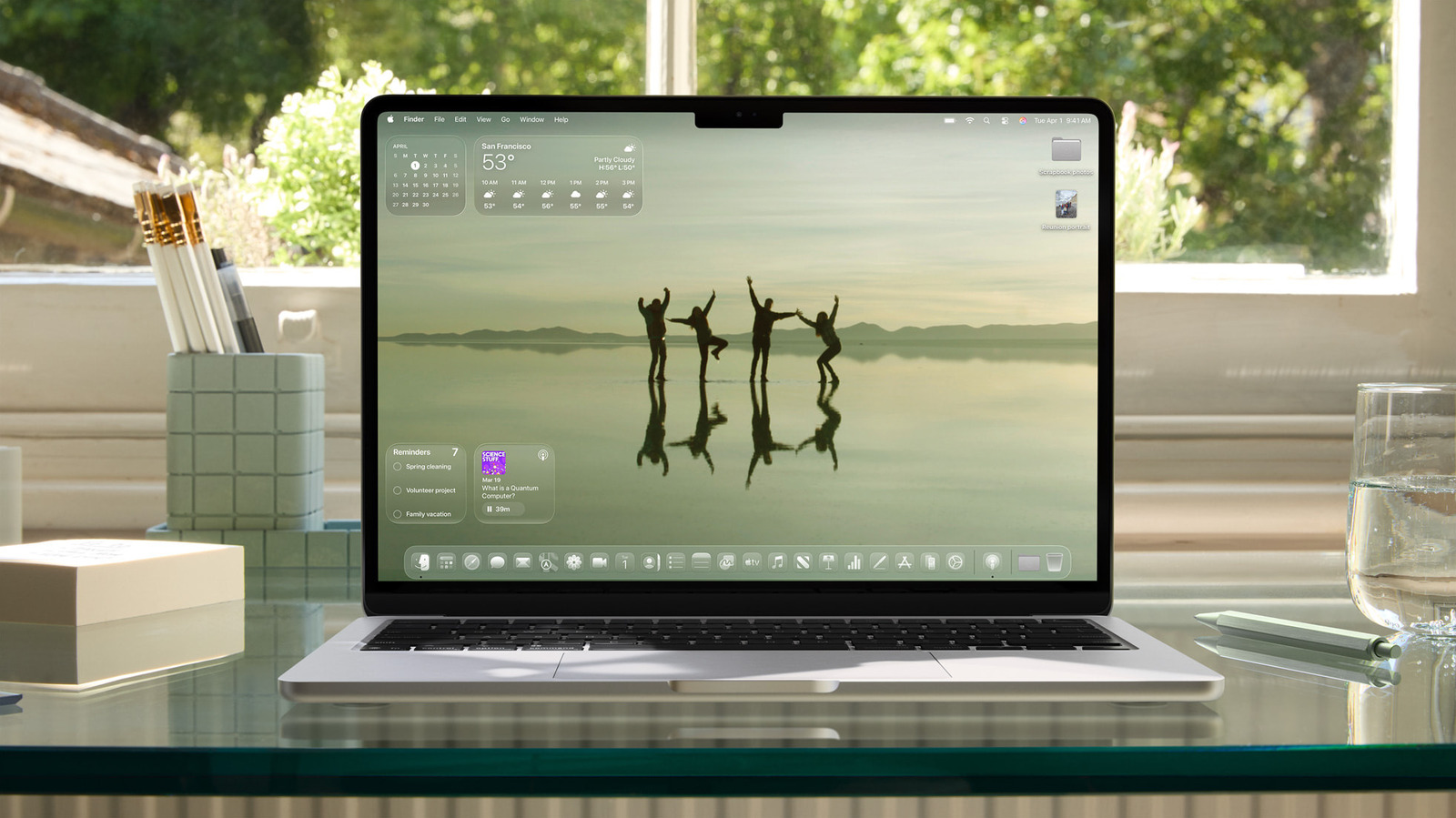
College students who purchase eligible Windows laptops before July 31 can receive a free year of Microsoft 365 Premium, Xbox Game Pass Ultimate, and a customized Xbox controller. Retailers including Best Buy, Amazon, Walmart, and Dell are leaning into the promotion, surfacing models designed to rival the MacBook Neo on… Read Entire Article Source link
If you’re looking to buy a new iPhone, you may be wondering whether to get the iPhone 17 or score a discount on last year’s iPhone 16. To help with that decision, here’s a breakdown of how the two phones compare.
The iPhone 17 starts at $829 — or $799 with carrier activation — the same price as the iPhone 16 when it debuted. But there’s a key difference: The iPhone 17 starts with 256GB of storage, double the 128GB base on the iPhone 16.
The iPhone 16 is now available at a $100 discount. So, is it worth saving some money or should you splurge on the newer phone?
Advertisement
Here’s what to know about each device, from the cameras to the displays to the batteries. (If you’re looking for a slightly more affordable option, check out the iPhone 17E.)
Watch this: iPhone Air Review: A Joy to Hold, at a Cost
Screen differences
Some of the biggest changes between the iPhone 16 and 17 have to do with the display.
Apple says it shrunk the borders around the screen on the iPhone 17, expanding the display from 6.1 inches on the iPhone 16 to 6.3 inches on the iPhone 17 without expanding its dimensions. The new Ceramic Shield 2 cover on the iPhone 17 offers three-times better scratch resistance, according to the company.
Advertisement
The baseline iPhone 17 gets a display with a 120Hz refresh rate, as opposed to the 60Hz display on the iPhone 16. That means the iPhone 17 finally supports an always-on display, so you can glance at the time, your notifications and Live Activities without waking the screen.
The iPhone 17 also gains an anti-reflective coating and a 3,000-nit peak brightness, compared to 2,000 nits on the iPhone 16. That should make it easier to see your phone in bright sunlight.
Camera differences
Both the iPhone 16 and 17 have a 48-megapixel wide-angle camera. But the iPhone 17 upgrades the ultra-wide camera from 12 megapixels to 48 megapixels.
The front-facing camera also gets an upgrade, going from 12 megapixels on the iPhone 16 to 18 megapixels on the iPhone 17. There’s a new Center Stage feature for the selfie camera that can automatically adjust from a portrait orientation to landscape to make sure everyone is in the shot. That means you don’t have to manually rotate your phone to its side anymore when there are more people to fit in the frame.
Advertisement
Both the iPhone 16 and 17 have a Camera Control button on the side to quickly launch the camera, snap some shots and use Apple’s Visual Intelligence tool to learn more about what’s around you.
Processor and RAM
The iPhone 17 packs an A19 chip, an upgrade from the A18 chip in the iPhone 16. One key difference is that the iPhone 17 starts at 256GB, while the iPhone 16 started at 128GB for the same $829 price when it debuted.
Both phones also support the Apple Intelligence suite of AI capabilities, which includes writing tools, image generators and notification summaries.
Battery life
Apple doesn’t share specific battery specs, but it does measure longevity via video playback hours. The iPhone 16 supports up to 22 hours of video playback, according to Apple, while the iPhone 17 bumps that up to 30 hours.
Advertisement
In CNET’s 45-minute endurance test, which includes streaming, scrolling through social media, joining a video call and playing games, the iPhone 17’s battery went from full to 98%. That’s just over the 97% the iPhone 16 scored last year.
And in a three-hour streaming test over Wi-Fi, which involves watching a YouTube video in full-screen mode at full brightness, the iPhone 17’s battery went from full to 89%. In comparison, the iPhone 16 dropped to 86%.
Anecdotally, the iPhone 17’s battery lasts over a day, even after taking photos, scrolling through social media, watching videos, texting, sending emails and more. The same can be said about the iPhone 16, so you likely won’t feel a huge difference between the two when it comes to day-to-day activities.
A new AI-powered Adaptive Power feature arriving with iOS 26 can help conserve the battery by making “small performance adjustments,” like “allowing some activities to take a little longer,” according to Apple.
Advertisement
The iPhone 17 arrives with the upcoming operating system onboard, but you’ll also be able to download iOS 26 on the iPhone 16, as well as some older iPhones, once it becomes available publicly. That should help to stretch your battery life on either device.
Color options and design
What’s on the inside may be most important, but people also care what their phone looks like. Like the iPhone 16, the iPhone 17 comes in a range of fun colors: black, white, mist blue, sage (a light green) and lavender.
For comparison, the iPhone 16 is available in black, white, pink, teal and ultramarine. Both phones have an aluminum frame. Check out the spec chart below for a breakdown of each phone.
6.1-inch OLED; 2,556 x 1,179 pixel resolution; 60Hz refresh rate
Pixel density
460ppi
460 ppi
Dimensions (inches)
5.89 x 2.81 x 0.31 in
5.81 x 2.82 x 0.31 in
Dimensions (millimeters)
149.6 x 71.5 x 7.95 mm
147.6 x 71.6 x 7.8 mm
Weight (grams, ounces)
177 g (6.24 oz)
170 g (6 oz.)
Mobile software
iOS 26
iOS 18
Camera
48-megapixel (wide) 48-megapixel (ultrawide)
48-megapixel (wide), 12-megapixel (ultrawide)
Front-facing camera
18-megapixel
12-megapixel
Video capture
4K
4K
Processor
Apple A19
Apple A18
RAM + storage
RAM N/A + 256GB, 512GB
RAM N/A + 128GB, 256GB, 512GB
Expandable storage
None
None (Face ID)
Battery
Up to 30 hours video playback; up to 27 hours video playback (streamed). Fast charge up to 50% in 20 minutes using 40W adapter or higher via charging cable. Fast charge up to 50% in 30 minutes using 30W adapter or higher via MagSafe Charger.
Up to 22 hours video playback; up to 18 hours video playback (streamed). 20W wired charging. MagSafe wireless charging up to 25W with 30W adapter or higher; Qi2 up to 15W
Fingerprint sensor
None (Face ID)
None (Face ID)
Connector
USB-C
USB-C
Headphone jack
None
None
Special features
Apple N1 wireless networking chip (Wi-Fi 7 (802.11be) with 2×2 MIMO), Bluetooth 6, Thread. Action button. Camera Control button. Dynamic Island. Apple Intelligence. Visual Intelligence. Dual eSIM. 1 to 3000 nits brightness display range. IP68 resistance. Colors: black, white, mist blue, sage, lavender.
Apple Intelligence, Action button, Camera Control button, Dynamic Island, 1 to 2,000 nits display brightness range, IP68 resistance. Colors: black, white, pink, teal, ultramarine.
Apple will add at least four new iPhone Apple Intelligence features to Safari, Wallet, and more when it announces iOS 27 this June.
New Apple Intelligence features are rumored for iOS 27
That’s according to a new report, which cites code discovered on Apple’s backend servers. The new features are yet to be confirmed by Apple, but could bring additional functionality to a beleaguered Apple Intelligence feature set. Apple isn’t expected to announce the iOS 27 update until its June 2026 WWDC event. Rumor Score: 🤔 Possible Continue Reading on AppleInsider | Discuss on our Forums
Usually, you think of bird decoys as being a tool to lure birds to an untimely encounter with a hunter. However, [Interesting Engineering] has a story about robotic bird decoys in Grand Teton National Park that are helping restore the dwindling number of sage grouse in the park.

While some decoys are static, others are motorized to replicate mating rituals. The goal: lure real birds to safer areas to breed. Particularly, they want the birds to avoid areas around the Jackson Hole Airport. The robots are built with help from local students and robotics teams. While some of the construction is made of fabric and foam, actual bird feathers are also used.
The robots mimic lekking behavior, a courtship ritual where male grouse do repetitive motions combined with recorded mating calls. This attracts other grouse and, of course, results in chicks who will be raised nearby.
Advertisement
Assuming the effort is successful, the same technique could help other areas where restored areas are difficult to repopulate. You can find more pictures on the Park’s Instagram, and the title picture is from that collection.
Usually, when we see something like this, the robot is trying to remove something dangerous to the endangered plant or animal, not attract them.
A slide from Snap’s investor update on highlights AI-driven efficiency gains, saying more than 65% of new code is generated by AI.
Snap is cutting 95 jobs in Washington state as part of a broader restructuring that will eliminate about 1,000 positions, or 16% of the company’s full-time workforce.
The Snapchat parent company filed a WARN Act notice with Washington’s Employment Security Department on Wednesday, showing layoffs across its offices in Bellevue, Seattle, and Vancouver, Wash. The cuts take effect between April 16 and June 16, according to the filing.
A filing with the state shows that the affected roles are heavily technical: predominantly software engineers, along with machine learning engineers, data scientists, product managers, and recruiting staff. Senior roles including a director of engineering for Snap’s AI platform and a distinguished software engineer are also on the list of people being laid off.
Rec Room employees who joined Snap were slated to work at Specs Inc., its hardware subsidiary focused on augmented reality glasses. It’s unclear whether any of those newly hired employees are among the 95 cut in Washington.
In addition to the planned job cuts, CEO Evan Spiegel told employees in a memo Wednesday that Snap is also eliminating more than 300 open roles it had planned to fill, and aims to reduce costs by more than $500 million by the second half of the year.
In the memo, Spiegel framed the cuts partly as an embrace of AI, saying advances in the technology allow smaller teams to do what once required larger organizations.
Advertisement
In an investor update, Snap described the situation as a “crucible moment,” saying it is “squeezed between giants with enormous resources and nimble startups moving fast.” The company said more than 65% of its new code is now generated by AI, and that AI agents are answering more than 1 million support questions per month.
The restructuring follows pressure from activist investor Irenic Capital Management, which owns about 2.5 percent of Snap and pushed the company last month to cut costs and sharpen its strategy. Irenic also criticized Snap’s $3.5 billion investment in its Specs glasses, which has yet to deliver strong returns.
Snap’s stock closed up nearly 8% in trading Wednesday on the news, though it remains down about 25% since the start of the year. The company expects to incur $95 million to $130 million in restructuring charges, mostly tied to severance.
Yeah, we know, there’s a camera on your phone that does this and that. But these days its become trendy to turn towards older digital cameras in place of smartphones, and we can tell you from experience, that the joys of having a dedicated photographing contraption are many.
There’s plenty of cheap digital cameras on the secondhand market, but instead of fending off the clothes bros and other reseller types at the thrift store, stay home and build [Doruk Kumkumoğlu]’s Optocam Zero. Inspired by the Kodak Charmera and the like, [Doruk] aimed for something that’s playful, enjoyable, and intuitive to use.
Optocam Zero uses an auto-focus camera module and features eight photo filters. The screen dims when inactive to preserve battery life, but it can be charged back up with USB-C, and you can use it for the duration. And unlike my young adult camera, you don’t have to take out the SD card to see the pictures, just use the custom hotspot interface to transfer them.
Advertisement
If you need to capture a cat yawning real fast, you might want to just use your phone instead, because takes 22 seconds for Optocam Zero to get camera-ready. But when you have a less spontaneous subject in mind, this thing looks like a great choice. Be sure to check out the excellent build guide (PDF) whether you build one or not.
We think the images from the Optocam Zero look pretty crispy. But if you want to go lo-fi, we have that, too.
A federal jury found Wednesday that Live Nation has been operating as an illegal monopoly — a verdict that could lead to the breakup of the entertainment giant and its ticketing subsidiary, Ticketmaster, and bring relief to concertgoers who are sick of dynamic pricing and inexplicable service fees.
The ruling came as internal Slack messages surfaced during the trial showing Live Nation employees joking about taking advantage of customers — including one conversation about parking prices that prosecutors argued revealed the company’s true attitude toward its customers.
The verdict is the latest development in a web of litigation that began when the Department of Justice and 40 state attorneys general sued Live Nation in 2024 for alleged monopolistic practices. The two companies had merged in 2010 to form an entertainment giant that came to control the majority of ticket sales and venue bookings in the country, which made it more difficult for other companies to compete, according to the lawsuit. Without meaningful competition, customers had no choice but to accept Live Nation’s dubious pricing models, which critics say benefit the company’s bottom line, rather than artists.
Last month, the DOJ tentatively settled with Live Nation, while a separate state-level trial was already underway. But 34 of the attorneys general pressed forward — and on Wednesday, the jury delivered its verdict.
Advertisement
During the widely followed trial, the Slack messages surfaced between two Live Nation employees: Ben Baker, now head of ticketing for Venue Nation, and Jeff Weinhold, now a senior director in the ticketing department.
“These people are so stupid,” Baker said in a conversation about raising prices on parking. “I almost feel bad taking advantage of them BAHAHAHAHAHA.”
In a later conversation, also about parking prices, Baker said, “Robbing them blind baby.”
Techcrunch event
Advertisement
San Francisco, CA | October 13-15, 2026
Live Nation argued that these remarks represented “off-the-cuff banter, not policy, decision-making, or facts of consequence.”
Advertisement
As part of the DOJ settlement, Live Nation is supposed to pay a $280 million fine and divest at least 13 of its venues, requiring those venues to accept bookings from competing promoters. But given the jury’s finding that Live Nation operated as an illegal monopoly, the consequences might end up being more severe.
What happens next isn’t clear. Judge Arun Subramanian still has to determine remedies at a later date. But the possibility of breaking up Live Nation and Ticketmaster remains on the table.
Having 32GB in a 2 x 16GB configuration provides plenty of breathing room for demanding workloads, including large creative projects, heavy multitasking, and memory-hungry applications.
Advertisement
Today’s top Corsair Vengeance deal
It’s worth pointing out that this Corsair kit is DDR4 rather than the newer DDR5 standard. DDR5 is much faster overall, but that only helps if your motherboard supports it. For many existing systems, DDR4 is what you want.
This particular kit runs at DDR4 3200 speeds with CL16 timings of 16-20-20-38. Corsair includes dynamic multi-zone RGB lighting with 10 ultra-bright LEDs on each module, delivering colorful lighting effects that can sync with other Corsair components via its iCUE software ecosystem.
If this is the sort of thing you like, lighting effects can be set to match compatible CPU coolers, keyboards, and fans without complicated configuration steps or additional hardware requirements.
Advertisement
A custom performance PCB supports stable signal quality and reliable operation under load, which will benefit your system during long work sessions or when overclocking.
An anodized aluminum heat spreader keeps temperatures in check and Intel XMP 2.0 support will allow you to achieve the rated speed with a single BIOS setting instead of manually tuning multiple memory parameters.
If you’re building a compatible system or upgrading an older machine that already uses DDR4, this is a great deal, especially coming at a time when computer RAM prices are still on the high side.
As we work our way towards a better future for the internet, the most encouraging and exciting part is the people out there building towards that future. Kickstarter founder Yancey Strickler is one such person, and his new company Metalabel has some extremely interesting projects in the works, including the Dark Forest Operating System. This week, Yancey joins the podcast to talk all about his projects and their role in building a better internet.
The ShinyHunters extortion group has leaked data from 13.5 million McGraw Hill user accounts, stolen after breaching the company’s Salesforce environment earlier this month.
Founded in 1909, McGraw Hill is a leading global educational publisher with annual revenue of $2.2 billion, which provides education content and solutions for PreK–12, higher education, and professional learning.
The company confirmed ShinyHunters’ breach claims in a statement shared with BleepingComputer on Tuesday, saying the threat actors exploited a misconfiguration in the compromised Salesforce environment and that the incident didn’t affect its Salesforce accounts, courseware, customer databases, or internal systems.
“McGraw-Hill recently identified unauthorized access to a limited set of data from a webpage hosted by Salesforce on its platform. This activity appears to be part of a broader issue involving a misconfiguration within Salesforce’s environment that has impacted multiple organizations that work with Salesforce,” a McGraw-Hill spokesperson told BleepingComputer.
This came after ShinyHunters added the company to the gang’s dark web leak site, claiming to have stolen 45 million Salesforce records containing personally identifiable information (PII) and threatening to leak the allegedly stolen documents online unless a ransom is paid.
Advertisement
McGraw Hill entry on ShinyHunters’ data leak site (BleepingComputer)
While McGraw Hill has yet to share how many individuals were affected by the resulting data breach, data breach notification service Have I Been Pwned says ShinyHunters has now leaked over 100GB of files containing data linked to 13.5 million accounts.
The exposed information includes names, physical addresses, phone numbers, and email addresses, which threat actors could use to target McGraw Hill customers in spear-phishing attacks.
“In April 2026, education company McGraw Hill confirmed a data breach following an extortion attempt. Attributed to a Salesforce misconfiguration, the company stated the incident exposed ‘a limited set of data from a webpage hosted by Salesforce on its platform’,” Have I Been Pwned said today.
“More than 100GB of data was later publicly distributed, containing 13.5M unique email addresses across multiple files, with additional fields such as name, physical address and phone number appearing inconsistently across some records.”
This week, ShinyHunters has also started leaking data stolen after breaching the Snowflake environment of American video game publisher Rockstar Games. The stolen data includes internal analytics used to monitor Rockstar’s online services and support tickets, as well as in-game revenue and purchase metrics, player behavior tracking, and game economy data for Red Dead Online and Grand Theft Auto Online.
Automated pentesting proves the path exists. BAS proves whether your controls stop it. Most teams run one without the other.
This whitepaper maps six validation surfaces, shows where coverage ends, and provides practitioners with three diagnostic questions for any tool evaluation.
DeepL, a translation company best known for its text tools, released a voice-to-voice translation suite today that covers use cases like meetings, mobile and web conversations, and group conversations for frontline workers through custom apps. The company is also releasing an API that lets outside developers and businesses build on top of DeepL’s tech for customized use cases, such as call centers.
“After spending so many years in text translation, voice was a natural step for us,” DeepL CEO Jarek Kutylowski told TechCrunch in an interview. “We have come a long way when it comes to text translation and document translation. But we thought there wasn’t a great product for real-time voice translation.”
Kutylowski said that the challenges in creating a real-time translation product center on striking a balance between reducing latency — the delay between someone speaking and the translated audio playing back — and maintaining accurate results.
DeepL is releasing add-ons for platforms like Zoom and Microsoft Teams, where listeners can either hear real-time translation while others are speaking in native languages or follow real-time translated text on screen. This program is currently under early access, and the company is inviting organizations to join a waitlist. The company also has a product for mobile and web-based conversations that can take place in person or remotely.
Advertisement
DeepL also lets allows users participate in a group conversation in settings like a setting like training sessions or workshops, allowing participants to join through a QR code.
DeepL said that its voice-to-voice tech can also learn and adapt to custom vocabulary, such as industry-specific terms and company and personal names.
Kutylowski said that AI is reimagining what customer service will look like in the coming years. He noted that a translation layer helps companies provide support in languages where qualified staff are scarce and expensive to hire.
Techcrunch event
Advertisement
San Francisco, CA | October 13-15, 2026
The company said that it controls the entire voice-to-voice stack. However, the current system converts the speech to text, applies translation, then converts that back to speech. DeepL believes that since it has worked on text translation for years, it has an edge in translation quality. Going forward, the company wants to develop an end-to-end voice translation model that skips the text step entirely.

Advertisement
DeepL faces competition from several well-funded startups working in adjacent corners of the space. Sanas, which last year raised $65 million from Quadrille Capital and Teleperformance, uses AI to modify a speaker’s accent in real time — a tool aimed primarily at call center agents.
Dubai-based Camb.AI focuses on speech synthesis and translation for media and entertainment companies Amazon Web Services, helping them dub and localize video content at scale.
Palabra, backed by Reddit co-founder Alexis Ohanian’s firm Seven Seven Six, is building a real-time speech translation engine designed to preserve both the meaning and the speaker’s original voice, putting it in more direct competition with what DeepL is now building.
You must be logged in to post a comment Login