
Crypto World
South Korea Pilots Tokenized Deposits for Government Spending



South Korea’s Ministry of Economy and Finance (MOEF) is preparing to test blockchain-based payments for certain government expenses under a regulatory sandbox exploring distributed ledger technology (DLT)-based financial infrastructure.
The ministry said on Thursday that it selected a pilot project that will use tokenized deposits to execute government operational spending, with a full rollout targeting the fourth quarter of 2026. The program will initially launch in Sejong City and will test predefined spending conditions, including limits on timing and usage categories.
Tokenized deposits are digital representations of traditional bank deposits on blockchain or other DLT infrastructure. Unlike many stablecoins, they remain bank liabilities and are designed to operate within the existing financial system.
The pilot would move South Korea’s deposit-token experiment beyond subsidies and into day-to-day public spending, offering an early test of whether programmable bank-backed money can make government payments more traceable and harder to misuse.
Sandbox to define scope, test limits of tokenized payments
As part of the sandbox, the ministry will work with participating institutions to define the scope of the trial, with plans to expand the model and consider related legal and regulatory changes based on the results, according to the MOEF announcement.
The initiative will focus on government operational expenses, which are currently processed through government-issued credit and debit cards managed through post-use reporting, the ministry said.
Related: South Korea says API crypto trading now makes up 30% of market: Report
Under the pilot, spending parameters such as time windows and permitted categories will be predefined, allowing authorities to test whether tokenized deposits can improve oversight and reduce misuse of funds.
The sandbox approval also enables the use of tokenized deposits for fund execution despite existing rules that require such expenses to be processed through government cards.
According to the ministry, the trial will serve as a basis for evaluating new payment and settlement methods, with potential implications for broader fiscal operations if the model proves viable.
Related: Bank of Korea floats crypto ‘circuit breakers’ after Bithumb blunder
The move follows South Korea’s earlier decision to use tokenized deposits for electric vehicle charging infrastructure subsidies, a pilot announced on March 19 with the Environment Ministry and Bank of Korea.
At the time, MOEF said it aimed to convert one-quarter of treasury fund execution to digital currency by 2030, suggesting the new operational-spending pilot is part of a broader effort to expand tokenized payment rails in public finance.
Magazine: Bitcoin will not hit $1M by 2030, says veteran trader Peter Brandt

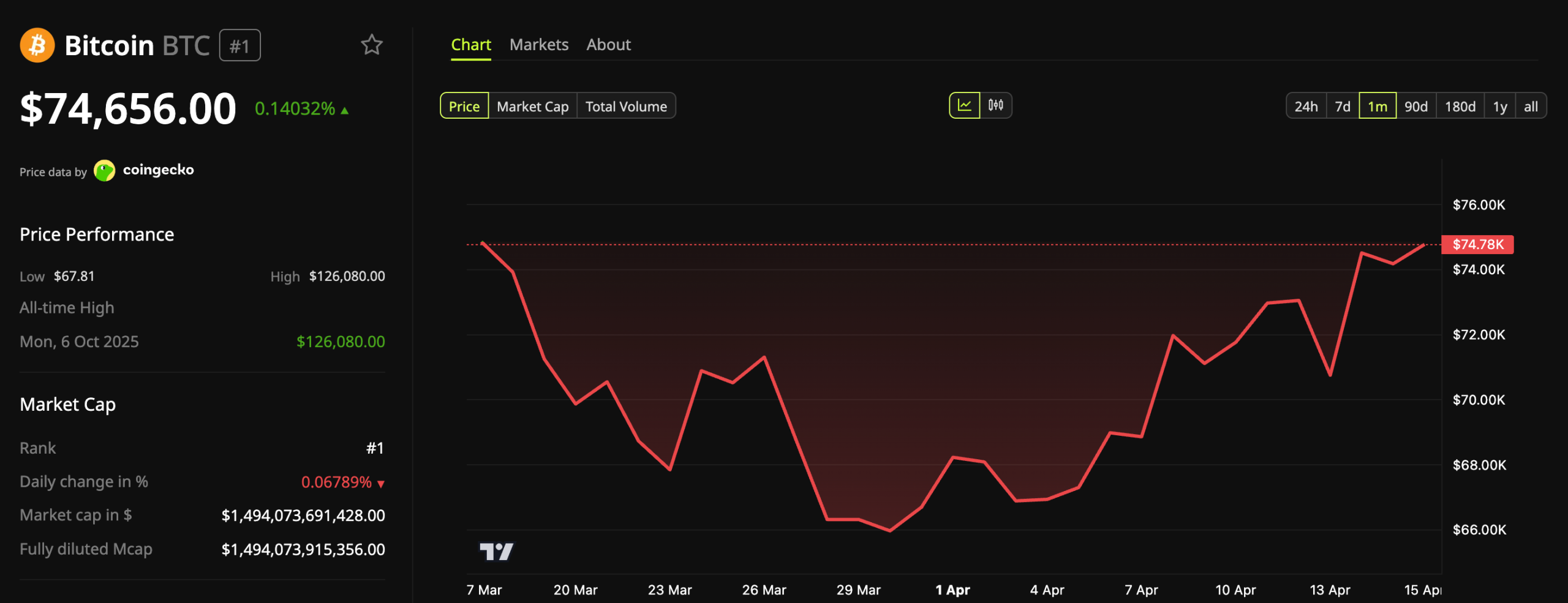
Bitcoin’s (BTC) price trajectory has largely been positive since the US-Iran war, though it has also been volatile. On April 14, BTC briefly climbed above $76,000, its highest price level since early February.
Realized profits hit $1.14 billion during the spike, one of the year’s largest single-day readings. However, the gains failed to hold.
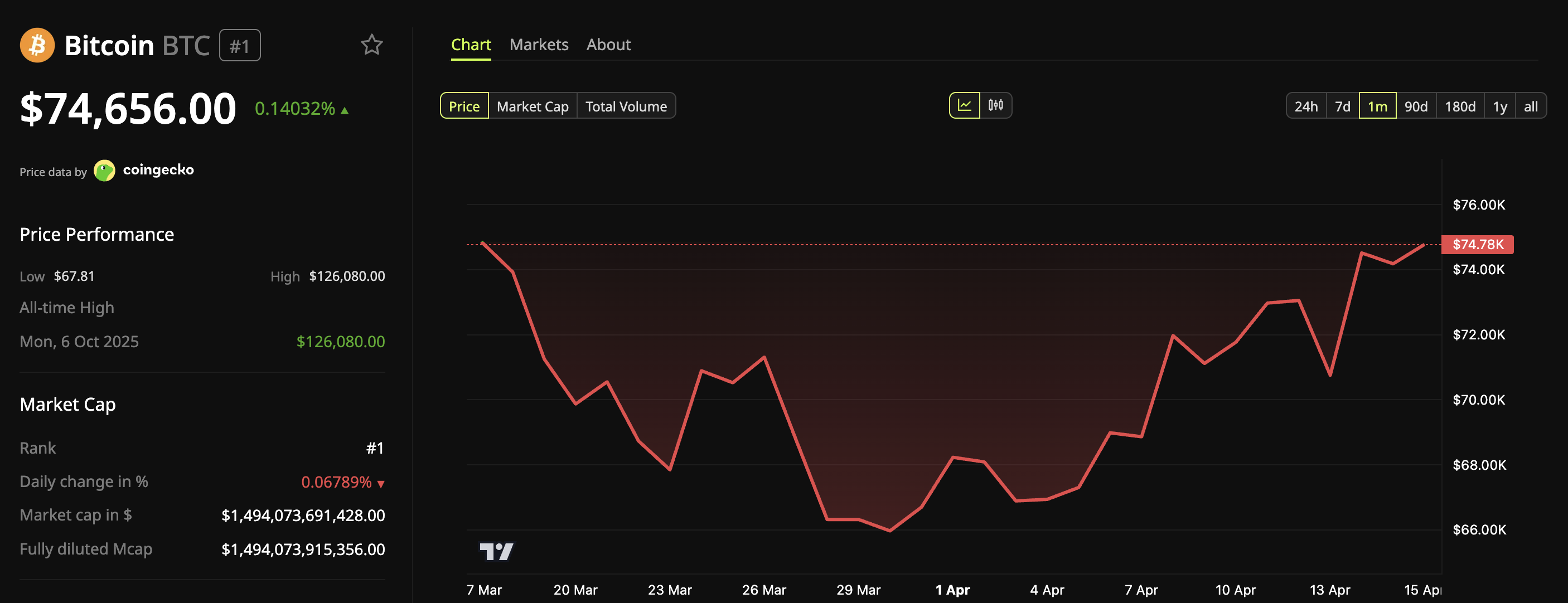
Similarly, BTC’s surge over $75,000 yesterday was met with resistance again. The price adjusted to $74,656 as of press time.
But what is hindering Bitcoin’s rally? According to on-chain signals, it’s short-term holders.
Why Short-Term Holders Are Capping Bitcoin’s Rally
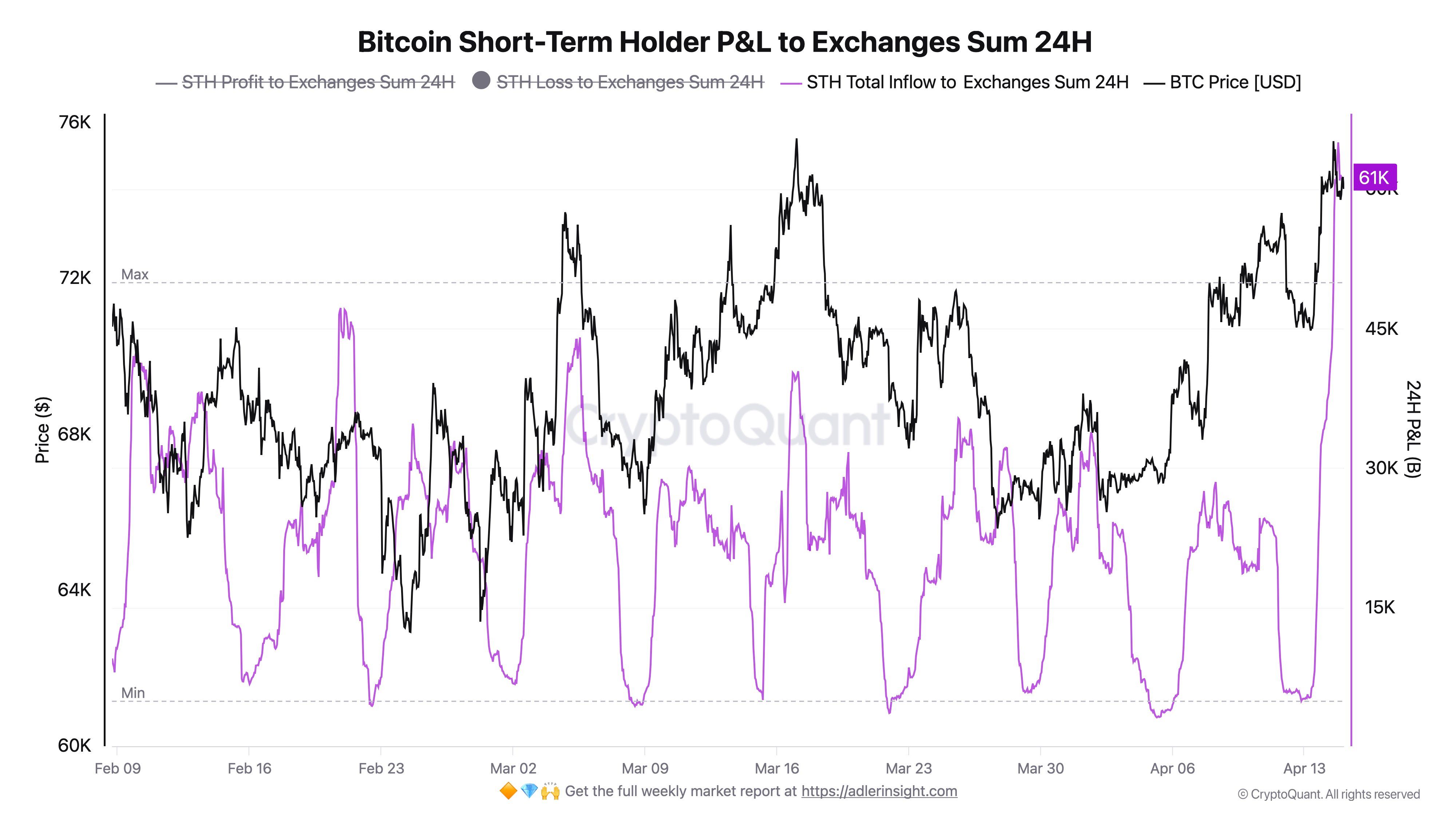
Analyst Darkfost noted that Short-Term Holders (STHs) significantly ramped up exchange flows as BTC tested $75,000 on April 15. Within 24 hours, more than 65,000 BTC moved to exchanges, with 61,000 BTC sent in profit.
“For now, any price increase is being treated as an opportunity to exit the market, whether in profit or at a loss.Yesterday, profits dominated, with 61,000 BTC sent to exchanges in profit. At this stage, STHs remain highly reactive to price movements,” the analyst wrote.
Follow us on X to get the latest news as it happens
On-chain analytics firm CryptoQuant identified the Traders’ On-Chain Realized Price at $76,800 as a key resistance level. This metric reflects the average cost basis of short-term traders and has historically capped relief rallies, including the January 2026 bounce.
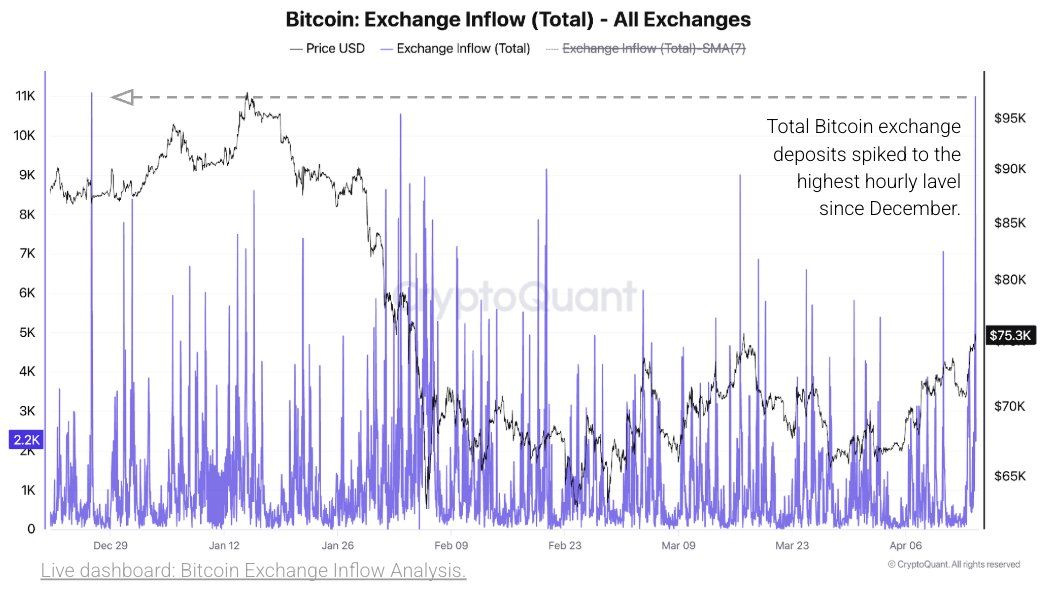
As BTC tested $76,000 earlier this week, hourly exchange inflows rose to approximately 11,000 BTC. This marked the highest reading since late December 2025. According to CryptoQuant, this is,
“A historically reliable warning signal of near-term selling pressure, as holders move coins to exchanges in preparation for potential distribution at key resistance zones.”
The average exchange deposit jumped to 2.25 BTC, the highest daily reading since July 2024. Large individual transfers exceeding 1,000 BTC to Binance drove the increase.
Moreover, the share of large deposits as a percentage of total exchange inflows surged from below 10% to above 40% within days around the $76,000 level.
“Daily realized profits remain at approximately $500 million—below the $1 billion threshold that historically marks a significant profit realization spike in bear markets—suggesting that profit-taking has not yet peaked. If Bitcoin sustains near $76K or rallies further toward the $76.8K Traders’ Realized Price, realized profits could accelerate sharply, adding further near-term selling pressure,” the analysis added.
Glassnode’s weekly report reinforced this view. The 30-day EMA of the Realized Profit/Loss Ratio is 1.16, indicating that investors are broadly selling into strength.
The firm identified the True Market Mean at $78,100 as the critical level for any sustained recovery. A move above that threshold would require the market to absorb the current wave of profit-taking on a sustained basis, something that would demand a significant catalyst, according to the report.
With short-term holders treating every rally as an exit opportunity and institutional participation still rebuilding, Bitcoin faces a clear supply overhang that must be absorbed before any structural trend change can develop.
Subscribe to our YouTube channel to watch leaders and journalists provide expert insights
The post Bitcoin’s Biggest Problem Right Now Isn’t the Market, It’s Its Own Holders appeared first on BeInCrypto.
Crypto World
Drift gets $148 million rescue fund and Tether will replace Circle’s USDC for settlement after massive exploit
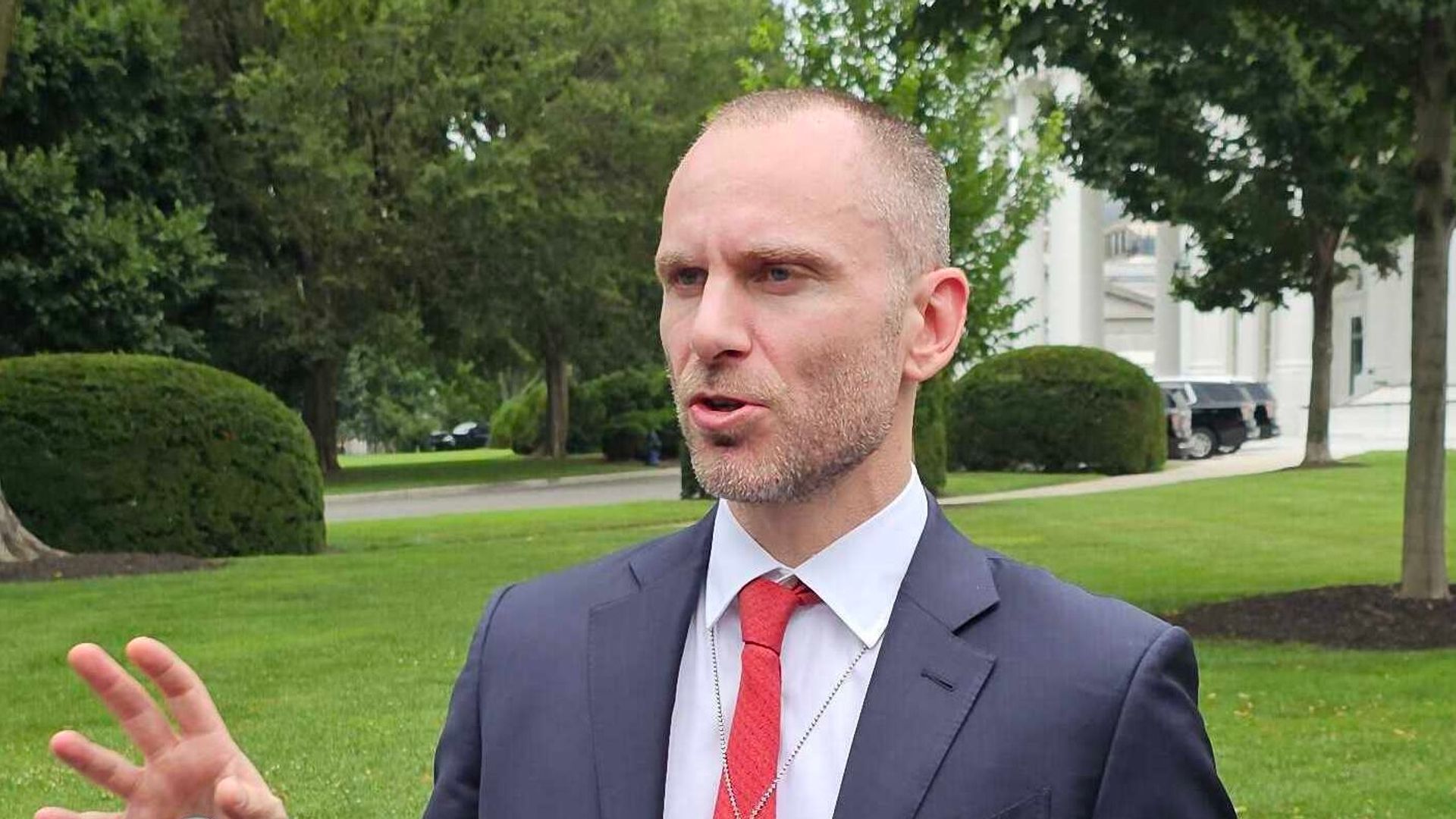
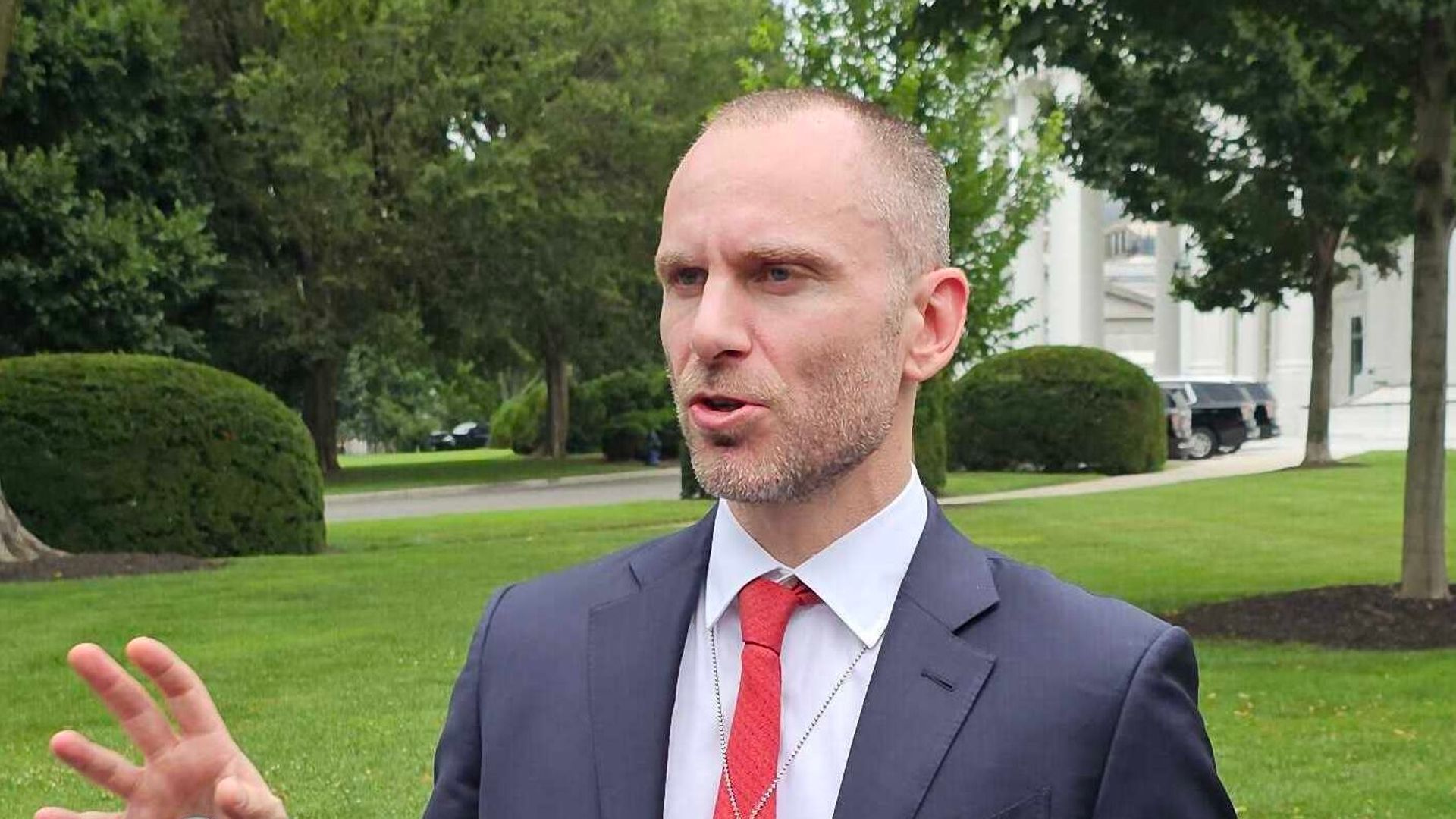
Drift Protocol, the victim of a recent North Korean exploit, plans to relaunch with Tether’s USDT as its settlement layer after securing a proposed funding package of up to $147.5 million from the stablecoin issuer and partners, the companies said on Thursday.
The deal includes up to $127.5 million from Tether and $20 million from the other partners, structured to support user recovery following Drift’s April 1 exploit and to reboot the platform as a USDT-based perpetual futures exchange on Solana. Previously, the platform used Circle’s stablecoin USDC as its settlement layer.
The rescue package combines a revenue-linked credit facility, ecosystem grants and loans to market makers. A portion of trading revenue, alongside committed capital, will be directed to a recovery pool aimed at covering roughly $295 million in user losses over time.
The funding comes after a North Korea-linked group infiltrated Drift Protocol, posing as a quantitative trading firm for about six months before carrying out an exploit that was more than $270 million on April 1. Drift’s governance token, DRIFT, has lost about 70% of its value since the exploit.
Circle came under fire from the crypto community for its seeming unwillingness to halt the money transfer after the exploit. The attacker moved about $232 million in USDC from Solana to Ethereum using Circle’s cross-chain transfer protocol. Some critics, including blockchain investigator ZachXBT, said Circle could have moved faster to blacklist wallets and freeze funds to prevent (or at least slow down) the attacker from moving the assets.
However, Circle’s didn’t take any such actions due to legal risks.
Its CEO, Jeremy Allaire, later said that his company freezes USDC wallets only when directed by law enforcement or courts, not in real time during hacks. The approach reflects Circle’s broader strategy to align closely with regulators and institutions.
Its rival, USDT, meanwhile, is more nimble at freezing funds. The stablecoin issuer has repeatedly frozen assets linked to hacks or other illicit activities previously.
Drift is the largest decentralized perpetual futures exchange on Solana, with more than 175,000 users and roughly $150 billion in cumulative trading volume. Founded in 2021, it offers perpetuals, spot trading, lending, borrowing and cross-margin trading.
Stablecoin war
Competition in stablecoins is intensifying as exchanges, fintechs, and traditional financial institutions race to control the on-ramps, liquidity, and settlement layers that underpin digital asset markets.
Circle’s USDC has been steadily chipping away at Tether’s long-standing dominance of the stablecoin market, gaining share on the back of regulatory alignment and growing institutional use.
While USDT still leads by a wide margin, according to CoinDesk data, with roughly $185.5 billion in supply versus about $78.6 billion for USDC, Circle’s transaction volume outpaced Tether’s in recent months as its market share expanded.
With the new funding package, Tether also plans to fund fee reductions and user incentives tied to Drift’s transition to USDT, while extending liquidity support to designated market makers to bolster trading depth at relaunch.
Drift said the move positions USDT at the center of its trading infrastructure while providing a pathway to restore user funds and resume operations.
Read more: How a Solana feature designed for convenience let attackers drain more than $270 million from Drift


HIVE Digital is raising $75m in 0% exchangeable notes to fund GPUs and data centers as it pivots from pure bitcoin mining toward AI cloud and eyes a TSX up‑listing.
Summary
- HIVE Digital plans a $75m private placement of 0% exchangeable senior notes due 2031.
- Proceeds will fund GPU purchases, AI data center expansion and capped call hedging.
- The miner has TSX conditional approval after posting record $93.1m quarterly revenue.
HIVE Digital Technologies is raising $75 million via a private offering of 0% exchangeable senior notes due 2031, doubling down on artificial intelligence infrastructure and data centers as it prepares to move its listing to the Toronto Stock Exchange.
The notes will be issued by HIVE Bermuda 2026 Ltd., a wholly owned subsidiary, to qualified investors in a deal that also includes a 13‑day option for an additional $15 million of paper.
According to HIVE, net proceeds will fund “general corporate purposes and capital investment, including the purchase of graphics processing units and data center expansion,” as the company accelerates its pivot from pure bitcoin mining toward high‑performance computing and AI workloads.
The securities will not bear regular interest and can be exchanged into cash, HIVE common shares, or a mix of both once final pricing and the initial exchange rate are set, giving investors equity‑linked upside without conventional coupons.
To offset potential dilution from the exchangeable notes, HIVE “intends to fund capped call transactions using cash on hand,” a structure designed to cap the effective conversion price and reduce pressure on common shareholders if the stock rallies.
The company said part of the net proceeds may be used to reimburse the issuer for those capped call costs, linking the financing directly to equity‑protection mechanics.
HIVE also disclosed it has received conditional approval to list its common shares on the Toronto Stock Exchange, with trading expected to transition from the TSX Venture Exchange around April 30, subject to meeting TSX requirements by June 30, 2026. The miner’s shares closed at $2.47 on Nasdaq on Wednesday, with roughly $42 million in volume, compared with an average of about $24.6 million.
The financing push follows what HIVE called “record” quarterly results in its fiscal third quarter ended Dec. 31, 2025, where it reported $93.1 million in revenue, up 219% year‑over‑year and 7% quarter‑over‑quarter. The company still posted a net loss of $91.3 million, driven by accelerated depreciation tied to its Paraguay expansion and non‑cash revaluation adjustments, underscoring the capital‑intensive nature of its shift beyond bitcoin mining.
In March, HIVE announced it would progressively “phase down” ASIC‑based bitcoin mining at its Boden facility in Sweden amid tax disputes with local authorities while upgrading the site into a Tier‑III high‑performance computing data center. The firm has already launched its first GPU cluster in Asunción, Paraguay, where its BUZZ AI Cloud platform is processing early large language model training workloads, signaling how quickly the business is re‑orienting toward AI cloud services.
In previous crypto.news coverage of miners diversifying into high‑performance computing, reporters highlighted how firms are seeking to smooth bitcoin cycle risk by monetizing GPU compute for AI and enterprise clients, a trend HIVE’s latest financing appears designed to accelerate.
Other crypto.news reporting on miners’ capital markets moves and AI pivots has tracked a similar shift, including pieces on public miners’ debt raises and data‑center conversions in North America.
Crypto World
Ethereum Crypto Open Interest Just Hit $34 Billion in 24 Hours: Is a Breakout or a Liquidation Cascade Coming?

Ethereum (ETH) Crypto is trading above $2,300, and its futures market is heating up fast. Open interest across derivatives venues has surged 26%, with total ETH OI climbing to $34.165 billion after an 11.59% single-day jump, the kind of move that historically precedes either a decisive breakout or a sharp liquidation cascade.
The question isn’t whether institutional money is back in ETH. It’s whether the on-chain fundamentals can keep pace with the leverage being piled on.

Ethereum (ETH) Crypto Derivatives OI Hits $34B – Who’s Holding the Risk?
Binance leads all venues with $7.416 billion in ETH open interest, followed by Gate at $4.36 billion, Bybit at $2.331 billion, and OKX at $1.943 billion.
Those four exchanges concentrate the majority of leveraged exposure, and Binance plus OKX alone control 53.3% of the global derivatives market share, a venue concentration that amplifies cascade risk if either platform experiences a squeeze or outage.
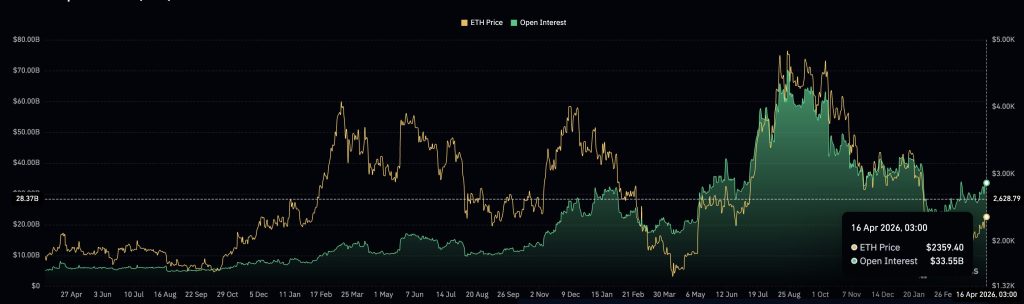
This isn’t the first time ETH OI has ballooned into the $30 billion range. An earlier buildup pushed totals to $30.451 billion, with Binance at $6.593 billion and Gate at $3.875 billion, a near-identical distribution to today’s setup.
Analysts tracking prior episodes note that mid- to high-$20 billion OI levels consistently preceded 24-48 hour liquidation spikes when funding rates flipped. At $34 billion, the setup is more pronounced.
The OI buildup creates what traders describe as a reflexive structure: rising prices pull in more leverage, which amplifies the move higher, but also primes sharper drawdowns if momentum stalls.
Funding rates and liquidation cluster data above the $2,300 handle are the metrics to watch in real time. A 4-6% OI drop, consistent with prior deleveraging episodes, would represent roughly $1.4-2 billion in forced unwinds.
Ethereum Price Prediction: Can ETH Clear $2,400 and Target $2,940?
ETH price is forming a rounded bottom on the 12-hour chart after bouncing from a local low of $1,940 on March 29, with a 20% rebound to $2,330 fueled by improving macro conditions.
The key technical level is $2,400, the neckline of the base structure. If bulls can close above it on meaningful volume, the measured move targets $2,940, representing roughly 32% upside from current levels.
For a deeper look at the recent ETH rally and price structure, the setup has been building since the March flush.
Support is anchored at $2,140, near the 20-day EMA, which acted as a retest zone during the recovery. Bears need a close back below that level to invalidate the rounded bottom thesis, if that breaks, $1,940 comes back into play.
CryptoQuant data shows whale profitability has returned post-rebound, with large-holder optimism pointing toward a $3,000 psychological target.
However, OI at $34 billion without a corresponding increase in network activity means leverage is outpacing fundamentals.
If Ethereum’s on-chain transaction volume and fee generation don’t expand alongside the price recovery, the rally lacks structural support and becomes purely a derivatives-driven phenomenon, fragile by definition.
Institutional ETF inflows into ETH remain a secondary catalyst worth monitoring as a confirmation signal.
The post Ethereum Crypto Open Interest Just Hit $34 Billion in 24 Hours: Is a Breakout or a Liquidation Cascade Coming? appeared first on Cryptonews.
Crypto World
VerifiedX launches Bitcoin privacy layer amid industry push to close institutional privacy gap


A growing push to bring privacy to public blockchains has reached Bitcoin, with VerifiedX unveiling a new layer designed to shield transactions while maintaining auditability.
The system, called Prism, enables encrypted balances, shielded addresses and selective disclosure, allowing users to transact privately while still proving compliance when required, according to an emailed announcement shared with CoinDesk on Thursday.
The timing reflects a broader shift across the industry. The XRP Ledger this week introduced zero-knowledge proof (ZKP) capabilities aimed squarely at institutional users seeking to transact without exposing sensitive data on public ledgers.
That effort highlights what many see as a core barrier to institutional adoption: transparency. While public blockchains provide trust through openness, they also expose balances, counterparties and transaction flows — something institutions typically avoid in traditional finance (TradFi).
Any such development carries added weight when applied to Bitcoin. As the largest digital asset — worth more than the rest of the crypto market combined at times — Bitcoin remains the primary gateway for institutional capital. That means improvements to its functionality, particularly around privacy and usability, have the potential to influence the entire sector more profoundly than similar upgrades on smaller networks.
VerifiedX is applying this model directly to Bitcoin-linked activity rather than building a separate privacy chain. Assets can move between transparent and shielded states, while “viewing keys” enable selective access for auditors or regulators.
Beyond payments, the system supports programmable use cases such as private lending, trading and automated transactions, including agent-driven finance, all without revealing positions or intent onchain.

South Korea’s Ministry of Economy and Finance (MOEF) is advancing a blockchain-based payments experiment for government operating expenses within a regulatory sandbox focused on distributed ledger technology (DLT). In a Thursday announcement, the MOEF said it had selected a pilot that will use tokenized deposits to execute government spending, with a full rollout planned for the fourth quarter of 2026. The program will begin in Sejong City and will test predefined spending conditions, including limits on timing and usage categories.
Tokenized deposits are digital representations of traditional bank deposits that sit on blockchain or other DLT infrastructure. They are designed to function as bank liabilities within the existing financial system, rather than as independent stablecoins or new money. By moving government payments onto a tokenized layer, Seoul aims to investigate whether programmable, bank-backed money can improve traceability, reduce misuse, and streamline public-finance processes while staying anchored to the conventional banking system.
The MOEF’s pilot signals a shift from subsidy-focused experiments toward day-to-day public spending. If successful, the tokenized-deposit framework could become a tested backbone for more transparent and auditable government payments, potentially expanding to broader fiscal operations beyond the initial operational expenses.
Key takeaways
- The Ministry of Economy and Finance has chosen a pilot to test tokenized deposits for government operational spending, with a staged rollout targeting Q4 2026 in Sejong City.
- Tokenized deposits represent bank liabilities issued on blockchain technology, offering a way to digitize government spending while remaining within the conventional financial system.
- The sandbox will define spending scope through predefined time windows and permitted categories, aiming to improve oversight and curb fund misuse.
- South Korea has previously explored tokenized deposits for other public-finance use cases, and the MOEF has signaled broader ambitions to digitalize treasury fund execution in the coming years.
- If the program proves viable, authorities will consider regulatory and legal changes to accommodate larger-scale, programmable government payments.
From subsidies to daily government spending: what changes with tokenized payments
The MOEF described the pilot as a move beyond subsidies toward implementing tokenized deposits in routine public-finance operations. The trial will involve collaboration with participating institutions to delineate the project’s scope, including how spending windows and category permissions are defined. The controlled environment is meant to test both the practicalities of tokenized settlement and the governance mechanisms required to monitor and audit such transactions.
Under the framework, government operational expenses—currently processed through government-issued cards and subsequent reporting—will be reimagined within a tokenized-deposit rails environment. The test is designed to demonstrate whether programmable, bank-backed digital money can enhance oversight and reduce the risk of misuse, all while preserving compatibility with the existing financial ecosystem.
Crucially, the ministry underscored that the tokenized deposits used in this pilot are still bank liabilities. The objective is not to replace conventional payment rails but to explore whether an additional, auditable channel can improve efficiency and transparency in public spending without disrupting traditional financial relationships.
Broader policy arc: past milestones and future implications
South Korea’s approach to tokenized deposits isn’t new. The MOEF has referenced earlier efforts to pilot tokenized deposits for policy objectives, including a March initiative with the Environment Ministry and the Bank of Korea to fund electric-vehicle charging infrastructure subsidies. Those programs reflect a broader ambition to integrate tokenized payment rails into public finance, with the MOEF signaling a goal of converting a significant portion of treasury fund execution to digital instruments by 2030. The current Sejong pilot appears to be a natural extension of that strategy, moving from subsidy-specific pilots toward more routine public-spending workflows.
The evolution of these pilots sits within a wider regulatory and financial landscape in which central banks, ministries, and financial institutions are testing how tokenized, bank-backed money could coexist with traditional currency and payments. If the Sejong test succeeds, it could provide a concrete blueprint for how government agencies implement programmable money in a controlled, auditable manner before expanding to other departments or broader categories of spending.
Implications for investors, builders, and public governance
For the crypto and fintech communities, the MOEF’s sandbox demonstrates a growing appetite for studying how tokenized financial instruments can operate within a regulated government-finance context. Success would offer several potential benefits: enhanced visibility into government disbursements, tighter controls over spending categories and timing, and the opportunity to build interoperable rails that connect banks, public agencies, and private-sector contractors in a traceable, programmable framework.
From an investment and development perspective, the project highlights a potential market for public-sector digital-finance tooling that blends conventional liability structures with modern distributed-ledger infrastructure. Companies and platforms that can demonstrate robust security, compliance with existing financial regulations, and interoperability with public procurement and accounting systems could see demand grow as governments pursue similar pilots domestically and abroad.
However, the path forward is contingent on regulatory clarity and the outcomes of the Sejong trial. Key questions include how the government will govern access to tokenized deposits, how to ensure robust auditability and privacy, and how to manage potential cyber risks inherent in new digital-money rails. Observers will also watch how the experience translates into policy decisions—whether to scale the program, adjust spending rules, or adopt new legal frameworks that explicitly accommodate tokenized, programmable government payments.
In the near term, the MOEF’s announcement underscores a measured, evidence-driven approach to digital finance in the public sector. The focus on predefined parameters—timing, categories, and oversight mechanisms—reflects a cautious but purposeful experiment aimed at extracting concrete lessons before expanding beyond Sejong and beyond operational expenses.
Readers should monitor how the sandbox defines success metrics, how the pilot interfaces with banks and public agencies, and what regulatory changes ministries may pursue as a result. The coming months will reveal whether tokenized deposits can practically streamline public spending while maintaining the governance standards required for public funds.
As South Korea charts this course, the broader question for the market is whether this model can scale, what institutional partners will be involved, and how quickly such technology can translate into tangible improvements in transparency, efficiency, and accountability in government payments.
Ultimately, the Sejong pilot marks a notable milestone in the ongoing exploration of programmable public money—an initiative that could reshape how governments transact, how contractors get paid, and how citizens experience the accountability of public finance.


Coinglass flags $1.64b in BTC longs at risk below $70,721 and $1.25b in shorts above $78,068 as Bitcoin grinds in a tightly leveraged $70k–$78k range.
Summary
- Coinglass data shows $1.64b in BTC longs at risk if price dips below $70,721.
- Another $1.25b in BTC shorts could be wiped out if Bitcoin breaks above $78,068.
- Traders face a narrow band between major liquidation pockets as BTC hovers in the mid-$70,000s.
According to Coinglass, if Bitcoin (BTC) falls below $70,721, the cumulative long liquidation intensity on major centralized exchanges (CEXs) climbs to roughly $1.644 billion. Conversely, if BTC breaks above $78,068, the platform estimates cumulative short liquidations of about $1.25 billion, underscoring how tightly clustered leverage has become around the current range.
At 8:30 a.m. Eastern Time on April 14, the price of Bitcoin stood near $74,315, up from about $71,189 a day earlier but still roughly $10,250 lower than a year ago, illustrating how volatility persists even as BTC trades in the mid‑$70,000s. Prediction markets on Polymarket currently assign roughly a 71% chance that Bitcoin will settle between $74,000 and $76,000 on April 16, with the $72,000 to $74,000 band priced at about 22%, reflecting expectations that BTC will stay pinned near the middle of the liquidation corridor in the short term.
The liquidation bands highlighted by Coinglass suggest that a clean break below $70,721 or above $78,068 could trigger forced selling or buying, amplifying moves as exchanges close out underwater futures positions. In practice, that means spot moves near those levels risk cascading into hundreds of millions of dollars in additional flow as over‑leveraged longs or shorts are flushed.
Recent crypto.news coverage of Bitcoin’s range‑bound trading and liquidity build‑up has pointed to a similar setup, with BTC grinding sideways while leverage and open interest quietly rise. In another crypto.news story on Brazil’s B3 exchange and its tokenized real‑world asset and stablecoin plans, analysts described how Bitcoin’s growing role in institutional portfolios is increasingly tied to broader digital asset infrastructure rather than purely retail speculation.
Grayscale’s institutional outlook for 2026, as reported by crypto.news, framed this phase as “the dawn of crypto’s institutional era,” with Bitcoin at the center of a broader shift toward on‑chain capital markets and stablecoin‑driven settlement. Against that backdrop, the current $70,721 to $78,068 liquidation bracket around BTC is more than just a trading range: it is the zone where aggressive leverage meets a maturing, increasingly institutional market structure.
Relevant crypto.news articles include a deep dive on decentralized governance in DeFi, an analysis of Bitcoin’s range‑bound price action and liquidity, and a report on B3’s tokenization and stablecoin strategy, which together contextualize how BTC’s current trading band fits into a larger evolution of crypto market plumbing.
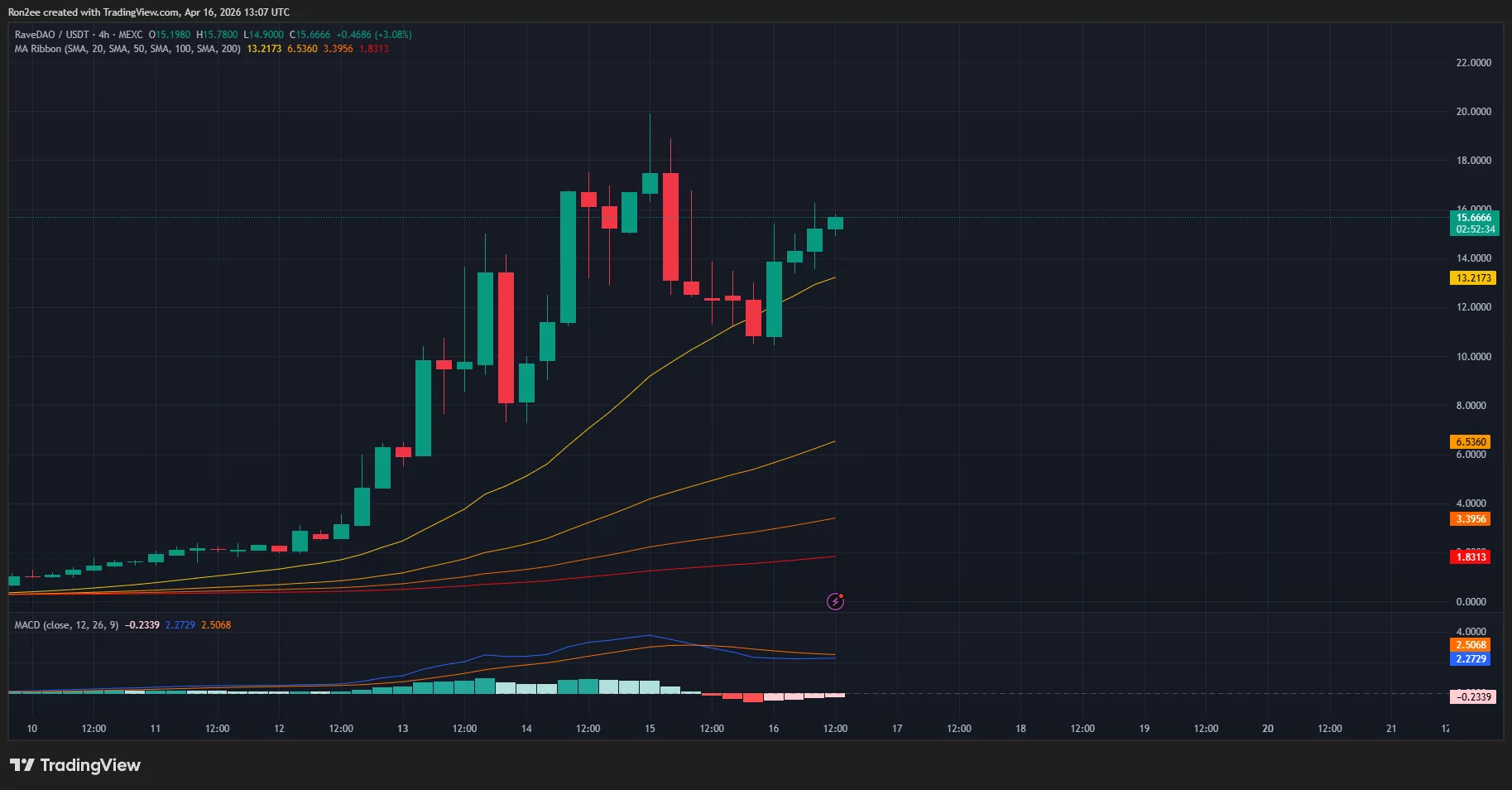
RAVE crypto crashed over 44% to nearly $10 earlier today before backpedalling on some of its losses as investors bought the dip.
Summary
- RaveDAO surged over 5,300% to a $19.54 all-time high before crashing nearly 45% to $10, as profit-taking followed a massive short squeeze.
- The token has since rebounded nearly 50% to around $15, with rising futures open interest and improving funding rates signaling strong bullish positioning.
- Exchange outflows and bullish technical indicators suggest RAVE could attempt another rally toward a new high above $20.
According to data from CoinGecko, RaveDAO (RAVE) price skyrocketed over 5,300% this week to an all-time high of $19.54 on Wednesday, becoming the best-performing crypto asset among the top 100 cryptocurrencies across daily, weekly, and monthly timeframes.
The token price rose due to a massive short squeeze triggered by a sudden surge in social media engagement and speculative retail interest. As prices rose higher, short sellers were forced to liquidate their positions, which added further fuel to the upward momentum and created a feedback loop of buying pressure.
It was also supported by the recent listing of RAVE on several secondary exchanges, which significantly boosted liquidity and accessibility for new traders.
Following the sharp rally, the token fell nearly 45% to near $10 as investors booked profits following the massive surge. It is quite common for investors to book some profits, especially after such an unprecedented vertical move that left the asset in overbought territory.
As of press time, the token has rebounded by nearly 50% back to $15, raising eyebrows over whether bulls are attempting to push the token to a new all-time high.
A look at the token futures market seems to suggest that market conviction remains incredibly high despite the volatility. Notably, the total futures open interest of the token rose over 30% to $470 million in the past 24 hours. This suggests that a majority of traders are leaning towards bullish bets, likely expecting the price to recover amid recent U.S. Iran war ceasefire news, which has improved overall market sentiment.
At the same time, the weighted funding rate of the token is exiting the red zone, a sign that the extreme bearishness of short sellers is fading and long positions are becoming more attractive again.
On the spot market, nearly over $7 million was withdrawn from exchanges over the past day. This means that investors were likely moving their holdings to their cold wallets, likely expecting further price appreciation and intending to hold for the long term.
Amidst these developments, its price action charts also seem to hint that the token is preparing for its next height, potentially to a new all-time high above $20.
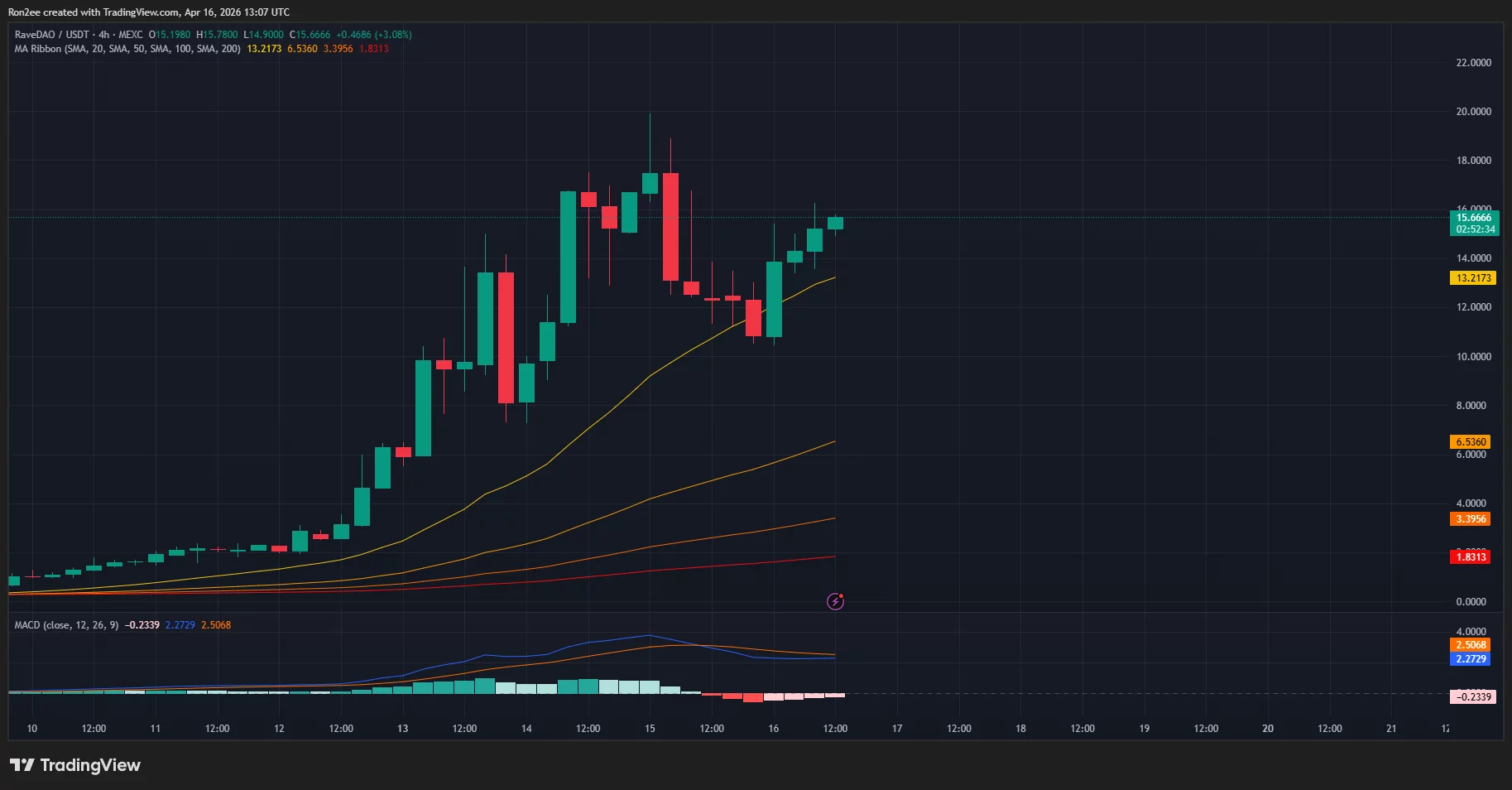
On the 4-hour chart, RaveDAO price was trading above all of the simple moving averages. This means the immediate trend remains firmly bullish. At the same time, the MACD lines are drawing closer to a bullish crossover, which would confirm that the temporary correction has ended and the next leg of the rally is beginning.
Disclosure: This article does not represent investment advice. The content and materials featured on this page are for educational purposes only.

Key Takeaways
- Abbott shares plunge 4.34% even as revenue surpasses forecasts and earnings hold steady
- Operating margins compress significantly as expenses outpace revenue expansion
- Company slashes annual earnings forecast, sparking investor concerns
- Exact Sciences acquisition strengthens oncology portfolio while pressuring near-term profits
- First-quarter results exceed expectations, yet margin weakness drives stock decline
Shares of Abbott Laboratories (ABT) tumbled in pre-market hours despite delivering robust first-quarter revenue figures and maintaining steady earnings. The healthcare giant’s decision to lower its full-year profit outlook coupled with deteriorating operating margins spooked investors, raising red flags about the company’s ability to maintain profitability. Trading at $97.10, the stock shed 4.34% as sellers dominated following the earnings announcement.
First Quarter Results Show Solid Top-Line Growth
Abbott Laboratories posted first-quarter sales of $11.16 billion, surpassing Wall Street projections by 1.3%. The healthcare company achieved 7.8% year-over-year sales growth, demonstrating consistent performance across its diverse healthcare divisions. Organic growth trends remained measured, suggesting the underlying business expansion progressed at a sustainable pace.
On the earnings front, Abbott reported adjusted earnings of $1.15 per share, perfectly aligning with analyst forecasts. This represented an improvement from the $1.09 per share recorded in the comparable quarter last year, showing incremental profit gains. However, meeting expectations precisely without upside failed to generate enthusiasm among market participants.
The diversified healthcare manufacturer operates across multiple segments including diagnostics, medical devices, nutritional products, and established pharmaceuticals. Ongoing innovation initiatives and market expansion strategies have supported consistent quarterly revenue growth. Yet the company’s five-year average annual revenue growth of just 3.9% trails more dynamic competitors in the healthcare space.
Profitability Challenges and Guidance Reduction
Abbott disclosed an adjusted operating margin of 12% for the quarter, representing a substantial decline from the 16.3% margin achieved one year earlier. Expense growth exceeded sales growth, undermining operational efficiency throughout the period. This margin deterioration sparked concerns regarding the company’s cost management capabilities and economies of scale.
Management also trimmed its full-year adjusted earnings per share guidance to a midpoint of $5.48. This downward revision represented a 3.4% decrease compared to previous forecasts, suggesting more conservative internal assumptions. The guidance cut proved instrumental in driving the negative market response to otherwise solid quarterly results.
Examining the longer-term trend, Abbott’s operating margin has contracted by 6.2 percentage points over the past five years, indicating persistent profitability headwinds. Annual earnings per share growth has averaged merely 3.8%, tracking closely with the company’s moderate revenue trajectory. These metrics underscore Abbott’s struggle to achieve meaningful operating leverage despite its considerable scale.
Growth Initiatives and Future Projections
The company recently finalized its purchase of Exact Sciences, bolstering its capabilities in cancer diagnostics. This strategic transaction adds a promising high-growth business line expected to accelerate future sales. However, the acquisition simultaneously introduces short-term earnings dilution, which factored into the revised guidance framework.
Abbott continues investing in medical technology innovation through strategic partnerships and clinical research in cardiovascular health and diabetes management. Recent product trials have demonstrated enhanced clinical outcomes, reinforcing the company’s relevance in evolving healthcare markets. These investments lay groundwork for gradual improvement in growth trajectories.
Wall Street analysts project Abbott’s revenue will expand by 11.1% over the coming twelve months, suggesting accelerating momentum ahead. Forecasted earnings per share growth of 8.5% indicates expectations for profitability recovery. Nevertheless, immediate margin pressures and the reduced guidance continue to create headwinds for investor sentiment in the near term.

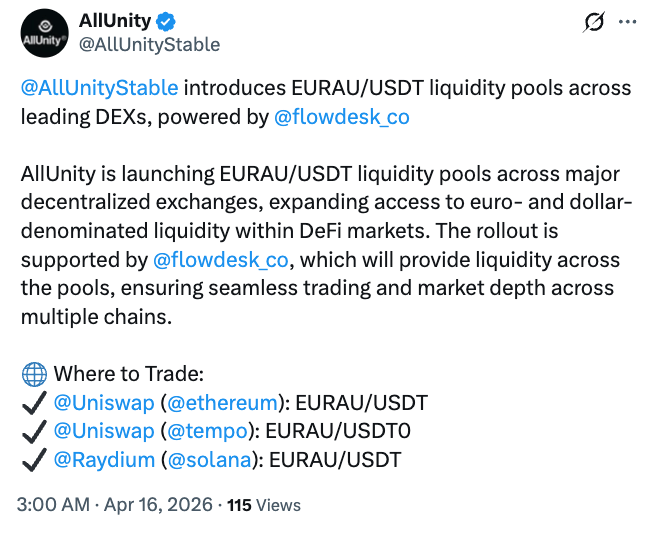
AllUnity, a regulated European stablecoin issuer, is expanding its euro-pegged stablecoin, EURAU, across major decentralized exchanges (DEXs).
The company announced Thursday that its EURAU stablecoin is entering liquidity pools across major DEXs, including Uniswap, currently the largest decentralized exchange by trading volumes.
The rollout includes two EURAU trading pairs, one against Tether USDt (USDT) on Ethereum, and another against USDT0 — an omnichain version of USDT — on the Tempo blockchain. It also includes the EURAU/USDT pair on Solana via the Raydium DEX.

AllUnity’s DEX push comes as uncertainty persists over how far decentralized finance (DeFi) falls within the scope of the European Union’s Markets in Crypto-Assets Regulation (MiCA) regime.
While DeFi is generally considered outside the scope of the framework, the European Central Bank last month questioned whether decentralized autonomous organizations are decentralized enough to remain outside MiCA’s regulatory perimeter.
AllUnity built EURAU under BaFin licence
AllUnity operates as a MiCA-compliant stablecoin issuer after obtaining an Electronic Money Institution license from the German Federal Financial Supervisory Authority (BaFin) in July 2025.
AllUnity launched EURAU on July 31, 2025. The token remains small by market capitalization compared with the largest euro stablecoins.

AllUnity has been expanding the presence of its EURAU stablecoin across exchanges, with listings on centralized exchanges (CEXs) such as Bullish as well as decentralized ones like Aerodrome. Aerodrome became the first DEX integration for EURAU in December 2025.
Dollar stablecoins still dominate
The MiCA framework, which entered into full force in late 2024, has often been seen as a tool to address the dominance of stablecoins pegged to the US dollar.
Some major issuers, including Tether, have openly criticized the framework and declined to seek compliance in the EU, citing concerns over its requirements, which led to some compliant exchanges delisting its USDT stablecoin.
Some banking officials have since said MiCA may not be sufficient to address the dominance of US dollar-pegged stablecoins, which still account for 97% of the $316 billion market globally, according to CoinGecko.
Related: Bank of France calls for tougher MiCA limits on stablecoin payments
As AllUnity’s DEX push also involves major US dollar stablecoins, it remains unclear how regulators will respond to these developments.
“Expanding EURAU liquidity across DEXs is an important step in building a robust and accessible euro liquidity layer,” AllUnity’s executive Rupertus Rothenhäuser said, adding:
“We’re enabling seamless euro — dollar trading, empowering institutions and liquidity providers to participate in deep, efficient markets.”
Cointelegraph contacted AllUnity for comment regarding potential conflicts with the EU regulation but did not receive a response at the time of publication.
Magazine: How crypto laws changed in 2025 — and how they’ll change in 2026

Good Money: 6 Steps to Financial Purpose with John Coleman

Stirling councillors honour late MP’s legacy amid call for respect among members

Big Money Moves: 11 large-cap stocks where institutional investors raised stakes in Q4FY26


-

 Politics6 days ago
US brings back mandatory military draft registration
-
 Sports6 days ago
Man United discover Nico Schlotterbeck transfer fee as defender reaches Dortmund agreement
-

 Fashion6 days ago
Weekend Open Thread: Veronica Beard
-

 Politics6 days ago
Malcolm In The Middle OG Turned Down ‘Buckets Of Money’ To Appear In Reboot
-

 Politics4 days ago
World Cup exit makes Italy enter crisis mode
-

 Business6 days ago
Tesla Model Y Tops China Auto Sales in March 2026 With 39,827 Registrations, Beating Cheaper EVs and Gas Cars
-

 Crypto World3 days ago
The SEC Conditionalises DeFi Platforms to Be Avoided for Broker Registration
-

 Crypto World3 days ago
SEC Signals Exemption for Crypto Interfaces From Broker Registration
-

 News Videos1 day ago
Secure crypto trading starts with an FIU-registered
-
 NewsBeat4 days ago
Pep Guardiola and Gary Neville agree over Arsenal title problem that benefits Man City
-

 Business5 days ago
Ireland Fuel Protests Enter Day 5 as Blockades Spark Shortages and Government Prepares Support Package
-

 Business6 days ago
OpenAI Halts Stargate UK Data Centre Project Over Energy Costs and Copyright Row
-

 Politics6 days ago
LBC Presenter Mocks Trump Over Iran War Failures
-

 Crypto World6 days ago
Federal judge blocks Arizona from bringing criminal charges against Kalshi
-

 NewsBeat2 days ago
Trump and Pope Leo: Behind their disagreement over Iran war
-

 Crypto World2 days ago
SEC Proposes Certain Crypto Interfaces Don’t Need to Register as Brokers
-
 NewsBeat4 days ago
JD Vance announces ‘no agreement’ with Iran over nuclear weapons fear
-

 Tech7 days ago
A version of Windows 10 released a decade ago is now eligible for additional security patches
-

 Business6 days ago
IMF retains floor for precautionary balances at SDR 20 billion
-

 Business6 days ago
Former Liverpool CEO eviscerates FIFA for World Cup ticket pricing
You must be logged in to post a comment Login