The U.S. Internal Revenue Service (IRS) building stands after it was reported the IRS will lay off about 6,700 employees, a restructuring that could strain the tax-collecting agency’s resources during the critical tax-filing season, in Washington, D.C., Feb. 20, 2025.
Kent Nishimura | Reuters
A version of this article first appeared in CNBC’s Inside Wealth newsletter with Robert Frank, a weekly guide to the high-net-worth investor and consumer. Sign up to receive future editions, straight to your inbox.
Advertisement
For seven years, wealthy Americans faced a looming deadline to take advantage of tax provisions that were set to expire at the end of 2025. While the One Big Beautiful Bill Act alleviated much of the uncertainty by making most of the cuts permanent, lawyers and tax accountants say the ever-shifting tax code requires constant planning.
With this year’s Tax Day now behind us, here are five of the most important planning strategies wealthy investors and high earners are thinking about for next year and beyond.
1. Long-short tax-loss harvesting
Last year’s tax bill permanently raised the estate tax exemption to $15 million per person, up from $13.99 million. (It was initially set to be cut in half at the end of 2025.)
The higher threshold has prompted a shift in focus from minimizing federal estate taxes to lowering taxes on income and capital gains. Minimizing capital gains has become crucial after several years of strong market gains, according to Mitchell Drossman, head of national wealth strategies in Bank of America’s chief investment office. The S&P 500 has surged more than 75% since the beginning of 2023.
Advertisement
“The biggest tax story to me is a capital gains and investing story,” said Drossman. “You have lots of clients who are sitting on significant gains.”
Investors are increasingly turning to long-short tax-loss harvesting, an aggressive form of a popular strategy, in order to minimize capital gains, Drossman said. With traditional tax-loss harvesting, investors sell losing assets to offset realized gains on others. Long-short tax strategies, on the other hand, borrow against the portfolio to buy short positions expected to fall and maintain long positions expected to thrive.
“If there’s natural volatility in the markets, you have, now, a greater amount of an asset base to choose from in terms of harvesting losses,” he said. “But when you look at your overall portfolio, you’re still kind of neutral.”
2. Bonus depreciation
The 2025 tax bill renewed bonus depreciation, allowing businesses to deduct the full cost of qualifying assets like machinery, computers or vehicles the first year they are used.
Advertisement
Adam Ludman, head of tax strategy at J.P. Morgan Private Bank, said many clients with operating businesses are investing with bonus depreciation in mind, such as buying private jets.
Real estate developers and investors are trying to get the most bang for their buck by assessing which parts of their properties can be depreciated faster, according to Ludman. For instance, while a commercial building can take 39 years to depreciate, a parking lot can be depreciated over 15 years, allowing owners to recover costs faster.
Get Inside Wealth directly to your inbox
3. Changing domiciles
A wave of blue states are considering new taxes on top earners and high-net-worth individuals in order to cover cuts in federal aid. California’s one-time billionaire tax proposal may end up on the November ballot, while Maine and Washington have recently passed millionaire taxes.
Jane Ditelberg, chief tax strategist for Northern Trust Wealth Management, said a growing number of clients are asking how to change their tax status as these proposals gain traction. Depending on their state, residents can avoid state-level taxes by creating trusts in states with favorable trust income laws like Delaware.
Advertisement
The most straightforward way to avoid local taxes is to change your domicile, which is easier said than done, according to Jere Doyle of BNY Wealth. The senior estate planning strategist based in Massachusetts, which imposes a millionaire tax, said he has had clients move to New Hampshire and establish residency before selling their businesses.
But clients are often loath to take the steps necessary to establish intent not to return, Doyle said. For instance, moving to Florida may not be enough to avoid Massachusetts taxes if you refuse to sell your Martha’s Vineyard home, he said.
“Everyone thinks that if they spend 183 days in another state, you’re domiciled in that state. That’s not necessarily true. Each state’s a little bit different,” he said. “You [have] got to change where you vote, where your car is registered, even where your doctors are, what clubs you belong to, golf clubs, country clubs, things like that.”
The bill limits top-earning donors in two ways. First, starting this year, donors who itemize will only be able to deduct charitable contributions in excess of 0.5% of their adjusted gross income, or AGI.
Second, taxpayers in the 37% tax bracket will have their itemized deductions reduced by 2/37th of the value. This ceiling reduces the effective tax benefit from 37% to 35%.
Ditelberg said many clients accelerated their charitable giving last year before these new rules took effect. She said she anticipates clients will continue to “bunch” their donations, by giving a larger sum in one year rather than spreading it over multiple years, so they only trigger the 0.5% haircut once, either through their foundations or donor-advised funds.
5. Opportunity zones
The tax bill also offered an incentive for business owners and real estate owners to postpone selling their assets. The bill made permanent the qualified opportunity zone program, which allows investors to defer capital gains by rolling them over into a fund that invests in a low-income community.
Advertisement
The opportunity zone funds created under the first Trump administration still exist, but you can only defer the taxes until the end of the year. The new opportunity zones, which have yet to be designated, come with enhanced benefits, especially for investors in rural communities. For instance, if you hold your investment in a qualified rural opportunity fund for five years, your capital gains are reduced by 30% for tax purposes.
But you only have 180 days to roll over your gains, and the new opportunity zone rules don’t take effect until 2027, Ditelberg noted.
“If you’re thinking of incurring a major gain, you may want to defer it until August or September, instead of doing it in May or June, if you think you would like to take advantage of the opportunity zone deferral,” she said. “I think we’re going to see people who are incurring gains in the second half of this year.”
That said, investors are waiting to see what the new funds entail. Drossman said some clients are reluctant to invest in opportunity zones again after their previous investments underperformed.
Advertisement
“It’s a classic example of not letting the tax-tail wag the dog because these need to be sound investments,” he said. “Like with all investments, there is an element of risk and return.”
Since taking up the role eight years ago he has overseen a huge rise in passenger numbers
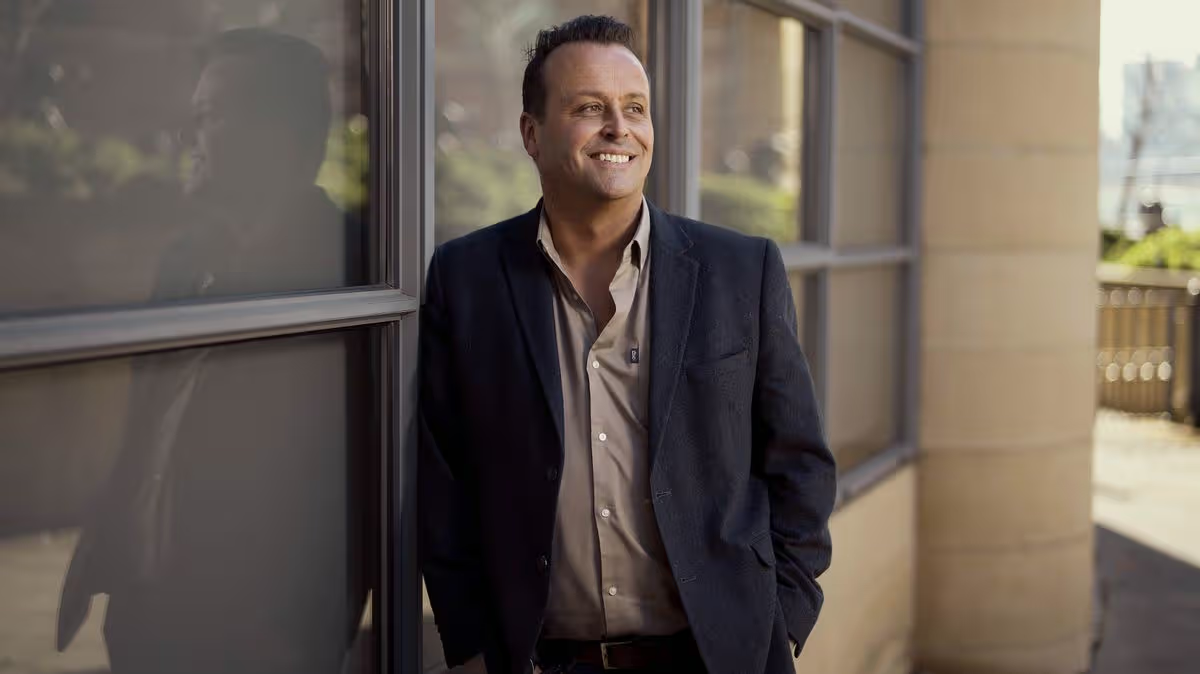
Chief executive of Bristol Airport, David Lees, is standing down after eight years in the role. He will remain in post until a successor is appointed and will support a transition period through to the end of this year.
Under his leadership, the airport – which became majority-owned by Macquarie Asset Management last year – has seen a unprecedented growth in passenger numbers and the delivery of a number of major projects, including the public transport interchange as well as the positive outcome of a planning application to increase passengers to 12 million per annum.
More recently he has led on the next stage of growth outlined in airport’s masterplan to 2040 as well as launching the planning application to increase passenger numbers to 15 million a year. It handled 10.8 million in 2025.
He also steered the airport through the pandemic and then drove the strongest post-pandemic recovery of any UK major airport.
Advertisement
Mr Lees said: “It has been the highlight of my career to lead an amazing, talented and committed team which continues to deliver responsible growth connecting our region to an increasing number of destinations. Together we have delivered significant improvements for our customers, airlines and the community which we are proud to serve including our industry leading position on our pathway to deliver net zero airport operations by 2030.”
The airport’s chairman Jason Holt said: “It falls to me to register the board’s appreciation and thanks for Dave’s efforts over the last eight years. Dave has taken the airport to where it is today through inspired leadership that now sets up the business to build on his work. As Dave passes the baton to his successor, his tenure has safeguarded future growth and prosperity for the airport and its positive impact on the region.
“This is especially so with potential future growth delivering upwards of 1,000 new jobs with increasing long-haul connectivity to global markets. I look forward to continuing to work with Dave for the remainder of the year. As a board we wish him all the very best for the future as he looks back with pride to the fitting legacy and opportunity he leaves behind for the community and our customers.”
In its 2024 financial year the airport grew revenues from £179.2m a year earlier to £204.4m. Its pre-tax profit level rose from £3.8m to £12.2m. After taxation it posted losses of £1.69m. Its biggest revenue contribution came from car parking with £75.6m.
Advertisement
Last month the airport’s legal challenge against Welsh Government plans for a £205m subsidiary support package to rival Cardiff Airport, was rejected in a ruling from the Competition Appeal Tribunal.
Bristol unsuccessfully claimed that the financial support over the next decade from the Cardiff Bay administration to the airport, which it acquired in 2013 for £52m, breached the Subsidy Control Act and would put it at a commercial disadvantage.
Around 20% of Bristol’s annual passenger are drawn from South Wales. Bristol is currently considering whether to lodge an appeal.
Angel One reported a sharp rise in profit for the March quarter, driven by strong client activity and operating leverage. Profit after tax stood at Rs 320 crore in the fourth quarter, marking an 84% year-on-year (YoY) increase, while rising 19% sequentially. The strong profit growth was supported by higher trading volumes and better monetisation across segments.
Total gross revenue came in at Rs 1,467 crore, up 39% YoY and 10% quarter-on-quarter, reflecting improved trading volumes and platform engagement. EBDAT rose to Rs 473 crore, up 17% sequentially, while margins expanded to 41.7%, indicating strong operating leverage.
The quarter saw a rebound in client activity, with total orders rising to 43.1 crore, up 13% sequentially, marking a six-quarter high. The company’s client base expanded to 3.74 crore, while its share in India’s demat accounts rose to 16.7%.
Despite a slight dip in cash segment activity, derivatives and commodity segments saw strong growth, supporting overall order volumes.
Advertisement
Angel One continued to see traction beyond broking. Wealth management assets under management surged 23% sequentially to Rs 10,080 crore, while asset management AUM stood at Rs 360 crore. However, credit disbursals declined 14.7% sequentially, reflecting some moderation in lending activity.
Live Events
The company’s asset management business remained small but growing, with AUM at Rs 360 crore, while mutual fund SIP registrations remained strong at 2.1 million during the quarter. However, credit disbursals declined 15% sequentially to Rs 610 crore, indicating some moderation in lending activity. Management attributed the strong performance to normalisation in client activity and increased adoption of digital platforms, alongside continued investments in AI-led capabilities to improve customer experience and operational efficiency.Angel One is positioning itself as a full-stack digital financial platform, expanding beyond broking into wealth, asset management, and credit, supported by technology-led innovation.
FOX Business’ Connor Hansen joins ‘Varney & Co.’ to break down GOP backlash to Democrat tax hikes.
A growing push for higher taxes on wealthy homeowners in New York is intensifying the debate over how far states should go to raise revenue, as policymakers weigh the broader economic impact on investment, housing and taxpayer behavior.
FOX Business’ Connor Hansen joined FOX Business’ Stuart Varney on “Varney & Co.” to report on the latest proposals, which center on a new tax targeting high-value second homes owned by nonresidents.
Advertisement
FOX Business’ Gerri Willis joins ‘Varney & Co.’ to report on South Hadley, Massachusetts, residents voting on a 50% property tax hike as retirees warn of being priced out and a broader tax revolt grows nationwide.
The proposal comes as voters nationwide continue to express frustration with their overall tax burden, even as Internal Revenue Service data shows average tax refunds are up compared to last year. At the same time, states like New York are advancing policies aimed at capturing more revenue from top earners and luxury property owners, a group that already contributes a significant share of total tax collections.
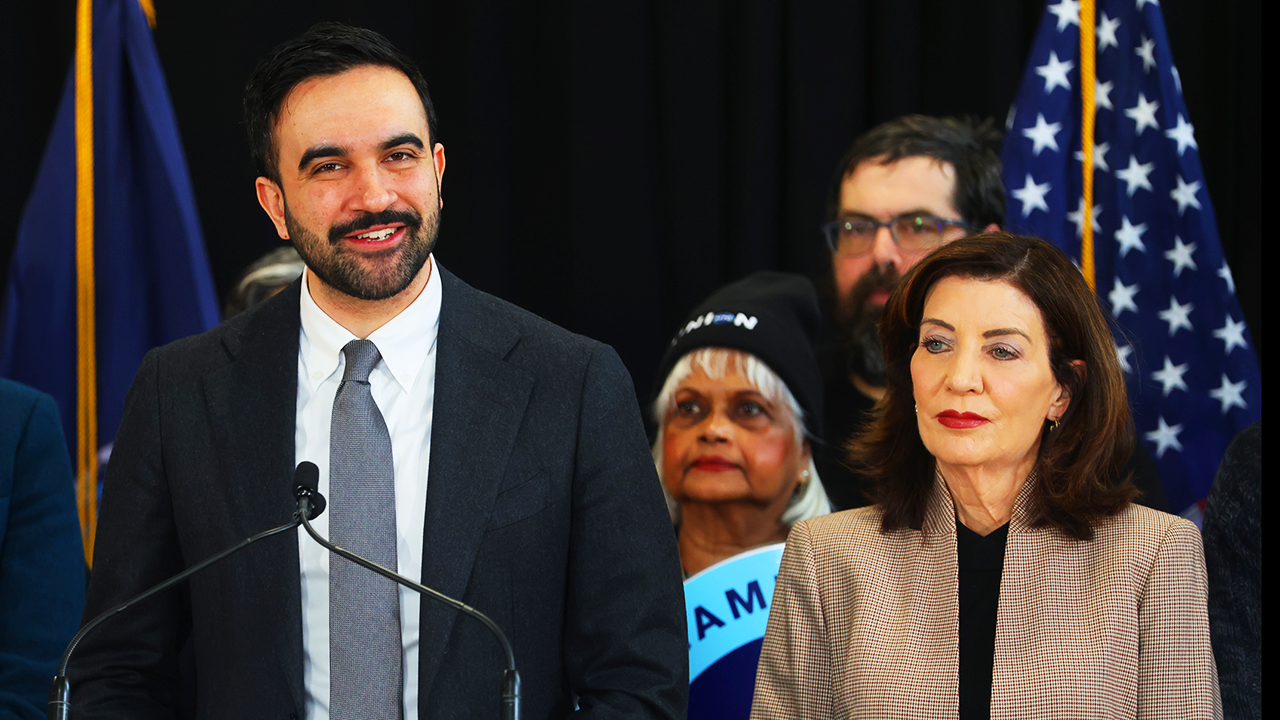
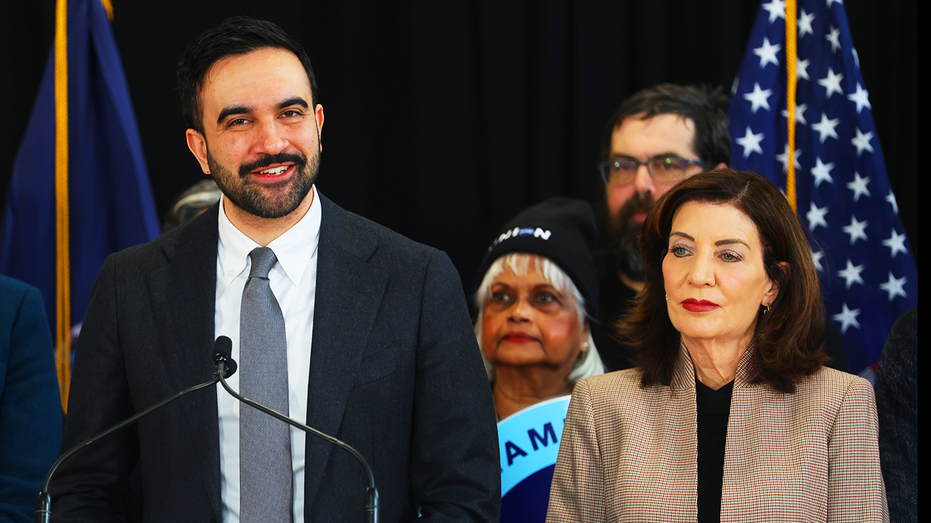
“When I ran for mayor, I said I was going to tax the rich. Well today, we’re taxing it,” Mamdani said.
FOX Business’ Gerri Willis joins ‘Varney & Co.’ to report on the growing red vs. blue state divide over taxes, as new wealth levies target billionaires, property tax revolts spread nationwide and a wave of income tax cuts reshapes the economy
New York Gov. Kathy Hochul has argued that the proposal is designed to address perceived imbalances between full-time residents and part-time property owners.
“The property value of homes like that is driven by everything New York City has to offer. That’s why it’s a valuable place. But the people who own these pied-à-terres are not contributing in the same way that the 8.3 million New York residents do,” Hochul said in a statement on the official website of New York State.
The proposal underscores a widening divide in tax policy approaches as states navigate competing pressures to generate revenue while maintaining economic competitiveness.
The UK could face food shortages by the summer if the Iran war continues, a worst case scenario drawn up by government officials suggests.
The closure of the Strait of Hormuz could continue to disrupt global supply chains, leading to shortages of carbon dioxide (CO2), which is used in the food and drinks industry.
A spokesperson from the Department for Environment, Food & Rural Affairs said these scenarios are planning tools, not predictions of future events.
BBC business correspondent Emma Simpson explains what this could mean for supermarket shelves.
Senator Steve Daines, R-Mont., joins ‘Varney & Co.’ to tout U.S. military gains against Iran and predict gas prices could fall below $3 by late summer.
The head of the International Energy Agency says Europe has “maybe 6 weeks or so jet fuel left” amid shortages due to Iran’s blockade of the Strait of Hormuz, the Associated Press reported Thursday.
IEA Executive Director Fatih Birol offered the analysis in an interview, telling the AP that the Hormuz situation has caused “the largest energy crisis we have ever faced.”
Advertisement
“In the past there was a group called ‘Dire Straits.’ It’s a dire strait now, and it is going to have major implications for the global economy. And the longer it goes, the worse it will be for the economic growth and inflation around the world,” he said.
“I can tell you soon we will hear the news that some of the flights from city A to city B might be canceled as a result of lack of jet fuel,” he added.
Nations across the globe are seeing fuel prices rise amid the war in Iran. (Giuseppe Cacace/AFP via Getty Images / Getty Images)
The war in Iran has caused oil prices to spike in the U.S. as well, though Treasury Sec. Scott Bessent has said the surge is “transient.”
Advertisement
For its part, Iran has threatened to shut down traffic in the Red Sea and other regional shipping lanes if the U.S. continues its blockade of Iranian ports this week.
European airlines are expected to face fuel shortages in the coming weeks if the Iran war continues. (Photo by Nicolas Economou/NurPhoto via Getty Images / Getty Images)
Iran’s Maj. Gen. Ali Abdollahi Aliabadi issued the threat on Iranian television on Wednesday.
Aliabadi said if the U.S. blockade continues, it “creates insecurity for Iran’s commercial vessels and oil tankers” and constitutes “a prelude” to violating the ongoing U.S.-Iran ceasefire, the news outlet reported.
Advertisement
Former National Economic Council director Gene Sperling assesses the market impact of the Iran War on ‘The Claman Countdown.’
“The powerful armed forces of the Islamic Republic will not allow any exports or imports to continue in the Persian Gulf, the Sea of Oman, and the Red Sea,” Aliabadi reportedly added.
TUCSON, Ariz. — More than 75 days after 84-year-old Nancy Guthrie was abducted from her Catalina Foothills home near Tucson, authorities and forensic experts say the chances of finding her alive have grown increasingly slim, even as the high-profile investigation continues with DNA analysis, genetic genealogy and thousands of public tips.
Nancy Guthrie
Guthrie, the mother of NBC’s “Today” co-anchor Savannah Guthrie, was last seen on Jan. 31, 2026, after visiting her older daughter’s home. She was reported missing the next day when she failed to appear at church. Pima County Sheriff’s officials and the FBI believe she was taken against her will in the early morning hours of Feb. 1, with drops of her blood found on the front porch and her pacemaker disconnecting from her phone around 2:30 a.m., suggesting it moved out of range.
Doorbell camera footage released by the FBI in February shows a masked man, described as approximately 5 feet 9 inches to 5 feet 10 inches tall with a mustache, approaching the door wearing gloves and carrying a backpack. He appears armed. Black gloves similar to those in the video were later recovered nearby, though DNA from them and the scene has not matched entries in the FBI’s Combined DNA Index System.
The case has drawn intense national attention due to Savannah Guthrie’s prominence. The family offered a $1 million reward for information leading to Nancy’s safe return, while the FBI increased its own reward to $100,000. Despite receiving tens of thousands of tips, no suspects have been publicly named, and no arrests have been made as of mid-April.
Forensic experts and former investigators describe the odds of recovery as challenging after such an extended period. In typical stranger abductions of elderly victims, the probability of finding the person alive drops sharply after the first 48 to 72 hours. At 75 days, many law enforcement veterans say the focus often shifts from rescue to recovery and prosecution.
Advertisement
“For cases like this, especially involving an elderly victim with visible signs of violence at the scene, the statistical likelihood of survival diminishes significantly with each passing week,” said one retired FBI supervisory special agent familiar with similar investigations. “The window for a live recovery narrows rapidly once initial leads go cold.”
Pima County Sheriff Chris Nanos has stated that investigators believe they know the motive behind the abduction, though details remain undisclosed to protect the probe. Some profilers, including those who worked with the FBI’s Behavioral Analysis Unit, have suggested possible retribution or a personal cause linked to the family, rather than a random act or straightforward ransom scheme. Multiple unverified ransom notes have surfaced, some sent to media outlets demanding cryptocurrency, but authorities have not confirmed their authenticity or role in the case.
DNA evidence and potential genetic genealogy remain key hopes. Experts note that even without a CODIS hit, advanced forensic techniques could eventually identify a suspect through familial matches or other databases. However, processing such evidence can take months, and the lack of immediate breakthroughs has frustrated observers.
The investigation has included searches of the surrounding desert, neighborhood canvassing, review of neighborhood security footage and examination of a possible earlier incident around Jan. 11 that may connect to the abduction. Family members, including Savannah Guthrie’s siblings and their spouses, have been cleared of suspicion and described as cooperative victims.
Advertisement
Savannah Guthrie returned to the “Today” show in early April after taking time away, expressing continued hope while acknowledging the agonizing wait. In public statements, she and the family have urged anyone with information to come forward.
Retired homicide detectives and criminal profilers who have analyzed the case on national platforms point to several factors complicating recovery efforts. The masked intruder’s careful actions — covering the camera lens — suggest planning and awareness of surveillance. The absence of disarray inside the home beyond the porch blood spatter has led some to speculate the abduction may have involved someone familiar with Guthrie or the residence, though no evidence has confirmed that theory.
Statistical data on abductions of elderly women shows that in the vast majority of solved homicide cases involving female victims, the perpetrator is known to the victim in some capacity. Forensic psychologist Dr. Gary Brucato has publicly estimated that around 92 percent of women killed know their attackers, leading him and others to suggest the suspect may be local to the Tucson area and could have had prior interaction with Guthrie or her family.
Yet the case has hallmarks of a calculated stranger crime as well, with the masked figure and apparent use of force. Profiler Ann Burgess, known for her work inspiring the “Mindhunter” series, has floated retribution as a possible motive, potentially tied to the family’s public profile. She has urged authorities to release additional small pieces of evidence to generate more tips from the public.
Advertisement
The prolonged timeline has made the investigation “much harder,” according to former agents. With no major new leads reported in recent weeks, some analysts describe it as drifting toward cold-case status, though law enforcement insists active work continues on digital forensics, Google imagery requests and other avenues.
Challenges specific to elderly victims include limited physical mobility — Guthrie was described as unable to walk far unaided — and potential health vulnerabilities that could reduce survival chances in captivity or if abandoned. Her pacemaker provided an early clue to the timing but has not yielded further location data.
Public interest remains high, fueled by true crime discussions, podcasts and social media speculation. However, officials have cautioned against unfounded theories that could hinder the probe or harass innocent parties. Amateur sleuths have scrutinized everything from the doorbell video to purported ransom communications, but authorities emphasize that verified tips through official channels are most valuable.
As the search enters its third month, the emotional toll on the family is evident. Savannah Guthrie has shared brief messages of gratitude for public support while focusing on privacy during this difficult period. The broader Guthrie family continues to cooperate fully with investigators.
Advertisement
Looking ahead, experts say breakthroughs often come from persistent tip follow-up or advances in forensic technology. Genetic genealogy has solved numerous long-term cases in recent years, offering a potential path forward here. Continued analysis of the gloves, blood evidence and any digital footprints left by the suspect could still yield results.
For now, the chance of finding Nancy Guthrie alive appears low based on standard patterns in similar abductions, though authorities and the family maintain hope and urge vigilance. Anyone with information is asked to contact the FBI at 1-800-CALL-FBI, the Pima County Sheriff’s Department at 520-351-4900 or Crime Stoppers at 88-CRIME.
The case serves as a stark reminder of the vulnerabilities faced by elderly individuals living alone and the complexities of high-profile investigations where media attention both helps and complicates efforts. While the odds may feel daunting after more than two months, law enforcement stresses that cases can resolve unexpectedly through a single overlooked detail or tip.
Nancy Guthrie’s disappearance has captivated the nation not only because of her daughter’s fame but also due to the unsettling circumstances — a quiet suburban home, a masked figure on camera and an elderly woman seemingly taken without clear motive. As weeks turn into months, the focus remains on bringing her home or achieving justice, whatever the outcome.
Advertisement
Investigators continue processing evidence and pursuing leads, with the FBI deeply involved. The public’s role in providing tips remains crucial, as even small observations from the community could shift the trajectory.
For the Guthrie family and the many following the case, the uncertainty persists. Experts agree that while the statistical probability of a safe recovery diminishes daily, the commitment to solving the abduction has not wavered. The coming weeks and months will test whether forensic advances, renewed tips or other developments can pierce the veil surrounding Nancy Guthrie’s fate.
The Netflix logo is seen on an office building in Los Angeles, California, on Feb. 5, 2026.
Michael Yanow | Nurphoto | Getty Images
Netflix kicks off earnings season for media companies on Thursday with a quarterly report that Wall Street hopes will give more updates on the company’s path forward after walking away from its proposed deal for Warner Bros. Discovery.
Advertisement
Here’s how Netflix is expected to perform when it reports results for the first quarter of 2026, according to estimates from analysts polled by LSEG:
Earnings per share: 76 cents estimated
Revenue: $12.18 billion estimated
Last quarter Netflix’s management focused much of its earnings call with investors on its interest in WBD’s streaming and film assets, as well as progress in its advertising business.
Just weeks after the January earnings update, however, Netflix dropped its pursuit for WBD after Paramount Skydance put forth a superior offer for the entirety of WBD.
“Heading into earnings, Netflix finds itself in a very different spot than many expected just a month and a half ago. We were supposed to be talking about the company’s progress toward closing the Warner Bros. deal,” said Mike Proulx, vice president and research director at Forrester. “Instead, the question now is how Netflix competes in a streaming market that’s likely to get more crowded at the top.”
While Netflix’s stock has made considerable gains since walking away from its WBD deal — a more than 25% rally — it has raised questions about the path forward for the streaming giant.
Advertisement
In withdrawing from the acquisition of WBD, Netflix “avoided a substantial increase in debt, extensive regulatory scrutiny, and a long, complex integration process,” according to a Deutsche Bank research note on Monday.
The note added this will allow Wall Street to return its focus to Netflix’s engagement, pricing and advertising.
Outside of the WBD deal and Netflix’s potential aspirations in the broader media landscape, Wall Street’s attention has most often been on the advertising business, which has made considerable gains since launching in late 2022.
In January, Netflix management said the cheaper, ad-supported option was hitting its stride after being “slower out of the gate” in its early years on the market. Netflix reported more than $1.5 billion in advertising revenue in 2025, or about 3% of its total full-year revenue — which it expects to double this year.
Advertisement
For years, Wall Street was focused on subscriber growth for streaming platforms. However, since Netflix reported its first subscriber loss in 10 years in 2022, investors have shifted their focus to profitability. In response, media companies are focusing less on reporting subscriber numbers and more on other business initiatives, such as advertising and pricing increases.
Netflix once again hiked prices in late March, which analysts expect will add to overall 2026 revenue growth. The company did provide a subscriber update in January, when it said it had reached 325 million global paid customers, a new milestone since it had last reported membership numbers the year prior.
This story is developing. Please check back for updates.
‘It can change quite quickly, but now we’re doing really well’
Steven Petrie, managing partner Ward Hadaway
The managing partner of law firm Ward Hadaway has confirmed the company is on track to reach ambitious growth targets, saying more mergers are on the cards for the growing law firm.
Steven Petrie took on the top job two years ago and immediately set out plans to accelerate growth and boost turnover by more than 50% within five years. He also wanted to double turnover in 10 years, reaching £100m in turnover by 2034.
Financial results for its 2025 year show growth is consistent, with turnover increasing from £48.1m to £53.6m as the firm aims for its long-term growth targets while remaining independent. The Newcastle law firm now has around 600 people, with additional offices in Teesside, Leeds, Manchester and Birmingham, having opened in the Midlands in June 2025 and merged with Teesdale Business Park-based Endeavour Partnership the following month.
Mr Petrie said the company’s growth plan is currently tracking ahead of pace, and added that further mergers will likely be seen at Ward Hadaway, on the back of the successful integration with Endeavour Partnership.
Advertisement
Mr Petrie said: “The plan is going really well. We were previously growing at about 6% to 7%, but then we put out what some people call an ambitious vision and in the first year we achieved 11.6% growth. And with a month to go of this financial year, the second year, we’re running at 14% currently. So we’re way ahead of where we ought to be.
“I’m not going to jump too far ahead with that because it can change quite quickly, but now we’re doing really well.
“We opened a new office last year in Birmingham and we’ve already run out of space, so we’ve had to take another floor there. We’re currently at 20 there but now have space for 54.
“What we’ve been really good at is not putting all of our eggs in one basket. If there is a property crash it’s not the end of world because we’ve got a busy employment team or a busy litigation team. We’ve always had a really good spread. As a result, we are certainly looking at key areas.
Advertisement
“It would be fair to see there are some areas which are busier than others and we’re obviously expanding into those areas. But it’s not one size fits all because each regional office is at a different point of its trajectory.”
Mr Petrie said Ward Hadaway is frequently approached by smaller operations keen to become part of the company. However, he said the business is not interested in expansion for growth’s sake, or to simply expand its geographical footprint, and that the firm would only consider joining forces with other companies if they could combine as a ‘good fit’.
He confirmed: “We are talking to various firms, but as you can imagine because we’ve put our growth vision ‘out there’, we’re approached a lot by firms.
“We’re not interested in acquisitions. We’re not looking at acquiring firms. What we are looking to do is add to what we describe as our excellent people culture at Ward Hadaway. We’re looking for like-minded firms who share the same values and who are aligned with values and behaviours as we are.
Advertisement
“And it depends on the regions. For instance, if there was a firm in one of the locations where we have offices we would be really interested. But equally, it wouldn’t put us off if there was a firm that had offices in locations where we’re not currently. Basically, if it was the right fit in terms of client profile and people culture, we’d be interested in having the conversation with them.
“It’s not a case of just trying to be bigger for turnover’s sake. It’s very much a case of people having to be the right fit, and being able to complement what we’ve already got. That’s really important.”
Job creation is also expected in each office, including the Newcastle office which currently employs around 320 people. As the oldest office in the group it also houses all the main business services functions, including the finance team, the HR team and the IT division.
Mr Petrie said: “We are committed to growing every office. We have offices which are smaller and are in bigger legal markets, so they are growing at a faster rate, as you would expect. But that doesn’t mean that we’ve taken my eye off the ball in Newcastle, and we are talking to various people now at all levels.
Advertisement
“The difference in Newcastle is it’s not just about partner recruitment. There’s also a lot of organic growth in Newcastle as we need more junior lawyers and support staff.”
























































You must be logged in to post a comment Login