
Business
Experts Assess Slim Odds of Safe Recovery After 75 Days With No Major Breaks


TUCSON, Ariz. — More than 75 days after 84-year-old Nancy Guthrie was abducted from her Catalina Foothills home near Tucson, authorities and forensic experts say the chances of finding her alive have grown increasingly slim, even as the high-profile investigation continues with DNA analysis, genetic genealogy and thousands of public tips.

Guthrie, the mother of NBC’s “Today” co-anchor Savannah Guthrie, was last seen on Jan. 31, 2026, after visiting her older daughter’s home. She was reported missing the next day when she failed to appear at church. Pima County Sheriff’s officials and the FBI believe she was taken against her will in the early morning hours of Feb. 1, with drops of her blood found on the front porch and her pacemaker disconnecting from her phone around 2:30 a.m., suggesting it moved out of range.
Doorbell camera footage released by the FBI in February shows a masked man, described as approximately 5 feet 9 inches to 5 feet 10 inches tall with a mustache, approaching the door wearing gloves and carrying a backpack. He appears armed. Black gloves similar to those in the video were later recovered nearby, though DNA from them and the scene has not matched entries in the FBI’s Combined DNA Index System.
The case has drawn intense national attention due to Savannah Guthrie’s prominence. The family offered a $1 million reward for information leading to Nancy’s safe return, while the FBI increased its own reward to $100,000. Despite receiving tens of thousands of tips, no suspects have been publicly named, and no arrests have been made as of mid-April.
Forensic experts and former investigators describe the odds of recovery as challenging after such an extended period. In typical stranger abductions of elderly victims, the probability of finding the person alive drops sharply after the first 48 to 72 hours. At 75 days, many law enforcement veterans say the focus often shifts from rescue to recovery and prosecution.
“For cases like this, especially involving an elderly victim with visible signs of violence at the scene, the statistical likelihood of survival diminishes significantly with each passing week,” said one retired FBI supervisory special agent familiar with similar investigations. “The window for a live recovery narrows rapidly once initial leads go cold.”
Pima County Sheriff Chris Nanos has stated that investigators believe they know the motive behind the abduction, though details remain undisclosed to protect the probe. Some profilers, including those who worked with the FBI’s Behavioral Analysis Unit, have suggested possible retribution or a personal cause linked to the family, rather than a random act or straightforward ransom scheme. Multiple unverified ransom notes have surfaced, some sent to media outlets demanding cryptocurrency, but authorities have not confirmed their authenticity or role in the case.
DNA evidence and potential genetic genealogy remain key hopes. Experts note that even without a CODIS hit, advanced forensic techniques could eventually identify a suspect through familial matches or other databases. However, processing such evidence can take months, and the lack of immediate breakthroughs has frustrated observers.
The investigation has included searches of the surrounding desert, neighborhood canvassing, review of neighborhood security footage and examination of a possible earlier incident around Jan. 11 that may connect to the abduction. Family members, including Savannah Guthrie’s siblings and their spouses, have been cleared of suspicion and described as cooperative victims.
Savannah Guthrie returned to the “Today” show in early April after taking time away, expressing continued hope while acknowledging the agonizing wait. In public statements, she and the family have urged anyone with information to come forward.
Retired homicide detectives and criminal profilers who have analyzed the case on national platforms point to several factors complicating recovery efforts. The masked intruder’s careful actions — covering the camera lens — suggest planning and awareness of surveillance. The absence of disarray inside the home beyond the porch blood spatter has led some to speculate the abduction may have involved someone familiar with Guthrie or the residence, though no evidence has confirmed that theory.
Statistical data on abductions of elderly women shows that in the vast majority of solved homicide cases involving female victims, the perpetrator is known to the victim in some capacity. Forensic psychologist Dr. Gary Brucato has publicly estimated that around 92 percent of women killed know their attackers, leading him and others to suggest the suspect may be local to the Tucson area and could have had prior interaction with Guthrie or her family.
Yet the case has hallmarks of a calculated stranger crime as well, with the masked figure and apparent use of force. Profiler Ann Burgess, known for her work inspiring the “Mindhunter” series, has floated retribution as a possible motive, potentially tied to the family’s public profile. She has urged authorities to release additional small pieces of evidence to generate more tips from the public.
The prolonged timeline has made the investigation “much harder,” according to former agents. With no major new leads reported in recent weeks, some analysts describe it as drifting toward cold-case status, though law enforcement insists active work continues on digital forensics, Google imagery requests and other avenues.
Challenges specific to elderly victims include limited physical mobility — Guthrie was described as unable to walk far unaided — and potential health vulnerabilities that could reduce survival chances in captivity or if abandoned. Her pacemaker provided an early clue to the timing but has not yielded further location data.
Public interest remains high, fueled by true crime discussions, podcasts and social media speculation. However, officials have cautioned against unfounded theories that could hinder the probe or harass innocent parties. Amateur sleuths have scrutinized everything from the doorbell video to purported ransom communications, but authorities emphasize that verified tips through official channels are most valuable.
As the search enters its third month, the emotional toll on the family is evident. Savannah Guthrie has shared brief messages of gratitude for public support while focusing on privacy during this difficult period. The broader Guthrie family continues to cooperate fully with investigators.
Looking ahead, experts say breakthroughs often come from persistent tip follow-up or advances in forensic technology. Genetic genealogy has solved numerous long-term cases in recent years, offering a potential path forward here. Continued analysis of the gloves, blood evidence and any digital footprints left by the suspect could still yield results.
For now, the chance of finding Nancy Guthrie alive appears low based on standard patterns in similar abductions, though authorities and the family maintain hope and urge vigilance. Anyone with information is asked to contact the FBI at 1-800-CALL-FBI, the Pima County Sheriff’s Department at 520-351-4900 or Crime Stoppers at 88-CRIME.
The case serves as a stark reminder of the vulnerabilities faced by elderly individuals living alone and the complexities of high-profile investigations where media attention both helps and complicates efforts. While the odds may feel daunting after more than two months, law enforcement stresses that cases can resolve unexpectedly through a single overlooked detail or tip.
Nancy Guthrie’s disappearance has captivated the nation not only because of her daughter’s fame but also due to the unsettling circumstances — a quiet suburban home, a masked figure on camera and an elderly woman seemingly taken without clear motive. As weeks turn into months, the focus remains on bringing her home or achieving justice, whatever the outcome.
Investigators continue processing evidence and pursuing leads, with the FBI deeply involved. The public’s role in providing tips remains crucial, as even small observations from the community could shift the trajectory.
For the Guthrie family and the many following the case, the uncertainty persists. Experts agree that while the statistical probability of a safe recovery diminishes daily, the commitment to solving the abduction has not wavered. The coming weeks and months will test whether forensic advances, renewed tips or other developments can pierce the veil surrounding Nancy Guthrie’s fate.


The Eli Lilly logo appears on the company’s office in San Diego, California, U.S., Nov. 21, 2025.
Mike Blake | Reuters
Eli Lilly will acquire biotech company Kelonia Therapeutics in a deal worth up to $7 billion, the company said Monday.
Lilly will pay $3.25 billion upfront, and the remaining payments are contingent upon clinical, regulatory and commercial milestones, it said. The transaction is expected to close in the second half of 2026.
Kelonia is developing technology to reprogram patients’ T-cells inside the body so those cells can attack cancer, called in vivo CAR-T. Current treatments require that work to be done outside the body, or ex vivo, a process that involves harvesting cells, engineering them in a lab and then reintroducing them. While logistically intensive, the procedure has been successful for blood cancers like multiple myeloma.
“It’s an intravenously delivered therapy, one time,” said Jacob Van Naarden, president of Lilly oncology and head of corporate business development. “It targets your body’s T-cells, transforms them into attacking the cancer in the body, and requires no preconditioning at all.”
Johnson and Johnson’s CAR-T treatment for multiple myeloma, Carvykti, accounted for $1.89 billion in sales last year. Gilead recently acquired partner Arcellx and its rival to J&J’s drug, called anito-cel, for $7.8 billion.
Lilly’s Van Naarden called Kelonia’s data “nothing short of remarkable.”
“We’re going to be a player in hematology,” he said. “It’s nice to have another medicine to go to those doctors with a medicine that can be used broadly, that isn’t relegated to academic medical centers who can do ex-vivo personalized cell therapy.”

Tech billionaire Elon Musk has sparked fresh debate after proposing a “universal high income” program as a solution to job losses caused by artificial intelligence.
In a post shared on X, Musk said the federal government should provide citizens with direct payments.
“Universal HIGH INCOME via checks issued by the Federal government is the best way to deal with unemployment caused by AI,” he wrote. The post quickly gained attention and remains pinned to his account.
Musk argued that such a plan would not lead to inflation. He claimed that advances in AI and robotics would produce so many goods and services that the increase in money supply would not cause prices to rise, ET reported.
His idea builds on growing concerns that automation could replace millions of jobs in the coming years.
JUST IN: Elon Musk says universal high income from the Federal government “is the best way to deal with unemployment caused by AI.”
“AI/robotics will produce goods & services far in excess of the increase in the money supply, so there will not be inflation.” pic.twitter.com/GksSuTk9UF
— Watcher.Guru (@WatcherGuru) April 17, 2026
Experts Warn of Inflation Risks in Musk Income Plan
However, many economists pushed back against the proposal. Sanjeev Sanyal criticized the idea, saying it misunderstands how economies work.
“He is so wrong on this,” Sanyal wrote, adding that while AI may disrupt jobs, it will also create new ones over time. He warned that the plan could place a heavy financial burden on governments.
According to FoxBusiness, another critic, Pratyush Rai, raised concerns about how such payments would affect daily life.
He said giving everyone a high income could increase competition for housing, education, and other limited resources, potentially driving prices higher.
Still, not everyone dismissed the idea. Andrew Yang, who previously promoted a universal basic income plan, expressed cautious support.
“It’s clear that AI will wind up funding universal income. Let’s make that happen ASAP,” he wrote online.
Musk’s proposal goes further than traditional universal basic income programs. While UBI is designed to cover basic living costs while people continue working, a universal high income could reduce the need for work altogether.
This shift raises questions about how society might function if fewer people rely on jobs for income.
Originally published on vcpost.com

USA Rare Earth, Inc. (USAR) Serra Verde Pesquisa E Mineracao Ltda – M&A Call – Slideshow
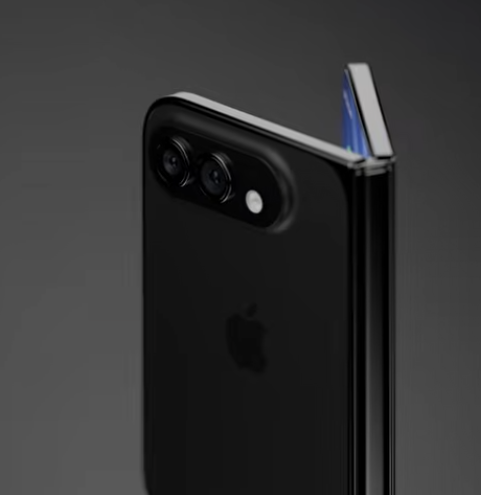
CUPERTINO, Calif. — Apple’s long-awaited entry into the foldable smartphone market, widely referred to in leaks as the iPhone Fold or potentially the iPhone Ultra, is generating buzz with its promised ultra-thin 4.5mm design, near-crease-free 7.8-inch inner display and book-style passport form factor. Yet despite claims of solving key industry pain points like screen durability and hinge reliability, early reports and industry patterns suggest prospective buyers should proceed with caution.

Here are 10 compelling reasons why waiting — or skipping the iPhone Foldable Ultra altogether — might be the smarter move when it arrives, potentially priced north of $2,000.
1. Eye-watering price tag Rumors point to a starting price of $2,000 or higher, possibly reaching $2,400, making it Apple’s most expensive iPhone ever. That premium reflects the complex dual-display setup, titanium hinge and advanced materials, but it dwarfs even current flagship Pro Max models. For many consumers, the cost rivals a high-end laptop or tablet bundle without guaranteed long-term value in a category still maturing. Early adopters of rival foldables have often regretted the steep outlay when repair bills or resale values disappoint.
2. First-generation risks Apple’s foldable would be a debut effort in a segment Samsung has dominated for years. History shows first-gen devices from even the most polished companies often carry teething problems. Engineering validation tests have already encountered more snags than anticipated in hinge reliability, display durability under repeated folding and component integration into an ultra-slim chassis. While Apple aims to minimize these issues, buyers could face unexpected quirks in software optimization for the unique form factor or multitasking on iOS.
3. Potential production and availability delays Recent reports indicate mass production has slipped by one to two months, with engineering hurdles in the test phase raising concerns about shipment timelines. Although Apple has not officially signaled a postponement beyond fall 2026, supply constraints could mean limited initial stock, long waitlists and higher secondary-market prices. Nikkei Asia cited sources noting that issues are more complex than expected, potentially pushing first shipments by months in a worst-case scenario.
4. Durability doubts despite Apple’s claims Foldables remain mechanically vulnerable. Even with Apple’s touted titanium alloy hinge and dual-layer glass approach for a near-crease-free experience, the inner screen uses flexible materials prone to scratches from fingernails or debris. Dust and sand can infiltrate the hinge, leading to grinding or failure over time. Repeated folding cycles — thousands per year for heavy users — test longevity in ways slab-style iPhones never face. Past foldable owners frequently report screen failures or hinge wear within 18-24 months.
5. Repair costs and hassle Replacing a damaged foldable display often exceeds $1,000 due to the integrated hinge and layered construction. Apple’s service network, while extensive, has limited experience with this technology. Out-of-warranty repairs could prove prohibitively expensive, and insurance add-ons may not fully offset risks. Many consumers end up trading in early or switching back to traditional phones when issues arise, diminishing the device’s resale value.
6. Battery life compromises The slim 4.5mm open profile and dual screens demand engineering trade-offs. Rumors suggest a large battery around 5,400-5,800mAh, yet real-world usage with an always-on inner display, multitasking and 5G connectivity could drain it faster than a standard iPhone 18 Pro Max. Early foldable adopters commonly complain of needing midday top-ups during heavy productivity or media sessions. Apple’s optimization prowess may help, but physics limits what even the best software can achieve in such a constrained chassis.
7. Compromised camera system Leaks indicate a dual 48MP rear camera setup rather than the triple-lens array found on current Pro models. Space constraints from the folding mechanism and thin design may limit sensor size, zoom capabilities or low-light performance. Users accustomed to iPhone photography excellence could notice differences in versatility, especially for video or portrait work that benefits from multiple focal lengths.
8. Software and ecosystem growing pains iOS will need significant adaptations for seamless inner/outer screen transitions, app continuity and true multitasking akin to iPadOS. While Apple promises polished experiences, first-gen foldables from competitors have suffered from awkward app scaling, notification glitches or suboptimal keyboard layouts in folded mode. Developers may take time to fully optimize popular apps, leaving early buyers troubleshooting workarounds.
9. Bulk and everyday practicality Closed, the device resembles a compact 5.5-inch phone, but opened it becomes a wider, passport-style tablet. That hybrid form can feel awkward in pockets, during one-handed use or in calls. The hinge adds weight and thickness compared to ultra-slim slab phones, potentially reducing the “always carry” convenience that defines iPhone appeal for many.
10. Better alternatives exist today — and tomorrow Samsung’s Galaxy Z Fold series has iterated through multiple generations, offering refined software, wider accessory support and often lower entry prices. Waiting for the iPhone Foldable Ultra’s second or third iteration could deliver meaningful improvements in durability, battery and pricing. Alternatively, sticking with a proven iPhone 18 Pro Max or even pairing a current iPhone with an iPad mini provides similar productivity without foldable risks. The category itself remains niche; many who try foldables return to traditional designs for reliability.
Industry analysts note that while Apple could elevate foldables with its materials science and ecosystem integration, the device arrives amid ongoing supply-chain pressures and broader economic caution around premium gadgets. Leaks highlight a titanium frame and Touch ID side button replacing Face ID due to space limits, further underscoring design compromises.
For enthusiasts drawn to the novelty of a crease-minimized 7.8-inch screen and potential A20-series chip with ample RAM, the iPhone Ultra might still tempt. Yet the combination of high cost, mechanical vulnerabilities, repair economics and first-gen uncertainties creates a risky proposition.
Apple has built its reputation on delivering polished, reliable products that justify premium pricing through longevity and user experience. In the foldable space, that bar is harder to clear given inherent physical challenges. Consumers weighing an upgrade should consider their usage patterns: heavy media consumers or multitaskers might benefit, but casual users or those prioritizing durability and value could find the traditional iPhone lineup more satisfying.
As testing continues and more concrete details emerge closer to the expected September 2026 announcement, prospective buyers would do well to monitor independent durability tests, real-world battery data and early repair cost reports. The foldable dream has captivated tech fans for years, but turning that vision into a must-own device without significant drawbacks remains an uphill climb — even for Apple.
In the meantime, many will stick with slab-style flagships that deliver proven performance without the folding compromises. The iPhone Foldable Ultra could ultimately redefine mobile computing, but for now, the 10 reasons above suggest exercising patience before opening your wallet for Apple’s boldest iPhone experiment yet.
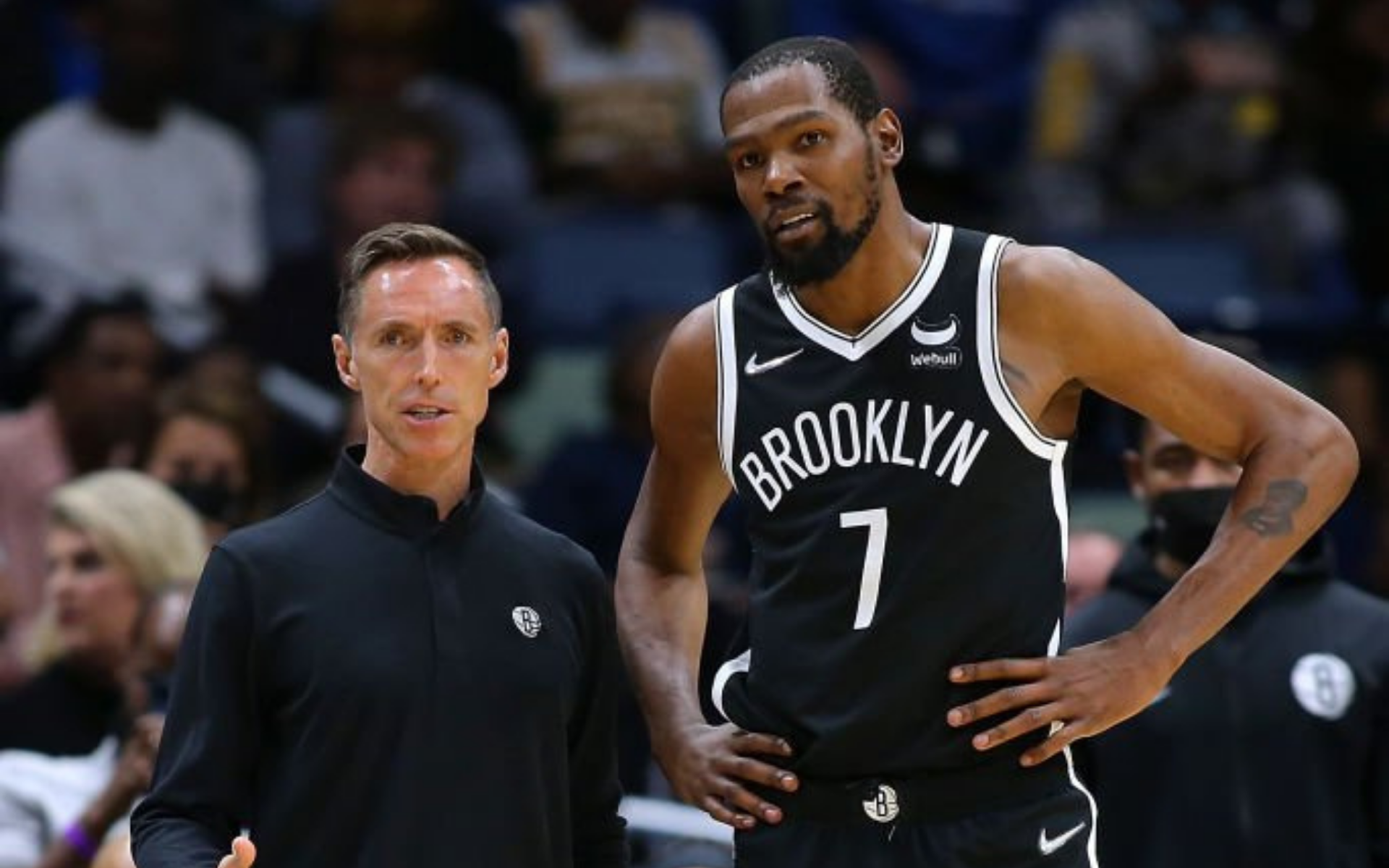
LOS ANGELES — Kevin Durant will miss the Houston Rockets’ playoff opener against the Los Angeles Lakers after suffering a right knee contusion in practice, dealing an early blow to one of the Western Conference’s most intriguing first-round matchups.
Rockets coach Ime Udoka announced the decision about 90 minutes before Saturday’s Game 1 tipoff, ruling out the 37-year-old superstar who had been listed as questionable earlier in the day. Durant sustained the injury Wednesday when he bumped knees with a teammate while chasing a loose ball. Imaging showed no structural damage, but the knee remains tender and limits his mobility.
“He bumped a knee in practice on Wednesday,” Udoka said. “Hopefully, it’s a one-game thing, but he tried it out just a short time ago and didn’t feel good enough.”
Udoka added that the contusion struck “in an awkward spot” above the patella tendon. “The knee is very tender and tough to bend in certain ways,” he explained. “Pain tolerance is one part, but limited movement is another.”
Durant, who played 78 regular-season games and logged heavy minutes as a key piece in Houston’s push for postseason positioning, underwent an MRI after the incident. Team officials expressed optimism that the issue won’t sideline him long-term, describing him as day-to-day. Still, his absence forced immediate adjustments for a Rockets squad built around scoring punch from its veteran leader.
Without Durant, Houston started Josh Okogie at small forward alongside Reed Sheppard, Amen Thompson, Jabari Smith Jr. and Alperen Sengun. The lineup shift underscored the challenge of replacing a player averaging nearly 26 points per game on efficient shooting.
The Lakers, already navigating their own injury concerns with Luka Doncic and Austin Reaves sidelined indefinitely, seized the opportunity. Los Angeles rolled to a 107-98 victory in Game 1, with LeBron James posting 19 points, 13 assists and eight rebounds. Luke Kennard erupted for a playoff career-high 27 points, including perfect 5-for-5 shooting from three-point range. Deandre Ayton added 19 points and 11 rebounds in the frontcourt.
Lakers coach JJ Redick downplayed any strategic overhaul tied to Durant’s status. “I don’t think it affected our mentality,” Redick said afterward. “This is all we talked about for two months, just our playoff mentality. You can’t worry about who’s in or out of the lineup. It’s our game plan. It’s our standards. It’s how we play.”
The series now shifts with uncertainty hanging over Houston’s roster. Durant’s availability for Game 2 remains unclear as the Rockets evaluate his progress. Udoka and the medical staff will monitor swelling and range of motion closely in the coming days. The team’s depth, bolstered by young talent like Thompson and Sengun, will face an early test in compensating for the scoring and spacing Durant provides.
Durant’s durability has been a hallmark of his late-career resurgence. After stints with the Brooklyn Nets and Phoenix Suns, he joined the Rockets in a move that paired his veteran savvy with an up-and-coming core. His ability to stretch the floor and create off the dribble helped Houston secure a favorable playoff seeding. Missing even one postseason game carries weight for a player chasing another deep run in what could be among his final championship windows.
For the Lakers, the win provided breathing room in a series many viewed as competitive. James, now in his 23rd season, continues to defy age while guiding a supporting cast that stepped up without its own injured stars. Kennard’s hot shooting and Ayton’s interior presence filled gaps, but Redick emphasized preparation over reacting to opponent absences.
” We’ve built toward that, and I thought our guys responded well and met the moment,” Redick said. “That’s the biggest thing. You’ve got to meet the moment in every game.”
The Rockets entered the playoffs with momentum from a solid regular season but now confront questions about offensive flow. Durant’s mid-range mastery and ability to draw defenders create opportunities for teammates. In his absence, Houston leaned on Sengun’s playmaking and Thompson’s athleticism, yet the scoring drop-off proved noticeable against Los Angeles’ defense.
League observers noted the timing of the injury as particularly disruptive. Playoff series often hinge on health, and a knee contusion — while not season-threatening — can linger if not managed properly. Rockets officials stressed caution to avoid aggravating the bruise, especially with a best-of-seven format allowing recovery time between games.
Durant has a history of overcoming injuries, including past knee and Achilles issues that tested his resilience. His return to the court, whenever it occurs, could swing the series momentum. Houston’s young legs offer energy, but Durant’s experience in high-stakes moments remains irreplaceable.
As the series progresses, both teams will adapt. The Lakers aim to build on their Game 1 resilience, while the Rockets seek to stabilize without their star before potentially welcoming him back. Fans and analysts alike will track Durant’s status hour by hour, with updates expected as Houston prepares for Game 2.
The Western Conference quarterfinals have already delivered drama, and Durant’s knee adds another layer. For a player who has rewritten scoring records and earned multiple championships, this latest hurdle tests the depth of a Rockets team betting on its collective strength.
Houston will need contributions across the board to keep pace with LeBron and company. Whether Durant returns soon or the injury forces a longer absence, the opening chapter of this series highlighted the fragility of playoff basketball — where one awkward collision in practice can reshape expectations overnight.
Business
(VIDEO) Japan’s 10 Deadliest and Strongest Earthquakes in History Highlight Nation’s Seismic Vulnerability

TOKYO — Japan, situated on the volatile Pacific Ring of Fire where multiple tectonic plates converge, has endured some of the most powerful and destructive earthquakes ever recorded, with the 2011 Tohoku event standing as the strongest in the nation’s modern history at magnitude 9.1 and triggering a catastrophic tsunami that claimed nearly 20,000 lives.
The list of Japan’s 10 biggest earthquakes, ranked primarily by magnitude but also considering historical impact and death toll where records allow, reveals a pattern of megathrust events along subduction zones that have repeatedly reshaped the archipelago’s coastline, infrastructure and collective memory. While modern seismology provides precise measurements for quakes since the late 19th century, earlier events rely on historical accounts, with magnitudes often estimated retrospectively.

At the top is the 2011 Great East Japan Earthquake (also known as the Tohoku earthquake and tsunami). On March 11, 2011, at 2:46 p.m. local time, a magnitude 9.0–9.1 megathrust quake struck off the Oshika Peninsula in Miyagi Prefecture at a shallow depth of about 29 kilometers. The rupture, spanning roughly 300 kilometers along the Japan Trench, displaced the seafloor and generated tsunami waves reaching up to 40 meters in some areas. Nearly 20,000 people died, with more than 2,500 still listed as missing years later. The disaster triggered the Fukushima Daiichi nuclear meltdown, caused an estimated $360 billion in damage (adjusted figures approach $500 billion in today’s terms), and displaced hundreds of thousands. It ranks as the fourth- or fifth-largest earthquake globally since instrumental recording began.
The second-largest is the 869 Jogan Sanriku earthquake, estimated at magnitude 8.9–9.0. This ancient event devastated the Sanriku coast with a massive tsunami that inundated areas up to 4 kilometers inland, killing over 1,000 people according to historical records. Geological evidence of tsunami deposits links it to similar patterns seen in 2011, underscoring the recurrence interval of major events in the region.
Third comes the 1896 Meiji-Sanriku earthquake, magnitude 8.5. Striking on June 15, 1896, it produced one of the deadliest tsunamis in Japanese history, with waves up to 38 meters high claiming more than 22,000 lives, mostly in Iwate and Miyagi prefectures. The quake itself caused limited shaking damage, but the tsunami’s rapid arrival caught coastal communities unprepared.
The 1933 Showa-Sanriku earthquake, magnitude 8.4, followed a similar pattern on March 3, 1933. It generated tsunami waves up to 29 meters, resulting in nearly 3,000 deaths. Occurring during a period of heightened seismic activity, it prompted improvements in coastal warnings, though technology at the time remained limited.
The 1707 Hoei earthquake, estimated at magnitude 8.6, struck on October 28, 1707, affecting the Nankai Trough region. It caused widespread damage across Honshu and Shikoku, killing around 5,000 people, and is notable for coinciding with the last major eruption of Mount Fuji, which added volcanic ash fallout to the devastation.
The 1944 Tonankai earthquake, magnitude 8.1, hit on December 7, 1944, during World War II. Centered in the Nankai Trough, it killed over 1,200 and caused significant infrastructure damage, though wartime censorship limited immediate reporting.
The 1946 Nankaido earthquake, magnitude 8.1, occurred on December 21, 1946, in the same tectonic zone. It claimed about 1,300 lives and highlighted the paired nature of Nankai Trough events, where stress release in one segment often triggers activity in adjacent areas.
The 1923 Great Kanto earthquake, magnitude 7.9, devastated the Tokyo-Yokohama region on September 1, 1923. While lower in magnitude than megathrust events, its proximity to densely populated areas resulted in one of Japan’s highest death tolls — over 100,000, many from fires ignited by overturned stoves amid strong shaking. The quake destroyed much of Tokyo, prompted major urban planning reforms and is commemorated annually as Disaster Prevention Day.
The 1891 Mino-Owari (Nobi) earthquake, magnitude 8.0, struck central Japan on October 28, 1891, killing around 7,273 people. It caused extensive surface faulting and damage across Gifu and Aichi prefectures, leading to early advancements in seismic building standards.
Rounding out a top 10 by impact or estimated size is the 1854 Ansei-Nankai earthquake, magnitude around 8.4. Part of a paired event with the Ansei-Tokai quake, it devastated parts of Kyushu and Shikoku, killing thousands and reinforcing cultural beliefs linking earthquakes to mythical giant catfish (namazu) stirring beneath the islands.
These events illustrate Japan’s position at the convergence of the Pacific, Philippine Sea, Eurasian and North American plates. The Japan Trench and Nankai Trough are particularly prone to megathrust quakes, where one plate subducts beneath another, accumulating strain over centuries before releasing in massive ruptures.
Modern monitoring through the Japan Meteorological Agency and dense seismic networks has improved early warnings, saving lives in recent decades. The 2011 quake, despite its scale, benefited from seconds of advance alert via the national system, though the tsunami’s speed overwhelmed many coastal defenses. Post-2011 reforms included higher seawalls, stricter building codes, better evacuation planning and enhanced nuclear safety measures.
Yet challenges persist. Japan’s aging population and dense urban centers amplify risks, while climate change may influence tsunami impacts through rising sea levels. Scientists continue studying recurrence intervals — major Nankai Trough events are overdue based on historical patterns, with a potential magnitude 8–9 quake carrying catastrophic potential for central and western Japan.
Public preparedness remains high. Annual drills, earthquake-resistant architecture and widespread awareness campaigns reflect lessons from past disasters. The 1995 Great Hanshin (Kobe) earthquake, magnitude 6.9–7.3, which killed over 6,400, spurred nationwide improvements despite not ranking among the absolute largest by magnitude.
As of 2026, no earthquake has surpassed the 2011 event in recorded Japanese history, though frequent moderate quakes remind residents of ongoing risk. The April 2024 Noto Peninsula quake (magnitude 7.5) caused significant local damage and served as another test of resilience.
Geologists warn that the next “big one” could strike with little warning beyond seconds of shaking alerts. Research into slow-slip events, seafloor monitoring and AI-driven prediction aims to refine forecasts, though precise timing remains elusive.
Japan’s history of seismic trauma has fostered innovation. From tsunami stones warning “do not build below this point” to cutting-edge early-warning technology, the nation balances fatalism with determination. International cooperation, including shared data with the United States and other Pacific nations, strengthens global tsunami warning systems.
For a country that has rebuilt repeatedly from rubble, these 10 earthquakes represent not just destruction but chapters in a story of endurance. Each disaster prompted reflection, reform and renewed commitment to safety. As scientists monitor the plates grinding beneath the islands, the collective memory of past events serves as both cautionary tale and blueprint for survival.
The human cost — measured in lives lost, communities shattered and economies strained — underscores why Japan invests heavily in mitigation. Yet the beauty and resilience of the Japanese people shine through in recovery efforts, from temporary housing rebuilt into vibrant neighborhoods to the quiet determination of survivors sharing stories to prevent future tragedy.
While no one can prevent earthquakes, Japan’s experience shows that preparation, education and technological advancement can dramatically reduce their toll. As the nation marks anniversaries and conducts drills, the list of its biggest quakes stands as a solemn reminder of nature’s power and humanity’s capacity to adapt.

Nasdaq 100 Gap-Down Stalled Above 26,288/142 Key Support, Bulls Are Still In Control


Company will “continue to play offense” with one-two punch of value, innovation.

Car recall warning: could yours be at risk of fire? Consumer expert Louise Minchin shares the details.
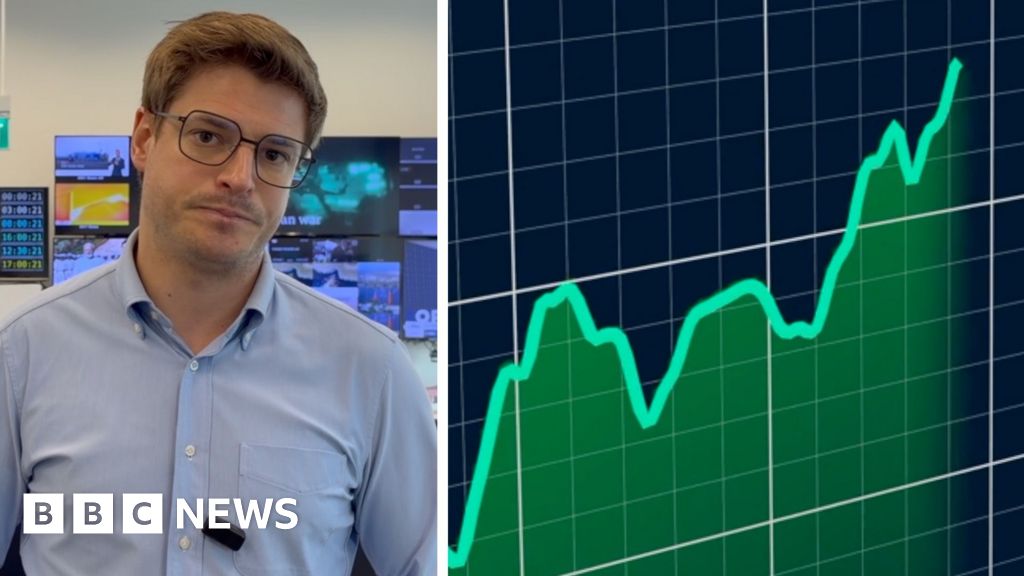
Traders have been betting millions of dollars shortly before US President Donald Trump makes big announcements throughout his second term.
And communications relating to the Iran war are no exception.
The BBC has looked into trade volume data that suggests several large bets were made shortly before Trump made market-moving statements.
Nick Marsh has this analysis.

Politics Home | The student loan system isn’t a loan anymore

MLB star Austin Hedges gets engaged after on-field proposal

‘Han Solo Wants to Be Me’: Artemis II’s Victor Glover on Flying the Orion


-

 Crypto World7 days ago
The SEC Conditionalises DeFi Platforms to Be Avoided for Broker Registration
-

 NewsBeat6 days ago
Trump and Pope Leo: Behind their disagreement over Iran war
-

 Fashion3 days ago
Weekend Open Thread: Theodora Dress
-

 Crypto World7 days ago
SEC Signals Exemption for Crypto Interfaces From Broker Registration
-

 News Videos5 days ago
Secure crypto trading starts with an FIU-registered
-

 Sports3 days ago
NWFL Suspends Two Players Over Post-Match Clash in Ado-Ekiti
-

 Crypto World6 days ago
SEC Proposes Certain Crypto Interfaces Don’t Need to Register as Brokers
-

 Business23 hours ago
Powerball Result April 18, 2026: No Jackpot Winner in Powerball Draw: $75 Million Rolls Over
-

 Crypto World3 days ago
Russia Pushes Bill to Criminalize Unregistered Crypto Services
-

 Politics3 days ago
Palestine barred from entering Canada for FIFA Congress
-
 Business4 days ago
Creo Medical agree sale of its manufacturing operation
-

 Politics1 day ago
Zack Polanski demands ‘council homes not luxury flats for foreign investors’
-
 Entertainment6 days ago
Brand New Day’ Footage Reveals the Devastating Impact of ‘Now Way Home’
-

 Crypto World3 days ago
Russia Introduces Bill To Criminalize Unregistered Crypto Services
-

 Tech5 days ago
Microsoft adds Windows protections for malicious Remote Desktop files
-
 Entertainment7 days ago
Karol G’s ‘Ultra Raunchy’ Coachella Set Gave ‘Satanic Vibes’
-

 Sports7 days ago
Aaron Judge says Yankees need to ‘simplify’ approach amid offensive slump
-

 Entertainment7 days ago
How Babylon 5 Turned Brief Side Story Into Emotional Masterpiece
-

 Tech7 days ago
What was the first ransomware attack to demand payment in Bitcoin?
-

 Tech5 days ago
‘Avatar: Aang, The Last Airbender’ Leaked Online. Some Fans Say Paramount Deserves the Fallout
You must be logged in to post a comment Login