
Business
NFIB Small Business Survey: Optimism Drops To 11-Month Low





The Aavishkaar Group company would like to split the IPO between ₹600 crore of primary issue and ₹800 crore of offer for sale (OFS), said Arohan Financial Services managing director Manoj Nambiar.
 ET Bureau
Promoters Aavishkaar, Intellecap not to sell shares in IPO which has been reduced a bit
Aavishkaar and Intellecap together are classified as the promoter group and they cumulatively own 14.2% stake at present. The promoters will not sell any shares through the IPO. Long-time investors such as Michael & Susan Dell Foundation and Tano Capital are likely to sell shares through the OFS window.
“We are planning to file the DRHP (draft red herring prospectus) soon. The idea is to be ready with a valid ticket when things settle down. The year-end commentary is positive and the first quarter has started off well,” Nambiar told ET .

The process to get an approval takes about 3-4 months and then it carries a 12-month validity to list.
Arohan Financial Services has decided to file the DRHP on the basis of its December 2025 financials and business numbers. Its assets under management stood at ₹6,300 crore, with Bihar, Uttar Pradesh and West Bengal together contributing about half. The gross non-performing assets ratio improved to 1.6% from 2.9% a year ago.The non-banking finance company-microfinance institution had in January announced a ₹1,500-crore IPO plan with an equal share of primary issue and OFS. The company has scaled down the size of IPO and the size of the primary issue a bit following the Iran war, which led to a steep fall in the stock market.
The company has been planning to go public since 2019 and had received the market regulator’s goahead once in 2021, but stress in microfinance in quick succession over the past six years forced it to hold the plan.
The sector came under severe stress after the Covid-19 pandemic in 2021, and then again after 2024 when it was trying to break the shackles and grew at a rapid pace.
The sector’s total book size stood at ₹3.29 lakh crore at the end of February, up 2.5% over the previous month, according to a monthly update by credit bureau Equifax India, reversing a prolonged phase of contraction as lenders slowed lending to overleveraged borrowers. The market size stood at ₹4.43 lakh crore at the end of March 2024.
Lenders’ portfolio quality improved, too, sequentially while the ageing bad loan ratio declined for the first time in the past 24 months.

Operator
Good afternoon, and welcome to the Lakeland Fire & Safety Fiscal Fourth Quarter and Full Year 2026 Financial Results Conference Call. [Operator Instructions]
During today’s call, we may make statements relating to our goals and objectives for future operations, including our goals for revenue and cash flow from operations for fiscal year 2027. Financial and business trends, business prospects and management’s expectations for future performance that constitute forward-looking statements under federal securities laws.
Any such forward-looking statements reflect management’s expectations based upon currently available information and are not guarantees of future performance and involve certain risks and uncertainties are more fully described in our SEC filings. Our actual results, performance or achievements may differ materially from those expressed or in or implied by such forward-looking statements. We undertake no obligation to update or revise any forward-looking statements to reflect events or developments after the date of this call.
On this call, we will also discuss financial measures derived from our financial statements that are not determined in accordance with U.S. GAAP, including adjusted EBITDA, adjusted EBITDA excluding FX, adjusted EBITDA margin, adjusted EBITDA, excluding FX margin, organic revenue, organic gross margin and adjusted operating expenses. A reconciliation of each of the non-GAAP measures discussed on this call to the most
Business
S&P/ASX 200 Dips 0.21 Percent to 8936 as Geopolitical Caution and Domestic Data Weigh on Australian Shares

SYDNEY — The S&P/ASX 200 index slipped modestly Thursday, closing at 8,936.2 after shedding 18.8 points or 0.21 percent, as investors weighed lingering uncertainties from the U.S.-Iran conflict, softer domestic economic signals and mixed corporate earnings amid a broader global market pause.

The benchmark Australian share index opened near recent highs but failed to hold early gains, with eight of the 11 sectors finishing in the red. Materials and energy stocks provided some support on commodity price movements, while financials, consumer discretionary and real estate weighed on the session. Trading volume remained solid as participants digested the latest labor market figures and awaited further clarity on Middle East developments.
The modest decline came after the index had climbed toward the psychologically important 9,000 level in recent sessions only to pull back repeatedly. Thursday’s close left the S&P/ASX 200 roughly 266 points or about 2.9 percent below its February 2026 record high near 9,202, reflecting a cautious tone despite occasional relief rallies tied to de-escalation hopes in the Persian Gulf.
Analysts pointed to several crosscurrents. Renewed optimism around possible U.S.-Iran negotiations helped stabilize oil prices after earlier spikes triggered by threats to the Strait of Hormuz, benefiting energy-exposed names like Woodside Energy and Ampol. However, Australian investors remained wary of prolonged supply disruptions that could feed into higher inflation and delay expected interest rate relief from the Reserve Bank of Australia.
Domestic data added to the measured mood. Recent labor figures showed employment growth slowing, with part-time job additions particularly weak. Consumer confidence has also taken hits, recording sharp drops linked to fuel costs and geopolitical jitters. These signals tempered expectations for aggressive monetary easing even as some economists still forecast a rate cut later in 2026.
Financial stocks faced pressure as banks weighed higher funding costs and potential loan impairment risks if economic slowdown fears materialize. The “big four” banks — Commonwealth Bank, Westpac, ANZ and National Australia Bank — traded mixed but contributed to sector weakness overall. Real estate investment trusts similarly lagged amid rising bond yields and concerns over commercial property valuations.
On the positive side, mining giants such as BHP and Rio Tinto found support from resilient iron ore and copper prices, with China’s latest economic data offering mixed but not catastrophic readings. Technology stocks showed resilience in spots, though the sector’s weighting in the ASX 200 remains relatively light compared with Wall Street indices.
The Australian dollar traded softer near 71 U.S. cents, reflecting the combination of domestic caution and a stronger greenback. Bond yields edged higher, with the 10-year government bond rate moving modestly as traders priced in a more gradual RBA easing path.
Market watchers noted that the ASX 200 has shown resilience in 2026 despite periodic volatility tied to the Middle East situation. The index remains up modestly year to date in many calculations, supported by strong performances in resources and selective industrials. However, gains have been narrower than those seen on Wall Street, where technology and AI themes have driven outsized returns.
Looking ahead, investors face a steady flow of corporate results in coming weeks. Earnings from major miners, retailers and banks will provide fresh guidance on cost pressures, consumer spending and commodity demand. Analysts expect resource companies to report solid numbers on higher volumes, while consumer-facing firms may highlight margin squeezes from inflation.
The Reserve Bank of Australia’s next policy meeting remains a key focus. Markets assign only a modest probability to an immediate rate cut, citing sticky underlying inflation despite headline cooling in some measures. Any hawkish commentary from Governor Michele Bullock could weigh further on rate-sensitive sectors.
Geopolitically, developments in the U.S.-Iran standoff will continue to influence sentiment. Diplomatic progress could ease energy price concerns and support risk assets, while any escalation risks reigniting volatility. Australian exporters with exposure to global shipping routes remain particularly sensitive to disruptions in key waterways.
Sector rotation has become evident. Defensive plays in healthcare and staples have attracted flows during uncertain periods, while cyclical names in discretionary retail and travel have lagged. Gold miners have seen sporadic interest as a hedge, though the precious metal’s performance has been mixed.
For individual investors, the current environment underscores the importance of diversification. Blue-chip ASX 200 names with strong balance sheets and reliable dividends, such as those highlighted by fund managers in recent commentary, may offer stability. Companies like Woodside and Ampol have drawn attention for their exposure to energy markets that could benefit from any sustained price firmness.
Broader market capitalization of the ASX remains substantial, with the resources-heavy tilt providing a natural buffer against some global slowdown fears. Yet the index’s dependence on commodity cycles and China demand means external shocks transmit quickly.
Options activity and futures positioning suggested traders were hedging modestly rather than betting aggressively on either direction. Implied volatility stayed elevated but not extreme, consistent with an environment of watchful waiting rather than outright panic.
As the trading week progresses, attention will shift to any fresh leads from Washington or Tehran, alongside key Australian data releases on inflation expectations and retail sales. Corporate guidance from upcoming earnings will also help shape whether the recent consolidation around 8,900 to 9,000 evolves into a breakout or deeper correction.
The S&P/ASX 200’s 52-week range has encompassed significant swings, from lows near 7,700 earlier in the cycle to the February peak above 9,200. Thursday’s small step back fits a pattern of cautious trading amid unresolved global tensions and domestic headwinds.
Despite the dip, many strategists maintain a constructive longer-term outlook for Australian equities, citing attractive valuations in certain sectors relative to historical averages and potential tailwinds from any sustained global recovery. Dividend yields remain competitive, supporting income-focused portfolios.
For now, the Australian share market closed a touch lower as participants balanced relief over possible diplomatic progress against persistent risks. The modest 0.21 percent decline to 8,936.2 reflected measured profit-taking after recent attempts at higher ground, setting the stage for continued volatility as new catalysts emerge.
Investors will monitor overnight developments on Wall Street and any updates from the Middle East closely when trading resumes. In the meantime, the ASX 200’s ability to hold above key support levels will be watched as a barometer of underlying resilience in an uncertain environment.
Business
HDFC Life Insurance shares tank 4% on Q4 results. What are Morgan Stanley and Goldman Sachs saying?

The company reported a 4% year-on-year rise in profit after tax to Rs 496 crore for the March quarter. Net premium income grew 9% YoY to Rs 25,829 crore, indicating steady momentum in its core business despite a challenging environment.
The insurer will issue 1.45 crore equity shares at Rs 688.52 each to HDFC Bank, subject to shareholder and regulatory approvals. The capital infusion aims to improve solvency and support growth plans.
The board has recommended a final dividend of Rs 2.1 per share for FY26, pending shareholder approval. The record date is June 19, with payout expected on or after July 20.
Should you buy, sell or hold HDFC Life shares?
Morgan Stanley has maintained an Overweight rating on HDFC Life with a target price of Rs 745, implying an 18% upside. The brokerage noted that the value of new business declined 8% YoY, missing its estimates, while APE growth remained muted at 1% due to a slowdown in the banca channel and the impact of GST changes. However, retail protection and annuity segments continued to deliver strong growth. Margins stayed stable, supported by an improved product mix. Morgan Stanley expects a gradual recovery starting FY27 and sees VNB growing at a CAGR of 16% over FY26 to FY28. It also believes valuations remain attractive despite near-term growth challenges.
Goldman Sachs also retained its Buy rating on HDFC Life with a target price of Rs 735. The brokerage attributed the miss in VNB to weak trends in March. It highlighted strong growth in the protection segment, while par and non-par segments remained under pressure. Margins held steady, aided by a favourable product mix. However, Goldman Sachs has lowered its estimates for FY27 and FY28 due to slower topline growth expectations. Despite this, it expects a steady recovery in FY27.Nomura maintained a Neutral stance on HDFC Life and cut its target price to Rs 725 from Rs 815, citing the need for stronger growth to justify premium valuations. The brokerage noted that while the company had earlier aimed to double VNB over five years, increasing competition and saturation in core markets may require a strategic shift towards deeper markets.
It believes that any re-rating will depend on faster VNB growth over the medium term. Factoring in these headwinds, Nomura has reduced its APE growth estimates for FY27 and FY28 by 7% to 10% and VNB growth estimates by 10% to 11%. It now expects subdued valuation multiples compared to historical trends, with its revised target implying a March 2028 PEV of 1.90x. The stock is currently trading at a similar 1-year forward PEV of 1.9x.
Sensex, Nifty today: Catch the LIVE stock market action here
(Disclaimer: Recommendations, suggestions, views and opinions given by the experts are their own. These do not represent the views of The Economic Times)

Hello Kitty owner Sanrio suspends MD over improper payments, shares fall
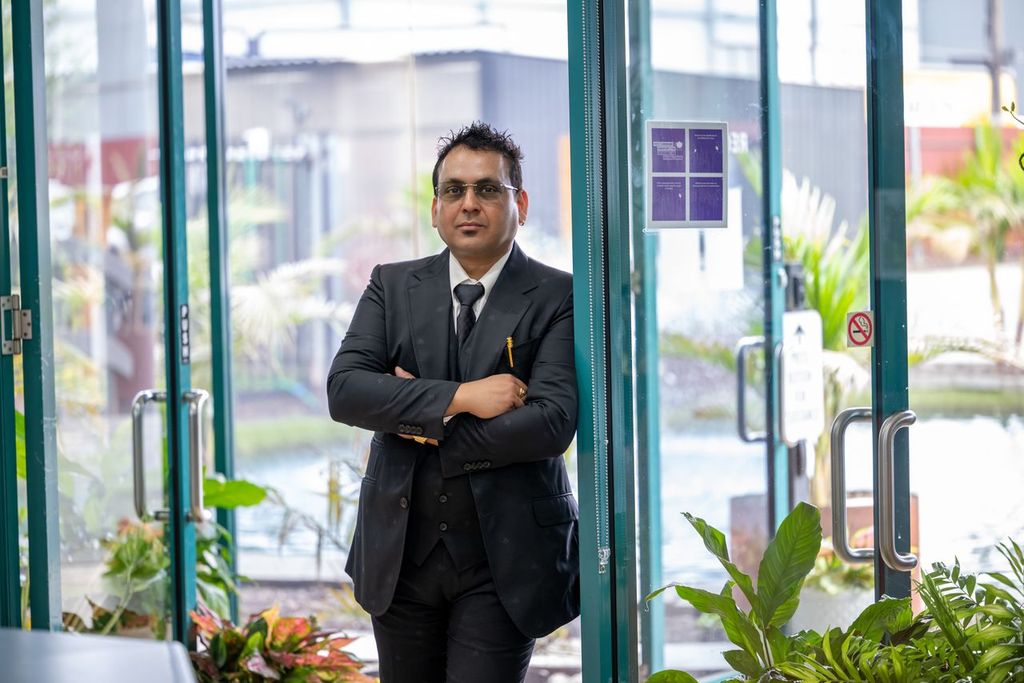
Old, unused and unwanted business assets often contain valuable metals that can be repurposed. Recycling them boosts profits, frees space and supports sustainability as these business assets often contain valuable metals that can generate real returns when recycled properly.

Precious metals, led by gold and silver reaching record highs, are surging due to geopolitical risks, inflation concerns and central bank buying. Copper has also hit record levels, driven by high demand for electrification. Other industrial metals, including aluminium, zinc and nickel, are rising on supply constraints and increasing demand for green energy technology.
Across Australia, companies spanning construction, manufacturing, mining, transport, agriculture and even hospitality are being urged to take a closer look at the machinery, tools, fixtures and fittings sitting idle in storage yards, factories, workshops and warehouses.
Much of this unused or outdated equipment from forklifts, wiring and metal shelving to refrigeration units, computer servers and production line components contains recoverable metals. With global metal prices remaining strong and demand for recycled materials soaring, these forgotten items could represent thousands of dollars in hidden value.
Recycling scrap metal from decommissioned machinery and infrastructure is not only a sound financial move but also an environmentally responsible one. By repurposing and reprocessing existing metal resources, businesses can reduce landfill waste, cut carbon emissions and contribute directly to Australia’s expanding circular economy.
In short, what’s rusting in a yard or gathering dust in a storeroom could be a profitable opportunity waiting to be uncovered.
Maddy Gupta, founder and CEO of Manhari Recycling, one of Victoria’s largest and most trusted scrap metal recycling companies, said outdated or non-functioning items are too often written off as worthless, when in fact they can contain metals, parts and other components with strong resale or recycling value.
“Many businesses simply don’t realise what they’re holding on to,” Maddy Gupta said.
“From copper wiring inside old machinery to aluminium frames, motors, and electronic modules, these components have a ready market and can return real money to businesses that recycle them properly.”
Founded in 2007 by Maddy Gupta, Manhari Recycling located in Victoria, is one of Australia’s largest and most trusted scrap metal recycling companies. With operations spanning nearly five hectares across Tottenham, Horsham and Ararat, Manhari processes over 250,000 metric tons of metal annually and exports to major manufacturing markets worldwide.
The company offers comprehensive services including auto recycling, whitegoods disposal, construction scrap recovery and e-waste processing. Committed to innovation, sustainability and customer service, Manhari is evolving into a leader in circular economy solutions, helping industry and community reduce waste, recover value and build a cleaner, greener future for Victoria.
Unlocking hidden value
Maddy Gupta emphasised that across manufacturing, construction, hospitality, retail and logistics, there is a vast range of items that can be recycled for profit. These include:
– Factory and workshop machinery, such as lathes, milling machines, conveyors, forklifts and compressors
– Metal shelving, racking systems, mezzanine floors and warehouse fittings
– Refrigeration units, ovens, commercial dishwashers and other hospitality equipment
– Air-conditioning units, ventilation systems and ducting
– Copper cabling, wiring looms, switchboards and electrical components
– Aluminium doors, window frames, balustrades and structural fittings
– Vehicles, trailers and heavy equipment at the end of their working life
– Office furniture such as metal filing cabinets, workstations and chairs with steel frames
– Shop fittings, display units, counters and metal signage
“Many of these items contain high-value metals such as copper, aluminium, stainless steel and brass, which can be sold locally or exported to manufacturing markets. By dismantling them, recyclers can maximise the return for each component rather than selling the asset whole at a reduced price,” Maddy Gupta explained.
“These items can total a significant amount of money for a business when sold for recycling. This is why it is important for businesses to ensure they understand the real value of their unwanted items.”
Space, sustainability and the bottom line
Recycling old assets not only generates income, it also frees up valuable space in workplaces, making operations more efficient. It benefits the environment by diverting waste from landfill, conserving natural resources and reducing the energy demand of manufacturing.
With scrap metal prices remaining competitive and sustainability under increasing public and regulatory scrutiny, now is the ideal time for businesses to audit their unused assets.
“Whether it’s a production line machine, a set of restaurant fridges or a warehouse full of outdated shelving, there’s a good chance those items are worth more broken down and recycled than sitting idle,” Maddy Gupta said.
“It’s money on the table that many businesses are missing.”
Time to act
Businesses are being encouraged to make the effort to engage reputable recycling operators who can dismantle, collect and process materials safely and in compliance with environmental standards. Many recyclers now offer free pick-up for large loads and fast payment, making the process straightforward and profitable.
“It’s not just about clearing out the clutter, it’s about recognising the financial and environmental value in what you no longer use,” Maddy Gupta said.
“The sooner businesses act, the sooner they can turn those unused assets into real returns.”
Gupta emphasised that often old equipment is worth more money to a business as scrap metal than selling it intact on the second hand market.
To get a free quote or book a pick-up, visit www.manhari.com.au
A former Beacon Minerals project manager has pleaded guilty to insider trading involving 11 million shares in the company.
Business
Wordle Answer April 17 2026 Revealed as BELLE in Puzzle #1763 Amid Fan Frenzy Over Double Letters

NEW YORK — The New York Times Wordle answer for Friday, April 17, 2026, is BELLE, a charming five-letter noun that left many players celebrating a quick solve while others scrambled in the final guesses due to its repeated letters and elegant simplicity.
Wordle puzzle #1763 challenged the daily streak of millions of players worldwide with a word meaning a beautiful or popular woman, often the standout at a social event like “the belle of the ball.” The solution features two L’s and two E’s, fitting the hints shared across spoiler-free sites: it is a noun, contains two vowels, includes duplicate letters, and has synonyms such as “beauty” or “stunner.” It also starts with B, a detail that helped narrow options after early vowel-heavy guesses.
Players who opened with common starters like “AUDIO,” “RAISE” or “SLATE” often landed yellow or green feedback on the E early, steering them toward words with repeated letters. Those who tested “BEACH” or “BELLY” found themselves one letter away before landing on the correct spelling. The double L proved tricky for some, as Wordle rarely repeats consonants in this pattern, leading to creative but incorrect attempts like “BEECH” or “BELLE” variants.
The game’s creator, Josh Wardle, designed Wordle as a simple yet addictive word puzzle during the pandemic, and it has since become a global daily ritual. The New York Times acquired the game in 2022 and has maintained its straightforward black, yellow and green tile feedback system that has hooked casual solvers and competitive streak hunters alike.
On April 17, many shared their results on social media with the familiar grid emoji format. Scores of 3/6 and 4/6 dominated discussions, with some boasting a lucky 2/6 after guessing “BELLE” directly from the “B” and vowel hints. Others vented about burning guesses on “BLADE,” “BLOOM” or “BEEFY” before cracking the code.
Wordle statistics for puzzle #1763 showed solid but not extreme difficulty. The answer avoided obscure vocabulary, making it accessible yet satisfying for vocabulary enthusiasts. “BELLE” also carries cultural resonance, evoking Southern charm, Disney’s “Beauty and the Beast” character Belle, and classic literature references.
The puzzle followed Thursday’s solution “CUBIT,” an ancient unit of measurement, continuing a recent streak of words that mix everyday language with occasional historical or niche terms. Friday’s answer kept the momentum light and celebratory as players headed into the weekend.
Fans of the game praised the balance in recent puzzles. While some days feature rare words that stump even seasoned players, April 17 delivered a feel-good win for many. Hints released the previous evening guided solvers without spoiling the fun: confirming the starting letter, the presence of duplicates, and the part of speech helped thousands avoid dead-end branches.
Strategies for solving Wordle efficiently include prioritizing vowels early, testing common consonants like R, S, T, L and N, and paying close attention to yellow letters for repositioning. On days with repeated letters like April 17, players recommend testing words with double consonants or vowels once the pattern emerges. Tools like Scoredle or WordleBot provide post-game analysis, showing optimal guesses and how close players came to the solution.
Wordle’s appeal lies in its shared experience. Families compete over breakfast, coworkers share scores in group chats, and online communities dissect hints and celebrate streaks. The game’s simple interface works across devices, making it a staple for commuters, students and retirees alike.
As of April 2026, Wordle continues to attract millions of daily players more than five years after its explosive popularity surge. The New York Times has introduced occasional variants and maintains strict answer curation to avoid offensive or overly obscure terms. Puzzle #1763 exemplified that careful selection with a positive, recognizable word.
For those who missed “BELLE,” the next puzzle arrives Saturday, April 18. Players are advised to avoid spoilers until they have attempted their own solve. Sharing results with the #Wordle hashtag remains a popular way to connect with fellow enthusiasts without ruining the fun for others.
The April 17 solution also sparked lighthearted cultural references. Some players joked about feeling like the “belle of the ball” after solving in three guesses, while others noted the word’s appearance in song lyrics and classic films. The Disney connection drew smiles from parents playing alongside children.
Wordle statistics trackers show that repeated-letter puzzles can slightly increase average solve times, but they also create memorable “aha” moments when the pattern clicks. “BELLE” joins other elegant answers in the game’s history that reward both linguistic knowledge and logical deduction.
Looking ahead, Wordle’s consistent daily release ensures players have a fresh challenge each morning. Whether the weekend brings easier or tougher words, the community spirit remains strong. Forums and Reddit threads like r/wordle buzz with shared grids, strategy tips and occasional complaints about tricky letter combinations.
For new players, starting with a balanced opener that covers multiple vowels and frequent consonants maximizes information gain. From there, eliminating impossible letters and testing high-frequency patterns leads most to victory within the six-guess limit.
The April 17, 2026, Wordle served as a gentle yet satisfying reminder of why the game endures: it combines simplicity, strategy and a touch of serendipity. “BELLE” delivered joy to many and a learning moment to others, keeping the daily word puzzle tradition alive and thriving well into 2026.
As players reset their streaks or celebrated new personal bests, the global Wordle community once again proved that a five-letter word can unite millions in a shared moment of mental exercise and fun. Whether solved in two tries or a hard-fought six, today’s answer added another entry to the ever-growing list of memorable Wordle moments.

U.S. Interior Secretary Doug Burgum discusses President Donald Trump’s Strait of Hormuz tanker blockade, Iran peace talks, and oil volatility on ‘Mornings with Maria.’
Spirit Airlines is facing renewed financial pressure as rising fuel costs threaten to complicate its efforts to exit bankruptcy, adding uncertainty to its restructuring plan, according to reports.
The low-cost carrier, which filed for Chapter 11 bankruptcy protection in late 2024, has been working toward a financial overhaul aimed at stabilizing operations and improving liquidity. But a recent surge in fuel prices – driven by the ongoing war with Iran – is creating fresh headwinds at a critical stage in the process.
The dire situation has led some creditors to explore a potential liquidation of the airline, according to reports from Bloomberg and The Wall Street Journal, as its low-cost structure leaves it more exposed to triple-digit increases in fuel costs.
Fuel remains one of the largest expenses for airlines, and the recent spike is hitting Spirit particularly hard given its ultra-low-cost model. Unlike larger carriers, Spirit has limited flexibility to offset higher costs through fare increases without risking a decline in demand.
AMERICAN AIRLINES JOINS WAVE OF CARRIERS HIKING CHECKED BAG FEES AS JET FUEL PRICES SKYROCKET

Passengers check in for their Spirit Airlines flights at O’Hare Airport on March 10, 2026, in Chicago, Illinois. (Scott Olson/Getty Images)
Creditors have already raised concerns about the company’s restructuring plan. In a recent court filing, lenders behind Spirit’s revolving credit facility argued the proposal may not be viable if fuel prices remain elevated.
The financial impact could be critical. JPMorgan analysts, cited by the Journal, estimate that higher fuel prices could add roughly $360 million to Spirit’s expenses this year – exceeding the $337 million in cash the airline reported at the end of last year.

Spirit Airlines airplanes at Fort Lauderdale-Hollywood International Airport in Fort Lauderdale, Florida, on Oct. 24, 2023. (Eva Marie Uzcategui/Bloomberg via Getty Images)
That imbalance highlights the scale of the challenge as the airline attempts to restructure while managing rising operating costs and constrained liquidity.
DELTA, SOUTHWEST HIKE CHECKED BAGS AS AIRLINES FACE SURGING FUEL COSTS
Spirit has already taken steps to shore up its finances, including raising fares, cutting unprofitable routes and reducing its fleet.

A Spirit Airlines aircraft undergoes operations in preparation for departure at the Austin-Bergstrom International Airport on Feb. 12, 2024, in Austin, Texas. (Brandon Bell/Getty Images)
The company said in court filings it expects fuel price volatility to ease in the coming months, with conditions potentially stabilizing later this spring. But the outlook remains uncertain with the Iran conflict showing no end in sight and continuing to disrupt global energy markets.
CLICK HERE TO GET FOX BUSINESS ON THE GO
Spirit Airlines did not immediately respond to FOX Business’ request for comment.
Business
Wipro shares crack 4% after Q4, Rs 15,000-crore buyback. What Goldman Sachs, other brokerages are saying?

Revenue from operations, meanwhile, increased 8% YoY to Rs 24,236 crore. However, the core IT services segment showed limited traction. Revenue stood at $2.65 billion, growing just 0.6% quarter-on-quarter and 2.1% year-on-year. On a constant currency basis, IT services revenue rose 0.2% sequentially but declined 0.2% annually, highlighting weak underlying demand.
Wipro reported a sequential rise in profit, which was up 12% quarter-on-quarter. IT services operating margin came in at 17.3%, declining 0.3% sequentially and 0.2% YoY, indicating continued cost pressures and investment-led drag.
What are experts saying?
Wall Street major Morgan Stanley maintained an Underweight rating and cut its target price to Rs 192 from Rs 242, a downside of nearly 9%. The brokerage flagged weak fourth-quarter performance, with revenue declining 1.3% QoQ in constant currency. It also pointed to a 1.6% YoY decline in FY26 revenue, reflecting underperformance versus peers. The outlook remains subdued, with 1QFY27 guidance indicating a further 1.5% to 2% QoQ decline.
While margins have held up so far, they are expected to fall short of the 17% to 17.5% band in FY27. The firm also noted the Rs 15,000 crore buyback as supportive of shareholder returns but has lowered its revenue growth and margin estimates for FY27 and FY28, expecting continued relative underperformance and a valuation discount to peers.
Goldman Sachs reiterated its Sell rating with a target price of Rs 187. It highlighted a weaker-than-expected Q4 performance and said the guidance points to continued revenue contraction in the near term. The brokerage expects FY27 to mark the fourth consecutive year of revenue decline for Wipro and has cut its revenue and earnings estimates following the results. It also noted that the commentary has a neutral read-across for the broader IT sector.
Nomura retained a more constructive stance with a Buy rating and raised its target price to Rs 250 from Rs 240, describing Q4FY26 as a mixed quarter. Deal wins remained steady, with total bookings of $3.5 billion in Q4, down 13% YoY, including large deals worth $1.4 billion, down 18% YoY. The pipeline continues to be driven by vendor consolidation, cost optimisation and increasing demand for AI-led transformation. Nomura believes timely execution of these deals will be key to improving growth, and it expects USD revenue to grow 0.9% in FY27 and 4% in FY28.
Motilal Oswal maintained a Neutral rating on Wipro with a target price of Rs 215, implying a modest upside of around 2%. The brokerage expects constant currency revenue to grow about 1.0% YoY in FY27, factoring in a weak start to the year with 1QFY27 revenue likely to decline around 1.0% QoQ. It highlighted ongoing challenges such as delays in deal ramp-ups, a decline in contribution from top clients and weakness across key verticals. The firm also sees limited scope for margin expansion due to wage hikes, the ramp-up of lower-margin deals and continued investments in AI. It has largely kept its estimates unchanged.
(Disclaimer: Recommendations, suggestions, views and opinions given by the experts are their own. These do not represent the views of The Economic Times)

President Trump Signals US-Iran Deal Progress as Oil Drops and Crypto Markets Rise

Lisa Hochstein All Smiles After Release From Miami Jail

Last week to bid on community fund for North Yorkshire


-

 Politics6 days ago
US brings back mandatory military draft registration
-
 Sports7 days ago
Man United discover Nico Schlotterbeck transfer fee as defender reaches Dortmund agreement
-

 Fashion6 days ago
Weekend Open Thread: Veronica Beard
-

 Politics7 days ago
Malcolm In The Middle OG Turned Down ‘Buckets Of Money’ To Appear In Reboot
-

 Politics5 days ago
World Cup exit makes Italy enter crisis mode
-

 Business6 days ago
Tesla Model Y Tops China Auto Sales in March 2026 With 39,827 Registrations, Beating Cheaper EVs and Gas Cars
-

 Crypto World3 days ago
The SEC Conditionalises DeFi Platforms to Be Avoided for Broker Registration
-

 Crypto World3 days ago
SEC Signals Exemption for Crypto Interfaces From Broker Registration
-

 News Videos2 days ago
Secure crypto trading starts with an FIU-registered
-
 NewsBeat4 days ago
Pep Guardiola and Gary Neville agree over Arsenal title problem that benefits Man City
-

 Business6 days ago
Ireland Fuel Protests Enter Day 5 as Blockades Spark Shortages and Government Prepares Support Package
-

 Business7 days ago
OpenAI Halts Stargate UK Data Centre Project Over Energy Costs and Copyright Row
-

 Crypto World6 days ago
Federal judge blocks Arizona from bringing criminal charges against Kalshi
-

 NewsBeat3 days ago
Trump and Pope Leo: Behind their disagreement over Iran war
-

 Politics7 days ago
LBC Presenter Mocks Trump Over Iran War Failures
-

 Crypto World3 days ago
SEC Proposes Certain Crypto Interfaces Don’t Need to Register as Brokers
-
 NewsBeat5 days ago
JD Vance announces ‘no agreement’ with Iran over nuclear weapons fear
-

 Business6 days ago
IMF retains floor for precautionary balances at SDR 20 billion
-

 Business6 days ago
Former Liverpool CEO eviscerates FIFA for World Cup ticket pricing
-
 Crypto World4 days ago
Sei Network Enters Quiet Reset Phase as On-Chain Metrics Signal a Slowdown in 2026
You must be logged in to post a comment Login