Old, unused and unwanted business assets often contain valuable metals that can be repurposed. Recycling them boosts profits, frees space and supports sustainability as these business assets often contain valuable metals that can generate real returns when recycled properly.
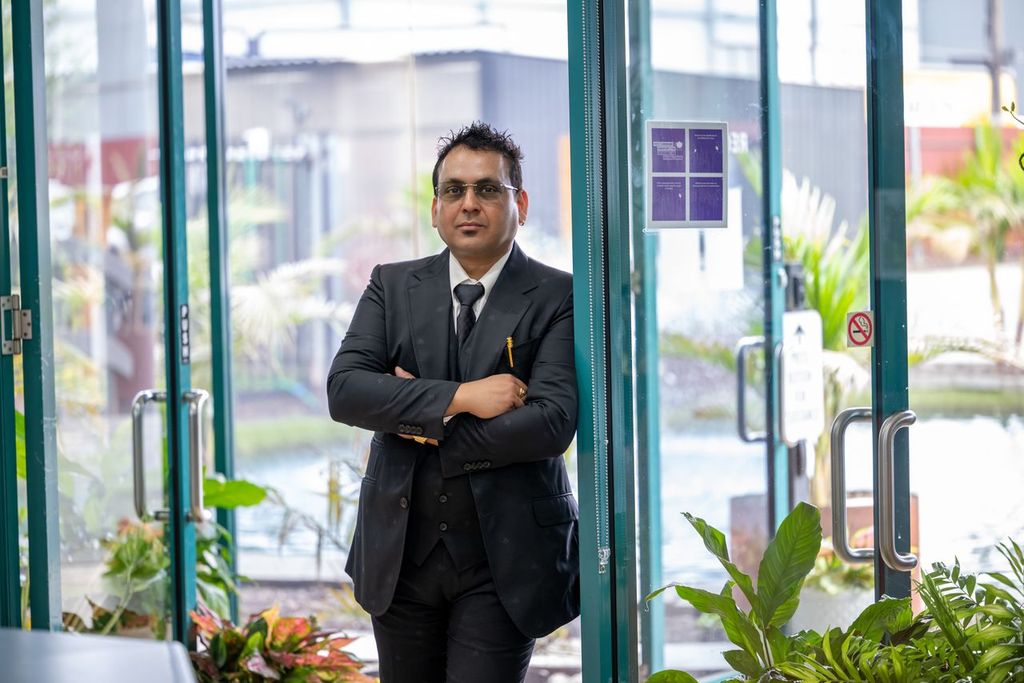
Manhari Founder, Maddy Gupta
Precious metals, led by gold and silver reaching record highs, are surging due to geopolitical risks, inflation concerns and central bank buying. Copper has also hit record levels, driven by high demand for electrification. Other industrial metals, including aluminium, zinc and nickel, are rising on supply constraints and increasing demand for green energy technology.
Across Australia, companies spanning construction, manufacturing, mining, transport, agriculture and even hospitality are being urged to take a closer look at the machinery, tools, fixtures and fittings sitting idle in storage yards, factories, workshops and warehouses.
Much of this unused or outdated equipment from forklifts, wiring and metal shelving to refrigeration units, computer servers and production line components contains recoverable metals. With global metal prices remaining strong and demand for recycled materials soaring, these forgotten items could represent thousands of dollars in hidden value.
Recycling scrap metal from decommissioned machinery and infrastructure is not only a sound financial move but also an environmentally responsible one. By repurposing and reprocessing existing metal resources, businesses can reduce landfill waste, cut carbon emissions and contribute directly to Australia’s expanding circular economy.
Advertisement
In short, what’s rusting in a yard or gathering dust in a storeroom could be a profitable opportunity waiting to be uncovered.
Maddy Gupta, founder and CEO of Manhari Recycling, one of Victoria’s largest and most trusted scrap metal recycling companies, said outdated or non-functioning items are too often written off as worthless, when in fact they can contain metals, parts and other components with strong resale or recycling value.
“Many businesses simply don’t realise what they’re holding on to,” Maddy Gupta said.
“From copper wiring inside old machinery to aluminium frames, motors, and electronic modules, these components have a ready market and can return real money to businesses that recycle them properly.”
Advertisement
Founded in 2007 by Maddy Gupta, Manhari Recycling located in Victoria, is one of Australia’s largest and most trusted scrap metal recycling companies. With operations spanning nearly five hectares across Tottenham, Horsham and Ararat, Manhari processes over 250,000 metric tons of metal annually and exports to major manufacturing markets worldwide.
The company offers comprehensive services including auto recycling, whitegoods disposal, construction scrap recovery and e-waste processing. Committed to innovation, sustainability and customer service, Manhari is evolving into a leader in circular economy solutions, helping industry and community reduce waste, recover value and build a cleaner, greener future for Victoria.
Unlocking hidden value
Maddy Gupta emphasised that across manufacturing, construction, hospitality, retail and logistics, there is a vast range of items that can be recycled for profit. These include:
Advertisement
– Factory and workshop machinery, such as lathes, milling machines, conveyors, forklifts and compressors – Metal shelving, racking systems, mezzanine floors and warehouse fittings – Refrigeration units, ovens, commercial dishwashers and other hospitality equipment – Air-conditioning units, ventilation systems and ducting – Copper cabling, wiring looms, switchboards and electrical components – Aluminium doors, window frames, balustrades and structural fittings – Vehicles, trailers and heavy equipment at the end of their working life – Office furniture such as metal filing cabinets, workstations and chairs with steel frames – Shop fittings, display units, counters and metal signage
“Many of these items contain high-value metals such as copper, aluminium, stainless steel and brass, which can be sold locally or exported to manufacturing markets. By dismantling them, recyclers can maximise the return for each component rather than selling the asset whole at a reduced price,” Maddy Gupta explained.
“These items can total a significant amount of money for a business when sold for recycling. This is why it is important for businesses to ensure they understand the real value of their unwanted items.”
Space, sustainability and the bottom line
Advertisement
Recycling old assets not only generates income, it also frees up valuable space in workplaces, making operations more efficient. It benefits the environment by diverting waste from landfill, conserving natural resources and reducing the energy demand of manufacturing.
With scrap metal prices remaining competitive and sustainability under increasing public and regulatory scrutiny, now is the ideal time for businesses to audit their unused assets.
“Whether it’s a production line machine, a set of restaurant fridges or a warehouse full of outdated shelving, there’s a good chance those items are worth more broken down and recycled than sitting idle,” Maddy Gupta said.
“It’s money on the table that many businesses are missing.”
Advertisement
Time to act
Businesses are being encouraged to make the effort to engage reputable recycling operators who can dismantle, collect and process materials safely and in compliance with environmental standards. Many recyclers now offer free pick-up for large loads and fast payment, making the process straightforward and profitable.
“It’s not just about clearing out the clutter, it’s about recognising the financial and environmental value in what you no longer use,” Maddy Gupta said.
“The sooner businesses act, the sooner they can turn those unused assets into real returns.”
Advertisement
Gupta emphasised that often old equipment is worth more money to a business as scrap metal than selling it intact on the second hand market.
Novo Nordisk CEO Mike Doustdar details the company’s Amazon partnership, benefits of Ozempic beyond weight loss and more on ‘The Claman Countdown.’
Amazon is rolling out 30-minute delivery across dozens of U.S. cities, marking its fastest shipping option yet as the retail giant continues to accelerate its push into ultra-fast fulfillment.
The new service, called Amazon Now, will deliver thousands of items — including groceries, household essentials and electronics — to customers’ doors in about 30 minutes.
Advertisement
The offering is now available in Seattle, Philadelphia, Dallas-Fort Worth and Atlanta, and is expanding to additional markets such as Austin, Denver, Houston, Minneapolis, Orlando, Oklahoma City and Phoenix.
“Amazon Now is for when you need or want the convenience of getting your Amazon order delivered in 30 minutes or less,” Udit Madan, senior vice president of Amazon Worldwide Operations, said in a statement. “With thousands of items available for ultra-fast delivery, you can get everything from groceries for dinner, to AirPods before a flight, to household essentials like laundry detergent or toothpaste delivered right to your door.
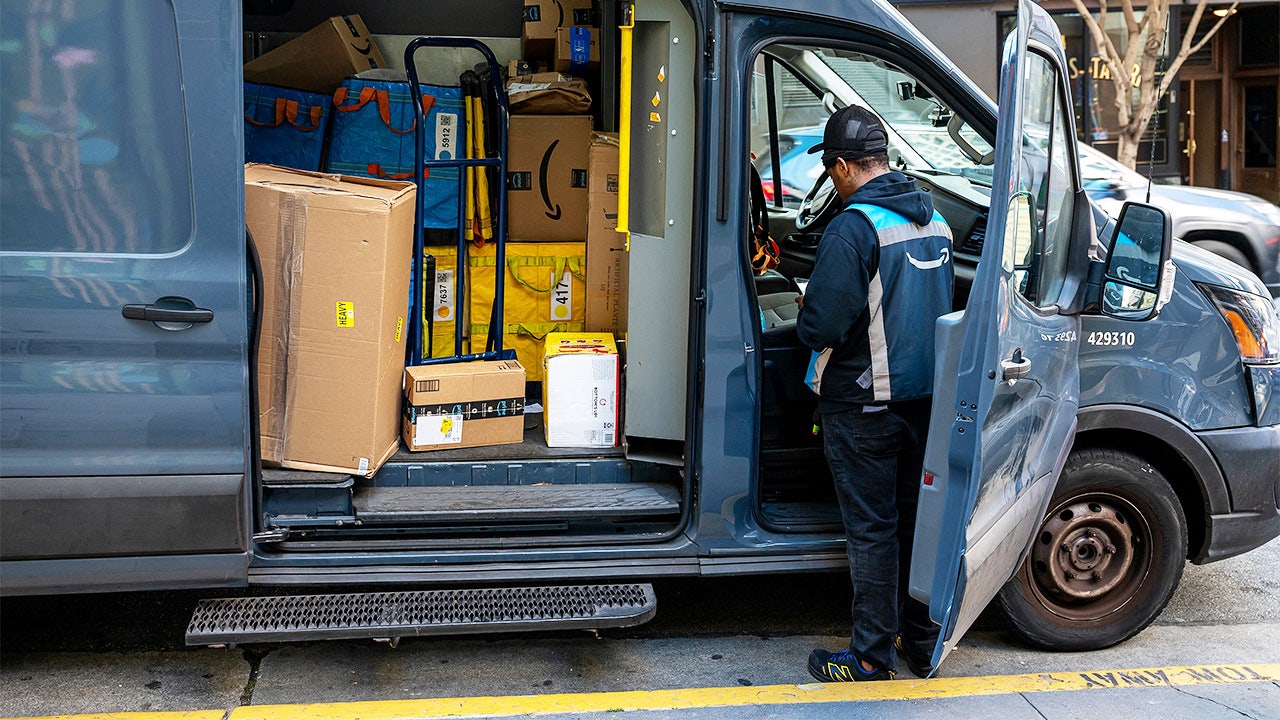
A worker near packages in an Amazon delivery vehicle in San Francisco on Monday, Feb. 2, 2026. (David Paul Morris/Bloomberg via Getty Images / Getty Images)
“Amazon Now complements Amazon’s existing fast-delivery offerings, including 1-hour and 3-hour delivery on more than 90,000 products and Same-Day Delivery on millions of items,” Madan added.
Advertisement
Amazon said the new service relies on a network of smaller fulfillment sites located closer to customers, allowing for faster delivery times and shorter travel distances for drivers.
Prime members will pay $3.99 per order for the service, while non-members will pay $13.99. Additional fees will apply for smaller orders, including $1.99 for Prime members and $3.99 for non-Prime members for orders under $15.
Amazon’s new MK30 Prime Air drone is displayed during Amazon’s “Delivering the Future” event at the company’s BFI1 Fulfillment Center, Robotics Research and Development Hub in Sumner, Washington on October 18, 2023. (Jason Redmond/AFP via Getty Images / Getty Images)
“Amazon Now uses a network of smaller locations designed for efficient order fulfillment, strategically placed close to where customers live and work,” Amazon said. “This approach prioritizes the safety of employees picking and packing orders, reduces the distance delivery partners need to travel, and enables faster delivery times for customers.”
Advertisement
Amazon plans to expand the service to tens of millions of customers by the end of 2026.
Amazon is investing $4 billion to expand Prime delivery services to rural America. (Amazon / Fox News)
The rollout comes as Amazon continues to invest heavily in speeding up deliveries, reporting that U.S. Prime members received more than 8 billion items the same or next day in 2025 — a more than 30% increase from the previous year.
The new offering adds to Amazon’s broader delivery network, which includes Prime Air drone delivery, offering sub-60-minute service in select U.S. locations, as well as one-hour, three-hour and same-day delivery options across thousands of cities and towns.
Advertisement
Amazon said 2025 marked its third consecutive year of record-fast delivery speeds, with more than 13 billion items arriving the same or next day globally. In the U.S., Prime members received over 8 billion of those shipments — up more than 30% year over year — with groceries and everyday essentials making up about half.
The company said Prime members have access to free shipping on more than 300 million items, and saved an average of $550 on fast delivery last year — nearly four times the cost of a membership.
Mr Moulton and GM&C Life Sciences Fund join £4.3m funding round
Infex Therapeutics has secured £4.3m in funding(Image: Infex Therapeutics)
Venture capitalist Jon Moulton has backed a biotech firm that’s looking to tackle the “critical global threat” of infections that are resistant to antibiotics.
Infex Therapeutics, of Alderley Edge, has secured £4.3m in a funding round led by Mr Moulton alongside the GM&C Life Sciences Fund, managed by Catapult Ventures, and existing high net worth investors.
The company will use the funding to develop its pipeline of new anti-infectives targeting antimicrobial resistance (AMR) and other “critical-priority infectious diseases”.
Dr Peter Jackson, CEO of Infex Therapeutics, said: “We are delighted to secure this investment led by Jon Moulton, with support from the Greater Manchester and Cheshire Lifescience Investment Fund and our existing investors.
Advertisement
“This funding represents strong validation of our progress in developing novel anti-infectives to address the critical global threat of antimicrobial resistance.”
Jon Moulton, founder of Better Capital and now chair of Infex Therapeutics, said: “We have supported Infex from the beginning and continue to be impressed by the company’s scientific progress and strategic execution.”
He highlighted Infex’s lead programme RESP-X, which is being trialled as a therapy for non-cystic fibrosis bronchiectasis (NCFB) patients.
And he said: ”This additional investment reflects our strong conviction in both the team and its innovative approach to tackling antimicrobial resistance.
Advertisement
Nick Wright, CEO of Catapult Ventures which manages the GM&C Life Sciences Fund, said: “Infex Therapeutics has made excellent scientific progress since we first invested several years ago. The company has clearly established itself as a world leader in the AMR and related space and the data it is generating is very compelling.”
Gatestone Institute senior fellow Gordon Chang joins ‘Mornings with Maria’ to break down President Donald Trump’s Beijing trip, Iran tensions, and rising concerns over China’s economy and surveillance-linked EVs.
President Donald Trump is slated to visit China this week, and according to a White House official, business figures including Elon Musk, Apple CEO Tim Cook and more than a dozen others will travel to China with the U.S. delegation.
Blackrock CEO Larry Fink, Boeing CEO Kelly Ortberg, and Goldman Sachs CEO David Solomon are some of the other figures listed.
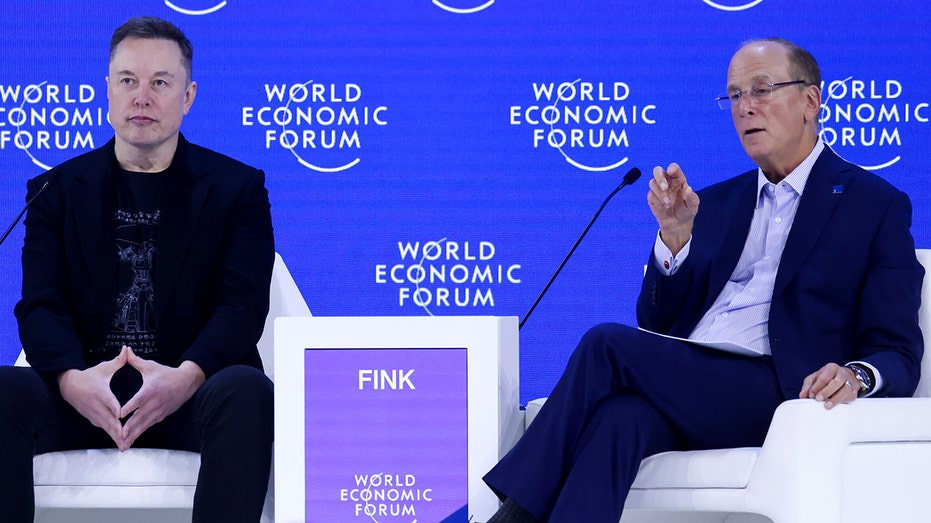
Elon Musk, chief executive officer of Tesla Inc., left, and Larry Fink, chief executive officer of BlackRock Inc., during the World Economic Forum (WEF) in Davos, Switzerland, on Thursday, Jan. 22, 2026. (Krisztian Bocsi/Bloomberg via Getty Images / Getty Images)
Others on the list provided by the White House official include Blackstone Chairman, CEO and co-founder Stephen Schwarzman, Cargill Board Chair and CEO Brian Sikes, Citi Board Chair and CEO Jane Fraser, Coherent CEO Jim Anderson, GE Aerospace chairman and CEO H. Lawrence Culp, Jr., Illumina CEO Jacob Thaysen, Mastercard CEO Michael Miebach, Meta President and Vice Chairman Dina Powell McCormick, Micron Chairman, President and CEO Sanjay Mehrotra, Qualcomm President and CEO Cristiano Amon and Visa CEO Ryan McInerney.
“I am very much looking forward to my trip to China, an amazing Country, with a Leader, President Xi, respected by all,” Trump declared in a Monday Truth Social post.
Apple CEO Tim Cook (R) shakes hands with U.S. President Donald Trump during an event in the Oval Office of the White House on Aug. 6, 2025 in Washington, D.C. (Win McNamee/Getty Images / Getty Images)
“Great things will happen for both Countries!” he added.
President Donald Trump met with Chinese President Xi Jinping in October in South Korea, according to Reuters.
U.S. President Donald Trump greets Chinese President Xi Jinping ahead of a bilateral meeting at Gimhae Air Base on Oct. 30, 2025 in Busan, South Korea. (Andrew Harnik/Getty Images / Getty Images)
Mike Ashley’s retail empire has scored a notable courtroom victory after the Court of Appeal threw out a substantial damages award handed down in a protracted trademark infringement dispute, sparing the FTSE-listed group what could have proved a punishing financial blow.
The ruling brings to a head a long-running tussle between the Shirebrook-based discount sports chain, rebranded as Frasers Group in 2019, and Lifestyle Equities, the company that owns and licenses the Beverly Hills Polo Club marque. Lifestyle Equities had alleged that Ashley’s group infringed its trademark by flogging goods under the rival ‘Santa Monica Polo Club’ label, a claim it first lodged back in 2018.
Frasers had lost the underlying infringement case seven years ago but mounted a fresh challenge against the scale of damages it was ordered to stump up. At an appeal hearing in April, the retailer’s lawyers argued that the bill should be slashed because the third-party companies trading under the Beverly Hills Polo Club name, and on whose behalf Lifestyle Equities was attempting to recover losses, had never been officially registered as licensees in the United Kingdom.
The Court of Appeal duly sided with the high street giant, ruling that it was “too late” for Lifestyle Equities to retrospectively register the licences in question. With the original claim dating back to 2018 and the licensing arrangements stretching back nearly a decade, the court concluded that the additional claims “appear to be well out of time” and that allowing them through would amount to an “unprincipled windfall” for businesses that had not properly placed themselves on the public register.
Counsel for Frasers warned during the appeal that permitting such claims to succeed would expose accused infringers to ambush litigation, leaving defendants “suddenly confronted with a Trojan Horse full of licensees claiming damages” of whose existence they had no prior knowledge. Without strict adherence to public registration, the retailer’s legal team argued, the regime risked becoming “a charter of unjust enrichment”, allowing trademark owners to scoop up compensation for unregistered partners alongside their own losses.
Advertisement
The judgment represents a material win for Frasers, which has shrugged off a potentially eye-watering damages bill that, had it stood, would have set an awkward precedent for the wider retail sector. The decision is likely to be studied closely by intellectual property lawyers and brand owners alike, given the implications for how licensing arrangements must be formally documented to be enforceable in the British courts.
The legal win follows news first reported by City AM that the magic circle-adjacent law firm RPC has lost one of its highest-billing partners, Jeremy Drew, who represents Ashley personally, to Taylor Wessing.
The trademark victory comes hard on the heels of an extraordinary admission by Ashley, the man who founded Sports Direct in his native Burnham in 1982 and ran it as chief executive until handing the reins to son-in-law Michael Murray in 2022.
The 61-year-old billionaire has confirmed publicly for the first time that he engineered the downfall of his most prominent retail adversary, the former JD Sports executive chairman Peter Cowgill.
Advertisement
Cowgill stepped down from the FTSE 100 trainer chain in 2022 in the wake of a Competition and Markets Authority probe, triggered after leaked footage emerged of him in a clandestine car park meeting with Footasylum chief executive Barry Brown. The pair had been expressly barred from exchanging commercially sensitive information while JD Sports was attempting to acquire Footasylum, and the leaked footage led the CMA to impose fines of nearly £5m on the two businesses.
In an interview with the Financial Times last weekend, Ashley conceded that the footage had been obtained by one of his own employees and said he was “not hiding from the fact” that he was the architect of Cowgill’s removal, a candid acknowledgement that lifts the lid on one of the more colourful boardroom feuds in recent British retail history.
Jamie Young
Jamie is Senior Reporter at Business Matters, bringing over a decade of experience in UK SME business reporting.
Jamie holds a degree in Business Administration and regularly participates in industry conferences and workshops.
When not reporting on the latest business developments, Jamie is passionate about mentoring up-and-coming journalists and entrepreneurs to inspire the next generation of business leaders.






























































You must be logged in to post a comment Login