
Crypto World
ORDI Crypto Slams $10 in Huge Reversal: Is NAT Behind ORDI Price Boom?


ORDI crypto just did something most traders had written off as impossible six weeks ago. The flagship BRC-20 token smashed through the $10 psychological barrier this week, posting gains of up to 190% in a single 24-hour window from lows near $3.23, and the question of what’s actually driving this reversal matters more than the headline number.
The short answer on NAT: it’s not the catalyst here. The longer answer is more interesting.
ORDI’s 48-hour surge carried it from a March 29 cycle low of $2.12 all the way to an intraday high of $10.52, with 24-hour trading volume exploding past $1.14 billion, a volume-to-market-cap ratio of 4x to 6.4x that signals either institutional accumulation or a full speculative frenzy (possibly both).
Bitcoin Ordinals daily transactions surpassed 615,000 during the same window, pulling BRC-20 peers like SATS up 52% in sympathy.
The Bitcoin ecosystem, which had been dormant for some time, has finally come to life.
The price of $ORDI has reached around $10.
I reckon there are opportunities to be had here; I’m keeping an eye on this one.
(I’m also keeping an eye on other tokens on the network.) Do… pic.twitter.com/LJGZifwayd— IFreqs (@0xifreqs) April 16, 2026

ORDI’s 7-day performance clocked 212–245%, the strongest weekly print since its March 2024 all-time high era.
Just as $ORDI is the reserve asset for BRC20, Bitmap is the reserve asset for metaverse-centric assets on Bitcoin Ordinals. — jake (@Jakegallen) February 2, 2024
 BRC420 BRC720 Parcels $BMP $NAT
They all move in unison, just figuring out which is the beta will offer highest returns but also knowing… pic.twitter.com/nykgr2etR5
The BRC-20 sector has been quietly rebuilding momentum alongside broader Bitcoin ecosystem development, and this week’s volume confirms that narrative is back on the table.
Some have attributed the ORDI price pump to Antpool’s beginning distribution of fellow Bitcoin ecosystem token NAT as double-rewards.
You wanted proof? — $DMT-NAT (@natgmi) March 30, 2026
Here is the on-chain smoking gun. 

AntPool proxy wallets are actively selling $NAT on @ordinalswallet right now. Look at the tape.
This is the "Second Subsidy" playing out in real-time. The largest Bitcoin miners on the planet aren't waiting for a… pic.twitter.com/toZenMyaDb
Discover: The best pre-launch token sales
Can ORDI Crypto Price Hit $15 This Week?
At the time of writing, ORDI trades around $10.52, up roughly 22% on the session after briefly pulling back to $7.68 intraday, a 79% intraday spread that underlines just how thin the liquidity remains at these levels.
Volume at $1.14 billion dwarfs the token’s $162–177 million market cap by a factor most assets never see outside of manipulation events or genuine breakout moments.
Key levels to watch: $7.50 holds as immediate momentum support, with $3.25 as the hard floor from the 48-hour reversal candle.
Resistance sits at $10 (psychological, now being tested as support on retests), with analyst targets clustering at $12–$15 on confirmed $10 continuation, and $20 representing prior distribution from the 2024 cycle.
ORDI crypto is at that classic post-run checkpoint where it either proves strength or starts giving it back, and $10 is the level doing all the work right now, because if price holds it on a daily close and volume stays high, that is where momentum can kick again and open the $12 to $15 range pretty fast.
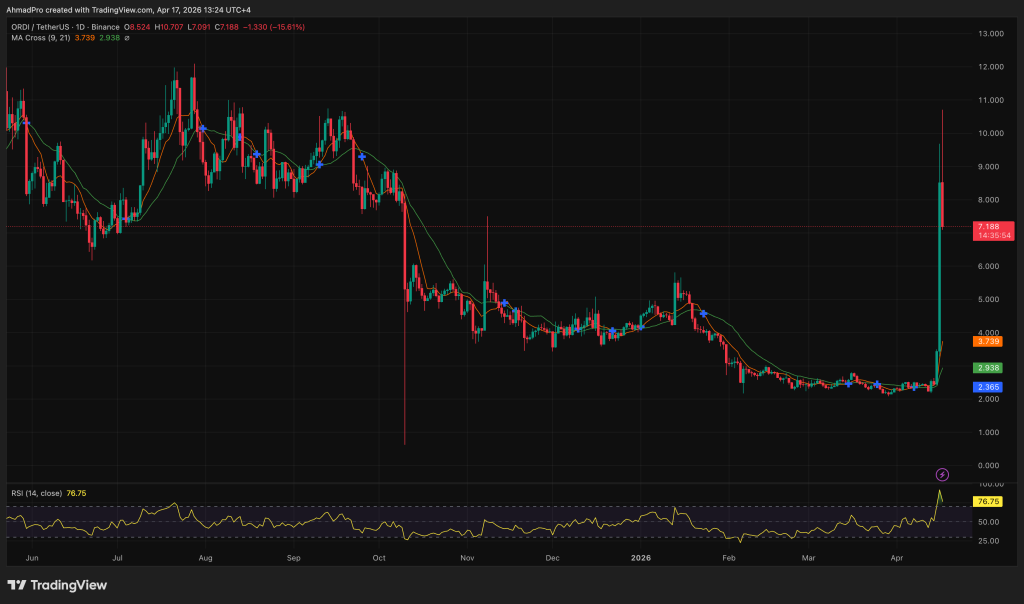
At the same time, a move like this usually needs to cool off, so a more realistic path is consolidation, with price drifting between $7.5 and $10 while early buyers take profits and new buyers step in, building a base for a potential second leg.
The risk is if $7 breaks, because that kills the breakout structure, and once that happens, it can unwind quickly toward $5 or lower, especially if Bitcoin loses momentum.
And with how big the move already was and volume running this high relative to market cap, some pullback is not just possible, it is expected, so the key is whether support holds during that cooldown.
Discover: The best crypto to diversify your portfolio with
Bitcoin Hyper Eyes Early Mover Upside as ORDI Tests Critical $10 Level
ORDI’s explosion is validation for the Bitcoin ecosystem thesis, but traders entering at $10 are buying a token that has already delivered 300%+ from its low.
The asymmetric upside window has compressed significantly. That dynamic is pushing some rotation capital toward earlier-stage Bitcoin infrastructure plays before a similar re-rating occurs.
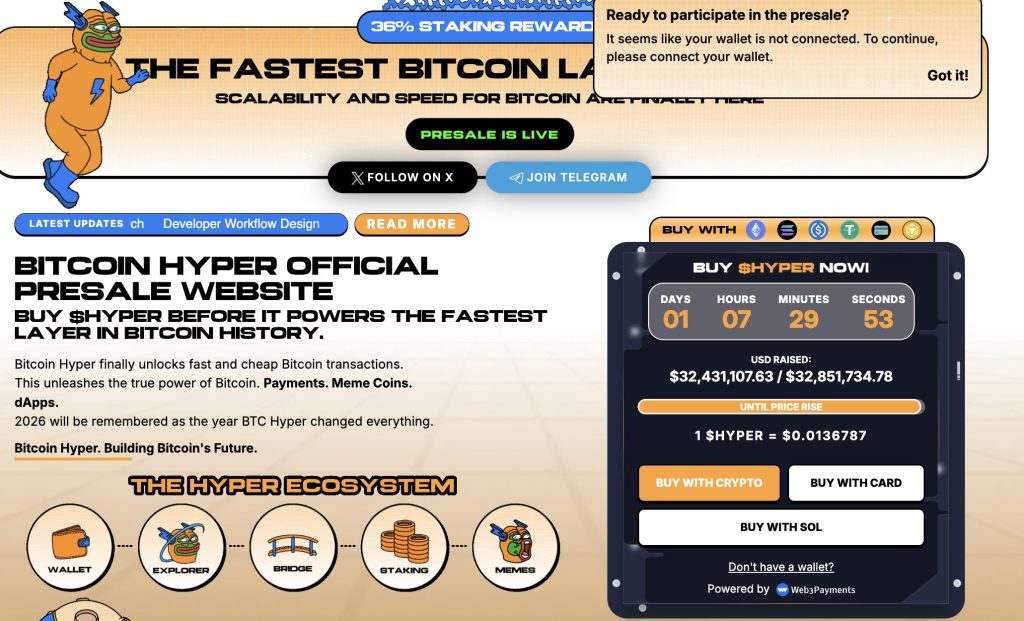
Bitcoin Hyper is positioned at that intersection. The project is building what it describes as the first-ever Bitcoin Layer 2 with Solana Virtual Machine (SVM) integration, targeting sub-Solana latency on top of Bitcoin’s security layer, with a decentralized canonical bridge for native BTC transfers and low-cost smart contract execution that Bitcoin’s base layer has never supported. The presale has raised $32,430,420.30 at a current token price of $0.0136787, with staking available during the raise.
If ORDI’s move signals a broader Bitcoin ecosystem re-rating, and Bitcoin’s own macro trajectory supports that thesis, infrastructure plays like this tend to catch a bid after the narrative tokens lead. Presales carry significant risk; tokens are illiquid until launch and may not replicate presale valuations in open markets.
The post ORDI Crypto Slams $10 in Huge Reversal: Is NAT Behind ORDI Price Boom? appeared first on Cryptonews.

Crypto World
Global Silver Market Faces Sixth Straight Deficit as Supply Tightness Deepens Into 2026

TLDR:
- Global silver deficit expected to rise 15% in 2026, reaching 46M troy ounces amid tightening supply.
- Since 2021, silver stocks have dropped 762M ounces, reducing liquidity across physical markets.
- Industrial silver demand is seen falling 3% as global growth slows and geopolitical risks weigh on output.
- Coin and bar demand expected to rise 18%, partially offsetting industrial weakness but not closing the deficit gap.
Global silver markets are projected to face a prolonged supply strain as structural deficits extend into a sixth straight year.
Forecasts point to deeper shortages through 2026, driven by weakening mine output, shifting demand patterns, and continued depletion of existing global inventories.
Global Silver Deficit Outlook and Supply Tightness
Market data shared by The Kobeissi Letter points to a widening imbalance between supply and demand. The global silver deficit is projected to increase by 15% year over year in 2026, reaching 46 million troy ounces. Since 2021, cumulative global stocks have dropped by 762 million troy ounces.
The same update notes that the silver market is approaching conditions rarely seen in recent decades. It states that structural deficits have continued for five consecutive years, with inventories steadily declining across major storage hubs. This trend has reduced available liquidity in physical silver markets, raising sensitivity to demand shifts.
At the supply level, total global output is projected to fall by 2% year over year. Mining companies are scaling back production commitments made during earlier price increases.
This adjustment follows a period of strong expansion that is now being moderated by cost pressures and lower forward guidance.
In parallel, industrial fabrication demand is expected to decline by 3% year over year, reaching a four-year low. The report links this weakness to slower global growth conditions, with geopolitical tensions such as the Iran conflict adding pressure to manufacturing activity.
Demand Rotation Between Industrial Use and Physical Investment
The Kobeissi Letter also notes a clear shift in demand composition across the silver market. Coin and bar demand is projected to rise by 18% year over year. This increase is linked to stronger retail participation in the United States and renewed interest in physical holdings.
This change in demand comes as industrial consumption softens, creating a split in market behavior. While fabrication demand weakens, investment demand is absorbing part of the gap. However, this offset is not enough to fully balance the decline in industrial usage.
The update also mentions that global silver inventories have been drawn down consistently since 2021. This ongoing depletion has reduced buffer levels across the supply chain.
As a result, market participants are observing tighter availability during periods of increased demand activity.
In addition, production constraints are shaping expectations for future supply recovery. Miners are reacting to earlier price volatility by limiting expansion plans.
This cautious approach is contributing to slower replenishment of supply even as demand patterns shift between sectors.
Overall, the combination of lower industrial usage, stronger retail accumulation, and restricted mining output continues to define the current structure of the silver market.
The data points to a market operating under sustained imbalance conditions, with supply adjustments lagging behind evolving demand flows.

TLDR:
- TRX is now tradable on Binance.US with TRX/USD and TRX/USDT pairs live for U.S.-based users.
- The listing gives American investors regulated and compliant access to the TRON blockchain network.
- TRON DAO says the move supports long-term growth by expanding TRX availability on licensed platforms.
- USDT on TRC20 remains central to TRON’s ecosystem as CEX liquidity grows through this new listing.
TRX, the native token of the TRON blockchain, is now available on Binance.US. TRON DAO made the announcement on April 17, 2026.
The listing brings TRX to a licensed, U.S.-regulated digital asset exchange. Trading is live with TRX/USD and TRX/USDT pairs.
This move expands access for American investors through a compliant market channel. It also adds liquidity to one of the most widely used blockchain networks globally.
TRX Gains a Foothold in Compliant U.S. Markets
The listing marks a direct entry point for U.S. users into the TRON ecosystem. Binance.US operates as a compliance-first exchange, meeting regulatory standards required in the United States. As a result, TRX now reaches a broader audience through a trusted and licensed platform.
TRON DAO shared the development on its official X account, stating: “Trading is now live with TRX/USD and TRX/USDT pairs, expanding access for Binance.US users.” The post added that the listing strengthens TRX availability within compliant U.S. market infrastructure. It also noted support for enhanced liquidity and broader accessibility across established digital asset markets.
Community Spokesperson Sam Elfarra reinforced the importance of the move in an official statement. “Listing TRX on Binance.US marks an important step in expanding access to the TRON ecosystem in the United States,” he said. Elfarra added that regulated platforms play an increasingly central role in digital asset adoption.
He further noted that broader availability of TRX through compliant exchanges supports wider participation. Long-term ecosystem growth, he said, depends on access through trusted and regulated venues. For U.S. investors, this listing removes a common barrier to entering the TRON network.
The addition of TRX/USD and TRX/USDT pairs also gives traders flexible options. Both pairs cater to different user preferences within the Binance.US platform. This dual-pair structure supports smoother trading activity and tighter market depth.
TRON’s Stablecoin and Payment Ecosystem Gets a Boost
TRON is already known as a leading network for stablecoin transactions. USDT issued on the TRC20 standard remains a core part of its ecosystem. The Binance.US listing further connects this infrastructure to regulated U.S. market participants.
Beyond stablecoins, TRON supports payments, decentralized finance, and digital asset settlement. These use cases make TRX a utility-driven token with real network demand behind it. The listing, therefore, reflects more than just exchange availability — it reflects network relevance.
TRON DAO’s announcement also pointed to enhanced CEX-based liquidity as a key outcome. Greater liquidity on regulated platforms typically attracts more institutional and retail interest. Over time, this can contribute to more stable trading conditions for TRX.
As regulated crypto markets continue to mature in the United States, listings like this carry more weight. They signal that a project is working within established frameworks rather than outside them. For TRON, the Binance.US listing adds another layer to its global market strategy.
The US Securities and Exchange Commission has filed a lawsuit against crypto executive Donald Basile, accusing him and two companies he controlled of raising about $16 million from investors through false claims tied to a so-called “insured” crypto token known as Bitcoin Latinum.
In a complaint filed Friday in the US District Court for the Eastern District of New York, the SEC alleged that Basile ran the scheme between March and December 2021 through Monsoon Blockchain Corp. and GIBF GP Inc., offering investors Simple Agreements for Future Tokens (SAFTs) that promised future delivery of the token, according to a report from The Wall Street Journal.
Regulators said hundreds of investors were told the asset was backed and insured, but the SEC alleged no insurance company ever provided coverage or any proof that these claims were true, per the report.
The case marks one of the few SEC enforcement actions under the Trump administration, which has signaled a more crypto-friendly regulatory stance compared to previous administrations.
Related: Crypto market safe harbor lands at White House for review
Crypto funds spent on luxury
The SEC said Basile repeatedly represented that Bitcoin Latinum was an insured, asset-backed cryptocurrency and that investor funds would help support its underlying value. Instead, the complaint alleges, millions of dollars were diverted to personal spending, including real estate purchases, credit card payments and the acquisition of a $160,000 horse.
The regulator is seeking permanent injunctions, repayment of allegedly ill-gotten gains with interest, civil penalties, and a ban on Basile’s participation in securities offerings, according to the WSJ. It also wants an officer-and-director bar preventing him from leading public companies in the future.
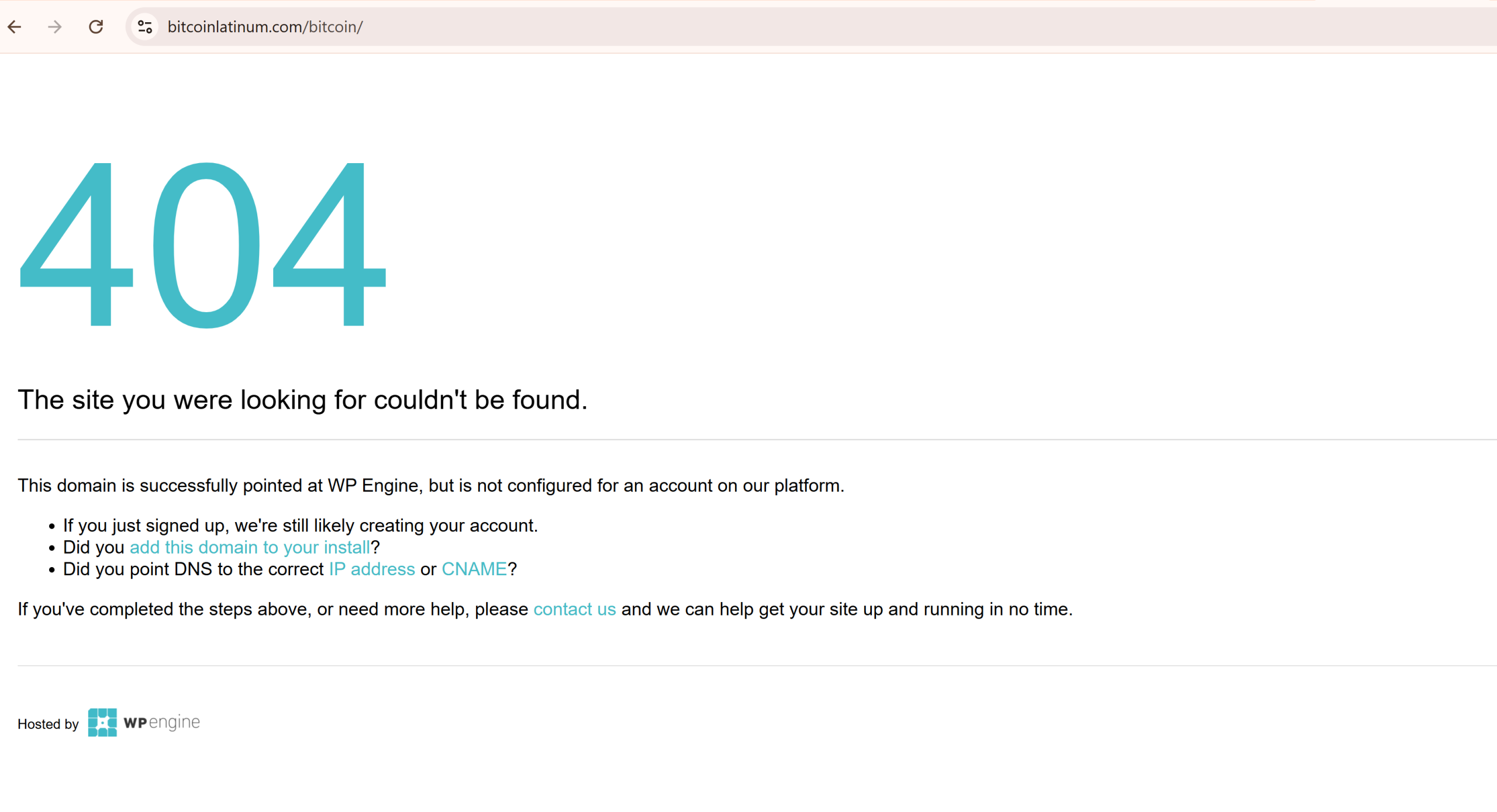
The Bitcoin Latinum website currently shows a 404 error.

Related: SEC proposes certain crypto interfaces don’t need to register as brokers
SEC criticizes past crypto cases for lacking benefit
Last week, the SEC said many past enforcement actions against crypto firms did not directly benefit investors and reflected a focus on case volume rather than meaningful protection. The agency reported that since fiscal 2022 it brought 95 actions and collected $2.3 billion in penalties for “book-and-record” violations, but several cases involving crypto registration and dealer definitions did not identify clear investor harm.
The SEC also said this approach reflected a misinterpretation of securities laws and a misallocation of enforcement resources. Under Chair Paul Atkins, appointed in 2025, the agency says it has moved away from “regulation by enforcement” and is now prioritizing fraud, market manipulation and serious abuses of trust.
TLDR:
- LitecoinVM Liteforge testnet recorded over 230,000 transactions within its early launch phase
- More than 41,000 unique wallets interacted with the testnet, showing strong early engagement
- The rollout introduces smart contract capabilities to Litecoin’s long-established network
- BTC_OS integration positions Litecoin within the emerging “Hard Money Web3” framework
Litecoin has recorded renewed developer activity following the launch of a new testnet tied to smart contract functionality.
Early data shows strong participation, suggesting that long-standing interest in the network may be shifting toward building and experimentation.
LitecoinVM Testnet Draws Early Network Activity
A recent post by Dr. Zuler on X pointed to a notable milestone for Litecoin. The network, now 15 years old, has introduced the LitecoinVM Liteforge Testnet, which is already generating measurable traction.
According to the shared figures, the testnet processed over 230,000 transactions alongside more than 41,000 unique wallet interactions.
These early numbers indicate active testing and user engagement within a short timeframe. Testnets often serve as a proving ground for new features, and this level of participation suggests developers and users are exploring the environment at scale. The figures also reflect a coordinated effort to evaluate the system’s performance under real usage conditions.
The tweet further noted that Litecoin had long been viewed as a legacy asset with limited development momentum.
However, the introduction of LitecoinVM appears to have shifted attention back toward its technical capabilities. By offering a programmable layer, the network is now positioned to support applications beyond simple peer-to-peer transactions.
“Hard Money Web3” Vision Gains Attention
The same thread referenced the concept of “Hard Money Web3,” powered by BTC_OS. This framework aims to extend Bitcoin-like security principles into programmable environments.
Within this context, LitecoinVM operates as a bridge between established monetary properties and newer decentralized application models.
The idea centers on combining Litecoin’s known stability with smart contract functionality. As a result, developers may find a familiar base layer while gaining tools to build decentralized services. This approach aligns with broader efforts across the industry to merge reliability with programmability.
Moreover, the phrase “the community was just waiting for something to build on” reflects a shift in narrative. Instead of focusing solely on price performance or legacy status, attention has turned toward infrastructure and development potential. The testnet activity provides early evidence that such demand exists within the ecosystem.
At the same time, testnet success does not guarantee mainnet adoption. It serves as an early indicator of interest rather than a final measure of utility. Even so, the scale of participation suggests that Litecoin’s ecosystem is entering a new phase of experimentation.
As development continues, further data from the testnet may offer insight into scalability, security, and long-term usability. For now, the launch has introduced fresh momentum into a network that many had previously overlooked.
TLDR:
- ETH trades between $2,300–$2,400, with momentum near the 100-day EMA, supported by steady ETF inflows.
- Schwab launches spot ETH trading for retail clients, increasing traditional market access to Ethereum.
- Ethereum Foundation sees key researcher exits while security alert flags 100+ operatives in Web3 firms.
- Market sentiment remains bullish at 89%, with ETH holding $2,300 support while $2,439 triggers a liquidation watch.
Ethereum trades near $2,300–$2,400 as momentum builds across the broader crypto market on April 17, 2026. The asset has recorded its strongest level since March 18, supported by steady ETF inflows and improving market participation. Traders continue to track key technical zones while sentiment remains tilted toward the upside.
ETH Price Action and Liquidity Levels
Ethereum maintains trading activity close to the 100-day exponential moving average during the current session. Price action stays within the $2,300–$2,400 range as buyers and sellers test liquidity zones. Market participants monitor a key level near $2,439, where short positions may face liquidation pressure.
The recent 6 percent daily rise supports stronger positioning across short-term charts. Support remains focused near the $2,300 level, where price stability has been observed.
According to CoinGecko data, market sentiment shows around 89 percent bullish participation among community members. This reading reflects steady interest after the recent upward movement in ETH trading sessions.
Liquidity conditions continue to shape intraday movements as traders react to momentum shifts. The broader market environment also supports Ethereum, with increased activity across major crypto assets. Technical observers remain focused on whether ETH can maintain stability above support zones in upcoming sessions.
Institutional Activity and Ethereum Foundation Developments
Institutional participation continues to expand, with Schwab launching spot Ethereum trading for retail clients. This development adds new access points for traditional market participants entering ETH exposure.
The move aligns with increasing demand for regulated crypto products in established financial platforms.
At the same time, leadership changes have taken place within the Ethereum Foundation. Key researchers Josh Stark and Trent Van Epps have resigned from their positions.
The transition has drawn attention from market observers tracking development progress within the ecosystem.
Security-related concerns have also emerged around Web3 infrastructure. Wu Blockchain reported that the Ethereum Foundation exposed over 100 North Korean operatives embedded within Web3 companies.
The disclosure has added focus on workforce verification and internal security across decentralized platforms.
Market data continues to reflect active participation despite these developments. Ethereum remains one of the most traded digital assets, supported by liquidity and institutional access.
CoinGecko figures place ETH market capitalization near $284 billion, reflecting ongoing trading engagement.
Price stability around key levels continues to attract short-term traders. Market behavior shows responsiveness to both technical signals and institutional updates. ETH maintains a position within a tightly watched range as participants assess direction in the next sessions.
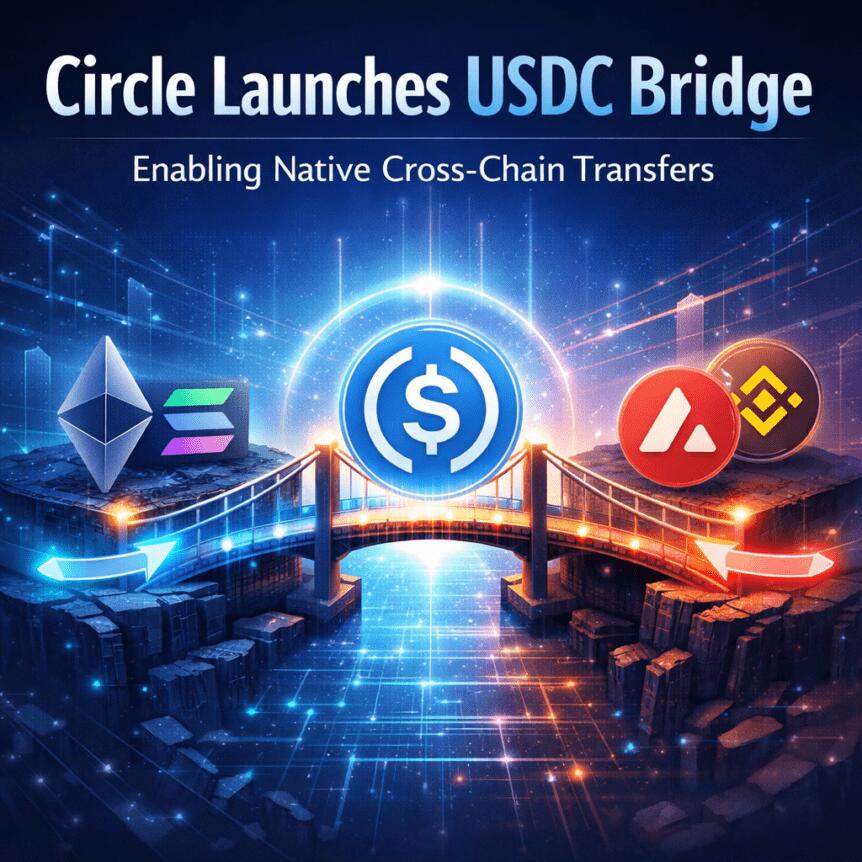
Circle has unveiled USDC Bridge, a user-friendly interface layered on top of its Cross-Chain Transfer Protocol (CCTP) to simplify native cross-chain transfers of the USDC stablecoin. The bridge leverages a burn-and-mint mechanism, enabling USDC to move between networks without resorting to wrapped or synthetic variants, and is designed to offer a more predictable, transparent experience for users navigating multi-chain movement of funds.
Circle’s USDC X account highlighted that the bridge automates gas fees, displays them up front, and provides live status updates throughout the transfer process. The aim is to remove common friction points that have historically deterred broader adoption of cross-chain transfers, particularly for newcomers who struggle with complex interfaces and unclear fee structures.
Key takeaways
- USDC Bridge builds on Circle’s Cross-Chain Transfer Protocol (CCTP), which was introduced in 2023 to streamline stablecoin transfers without wrapped tokens.
- The bridge enables burn-and-mint transfers of USDC across a broad set of networks, with automatic gas handling, upfront fees, and ongoing transfer telemetry.
- Across blockchains, USDC Bridge supports at least 17 Ethereum Virtual Machine (EVM)–compatible networks, including Ethereum, Avalanche, Arbitrum, Base, Monad, Optimism, Polygon, Sonic and World Network, among others.
- Circle’s broader CCTP infrastructure also covers non-EVM chains such as Solana, Sui and Aptos, expanding the potential reach beyond traditional EVM ecosystems.
- The deployment arrives amid ongoing legal headwinds for Circle, which faces a class-action lawsuit alleging negligence and aiding and abetting conversion related to drift-focused transfers processed via CCTP.
Native transfers, burn-and-mint, and the aim of simplicity
The USDC Bridge is designed to present cross-chain movement as a straightforward, predictable operation. By relying on the burn-and-mint model, Circle removes the need for users to rely on wrapped representations of USDC or complex “bridge” layers that can introduce synchronized risk, slippage, or custody concerns. In practical terms, a user initiating a transfer from one chain to another would see a simplified flow: the source USDC is burned on the origin chain and minted in the destination chain, reducing the potentially fragile intermediate states that have troubled bridges in the past.
Circle’s messaging emphasizes transparency: fees are calculated and shown upfront, while live status updates accompany the transfer as it completes. The interface and UX focus on clarity, aiming to minimize the confusion that has historically accompanied cross-chain activity—an issue that regulators and industry participants have long pointed to as a barrier to mainstream adoption.
Coverage and scope: how many chains are involved
According to coverage surrounding the rollout, USDC Bridge works across a broad set of networks, notably on Ethereum Virtual Machine (EVM)–compatible chains. The system supports transfers between at least 17 EVM-based networks, including Ethereum itself and networks such as Avalanche, Arbitrum, Base, Monad, Optimism, Polygon, Sonic and World Network, among others. This reach underscores a broader strategy to knit together a large portion of the fast-growing multi-chain ecosystem under a single, user-friendly transfer layer.
Circle’s existing CCTP plays a central role here beyond the EVM corridor. The protocol is not limited to EVM chains; Circle has indicated that CCTP also supports non-EVM ecosystems, with native compatibility extended to networks like Solana, Sui and Aptos. The implication is that the USDC Bridge could, in time, broaden its cross-chain footprint beyond traditional smart-contract platforms to include a wider array of ecosystems, further advancing the goal of ecosystem interoperability rather than siloed liquidity rails.
Regulatory and legal context: risk alongside innovation
The rollout comes against a backdrop of legal scrutiny for Circle. Earlier this week, Circle was named in a class-action filing alleging negligence and aiding and abetting conversion in connection with USDC movements tied to the Drift Protocol exploit. The suit contends that Circle failed to freeze roughly $230 million worth of USDC that moved through the CCTP in relation to the incident, a claim the plaintiffs say warrants damages pursued at trial. More than 100 individuals are involved in the action, with the law firm Mira Gibb leading the representation and pursuing damages as determined by the court.
For investors and users, the case highlights two intertwined realities: innovation in cross-chain infrastructure is accelerating, but it does so within a landscape where compliance, custody obligations, and risk controls are under increasing scrutiny. As USDC Bridge scales, participants will be watching not only for technical performance and interoperability gains but also how remedy and governance frameworks align with evolving regulatory expectations and liability standards.
What this could mean for users and builders
From a user perspective, USDC Bridge—if it lives up to its stated aims—could reduce the friction historically associated with moving stablecoins across networks. A clearer fee structure, automated gas handling, and real-time transfer updates may appeal to both retail users and developers building cross-chain apps, liquidity pools, and multi-chain wallets. For builders, the burn-and-mint approach avoids the emergence of wrapped tokens, potentially simplifying liquidity calculations and reducing one layer of risk associated with cross-chain arbitrage and settlement timing.
Yet the legal context surrounding Circle adds a note of caution. The class-action lawsuit related to the Drift incident is a reminder that even widely deployed, mission-critical infrastructure operates within a fragile liability environment. Observers and participants will likely monitor whether the suit influences risk controls, governance decisions, or the pace at which new cross-chain capabilities are deployed and audited.
In the near term, market watchers will want to see uptake metrics: user adoption rates, the breadth of supported networks in practice, and any emerging frictions on the user interface as the bridge expands. The broader cross-chain narrative—interoperability, user experience, and regulatory clarity—will continue to shape how quickly ecosystems embrace native cross-chain transfers at scale. As Circle advances USDC Bridge, the story to watch is whether this streamlined approach translates into measurable growth in cross-chain activity and what that implies for the future of stablecoin settlement across a multi-chain world.
Readers should keep an eye on how the Drift-related suit evolves and whether it spurs further regulatory inquiries into CCTP and related infrastructure. While the technical innovation promises to simplify cross-chain USDC flows, the legal and governance dimensions will likely influence both the pace and scope of future deployments.
Key Highlights
- WLD declined 13.4% to reach $0.28 on Friday while the wider cryptocurrency market gained 2.2%
- World announced a comprehensive overhaul of its World ID platform, branding it as “full-stack proof of human” technology
- Platform partnerships expanded to include Zoom, Docusign, and Tinder with availability extending to American users
- The Orb technology captures iris biometrics to establish unique digital identities while avoiding personal data retention
- Strategic collaborators also encompass Amazon Web Services, Shopify, Coinbase, Razer, and Reddit
The Worldcoin (WLD) cryptocurrency experienced a 13.4% decline to $0.28 on Friday, April 17, coinciding with World’s announcement of a significant identity verification platform enhancement and numerous new strategic partnerships.
This downturn occurred against the backdrop of a 2.2% rally in the overall cryptocurrency sector, fueled by developments around US-Iran diplomatic progress and the resumption of Strait of Hormuz operations.
World, launched by OpenAI’s Sam Altman as co-founder, convened a presentation in San Francisco unveiling “World 4.0.” This advancement establishes World ID as comprehensive “full-stack proof of human” architecture designed for individual users, commercial entities, and artificial intelligence systems.
The technology relies on the Orb apparatus, which captures facial and iris biometric data in-person to create a distinctive cryptographic identifier. Captured imagery undergoes immediate deletion following processing, with exclusively anonymized information distributed through a decentralized infrastructure.
Daniel Shorr, a senior executive, stated during the presentation: “World 4.0 is powerful, scalable and open. In the age of AI, being human will be incredibly valuable and the internet will want to know you’re human.”
Sam Altman remarked: “World ID is on the way to being a real human network for the internet.”
The platform enhancement introduces account-based verification, multiple key functionality, and credential recovery mechanisms. World simultaneously released a standalone World ID application, presently in beta testing, enabling users to control and distribute their authentication credentials across various services.
Major Platform Collaborations
Zoom, the video conferencing service, is incorporating World’s “Deep Face” technology to authenticate that conference attendees are genuine individuals rather than AI-generated deepfakes. Docusign, the electronic signature provider, is implementing World ID authentication within its digital document execution process.
No more deepfakes on video calls. @worldnetwork identify verification on @Zoom. pic.twitter.com/0ap0IOKR6H
— World (@worldnetwork) April 17, 2026
The dating application Tinder is extending its World ID “verified human” certification to users throughout the United States. World additionally introduced a “Concert Kit” solution designed to assist musicians in allocating tickets to authentic individuals, eliminating automated scalping operations.
Gaming sector alliances with Razer and Mythical Games were revealed, while Reddit confirmed its evaluation of World’s capabilities for automated account detection.
Business Solutions and AI Integration
For enterprise applications, World is collaborating with Okta, Vercel, and Browserbase. These partnerships focus on establishing verification frameworks for automated business processes.
World unveiled “AgentKit,” a development platform connecting artificial intelligence agents to authenticated human credentials. Coinbase previously disclosed in March its intention to utilize AgentKit for its x402 AI micropayment infrastructure.
Additional established collaborators include Amazon Web Services, Shopify, Browserbase, Exa, and VanEck.
Certain observers have expressed apprehension regarding the mass collection of biometric information, especially when centralized under a single corporate entity.
WLD serves as the indigenous cryptocurrency of the World Network, distributed as compensation for identity authentication and utilized for transactional operations throughout its platform.

Key Takeaways
- Circle introduced USDC Bridge, a user-friendly interface powered by its Cross-Chain Transfer Protocol (CCTP) for seamless native USDC movement
- The platform employs a burn-and-mint system that avoids wrapped or bridged token variants
- Transaction costs are transparent upfront with automated gas handling; transferring $20 from Ethereum to Optimism runs approximately $0.20
- The bridge works with a minimum of 17 EVM-compatible networks from day one, featuring Ethereum, Base, Polygon, and Monad
- A class action lawsuit targeting Circle seeks damages for approximately $230 million in USDC transferred via CCTP after the Drift Protocol breach on April 1
On Friday, Circle rolled out USDC Bridge, a straightforward cross-chain transfer solution constructed on its established Cross-Chain Transfer Protocol (CCTP). The initiative aims to streamline and demystify the process of transferring USDC across different blockchain networks for regular users.
CCTP debuted in April 2023. The protocol currently processes more than $500 million in daily USDC transactions and received a comprehensive V2 upgrade in the previous year.
This new bridge provides users with an intuitive interface for direct CCTP engagement. Until now, CCTP was primarily utilized by developers and technically sophisticated users — the updated UI democratizes access to a much broader user base.
USDB Bridge operates through a 1:1 burn-and-mint mechanism. Tokens are destroyed on the originating blockchain and created natively on the receiving network, eliminating any wrapped token intermediaries.
Transaction costs are displayed upfront before users finalize their transfers. The protocol automatically manages destination chain gas requirements, eliminating a traditionally confusing element for less experienced users.
According to testing conducted by a The Block journalist, moving $20 in USDC from Ethereum’s mainnet to Optimism carried a fee of roughly $0.20. Cost structures fluctuate based on specific transaction parameters.
Circle doesn’t impose proprietary fees for CCTP usage. Users still encounter standard network gas charges on both source and destination blockchains, with expedited “fast” transactions potentially incurring premium costs.
Supported Blockchain Networks
At its initial deployment, USDC Bridge accommodates at least 17 EVM-compatible blockchain platforms. The roster includes Ethereum, Avalanche, Arbitrum, Base, Optimism, Polygon, Sonic, Monad, Sei, and World Network.
While CCTP itself maintains compatibility with an expanded network selection that encompasses Solana, Sui, and Aptos, USDC Bridge currently restricts functionality to EVM-compatible environments, temporarily excluding non-EVM alternatives.
Circle natively deploys USDC across numerous blockchain networks and on specific platforms like Polymarket. USDC maintains its position as the stablecoin sector’s second-largest asset by market capitalization.
Cross-chain bridging infrastructure has historically represented a significant pain point within cryptocurrency. Complex user interfaces, opaque fee structures, and cumbersome multi-step processes have hindered widespread adoption — especially among newcomers. Circle frames USDC Bridge as a refined alternative addressing these persistent challenges.
Legal Action Filed Following CCTP Security Incident
The bridge launch follows closely behind Circle being served with a class action lawsuit. The complaint, filed on Wednesday, concerns approximately $230 million in USDC that transacted through CCTP in the aftermath of the April 1 Drift Protocol security breach.
Over 100 plaintiffs have joined the legal action, with representation provided by law firm Mira Gibb. Circle faces allegations of aiding and abetting conversion alongside negligence charges for failing to freeze the compromised assets. Final damage amounts will be established during trial proceedings.
Circle has yet to issue a comprehensive public statement addressing the lawsuit’s specifics.
Key Takeaways
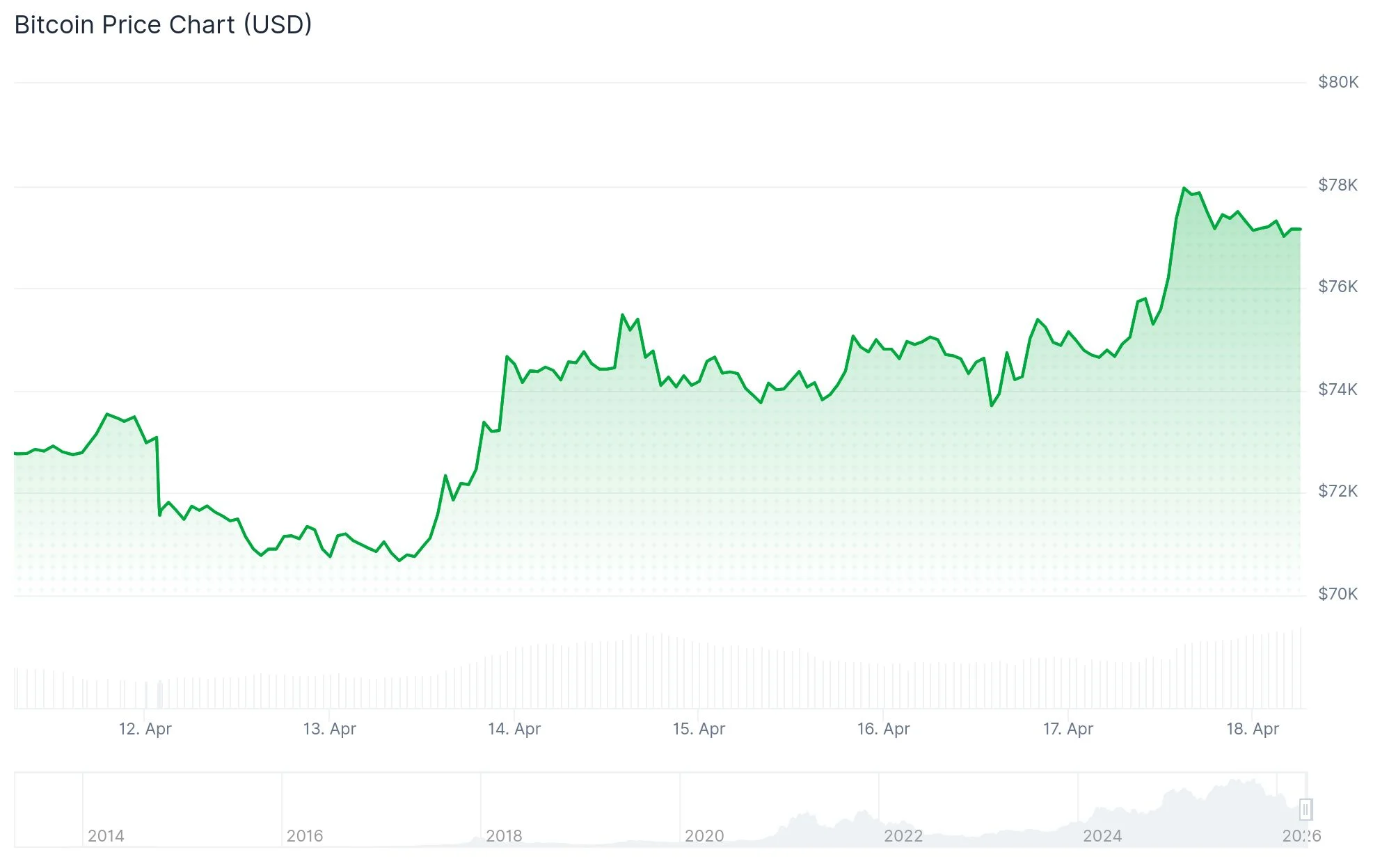
- BTC climbed above $78,000 for the first time in over two months following Iran’s announcement regarding the Strait of Hormuz
- Iran’s top diplomat announced that commercial shipping traffic can now pass freely during the ceasefire
- President Trump indicated that negotiations between the US and Iran are nearly finalized with core elements agreed upon
- Crude oil prices plummeted approximately 10% to roughly $85 per barrel following the announcement
- Bitcoin ETFs in the United States attracted $664 million in net capital on April 17, marking the fourth consecutive day of positive flows
Bitcoin exploded beyond the $78,000 threshold on Friday, April 17, marking its strongest price level since the beginning of February. The rally was triggered after Iran’s Foreign Minister Seyed Abbas Araghchi announced via X that the strategic Strait of Hormuz remains “completely open” to commercial shipping traffic throughout the duration of the existing ceasefire agreement.
President Donald Trump validated the development through his Truth Social platform, stating that negotiations to resolve the US-Israel-Iran conflict are “mostly complete.” He indicated that fundamental components have been agreed upon, with the remaining issues anticipated to be settled within the weekend.
Bitcoin reached an intraday peak of $78,343, representing approximately 4.1% growth within the trading session. Throughout the week, BTC recovered around 5%, based on information from CoinMarketCap and TradingView.
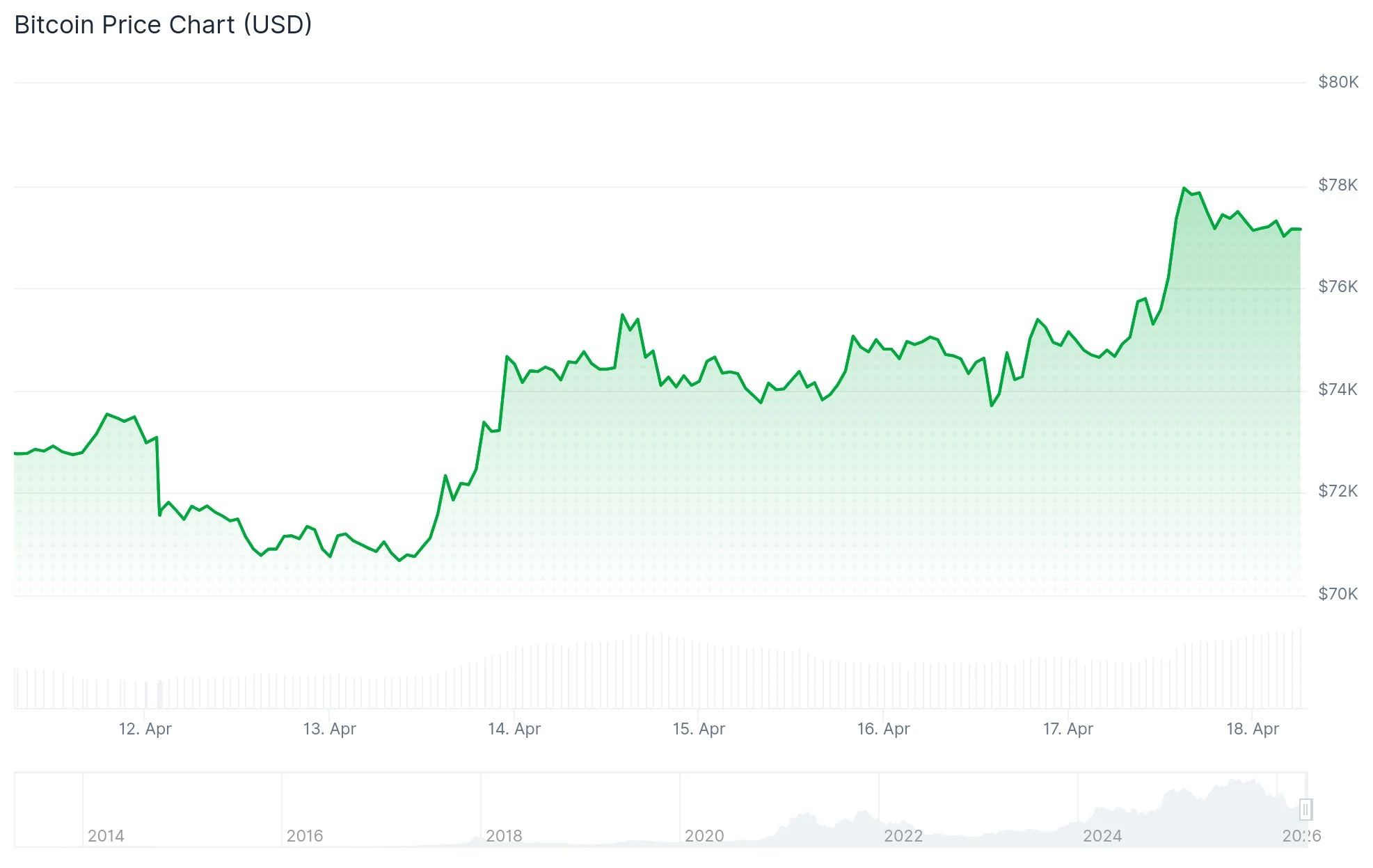
Alternative digital assets experienced similar upward momentum. Ethereum appreciated 3.3% while XRP advanced 2.4%, contributing to a widespread risk-on sentiment throughout international markets.
Brent crude oil contracts declined roughly 10% to approximately $85 per barrel. The S&P 500 index also rallied, accumulating $7 trillion in market value during the previous three weeks, as noted by The Kobeissi Letter.
Bitcoin ETF Capital Flows and Corporate Accumulation
Wu Blockchain disclosed on X that US-based spot Bitcoin ETFs accumulated $664 million in net capital on April 17, representing the fourth consecutive session of positive inflows. Spot Ethereum ETFs attracted $127 million, continuing a seven-day streak of inflows.
Bitcoin Archive shared on X that BlackRock’s iShares Bitcoin Trust has continuously accumulated Bitcoin for eight consecutive trading sessions, acquiring $284 million worth on April 17 exclusively. BlackRock’s cumulative purchases have reached $1.34 billion across the eight-day period.
Strategy Inc. has additionally accumulated $2.6 billion in Bitcoin during the past two weeks. Strategy’s stock price surged as much as 16% on Friday, representing its largest single-session increase since February 6.
Coinbase Global shares climbed as much as 8% while Galaxy Digital appreciated over 10% during the same trading session.
Traditional Finance Enters Crypto
Goldman Sachs submitted documentation for a Bitcoin ETF this week, representing its initial direct entry into cryptocurrency investment products. Charles Schwab revealed intentions to introduce spot cryptocurrency trading capabilities in 2026 and indicated that clients might consider allocating up to 8.8% of investment portfolios to Bitcoin.
Morgan Stanley introduced its proprietary Bitcoin-tracking ETF last week, establishing itself as the first major banking institution to launch such a product.
Matt Mena, senior crypto research strategist at 21Shares, characterized the reopening of the Strait of Hormuz as “the risk-on signal the global markets have been waiting for.”
Bohan Jiang, senior derivatives trader at FalconX, noted that Strategy’s accumulation strategy has provided market support throughout recent trading periods.
Geopolitical Risks Persist
The current ceasefire agreement is scheduled to conclude on April 22. US authorities have indicated that the naval blockade will remain operational until a comprehensive agreement is finalized. Iran has issued warnings about potentially closing the Strait once more if the blockade persists.
Axios additionally reported that US officials are evaluating the release of up to $20 billion in frozen Iranian assets in return for Iran relinquishing its enriched uranium inventory.
Derivatives market indicators suggest traders maintain a cautious stance. Funding rates for perpetual futures contracts registered negative on Friday. Put options positioned at $60,000 and $50,000 strike prices are commanding substantial premiums, reflecting hedging behavior.
Polymarket participants assessed the probability of Bitcoin reaching $80,000 during this month at 65% as of Friday, April 17.
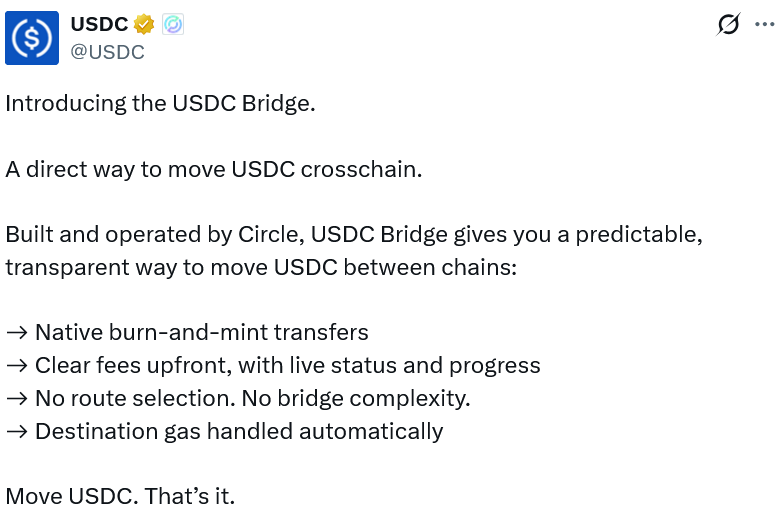
Stablecoin issuer Circle has launched USDC Bridge, a new user interface built on top of the Cross-Chain Transfer Protocol (CCTP) that seeks to simplify native cross-chain transfers of the USDC stablecoin.
On Friday, Circle’s USDC X account said the bridge allows users to move the USDC (USDC) stablecoin in a “predictable, transparent way,” citing a native burn-and-mint transfer mechanism and no bridge complexities.
Gas fees will be handled automatically, fees will be shown upfront, and live status updates will be provided throughout the transfer, Circle added.

The USDC Bridge builds on Circle’s CCTP, which was introduced in April 2023 and facilitates hundreds of millions of stablecoin transfers each day.
CCTP eliminated the need for wrapped and synthetic versions of USDC.
Cross-chain bridges seek to make the broader crypto ecosystem interoperable, functioning as a unified network rather than a collection of fragmented, isolated blockchains.
Making bridges as simple and easy to use as possible has been an area of focus for many crypto infrastructure firms.
In the past, bridges have confused users and arguably slowed crypto adoption, especially for beginners struggling to navigate bridge interfaces, trade routes and gas fees.
USDC Bridge supports over a dozen blockchains
Cointelegraph found that USDC Bridge supports USDC transfers between at least 17 Ethereum Virtual Machine-compatible blockchains, including Ethereum, Avalanche, Arbitrum, Base, Monad, Optimism, Polygon, Sonic and World Network.
Related: Ukraine arrests FBI-wanted cybercrime suspect, seizes $11M in assets
Circle’s CCTP supports a broader number of blockchains, including Solana, Sui and Aptos, which are not natively EVM compatible.
On Wednesday, Circle was hit with a class action for failing to freeze around $230 million worth of USDC that moved through its CCTP from the Drift Protocol exploit on April 1.
Circle is accused of aiding and abetting conversion and negligence.
More than 100 members are involved in the class action. The law firm representing them, Mira Gibb, is seeking damages, with the final amount to be determined at trial.
Magazine: Are DeFi devs liable for the illegal activity of others on their platforms?

100 times stronger than fentanyl, carfentanil seizures surge

Colombia’s Petro warns of Latin American ’rebellion’ if US doesn’t rethink policy
Global Silver Market Faces Sixth Straight Deficit as Supply Tightness Deepens Into 2026


-
 NewsBeat5 days ago
Pep Guardiola and Gary Neville agree over Arsenal title problem that benefits Man City
-

 Crypto World5 days ago
The SEC Conditionalises DeFi Platforms to Be Avoided for Broker Registration
-

 Politics6 days ago
World Cup exit makes Italy enter crisis mode
-

 Crypto World4 days ago
SEC Signals Exemption for Crypto Interfaces From Broker Registration
-

 News Videos3 days ago
Secure crypto trading starts with an FIU-registered
-

 Fashion15 hours ago
Weekend Open Thread: Theodora Dress
-

 Sports23 hours ago
NWFL Suspends Two Players Over Post-Match Clash in Ado-Ekiti
-

 Crypto World4 days ago
SEC Proposes Certain Crypto Interfaces Don’t Need to Register as Brokers
-

 Business7 days ago
Ireland Fuel Protests Enter Day 5 as Blockades Spark Shortages and Government Prepares Support Package
-

 NewsBeat4 days ago
Trump and Pope Leo: Behind their disagreement over Iran war
-
 NewsBeat6 days ago
JD Vance announces ‘no agreement’ with Iran over nuclear weapons fear
-

 Politics12 hours ago
Palestine barred from entering Canada for FIFA Congress
-

 Crypto World10 hours ago
Russia Pushes Bill to Criminalize Unregistered Crypto Services
-
Sports6 days ago
Dexter Lawrence, Stefon Diggs, Trading for De’Von Achane
-

 Crypto World5 days ago
Trump whales load up ahead of Mar-a-Lago luncheon.
-
Crypto World5 days ago
Sei Network Enters Quiet Reset Phase as On-Chain Metrics Signal a Slowdown in 2026
-
Business5 days ago
Kering slides after Morgan Stanley downgrade, Gucci woes loom
-
 Entertainment4 days ago
Karol G’s ‘Ultra Raunchy’ Coachella Set Gave ‘Satanic Vibes’
-
 Business1 day ago
Creo Medical agree sale of its manufacturing operation
-

 Sports5 days ago
NWFL opens Pathway for new Clubs ahead of 2026 Season
You must be logged in to post a comment Login