
There are plenty of 4K TVs available to buy these days, but the ones we’ve hand-selected here truly stand out as the best of the best.
If you want to do real justice to 4K HDR, then buying a cheap TV won’t really offer the benefits you’re after. Instead you’ll need to buy one of the best 4K TVs on our list, which have all been selected for different budgets.
We’ve aimed to include at least one model from each major manufacturer. Every TV has been tested and reviewed by our expert team.
They’re assessed by how easy they are to assemble, how long it takes, how easy they are to use, the level of feature support they have in comparison to toher models. They are, of course, all put through their paces when it comes to picture and sound testing.
The 4K TVs on our list are all £1,000 or above. If you’re looking for something a bit cheaper, we’d recommend taking a look at our best cheap TV list. If you’re looking for other options, our comprehensive best TV list will give you the answers.
Best 4K TV at a glance
SQUIRREL_ANCHOR_LIST
How we test
Every TV we review is put through the same set of tests to gauge its picture performance, usability, and smart features.
Tests are carried out over several days and are done by eye but supported with technical measurements. Testing by eye involves an expert watching a wide range of material to understand and determine a TV’s performance in fields such as brightness, contrast, motion processing, colour handling and screen uniformity.
We’ll consider the design of the TV in terms of build quality, study the spec sheets and see if the TV’s connections are up to spec, as well as playing video and audio content to ensure that the set handles playback as it claims. We also take note whether a product’s compatible formats and features are in line with industry trends or not to gauge whether it’s relevant for you.
Comparison to other related and similarly priced products is also important, to see if it’s missing any vital features and whether it impresses as a whole. After all this, we’ll come to a judgement on how the TV performs as a whole.
The LG OLED55G5 (G5) is simply an outstanding 4K TV. Not only does it boast a vibrant and colourful picture, but its upscaling and processing capabilities are up there with the best. Plus, and unlike some other OLED panels, the LG G5 is impressively bright too.
If you opt for the 48-, 55- or 65-inch models then you can choose between the wall-mounted option or a version that comes with a stand. However, anything over 77-inch will only support wall-mounting, so keep that in mind.
The LG interface is easy to use and can be controlled either via the included remote or through LG’s ThinQ smartphone app. There’s no lag and the amount of content doesn’t overwhelm like the Fire TV. However there’s no Freeview Play support and, instead, you’ll see LG Channels.
Gamers will appreciate ALLM which we tested had an input lag at 13ms in Standard and 9.3ms in Boost modes. In addition, the G5 can hit up to 165Hz in PC games, has VRR compatibility in AMD FreeSync Premium and includes the LG Game Optimizer for deeper customisation in game.
Sporting a Primary RGB Tandem panel, where the G5 really impresses is with its brightness, and can hit a peak of 4000 nits. That’s seriously impressive for an OLED TV.
We should note that although there’s no unsightly green tint on display here, which is an issue we’ve seen with other LG TVs, we have concluded that it can’t quite match a Mini LED panel. However, that’s not an issue with just the G5 as not many OLEDs can match a Mini LED’s performance.
Another area where the G5 excels is with upscaling, as 1080p content could be mistaken for a true 4K image.
Generally sound quality is decent enough, with dialogue especially sounding clear and natural. However, lower frequencies bring out some buzzing and it can sometimes lack the energy of other TVs. With this in mind, it might be a good idea to invest in one of the best soundbars.
The Philips 65OLED+910 is a terrific OLED TV from the brand, with a bright and detailed picture, an affordable price tag and one of the best built-in sound systems we’ve tested.
The sound system is courtesy of Bowers & Wilkins, and sits at the bottom of the OLED910. It’s wrapped in a fabric that gives the TV a warm, lifestyle feel which is a nice touch too. However, most importantly, the sound is powerful with a spacious soundstage and clear dialogue. We don’t even think you need a soundbar with this one.
Otherwise, the OLED910 is fitted with the same RGB Tandem screen used in the LG G5 and supports HDR10, HLG, HDR10+ Adaptive and Dolby Vision. While there’s no IMAX Enhanced support, there’s also Dolby Vision x Filmmaker Mode that combines the two.
Annoyingly, out of the box the OLED910 has Auto Film Picture Style enabled which makes motion seem more stuttery. You’ll have to dive into the settings to turn this off, but once you do the difference is unmistakable.
While the TV isn’t as bright as the likes of the LG G5 or Samsung S95F, where the Philips excels is with its contrast and level of detail. Even the divisive Crystal Clear picture mode looks excellent, although some films don’t seem to quite suit it as well as others.
Upscaling is solid too, although there are options that do a better job as refining details.
Finally, the OLED910 runs on Google TV which, although is easy enough to use, does have a few apps missing – mainly BBC iPlayer. You can stream iPlayer via Google Cast but a built-in solution would be better.
The arrival of the Samsung QN90F marks a big change in Samsung’s approach to its TV in that its OLEDs are as important if not more so than its LCD TVs.
It has an RRP of £2499 / $2499, which doesn’t make it the most affordable at launch and a little over the price point we have in mind for this list. But if you’re willing to wait, the price will eventually come in the months ahead.
Peak brightness is a scorching 2500 nits on 10% window, making this a suitable TV for those in need of a bright TV or watch in a room with lots of ambient light. There’s a big step up in AI processing from the QN90D’s 20 neural networks to the QN90F’s 128.
This extra AI horsepower helps to upscale non-4K images in a clean, crisp, and natural way thanks to its ability to tell the difference between detail and noise.
With 4K HDR content, the TV pumps out some rich and vibrant colours, although our reviewer did find that its pictures can look overly vibrant at times. Regardless, the processing produces supreme levels of detail and sharpness. Local dimming is effective though we did note some blooming around bright objects.
The sound system is on the impressive side for a flatscreen TV. It offers power, clarity and space, confidently planting sounds across the screen and beyond its frame. Bass remains limited but that’s to be expected.
For gaming, all four HDMI inputs support 4K/144Hz with 165Hz available for PC gamers. There’s HDMI VRR as well as AMD FreeSync Premium Pro. We measured input lag to 9.2ms, which is lightning fast and the best on the market.
The latest Tizen smart interface is better than previous ones offering a more polished, content-first approach. It’s quick to load and there’s customisation on the table in the form of re-ordering apps.
-
Spectacularly bright, colourful images
-
Excellent local dimming system
-
Great price for what’s on offer
-
Only two HDMI inputs deliver full gaming features
-
Audio system sometimes loses focus
-
No support for Freely or Freeview Play
TCL has made a name for itself in offering high-spec TVs at lower prices, and the 65C8K is the perfect solution for those who want maximum value at affordable prices (for a 65-inch 4K TV).
The 65C8K has a huge levels of brightness at its disposal, and this leads into a colour performance that’s both vibrant and natural looking to the eye. And despite the near 4000 nits of brightness that this TV can summon, it does a very good job at producing solid black levels when it needs to.
Compared to Fire TV OS which tends to prioritise Prime Video content, Google TV does a good job of gathering content from all of your available subscriptions in one place. If you know exactly what you want to get to then you can use Google Assistant voice control to ask for it.
Gamers will benefit from ow input lag (13.1ms), VRR support and refresh rates up to 165Hz to offer smooth, fast gameplay, especially if you’re a PC fan.
When it comes to the default sound profile of most TVs, we usually recommend that consumers pick up a soundbar, but this isn’t immediately the case with the TCL 65C8K.
With speakers that have had input from Bang & Olufsen, there’s an impressive degree of clarity and detail, although we would have liked a bit more power to the bass levels.
-
Freely is strangely laggy
-
Lack of DTS audio is a shame
-
Slight black crush out of the box
If you’re the type of person who likes to keep a minimal, clutter-free entertainment unit in their living room then you’ll probably want to consider the Panasonic TV-65Z90B as your next upgrade. Panasonic’s stunning set is one of the best TVs we’ve reviewed in terms of offering a complete, all-in-one experience across visual and audio quality, not to mention gaming chops and smart features.
Starting with the image quality, there’s nothing about Panasonic’s offering that’ll leave you wanting. The OLED panel brings true-to-earth colours to life, with a brightness that draws you in and a contrast that only heightens the darker elements of a scene through deep, true blacks. What’s even more impressive for a modern TV is that the sound quality is right up there with some of the best we’ve tested.
Typically as TVs have continued to slim down, the potency of built-in speakers has diminished in tandem, but the TV-65Z90B packs quite a punch on the audio front, right from the get-go. There’s a tangible weight to the bass that really helps to bring forth the expression of explosions and punches, but more importantly it’s the dialogue that comes across with outstanding clarity, so you won’t be struggling to hear what’s being said.
Keeping in tandem with the idea of having an all-in-one device without the need for accessories, the Panasonic TV-65Z90B utilises Amazon’s Fire TV operating system by default, providing users with quick access to all of the major streaming services, either via the remote which includes a wealth of dedicated streaming service buttons, or the Alexa voice assistant.
If you do have a console nearby however then you’re in for an absolute treat. With a 144Hz refresh rate alongside next to no input lag, you can kick back and enjoy a whirlwind of a gaming experience that brings more fast-paced titles to life. The Game Control Board also lets you toggle various visual and audio modes that are designed to make the most out of certain genres.
We concluded that the Hisense 65U8Q is the best Hisense TV we’ve ever reviewed here, thanks to its picture quality, impressive brightness and a solid sound system that outranks the LG G5.
Available in three sizes (55-, 65- and 75-inches), the U8Q is quite a hefty TV and weighs a whopping 29.2kg and has a depth of 45mm. It’s certainly not the slimmest, but that shouldn’t be too much of an issue for many.
The U8Q runs on Hisense’s VIDAA interface in the UK which is a simple operating system and includes all the apps you’d expect from a smart TV. It’s not the most polished OS, but it’s easy enough to use.
All HDR formats are covered here, and the processing is performed by Hisense’s Hi-View Engine Pro which can optimise picture and sound in real-time.
Although some blooming is noticeable, the U8Q is easily as bright as a Mini LED TV, and recorded 857 nits on 100% HDR window – that’s the brightest full screen output we’ve seen. In addition, the black level and bright highlights offer a Samsung-esque performance too.
When it comes to audio, while it doesn’t quite have the same punch and force as the Philips 65OLED809, there’s enough power that you don’t often get with a TV. While we’d still recommend pairing it with one of the best soundbars, it’s still a better overall performer than LG and Samsung TVs.
Gamers are covered here too, with AMD FreeSync Premium Pro VRR, 165Hz refresh rate for PC gamers, or 120Hz for console users, and ALLM which automatically puts the TV into its lowest latency – which we measured at 13.5ms.
The Sony Bravia 8 replaces the Sony A80L, but you could more or less say it’s the same TV.
There are a few differences in terms of picture quality, with the Bravia 8 OLED reaching higher levels of peak brightness in some modes (Professional, Vivid) but less in others (Cinema Standard).
There are slight improvements over the A80L with a richer, bolder HDR performance that looks lovely when paired with colourful films and TV series. Motion processing is again excellent, smooth and with very few issues noted, while contrast is strong for an OLED TV although we did notice some crushing (loss) of detail with its black levels.
We’d love for Sony to push the brightness out more for this OLED, but for those who want a brighter HDR performance, the Bravia 8 II is set for launch in June 2025.
We’d recommend the Bravia 8 as one of the best Sony TVs for PS5 owners. It includes Auto Genre Picture mode that automatically switches the TV in and out of its game-ready state so the A80L isn’t stuck in game mode all the time; along with Auto HDR Tone Mapping enhances the HDR performance for best brightness and contrast.
Dolby Vision Gaming is supported and the TV does also include 4K/120Hz and variable refresh rates (VRR) across two HDMI 2.1 inputs (one of which is shared with the eARC port). We measured input lag at 12.7ms, which is as good as the LG C4.
The sound quality is fine though not as dynamic or as loud as the A80L.
We’d recommend you consider adding a soundbar or sound system, and Sony has plenty including its Bravia Theatre Bar 8 and the Theatre Sound System 6 to choose from.
-
Bright, colourful pictures at an epic size
-
Excellent backlight control
-
Great value for what’s on offer
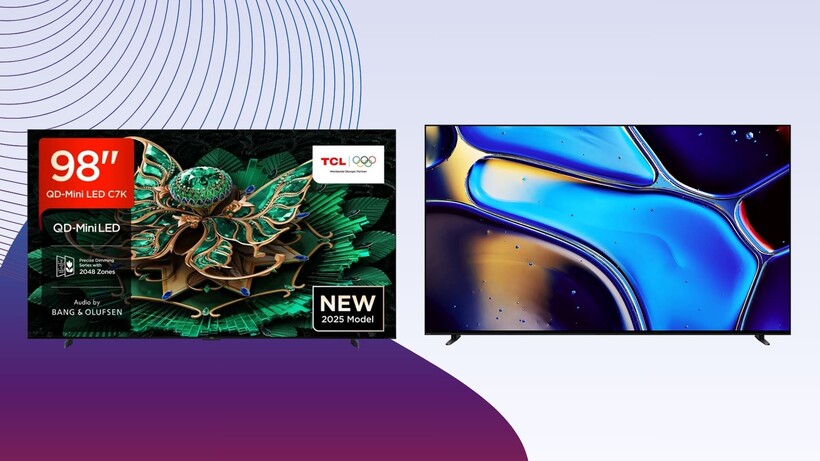
At a jaw-dropping 98-inches, the TCL 98C7K is not a TV that’s designed for everyone. However, if you have the space and want to truly immerse yourself in a massive screen, all for a surprisingly reasonable price tag, then the TCL 98C7K is an easy recommendation.
Although it’s such a mighty screen, there’s very little supporting bodywork around it, with a narrow frame and such slim feet that they become almost invisible when viewing the TV head-on. Speaking of the feet, keep in mind that they’re annoyingly set quite far apart from one another, so you’ll need a hefty piece of furniture to place it on top of.
The 98C7K runs on Google TV which is a decent enough interface, and includes all the apps and even the main UK terrestrial broadcaster catch-up services you’d expect. Not all Google TVs offer that.
While Google TV can be overwhelming to use at times, it’s easy to get your head around and usefully supports Google’s voice assistant too.
With the above in mind, let’s jump to the star of the show: the panel. The Mini LED lighting system is divided into 2048 separate local dimming zones – enough to provide even a screen this big with promisingly localised light control. Considering it can hit almost a peak of 3000 nits, this is a necessary addition.
The panel also supports wider viewing angles than most LCD TVs while TCL’s AiPQ Pro processor is on hand to keep things running smoothly.
Overall, the 98C7K’s picture quality is seriously a vision for such an affordable yet mighty TV. In its Standard preset, which is the one you’re likely to use the most, images are bright and vibrant, with the screen covering more than 97% of the DCI-P3 colour spectrum and near 80% of the BT2020 spectrum too.
A key feature of the 98C7K is its Bang & Olufsen-assisted sound system which delivers a refined, clean and detailed tone. It’s not the best at handling bass, especially when compared to the dedicated subwoofers previously used in premium TCL TVs, but it certainly does the job.
Although it has an RRP of £2399, which feels reasonable given the size and performance, it’s not impossible to pick up the TCL 98C7K with a decent price cut too. With that in mind, if you want a mighty screen, this is a hard option to beat.
It should be noted that the Gen 2 version of Sky Glass is an improvement over the Gen 1 version, but that doesn’t make it a TV designed to satisfy everyone.
If you’re a home cinema enthusiast, a gamer or even just a casual TV watcher, there are better TVs on this list. But if you have a family, or are someone who is not interested in the complications of the TV buying experience. Sky Glass 2 is practically ideal for you.
Firstly, the installation is handled by the courier team that delivers the TV to you. If you want it on a pedestal or hauled onto your wall, they’ll carry that out and take the packaging away so you don’t have to worry about it. The TV itself is the same dimensions as before, so it’s a chunky effort, but it’s lighter, so if you ever feel the need to move it, it won’t be such a difficult task.
Sky OS doesn’t feature every entertainment app on this earth, but it does feature the popular ones whether it’s the UK catch-up apps, Netflix, Disney+, Prime Video, Apple TV+ and an assortment of others.
And what it does as good as any other TV interface is that it does not treat them any differently from one another. All Sky wants is for you to tuck into whatever it is that you enjoy.
The rails of content are there to help you plunder what you like more easily, with Sky OS getting to know what you like over time and personalising those recommendations further.
The Playlist section acts as a way to keep track of what you want to watch, and you can create different personalised playlists for everyone in your household. The interface is quick, and the voice control has become more accurate and responsive over time.
The picture quality is much improved over the original model. It’s brighter without as much blooming, better with colours and handles the darker parts of the picture better than it did before. It’s not the sharpest or most detailed image though, and the upscaling is patchy, with stripey colours noticeable with HD programming.
The built-in Dolby Atmos sound system is described as offering more power over the Gen 1 version, but to our ears it doesn’t sound too much different. It’s a spacious and tall sound, but like the picture quality, it’s not the clearest or most detailed performance. But considering the competition it’s up against, it’s a better effort at TV sound than most.
For those who want their TV, sound and content all wrapped into one convenient package, Sky Glass Gen 2 will be a compelling option, especially if you’re not fussed about getting the highest quality image and sound. It does come at a premium once all the subscriptions are tallied up, but Sky does have a cheaper option with its Glass Air TV.
Test Data
| |
LG OLED55G5 |
Philips 65OLED+910 |
Samsung QE65QN90F |
TCL 65C8K |
Panasonic TV-65Z90B |
Hisense 65U8Q |
Sony Bravia 8 |
TCL 98C7K |
Sky Glass Gen 2 |
| Contrast ratio |
– |
Infinity |
– |
– |
– |
– |
– |
– |
– |
| Input lag (ms) |
13 ms |
12.6 ms |
9.2 ms |
13.1 ms |
12.7 ms |
– |
12.7 ms |
13.1 ms |
65.3 ms |
| Peak brightness (nits) 5% |
– |
1021 nits |
2592 nits |
4100 nits |
1258 nits |
– |
463 nits |
2940 nits |
765 nits |
| Peak brightness (nits) 2% |
– |
1004 nits |
1589 nits |
2200 nits |
1269 nits |
1598 nits |
462 nits |
2000 nits |
586 nits |
| Peak brightness (nits) 10% |
– |
1021 nits |
2552 nits |
– |
1159 nits |
– |
430 nits |
– |
910 nits |
| Peak brightness (nits) 100% |
– |
293 nits |
885 nits |
790 nits |
245 nits |
857 nits |
121 nits |
850 nits |
897 nits |
| Set up TV (timed) |
421 Seconds |
85 Seconds |
– |
360 Seconds |
68 Seconds |
277 Seconds |
69 Seconds |
840 Seconds |
– |
Full Specs
| |
LG OLED55G5 Review |
Philips 65OLED+910 Review |
Samsung QE65QN90F Review |
TCL 65C8K Review |
Panasonic TV-65Z90B Review |
Hisense 65U8Q Review |
Sony Bravia 8 Review |
TCL 98C7K Review |
Sky Glass Gen 2 Review |
| UK RRP |
£2399 |
£1799 |
£2599 |
£1299 |
£2499 |
£2199 |
£2199 |
£2399 |
£1199 |
| USA RRP |
$2499 |
– |
$2499 |
$1699 |
– |
$2199 |
– |
– |
– |
| CA RRP |
– |
– |
– |
CA$1999 |
– |
– |
– |
– |
– |
| AUD RRP |
– |
– |
AU$3499 |
AU$2495 |
– |
– |
– |
– |
– |
| Manufacturer |
LG |
Philips |
Samsung |
TCL |
Panasonic |
Hisense |
Sony |
TCL |
Sky |
| Screen Size |
54.6 inches |
64.5 inches |
64.5 mm |
64.5 inches |
64.5 inches |
64.5 inches |
54.6 inches |
97.5 inches |
64.5 inches |
| Size (Dimensions) |
1222 x 263 x 742 MM |
x x INCHES |
x x INCHES |
1435 x 368 x 861 MM |
1444 x 348 x 910 MM |
1448 x 290 x 914 MM |
1223 x 248 x 786 MM |
2180 x 420 x 1285 MM |
1447.8 x 329 x 911.1 MM |
| Size (Dimensions without stand) |
703 x 1222 x 27.2 MM |
x x INCHES |
x x MM |
824 x 1435 x 51 MM |
892 x 1444 x 58 MM |
838 x 1448 x 45 MM |
706 x 1223 x 37 MM |
1247 x 2180 x 64 MM |
903.3 x 1447.8 x 47.7 MM |
| Weight |
22.1 KG |
– |
24.2 KG |
21.1 KG |
30 KG |
29.2 KG |
18 KG |
54.6 KG |
30.3 KG |
| ASIN |
B0F9PFNQJJ |
– |
– |
– |
– |
B0F7WFH1HL |
B0CZTZTQXJ |
– |
– |
| Operating System |
webOS 25 |
Google TV |
Tizen |
Google TV |
Fire TV OS |
VIDAA |
Google TV |
Google TV |
Sky OS |
| Release Date |
2025 |
2025 |
2025 |
2025 |
2025 |
2025 |
2024 |
2025 |
2025 |
| Model Number |
– |
OLED+910/12 |
QE65QN90FATXXU |
– |
– |
– |
K55XR80 |
– |
– |
| Resolution |
3840 x 2160 |
3840 x 2160 |
3840 x 2160 |
3840 x 2160 |
3840 x 2160 |
3840 x 2160 |
3840 x 2160 |
3840 x 2160 |
3840 x 2160 |
| HDR |
Yes |
Yes |
Yes |
Yes |
Yes |
Yes |
Yes |
Yes |
Yes |
| Types of HDR |
HDR10, HLG, Dolby Vision |
HDR10, HDR10+, Dolby Vision, HLG |
HDR10, HLG, HDR10+ Adaptive |
HDR10, HLG, HDR10+ Adaptive, Dolby Vision |
HDR10, HLG, Dolby Vision IQ, HDR10+ Adaptive |
HDR10, HLG, Dolby Vision IQ, HDR10+ Adaptive |
HDR10, HLG, Dolby Vision |
HDR10, HLG, Dolby Vision, Dolby Vision IQ, HDR10+, HDR10+ Adaptive |
HDR10, HLG, Dolby Vision |
| Refresh Rate TVs |
48 – 165 Hz |
48 – 144 Hz |
48 – 165 Hz |
48 – 144 Hz |
48 – 144 Hz |
48 – 165 Hz |
40 – 120 Hz |
48 – 144 Hz |
50 – 60 Hz |
| Ports |
Four HDMI 2.1, three USB, ethernet, optical digital out, CI+, two RF tuners |
– |
Four HDMI, digital audio output, two USB ports, Ethernet, Terrestrial/satellite |
Four HDMI inputs (two with full HDMI 2.1 features), 1 x USB 3.0, Ethernet, RF input, optical digital audio output |
Four HDMI, digital audio out, three USB ports, Ethernet, two satellite, RF terrestrial, headphone/subwoofer out |
Four HDMI 2.1, three USB, ethernet, optical digital out, CI+, two RF tuners |
Four HDMI, digital audio out, two USB ports, Ethernet, two satellite, RF terrestrial |
Four HDMIs (two with full HDMI 2.1 features), USB 3.0, Ethernet, RF input, optical digital audio output |
Three HDMI, terestrial antennae, two USB-C, Ethernet |
| HDMI (2.1) |
eARC, ALLM, VRR, HFR, QMS, QFT |
VRR, ALLM, eARC, 4K/144Hz |
eARC, ALLM, VRR, HFR |
eARC, ALLM, VRR, HFR |
eARC, ALLM, VRR, HFR |
eARC, ALLM, VRR, HFR |
eARC, ALLM, VRR, HFR, SBTM |
eARC, ALLM, VRR, HFR |
eARC, ALLM |
| Audio (Power output) |
60 W |
80 W |
60 W |
85 W |
60 W |
70 W |
50 W |
60 W |
250 W |
| Connectivity |
Wi-Fi, Bluetooth 5.3, AirPlay 2, Google Cast |
Wi-Fi, Bluetooth 5.2, AirPlay 2, Google Cast, Matter, Control4 |
Wi-Fi, Bluetooth |
Wi-Fi, Bluetooth, Google Cast, AirPlay 2 |
Wi-Fi, Bluetooth 5.3, AirPlay 2, Mirroring |
Wi-Fi, Bluetooth 5.3, AirPlay 2 |
Wi-Fi, AirPlay 2, Google Cast, Bluetooth 5.3 |
Wi-Fi, Bluetooth 5.4, Miracast |
Wi-Fi, Bluetooth 5.2, AirPlay 2 |
| Colours |
– |
– |
– |
– |
Black |
– |
– |
– |
Grey, Silver, Blue |
| Display Technology |
OLED |
OLED |
Mini LED |
Mini LED |
OLED |
Mini LED, VA, QLED |
OLED |
Mini LED |
LED |
What’s the best 4K TV for gaming?
The LG OLED65C4 supports every gaming feature going, with ALLM, VRR, 4K/120Hz HFR, AMD FreeSync Premium, Nvidia G-Sync and Google Stadia.
The post Best 4K TV 2026: Our favourite 4K TVs to buy right now appeared first on Trusted Reviews.
Source link


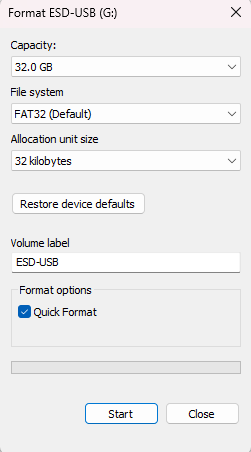
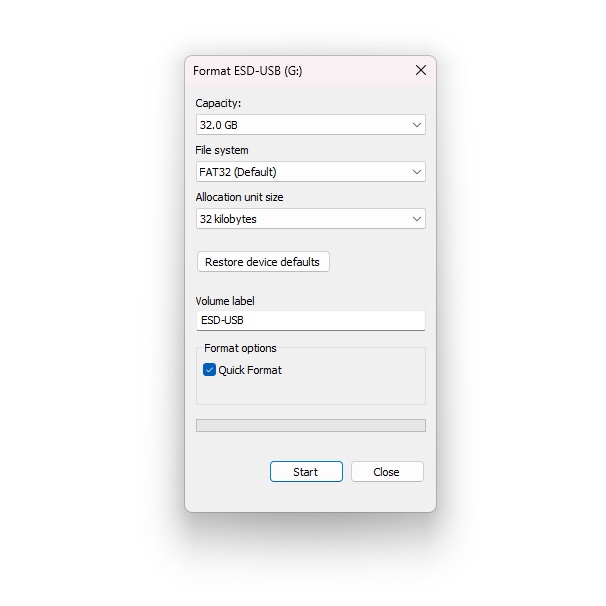 The size limit was never baked into the FAT32 spec itself. With a 32-bit field for counting sectors, the file system supports up to 2 TB volumes with 512-byte sectors. However, as explained by former Microsoft developer [Dave Plummer], it just so happened that the 32 GB limit came about because of a random decision made when slapping together the Format dialogue box over 30 years ago.















































You must be logged in to post a comment Login