
Politics
The real Keir Starmer scandal

The post The real Keir Starmer scandal appeared first on spiked.



The University and College Union (UCU) has issued a damning verdict on Ulster University’s brutal decision to axe 450 jobs. The union represents over 120,000 staff across further education institutions in Britain and Ireland. In a statement, they said:
The shocking announcement to cut 450 jobs at Ulster University is unprecedented and represents a direct threat to the quality of education, respect for staff, desires and ambitions of students and the long-term future of our institution.
Staff already work under sustained pressure, with rising workloads and impossible demands. Imposing redundancies on this scale is deeply alarming and unsustainable. Removing hundreds of staff will fundamentally damage the student experience and weaken academic provision.
Our members deserve full transparency, genuine consultation, in line with legal obligations, as well as the opportunity to challenge the assumptions underpinning these decisions. Any process that falls short of this will be robustly contested and our members will not be afraid to take action to challenge these decisions.
Staff at Ulster University also strongly criticised the decision, with lecturer Aisling O’Beirn highlighting the “wider societal consequences”. She pointed out how the sackings will “pull income out of the economy” and:
…restrict people’s access to education, which is so important in a post-conflict society…
Ulster University’s dysfunctional higher education funding approach backfires again
Redundancies across the higher education sector have become unavoidable.
They went on to cite the “more than 100 institutions across the UK” that have reduced staffing levels. Ulster University went on to suggest that:
…a sustainable funding model is not going to be forthcoming, and regretfully, we must now act to reduce our costs.
Ulster University had been seeking permission to raise tuition fees by over £1,000 per year. This would have forced students to bear a cost of £5,831 every 12 months. Minister for the economy Caoimhe Archibald rejected the request in May 2025. In the Six Counties, universities also receive funding from Stormont via block grants. The squeezed education budget has left a shortfall in money going to universities.
Setting of students fees in the north of Ireland is devolved to Stormont, which has chosen to set them at a lower level than the 2025/26 cap of £9,535 Labour allow in England. Scotland and Germany seem to actually value higher education, where the state will largely cover payment of fees for most students.
Universities in the Six Counties rely heavily on the whopping fees they are entitled to charge international students, who are typically expected to pay around £17,000 per year. However, multiple changes by successive Westminster governments racing to the bottom on immigration have deterred such students from coming.
Changes made by the Tories in January 2024 ensured that:
…international students on a postgraduate taught course, such as a master’s degree, have not been permitted to bring their partner and minor children with them to the UK.
International students pushed out by immigration hysteria
Labour have gone ahead with plans that mean students need to prove they have £1,171 per month to support themselves with. In 2027, the post-study work visa duration will go from 24 months to 18.
A sensible model for funding higher education might look like the following: provide sufficient state funding to ensure that all residents of Britain and the north of Ireland who wish to can attend university, without becoming massively indebted. Have appealing rules for international students that attract the best minds to our universities.
This way, you get a well-educated home-grown population, and the brightest people from around the world, who then go on to build a world class economy.
Alternatively, you can wreck higher education by going out of your way to pander to the prejudices of a privately educated, ex-investment banker who wants to fool the public into thinking all societal malaise is the result of immigration. Then proceed to watch your dysfunctional nation slide further into the doldrums.
Of course, the north of Ireland can’t dictate its own immigration rules as these powers are not devolved. Thus we have a sclerotic arrangement that prevents potentially joined-up thinking on issues like this, when Britain maintains its course of self-sabotage.
The UCU condemned the Ulster University job cuts along similar lines, saying:
This announcement indicates a complete lack of a clear strategic vision for sustainable growth and development. At a time when universities should be expanding opportunity, investing in innovation, and strengthening their regional impact, large-scale redundancies signal regression, rather than progression.
They pledged to fight on, declaring that:
UCU will defend our members, challenge all unjustified job losses, and will robustly hold the university and government to account. We stand ready to engage, but we will not stand idly by and let our university flounder through government or university neglect.
Featured image via the Canary


Establishment figures want more money for war. Recent days have seen government ministers, ex-ministers and generals all demanding welfare is cut to fund massive hikes to ‘defence’ budgets. Turns out they’re all linked to Israel, oil, arms and private healthcare. Quelle surprise, hey?
War hawks gather
The Canary reported on 15 April that UK PM and Chief Silly-Bum of Britainshire-upon-Thames Keir Starmer was under pressure to hike military budgets. The authors of the 2025 Strategic Defence Review were among the most vocal critics. These include former Labour defence minister Lord Robertson and ex-British army general Richard Barrons.
Now, Thatcherite Labour health minister Wes Streeting chipped in as well. Turns out these figures have a links to various lobby groups across issues like pharmaceutical and the arms trade. Barrons said on 15 April that US defence chief Pete Hegseth was right that the Royal Navy was a shadow of itself.
Like many others I hung my head in sorrow. But I couldn’t argue with him because although the Royal Navy and the Royal Air Force and the army are, in their bones, outstanding institutions, they are simply too small and too undernourished to deal with the world that we we now live in. And the review says this.
Lord Robertson, in a major 15 April speech, said that Starmer is:
not willing to make the necessary investment.
Funnily enough that money, Robertson said, should be squeezed out of the less well-off:
We cannot defend Britain with an ever-expanding welfare budget.
Classic.
Corrosive complacency
Robertson announced:
There is a corrosive complacency today in Britain’s political leadership. Lip service is paid to the risks, the threats, the bright red signals of danger – but even a promised national conversation about defence can’t be started.
He also accused “non-military experts in the Treasury” of “vandalism”. Which sounds like a pitch for more military control of the economy.
The BBC reported:
Lord Robertson’s apparent suggestion that the government could find money by reducing the welfare bill may be one that is shared by the Chancellor Rachel Reeves.
Pressed on the matter in an LBC interview, working class cosplayer Streeting said:
Yes, we do need to put more money into defence, we will need more, that’s the reality of the challenge we face.
Pressed on where it would come from, he said:
We definitely want to reduce the welfare budget. It’s for the Chancellor to set out her budgets, I want to make sure I stay in my lane.
Pressured further he told the channel:
It’s got to come from somewhere.
So why not already vulnerable disabled people who are already struggling to live, eh Wes?
Talk about pulling the ladder up, Streeting…
Big Pharma and arms trade links
Now we come to it… the great grift of our times. Let’s start with Barrons, who is co-chair of Universal Defence and Security Solutions (UDSS).
Here’s what UDSS has to say about itself:
UDSS is a leader in not only the delivery of practical advice and service in all areas of defence and security but also in the thinking and execution of digital age Defence and Security Transformation, including applied cyber.
A man with a vested interest in defence spending, in short…
NATO chief and BP advisor
How about Lord Robertson who once headed NATO? Well, Lord Robertson is a ‘senior counselor‘ at the US-based Cohen Group. The Cohen Group assists:
aerospace and defense firms on policy, business development and transactions. We have helped firms from the US, Canada, UK, Europe, Turkey, Israel, GCC, India, Southeast Asia, and Japan to succeed in North America, Europe, the Middle East, India, Latin America, East Asia, and Southeast Asia.
They have:
assisted clients to compete for and win tens of billions of dollars in contracts, to enter new international markets, to build joint venture and other partnerships overseas, and to move up the supply chain.
Another man with an interest in defence spending increases them? Cohen Group also helps out energy firms. Which is lucky… because Robertson is an advisor to the CEO of British Petroleum. Delightful.
One-way Streeting
How about Streeting? Well, it’s no secret that as health secretary Streeting has been a strident advocate of privatising the NHS down to the last doorknob. That may have something to do with his profound links to private healthcare firms… but who can say?
These links are probably best demonstrated by this popular breakdown, in this case tweeted by Streeting’s nemesis Green Party leader Zack Polanski:
Wes Streeting having the chutzpah to tell the story about the NHS.
He doesn't tell the bit about how much he's accepted from private healthcare and the risk our NHS is at under this Labour Government. And most of all, lots of questions about his meetings with Palantir.#BBCQT pic.twitter.com/r51e5dojEd
— Zack Polanski (@ZackPolanski) March 19, 2026
Streeting has also received tens of thousands of pound from the Israel lobby, according to this report by our pals at Declassified UK. The report notes that:
Streeting became the first member of Keir Starmer’s shadow cabinet to visit Israel, in a move designed to signal a break with Jeremy Corbyn’s pro-Palestine position.
The trip was paid for by, you guessed it… our old chums at Labour Friends of Israel (LFI).
When a group of establishment drones want to cut welfare to fund militarism and war, the first question you must always ask is: whose pocket are you in? That is certainly worth asking of this gaggle of wrong ‘uns, as it turns out. A little scrutiny links them directly to some of the most obnoxious interests around: from private healthcare and the arms industry, through to Israel lobbyists and global energy giants.
They must think we’re bloody fools or something…
Featured image via the Canary
By Joe Glenton


Real Madrid’s exit from the Champions League has become a hot topic in the Spanish and European press, which has treated the elimination as more than just an ordinary defeat, but rather a ‘resounding collapse’ for a team historically associated with continental dominance and decisive moments.
Real Madrid: game over?
In Spain, the newspaper Marca devoted extensive coverage to the event, arguing that Real Madrid had “lost its European identity” and was no longer a team capable of turning results around in difficult moments. It pointed to repeated defensive errors and a lack of the usual resilience, alongside a lack of leadership on the pitch and a failure to react after falling behind.
For its part, the newspaper ‘AS’ offered a harsher assessment, describing what happened as a “complete tactical collapse”, explaining that the team failed to grasp the rhythm of the match and impose its style at any stage. It also highlighted the lack of effectiveness in midfield, weak pressing and organisation, alongside an attacking impotence and a lack of solutions, in a match it described as revealing a clear loss of the battle of the details.
As for ‘Mundo Deportivo’, it focused on the psychological aspect within the team, noting that tension was evident among the players, that body language reflected frustration and a lack of confidence, and that the team spirit that had characterised the side in its previous historic comebacks was absent. In the same vein, ‘Sport’ argued that the elimination should not be seen merely as a result, but as evidence of a “deeper crisis”, amidst an unstable transitional phase and a decline in the effectiveness of tactical choices.
In the Madrid press, reports pointed to a tense atmosphere in the dressing room after the match, with some players blaming one another, amidst a general feeling that an avoidable opportunity had been squandered.
Across Europe, questions are being asked
At the European level, the French newspaper L’Équipe described what happened as “the downfall of a team that relied too heavily on its history”, arguing that overconfidence had become a weakness and that the opposition were better organised and deserved to progress. In England, The Guardian viewed the match as a “revelatory moment”, asserting that Real Madrid is no longer the team that commands respect across the continent, with the gap between them and their rivals narrowing. Meanwhile, the BBC focused on technical shortcomings, pointing to a lack of balance between the lines and a decline in the ability to cope with the pressure of big matches.
Conversely, several newspapers were unanimous in their praise for the opponents, who succeeded in dictating the tempo and capitalising on Real Madrid’s mistakes, setting an example of organisation and discipline against a team that had lost much of its usual character.
Amid these contrasting views, the headlines summed up the situation with striking bluntness: “Real Madrid without spirit”, “A team that has lost its identity”, and “A collapse at the decisive moment”, raising questions that now dominate the discourse: does Real Madrid’s European prestige still stand, or has a new era truly begun in the club’s history?
Featured image via the Canary
By Alaa Shamali


Argentine star Lionel Messi has become the new owner of Cornella (UE Cornella), following the completion of a 100% takeover of the Catalan football club.
According to the newspaper, the deal was finalised on Thursday 16 April 2026, meaning the club, which competes in the Spanish third division (Tercera Federación – Catalan Group), is now wholly owned by Messi.
Lionel Messi buys UE Cornella
Cornella is a club based in the Catalonia region. Founded in 1951, it is known for its role in developing young talent and training players in the youth ranks, as well as serving as a stepping stone for a number of players who went on to play at higher levels in Spanish football.
The newspaper reported that this move is part of a new sporting project led by Messi, aimed at developing the club’s technical infrastructure and relying on the academy to produce players, whilst working to gradually raise the team’s level in domestic Spanish competitions.
AS also noted that Cornella is one of the clubs that has focused on youth development in recent years, having produced or seen pass through its ranks a number of players, including goalkeeper David Raya, defender Jordi Alba, midfielder Javi Boado and Keita Balde.
The report suggests that Messi’s acquisition of the club reflects a growing trend among former football stars to enter the field of sports investment and club ownership, through long-term projects centred on sporting and academic development.
No further details have yet been released by the club or Lionel Messi’s representatives regarding the financial or administrative aspects of the deal, whilst initial coverage has simply described the transaction as a full takeover of the club.
Lionel Messi thus enters the world of club ownership through the Catalan club Cornella, marking a new chapter in his career off the pitch.
Featured image via the Canary
By Alaa Shamali

The post Sadiq Khan’s lies about London appeared first on spiked.


In a horrifying video from Israel’s illegal war on Lebanon, the invaders called a Lebanese man as he drove with his family. The monsters on the other end of the line gave a man an appalling choice: get out of the car and be killed alone, or die in the car with your family:
View this post on Instagram
Israel is a terror state and the sickest, most malignant society. ‘Most moral army‘ – yeah, right.
Featured image via the Canary
By Skwawkbox
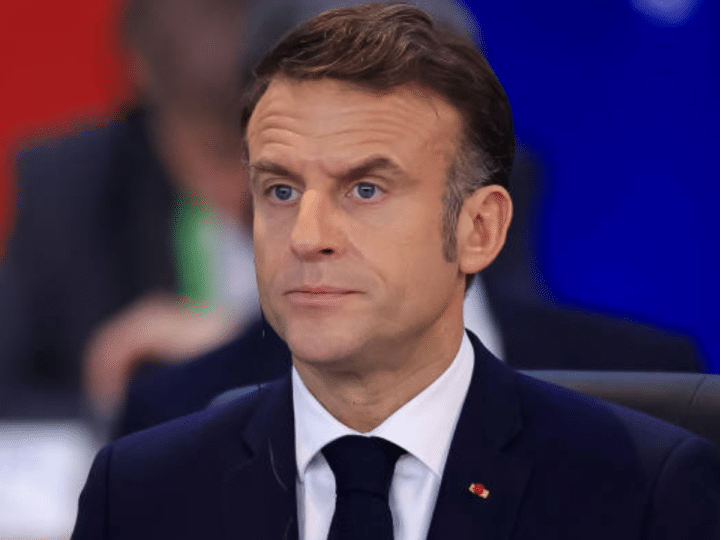

Opponents of Israel’s genocide, apartheid, and land-theft have won a reprieve after the government of France withdrew its proposed ‘Yadan’ law that would have outlawed criticism of Israel. Left and human rights groups had worked and protested for weeks to block the law, which was expected to pass if it reached the French parliament.
However, the win is only temporary. The French government has said it will bring a revised bill by late June that will “fully incorporate” the now-withdrawn version.
France faces critical juncture
Opponents believe that the bill itself is antisemitic, because it equates Jewishness with support for a colony that has committed genocide in Gaza and is continually attacking and stealing land from both the Palestinian people and its neighbours.
The so-called ‘Yadan bill’, which was put forward in late 2024 by French MP Caroline Yadan and backed by France’s Israel lobby, targets what it calls ‘new forms of antisemitism’. However, while clearly worded to try to silence critics, there is no doubt that it intends to classify anti-Zionism and opposition to Israel’s crimes as antisemitism. French PM Sebastien Lecornu has shamelessly described anti-Zionism as the “mask of antisemitism”.
Israel’s supporters are desperate to outlaw resistance to Zionism and its genocidal agenda. UK freedoms of speech and protest are similarly under attack by Keir Starmer and the UK Israel lobby. Under Macron’s illegitimate government, France has assisted Israel in its land-grabs.
Featured image via the Canary
By Skwawkbox

Menopause can bring about a number of mental, physical and emotional changes — including some shifts in your sex life.
Clinically speaking, menopause is reached when you’ve gone 12 straight months without a period, marking the end of one’s reproductive years. The average age of the last menstrual period is 51, according to the American College of Obstetricians and Gynaecologists.
But the transitional phase leading up to menopause, known as perimenopause, typically lasts about four years — though it can be as short as a few months or as long as 10 years. Colloquially, however, many use the word “menopause” as an umbrella term to encompass the whole process.
During perimenopause, which often begins in your mid 40s, levels of hormones like estrogen and progesterone fluctuate. This can lead to irregular periods, hot flashes, insomnia, brain fog, mood swings, vaginal dryness and low libido — all of which can impact one’s sex life directly or indirectly. It’s worth noting that, for some individuals, symptoms may be intense and last a while, and for others they may be more mild and fleeting.
And although certain symptoms like hot flashes tend to dissipate over time, others like vaginal dryness often persist and may even worsen.
The loss of estrogen during menopause can cause the vaginal and vulvar tissue to become thinner, dryer and less stretchy, which can lead to pain during sexual activity, Dr. Stephanie Faubion, director of the Mayo Clinic Center for Women’s Health and medical director of The Menopause Society, told HuffPost.
And while there is a lot of discussion about the challenges of sex after menopause, it may be comforting to know that it’s definitely not all doom and gloom.
“The good news is that most women who had a good sex life before menopause can continue to enjoy a good sex life after menopause,” Faubion said.

Westend61 via Getty Images
In fact, it’s a myth that women stop being sexual once menopause hits, midlife sex coach Sonia Wright told HuffPost.
Menopause “can actually be the beginning of something amazing; even better than sex in your 20s and 30s,” she said. “You get to be a sexual being until the day you leave this world. Postmenopausal sex can be even more intimate, connective, pleasurable and very satisfying.”
If you are struggling with your sexual well-being around menopause, reach out to your health care provider to discuss causes and potential treatment options tailored to your needs. Vaginal lubricants and moisturizers, sex therapy, hormone therapy, and lifestyle changes like incorporating yoga may help.
Below, women share their personal experiences with sex after menopause. Note: Some last names have been omitted to protect their privacy. Responses have been lightly edited for clarity and length.
‘The only thing that changed was knowing what I want from a sexual relationship, and what I will and won’t tolerate.’
“I was around 52 when menopause symptoms started, and it’s now been close to two years postmenopause. When my monthly cycle started to become irregular, I realised menopause was beginning. I did a bit of reading on what to expect, and two of the possible issues I came across were lack or loss of sex drive and vaginal dryness. The worst symptom for me was hot flashes, and I was fortunate that I didn’t need any hormone replacement therapy.
I have always had a relatively high sex drive and sex is important to me, whether in a relationship or not. My sex drive has remained high, and I enjoy a healthy and safe sex life even though I am single. Even though pregnancy is no longer an issue, I always use condoms and get tested for STIs yearly. I have had no issues regarding vaginal dryness and do not need any lubricant for vaginal sex.
For me, the only thing that changed was knowing what I want from a sexual relationship, and what I will and won’t tolerate. Life is too short for bad sex!
What has surprised me is that I find myself attracted to men who are younger than me. I had always dated older. All of my sexual encounters since menopause and becoming single are with younger men ranging in age from 39-50 years of age.” — Kim P., 56, Queensland, Australia
‘I dated a gentleman who made me realise I was still a sexy, vital, vibrant woman.’
“I think I was around 55 when I started going through menopause. I noticed I wasn’t really interested in sex, but I wasn’t sure if it was my circumstances — I was in the middle of a divorce — or ‘The Pause.’ After my yearly gynaecologist visit, where my doctor told me about vaginal atrophy and a few other midlife issues that might arise, I just gave up on sex.
But at age 65, I briefly dated a gentleman who made me realise I was still a sexy, vital, vibrant woman. Sex was fun again! So I’m not sure if it was menopause that made me ‘think’ I no longer was interested in sex/intimacy, or if it was my mind and society. Whatever the case, I’m ready for dating and this next new chapter. Bring it on!” — Brenda B., 67, New York City
‘Now I’m having the best sex of my life.’
“I’ve been postmenopausal for a couple of years at least. Now I’m having the best sex of my life. It’s largely due to the fact that I know exactly what I want. And I feel entitled to say, ‘This is what I want. And this is how I want it.’ And to also say, ‘No, that’s not what I want’ — even if it’s pretty minor. I just know what I want, and I know how to ask for it and to be demanding in a good way.
I had actually very few menopausal challenges, although I started acupuncture early. I’ve done regular acupuncture for probably 20 years now. And my acupuncturist’s goal from the beginning was like, ‘Let’s keep your cycle as regular as we possibly can for as long as we possibly can.’ And I think that was hugely helpful to me: having her support and having her focus on my hormones, to keep them going in the right way. So that’s what I recommend — not necessarily acupuncture — but don’t try to go through menopause solo. Get support, whatever support you can find, that will work for you.
As a sex coach, I’m a huge proponent of masturbation. Because that way, you know your whole body and that really empowers you then to say, ‘This is what really works for me.’ There’s a quality of ‘use it or lose it.’ So if you’re not in a partnership, and you’re not having regular sex and you’re not masturbating, you’re just not ‘juicing your flow,’ basically.
Find the vibrators that work for you. There are so many available right now: vibrators, dildos, combos. I encourage my clients to do “The O 30”: Masturbate 30 days straight, and see what you learn and see what changes in your life.” — Dori Melton, 58, Oakland, California

The Good Brigade via Getty Images
‘My libido actually surged at menopause.’
“I didn’t have expectations about how sex would be after menopause. I had never heard that it might change due to menopause. I think that was positive in that I didn’t internalise stereotypes about inevitable libido changes. My libido actually surged at menopause. But it was also negative in that I had not heard about common postmenopausal physical symptoms such as thinning of vulvar and vaginal tissues, often referred to as a sensation of dryness.
So when I began to experience pain with penetration after menopause, my ignorance resulted in a longer-than-necessary time to diagnosis and treatment after trying various types of lube that did not address the underlying issue. I came to learn that this condition (urogenital atrophy) is very common postmenopause and usually easily treated, but it is under-diagnosed and under-treated. Sometimes considerable self-advocacy is required. In my case, insertable vaginal oestrogen effectively resolved my symptoms and has prevented recurrence of symptoms with ongoing use.
Aside from the temporary physical symptoms I experienced, sex after menopause has mostly been as good and often better than sex prior to menopause. Reasons for this likely include increased sexual confidence; greater experience with sex, relationships and communication; a consistent standard of mutual desire and enthusiasm; some exploration with a variety of interesting partners; and increased privacy as my children have become adults.
In my experience, generally speaking, choice in sex partner(s) can make a tremendous difference in how a woman might experience sex. This is true in any stage of life, though there are some stages and circumstances I believe are particularly fragile, such as early sexual experiences, sex post-childbirth, sex approaching menopause when hormones are erratic, sex postmenopause, and sex during ill health or while processing grief.
I was partnered as I was approaching menopause, and the sexual dynamic became all about my then-partner’s needs and fears. Had we still been together and focused on his needs postmenopause when I experienced pain with penetrative sex, I think I might’ve really struggled with the amount of self-advocacy required to get a diagnosis and treatment. Instead of having to focus on advocating to fulfill someone else’s needs, I was motivated to maintain the pleasurable sex life I’d cultivated for myself.” — Jackie, 54, California


US aerospace company Moog’s UK subsidiary has declined to comment on the seizure of a consignment of military components by Belgian authorities while en route to Israel. According to a statement released by the Walloonian government, the consignment did not bear a declaration that the items were for military use as required by Belgian law and did not have the compulsory ‘transit licence’.
A second UK arms consignment has now also been seized, though the manufacturer of that one has not yet been named. But the UK company involved in the first one has: Moog, specifically its Wolverhampton facility.
Moog: going on for six months
Speaking on condition of anonymity, an industry insider told Skwawkbox that Moog’s shipments had been going on via the Belgian route for at least six months and that it was almost unthinkable that paperwork could be inadvertently completed incorrectly by a company whose business consists of shipping items around the world:
The shipments have been going on for years, but Moog changed its shipping arrangements in July, from FedEx to UPS, which led to the route change. There have been at least nineteen shipments through Belgium since July 2025. They did this at the same time as they were applying for a High Court injunction to stop protest activity at their sites.
Fedex kept on shipping for Moog to other destinations but stopped its Israel shipments. This made Moog change route. Belgium, of course, refuses to ship arms to Israel.
Clearly Moog didn’t declare to the Belgian authorities that the items were for military use. There are other technical descriptions one could use to make it less obvious, and the shipment was consolidated with civilian goods, but Moog was obliged to declare it was ML10 military cargo and they didn’t.
It’s extremely unlikely that Moog could have filled in the paperwork wrongly in error. They would have known about the whole routing before the shipments started, as they are a member of the industry body for arms exports, the Export Group for Aerospace, Defence and Dual-Use (EGADD) – indeed their manager responsible for export control was until recently on EGADD’s Executive Committee.
They would have had to file compliance reports for the Export Control Joint Unit (ECJU) as part of the conditions of their export licence.
Misleading parliament?
Skwawkbox has contacted EGADD for comment. Skwawkbox also contacted Moog. When asked for comment, the Moog employee who took the call said a rapid “No thank you” and hung up.
Who knew what, when, is the key question in this scandal. It appears Moog knew a lot, early – and isn’t happy at being asked about it.
But the knowledge might also extend to Westminster. Clearly, Keir Starmer’s trade minister Chris Bryant is not happy at being asked about it either. Bryant was on 16 April 2026 exposed by Declassified UK misleading Parliament about the shipment and use of such components to Israel.
Bryant knew that Israel can use such parts in its slaughter of Palestinian civilians. Was he – or other government ministers – aware of the illegal routing of Moog and other components to the genocidal IOF? That question remains unanswered.
Featured image via the Canary
By Skwawkbox


Israel has agreed to a 10-day ceasefire in Lebanon, theoretically halting its war of aggression in the south. But we know Israeli ceasefires generally involved quire a lot of firing. And much is unclear about the parameters of the pause, which do not appear to demand Israeli withdrawal.
Al Jazeera reported:
Israel and Lebanon have agreed to a 10-day ceasefire starting at 21:00 GMT today, US President Donald Trump says after speaking to Israeli Prime Minister Benjamin Netanyahu and Lebanese President Joseph Aoun.
However, Hezbollah officials have said the terms of the ceasefire must see Israeli troops removed:
Hezbollah has said the continued presence of Israeli troops on Lebanese territory gives Lebanon and its people “the right to resist”, as it outlined its position on a proposed ceasefire.
In its first public response to the truce, the group said any agreement must not allow Israeli forces freedom of movement inside Lebanon.
Lebanon beseiged
Despite the ceasefire the Lebanese army is telling the millions displaced from the south not to return home:
— Drop Site (@DropSiteNews) April 16, 2026
 Breaking: The Lebanese army is telling civilians not to return yet to southern villages, amid reports of a ceasefire. It says people should wait until the agreement officially takes effect and avoid areas where Israeli forces are still present. https://t.co/TunVrrdg7j
And Iran’s parliamentary speaker Mohammad Bagher Ghalibaf insisted any peace deal must include Lebanon:
Lebanon is an integral part of the comprehensive ceasefire.
Pakistan, which is brokering the deal, sent army chief Asim Munir to Tehran to negotiate. He reportedly said:
I understand the importance of the ceasefire in Lebanon and I will follow it.
Nobody trusts Israel
Cradle Media columnist Mohamad Sweidan explained some of the complexities of the situation on X on 16 April:
According to the information:
– There are Pakistani confirmations to Tehran that Tel Aviv will soon announce a ceasefire in Lebanon.
– If Tel Aviv is telling the truth, this comes after Iran’s insistence on not participating in any round of negotiations before a ceasefire in Lebanon.
– Over the past two days, the Lebanon file has been the focus of Iranian-Pakistani discussions.
– Naturally, the extent of “Israel’s” commitment cannot be trusted, but what is certain is Tehran’s position seeking to stop the war.
In a little while, we will publish all the details of the Iranian-American negotiations on the subject.
Even as the peace deal was being thrashed out, Israel took the chance to bomb the last bridge over the Litani river – a strategically important feature the settler-colonial forces had planned to use as a cordon for the time being:
Israel bombed this morning the Qasmiya Bridge, the last operational crossing remaining over the Litani River. Additional updates this morning are linked below. pic.twitter.com/brALUzBgmm https://t.co/a8MMDsMAID
— Drop Site (@DropSiteNews) April 16, 2026
Mohamad Sweidan pointed to some of the “constants” to keep in mind in regard to the ceasefire:
بعض الثوابت: — Mohamad Hasan Sweidan (@mhmdsweidan) April 16, 2026
– يسعى ترامب إلى إقفال ملف الحرب مع إيران والدفع نحو إنجاح المسار التفاوضي. وفي المقابل، تمسّك الإيرانيون بضرورة التزام “إسرائيل” بالهدنة وتنفيذها فعليًا قبل استكمال المفاوضات، وهو ما دفع ترامب إلى ممارسة ضغوط مباشرة على نتنياهو لإجباره على القبول بها.
– إن قبلت تل…
For example:
Trump is seeking to close the file on the war with Iran and push towards the success of the negotiating track. In return, the Iranians are insisting on the necessity of “Israel” committing to the ceasefire and implementing it in practice before completing the negotiations, which has prompted Trump to exert direct pressure on Netanyahu to force him to accept it.
Sweidan also said the resistance had been central to forcing a deal:
If Tel Aviv accepts the ceasefire, it will be due to the steadfastness of the resistance fighters on the front and the steadfastness of the Iranian negotiators in their position.
And he emphasised that the current deal meant a pause – not a withdrawal:
And naturally, even if Tel Aviv announces its commitment, we should not trust it.
The full text of the ceasefire has now been published by the US State Department:
Following productive direct talks on April 14 between the governments of the Republic of Lebanon (hereinafter “Lebanon”)…
— Drop Site (@DropSiteNews) April 16, 2026
 Just In: The full text of the ceasefire statement agreed to by the Government of Israel and Government of Lebanon, and issued by the US State Department:
As the Canary reported on 16 April, Israeli forces have demolishing 1400 homes in south Lebanon. This is in line with their explicitly genocidal scorched earth Dayiha doctrine. And as we argued in the same article, Israel’s ambitions to colonise Lebanon are unlikely to have dimmed.
Featured image via the Canary
By Joe Glenton

Yorkshire and Humber business activity slips into decline, survey suggests

Bitcoin Price Prediction: BTC Stalls Below $76K

Gio & Iggy Azalea Spark Shade Rumors Amid Playboi Carti Drama


-

 Business7 days ago
Tesla Model Y Tops China Auto Sales in March 2026 With 39,827 Registrations, Beating Cheaper EVs and Gas Cars
-

 Politics5 days ago
World Cup exit makes Italy enter crisis mode
-
 NewsBeat5 days ago
Pep Guardiola and Gary Neville agree over Arsenal title problem that benefits Man City
-

 Crypto World4 days ago
The SEC Conditionalises DeFi Platforms to Be Avoided for Broker Registration
-

 Crypto World4 days ago
SEC Signals Exemption for Crypto Interfaces From Broker Registration
-

 News Videos2 days ago
Secure crypto trading starts with an FIU-registered
-

 Sports11 hours ago
NWFL Suspends Two Players Over Post-Match Clash in Ado-Ekiti
-

 Crypto World4 days ago
SEC Proposes Certain Crypto Interfaces Don’t Need to Register as Brokers
-

 Business6 days ago
Ireland Fuel Protests Enter Day 5 as Blockades Spark Shortages and Government Prepares Support Package
-

 NewsBeat3 days ago
Trump and Pope Leo: Behind their disagreement over Iran war
-

 Crypto World7 days ago
Federal judge blocks Arizona from bringing criminal charges against Kalshi
-
 NewsBeat6 days ago
JD Vance announces ‘no agreement’ with Iran over nuclear weapons fear
-

 Business7 days ago
IMF retains floor for precautionary balances at SDR 20 billion
-
Sports6 days ago
Dexter Lawrence, Stefon Diggs, Trading for De’Von Achane
-

 Business7 days ago
Former Liverpool CEO eviscerates FIFA for World Cup ticket pricing
-
 Crypto World5 days ago
Sei Network Enters Quiet Reset Phase as On-Chain Metrics Signal a Slowdown in 2026
-

 Crypto World4 days ago
Trump whales load up ahead of Mar-a-Lago luncheon.
-
Business7 days ago
Coreweave CSO Venturo sells $5.5m in class a common stock
-
Sports7 days ago
1st-Round WR Enters Vikings Mock Draft Orbit
-
Business5 days ago
Kering slides after Morgan Stanley downgrade, Gucci woes loom
You must be logged in to post a comment Login