
Business
This Akshaya Tritiya, your gold does not have to sit in a locker to work for you

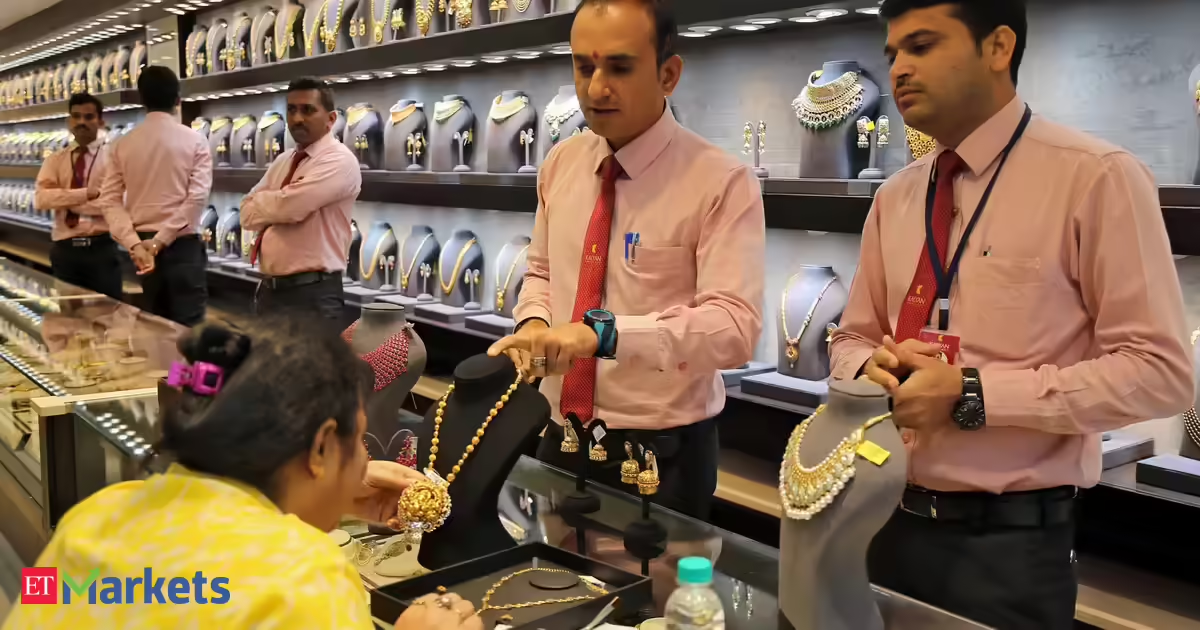
Yet when an asset has already delivered such strong returns, tradition alone is not enough to guide the next decision. Akshaya is not about accumulation without thought. It is about wealth that remains meaningful over time. That makes this moment less about whether to buy gold, and more about whether the way we hold gold truly reflects what it stands for.
Traditional Relevance Has Taught Us to Buy Gold, Its Time to Rethink About it
In most Indian households, gold follows a familiar journey. Jewellery is bought during auspicious occasions, coins and bars are purchased for security, and much of it eventually finds its way into a locker. Ownership itself becomes the objective. Once bought, gold is rarely revisited unless it is to be worn, gifted or passed on. This relationship with gold is deeply rooted and emotionally charged. It is also largely unquestioned. Very few people pause to ask what their gold is actually doing for them once the purchase is complete. The assumption is simple: gold protects wealth, therefore buying and storing it is enough. That assumption held stronger in a time when access, products and alternatives were limited. Today, however, the financial environment has evolved, even if our habits around gold have not. Physical gold offers comfort, tangibility and tradition. But from a purely financial perspective, it carries frictions that often go unnoticed. For instance, liquidity is an overlooked factor. Selling physical gold depends heavily on purity verification, the credibility of the buyer and market conditions at that point in time. Prices may be transparent, but execution is not always seamless. Most importantly, physical gold remains passive while it is held. It does not produce income. It does not compound. Its value changes only if market prices move. None of this diminishes the cultural or emotional role of physical gold, particularly jewellery, but it raises an important question when gold is bought with investment intent rather than sentiment.

Gold’s Strength Lies in Protection, Not Inertia
Gold has survived centuries not because it grows rapidly, but because it endures. Its defining quality is stability during stress, the ability to protect purchasing power when uncertainty dominates. That role remains as relevant today as it was decades ago. But protection does not have to mean inactivity. Endurance does not require gold to be forgotten once acquired. In fact, allowing gold to remain completely static often undermines its financial potential rather than preserving it. What truly matters is maintaining exposure to gold’s price behaviour, not necessarily holding it in a physical form that introduces leakage, cost and inflexibility.
Letting Gold Work Without Changing What It Represents
Modern gold ownership has evolved in ways that preserve gold’s essential nature while removing unnecessary friction. Paper and digital forms of gold track market prices closely without the burden of making charges or storage costs. Gold ETFs and digital gold provide transparency, ease of access and liquidity, allowing investors to buy gold in smaller amounts, monitor it easily and exit when required without operational hurdles. In these forms, gold retains its role as a protector of value, but becomes easier to align with financial goals rather than cultural habit. Crucially, this is not about abandoning physical gold. It is about recognising that not all gold needs to serve the same purpose. Jewellery can continue to carry tradition and emotion. Investment-oriented gold can adopt forms that make it more efficient, visible and purposeful.
Visibility Is the First Step to Engagement
One of the unintended consequences of storing gold away is that it becomes mentally disconnected from the rest of an individual’s finances. What is unseen is rarely reviewed. What is rarely reviewed is seldom optimised. When gold is held in forms that are easier to track and manage, it stays part of the financial conversation. Decisions around accumulation, timing and redemption become deliberate rather than incidental. Gold stops being a relic of a past purchase and becomes a living part of present-day planning. This shift does not make gold speculative. It makes it intentional.
Akshaya Is About Continuity, Not Complacency
The philosophy of Akshaya was never about hoarding. It was about choices that do not erode over time. Allowing wealth to endure has always required adaptation across generations, not blind repetition of past behaviour. Gold has earned its place in that philosophy. But deciding how to hold gold is now just as important as deciding to buy it. What worked for a previous generation does not automatically serve the same purpose in a different financial environment.
This Akshaya Tritiya, the most meaningful reflection may not be on how much gold is bought, but on how thoughtfully it is owned thereafter. Gold does not fulfil its promise simply by existing in a locker. It fulfils it when it continues to protect value efficiently, transparently and purposefully over time. Buying gold will always remain a powerful symbolic act. Ensuring that gold continues to work long after the symbolism fades is what turns that act into lasting wealth.
Gold was never meant to be passive. It was meant to endure. And endurance, in today’s world, often begins with intention.
(The author is National Head – Retail Sales, Axis Mutual Fund)


The sentiment improved progressively, aided by easing concerns and supportive global cues. The India VIX came off significantly by ~8.73% to 17.20. Nifty ended the week with a net gain of 302.95 points (+1.26%).
The broader structure remains corrective within a larger range-bound setup. While the index has staged a rebound from lower levels, it continues to face a formidable resistance zone between 24,500 and 24,700, which also aligns with key moving averages and prior supply areas. Unless this zone is convincingly taken out, the current upmove may remain a pullback within a broader consolidation. The reopening of the Strait of Hormuz is likely to lend positive sentiment, potentially leading to a firm start; however, sustainability above the mentioned resistance zone will be critical for any directional trend to emerge.
Failure to do so may result in the markets facing some broad consolidation. The coming week is likely to begin on a positive note. Immediate resistance levels are seen at 24,500 and 24,700, while supports are placed at 24,100 and 23,850.
 Agencies
The weekly RSI stands at 46.90 and remains neutral without showing any divergence against price. The weekly MACD continues to stay below its signal line, maintaining a negative crossover and reflecting a lack of strong bullish momentum. The index has formed a bullish candle, indicating a strong rebound continuing throughout the week.
From a pattern perspective, Nifty has continued with its technical rebound for the second week in a row. The index is trading below its 50-week moving average (~25,043) and around the 100-week MA (~24,503), making this zone technically significant.
The inability to reclaim these levels decisively keeps the larger trend under pressure despite intermittent rebounds. Given this setup, a cautious and stock-specific approach is advisable for the coming week. While the rebound may extend initially, the proximity to a strong resistance zone warrants restraint in aggressive long positions. Traders should focus on protecting gains, avoiding chasing rallies, and selectively participating in stocks showing relative strength.A disciplined, level-based approach would be the most prudent way to navigate the week ahead.
In our look at Relative Rotation Graphs®, we compared various sectors against the CNX500 (NIFTY 500 Index), representing over 95% of the free-float market cap of all the listed stocks.
AgenciesAgenciesThe Relative Rotation Graph (RRG) shows Nifty Midcap 100, Energy, Pharma, Metal, PSE, and Infrastructure Indices are inside the leading quadrant. Among these, groups like PSE and Metal are sharply giving up their relative momentum. However, collectively these groups may relatively outperform the broader markets.
The Bank Nifty, PSU Bank, Auto, and Financial Services groups are inside the weakening quadrant.
While stock-specific individual performance may be seen, the overall relative performance will continue take a back seat for these groups.
The Nifty IT and Services Sector Indices continue to languish inside the lagging quadrant. The Nifty Realty Index is also inside the lagging quadrant, but it is seen sharply improving its relative momentum against the broader Nifty 500 Index.
The Media and FMCG Indices are inside the improving quadrant.
Important Note: RRGTM chartsshow the relative strength and momentum of a group ofstocks. In the above Chart, they show relative performance against the NIFTY500 Index (Broader Markets) and should not be used directly as buy or sell signals.
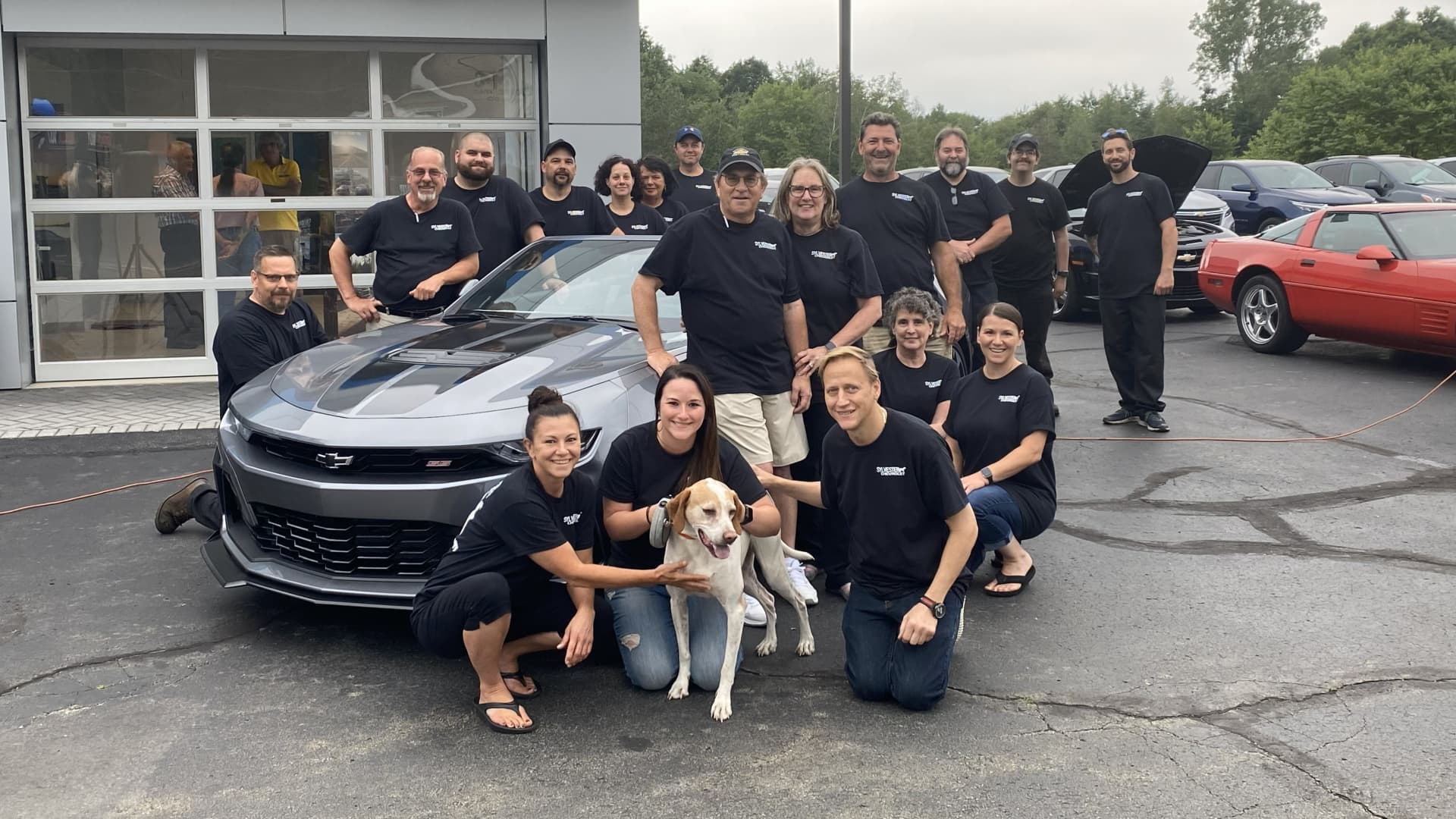
Derek Sylvester with members of his family, team and mascot Molly, who was featured on the dealership’s logo.
Courtesy Sylvester Chevrolet
Derek Sylvester’s father built the family’s original Chevrolet dealership with his bare hands on Main Street in rural Peckville, Pennsylvania, in 1972.
The store and family have been a pillar of the village, outside Scranton, ever since. That was until late last month, when Sylvester and his family closed a deal to sell Sylvester Chevrolet to a New York-based dealer group.
“As a family, we decided this might be the time,” said Sylvester, who at 67 has been contemplating retirement. “Unless you’re a larger store, a much larger store, it’s a little bit harder to make money. … It’s just scale.”
Many of Sylvester’s family members plan to continue working at the dealership, but he said they didn’t feel they were in a position to continue running the business amid the rapidly changing automotive retail landscape in the U.S. The industry is facing a tumultuous adoption of all-electric vehicles, technological shifts such as artificial intelligence, and growing demands from automakers.
Sales of dealerships such as Sylvester Chevrolet are occurring across the country at a rapid pace as the business of selling cars, once considered the purview of mom-and-pop shops, has evolved into a lucrative trillion-dollar industry rife with consolidation that has drawn more notice from Wall Street and investors in recent years.
While the National Automobile Dealers Association, or NADA, reports that the vast majority of its U.S. franchised dealers are small business owners such as Sylvester who have fewer than six stores, the top retailers in the country have significantly grown.
The top 150 dealers sold 27% of all retail and fleet new vehicles in 2025, up from 24.3% in 2021 and 21.2% in 2015, according to Automotive News’ annual ranking of top automotive retailers. They also owned roughly a quarter of dealerships last year, up from less than 20% a decade ago, according to the trade publication.
Meanwhile, top publicly traded dealers such as Lithia Motors and AutoNation have ballooned to market caps of more than $6 billion each. Even online used-car retailer Carvana — and its $74 billion market cap, which surpasses the value of most car companies it sells vehicles from — has quietly started purchasing new vehicle franchises without disclosing its future plans.
“There’s a lot of money that wants to come to the industry,” Brian Gordon, president of dealer advisor and broker Dave Cantin Group, told CNBC. “And, generally, the industry is sort of aligned on how to value these things. That makes for a good climate for [mergers and acquisitions].”
Industry consolidation
Multibillion-dollar dealerships have been on the rise amid a decadeslong consolidation that has led to a grow-or-die mentality for many U.S. automotive retailers.
NADA, a trade association representing franchised dealers, reports the average dealership owner has between two and three stores, but the largest growth area over the past decade has been in medium-sized dealerships that own between six and 25 stores.
NADA reports 90.5% of its nearly 17,000 dealers own between one and five stores, down from 94.4% in 2016. Meanwhile, 0.2% of dealers own 50 stores or more, up from 0.1% during that time frame.
“It’s clear that it’s a consolidating industry, and it’s an industry that is going to continue to consolidate,” Gordon said. But, he added, that is happening at every level, especially the expansion of mom-and-pop shops to larger players.
Dave Cantin Group — the advisor for Matthews Auto Group, the dealer group that acquired Sylvester Chevrolet — conducts dozens of such deals a year and said it expects the pace of consolidation and mergers and acquisitions to continue to increase this year.
Matthews Auto Group is one of many regional dealership companies that has decided to expand. The family-owned company started in Vestal — in central New York, south of Syracuse — in 1973 with a single Chrysler-Plymouth store that has grown into a roughly $800 million business with 18 locations and 800 employees.
Rob Matthews, a second-generation owner and CEO of Matthews Auto Group, said the company’s decision to grow is ongoing and that it aims to be more profitable and better compete in its current markets of New York and Pennsylvania.
Matthews Auto Group CFO John Totolis (from left to right), Dave Cantin Group managing director Talon Fee, Sylvester Chevrolet President Derek Sylvester, partner Sylvester Chevrolet Neil Sylvester, Matthews Auto Group CEO Rob Matthews and Matthews Auto Group President Mark Gaeta outside Sylvester Chevrolet in Peckville, Pennsylvania
Courtesy image
“I think that’s certainly a competitive advantage. I think staying still is probably not the best play. You’re seeing continued scale,” Matthews said. “The trend is you’re just going to continue to see consolidation to allow you to stay competitive.”
That’s also why Sylvester said he wanted to sell his business, with stipulations about retaining the store’s dozens of employees — something that’s part of Matthews’ strategy when acquiring a store.
“There’s a lot of things that, because of our scale, we see we can really unlock a store like his,” Matthews said. “I think, honestly, it’s exciting in the sense that we’re just looking to give them more tools and hopefully let everyone work going forward.”
Growth of mega-dealers
Wall Street has taken notice of how lucrative and protected franchised dealerships are in the U.S. The franchised dealer system, which exists to sell new vehicles to consumers rather than automakers selling their vehicles themselves, is unique and heavily regulated.
“I think there’s endless upside. The opportunity for growth in our company is just endless,” Sonic Automotive President Jeff Dyke told CNBC during a recent interview. “I think having mom-and-pop dealers is really good for the business. The thing is, the mom-and-pop dealer is going to have to advance their thinking.”
Sonic Automotive, a publicly traded company with a market cap of more than $2 billion, has grown from 96 franchised dealership stores in 2015 to 134 to end last year. It’s also gone through a massive expansion of its EchoPark used vehicle stores and Sonic Powersports. The company’s revenue during that time jumped 58% to $15.2 billion last year.

Dealership stocks
Others, such as Lithia Motors, have been even more aggressive in growth. The Medford, Oregon-based company surpassed longstanding dealership group AutoNation to become the top U.S. new vehicle franchised dealer in 2022.
Lithia, with a $6.3 billion market cap, has executed an audacious growth plan, from $8.7 billion in revenue in 2016 to $37.6 billion last year. The company nearly tripled its new and used stores from 154 locations to 455 stores during that time frame.
John Murphy, a longtime automotive analyst who is a managing director of strategic advisory at buy-sell advisory firm Haig Partners, said he believes that dealerships remain an extremely lucrative market for investors, despite things settling down somewhat after companies saw inflated profits during the Covid pandemic.
“Structurally, there’s some real potential upside, and there is an increasing level of attention by existing capital in the dealership community as it stands right now from outside players, private equity family offices, other pools of capital on this limited number of dealers and finite number of dealers,” he said. “The earnings upside is increasing and there’s increasing attention, or demand, on the buy side of the equation.”
Mom-and-pops remain
All of that combines to make many mom-and-pop dealerships ripe for acquisition or expansion.
“There’s just so many factors that make competition for a small mom-and-pop dealership more difficult,” said Talon Fee, a managing director at Dave Cantin Group who led the sale of Sylvester Chevrolet to Matthews Auto Group. “It’s not to say that small mom-and-pop dealerships can’t continue to exist and thrive and survive, but they do need to have a plan.”
Fee and others said the top reasons for owners to sell are a lack of succession planning, a growing competitive and changing industry, and a lack of commitment to reinvest in the businesses.
“There’s a lot of outside capital that’s figured out how to come in, given the fact that you have to be an operator in order to get approved by a manufacturer,” said Gordon, of Dave Cantin Group.
But the industry is changing in other ways, as new automakers such as Tesla, Rivian and Lucid try to bypass the franchised dealer model and sell vehicles directly to consumers.
Such companies have continuously fought state laws to allow such sales, with Rivian recently winning a battle with car dealers in Washington state by threatening to take its case to voters with a ballot measure to permit direct sales.
It adds to the evolving U.S. automotive retail landscape that owners such as Sylvester and his wife, who also worked at the dealership, haven’t had to deal with in the past. It’s also something Sylvester and many other smaller mom-and-pop stores won’t have to compete with once they sell their businesses.
“I lived a great life, don’t get me wrong. But, hey, good things come to an end,” said Sylvester, who plans to spend retirement caring for a 92-acre farm in Pennsylvania. “We made a good living. You know, we helped the community out.”

Total advances increased by 16% year-on-year to Rs 15.53 lakh crore at the end of March 2026 led by a 24% growth in business banking and a 26% growth in the rural loan portfolio. Retail loans which constitute 50% of the loan book grew by 10% while corporate loans grew by 9% year on year.
NIM was little changed at 4.32% for the year ended March 2026. Net interest income (NII) or the difference between interest earned on loans and that paid for deposits, increased by 8% to Rs 22,979 crore in March 2026 from Rs 21,193 crore a year ago.
Executive director Sandeep Batra said the bank is monitoring the situation particularly due to the geopolitical uncertainties and will continue to focus on getting a higher wallet share of high quality customers.
A sharp drop in provisions contributed to the bank’s profit growth during the quarter. Provisions fell 90% to Rs 96 crore from Rs 891 crore a year ago. Batra said the large year on year fall in provisions reflected strong asset quality and healthy recoveries from the corporate book.
“Our credit costs normalised for agriculture book is under 50 basis points which is very healthy in the current environment. There were also some corporate recoveries from written off accounts during the quarter which helped,” Batra said.
Asset quality remianed stable with net NPA ratio at 0.33% on March 31, 2026 down from 0.39% a year ago. Recoveries and upgrades of NPAs, excluding write-offs and sale, were Rs 3,068 crore compared to Rs 3,817 crore a year ago. The provisioning coverage ratio on non-performing loans was 76% at the end of March 2026.As of March 2026, the bank holds contingency provision of Rs 13,100 crore and additional standard asset provision of Rs 1,283 crore made in the third quarter on Reserve Bank directions in respect of the agricultural priority sector portfolio.
Fee income increased 8% to Rs 6,779 crore in March 2026 from Rs 6,306 crore a year ago with fees from retail, rural and business banking customers constituting about 78% of total fees during the quarter.
The bank suffered a treasury loss of Rs 106 crore during the quarter reflecting the RBI restrictions of non deliverable forwards and also the sharp rise in bond yields during the month of March. The bank had reported a treasury gain of Rs 239 crore a year ago. The bank’s board has recommended a dividend of Rs 12 per share for FY2026.

PrimeEnergy Resources: Buy On The Adverse News


In final moments before truce, Israeli strike kills Lebanese man’s family


Brazil’s Lula calls on permanent members of UN Security Council to change behaviour

The company reported a net loss of 29.09 crore in the January-March quarter a year ago, according to a regulatory filing by Network18 Media, a subsidiary of billionaire Mukesh Ambani-led Reliance Industries Ltd.
Its consolidated revenue from operations rose by 9.7 per cent to Rs 615.78 crore in the March quarter compared to Rs 561.32 crore in the corresponding quarter in the last fiscal.
Consolidated operating revenue for the quarter increased by 9.7 per cent “despite the multiple headwinds in the macro environment. On a QoQ basis, the revenue grew 14.2 per cent,” said Network18 Media & Investments in its earnings statement.
Advertising inventory demand for the TV news industry declined by 10 per cent YoY, but Network18’s inventory grew 4.5 per cent, helping the company perform better than the industry.
“Company’s diversified portfolio, strong market positions across markets, and revenue from new businesses helped soften the impact of a weak advertising environment,” it said.
EBITDA for the quarter was Rs 30 crore with a margin of 4.9 per cent, it added.Its total expenses were at Rs 670.89 crore, up 6.47 per cent in the March quarter.
Network18 Media’s total consolidated income, which includes other income, was at Rs 616.21 crore, up 9.14 per cent in Q4 of FY26.
On a standalone basis, Network18’s loss widened to Rs 72.51 crore in the March quarter compared to a loss of Rs 69.48 crore in the corresponding quarter of the last fiscal. Revenue from operations rose by 4.85 per cent year-on-year to Rs 547.07 crore in the March quarter.
For the entire FY26, Network18 Media & Investments’ profit was at Rs 155.20 crore. Consolidated income was at Rs 2,148.46 crore for the financial year ended on March 31, 2026.
“Excluding the first quarter, which had a decline in revenue due to a high base of election-linked advertising in the previous fiscal, revenue was up 7 per cent. Operating costs grew in line with revenue, resulting in flat EBITDA,” it said.
According to the company, its “figures for the corresponding previous year are not comparable” as Indiacast Media Distribution and Studio 18 Media(Formerly Viacom 18) ceased to be a subsidiary of the Company on 14th November, 2024 and 30th December, 2024, respectively.
Network18 continues to be India’s leading TV news network, with a portfolio of 20 channels (including 14 regional channels), and the largest in terms of reach and viewership.
“The network reached over 2,305 million people a month, 35 per cent higher than the nearest competitor, and had an all-India viewership share of 13.8 per cent,” it said.
It also leads in the digital segment with its platforms – Moneycontrol, News18, Firstpost and CNBCTV18. It has over 360 million monthly users, representing 65 per cent reach in the segment, Network18 said.
Commenting on the results, Chairman Adil Zainulbhai said: “We ended the year on a positive note despite the geopolitical crisis that the world finds itself immersed in currently. In a year marked by high news flow volumes, our network has taken the lead in delivering news over noise, consistently. We are happy with the progress made on the operating front during the year and the impressive scale-up of new businesses in a short time, which is helping us diversify our revenue base.”
The company is focused on strengthening its core news business even as it expands presence in adjacent categories, he added.
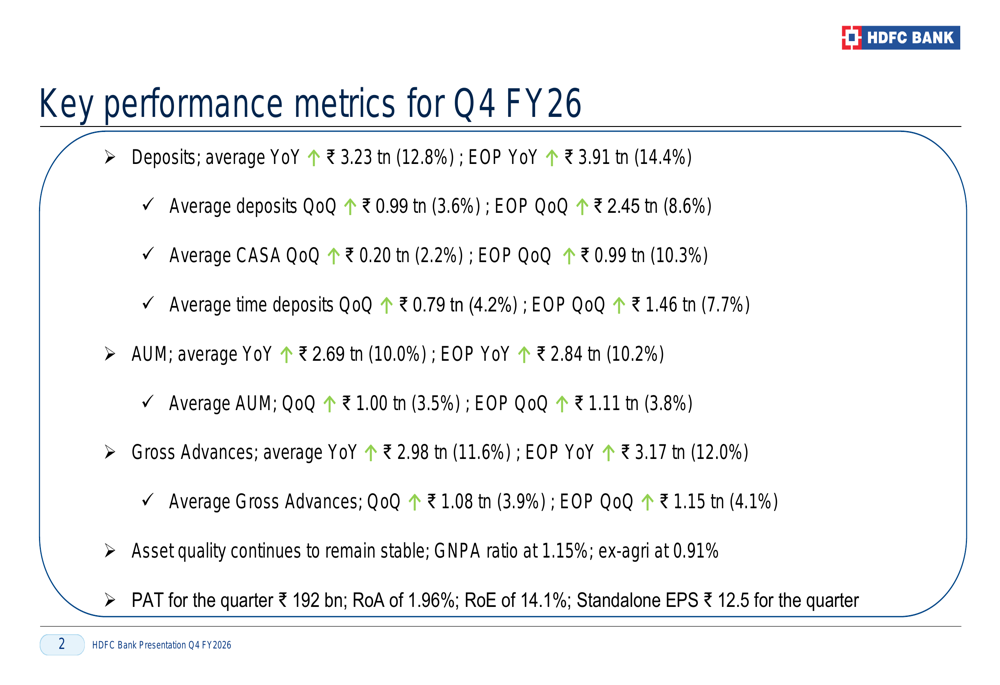
HDFC Bank Q4 FY26 slides: deposit surge drives growth amid stability

Sterling Infrastructure: Impressive Yet Expensive

Earnings call transcript: HDFC Bank Q4 2026 shows strong growth amid challenges

Ripple-linked token goes live on Solana in DeFi boost

Prince Harry Reportedly Pivoting To Self-Help Books In Bold Move

Naoya Inoue future mega fight with US pound for pound star moves one step closer


-
 NewsBeat6 days ago
Pep Guardiola and Gary Neville agree over Arsenal title problem that benefits Man City
-

 Crypto World5 days ago
The SEC Conditionalises DeFi Platforms to Be Avoided for Broker Registration
-

 Politics6 days ago
World Cup exit makes Italy enter crisis mode
-

 Crypto World5 days ago
SEC Signals Exemption for Crypto Interfaces From Broker Registration
-

 Fashion19 hours ago
Weekend Open Thread: Theodora Dress
-

 News Videos3 days ago
Secure crypto trading starts with an FIU-registered
-

 Sports1 day ago
NWFL Suspends Two Players Over Post-Match Clash in Ado-Ekiti
-

 Crypto World4 days ago
SEC Proposes Certain Crypto Interfaces Don’t Need to Register as Brokers
-

 NewsBeat4 days ago
Trump and Pope Leo: Behind their disagreement over Iran war
-

 Business7 days ago
Ireland Fuel Protests Enter Day 5 as Blockades Spark Shortages and Government Prepares Support Package
-

 Politics16 hours ago
Palestine barred from entering Canada for FIFA Congress
-
 NewsBeat6 days ago
JD Vance announces ‘no agreement’ with Iran over nuclear weapons fear
-

 Crypto World14 hours ago
Russia Pushes Bill to Criminalize Unregistered Crypto Services
-
Sports6 days ago
Dexter Lawrence, Stefon Diggs, Trading for De’Von Achane
-

 Crypto World5 days ago
Trump whales load up ahead of Mar-a-Lago luncheon.
-
 Business2 days ago
Creo Medical agree sale of its manufacturing operation
-
 Crypto World6 days ago
Sei Network Enters Quiet Reset Phase as On-Chain Metrics Signal a Slowdown in 2026
-

 Sports5 days ago
NWFL opens Pathway for new Clubs ahead of 2026 Season
-
Business5 days ago
Kering slides after Morgan Stanley downgrade, Gucci woes loom
-
 Entertainment4 days ago
Karol G’s ‘Ultra Raunchy’ Coachella Set Gave ‘Satanic Vibes’
You must be logged in to post a comment Login