

Just over a year ago, OpenAI co-founder Andrej Karpathy coined the term “vibe coding” and it’s exactly what it sounds like. In a post on X, he wrote that it’s where “you fully give in to the vibes, embrace exponentials, and forget that the code even exists.”
Tech
The perfect soundbars for small spaces

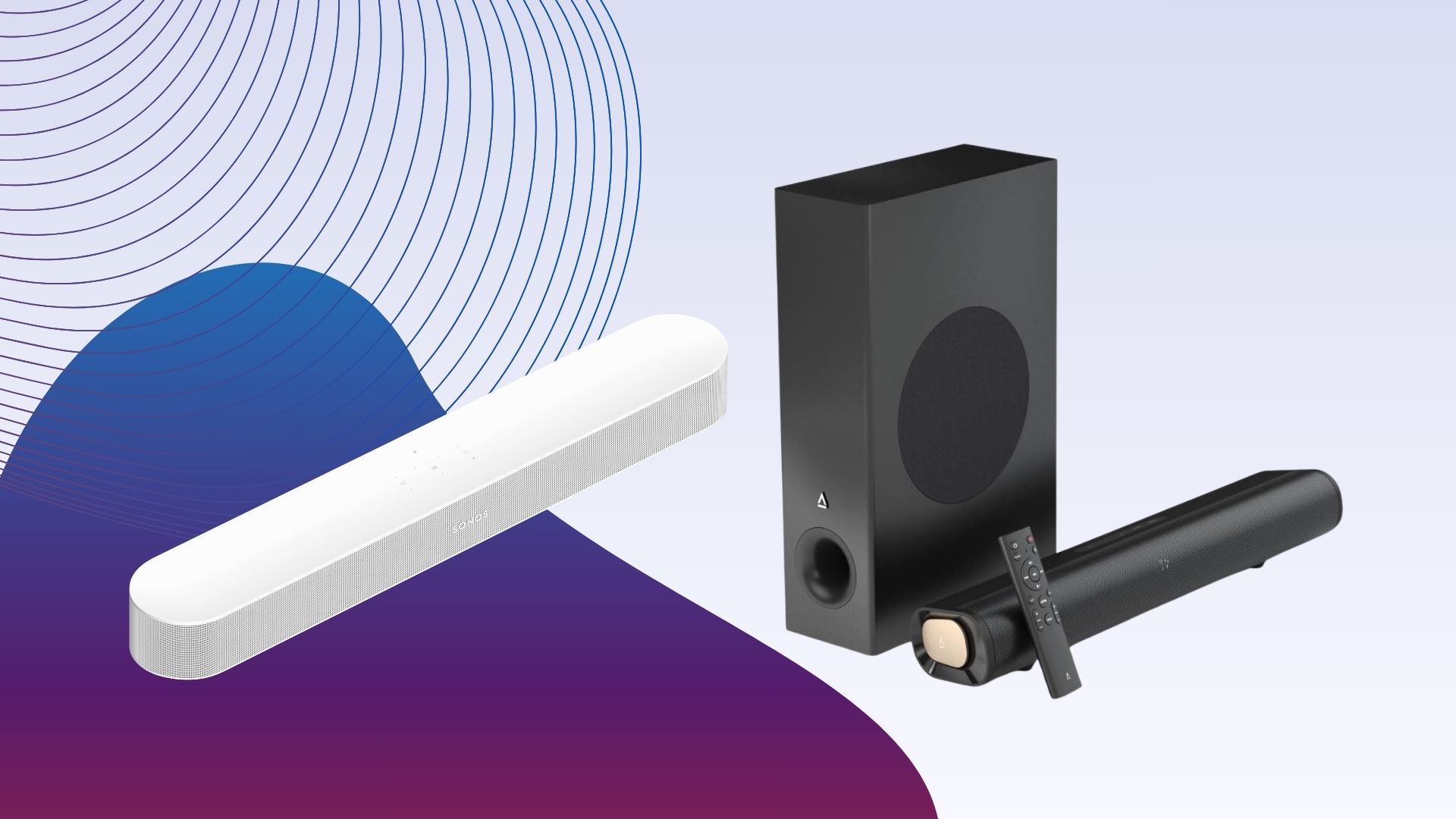
Not everyone has the space for a surround sound system or even a full-sized soundbar. If that’s your situation, we’ve come up with several small options that will work for your crowded space.
We’ve tried to ensure with this list of the best small soundbars that even though they’re small, there’s still an option that will suit every need.
We’ve chosen Dolby Atmos soundbars, soundbars that work with older TVs that don’t have HDMI ports, or models that come with subwoofers. We’ve got an array of options to choose from.
Any soundbar we look at, we do so by watching lots of movies and listening to plenty of music. We examine how well each model handles dialogue, effects, and different genres of music. From these tests, we determine which ones are worth your cash.
Keep reading to discover all the best small soundbars available right now. We have other guides to have a look too which includes our best soundbars and the best Dolby Atmos soundbars.
We’ve also narrowed down the best surround sound systems for those with the space and budget to create a bigger sound system.
Best small soundbars at a glance
SQUIRREL_ANCHOR_LIST
Learn more about how we test soundbars
Soundbars were created to boost TV sound quality – which means we end up watching a lot of TV. We play everything – news reports for voices, movies for scale and effects steering – to ensure that the soundbars that come through the doors at Trusted Reviews are given a proper challenge. We’ll play different genres of music, too, since a good soundbar should be capable of doubling-up as a great music system.
More complex soundbars feature network functionality for hooking up to other speakers and playing music around the home, so we test for connectivity issues and ease of use. We cover the spectrum of models available, everything from cheap soundbars costing less than £100 to those over £1000, to ensure our reviews benefit from our extensive market knowledge. Every product is compared to similarly priced rivals, too.
Pros
- Clean and balanced sound
- Upgradeable
- Excellent size
- Amazon Alexa and Google Assistant support
Cons
- HDMI eARC input only
- Limited DTS support
Pros
- Sharp, clear and spacious sound
- Small footprint
- Affordable at its current price
- Wall-mount brackets included
Cons
- LED menu is practically invisible from a seated position
- No HDMI eARC
Pros
- Clean and powerful TV audio
- Surprising amount of bass
- Wide soundstage
- Optional surround sound
Cons
- Remote setup can be fiddly
- Better at TV than music
Pros
- Exciting, dynamic sound (in the right mode)
- Ultra-compact dimensions
- Comes with a subwoofer
- Good range of connections
Cons
- Sub can hog the attention at times
- Not truly immersive
Pros
- Impressive nearfield Dolby Atmos effect
- Clear, articulate voices
- Solid feature set
- Versatile footprint
- Classy design
Cons
- Short on meaningful bass
- Fussy indicator light arrangement
Pros
- Clear, detailed sound with decent bass
- Decent with music
- Neat and tidy design
- Impressive SuperWide feature
Cons
- Odd volume issues with sources
-
Clean and balanced sound -
Upgradeable -
Excellent size -
Amazon Alexa and Google Assistant support
-
HDMI eARC input only -
Limited DTS support
Compared to the original Beam, the Beam Gen 2 comes with addition of an eARC HDMI port that allows it to play full-fat lossless Atmos soundtracks.
That also means you’ll need an eARC compatible TV to get the best out of it.
Otherwise, things remain the same with the Beam 2nd Gen, with it best suited for TVs up to and including 49-inches.
The current Beam supports Wi-Fi and the Sonos S2 app, which offers access to a multitude of streaming services such as Tidal, Deezer and Qobuz, as well as Sonos’ own Radio service.
You can also call on voice assistance in Google Assistant and Amazon Alexa, as well as initiate Trueplay (as long as you’ve got an iOS device), which optimises the Beam’s audio performance according to the environment it is in.
During testing we found it produced an excellent audio performance, offering a solid low end and a generally balanced sound across the frequency range.
It also handled music impressively, with no noticeable distortion, handling more subtle elements with nuance. The addition of Dolby Atmos isn’t achieved through upfiring speakers but through virtual processing, and it offers a good performance with a decent sense of dimensionality when we watched Captain Marvel on Disney+.
The Beam 2 doesn’t have fully-featured DTS support but the similarly compact Polk Magnifi Mini AX and Denon Home Sound bar 550 do support DTS:X.
Like the Sonos both can be paired with a subwoofer for added ‘oomph’. A slightly more expensive but still impressive alternative is the Sennheiser Ambeo Mini.
While the Beam 2 is not perfect, as a means of getting Atmos into the home in a small form factor, the Sonos Beam Gen 2 is a very good way of doing so.
-
Sharp, clear and spacious sound -
Small footprint -
Affordable at its current price -
Wall-mount brackets included
-
LED menu is practically invisible from a seated position -
No HDMI eARC
The Samsung HW-S61B is still going and serves as an excellent, affordable rival to the Sonos Beam Gen 2.
Its a compact speaker cabale of producing a crisp, clear and punchy sound. It offers plenty of energy and outright attack that easily betters anything a TV can produce.
Its built-in subwoofer provides impact to action scenes, and with Atmos content, the soundstage is bigger than the dimensions of the bar and TV, producing plenty of size and scale to go with Hollywood blockbusters.
It’s pretty solid performer with music content whether over Wi-Fi or Bluetooth, though the former produces a clearer, more detailed performance. The lack of HDMI eARC is a disappointment as it means you won’t be getting the highest quality Dolby Atmos sound possible, and we’re not big fans of the design when it comes to placement of the LED screen. We can barely see it at the best of times given how small it is.
Features include Amazon Alexa voice control, though this would need another connected speaker to be able to use. AirPlay 2 is another means of playing audio to the system, while if you have a Samsung Galaxy smartphone, you can tap it on the surface of the soundbar and play music to it.
If after you’ve bought the speaker, you’re looking to upgrade and add more, the S61B does support the SWA-9200S wireless rear speaker system.
If you have a Samsung Q-Symphony compatible TV can also take advantage of that feature, whereby the TV and soundbar speakers combine for a bigger sound.
There are other options in the market if you are looking for a soundbar and subwoofer combo, most notably the Polk MagniFi Mini AX, but its Atmos performance isn’t as convincing as the Samsung.
New models have launched this one first went on sale, and we’ll be hoping to get reviews of those models at some point.
-
Clean and powerful TV audio -
Surprising amount of bass -
Wide soundstage -
Optional surround sound
-
Remote setup can be fiddly -
Better at TV than music
If you’re something with an older TV (say a Pioneer Kuro) or have a second, smaller TV without HDMI inputs, the Sonos Ray is tailor made for you.
It only supports audio through an optical connection, so you won’t have to worry about HDMI handshake issues.
Audio through an optical connection keeps things simple enough, though you do miss out on advanced 3D audio like Dolby Atmos and DTS:X. There’s only enough bandwidth for Dolby Digital and DTS soundtracks.
There’s no built-in microphones for voice control from the likes of as Amazon Alexa and Google Assistant. You can still have those smart features, but you’ll need to connect the Ray to another smart speaker.
The design looks a little different from other Sonos soundbars with its lozenge-shaped look and curved ends. Our reviewer felt it was a less in-your-face design that makes the Ray better to blend in with its surroundings more. You can also fit it into an AV rack if you wanted to conceal it from view.
The sound is surprisingly wide for its size, with effective bass performance too. It offers a clear and obvious improvement on a TV with dialogue making audio tracks much easier to understand. With music we felt it sounded decent, perhaps not quite as good as it is with TV series and films, but passable enough. For its primary job of making audio clearer, the Sonos Ray does a brilliant job.
-
Exciting, dynamic sound (in the right mode) -
Ultra-compact dimensions -
Comes with a subwoofer -
Good range of connections
-
Sub can hog the attention at times -
Not truly immersive
While a small soundbar is helpful in terms of reducing space, its size isn’t always great for producing a more cinematic sound, especially when it comes to bass. The Polk MagniFi Mini AX has you covered in that respect.
This an ultra-compact Dolby Atmos/DTS:X soundbar from American brand Polk, and it differs from other options on this list in that it is not just an all-in-one effort but one that comes with sizeable subwoofer.
This allows it produce and energetic and dynamic performance, and given the weight and power behind the subwoofer’s performance, it’s probably one that’s sure to alert the neighbours to what you’re watching.
In our opinion the Polk doesn’t full suffice as an immersive soundbar but performs better than the Creative Stage 360. It can do a decent impression of height effects but not with the greatest sense of definition, while its soundstage is front heavy, though you can add Polk’s SR2 surround speakers as real channels for a greater sense of space.
Dialogue can be enhanced with Polk’s VoiceAdjust technology, although we found that while it did its job of boosting voices, it also had a tendency to raise surrounding noise as well.
Tonally we felt the soundbar sounded accurate and there’s good levels of detail and clarity to enjoy when the soundbar is put into its 3D mode, which also gives a bigger, wider soundstage to Atmos and DTS:X soundtracks.
With music it’s a solid performer, playing music with a crispness that we found avoided sibilance or harshness.
With Chromecast available along with Bluetooth, AirPlay 2, Spotify Connect and a USB connection that can play MP3 music. With Atmos and DTS:X support for the same price as the Sonos Sub Mini, this is a good value soundbar/subwoofer combination.
-
Impressive nearfield Dolby Atmos effect -
Clear, articulate voices -
Solid feature set -
Versatile footprint -
Classy design
-
Short on meaningful bass -
Fussy indicator light arrangement
Measuring in at 52 x 72 x 110cm (WHD) and weighing under 2kg, the SB700 is stocky yet lightweight enough to carry from room to room, which means it can double as both a sonic enhancer for small TVs and a companion for a workstation. We would advise against relying on the SB700 as the main audio source for a living room, though.
Included with the SB700 is a useful remote control that sports treble and bass controls, input selection and all the various EQ modes including voice, movie, music, night and neutral. Sharp also usefully throws in an HDMI cable, which plugs easily into the soundbar’s rear and shares a port alongside optical, USB (service) and 3.5-mm audio inputs.
Powering the four onboard 1.75-inch drivers is a Class D-based 140W of peak power. Plus, as well as Dolby Atmos decoding, the Sharp processes a 3D mode, also known as DAP (Dolby Atmos Processing). We especially appreciate how the SB700 is a plug-and-play device and supports Bluetooth 5.3 connectivity too.
Overall we were impressed with the SB700’s audio quality. While it does struggle with bass and doesn’t quite offer a satisfying loud movie night, it still offers plenty of prowess with midrange and high frequencies too. Plus dialogue sounds clear too.
-
Clear, detailed sound with decent bass -
Decent with music -
Neat and tidy design -
Impressive SuperWide feature
-
Odd volume issues with sources
What the Creative Stage Pro lacks in features, it more than makes up for in terms of sound and design quality.
While the Stage Pro feels more like a desktop soundbar rather than a cinema bar, it does sport a smart appearance with a useful display at its front that can be seen from the sofa. Although undoubtedly compact, its height can block the TV’s IR receiver which means you might struggle to use your remote control with your TV.
Otherwise, the bar is paired with a similarly unassuming subwoofer that relies on a wired connection to the soundbar. Usefully, as it’s front-firing, you’re free to place it anywhere.
As mentioned earlier, despite its “Pro” moniker, there aren’t many features at play here. While there is Bluetooth 5.3 and support for Dolby Audio and Dolby Digital+ soundtracks, there’s no Wi-FI. Even so, it still covers the basic connections including an optical input, DMI ARC, USB-C and even an auxiliary input.
Having said that, there is one notable feature: SuperWide. This expands the size of the Stage Pro’s sound and pushes audio out wide in a way that’s much bigger than the speaker. Depending on how close you’re sitting to the speaker, you can choose between Near-Field and Far-Field too. The latter is especially impressive as it manages to keep voices clear while expanding the width of the soundstage.
Overall, although it’s not an immersive soundbar, we were pretty impressed with the sense of the height it can provide. Otherwise, the subwoofer does a good job at providing a punchy sense of bass.
We did struggle with the soundbar’s volume levels, especially when switching between sources, as the Stage Pro can veer from excessively loud to surprisingly quiet. It’s frustrating, as it seems as if there’s no way to minimise those swings in volume.
FAQs
Does a soundbar have to match your TV size?
No, but it’s best for them to at least be similar in size. For a full-size soundbar, it’s best to partner them with TVs 50-inches and above. With compact soundbars that TVs’ 49-inches and smaller would be the best fit.
Do soundbars have to be the same brand as the TV?
No, you won’t need a soundbar that’s the same brand as the TV. Any soundbar can work with any TV it is connected to. Where you may want to consider is whether the soundbar and TV have been optimised to work best with each other. LG and Sony both have soundbars that share features with their respective TVs.
Full Specs
| Sonos Beam (Gen 2) Review | Samsung HW-S61B Review | Sonos Ray Review | Polk MagniFi Mini AX Review | Sharp HT-SB700 Review | Creative Stage Pro Review | |
|---|---|---|---|---|---|---|
| UK RRP | £449 | £329 | £279 | £429 | £199 | £129 |
| USA RRP | $449 | $349 | $279 | $499 | – | $169.99 |
| EU RRP | €499 | €419 | €298 | €479 | – | – |
| CA RRP | CA$559 | CA$499 | – | CA$699 | – | – |
| AUD RRP | AU$699 | AU$599 | – | – | – | – |
| Manufacturer | Sonos | Samsung | Sonos | Polk | Sharp | Creative |
| Size (Dimensions) | 651 x 100 x 69 MM | 670 x 105 x 62 MM | 559 x 95 x 71 MM | 366 x 104 x 79 MM | x 110 x MM | 420 x 265 x 115 MM |
| Weight | 2.8 KG | 2.7 KG | 1.95 KG | – | 1.9 KG | – |
| ASIN | B09B12MGXM | B09W66KSXN | B09ZYCBWYF | B09VH9C5VV | B0CR6M8RW3 | – |
| Release Date | 2021 | 2022 | 2022 | 2022 | 2024 | 2025 |
| First Reviewed Date | 30/09/2021 | – | 31/05/2022 | – | – | – |
| Model Number | Sonos Beam (2nd Gen) | HW-S61B/XU | Sonos Ray | MagniFi Mini AX | HT-SB700 | – |
| Model Variants | Black or white | S60B | – | – | – | – |
| Sound Bar Channels | – | 5.0 | 5.1 | – | 2.0.2 | 2.1 |
| Driver (s) | 1x tweeter, 4x mid-woofers, 3x passive radiators | Centre, two side-firing | 2 x tweeters, 2 x mid-woofers, 2 x low-velocity ports | two 19mm tweeters, three 51mm mid-range, 127mm × 178mm woofer | 2 x 1.75-in full-range forward-facing drivers plus 2 x 1.75-in full-range up-firing drivers | – |
| Audio (Power output) | – | – | – | – | 140 W | 80 W |
| Connectivity | HDMI eARC, Optical S/PDIF (via adaptor) | – | Optical S/PDIF | AirPlay 2, Bluetooth 5.0, Chromecast, Spotify Connect | Bluetooth 5.3 | Bluetooth 5.3 |
| ARC/eARC | ARC/eARC | ARC | N/A | ARC/eARC | eARC | ARC |
| Colours | Black, white | White, Black | Black and white | Black | Matt black | Black |
| Voice Assistant | Amazon Alexa, Google Assistant | Works with Amazon Alexa, Google Assistant, Bixby | – | N/A | – | – |
| Audio Formats | Dolby Digital, Dolby Digital Plus, Dolby True HD, Dolby Atmos, PCM | Dolby Atmos (Dolby Digital Plus), DTS Virtual:X, AAC, MP3, FLAC, ALAC, WAV, OGG, AIFF | DTS, Dolby Digital, Stereo PCM | Dolby Atmos, Dolby Audio, DTS:X, DTS | Dolby Audio, Dolby Atmos | – |
| Power Consumption | – | 31 W | – | – | – | – |
| Subwoofer | – | – | – | Yes | – | Yes |
| Rear Speaker | Optional | Optional | Optional | Optional | No | No |
| Multiroom | Yes (Sonos) | – | Yes (Sonos mesh) | – | – | – |
Continue Reading

from the five-stars-don’t-beat-one-amendment dept
This was extremely wild shit to be happening anywhere, much less in the land of the First Amendment. No sooner had Donald Trump decided it was time to rename the Department of Defense to the Department of War than the head of DoD operations decided it would be sorting news agencies by level of subservience.
Pretending this was all about national security, the Defense Department basically kicked everyone out of the Pentagon’s press office and stated that only those that chose to play by the new rules would be allowed back inside.
Booted: NBC News, the New York Times, NPR. Welcomed back into the fold: OAN, Newsmax, Breitbart. The Pentagon wanted a state-run press, but without having to do all the heavy lifting that comes with instituting a state-run press in the Land of the Free.
Somewhat surprisingly, some of those explicitly invited to partake of the new Defense Department media wing refused to participate. Fox and Newsmax decided to stay out, rather than promise they’d never publish leaked documents. Those choosing to bend the knee were those who never needed this sort of coercion in the first place: One America News (OAN), The Federalist, and far-right weirdos, the Epoch Times. In other words, MAGA-heavy breathers that have never been known for their independence, much less their journalism.
That didn’t stop Hegseth and the department he’s mismanaging from attempting to take a victory lap. And it certainly didn’t stop news agencies like the New York Times from suing over this blatant violation of the First Amendment.
It’s so obvious it only took the NYT four months to secure a win in a federal court (DC) that is positively swamped with litigation generated by Trump’s swamp. (h/t Adam Klasfield)
The decision [PDF] makes it clear in the opening paragraph how this is going to go for the administration and its extremely selective “respect” of enshrined rights and freedoms.
A primary purpose of the First Amendment is to enable the press to publish what it will and the public to read what it chooses, free of any official proscription. Those who drafted the First Amendment believed that the nation’s security requires a free press and an informed people and that such security is endangered by governmental suppression of political speech. That principle has preserved the nation’s security for almost 250 years. It must not be abandoned now.
Amen.
The court notes that in the past, there has been some friction between national security concerns and reporting by journalists. In some cases, the friction has been little more than the government chafing a bit when something has been published that it would rather have kept a secret. In other cases, leaks involving sensitive information have provoked reform efforts on both sides of the equation, seeking to balance these concerns with serving the public interest.
Up until now, any efforts to expel reporters have been limited to backroom bitching. What’s happening now, however, is unprecedented.
Historically, though, even when Department leaders disliked a journalist’s reporting, they did not consider suspending, revoking, or not renewing the journalist’s press credentials in response to that reporting. Julian Barnes, Pete Williams, and Robert Burns—reporters who have spent decades covering the Pentagon—as well as former Pentagon officials, are not aware of the Department ever suspending, revoking, or not renewing a journalist’s credentials due to concern over the safety or security of Department personnel or property or based on the content of their reporting.
This may be new, but the court isn’t willing to make it the “new normal.” It’s the decades of precedent that truly matter, not the vindictive whims of the overgrown toddlers currently holding office.
The Pentagon claims that demanding journalists agree not to “solicit,” much less print data or information not explicitly approved for release by the Defense Department doesn’t reach any further than existing laws governing the handling of classified documents. The court disagrees, noting that the new policy allows the government to conflate the illegal solicitation of classified material with the sort of soliciting — i.e., requests for information, etc. — journalists do every day in hopes of securing something newsworthy.
On top of allowing the government to punish people for things that weren’t previously considered unlawful, the demand for obeisance wasn’t created in a vacuum. Instead, it flowed directly from this entire administration’s constant attacks on the press by the president and pretty much every one in his Cabinet.
The plaintiffs are correct: “The record is replete with undisputed evidence that the Policy is viewpoint discriminatory.” That evidence tells the story of a Department whose leadership has been and continues to be openly hostile to the “mainstream media” whose reporting it views as unfavorable, but receptive to outlets that have expressed “support for the Trump administration in the past.”
The story begins prior to the adoption of the Policy, when—following extensive reporting on Secretary Hegseth’s background and qualifications during his confirmation process—Secretary Hegseth and Department officials “openly complained about reporting they perceive[d] as unfavorable to them and the Department.” Then, in the weeks and months leading up to the issuance of the Policy, Department officials repeatedly condemned certain news organizations—including The Times—for their coverage of the Department. For example, in response to reporting by The Times on Secretary Hegseth’s alleged misuse of the messaging platform Signal, Mr. Parnell posted on X to call out The Times “and all other Fake News that repeat their garbage.” Mr. Parnell decried these news organizations as “Trump-hating media” who “continue[] to be obsessed with destroying anyone committed to President Trump’s agenda.” In other social media posts leading up to the issuance of the Policy, Department officials referred to journalists from The Washington Post as “scum” and called for their “severe punishment” in response to reporting on Secretary Hegseth’s security detail.
It was never about keeping loose lips from sinking ships. It was always about cutting off access to news agencies the administration didn’t like. And once you’ve gotten rid of the critics, you’re left with the functional equivalent of a state-run media, but without the nastiness of having to disappear people into concentration camps or usher them out of their cubicles at gunpoint.
The court won’t let this stand. The new policy violates both the First Amendment and Fifth Amendment (due to the vagueness of its ban on “soliciting” sensitive information). That’s never been acceptable before in this nation. Just because there’s an aspiring tyrant leaning heavily on the Resolute Desk these days doesn’t make it any more permissible.
The Court recognizes that national security must be protected, the security of our troops must be protected, and war plans must be protected. But especially in light of the country’s recent incursion into Venezuela and its ongoing war with Iran, it is more important than ever that the public have access to information from a variety of perspectives about what its government is doing—so that the public can support government policies, if it wants to support them; protest, if it wants to protest; and decide based on full, complete, and open information who they are going to vote for in the next election. As Justice Brandeis correctly observed, “sunlight is the most powerful of all disinfectants.”
The administration will definitely appeal this decision. And it almost definitely will try to bypass the DC Appeals Court and go straight to the Supreme Court by claiming not being able to expel reporters it doesn’t like is some sort of national emergency. It will probably even claim that the fight it picked in Iran justifies the actions it took months before it decided to involve us in the nation’s latest Afghanistan/Vietnam.
But it definitely shouldn’t win. This isn’t some obscure permutation of First Amendment law. This is the government crafting a policy that allows it to decide what gets to be printed and who gets to print it. That’s never been acceptable here. And it never should be.
Filed Under: 1st amendment, defense department, dod, free speech, leaks, pete hegseth, trump administration
Companies: ny times
from the mass-surveillance-winning-again dept
Two years ago, Congress passed the “Reforming Intelligence and Securing America” Act (RISAA) that included nominal reforms to Section 702 of the Foreign Intelligence Surveillance Act (FISA). The bill unfortunately included some problematic expansions of the law—but it also included a relatively big victory for civil liberties advocates: Section 702 authorities were only extended for two years, allowing Congress to continue the important work of negotiating a warrant requirement for Americans as well as some other critical reforms.
However, Congress clearly did not continue this work. In fact, it now appears that Congress is poised to consider another extension of this program without even attempting to include necessary and common sense reforms. Most notably, Congress is not considering a requirement to obtain a warrant before looking at data on U.S. persons that was indiscriminately and warrantlessly collected. House Speaker Mike Johnson confirmed that “the plan is to move a clean extension of FISA … for at least 18 months.”
Even more disappointing, House Judiciary Chair Jim Jordan, who has previously been a champion of both the warrant requirement and closing the data broker loophole, told the press he would vote for a clean extension of FISA, claiming that RISAA included enough reforms for the moment.
It’s important to note RISAA was just a reauthorization of this mass surveillance program with a long history of abuse. Prior to the 2024 reauthorization, Section 702 was already misused to run improper queries on peaceful protesters, federal and state lawmakers, Congressional staff, thousands of campaign donors, journalists, and a judge reporting civil rights violations by local police. RISAA further expanded the government’s authority by allowing it to compel a much larger group of people and providers into assisting with this surveillance. As we said when it passed, overall, RISAA is a travesty for Americans who deserve basic constitutional rights and privacy whether they are communicating with people and services inside or outside of the US.
Section 702 should not be reauthorized without any additional safeguards or oversight. Fortunately, there are currently three reform bills for Congress to consider: SAFE, PLEWSA, and GSRA. While none of these bills are perfect, they are all significantly better than the status quo, and should be considered instead of a bill that attempts no reform at all.
Mass spying—accessing a massive amount of communications by and with Americans first and sorting out targets second and secretly—has always been a problem for our rights. It was a problem at first when President George W. Bush authorized it in secret without Congressional or court oversight. And it remained a problem even after the passage of Section 702 in 2008 created the possibility of some oversight. Congress was right that this surveillance is dangerous, and that’s why it set Section 702 up for regular reconsideration. That reconsideration has not occurred, even as the circumstances of the NSA, Justice Department, and FBI leadership, have radically changed. Reform is long overdue, and now it’s urgent.
Republished from the EFF’s Deeplinks blog.
Filed Under: congress, fisa, jim jordan, mass surveillance, section 702, surveillance
Since then, coders from all backgrounds — and folks with zero experience — have tapped into their vibes to make apps and websites. Vibe coding platforms, powered by AI models like Claude, Codex, and Gemini, have gained traction as a way to give normies a toolset to code whatever they want, without writing a single line of script.
Tech behemoths like Amazon and bustling Silicon Valley startups even have their coders using it. It’s doing the grunt work for now, but they say it’s opening up a whole new world of possibilities. One possibility: It takes their job. But it’s a trade-off that some of them are willing to make.
Clive Thompson wrote a book about this and spent time with over 70 vibe coders to understand how the technology is upending the industry and if this is the end of computer programming as we know it. On Today, Explained, co-host Sean Rameswaram dug into these questions and even vibe coded a simple website while doing it.
Below is an excerpt of the conversation, edited for length and clarity. There’s much more in the full podcast, so listen to Today, Explained wherever you get podcasts, including Apple Podcasts, Pandora, and Spotify.
You spent a lot of time hanging out with coders who were vibe coding. And from what I could tell from reading your piece in the New York Times Magazine is that they’re not vibe coding the same way that I was vibe coding.
No, they’re doing something that’s a lot more aggressive and ambitious. What they’re doing is they are using multiple agents, kind of swarms of agents at the same time. If they’re using Claude Code or Codex or Gemini they will have it wired into their laptops. Those agents can create files, destroy files. They can take code that’s been written, they can push it live into production in the world.
And they will also work little teams. So when they want to create a piece of software, sometimes they’ll write, like, a spec, like a page saying, “Here’s what I want to do.” Or sometimes they’ll just talk to the agent. But they’ll be kind of talking to the lead agent that’s going to be the head of the team and they’ll talk to it and say, “Here’s what I want you to do. What do you think? Give me your ideas.” And they’ll sort of go back and forth generating a plan. And when they’re confident that this top agent understands what is to be done, they’ll say, “All right. Go do it.”
And that one will spawn off several subagents. It will have one agent that’s writing code, another one that is testing the code. It’s quite wild to watch them do this. And sometimes if it does something wrong, they’ll have to yell at it. They’ll be like, “This is unacceptable.” Or they’ll say things like, you know, “This is embarrassing. You’re humiliating me.”
And I said to him, “What’s up with that? Does that language improve the sort of output of these agents?” And he was like, “I couldn’t prove it. But generally we find that when we sort of reprimand them a little bit, they become a little more reliable.”
Can you help us understand just how much time, money, human labor is being saved by vibe coding at the level that you observed?
Yeah, it can be really significant. They’re most significant when someone is building something new from scratch. The startup founders, one- or two-person, three-person shops, they’re like, “I need to get to market fast. There might be 10 other people with this idea. I got to beat them.” It’s dizzying. Some of those people were telling me that they were working 20 times faster than they would on their own. Stuff that would normally have taken them a day now takes half an hour.
But at a very large and mature company like Amazon or Google, you’ve got billions of lines of existing code and if one little part of it stops working, that could cascade through everything. So those folks are definitely using the agents, but they are less likely to be pushing stuff rapidly out. They’re more likely to be looking carefully at it and putting it through what’s known as code review, where multiple humans look at it and go, “Oh, okay, does that work?” So for them, basically it’s like a 10 percent improvement in terms of the velocity of productivity of the engineers, how fast they go from having an idea to making it happen.
And what’s really interesting, and you may have discovered this too, in your vibe coding: a lot of engineers told me that it was even less about speed than about the ability to experiment with a bunch of ideas and see which one might really work.
In the before times, you’d have an idea for a feature. Are you really going to spend six weeks developing it just to discover that it’s not really what you thought it was going to be?
Now, well, let’s just do 10 different versions of that over the next week and let’s look at all of them and then we can pick the one we want. You might not necessarily have gone faster, but the feature that you’ve got is exactly the one you wanted and you know because you held it in your hands.
A lot of tech layoffs in the past few years, and now we’re talking about how vibe coding has dramatically overturned the norms in engineering. How are developers feeling about that?
Well, here’s the thing. So there is definitely a civil war insofar as there is the majority of people that I spoke to, and I reached out to a very wide array — I talked to 75 developers.
And I actively wanted to talk to ones that didn’t like AI because I wanted to know their feelings. It’s a minority of people that are really hotly opposed, but they’re very, very strongly opposed. They don’t like the fact that these are trained on stolen materials. They don’t like the fact that it uses tons of energy. They don’t like the fact that they think it’s going to de-skill [people].
Why do you think they’re not the majority, when this is so clearly going to replace so many of them and bypass all of their ethical, moral concerns and objections?
I think it’s because for a lot of developers it’s just such a delightful experience in the short term of going from everything being a slow slog to it being like, “Oh my God, all these ideas and things I wanted to do, I can now try them and do them.”
Because it’s fun, basically.
It’s enormously fun. The pleasure of coding used to be that there were a lot of these little wins when you got something working. Those little wins have gone away because you’re not doing that bug fixing, you’re not doing that line writing.
So the big wins are just coming in avalanches and it’s very intoxicating. Also, there are ones who essentially don’t think that those bad labor things are going to obtain. They think there’s a potential that more [jobs] will get created in areas that they have previously been unable to be created.
Give it five years for us. Does this harken the end of computer programming as we know it?
No, I would not go so far as to say that it ends in five years. I do think it becomes something very different potentially. I still think — everyone told me, and I believe — that you still need some understanding of the way a code base works to do the complicated things.
Weirdly, what you might see is something a little different, which is the explosion of code in areas where there is currently none. There’s a bazillion people out there that are code-adjacent. You work in accounting, you are a wizard at Excel, and you can import data if you’re given the ability now to have an agent say, “Okay, could you bring more data in?”
There is going to be this really weird world where there’s a lot of customized software for an audience of two, three people. We have thought of software historically as something that only exists if 10,000 people or a million people want it because it costs a lot of money to make it.
But if you can now start making it for next to nothing, you can start using it the way that we use Post-it notes. Put it all over the place. I need to jot this idea down. I’m going to make this happen. And maybe this software solves one problem for this afternoon and we never use it again. Software starts becoming almost disposable.
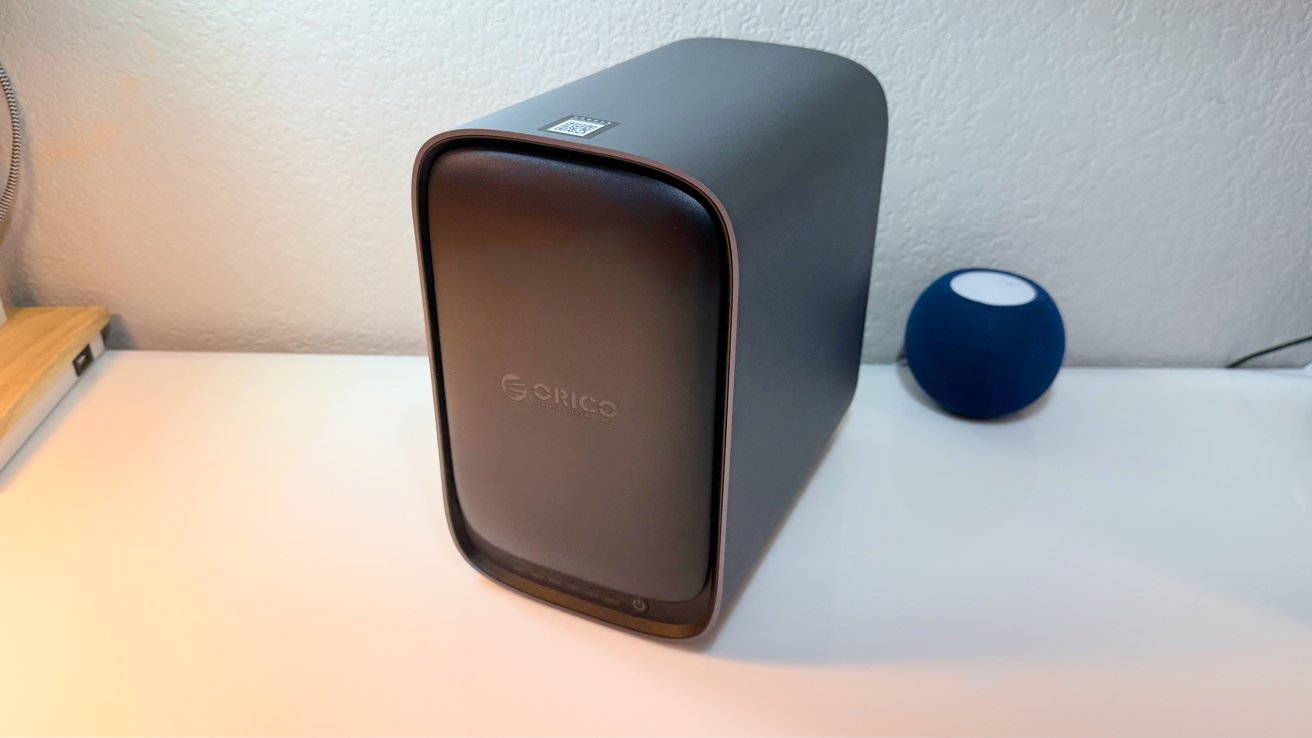
The Orico HS500 MetaBox Pro is a five-bay NAS with good hardware, but unless you like taking apart the hardware to install third-party software, there are better options for Apple owners.
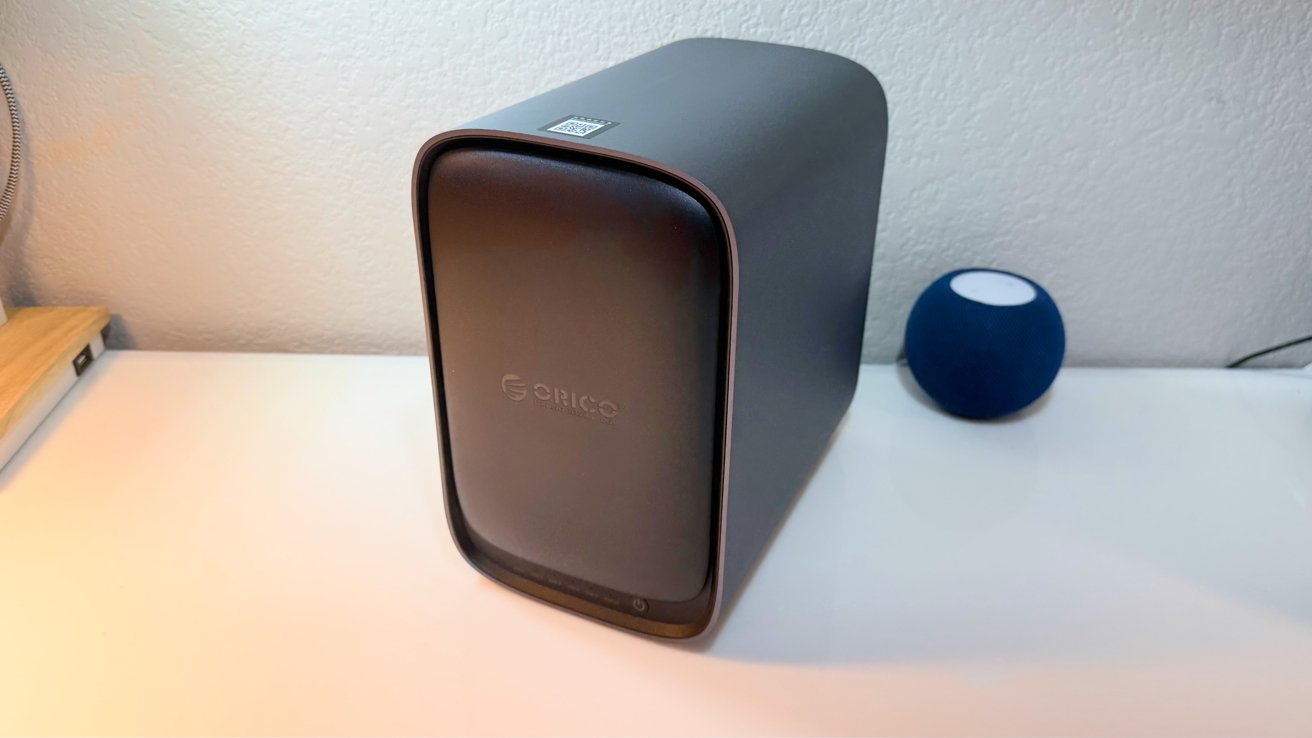
Orico HS500 MetaBox Pro
Network-attached storage (NAS) is more than its hardware, and the number of bays it has. It’s simply not possible for anyone to just buy a NAS without having to check out what other features it can do beyond just storage.
With AI becoming a hot topic in tech, it’s also becoming part of more onboard features.
Continue Reading on AppleInsider | Discuss on our Forums

Looking for an inexpensive pair of earbuds to toss in your gym bag? You can snag our favorite budget wireless earbuds, the JLab Go Pop ANC, for a shockingly low $19 on Amazon, an $11 markdown from their usual price. Don’t let the cost fool you, these earbuds have surprised multiple WIRED writers with their clear sound, water resistance, and ANC performance.


These earbuds have all the features you’d expect from a pair five times the price. They sport IP55 water and dust resistance, perfect for a sweaty trip to the gym or a long run on the beach, and multipoint pairing in case you want to use them for a quick call on your laptop. The included app has an adjustable equalizer, something not even all expensive earbuds can claim, plus programmable controls in case you don’t like the default button layout. Battery life is even pretty decent for the category, with eight hours of juice in the buds and up to 32 hours total with the included charging case.
When you’ve got the tunes going, the JLab Go’s active noise-canceling is surprisingly effective, easily tuning out the hum of an HVAC system and other annoyances. Like other ANC-capable earbuds, they also come equipped with a transparency mode for letting in important sounds, and it works surprisingly well given how little these earbuds cost. You might want to consider something more serious for your next long-haul flight, but these work in a pinch for some yard work or a quick workout.
If you’re sold on a pair of these extra inexpensive earbuds, you can swing over to Amazon to grab the JLab Go Pop ANC in fuchsia for $19. While most of the other colors were listed for their full $30 price, which is still a steal by the way, you can also grab the transparent neon green or transparent teal for just $20, which may be worth the dollar depending on your aesthetic preferences. For more upgraded picks, check out our guide to the best wireless earbuds, with hand-tested picks by WIRED writers.


The London-based platform, which already covers 1.5 million eligible lives across enterprise and healthcare deployments, is using the Series A to accelerate US market entry and deepen its clinical infrastructure, with a new CEO who sold his last company to Adobe.
JAAQ, the London-based digital health engagement platform, has raised $17 million in a Series A round. The investment comes from Meridian Health Ventures, Fuel Ventures, Bolt Angels, and Guinness Ventures, with the capital allocated to scaling enterprise partnerships, deepening clinical infrastructure, and expanding into the United States. Dr. Pooja Sikka, a partner at Meridian Health Ventures, has joined the company’s board as part of the deal.
The company was founded in 2021 with a direct-to-consumer model built around video-based mental health content. It has since pivoted to an enterprise and healthcare focus, embedding that content library, now more than 10,000 clinically reviewed videos, inside the digital products of insurers, employers, and healthcare organisations rather than distributing it to individual users.
The logic is structural: rather than asking people to seek out a mental health platform, JAAQ places its content inside the apps and services they are already using. It currently covers more than 1.5 million eligible lives through active enterprise deployments.
Alex Packham has joined as CEO to lead the company through its next phase. Packham is best known for ContentCal, a social media management SaaS platform he built and sold to Adobe in December 2021, after which he spent three years leading the product’s integration inside Adobe before departing.
The platform’s commercial proposition has two layers. Organisations can license content from JAAQ’s library and integrate it into their own product journeys, or they can licence a bespoke hosted JAAQ experience.
The company is also building infrastructure it describes as a “clinical engagement layer” for AI-native products, designed to let any digital product or team embed governed mental health content into user journeys without building the clinical governance apparatus themselves.
The pitch to enterprises is that this addresses two problems simultaneously: the mental health access gap, and low engagement with wellbeing benefits that organisations invest in but employees rarely use.
The clinical governance framing is central to how JAAQ differentiates itself from generic AI wellness tools. The platform’s content is produced within a defined clinical and creative framework, rather than generated on demand, and Johri’s appointment is intended to signal that the product is being built with clinical credibility embedded rather than bolted on.
Meridian Health Ventures, which focuses specifically on UK health tech with a pathway into the US market, is a natural fit for that positioning: the firm runs the first NHS-anchored venture fund and has a dedicated Innovations in Mental Health Fund.
The US expansion is the strategic priority the funding is designed to unlock. The UK market has provided validation, the company’s website references case studies including a UK bank that saved £896,000 in employee productivity and wellbeing improvements, and an insurer that deflected the equivalent of twelve full-time customer service roles through JAAQ-served content.
Translating that model into the US employer and health insurer market, where mental health benefits are increasingly a board-level priority but engagement remains a persistent problem, is the next test.

Tech
Heat Beneath the Surface: Thermal Metrology for Advanced Semiconductor Materials and Architectures


More Information
As semiconductor architectures evolve beyond classical transistor scaling into heterogeneous integration, chiplet-based design, and true 3D stacking, heat management has shifted from a secondary design consideration to a defining constraint on system performance.
At the same time, power densities continue to rise while materials and device layers become thinner, creating thermal pathways that are increasingly confined and interface-dominated. In these regimes, heat transport depends strongly on thin films, bonded interfaces, and buried layers that control vertical heat flow inside modern electronic systems.
This guide examines how semiconductor scaling, advanced packaging, and emerging materials are reshaping thermal behavior across modern devices. It explores how these architectural changes amplify the importance of thermal conductivity, thermal boundary resistance, and spatial variability, and why accurate thermal measurement is becoming essential for validating models, guiding design decisions, and ensuring reliable system operation.

The Federal Communications Commission has released a notice today designating any consumer routers manufactured outside the US as a security risk. The rule states that new foreign-made product models for network routers will land on the Covered List, a set of communications equipment seen as having an unacceptable risk to national security. Previously purchased routers can still be used and retailers can still sell models that were approved by the prior FCC policies. In an exception to the usual rule, routers included on the Covered List can continue to receive updates at least through March 1, 2027, although the date could potentially be extended.
The move stems from a goal in the White House’s 2025 national security strategy that reads: “the United States must never be dependent on any outside power for core components—from raw materials to parts to finished products—necessary to the nation’s defense or economy.” The notice from the FCC states that companies can apply for conditional approval for new products from the Department of War or the Department of Homeland Security. However, that requires the businesses to provide a plan for shifting at least some of their manufacturing to the US in order to receive that conditional approval.
Few, if any, brands known for consumer-grade routers currently build products stateside. It seems likely this sweeping provision could face legal challenges from and cause confusion for the many companies that have production facilities overseas. In addition to Chinese tech giants like TP-Link, US companies will also be affected. NetGear, Eero and Google Nest are all headquartered domestically but have manufacturing in Asia. At least some of that manufacturing activity happens in regions like Taiwan that have historically been on good terms with the US. Until the sector sorts out this new restriction, don’t expect to see any new router models on store shelves.


Earlier this month, BYD revealed that its latest Flash Chargers can deliver up to 1,500 kilowatts – roughly four times the power of the “hyper-fast” 350-kW systems common in the US. In tests, select BYD batteries charged from 10% to 70% in about five minutes and from 10% to 97%…
Read Entire Article
Source link

Business38 seconds ago
Russell Westbrook Climbs All-Time Assists List, Surpasses Legends Mark Jackson and Steve Nash

Crypto World2 minutes ago
Fed fallout slows Crypto ETP inflows to $230 million

Entertainment2 minutes ago
Lesbian Medieval Game Not On Anyone’s Modern Agenda


-
 Crypto World3 days ago
NIO (NIO) Stock Plunges 6.5% as Shelf Registration Sparks Dilution Worries
-

 Fashion3 days ago
Weekend Open Thread: Adidas – Corporette.com
-

 Politics3 days ago
Jenni Murray, Long-Serving Woman’s Hour Presenter, Dies Aged 75
-
 Tech6 days ago
Are Split Spacebars the Next Big Gaming Keyboard Trend?
-

 Crypto World2 days ago
Best Crypto to Buy Now: Strategy Just Spent $1.57 Billion on Bitcoin During Fear While Early Investors Quietly Enter Pepeto for 150x Potential
-

 News Videos5 days ago
RBA board divided on rate cut, unusually buoyant share market | Finance Report | ABC NEWS
-

 Crypto World2 days ago
Bitcoin Price News: Bhutan Sells $72 Million in BTC Under Fiscal Pressure, but the Smart Money Entering Pepeto Sees What the Market Does Not
-

 Politics6 days ago
The House | The new register to protect children from their abusers shows Parliament at its best
-

 Tech4 days ago
inKONBINI Lets You Spend Summer Days Behind the Register
-
 Politics6 days ago
Real-time pollution monitoring calls after boy nearly dies
-

 Crypto World5 days ago
Canada’s FINTRAC revokes registrations of 23 crypto MSBs in AML crackdown
-

 Sports14 hours ago
Remo Stars and Kano Pillars Strengthen Survival Hopes in NPFL
-
 NewsBeat5 days ago
Residents in North Lanarkshire reminded to register to vote in Scottish Parliament Election
-

 News Videos5 days ago
PARLIAMENT OF MALAWI – PAC MEETING WITH REGISTRAR OF FINANCIAL ON AMARYLLIS HOTEL – INQUIRY LIVE
-

 Business1 day ago
No Winner in March 21 Drawing as Prize Rolls to $133 Million for Next
-

 Politics4 days ago
Gender equality discussions at UN face pushbacks and US resistance
-

 Business5 days ago
Who Was Alex Pretti? 5 Key Facts About the ICU Nurse Killed by Federal Agents in Minneapolis
-

 Sports13 hours ago
Gary Kirsten Accuses Pakistan Cricket Board Of ‘Interference’, Mohsin Naqvi Responds
-

 Tech1 day ago
Give Your Phone a Huge (and Free) Upgrade by Switching to Another Keyboard
-

 Sports3 days ago
2026 Kentucky Derby horses, odds, futures, preview, date: Expert who nailed 12 Derby-Oaks Doubles enters picks
You must be logged in to post a comment Login