

Editor’s note: This article is intended to provide a general overview of the ETF for educational purposes only and, unlike other articles on Seeking Alpha, does not offer an investment opinion about the ETF.
Business
(VIDEO) Japan’s 10 Deadliest and Strongest Earthquakes in History Highlight Nation’s Seismic Vulnerability


TOKYO — Japan, situated on the volatile Pacific Ring of Fire where multiple tectonic plates converge, has endured some of the most powerful and destructive earthquakes ever recorded, with the 2011 Tohoku event standing as the strongest in the nation’s modern history at magnitude 9.1 and triggering a catastrophic tsunami that claimed nearly 20,000 lives.
The list of Japan’s 10 biggest earthquakes, ranked primarily by magnitude but also considering historical impact and death toll where records allow, reveals a pattern of megathrust events along subduction zones that have repeatedly reshaped the archipelago’s coastline, infrastructure and collective memory. While modern seismology provides precise measurements for quakes since the late 19th century, earlier events rely on historical accounts, with magnitudes often estimated retrospectively.

At the top is the 2011 Great East Japan Earthquake (also known as the Tohoku earthquake and tsunami). On March 11, 2011, at 2:46 p.m. local time, a magnitude 9.0–9.1 megathrust quake struck off the Oshika Peninsula in Miyagi Prefecture at a shallow depth of about 29 kilometers. The rupture, spanning roughly 300 kilometers along the Japan Trench, displaced the seafloor and generated tsunami waves reaching up to 40 meters in some areas. Nearly 20,000 people died, with more than 2,500 still listed as missing years later. The disaster triggered the Fukushima Daiichi nuclear meltdown, caused an estimated $360 billion in damage (adjusted figures approach $500 billion in today’s terms), and displaced hundreds of thousands. It ranks as the fourth- or fifth-largest earthquake globally since instrumental recording began.
The second-largest is the 869 Jogan Sanriku earthquake, estimated at magnitude 8.9–9.0. This ancient event devastated the Sanriku coast with a massive tsunami that inundated areas up to 4 kilometers inland, killing over 1,000 people according to historical records. Geological evidence of tsunami deposits links it to similar patterns seen in 2011, underscoring the recurrence interval of major events in the region.
Third comes the 1896 Meiji-Sanriku earthquake, magnitude 8.5. Striking on June 15, 1896, it produced one of the deadliest tsunamis in Japanese history, with waves up to 38 meters high claiming more than 22,000 lives, mostly in Iwate and Miyagi prefectures. The quake itself caused limited shaking damage, but the tsunami’s rapid arrival caught coastal communities unprepared.
The 1933 Showa-Sanriku earthquake, magnitude 8.4, followed a similar pattern on March 3, 1933. It generated tsunami waves up to 29 meters, resulting in nearly 3,000 deaths. Occurring during a period of heightened seismic activity, it prompted improvements in coastal warnings, though technology at the time remained limited.
The 1707 Hoei earthquake, estimated at magnitude 8.6, struck on October 28, 1707, affecting the Nankai Trough region. It caused widespread damage across Honshu and Shikoku, killing around 5,000 people, and is notable for coinciding with the last major eruption of Mount Fuji, which added volcanic ash fallout to the devastation.
The 1944 Tonankai earthquake, magnitude 8.1, hit on December 7, 1944, during World War II. Centered in the Nankai Trough, it killed over 1,200 and caused significant infrastructure damage, though wartime censorship limited immediate reporting.
The 1946 Nankaido earthquake, magnitude 8.1, occurred on December 21, 1946, in the same tectonic zone. It claimed about 1,300 lives and highlighted the paired nature of Nankai Trough events, where stress release in one segment often triggers activity in adjacent areas.
The 1923 Great Kanto earthquake, magnitude 7.9, devastated the Tokyo-Yokohama region on September 1, 1923. While lower in magnitude than megathrust events, its proximity to densely populated areas resulted in one of Japan’s highest death tolls — over 100,000, many from fires ignited by overturned stoves amid strong shaking. The quake destroyed much of Tokyo, prompted major urban planning reforms and is commemorated annually as Disaster Prevention Day.
The 1891 Mino-Owari (Nobi) earthquake, magnitude 8.0, struck central Japan on October 28, 1891, killing around 7,273 people. It caused extensive surface faulting and damage across Gifu and Aichi prefectures, leading to early advancements in seismic building standards.
Rounding out a top 10 by impact or estimated size is the 1854 Ansei-Nankai earthquake, magnitude around 8.4. Part of a paired event with the Ansei-Tokai quake, it devastated parts of Kyushu and Shikoku, killing thousands and reinforcing cultural beliefs linking earthquakes to mythical giant catfish (namazu) stirring beneath the islands.
These events illustrate Japan’s position at the convergence of the Pacific, Philippine Sea, Eurasian and North American plates. The Japan Trench and Nankai Trough are particularly prone to megathrust quakes, where one plate subducts beneath another, accumulating strain over centuries before releasing in massive ruptures.
Modern monitoring through the Japan Meteorological Agency and dense seismic networks has improved early warnings, saving lives in recent decades. The 2011 quake, despite its scale, benefited from seconds of advance alert via the national system, though the tsunami’s speed overwhelmed many coastal defenses. Post-2011 reforms included higher seawalls, stricter building codes, better evacuation planning and enhanced nuclear safety measures.
Yet challenges persist. Japan’s aging population and dense urban centers amplify risks, while climate change may influence tsunami impacts through rising sea levels. Scientists continue studying recurrence intervals — major Nankai Trough events are overdue based on historical patterns, with a potential magnitude 8–9 quake carrying catastrophic potential for central and western Japan.
Public preparedness remains high. Annual drills, earthquake-resistant architecture and widespread awareness campaigns reflect lessons from past disasters. The 1995 Great Hanshin (Kobe) earthquake, magnitude 6.9–7.3, which killed over 6,400, spurred nationwide improvements despite not ranking among the absolute largest by magnitude.
As of 2026, no earthquake has surpassed the 2011 event in recorded Japanese history, though frequent moderate quakes remind residents of ongoing risk. The April 2024 Noto Peninsula quake (magnitude 7.5) caused significant local damage and served as another test of resilience.
Geologists warn that the next “big one” could strike with little warning beyond seconds of shaking alerts. Research into slow-slip events, seafloor monitoring and AI-driven prediction aims to refine forecasts, though precise timing remains elusive.
Japan’s history of seismic trauma has fostered innovation. From tsunami stones warning “do not build below this point” to cutting-edge early-warning technology, the nation balances fatalism with determination. International cooperation, including shared data with the United States and other Pacific nations, strengthens global tsunami warning systems.
For a country that has rebuilt repeatedly from rubble, these 10 earthquakes represent not just destruction but chapters in a story of endurance. Each disaster prompted reflection, reform and renewed commitment to safety. As scientists monitor the plates grinding beneath the islands, the collective memory of past events serves as both cautionary tale and blueprint for survival.
The human cost — measured in lives lost, communities shattered and economies strained — underscores why Japan invests heavily in mitigation. Yet the beauty and resilience of the Japanese people shine through in recovery efforts, from temporary housing rebuilt into vibrant neighborhoods to the quiet determination of survivors sharing stories to prevent future tragedy.
While no one can prevent earthquakes, Japan’s experience shows that preparation, education and technological advancement can dramatically reduce their toll. As the nation marks anniversaries and conducts drills, the list of its biggest quakes stands as a solemn reminder of nature’s power and humanity’s capacity to adapt.
Continue Reading


Food Business News webinar highlighted five startups innovating within segments they see as dated.

Starfighters Space: Bootstrap Approach To Space Industry But Scaling Challenges
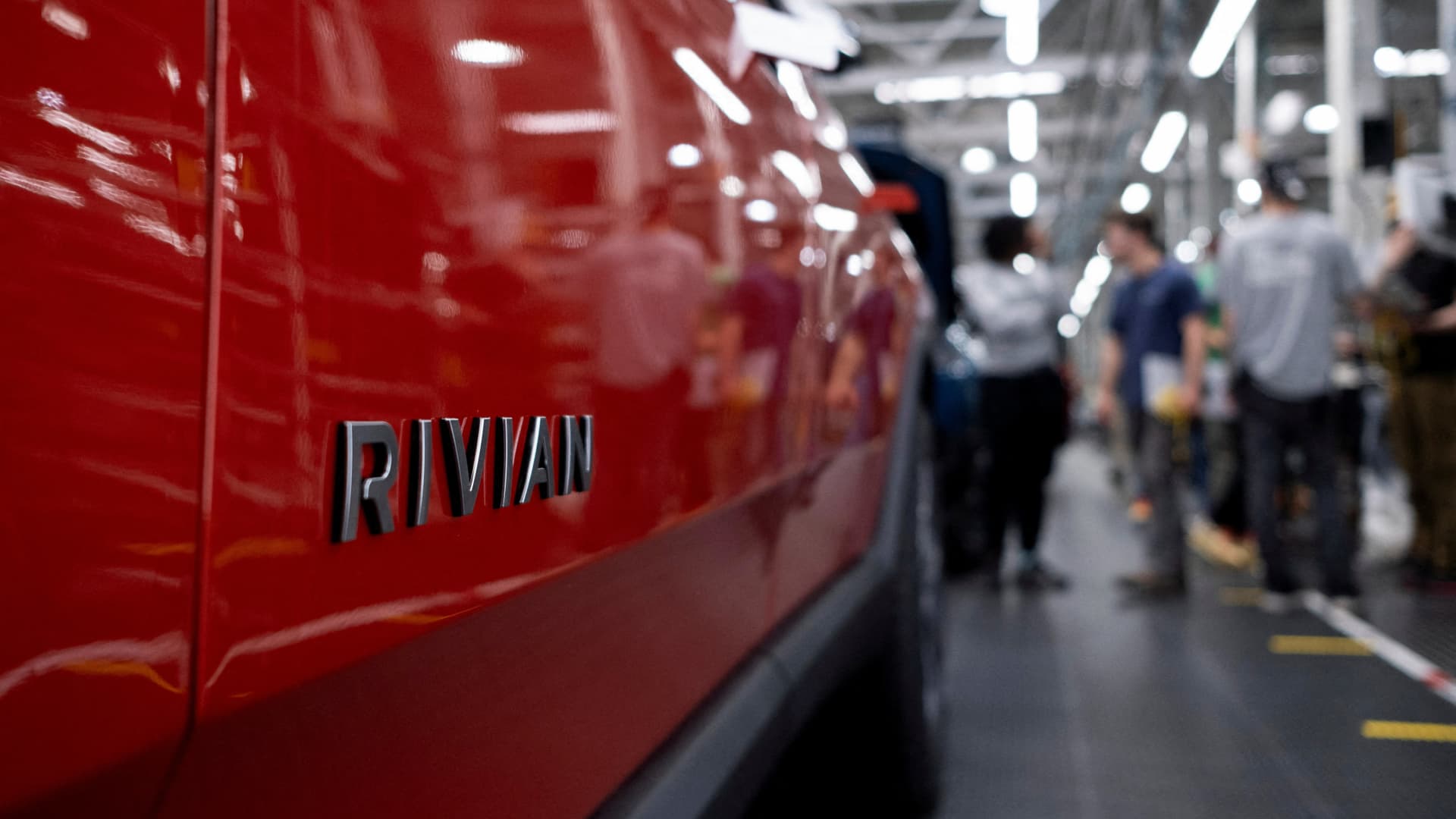
A view shows a second-generation R1S at electric auto maker Rivian’s manufacturing facility in Normal, Illinois, on June 21, 2024.
Joel Angel Juarez | Reuters
A tornado damaged part of Rivian Automotive‘s factory in central Illinois over the weekend, according to a message sent to employees Sunday night by CEO RJ Scaringe that was viewed by CNBC.
The tornado touched down on the plant, Scarigne said. That area was being used for parts storage and logistics for Rivian’s upcoming R2, which is a crucial product for the company that’s expected to be on sale this spring.
Scaringe said operations in the damaged area are expected to resume this week, while other major portions of the plant, such as its assembly lines, are operating as planned. No injuries have been reported as a result of the incident, according to a company spokeswoman.
“While Building 2 has sustained damage and is closed for the time being as we complete our assessments, I am incredibly relieved to share that there were no injuries at our plant,” Scaringe said in his message to employees.
Scaringe said the company would “share more information as it becomes available, but for now, our priority is ensuring our Normal [Illinois] team is safe and supported.”
Apparent photos posted online of the aftermath, which was first reported by TechCrunch, showed damage to the roof and at least one wall of the recently constructed building.
The National Weather Service reports the factory was hit amid a “significant tornado outbreak” that occurred Friday across the upper Midwest. Confirmed tornadoes near the factory Friday night were classified as EF1, with estimated peak winds of 100 mph, according to NWS.
FXC: Understanding The Benefits And Risks Of Adding Currency Exposure To Your Portfolio

Credo Technology: Hypergrowth Leader Solving The AI Connectivity Bottleneck
American Petroleum Institute CEO Mike Sommers joins ‘Varney & Co.’ to warn that a global oil shortfall and disruptions in the Strait of Hormuz could drive gas prices higher just as peak summer demand begins.
President Donald Trump pushed back Monday on his own energy secretary’s claim that a return to $3-a-gallon gas will not come through the end of the year.
“No, I think he’s wrong on that, totally wrong,” Trump told The Hill on Monday, when asked about Energy Secretary’s Christopher Wright’s interview with CNN’s “State of the Union” on Sunday.
Trump remains steadfast in his conviction that gas prices in America are going to drop precipitously “as soon as this ends,” referring to the oil blockade in the Strait of Hormuz, echoing oft-repeated vows for those concerned that oil prices in America might actually return all the way up to Biden administration levels.
“The blockade is very powerful, very strong,” Trump added to The Hill, pointing at Iran’s obstruction effort. “They lose $500 million a day with the blockade up. We control it. They don’t control it.”
BESSENT WARNS GAS STATIONS THAT TREASURY DEPT WILL KEEP THEM ‘HONEST’ AFTER SPIKE IN PRICES
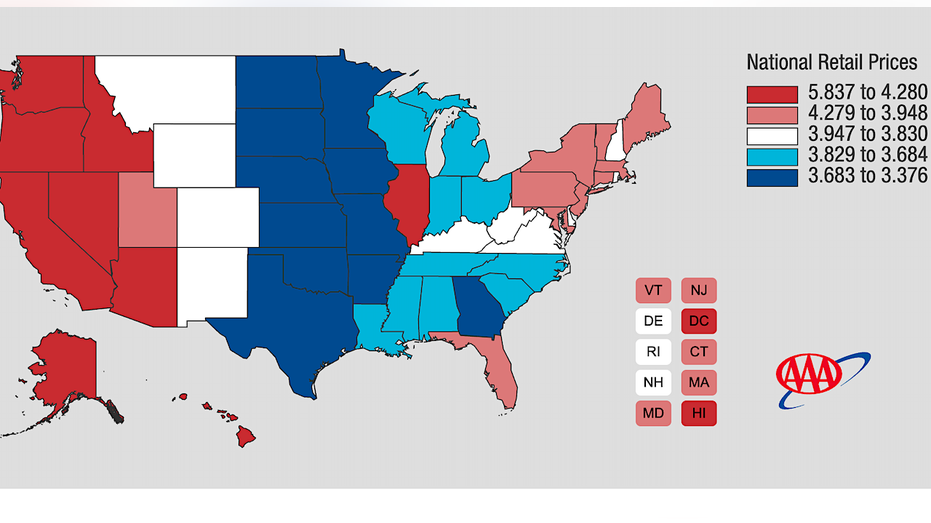
The AAA Fuel Prices state by state show the highest prices in the coastal states and the lowest prices in the midwest states. (Gasprices.aaa.com)
Wright’s comments were not all that unaligned with Trump’s position, but Wright was a bit less convicted on prices on when gas might drop below $3 again.
“I don’t know, that could happen later this year, that might not happen until next year, but prices have likely peaked and they will start going down,” Wright told CNN’s Jake Tapper, who asked further that gas “might not be under $3 a gallon until 2027?”
“Certainly, with a resolution of this conflict, you will see prices go down,” Wright added. “Prices across the board on energy prices will go down.”
OIL PRODUCERS ORG SHREDS CALIFORNIA DEM FOR BLAMING IRAN WAR FOR HIS DISTRICT’S GAS PRICES
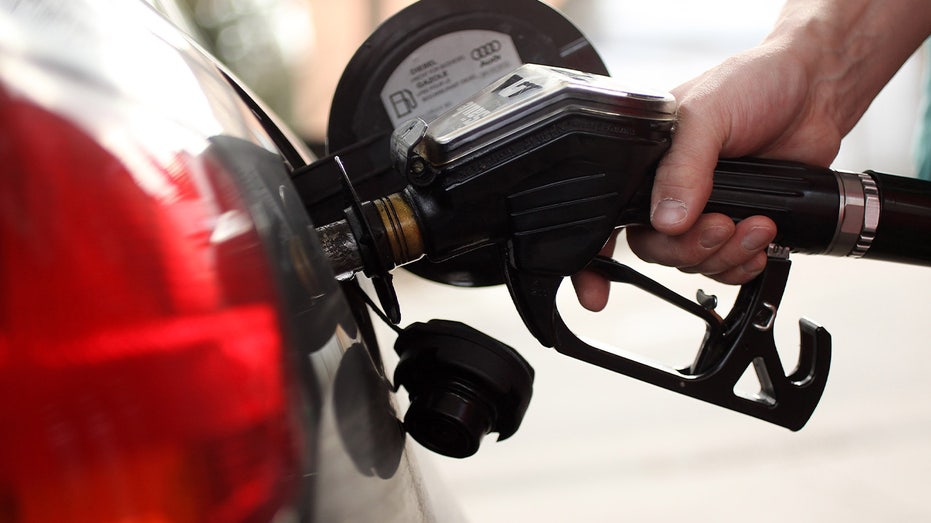
Gas prices in the U.S. are higher amid the Iranian Strait of Hormuz obstruction, but they are still well below the Biden-era prices due to inflation caused by restrictive fossil fuel energy policy. (Sean Gallup/Getty Images)
“Under $3 a gallon is pretty tremendous — in inflation-adjusted terms,” Wright added to Tapper. “We had that in the Trump administration, but we hadn’t seen that in inflation-adjusted terms for quite a long time. We will get back there, for sure.”
Fuel prices in America on Monday are at an average of $4.04, according to AAA.
The highest average prices come in the coastal states, the only places where gas is over $4, while the midwest states have the lowest averages in the low-to-mid 3s.
| Ticker | Security | Last | Change | Change % |
|---|---|---|---|---|
| CHEV | CHARGING ROBOTICS INC | 3.3 | +0.80 | +32.00% |
| SUN | SUNOCO | 63.05 | -1.49 | -2.31% |
| XOM | EXXON MOBIL CORP. | 146.44 | -5.54 | -3.65% |
| CVX | CHEVRON CORP. | 183.99 | -4.16 | -2.21% |
| SHEL | SHELL PLC | 87.81 | -3.69 | -4.03% |
| DINO | HF SINCLAIR | 57.15 | -2.96 | -4.92% |
BESSENT RULES OUT GOVERNMENT INTERVENTION IN OIL FUTURES MARKET DURING IRAN WAR
Trump had long warned that the rise in American gas prices at the pump was a transitory inflation issue on the expectation that global oil supply was strained due to Iran’s retaliatory choking off of oil flowing through the Strait of Hormuz.
Trump and Treasury Secretary Scott Bessent have also noted for weeks that the U.S. is a net exporter of oil, has plenty of supply, with only a fraction of oil from the Middle East. So when local gas stations raised prices under the fear of future supply shortages elsewhere around the globe — potential “bad actors,” according to Bessent — they were not only guessing, but expecting something that would never come, they argued.
“We’ll be looking at Treasury to try to keep the retail gas stations honest — that you did this on the way up, better be doing this on the way down,” Bessent told the CNBC Invest in America Forum last week. “And I am sure the president will call out anyone who’s a bad actor.”
Former U.S. Energy Secretary Dan Brouillette joins ‘Varney & Co.’ to break down the global oil supply shock driving gas prices higher, weigh in on when relief could come at the pump and slam Democratic energy policies.
GET FOX BUSINESS ON THE GO BY CLICKING HERE
What went up, must now come down, Bessent told the CNBC forum host Wednesday when asked if the above was a warning.
“I’m sure that,” Bessent said with a calculated pause, “everyone will be a good actor.”
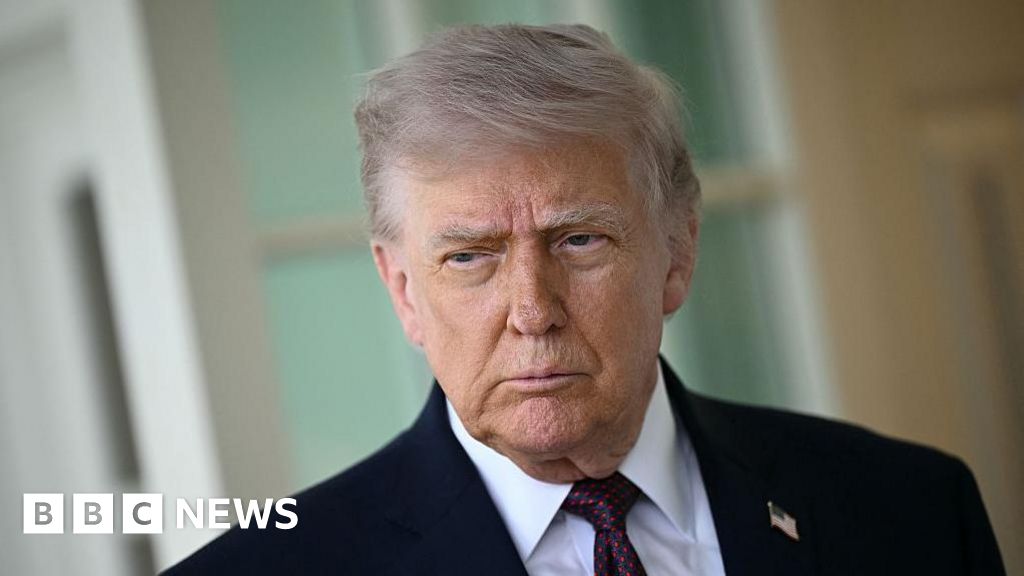
Businesses can apply online through a portal for refunds expected to total $160bn.
Nicolae Popescu/iStock via Getty Images
The iShares MSCI Global Metals & Mining Producers ETF (PICK) is a passively managed exchange-traded fund designed to track companies that participate in mining, extraction, or the production of industrial and base metals, excluding precious metals exposure. The strategy is regionally diversified and provides exposure across a number of different metals, including copper, iron & steel, and aluminum, amongst other materials. The strategy can be utilized by investors seeking diversified exposure to commodity producers and their respective cash flows in relation to the price of the commodities produced.
About iShares MSCI Global Metals & Mining Producers ETF
PICK was launched by iShares on January 31, 2012 on the Cboe BZX Exchange. PICK has a net expense ratio of 39bps, a relatively low cost strategy when compared to most peer ETFs.
Seeking Alpha
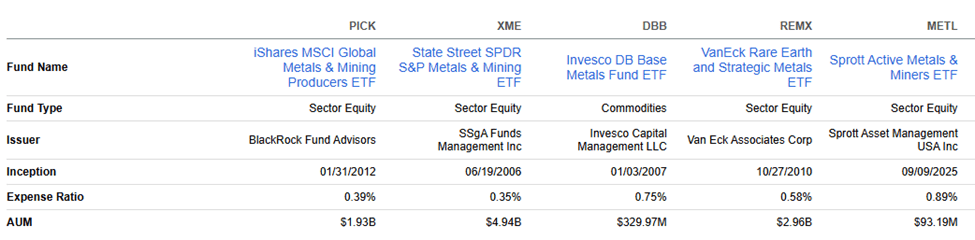
PICK exhibits substantial depth, though thin liquidity with $1.9b in net assets and a 30-day average trading volume of 538k shares. As a result of the lower liquidity, PICK exhibits a relatively wide 30-day median bid/ask spread of 0.18%, potentially adding additional fees when actively traded.
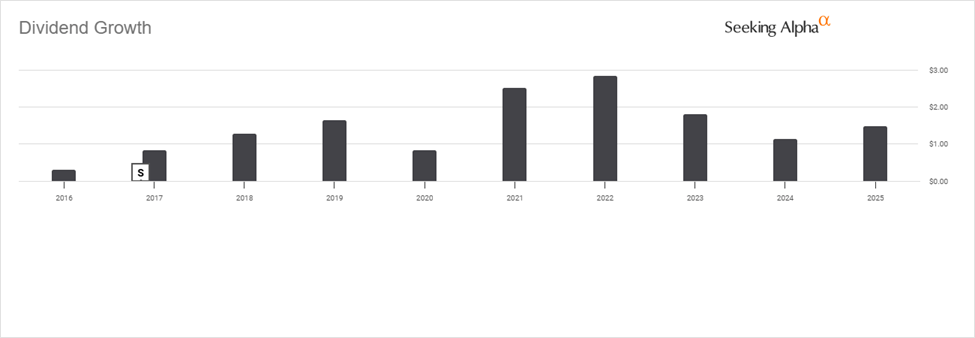
PICK pays out a semiannual distribution at an annualized rate of $1.28/share over the last twelve months, yielding 2.04%. Distributions can vary widely from period to period, making this strategy most appropriate for capital appreciation rather than income.
Seeking Alpha
PICK was designed to track the MSCI ACWI Select Metals & Mining ex Gold ex Silver Investable Market Index, which tracks the performance of companies that participate in industrial and the rare earth metals market. The Index consists of 234 constituents with exposure to small- through large-cap producers; the Index has a median constituent market capitalization of $1.21b with the largest constituent having a market capitalization of $175b. The Index is reviewed on a quarterly basis.
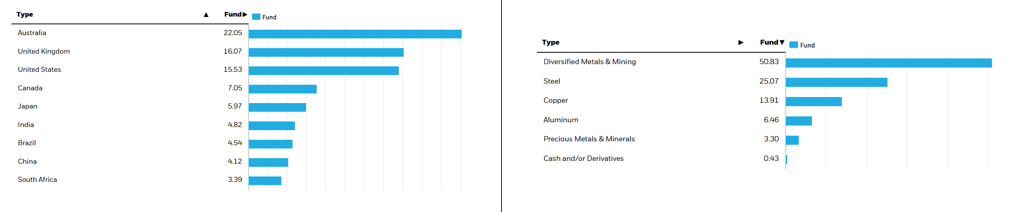
PICK currently invests across 244 holdings, which consist of equities as well as some exposure using futures derivatives. The ETF primarily invests in diversified metals & mining companies, making up 51% of the total portfolio weight, followed by steel at 25%, and copper at 14%. The strategy is regionally diversified with Australia accounting for 22% of regional exposure. Other regions include the UK at 16%, the US at 15.53%, and Canada at 7%.
Corporate Filings
The top 10 holdings within PICK account for 46% of the total portfolio’s assets. In contrast, the bottom 10 holdings account for roughly 0.12%. Top holdings within the ETF include BHP Group (BHP) at 12.30%, Rio Tinto PLC (RIO) at 6.80%, Freeport-McMoran (FCX) at 5.93%, and Glencore PLC (GLEN) at 4.55%.
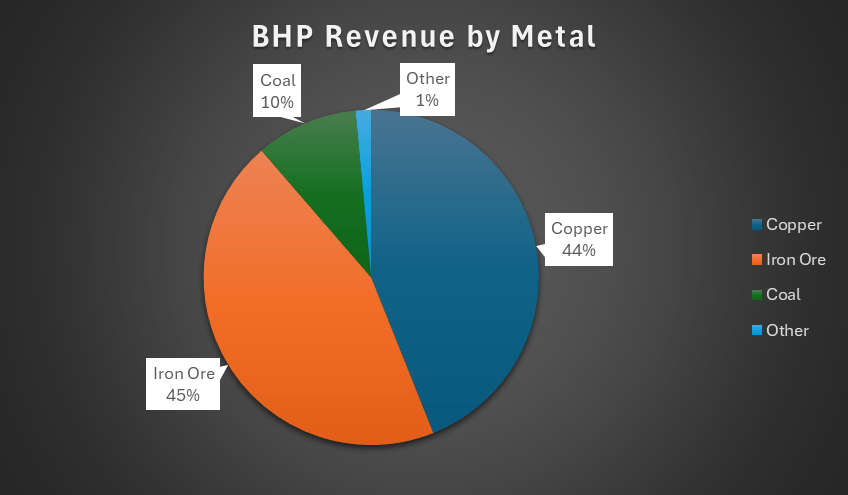
BHP is an Australia-based diversified mining enterprise, primarily producing copper and iron ore at the global scale.
Corporate Filings
Freeport-McMoran is a US-based copper producer, operating globally in mining and refining.
Thematically, the metals & mining sector can be viewed through a variety of lenses. For copper, a major theme to consider is the increasing investments in power infrastructure and data centers, each requiring vast amounts of copper to operate. Iron exhibits broadly diversified themes, including automobile production, industrial manufacturing, power, and construction, amongst others. Sector demand can vary by region; the US may exhibit a larger focus in the automotive industry whereas China may exhibit more steel utilization in construction. Being mindful of macroeconomic trends like annual vehicle production, trucking, and construction starts may be useful indicators for assessing this component of the portfolio.
Some other factors investors may consider when investing in the strategy include international trade. For example, China has historically been a major counterparty to BHP’s iron ore mining operations. For example, Chinese imports accounted for roughly 63% of BHP’s sales in FY25. Trade disputes between the two countries could significantly impact operations and must be taken into consideration when evaluating PICK as an investment, particularly given the portfolio concentration in BHP.
Another factor to consider is trade tariffs. For example, Alcoa’s (AA) business has been impacted in the last year resulting from the 50% duty on imported aluminum and steel. Alcoa has historically imported aluminum into the US through Canada, resulting in mismatched economics throughout FY25 before the Midwest Spread created a marketable opportunity. Alcoa holds a much lower weight in the strategy at 1.10% of net assets, though I believe the theme can apply to all constituents if import duties were to persist.
Overall, PICK can be considered as both a microeconomic and macroeconomic investment strategy given the ETF’s global footprint and general demand across regions and industries. At the microeconomic level, more efficient mining practices and ESG policies can influence the cost of production, or the all-in cash cost.
Investor Suitability
PICK can be utilized by investors seeking a diversified equity strategy tied to the global metals & mining industry. PICK may be best utilized as a buy-and-hold ETF given its relatively light trading volumes. PICK may also be utilized as part of an industry rotation or a macroeconomic strategy given the diverse portfolio of commodity producers. In terms of growth expectations in the fund, a benefit of owning the commodity producers over the commodities outright is that commodity producers gain exposure to stronger commodity prices, cost management, and cash flow generation; owning a portfolio of commodities is limited to the aggregate increase in commodity prices with no additional economic upside potential.
Risks Related to PICK
PICK may expose investors to a variety of risks that should be considered prior to making an investment decision, particularly when considering its global exposure. International trade, geopolitical risk, war, ESG policies, inflation rates, commodity prices, fuel costs, transportation costs, and interest rates can all influence the performance of the underlying companies within the portfolio.
Final Thoughts
PICK can be utilized as a diversified metals & mining investment strategy for investors seeking to participate in the cash flows earned by companies with direct exposure to industrial and base metals. I believe PICK offers investors greater value over investing in a commodity-based portfolio given that the producers provide more economic upside beyond the commodity price. Given the international footprint of the portfolio, investors must consider international trade risk when evaluating whether a broad strategy is appropriate for their investment needs.
This article answers three main questions about PICK:
- What type of investor is PICK most suitable for?
- Does PICK offer diversification to foreign companies?
- Is PICK considered an income ETF or is it focused more on capital appreciation?

Form 6K YY Group Holding Ltd For: 20 April

Check out what’s clicking on FoxBusiness.com.
Macy’s is recalling thousands of Arch Studio tea kettles after federal safety officials warned of a potential burn hazard tied to the product.
The recall, announced April 16 by the Consumer Product Safety Commission (CPSC), affects approximately 4,600 units, according to the agency.
Officials said the tea kettle’s handle can detach during use when heated, posing a risk of serious injury due to burns. The company has received three reports of the handle detaching, though no injuries have been reported.
POPULAR BABY FOOD BRAND HIT BY ‘CRIMINAL ACT’ AS RAT POISON FOUND IN SEIZED JAR
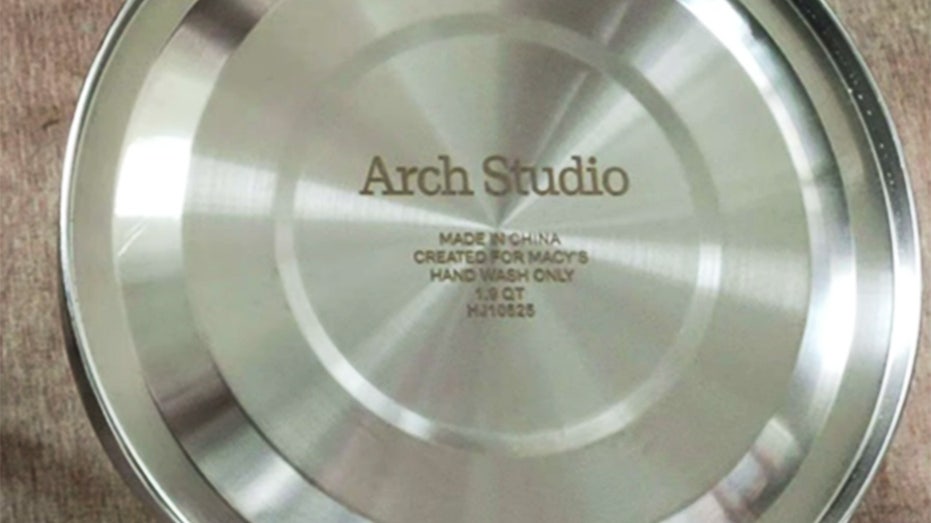
“Arch Studio” and “HJ10525” are etched on the underside of the recalled kettles. (CPSC)
The recall applies to Arch Studio-branded stainless-steel tea kettles with a black handle and a 1.9-quart capacity. The kettles measure about 10.7 inches long, 7.59 inches wide and 8.62 inches high, with “Arch Studio” and model number “HJ10525” etched on the underside.

CPSC says the tea kettle’s handle can detach during use when heated. (CPSC)
The products were sold at Macy’s stores nationwide and online at macys.com from August 2025 through February 2026 for about $50, according to the CPSC. The kettles were imported by Macy’s Merchandising Group Inc. of New York and manufactured in China.
| Ticker | Security | Last | Change | Change % |
|---|---|---|---|---|
| M | MACY’S INC. | 19.54 | +0.46 | +2.41% |
Consumers are urged to stop using the recalled kettles immediately and contact Macy’s for a full refund. The company is offering refunds by check, and customers will be provided with a prepaid shipping label to return the product. No purchase receipt is required.
CLICK HERE TO GET FOX BUSINESS ON THE GO
Macy’s did not immediately respond to FOX Business’ request for comment.

Politics51 seconds ago
Mandelson process ‘beggars belief’: Keir Starmer’s statement to parliament in full

Sports2 minutes ago
Snooker needs new faces and personalities – teenager Moody

Tech3 minutes ago
When it comes to leadership, do companies know what they are doing?



-

 Crypto World7 days ago
The SEC Conditionalises DeFi Platforms to Be Avoided for Broker Registration
-

 NewsBeat6 days ago
Trump and Pope Leo: Behind their disagreement over Iran war
-

 Fashion3 days ago
Weekend Open Thread: Theodora Dress
-

 Crypto World7 days ago
SEC Signals Exemption for Crypto Interfaces From Broker Registration
-

 News Videos5 days ago
Secure crypto trading starts with an FIU-registered
-

 Sports3 days ago
NWFL Suspends Two Players Over Post-Match Clash in Ado-Ekiti
-

 Crypto World6 days ago
SEC Proposes Certain Crypto Interfaces Don’t Need to Register as Brokers
-

 Business1 day ago
Powerball Result April 18, 2026: No Jackpot Winner in Powerball Draw: $75 Million Rolls Over
-

 Crypto World3 days ago
Russia Pushes Bill to Criminalize Unregistered Crypto Services
-

 Politics3 days ago
Palestine barred from entering Canada for FIFA Congress
-
 Business4 days ago
Creo Medical agree sale of its manufacturing operation
-

 Politics1 day ago
Zack Polanski demands ‘council homes not luxury flats for foreign investors’
-
 Entertainment7 days ago
Brand New Day’ Footage Reveals the Devastating Impact of ‘Now Way Home’
-

 Crypto World3 days ago
Russia Introduces Bill To Criminalize Unregistered Crypto Services
-

 Tech6 days ago
Microsoft adds Windows protections for malicious Remote Desktop files
-
 Entertainment7 days ago
Karol G’s ‘Ultra Raunchy’ Coachella Set Gave ‘Satanic Vibes’
-

 Entertainment7 days ago
How Babylon 5 Turned Brief Side Story Into Emotional Masterpiece
-
 Crypto World7 days ago
Senate Bill Faces Delay Over Stablecoin Yield Debate
-

 Tech7 days ago
What was the first ransomware attack to demand payment in Bitcoin?
-

 Tech5 days ago
‘Avatar: Aang, The Last Airbender’ Leaked Online. Some Fans Say Paramount Deserves the Fallout
You must be logged in to post a comment Login